Black holes more massive than entire galaxies are not a major component of the mysterious dark matter that's thought to make up most of the matter in the cosmos, a new study finds.
For decades, to explain why galaxies do not spin apart at the speeds at which they whirl, scientists have suggested the existence of an unseen substance known as dark matter, whose gravitational pull helps keep galaxies together. Dark matter is thought to make up about five-sixths of all matter in the universe.
Much remains unknown about dark matter, however — including whether or not it actually exists. Black holes make good potential contenders for dark matter, since they are extremely massive and are difficult to spot in the dark depths of space.
In the new study, researchers investigated whether dark matter could be made of "stupendously large black holes," ones with masses greater than 100 billion times the mass of the sun. Stupendously large black holes greater than 1 million billion to 10 million billion suns in mass would be heavier than entire galaxies.
So far, astronomers have not detected any stupendously large black holes — currently, the largest black hole known may weigh about 36 billion suns. Since researchers have not seen any even after looking at many galaxies, the new study noted they cannot make up all of dark matter — but team members wondered if the exotic objects still might constitute a significant portion of the puzzling substance.
Often, dark matter is thought of "as a fine dust spread everywhere," study co-author Christopher Gerlach, a theoretical physicist at the Mainz Institute for Theoretical Physics in Germany, told Space.com. However, if dark matter is packed into a handful of gigantic objects such as stupendously large black holes, "the universe becomes grainy on very large scales. And we can check that."
Specifically, the scientists analyzed the light from the dawn of the universe, study co-author Yann Gouttenoire, a theoretical physicist at the Mainz Institute for Theoretical Physics, told Space.com.
For the first 380,000 years after the Big Bang, the cosmos was filled with a hot plasma in which light was trapped. Eventually, the expansion of the universe let the cosmos cool enough for the plasma to largely dissipate and form atoms. This in turn let light shine freely, "and that light is still arriving today," Gerlach explained. "We call it the cosmic microwave background, a snapshot of the infant universe covering the whole sky."
The temperature of the cosmic microwave background "varies from place to place by about one part in 100,000," study co-author Antonio Iovino, a theoretical physicist at New York University, Abu Dhabi, in the United Arab Emirates, told Space.com. "That pattern tells us how matter was spread back then."
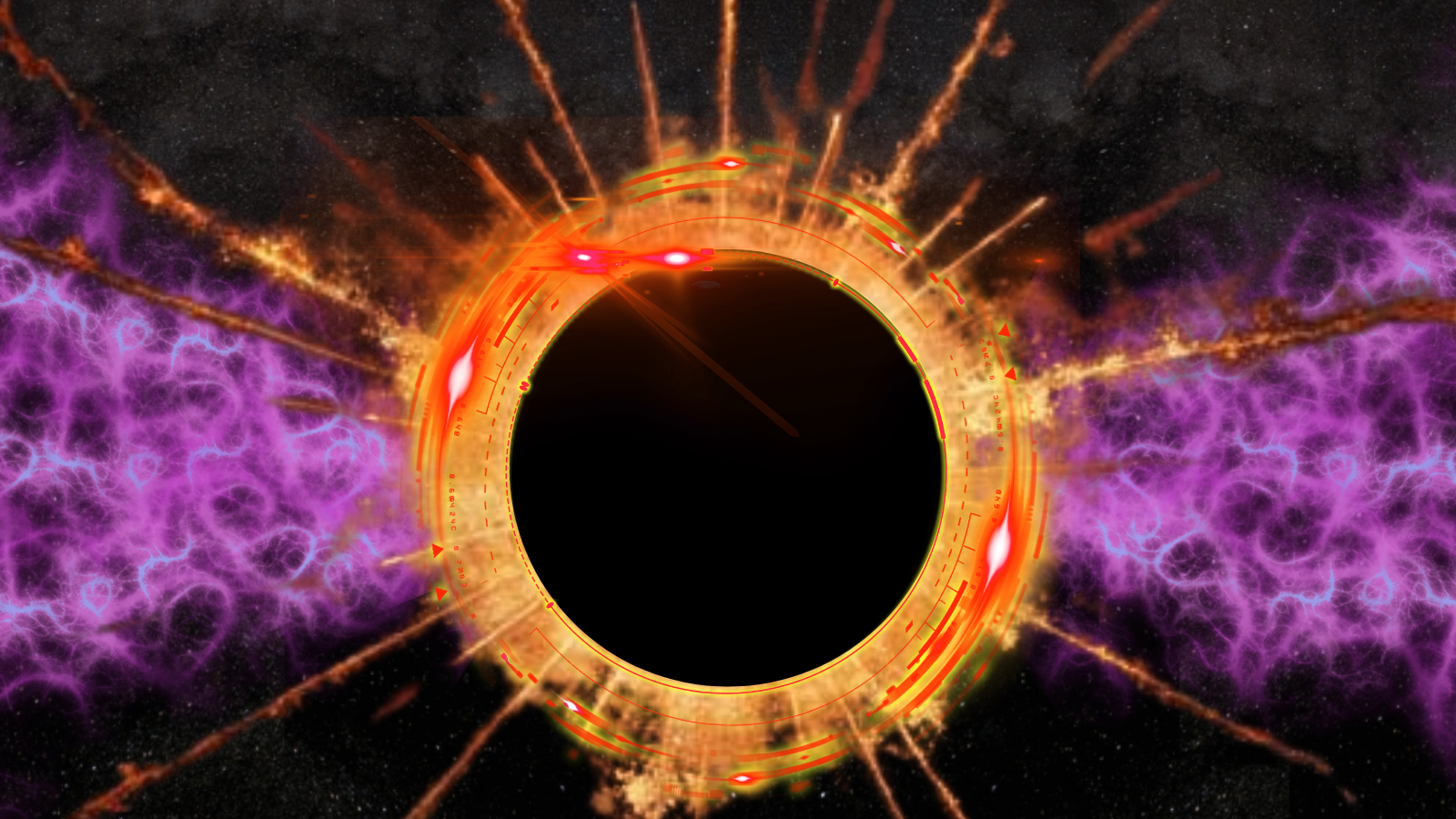
An illustration of a supermassive black hole against a background of dark matter. (Image credit: Robert Lea (created with Canva))
Analyzing the cosmic microwave background revealed it is not grainy the way stupendously black holes would have made it. "So these black holes can't be a significant part of the dark matter," Nicholas Leister, a theoretical physicist at the Mainz Institute for Theoretical Physics, told Space.com.
The researchers cautioned that the new findings do not suggest that stupendously large black holes cannot exist, only that they do not make up a major fraction of dark matter. They added that another candidate for dark matter — relatively tiny black holes the size of asteroids — might potentially exist. They are now investigating whether they can rule out such itty-bitty black holes as a major constituent of dark matter.
The scientists detail their findings in a study that will be published Oct. 26 in the journal Physical Review Letters.
A mysterious giant 10-sided pattern of clouds has recently formed around Saturn's south pole, a new study finds.
This newfound "decagon" joins the bizarre colossal hexagon seen for decades at Saturn's north pole. Saturn's hexagon — a cloud pattern about 20,000 miles (32,000 kilometers) wide — was first discovered in 1988 by scientists reviewing data from NASA's Voyager flybys of Saturn in 1980 and 1981. Despite decades of observations, no similar structure was seen anywhere else on Saturn — until now, as scientists have discovered an even larger structure on Saturn.
The newfound decagon is about 104,250 miles (167,820 kilometers) wide, with each of its 10 sides measuring about 10,425 miles (16,782 km) long. "This is a very unusual atmospheric phenomenon that is helping us to advance our understanding of meteorology in general," study lead author Agustin Sanchez-Lavega, a planetary scientist at the University of the Basque Country in Bilbao, Spain, told Space.com. "It tells us that the hexagon is not a unique, singular feature, as was previously thought."
In the new study, researchers investigated recent images of Saturn captured with NASA's Hubble Space Telescope. The way that Saturn's axis is tilted meant that the ringed planet's southern hemisphere was not visible from Earth from 2012 to 2023.
Hubble images from 2023 revealed the decagon to scientists for the first time. "It certainly came as a surprise," Sanchez-Lavega said. Ever since the hexagon was discovered in Saturn's north, he and his colleagues had investigated pictures of Saturn "to see if there was a polygonal formation in the south. And there was no sign of it."
The decagon moves slowly. "It takes about 800 days to complete a rotation about Saturn," Sanchez-Lavega said.
Previous research suggested Saturn's hexagon results from an eastward jet within its atmosphere flowing in a curving path near the ringed planet's north pole. Small perturbations in the jet — the kind one might expect from jostling with other air currents — made it meander into a hexagonal shape.
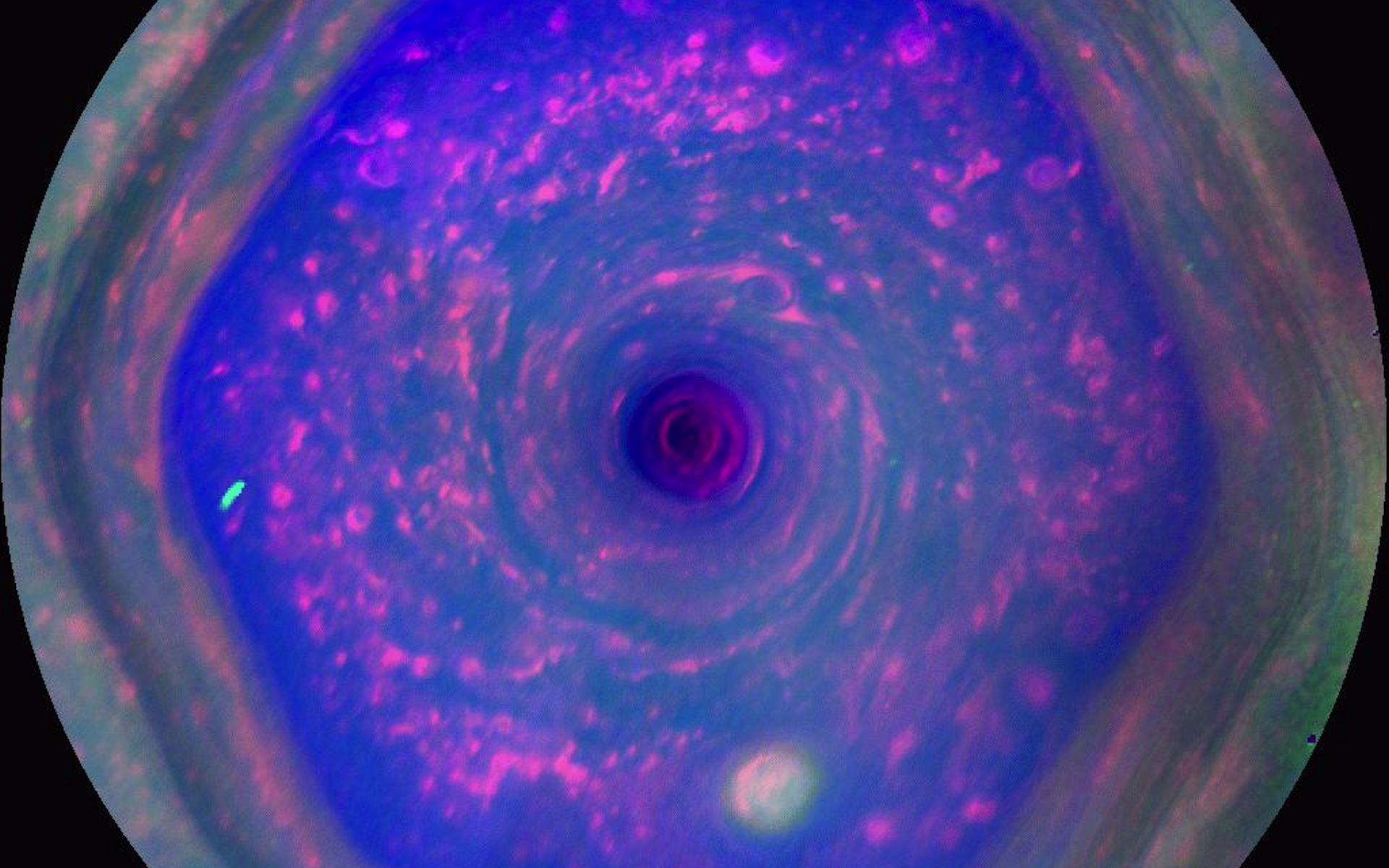
This colorful space wallpaper from NASA's Cassini mission is the highest-resolution view of the unique six-sided jet stream at Saturn's north pole known as the hexagon. Image obtained on Dec. 10, 2012 and released Dec. 4, 2013. (Image credit: NASA/JPL-Caltech/SSI/Hampton)
Similarly, experiments that Sanchez-Lavega and his colleagues performed with computer simulations of currents in shallow water suggest the decagon formed because of a meandering wave trapped by a curving atmospheric jet. Unlike the hexagon, whose sides and points have remained equally dark for decades, the decagon varies in darkness across its features. This could mean that it may still be evolving.
"We need to understand how the decagon evolves — in other words, whether in the coming years it will become unstable and break up, or conversely, become more stable and robust as solar radiation increases, which will peak at its latitude of around 60 degrees south in 2032," Sanchez-Lavega said.
The scientists also want to gain a more detailed understanding of the three-dimensional structure of the decagon's clouds, hazes, winds and temperatures. This will help them "develop more advanced models of its formation," Sanchez-Lavega said.
The scientists detailed their findings Sept. 2 in the journal Science Advances.
Microbes from Earth might survive the harsh surface of the moon, albeit in a state of suspended animation, a new study finds.
Previous research suggested the surface of the moon was too harsh for microbes to survive. Specifically, a 2019 study found ultraviolet rays and heat from the sun are the greatest barriers for microbial life on the lunar surface.
However, this prior work did not account for the shelter that hills and valleys might supply on the moon. These could prove especially significant at the lunar poles, where the sun never climbs high in the sky, leading to permanently shadowed regions that can host ice — and perhaps more.
In the new study, researchers analyzed three kinds of bacteria and two kinds of fungus. These are all commonly found on crewed space missions, and include microorganisms that prior work discovered were especially durable in the harsh conditions of space. Previous research found these lifeforms are resistant to vacuum, cold and high-energy particles.
The scientists compared previously compiled survivability data of these microbes with lunar maps that captured ultraviolet and heat readings on the moon's surface. They found that both lunar poles likely have areas where microbes could survive, albeit in a state of suspended animation known as cryptobiosis in which they could not move or grow unless more hospitable conditions appeared.
Microbes might not need much in the way of shelter on the moon. "Even a bootprint or a rover's tread may create a habitable area," study co-author Prabal Saxena, a planetary scientist at NASA Goddard Space Flight Center in Greenbelt, Maryland, told Space.com.
NASA's Artemis III mission is planned to be the first time humans will explore the lunar south pole. "Our findings show that we need to be even more thoughtful about the materials that we might unintentionally take with us when we are exploring space, and the impacts that we might have," study co-author Heather Graham, an organic geochemist at NASA Goddard Space Flight Center, told Space.com.
Future experiments may test just how well microbes of many kinds might survive on the moon, Saxena said. "We have this great opportunity to really think about the limits of life and how resilient it is even in incredibly extreme environments," he said.
All in all, "the moon is a really diverse and interesting body, and the lunar poles are really unique regions in terms of how they can trap volatiles like water, and the ability to trap life," Saxena said.
The scientists detailed their findings online Aug. 19 in the journal Science Advances.
A radiation-shielding vest might one day protect astronauts from dangerous, random outbursts from the sun, a new study finds.
More than 50 years after the final Apollo mission, NASA's Artemis program aims to return humans to the moon. To succeed, this project must protect astronauts from solar radiation, especially the intense and unpredictable radiation from solar storms. Coating an entire spacecraft with a meaningfully thick layer of radiation shielding remains impractical due to weight constraints, but wrapping astronauts in protective garments may potentially be helpful.
In the new study, researchers experimented with the AstroRad vest, which was designed by the Israeli startup StemRad with support from the Israel Space Agency and aerospace giant Lockheed Martin. The garment was created to protect astronauts from explosions from the sun known as solar particle events.
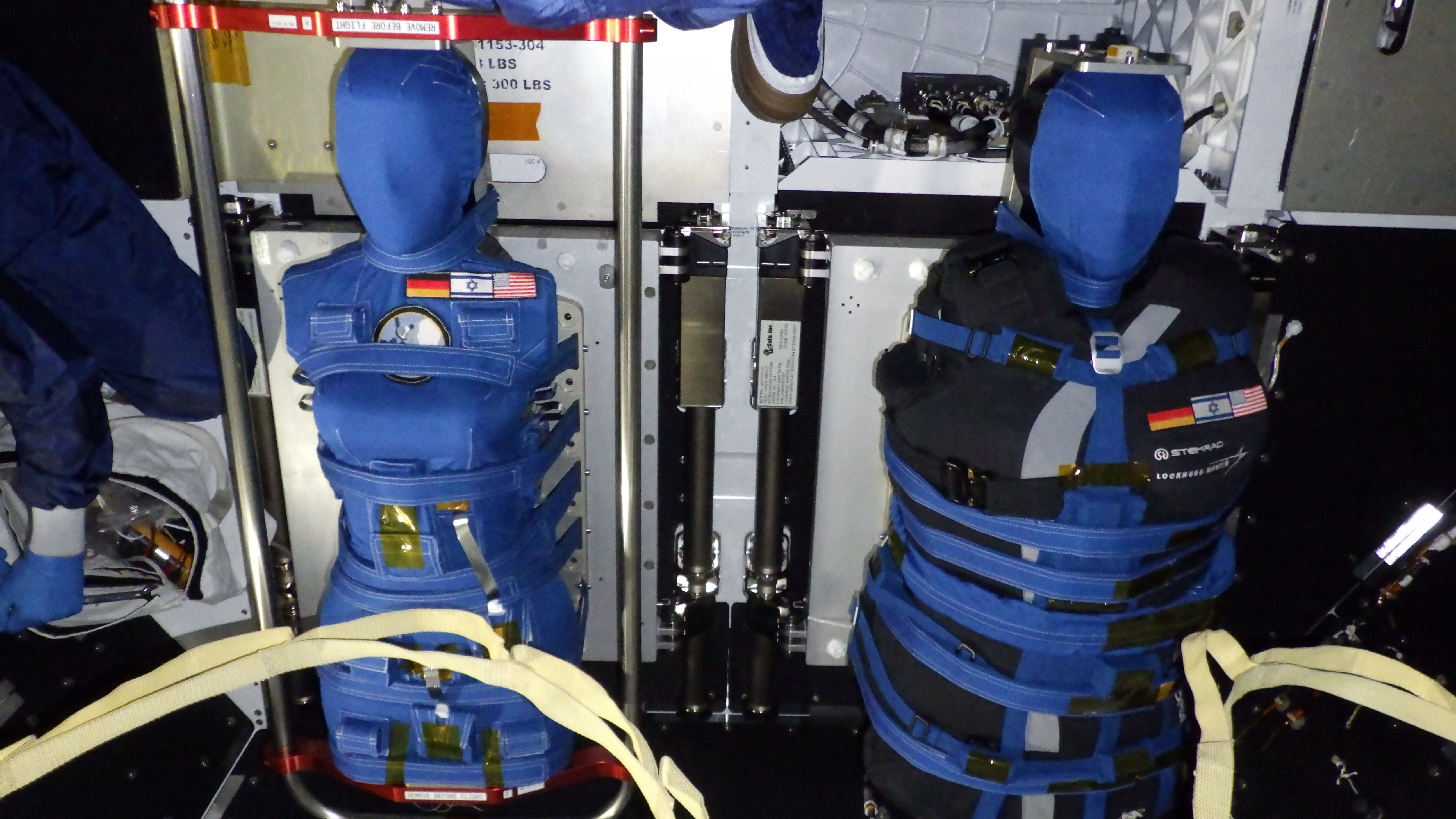
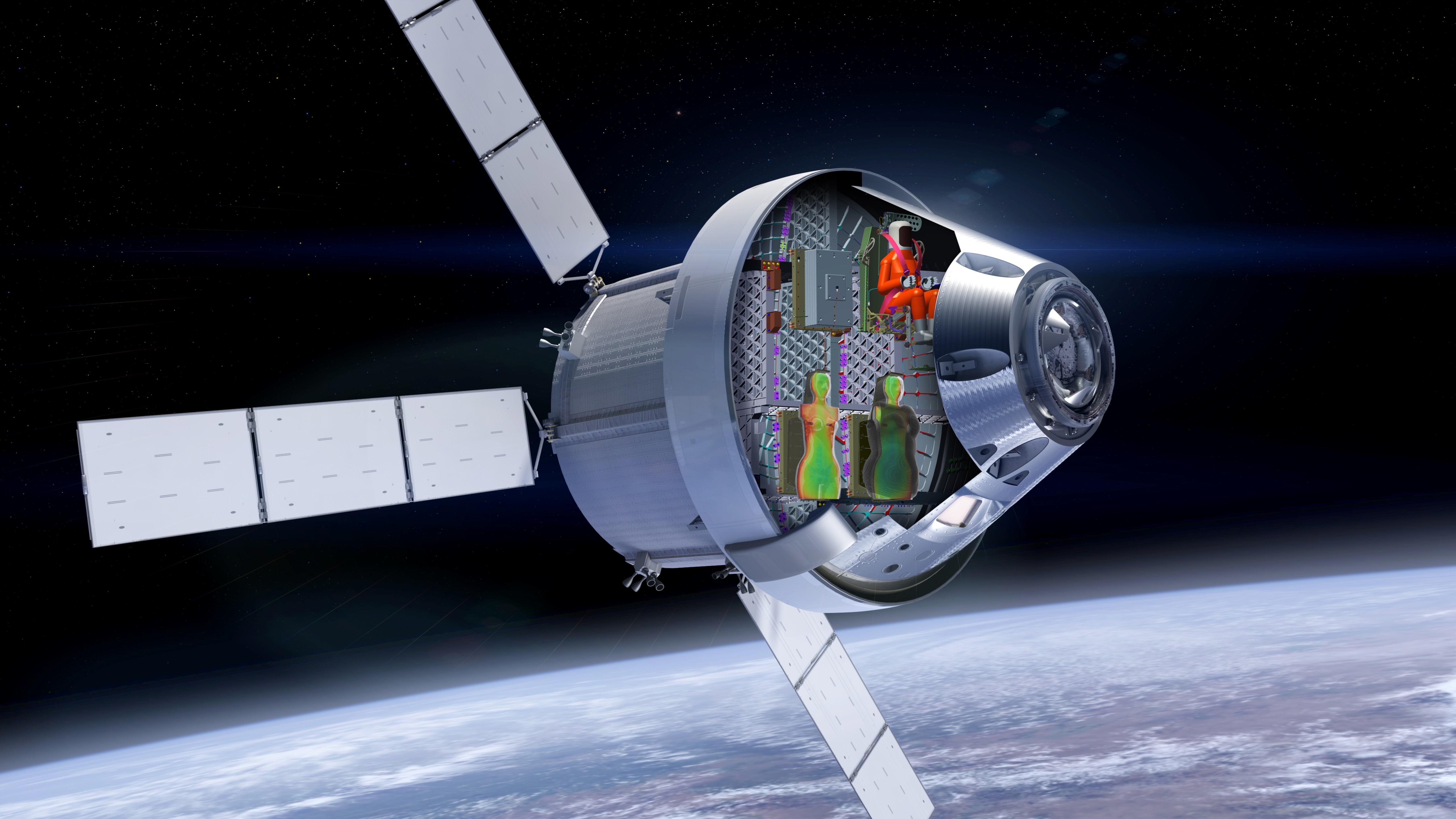
The "phantoms" Helga and Zohar inside the Orion spacecraft at NASA's Vehicle Assembly Building prior to the launch of Artemis I. Zohar, right, wore the AstroRad vest while Helga did not. (Image credit: NASA/Lockheed Martin/DLR)
"Radiation in space is unavoidable, and a single major solar particle event can make a substantial contribution to an astronaut's lifetime risk of radiation-induced cancer," study co-author Oren Milstein, CEO and co-founder of StemRad, told Space.com. "By significantly reducing that contribution, personal shielding could be particularly important for future lunar and Mars missions."
When it comes to protection against radiation, lead is excellent at blocking hazardous forms of light, such as X-rays and gamma rays. However, lead is much less effective at defending against the kinds of dangerous particles that can hurtle through space. For instance, when fast high-energy electrons known as beta particles strike dense lead atoms, they can trigger a shower of X-rays that are more harmful than the beta particles themselves. And if neutrons strike lead atoms, they can knock loose a spray of neutrons from the atoms' nuclei, worsening the impact from the radiation.
Instead, AstroRad relies on a high-density plastic rich in hydrogen. Among the elements, hydrogen possesses the highest density of electrons per atom, which can help create a dense shield to protect against incoming particles. At the same time, hydrogen atoms normally do not have neutrons, so if neutrons hit them, they cannot generate the kind of dangerous neutron sprays that can happen with lead atoms.
Moreover, the plastic in AstroRad is much lighter than lead. This makes it easier to move around in garments incorporating the plastic, and more practical for space missions in which weight is a major limitation.
The scientists combined thousands of hexagonal rods of the rigid plastic together like scales to create a flexible garment. All in all, each vest weighed about 57 pounds (26 kilograms).
The scientists developed a vest rather than a full-body suit or a helmet because "different organs and tissues have very different sensitivities to radiation, so shielding every part of the body equally is not the most effective approach," study co-author Jordan Houri, lead scientist for space exploration at StemRad, told Space.com. "At the same time, a full-body suit would be much harder to put on and move around in."
The shielding thickness of the AstroRad vest was based on how sensitive to radiation the underlying organs were. This strategy provides about a 30% greater reduction in the dose of radiation a person receives compared with distributing the same amount of shielding uniformly across the body, Houri said.
The researchers tested their vest during NASA's uncrewed Artemis I moon mission in late 2022 using a pair of extraordinarily complex dummies called phantoms. These artificial torsos were constructed of plastics that mimicked the density of human tissue, bone and organs, and each was equipped with more than 5,600 radiation sensors on and in them.
The two phantoms were designed to be adult females, since previous research found that breasts and ovaries are especially susceptible to radiation damage.
"Women are predicted to face a higher risk of radiation-induced cancer," Milstein said. "Targeted shielding could help narrow that difference in risk between male and female astronauts."
Since the phantoms mimicked women, they were given women's names, Zohar and Helga. "Helga was contributed to the experiment by the German Aerospace Center, and Helga is a traditional German name," Milstein said. "Zohar was contributed by the Israel Space Agency, which selected the name through a public outreach campaign. Zohar is a traditional Hebrew name meaning 'radiance,' which we thought was particularly fitting."
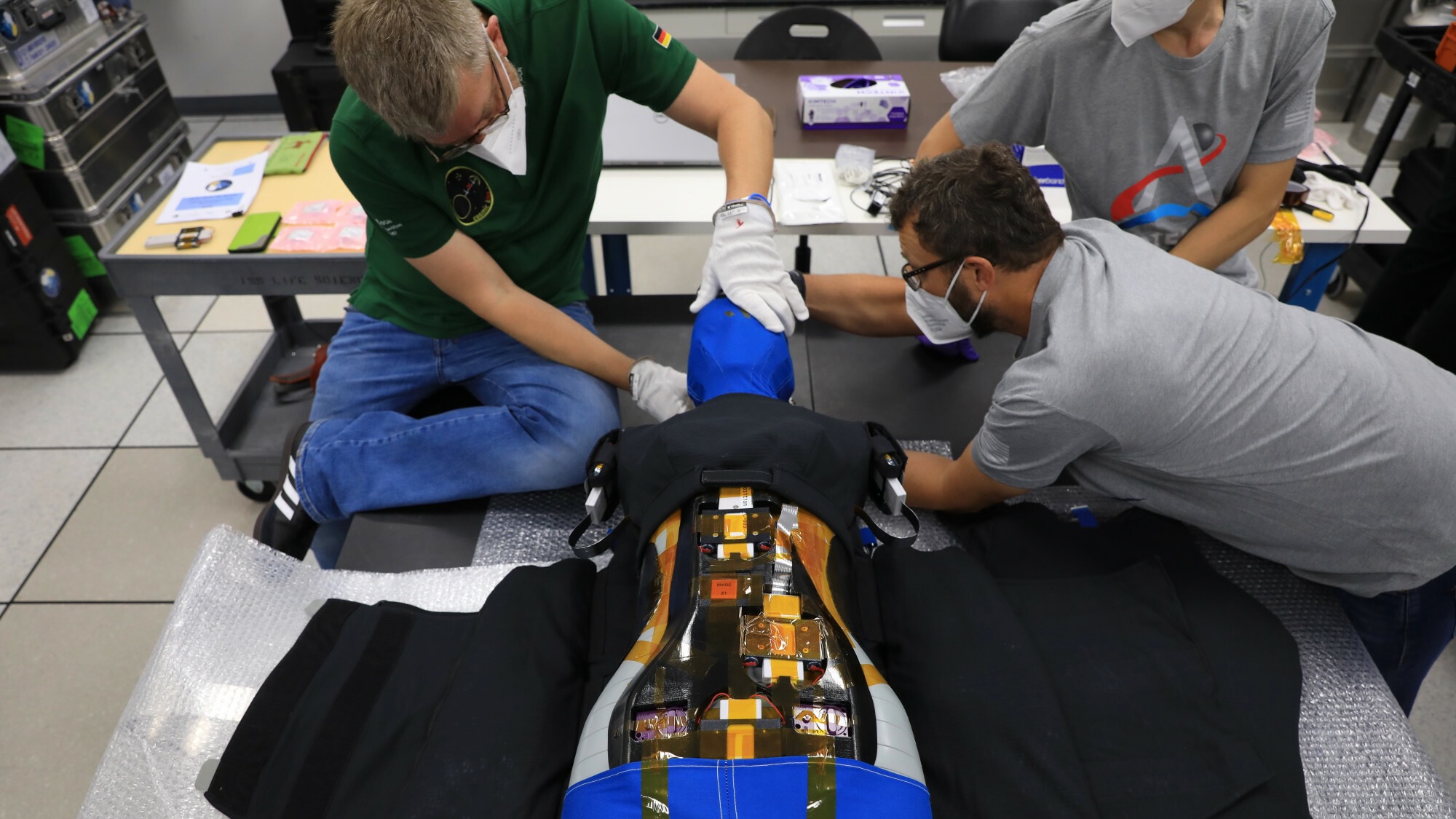
Assembling the Zohar phantom with the AstroRad vest at Kennedy Space Center prior to launch of Artemis I. (Image credit: NASA/DLR)
Zohar and Helga flew seated in NASA's Orion spacecraft; Zohar was equipped with an AstroRad vest, while Helga was not. Although Orion did not encounter a significant solar outburst during its 26-day mission to lunar orbit and back, the researchers were able to extrapolate how much solar radiation astronauts might experience based on what the phantoms encountered passing through the inner Van Allen belt of radiation surrounding Earth.
When the scientists analyzed past solar particle events, they found the AstroRad vest would have significantly reduced the dose of radiation a person during those outbursts — for instance, by nearly 60% for a solar particle event that happened in August 1972.
"We had originally anticipated something closer to 45%, so when we first saw the result, we thought we needed to go back and find an error," Houri said. "Instead, the detailed analysis showed that AstroRad's approach of providing targeted shielding to the most radiation-sensitive organs and tissues was even more effective than we had projected."
Such a reduction could spare astronauts the equivalent of up to 193 days of deep-space radiation exposure. "The most important implication is that AstroRad could help overcome one of the major health challenges limiting long-duration human exploration beyond Earth," Milstein said.
3D rendering of the Matroshka AstroRad Radiation Experiment (MARE) during NASA’s Artemis I mission, showing the two radiation dosimetry phantoms, Helga and Zohar inside the Orion spacecraft. (Image credit: NASA/Lockheed Martin/DLR/StemRad)
AstroRad is not something astronauts would wear continuously throughout an entire mission, Houri said. "AstroRad was developed as an emergency countermeasure for solar particle events, so astronauts would only wear it when radiation levels are elevated, typically for periods of hours or days," he explained.
Still, "although it is not something astronauts would need to wear throughout an entire mission, we designed the vest to remain usable for many hours at a time," Milstein said. During tests with the vests on the International Space Station, "several crew members even slept with it on."
The level of radiation protection the AstroRad vest provided was similar to that supplied by the Orion spacecraft's onboard storm shelter, "while allowing the astronaut wearing it to leave the shelter and continue mission-critical tasks," Houri said. "AstroRad can be used on its own or together with a shelter, but one of its main advantages is that an astronaut can remain protected while moving around the cabin and carrying out essential mission operations rather than remaining inside the shelter."
The scientists are now investigating whether it is possible to manufacture radiation shielding in space using onboard materials. For instance, in collaboration with Florida aerospace company Redwire, "we have already demonstrated that it is possible to 3D-print AstroRad components from recycled polyethylene aboard the International Space Station," Milstein said.
The scientists detailed their findings online today (Aug. 12) in the journal Science Advances.
Three of Neptune's moons might have been born from the remnants of ancient icy worlds shattered by Neptune's largest moon, Triton, a new study finds.
These findings suggest further research of these moons might give researchers an unprecedented look at the innards of icy worlds.
"The interiors of large icy moons are normally permanently hidden from us, buried beneath thick shells of water ice," study lead author Ryleigh Davis, a planetary scientist currently at the University of California, San Diego, told Space.com. "Neptune's inner moons may be the only place in the solar system where we can directly observe that material, because a catastrophic event essentially turned those ancient worlds inside out."
Triton is by far the largest of Neptune's 16 known moons. More than 99 percent of the mass of all of Neptune's moons is concentrated in Triton, which is roughly the size of Pluto, Davis said.
Whereas the largest moons of the solar system's other giant planets all orbit their worlds in the same direction as those planets spin, Neptune's largest moon, Triton, orbits in the opposite direction. This unusual configuration suggests the Neptunian system evolved in a dramatically different way than those of its siblings. Instead of Triton forming around Neptune, as the largest moons of the other giant planets likely did around their worlds, Triton's backward orbit has led researchers to suspect "it was captured from the outer solar system," Davis said.
When Neptune captured Triton with its gravity, Triton may have acted like a giant wrecking ball, smashing many of the moons Neptune may have originally had, Davis said. However, much remained uncertain about what happened in the aftermath of this destruction.
To shed light on the mysteries of Neptune's history, scientists investigated Neptune's rings and three of its moons — Larissa, Galatea, and Proteus. Discovered in 1989 with the Voyager 2 flyby of Neptune, these moons are small and close to Neptune, orbiting just outside the planet's main rings. Their locations and tiny sizes have made it difficult for astronomers to study them in detail from Earth.
In the new study, the researchers analyzed near-infrared light from those inner moons using the James Webb Space Telescope . This data helped reveal their chemical makeup for the first time.
The rings and two of the inner moons — Larissa and Galatea — possessed clay minerals previously unseen on the surfaces of bodies in the outer solar system beyond Jupiter. Specifically, they contain magnesium-rich phyllosilicates, commonly found in main belt asteroids and carbonaceous chondrite meteorites.
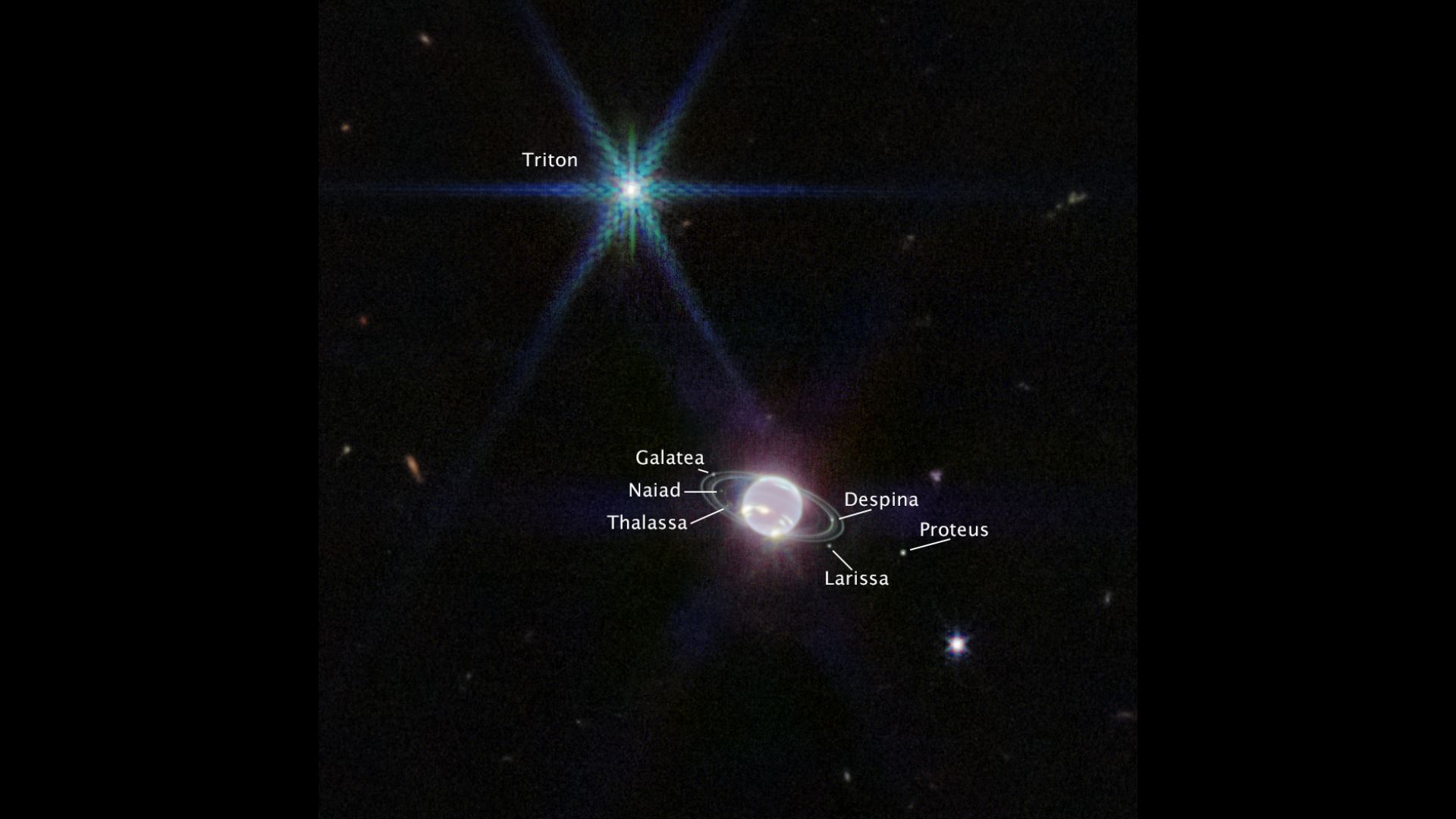
The JWST captured seven of Neptune's 14 known moons: Galatea, Naiad, Thalassa, Despina, Proteus, Larissa, and Triton. Neptune's large and unusual moon, Triton, dominates this portrait of Neptune as a very bright point of light sporting the signature diffraction spikes seen in many of the JWST's images. (Image credit: NASA, ESA, CSA, STScI; Image Processing: Joseph DePasquale (STScI), Naomi Rowe-Gurney (NASA-GSFC))
"The most surprising thing is simply that we found clay minerals at all," said Davis, who conducted this research at the California Institute of Technology in Pasadena. "That was genuinely not on our list of things we expected to find."
These minerals require major prolonged heating to form. One likely place they were created was the deep interior of a large icy body, where heat might come from radioactive material and other sources.
As such, the researchers suggest these minerals are evidence Triton may have demolished Neptune's original moons. The rubble could then come together, forming Neptune's inner moons, with the clay minerals exposed on their surfaces.
Another possibility is that these clay minerals came from a dwarf planet similar in size to Pluto that passed too close to Neptune. Neptune's gravity might then have shredded this dwarf planet apart, Davis said.
These clay minerals only form in the presence of liquid water. Mysteriously, no water ice was detected in any of the three moons studied or the rings.
"That's really surprising because everything out in this part of the solar system is really icy," Davis said in a statement. "So, we're fairly confident that they had to come from deep inside something that was big enough to generate enough heat that it melted its water ice. We think the most likely place would be an original system of icy moons, although it's a bit of a mystery where the ice may have gone."
The scientists noted they did not see these clay minerals on Proteus, the biggest of the three moons they investigated. They suggested it might have formed from a clay-mineral-poor part of the debris, or experienced subsequent heating that destroyed any such minerals.
Curiously, the scientists found all three moons and the rings had a hydrated mineral the researchers were not able to identify. "Identifying it will likely require new laboratory measurements under outer solar system conditions, which is technically challenging but doable," Davis said.
To learn more about Neptune, a spacecraft dedicated to visiting the planet "is the obvious next step," Davis said. "We've had only a single flyby — Voyager 2 in 1989 — and these results make clear there's much more to learn. The main obstacle is time and resources: an ice giant mission was identified as a high priority in the most recent Planetary Science Decadal Survey, but these missions take decades to develop."
The scientists detailed their findings July 29 in the journal Science Advances.
For the first time, scientists may have discovered a binary system—like the twin suns of the fictional planet Tatooine in "Star Wars"—where both stars exploded as supernovas, a new study finds.
Although Earth may orbit around a single star, more than half of all stars are in systems where two or more suns orbit each other. "When it comes to massive stars, the percentage in multiple systems are even higher," study lead author Miltiadis Michailidis, a postdoctoral fellow at Stanford University in California, told Space.com.
When massive stars burn all their fuel, they can die in giant explosions known as supernovas. These outbursts can briefly outshine all of the other suns in these stars' galaxies. They often leave behind expanding super-hot clouds of debris known as supernova remnants. Astronomers have detected about 300 such remnants in our galaxy to date.
Given how often massive stars are found in binary systems, "one can expect many pairs of massive stars where both will explode as supernovas," Michailidis noted. "However, this has never been observed, until now."
One reason supernova pairs may have escaped attention is that "if the stars are too close together when they exploded, the resulting supernova remnants may look like that from a single explosion," Michailidis explained. Another is that one star going supernova may propel its partner far enough away to hide the fact they were ever a duo, he added.
In the new study, Michailidis and his colleagues investigated a supernova remnant known as IC 443, located about 6,000 light-years from Earth in the constellation Gemini. IC 443 is also known as the Jellyfish Nebula for how it resembles a jellyfish.
IC 443 is one of the most extensively studied supernova remnants in the galaxy because of how shock waves from the supernova have collided with surrounding clouds of gas and dust to create a set of concentric bubble shells, "much like how a drop of water falling on a lake creates circular waves," Michailidis said. "It is very isolated from its surroundings, without many other objects nearby to complicate its very bright emissions."
The scientists analyzed one of IC 443's much dimmer, long-hidden neighbors, dubbed G189.6+3.3. The German-led ROSAT (Roentgen Satellite) mission first discovered G189.6+3.3 in 1994 via its faint X-ray emissions, and the Russian-German Spektrum Roentgen Gamma (SRG) space observatory later clearly detected shell-like structures within G189.6+3.3, suggesting that it was a supernova remnant.
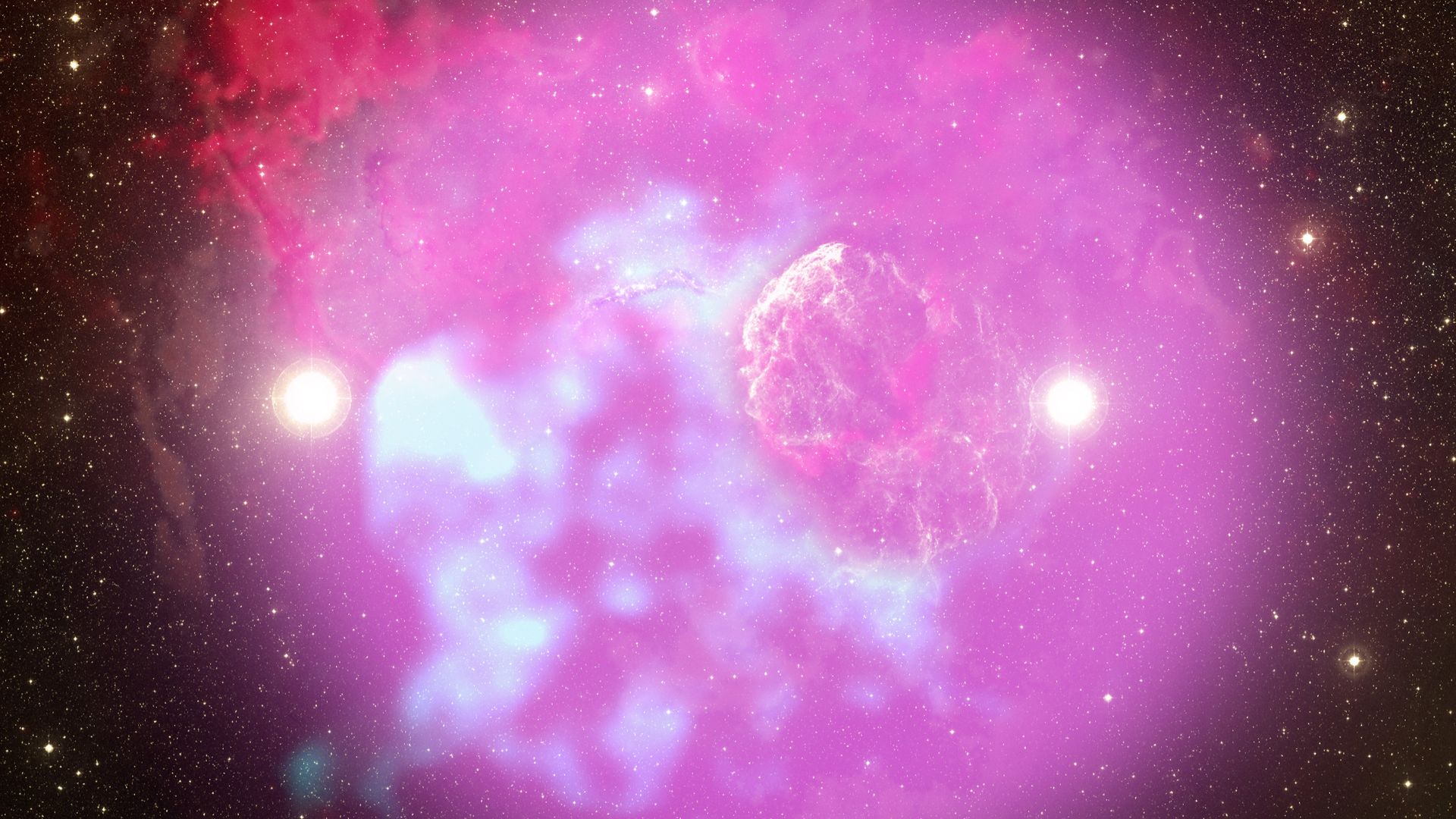
A composite multiwavelength view of the IC 443 region (with the X-ray emission from IC 443 removed) overlaid with gamma-ray emission above 1 GeV detected by the Fermi Large Area Telescope. (Image credit: NASA Goddard Space Flight Center and M. Michailidis et al. 2026; orange, brown: radio, ESA/Planck and MWISP; yellow: optical, DSS; red: infrared, NASA/WISE; violet: ultraviolet, NASA/Swift; teal: X-rays, SRG/eROSITA; magenta: gamma rays, NASA/DOE/Fermi LAT Collaboration)
In the new study, the researchers analyzed more than 16 years of data from NASA's Fermi Gamma-ray Space Telescope along with earlier X-ray, optical and radio measurements. They discovered signs that both IC 443 and G189.6+3.3 were both smashing into the same interstellar cloud of hydrogen, revealing they were close together in space, with the centers of their explosions about 30 to 50 light-years apart.
The researchers calculated that the chances of randomly encountering two unrelated supernova remnants at this distance from one another "was about one in 1,000," Michailidis said. "This suggests that our discovery is in fact the first known binary-system supernova pair."
The scientists estimated that G189.6+3.3 was older than IC 443, with the parent star of G189.6+3.3 exploding between 20,000 to 110,000 years ago, while IC 443 was created about 8,000 to 9,000 years ago. The original stars may have been 20 or more times the sun's mass.
These new findings can help shed light on how massive binary stars evolve, interact and die. For instance, further analysis of G189.6+3.3 and IC 443 can reveal how much of a kick the former gave the latter when it died, Michailidis said.
The scientists detailed their findings July 21 in the journal Nature Communications.
The costs of space launch have fallen 96% in the past six decades and have the potential to plummet by nearly as much by 2040, a new study finds.
However, such an improvement might get hampered by a number of challenges, such as the rise of space debris in orbit or a single company monopolizing commercial space launch, researchers added.
Although previous analyses of space launch suggested that costs had dropped over time, one major problem with these prior studies was that they "considered the cost of the rockets, but not how much they launched during their lifetimes," study co-author Francesco Nicoli, an associate professor of political economy at the Politecnico University of Turin in Italy, told Space.com. This meant this earlier work failed to accurately track the average costs of reaching space.
Before commercial launch: A NASA Saturn V rocket launches on May 14, 1973, carrying the Skylab 1 space station into orbit. (Image credit: NASA)
In the new study, the researchers developed the largest dataset of rocket launches to date, covering 4,405 launches from 1960 to 2025. This included more than 330 different rocket configurations devised by developers in the United States, Russia, China, India, Europe, Japan, Australia, Brazil, Israel, Iran, South Korea and Ukraine.
The investigators found that, in 2024 U.S. dollars, the average cost of sending 2.2 pounds (1 kilogram) to orbit dropped from $87,023 in 1960 to $3,868 in 2025 — a decrease of 96%.
All in all, the rate at which the space-launch industry learned to reduce costs was among the fastest recorded in any industry to date, the investigators noted. They calculated that each time the cumulative payload of the entire space-launch industry doubled, the average cost of sending 2.2 pounds (1 kg) to orbit decreased by 21.2%.
This learning rate exceeds that seen with solar panels, "a technology that is now frequently taken as the benchmark for cost reduction," study co-author Alessio Terzi, an assistant professor of public policy at the University of Cambridge in England, told Space.com.
The researchers suggested two major causes behind this drop in costs. "First, the end of the Cold War and the shift to so-called 'New Space,' meaning the use of space for commercial purpose, seems to have accelerated the rate of learning — in the Cold War era, countries launched with their national launchers no matter the cost," Terzi said. "Second, our data shows an acceleration in the learning rate of space since the launch of the Falcon 9 of SpaceX, and the advent of reusability at scale."
Assuming this trend holds, the investigators estimated the average cost of space launch would fall to $1,600 per 2.2 pounds (1 kg) by 2030 and $300 by 2040. "There is still significant scope for further cost reductions going forward," Terzi said.
Of course, past performance is no guarantee of future results. There are at least three factors that could slow or reverse this cost trajectory, the researchers said.
First, space junk poses a growing problem for the launch industry. Space debris is typically zipping at speeds of about 16,800 mph (27,000 km/h), and so can inflict massive damage on anything in orbit. The problem space junk poses gets worse when collisions spawn even more debris, eventually cluttering space with high-speed shrapnel, a scenario nicknamed the "Kessler syndrome" after NASA scientist Donald Kessler, who predicted it in 1978.
Second, at the global level, SpaceX is currently responsible for roughly 75% of the total payload sent to orbit. The investigators noted there are strong economic incentives for a would-be monopolist to charge higher prices to potential clients. This in turn would reduce the total payload sent to orbit, slowing the future evolution of average launch costs.
Finally, the current climate of increasing geopolitical tensions is likely to make governments around the world cautious when it comes to depending too heavily on a single U.S. company for space launch. This may bring back Cold War dynamics, as nations pursue independent access to orbit, even if this means using more expensive home-based rocket technology, the researchers said.
All in all, "there is a strong feeling, perhaps exemplified by the recent record-breaking mega-IPO of SpaceX, that space is at a structural break point — a moment where trends are accelerating," Terzi said. "Forecasting at moments of structural break is very hard in general, and therefore also in our case."
The scientists detailed their findings July 14 in the journal PNAS Nexus.