My 5 favorite sights to see in the night sky with binoculars

Top 5 things to see in the night sky with binoculars — ranked by an expert

Beyond simple naked-eye observing, a pair of the best binoculars are the most accessible way to experience the night sky. They are affordable (although pricier models are available), very easy to use compared to telescopes and they offer a wide range of celestial sights, from our solar system neighbors to distant deep-sky objects. They are great for both beginners, casual observers and even veteran stargazers who want to grab a quick look or spend time sweeping through the Milky Way.

So what are the best night-sky targets for binocular users? There are so many, but we’ve done our best to whittle them down to five of the best that provide a good sense of what can be seen through binoculars. We’ve also accounted for different apertures and magnifications to make sure there’s something for everyone, even kids

The moon
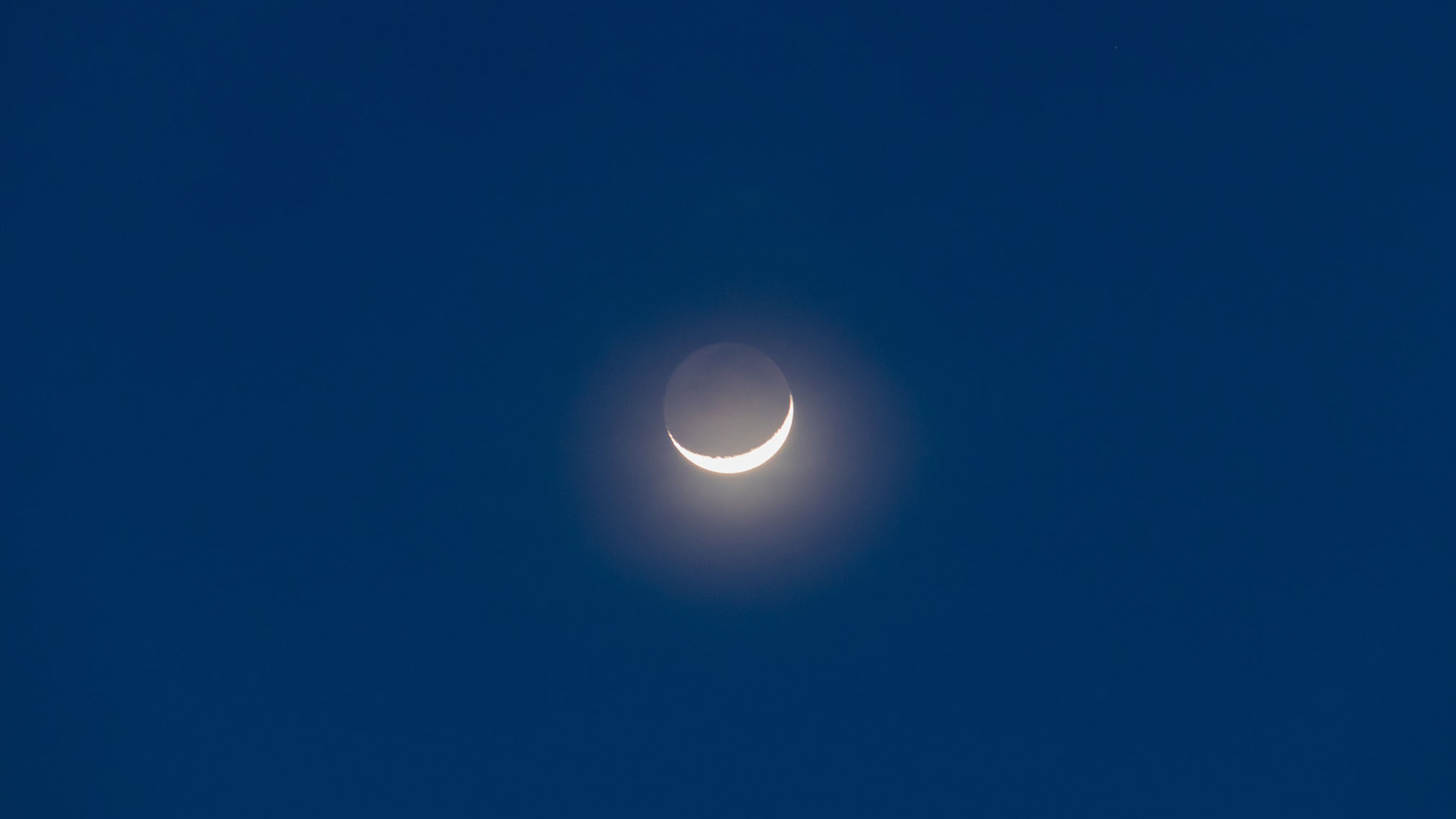
Earthshine on moon

Binoculars can get you great views of the moon. (Image credit: Getty Images)

The moon is the ideal starting point for observing with binoculars. As a large target full of intricate features that appear differently depending upon the illumination, the moon rewards return visits, and you’ll never grow bored.

Even low-magnification, smaller-aperture binoculars will show some interesting details. Small 8x40 or 7x50 binoculars are sufficient; you certainly wouldn’t want to go as low as, say, 8x25 because the moon would appear small. While larger magnifications can improve the view, unless you have the binocular mounted on a tripod, the shake from jittery hands can look like moonquakes. If you don’t have a tripod, an alternate solution is to use image-stabilized (IS) binoculars, where the binoculars’ internal electronics are able to remove the jitter from the image, making the view more static.

The illumination on the moon changes across a 29.5-day cycle as the sun rises and sets over the lunar landscape, with phases cycling from new to first quarter, then to full and last quarter and finally back to new again. Often, the best time to observe a particular feature on the moon is when it is dawn or dusk at that location, and the sun angle is low, casting stark shadows. Otherwise, it is difficult to see the relief when the sun is overhead.

Jupiter’s moons
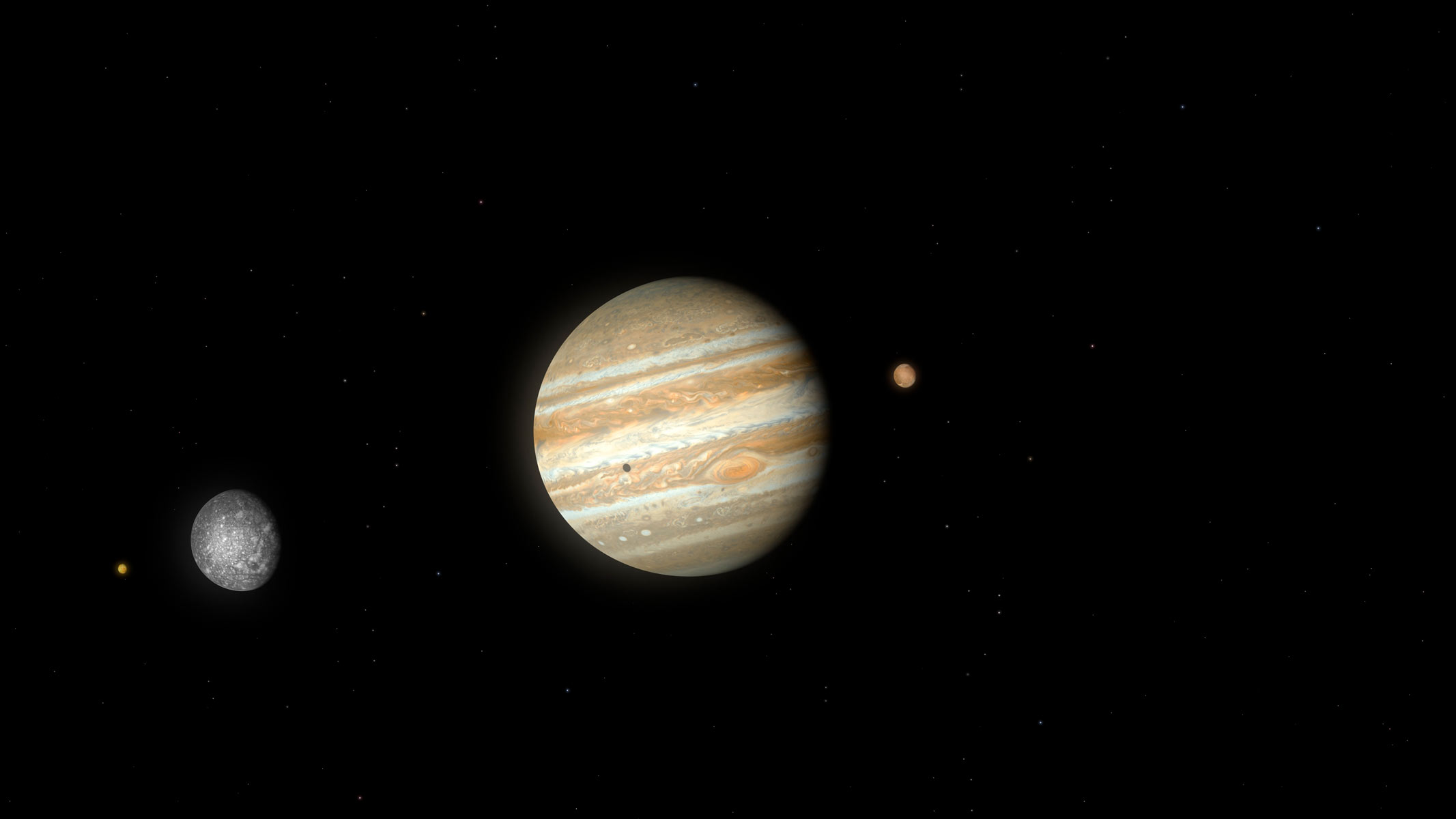
Jupiter and its moons.

Jupiter and (some) of its moons in orbit. Through binoculars views will be less detailed and smaller, but the moons are still visible. (Image credit: Getty Images)

Earth’s moon isn’t the only moon in the solar system that can be seen through binoculars.

A simple pair of 8x40s or 10x50s will be sufficient to watch the four largest moons of Jupiter — Io, Europa, Ganymede and Callisto — circle around the Jovian giant. Unfortunately, these binoculars won’t be enough to show you the belts of Jupiter or its Great Red Spot, but its four large moons, known as the Galilean moons, because they were discovered by Galileo, will appear as pinpricks of light on either side of Jupiter.

It’s fun to follow in Galileo’s footsteps and watch the moons orbiting Jupiter, sometimes disappearing from view as they move behind the giant planet, or pass in front of it. Binoculars will not be powerful enough to show the moons transiting against the face of Jupiter, though — Jupiter is too bright, and the contrast is not great enough. The other 91 moons of Jupiter are far too small and faint to be seen in binoculars.

Mizar and Alcor

a group of stars in the sky resembling a spoon or ladle

The Big Dipper constellation houses the stars Mizar and Alcor. (Image credit: Spike Silvernail/Getty Images)

In the handle of the pan-shaped Big Dipper (part of Ursa Major) is the pair of stars called Mizar and Alcor. They make a lovely visual double, easily seen with the naked eye, and they really pop when viewed through 10x50 binoculars, with Mizar the brightest at magnitude 2 and Alcor a little fainter at magnitude 4.

Some double stars are just visual doubles, meaning they are many light-years apart and unrelated, but they just happen to be very close to each other on the night sky as seen from our line of sight. Not so with Mizar and Alcor, which are physically bound by gravity as they orbit each other. However, view Mizar and Alcor through binoculars, and you will get a glimpse of the true magnificence of this system. Large binoculars will show that Mizar is also a double star. Resolving Mizar as two stars is probably pushing it in 10x50s, but a pair of 20x80 binoculars will give you a better chance of splitting them, with image-stabilized binoculars, if you have them, giving you the edge.

There’s even more in the Mizar and Alcor system than what binoculars can show. Both stars in the Mizar system are also doubles, as is Alcor, making this a six-star system in total! Sadly, these extra companions are so close together that not even telescopes can split them. But there are plenty of other doubles for you to hunt down with binoculars. The trick is to find double stars that have a wide enough separation to be resolvable by 10x50 binoculars. Try also Epsilon Lyrae and Alpha Librae, also called Zubenelgenubi, meaning ‘southern claw’, as it was once associated with the constellation Scorpius the Scorpion, before being moved into Libra the Scales.

Auriga’s open clusters
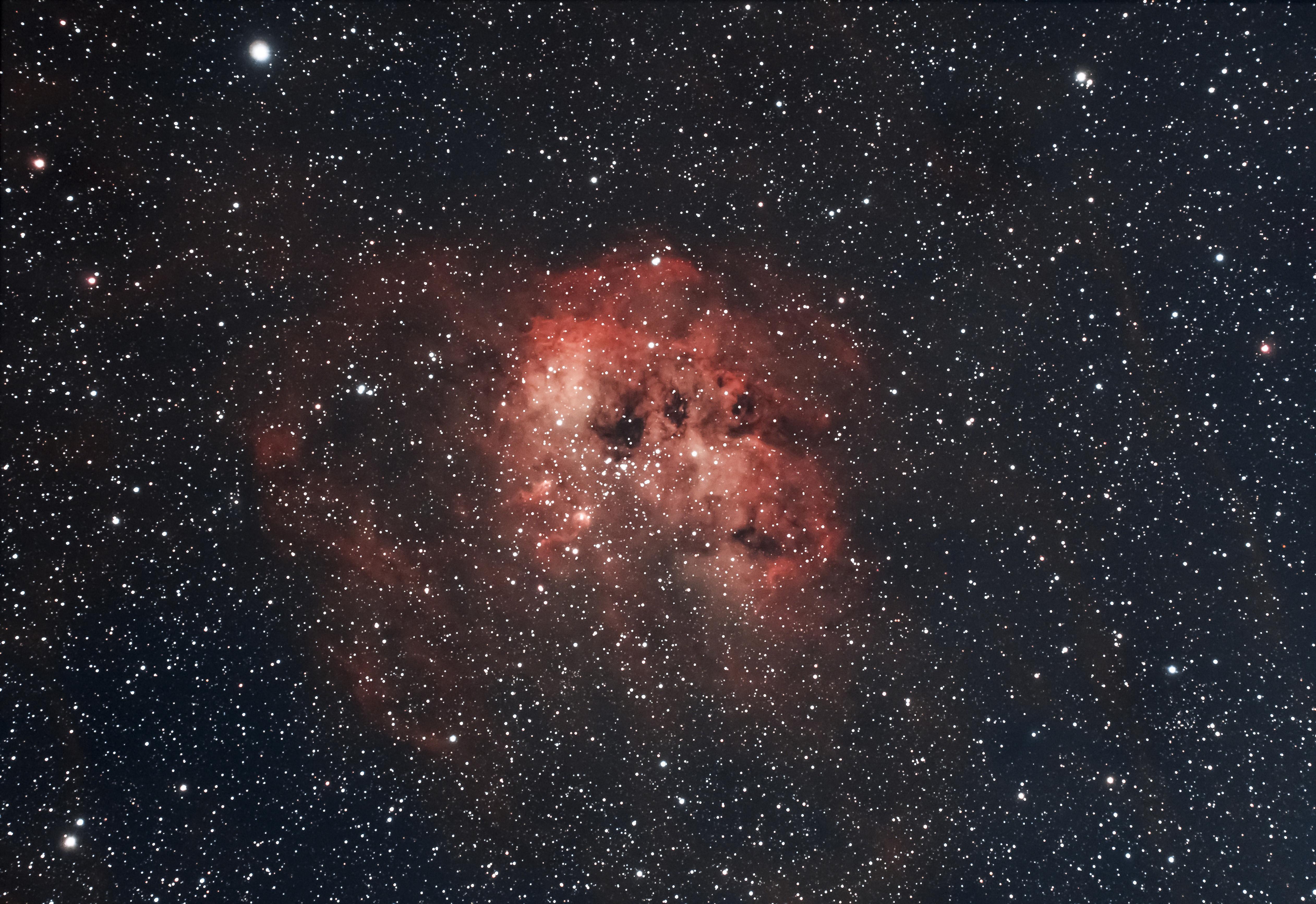
The tadpole nebula IC 410 in the constellation Auriga

The tadpole nebula, IC 410, in the constellation Auriga. Averted vision, powerful magnification and a tripod are a must to see this with binoculars. (Image credit: Getty Images)

Auriga the Charioteer is a constellation famed for two things: its brilliant yellow star Capella (the sixth brightest in the entire night sky), and its array of magnificent open clusters, notably Messier 36, 37 and 38.

Open clusters are young clusters of stars that were born together and are now gradually dispersing, and Auriga’s open clusters are some of the best and brightest of their kind in the night sky.

A pair of 10x50 binoculars can have a field of view between 5 and 7 degrees, depending upon the model. For the larger field, it’s possible to squeeze all three of Auriga’s open clusters into the same view!

To find the clusters, first drop down from Capella to alight on the bright star Elnath, which is actually Beta Taurii in the constellation of Taurus the Bull. You can find Elnath easily with the unaided eye. Switching to binoculars, look about three-quarters of the way along the line between Capella and Elnath. You should see six fainter stars of magnitude 6 forming a curve. Follow that curve west, and you’ll come across two other magnitude 6 stars close to M38, which appear as a hazy patch whose diffuse light is made from a multitude of faint stars. This is the case for all three clusters. Most of M38’s stars are not resolvable in binoculars, but some certainly are in 10x50s, and switching to larger aperture binoculars or an image-stabilized model will help to reveal more.

Just 2.5 degrees to the south-east is the next cluster, M36, which overall is brighter than M38. Through 10x50s look for eight or ten stars; again, large binoculars will reveal more.

Finally, M37 is located a little further away. The constellation of Auriga has an obvious five-sided shape marked by its main stars and Elnath. Draw an imaginary line between Elnath and Auriga’s bright star at its lower left, magnitude 2.6 Theta Aurigae. Messier 37 is found about halfway along and just outside of this line. Another hazy patch, it is the densest of the three clusters, but most of its individual stars are fainter than in M36 and M38, so M37 will need larger binoculars, say 25x100, to get the best out of it.

After spending time looking at the three clusters, sweep your binoculars along the splendor of the winter Milky Way, in which Auriga sits. Through binoculars, the vast star fields of the Milky Way are spellbinding.

The Andromeda Galaxy M31
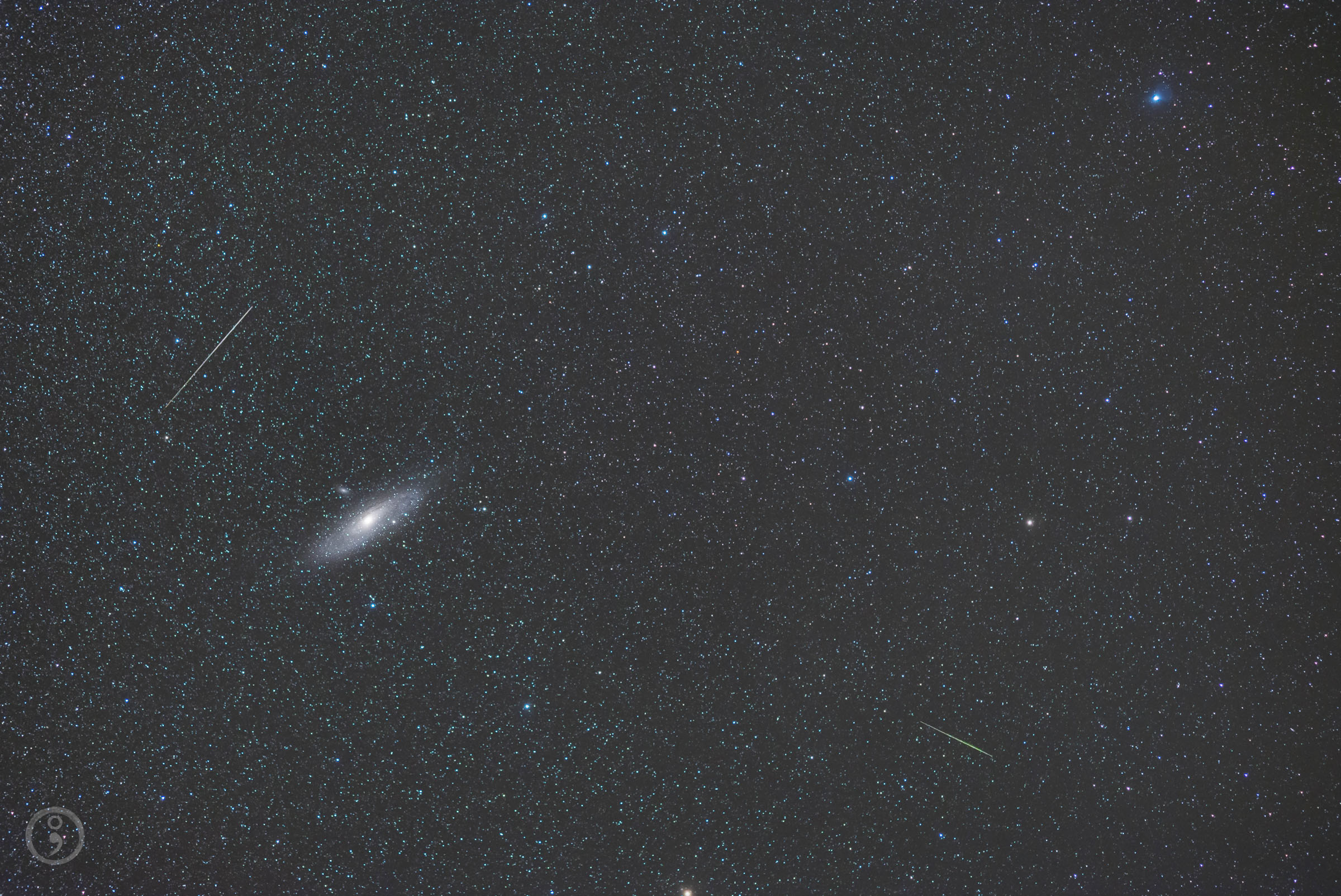
Two meteors dart across the sky near the Andromeda galaxy, the Milky Way's closest galactic neighbor, in this starry image captured by astrophotographer Omid Qadrdan.

This is a typical view of the Andromeda galaxy (M31) that you can easily achieve with binoculars, but dark skies and averted vision aid detail. (Image credit: Omid Qadrdan)

The Andromeda Galaxy (Messier 31) is the closest large spiral galaxy to our Milky Way galaxy, located 2.5 million light-years away. That means it is large and relatively bright in our night sky, making it a great target for binocular users. If you are observing from a dark site away from city lights, you will probably be able to see it with the naked eye.

If you can’t or are having trouble knowing where to look:
- Use the stars of the nearby constellation Cassiopeia to find it. Cassiopeia has the shape of the letter ‘W’. Use the bottom star on the right of the W — the brightest star in Cassiopeia, Alpha Cassiopeiae or Schedar — to...
- Point down towards Andromeda and its bright star Beta Andromedae, or Mirach.
- Now using 10x50 binoculars, move north-west until Mirach is at the bottom-left of your field of view and the star Mu Andromedae is at the top-right.
- Then move your binoculars the same distance in the same direction again, and you should find the Andromeda Galaxy.

While you won’t be able to resolve its spiral arms, you will see a smudge of light that is its disk, and a brighter core. Also look out for its two companion galaxies, M32 beneath it and M110 to the top-right. Both appear as fuzzy stars and, depending on how dark your observing site is, you may need to use averted vision to see them (looking at them out of the corner of your eye). Larger binoculars, say 25x100, will show M31 and its companions much more easily, though you’ll need a tripod to take their weight.
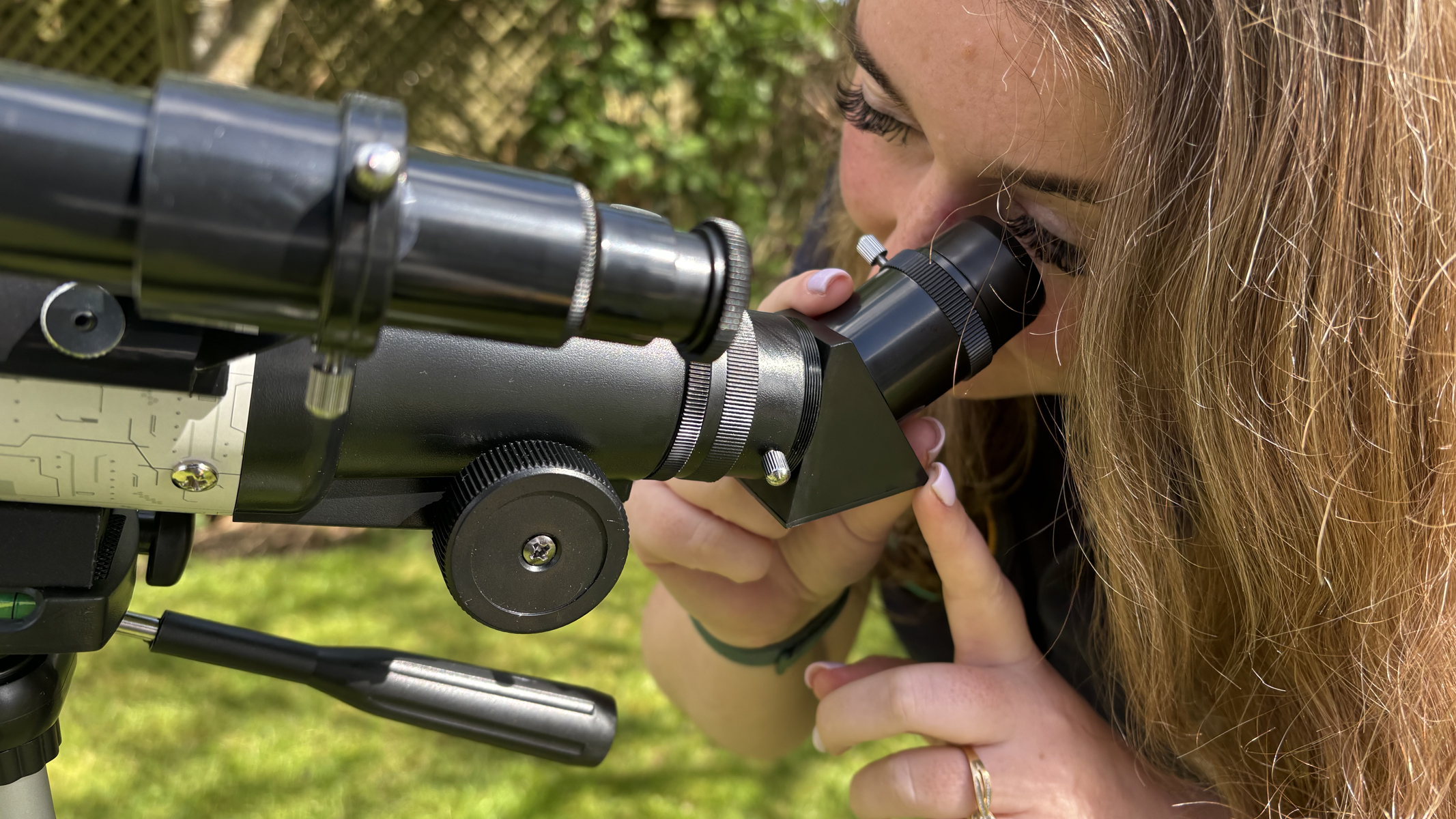
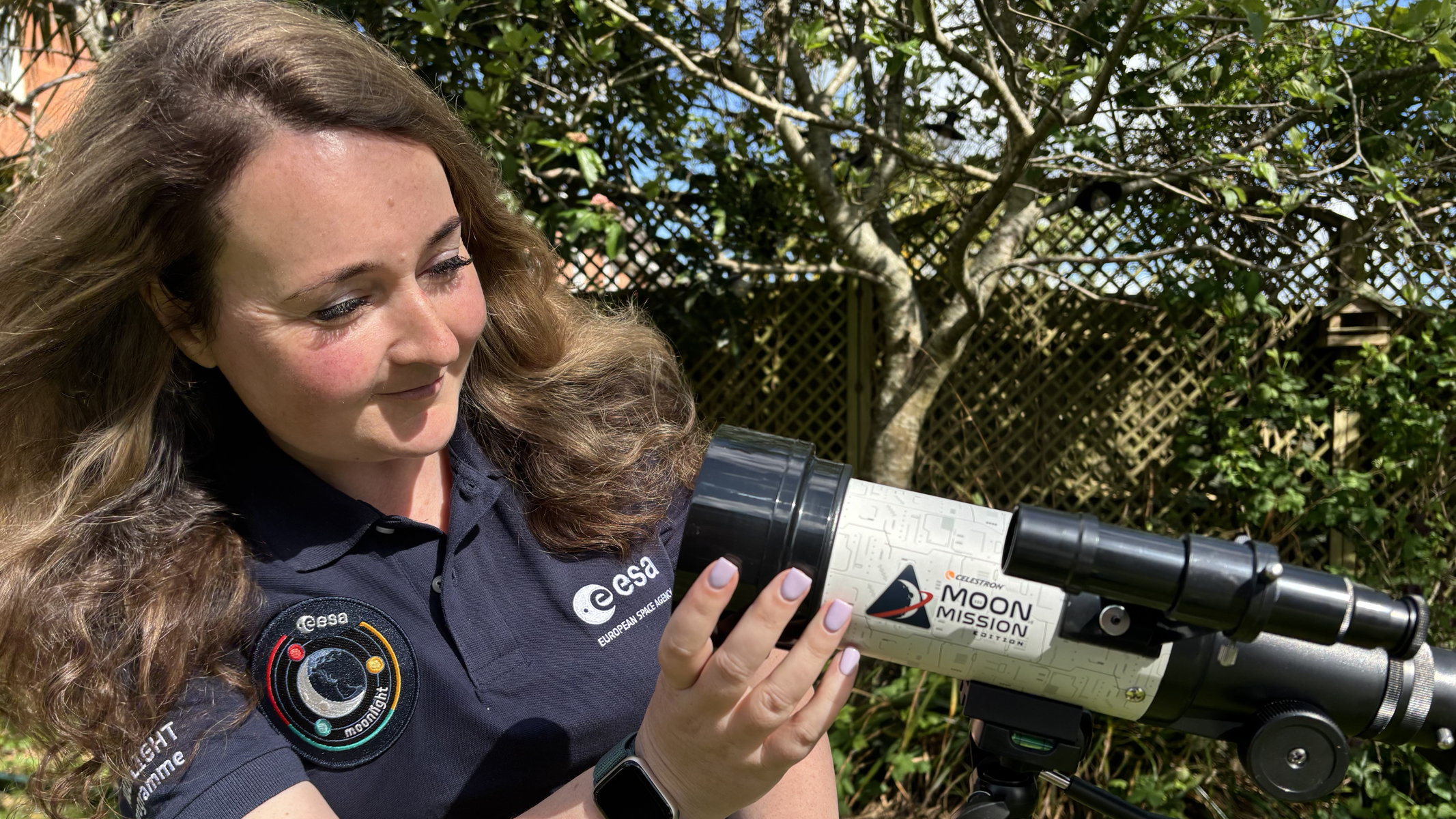
Our expert thinks this portable Celestron telescope will delight beginners and younger stargazers

Small telescopes have really come on leaps and bounds in recent years. There was a time when refractors with apertures smaller than 4 inches were seldom to be recommended, but manufacturers have been pushing the capabilities of smaller apertures ever further, with optical coatings and high quality, mass-produced optics helping to eke out every little bit of capability from these pocket-sized instruments.

While still aperture-limited — a smaller aperture makes less light received, which makes faint objects harder to see and details harder to resolve — a good small telescope can excel at the things it can do. This include showing fabulous views of the whole moon, revealing the phases of Mercury and Venus, showing surface features on Mars when the Red Planet is at a close opposition, tracking the Galilean moons of Jupiter, splitting double stars, showcasing open star clusters and revealing the very brightest deep-sky objects, including the Orion Nebula and the Andromeda Galaxy.

The Celestron Moon Mission Travel-scope 70 portable telescope is a re-skin of the plain Celestron Travel-scope 70, and is labelled as a lunar telescope. The moon is what it excels at, which is particularly handy in the year that humans went back to the moon for the first time since 1972, drumming up all kinds of excitement about our nearest neighbor.

Its affordable price and simplicity of use further increase its attraction for children. How many young astronomers will find a passion for space after being excited by the Artemis II mission and then seeing the moon for themselves through the eyepiece of this easy-to-use telescope?

Celestron Moon Mission Travel-scope 70 review

Celestron Moon Mission Travel-scope 70: Design

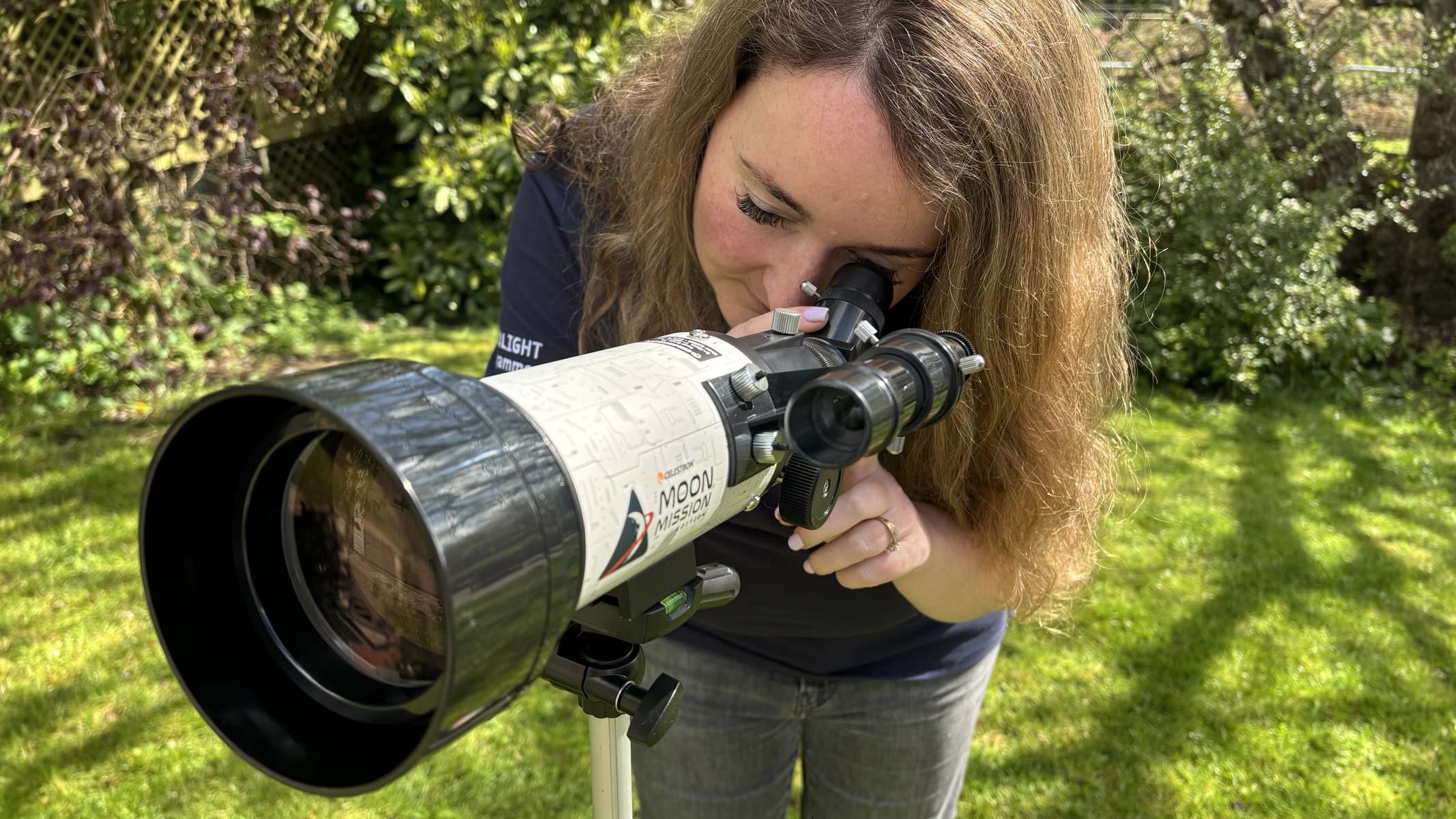
Author Gemma Lavender with a Celestron Moon Mission Travel Scope 70.

The Celestron Moon Mission Travel Scope 70 comes with everything you need to get started. (Image credit: Gemma Lavender)
  • Quick and simple set-up
  • Comes with all the accessories to get started
  • Lightweight and portable

Inside the box we found the telescope tube, which is just 17 inches (44 centimeters) long, kept within a protective travel bag. Also present were the two eyepieces (10mm and 20mm), a 3x Barlow lens, a moon filter, a star diagonal, a finderscope with crosshairs and a useful moon map poster. There are even free download options for the well-known Starry Night planetarium software and Celestron’s Sky Portal mobile app. All in all, it’s a complete package for anyone wanting to get started in astronomy. The only thing it doesn’t come with is guaranteed clear nights!

Everything is lightweight, so there is no risk of children hurting themselves if they drop anything (though one would advise not dropping the telescope tube!). No tools are required for assembly, which is an additional advantage when aiming a telescope at children. The finderscope is attached by chunky thumb screws, the telescope tube screws onto the pan of the mount, and the tripod legs extend via a series of latches.

Author Gemma Lavender with a Celestron Moon Mission Travel Scope 70, looking down the objective end.

It may be aimed at beginners and younger stargazers, but this is no toy. (Image credit: Gemma Lavender)
Specifications

Optical design: Refractor

Aperture: 2.8-inch (70 mm)

Focal length: 15.7-inches (400mm)

Focal ratio: f/5.7

Eyepiece focal lengths and magnification: 20mm (20x) and 10mm (40x)

Accessories: 3x Barlow lens, moon filter, moon map, 5x24 finderscope

Tripod: Manual alt-azimuth with pan-handle head

Weight: 3.3 lbs (1.5 kg)

The mount is a simple, manual alt-azimuth with a pan handle for easy control. The tripod can extend from 22 to 52 inches (56 to 132cm), and it’s a good height for sitting down while observing or standing up — whichever you prefer. The whole set-up process takes a couple of minutes — perfect for impatient children (and the occasional impatient adult!).

Celestron Moon Mission Travel-scope 70: Performance

Author Gemma Lavender with a Celestron Moon Mission Travel Scope 70.

You'll get superb views of the moon through this scope but you don't need to stop there. (Image credit: Gemma Lavender)
  • The moon looks superb through both eyepieces
  • Ideal for following Jupiter’s moons
  • Open star cluster Messier 35 was easily shown

The view of the crescent moon while it was in the constellation of Gemini, the Twins, and near Jupiter, was impressive. First using the 20mm eyepiece at 20x, the whole moon easily fit into the field of view. Though the moon’s phase was two days away from first quarter, through the eyepiece we could easily see the silhouette of the whole moon’s disk thanks to earthshine.

During the time we observed the moon, the day/night terminator cut close to the crater trio of Theophilus, Cyrillus and Catharina around the edge of Mare Nectaris. Other lunar seas including Mare Crisium, Mare Tranquilitatis (landing site of Apollo 11) and Mare Serenitatis were nicely displayed.

Through the 8mm eyepiece at 40x, the moon filled the field of view. The low-angled sun cast dark shadows below the crater walls, which contrasted nicely with the bright surface. Just beyond the terminator, the peaks of crater walls and highlands caught the sun, islands of daylight on the edge of night. All in all, it was a very pleasing view.

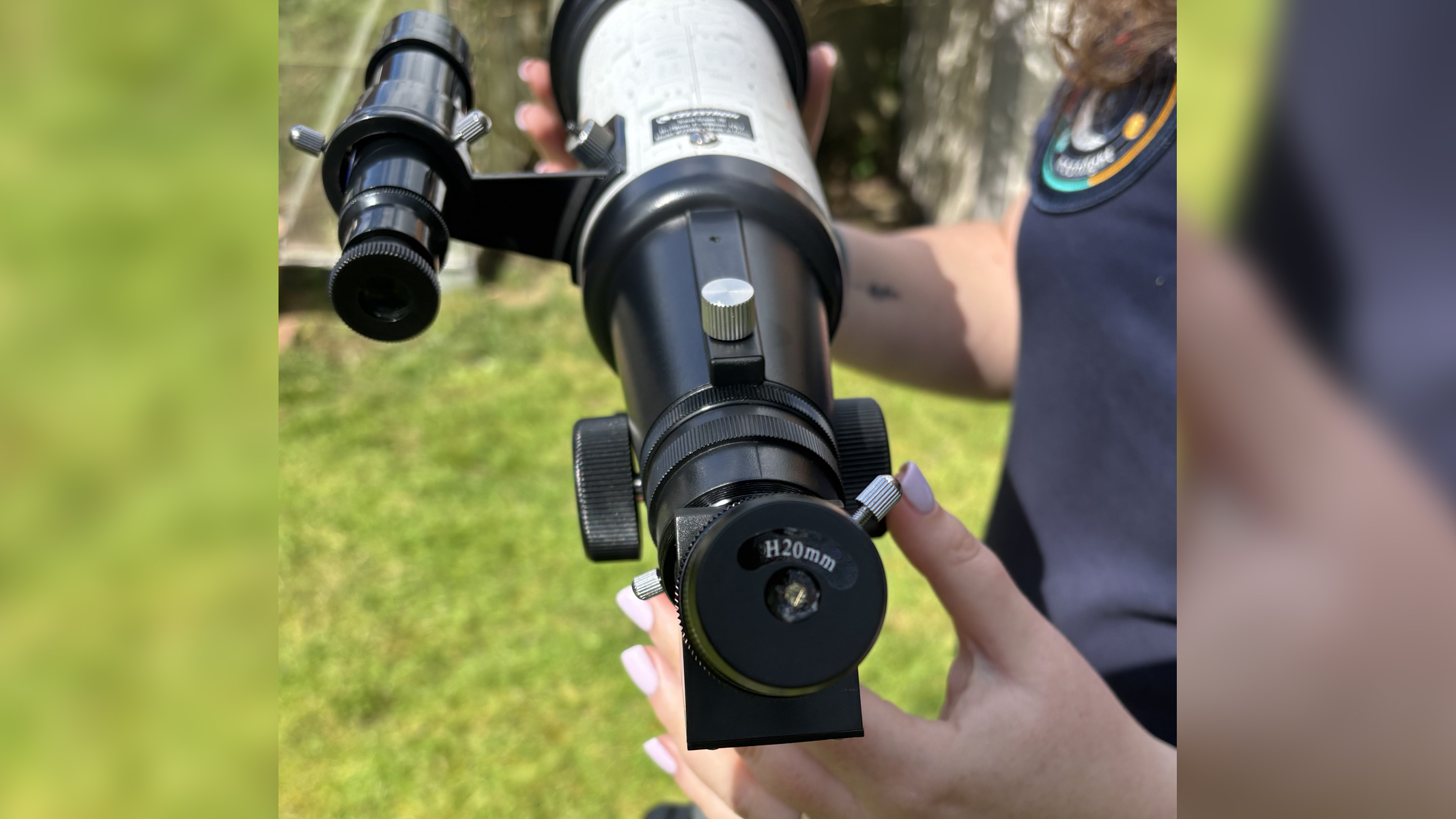
Author Gemma Lavender with a Celestron Moon Mission Travel Scope 70, an eyepiece on view of the scope.

The Celestron Moon Mission Travel Scope 70 has enough power to pick out solar bodies and star clusters. (Image credit: Gemma Lavender)

A short hop brought us to Jupiter, the moon’s close neighbor for the night. As expected, we found the sub-3-inch aperture unsuitable for revealing any details in Jupiter’s atmosphere — the gas giant just appeared as a bright disk. Its four Galilean moons could be seen to either side, however. We tried with both the 20mm and the 8mm eyepiece: Jupiter’s moons were evident in both and filled the view in the 8mm, appearing as points of light accompanying Jupiter.

Close by in Gemini was Messier 35, an open star cluster that is technically visible with the naked eye, but only from the darkest sites in a moonless sky. Through a 70mm telescope it should be much easier to see, and it was, appearing as a faint smattering of stars against the night sky.

We could not, however, see NGC 2158 — a neighboring open star cluster that is much fainter at magnitude +8.6. This revealed the limitations of a 70mm telescope as opposed to a 100mm (4-inch) or 127mm (5-inch) aperture.

Celestron Moon Mission Travel-scope 70: Functionality

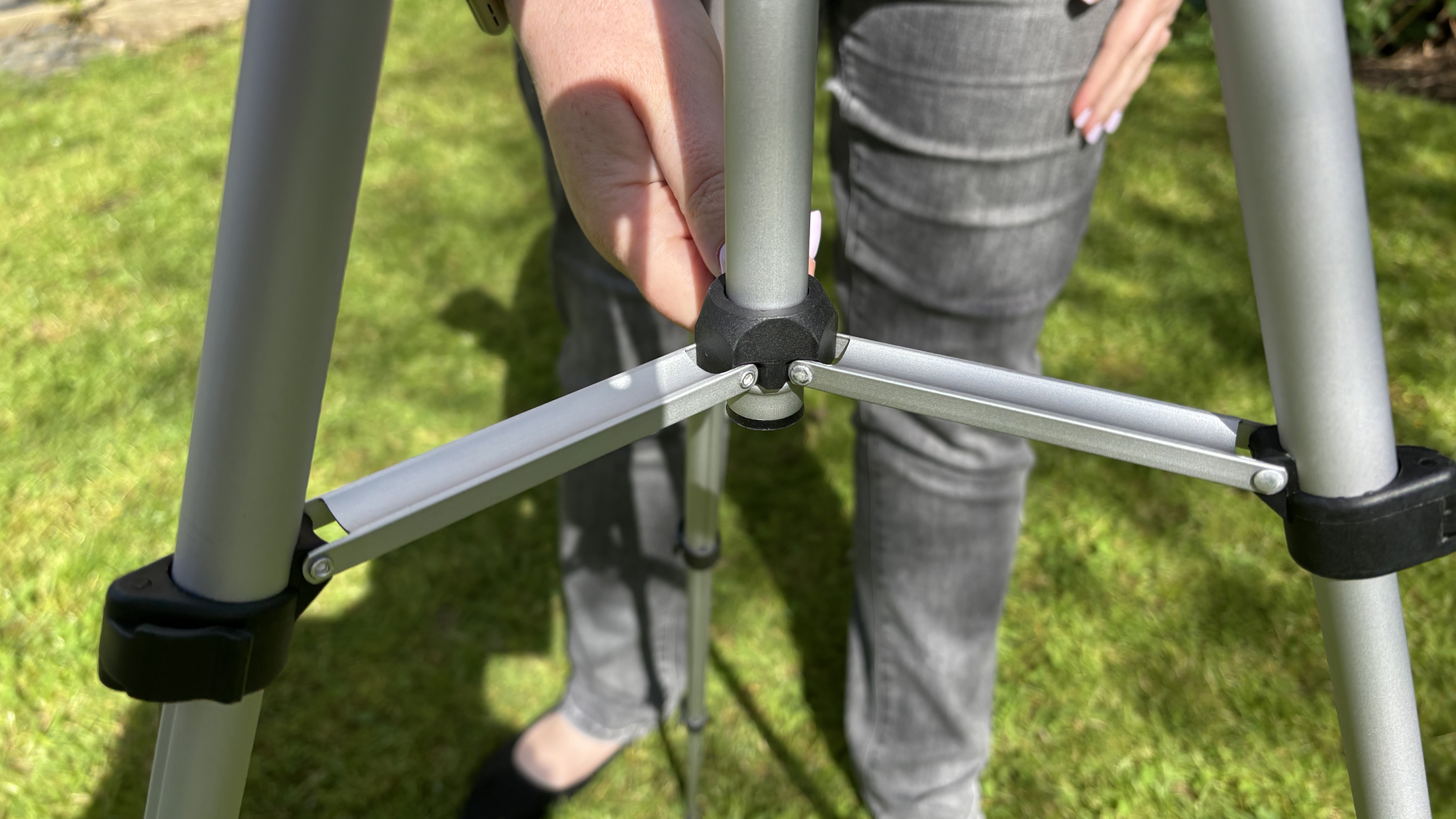
Author Gemma Lavender with a Celestron Moon Mission Travel Scope 70, zoomed in on the tripod.

We'd have preferred if the tripod was a little more stable. (Image credit: Gemma Lavender)
  • Wobbly tripod
  • Accessories are a mixed bag

The actual telescope is as smooth as they come. We found the focuser is good enough for the price point, the two supplied eyepieces aren’t at all bad, and the optics were pretty crystal-clear. For more experienced users with larger telescopes, this 70mm telescope would make a fine finderscope. But what massively lets down the Celestron Moon Mission Travel-scope 70 portable telescope is the tripod that comes with it.

We found the tripod to be incredibly flimsy, and this resulted in vibrations that would shake and blur the view through the eyepiece. Every time we used the pan-handle to turn the telescope and mount head, the tripod would wobble, setting up a feedback of vibrations which we would then have to wait to settle down. The same happened whenever we adjusted focus. While budget telescopes typically do come with poor tripods, we definitely recommend investing in a better tripod as soon as you can.

The 3x Barlow lens also felt like overkill to us. For a 70mm aperture we would not recommend pushing the magnification too high: the telescope simply does not have sufficient aperture to capture enough light for such high magnifications, and the view just becomes a blur. Anything above 100x for a 70mm aperture is too much in our view, yet when used with the 10mm eyepiece (which has a power of 40x) the Barlow lens pushed the magnification up to 120x. We think a 2x Barlow lens would have sufficed.

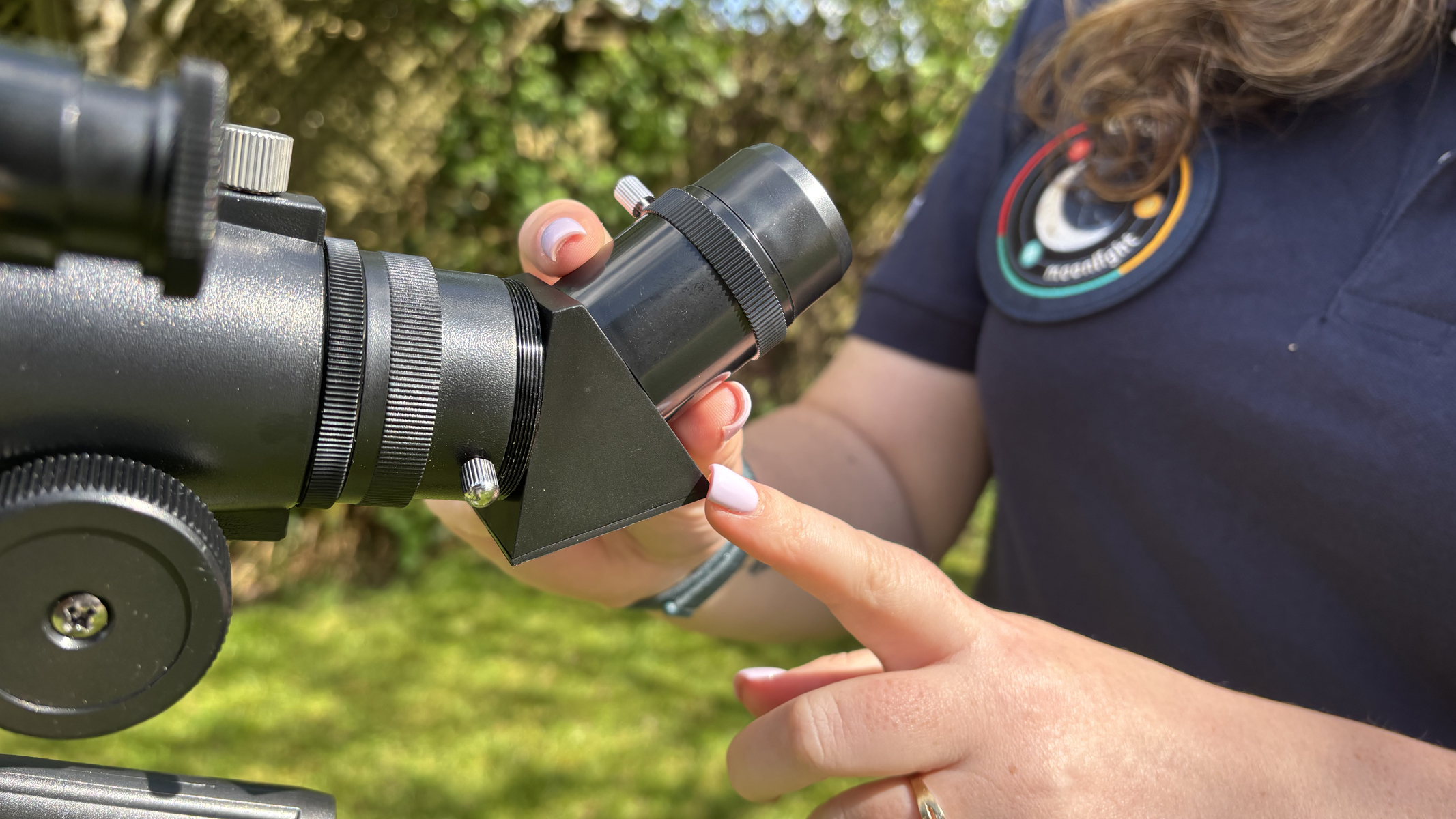
Author Gemma Lavender with a Celestron Moon Mission Travel Scope 70.

The Celestron Moon Mission Travel Scope 70 is a very capable scope, considering the price. (Image credit: Gemma Lavender)

We were indifferent to the moon filter. When screwed into the eyepiece it just dulled the moon and made it look red and drab, similar to how it might appear during a lunar eclipse. Admittedly it might be more useful when looking at a full moon rather than a crescent, when there are no shadows or contrast on the surface, but we found we preferred not to bother with the filter.

Overall, the telescope’s engineering is decent for the price, but replacing most or all of the accessories would not be unwarranted. But given how much it would cost to do so, if you are intending to spend that money then it would be better just to buy a more expensive, larger-aperture and better quality telescope.

Should you buy the Celestron Moon Mission Travel-scope 70 portable telescope?

Buy it if:

✅ You want an affordable telescope for a youngster or beginner that is easy to use and set-up

✅ You are interested in viewing the moon and following its changing phases, and how the illumination alters the view of the lunar surface

Don't buy it if:

❌ You are a deep-sky observer hoping to track down faint fuzzies

❌ You hope to do astrophotography (beyond simple afocal photography at the eyepiece).

If the Celestron Moon Mission Travel-scope 70 portable telescope isn't for you

If you are looking for a telescope for astrophotography that is also relatively simple to use and won’t break the bank, consider ZWO’s SeeStar S30 smart telescope.

If you are looking for something that’s still affordable, but with a little more aperture, try Sky-Watcher’s Explorer 130 EQ2 telescope.

If you want a telescope that has the same 70mm aperture but is a little more high-tech, go for Celestron’s StarSense Explorer LT70AZ refractor, which uses Celestron’s StarSense mobile app technology.

If you want a lot more aperture to track down faint deep-sky objects or to clearly see the belts and rings of Jupiter and Saturn, go for Celestron’s StarSense Explorer 8-inch Dobsonian.

User reviews

There were not many customer reviews of the Celestron Moon Mission Travel-scope 70 portable telescope available at the time of writing, but as it is identical in all but aesthetics and a few accessories to the standard Celestron Travel-scope 70, we can use reviews of the latter as a guide.

The consensus on Amazon was that users were mostly delighted by the telescope, valuing how easy it is to set up and use, as well as its portability and appropriateness for children. However, they shared our concerns about the flimsiness of the tripod.

How we tested the Celestron Moon Mission Travel-scope 70 portable telescope

We took advantage of the clear, mild spring weather that the southwest of England enjoyed in the week beginning April 20, observing around 9.30pm. In particular, we took time to study the moon on the evening of April 22, from a south- and southwest-facing garden.

Related articles

Celestron Moon Mission 100mm tabletop Dobsonian review

The excitement of the new moon mission has potentially helped create a new generation of stargazers, just like the Apollo program did 60 years ago. These new observers will be looking for a beginner’s telescope that is easy to use and which can show them the craters on the moon in particular. The Celestron Moon Mission 100mm Tabletop Dobsonian could be the perfect entry point for them. It has a superb price-point for its aperture, and is capable of bringing not only the moon, but double stars, the brighter galaxies and nebulas and the moons of Jupiter to your backyard.

The Celestron Moon Mission 100mm Tabletop Dobsonian comes equipped with 8mm and 20mm eyepieces, one of which is intended specifically for the moon, as well as a red-dot finderscope, a moon filter, a moon-map poster and free access to download the Starry Night planetarium software and Celestron’s SkyPortal app, which is powered by SkySafari.

All in all, it will make an excellent package for someone to get started enjoying the night sky. Though the optics and accessories are not perfect, for the price their drawbacks can be overlooked, and as an entry-level telescope it paves the way for the user to graduate to increasingly more sophisticated telescopes at a later date.

Celestron Moon Mission 100mm Tabletop Dobsonian review

Celestron Moon Mission 100mm Tabletop Dobsonian: Design

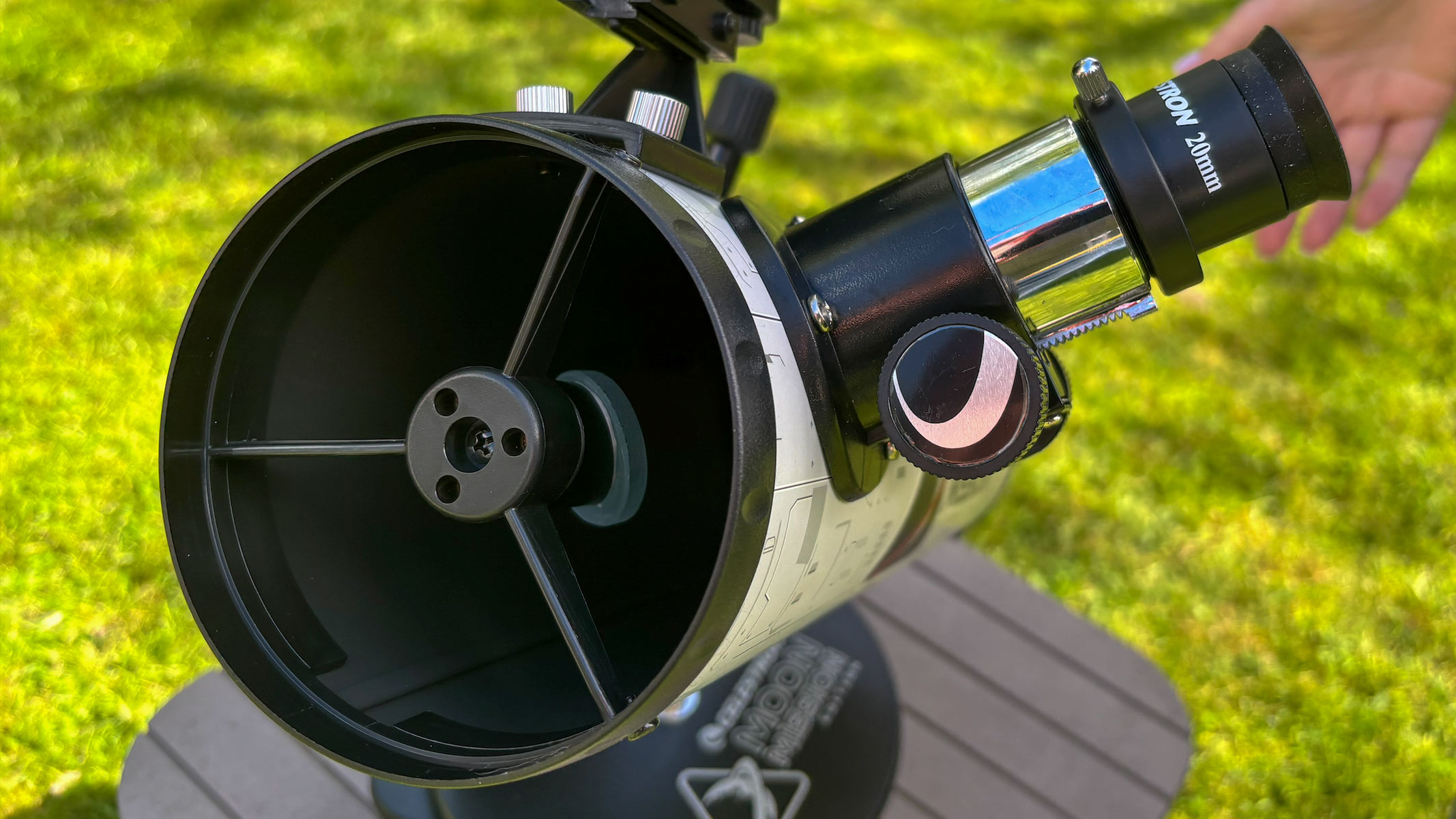
The aperture and eyepiece on the Celestron Moon Mission 100mm Tabletop Dobsonian with grass in the background.

The lack of a tripod means this telescope does have its limitations but any stable, flat surface will suffice. (Image credit: Gemma Lavender)
  • Quick and simple set-up
  • Portable

The Celestron Moon Mission 100mm Tabletop Dobsonian comes out of its box complete, other than its eyepieces and red-dot finderscope in plastic bags. Set-up takes literally minutes — remove the plastic cap over the aperture and the cap on the focuser, insert your eyepiece of choice, screw on the finderscope and you are ready to go. No tools such as screwdrivers or Allen keys are needed— it is just a matter of unscrewing thumbscrews.

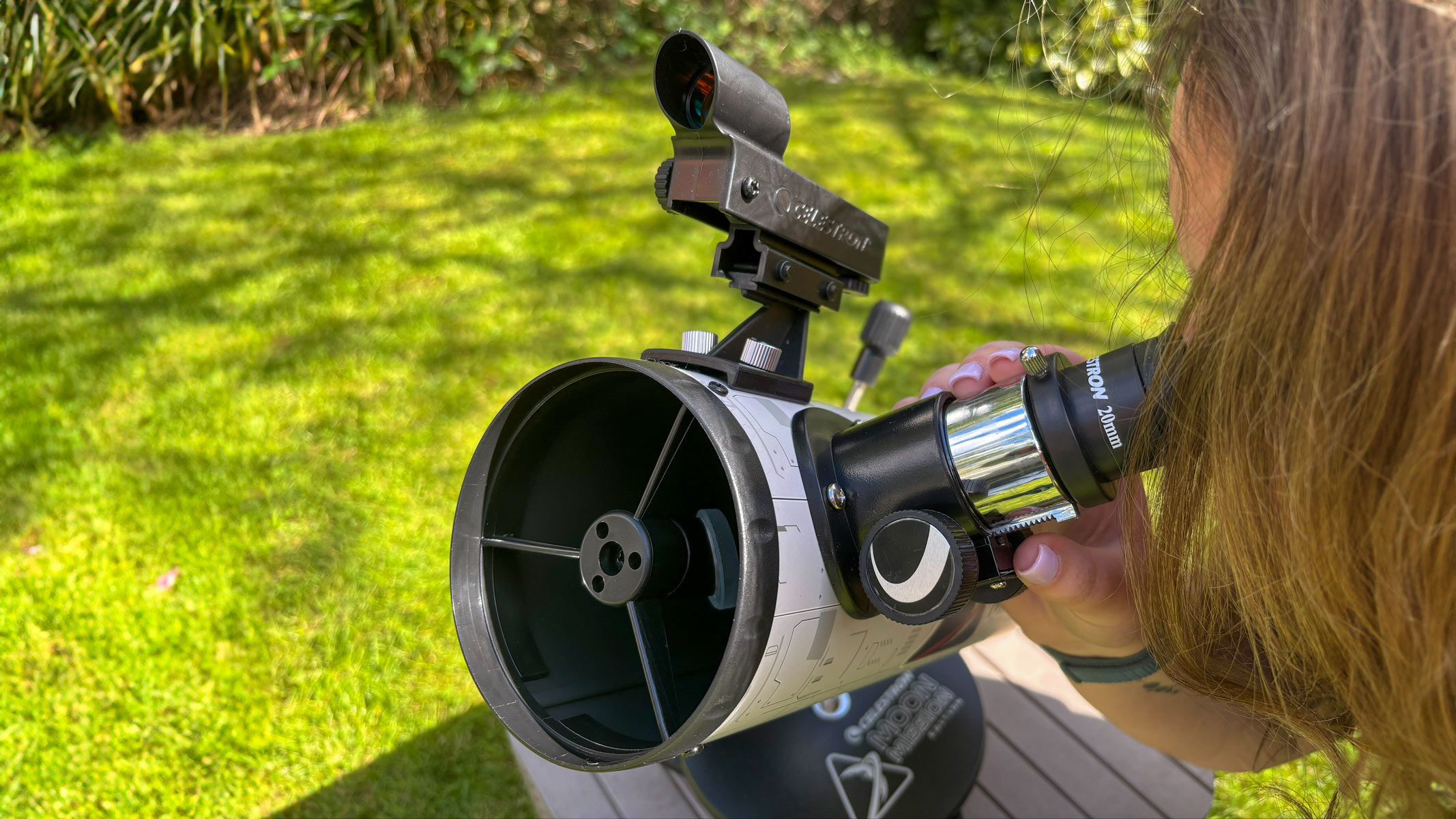
We found the finderscope went on easily — more about that later. However, the tiny thumbscrews that lock in the eyepiece were incredibly tight. Pliers didn’t help much and risked damaging the screw. In the end, we found elbow grease was just about enough to unscrew them, but if our review model is typical, then children will definitely need the help of an adult to unscrew these. Once they are unscrewed, they can be tightened to more forgiving tolerances.

A woman looking through the eyepiece of the Celestron Moon Mission 100mm Tabletop Dobsonian with grass in the background.

Adults may be needed to help smaller children install the thumbscrews that hold the eyepiece in place. (Image credit: Gemma Lavender)
Specifications

Optical design: Newtonian reflector

Aperture: 3.9 in (100 mm)

Focal length: 15.75 in (400 mm)

Focal ratio: f/4

Eyepiece focal lengths & magnification: 20mm (20x) and 8mm (50x)

Weight: 2.4 lbs (1.08 kg)

Mount type: Dobsonian

Overall we can recommend the build quality of the Celestron Moon Mission 100mm Tabletop Dobsonian. Everything is sturdily made, from the Dobsonian base, the optical tube, the easily adjustable tilt and focuser knobs. The mount has a single arm and rotates on a ‘lazy Susan’ turntable.

Celestron Moon Mission 100mm Tabletop Dobsonian: Performance

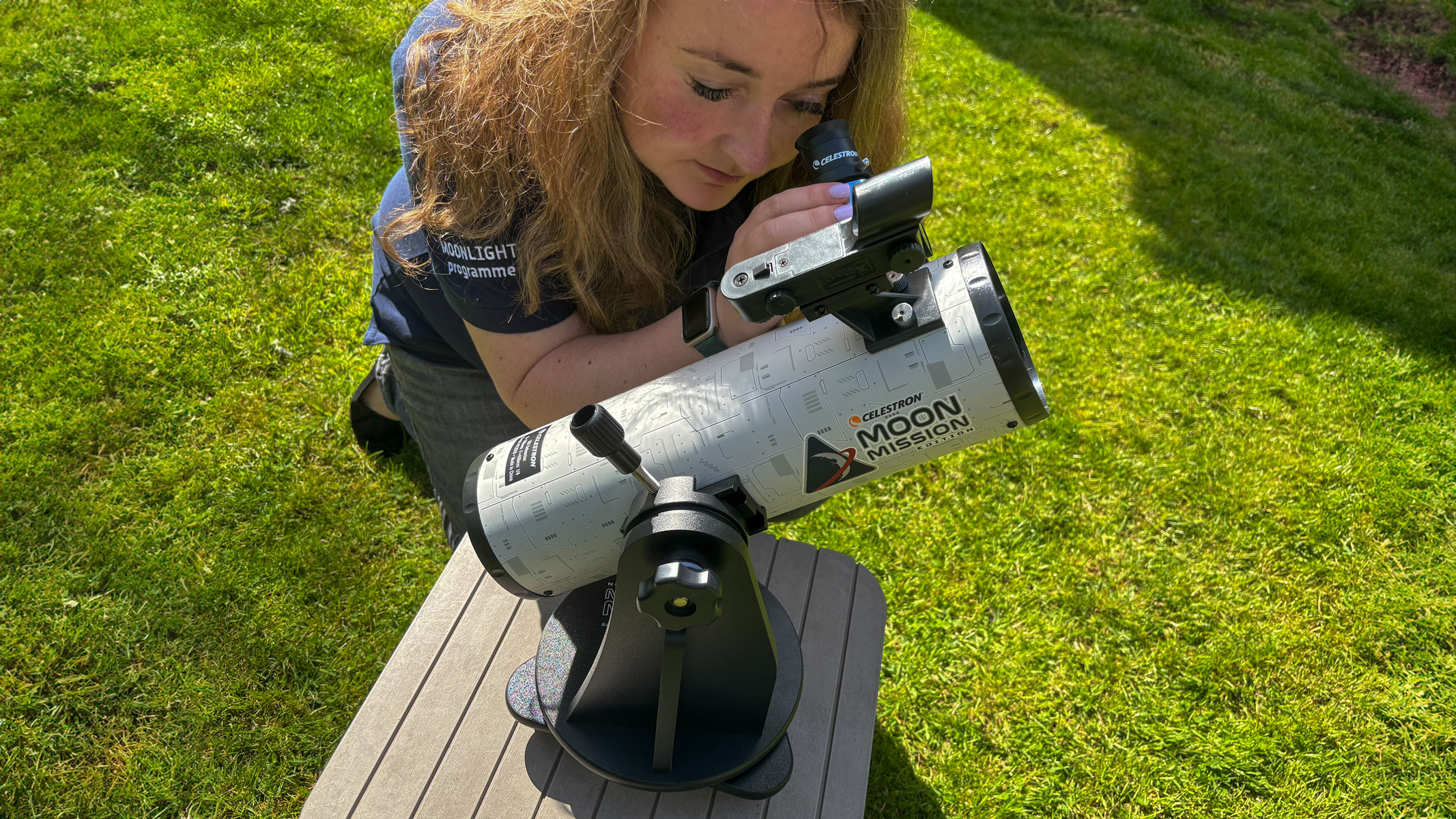
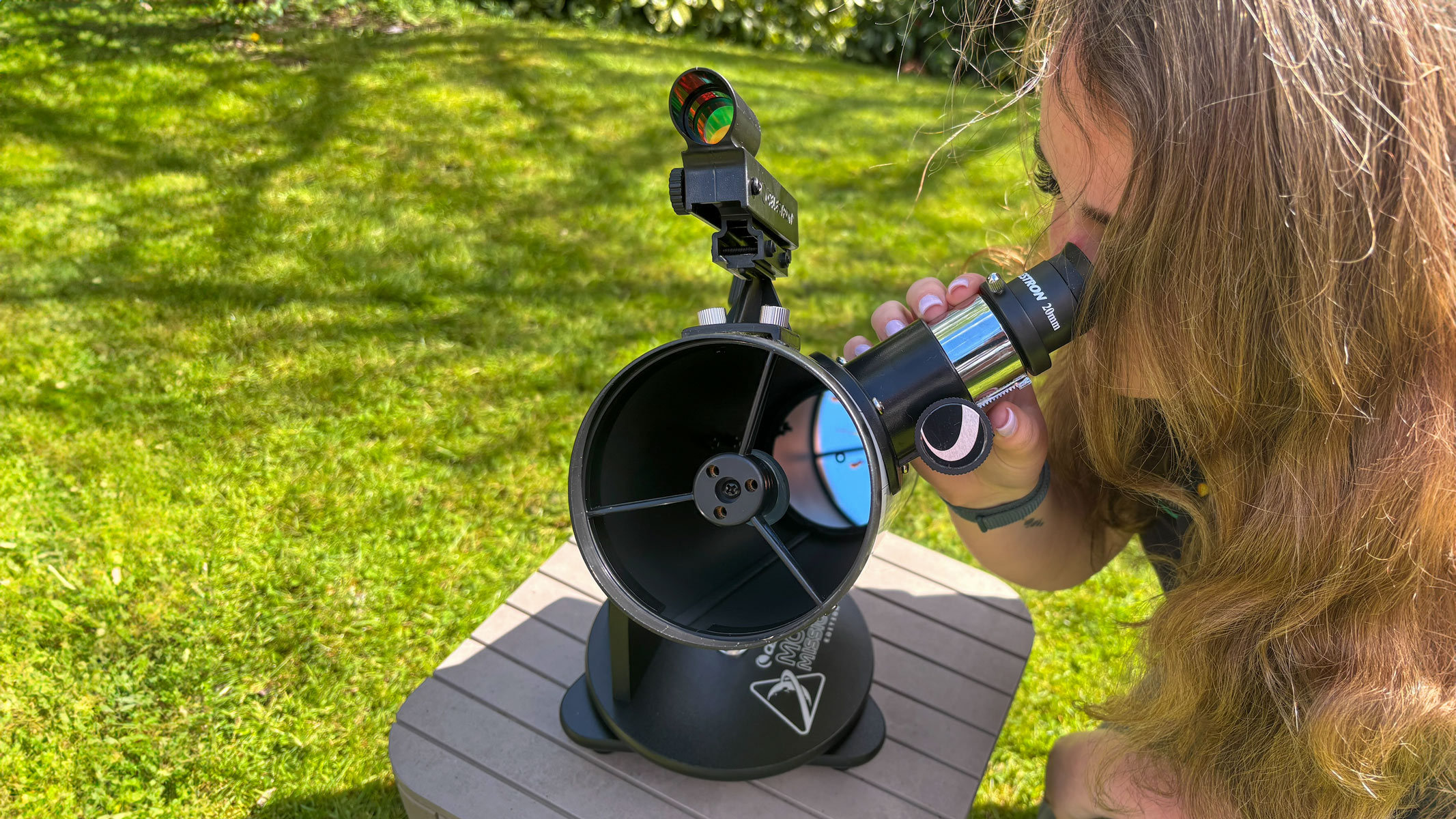
A woman looking through the Celestron Moon Mission 100mm Tabletop Dobsonian with grass in the background.

The Moon Mission's focuser can be a little finicky, as we discovered. (Image credit: Gemma Lavender)
  • Three
  • Bullet
  • Points

This is where we thought that the Celestron Moon Mission 100mm Tabletop Dobsonian excelled. For such a small telescope, it was decently versatile.

For example, on the night of April 5, our first target was Jupiter, which was bright in Gemini, and unmistakable as it lay not far from the constellation’s twin stars Castor and Pollux. Jupiter appeared as a bright disk, with perhaps the merest hint of its banding — or was that our imagination? What certainly were real were the four Galilean moons: Io and Europa on one side, Ganymede and Callisto on the other. It was a sight sure to impress beginners and casual observers.

We moved the Celestron Moon Mission’s view towards the multiple star Castor, and the telescope capably split the main binary pair as two close, white stars using the 20mm eyepiece. Another popular multiple star is Mizar and Alcor in Ursa Major. Of course, Mizar and Alcor can be split with the naked eye, but the third visible star in the system is for telescopes only, and again the Celestron Moon Mission showed the three stars clearly.

Slewing east, Arcturus — the second brightest star visible from the U.K., and fourth brightest in the entire sky — appeared a glorious red, evoking its nature as a red giant.

While waiting for the moon to rise (and before taking some time out to watch the Artemis II coverage), we decided to track down some faint fuzzies. The box that the Celestron Moon Mission comes in highlights the Orion Nebula and the Andromeda Galaxy as two deep sky objects that the telescope can see. At the time of testing, the Orion Nebula was too low in the west, while the Andromeda Galaxy was not visible. Instead, we hunted down two other nearby galaxies, M81 and M82, in Ursa Major.

Searching for these two galaxies, which are located next to each other in the same field of view, is where the real challenge of using the finderscope, as we described in the Functionality section, really reared its head. In the end, we decided to star hop to the galaxies and struck out in roughly the right direction. Soon the telescope alighted on the two galaxies, visible as two fuzzy patches of light. Looking at them straight on, we found it difficult to discern their shape, but by using averted vision as we looked through the 20mm eyepiece of the Celestron Moon Mission, we could make out the broad disk-shape of the spiral M81, and the elongated cigar shape of M82, and even caught hints of mottling with brighter spots in the edge-on M82 that are better seen in images.

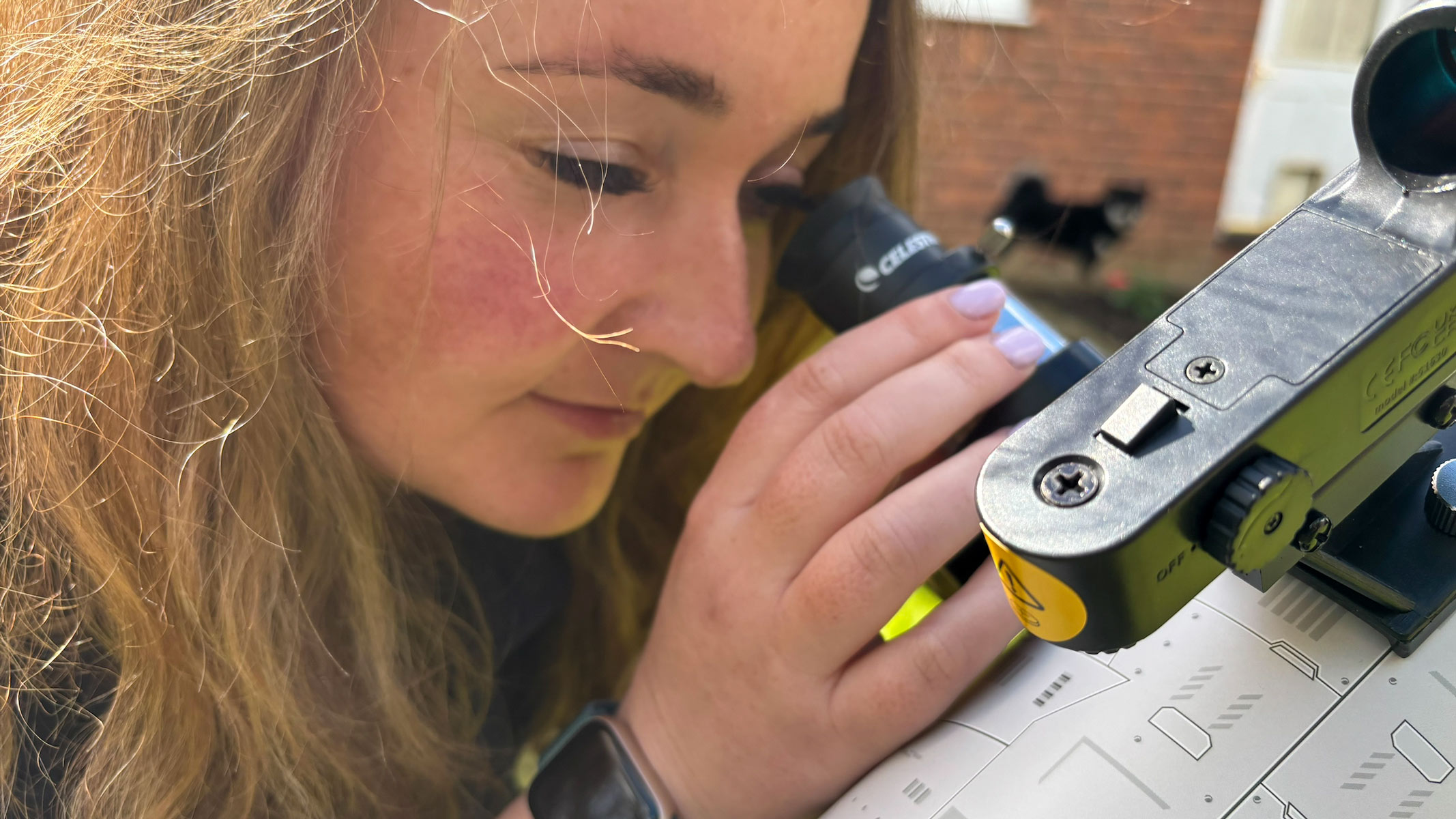
A woman looking through the eyepiece of the Celestron Moon Mission 100mm Tabletop Dobsonian.

You'll likely use the eyepiece more frequently than the finderscope. (Image credit: Gemma Lavender)

After we watched the live NASA feed of Artemis II going around the far side of the moon, the moon finally rose from our location after midnight. Its phase was a waning gibbous three days after full. As such, the moon appeared bright and reddish, being low to the horizon. Through the 20mm we could see the whole disk, though the phase meant that for most of the lunar surface there was no contrast, making it harder to distinguish craters except for at the terminator.

Adding the 1.25-inch moon filter — more properly known as a neutral density filter that dims the incoming light — helped to limit the contrast and make the details stand out more. Switching to the 8mm eyepiece, with a magnification of 50x, the view jumped closer to the moon and the lunar surface filled the field of view, with bright crater rays visible on dark lunar mares.

Celestron Moon Mission 100mm Tabletop Dobsonian: Functionality

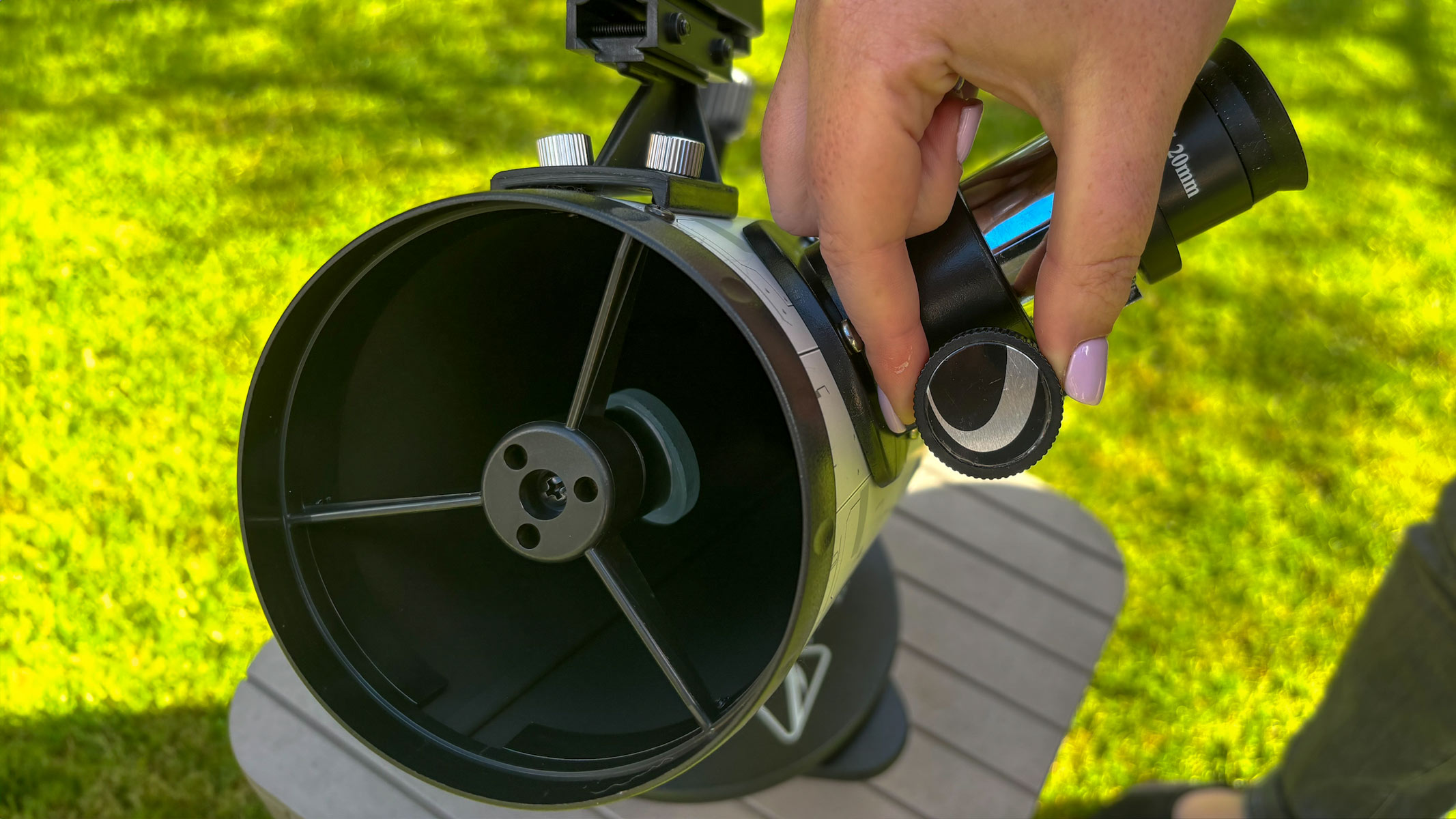
Fingers adjusting the eyepiece on the Celestron Moon Mission 100mm Tabletop Dobsonian with grass in the background.

As a Newtonian reflector, the Celestron Moon Mission 100mm Tabletop Dobsonian provides an inverted image. (Image credit: Gemma Lavender)
  • Finderscope is awkward to use when pointed at the zenith
  • Focusing is adequate
  • Simple to use

The tabletop nature of the telescope poses some challenges for adults using it. As its name suggests, the telescope is designed to go on the top of a table. Usually when we think of Dobsonian telescopes, we think of very large instruments with very large apertures, and eyepieces close to standing height. This Dobsonian, on the other hand, is very small, and without a very tall table we found that we spent a lot of our time bent double looking through the eyepiece. Of course, this also means it is the perfect height for a child.

We found it did pose a problem when using the finderscope. For objects at low elevations, such as Jupiter in Gemini during spring 2026, we found it wasn’t too bad. However, when we wanted to direct the telescope towards Ursa Major at the zenith, the only way we could look through the finderscope was by literally getting on the floor to look through it. This is a problem with all tabletop telescopes, not just the Celestron Moon Mission, and it would be unfair to suggest otherwise — but it is a problem nonetheless.

Once we addressed the tightness of the focuser thumbscrews, we could switch the eyepieces in and out with ease. We found the focuser to be perfunctory. It provides only coarse focusing, with no careful fine-tuning, and sometimes it was tricky to find the sweet spot. Additionally, Newtonian reflectors like this one require collimating for perfect pin-sharp images. Collimating refers to adjusting the secondary mirror (the primary mirror is fixed at the base of the optical tube) so that it aligns and focuses light reflected from the primary just so. It’s also a fact that astronomers hate collimating, as it is a finicky procedure.

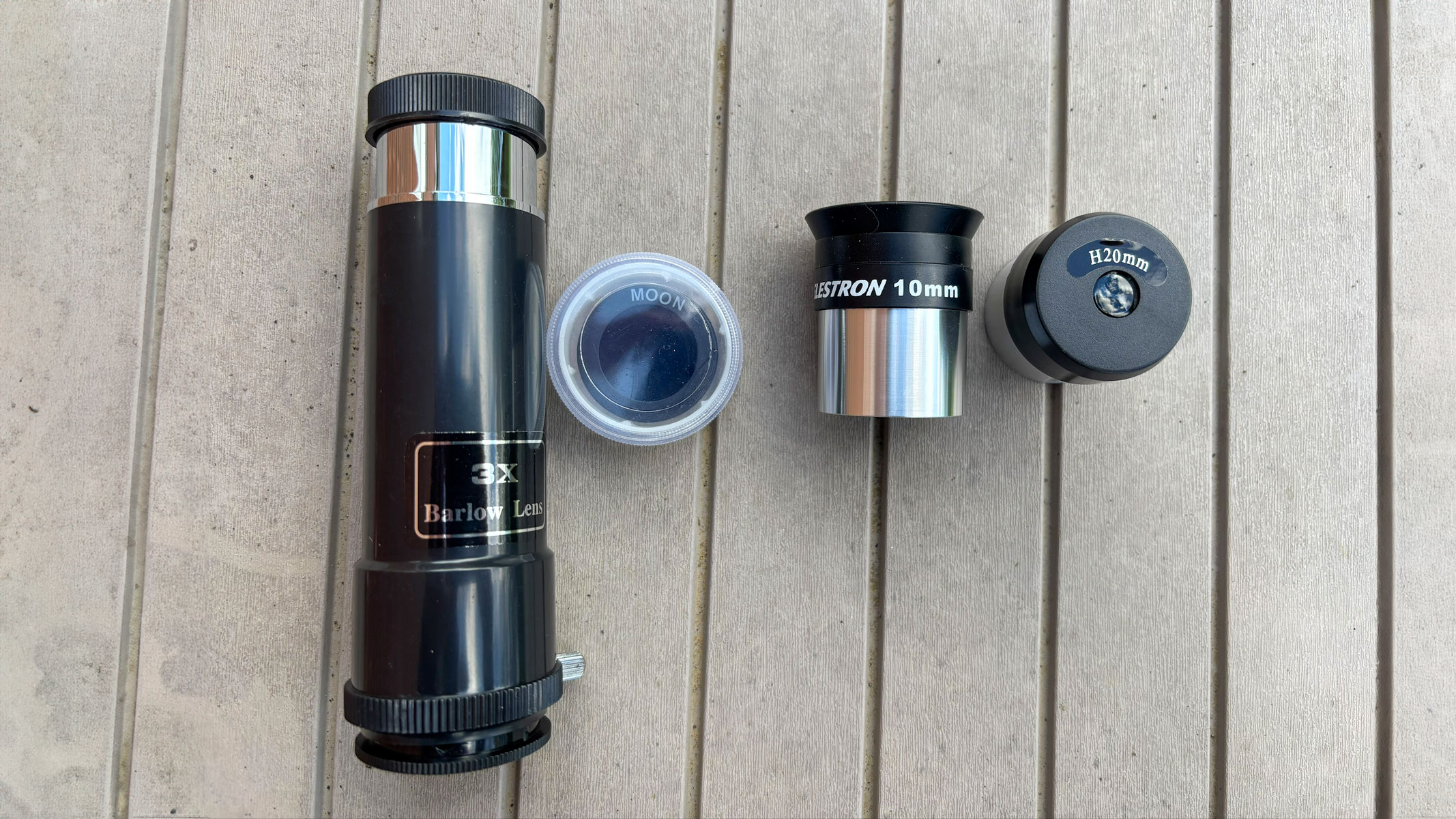
Different eyepieces for the Celestron Moon Mission 100mm Tabletop Dobsonian on a grey table.

The scope comes with 8mm and 20mm eyepieces, and can handle most 1.25-inch eyepieces. (Image credit: Gemma Lavender)

Out of the box, the collimation wasn’t bad, and we felt it was also unreasonable to expect beginners and children, whom this telescope is undoubtedly aimed at, to collimate the instrument with no guidance or tools included. Therefore, we reviewed the telescope as it came out of the box, to replicate the experience that beginners and children would receive. Had we collimated the telescope, then it probably would have improved the image a tad.

We found that actually using the telescope, in terms of positioning and pointing, was very simple. It’s worth remembering that Newtonian reflectors reverse their image (up becomes down), and after using smart telescopes, GoTo telescopes and Celestron’s StarSense telescopes with directions provided by a smartphone for so long, that took a little getting used to again! It may confuse beginners and children, but before the days of smart telescopes and GoTo, everybody had to get used to navigating across the sky using a reversed image, so it’s no bad thing.

Should you buy the Celestron Moon Mission 100mm Tabletop Dobsonian

Buy it if:

✅ You are a beginner

✅ You are a parent wanting to introduce your child to the night sky

✅ You are looking for ease of use

✅ You are working on a budget

✅ You need portability

Don't buy it if:

❌ You are a serious observer and need larger apertures

❌ You are an astrophotographer and need a driven mount

❌ You want a high-tech instrument with smart capabilities

❌ You don’t want to have to star-hop and would prefer a GoTo

If you want to introduce your children to astronomy, then the Celestron Moon Mission 100mm Tabletop Dobsonian is the perfect instrument. It is safe to use, with no risk of knocking something heavy over, as it weighs about the same as a bag of sugar, which is amazing really. It is simple to use, in the sense that it is just a matter of pushing and turning, although children might need assistance in pinpointing the location of targets. It’s also a fair all-rounder, as all Dobsonians are – it excels at showing the moon, displays the planets very well, and shows deep-sky objects as best it can for a 100mm-aperture telescope

If you want to see fainter galaxies and nebulae, then you will need a telescope with a larger aperture. If you want to do imaging, then you will need a telescope with a motorized equatorial drive to enable you to track the objects while imaging.

And if you want assistance in finding celestial objects without having to star-hop, then a GoTo or smart telescope might be best for you.

If the Celestron Moon Mission 100mm Tabletop Dobsonian isn't for you

If you're looking to spend less, Celestron offers a smaller Dobsonian, the Celestron Firstscope 76. For a more flexible telescope, take a look at the Celestron Inspire 100Z. Or if neither fits the bill, we've rounded up the best telescopes and best beginner's telescopes.

How we tested the Celestron Moon Mission 100mm Tabletop Dobsonian

A woman looking through the Celestron Moon Mission 100mm Tabletop Dobsonian with grass in the background.

We put the Celestron Moon Mission 100mm through its paces, gazing both at deep space and objects in our own solar system. (Image credit: Gemma Lavender)

We used the Celestron Moon Mission 100mm Tabletop Dobsonian during the occasional clear nights in the first two weeks of April 2026 from our south-facing garden in the United Kingdom. The temperature was clement, about 50 degrees Fahrenheit (10 degrees Celsius), with some modest light pollution to the north and dark skies to the south looking towards a more rural area.

We began observing after 10 pm, with the skies completely dark. The moon was near full at the time of testing — in fact, quite fittingly, one of the nights was the same night that the Artemis II mission went around the moon. However, the moon remained low the entire night, meaning it could only be viewed near moonrise after midnight, close to the horizon, before it became hidden behind a nearby bank of trees for the rest of the night.

Related articles