The 2027 total solar eclipse will plunge these 10 ancient Egyptian temples and monuments into darkness

The total solar eclipse on Aug. 2, 2027, has an ancient feel. It will certainly be a celestial event for the ages — at 6 minutes 23 seconds, it will feature the longest totality on land of the 21st century and the longest anywhere until 2114. However, its point of greatest eclipse occurs just a few miles from Thebes, the magnificent religious and political capital of ancient Egypt's Middle Kingdom and New Kingdom.

On the east bank of the mighty Nile is Luxor, the great city of the living, with its massive temple complexes of Karnak and Luxor. On its west bank is the city of the dead, which includes the Valley of the Kings and the Temple of Hatshepsut. Modern Luxor, population 285,000, is set to become a focal point for eclipse chasers on Aug. 2, 2027, and will attract many thousands of international visitors. They'll come for the forecasted 0% chance of clouds and the era-defining duration of totality, but also to tour ancient Egypt's temples and monuments.

The chances of actually witnessing totality at any of the major temples are probably slim. Still, almost every eclipse chaser headed to Luxor will want to tour them before or after the eclipse. Visitors should be prepared for extreme August heat and check official opening and access arrangements before planning to watch the eclipse at any archaeological site. Certified eclipse glasses are essential during the partial phases; only during totality, when the sun is completely covered, is it safe to look without them.

Ancient monuments in the path of totality

Not all of ancient Egypt will experience totality. Egypt's top-ranking monument, the Pyramids at Giza, near Cairo, lies north of the path of totality and will get a 95% partial solar eclipse. Abu Simbel, on the shores of Lake Nasser south of Aswan, will also see a 92% partial solar eclipse. No matter, Luxor is home to some of the world's most impressive and well-preserved ancient monuments. Here are its temples, necropolises and palaces — and those nearby, also in the 160-mile (257-kilometer)-wide path of totality — that will have the moon's umbral shadow fall upon them on Aug. 2, 2027. All times, totality durations and historical cloud cover data come from Time and Date.

1. Karnak Temple
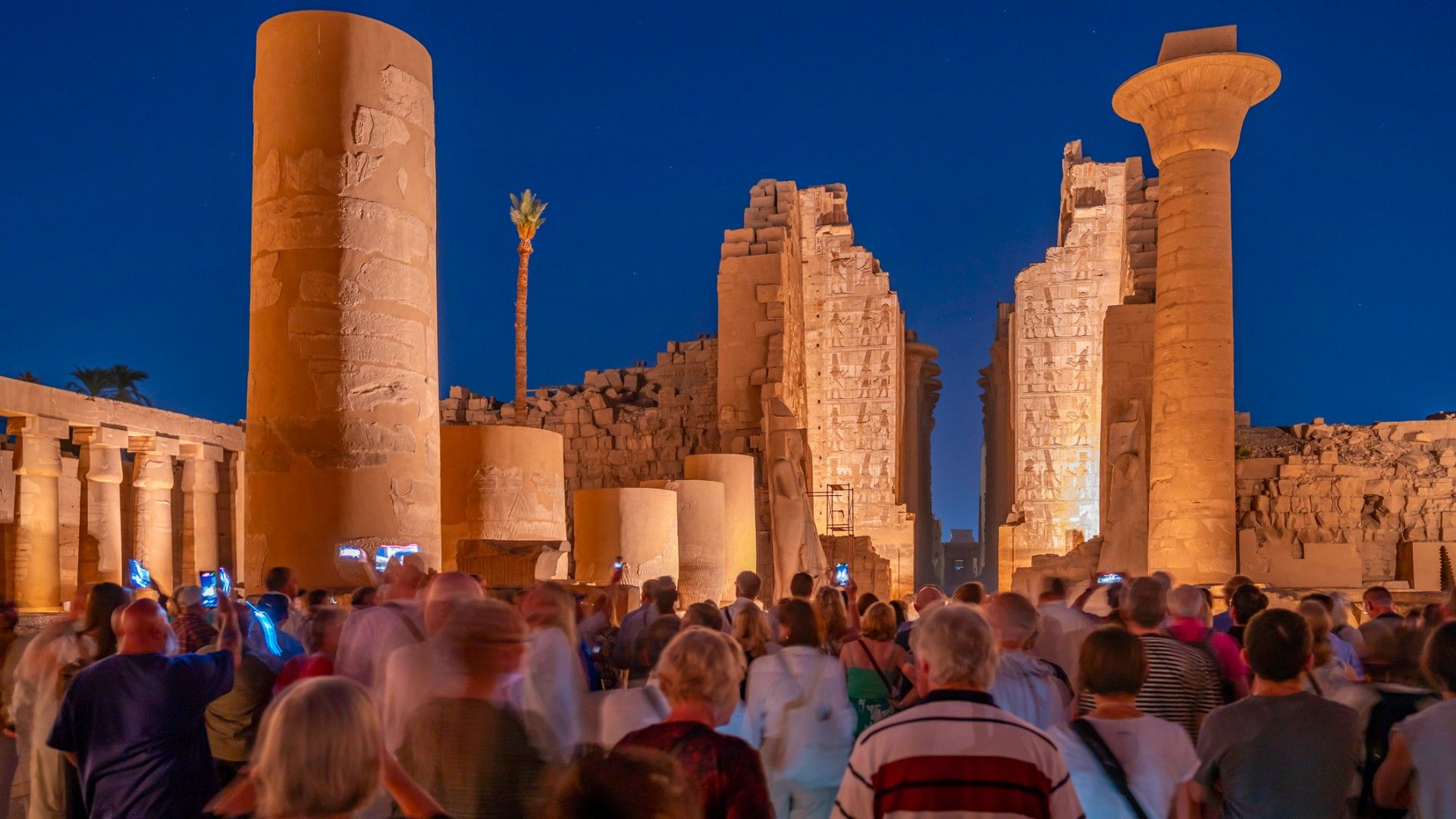
Karnak Temple in Luxor will be the hottest ticket in the world on Aug. 2, 2027. (Image credit: Frank Fell/robertharding via Getty Images)

Location: East bank of Luxor, Egypt

Start of totality and duration: 1:02 p.m. EEST; 6 minutes, 19 seconds

Historical cloud cover: 0%

Dedicated to the god Amun-Ra — a fusion of the hidden god of the sun Amun and the ancient sun god Ra — this vast temple complex will be the hottest ticket in town for the eclipse. One of Egypt's most impressive and well-preserved ancient monuments, it's a place designed by ancient astronomers — the winter solstice sunrise still illuminates the innermost sanctuary. Access arrangements for eclipse day have yet to be confirmed, so keep an eye on official announcements before making plans to watch totality from the complex.

2. Luxor Temple
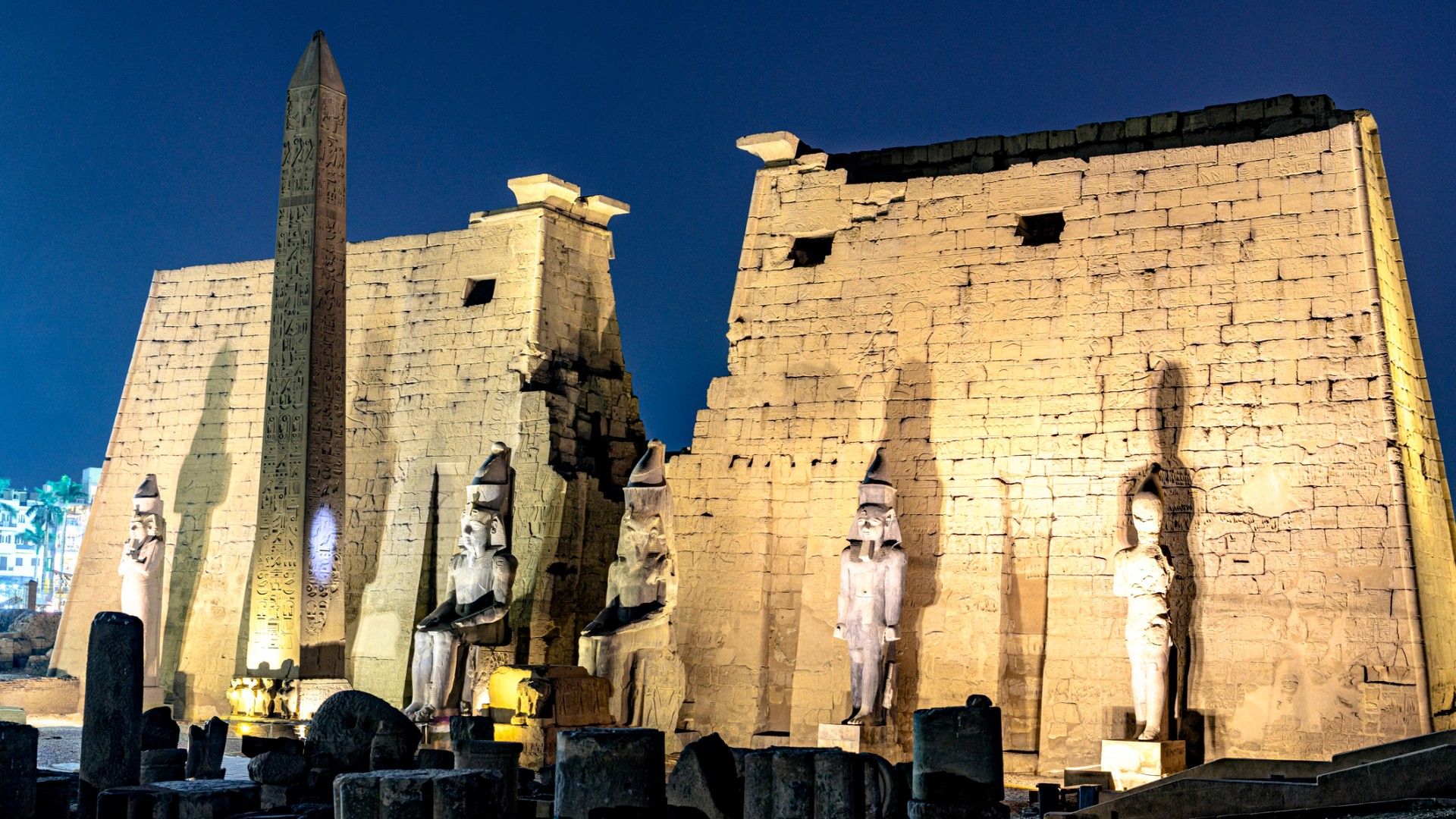
Luxor Temple's obelisk will point almost straight at the eclipsed sun. (Image credit: Roberto Moiola / Sysaworld via Getty Images)

Location: East bank of Luxor, Egypt

Start of totality and duration: 1:02 p.m. EEST; 6 minutes, 19 seconds

Historical cloud cover: 0%

This is one of Egypt's best-preserved ancient temples and a must-see during the 2027 eclipse. It's on the banks of the Nile near the city center, so it's relatively easy to visit. Dedicated to the god Amun, it is known for its beautiful pillars and intricate carvings. A 75-foot (23 meters) tall obelisk on the east side of its entrance will point at the eclipsed sun almost directly overhead on Aug. 2, 2027. Its missing right-hand obelisk is in the Place de la Concorde, Paris.

3. Valley of the Kings
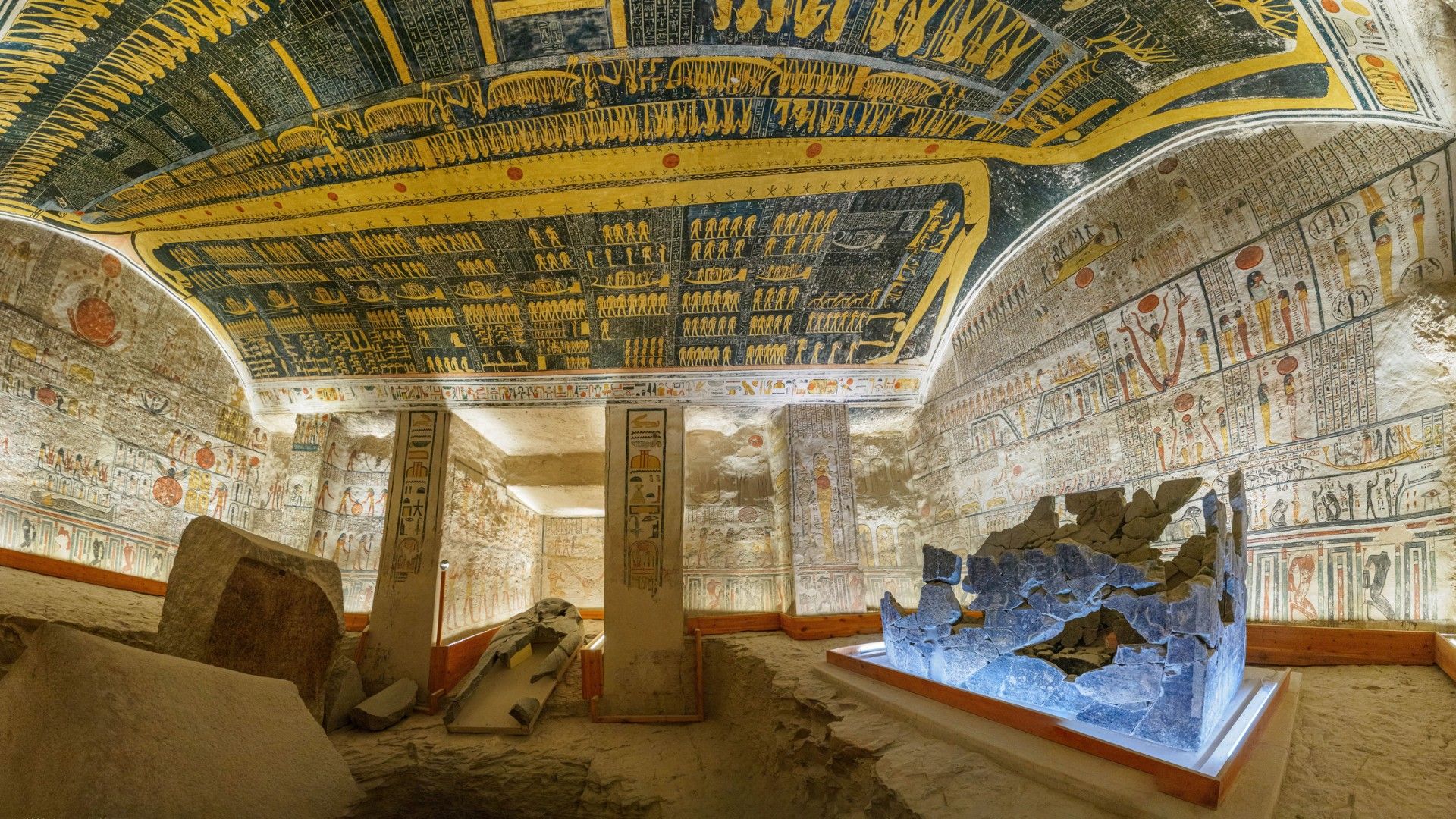
KV9, the tomb of Ramesses V & Ramesses VI, in the Valley of the Kings, Luxor. (Image credit: Brandon Rosenblum via Getty Images)

Location: West Bank of Luxor, Egypt

Start of totality and duration: 1:01 p.m. EEST; 6 minutes, 19 seconds

Historical cloud cover: 0%

This incredible necropolis is home to the tombs of the pharaohs and is a testament to the advanced engineering and architectural skills of the ancient Egyptians. Of course, you don't want to be underground for totality, but some of the tombs are a must-see. Your tickets include entry to any three tombs of your choice from those open that day, with extra tickets available for the really impressive ones—the spectacular KV17 (Seti I), small but iconic KV62 (Tutankhamun), and KV9 (Ramesses V & VI). The latter's Corridor G has a ceiling decoration that may depict a deep partial solar eclipse from 1143 BC.

4. Mortuary Temple of Hatshepsut
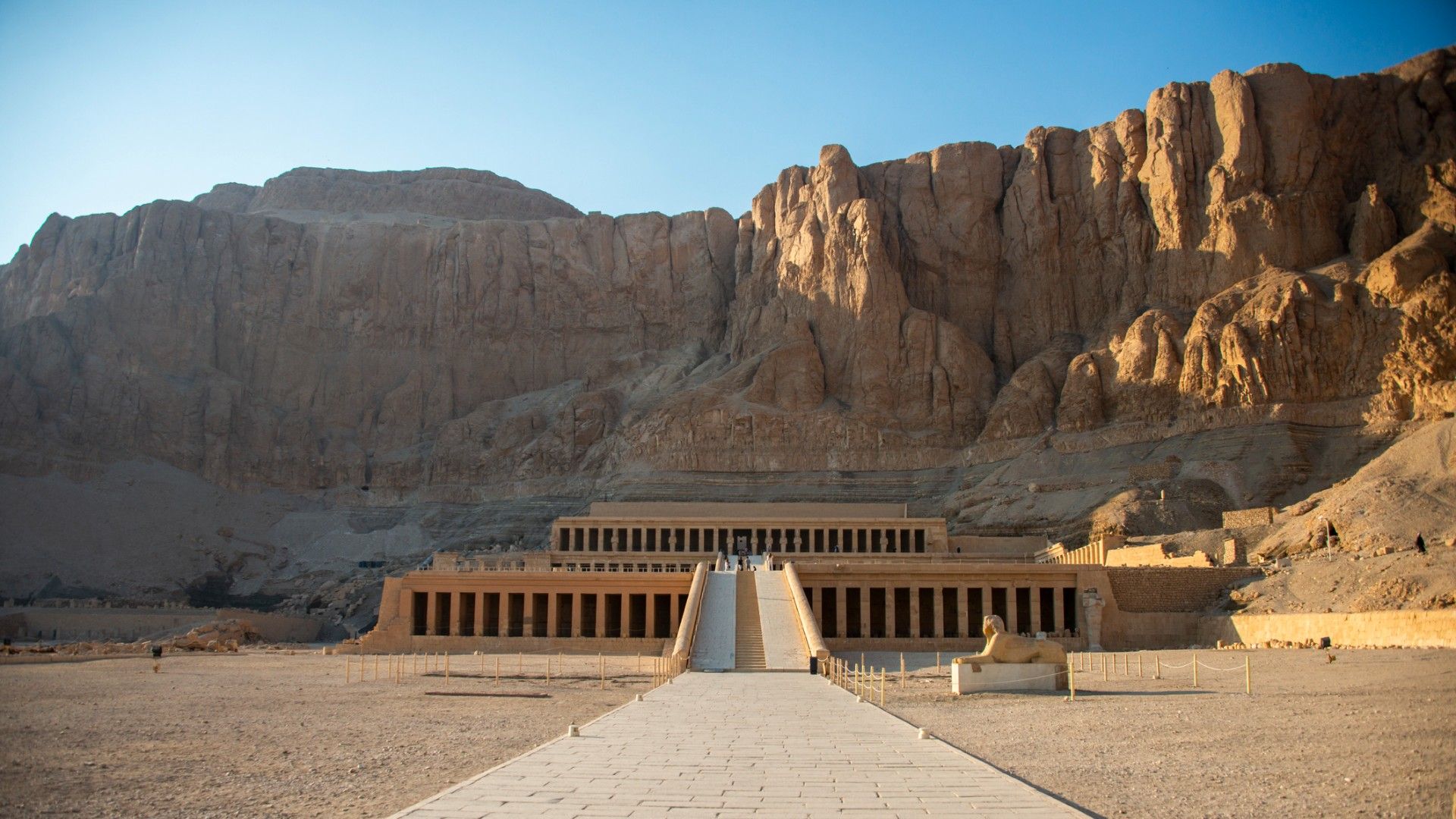
The Mortuary Temple of Hatshepsut offers space, but little shade. (Image credit: Paul Biris via Getty Images)

Location: West Bank of Luxor, Egypt

Start of totality and duration: 1:01 p.m. EEST; 6 minutes, 19 seconds

Historical cloud cover: 0%

If one temple is best suited to crowds for an eclipse, it's this vast, open-air gem dedicated to the legendary queen who became pharaoh. However, with almost no shade, it could be the least practical option. Three huge terraces rise above the desert floor and into the cliffs of Deir el-Bahari to the west. It's an absolute masterpiece.

5. Colossi of Memnon

The Colossi of Memnon are often relatively quiet. (Image credit: Tuul & Bruno Morandi via Getty Images)

Location: West Bank of Luxor, Egypt

Start of totality and duration: 1:01 p.m. EEST; 6 minutes, 19 seconds

Historical cloud cover: 0%

This is where we get to temples that are fairly well known, but likely won't have as much pressure on them from eclipse chasers as the big three — Karnak, Luxor and Hatshepsut. However, anyone looking for ways to get temple architecture into images of an eclipse at zenith should look no further than these two large stone statues of Pharaoh Amenhotep III. Behind them are the ruins of the largest temple in the Theban Necropolis.

6. Medinet Habu

Aerial view of the Medinet Habu in Luxor, Egypt. (Image credit: nomadnes via Getty Images)

Location: West Bank of Luxor, Egypt

Start of totality and duration: 1:01 p.m. EEST; 6 minutes, 19 seconds

Chance of clouds: 0%

Getting off the beaten track in August 2027 will be near-impossible, but here's an option — the Mortuary Temple of Ramesses III. Featuring towering stone columns, colorful reliefs (despite being 3,200 years old) and famous carvings, it's bypassed by tour buses heading straight for Hatshepsut.

7. Ramesseum

The funerary temple of Rameses II, the Ramesseum. (Image credit: Gian Berto Vanni via Getty Images)

Location: West Bank of Luxor, Egypt

Start of totality and duration: 1:01 p.m. EEST; 6 minutes, 19 seconds

Historical cloud cover: 0%

Another temple that, without Karnak and Luxor nearby, would be rammed with visitors, is the Ramesseum — the mortuary temple of Ramesses II. Featuring the remains of a huge fallen statue that inspired Shelley's poem Ozymandias, it's in an area once used by the artisans who built the royal tombs, and slightly off the tourist route.

8. Temple of Khnum
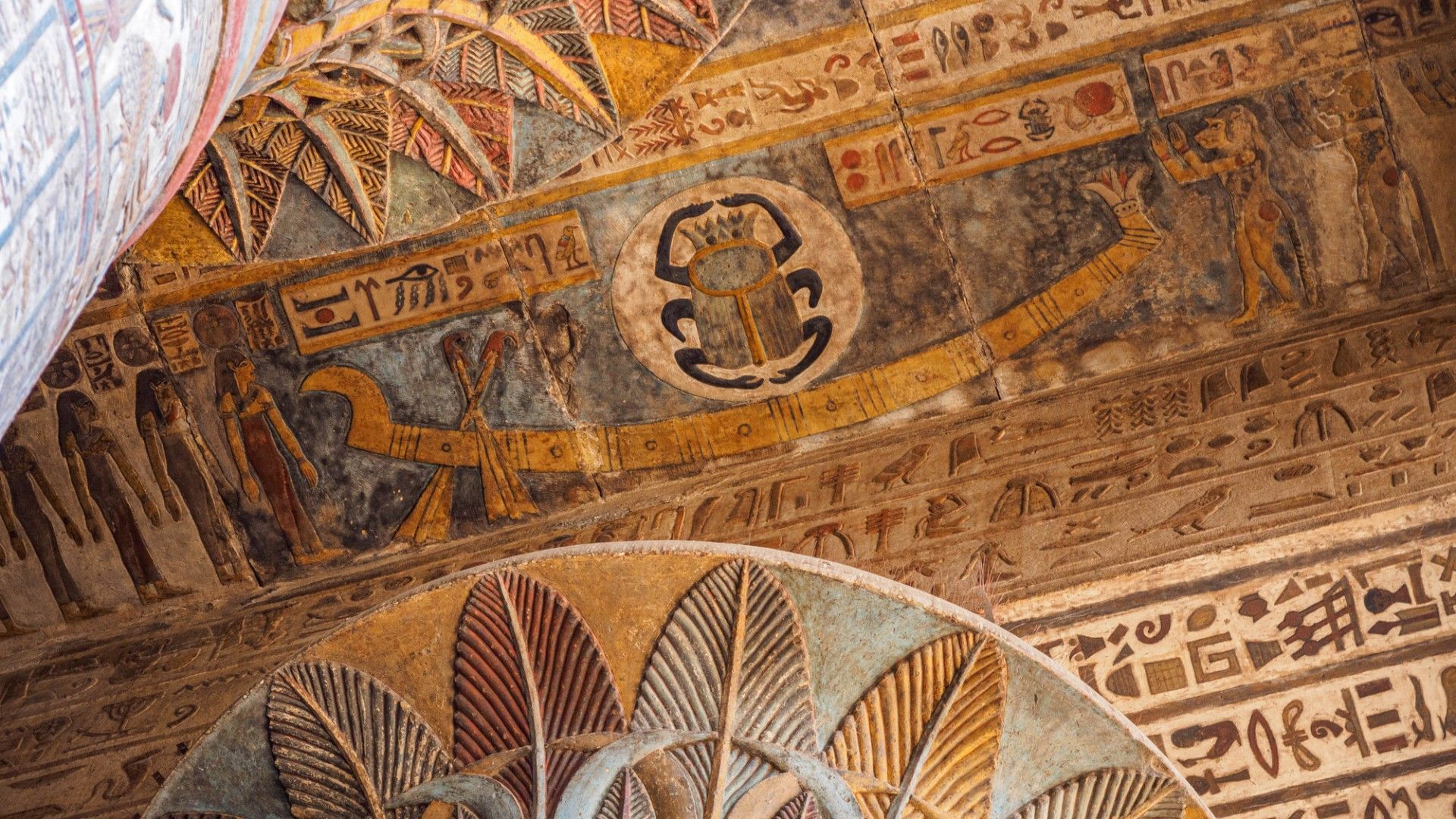
The colorful ceilings at the Temple of Khnum in Esna. (Image credit: Brandon Rosenblum via Getty Images)

Location: Esna, Egypt

Start of totality and duration: 1:02 p.m. EEST; 5 minutes, 47 seconds

Historical cloud cover: 0%

If you want to avoid the scrum of eclipse chasers in Luxor on and around Aug. 2, the Temple of Khnum could be an option. Located in Esna, about 34 miles (55 kilometers) south of Luxor, the so-called 'Rainbow Temple' (for its colorful ceilings) is dedicated to the ram-headed creator god Khnum. Dating from the Greco-Roman era, there's a vast Hypostyle Hall that sits below modern street level, which could be good for some shade.

9. Temple of Dendera
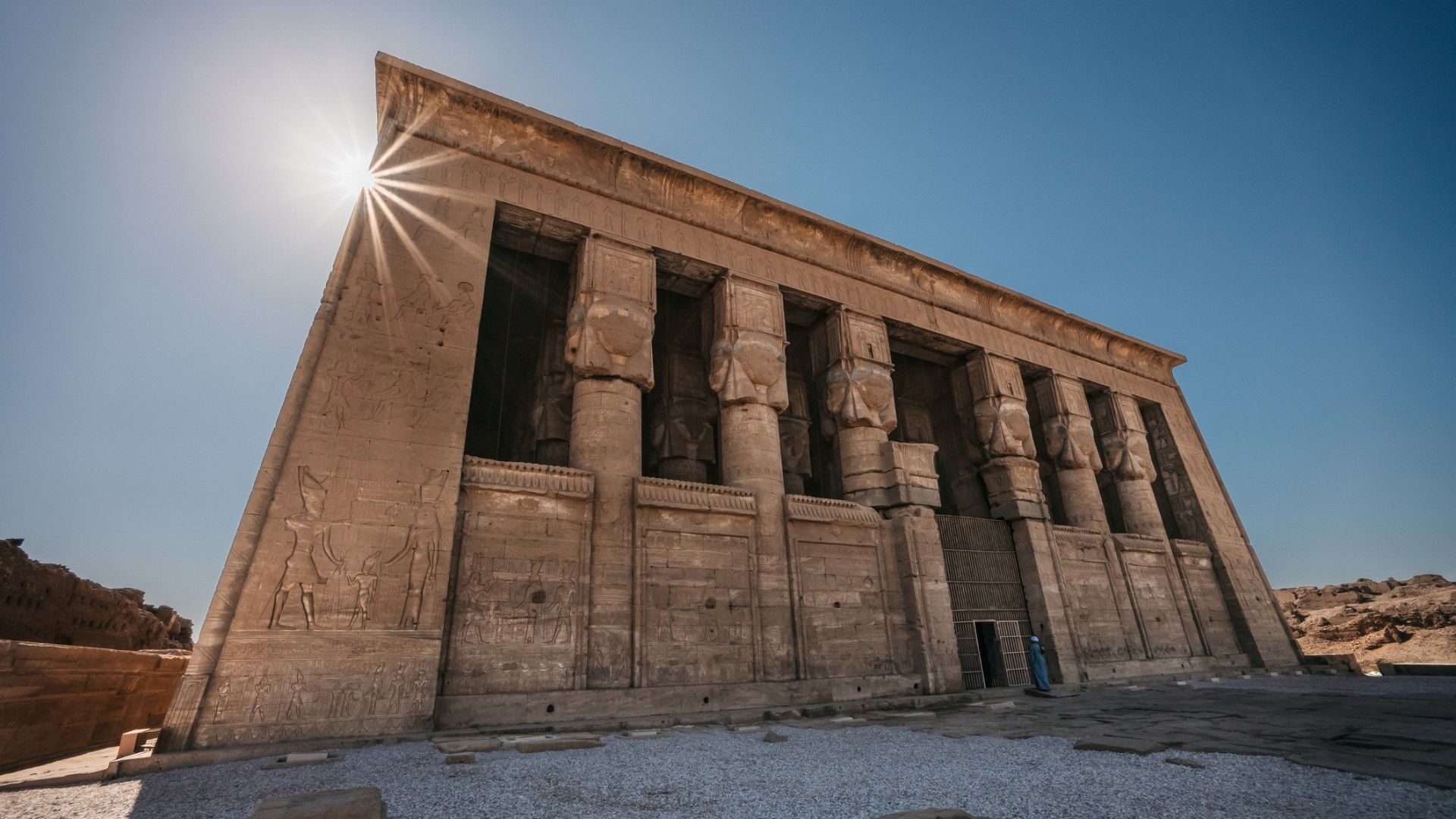
The Temple of Dendera is among Egypt's best-preserved and most beautiful. (Image credit: nomadnes via Getty Images)

Location: Qena, Egypt

Start of totality and duration: 1:01 p.m. EEST; 6 minutes, 15 seconds

Historical cloud cover: 0%

If you want to escape Luxor but (almost) keep its long totality, head to Qena, 40 miles (65 km) north, where one of Egypt's best-preserved and most beautiful temples stands. Dendera was the cult center for Hathor, one of the most important and popular deities in ancient Egypt and known as the 'lady of the sky.' The temple's entrance has six massive columns, each decorated with Hathor's head, and its ceiling features astronomical engravings.

10. Temple of Horus

Edfu's Temple of Horus gets a minute less totality than Luxor. (Image credit: Ratnakorn Piyasirisorost via Getty Images)

Location: Edfu, Egypt

Start of totality and duration: 1:04 p.m. EEST; 5 minutes, 20 seconds

Historical cloud cover: 0%

Another great option for those who prioritize ancient Egyptian surroundings over the longest possible totality is the Temple of Horus, one of the most striking and best-preserved temples in ancient Egypt. About 68 miles (110 km) south of Luxor, it's dedicated to the sun and sky god Horus, one of the main gods in ancient Egypt, whose right eye represents the sun and left eye the moon. The temple's stone roofs are intact, so its Hypostyle Halls, inner chambers and central sanctuary provide some shade.

10 best places to see the 2027 total solar eclipse in Spain

Spain is one of the easiest places in the world to experience the total solar eclipse on Aug. 2, 2027. The so-called "eclipse of the century" first makes landfall in Andalucía, where totality will last up to 4 minutes and 40 seconds during mid-morning, with the sun comfortably high at around 38-42 degrees above the horizon in the eastern sky. Excellent roads, plentiful accommodation and Málaga's international airport make this an obvious alternative to North Africa and the Middle East.

However, choosing where to watch requires some thought. Southern Spain's narrowing shape funnels the path toward the Strait of Gibraltar, potentially concentrating huge numbers of eclipse chasers around Tarifa, the Costa del Sol and the British Overseas Territory of Gibraltar during the peak summer holiday season.

From busy Mediterranean beaches to mountain villages, here's where to see the total solar eclipse on Aug. 2, 2027 in southern Spain. All times, totality durations and historical cloud cover data come from Time and Date.

1. Tarifa

At the southernmost tip of mainland Europe, Tarifa will experience almost four minutes and 40 seconds of totality on Aug. 2, 2027. (Image credit: MEDITERRANEAN via Getty Images)

Location: Cádiz province

Start of totality and duration: 10:45 a.m. CEST; 4 minutes, 40 seconds

Historical August cloud cover: 13%

Altitude of the sun: 38 degrees above east

At the southernmost tip of mainland Europe, where the Atlantic Ocean meets the Mediterranean Sea, Tarifa is likely to be one of the country's busiest eclipse-watching locations because it will experience the longest totality in mainland Spain. Just 9 miles (14 km) across the Strait of Gibraltar from Morocco, the historic port town is known for its whitewashed old town, the medieval Castle of Guzmán el Bueno and its long, sandy beaches. Los Lances and Valdevaqueros offer wide horizons and plenty of open space.

2. Gaucín

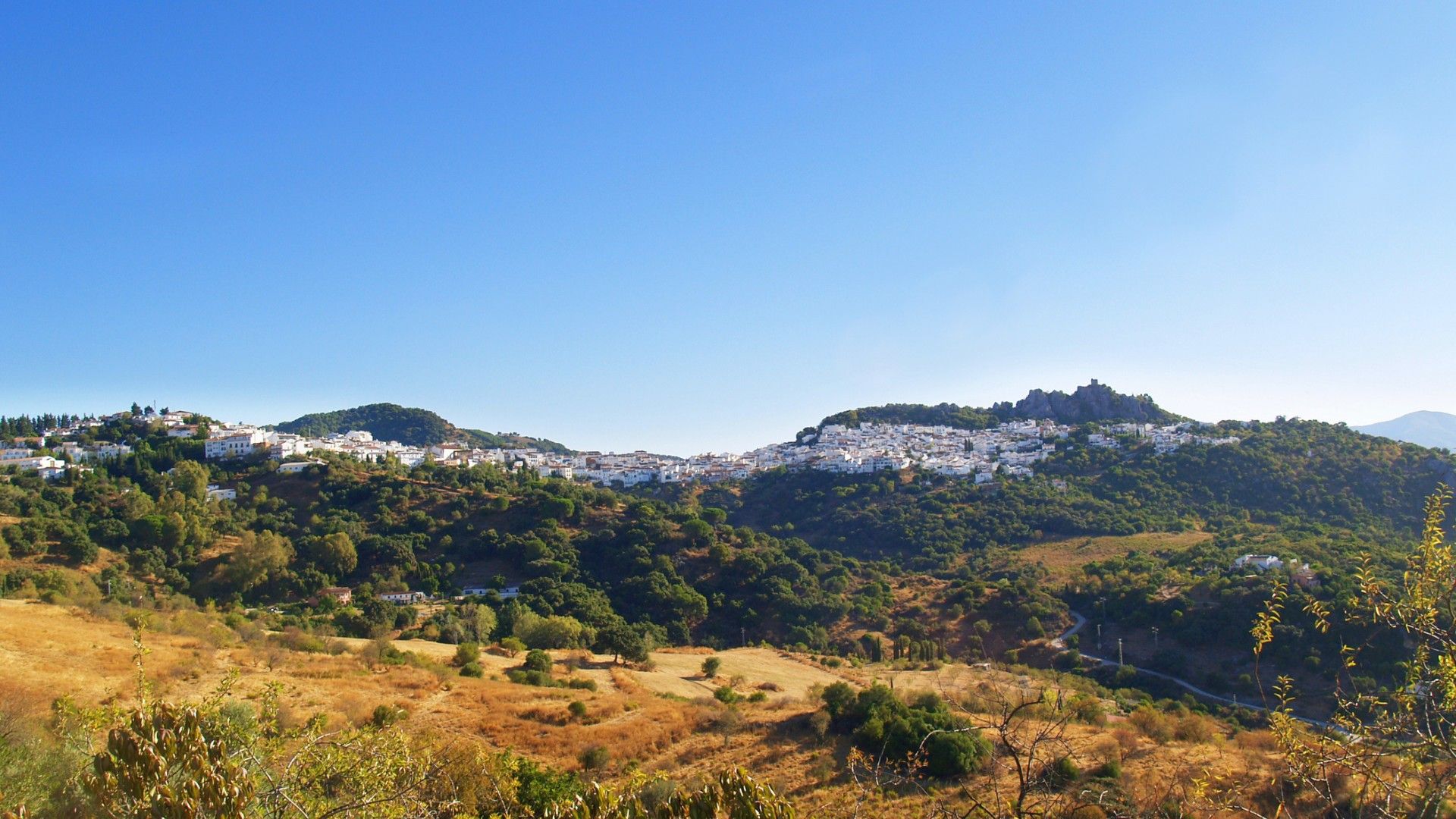
The whitewashed mountain village of Gaucín will experience more than three minutes of totality on Aug. 2, 2027. (Image credit: japatino via Getty Images)

Location: Málaga province, Andalucía, Spain

Start of totality and duration: 10:46 a.m. CEST; 3 minutes, 13 seconds

Historical August cloud cover: 5%

Altitude of the sun: 38 degrees above east

For eclipse chasers who would rather head into the mountains than join the crowds on the Costa del Sol, Gaucín is an intriguing alternative. One of Andalucía's classic pueblos blancos, the whitewashed village occupies a spectacular position in the mountains above the coast, crowned by the ruins of Castillo del Águila. Its elevated setting offers sweeping views across the surrounding countryside towards Gibraltar and, on clear days, the mountains of North Africa. Crucially, heading inland doesn't sacrifice too much totality.

3. Gibraltar

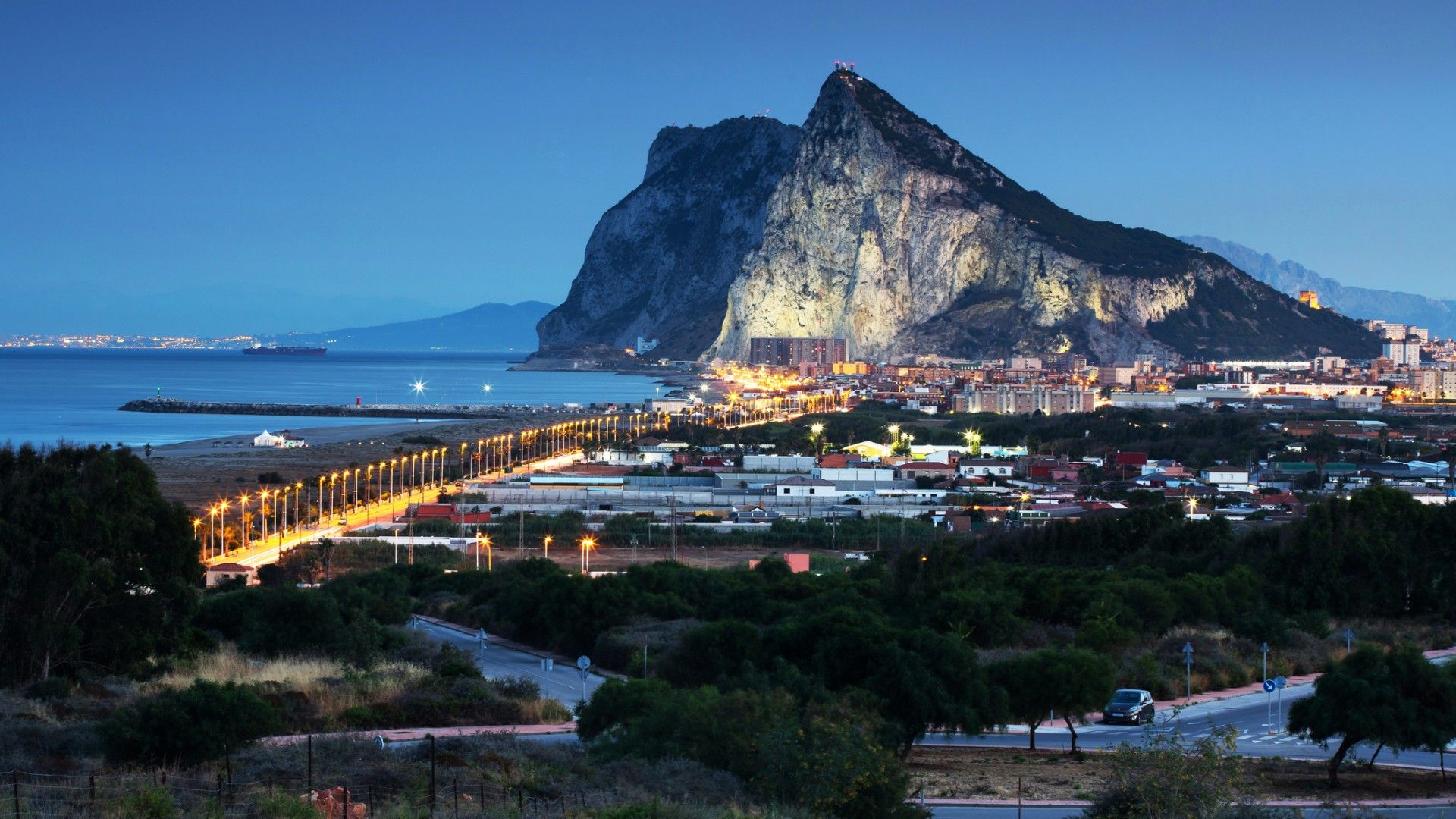
The Rock of Gibraltar will be plunged into darkness for almost four and a half minutes during the total solar eclipse on Aug. 2, 2027. (Image credit: Eloi_Omella via Getty Images)

Location: Gibraltar

Start of totality and duration: 10:45 a.m. CEST; 4 minutes, 29 seconds

Historical August cloud cover: 17%

Altitude of the sun: 38 degrees above east

Few places in Europe could provide a more dramatic setting for totality than Gibraltar, the tiny British Overseas Territory dominated by its famous 1,398-foot (426-meter) limestone Rock. However, eclipse chasers will need to view either from The Rock or its east coast, where elevated viewpoints and beaches face the Mediterranean and the eclipsed sun. However, Gibraltar has a potential complication — the easterly Levanter wind can create a distinctive cap of cloud over the Rock even when surrounding skies are clear. Another issue is accommodation, which is already at a premium. See Gibraltar Eclipse 2027.

4. La Línea de la Concepción

La Línea de la Concepción offers the chance to watch more than four minutes of totality with the Rock of Gibraltar dominating the horizon. (Image credit: fhm via Getty Images)

Location: Cádiz province

Start of totality and duration: 10:45 a.m. CEST; 4 minutes, 24 seconds

Historical August cloud cover: 17%

Altitude of the sun: 38 degrees above east

Immediately north of Gibraltar, La Línea de la Concepción occupies the sandy isthmus between the Bay of Gibraltar and the Mediterranean Sea. Its location creates one of Spain's most distinctive possibilities for eclipse photography. On the Mediterranean side, Playa de Santa Bárbara is a wide sandy beach north of the border, with the immense Rock of Gibraltar rising to the south — a potentially spectacular foreground. The city has around 9 miles (14 kilometers) of coastline, providing plenty of alternatives for eclipse viewing.

5. Estepona

Estepona on the Costa del Sol will experience more than three and a half minutes of totality on Aug. 2, 2027. (Image credit: John Harper via Getty Images)

Location: Costa del Sol, Málaga province

Start of totality and duration: 10:46 a.m. CEST; 3 minutes, 41 seconds

Historical August cloud cover: 7%

Altitude of the sun: 38 degrees above east

About an hour's drive southwest of Málaga Airport, Estepona is one of the Costa del Sol's most attractive resort towns, with a pedestrianized old quarter of whitewashed streets, colorful flowerpots and squares centered on Plaza de las Flores. For eclipse day, the mile-long Playa de la Rada is the obvious gathering place, with its broad Mediterranean horizon and proximity to the town center. Other attractions include Estepona Marina and the Sierra Bermeja mountains rising behind the coast.

6. Cádiz

The ancient Atlantic port of Cádiz will experience almost three minutes of totality on Aug. 2, 2027. (Image credit: Flottmynd via Getty Images)

Location: Cádiz province

Start of totality and duration: 10:45 a.m. CEST; 2 minutes, 56 seconds

Historical August cloud cover: 13%

Altitude of the sun: 37 degrees above east

Historic Cádiz occupies a narrow peninsula jutting into the Atlantic and is packed with reminders of its long maritime past, including the Cádiz Cathedral, the Roman Theatre and Torre Tavira, one of more than 100 watchtowers once used to spot approaching ships. For eclipse day, the long, sandy Playa de la Victoria offers plenty of open space, while La Caleta provides a more historic setting between two coastal castles.

7. Málaga

Málaga, capital of the Costa del Sol, will experience almost two minutes of totality on Aug. 2, 2027. (Image credit: Guven Ozdemir via Getty Images)

Location: Málaga province

Start of totality and duration: 10:48 a.m. CEST; 2 minutes

Historical August cloud cover: 9%

Altitude of the sun: 39 degrees above east

Málaga may lose some duration compared with locations farther west, but it makes up for it with excellent transport links, plentiful accommodation and all the attractions of a major Mediterranean city. It combines the hilltop Gibralfaro Castle and Moorish Alcazaba with a Roman theatre, cathedral, museums and a lively historic center. For eclipse day, the obvious option is the coast. La Malagueta beach is within walking distance of the city center, while numerous beaches extend east and west along the Costa del Sol.

8. Torremolinos

The beaches of Torremolinos on the Costa del Sol will experience almost three minutes of totality on Aug. 2, 2027. (Image credit: By LTCE via Getty Images)

Location: Málaga province

Start of totality and duration: 10:47 a.m. CEST; 2 minutes, 46 seconds

Historical August cloud cover: 11%

Altitude of the sun: 39 degrees above east

One of the best-known resorts on Spain's Costa del Sol, Torremolinos combines a long Mediterranean beachfront with easy access to Málaga and its international airport. Its 4-mile (6-kilometer) promenade links broad sandy beaches, including Playa del Bajondillo and Playa de la Carihuela, offering plenty of potential eclipse-watching spots with views toward the eastern sky. For a higher vantage point, nearby Mount Calamorro rises almost 2,600 feet (800 meters) above Benalmádena, with panoramic views across the Costa del Sol and, on clear days, towards Gibraltar and North Africa.

9. Marbella

Marbella's Mediterranean beaches will experience more than three minutes of totality on Aug. 2, 2027. (Image credit: Tu xa Ha Noi via Getty Images)

Location: Costa del Sol, Málaga province

Start of totality and duration: 10:46 a.m. CEST; 3 minutes, 21 seconds

Historical August cloud cover: 7%

Altitude of the sun: 38 degrees above east

Marbella has around 17 miles (27 kilometers) of Mediterranean coastline, so eclipse chasers will have dozens of beaches to choose from, from San Pedro de Alcántara in the west to Cabopino in the east. Options include the sandy beaches and dunes around Cabopino, Las Chapas, Puerto Banús and San Pedro de Alcántara, all with open views across the Mediterranean. Away from the beach, Marbella offers a whitewashed old town centered on Plaza de los Naranjos, while the Sierra Blanca mountains provide a dramatic backdrop to the resort.

10. Motril

Motril on Spain's Costa Tropical lies close to the northern edge of the path of totality on Aug. 2, 2027. (Image credit: Getty Images)

Location: Costa Tropical, Granada province

Start of totality and duration: 10:49 a.m. CEST; 1 minute, 57 seconds

Historical August cloud cover: 10%

Altitude of the sun: 39 degrees above east

Close to the northern edge of the path of totality, Motril gets a shorter eclipse than destinations farther west, but could be among the quieter places on Spain's Mediterranean coast from which to experience it. The largest town on Granada's Costa Tropical sits between the Mediterranean and the foothills of the Sierra de Lújar, with the Sierra Nevada rising beyond. Nearby Playa Granada and Playa Poniente offer broad coastal views.

When not to watch a meteor shower — why I’m not staying up for the Orionids

I used to think being interested in the night sky meant I had to try every meteor shower. If a calendar said "peak," I interpreted that as an instruction. I'd set an alarm, find several layers of clothing and go outside at around 2:00 a.m. when even the neighborhood cats seemed surprised to see me. Then I'd spend an increasingly resentful 45 minutes staring upward, occasionally see one meteor and wonder whether I was somehow doing it all wrong. As I've grown into stargazing, I've become much more selective.

The Orionids peak next week, and normally I'd be tempted. These fast meteors come from debris from Halley's Comet, which is enough of a connection to make almost anyone want to go outside. However, another object is in the sky this year — a big, bright waxing gibbous moon that will brighten the night sky and make "shooting stars" very hard to see.
That doesn't make the Orionids unobservable. In fact, there is a narrow window when the night sky will be free from moonlight. But it does make me far less inclined to sacrifice an entire night for them, and I certainly won't be trying to spend the night camping under a dark sky in a remote rural location far from light pollution. I've discovered that knowing when not to observe is an underrated stargazing skill.
What's happening and when to look

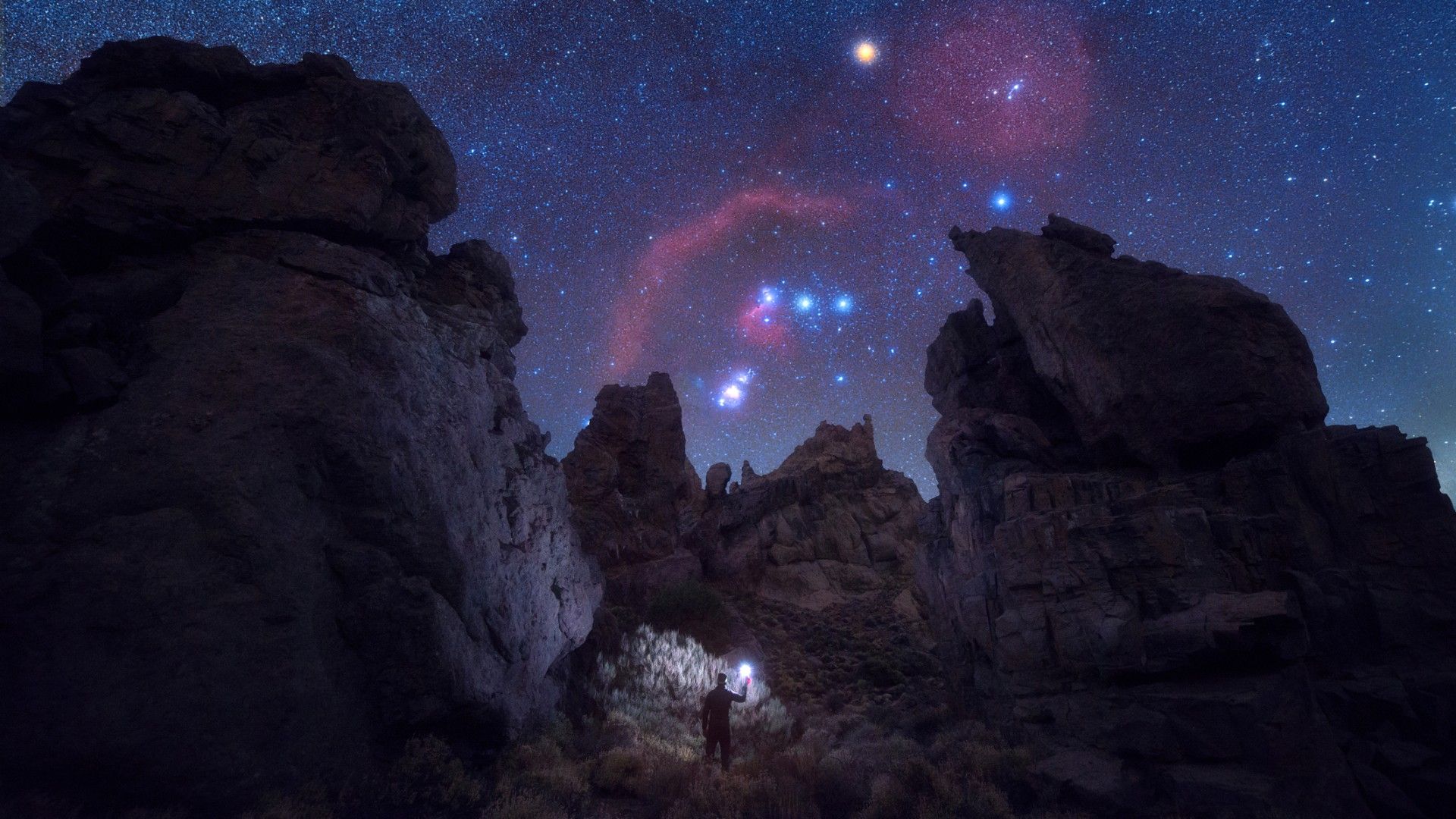
The Orionid meteor shower's radiant is the constellation Orion. (Image credit: Inigo Cia via Getty Images)

The Orionids are active from Oct. 2 through Nov. 7, with their 2026 maximum expected overnight on Oct. 21-22. They appear to radiate from a point near Orion, although the meteors themselves can streak across almost any part of the sky.

The shower happens because Earth crosses a stream of debris left behind by Halley's Comet, which was last in the inner solar system in 1986 and will return in 2061. Those tiny particles hit our atmosphere at roughly 41 miles (66 kilometers) per second, making Orionids particularly fast meteors.

Under ideal conditions, the International Meteor Organization gives the shower a zenithal hourly rate of 20 or more around maximum. But "zenithal hourly rate" is not the same as promising that I will personally see 20 meteors while standing in my backyard for an hour. It assumes an excellent dark sky, a well-placed radiant and unobstructed viewing. In reality, that's impossible — at the very least you'd have to have eyes in the back of your head. And on each side.

This year adds another complication. The moon reaches first quarter on Oct. 18 and continues waxing toward full on Oct. 26. On the peak night of the Orionids, an 80%-illuminated waxing gibbous moon will be in the night sky as it gets dark on Oct. 21 and sets around 03:00 a.m. local time across Europe and North America on Oct. 22. You can probably see the workaround. Sunrise is roughly 06:30 a.m. local time, which means astronomical darkness — when the sun is more than 18 degrees below the horizon, meaning complete darkness — lasts until around 05:00 a.m. local time (these times work as a ballpark, but you can (check the exact times of moonset and sunrise for your location on Time and Date).

So there is a dark window before dawn, and that is when I would try to see the shower if I were determined to see it. The Orionid radiant is also much better placed after midnight than it is in the evening.

Knowing exactly what's going to happen in the sky turns a casual meteor watch into a rather more calculated exercise.

How and when I'm watching it

My plan for the Orionids this year is the same as usual — after checking the moon phase and the moonset and sunrise times, there's one more variable. The weather forecast first.

If the forecast is excellent and I'm feeling enthusiastic, I'll target the period after moonset and before morning twilight on Oct. 22. If it's due to be cloudy, I'm staying in bed.

This sounds obvious, but I think beginners are sometimes given the impression that successful stargazing requires heroic commitment. It doesn't. A meteor shower is not a performance that disappears the moment the advertised "peak" passes. The Orionids have a relatively broad period of activity, so meteors can appear on nights either side of maximum, too.

If I do go outside at 3:00 a.m., I'll do so without two hugely valuable resources for meteor showers — a lawn chair and bags of patience.

Stargazer's corner: October 16-22, 2026

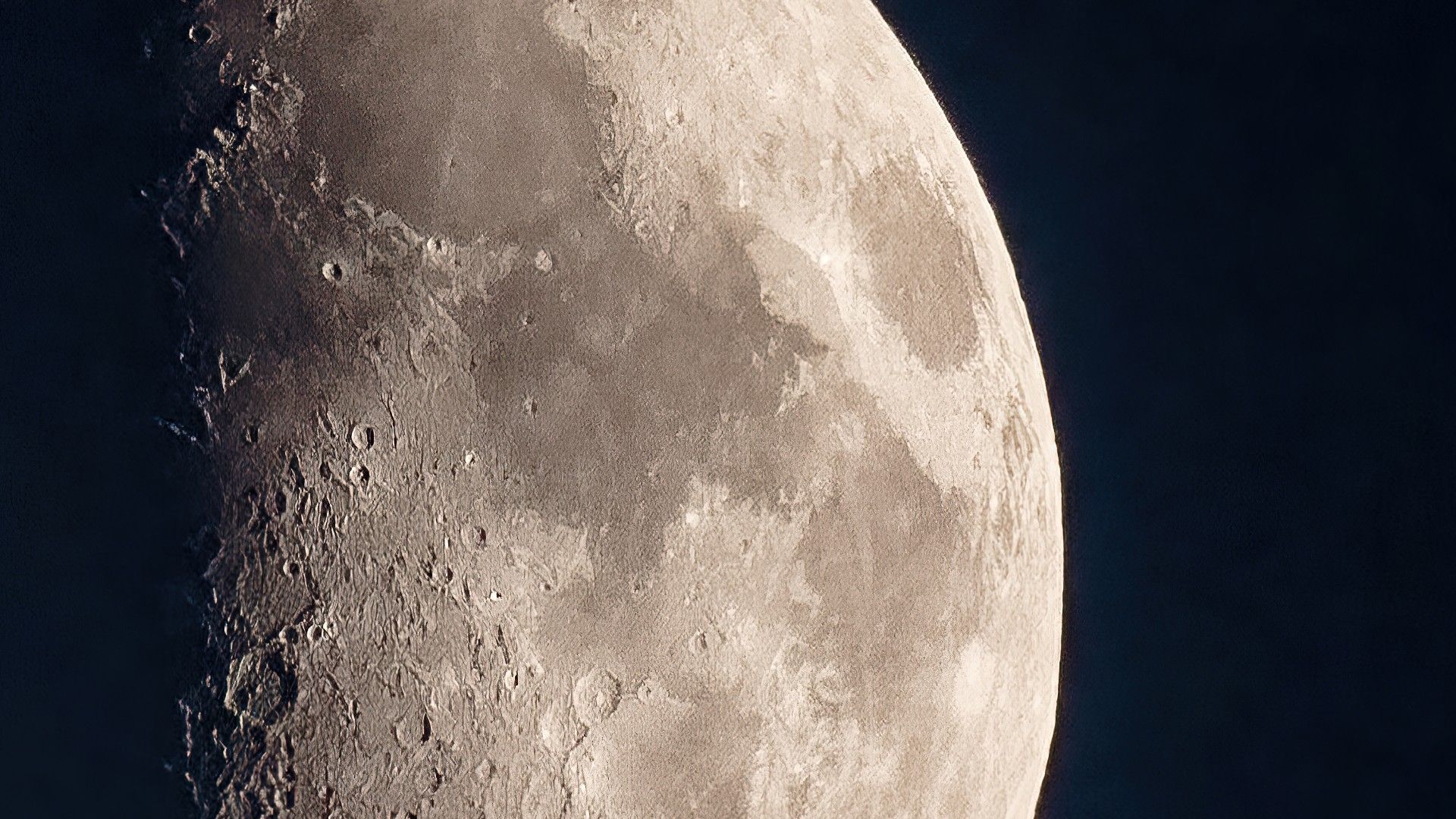
A first quarter moon is ideal for a pair of binoculars. (Image credit: Darwin Fan via Getty Images)

The moon reaches first quarter on Oct. 18, making stargazing tricky this week. That means I'm changing what I observe rather than declaring the week a write-off. The moon itself becomes an excellent target in early evening around first quarter. Sunlight strikes the lunar landscape along the terminator — the boundary between lunar day and night — throwing mountains and crater rims into strong relief. A cheap pair of binoculars can reveal a surprising amount. With a telescope, you can spend hours getting lost in the Montes Apenninus mountain range and three nearby craters — Eratosthenes and Archimedes on either side, and Plato above. Saturn remains another easy evening target after its Oct. 4 opposition. Look toward the eastern and southeastern sky after dark for its steady yellowish light. Even a modest telescope pointed at Saturn's rings will astound.

Constellation of the week: Cassiopeia

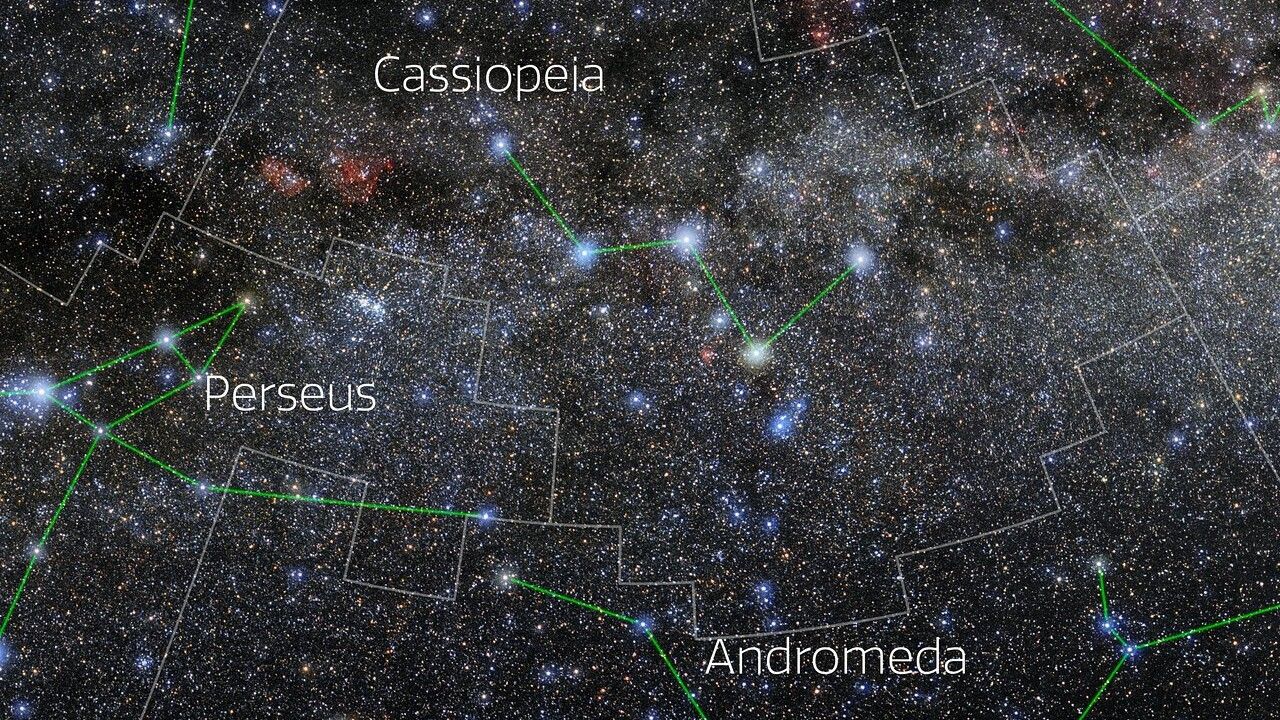
The Milky Way runs directly through Cassiopeia, "The Queen." (Image credit: E. Slawik/NOIRLab/NSF/AURA/M. Zamani)

Cassiopeia is one of the easiest constellations I know to find because its five main stars form a conspicuous W — or, right now, something that looks suspiciously more like an M. Look toward the northern sky in the evening. From mid-northern latitudes, Cassiopeia is high and prominent during autumn, on the opposite side of Polaris from the Big Dipper. That relationship is more useful to me than memorizing exactly which way the W should point. Cassiopeia circles Polaris as Earth rotates, so its orientation changes through the night. From sufficiently northerly locations, it's circumpolar, meaning it never sets below the horizon.

Why can you see the moon during the day? This week is the perfect time to find out

I know perfectly well that the moon comes out during the day. I have known this for decades. Yet whenever I spot it in a blue afternoon sky, some primitive part of my brain still thinks it has turned up early.

I'm certainly not the only one. Many people don't understand how it could be visible in daylight. In their eyes, the moon is a nighttime object. Why? Because that's when they notice it — it appears brighter.

We tend to think of the sun as belonging to the day and the moon to the night because that's how they're usually presented to us as children. Astronomically, it makes little sense. The moon spends plenty of time above our horizon while the sun is also up — it spends half its time in the daytime sky, in fact.

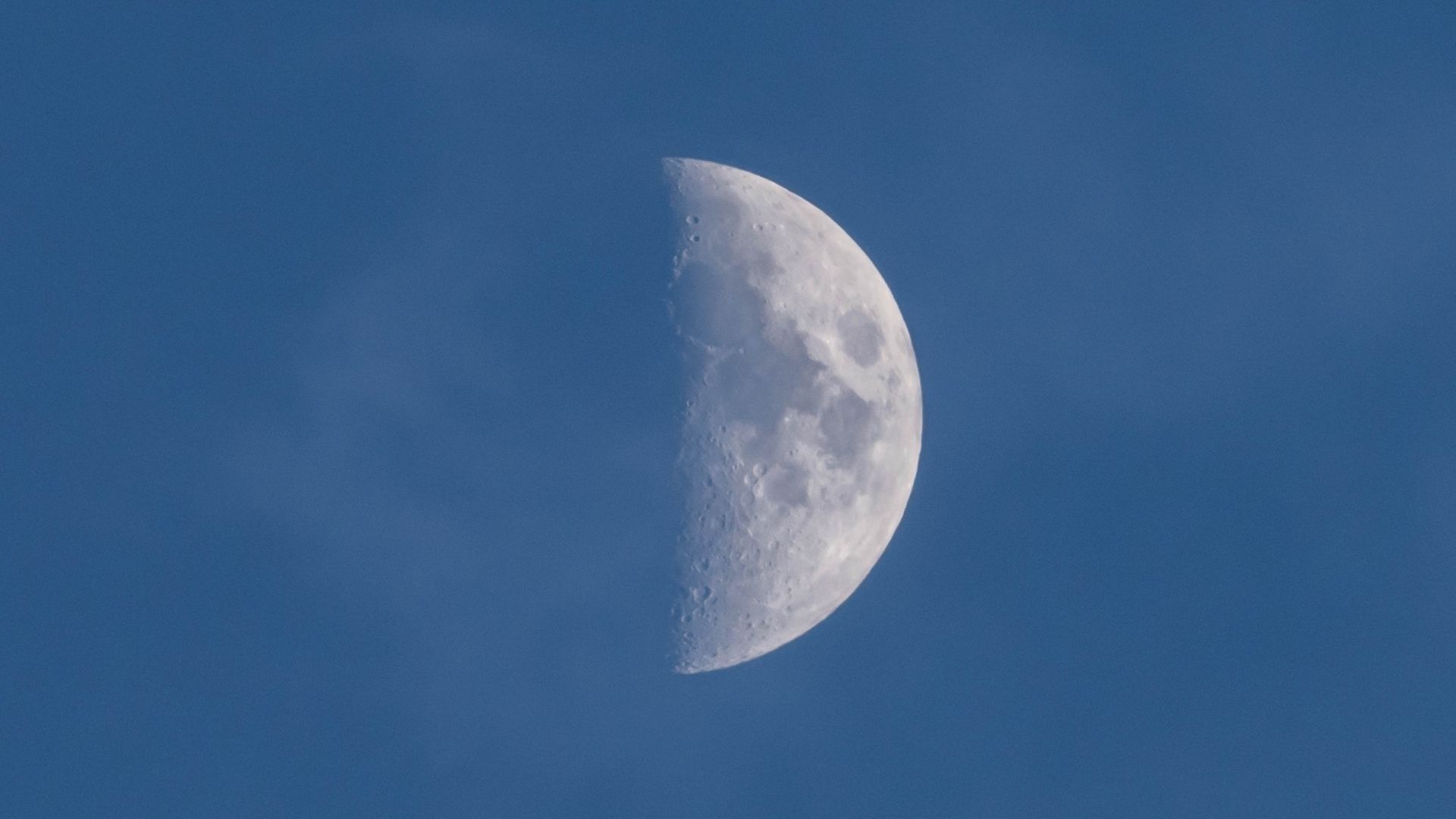
If the moon, pale but unmistakable, looks slightly out of place against a blue sky, it's not — you are. This week is a great time to get used to seeing it there. Just past first quarter, the moon will spend each afternoon hanging in the daytime sky, becoming easier to spot as the sun sinks towards the horizon.

What's happening and when to look

The moon reached first quarter on Sunday, Oct. 18, and is now waxing toward full moon, which occurs early on Monday, Oct. 26 (Oct. 25 in some time zones). That puts it in the right part of its orbit to be conspicuous during the late afternoon this weekend.

Here's the useful bit to remember. Around first quarter, the moon rises roughly around midday. As it waxes towards full, it rises progressively later in the afternoon. By full moon, it rises around sunset.

The moon reached first quarter on Oct. 18.  (Image credit: Taro Hama @ e-kamakura via Getty Images)

That makes the days immediately after first quarter an excellent time to get into the habit of finding the moon before sunset. On Monday, Oct. 19, look southeast in the afternoon for a moon just over half-lit. Each afternoon this week, it will become a little more illuminated, move farther east against the background stars, and appear progressively later in the day.

You don't need to wait until dusk. In fact, that's the point. Start looking during the afternoon, when the sun is still well above the horizon. Once you find the moon, it can be surprisingly conspicuous against the blue sky.

How and when I'm watching it

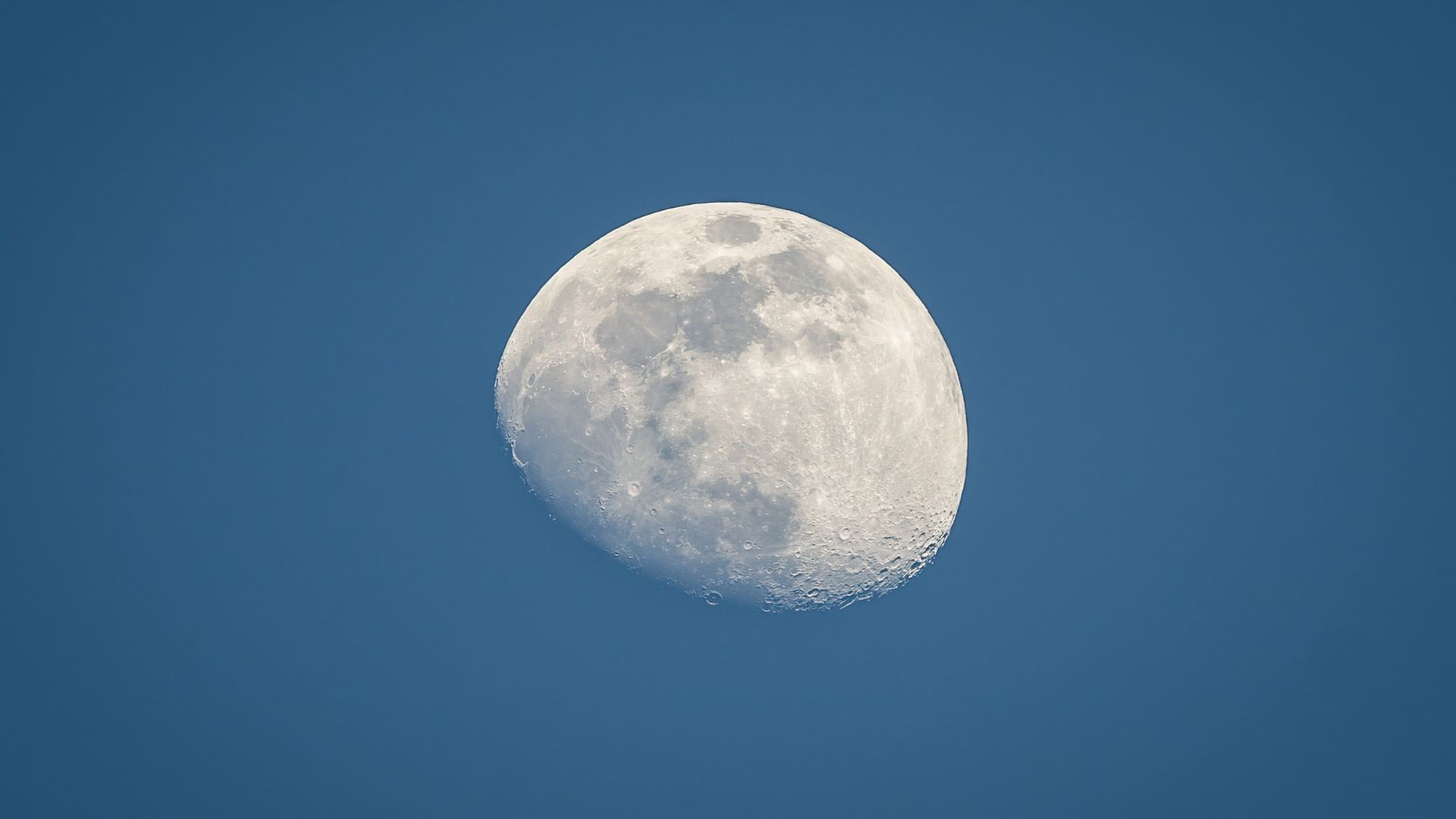
The moon is now waxing towards being full, so it's already in the sky by dusk. (Image credit: 5c5q2cnvmg / 500px via Getty Images)

I'll start looking in the mid-to-late afternoon this week, when the waxing moon should already be high enough to find easily. You can check the exact moonrise time where you are, but there's no need to catch it as it rises. Look towards the east or southeast and scan the blue sky.

Once you've found the moon in daylight, keep checking on it as sunset approaches. The moon doesn't suddenly become brighter, of course. Instead, the surrounding sky darkens, increasing the contrast until the pale daytime moon seems to switch on at dusk and grow increasingly brilliant.

Binoculars will give you a superb view at dusk, particularly along the terminator — the boundary between lunar day and night. That's where low-angle sunlight throws mountains and crater rims into sharp relief. As the moon waxes this week, the terminator will move steadily across its surface, revealing a different landscape each afternoon.

That's another reason not to wait for the full moon. The full moon gets most of the attention, but the week beforehand is arguably a much better time to get to know our nearest celestial neighbor — and you don't even have to wait until dark.

Stargazer's corner: October 23-29, 2026

 The full moon arrives on Monday, Oct. 26. (Image credit: Westend61 via Getty Images)

This is a bright-moon week. Full moon arrives early on Monday, Oct. 26, so moonlight will wash out faint stars and make galaxies and nebulas much harder to see. So go for Saturn instead. It reached opposition earlier this month and remains very well placed in the evening sky. Better still, the nearly full moon passes near Saturn around Oct. 23-24, giving beginners a convenient landmark for locating the planet. The moon's glare will hide faint nearby stars, but Saturn itself is easily bright enough to cope. A good example will be Oct. 27, when the Pleiades is passed closely by a bright moon. The Seven Sisters therefore won't be at their best, so you'll need to use binoculars — if you do, you'll see them easily enough.

Constellation of the week: Auriga

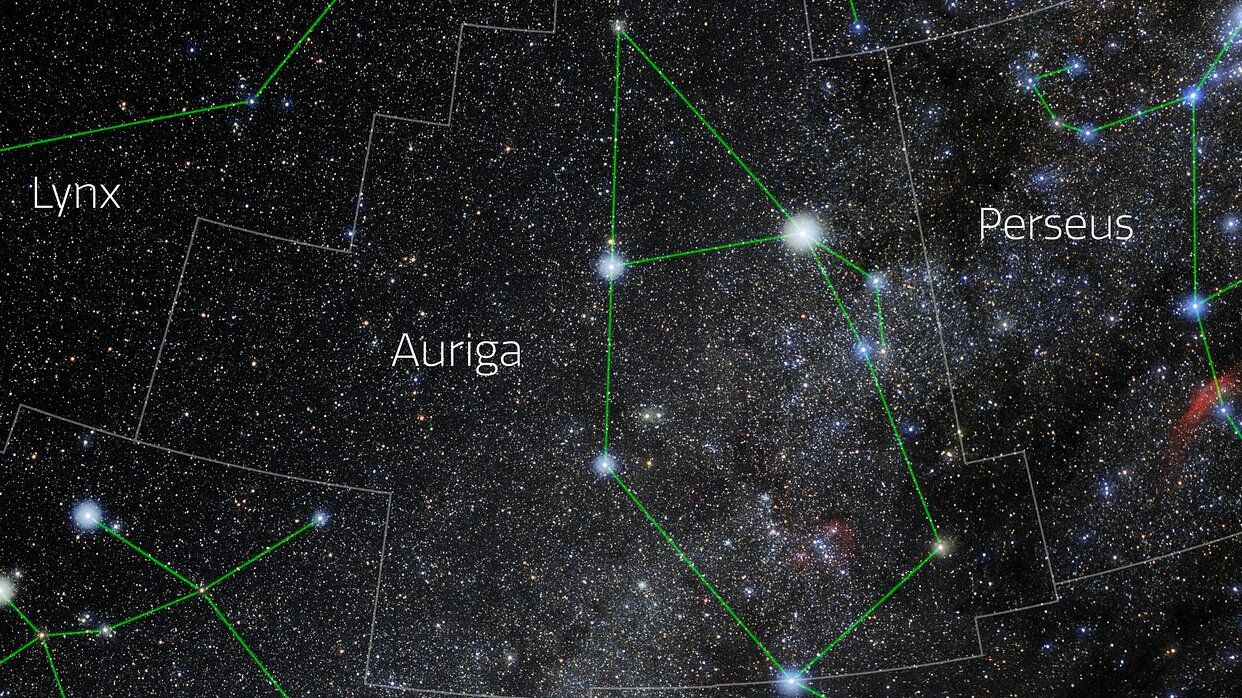
night sky chart showing the constellation auriga

Auriga is one of the easiest constellations to find in the Northern Hemisphere's winter night sky. (Image credit: E. Slawik/NOIRLab/NSF/AURA/M. Zamani)

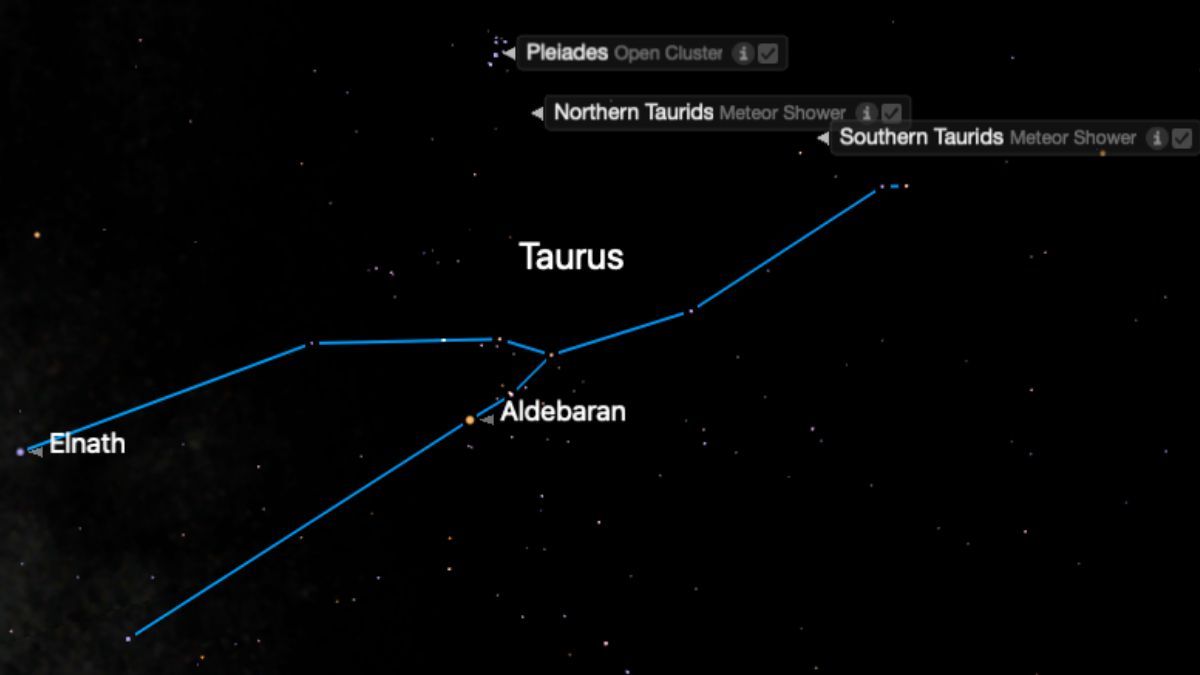
Auriga, "the Charioteer," is climbing in the northeastern and eastern sky during late October evenings. It's easiest to find if you start at Capella, one of the brightest stars in the entire night sky. It's just 43 light-years from the sun. From there, I look for the other stars that form Auriga's rough pentagon, including Menkalinan, Mahasim and Almaaz. The fifth corner is Elnath, although it officially belongs to neighboring Taurus.

Auriga gets even better with binoculars. The Milky Way runs straight through it, bringing with it three bright open star clusters — M36, M37 and M38. All three show up in binoculars under a reasonably dark sky, while a small telescope starts to resolve them into individual stars. There's always another layer to find in the night sky.

My latest stargazing obsession

There's something special about stargazing during the blue hour — that brief transition when daylight drains from the sky and night's window begins to open. It's particularly beautiful a few days before full moon, when the near-full orb is already rising in the east as the sun sets in the west. Look below it, and you may also see the Belt of Venus, a pinkish band above the eastern horizon caused by reddened sunlight shining through Earth's atmosphere, with our planet's dark blue-gray shadow beneath. As the sky fades through ever-deeper shades of blue, the moon brightens, and the first stars emerge around it.

The ‘Halloween Fireballs’ are coming. Here’s what to expect from the Taurids this October

They don't produce anything like the torrent of "shooting stars" associated with August's Perseids or December's Geminids, but the Taurid meteor showers have something else going for them — fireballs.

The Taurids are famous for occasionally producing exceptionally bright, slow-moving meteors that can streak dramatically across the night sky from September to December. As a bonus, they're visible from both the Northern and Southern hemispheres. That's because they appear to emanate from the constellation Taurus, which sits close to the ecliptic, the apparent path the sun takes across the sky as Earth orbits around it.

The Taurids are actually two closely related showers — the Southern Taurids and Northern Taurids — whose activity overlaps in late October and November. That's why they're known informally by skywatchers as the "Halloween fireballs." The broad overlapping peaks make the Taurids less about watching on one particular night and more about keeping an eye on the night sky for several weeks. Both have their radiant points — the place in the night sky where their "shooting stars" appear to come from — close to the famous Pleiades (M45) open cluster of stars in the constellation Taurus.

There's another tempting reason to watch the Taurids in 2026 — moonlight will cause little interference around the main peaks.

When are the Southern Taurids?

The Southern Taurids are already underway. According to the American Meteor Society, they're active from Sept. 20 through Nov. 20, with two distinct components. The annual component peaks around Oct. 14, while a component particularly associated with fireballs peaks overnight on Nov. 4-5. That's the night to circle if you're hoping to see one of the "Halloween Fireballs."

However, don't expect a conventional meteor storm. The Southern Taurids have an average zenithal hourly rate of about five meteors per hour. ZHR describes how many meteors an observer could theoretically see under ideal conditions with the shower's radiant directly overhead. In practice, observers see fewer, so this is not a chance to gather friends for a special show, as with the Perseids.

What the Southern Taurids lack in quantity, however, they can make up for in quality. Their meteors strike Earth's atmosphere at about 17 miles (27 kilometers) per second. That's relatively slow for a meteor, helping make some Taurids conspicuous as they travel across the sky. You don't see a Taurid meteor; you watch it.

If clouds allow, conditions should be favorable around Nov. 4-5. The moon will be absent most of the night, rising a couple of hours before dawn as a 17%-illuminated waning crescent — too dim to affect visibility of meteors.

When are the Northern Taurids?

The Northern Taurids begin later, becoming active on Oct. 20 and continuing through Dec. 10, according to the American Meteor Society. They're expected to peak overnight on Nov. 11-12.

Once again, rates are low — around five meteors per hour under ideal conditions — but fireballs are possible. Northern Taurid meteors enter the atmosphere at around 18 miles (29 km) per second, similarly as slow as their southern counterparts.

Observing conditions at the peak should be excellent. The moon will be a slender 5%-illuminated waxing crescent and will be practically absent from the night sky overnight on Nov. 11-12, leaving the night dark.

The distinction between the two Taurid showers isn't particularly important if you're simply outside hoping to see a fireball. In late October and early November, both streams are active at the same time, potentially producing around 10 Taurids per hour under clear, moon-free conditions.

The radiant points of both the Southern Taurids and Northern Taurids are close to the Pleiades (M45). (Image credit: Starry Night)

Why are Taurids called the 'Halloween Fireballs'?

The nickname comes partly from timing. Their maxima are also broad rather than sharp. According to EarthSky, the Taurids tend to "ramble along" over the period, becoming particularly noticeable when the two branches overlap from late October into early November — Halloween.

It's also a reference to their tendency to produce fireballs, exceptionally bright meteors caused when larger pieces of space debris plunge into Earth's atmosphere.

Some years are considerably better for Taurid fireballs than others, and it's impossible to tell for sure in advance. EarthSky notes that enhanced displays occurred in 2008, 2015 and 2022, when Earth encountered concentrations of larger debris within the stream. However, don't expect a repeat in 2026 — the next predicted Taurid fireball swarm isn't expected until 2032.

That doesn't mean there won't be fireballs this year, only that an unusually high number isn't predicted.

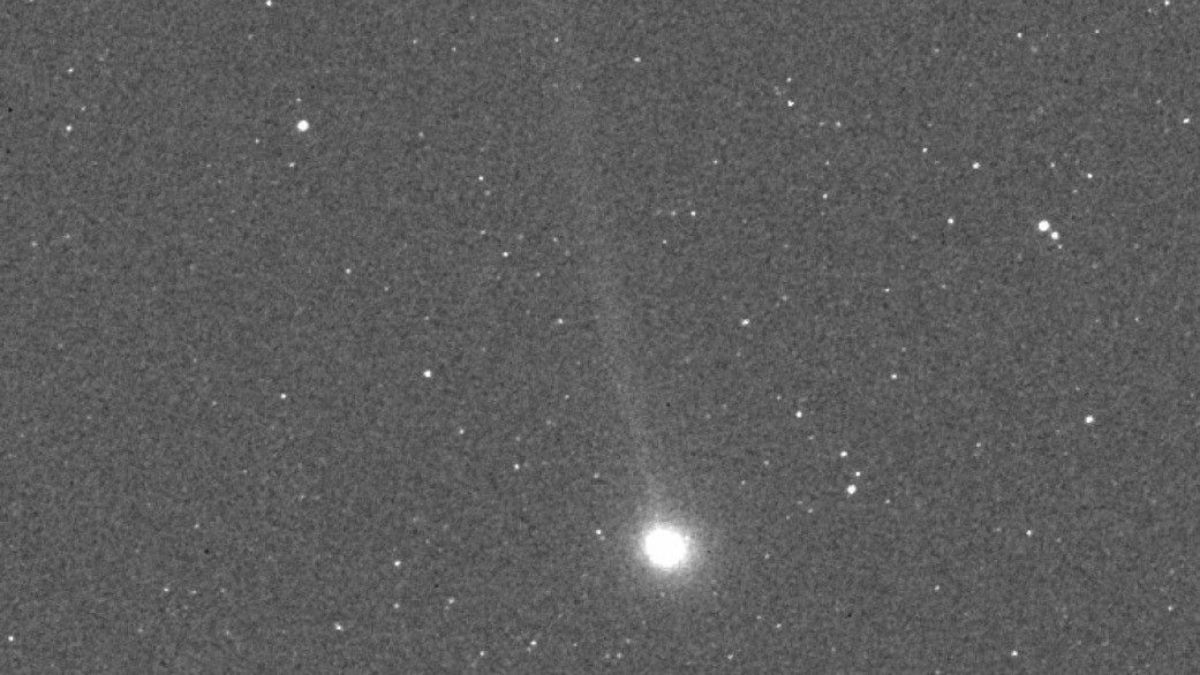
Comet 2P/Encke as seen by NASA's Messenger spacecraft in 2013. (Image credit: NASA/Johns Hopkins University Applied Physics Laboratory/Carnegie Institution of Washington)

What causes the Taurid meteor showers?

Both Taurid meteor showers are linked to Comet 2P/Encke, a three-mile-wide (4.8-kilometer) comet that circles the sun every 3.25 years — the shortest known cometary orbit, according to NASA. However, the Taurids belong to a much larger complex of dust, rocks, comets and asteroids, possibly created when a much bigger object fragmented thousands of years ago. Each fall, Earth crosses different parts of this sprawling debris stream, producing the overlapping Northern and Southern Taurids and, occasionally, the larger fragments that create spectacular fireballs.

How to see the Taurid meteor showers

Both showers appear to originate from Taurus, a constellation that rises during the evening and climbs higher into the sky as the night progresses. Around midnight, Taurus is well placed for many observers.

However, there's no need to find Taurus. Meteors can appear anywhere in the sky, and staring directly at the radiant can actually mean seeing shorter meteor trails. The best advice is to treat the period as a great time for naked-eye stargazing, with the usual rules applying — find somewhere away from bright lights with as wide a view of the sky as possible, and give your eyes about 20 minutes to adjust to the darkness. Binoculars and telescopes will restrict your field of view and make meteor watching impossible.

Above all, be patient. The Taurids are a slow burn in every sense — low rates, slow-moving meteors and weeks of activity. But if one of those meteors happens to be a brilliant fireball, it could easily be one of the most memorable "shooting stars" you see all year.

10 incredible places to see the 2027 ‘eclipse of the century’ — beyond Luxor

Ancient Egyptian temples will inevitably dominate the story of the total solar eclipse on Aug. 2, 2027. Luxor, home to Karnak, the Valley of the Kings and some of the most famous monuments of the ancient world, will experience more than six minutes of totality and will attract eclipse chasers from around the world. Southern Spain, particularly the coast around Tarifa and Málaga, is also expected to be busy.

But the path of totality is vast. It will stretch 9,462 miles (15,227 km) across Earth and reach about 160 miles (260 km) wide. After crossing southern Spain, the moon’s shadow will race east across Morocco, Algeria, Tunisia, Libya and Egypt before crossing the Red Sea into Saudi Arabia and Yemen, and continuing across Somalia and into the Indian Ocean.

Along the way are mountain towns, desert oases, Mediterranean islands and historic cities where eclipse chasers can experience anything from a few minutes to more than six minutes of totality. Here are 10 less obvious places than Luxor, Egypt, to consider for the total solar eclipse on Aug. 2, 2027. All times, totality durations and historical cloud cover data come from Time and Date.

1. Vejer de la Frontera, Spain

The whitewashed hilltop town of Vejer de la Frontera will experience more than four minutes of totality on Aug. 2, 2027. (Image credit: Santiago Urquijo via Getty Images)

Location: Costa de la Luz, Andalucía, Spain

Start of totality and duration: 10:45 a.m. CEST; 4 minutes, 4 seconds

Historical August cloud cover: 9%

Thousands will watch the eclipse from Spanish beaches, but inland are some of Andalucía’s gems. Vejer de la Frontera is one of its classic pueblos blancos — “white towns” — a maze of whitewashed houses and narrow streets occupying a hilltop a few miles inland from the Costa de la Luz. Elevated viewpoints across the surrounding countryside could make this an intriguing alternative to watching from the crowded coastline.

2. Medina-Sidonia, Spain

Medina-Sidonia occupies a commanding hilltop position above the countryside of Cádiz province. (Image credit: F.J. Jimenez via Getty Images)

Location: Cádiz, Andalucía, Spain

Start of totality and duration: 10:45 a.m. CEST; 3 minutes, 40 seconds

Historical August cloud cover: 7%

Perched high above the Cádiz countryside, Medina-Sidonia offers something the eclipse beaches cannot: elevation. One of Europe’s oldest continuously inhabited settlements, its historic center contains whitewashed streets, churches and the remains of a hilltop castle, with expansive views toward the surrounding plains. Totality lasts over three and a half minutes.

3. Arcos de la Frontera, Spain

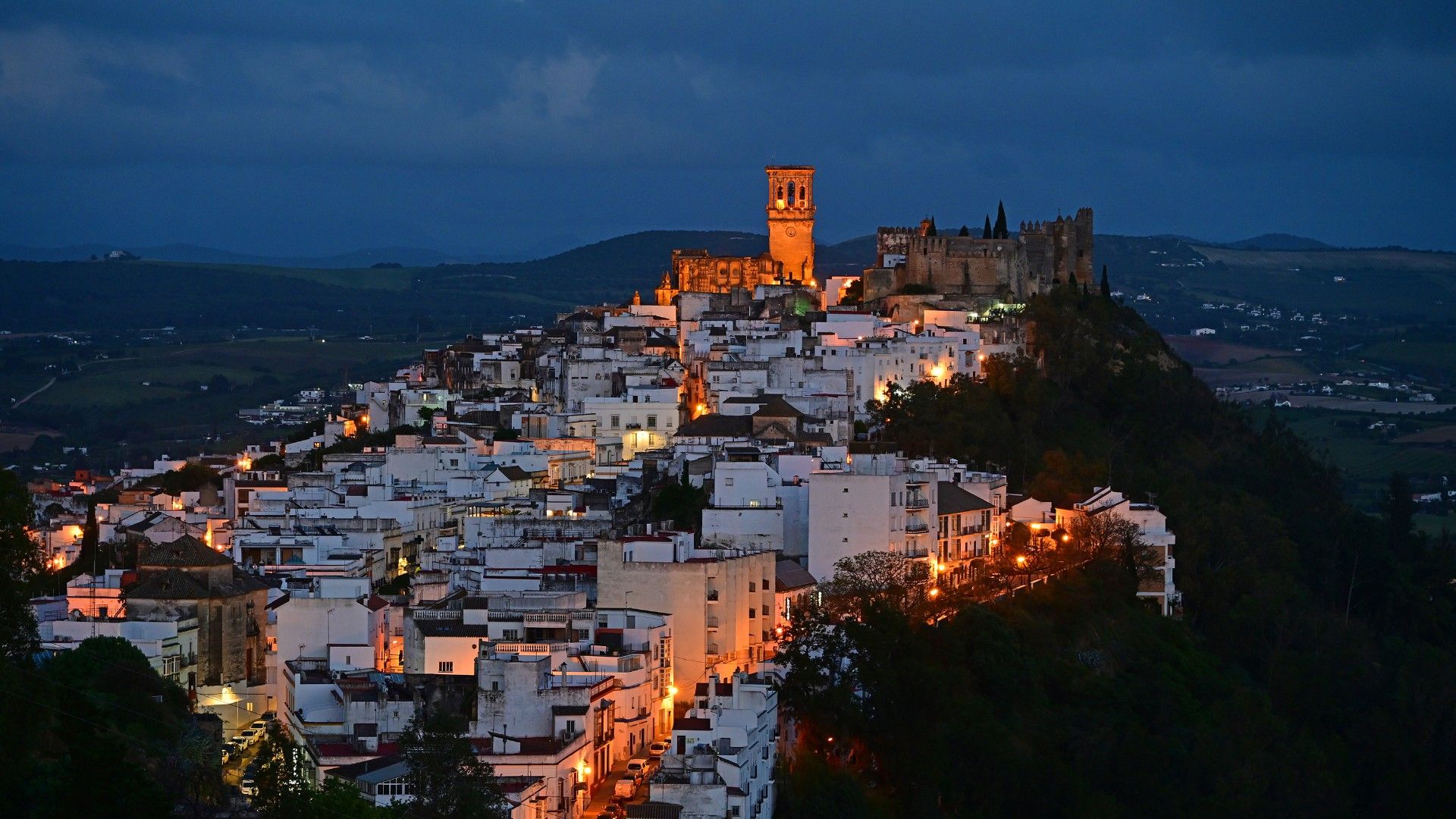
Arcos de la Frontera occupies a dramatic limestone ridge above the Guadalete River, close to the northern limit of totality. (Image credit: Michael Hubrich / 500px via Getty Images)

Location: Cádiz, Andalucía, Spain

Start of totality and duration: approximately 10:46 a.m. CEST; 1 minute, 17 seconds

Historical August cloud cover: 9%

You’ll sacrifice almost all of Spain’s potential totality by heading to another of Spain’s classic pueblos blancos, but what a setting. The old town of Arcos de la Frontera occupies a dramatic limestone ridge above the Guadalete River, its buildings seemingly piled along the cliff edge. Arcos sits very close to the northern limit of the path, which some eclipse chasers seek out specifically for a longer display of Baily’s beads. For an eclipse chaser who values that, scenery over duration, or relative quiet, this geographical knife-edge could be appealing.

4. Asilah, Morocco

Asilah’s whitewashed medina and historic fortifications overlook Morocco’s Atlantic coast. (Image credit: DoraDalton via Getty Images)

Location: Tanger-Tétouan-Al Hoceïma, Morocco

Start of totality and duration: 8:44 a.m. GMT; 4 minutes, 45 seconds

Historical August cloud cover: 38%

Asilah offers an enticing combination of long totality and Atlantic scenery. The compact coastal town is known for its whitewashed medina, brightly painted murals and imposing Portuguese-era ramparts overlooking the ocean. It’s just south of the centerline of the path of totality, so it gets close to the best eclipse durations available in Morocco. Its walls, towers, beach and ocean could all provide enticing foregrounds for eclipse photography.

5. Chefchaouen Kasbah, Morocco

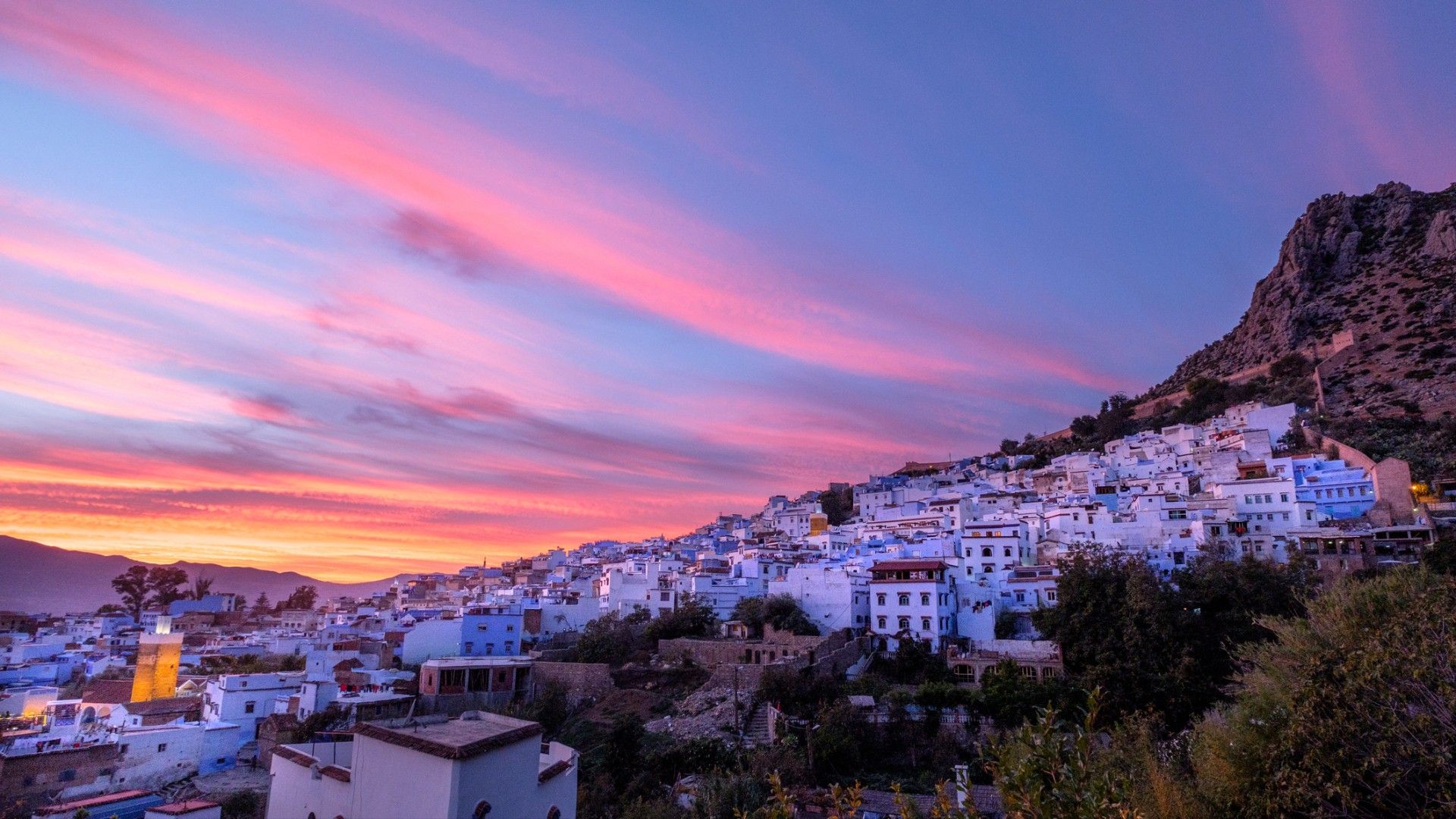
Chefchaouen’s famous blue-painted medina lies beneath the Rif Mountains in northern Morocco. (Image credit: AlexGcs via Getty Images)

Location: Rif Mountains, Morocco

Start of totality and duration: 8:45 a.m. GMT; about 4 minutes, 13 seconds

Historical August cloud cover: 5%

Surely one of the most photogenic surprises anywhere on the eclipse track, Chefchaouen is Morocco’s famous “Blue City,” its old medina filled with buildings painted in shades of blue beneath the rugged Rif Mountains. It also gets a substantial eclipse of roughly four and a quarter minutes, with the sun about 39 degrees high. An elevated viewpoint that captures the medina, the mountains, and the eclipsed sun could produce an extraordinary photograph.

6. Al Hoceïma, Morocco

Al Hoceïma combines Mediterranean beaches with the mountainous landscapes of Morocco’s Rif region. (Image credit: yassine tahiri / 500px via Getty Images)

Location: Rif, northern Morocco

Start of totality and duration: 8:47 a.m. local time; 4 minutes, 25 seconds

Historical August cloud cover: 46%

For a wilder Moroccan eclipse, look east along the Mediterranean to Al Hoceïma. The city sits amid the rugged Rif Mountains, where cliffs and steep hills descend toward beaches and intensely blue Mediterranean water. With its beach resorts, you'll also find plenty of accommodation. It gets a long totality and the dramatic coastal landscape is attractive, though historical cloud cover is less favorable.

7. Oran, Algeria

Oran combines Mediterranean coastline, city architecture and the hilltop Fort of Santa Cruz in northwestern Algeria. (Image credit: Michael Runkel/robertharding via Getty Images)

Location: Oran Province, Algeria

Start of totality and duration: 9:51 a.m. CET; 5 minutes, 9 seconds

Historical August cloud cover: 31%

Algeria’s second-largest city could be one of the more practical ways to experience the eclipse in the country. Oran overlooks the Mediterranean and is backed by hills crowned by the Fort of Santa Cruz, offering different kinds of eclipse experiences. More importantly, it’s on the centerline and gets more than five minutes of totality.

8. Houmt Souk, Tunisia

Djerba offers beaches, palm trees and distinctive whitewashed architecture beneath almost five minutes of totality. (Image credit: Philippe TURPIN via Getty Images)

Location: Djerba Island, Tunisia

Start of totality and duration: 10:09 a.m. CET; 4 minutes, 42 seconds

Historical August cloud cover: 21%

Djerba — the largest island in North Africa — offers an appealing alternative to the archaeological sites and desert landscapes elsewhere in Tunisia. Known as the “Island of Dreams” for its 300 days of annual sunshine, its main town, Houmt Souk, is known for whitewashed architecture, markets and a historic fortress. The surrounding island brings palm trees, beaches and Mediterranean horizons.

9. Bahariya Oasis, Egypt

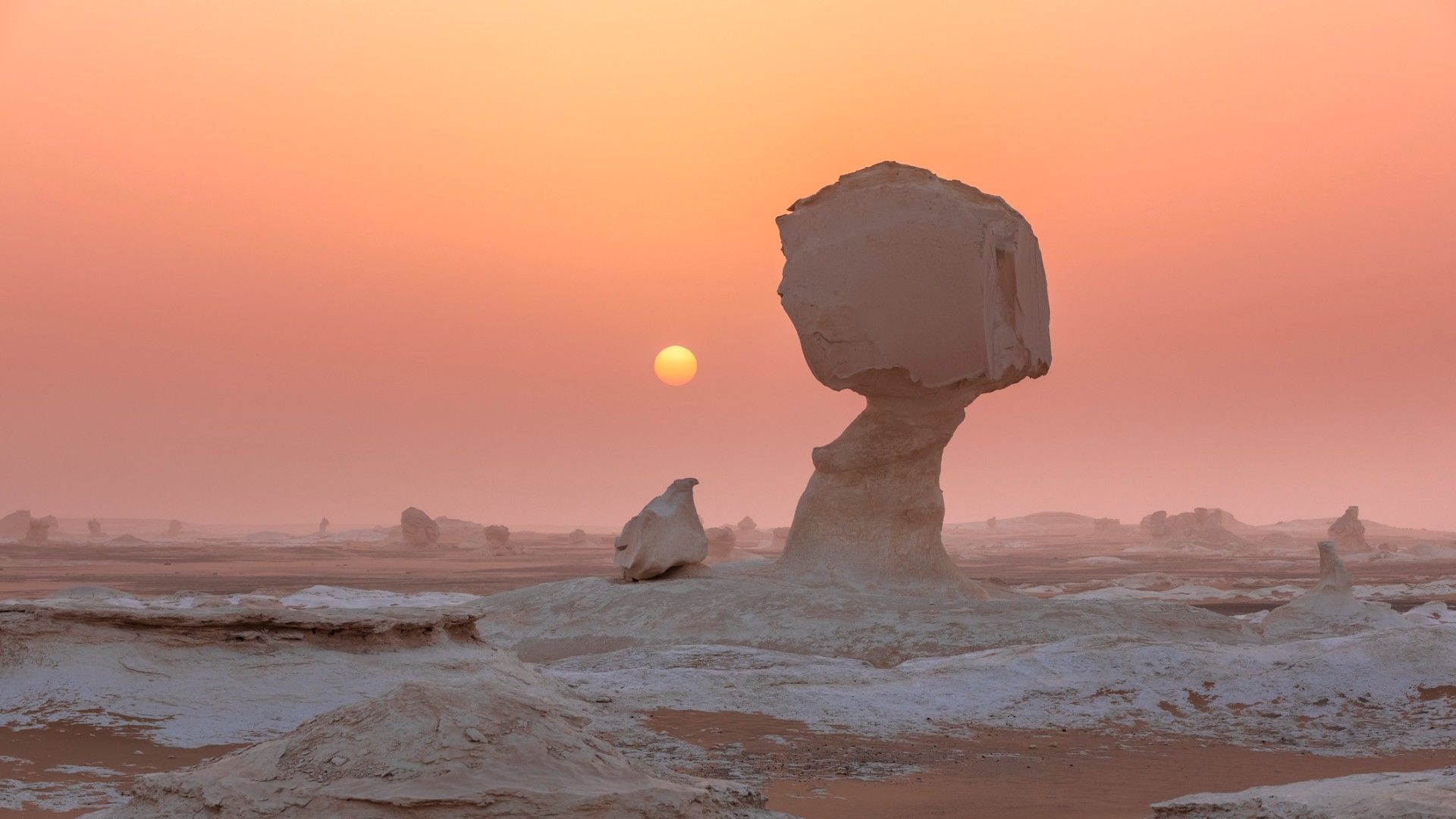
Bahariya Oasis combines date palms, desert hills and vast open landscapes deep in Egypt’s Western Desert. (Image credit: Anton Petrus via Getty Images)

Location: Western Desert, Egypt

Start of totality and duration: 12:50 p.m. EEST; 6 minutes, 21 seconds

Historical August cloud cover: 0%

For maximum totality without Luxor's expected crowds, Bahariya Oasis deserves serious attention. Centered on the town of Bawiti, this remote depression in Egypt’s Western Desert is surrounded by barren hills, date palms, hot springs and sweeping desert landscapes. It also lies remarkably close to the eclipse centreline, delivering 6 minutes 19 seconds of totality beneath almost dependably clear August skies. Nearby desert viewpoints could provide enormous horizons — although the eclipsed sun will be 79 degrees high.

10. Ta’if region, Saudi Arabia

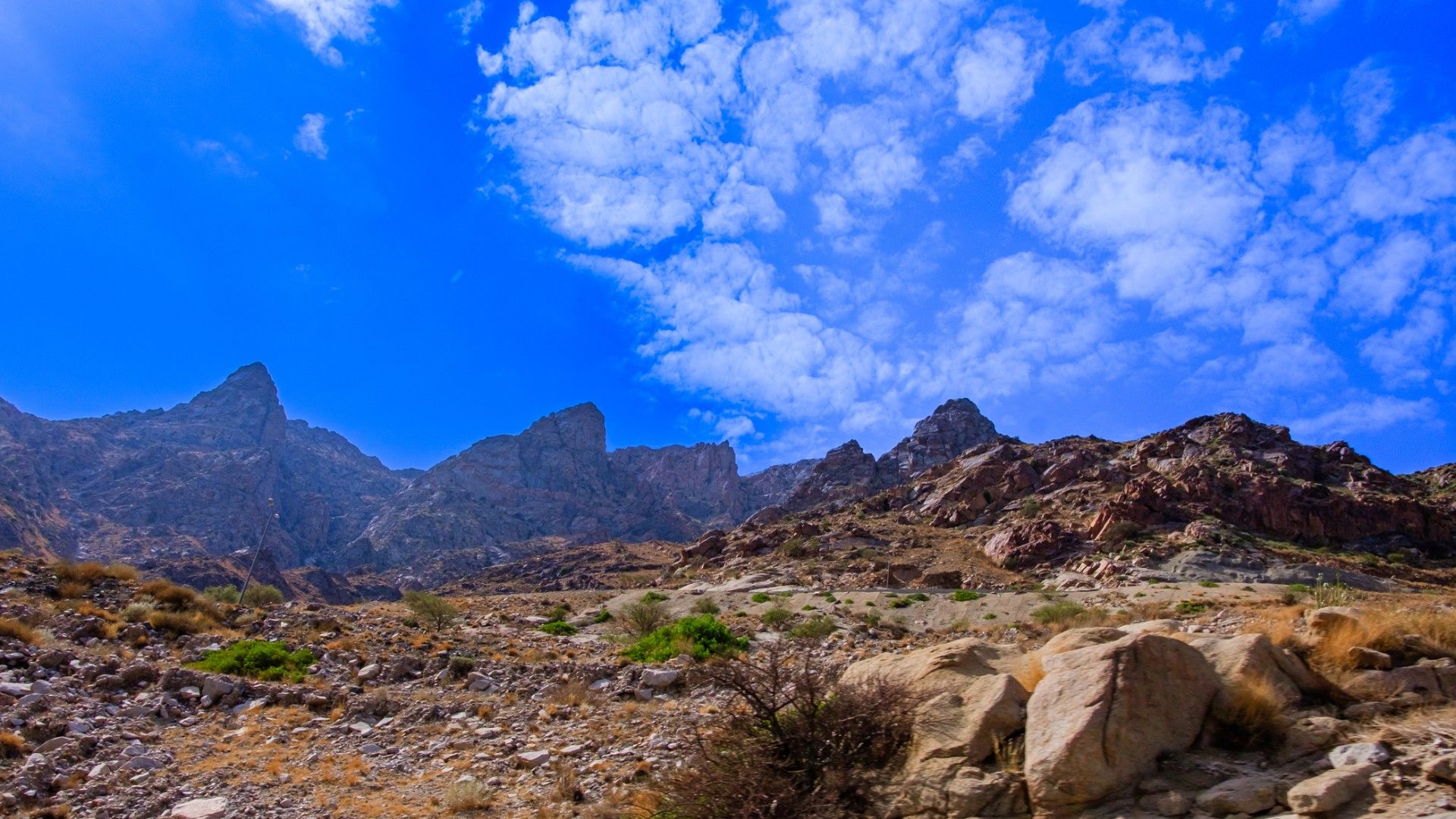
Ta’if occupies a highland setting in western Saudi Arabia, offering a very different eclipse landscape from the Red Sea coast. (Image credit: Alaa Su / 500px via Getty Images)

Location: Hejaz Mountains, Saudi Arabia

Start of totality and duration: approximately 1:26 p.m. AST; 3 minutes, 54 seconds

Historical August cloud cover: 7%

Most attention in Saudi Arabia will inevitably focus on Jeddah and Mecca, but the Ta’if region offers something completely different. Sitting around 5,580 feet (1,700 meters) above sea level in the mountains east of Mecca, it is known for its cooler highland climate, dramatic escarpments and surrounding peaks. Duration varies substantially across the area because Ta’if lies toward the edge of the eclipse path, so eclipse chasers will need to choose their precise observing location carefully.

Why is Orion lying down? How The Hunter taught me how the sky moves

I thought I knew Orion. Three stars in a row for the Belt, Betelgeuse above, Rigel below: it's one of the constellations I have long been able to identify with the least thought, along with Cassiopeia and the Plough/the Big Dipper.

But one fall evening long ago, when I was learning the night sky, I was looking at three bright stars rising in the east and spent an embarrassingly long time wondering whether they really were Orion's Belt. They were at the wrong angle. The rest of Orion followed them into the sky almost sideways, as though somebody had knocked the Hunter over.

What was happening? Nothing had gone wrong with Orion, of course. The problem was the picture of him in my head. Most constellation diagrams are printed in the orientation that makes them easiest to recognize. The sky makes no such promise. Watch Orion rise this month, and the familiar figure can look decidedly unfamiliar at first. Better still, stay outside long enough, and you can watch his orientation change as he rises on his side and swings into the southern sky upright as the night wears on.

Orion stopped being a picture and became evidence that the sky was doing something I didn't expect to see so easily in such a short time — it was moving, and strangely.

What's happening and when to look

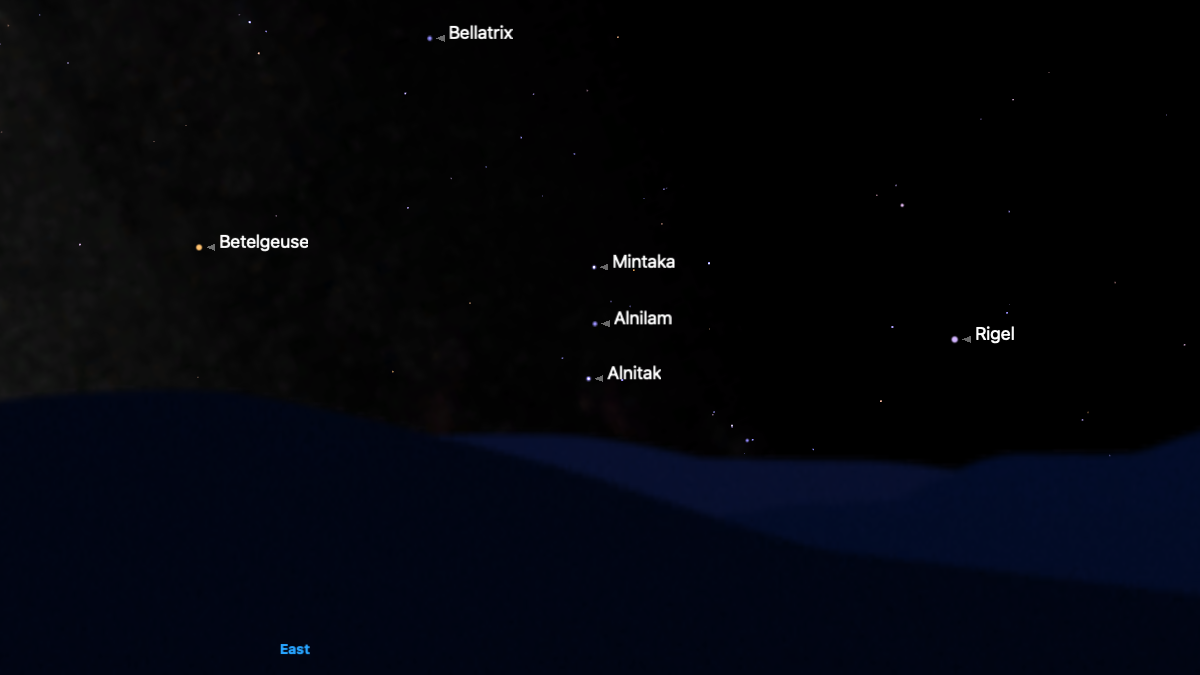
Orion rises on its side in the eastern sky during October. (Image credit: Starry Night)

In mid-October, you need to be patient to see Orion, but it's one of the best months to catch it rising on its side. From much of North America, look low toward the east shortly before midnight. Orion rises on its side, with the three Belt stars — Mintaka, Alnilam and Alnitak — rising one by one, preceded by Betelgeuse and Bellatrix, followed by brilliant Rigel.

Don't worry if you can't see the whole constellation immediately. Orion is enormous, and when it's close to the horizon, buildings, trees and atmospheric haze can easily hide parts of it. Waiting another hour can transform the view.

As Orion climbs higher, it appears to turn. The Belt changes angle, and the constellation gradually approaches the orientation many of us recognize from winter evenings. It reaches due south around sunrise, by which time the Belt is sloped, but the four corner stars — Betelgeuse and Bellatrix at the top and Rigel and Saiph at the bottom — form the easily recognizable rectangle enclosing it. Orion looks like Orion.

Orion isn't actually performing a slow roll in space. Earth is rotating beneath us, carrying our viewpoint eastward. Stars therefore appear to rise in the east, arc across the sky and eventually set in the west. It's how the night sky works, but it's an effect that's particularly easy to notice with Orion because its shape is so familiar. Instead of trying to understand celestial motion from a diagram, you can watch it happening.

How and when I'm watching it

I'm going to make this an astrophotography experiment rather than a conventional observing session. As soon as Orion's Belt appears just above the eastern horizon, I'm going to take a series of 30-second images — possibly using a DSLR, or perhaps a Seestar smart telescope — and then stack them to create what will effectively be a star trail image. However, instead of focusing on Polaris to show how the night sky revolves around the north polar axis, it will show Orion's Belt rising.

Stargazer's corner: October 9-15, 2026

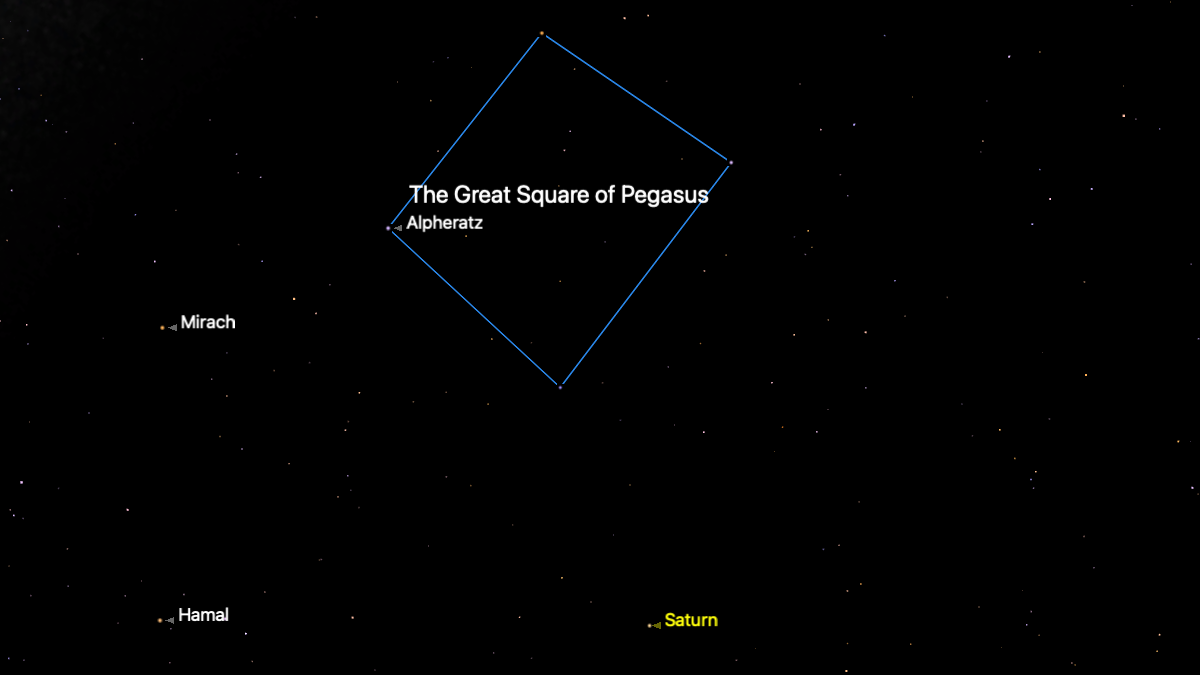
Saturn is as bright as it ever gets and easy to find beneath the Great Square of Pegasus. (Image credit: Starry Night)

The new moon falls on Oct. 10, making this an excellent week to get away from the brighter parts of the solar system and see what the autumn sky looks like without moonlight. In the predawn hours of Sunday, Oct. 11, get up 90 minutes before sunrise to see Mars moving through the dozens of stars in the Beehive Cluster. Binoculars will get you a great view.

As the week progresses, watch for the moon returning to the evening sky as a slender waxing crescent. On Oct. 13 it passes close to Mercury, and on Oct. 14, to Antares, the bright reddish star marking the heart of Scorpius. Look low toward the southwest around dusk for both sights.

Saturn remains exceptionally well placed. Having reached opposition on Oct. 4, it's now already above the eastern horizon as darkness settles and remains visible for much of the night. You don't need a telescope to identify it, but even a modest telescope will give you a terrific view of its rings, which are now opening out.

Constellation of the week: Andromeda

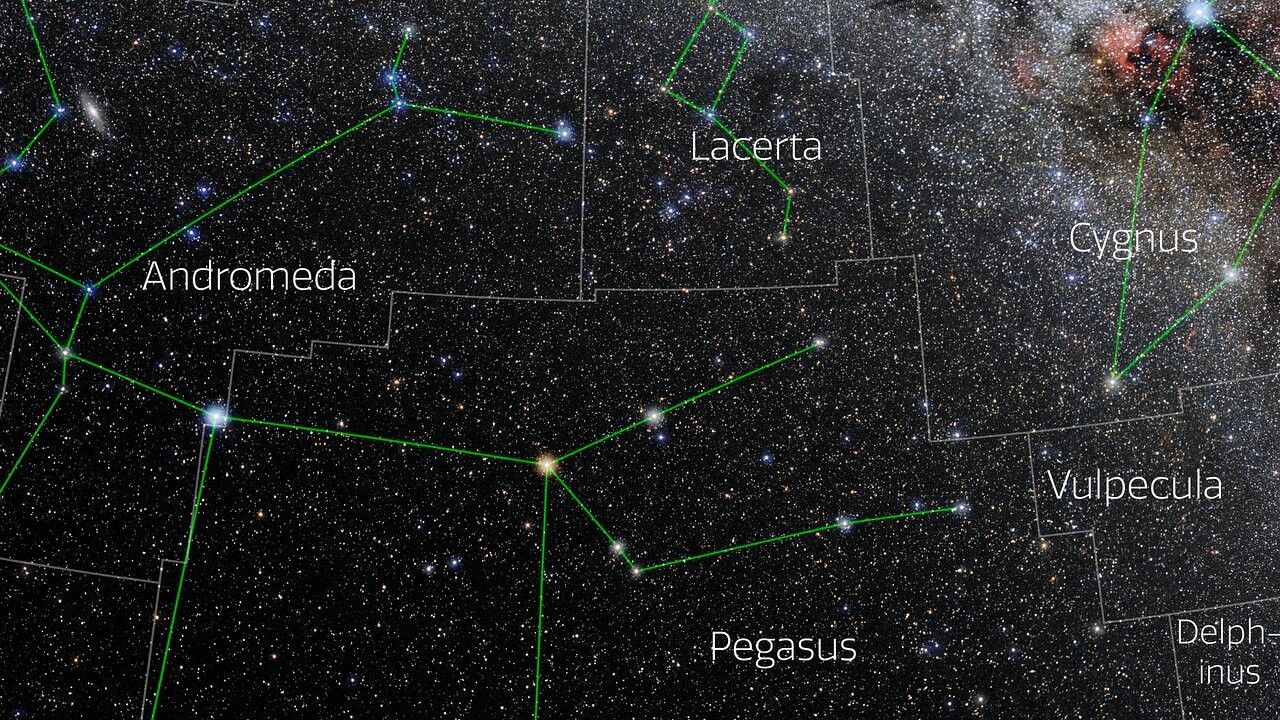
Andromeda, "The Princess," is where to find M31, the Andromeda galaxy. (Image credit: E. Slawik/NOIRLab/NSF/AURA/M. Zamani)

Once you've finished watching Orion climb, turn to a constellation that is much better placed as soon as it gets dark during October. Andromeda extends away from the northeastern corner of the Great Square of Pegasus. The slightly confusing part is that the star at that corner, Alpheratz, belongs to Andromeda rather than Pegasus. Constellation boundaries are less tidy than the drawings suggest.

You can't look at Andromeda without searching for the Andromeda galaxy, M31. Under a genuinely dark sky, you can see it with the unaided eye as a faint, fuzzy patch. From a brighter suburban location, binoculars make the job considerably easier. Don't expect the enormous spiral shown in long-exposure photographs. In binoculars or a small telescope, you'll catch the bright central region.

I’ve chased the ‘false dawn’ for years — this is the week to find and photograph it

Some stargazing feels like you know exactly what you are looking for, but you're still slightly unsure whether you are actually seeing it. Zodiacal light — meaning "light from the circle of animals" — is often like that.

I have chased this so-called "false dawn" for years, and the first few minutes are always the same. I stare toward the horizon and wonder whether the sky is genuinely brighter there, or whether I am simply seeing distant light pollution, the first hint of morning twilight, or something my eyes have invented because I badly want to see it.

However, under a genuinely dark sky — and particularly in a long-exposure image — its cone shape becomes obvious.

Zodiacal light is enormous. It appears as a broad, softly glowing pyramid rising from the horizon. It can be fainter than the Milky Way and has no hard edges, which is precisely why it is so easy to overlook.

This week is a particularly good time to try because the new moon occurs on Sept. 10-11. With no moonlight interfering with the predawn sky, the main problems become familiar ones to any skywatcher: clouds, haze and artificial light.

The phenomenon itself could hardly be more epic. Zodiacal light is sunlight scattered by dust spread through the inner solar system, concentrated broadly around the plane in which the planets orbit. From Earth, we see that dusty structure edge-on along the ecliptic — the path through the sky followed by the sun, moon and planets. It's home, of course, to the 12 (actually 13) constellations of the zodiac — from Pisces the fish to Leo the lion. This is the circle of animals.

From the Northern Hemisphere around the September equinox, dust-hunting observers should look east before morning twilight, when the ecliptic rises steeply away from the horizon, and the faint glow becomes easier to separate from the murk below. It will reach about 30 to 40 degrees above the horizon.

Zodiacal light is the solar system itself made faintly visible — and one of the most subtle and strangest sky sights of all.

What's happening and when to look

Zodiacal light is a faint pillar of brightness stretching upward from the horizon. (Image credit: NASA/JPL-Caltech)

For observers at mid-northern latitudes, September mornings offer one of the year's best windows for spotting the "false dawn" — but it's not easy to see. The essential ingredients are an unobstructed eastern horizon (preferably over the ocean or a large body of water) and no light pollution. You'll need to start looking before astronomical twilight begins rather than waiting until the sky is already visibly brightening, which means getting up very early in a very dark place.

Check the time astronomical twilight begins at your location and aim to be outside before then, giving your eyes at least 20 to 30 minutes to adapt to the darkness. The zodiacal light should appear as a broad triangular glow, widest and brightest close to the horizon and narrowing as it climbs.

It's easy to confuse it with a distant town, but artificial skyglow tends to form a rounded dome above one location on the horizon. In contrast, zodiacal light reaches diagonally — or almost vertically upward — along the ecliptic.

Give your eyes time and save up that one vital ingredient, a vanishing human trait any skywatcher must constantly nurture — patience. Zodiacal light is not something you can walk outside and instantly see. It comes only to those who work for it.

How and when I'm photographing it

Zodiacal light is a faint pillar of brightness stretching upward from the horizon. (Image credit: Mike Hollingshead via Getty Images)

A little like a faint aurora, a camera almost always detects zodiacal light before your eyes become completely convinced. The easiest way is to use a tripod and a wide-angle lens, preferably something around 14-24mm, compose with plenty of eastern sky and include a simple foreground to make the triangular shape obvious. A starting point of around f/2.8, ISO 1600, and an exposure of roughly 10-20 seconds usually puts you in useful territory, though sky brightness and lens speed change everything.

Shoot RAW, focus manually on a bright star and capture a series of images. Then, once you've photographed it, try to stop looking at the screen — the entire point is to see it with your own eyes.

Stargazer's corner: September 11-18, 2026

With a new moon on Sept. 10, this week sees a run of dark evenings before our natural satellite gradually returns. On Sept. 14, look shortly after sunset for a slender waxing crescent moon beside Venus, extremely low in the western twilight. By Sept. 16-17, the moon moves on towards Antares, a reddish star at the heart of Scorpius. Then Sept. 18 brings a first quarter moon (perfect for exploring with binoculars or a small telescope) and Venus at the greatest brilliancy of its current apparition as the "Evening Star."

Constellation of the week: Orion

Orion, "The Hunter," is now visible in the east before sunrise. (Image credit: E. Slawik/NOIRLab/NSF/AURA/M. Zamani, background added in Canva Pro)

Orion is normally thought of as a winter constellation, so September seems an odd time to go looking for it. However, if you're venturing out to an extremely dark place to look for zodiacal light, you're going to be staring Orion in the face. In September, the Hunter is in the eastern sky before dawn, where its stars sit along the same general strip of sky occupied by the zodiacal light. Its famous belt stars will be up, as will be bright Sirius, below. This is one of the pleasures of observing before sunrise. The sky is effectively showing you a preview of another season. The constellations climbing in the September dawn are the ones Earth will face during winter evenings a few months from now. Jupiter and Mars will also be visible — right on the ecliptic where you'll also — hopefully — spy the "false dawn".

A star is exploding 45 million light-years away — here’s how you can see it

An extraordinary exploding star has been spotted in a distant galaxy, and astrophotographers are racing to capture it before it fades from view.

The supernova, called SN 2026aaiv, was first seen by the ATLAS survey on Sept. 1 in NGC 7331 (also known as Caldwell 30), a spiral galaxy about 45 million light-years away in the constellation Pegasus, visible in the Northern Hemisphere and at mid-latitudes in the Southern Hemisphere.

That makes this supernova a prime target for amateur astrophotographers and astronomers worldwide to capture an image of this rare event.

Hundreds of astrophotographers have already captured it, including Andrew McCarthy, who posted his image on Instagram on Sept. 7 with the message, "As luck would have it, I happened to be in the middle of a massive project with this galaxy, and caught the supernova." He shot four hours of data, two before and two after the supernova, as part of a 100-hour project. "The final image will be EPIC!" he said.

Tom Masterson, Mountain Operations Manager at the Mount Wilson Observatory, also captured it on Sept. 10 using a 60-inch telescope.

What you'll need to find SN 2026aaiv

At magnitude 15.7 on Sept. 11, 2026, SN 2026aaiv is relatively dim, but still brightening. Many of the images posted online were captured with large professional telescopes or remote telescopes in dark regions. However, you can find and photograph SN 2026aaiv with relatively modest equipment. You'll need a telescope or large binoculars to see NGC 7331 (at magnitude 10) at all, but the supernova is dramatically more challenging visually. To have a chance of seeing SN 2026aaiv, a large telescope is recommended (observers have confirmed seeing it using a 14-inch Schmidt-Cassegrain telescope). Use the averted vision technique: look slightly to the side of the galaxy's core so the eye's more light-sensitive rod cells can reveal faint detail.

The easiest way is to use a smart telescope, which can quickly find and image the host galaxy NGC 7331. According to Seestar (Official ZWO Group) on Facebook, users of the Seestar S50 have managed to image the SN 2026aaiv with about two hours of 10-second exposures (the default mode).

How to find SN 2026aaiv

SN 2026aaiv can be found in NGC 7331, close to the Great Square of Pegasus, right after dark in the east from the Northern Hemisphere. (Image credit: Starry Night)

SN 2026aaiv has the coordinates RA 22h 37m 05.618s, Dec +34° 24′ 35.37″. From the Northern Hemisphere, turn toward the east after dark, and you'll see four large, bright stars rising in a vast diamond shape. This is the Great Square of Pegasus, part of the constellation Pegasus. At the northwestern corner of the Great Square is Scheat. Just above it, outside the square, is a dimmer star called Matar. NGC 7331 is close by. In light-polluted skies, only the central core of the galaxy is visible, according to NASA. The galaxy, which we see partially edge-on, has spectacular spiral arms that swirl around a bright central region.

What we know about SN 2026aaiv

SN 2026aaiv is a Type Ia supernova, a catastrophic explosion that occurs when a white dwarf in a binary star system gains enough material from its companion to trigger a runaway thermonuclear reaction, destroying the white dwarf. Remarkably, another Type Ia supernova, SN 2025rbs, was found in the same galaxy on July 14, 2025.

NGC 7331, imaged by the Hubble Space Telescope in 2018, was first found in 1784 by British astronomer William Herschel, who cataloged over 2,500 deep-sky objects and discovered Uranus and its two largest moons. NGC 7331 is similar in size, shape and mass to the Milky Way.

Venus is becoming a thinner crescent — and that’s when it finally starts making sense

Venus is something of a frustration for stargazers. It's the brightest planet and the easiest to see, while the sight of it close to a crescent moon is one of the most achingly beautiful sights in the sky. Yet it gives almost nothing away.

Mars has its reddish color. Saturn rewards even a small telescope with its spectacular rings. Jupiter has moons, belts and an obvious disk. Venus, meanwhile, spends months blazing away in twilight looking exactly like what people who do not stargaze assume a star should look like — a brilliant white point. What we're seeing is sunlight reflected by its global cloud cover, which in turn makes it impossible to see in any detail.

But every now and then, it does something revealing by becoming a crescent. That is when Venus, an inner planet relative to Earth, finally makes sense.

Put a small telescope on Venus this week and its appearance is completely different from the dazzling dot seen with the naked eye. This week, its disk will dim from 36% to 32% lit as it shrinks toward a thinner crescent as September progresses. At the same time, its apparent disk is getting larger because Venus is moving closer to Earth.

Those two changes are connected. Venus reached its greatest eastern elongation, about 46 degrees from the sun, on Aug. 15. It's now swinging around the inside of its smaller, faster orbit of the sun towards inferior conjunction on Oct. 24, when it will pass roughly between Earth and the sun, and be lost in the sun's glare. Before that, it will reach its peak — greatest brilliancy — in the evening sky on Sept. 18, shining at magnitude -4.8 while just 26% lit. That's the sweet spot, when its increasing angular size and decreasing crescent combine at their brightest, as seen from Earth (though its modeled visual brightness peaks a few days later, around Sept.22). After that, it becomes an increasingly dim crescent.

Seeing Venus as a crescent makes the geometry beautifully obvious. We are no longer looking across the solar system towards the brightly illuminated side of Venus. We are increasingly looking at the planet from behind, towards its night side, with sunlight catching only one edge.

It is almost the same idea as a crescent moon — except Venus is another world tens of millions of miles away. As it passes roughly between Earth and the sun on Oct. 24, it will be 0.27 AU away — equivalent to 25 million miles (40 million kilometers). At its farthest, Venus can be 162 million miles (261 million kilometers) from Earth.

The phases of Venus were historically important. When Galileo observed Venus through a telescope in the early 17th century, seeing it display a broad range of phases helped demolish the traditional Ptolemaic model in which Venus was supposed to orbit Earth in a way that could not produce the full sequence he observed.

Four centuries later, the same observation remains one of the simplest ways to understand our place in the solar system.

Venus becomes far more interesting when it stops looking its best through the naked eye and instead becomes a "wow" moment in a small telescope. As the "Evening Star" sinks lower into twilight, we're not just seeing a crescent — we're seeing a planet orbit the sun.

What's happening and when to look

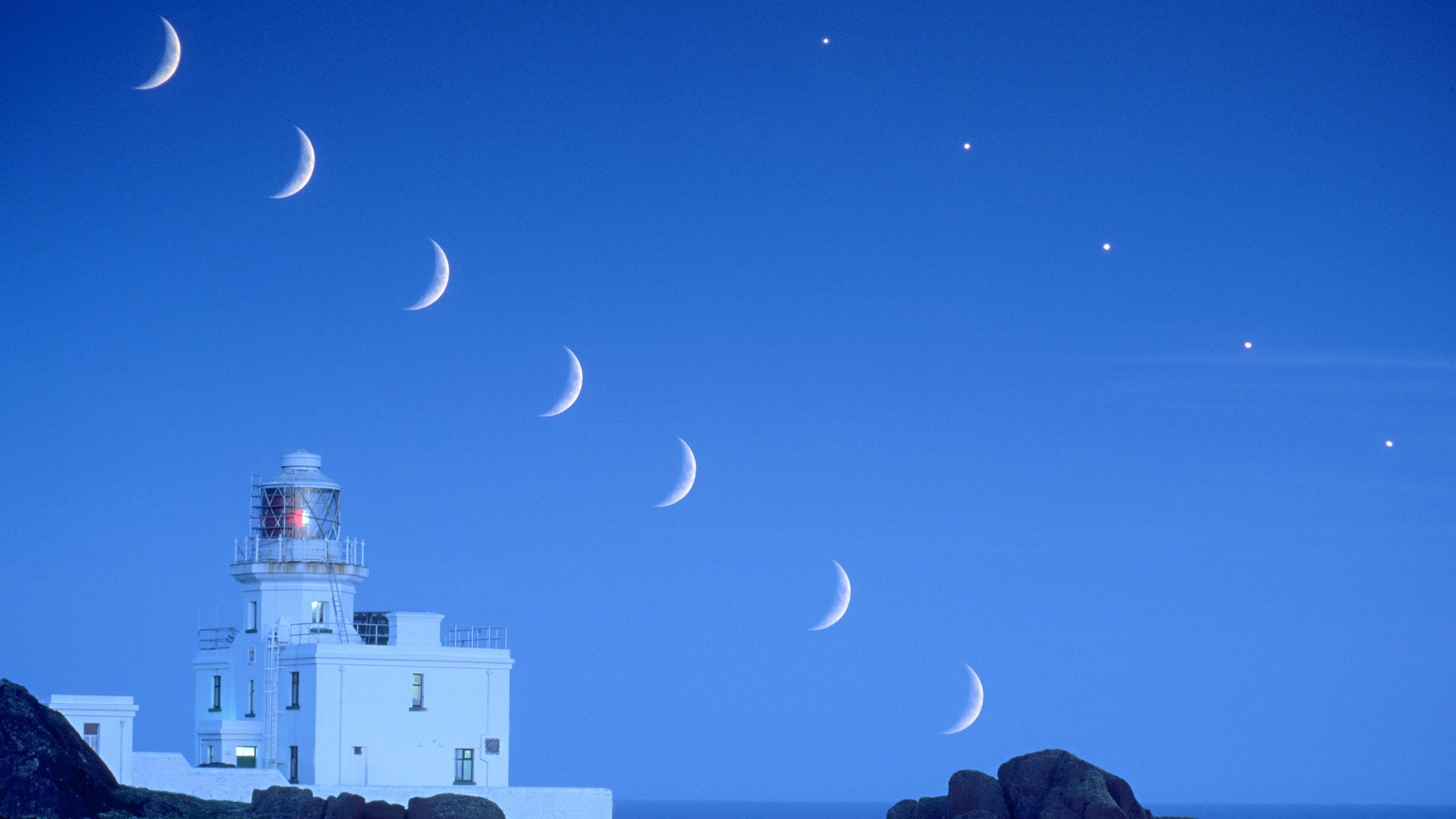
 A crescent moon and Venus over a lighthouse. (Image credit: Richard Packwood via Getty Images)

Venus remains an evening object throughout September, but it is rapidly becoming more challenging from mid-northern latitudes. Look very low towards the west-southwest shortly after sunset, where it should be obvious because practically nothing else in the twilight comes close to its brilliance.

Do not search for Venus with a telescope or binoculars while the sun is still above the horizon. Wait until sunset and make sure the sun has disappeared before pointing optical equipment anywhere near the western sky.

Venus will move through Virgo during the coming days before a particularly attractive conjunction on Sept. 14, when a 16%-lit waxing crescent moon will pass extremely close to a 29%-lit Venus. Two crescents together.

How and when I'm watching it

Venus is one of those objects I prefer to revisit several times rather than observe once. A single look shows a crescent, but observing every week reveals movement.

I'll mostly use my small spotting scope in the front yard to look at Venus as a crescent this month, but if I'm short on time, I'll use some 10x50 binoculars, which can also reveal the phase. The trick is not to expect surface detail — just a clean geometric shape.

Atmospheric turbulence near the horizon can make Venus wobble and shimmer, but its phase usually cuts through.

Stargazer's corner: Sept. 4–10, 2026

close up view of saturn with sandy colored rings.

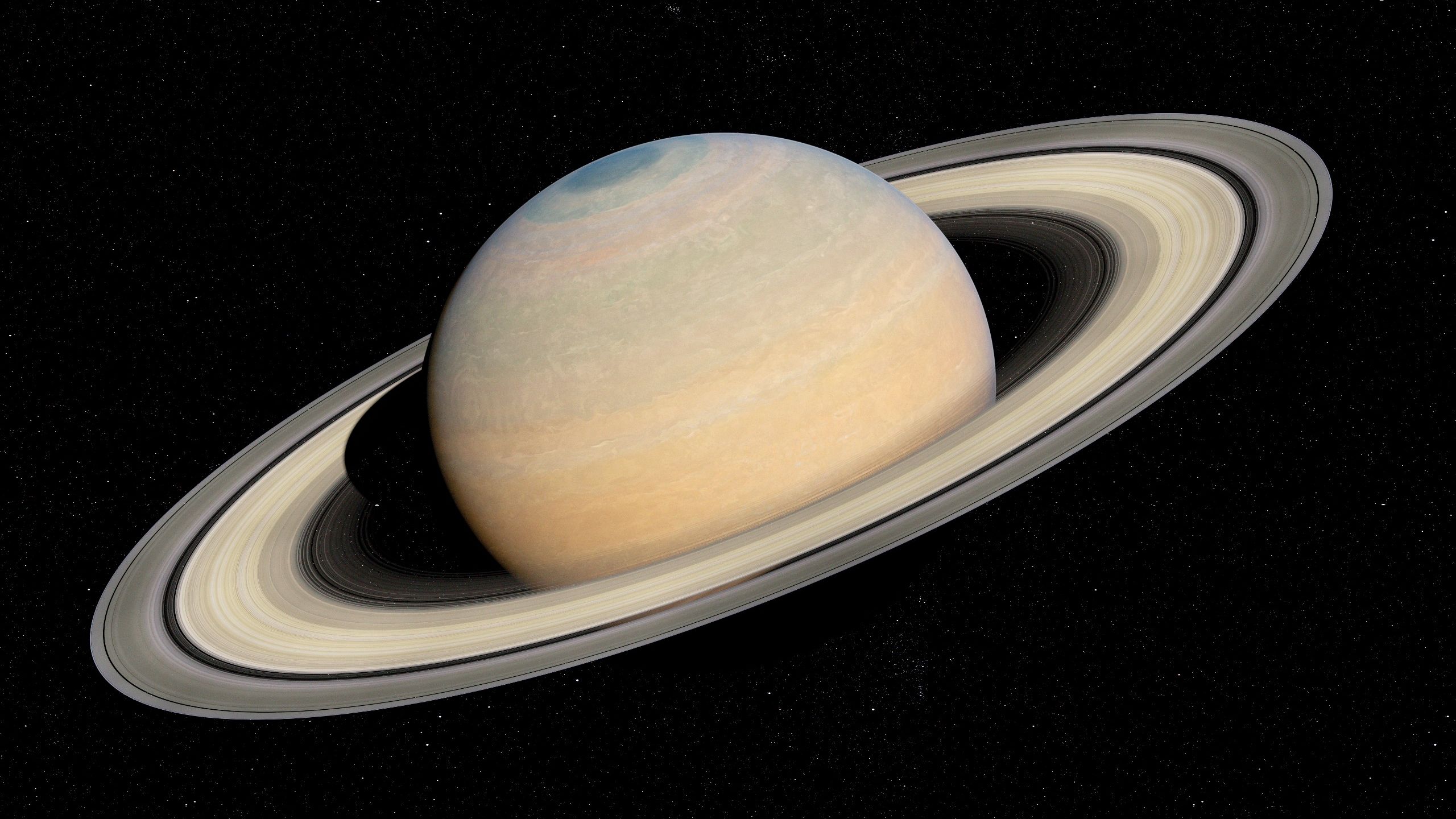
Saturn continues to brighten in the east after dark. (Image credit: SCIEPRO/SCIENCE PHOTO LIBRARY via Getty Images)

With the moon now past last quarter, the early evening sky is finally free from bright moonlight. It's an excellent opportunity to revisit the Milky Way, along with star clusters, nebulas and other deep-sky objects before autumn gradually takes over and its bright center slumps into the horizon. Before dawn, the waning crescent moon moves through Taurus, passing close to Mars on Sept. 6 in Gemini, while brilliant Venus continues to dominate the western twilight after sunset. The dazzling planet remains the unmistakable evening beacon, shining low above the west shortly after sunset. Saturn, meanwhile, continues to brighten in the east during the late evening, making this an increasingly good time to point binoculars or, better still, a small telescope toward the ringed planet.

Constellation of the week: Pisces

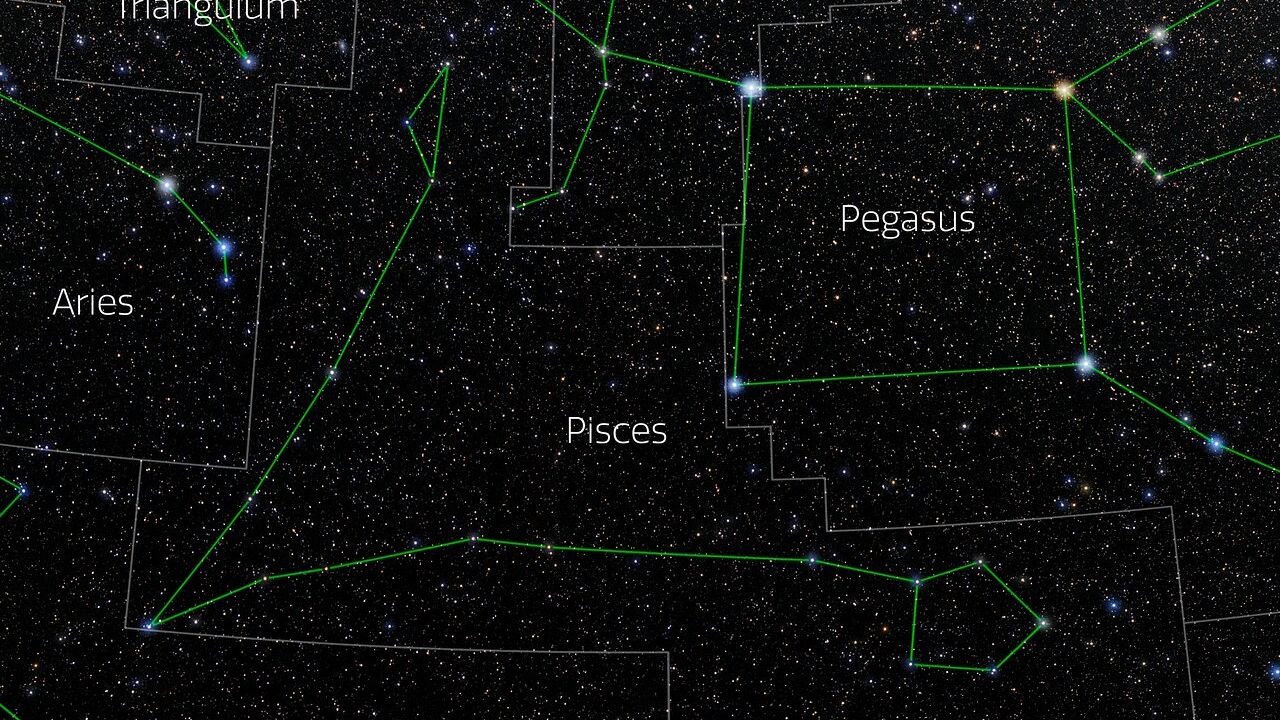
Pisces, "The Fishes," is now visible in the south after dark. (Image credit: E. Slawik/NOIRLab/NSF/AURA/M. Zamani))

Pisces is easy to overlook. Its faint stars form two celestial fish joined by a long cord, creating a broad V-shape beneath the easy-to-find Great Square of Pegasus in the eastern evening sky after dark this month.

This week is a great time to find it because Neptune soon reaches opposition within Pisces, making the distant planet brighter than at any other time this year. Although Neptune needs binoculars or a telescope to spot it, learning the constellation

Pisces has been associated with mythology and water for thousands of years, but finding its subtle pattern also signals that the autumn constellations are beginning to take over the night sky.