Apple TV’s riveting sci-fi series, "Silo," is stretching its narrative legs for its third and penultimate season. Juliette (Rebecca Ferguson) deals with amnesia after her fiery return to Silo 18, satisfying secrets are revealed, and we strap in for temporal jumps 352 years back to the "Before Times" to figure out how the apocalypse arrived.
"We rolled the dice a bit and hoped it would work and weren’t entirely sure, but felt it would," Executive Producer and Showrunner Graham Yosttells Space regarding the new season's time shifts. "After the fact, I heard some of the quibbles about too much time in 17, but we made our best guess on that one as well. What we did feel was that cutting back and forth was not a real problem. Even though it's 350 years separating the two stories, it's not like we're going back to Elizabethan times. It’s Silo world, which is its own crazy time. It's a place out of time.
"So when I saw the first episodes, I felt like this is okay. Part of the good thing about being outside, being people in modern clothing and cars, is you know immediately when you are and where you are. That really helped orient the story."
After Juliette’s harrowing ordeal in Silo 17 last season, audiences were left hungering for answers heading into this new batch of ten episodes. Fortunately, they shine the light of truth on matters — both in the doomsday bunker and back when Earth was still recognizable.
These time shifts allowed the production crew and cinematographers to tinker with the show’s visual style, including using different equipment to film each time period.
Ashley Zukerman in "Silo," premiering July 3, 2026 on Apple TV. (Image credit: Apple TV)
"I think they went to a different lens," Yost adds. "The choice was made to go from an anamorphic lens to something else, so there is a slight change and a slightly different framing. We've got the same production designer for both units, so there can be little flavors that Nicole [Northridge] would come up with that we don’t even realize are hints of what’s coming in the future. "
"But the origin story is a political thriller basically. We’re harkening back to 'Three Days of the Condor,' 'The Parallax View' and things like that of the '70s," explains Yost. "That sort of paranoid cinema. There are bits in there that let us feel way more cinematic because we equate that with cinema rather than television."
Alexandria Riley as Camille Sims in "Silo" season 3 (Image credit: Apple TV)
It's not all about the time jumps back to the past, though; Yost and his team have also been looking to up their game in the Silo's themselves, too.
"Then, in 18 with Juliette, the only expansion there was to spend as much time as we did within the algorithm room with Camille talking to the voice and making that interesting," reveals Yost.
"The answer to that was you cast Alex [Alexandria Riley]. She does such a compelling job that you’re just going to watch her talk to a wall. We knew how good she was from the scene she did in season one, and that's why this whole storyline developed, because we love her."
Apple TV's "Silo" season 3 premieres on July 3, 2026.
Amazon MGM Studios' "Project Hail Mary," the science fiction blockbuster starring Ryan Gosling that launched into theaters back on March 20, 2026 is now hitting its streaming stride on Prime Video after a stop on MGM+.
The $200 million outer space saga, directed by Phil Lord and Christopher Miller ("The Lego Movie," "Spider-Man: Into the Spider-Verse") and adapted from author Andy Weir's 2021 novel of the same name, made a respectable $630 million in its full theatrical run.
Despite a general jokiness and long runtime, the film was well-received by critics and audiences and now those who've held out from going to the multiplex to absorb the adventure will have a chance to catch it at home.
Gosling portrays Ryland Grace, a middle-grade teacher and molecular biologist who reluctantly gets recruited for a desperate deep space mission to try and solve a cosmic conundrum that's causing our sun to slowly dim.
Along the way to the Tau Ceti star cluster, Grace encounters a rock-skinned alien whose homeworld suffers from the same problem and together they hatch a plan to rescue their prospective planets from nasty sun-munching microbes called astrophages.
"Ryan added so much depth and layers to Ryland that I never had in the book," Weir told Space in aMarch interview. "And I was so happy about that because I consider character depth to be one of my biggest weaknesses as an author. I'm a plot-driven author. Seeing Ryan add all these layers, I'm like, 'Oh, good, he's covering the things that I didn’t do.' Then later I'll get credit for that character.”
"Project Hail Mary" has had a circuitous route onto home video in the aftermath of its big screen campaign, first rolling out on video-on-demand May 12, then leaping onto Amazon-owned MGM+ on June 18 for its streaming debut to help bolster subscriber numbers for that smaller platform.
And finally, the popular sci-fi epic is settling in for what's hopefully a long stay on Prime Video that started on July 3, just in time for the long Independence Day weekend in the United States. Amaze!
Happy 30th birthday to "Independence Day," the sci-fi mega blockbuster that made Will Smith an instant Hollywood star, crushed the box office by becoming the fastest film to reach $100 million, and obliterated Washington, D.C, all in one fell swoop of pure popcorn movie entertainment.
We often talk about certain works of art ushering in or being ushered in by, but "Independence Day" ("ID4") truly broke the mold for how huge tentpole pictures were marketed three decades ago, something that still reverberates today. Is there any bigger money shot than a city-sized flying saucer poised over the White House delivering a lethal laser blast of searing coherent light?
So, to celebrate "Independence Day" on its 30th anniversary, we connected with the dynamic creative duo of director Roland Emmerich and screenwriter Dean Devlin ("Universal Soldier," "Stargate," "Godzilla") for a jog down memory lane to remember one of the greatest sci-fi movies in history.
"We’d just done 'Stargate', and it was this bizarre situation where MGM had no movies to release in the month of October, so they decided to release our film," Devlin tells Space. "Roland and I had a lot of frustrations in the process of the film marketing. So we were in a fortunate position when 'Independence Day's' script came out, we had nine studios bidding on it. We had a lot of leverage, and one of the things we said was that we want to have real control over the marketing. Roland had this idea of a trailer where in it you see the White House blow up."
Its first teaser on Super Bowl Sunday in January of 1996 was a potent 30-second shot across Hollywood’s bow to announce itself to the world. Rarely had marketing campaigns started six months early, something that’s become commonplace in the digital age. But back in 1996, when Bill Clinton was president, Michael Jordan's Chicago Bulls were flying high, and the Summer Olympic Games were about to ignite in Atlanta, it was a bold move that paid off.
"I'll never forget, after we made the deal, we had this big meeting with the studio, and we got in a room, and they said to Roland and I, 'Well, you know we can't really show the White House blowing up in a trailer with what happened recently with this terrorist attack on the Federal Building. It could cause a problem.' I said, 'Yeah, but this is aliens, it's not terrorists.' Then Roland goes, 'So wait, you're telling me that if we do this, it will cause an enormous amount of controversy and everybody will talk about our movie. And that’s wrong why?'"
The "ID4" marketing campaign was one for the ages! (Image credit: 20th Century Studios)
Released by 20th Century Fox on July 3, 1996, "ID4" and its old-fashioned, flag-waving patriotic flair exploded into theaters with an epic alien invasion tale that was irresistible.
Yes, kids, audiences really did wait in long lines snaking around the block to see their favorite films when they opened. This sci-fi extravaganza was the perfect summertime escape that was appropriately launched over the festive Fourth of July week. The advertising sizzle paid off, and the film became the top-grossing of the year, raking in a whopping $817.4 million worldwide.
Emmerich recalls that the studio secretly tested "ID4" with and without the White House explosion, and there was no more discussion, leaving it as one of the highest-testing teaser trailers ever.
Will Smith and Jeff Goldblum star in "Independence Day" (Image credit: 20th Century Studios)
Starring Bill Pullman, Will Smith, Jeff Goldblum, Viveca Fox, Judd Hirsch, Margaret Colin, Brent Spiner, and Randy Quaid, it showcased terrifying extraterrestrial designs by Patrick Tatopoulos, a stirring score from David Arnold, enveloping soundscapes, and some of the best miniatures and model work ever captured on screen.
It's a spirited throwback to ‘50s-era science fiction thrillers like "The War of the Worlds" or "Earth vs. the Flying Saucers" and even won a well-deserved Academy Award for Volker Engel and his ace VFX team.
"The art of film has been lost," Emmerich notes. "When you look at 'Project Hail Mary' for example. It's meandering, and you don’t really know why this was $250 million. Because it's one actor and a stone puppet."So this is what got lost. That films got made for a price with great visual effects, and we had great visual effects and won an Oscar."
ID4's cast seems star-studded in hindsight, but Emmerich and his team took some big risks that earned them the ire of the studio.
"At that point, Will Smith was nobody, and we had to really fight for him," explains Emmerich. "The same thing with Jeff Goldblum. Nobody wanted to see him. At the very beginning, there was this idea of using up-and-coming stars and revisiting older stars, and they [the studio] didn’t like that. We had to fight for them. And it inspired a different marketing campaign. Like with helicopters flying around with 'The world ends July 4th.'"
When "Independence Day" opened wide in 2,977 venues, fans furiously flocked to theaters and multiplexes around the country, creating a once-in-a-decade demand for available seats. That week, Roland Emmerich was vacationing in sunny Puerto Vallarta, as far away from the rollout as possible.
"So I'm in a car with a bunch of people while he's in Puerto Vallarta," Devlin recalls. "And we’re videotaping for Roland to see the crowds at the theaters. We’re in Westwood, and the line goes for three blocks. We get to the front of the line, and the number three person in line was director Jon Turteltaub, whose movie ["Phenomenon"] was opening on the same day. I jumped out of the car and said, 'Jon, your movie is opening across the street. Why are you in the line for this one?' And he said, 'This is the one I want to see.' I thought at that moment that yeah, this is a cultural event."
Emmerich and Devlin admit to feeling a hint of this intense response a bit earlier during the final ID4 test screening in Las Vegas.
"Remember, this was before digital prints and digital projectors," says Devlin. "So the audience recruited for the test was not told what movie they get to watch. All they know is it's science fiction. The place was packed, and Roland and I were in the back. The little opening thing comes on and [...] it says 'Independence Day' and the place went insane. They were cheering and freaking out. Roland and I were looking at each other like, 'Oh my god, this is great.'
"In those days, you could still have a head of a studio roll the dice on a project he believes in," reminisces Devlin. "Tom Jacobson was the head of the studio at the time, and he had two lieutenants underneath him. One loved the script, and the other hated the script and didn't want to do it. He read it himself and said, 'No, we're going to make this film.'
"That can’t happen today," laments Devlin. "Now you've got these greenlight committees and algorithms that decide what gets made. And I think that's part of what pollutes the ability to do something that’s original and out of the box."
Dean Devlin and Roland Emmerich conjuring up cinematic alchemy on "Independence Day" (Image credit: 20th Century Studios)
Few Hollywood partnerships in the ‘90s were as formidable as this prolific pair, and "ID4" might have been the zenith of their long collaboration and friendship.
"This was a really true partnership," Emmerich notes. "Everything that the success brought is 50-50. We wrote a script together, which was f***ing fantastic. Not much got changed. Only a little bit on the Randy Quaid character."
"We were under pressure because I learned that Warner Bros. was already in production of a Tim Burton movie called 'Mars Attacks.' I realized we have to do this very fast and we have to go write somewhere where we’re not disturbed," recalls Emmerich.
The White House wasn't the only casualty caught in ID4's wake, though, as another renowned filmmaker's sci-fi flick took a beating at the box office.
"After three or four weeks, we gave the script to our agent, and he said, 'Oh my god, this is the most commercial thing I've seen in years.' And that's how the auction came along. He sent it out on Wednesday, and they all had to cancel their lunches. We called this thing 'Independence Day' because that's where we wanted to have it, six weeks before 'Mars Attacks' was to come out."
"Larry Franco was producing 'Mars Attacks', and he said, 'You should have seen Tim's face.' He was just destroyed because he had such high hopes with this film because it was so quirky and cool. And it's actually a really good film, but it was destroyed by 'Independence Day.'"
As America salutes its 250th anniversary, relive the counterattack once more and see for yourselves just how well "Independence Day" holds up after 30 years!
"Silo" season 3 is almost upon us, offering another round of riveting episodes of Apple TV's undeniably intriguing sci-fi series. We're about to learn how the end of the world began with the new season's split-timeline between Silo 18 and the Before Times, when the madness all started.
Adapted from Hugh Howey's trilogy of dystopian sci-fi novels, "Wool," "Shift," and "Dust," "Silo" was created by and executive produced by Emmy-winning producer Graham Yost ("Speed," "Band of Brothers," "Justified") and initially debuted on Apple TV back in 2023. This third season promises to be the best yet, and we guarantee that it's going to be an eye-opening descent into the core of the overarching tale of humanity’s last band of hearty heroes and nefarious villains trying to stay sane.
Dump out your memory-suppressing H2O and let's dig into "Silo" season 3!
WHEN DOES "SILO" SEASON 3 ARRIVE?
Rebecca Ferguson as Juliette Nichols in "Silo" Season 3 (Image credit: Apple TV)
The third and penultimate season of "Silo" premieres on July 3, 2026, at 12:00 a.m. Eastern Time (ET) for the first episode of what’s going to be a wildly eventful 10-episode outing.
Fresh weekly episodes will arrive each Friday until the season finale is broadcast on Sept. 4, 2026.
HOW TO WATCH "SILO" SEASON 3
(Image credit: Apple TV)
"Silo" season 3 will stream exclusively on Apple TV.
"Silo" is an Apple original that explores the last vestiges of humankind, surviving in 144-level doomsday bunkers, and the various factions of post-apocalyptic society struggling to exist and understand why the outside environment is a death sentence.
The first two seasons of "Silo" are also now available to watch in their entirety on Apple TV, so you can catch up on all the dark drama.
If you're going to be out of the country when the show debuts, you can still watch it on your streaming service of choice using a VPN.
You'll be able to connect to your streaming services, no matter where you are on Earth (though you might not have wifi if you're hiding in one of the Silos).
Travelling abroad and still want access to Apple TV? Good news, NordVPN can help you get around those pesky geoblocking restrictions so you can watch the streaming service you've paid for anywhere in the world.VIEW DEAL ON
WHAT IS THE PLOT OF "SILO" SEASON 3?
Common in "Silo," premiering July 3, 2026 on Apple TV. (Image credit: Apple TV)
Warning: Spoilery "Silo" Season 2 Territory Ahead!
The prime timeline of "Silo" takes place in the far future, some 352 years from now, but nobody in Silo 18 is really counting, or even owns accurate calendars, now that we think about it.
Fans who've followed the show religiously know that Juliette trudged back from Silo 17 just before a mass Silo 18 exodus in last year’s finale episode after learning about a lethal safeguard installed in each bunker by the Founders to prevent rebellion.
She's met in the airlock by an unhinged and disillusioned Bernard (Tim Robbins) armed with a gun, and before you can say "Burnt Toast," the automatic fire system activates, and they’re both engulfed in raging flames.
That same episode ends with a flashback three centuries earlier to a restaurant in Washington, D.C., after a dirty bomb has been detonated in the city, where we're introduced to Helen and Daniel, two pivotal new characters that we’ll be following heavily in this upcoming outing.
"Season three of 'Silo' continues the saga of a dystopian society of 10,000 people living underground under mysterious circumstances, while revealing an origin story set centuries earlier," explains the official synopsis.
"In the present, Juliette Nichols (Rebecca Ferguson) survives her forced 'cleaning' but returns with memory loss as the silo recovers from rebellion and faces a dangerous new threat. Meanwhile, in the 'Before Times,' journalist Helen Drew (Jessica Henwick) and Congressman Daniel Keene (Ashley Zukerman) uncover a conspiracy that pulls them into a chain of events with catastrophic, irreversible consequences."
"SILO" SEASON 3 TEASERS AND TRAILERS
Sneak peeks at "Silo's" third season have been sparse, and with an abundance of startling reveals about to be discovered, fans should be grateful that the PR folks at Apple TV haven’t exposed too much as our survivors try to make sense of their depressing upside-down world.
The first reverse-edited teaser landed back on Apr. 21, 2026, which got us pumped for the pandemonium!
The main trailer debuted on June 2, 2026, and we were immediately brought up to speed about Juliette being inside the fire box for three minutes, but she's now experiencing amnesia and can’t remember her friends or what secret she uncovered while inside Silo 17.
We also gain more info on the silo Founders and the monumental 21st-century engineering project that created them to rescue humanity from extinction.
"The end of the world cannot be stopped, it can only be survived," states Colin Hanks' chilling billionaire industrialist character.
WHO ARE THE "SILO" SEASON 3 CAST AND CREATORS?
(Image credit: Apple TV)
"Silo" season 3's outstanding ensemble cast includes:
Rebecca Ferguson – Juliette Nichols
Jessica Henwick – Helen
Ashley Zukerman – Daniel
Common – Robert Sims
Harriet Walter – Martha Walker
Chinaza Uche – Paul Billings
Avi Nash – Lukas Kyle
Alexandria Riley – Camille Sims
Shane McRae – Knox
Remmie Milner – Shirley Campbell
Rick Gomez – Patrick Kennedy
Billy Postlethwaite – Hank
Clare Perkins – Carla McLain
Steve Zahn – Jimmy Conroy
The following newcomers will also be joining the series in unknown roles:
Colin Hanks
Laura Innes
Jessica Brown Findlay
Morven Christie
Reed Birney
Matt Craven
Produced by Apple Studios and AMC Studios, "Silo"'s upcoming 10-chapter nightmare is executive produced by showrunner Graham Yost, Michael Dinner, Rebecca Ferguson, Nina Jack, Joanna Thapa, Morten Tyldum, Howey, Amber Templemore, Fred Golan, and Rémi Aubuchon.
WILL THERE BE A "SILO" SEASON 4?
Alexandria Riley in "Silo," premiering July 3, 2026 on Apple TV. (Image credit: Apple TV)
Yes, we’re not out of the hole quite yet!
Apple TV gave a green light for both "Silo's" third and fourth seasons back in December of 2024 after overwhelming acclaim and impressive viewership numbers, guaranteeing a proper end to the "Silo" saga. Season 4 will be the final season, though.
"It has been a richly rewarding experience to adapt Hugh's epic novels with our partners at Apple, and we are thrilled to have the opportunity to bring this complete story to the screen over the course of four seasons," Yost shared after Apple TV’s renewal.
"With the final two chapters of 'Silo,' we can't wait to give fans of the show an incredibly satisfying conclusion to the many mysteries and unanswered questions contained within the walls of these silos."
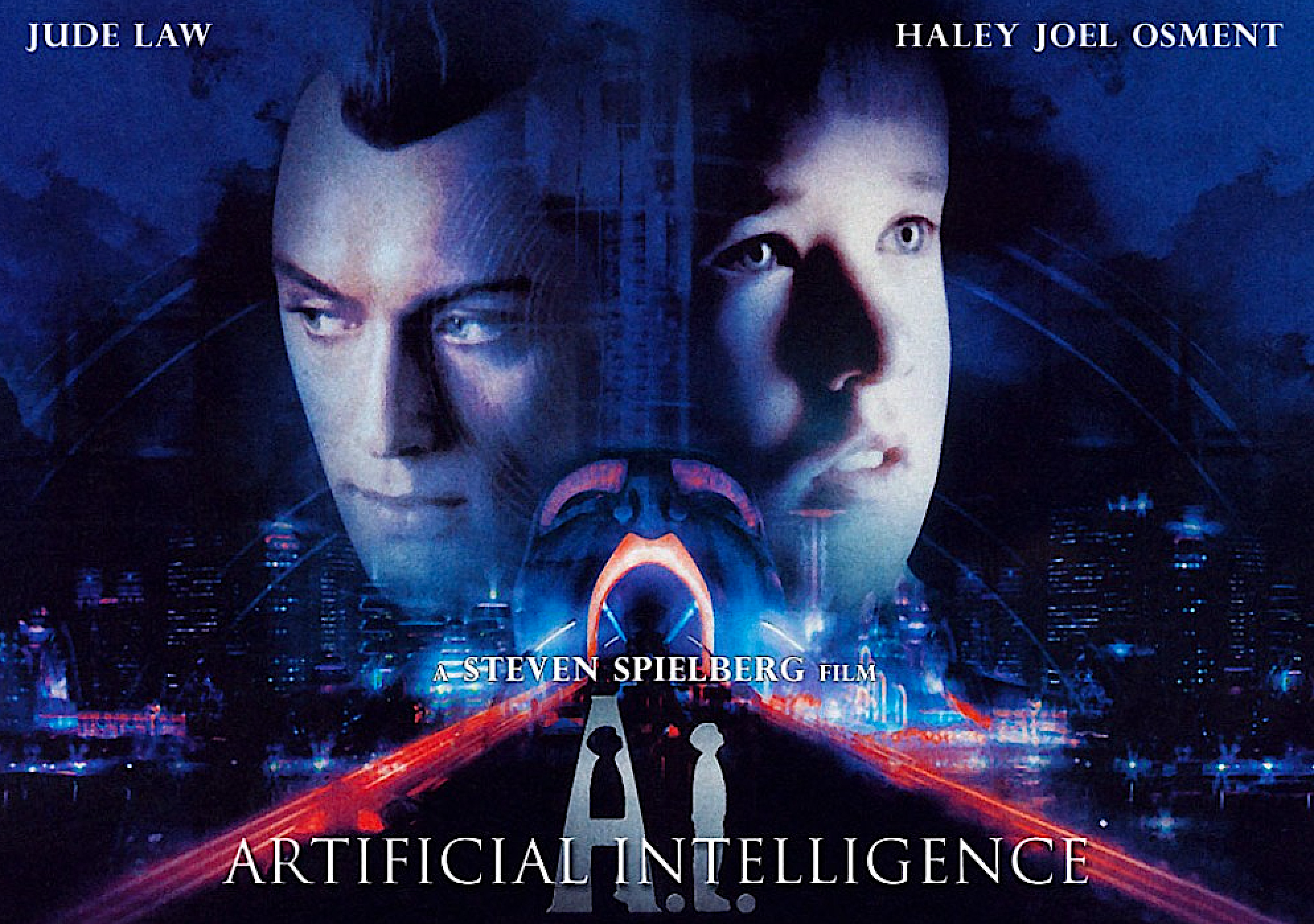
On the occasion of its 25th anniversary today, it’s worth noting a certain sense of irony that Steven Spielberg's "A.I. Artificial Intelligence" seems oddly prescient into today’s AI-obsessed environment, especially when compared to the master director’s recently released "Disclosure Day," which sadly feels three decades late to the whole governmental cover-up UFO/UAP party.
"A.I. Artificial Intelligence's" path to the silver screen is a strange odyssey, one that includes two of the world's greatest filmmakers, a '60s short story about global warming and advanced robots, a child star hot off a horror hit, multiple production starts and stops, and even a crazy sudden death conspiracy theory.
This $75 million futuristic fairy tale was filmed in a dreamy, desaturated preternatural haze that draws audiences into its emotional depths, making "A.I." one of Spielberg’s finest films made during what can be considered his darker, more serious period of moviemaking.
Released by Warner Brothers on June 29, 2001, the mature sci-fi film attracted a diverse audience that was mesmerized by the depiction of a climate-changed world and the advancement of artificial humans called mechas. It tells the story of a couple whose child is stricken with a fatal disease, causing them to purchase David, a new model of android child programmed to love.
When their son recovers, conflict between the human and mecha becomes hazardous, and David is disposed of, where he meets up with a band of stray robots. Attuned to the fairy tale of "Pinocchio" and yearning to become a real boy, David and his A.I. toy bear Teddy embark on a strange road trip to a flooded Manhattan to find the Blue Fairy, who might grant him his wish.
25 years later, "A.I. Artificial Intelligence" feels even more timely (Image credit: Warner Bros.)
Spielberg naturally brought along his faithful A-list team of Oscar-winning collaborators that included cinematographer Janusz Kaminski, editor Michael Kahn, and composer John Williams for this PG-13 sci-fi adventure whose eventual global box office take was a respectable $236 million.
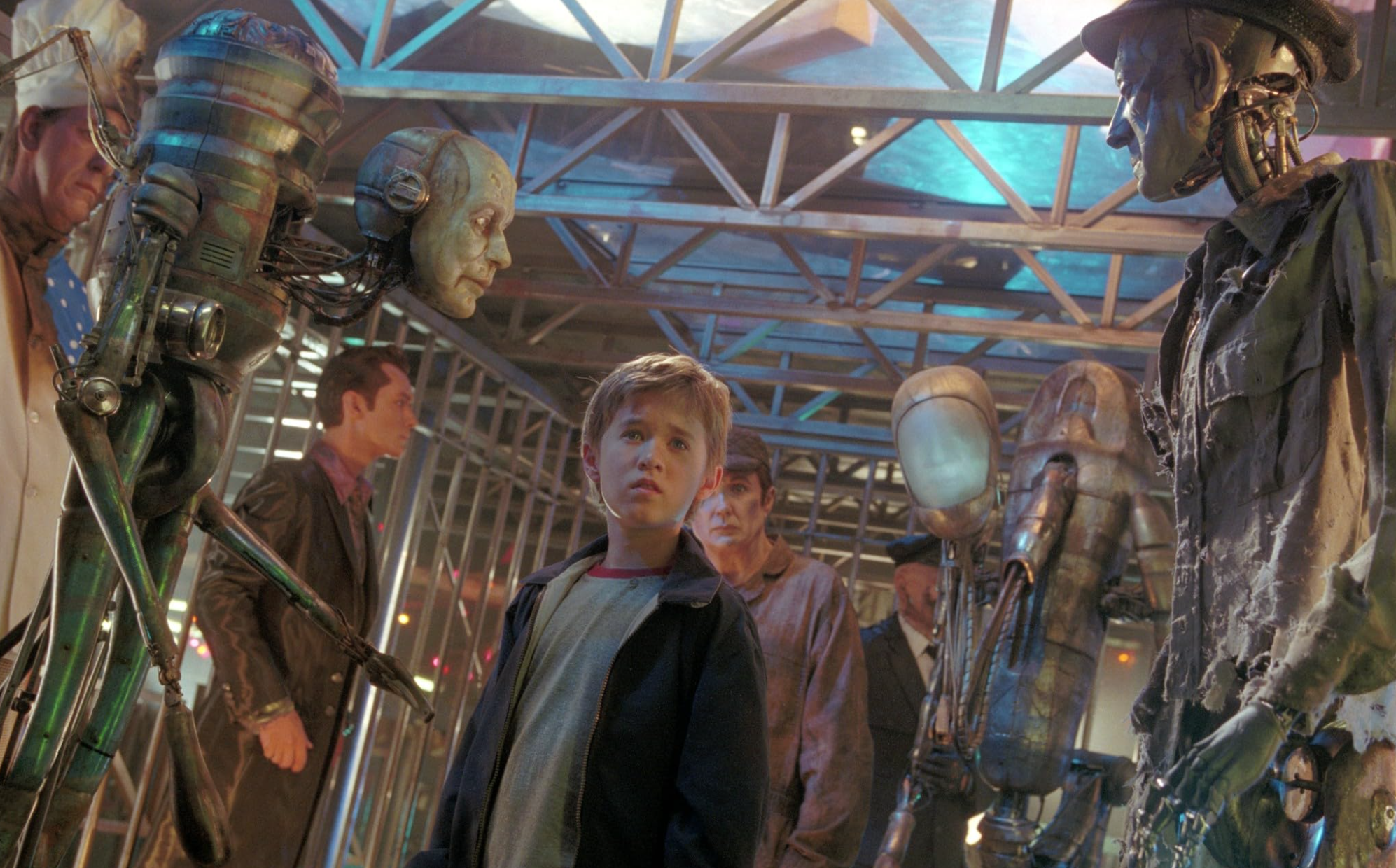
Starring Haley Joel Osment, Frances O’Connor, Jude Law, Sam Robards, Brendan Gleeson, and William Hurt, "A.I." was a brilliant storm of spectacular visual effects, especially observed in the Flesh Fair set pieces where robots were forced into gladiatorial battles to entertain post-apocalyptic crowds.
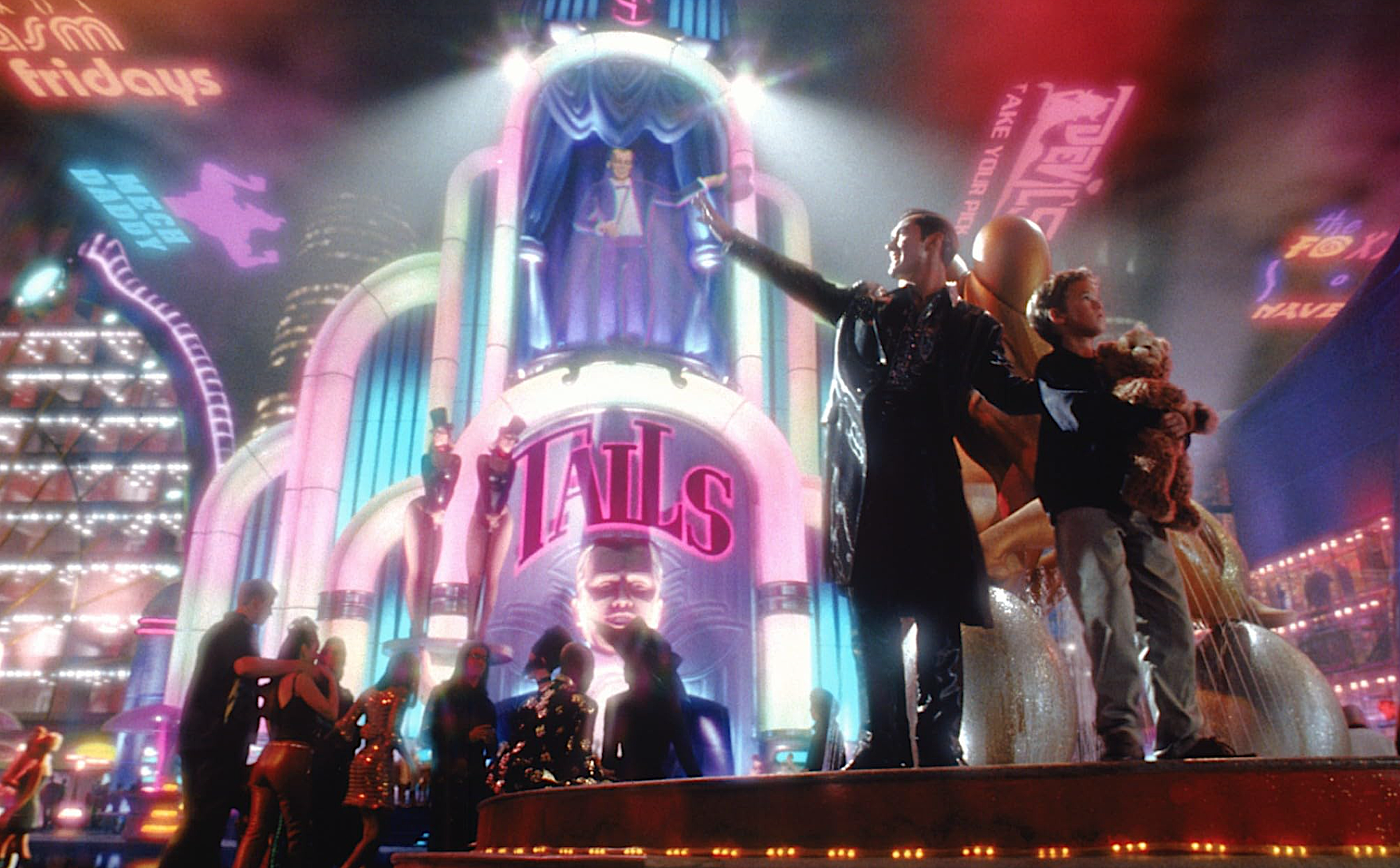
Jude Law and Haley Joel Osment in the decadent Rogue City from "A.I. Artificial Intelligence" (Image credit: Warner Bros.)
Law has a lot of ribald fun with his pleasure model android called Gigolo Joe, who rescues David and brings him into his fold as they travel to meet their 'maker' in a sort of twisted "Wizard of Oz"-like journey. Robin Williams also voices an amusing interactive search engine conceived in the likeness of Albert Einstein and aptly called Dr. Know.
Fresh from his role as Cole Sear, aka the "I see dead people" kid in M. Night Shyamalan’s "The Sixth Sense," Osment gives a shattering performance here as an innocent machine hoping to fulfill its programming and be loved as a real boy. It's been noted that Osment doesn't blink once in the film, and he displays an incredible depth of feeling on screen for such a young actor.
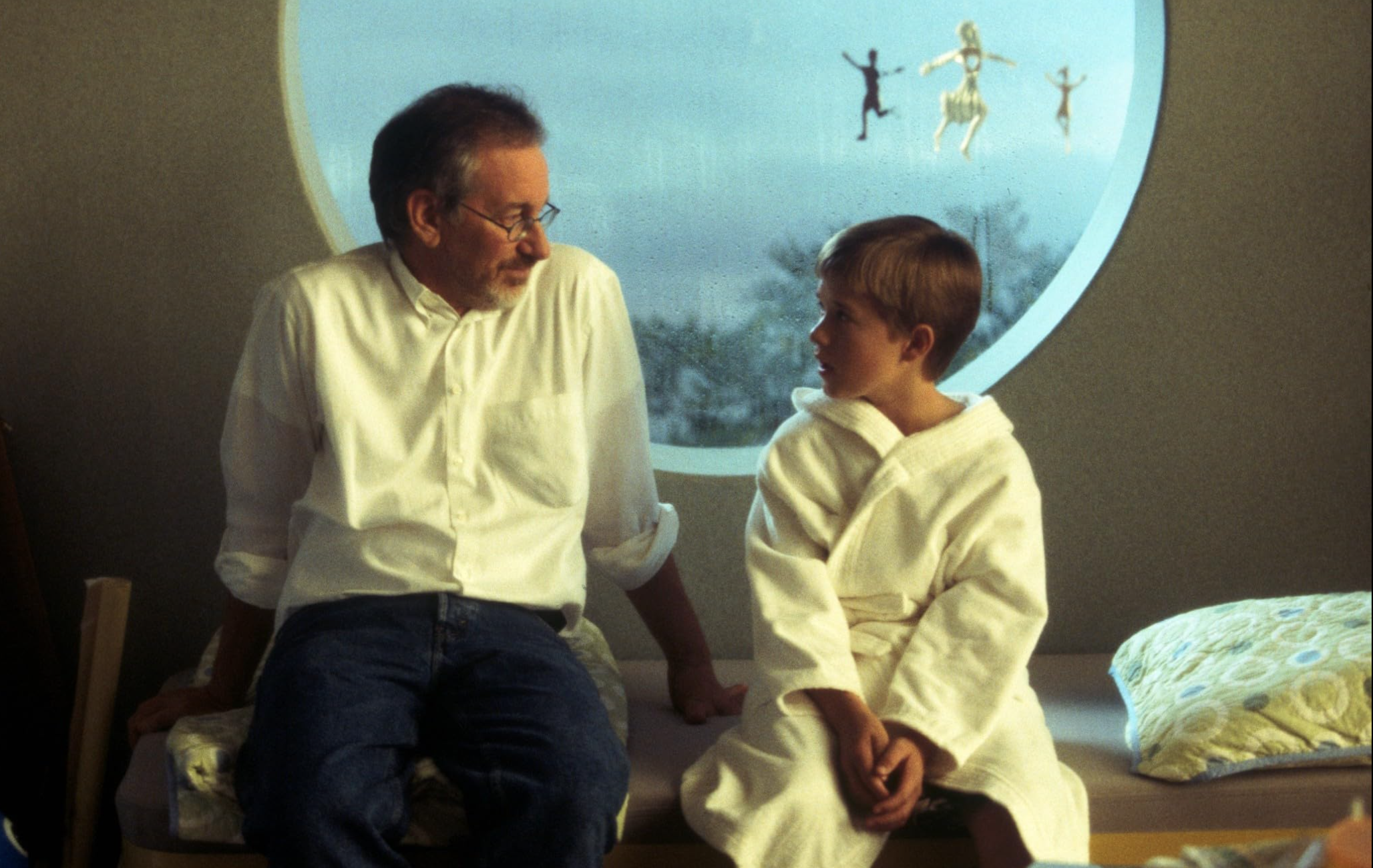
Steven Spielberg working with Haley Joel Osment on the set of "A.I. Artificial Intelligence" (Image credit: Warner Bros.)
"A.I.'s" narrative also returns to one of the major themes seen in Spielberg’s catalog, that of the dissolving family unit. It’s been well documented and discussed over the years that his parents’ divorce when he was 19 had a devastating effect on Spielberg.
That trauma of fractured families has been well played out in numerous Spielberg movies, including "Close Encounters of the Third Kind," "E.T. the Extra-Terrestrial," "Empire of the Sun," "War of the Worlds," and is even revealed in detail in "The Fabelmans."
Here in "A.I.", the broken home that Haley Joel Osment’s android character, David, experiences feels even more raw. His adoring mother, Monica, sensing David's emotional instability and fearing for her family’s life, drives her robo-child out to the woods and abandons him as he desperately begs her to stop. It’s a tearful, heart-wrenching moment few viewers forget.
"A.I. Artificial Intelligence" began life as a 1969 short story by author Brian Aldiss titled "Super-Toys Last All Summer Long." It’s a brief read with a twist ending that we won’t spoil here.
Adapting the futuristic tale of a flooded New York City, a Cybertronics engineer, his family, a next-generation synthetic child, and a robotic teddy bear was a passion project of the great Stanley Kubrick. The meticulous filmmaker made several attempts to crack the plot with numerous writers, including Sara Maitland, Ian Watson, and Brian Aldiss himself, but it never quite coalesced into a finished script.
Spielberg was then brought in as a potential director in 1995, and the two cinematic geniuses collaborated for years to map out the story. Upon Kubrick's surprising death in 1999 (some believing foul play for revealing industry secrets), four days following the release of "Eyes Wide Shut," Spielberg agreed to complete the project for his friend and mentor and eventually drafted the finished screenplay.
It's naturally a bit of a cobbled-together effort with so many ideas cooked in, but it all works as a type of existential exploration of the role of artificial beings in future society, our responsibility to our intelligent creations, and their emotional potential.
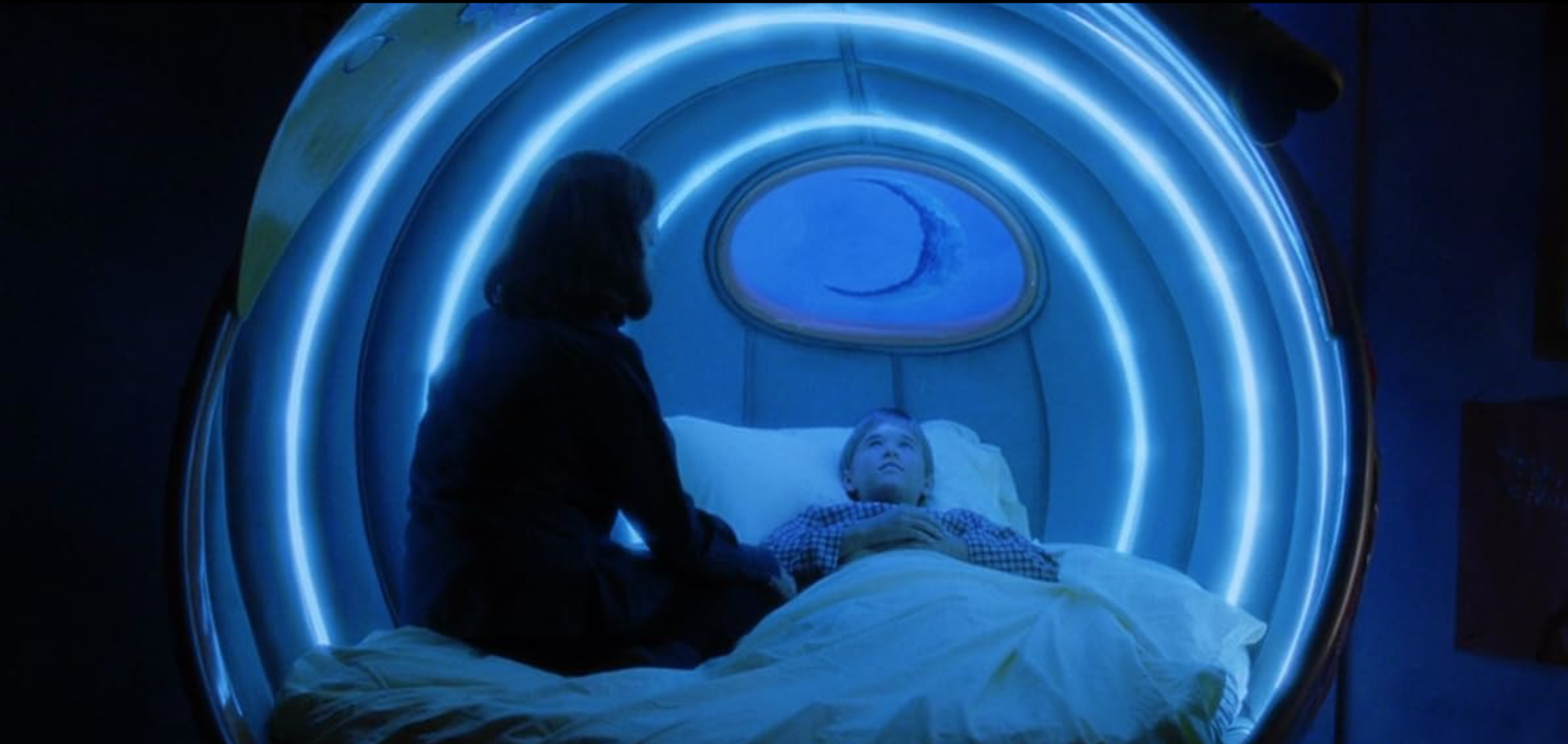
A dreamy scene from Steven Spielberg's "A.I. Artificial Intelligence" (Image credit: Warner Bros.)
Trying to stay true to Kubrick’s ideals, Spielberg was intimately involved in the writing, producing, and directing of "A.I.," which represents one of only two films in his entire career where that creative trifecta occurred, the other film project being 2022’s "The Fabelmans."
Coming off of 1998's triumphant "Saving Private Ryan," 2001's "A.I." continued the pattern of Spielberg’s serious segment of his career in a run that included four science fiction movies dropped over a seven-year period. Besides "A.I.," those additional releases were 2002’s "Minority Report," 2005’s "War of the Worlds," and 2008’s "Indiana Jones and the Kingdom of the Crystal Skull." The master wouldn’t revisit the genre again for ten years until 2018’s "Ready Player One."
Advancements in digital visual effects in the decade of the 2000s benefited from the millions of dollars poured into franchises like "Star Wars," "Harry Potter," "Pirates of the Caribbean," and "Transformers." "A.I." was one of the first to benefit from that infusion of innovation that kicked off with the first "Star Wars" prequel, 1999's "The Phantom Menace."
Technology not being up to depicting a life-like robot was one of the sticking points for Kubrick, but a combo of practical effects from Stan Winston Studio and CGI did the trick.
Haley Joel Osment and Jude Law in "A.I. Artificial Intelligence" (Image credit: Warner Bros.)
Another creative synthesis between Kubrick and Spielberg regarding "A.I.'s" story involves their shared love of Carlo Collodi’s classic children’s story, "The Adventures of Pinocchio," with Kubrick's vision of the film as a sort of Pinocchio with robots. Spielberg's "Close Encounters of the Third Kind" contains several references to the Disney animated "Pinocchio" as well.
The fusion of Kubrick's bleak, unflattering view of human nature paired with Spielberg's wondrous warmth and sentimentality makes for a unique cinematic cocktail that keeps "A.I." fresh and relevant.
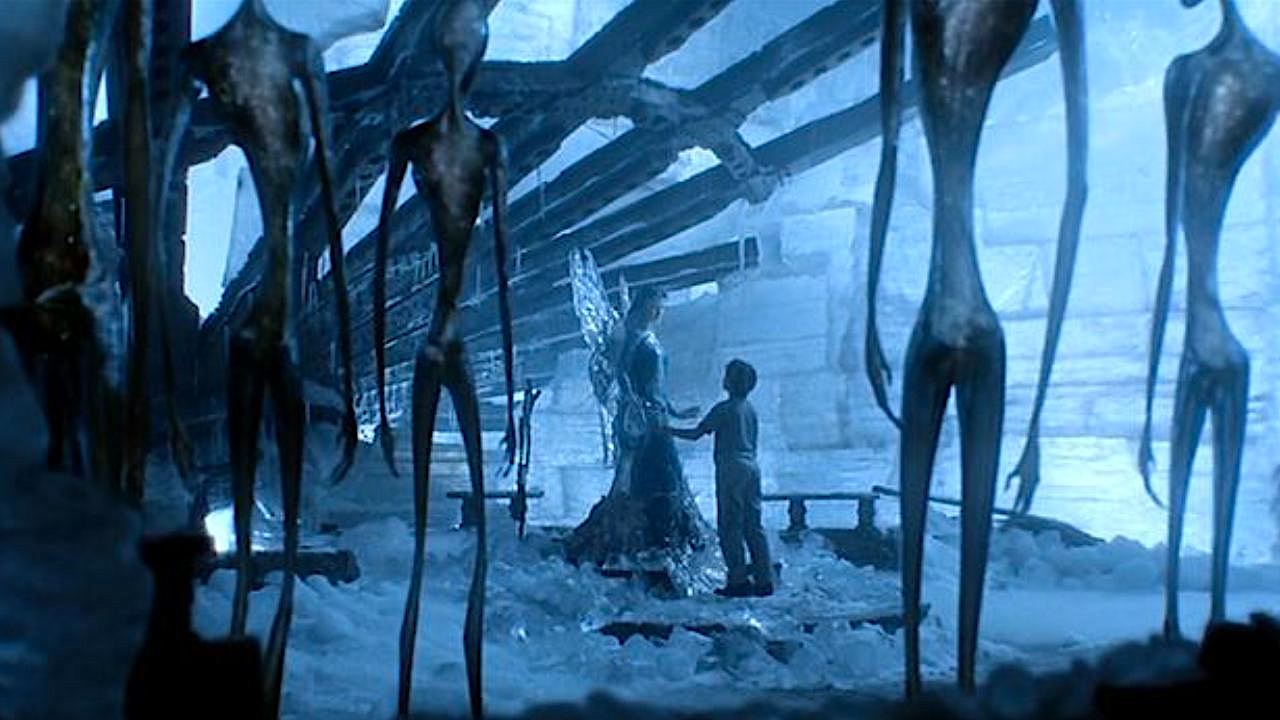
One controversial element of "A.I." is the ending with the humanoid aliens using the guise of the Blue Fairy to grant David’s wish of one last day with his mother and the recurring motif of his wanting to become a real boy and simply be loved.
Advanced mechas thousand of years in the future watch David and the Blue Fairy interact in "A.I. Artificial Intelligence." (Image credit: Warner Bros.)
It’s a bittersweet finale that’s not without its detractors, but the simple fact that it's still fertile territory for spirited debate points to the movie's lasting importance in Spielberg’s oeuvre, and one that remains even more topical and timely today on "A.I.'s" milestone 25th birthday.
The 1970s were truly when science fiction cinema made astronomical leaps into the public's consciousness and catapulted out of the B-movie bin to become a respected entertainment genre.
Aside from a few serious science fiction standouts like "The Andromeda Strain," "Silent Running," "Soylent Green," "Westworld," and "Rollerball," the pre-"Star Wars" era of Hollywood sci-fi was mostly forgettable fare.
But before we all travelled toa galaxy far, far away, experienced close encounters of the third kind, or set down on LV-426, MGM Studios gifted us with "Logan's Run," a lavish futuristic spectacle that offered a colorful peek into a dystopian future. It delivered with provocative themes about the suppression of truth, the inevitability of aging and death, violence as sport, and the complicated nature of freedom.
First released on June 23, 1976 — right before the United States was about to celebrate its big 200th birthday — "Logan's Run" featured an exceptional cast led by Michael York, Richard Jordan, Peter Ustinov, Roscoe Lee Brown, and British sensation Jenny Agutter, who would later go on to co-star in director John Landis' "An American Werewolf in London." It even placed a spotlight on popular supermodel Farrah Fawcett-Majors as the sexy New You Shop worker, Holly 13.
On the occasion of "Logan's Run's" 50th anniversary this week, let's look back at this forgotten gem that inspired filmmakers and artists to leap into the genre, absorbed in its sanitized vision of the future and the unsettling truth behind the sunny facade of paradise's perfection.
Those of a certain age might recall the first spectacular trailers opening with images of a 23rd-century domed city sparkling with water features and bright white buildings connected by transparent transportation tubes filled with bullet-like people pods.
This beautiful exterior disguises a fragile utopian society with a dark secret that humanity is only too happy to ignore, operating in fake hedonistic tranquility as state-sponsored death events are delivered in amphitheaters to cheering crowds.
York stars as Logan 5, a young buck employed as a Sandman, a sort of futuristic cop whose job is to uphold the law and terminate anyone who attempts to escape from the mandated Carousel ceremony, where citizens reaching the age of 30 are supposedly reincarnated. He and his elite Sandman partner, Francis 7 (Jordan), enjoy blasting away at daring fugitives who reject the forced expiration bit and attempt to flee when their palm-implanted life-clocks turn red.
"Logan's Run" was first released by MGM on June 23, 1976 (Image credit: MGM)
When the city’s AI overlord forces Logan to infiltrate a secret runner’s sect to find a mythical place called Sanctuary outside of civilization’s domed clusters, he joins forces with Jessica 6 (Agutter) to find the truth behind a symbolic ankh, pursued by a relentless Francis 7.
Adapted from distinguished sci-fi author William F. Nolan’s 1967 novel and directed by British filmmaker Michael Anderson, this big budget treat is a beautiful film to watch, with its vibrant Metrocolor palette shot by legendary cinematographer Ernest Laszlo, Jerry Goldsmith’s penetrating orchestral score accented with synthesizer tones, and thrilling set pieces filmed in actual locations like Houston’s Hyatt Regency Hotel and the Fort Worth Water Gardens in Texas.
Carrousel is not a gateway to everlasting life! (Image credit: MGM)
"Logan's Run" was a solid summer hit for MGM, pulling in a domestic total of $25 million off a $9 million budget. When the 1977 Academy Awards arrived, the sci-fi blockbuster was nominated for Best Cinematography and Best Art Direction and won an Oscar for Special Achievement in Visual Effects.
It also holds the distinction of being the first movie presented in Dolby Stereo when matched with 70mm prints. And who can forget the frightening ice cave robot named Box, perfectly portrayed by Roscoe Lee Brown inside a shiny android suit?
Get ready for the deep freeze treatment if you meet Box! (Image credit: MGM)
For three decades, it’s been rumored that "Logan's Run" would be getting a remake, bouncing around in a series of stalled projects, one that supposedly attracted Ryan Gosling, but at this point, no progress has been made.
A short-lived "Logan's Run" TV series aired in '77, but a "Star Wars" tsunami swept in that year and washed it away.
So, if you're looking for a nostalgic trip back to '70s sci-fi, then why not check out the original "Logan's Run" this weekend to help celebrate its landmark 50th anniversary and revel in all its disco-era dystopian pleasures?
At some point next year, when planets and stars momentarily align, we’ll hopefully be getting what’s sure to be the most anticipated sci-fi RPG in recent memory — Wizards of the Coast and Archetype Entertainment's "Exodus", which is coming to PS5, Xbox Series X/S, and PC.
This far future "Mass Effect"-like saga follows the daring time-traveler Jun Aslan as he and his companions hop about the cosmos searching for ancient artifacts to ward off the destruction of their worlds. This threat comes from an evolved group of transhumans called Celestials, with the whole affair taking place within the Centauri Cluster, 16,000 light-years from an abandoned planet Earth.
As part of Archetype’s ambitious cross-media marketing plan, the dev team enlisted the help of celebrated British sci-fi author Peter Hamilton ("The Salvation Sequence") to fortify the game’s worldbuilding and also pen two companion prequel novels.
The first of these books, "Exodus: The Archimedes Engine," was released on Sept. 17, 2024. Now, the second half of this duology, "Exodus: The Helium Sea," was just published on June 16, 2026, and continues the tale of Finn and his human allies to see if they can outwit the Celestials and finally earn their fellow humans a place of independence and power in the Crown Dominion.
The epic conclusion of the Archimedes Engine duology by legendary author Peter F. Hamilton. Set in the universe of EXODUS, a new sci-fi action-adventure RPG coming soon from Archetype Entertainment.View Deal
"Because I helped build the 'Exodus' world, they sent me what I always call the skeleton, and I helped put a lot of flesh on it, like the assorted cultures, some of the technologies, and the starships," Hamilton tells Space.
"It was partially my universe to write in, so I knew the limits and constraints, which made it easier because I was part of the structure."
(Image credit: Archetype Entertainment)
"The Helium Sea" concludes the background saga started in "The Archimedes Engine" and is one story told over the course of two books.
"All the characters that were alive and survived at the end of 'The Archimedes Engine' just carry on into 'The Helium Sea,'” he adds. "You get to find out what’s been hinted at before and what the real motivations are for the rebels and who they are. It was all misdirection; some people we think are on the bad side are not, and you get to see a whole lot of new places and settings as well, and it really expands the universe."
"The last one was set over 40 years because we have a lot of time dilation elements when you travel at relativistic speed," explains Hamilton. "This book is set over ten years, and you have various characters going on different missions, and I had to bring them all together at the same time and same place. That was a lot of plotting."
Hamilton admits that his collaboration with the whole Archetype team on the colossal "Exodus" project has been an enriching affair.
A gameplay screenshot from the upcoming "Exodus" video game (Image credit: Archetype)
"The joy of it was, which I’ve never had before writing a book, is that I'd send them a description of a world or something, and I’d get my little spaceship back, and it would be this magnificent picture, and of course, being top-flight artists, they've added to my original concept. It was a real growth process, developing this world. We all got on really well, and we just gelled. They were very professional. You could see they had a job to do and they were doing it."
When pushed to choose a favorite destination amid both "Exodus" prequel books, Hamilton immediately picks a world called Kingsnest.
"It's a glass shell, a glass bauble, the size of Jupiter basically, which has been pumped full of atmosphere," he notes.
"The ships they have in it are made out of wood, sort of 18th-century sailing technology, because there are clouds in there and little globular lakes. So much life in there. It would take you more than a lifetime to sail across it and encounter who knows what in the deeps of it. I just love the idea of it. That you can literally have sailing ships in space."
"Exodus: The Helium Sea" is available now from Random House Worlds (Image credit: Random House Worlds)
Now enjoy this exclusive chapter excerpt from Peter F. Hamilton's "Exodus: The Helium Sea" (Random House Worlds)
The Jiyoratan family had furnished their tower with stylish opulence. No sign remained visible that the structure was aerolite; every wall was tiled. The aesthetic was clean, with geometric primary colors starting to warp together within soaring arches that highlighted the central atrium, where a lush hanging garden claimed the walls. Internal balconies were illuminated by faint blue lights in constellation displays, half-hidden among the foliage to create an illusion of the external edifice of some tropical villa. Spiral water features ran the full height, bringing a humidity to the scene that Neusch had practically forgotten.
His clothes activated, changing to a light layer of armor around his body and limbs, while the hood slipped over his head and curtained his face in a transparent shield. He’d never envisaged the bio-andy being involved in anything as crude as an actual fight, so he had no idea how much use the protective clothing was going to be against the Guillrameo team. Probably not much. Until now he’d only had a vague plan: get to the sisters and get them out. Quietly. The kind of mission his father would’ve executed superbly, where no one would even know he’d been there until hours after the event.
Well, that’s just taken a deep dive into a sea of shit.
The other Guillrameo operatives were efficiently eliminating the aireels he’d sent after them. Within thirty seconds they’d all been taken out. He didn’t know where the woman was—presumably making her way through the Dibyth tower to the first target. The others would be breaking through the walls any minute now.
The bio-andy picked up voices somewhere inside the atrium. He started running for one of the curving granite stairs that wound up between the atrium balconies. The sisters had their quarters two floors above, along with the rest of the family’s youngsters.
Three people came around the central trio of big fountains, stopped in surprise.
One of them who’d worked with Juliatra-Monoth gave him a startled look. “Halvin-Aneil?”
“Sound the alarm,” he shouted at her. “People have entered your home. They’re going to kill most of you and interrogate the surviving seniors.”
“Huh—”
One of her companions, a man, made a grab for the bio-andy. It pushed back hard, sending him spinning.
“Sorry! They’ll be armed. Get out of here.” Then he was around the fountains and heading for the base of the spiral staircase; people were walking down it. His lnc warned him an intruder alert had been issued within the tower. That’ll annoy the Guillrameo team.
“The Dibyth has been isolated from Husnak’s network,” the CI informed him. “No security forces know what’s going on.”
So, no help’s coming, then. Neusch barged past the couple on the stairs and released a flock of insect drones from his leg pouch. They zoomed up the inside of the atrium, heading for the balcony above, hunting the girls. Andys started to emerge from every doorway. Even without weapons, the slim silver figures would pose a problem.
But that suddenly didn’t matter. The tower network vanished. The andys lost all rigidity, fluttering to the ground like becalmed flags.
“Asteria’s arse.” Neusch drew the bio-andy’s guns—an enhanced-projectile mag carbine and a gamma laser. The bio-andy reached the top of the stairs, and Neusch cursed the way the verdant plants had been allowed to flourish, narrowing the balcony. Tactical display reported a scan locking onto the bio-andy. Neusch relinquished fire control to the bio-andy’s tactical routines. It raised both guns and assumed a crouched pose as it started to sprint along the narrow route.
A projectile hit the side of the balcony half a meter behind it. The bio-andy was flung off its feet, the light armor turning rigid. It landed, crashing into a big night-flowering jasmine bush, rolling with gymnastic precision, firing a burst of gamma rays at the origin of the attack on the floor of the atrium, then sprinted onward.
Neusch split his consciousness. One was with the bio-andy, observing and providing oversight guidance. The parallel Neusch was searching the home’s blueprints, combining with the CI to find an escape route for the sisters.
First realization, as another barrage of projectiles slammed into the balcony behind the bio-andy: this was going to require maximum firepower, because the Guillrameos would unleash nothing less. An X-ray laser slashed across the bio-andy. Its light armor managed to diffuse and deflect most of the energy so that it broiled the balcony’s surrounding vegetation. Leaves and twigs fried, bursting into swirls of ash and embers around him. Neusch was acutely aware of nerve-equivalent impulses reporting the beam penetrating the light armor, searing the bio-andy’s hip and thigh. Muscle damage parameters were incorporated into the body’s physiology routines; it changed its posture slightly to accommodate the now asymmetric strength of its leg muscles.
Three mouse-sized drop-drones flipped out of a leg pouch; they had a similar leg structure to the cutter-drone, but they were combat versions. The trio lunged over the balcony rail in full lemming mode. One released a chaff cascade—hell’s own monsoon manifesting as specks of light, sound, and EM pulses falling through the hanging garden. The other two went dark as they fell, unnoticed among the sensory overload. They hit the floor and did nothing.
A few seconds later, as the chaff attack faded, two of the Guillrameo operatives crept into the atrium, their protective cloaks lensing the light around them: event horizons made from fabric. Their movements created subtle motions in the air that the drop-drones identified.
The bio-andy had just reached the archway leading to the children’s bedrooms when the drop-drones detonated their proton-boosted explosive cores, eradicating the two intruders. A massive blastwave punched the bio-andy through the air, sending it crashing hard into a wall. This time, it took longer to get to its feet and totter forward. One hand slid along the wall for additional balance as it reached the door to the sisters’ bedroom. Which had been locked by the emergency intruder alert.
For fuck’s sake, I’m trying to save you!
Another cutter-drone let go of the bio-andy’s belt where it’d been clinging and hurried over to the door. Its proton incisor deployed, and it climbed up the edge of the door, slicing through the rim as it went.
Neusch sent six more drop-drones flipping away. They sped back down the corridor, taking up positions at three-meter intervals. Neusch saw a couple of the house’s fire-andys roll along the balcony, their extinguisher nozzles deployed over the railings, pumping clouds of viscous yellow retardant foam into the atrium. The part of his consciousness focusing on tactics directed two of the drop-drones into the blobs of foam that fizzed away on the balcony floor. He then dispatched a dozen more insect drones—not confident they’d be any use, but he needed some visuals on the remaining Guillrameo team even if they only lasted a second.
The cutter-drone finished its work. With a swift prayer to the Goddess that a kick would be enough, he raised the bio-andy’s good leg and booted the door. It flew open to a scene of fear and chaos. Five children in their nightclothes were clinging together in defiance, struggling not to scream and cry. He identified Kimiya and Marize, hugging their spawn brothers as they glared fearfully at him.
“It’s okay,” Neusch assured them, raising the bio-andy’s arms. Probably not the best gesture given it was still holding a gun in each hand. “I’m here to stop the attack.” Again, not helpful. His last three cutter-drones raced past the frightened spawn siblings to the wall.
The tactical display told him two weapon-drones were rising up the center of the atrium—hand-sized silver discs, moving fast. They took out his watching insect drones. The tactical display fell back on the drop-drones for information. The first of the weapon-drones came up level with the second floor. It darted forward.
Neusch detonated the two drop-drones on the balcony.
They must have triggered whatever explosives were in the weapon-drone, and the resulting explosion sent him reeling. The children screamed as they were slammed to the ground. The air in the bedroom instantly became a blizzard of trash.
Two drop-drones in the corridor outside survived. They righted themselves and scanned around. The tiles and artwork on the walls were smashed and smoldering, chunks still peeling away from the thankfully stubborn aerolite.
The bio-andy scrambled to its feet, its medical display showing several damaged areas, but it remained capable of locomotion. Neusch knew he only had seconds before the Guillrameo team hit him with something else. Kimiya was closest, sprawled across the floor weeping, debris swirling around her. He snatched her up and held her tight against his chest. She screamed in dread.
“I’m sorry, but it will be okay. You’ll see. I promise.”
She struggled. It was pointless, of course. Even if it’d been a real adult Imperial Celestial gripping her, she wouldn’t have been able to break free—and the bio-andy was considerably stronger.
The three cutter-drones finished slicing the bedroom’s window out of the wall. It fell soundlessly into the night beyond.
“No!” Kimiya wailed as the bio-andy moved toward the gaping hole. “No, no!” Her voice became a wordless shriek. Her spawn siblings cried out as she was carried past them.
“Follow me,” the bio-andy shouted at them. “It’s the only way you’ll live.”
He reached the window and jumped.
From Random House Worlds, "Exodus: The Helium Sea" is available in hardcover and paperback, as well as on Kindle and audiobook form.
The epic conclusion of the Archimedes Engine duology by legendary author Peter F. Hamilton. Set in the universe of EXODUS, a new sci-fi action-adventure RPG coming soon from Archetype Entertainment.View Deal
Sony Pictures Television and Amazon MGM Studios' brash experimental superhero series, "Spider-Noir," is a refreshing treat that revitalizes the fading genre with a cool film noir twist.
Showcasing the "Spider-Man Noir" comics character seen in "Spider-Man: Into the Spider-Verse", it stars Nicholas Cage as a 1930s New York City private detective named Ben Reilly who moonlights as the nocturnal avenger The Spider.
Juilliard-educated composers Kris Bowers ("The Wild Robot," "Secret Invasion") and Michael Dean Parsons ("Light & Magic," "Bridgerton") have created a magnificent sweeping score with roots in old-school crime thrillers, Hollywood Golden Age jazz, and a variety of intriguing electronic instruments not traditionally used in a classical score of this nature. We caught up with the musical pair to hear more about their influences for this mesmerizing Spider-Noir soundtrack.
"The first thing we talked about when we were watching the picture-locked season was how it was important that this score was rooted both in the noir and superhero space but also be wholly unique in its own thing," Bowers tells Space.
"We created a playlist of all our favorite noir scores from 'Chinatown' to 'Double Indemnity' to 'Vertigo' and remind ourselves about all the things we love about that music, then pretty quickly try to forget it so we didn't lean too much in that," explains Bowers.
"Superhero music, I feel like, has been in our DNA for the last 20 years or so. For us, it was looking at how in the noir space, you had these iconic, memorable melodies and themes and these things that are tracking characters across the arcs of their stories. Then with the superhero side of things, it was about making it feel modern and edgy and have a lot of sounds you wouldn’t expect in your typical noir score."
From the beginning, Bowers and Parsons instinctively knew "Spider-Noir's" atmospheric music would be thematically driven, but they also didn’t want it to be an homage washing over the whole series.
"We wanted it to feel customized and coming out of these individual characters and the unique story that was being told," Parsons adds. "One of the first things we asked Oren was, since the show takes place in New York, what does New York mean to you?"
"We were expecting a noir-inspired answer, like about using trumpets and saxophones," says Parsons. "Instead, he said New York is 'Nineties electric punk guitar.' As we talked to him more, there was something that really fit naturally about bringing in a modern guitar sound into this palette that made us realize this is 50% superhero and 50% noir, but 100% totally new."
One enchanting component of this score’s distinctiveness, beyond the sweeping symphonic interludes, is the inclusion of some unconventional instruments to layer into the moody tracks.
"The theremin was one of our early discoveries that was kind of a marriage between the electronic contemporary and also this noir world," notes Parsons. "We were researching the early electronic instruments that could have plausibly been around or starting to be popularized in that era, so we gravitated towards the theremin not only for that reason, but because Ben's theme begins with this big soaring octave leap.
"So we thought, what if we take the theremin and have it play the octave leap as a signature for Ben. Anytime he's doing a day in the life detective work, or anytime we need to point out him doing something heroic, we're able to use that theremin, which has been run through distortion pedals and other things, to call it out."
Giving the composers enough confidence to be daring provided the ideal creative environment to conjure up what we believe is an instant classic that gets even better each time it's heard.
"It's really just a credit to how generous our collaborators were in Oren, the showrunner, and the rest of the team," says Bowers. "It was the thing where every time we shared something, oftentimes the only notes we got back would be to make it even weirder or more different or add some other sound. That's important, especially when you're on a project, and you don't have much time, and you're dealing with one of the most important pieces of IP in the world with Spider-Man.
"Often, you can get a lot of stress and anxiety and tightness in terms of not wanting to try things out. I feel like we were encouraged to fail in the best way possible, where we never felt any idea was too crazy for this team. It was an amazing collaborative process with them."
The show hails from executive producer Oren Uziel ('Mortal Kombat,' 'The Lost City'), and fans are applauding its stylish take on the multiverse, which can be enjoyed in either True-Hue Full Color or Authentic Black & White.
"Spider-Noir" is now streaming all 8 episodes on Prime Video.
Adult Swim's smash animated series "Rick and Morty" recently unleashed its ninth season, and it's already shaping up to be one of the best seasons so far, with plenty of interdimensional shenanigans, existential excursions, evolutionary entanglements, hostile living room furniture, a potential trip to Boob World, and Pool Time!
We chatted to the creators Dan Harmon and Scott Marder earlier this month, but now we're catching up with the main cast to hear from Ian Cardoni (Rick), Sarah Chalke (Beth), Harry Belden (Morty), and Spencer Grammer (Summer) on the rigors of voice acting, playing in the multiverse, and watching all your plosives.
"We've got what we would consider classic adventures, balanced by a lot of fresh and new directions for these characters and for these stories," Cardoni tells Space.
Rick Sanchez from Rick and Morty, pictured alongside his voice actor Ian Cardoni (Image credit: Getty Images / Adult Swim)
"I can honestly say that some of my favorite moments of episodes of the whole series run are coming in season 9, and I'm excited for fans to see that. Sci-fi in its best form is human stories. It may be our future, and I think we get glimpses of that by tapping into the human elements. With all the wacky hijinks that take place, we're in for a really amazing season and some real good science fiction."
Those hijinks call for some suitably animated vocal performances from the vast though. "These are voices that take a toll, even when it’s not a session, when it requires the intense gravel or yelling of Rick," explains Cardoni.
"It requires your full instrument. I like to prep with a full cardio workout because oxygen support is what you need. Then I go on vocal rest before and after sessions. I have all kinds of warm, hot, viscous liquids to soothe. I use a vocal steamer. Harry [Belden] is really religious about his regimen, but I’ve got my own way to get myself into the voice, but not burn out. Voice acting is acting. And the show doesn’t pull any punches emotionally."
Beth and Space Beth from Rick and Morty, pictured alongside their voice actor Sarah Chalke (Image credit: Getty Images / Adult Swim)
Chalke relishes her time playing Beth and Space Beth and adamantly declares season 9 as her favorite season they’ve ever done.
"There's a couple of specific episodes, 'Salute Your Morts' and 'Jer Bud' where you really get to go deeper into the relationships," she notes. "The fun part of 'Rick and Morty' as an actor is all the unique challenges because there's no limits and because it's a multiverse and because the show can go anywhere, you’re always doing things with your voice you've never done before.
"None of us have to do the voice intensity Ian does with Rick. You're working those vocal chords so hard with the burping and all of that," Chalke remarks to Cardoni. "For me, Space Beth is more in that direction than Beth. So I always record all of that first and Space Beth second because she has more of a gravelly, raspy quality to it. It's whatever you need to do to make it grounded and as real as you can."
Morty from Rick and Morty, pictured alongside his voice actor Harry Belden (Image credit: Getty Images / Adult Swim)
For Belden, it was gratifying for Morty to experience a great deal of personal growth this season.
"There are a lot of intense situations that he finds himself in, and I’m excited for fans to see him go through that and come out the other side," he adds. "For me, my favorite episode is going to be the finale ["Field of Dreams"] for sure, and the journey that Morty goes on. There's so much good stuff in there."
Regarding his own regimen of keeping his vocal health tip-top, Belden explains:
"I like to run a couple of miles before I start, stretch out the entire body, do the actual vocal warmups. Morty being such a particular voice, I need a lot of breath support, so I have a wide stance and create a powerful base. I’m expanding my ribcage to support myself. And that’s not without even getting into tongue placement, spreading your lips wide to get the sound out, watching your plosives on the letter 'p.' It's all this stuff you would never ever think about."
Grammer is thrilled to see some fan favorite characters make return cameos in season 9, as we get to watch Summer and Morty just being terrible teenagers, and loves the fact that the Smith family gets a swimming pool.
Summer from Rick and Morty, pictured alongside her voice actor Spencer Grammer (Image credit: Getty Images / Adult Swim)
"I kind of learned on the job about 14 years ago," she reveals. "I was trained as an actor though, so I have a pretty good vocal ability. But it's very demanding, especially as you get older. There’s these tiny muscles and tiny folds. The last few years, I’ve really devoted to vocal health and got to a place where I can comfortably do the Summer role really well."
Grammer has really embraced the role of Summer, but it's also led to some major lifestyle changes for her. "You have to choose where you want to live. I don’t see a lot of people now. I just work a lot", explains Grammer.
"I can’t go to a party that’s going to be loud and talk to people. And that's fine. Alcohol is really bad for hydration, so I don’t really drink anymore. I’m constantly drinking water or something really slimy all the time. I have a whole kit of just things for your voice that I always take with me."
Executive produced by Dan Harmon and showrunner Scott Marder, "Rick and Morty season 9" airs Sundays at 11 p.m. on Cartoon Network's Adult Swim, and will also begin streaming weekly on Hulu and HBO Max starting June 15, 2026.
'Project Hail Mary' has finally landed on a streaming service, though maybe not the one you were expecting.
Amazon MGM Studios' "Project Hail Mary" recently launched (June 18) first on the MGM+ streaming platform, which is a sister site to Prime Video, after its 90-day theatrical window was up. As a bonus, there is a summer deal that lets you snag the Amazon Prime Video MGM+ channel for $0.99/month for 2 months. Be quick, though; this offer ends June 26.
This is a limited-time offer that ends on June 26, 2026.
"Project Hail Mary" sees reluctant astronaut Ryland Grace embarking on a cosmic rescue mission to save Earth, aided by a stone-skinned alien named Rocky. Fans looking for the Ryan Gosling space epic to show up on Prime Video out of the gate might be a little surprised, but as they say, That’s Hollywood, Baby.
Why MGM+ and not Amazon Prime Video?
Since Amazon MGM Studios is both a theatrical and streaming studio, deals are often shifted depending on the different monetization models involved.
In "Project Hail Mary's" case, MGM+ becomes the initial outlet for streaming and PVOD, with Prime Video as the secondary streaming destination. Movies making their first streaming stop on Prime Video, like "Red One," are handled differently within the corporation, especially if their costs were paid by Prime Video.
Directed by Phil Lord and Chris Miller, "Project Hail Mary" was a certified crowd-pleaser after a juggernaut marketing campaign that saw waves of teasers, trailers, clips, and interview videos anywhere and everywhere, which helped to catapult the popular sci-fi film adapted from Andy Weir's bestselling novel to a decent $678 million global haul.
Amazon, the behemoth parent company of both Prime Video and MGM+, possibly also made a decision to deliver the spring blockbuster initially to MGM+ as an enticement to lure prospective customers to the much smaller platform as a way to drive up subscription numbers. Prime Video's sweet MGM+ deal is further evidence of this plan's logic.
For now, "Project Hail Mary"'s interstellar odyssey is available exclusively on MGM+, but we’ll keep you updated when its official Prime Video date arrives.