Space weather caused a 16-minute train delay in 1848: ‘Our research has a hint of a detective story’

Detective work by a team of space-weather experts has discovered the truth about a historical event that had been thought to be the first-ever case of technological disruption by geomagnetic activity from the sun, but has now been shown to have taken place seven years later.

From it being too hot or too wet to leaves on the track or cows on the line, there's a fine tradition of what the British public consider to be flimsy excuses for delays on the trains. Yet an 1871 edition of the journal Nature describes a very different event that caused a train departing Exeter, in Devon on the south-west coast of the U.K., to be delayed by 16 minutes: a solar storm that flooded the railway signals' electrical telegraph network with current.

"The Exeter train delay is a fascinating story because it sits right at the point where emerging technologies first began to encounter the realities of the space environment," said Jim Wild, who is a professor of space physics at Lancaster University and also the President of the Royal Astronomical Society, in a statement.

The event has frequently been cited as the first example of a solar storm disrupting technology on Earth, but when a team led by Wild went back through historical records to investigate further, they found that things didn't add up.

The original report in Nature stated that the electrical disturbance occurred at 10:05pm local time on Oct. 18, 1841. However, Wild's team found that particular train line didn't open until 1846.

So, they delved deeper into the history books to figure out the truth.

"Our research has a hint of a detective story — piecing together a wide range of archived records to better understand a historically severe space-weather event," said team-member Mike Hapgood, a space weather expert at RAL Space, which is the UK's National Space Laboratory, in Oxfordshire.

Combining data from railway timetables, old newspapers, plus historic reports of solar observations and the northern lights and digitized geomagnetic data, Wild and Hapgood's team were able to conclude that the most likely date for the train delay was Oct. 18, 1848, which coincided with a strong solar storm that hit Earth.

This revised date knocks it off top spot in the chronological list of such events. The first recorded disruption to electrical technologies is now a disturbance on the Midland railway network, which had lines covering much of the U.K., in March 1847.

"Although this means it is not the earliest recorded space weather impact, it remains one of the first clear examples of solar activity disrupting critical infrastructure," Wild said. "It also demonstrates the value of combining scientific records with contemporary newspaper reports and archival documents when reconstructing historic space weather events."
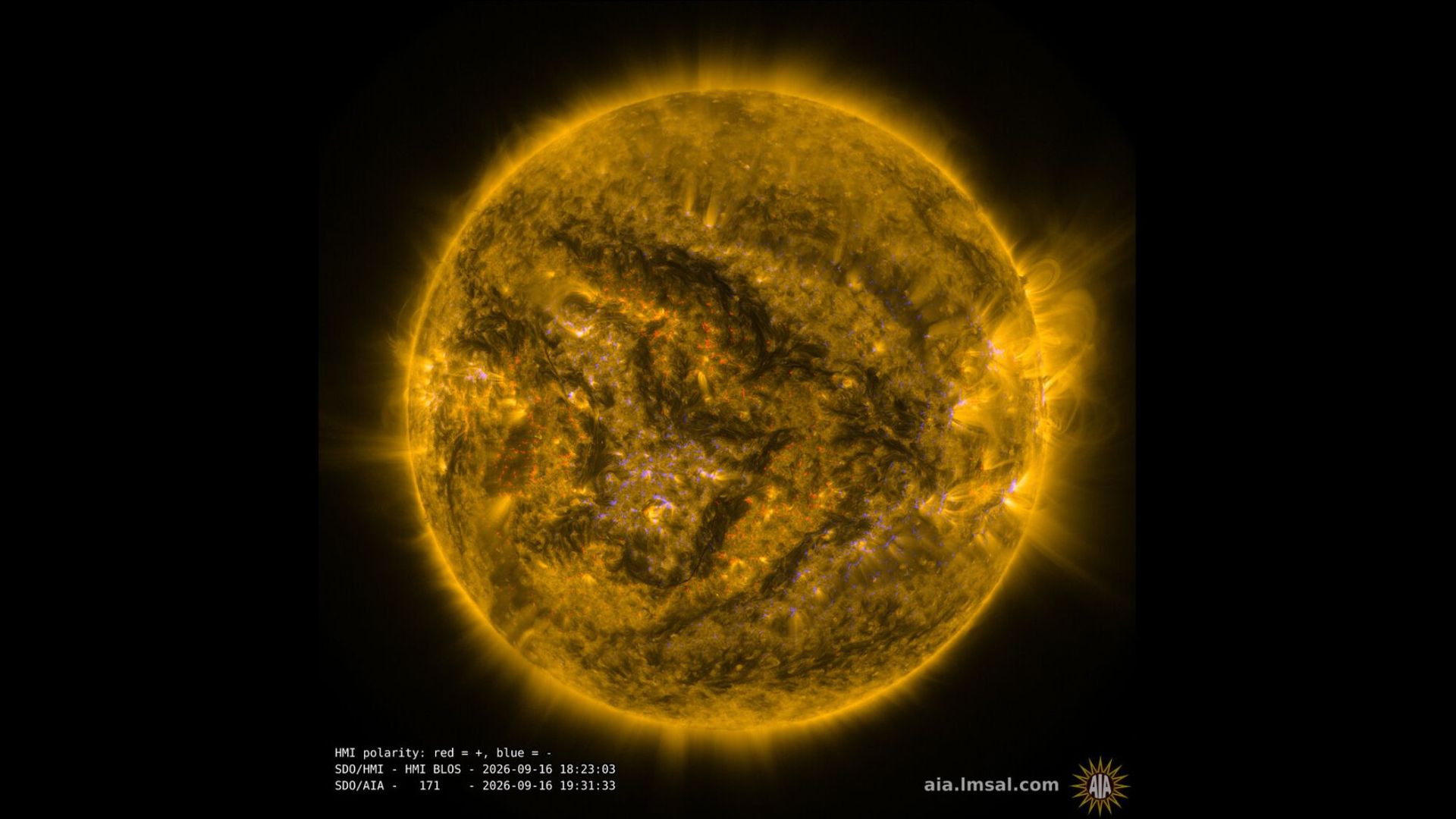
A view of a yellow sphere with some flares coming off of it.

Solar storms have been playing havoc with electrical technology on Earth since the 1840s. (Image credit: NASA/SDO)

The case reminds us that space weather has been a hazard to technology and modern systems for a long time, and isn't just a recent problem.

"Society has been experiencing the effects of space weather on technology for almost as long as electrical technologies have existed," said Wild.

The most dramatic example is the aforementioned Carrington event of 1859, representing the most significant solar storm on record as it caused telegraph poles to spark and battery power supplies to be disrupted. By this point, telegraph operators had grown used to electrical disturbances associated with auroral activity, but even the Carrington storm shocked them — quite literally in some cases, as extra current ran down the telegraph lines — with its ferocity. Should a similar event occur today, it would cause huge black outs, knock out power grids, disrupt communications and fry satellites.

"While today's space weather [monitoring] capabilities are far more advanced than anything available in the 1800s, the modern technologies we depend on are also much more vulnerable to solar storms," said Hapgood.

The current solar cycle 25 peaked in Oct. 2024 and we are just beginning to come out of an extended period of maximum activity. However, it remains to be seen how the rest of this cycle will play out before reaching solar minimum in about 2030. We've already seen severe geomagnetic storms caused by space weather in May 2024 — will we experience another powerful storm before the decade is out?

22 years of science! NASA’s Roman Space Telescope doubles its lifetime with super-precise engine burn

NASA's newly launched Nancy Grace Roman Space Telescope is set to extend its lifespan and double its exciting potential for discovery thanks to an efficient use of fuel on its way to its final orbit.

"As a result of exquisite planning by our orbital dynamics team, brilliant execution by the operations team, and a precise launch from SpaceX, Roman has fuel for at least 22 years of potential science operations," said Jamie Dunn, the center director at NASA's Goddard Space Flight Center, in a statement.

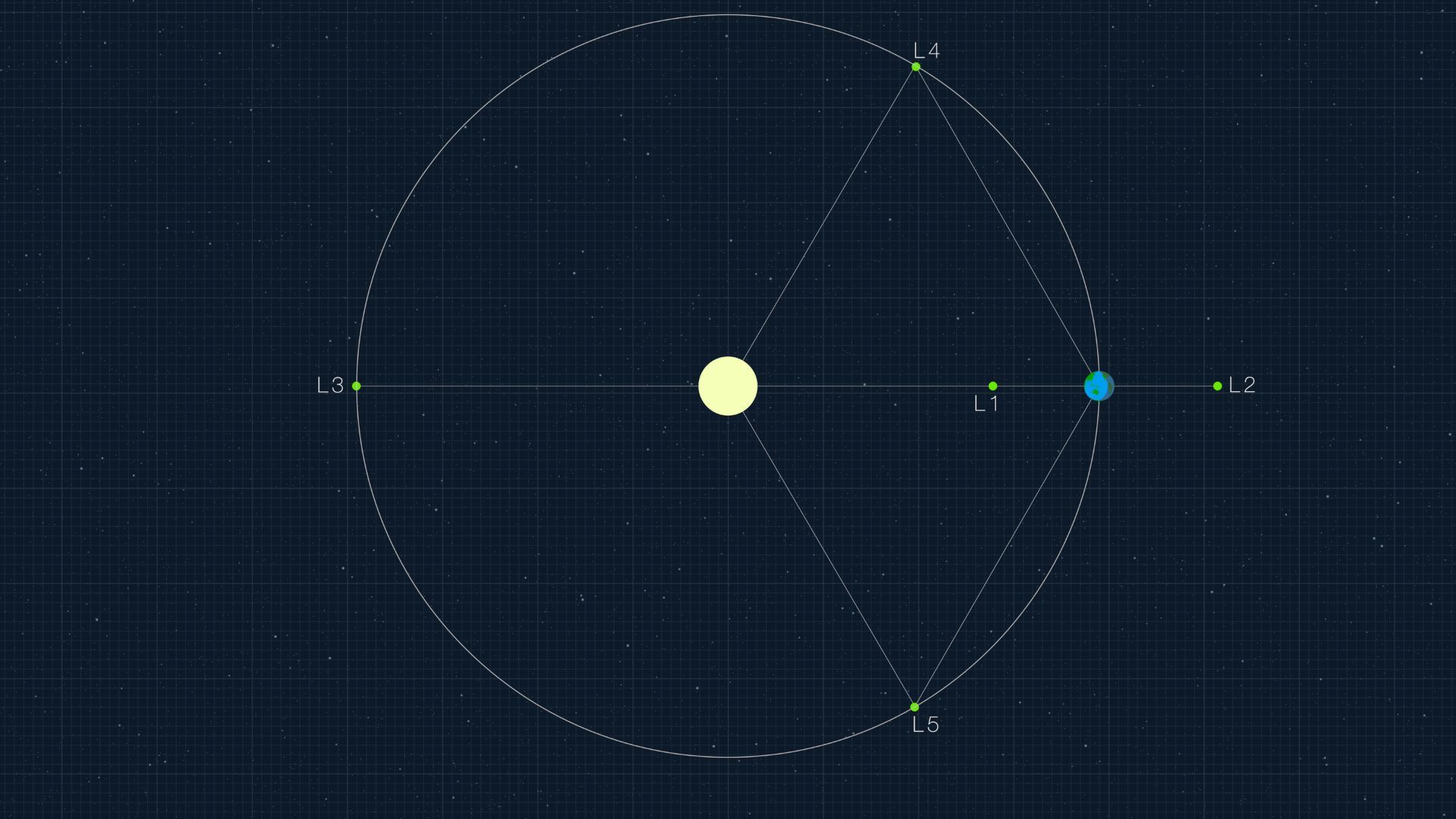
The space telescope, which launched from Cape Canaveral on Aug. 30 on a mission to measure dark energy and search for exoplanets, is headed to the L2 Lagrange point. There, it will join the likes of the James Webb Space Telescope on the opposite side of Earth to the sun. Its primary mission will last five years, and scientists were hoping for an additional five years if funding allowed.. Now, however, that potential extended mission could go on for a lot longer — and it's all thanks to the spacecraft coming in less massive than the original design had projected.

A diagram showing the Lagrange points.

The Lagrange points depicted in a diagram. (Image credit: NASA Goddard Space Flight Center Scientific Visualization Studio)

At the beginning of Roman's design process, the fuel capacity was chosen to permit a maximum mass of 21,605 pounds (9,800 kilograms), yet the finished spacecraft came in lighter at 17,760 pounds (8,065 kilograms). And because it was lighter, there was a surplus of available mass that could be used for more fuel.

"A spacecraft's mass changes throughout the design and build process, so we base the propellant on a set maximum value so we won't come up short," Alison Rao, who leads Roman's propulsion systems at NASA Goddard, said in the statement. "We track the propellant needed based on actual mass throughout integration and testing as well, to make sure we have wiggle room. Since Roman's [mass] was lower than we budgeted for, we were able to fill the propellant tanks to their capacity rather than only filling them as much as we needed to for the 10-year requirement."

The extra fuel loaded onto the telescope before launch meant it had enough for at least a 14-year mission. Then, within a day of launching, the space telescope had to fire its engine for three minutes to push it onto a trajectory to take it to L2. This engine burn was more precise and hence more efficient than anyone could have hoped for, sending Roman on its way to L2 with 99% accuracy. In doing so, it used only 40 pounds (18 kilograms) of fuel, which is less than 10% of the 441 pounds (200 kilograms) of fuel that had been budgeted for the maneuver. This is thought to have bought Roman an additional four years of life, bringing the tally to 18 years.

Then there's the added bonus. The precision with which the Aug. 31 engine burn was conducted means that the second course correction, required to take Roman into its orbit at L2 in early December, will also now require much less fuel. This will add yet another four years to Roman's operational lifetime, so long as nothing goes wrong with the telescope. Once in orbit at L2, only minor burns once every 28 days are needed for station keeping — a negligible amount of fuel.

In total, this observatory could be probing the final frontier and making incredible discoveries for at least the next 22 years, taking it up to 2048 at minimum. For the next two or three decades, we're going to be hearing a lot about the Nancy Grace Roman Space Telescope.

Making rocket fuel out of Mars’ thin air: New breakthrough could make it happen

Astronauts could travel back to Earth from Mars using rocket fuel converted directly from the carbon dioxide in the Red Planet's atmosphere, using a technique known as electrochemical reduction, a recent study reports.

It's an old method involving electrolysis, which is the application of an electrical current to drive a chemical reaction, but the new trick produces methane pure enough to be used as liquid propellant. (A number of rocket engines these days burn liquid oxygen and liquid methane — including the Raptors that power Starship, the rocket SpaceX is developing to help humanity get to Mars.)

"The work we're doing is basically taking CO2 and using electricity to convert it into carbon-containing fuels and chemicals," said Carter Racine in a statement. Racine is a Ph.D. student in mechanical engineering at Texas A&M University and a member of the study team, which was led by University of Mississippi chemical engineer Ahmed Badreldin.

"You can't bring up everything you need [on Mars] from Earth, because every additional kilogram adds enormous cost and complexity to launch and escape Earth's gravity," added Badreldin. "So the question becomes, How do we make the fuels and chemicals needed for space exploration from the resources already available at the destination?"

One answer is electrochemical reduction, which takes place in an electrolyzer, with electrons flowing from the negatively charged anode to the positively charged cathode. Water at the anode is oxidized, meaning it loses an electron, which is transferred to the carbon dioxide at the cathode, where one of its atoms gains an electron and becomes what chemists refer to as "reduced" (meaning its oxidation state is lowered). It can then react with the hydrogen and oxygen atoms that have split from the oxidized water molecules.

The anode contains a catalyst, and the choice of material for the catalyst dictates what carbon-based compounds are produced when the reduced carbon reacts with the hydrogen and oxygen. For example, a gold catalyst leads to the production of carbon monoxide (CO), while copper produces more complex compounds including alcohols, ethanol and methane (CH4).

What makes the work of Badreldin's team stand apart from previous experiments is that they have developed a nanometer-scale copper catalyst doped in nitrogen that is able to produce nearly pure methane.

Electrochemical reduction of carbon dioxide has been used to produce methane before, in applications on Earth. The problem is, those methods have produced a lot of byproducts alongside methane. On Earth we have complex equipment that separates the methane from the other unwanted compounds, but astronauts are not going to be able to take such unwieldy devices to Mars when every kilogram counts. That's a problem, because for methane to be used as a liquid propellant in rocket fuel it needs to be pure.

artist's illustration of a small human outpost on mars

NASA wants to send astronauts to Mars in the late 2030s or early 2040s. (Image credit: NASA)

However, the specific copper catalyst used by Badreldin's team is able to preferentially produce methane over other compounds, thereby creating it pure without having to refine it. And there's plenty of carbon dioxide available on Mars to use: While Mars' atmosphere is thin, it is nonetheless composed of 96% carbon dioxide.

Even if astronauts never go to Mars, the usefulness of this technique on Earth is clear. Rather than drilling for this natural gas, we can create methane from the carbon dioxide already in our atmosphere.

"We want to do that because right now many of these carbon-based products ultimately come from virgin fossil resources," said Racine. "If we can make them using captured CO2 and renewable electricity, it could reduce reliance on virgin fossil carbon and help close the carbon cycle."

Consequently, electrochemical reduction has also been suggested for use on Earth as a carbon sequestration technique, drawing carbon dioxide out of our atmosphere where it acts as an unwanted greenhouse gas.

The problem with that is, converting carbon dioxide into methane to be burned as a fuel simply releases that carbon dioxide straight back into the atmosphere in a net-zero cycle. Ideally, we want to lock that carbon dioxide away from the atmosphere for a long period of time, but Badreldin doesn't think the technology is ready yet.

"What we are ultimately interested in is seeing whether we can move beyond simply recycling CO2 and toward pathways that are net-negative," he said. "That means using CO2 as a carbon source while converting it into products where the carbon is stored or used long enough that it is not immediately released back into the atmosphere."

It should be noted that the best way to alleviate climate change is to cease burning all fossil fuels, including methane. However, using methane created from electrochemical carbon dioxide reduction in a net-zero process rather than drilling for it could help during the transition from fossil fuels to renewable resources.

The study reporting this research was published in April in the journal ACS Catalysis.

James Webb Space Telescope and Hubble discover 27 puzzling new objects orbiting the sun far beyond Neptune

The Hubble and James Webb space telescopes have teamed up to target some of the smallest, most distant objects in the solar system, discovering that the history of these tiny objects is more puzzling than we'd realized.

The two orbiting observatories collectively discovered 27 new Trans-Neptunian Objects, or TNOs, all less than 25 miles (40 kilometers) across, with the smallest being only 6 miles (10 kilometers) in diameter. As their name suggests, TNOs orbit the sun from far beyond Neptune. Some of them were born out there, at the dawn of the solar system, as small planetesimals unable to take the extra step to form planets.

Models of how these TNOs formed predicted that they should have been peppered with impacts that mixed up their surface material so that their composition, and therefore color, would be different than larger TNOs. Yet new observations, led by two PhD candidates, Anastasia Morgan of Northern Arizona University and Marielle Eduardo of the University of Victoria found the opposite – the little TNOs still look as pristine as the day they formed.

"You could imagine a scenario where getting knocked around and fragmented would change the surface composition, and then you would see a different surface color for tiny TNOs compared to their larger siblings," said Morgan, who led the color and composition analysis, in a statement. "So it's really fascinating to see that the smallest objects are somehow 'remembering' and preserving the history of how they were made."

TNOs native to the Kuiper Belt move in near-circular orbits around the sun and are level with the ecliptic plane, the imaginary flat 'disc' on which the planets and other objects orbit our star. They are said to be dynamically 'cold' because they haven't really budged since they formed.

Other TNOs, however, formed between the seventh and eighth planets, Uranus and Neptune, but before they could be assimilated into those worlds while those planets were growing, they were ejected by gravitational resonances into the region far beyond Neptune, collectively forming a 'Scattered Disk' of objects on highly elongated orbits significantly inclined to the plane of the solar system. Such TNOs are referred to as being dynamically 'hot'.

Yet even the 'hot' TNOs seem to have resisted any changes to their surface composition.

"These dynamically hot TNOs retain a signature of where they were born, even though they've been orbitally scrambled since then," said David Trilling of Northern Arizona University.

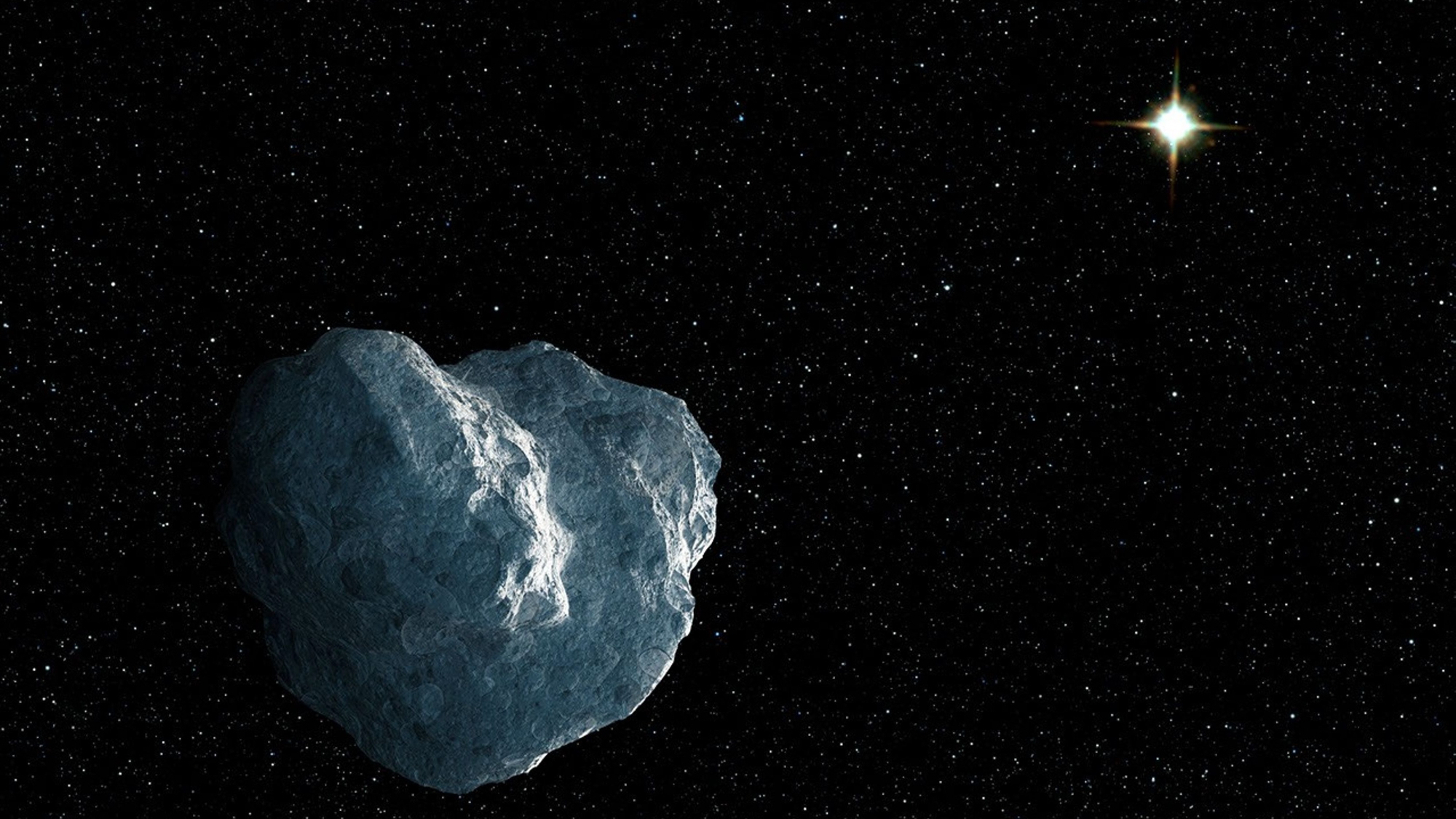
an irregularly-shaped rock on a starry background

An artist's interpretation of a trans-Neptunian object. (Image credit: Artwork: NASA, ESA, and G. Bacon (STScI); Science: NASA, ESA, and C. Fuentes (Harvard-Smithsonian Center for Astrophysics))

This leads to one of two surprising possibilities. Either there are far fewer impacts taking place far from the sun than astronomers thought, which doesn't match with what we think we know about the population density of objects out there, or the impacts and collisions do take place but for some reason do not tear up the surface of the small TNOs as much as we might expect.

Thanks to the James Webb Space Telescope's (JWST's) infrared vision, Marielle Eduardo was able to figure out the size distribution of the TNOs. When we look in visible light, how bright a TNO appears depends in part on how reflective its surface is, a property referred to as albedo. A larger body with a composition that isn't very reflective might appear fainter at the same distance as a smaller object covered in shiny ice.

However, at infrared wavelengths the brightness of an object is dependent mostly on its size, allowing accurate determinations of the diameters of the 27 TNOs. Surprisingly, there seem to be fewer of the very small TNOs than what models of their formation predict.

"It's very interesting that the process of planetesimal formation ends up producing the same distribution of sizes for both cold and hot populations, despite forming in different regions of the early solar system," said Eduardo. "The process seems to be insensitive to [planet-forming] disk conditions, producing similar planetesimal sizes whether the disk is hot or cold, and dense or fluffy."

These observations push Hubble's and JWST's abilities to the limit. The TNOs are incredibly faint, shining between magnitudes 24.1 and 29.3, described as being equivalent to seeing a swarm of fireflies on the moon from Earth. As such, it is the deepest survey yet into the relatively unknown realm beyond Neptune, just as you'd expect from these two powerful space telescopes getting together.

The research was published in The Astronomical Journal as two separate papers on Sept. 8, one on color and composition, the other on the size distribution of the TNOs.

Scientists discover mysterious new X-ray objects ‘unlike any they have seen before’

NASA's Chandra X-ray Observatory has found a brand new type of an otherwise familiar object – compact binary systems that steal gas from other stars, but which do so while emitting very low-energy X-rays but copious amounts of ultraviolet.

Chandra spotted 84 suspicious object emitting very low-energy X-rays in six galaxies – four evolved ellipticals and two spirals, namely our near-neighbor the Andromeda Galaxy (M31) and the Pinwheel Galaxy (M101).

"We've never encountered a group of objects that act like this," said Mustafa Muhibullah of the University of Alabama in a statement.

Compact objects, in the form of black holes, neutron stars and white dwarfs, are the remains of stars that have died. Their small size and powerful gravity means that they're adept at getting close to orbiting companion stars and ripping the stars' outer layers of gas away. The gas swirls around the compact object, falling onto its surface, and this accretionary process usually produces torrents of high-energy X-rays because the stolen gas becomes superheated by the compact object's gravitational vice-like grip.

Because of their weak X-rays, Muhibullah's team refer to them as 'hypersoft X-ray sources'. Since low-energy X-rays and ultraviolet light are next to each other on the electromagnetic spectrum, Muhibullah and his team suspect that the low-energy X-rays are spillover from objects emitting prodigious amounts of ultraviolet. Moreover, they think that these objects are lower-level compact binaries.

They're hard to find though, because the interstellar medium of hydrogen and helium gas between the stars absorbs ultraviolet light. This could be why we have yet to find any hypersoft X-ray sources in our own galaxy, because we have to look through the interstellar medium through the plane of the Milky Way.

Consequently, there could be a large population of hypersoft X-ray sources that remain undiscovered and they could have an important effect on the universe around them.

"These clandestine X-ray sources are actually among the most energetic objects in galaxies, and they could be solving two cosmic mysteries at once," said Muhibullah.

The interstellar medium is filled with ionized gas where atoms have been shorn of electrons. Hot, massive stars do output a lot of high-energy ultraviolet light, but there are not enough of these stars to account for all the ionization. If hypersoft X-ray sources are dumping torrents of ultraviolet into space, they could explain the ionization instead. For stars to form, gas has to be cold and not ionized, so hypersoft X-ray sources could be gently regulating star formation within galaxies.

The second mystery is the puzzle over how exactly type Ia supernova explosions detonate. We know that they are fueled by white dwarfs accreting matter from a close companion star and, once the accumulated matter raises the white dwarf's mass beyond 1.44 times the mass of our sun – known as the Chandrasekhar limit – it explodes, but the details of what on the white dwarf actually ignites and how are fuzzy.

Studying a new breed of compact binary might finally reveal the answers and offer more clues about when white dwarfs become ready to explode.

"If we could find a way to spot these type Ia supernova explosions before they go off, that would be really important," said Jimmy Irwin of the University of Alabama, who is a member of Muhibullah's team. "Right now, we study them after they've exploded and astronomers have struggled to understand what is actually ignited."

Since type Ia supernova explosions are used as markers on the cosmic distance ladder, used for measuring the strength of dark energy and the expansion of the Universe, the benefits from understanding them better are clear to see in our efforts to understand how the Universe is evolving.

The findings were published on Sept. 9 in Nature Astronomy.

Earth’s moon could have formed in just 5 hours after giant impact

The moon could have formed in a matter of hours following the giant impact between Earth and a Mars-size protoplanet early in the history of the solar system. The theory comes from new simulations that take into account how the internal temperature of young protoplanets affected their geologic properties and therefore the collisions they experienced.

This giant impact scenario has become the leading theory of how the moon formed, thanks in particular to work done by planetary scientist Robin Canup. Since 2001, she has conducted and refined numerous computer simulations that describe how a Mars-size body called Theia collided at an angle just right to throw debris into orbit around the proto-Earth.

Now other researchers are getting in on the act. Adeene Denton of the South-west Research Institute led a team who performed some of the most detailed simulations of the collision yet, taking into account more of the geologic properties of the colliding worlds.

"Models have evolved to include material strength, something that's really important when you're studying collisions between smaller bodies like asteroids or for my previous paper about the formation of the PlutoCharon system," said Denton in a statement. "We weren't sure it would matter for the moon or not. When we did the simulations, we found it actually matters quite a bit."

It turns out that warmer bodies are weaker than colder ones. After the planets formed, they were still hot inside from their formation, which would have affected their material strength. Given that the moon-forming impact occurred not long after the solar system's formation, this would have affected the collision with Theia — but to what degree depends on exactly when the collision occurred and how much Theia had cooled.

As Theia smashed into Earth, it was utterly destroyed. While much of what was left of Theia's shattered iron core sank into the Earth, a large ring of debris wrapped around Earth to form the moon.

The main effect of the temperature being warmer in the outer few hundred miles of Theia was that it would have affected its ability to deform upon impact and absorb the momentum of the collision. This, in turn, would have affected how debris was strewn around Earth to form the moon. Therefore, by including varying temperatures and material strengths in the simulations, Denton's team was able to get a better look at how the collision and the resulting formation of our moon played out.

Previous simulations have shown two possible scenarios. One is that the ring of debris hung around for a substantial amount of time, allowing the moon to accrete from it gradually. The other scenario, first depicted in NASA-led simulations in 2022, implies that the moon came together from this debris in a matter of hours.

Now, Denton's models potentially bolster this startling possibility.

If Theia was colder, meaning that the impact occurred a little later in the history of the solar system, perhaps 100 to 150 million years after the birth of the planets, then the ring of debris would have formed in such a way as to allow the moon to accrete gradually. And because it was stronger, more of Theia would have survived intact to merge with Earth.

On the other hand, a warmer Theia that impacted Earth less than 60 million years after the planets' formation, would create a scenario where the moon could form very quickly while Theia itself would be obliterated.

"Depending on how hot the Earth and Theia are prior to the collision, the impact can destroy Theia and produce this massive disk of debris that eventually forms the moon," said Denton. "But when I used the same parameters as original impact modeling – down to the equal temperature structures inside both bodies — within around five hours, an intact moon emerged."

That would have been quite a day in the history of our planet, acquiring a new moon and an almighty headache all at once.

"These surprising and exciting new results imply a potential connection between the physical properties of the moon today, including perhaps its volatile content, and the thermal state of the Earth and Theia at the time of the giant impact," said the Southwest Research Institute's Robin Canup, who was not involved in this study. "This in turn might help scientists better constrain when the moon-forming event occurred."

In both scenarios, the moon appears to be made mostly from Theia's mantle material, with just a little bit of Earth's mantle mixed in. This latter finding is surprising, given the similarities between the moon's composition and Earth's mantle. However, research has shown that there's clearly more to the story because despite the similarities there are also some puzzling differences in the levels of isotopes that cannot be easily explained by current simulations, including Denton's.

The simulations could have repercussions in the search for exomoons. If the moon did form in a matter of hours, then searching for exomoon-forming disks around terrestrial exoplanets might be a fruitless endeavor because such disks would be so short-lived. Moon-forming disks around gas giant exoplanets would be a different matter, however, because those disks do not form from impacts, but rather from material leftover from assembling those planets.

The results were published on Sept. 1 in The Astrophysical Journal Letters.