Graphene crowd-surfs on a lipid monolayer

Model of graphene on a lipid monolayer (credit: Universiteit Leiden)

“Crowd-surfing” on a smooth, supportive lipid monolayer, graphene could provide a versatile new platform for biosensors and drug delivery systems, researchers at Leiden University in The Netherlands have discovered.

Graphene is typically supported or sandwiched with other two-dimensional materials to promote higher mobility, ensure consistent electrical performance, and prevent environmental contamination. But combining graphene with soft, dynamic, molecular self-assembled lipid monolayers could provide a versatile platform for applications such as biosensors and drug delivery systems.

In research results published (open access) in a cover story in the journal Nanoscale on September 28, the authors note that the lipids (surprisingly) also improve graphene’s electrical conductivity. That could allow for measuring the electrical signals of graphene in the body for detecting acidity or the presence of certain proteins, for example.
This research was funded by the European Research Council, the Netherlands Organization for Scientific Research, and the Swiss National Science Foundation.

Abstract of Graphene-stabilized lipid monolayer heterostructures: a novel biomembrane superstructure

Chemically defined and electronically benign interfaces are attractive substrates for graphene and other two-dimensional materials. Here, we introduce lipid monolayers as an alternative, structurally ordered, and chemically versatile support for graphene. Deposition of graphene on the lipids resulted in a more ordered monolayer than regions without graphene. The lipids also offered graphene a more uniform and smoother support, reducing graphene hysteresis loop and the average value of the charge neutrality point under applied voltages. Our approach promises to be effective towards measuring experimentally biochemical phenomena within lipid monolayers and bilayers.

Synapse-like memristor-based electronic device detects brain spikes in real time

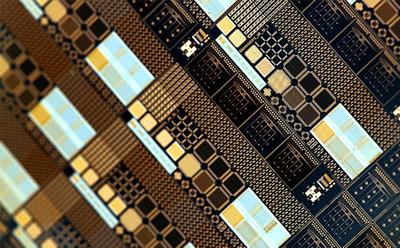
Memristor chip (credit: University of Southampton)

A bio-inspired electronic device called a memristor could allow for real-time processing of neuronal signals (spiking events), new research led by the University of Southampton has demonstrated.

The research could lead to using multi-electrode array implants for detecting spikes in the brain’s electrical signals from more than 1,000 recording channels to help treat neurological conditions, without requiring expensive, high-bandwidth, bulky systems for processing data. The research could lead to future autonomous, fully implantable neuroprosthetic devices.

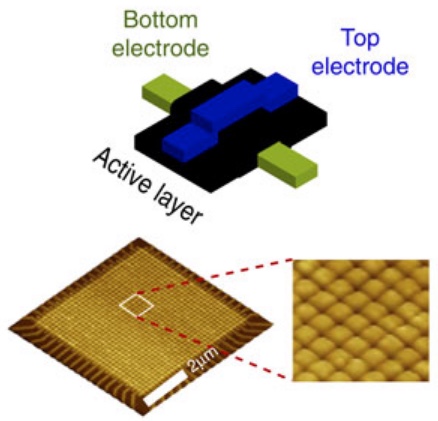
Schematic illustration of a solid-state titanium-oxide memristive device and atomic force microscopic (AFM) image a portion of a 32 × 32 crossbar array of memristors (credit: Isha Gupta/Nature Communications)

A memristors is an electronic component that limits or regulates the flow of electrical current in a circuit, can remember the amount of charge that was flowing through it, and retain that data, even when the power is turned off. The researchers used an array of memristors.

The research team designed a new nanoscale device they called a “memristive integrating sensor” (MIS) based on a memristors and associated electronic circuits for detecting spikes.*

Acting like synapses in the brain, the MIS was able to encode and compress (up to 200 times) neuronal spiking activity recorded by multi-electrode arrays. Besides addressing the bandwidth constraints, this approach was also very power-efficient; the power needed per recording channel was up to 100 times less when compared to current best practice.

The research was published in the open-access journal Nature Communications.

The Prodromakis Group at the University of Southampton collaborated among others with Leon Chua (a Diamond Jubilee Visiting Academic at the University of Southampton), who theoretically predicted the existence of memristors in 1971.

This interdisciplinary work was supported by an FP7 project (the European Union’s Research and Innovation funding) and brought together engineers from the Nanoelectronics and Nanotechnology Group at the University of Southampton with biologists from the University of Padova and the Max Planck Institute, Germany, using the state-of-art facilities of the Southampton Nanofabrication Centre.

* The paper explains that signals from an array of neural electrodes are fed into the MIS system as a series of voltage-time samples. “The MIS begins by pre-amplifying the incoming signal to voltage levels suitable for operating the memristor sitting at the core of the MIS and then proceeding to apply the pre-amplified signals to the memristor in real-time. The memristor’s resistive state is assessed periodically and when a significant change in comparison to the previous state is detected, the system registers a spiking event.”


Abstract of Real-time encoding and compression of neuronal spikes by metal-oxide memristors

Advanced brain-chip interfaces with numerous recording sites bear great potential for investigation of neuroprosthetic applications. The bottleneck towards achieving an efficient bio-electronic link is the real-time processing of neuronal signals, which imposes excessive requirements on bandwidth, energy and computation capacity. Here we present a unique concept where the intrinsic properties of memristive devices are exploited to compress information on neural spikes in real-time. We demonstrate that the inherent voltage thresholds of metal-oxide memristors can be used for discriminating recorded spiking events from background activity and without resorting to computationally heavy off-line processing. We prove that information on spike amplitude and frequency can be transduced and stored in single devices as non-volatile resistive state transitions. Finally, we show that a memristive device array allows for efficient data compression of signals recorded by a multi-electrode array, demonstrating the technology’s potential for building scalable, yet energy-efficient on-node processors for brain-chip interfaces.

How to send secure passwords through your body instead of air

Potential applications for on-body transmissions include securely sending information to door locks, glucose sensors, or other wearable medical devices. (credit: Vikram Iyer, University of Washington)

University of Washington computer scientists and electrical engineers have devised a way to send secure passwords through the human body, using benign, low-frequency transmissions already generated by fingerprint sensors and touchpads on consumer devices.

“Let’s say I want to open a door using an electronic smart lock,” said Merhdad Hessar, a UW electrical engineering doctoral student and co-lead author of a paper presented in September at the 2016 Association for Computing Machinery’s International Joint Conference on Pervasive and Ubiquitous Computing (UbiComp 2016) in Germany. “I can touch the doorknob and touch the fingerprint sensor on my phone and transmit my secret credentials through my body to open the door, without leaking that personal information over the air.”

Secure on-body transmissions

These “on-body” transmissions offer a more secure way to transmit authenticating information between devices that touch parts of your body — such as a wearable medical device — and a phone or device that confirms your identity by asking you to type in a password.

The technology could also be useful for secure key transmissions to medical devices which seek to confirm someone’s identity before sending or sharing data, such as glucose monitors or insulin pumps.

The research team tested the technique on iPhone and other fingerprint sensors, as well as Lenovo laptop trackpads and the Adafruit capacitive touchpad. In tests with ten different subjects, they were able to generate usable on-body transmissions on people of different heights, weights and body types. The system also worked when subjects were in motion, including while they walked and moved their arms.

The researchers showed that it works in different postures like standing, sitting and sleeping, and they can get a strong signal throughout your body, with receivers on any part of the body.

Reverse-engineering and repurposing smartphone sensors

The research team from the UW’s Networks and Mobile Systems Lab systematically analyzed smartphone sensors to understand which of them generates low-frequency transmissions below 30 megahertz (which travel well through the human body but don’t propagate over the air).

The researchers found that fingerprint sensors and touchpads generate signals in the 2 to 10 megahertz range and employ capacitive coupling to sense where your finger is in space and to identify the ridges and valleys that form unique fingerprint patterns.

Normally, sensors use these signals to receive input about your finger. But the UW engineers devised a way to use these signals as output that corresponds to data contained in a password or access code. When entered on a smartphone, data that authenticates your identity can travel securely through your body to a receiver embedded in a device that needs to confirm who you are.

Their process employs a sequence of finger scans to encode and transmit data. Performing a finger scan correlates to a 1-bit of digital data and not performing the scan correlates to a 0-bit. The team achieved bit rates of 50 bits per second on laptop touchpads and 25 bits per second with fingerprint sensors — fast enough to send a simple password or numerical code through the body and to a receiver within seconds.

This represents only a first step, the researchers say. Data can be transmitted through the body even faster if fingerprint sensor manufacturers provide more access to their software.

The research was funded by the Intel Science and Technology Center for Pervasive Computing, a Google faculty award and the National Science Foundation.

For more information, contact the research team at onbody@cs.washington.edu.


Abstract of Enabling on-body transmissions with commodity devices

We show for the first time that commodity devices can be used to generate wireless data transmissions that are confined to the human body. Specifically, we show that commodity input devices such as fingerprint sensors and touchpads can be used to transmit information to only wireless receivers that are in contact with the body. We characterize the propagation of the resulting transmissions across the whole body and run experiments with ten subjects to demonstrate that our approach generalizes across different body types and postures. We also evaluate our communication system in the presence of interference from other wearable devices such as smartwatches and nearby metallic surfaces. Finally, by modulating the operations of these input devices, we demonstrate bit rates of up to 50 bits per second over the human body.

IBM announces AI-powered decision-making

Project DataWorks predictive model (credit: IBM)

IBM today announced today Watson-based “Project DataWorks,” the first cloud-based data and analytics platform to integrate all types of data and enable AI-powered decision-making.

Project DataWorks is designed to make it simple for business leaders and data professionals to collect, organize, govern, and secure data, and become a “cognitive business.”

Achieving data insights is increasingly complex, and most of this work is done by highly skilled data professionals who work in silos with disconnected tools and data services that may be difficult to manage, integrate, and govern, says IBM. Businesses must also continually iterate their data models and products — often manually — to benefit from the most relevant, up-to-date insights.

IBM says Project DataWorks can help businesses break down these barriers by connecting all data and insights for their users into an integrated, self-service platform.

Available on Bluemix, IBM’s Cloud platform, Project DataWorks is designed to help organizations:

  • Automate the deployment of data assets and products using cognitive-based machine learning and Apache Spark;
  • Ingest data faster than any other data platform, from 50 to hundreds of Gbps, and all endpoints: enterprise databases, Internet of Things, weather, and social media;
  • Leverage an open ecosystem of more than 20 partners and technologies, such as Confluent, Continuum Analytics, Galvanize, Alation, NumFOCUS, RStudio, Skymind, and more.


Elon Musk unveils plans for Mars civilization

(credit: SpaceX)

In a talk on Tuesday at the International Astronautical Congress in Guadalajara, Mexico, SpaceX CEO Elon Musk laid out engineering details to establish a permanent, self-sustaining civilization of a million people on Mars, with an initial flight as soon as 2024.

SpaceX is designing a massive reusable Interplanetary Transport System spacecraft with cabins. The trip would initially cost $500,000 per person, with a long-term goal of 100 passengers per trip.

Musk plans to make humanity a “multiplanetary species” to ensure survival in case of a calamity like an asteroid strike. “This is really about minimizing existential risk and having a tremendous sense of adventure,” he said.

Artist’s impression of Interplanetary Transport System on Europa (note humans for scale) (credit: SpaceX)

The new rocket could also be used for other interplanetary trips to places like Europa, the icy moon of Jupiter.

(credit: SpaceX)


SpaceX | SpaceX Interplanetary Transport System


Space X | Making Humans a Multiplanetary Species


D-Wave Systems previews 2000-qubit quantum processor

D-Wave 2000-qubit processor (credit: D-Wave Systems)

D-Wave Systems announced Tuesday (Sept. 28, 2016) a new 2000-qubit processor, doubling the number of qubits over the previous-generation D-Wave 2X system. The new system will enable larger problems to be solved and performance improvements of up to 1000 times.

D-Wave’s quantum system runs a quantum-annealing algorithm to find the lowest points in a virtual energy landscape representing a computational problem to be solved. The lowest points in the landscape correspond to optimal or near-optimal solutions to the problem. The increase in qubit count enables larger and more difficult problems to be solved, and the ability to tune the rate of annealing of individual qubits will enhance application performance.

According to D-Wave, users will be able to tune the quantum computational process to solve problems faster and find more diverse solutions when they exist. They will have the ability to sample the state of the quantum computer during the quantum annealing process, which will power hybrid quantum-classical machine learning algorithms that were not possible before.

The system will also allow for combining quantum processing with classical processing, improving the quality of optimization and sampling results returned from the system.

D-Wave’s first users conference, being held on September 28–29 in Santa Fe, New Mexico, features speakers from Los Alamos National Laboratory, NASA, Lockheed Martin, the Roswell Park Cancer Center, Oak Ridge National Laboratory, USC, and D-Wave, and a number of quantum software and services companies.

A thought-controlled robotic exoskeleton for the hand

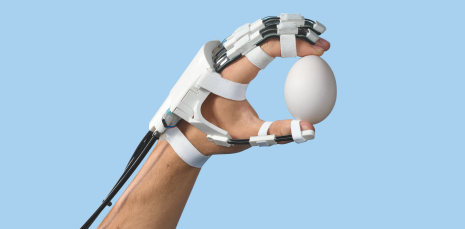
A robotic hand exoskeleton helps stroke patients integrate rehabilitation exercises into their everyday lives. (credit: Gerber Loesch Photography)

Scientists at ETH Rehabilitation Engineering Laboratory in Switzerland have invented a robotic system that they say could fundamentally change the daily lives of stroke patients.

According to the ETH scientists, one in six people will suffer a stroke in their lifetime; two thirds of those affected suffer from paralysis of the arm. Intensive clinical training, including robot-assisted therapy, can help patients regain a degree of limited control over their arms and hands.

But now Roger Gassert, Professor of Rehabilitation Engineering at ETH Zurich, has a better idea. “My vision is that instead of performing exercises in an abstract situation at the clinic, patients will be able to integrate them into their daily life at home, supported in some cases by a robot” — using an exoskeleton mounted on the hand.

A lightweight exoskeleton that extends the patient’s hand

The problem: existing exoskeletons are heavy, so patients can’t lift their hands, Gassert says, and patients have difficulty feeling objects and exerting the right amount of force. “That’s why we wanted to develop a model that leaves the palm of the hand more or less free, allowing patients to perform daily activities that support not only motor (movement) functions but somatosensory functions as well.”

The initial solution, developed with Professor Jumpei Arata from Kyushu University (Japan), was a mechanism for the finger featuring three overlapping leaf springs. A motor moves the middle spring, which transmits the force to the different segments of the finger through the other two springs. The fingers thus automatically adapt to the shape of the object the patient wants to grasp. But the motors brought the weight of the exoskeleton to 250 grams, which in clinical tests proved too heavy for patients.

The new solution: remove the motors from the hand and fix them to the patient’s back. The force is transmitted to the exoskeleton using a bicycle brake cable. The hand module now weighs slightly less than 120 grams and is strong enough to lift a liter bottle of mineral water.

A hand exoskeleton with motors that can be fixed to the patient’s back: A bicycle brake cable transmits enough force to lift a liter bottle of mineral water. (credit: Stefan Schneller)

Strengthening existing neural connections between brain and hand

Another problem was making sure commands from the brain can reach the extremities after a stroke. “Especially with seriously affected patients, the connection between the brain and the hand is often severely or completely disrupted,” Gassert explains.

The idea is to enable the brain to detect a patient’s intention to move his or her hand and directly pass this information on to the exoskeleton.

Gassert says a number of studies show that it is possible to strengthen existing neural connections between the brain and the hand with regular exercise if the brain can receive somatosensory feedback from the hand when it produces a command to move.

Gassert is using electroencephalography (EEG) and functional near-infrared spectroscopy (fNIRS) to study this. An interaction between the brain and the exoskeleton could lead to a device that is ideally suited for therapy — without requiring brain implants.

Even if the deficits are permanent, a robotic device could still offer vital long-term support.

Smoking leaves ‘footprint’ in DNA

(credit: American Heart Association)

Smoking leaves its “footprint” on the human genome in the form of DNA methylation, a process that affects what genes are turned on, according to new research in Circulation: Cardiovascular Genetics, an American Heart Association journal.

The new findings could provide researchers with potential targets for new therapies.

“These results are important because methylation, as one of the mechanisms of the regulation of gene expression, affects what genes are turned on, which has implications for the development of smoking-related diseases, said Stephanie J. London, M.D., Dr.P.H., last author and deputy chief of the Epidemiology Branch at the National Institute of Environmental Health Sciences, National Institutes of Health, Research Triangle Park, North Carolina. “Even after someone stops smoking, we still see the effects of smoking on their DNA.”

The good news (for some): most DNA methylation sites returned to levels seen in never-smokers within five years of quitting smoking

Smoking remains the leading preventable cause of death worldwide. Even decades after stopping, former smokers are at long-term risk of developing diseases including some cancers, chronic obstructive pulmonary disease, and stroke. While the molecular mechanisms responsible for these long-term effects remain poorly understood, previous studies linking DNA methylation sites to genes involved with coronary heart disease and pulmonary disease suggest it may play an important role.

To find out more, researchers conducted a meta-analysis of DNA methylation sites across the human genome using blood samples taken from nearly 16,000 participants from 16 groups of the Cohorts for Heart and Aging Research in Genetic Epidemiology (CHARGE) Consortium, including a group of the Framingham Heart Study that has been followed by researchers since 1971.

The researchers compared DNA methylation sites in current and former smokers to those who never smoked. They found:

  • Smoking-associated DNA methylation sites were associated with more than 7,000 genes, or one-third of known human genes.
  • For people who stopped smoking, the majority of DNA methylation sites returned to levels seen in never-smokers within five years of quitting smoking. However, some DNA methylation sites persisted even after 30 years of quitting.
  • The most statistically significant methylation sites were linked to genes enriched for association with numerous diseases caused by cigarette smoking, such as cardiovascular diseases and certain cancers, suggesting that some of these long-lasting methylation sites may be marking genes potentially important for former smokers who are still at increased risk of developing certain diseases.

The discovery of smoking-related DNA methylation sites raises the possibility of developing biomarkers to evaluate a patient’s smoking history, as well as potentially developing new treatments targeted toward these methylation sites. However, the main analysis was not designed to examine effects over long periods of time.


Abstract of Epigenetic Signatures of Cigarette Smoking

Background — DNA methylation leaves a long-term signature of smoking exposure and is one potential mechanism by which tobacco exposure predisposes to adverse health outcomes, such as cancers, osteoporosis, lung, and cardiovascular disorders.

Methods and Results — To comprehensively determine the association between cigarette smoking and DNA methylation, we conducted a meta-analysis of genome-wide DNA methylation assessed using the Illumina BeadChip 450K array on 15,907 blood derived DNA samples from participants in 16 cohorts (including 2,433 current, 6,518 former, and 6,956 never smokers). Comparing current versus never smokers, 2,623 CpG sites (CpGs), annotated to 1,405 genes, were statistically significantly differentially methylated at Bonferroni threshold of p

Conclusions — Cigarette smoking has a broad impact on genome-wide methylation that, at many loci, persists many years after smoking cessation. Many of the differentially methylated genes were novel genes with respect to biologic effects of smoking, and might represent therapeutic targets for prevention or treatment of tobacco-related diseases. Methylation at these sites could also serve as sensitive and stable biomarkers of lifetime exposure to tobacco smoke.

How to watch the US presidential debates in VR

NBC has teamed with AltSpaceVR to stream the U.S. presidential debate Monday night Sept. 26 live in virtual reality for HTC Vive, Oculus Rift, and Samsung Gear VR devices.

Or as late-night comic Jimmy Fallon put it, “If you’re wearing a VR headset, it will be like the candidates are lying right to your face.”

You’ll be watching the debate on a virtual screen in NBC’s “Virtual Democracy Plaza.” AltSpaceVR will also stream three other debates and Election Night on Nov. 8, as well as other VR events. You can also host your own debate watch party and make it public or friends-only.

NBC plans to host related VR events running up to the elections, including watch parties for debates, Q&A sessions with political experts, and political comedy shows.

To participate, download the AltSpace VR app for Vive, Rift, or Gear VR; also available in 2D mode for PC, Mac, Netflix, YouTube, and Twitch.

The debates will also be livestreamed on YouTube, and by Twitter (partnering with Bloomberg) and Facebook, partnering with ABC News.