A self-assembling molecular nanoswitch

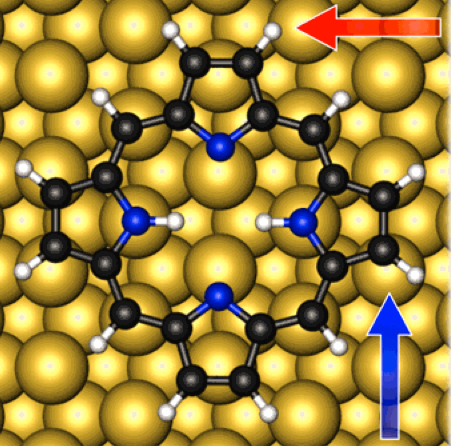
Molecular nanoswitch: calculated adsorption geometry of porphine adsorbed at copper bridge site  (credit: Moritz Müller et al./J. Chem. Phys.)

Technical University of Munich (TUM) researchers have simulated a self-assembling molecular nanoswitch in a supercomputer study.

As with other current research in bottom-up self-assembly nanoscale techniques, the goal is to further miniaturize electronic devices, overcoming the physical limits of currently used top-down procedures such as photolithography.

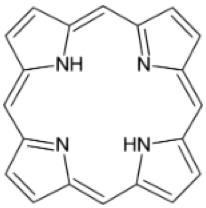
The new TUM research focuses on porphine (C20H14N4, the simplest form of porphyrin* organic molecules), interacting on copper and silver surfaces to form a single-porphyrin switch that occupies a surface area of only one square nanometer (porphine itself is much smaller). Porphyrins have potential applications in molecular memory devices, photovoltaics, gas sensors, light emission, and catalysis, the researchers note.

Structure of a porphine molecule (credit: Moritz  Müller et al./J. Chem. Phys.)

In their simulation, the researchers placed porphine molecules on a copper or silver slab. After finding the optimal geometry in which the molecules would adsorb on the surface, the researchers altered the size of the metal slab to increase or decrease the distance between molecules to simulate different molecular coverages.

The researchers found that weak long-range van der Waals (attractive or repulsive forces between molecules or atomic groups that do not arise from interactions due to a covalent bond or electrostatic force) yielded the largest contribution to the molecule-surface interaction.

The study was published last week in The Journal of Chemical Physics.

* Porphyrins are a group of ringed chemical compounds which notably include heme — responsible for transporting oxygen and carbon dioxide in the bloodstream — and chlorophyll. Porphyrins are studied in the lab for their potential uses as sensors, light-sensitive dyes in organic solar cells, and molecular magnets. The close-packed single crystal surfaces of copper and silver, are widely used as substrates in surface science. This is due to the densely packed nature of the surfaces, which allow the molecules to exhibit a smooth adsorption environment. Additionally, copper and silver each react differently with porhyrins. These molecules adsorb more strongly on copper, whereas silver does a better job of keeping the electronic structure of the molecule intact — allowing the researchers to monitor a variety of competing effects for future applications.


Abstract of Interfacial charge rearrangement and intermolecular interactions: Density-functional theory study of free-base porphine adsorbed on Ag(111) and Cu(111)

We employ dispersion-corrected density-functional theory to study the adsorption of tetrapyrrole 2H-porphine (2H-P) at Cu(111) and Ag(111). Various contributions to adsorbate-substrate and adsorbate-adsorbate interactions are systematically extracted to analyze the self-assembly behavior of this basic building block to porphyrin-based metal-organic nanostructures. This analysis reveals a surprising importance of substrate-mediated van der Waals interactions between 2H-P molecules, in contrast to negligible direct dispersive interactions. The resulting net repulsive interactions rationalize the experimentally observed tendency for single molecule adsorption.

‘Bubble pen’ can precisely write patterns with nanoparticles as small as 1 nanometer

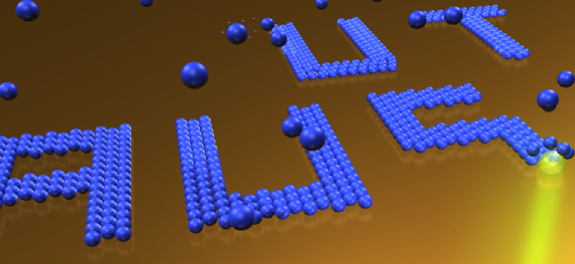
Illustration of the bubble-pen pattern-writing process using an optically controlled microbubble on a plasmonic substrate. The small blue spheres are colloidal nanoparticles. (credit: Linhan Lin et al./Nano Letters)

Researchers in the Cockrell School of Engineering at The University of Texas at Austin have created “bubble-pen lithography” — a  device and technique to quickly, gently, and precisely use microbubbles to “write” using gold, silicon and other nanoparticles between 1 and 100 nanometers in size as “ink” on a surface.

The new technology is aimed at allowing researchers to more easily build tiny machines, biomedical sensors, optical computers, solar panels, and other devices.

Existing lithography methods, which are used to etch or pattern materials on a substrate, are not capable of fixing nanoparticles to a specific location with precise and arbitrary control, and have optical-dimension limits. Those methods also require more resources and a clean-room environment.

Creating laser-controlled nanopatterns

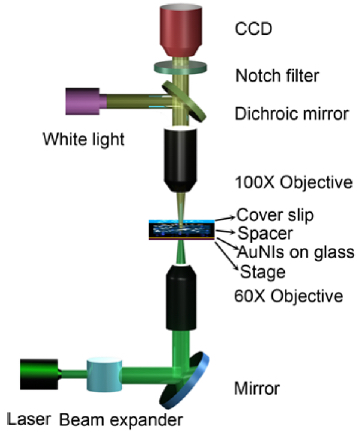
Experimental bubble-pen-lithography setup. A focused laser beam generates and positions a microbubble on a plasmonic substrate. A colloidal nanoparticle is dragged toward the microbubble, trapped on the bubble/water interface, and eventually immobilized on the substrate in the desired location. (credit: Linhan Lin et al./Nano Letters)

Using a design software program, bubble-pen lithography can deposit nanoparticles in real time in a pre-programmed pattern or design, similar to how 3-D printers work.

The researchers focus a laser to generate a hotspot that creates a microbubble out of vaporized water. The bubble attracts and captures a nanoparticle through a combination of gas pressure, thermal and surface tension, surface adhesion and convection.

The laser then steers the microbubble to move the nanoparticle on a site on the surface. When the laser is turned off, the microbubble disappears, leaving the particle on the surface. If necessary, the researchers can expand or reduce the size of the microbubble by increasing or decreasing the laser beam’s power.

The technique could be especially helpful for science and medicine because researchers would be able to precisely control cells, biological material, bacteria, or viruses for study and testing, said research team leader assistant professor Yuebing Zheng.

Other uses include testing prototypes and ideas for devices and materials more quickly, and eventually, large-scale, low-cost manufacturing of nanomaterials and devices.

Zheng is also planning to develop a portable version of the technique that works like a mobile phone for use in prototyping and disease diagnosis.

The researchers describe their patented device and technique in a paper published in the Jan. 13 issue of Nano Letters. The research received funding from the Beckman Young Investigator Award.


Cockrell School of Engineering | Engineers at the Cockrell School of Engineering show bubble-pen lithography in action, including generating a microbubble and depositing nanoparticles.


Abstract of Bubble-Pen Lithography

Current lithography techniques, which employ photon, electron, or ion beams to induce chemical or physical reactions for micro/nano-fabrication, have remained challenging in patterning chemically synthesized colloidal particles, which are emerging as building blocks for functional devices. Herein, we develop a new technique - bubble-pen lithography (BPL) – to pattern colloidal particles on substrates using optically controlled microbubbles. Briefly, a single laser beam generates a microbubble at the interface of colloidal suspension and a plasmonic substrate via plasmon-enhanced photothermal effects. The microbubble captures and immobilizes the colloidal particles on the substrate through coordinated actions of Marangoni convection, surface tension, gas pressure, and substrate adhesion. Through directing the laser beam to move the microbubble, we create arbitrary single-particle patterns and particle assemblies with different resolutions and architectures. Furthermore, we have applied BPL to pattern CdSe/ZnS quantum dots on plasmonic substrates and polystyrene (PS) microparticles on two-dimensional (2D) atomic-layer materials. With the low-power operation, arbitrary patterning and applicability to general colloidal particles, BPL will find a wide range of applications in microelectronics, nanophotonics, and nanomedicine.

Microbots individually controlled using magnetic fields

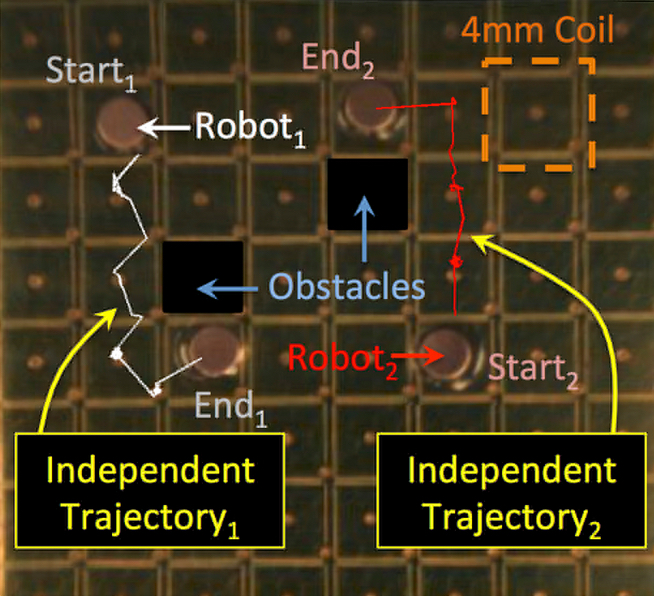
This image shows how two microbots can be independently controlled when operating within a group. (Purdue University image/David Cappelleri)

Purdue University researchers have developed a method to use magnetic fields to independently control individual microrobots operating within groups.

The design allows for each microbot to work independently while operating in groups, similar to how ants work.  Until now, it was generally only possible to control groups of microbots to move generally in unison, said David Cappelleri, an assistant professor of mechanical engineering at Purdue.

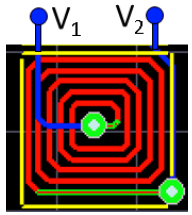
The magnetic coils were made by printing a copper pattern with the same technology used to manufacture printed circuit boards. (credit: Sagar Chowdhury et al./Micromachines)

The solution: an array of tiny coils that generate attractive or repulsive magnetic forces to move the microbots, which are magnetic disks that slide across the surface. (The microbots are currently about 2 millimeters in diameter, but the researchers plan to create microbots that are around 250 micrometers, 0.25 millimeters, in diameter.)

Applications could include microelectromechanical systems for additive manufacturing, cell sorting, cell manipulation, and cancer cell detection in a biopsy (cancer cells have different stiffness characteristics than non-cancer cells), Cappelleri said.

The National Science Foundation funded the research, which was described in an open-access paper appearing this month in the journal Micromachines.


Purdue University | Localized Magnetic Field Control for Microrobots


Abstract of Towards Independent Control of Multiple Magnetic Mobile Microrobots

In this paper, we have developed an approach for independent autonomous navigation of multiple microrobots under the influence of magnetic fields and validated it experimentally. We first developed a heuristics based planning algorithm for generating collision-free trajectories for the microrobots that are suitable to be executed by an available magnetic field. Second, we have modeled the dynamics of the microrobots to develop a controller for determining the forces that need to be generated for the navigation of the robots along the trajectories at a suitable control frequency. Next, an optimization routine is developed to determine the input currents to the electromagnetic coils that can generate the required forces for the navigation of the robots at the controller frequency. We then validated our approach by simulating an electromagnetic system that contains an array of sixty-four magnetic microcoils designed for generating local magnetic fields suitable for simultaneous independent actuation of multiple microrobots. Finally, we prototyped an m m -scale version of the system and present experimental results showing the validity of our approach.

Why doesn’t my phone understand me yet?

A computer would have a hard time understanding this conversation, but humans get it immediately. That’s because human communicators share a conceptual space or common ground that enables them to quickly interpret a situation. (credit for Edward Hopper’s Nighthawks artwork: the Art Institute of Chicago)

Because machines can’t develop a shared understanding of the people, place and situation — often including a long social history, the key to human communication) — say University of California, Berkeley, postdoctoral fellow Arjen Stolk and his Dutch colleagues.

In other words, machines don’t consider the context of a conversation the way people do.

The word “bank,” for example, would be interpreted one way if you’re holding a credit card but a different way if you’re holding a fishing pole, says Stolk. “Without context, making a ‘V’ with two fingers could mean victory, the number two, or ‘these are the two fingers I broke.’”

Stolk argues that scientists and engineers should focus more on the contextual aspects of mutual understanding, basing his argument on experimental evidence from brain scans that humans achieve nonverbal mutual understanding using unique computational and neural mechanisms. Some of the studies Stolk has conducted suggest that a breakdown in mutual understanding is also behind social disorders such as autism.

Brain scans pinpoint site for “meeting of minds”
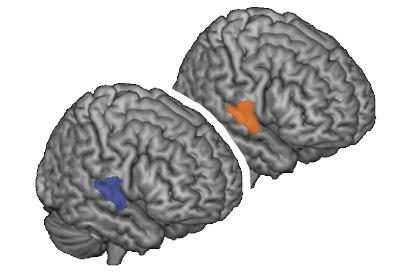
As two people conversing rely more and more on previously shared concepts, the same area of their brains — the right superior temporal gyrus — becomes more active (blue is activity in communicator, orange is activity in interpreter). This suggests that this brain region is key to mutual understanding as people continually update their shared understanding of the context of the conversation to improve mutual understanding. (credit: Arjen Stolk, UC Berkeley)

To explore how brains achieve mutual understanding, Stolk created a game that requires two players to communicate the rules to each other solely by game movements, without talking or even seeing one another, eliminating the influence of language or gesture. He then placed both players in an fMRI (functional magnetic resonance imager) and scanned their brains as they non-verbally communicated with one another via computer.

He found that the same regions of the brain — located in the poorly understood right temporal lobe, just above the ear — became active in both players during attempts to communicate the rules of the game. Critically, the superior temporal gyrus of the right temporal lobe maintained a steady, baseline activity throughout the game but became more active when one player suddenly understood what the other player was trying to communicate. The brain’s right hemisphere is more involved in abstract thought and social interactions than the left hemisphere.

“These regions in the right temporal lobe increase in activity the moment you establish a shared meaning for something, but not when you communicate a signal,” Stolk said. “The better the players got at understanding each other, the more active this region became.”

This means that both players are building a similar conceptual framework in the same area of the brain, constantly testing one another to make sure their concepts align, and updating only when new information changes that mutual understanding. The results were reported in 2014 in the Proceedings of the National Academy of Sciences.

“It is surprising,” said Stolk, “that for both the communicator, who has static input while she is planning her move, and the addressee, who is observing dynamic visual input during the game, the same region of the brain becomes more active over the course of the experiment as they improve their mutual understanding.”

Statistical reasoning vs. human reasoning

Robots and computers, on the other hand, converse based on a statistical analysis of a word’s meaning, Stolk said. If you usually use the word “bank” to mean a place to cash a check, then that will be the assumed meaning in a conversation, even when the conversation is about fishing.

“Apple’s Siri focuses on statistical regularities, but communication is not about statistical regularities,” he said. “Statistical regularities may get you far, but it is not how the brain does it. In order for computers to communicate with us, they would need a cognitive architecture that continuously captures and updates the conceptual space shared with their communication partner during a conversation.”

Hypothetically, such a dynamic conceptual framework would allow computers to resolve the intrinsically ambiguous communication signals produced by a real person, including drawing upon information stored years earlier.

Stolk’s studies have pinpointed other brain areas critical to mutual understanding. In a 2014 study, he used brain stimulation to disrupt a rear portion of the temporal lobe and found that it is important for integrating incoming signals with knowledge from previous interactions.

A later study found that in patients with damage to the frontal lobe (the ventromedial prefrontal cortex), decisions to communicate are no longer fine-tuned to stored knowledge about an addressee. Both studies could explain why such patients appear socially awkward in everyday social interactions.

“Most cognitive neuroscientists focus on the signals themselves, on the words, gestures and their statistical relationships, ignoring the underlying conceptual ability that we use during communication and the flexibility of everyday life,” he said. “Language is very helpful, but it is a tool for communication, it is not communication per se. By focusing on language, you may be focusing on the tool, not on the underlying mechanism, the cognitive architecture we have in our brain that helps us to communicate.”

Stolk and his colleagues discuss the importance of conceptual alignment for mutual understanding in an opinion piece appearing Jan. 11 in the journal Trends in Cognitive Sciences, in hopes of moving the study of communication to a new level, with a focus on conceptual alignment.

Stolk’s co-authors are Ivan Toni of the Donders Institute for Brain, Cognition and Behavior at Radboud University in the Netherlands, where the studies were conducted, and Lennart Verhagen of the University of Oxford.


Abstract of Conceptual Alignment: How Brains Achieve Mutual Understanding

We share our thoughts with other minds, but we do not understand how. Having a common language certainly helps, but infants’ and tourists’ communicative success clearly illustrates that sharing thoughts does not require signals with a pre-assigned meaning. In fact, human communicators jointly build a fleeting conceptual space in which signals are a means to seek and provide evidence for mutual understanding. Recent work has started to capture the neural mechanisms supporting those fleeting conceptual alignments. The evidence suggests that communicators and addressees achieve mutual understanding by using the same computational procedures, implemented in the same neuronal substrate, and operating over temporal scales independent from the signals’ occurrences.

Trends

State-of-the-art artificial agents such as the virtual assistants on our phones are powered by associative deep-learning algorithms. Yet those agents often make communicative errors that, if made by real people, would lead us to question their mental capacities.

We argue that these communicative errors are a consequence of focusing on the statistics of the signals we use to understand each other during communicative interactions.

Recent empirical work aimed at understanding our communicative abilities is showing that human communicators share concepts, not signals.

The evidence shows that communicators and addressees achieve mutual understanding by using the same computational procedures, implemented in the same neuronal substrate, and operating over temporal scales independent from the signals’ occurrences.
UCSD spinoffs create lab-quality portable 64-channel BCI headset

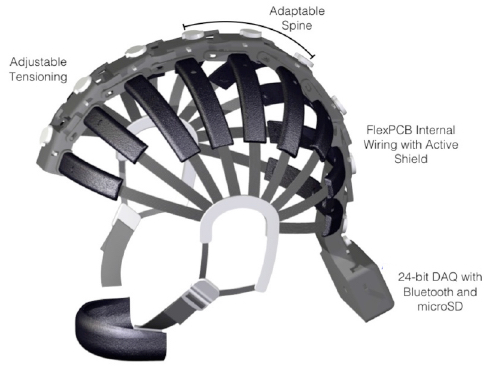
A dry-electrode, portable 64-channel wearable EEG headset (credit: Jacobs School of Engineering/UC San Diego)

The first dry-electrode, portable 64-channel wearable brain-computer interface (BCI) has been developed by bioengineers and cognitive scientists associated with UCSD Jacobs School.

The system is comparable to state-of-the-art equipment found in research laboratories, but with portability, allowing for tracking brain states throughout the day and augmenting the brain’s capabilities, the researchers say. Current BCI devices require gel-based electrodes or fewer than 64 channels.

The dry EEG sensors are easier to apply than wet sensors, while still providing high-density/low-noise brain activity data, according to the researchers. The headset includes a Bluetooth transmitter, eliminating the usual array of wires. The system also includes a sophisticated software suite for data interpretation and analysis for applications including research, neuro-feedback, and clinical diagnostics.

Cognionics HD-72 64-channel mobile EEG system (credit: Cognionics)

“This is going to take neuroimaging to the next level by deploying on a much larger scale,” including use in homes and even while driving, said Mike Yu Chi, a Jacobs School alumnus and CTO of Cognionics who led the team that developed the headset.

The researchers also envision a future when neuroimaging can be used to bring about new therapies for neurological disorders. “We will be able to prompt the brain to fix its own problems,” said Gert Cauwenberghs, a bioengineering professor at the Jacobs School and a principal investigator on a National Science Foundation grant. “We are trying to get away from invasive technologies, such as deep brain stimulation and prescription medications, and instead start up a repair process by using the brain’s synaptic plasticity.”

“In 10 years, using a brain-machine interface might become as natural as using your smartphone is today, said Tim Mullen, a UC San Diego alumnus, lead author on the study and a former researcher at the Swartz Center for Computational Neuroscience at UC San Diego.

The researchers from the Jacobs School of Engineering and Institute for Neural Computation at UC San Diego detailed their findings in an article of the Special Issue on Wearable Technologies published recently in IEEE Transactions on Biomedical Engineering.

EEG headset

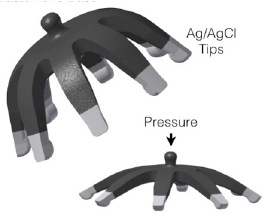
The innovative dry electrodes developed by the researchers eliminate the complexity and mess of affixing gel electrodes. By using silver/silver chloride tips, along with associated electronics and special headset mechanical construction, the dry electrodes reduce electrical noise and can be conveniently used through hair. (credit: Tim R. Mullen et al./IEEE Transactions on Biomedical Engineering)

For this vision of the future to become a reality, sensors will need to become not only wearable but also comfortable, and algorithms for data analysis will need to be able to cut through noise to extract meaningful data. The EEG headset developed by Chi and his team has an octopus-like shape, in which each arm is elastic, so that it fits on many different kinds of head shapes. The sensors at the end of each arm are designed to make optimal contact with the scalp while adding as little noise in the signal as possible.

The researchers spent four years perfecting the sensors’ materials. The sensors are designed to work on a subject’s hair. The material allows the sensors to remain flexible and durable while still conducting high-quality signals, thanks to a silver/silver-chloride coating. The design includes shielding from interference from electrical equipment and other electronics. The researchers also developed sensors intended for direct application to the scalp.

Software and data analysis

In the study, the data that the headset captured were analyzed with software developed by Mullen and Christian Kothe, another former researcher at the Swartz Center for Computational Neuroscience.

First, brain signals needed to be separated from noise in the EEG data. The tiny electrical currents originating from the brain are often contaminated by high-amplitude artifacts generated when subjects move, speak, or even blink. The researchers designed an algorithm that separates the EEG data in real-time into different components that are statistically unrelated to one another.

The algorithm then compares these elements with clean data obtained, for instance, when a subject is at rest. Abnormal data are labeled as noise and discarded. “The algorithm attempts to remove as much of the noise as possible while preserving as much of the brain signal as possible,” said Mullen.

The researchers were also able to track, in real time, how signals from different areas of the brain interact with one another, building an ever-changing network map of brain activity. They then used machine learning to connect specific network patterns in brain activity to cognition and behavior.

Future plans

Mullen’s start-up, Qusp, has developed NeuroScale, a cloud-based software platform that provides continuous real-time interpretation of brain and body signals through an Internet application program interface (API). The goal is to enable brain-computer interface and advanced signal processing methods to be easily integrated with various everyday applications and wearable devices.

“A Holy Grail in our field is to track meaningful changes in distributed brain networks at the ‘speed of thought’,” Mullen said. “We’re closer to that goal, but we’re not quite there yet.”

Cognionics is selling the headset to research groups, especially for use in neuro-feedback. Next steps include improving the headset’s performance while subjects are moving. The device can reliably capture signals while subjects walk but less so during more strenuous activities such as running. Electronics also need improvement to function for longer time periods — days and even weeks instead of hours.

The ultimate goal is to get the headset into the clinic to help diagnose a range of conditions, such as strokes and seizures, says Chi.

These researchers’ development and testing projects have been funded in part by a five-year Emerging Frontiers of Research Innovation grant from the National Science Foundation, DARPA, and the Army Research Laboratory (Aberdeen, MD) Collaborative Technology Alliance (CTA).


Abstract of Real-time neuroimaging and cognitive monitoring using wearable dry EEG

Goal: We present and evaluate a wearable high-density dry-electrode EEG system and an open-source software framework for online neuroimaging and state classification. Methods: The system integrates a 64-channel dry EEG form factor with wireless data streaming for online analysis. A real-time software framework is applied, including adaptive artifact rejection, cortical source localization, multivariate effective connectivity inference, data visualization, and cognitive state classification from connectivity features using a constrained logistic regression approach (ProxConn). We evaluate the system identification methods on simulated 64-channel EEG data. Then, we evaluate system performance, using ProxConn and a benchmark ERP method, in classifying response errors in nine subjects using the dry EEG system. Results: Simulations yielded high accuracy (AUC = 0.97 ± 0.021) for real-time cortical connectivity estimation. Response error classification using cortical effective connectivity [short-time directdirected transfer function (sdDTF)] was significantly above chance with similar performance (AUC) for cLORETA (0.74 ± 0.09) and LCMV (0.72 ± 0.08) source localization. Cortical ERPbased classification was equivalent to ProxConn for cLORETA (0.74 ± 0.16) butsignificantlybetterforLCMV (0.82 ± 0.12). Conclusion: We demonstrated the feasibility for real-time cortical connectivity analysis and cognitive state classification from highdensity wearable dry EEG. Significance: This paper is the first validated application of these methods to 64-channel dry EEG. This study addresses a need for robust real-time measurement and interpretation of complex brain activity in the dynamic environment of the wearable setting. Such advances can have broad impact in research, medicine, and brain-computer interfaces. The pipelines are made freely available in the open-source SIFT and BCILAB toolboxes.

Could this common painkiller become a future cancer-killer?

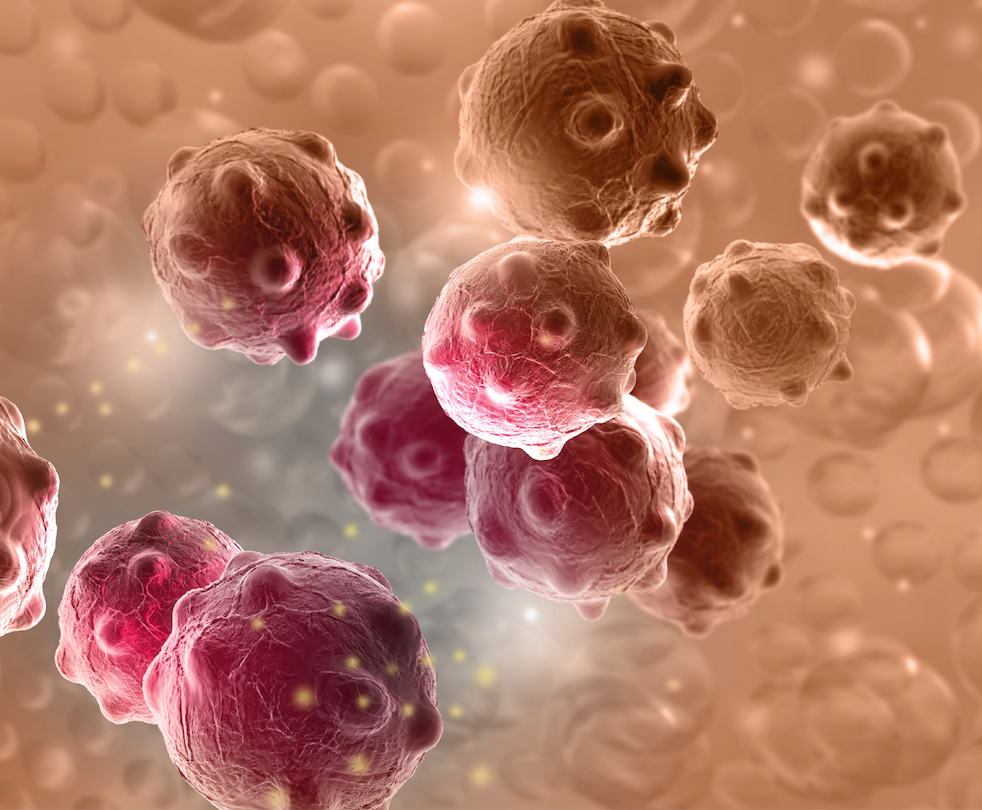
Cancer cells (credit: iStock)

Diclofenac, a common painkiller, has significant anti-cancer properties, researchers from the Repurposing Drugs in Oncology (ReDO) project have found.

ReDO, an international collaboration between the Belgium-based Anticancer Fund and the U.S.- based GlobalCures, has published their investigation into diclofenac in the open-access journal ecancermedicalscience.

Diclofenac is a well-known non-steroidal anti-inflammatory drug (NSAID) widely used to treat pain in conditions such as rheumatoid arthritis, migraine, fever, acute gout, and post-operative pain. Like other drugs examined by the ReDO project, diclofenac is cheap and readily accessible — and it’s already present in many medicine cabinets, so it has been carefully tested, according to ReDO researchers.

NSAIDs for cancer treatment?

NSAIDs have shown promise in cancer prevention, but there is now emerging evidence that such drugs may be useful in actually treating cancer. The ReDO researchers have examined the literature and believe that there is enough evidence to start clinical trials on the use of diclofenac in cancer treatment. For example, diclofenac taken in combination with other treatments, such as chemotherapy and radiotherapy, may improve their effectiveness, the researchers say.

They suggest that cutting down on the risk of post-surgical distant metastases through the use of drugs like diclofenac may represent a huge win in the fight against cancer.

Developed by Ciba-Geigy (now Novartis), the drug is available globally as a generic medication. In some countries, low-dose formulations of oral and gel DCF are available over-the-counter (OTC) as a general purpose analgesic or anti-pyretic. Common trade names include Voltaren, Voltarol, Cataflam, Cambia, Zipsor and Zorvolex.

As with all NSAIDs, long-term use of diclofenac is associated with a small increase in the risk of cardiovascular events, particularly myocardial infarction and stroke, the authors note, but “many of the agents currently being trialled (examples include sorafenib, imatinib and crizotinib) have greater toxicity and costs associated with them.”

The authors declare in the paper that they have no competing interests.


Abstract of Repurposing Drugs in Oncology (ReDO)—diclofenac as an anti-cancer agent

Diclofenac (DCF) is a well-known and widely used non-steroidal anti-inflammatory drug (NSAID), with a range of actions which are of interest in an oncological context. While there has long been an interest in the use of NSAIDs in chemoprevention, there is now emerging evidence that such drugs may have activity in a treatment setting. DCF, which is a potent inhibitor of COX-2 and prostaglandin E2 synthesis, displays a range of effects on the immune system, the angiogenic cascade, chemo- and radio-sensitivity and tumour metabolism. Both pre-clinical and clinical evidence of these effects, in multiple cancer types, is assessed and summarised and relevant mechanisms of action outlined. Based on this evidence the case is made for further clinical investigation of the anticancer effects of DCF, particularly in combination with other agents – with a range of possible multi-drug and multi-modality combinations outlined in the supplementary materials accompanying the main paper.

Self-adaptive material heals itself, stays tough

Rice University postdoctoral researcher Pei Dong holds a sample of SAC, a new form of self-adapting composite. The material has the ability to heal itself and to regain its original shape after extraordinary compression. (credit: Jeff Fitlow/Rice University)

A flexible adaptive material invented at Rice University combines self-healing and reversible self-stiffening properties.

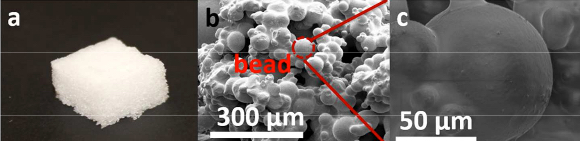
The material, called SAC (for self-adaptive composite), consists of sticky, micron-scale rubber balls that form a solid matrix. The researchers made SAC by mixing two polymers and a solvent that evaporates when heated, leaving a porous mass of gooey spheres. When cracked, the matrix quickly heals, over and over. And like a sponge, it returns to its original form after compression.

SAC may be a useful biocompatible material for tissue engineering or a lightweight, defect-tolerant structural component.

The labs of Rice materials scientists Pulickel Ajayan and Jun Lou led the study that appears in the American Chemical Society journal ACS Applied Materials and Interfaces. They suggested

Other “self-healing” materials encapsulate liquid in solid shells that leak their healing contents when cracked.

In SAC, tiny spheres of polyvinylidene fluoride (PVDF) encapsulate much of the liquid. The viscous polydimethylsiloxane (PDMS) further coats the entire surface. The spheres are extremely resilient, Lou said, as their thin shells deform easily. Their liquid contents enhance their viscoelasticity, a measure of their ability to absorb the strain and return to their original state, while the coatings keep the spheres together. The spheres also have the freedom to slide past each other when compressed, but remain attached.

Characterization of the hierarchical solid-liquid composite. (a) Image of solid-liquid SAC. (b) SEM image of the porous SAC. (c) High magnification SEM image of the shell of the bead. (credit: Pei Dong et al./ACS Appl. Mater. Interfaces)

“The sample doesn’t give you the impression that it contains any liquid,” he said. “That’s very different from a gel. This is not really squishy; it’s more like a sugar cube that you can compress quite a lot. The nice thing is that it recovers.”

Making SAC is simple, and the process can be tuned — a little more liquid or a little more solid — to regulate the product’s mechanical behavior. The polymer components begin as powder and viscous liquid. With the addition of a solvent and controlled heating, the PDMS stabilizes into solid spheres that provide the reconfigurable internal structure.

In tests, Rice scientists found a maximum of 683 percent increase in the material’s storage modulus — a size-independent parameter used to characterize self-stiffening behavior. This is much larger than that reported for solid composites and other materials, they said.


Rice University | Self-adaptive material heals itself, stays tough


Abstract of A Solid-liquid Self-adaptive Polymeric Composite

A solid-liquid self-adaptive composite (SAC) is synthesized using a simple mixing-evaporation protocol, with Poly(dimethylsiloxane) (PDMS) and Poly(vinylidene fluoride) (PVDF) as active constituents. SAC exists as a porous solid containing a near equivalent distribution of the solid (PVDF)-liquid (PDMS) phases, with the liquid encapsulated and stabilized within a continuous solid network percolating throughout the structure. The pores, liquid and solid phases form a complex hierarchical structure, which offers both mechanical robustness and a significant structural adaptability under external forces. SAC exhibits attractive self-healing properties during tension, and demonstrates reversible self-stiffening properties under compression with a maximum of seven-fold increase seen in the storage modulus. Compared to existing self-healing and self-stiffening materials, SAC offers distinct advantages in the ease of fabrication, high achievable storage modulus, and reversibility. Such materials could provide a new class of adaptive materials system with multi-functionality, tunability, and scale-up potentials.

DNA ‘lock and key’ allows for precision drug delivery to target cancer and other cells

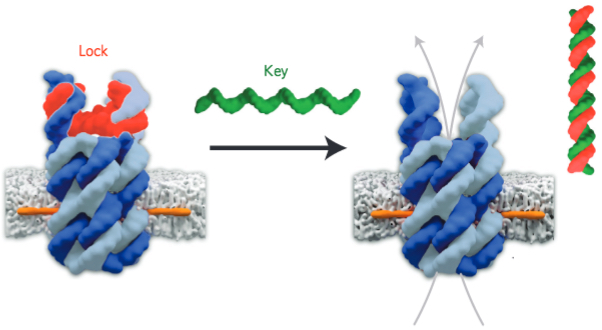
DNA-based lock-and-key pore design allows for precision delivery of drugs to cancer and other cells (credit: Stefan Howorka and Jonathan Burns/UCL)

Scientists at University College London (UCL) and Nanion Technologies in Munich have developed synthetic DNA-based pores that control which molecules can pass through a cell’s wall, achieving more precise drug delivery.

Therapeutics, including anti-cancer drugs, are ferried around the body in nanoscale carriers called vesicles, targeted to different tissues using biological markers. The new DNA-based pore design is intended to improve that process.

DNA Lock-and-key drug delivery

In operation, a drug-delivery vesicle (white in diagram above) carries the drug to a target cell for release.

The pore is designed as an open barrel made of six DNA-strand staves (blue and gray). The pore is kept closed by a DNA-strand “lock” (red) until the vesicle is prepared to release a drug. At that time, a “key” DNA-strand key (green) is released to hybridize (combine) with the lock DNA strand (forming the red-green helix on right), causing the pore to open and release the drug.*

The pore’s 2-nm-wide channel allows for selectively releasing small organic molecules, which include many medically important drug compounds.

This design for releasing drugs from vesicles improves on previous designs, in which drug release is triggered by temperature-induced leaky vesicle walls or with inserted peptide channels, both of which are less rigid and predictable than the new DNA mechanism.

The study was published Monday (Jan. 11) in Nature Nanotechnology. According to lead author Stefan Howorka, PhD., of UCL Chemistry, the researchers plan to test the synthetic pores in release of a variety of pharmaceutically active biomolecules, including anti-cancer drugs.

The research was funded by the Biotechnology and Biological Sciences Research Council (BBSRC), Leverhulme Trust and UCL Chemistry.

* Drugs are usually hydrophilic (water-loving), so pores are also designed to be hydrophilic, but that makes it difficult to attach pores to a vesicle membrane (which is hydrophobic, or fat-hating), so a hydrophobic cholesterol-based membrane (orange) was used to anchor the pore (blue and gray) to the membrane.


Abstract of A biomimetic DNA-based channel for the ligand-controlled transport of charged molecular cargo across a biological membrane

Biological ion channels are molecular gatekeepers that control transport across cell membranes. Recreating the functional principle of such systems and extending it beyond physiological ionic cargo is both scientifically exciting and technologically relevant to sensing or drug release. However, fabricating synthetic channels with a predictable structure remains a significant challenge. Here, we use DNA as a building material to create an atomistically determined molecular valve that can control when and which cargo is transported across a bilayer. The valve, which is made from seven concatenated DNA strands, can bind a specific ligand and, in response, undergo a nanomechanical change to open up the membrane-spanning channel. It is also able to distinguish with high selectivity the transport of small organic molecules that differ by the presence of a positively or negatively charged group. The DNA device could be used for controlled drug release and the building of synthetic cell-like or logic ionic networks.

Why evolution may be intelligent, based on deep learning

Moth Orchid flower (credit: Christian Kneidinger)

A computer scientist and biologist propose to unify the theory of evolution with learning theories to explain the “amazing, apparently intelligent designs that evolution produces.”

The scientists — University of Southampton School of Electronics and Computer Science professor Richard Watson* and Eötvös Loránd University (Budapest) professor of biology Eörs Szathmáry* — say they’ve found that it’s possible for evolution to exhibit some of the same intelligent behaviors as learning systems — including neural networks.

Writing in an opinion paper published in the journal Trends in Ecology and Evolution, they use “formal analogies” and transfer specific models and results between the two theories in an attempt to solve several evolutionary puzzles.

The authors cite work by Pavlicev and colleagues** showing that selection on relational alleles (gene variants) increases phenotypic (organism trait) correlation if the traits are selected together and decreases correlation if they are selected antagonistically, which is characteristic of Hebbian learning, they note.

“This simple step from evolving traits to evolving correlations between traits is crucial; it moves the object of natural selection from fit phenotypes (which ultimately removes phenotypic variability altogether) to the control of phenotypic variability,” the researchers say.

Why evolution is not blind

“Learning theory is not just a different way of describing what Darwin already told us,” said Watson. “It expands what we think evolution is capable of. It shows that natural selection is sufficient to produce significant features of intelligent problem-solving.”

Conventionally, evolution, which depends on random variation, has been considered blind, or at least myopic, he notes. “But showing that evolving systems can learn from past experience means that evolution has the potential to anticipate what is needed to adapt to future environments in the same way that learning systems do.

“A system exhibits learning if its performance at some task improves with experience,” the authors note in the paper. “Reusing behaviors that have been successful in the past (reinforcement learning) is intuitively similar to the way selection increases the proportion of fit phenotypes [an organism's observable characteristics or traits] in a population. In fact, evolutionary processes and simple learning processes are formally equivalent.

“In particular, learning can be implemented by incrementally adjusting a probability distribution over behaviors (e.g., Bayesian learning or Bayesian updating). Or, if a behavior is represented by a vector of features or components, by adjusting the probability of using each individual component in proportion to its average reward in past behaviors (e.g., Multiplicative Weights Update Algorithm, MWUA).”

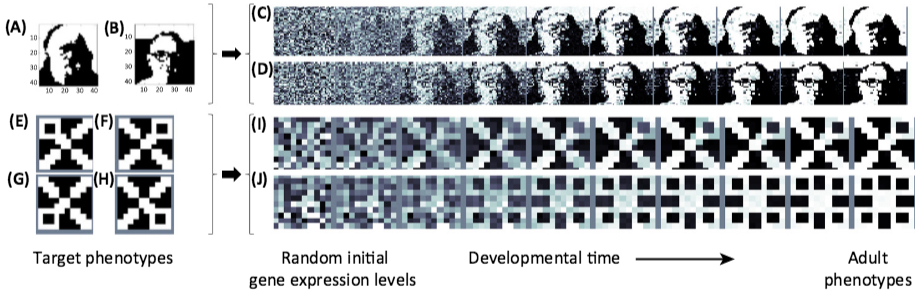
The evolution of connections in a Recurrent Gene Regulation Network (GRN) shows associative learning behaviors. When a Hopfield network is trained on a set of patterns with Hebbian learning, it forms an associative memory of the patterns in the training set. When subsequently stimulated with random excitation patterns, the activation dynamics of the trained network will spontaneously recall the patterns from the training set or generate new patterns that are generalizations of the training patterns. (A–D) A GRN is evolved to produce first one phenotype (set of characteristics or traits — Charles Darwin in this example) and then another (Donald Hebb) in an alternating manner. The resulting phenotype is not merely an average of the two phenotypic patterns that were selected in the past. Rather, different embryonic phenotypes (e.g., random initial conditions C and D) developed into different adult phenotypes (with this evolved GRN) and match either A or B. These two phenotypes can be produced from genotypes (DNA sequences) that are a single mutation apart. In a separate experiment, selection iterates over a set of target phenotypes (E–H). In addition to developing phenotypes that match patterns selected in the past (e.g., I), this GRN also generalizes to produce new phenotypes that were not selected for in the past but belong to a structurally similar class, for example, by creating novel combinations of evolved modules (e.g., developmental attractors exist for a phenotype with all four “loops” (J). This demonstrates a capability for evolution to exhibit phenotypic novelty in exactly the same sense that learning neural networks can generalize from past experience. (credit: Richard A. Watson and Eörs Szathmáry/Trends in Ecology and Evolution)

Unsupervised learning

An even more interesting process in evolution is unsupervised learning, where mechanisms do not depend on an external reward signal, the authors say in the paper:

By reinforcing correlations that are frequent, regardless of whether they are good, unsupervised correlation learning can produce system-level behaviors without system-level rewards. This can be implemented without centralized learning mechanisms. (Recent theoretical work shows that selection acting only to maximize individual growth rate, when applied to interspecific competition coefficients within an ecological community, produces unsupervised learning at the system level.)

This is an exciting possibility because it means that, despite not being a unit of selection, an ecological community might exhibit organizations that confer coordinated collective behaviors — for example, a distributed ecological memory that can recall multiple past ecological states. …

Taken together, correlation learning, unsupervised correlation learning, and deep correlation learning thus provide a formal way to understand how variation, selection, and inheritance, respectively, might be transformed over evolutionary time.

The authors’ new approach also offers an alternative to “intelligent design” (ID), which negates natural selection as an explanation for apparently intelligent features of nature. (The leading proponents of ID are associated with the Discovery Institute. See Are We Spiritual Machines? Ray Kurzweil vs. the Critics of Strong A.I.*** — a debate between Kurzweil and several Discovery Institute fellows.)

So if evolutionary theory can learn from the principles of cognitive science and deep learning, can cognitive science and deep learning learn from evolutionary theory?

* The authors are also affiliated with the Parmenides Foundation in Munich.

** Watson, R.A. et al. (2014) The evolution of phenotypic correlations and ‘developmental memory.’ Evolution 68, 1124–1138 and Pavlicev, M.et al. (2011) Evolution of adaptive phenotypic variation patterns by direct selection for evolvability. Proc. R. Soc. B Biol. Sci. 278, 1903–1912

*** This book is available free on KurzweilAI, as noted.


Abstract of How Can Evolution Learn?
The theory of evolution links random variation and selection to incremental adaptation. In a different intellectual domain, learning theory links incremental adaptation (e.g., from positive and/or negative reinforcement) to intelligent behaviour. Specifically, learning theory explains how incremental adaptation can acquire knowledge from past experience and use it to direct future behaviours toward favourable outcomes. Until recently such cognitive learning seemed irrelevant to the ‘uninformed’ process of evolution. In our opinion, however, new results formally linking evolutionary processes to the principles of learning might provide solutions to several evolutionary puzzles – the evolution of evolvability, the evolution of ecological organisation, and evolutionary transitions in individuality. If so, the ability for evolution to learn might explain how it produces such apparently intelligent designs.

‘Robotic falcon’ can capture, retrieve renegade drones

Mo Rastgaar’s drone catcher speeds toward a rogue drone. (credit: Michigan Technological University)

Mo Rastgaar, an associate professor of mechanical engineering at Michigan Technological University, and his team have developed a drone catcher that can pursue and capture rogue drones that might threaten military installations, air traffic, sporting events, and even the White House — as startled Secret Service officers discovered when one crash-landed on the White House lawn last January.

It’s a simple system (see video below): a launcher shoots a big net attached to a large drone by a string. After an intruding drone is spotted, the drone catcher takes up the chase and fires the net at it from a distance of up to 40 feet (perhaps more spider than falcon). Because the net is so big and can be deployed so quickly, it can overwhelm even the fastest, most maneuverable small drone, the engineers claim.

Once trapped, the net swings down below the drone catcher, which ferries its cargo to a safe location. The system can be autonomous, controlled by a ground-based human pilot, or a combination of the two.

“If the threat is a drone, you really don’t want to shoot it down — it might contain explosives and blow up, says Rastgaar. “What you want to do is catch it and get it out of there.”

Other potential applications include foiling spy drones, smugglers, and terrorists, and supporting the recent FAA announcement requiring drones to be registered.


HIRoLab | Robotic Falconry — Drone Catcher System for Removing the Intruding Drones