Storing solar, wind, and water energy underground could replace burning fuel

Using wind, water, and solar electricity for everything, instead of burning fuel, with resulting improved energy efficiency, means you need much less energy (credit: The Solutions Project/data: Stanford University)

Stanford and UC Berkeley researchers have a solution to the problem of storing energy from wind, water and solar power overnight (or in inclement weather): store it underground. The system could result in a reliable, affordable national grid, replacing fossil fuel, they believe.

How it would work

  • Summer heat gathered in rooftop solar collectors could be stored in soil or rocks and used for heating homes in winter. Excess or low-cost electricity could be used to make ice, which would be used for later cooling when the price of electricity is high.
  • Excess electricity could also used to make more electricity, by supplementing the energy-producing mechanisms that drive concentrated solar power plants and pumped hydroelectric facilities. Utilities would also provide incentives to reduce energy use during times of peak demand.
  • Hydrogen would also be used as a storage medium; during low-demand hours, excess electricity would be used to create hydrogen, which could be stored in fuel cells and used to power some vehicles.
  • This would be an all-electric country, with virtually everything running 100 percent on electricity: cars, trains, buses, industry, heating and cooling, and with the electricity originating from wind, water and sunlight. There would be no need for coal, natural gas, biofuels, nuclear power or enormous battery farms for storing electricity. Such a world would be 100 percent clean by 2050.

This methodology for keeping the grid stable should work in many places worldwide, say Mark Z. Jacobson, a Stanford professor of civil and environmental engineering, Mark Delucchi of the University of California, Berkeley, and associates. They describe the plan today (Nov. 23) in Proceedings of the National Academy of Sciences.

According to the authors, in the U.S., for example, the resulting drop in air pollution would save tens of thousands of lives each year (up to 65,000 people die prematurely in America annually as a result of air pollution) and the plan could result in about 5 million 40-year jobs.


Abstract of A low-cost solution to the grid reliability problem with 100% penetration of intermittent wind, water, and solar for all purposes

This study addresses the greatest concern facing the large-scale integration of wind, water, and solar (WWS) into a power grid: the high cost of avoiding load loss caused by WWS variability and Q:10 uncertainty. It uses a new grid integration model and finds lowcost, no-load-loss, nonunique solutions to this problem on electrification of all US energy sectors (electricity, transportation, heating/cooling, and industry) while accounting for wind and solar time series data from a 3D global weather model that simulates extreme events and competition among wind turbines for available kinetic energy. Solutions are obtained by prioritizing storage for heat (in soil and water); cold (in ice and water); and electricity (in phase-change materials, pumped hydro, hydropower, and hydrogen), and using demand response. No natural gas, biofuels, or stationary batteries are needed. The resulting 2050–2055 US electricity social cost for a full systems is much less than for fossil fuels. These results hold for many conditions, suggesting that low-cost, stable 100% WWS systems should work many places worldwide.

Google Glass helps cardiologists complete difficult coronary artery blockage surgery

Google Glass allowed the surgeons to clearly visualize the distal coronary vessel and verify the direction of the guide wire advancement relative to the course of the occluded vessel segment. (credit: Maksymilian P. Opolski et al./Canadian Journal of Cardiology)

Cardiologists from the Institute of Cardiology, Warsaw, Poland have used Google Glass in a challenging surgical procedure, successfully clearing a blockage in the right coronary artery of a 49-year-old male patient and restoring blood flow, reports the Canadian Journal of Cardiology.

Chronic total occlusion, a complete blockage of the coronary artery, sometimes referred to as the “final frontier in interventional cardiology,” represents a major challenge for catheter-based percutaneous coronary intervention (PCI), according to the cardiologists.

That’s because of the difficulty of recanalizing (forming new blood vessels through an obstruction) combined with poor visualization of the occluded coronary arteries.

Coronary computed tomography angiography (CTA) is increasingly used to provide physicians with guidance when performing PCI for this procedure. The 3-D CTA data can be projected on monitors, but this technique is expensive and technically difficult, the cardiologists say.

So a team of physicists from the Interdisciplinary Centre for Mathematical and Computational Modelling of the University of Warsaw developed a way to use Google Glass to clearly visualize the distal coronary vessel and verify the direction of the guide-wire advancement relative to the course of the blocked vessel segment.

Three-dimensional reconstructions displayed on Google Glass revealed the exact trajectory of the distal right coronary artery (credit: Maksymilian P. Opolski et al./Canadian Journal of Cardiology)

The procedure was completed successfully, including implantation of two drug-eluting stents.

“This case demonstrates the novel application of wearable devices for display of CTA data sets in the catheterization laboratory that can be used for better planning and guidance of interventional procedures, and provides proof of concept that wearable devices can improve operator comfort and procedure efficiency in interventional cardiology,” said lead investigator Maksymilian P. Opolski, MD, PhD, of the Department of Interventional Cardiology and Angiology at the Institute of Cardiology, Warsaw, Poland.

“We believe wearable computers have a great potential to optimize percutaneous revascularization, and thus favorably affect interventional cardiologists in their daily clinical activities,” he said. He also advised that “wearable devices might be potentially equipped with filter lenses that provide protection against X-radiation.


Abstract of First-in-Man Computed Tomography-Guided Percutaneous Revascularization of Coronary Chronic Total Occlusion Using a Wearable Computer: Proof of Concept

We report a case of successful computed tomography-guided percutaneous revascularization of a chronically occluded right coronary artery using a wearable, hands-free computer with a head-mounted display worn by interventional cardiologists in the catheterization laboratory. The projection of 3-dimensional computed tomographic reconstructions onto the screen of virtual reality glass allowed the operators to clearly visualize the distal coronary vessel, and verify the direction of the guide wire advancement relative to the course of the occluded vessel segment. This case provides proof of concept that wearable computers can improve operator comfort and procedure efficiency in interventional cardiology.

A sensory illusion that makes yeast cells self-destruct

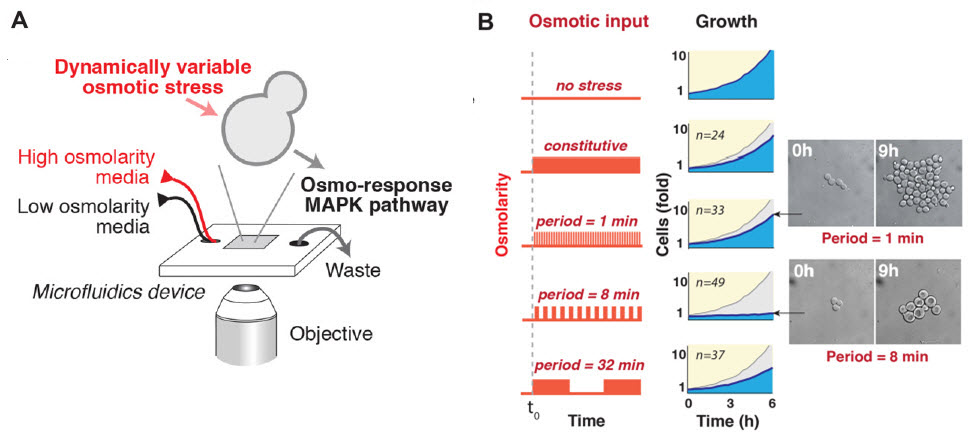
Effects of osmotic changes on yeast cell growth. (A) Schematic of the flow chamber used to create osmotic level oscillations for different periods of time. (B) Cell growth for these periods. The graphs show the average number of progeny cells (blue) before and after applying stress for different periods (gray shows orginal “no stress” line). The inset shows representative images of cells for two periods. (credit: Amir Mitchell et al./Science)

UC San Francisco researchers have discovered that even brainless single-celled yeast have “sensory biases” that can be hacked by a carefully engineered illusion — a finding that could be used to develop new approaches to fighting diseases such as cancer.

In the new study, published online Thursday November 19 in Science Express, Wendell Lim, PhD, the study’s senior author*, and his team discovered that yeast cells falsely perceive a pattern of osmotic levels (by applying potassium chloride) that alternate in eight minute intervals as massive, continuously increasing stress. In response, the microbes over-respond and kill themselves. (In their natural environment, salt stress normally gradually increases.)

The results, Lim says, suggest a whole new way of looking at the perceptual abilities of simple cells and this power of illusion could even be used to develop new approaches to fighting cancer and other diseases.

“Our results may also be relevant for cellular signaling in disease, as mutations affecting cellular signaling are common in cancer, autoimmune disease, and diabetes,” the researchers conclude in the paper. “These mutations may rewire the native network, and thus could modify its activation and adaptation dynamics. Such network rewiring in disease may lead to changes that can be most clearly revealed by simulation with oscillatory inputs or other ‘non-natural’ patterns.

“The changes in network response behaviors could be exploited for diagnosis and functional profiling of disease cells, or potentially taken advantage of as an Achilles’ heel to selectively target cells bearing the diseased network.”


UC San Francisco (UCSF) | Sensory Illusion Causes Cells to Self-Destruct

* Chair of the Department of Cellular and Molecular Pharmacology at UCSF, director of the UCSF Center for Systems and Synthetic Biology, and a Howard Hughes Medical Institute (HHMI) investigator.

** Normally, sensor molecules in a yeast cell detect changes in salt concentration and instruct the cell to respond by producing a protective chemical. The researchers found that the cells were perfectly capable of adapting when they flipped the salt stress on and off every minute or every 32 minutes. But to their surprise, when they tried an eight-minute oscillation of precisely the same salt level the cells quickly stopped growing and began to die off.


Abstract of Oscillatory stress stimulation uncovers an Achilles’ heel of the yeast MAPK signaling network

Cells must interpret environmental information that often changes over time. We systematically monitored growth of yeast cells under various frequencies of oscillating osmotic stress. Growth was severely inhibited at a particular resonance frequency, at which cells show hyperactivated transcriptional stress responses. This behavior represents a sensory misperception—the cells incorrectly interpret oscillations as a staircase of ever-increasing osmolarity. The misperception results from the capacity of the osmolarity-sensing kinase network to retrigger with sequential osmotic stresses. Although this feature is critical for coping with natural challenges—like continually increasing osmolarity—it results in a tradeoff of fragility to non-natural oscillatory inputs that match the retriggering time. These findings demonstrate the value of non-natural dynamic perturbations in exposing hidden sensitivities of cellular regulatory networks.

Researchers discover signaling molecule that helps neurons find their way in the developing brain

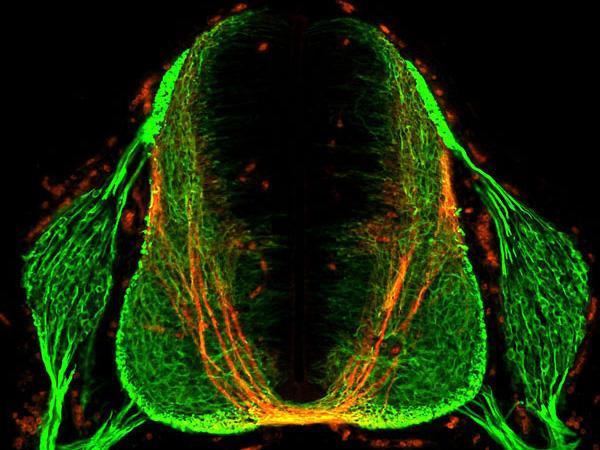
This image shows a section of the spinal cord of a mouse embryo. Neurons appear green. Commissural axons (which connect the two sides of the brain) appear as long, u-shaped threads, and the bottom, yellow segment of the structure represents the midline (between brain hemispheres). (credit: Laboratory of Brain Development and Repair/ The Rockefeller University)

Rockefeller University researchers have discovered a molecule secreted by cells in the spinal cord that helps guide axons (neuron extensions) during a critical stage of central nervous system development in the embryo. The finding helps solve the mystery: how do the billions of neurons in the embryo nimbly reposition themselves within the brain and spinal cord, and connect branches to form neural circuits?

Working in mice, the researchers identified an axon guidance factor, NELL2, and explained how it makes commissural axons (which connect the two sides of the brain).

The findings could help scientists understand what goes wrong in a rare disease called horizontal gaze palsy with progressive scoliosis. People affected by the condition often suffer from abnormal spine curvature, and are unable to move their eyes horizontally from side to side. The study was published Thursday Nov. 19 in the journal Science.


Abstract of Operational redundancy in axon guidance through the multifunctional receptor Robo3 and its ligand NELL2

Axon pathfinding is orchestrated by numerous guidance cues, including Slits and their Robo receptors, but it remains unclear how information from multiple cues is integrated or filtered. Robo3, a Robo family member, allows commissural axons to reach and cross the spinal cord midline by antagonizing Robo1/2–mediated repulsion from midline-expressed Slits and potentiating deleted in colorectal cancer (DCC)–mediated midline attraction to Netrin-1, but without binding either Slits or Netrins. We identified a secreted Robo3 ligand, neural epidermal growth factor-like-like 2 (NELL2), which repels mouse commissural axons through Robo3 and helps steer them to the midline. These findings identify NELL2 as an axon guidance cue and establish Robo3 as a multifunctional regulator of pathfinding that simultaneously mediates NELL2 repulsion, inhibits Slit repulsion, and facilitates Netrin attraction to achieve a common guidance purpose.

E-coli bacteria, found in some China farms and patients, cannot be killed with antiobiotic drug of last resort

Colistin antibiotic overused in farm animals in China apparently caused E-coli bacteria to become completely resistant to treatment; E-coli strain has already spread to Laos and Malaysia (credit: Yi-Yun Liu et al./Lancet Infect Dis)

Widespread E-coli bacteria that cannot be killed with the antiobiotic drug of last resort — colistin — have been found in samples taken from farm pigs, meat products, and a small number of patients in south China, including bacterial strains with epidemic potential, an international team of scientists revealed in a paper published Thursday Nov. 19 in the journal The Lancet Infectious Diseases.

The scientists in China, England, and the U.S. found a new gene, MCR-1, carried in E-coli bacteria strain SHP45. MCR-1 enables bacteria to be highly resistant to colistin and other polymyxins drugs.

“The emergence of the MCR-1 gene in China heralds a disturbing breach of the last group of antibiotics — polymixins — and an end to our last line of defense against infection,” said Professor Timothy Walsh, from the Cardiff University School of Medicine, who collaborated on this research with scientists from South China Agricultural University.

Walsh, an expert in antibiotic resistance, is best known for his discovery in 2011 of the NDM-1 disease-causing antibiotic-resistant superbug in New Delhi’s drinking water supply. “The rapid spread of similar antibiotic-resistant genes such as NDM-1 suggests that all antibiotics will soon be futile in the face of previously treatable gram-negative bacterial infections such as E.coli and salmonella,” he said.

Likely to spread worldwide; already found in Laos and Malaysia

The MCR-1 gene was found on plasmids — mobile DNA that can be easily copied and transferred between different bacteria, suggesting an alarming potential to spread and diversify between different bacterial populations.
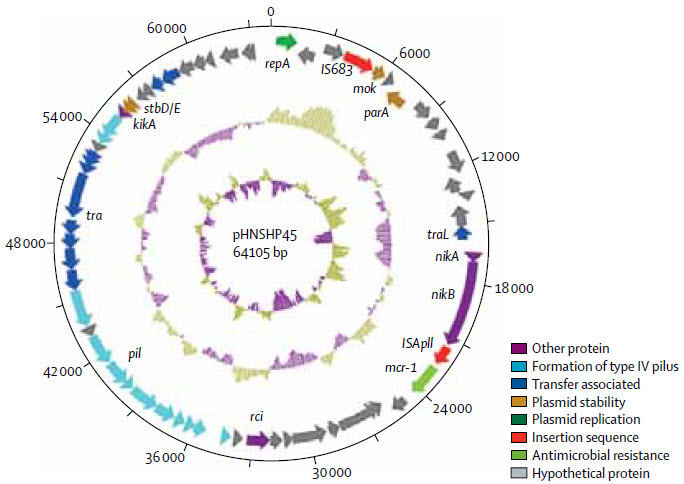
Structure of plasmid pHNSHP45 carrying MCR-1 from Escherichia coli strain SHP45 (credit: Yi-Yun Liu et al./Lancet Infect Dis)

“We now have evidence to suggest that MCR-1-positive E.coli has spread beyond China, to Laos and Malaysia, which is deeply concerning,” said Walsh.  “The potential for MCR-1 to become a global issue will depend on the continued use of polymixin antibiotics, such as colistin, on animals, both in and outside China; the ability of MCR-1 to spread through human strains of E.coli; and the movement of people across China’s borders.”

“MCR-1 is likely to spread to the rest of the world at an alarming rate unless we take a globally coordinated approach to combat it. In the absence of new antibiotics against resistant gram-negative pathogens, the effect on human health posed by this new gene cannot be underestimated.”

“Of the top ten largest producers of colistin for veterinary use, one is Indian, one is Danish, and eight are Chinese,” The Lancet Infectious Diseases notes. “Asia (including China) makes up 73·1% of colistin production with 28·7% for export including to Europe.29 In 2015, the European Union and North America imported 480 tonnes and 700 tonnes, respectively, of colistin from China.”

Urgent need for coordinated global action

“Our findings highlight the urgent need for coordinated global action in the fight against extensively resistant and pan-resistant gram-negative bacteria,” the journal paper concludes.

“The implications of this finding are enormous,” an associated editorial comment to the The Lancet Infectious Diseases paper stated. “We must all reiterate these appeals and take them to the highest levels of government or face increasing numbers of patients for whom we will need to say, ‘Sorry, there is nothing I can do to cure your infection.’”

Margaret Chan, MD, Director-General of the World Health Organization, warned in 2011 that “the world is heading towards a post-antibiotic era, in which many common infections will no longer have a cure and, once again, kill unabated.”

“Although in its 2012 World Health Organization Advisory Group on Integrated Surveillance of Antimicrobial Resistance (AGISAR) report the WHO concluded that colistin should be listed under those antibiotics of critical importance, it is regrettable that in the 2014 Global Report on Surveillance, the WHO did not to list any colistin-resistant bacteria as part of their ‘selected bacteria of international concern,’” The Lancet Infectious Diseases paper says, reflecting WHO’s inaction in Ebola-stricken African countries, as noted last September by the international medical humanitarian organization Médecins Sans Frontières.

Funding for the E-coli bacteria study was provided by the Ministry of Science and Technology of China and National Natural Science Foundation of China.


Abstract of Emergence of plasmid-mediated colistin resistance mechanism MCR-1 in animals and human beings in China: a microbiological and molecular biological study

Until now, polymyxin resistance has involved chromosomal mutations but has never been reported via
horizontal gene transfer. During a routine surveillance project on antimicrobial resistance in commensal Escherichia coli from food animals in China, a major increase of colistin resistance was observed. When an E coli strain, SHP45, possessing colistin resistance that could be transferred to another strain, was isolated from a pig, we conducted further analysis of possible plasmid-mediated polymyxin resistance. Herein, we report the emergence of the first plasmid-mediated polymyxin resistance mechanism, MCR-1, in Enterobacteriaceae.

The mcr-1 gene in E coli strain SHP45 was identified by whole plasmid sequencing and subcloning. MCR-1 mechanistic studies were done with sequence comparisons, homology modelling, and electrospray ionisation mass spectrometry. The prevalence of mcr-1 was investigated in E coli and Klebsiella pneumoniae strains collected from five provinces between April, 2011, and November, 2014. The ability of MCR-1 to confer polymyxin resistance in vivo was examined in a murine thigh model.

Polymyxin resistance was shown to be singularly due to the plasmid-mediated mcr-1 gene. The plasmid carrying mcr-1 was mobilised to an E coli recipient at a frequency of 10−1 to 10−3 cells per recipient cell by conjugation, and maintained in K pneumoniae and Pseudomonas aeruginosa. In an in-vivo model, production of MCR-1 negated the efficacy of colistin. MCR-1 is a member of the phosphoethanolamine transferase enzyme family, with expression in E coli resulting in the addition of phosphoethanolamine to lipid A. We observed mcr-1 carriage in E coli isolates collected from 78 (15%) of 523 samples of raw meat and 166 (21%) of 804 animals during 2011–14, and 16 (1%) of 1322 samples from inpatients with infection.

The emergence of MCR-1 heralds the breach of the last group of antibiotics, polymyxins, by plasmid-mediated resistance. Although currently confined to China, MCR-1 is likely to emulate other global resistance mechanisms such as NDM-1. Our findings emphasise the urgent need for coordinated global action in the fight against pan-drug-resistant Gram-negative bacteria.

E-coli bacteria, found in some China farms and patients, cannot be killed with antiobiotic drug of last resort

Colistin antibiotic overused in farm animals in China apparently caused E-coli bacteria to become completely resistant to treatment; E-coli strain has already spread to Laos and Malaysia (credit: Yi-Yun Liu et al./Lancet Infect Dis)

Widespread E-coli bacteria that cannot be killed with the antiobiotic drug of last resort — colistin — have been found in samples taken from farm pigs, meat products, and a small number of patients in south China, including bacterial strains with epidemic potential, an international team of scientists revealed in a paper published Thursday Nov. 19 in the journal The Lancet Infectious Diseases.

The scientists in China, England, and the U.S. found a new gene, MCR-1, carried in E-coli bacteria strain SHP45. MCR-1 enables bacteria to be highly resistant to colistin and other polymyxins drugs.

“The emergence of the MCR-1 gene in China heralds a disturbing breach of the last group of antibiotics — polymixins — and an end to our last line of defense against infection,” said Professor Timothy Walsh, from the Cardiff University School of Medicine, who collaborated on this research with scientists from South China Agricultural University.

Walsh, an expert in antibiotic resistance, is best known for his discovery in 2011 of the NDM-1 disease-causing antibiotic-resistant superbug in New Delhi’s drinking water supply. “The rapid spread of similar antibiotic-resistant genes such as NDM-1 suggests that all antibiotics will soon be futile in the face of previously treatable gram-negative bacterial infections such as E.coli and salmonella,” he said.

Likely to spread worldwide; already found in Laos and Malaysia

The MCR-1 gene was found on plasmids — mobile DNA that can be easily copied and transferred between different bacteria, suggesting an alarming potential to spread and diversify between different bacterial populations.

Structure of plasmid pHNSHP45 carrying MCR-1 from Escherichia coli strain SHP45 (credit: Yi-Yun Liu et al./Lancet Infect Dis)

“We now have evidence to suggest that MCR-1-positive E.coli has spread beyond China, to Laos and Malaysia, which is deeply concerning,” said Walsh.  “The potential for MCR-1 to become a global issue will depend on the continued use of polymixin antibiotics, such as colistin, on animals, both in and outside China; the ability of MCR-1 to spread through human strains of E.coli; and the movement of people across China’s borders.”

“MCR-1 is likely to spread to the rest of the world at an alarming rate unless we take a globally coordinated approach to combat it. In the absence of new antibiotics against resistant gram-negative pathogens, the effect on human health posed by this new gene cannot be underestimated.”

“Of the top ten largest producers of colistin for veterinary use, one is Indian, one is Danish, and eight are Chinese,” The Lancet Infectious Diseases notes. “Asia (including China) makes up 73·1% of colistin production with 28·7% for export including to Europe.29 In 2015, the European Union and North America imported 480 tonnes and 700 tonnes, respectively, of colistin from China.”

Urgent need for coordinated global action

“Our findings highlight the urgent need for coordinated global action in the fight against extensively resistant and pan-resistant gram-negative bacteria,” the journal paper concludes.

“The implications of this finding are enormous,” an associated editorial comment to the The Lancet Infectious Diseases paper stated. “We must all reiterate these appeals and take them to the highest levels of government or face increasing numbers of patients for whom we will need to say, ‘Sorry, there is nothing I can do to cure your infection.’”

Margaret Chan, MD, Director-General of the World Health Organization, warned in 2011 that “the world is heading towards a post-antibiotic era, in which many common infections will no longer have a cure and, once again, kill unabated.”

“Although in its 2012 World Health Organization Advisory Group on Integrated Surveillance of Antimicrobial Resistance (AGISAR) report the WHO concluded that colistin should be listed under those antibiotics of critical importance, it is regrettable that in the 2014 Global Report on Surveillance, the WHO did not to list any colistin-resistant bacteria as part of their ‘selected bacteria of international concern,’” The Lancet Infectious Diseases paper says, reflecting WHO’s inaction in Ebola-stricken African countries, as noted last September by the international medical humanitarian organization Médecins Sans Frontières.

Funding for the E-coli bacteria study was provided by the Ministry of Science and Technology of China and National Natural Science Foundation of China.


Abstract of Emergence of plasmid-mediated colistin resistance mechanism MCR-1 in animals and human beings in China: a microbiological and molecular biological study

Until now, polymyxin resistance has involved chromosomal mutations but has never been reported via
horizontal gene transfer. During a routine surveillance project on antimicrobial resistance in commensal Escherichia coli from food animals in China, a major increase of colistin resistance was observed. When an E coli strain, SHP45, possessing colistin resistance that could be transferred to another strain, was isolated from a pig, we conducted further analysis of possible plasmid-mediated polymyxin resistance. Herein, we report the emergence of the first plasmid-mediated polymyxin resistance mechanism, MCR-1, in Enterobacteriaceae.

The mcr-1 gene in E coli strain SHP45 was identified by whole plasmid sequencing and subcloning. MCR-1 mechanistic studies were done with sequence comparisons, homology modelling, and electrospray ionisation mass spectrometry. The prevalence of mcr-1 was investigated in E coli and Klebsiella pneumoniae strains collected from five provinces between April, 2011, and November, 2014. The ability of MCR-1 to confer polymyxin resistance in vivo was examined in a murine thigh model.

Polymyxin resistance was shown to be singularly due to the plasmid-mediated mcr-1 gene. The plasmid carrying mcr-1 was mobilised to an E coli recipient at a frequency of 10−1 to 10−3 cells per recipient cell by conjugation, and maintained in K pneumoniae and Pseudomonas aeruginosa. In an in-vivo model, production of MCR-1 negated the efficacy of colistin. MCR-1 is a member of the phosphoethanolamine transferase enzyme family, with expression in E coli resulting in the addition of phosphoethanolamine to lipid A. We observed mcr-1 carriage in E coli isolates collected from 78 (15%) of 523 samples of raw meat and 166 (21%) of 804 animals during 2011–14, and 16 (1%) of 1322 samples from inpatients with infection.

The emergence of MCR-1 heralds the breach of the last group of antibiotics, polymyxins, by plasmid-mediated resistance. Although currently confined to China, MCR-1 is likely to emulate other global resistance mechanisms such as NDM-1. Our findings emphasise the urgent need for coordinated global action in the fight against pan-drug-resistant Gram-negative bacteria.

This app lets autonomous video drones with facial recognition target persons

Creating a selfie video with a drone and an app (credit: Neurala)

Robotics company Neurala has combined facial-recognition and drone-control mobile software in an iOS/Android app called “Selfie Dronie” that enables low-cost Parrot Bebop and Bebop 2 drones to take hands-free videos and follow a subject autonomously.

To create a video, you simply select the person or object and you’re done. The drone then flies an arc around the subject to take a video selfie (it moves with the person). Or it zooms upward for a dramatic aerial shot in “dronie” mode.


Neurela | This video demonstrates Neurela’s target-following technology

Basically, the app replaces remote-control gadgets and controlling via GPS on cell phones. Instead, once the target person is designated, the drone operates autonomously.

Neurala explains that its Neurala Intelligence Engine (NIE) can immediately learn to recognize an object using an ordinary camera. Then, as the object moves, Neurala’s deep learning algorithms learn more about the object in real time and in different environments, and by comparing these observations to other things it has learned in the past — going beyond current deep-learning visual processing, which requires training first.

Based on Mars rover technology

Neurala says NASA funded Neurela in October to commercialize its autonomous navigation, object recognition, and obstacle avoidance software developed for planetary exploration robots such as Curiosity rover, and apply it in real-world situations on Earth for self-driving cars, home robots, and autonomous drones.

Neurela says what makes its software unique is its use of deep learning and passive sensors, instead of “expensive and power-hungry active systems,” such as radar and LIDAR, used in most prototype self-driving vehicles.

Of course, it’s a small step from this technology to surveillance drones with facial recognition and autonomous weaponized unmanned aerial vehicles (see “The proposed ban on offensive autonomous weapons is unrealistic and dangerous” and “Why we really should ban autonomous weapons: a response“), especially given the recent news in Paris and Brussels and current terrorist threats directed to the U.S. and other countries.

Growing functional vocal cords in the lab

Extracting fibroblasts and epithelial cells from donor vocal fold mucosa for culturing and application to a 3-D collagen scaffold (credit: Changying Ling et al./Tissue Engineering)

University of Wisconsin scientists have succeeded in growing functional vocal-cord tissue in the laboratory and bioengineering it to transmit sound, a major step toward restoring voice for people who have lost their vocal cords to cancer surgery or other injuries.

Dr. Nathan Welham, a speech-language pathologist and an associate professor of surgery in the UW School of Medicine and Public Health, and colleagues began with vocal-cord tissue from a cadaver and four patients who had their larynxes removed but did not have cancer. They isolated, purified, and grew the cells from the mucosa, then applied them to a 3-D collagen scaffold, similar to a system used to grow artificial skin in the laboratory.

In about two weeks, the cells grew together to form a tissue with a pliable but strong connective tissue beneath, and layered epithelial cells on top. Proteomic analysis showed the cells produced many of the same proteins as normal vocal cord cells. Physical testing showed that the epithelial cells had also begun to form an immature basement membrane which helps create a barrier against pathogens and irritants in the airway.

“Normal sound output”

Engineered vocal-cord tissue in lab (credit: UW School of Medicine and Public Health)

After testing in cadaver dogs, the researchers tested the tissue for rejection or acceptance using mice that had been engineered to have human immune systems. The tissue grew and was not rejected.

In one way, the tissue was not as good as the real thing: its fiber structure was less complex than adult vocal cords, but the authors said this was not surprising because human vocal cords continue to develop for at least 13 years after birth. But Welham said the tissue had “normal sound output” in lab tests.

Welham says vocal-cord tissue that is free of cancer is a rare commodity, so clinical applications will either require banking and expansion of human cells, or the use of stem cells derived from bone marrow or other tissues. Stem cells could be primed to differentiate into vocal-cord cells by exposing them to vibration and tensile forces in a “laryngeal bioreactor.”

Clinical applications are still years away, but Welham says this proof-of-principle study is a “robust benchmark” along the route to replacement vocal-cord tissue. Moving this promising work forward requires more testing of safety and long-term function. “Our vocal cords are made up of special tissue that has to be flexible enough to vibrate, yet strong enough to bang together hundreds of times per second. It’s an exquisite system and a hard thing to replicate.”

About 20 million Americans suffer from voice impairments, and many have damage to the vocal-cord mucosae, the specialized tissues that vibrate as air moves over them, giving rise to voice. While injections of collagen and other materials can help some in the short term, not much can be done currently for people who have had larger areas of their vocal cords damaged or removed, Welham says.

The study was published in the journal Science Translational Medicine.


UWMedicine | Engineered Vocal Fold Tissue


Abstract of Bioengineered vocal fold mucosa for voice restoration

The power of the voice cannot be disputed. For instance, Adele’s lyrics would not elicit chills (or tears) without strategic pitch and harmonizing known as appoggiatura; the chant “Yes we can” garnered more than 69 million popular votes to win Obama the 2008 presidential election; and, more simply, voice is the primary means we all use to communicate with co-workers, loved ones, and the rest of society. Dysphonia—or difficulty speaking from vocal fold tissue damage or loss—can impair one’s ability to be an effective communicator. To provide a new option for those with dysphonia, Ling et al. used two different types of human vocal fold cells to create a functional mucosa. When grafted into the dog larynx ex vivo, the engineered vocal fold reproduced natural physiology, including the vibrations necessary to transmit sound. In vivo, in humanized mice, the engineered mucosa was tolerated by functional human immune cells. These data suggest feasibility for transplant and survival in the larynx as well as for function, ultimately giving patients back their voices.

Pigeons diagnose breast cancer on X-rays as well as radiologists

The pigeons’ training environment included a food pellet dispenser, a touch-sensitive screen which projected the medical image, as well as blue and yellow choice buttons on either side of the image. Pecks to those buttons and to the screen were automatically recorded. (credit: Levenson RM et al./PloS)

“Pigeons do just as well as humans in categorizing digitized slides and mammograms of benign and malignant human breast tissue,” said Richard Levenson, professor of pathology and laboratory medicine at UC Davis Health System and lead author of a new open-access study in PLoS One by researchers at the University of California, Davis and The University of Iowa.

“The pigeons were able to generalize what they had learned, so that when we showed them a completely new set of normal and cancerous digitized slides, they correctly identified them,” Levenson  said. “The pigeons also learned to correctly identify cancer-relevant microcalcifications on mammograms, but they had a tougher time classifying suspicious masses on mammograms — a task that is extremely difficult, even for skilled human observers.”

Although a pigeon’s brain is no bigger than the tip of an index finger, the neural pathways involved operate in ways very similar to those at work in the human brain. “Research over the past 50 years has shown that pigeons can distinguish identities and emotional expressions on human faces, letters of the alphabet, misshapen pharmaceutical capsules, and even paintings by Monet vs. Picasso,” said Edward Wasserman, professor of psychological and brain sciences at The University of Iowa and co-author of the study. “Their visual memory is equally impressive, with a proven recall of more than 1,800 images.”

Pigeons rival radiologists at discriminating breast cancer

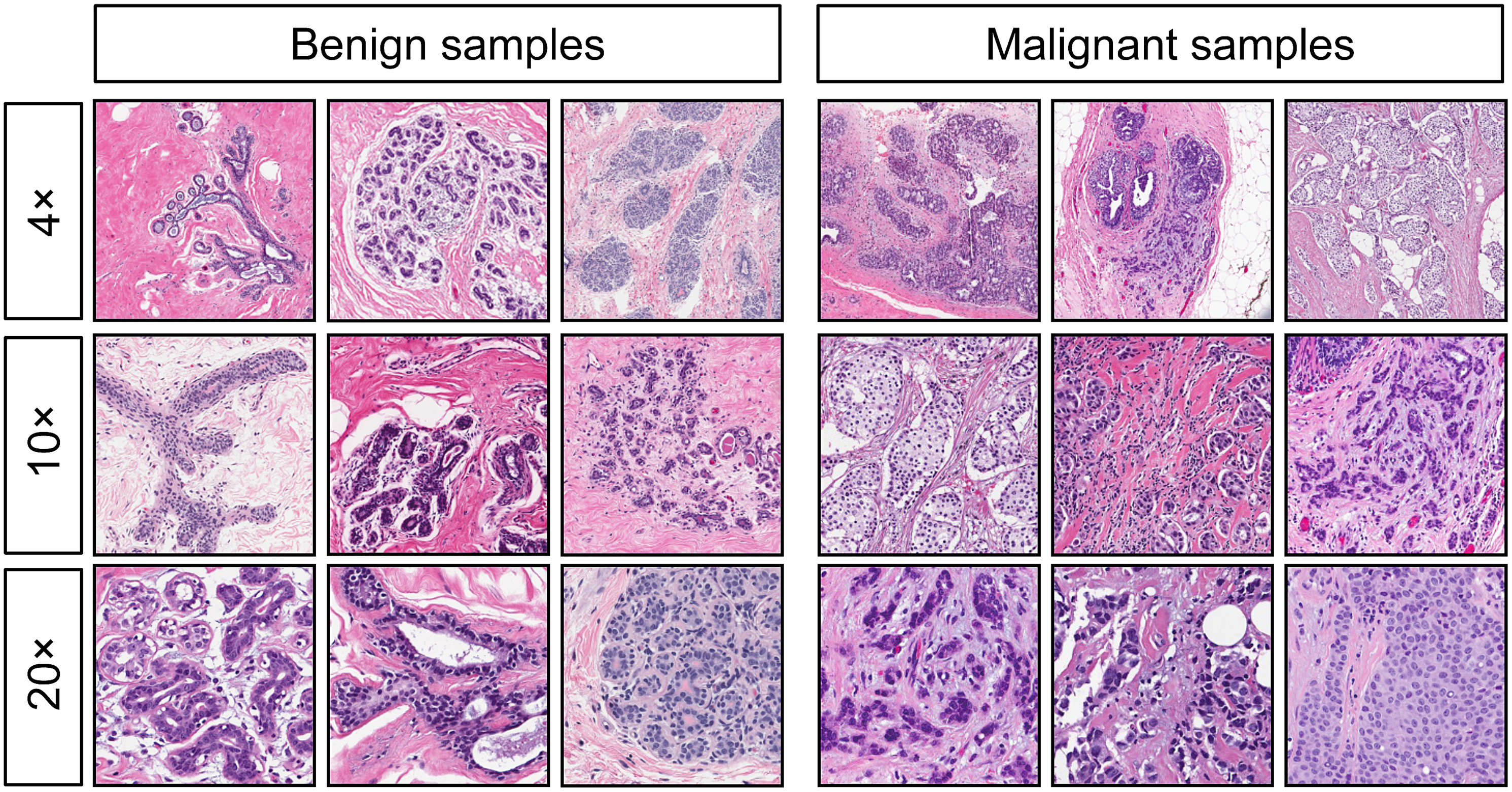
Examples of benign (left) and malignant (right) breast specimens stained with hematoxylin and eosin, at different magnifications. The birds were remarkably adept at discriminating between benign and malignant breast cancer slides at all magnifications, a task that can perplex inexperienced human observers, who typically require considerable training to attain mastery. (credit: Levenson RM et al./PloS)

For the study, each pigeon learned to discriminate cancerous from non-cancerous images and slides using traditional “operant conditioning,” a technique in which a bird was rewarded only when a correct selection was made; incorrect selections were not rewarded and prompted correction trials. Training with stained pathology slides included a large set of benign and cancerous samples from routine cases at UC Davis Medical Center.

“The birds were remarkably adept at discriminating between benign and malignant breast cancer slides at all magnifications, a task that can perplex inexperienced human observers, who typically require considerable training to attain mastery,” Levenson said. He said the pigeons achieved nearly 85 percent correct within 15 days.

Flock-sourcing: 99 percent accuracy

“When we showed a cohort of four birds a set of uncompressed images, an approach known as “flock-sourcing,” the group’s accuracy level reached an amazing 99 percent correct, higher than that achieved by any of the four individual birds.” Wasserman has conducted studies on pigeons for more than 40 years.

The birds, however, had difficulty evaluating the malignant potential of breast masses (without microcalcifications) detected on mammograms, a task the authors acknowledge as “very challenging.”

After years of education and training, physicians can sometimes struggle with the interpretation of microscope slides and mammograms. Levenson, a pathologist who studies artificial intelligence for image analysis and other applications in biology and medicine, believes there is considerable room for enhancing the process.

“While new technologies are constantly being designed to enhance image acquisition, processing, and display, these potential advances need to be validated using trained observers to monitor quality and reliability,” Levenson said. “This is a difficult, time-consuming, and expensive process that requires the recruitment of clinicians as subjects for these relatively mundane tasks. “Pigeons’ sensitivity to diagnostically salient features in medical images suggest that they can provide reliable feedback on many variables at play in the production, manipulation, and viewing of these diagnostically crucial tools, and can assist researchers and engineers as they continue to innovate.”

This work also suggests that pigeons’ remarkable ability to discriminate between complex visual images could be put to good use as trained medical image observers, to help researchers explore image quality and the impact of color, contrast, brightness, and image compression artifacts on diagnostic performance.


Victor Navarro | Pigeons (Columba livia) as Trainable Observers of Pathology and Radiology Breast Cancer Images


Abstract of Pigeons (Columba livia) as Trainable Observers of Pathology and Radiology Breast Cancer Images

Pathologists and radiologists spend years acquiring and refining their medically essential visual skills, so it is of considerable interest to understand how this process actually unfolds and what image features and properties are critical for accurate diagnostic performance. Key insights into human behavioral tasks can often be obtained by using appropriate animal models. We report here that pigeons (Columba livia)—which share many visual system properties with humans—can serve as promising surrogate observers of medical images, a capability not previously documented. The birds proved to have a remarkable ability to distinguish benign from malignant human breast histopathology after training with differential food reinforcement; even more importantly, the pigeons were able to generalize what they had learned when confronted with novel image sets. The birds’ histological accuracy, like that of humans, was modestly affected by the presence or absence of color as well as by degrees of image compression, but these impacts could be ameliorated with further training. Turning to radiology, the birds proved to be similarly capable of detecting cancer-relevant microcalcifications on mammogram images. However, when given a different (and for humans quite difficult) task—namely, classification of suspicious mammographic densities (masses)—the pigeons proved to be capable only of image memorization and were unable to successfully generalize when shown novel examples. The birds’ successes and difficulties suggest that pigeons are well-suited to help us better understand human medical image perception, and may also prove useful in performance assessment and development of medical imaging hardware, image processing, and image analysis tools.

Exercise may protect against neurodegenerative diseases

(credit: iStock)

Exercise may protect aging brains against the neurodegenerative diseases resulting from energy-depleting stress caused by neurotoxins and other factors, according to researchers at the National Institute on Aging Intramural Research Program and Johns Hopkins University School of Medicine.

They found that running-wheel exercise increased the amount of SIRT3 in neurons of normal mice and protected them against degeneration.

However, mice models genetically modified to not produce SIRT3 became highly sensitive to stress when exposed to neurotoxins that cause neurodegeneration and epileptic seizures, and running failed to protect the neurons. In that case, neurons could be protected against stress by a gene-therapy technology to increase levels of SIRT3 in neurons, they found.

These findings suggest that bolstering mitochondrial function and stress resistance by increasing SIRT3 levels — either by exercise or gene therapy — may protect against age-related cognitive decline and brain diseases, the researchers say.

The research team report their findings online today (Nov. 19) in the journal Cell Metabolism. This work was supported by the Intramural Research Program of the National Institute on Aging and the Glenn Foundation for Biomedical Research.


Abstract of Mitochondrial SIRT3 mediates adaptive responses of neurons to exercise, and metabolic and excitatory challenges

The impact of mitochondrial protein acetylation status on neuronal function and vulnerability to neurological disorders is unknown. Here we show that the mitochondrial protein deacetylase SIRT3 mediates adaptive responses of neurons to bioenergetic, oxidative, and excitatory stress. Cortical neurons lacking SIRT3 exhibit heightened sensitivity to glutamate-induced calcium overload and excitotoxicity and oxidative and mitochondrial stress; AAV-mediated Sirt3 gene delivery restores neuronal stress resistance. In models relevant to Huntington’s disease and epilepsy, Sirt3-/- mice exhibit increased vulnerability of striatal and hippocampal neurons, respectively. SIRT3 deficiency results in hyperacetylation of several mitochondrial proteins, including superoxide dismutase 2 and cyclophilin D. Running wheel exercise increases the expression of Sirt3 in hippocampal neurons, which is mediated by excitatory glutamatergic neurotransmission and is essential for mitochondrial protein acetylation homeostasis and the neuroprotective effects of running. Our findings suggest that SIRT3 plays pivotal roles in adaptive responses of neurons to physiological challenges and resistance to degeneration.