Modulating brain’s stress circuity might prevent Alzheimer’s disease

Effect of drug treatment on AD mice in control group (left) or drug (right) on Ab plaque load. (credit: Cheng Zhang et al./Alzheimer’s & Dementia: The Journal of the Alzheimer’s Association)

In a novel animal study design that mimicked human clinical trials, researchers at University of California, San Diego School of Medicine report that long-term treatment using a small-molecule drug that reduces activity of  the brain’s stress circuitry significantly reduces Alzheimer’s disease (AD) neuropathology and prevents onset of cognitive impairment in a mouse model of the neurodegenerative condition.

The findings are described in the current online issue of the journal Alzheimer’s & Dementia: The Journal of the Alzheimer’s Association.

Previous research has shown a link between the brain’s stress signaling pathways and AD. Specifically, the release of a stress-coping hormone called corticotropin-releasing factor (CRF), which is widely found in the brain and acts as a neurotransmitter/neuromodulator, is dysregulated in AD and is associated with impaired cognition and with detrimental changes in tau protein and increased production of amyloid-beta protein fragments that clump together and trigger the neurodegeneration characteristic of AD.

“Our work and that of our colleagues on stress and CRF have been mechanistically implicated in Alzheimer’s disease, but agents that impact CRF signaling have not been carefully tested for therapeutic efficacy or long-term safety in animal models,” said the study’s principal investigator and corresponding author Robert Rissman, PhD, assistant professor in the Department of Neurosciences and Biomarker Core Director for the Alzheimer’s Disease Cooperative Study (ADCS).

The researchers determined that modulating the mouse brain’s stress circuitry mitigated generation and accumulation of amyloid plaques widely attributed with causing neuronal damage and death. As a consequence, behavioral indicators of AD were prevented and cellular damage was reduced.  The mice began treatment at 30-days-old — before any pathological or cognitive signs of AD were present — and continued until six months of age.

One particular challenge, Rissman noted, is limiting exposure of the drug to the brain so that it does not impact the body’s ability to respond to stress. “This can be accomplished because one advantage of these types of small molecule drugs is that they readily cross the blood-brain barrier and actually prefer to act in the brain,” Rissman said.

“Rissman’s prior work demonstrated that CRF and its receptors are integrally involved in changes in another AD hallmark, tau phosphorylation,” said William Mobley, MD, PhD, chair of the Department of Neurosciences and interim co-director of the Alzheimer’s Disease Cooperative Study at UC San Diego. “This new study extends those original mechanistic findings to the amyloid pathway and preservation of cellular and synaptic connections.  Work like this is an excellent example of UC San Diego’s bench-to-bedside legacy, whereby we can quickly move our basic science findings into the clinic for testing,” said Mobley.

Rissman said R121919 was well-tolerated by AD mice (no significant adverse effects) and deemed safe, suggesting CRF-antagonism is a viable, disease-modifying therapy for AD. Drugs like R121919 were originally designed to treat generalized anxiety disorder, irritable bowel syndrome and other diseases, but failed to be effective in treating those disorders.

Rissman noted that repurposing R121919 for human use was likely not possible at this point. He and colleagues are collaborating with the Sanford Burnham Prebys Medical Discovery Institute to design new assays to discover the next generation of CRF receptor-1 antagonists for testing in early phase human safety trials.

“More work remains to be done, but this is the kind of basic research that is fundamental to ultimately finding a way to cure — or even prevent —Alzheimer’s disease,” said David Brenner, MD, vice chancellor, UC San Diego Health Sciences and dean of UC San Diego School of Medicine. “These findings by Dr. Rissman and his colleagues at UC San Diego and at collaborating institutions on the Mesa suggest we are on the cusp of creating truly effective therapies.”


Abstract of Corticotropin-releasing factor receptor-1 antagonism mitigates beta amyloid pathology and cognitive and synaptic deficits in a mouse model of Alzheimer’s disease

Introduction: Stress and corticotropin-releasing factor (CRF) have been implicated as mechanistically involved in Alzheimer’s disease (AD), but agents that impact CRF signaling have not been carefully tested for therapeutic efficacy or long-term safety in animal models.

Methods: To test whether antagonism of the type-1 corticotropin-releasing factor receptor (CRFR1) could be used as a disease-modifying treatment for AD, we used a preclinical prevention paradigm and treated 30-day-old AD transgenic mice with the small-molecule, CRFR1-selective antagonist, R121919, for 5 months, and examined AD pathologic and behavioral end points.

Results: R121919 significantly prevented the onset of cognitive impairment in female mice and reduced cellular and synaptic deficits and beta amyloid and C-terminal fragment-β levels in both genders. We observed no tolerability or toxicity issues in mice treated with R121919.

Discussion: CRFR1 antagonism presents a viable disease-modifying therapy for AD, recommending its advancement to early-phase human safety trials.

Allen Institute researchers decode patterns that make our brains human

Percentage of known neuron-, astrocyte- and oligodendrocyte-enriched genes in 32 modules, ordered by proportion of neuron-enriched gene membership. (credit: Michael Hawrylycz et al./Nature Neuroscience)

Allen Institute researchers have identified a surprisingly small set of just 32 gene-expression patterns for all 20,000 genes across 132 functionally distinct human brain regions, and these patterns appear to be common to all individuals.

In research published this month in Nature Neuroscience, the researchers used data for six brains from the publicly available Allen Human Brain Atlas. They believe the study is important because it could provide a baseline from which deviations in individuals may be measured and associated with diseases, and could also provide key insights into the core of the genetic code that makes our brains distinctly human.

While many of these patterns were similar in human and mouse, many genes showed different patterns in human. Surprisingly, genes associated with neurons were most conserved (consistent) across species, while those for the supporting glial cells showed larger differences. The most highly stable genes (the genes that were most consistent across all brains) include those associated with diseases and disorders like autism and Alzheimer’s, and these genes include many existing drug targets.

These patterns provide insights into what makes the human brain distinct and raise new opportunities to target therapeutics for treating disease.

The researchers also found that the pattern of gene expression in cerebral cortex is correlated with “functional connectivity” as revealed by neuroimaging data from the Human Connectome Project.

“The human brain is phenomenally complex, so it is quite surprising that a small number of patterns can explain most of the gene variability across the brain,” says Christof Koch, Ph.D., President and Chief Scientific Officer at the Allen Institute for Brain Science. “There could easily have been thousands of patterns, or none at all. This gives us an exciting way to look further at the functional activity that underlies the uniquely human brain.”


Abstract of Canonical genetic signatures of the adult human brain

The structure and function of the human brain are highly stereotyped, implying a conserved molecular program responsible for its development, cellular structure and function. We applied a correlation-based metric called differential stability to assess reproducibility of gene expression patterning across 132 structures in six individual brains, revealing mesoscale genetic organization. The genes with the highest differential stability are highly biologically relevant, with enrichment for brain-related annotations, disease associations, drug targets and literature citations. Using genes with high differential stability, we identified 32 anatomically diverse and reproducible gene expression signatures, which represent distinct cell types, intracellular components and/or associations with neurodevelopmental and neurodegenerative disorders. Genes in neuron-associated compared to non-neuronal networks showed higher preservation between human and mouse; however, many diversely patterned genes displayed marked shifts in regulation between species. Finally, highly consistent transcriptional architecture in neocortex is correlated with resting state functional connectivity, suggesting a link between conserved gene expression and functionally relevant circuitry.

50 corporations track third-party data from 88 percent of 1 million top websites

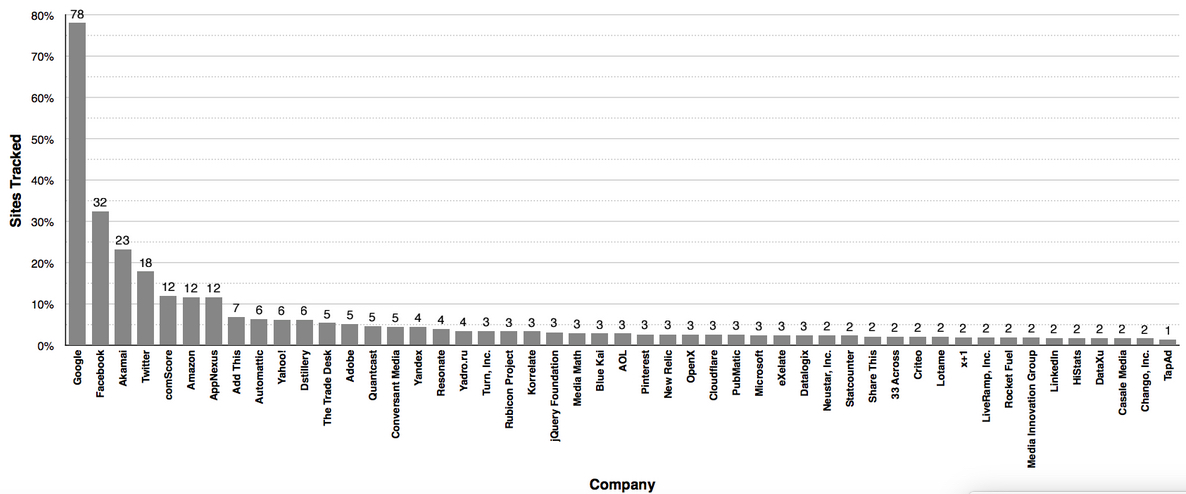
Percentage of sites tracked by top 50 corporations. These 50 corporations were monitoring the greatest percentage of third party data from the Alexa top one million sites studied. (credit: Tim Libert)

A survey of 1 million top websites finds that 88 percent share user data with third parties, according to Tim Libert, a doctoral student at the Annenberg School for Communication at the University of Pennsylvania. The study was published in an open-access paper in the International Journal of Communication.

These websites, listed on Alexa, contact an average of nine external domains, indicating that the activity of a single person visiting a single site may be tracked by multiple entities.

Libert discovered that a handful of U.S. companies receive the vast bulk of user data worldwide, led by Google, which tracked users on nearly 80% of the websites studied. Other top followers on the sites studied include Facebook (32%), Twitter (18%), ComScore (12%), Amazon (12%), and AppNexus (12%).

Elevated security risks

While this monitoring of your behavior doesn’t signal nefarious activity or a security breach, it does increase the risk of one taking place. “If your data is being sent to several companies,” says Libert, “that creates new potential points of failure where your data could be hacked or leaked.”

Using the contents of NSA documents leaked by Edward Snowden, Libert also determined that roughly 20% of websites are potentially vulnerable to known NSA spying techniques. And since a number of large companies are aggregating user data from countless smaller sites, this makes it even easier for government agencies to gather data.

This information may be used to serve you more relevant advertising or to deliver content more quickly, but the ways in which your data is used is not always transparent. And efforts to opt out of that data collection can prove frustrating.

Ostensibly there should be a solution: the browser’s “Do Not Track” (DNT) setting. However Libert’s study found that with the notable exception of Twitter, DNT requests are totally ignored.

“It’s up to regulators to work with companies to comply, because they’re not doing it on their own,” says Libert. “The infrastructure to respect people’s privacy preferences exists, and it works. But unless there are real financial consequences for corporations, they’re just going to ignore DNT. Self-regulation to date has been a big failure.”

This study used Libert’s open-source software platform, webXray, a tool for detecting third-party HTTP requests on large numbers of web pages and matching them to the companies that receive user data. Libert also has made a dataset of the study’s 35 million third-party request records available on his website: timlibert.me.

KurzweilAI’s privacy policy is here.


Abstract of Exposing the Invisible Web: An Analysis of Third-Party HTTP Requests on 1 Million Websites

This article provides a quantitative analysis of privacy-compromising mechanisms on 1 million popular websites. Findings indicate that nearly 9 in 10 websites leak user data to parties of which the user is likely unaware; more than 6 in 10 websites spawn third-party cookies; and more than 8 in 10 websites load Javascript code from external parties onto users’ computers. Sites that leak user data contact an average of nine external domains, indicating that users may be tracked by multiple entities in tandem. By tracing the unintended disclosure of personal browsing histories on the Web, it is revealed that a handful of U.S. companies receive the vast bulk of user data. Finally, roughly 1 in 5 websites are potentially vulnerable to known National Security Agency spying techniques at the time of analysis.

How to control information leaks from smartphone apps

A Northeastern University research team has found “exten­sive” leakage of users’ information — device and user iden­ti­fiers, loca­tions, and passwords — into net­work traffic from apps on mobile devices, including iOS, Android, and Win­dows phones. The researchers have also devised a way to stop the flow.

David Choffnes, an assis­tant pro­fessor in the Col­lege of Com­puter and Infor­ma­tion Sci­ence, and his col­leagues devel­oped a simple, effi­cient cloud-based system called ReCon. It detects leaks of “per­son­ally iden­ti­fi­able infor­ma­tion,” alerts users to those breaches, and enables users to con­trol the leaks by spec­i­fying what infor­ma­tion they want blocked and from whom.

The team’s study fol­lowed 31 mobile device users with iOS devices and Android devices who used ReCon for a period of one week to 101 days and then mon­i­tored their per­sonal leak­ages through a ReCon secure webpage.

The results were alarming. “Depress­ingly, even in our small user study we found 165 cases of cre­den­tials being leaked in plain­text,” the researchers wrote.

Of the top 100 apps in each oper­ating system’s app store that par­tic­i­pants were using, more than 50 per­cent leaked device iden­ti­fiers, more than 14 per­cent leaked actual names or other user iden­ti­fiers, 14–26 per­cent leaked loca­tions, and three leaked pass­words in plain­text. In addi­tion to those top apps, the study found sim­ilar pass­word leaks from 10 addi­tional apps that par­tic­i­pants had installed and used.

The password-leaking apps included Map­MyRun, the lan­guage app Duolingo, and the Indian dig­ital music app Gaana. All three devel­opers have since fixed the leaks. Sev­eral other apps con­tinue to send plain­text pass­words into traffic, including a pop­ular dating app.

What’s really trou­bling is that we even see sig­nif­i­cant num­bers of apps sending your pass­word, in plain­text read­able form, when you log in,” says Choffnes. In a public-WiFi set­ting, that means anyone run­ning “some pretty simple soft­ware” could nab it.

Screen capture of the ReCon user interface. Users can view how their personally identifiable information is leaked, validate the suspected leaks, and create custom filters to block or modify leaks. (credit: Jingjing Ren et al./arXiv)

Apps that track

Access settings for an iPhone app (credit: KurzweilAI)

Apps, like many other dig­ital prod­ucts, con­tain soft­ware that tracks our com­ings, goings, and details of who we are. If you look in the pri­vacy set­ting on your iPhone, you’ll see this state­ment:

“As appli­ca­tions request access to your data, they will be added in the cat­e­gories above.”

Those cat­e­gories include “Loca­tion Ser­vices,” “Con­tacts,” “Cal­en­dars,” “Reminders,” “Photos,” “Blue­tooth Sharing,” and “Camera.”

Although many users don’t realize it, they have con­trol over that access. “When you install an app on a mobile device, it will ask you for cer­tain per­mis­sions that you have to approve or deny before you start using the app,” explains Choffnes. “Because I’m a bit of a pri­vacy nut, I’m even selec­tive about which apps I let know my loca­tion.” For a nav­i­ga­tion app, he says, fine. For others, it’s not so clear.

One reason that apps track you, of course, so is so devel­opers can recover their costs. Many apps are free, tied in with tracking soft­ware, sup­plied by adver­tising and ana­lytics net­works, that gen­er­ates rev­enue when users click on the tar­geted ads that pop up on their phones.

ReCon

Using ReCon is easy, Choffnes says. Par­tic­i­pants install a vir­tual pri­vate net­work, or VPN, on their devices — an easy six- or seven-step process. The VPN then securely trans­mits users’ data to the system’s server, which runs the ReCon soft­ware, iden­ti­fying when and what infor­ma­tion is being leaked.

To learn the status of their infor­ma­tion, par­tic­i­pants simply log onto the ReCon secure web­page. There they can find things like a Google map pin­pointing which of their apps are zap­ping their loca­tion to other des­ti­na­tions and which apps are releasing their pass­words into unen­crypted net­work traffic. They can also tell the system what they want to do about it.

“One of the advan­tages to our approach is you don’t have to tell us your infor­ma­tion, for example, your pass­word, email, or gender,” says Choffnes. “Our system is designed to use cues in the net­work traffic to figure out what kind of infor­ma­tion is being leaked. The soft­ware then auto­mat­i­cally extracts what it sus­pects is your per­sonal infor­ma­tion. We show those find­ings to users, and they tell us if we are right or wrong. That per­mits us to con­tin­u­ally adapt our system, improving its accuracy.”

The team’s eval­u­a­tive study showed that ReCon iden­ti­fies leaks with 98 per­cent accuracy.

“There are other tools that will show you how you’re being tracked but they won’t nec­es­sarily let you do any­thing,” says Choffnes. “And they are mostly focused on tracking behavior and not the actual per­sonal infor­ma­tion that’s being sent out. ReCon covers a wide range of infor­ma­tion being sent out over the net­work about you, and auto­mat­i­cally detects when your infor­ma­tion is leaked without having to know in advance what that infor­ma­tion is. You can [also] set poli­cies to change how your infor­ma­tion is being released.”

A demo of ReCon is available here.

Choffnes presented his find­ings in an open-access paper Monday Nov. 16 at the Data Trans­parency Lab 2015 Con­fer­ence, held at the MIT Media Lab.


Abstract of ReCon: Revealing and Controlling Privacy Leaks in Mobile Network Traffic

It is well known that apps running on mobile devices extensively track and leak users’ personally identifiable information (PII); however, these users have little visibility into PII leaked through the network traffic generated by their devices, and have poor control over how, when and where that traffic is sent and handled by third parties. In this paper, we present the design, implementation, and evaluation of ReCon: a cross-platform system that reveals PII leaks and gives users control over them without requiring any special privileges or custom OSes. ReCon leverages machine learning to reveal potential PII leaks by inspecting network traffic, and provides a visualization tool to empower users with the ability to control these leaks via blocking or substitution of PII. We evaluate ReCon’s effectiveness with measurements from controlled experiments using leaks from the 100 most popular iOS, Android, and Windows Phone apps, and via an IRB-approved user study with 31 participants. We show that ReCon is accurate, efficient, and identifies a wider range of PII than previous approaches.

Can humans empathize with robots? The knife test.

Examples of pictures of humans and robots in pain or perceived pain (credit: Toyohashi University of Technology)

Researchers at Toyohashi University of Technology and Kyoto University have found the first neurophysiological evidence of humans’ ability to empathize with robots in perceived pain — at least when it comes to losing a finger.

They monitored event-related electroencephalography (EEG) signals from 15 healthy adults who were observing pictures of either a human or robotic hand in painful or non-painful situations, such as a finger being cut by a knife.

They found that brain potentials related to humanoid robots in (perceived) pain were similar to those for  humans in pain, but with one exception: The ascending phase of the P3 wave (350-500 ms after the stimulus presentation) did not show an effect for a robot in perceived pain, compared to a human. The researchers suggest that could be explained by the perceived unnaturalness of robot hands being cut by knives.

However, the researchers agree the experiment was not conclusive. What about a robot with a human size-hand with thinner fingers? Or more natural-looking features (no wires or metal)? Or no actual fingers? Or an unfriendly robot?


Abstract of Measuring empathy for human and robot hand pain using electroencephalography

This study provides the first physiological evidence of humans’ ability to empathize with robot pain and highlights the difference in empathy for humans and robots. We performed electroencephalography in 15 healthy adults who observed either human- or robot-hand pictures in painful or non-painful situations such as a finger cut by a knife. We found that the descending phase of the P3 component was larger for the painful stimuli than the non-painful stimuli, regardless of whether the hand belonged to a human or robot. In contrast, the ascending phase of the P3 component at the frontal-central electrodes was increased by painful human stimuli but not painful robot stimuli, though the interaction of ANOVA was not significant, but marginal. These results suggest that we empathize with humanoid robots in late top-down processing similarly to human others. However, the beginning of the top-down process of empathy is weaker for robots than for humans.

A molecular light-driven nanosubmarine

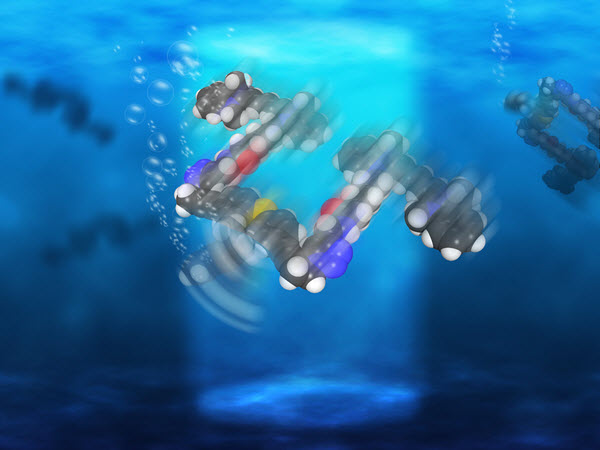
Rice University scientists have created light-driven, single-molecule submersibles that contain just 244 atoms (credit: Loïc Samuel/Rice University)

The Rice University lab of chemist James Tour has created single-molecule, 244-atom submersibles with motors powered by ultraviolet light, as they reported this month in the American Chemical Society journal Nano Letters.

With each full revolution, the motor’s tail-like propeller moves the sub forward 18 nanometers, but with the motors running at more than a million RPM, that translates into almost 1 inch per second — a breakneck pace on the molecular scale, says Tour. “These are the fastest-moving molecules ever seen in solution,” he said.

This chemical schematic shows the design of single-molecule nanosubmersibles created at Rice University. The nanosub’s fluorescent pontoons are blue; the motor is red. (credit: Victor García-López/Rice University)

While they can’t be steered yet, the study proves molecular motors are powerful enough to drive the sub-10-nanometer subs through solutions of moving molecules of about the same size. “This is akin to a person walking across a basketball court with 1,000 people throwing basketballs at him,” Tour said.

In 2006, Tour’s lab introduced the world to nanocars, single-molecule cars with four wheels, axles, and independent suspensions that could be “driven” across a surface (see “Rice scientists attach motor to single-molecule car“).

Tour said many scientists have created microscopic machines with motors over the years, but most have either used or generated toxic chemicals. He said a motor that was conceived in 2009 by a group in the Netherlands proved suitable for Rice’s submersibles, which were produced in a 20-step chemical synthesis.

“These motors are well-known and used for different things,” said lead author and Rice graduate student Victor García-López. “But we were the first ones to propose they can be used to propel nanocars and now submersibles.”

Operate like a bacteria’s flagellum

A nanosubmarine found in nature: this whip-like flagellum powers a bacterium’s swimming (credit: LadyofHats/CC)

The motors, which operate more like a bacteria’s flagellum than a propeller, complete each revolution in four steps. When excited by light, the double bond that holds the rotor to the body becomes a single bond, allowing it to rotate a quarter step. As the motor seeks to return to a lower energy state, it jumps adjacent atoms for another quarter turn. The process repeats as long as the light is on.

For comparison tests, the lab also made submersibles with no motors, slow motors, and motors that paddle back and forth. All versions of the submersibles have pontoons that fluoresce red when excited by a laser, according to the researchers.

Once built, the sub’s performance was independently confirmed by Gufeng Wang at North Carolina State University.

Rice’s researchers hope future nanosubs will be able to carry cargoes for medical and other purposes. “There’s a path forward,” García-López said. “This is the first step, and we’ve proven the concept. Now we need to explore opportunities and potential applications.”

Wang is an assistant professor of analytical chemistry at North Carolina State. Tour is the T.T. and W.F. Chao Chair in Chemistry as well as a professor of computer science and of materials science and nanoengineering.

The National Science Foundation, the National Institutes of Health, the Welch Foundation, and North Carolina State supported the research.


Abstract of Unimolecular Submersible Nanomachines. Synthesis, Actuation, and Monitoring

Unimolecular submersible nanomachines (USNs) bearing light-driven motors and fluorophores are synthesized. NMR experiments demonstrate that the rotation of the motor is not quenched by the fluorophore and that the motor behaves in the same manner as the corresponding motor without attached fluorophores. No photo or thermal decomposition is observed. Through careful design of control molecules with no motor and with a slow motor, we found using single molecule fluorescence correlation spectroscopy that only the molecules with fast rotating speed (MHz range) show an enhancement in diffusion by 26% when the motor is fully activated by UV light. This suggests that the USN molecules give ∼9 nm steps upon each motor actuation. A non-unidirectional rotating motor also results in a smaller, 10%, increase in diffusion. This study gives new insight into the light actuation of motorized molecules in solution.

‘Super natural killer cells’ destroy cancer in lymph nodes to halt metastasis

Nanoscale liposomes (orange) containing TRAIL protein (green) attach to the surface of white blood cells (blue), bump into cancer cells (brown), and program them to die (credit: Cornell University)

Cornell biomedical engineers have developed specialized white blood cells they call “super natural killer cells” that seek out cancer cells in lymph nodes with only one purpose: to destroy them, halting the onset of cancer tumor cell metastasis.

“We want to see lymph-node metastasis become a thing of the past,” said Michael R. King, the Daljit S. and Elaine Sarkaria Professor of Biomedical Engineering and senior author of a paper in the journal Biomaterials.

For tumor cells, the lymph nodes are a staging area in the body and play a key role in advancing metastasis throughout the body. In the study with mice, the biomedical engineers killed cancerous tumor cells within days by injecting liposomes (spherical vesicles that can act as carriers) armed with TRAIL (Tumor necrosis factor Related Apoptosis-Inducing Ligand). The liposomes attached to “natural killer” cells — a type of white blood cell — residing in the lymph nodes.

Inducing cancer-cell suicide

King says these natural killer cells in the body became the “super natural killer cells,” which found the cancerous cells and induced apoptosis (cell suicide). The cancer cells self-destruct and disintegrate, preventing the lymphatic spread of cancer any further by “completely eliminating lymph node metastases in mice,” said King.

In cancer progression, there are four stages. At stage I, the tumor is small and has yet to progress to the lymph nodes. In stages II and III, the tumors have grown and likely will have spread to the lymph nodes. At stage IV, the cancer has advanced from the lymph nodes to organs and other parts of the body.

Between 29 and 37 percent of patients with breast, colorectal, and lung cancers are diagnosed with metastases in their tumor-draining lymph nodes — those lymph nodes that lie downstream from the tumor — and those patients are at a higher risk for distant-organ metastases and later-stage cancer diagnoses.

In January 2014, King and his colleagues published research (see “Piggy-backing proteins ride white blood cells to destroy metastasizing cancer“) that demonstrated that by attaching the TRAIL protein to white blood cells, metastasizing cancer cells in the bloodstream were annihilated.

“So, now we [also] have technology to eliminate lymph node metastases,” King said. He said human testing of the TRAIL drug could be done “short of a few years from now.”


Cornell University Media Relations | Cornell scientists develop “killer cells” to destroy cancer in lymph nodes


Abstract of Super natural killer cells that target metastases in the tumor draining lymph nodes

Tumor draining lymph nodes are the first site of metastasis in most types of cancer. The extent of metastasis in the lymph nodes is often used in staging cancer progression. We previously showed that nanoscale TRAIL liposomes conjugated to human natural killer cells enhance their endogenous therapeutic potential in killing cancer cells cultured in engineered lymph node microenvironments. In this work, it is shown that liposomes decorated with apoptosis-inducing ligand TRAIL and an antibody against a mouse natural killer cell marker are carried to the tumor draining inguinal lymph nodes and prevent the lymphatic spread of a subcutaneous tumor in mice. It is shown that targeting natural killer cells with TRAIL liposomes enhances their retention time within the tumor draining lymph nodes to induce apoptosis in cancer cells. It is concluded that this approach can be used to kill cancer cells within the tumor draining lymph nodes to prevent the lymphatic spread of cancer.

Reprogramming neurons and rewiring the brain

Neurons of the cerebral cortex targeted for reprogramming are displayed in green. (credit: Caroline Rouaux/Arlotta Lab)

In previous research, Harvard Stem Cell Institute researchers disproved neurobiology dogma by “reprogramming” neurons — turning one form of neuron into another — in the brains of living animals. Now they’ve taken it a step further, showing that networks of communication among reprogrammed neurons and their neighbors can also be changed, or “rewired.”

The finding, by Paola Arlotta, a professor of stem cell and regenerative biology, in close collaboration with Takao Hensch, a professor of molecular and cellular biology, has implications for both a basic understanding of how neurons choose their synaptic partners when circuits wire during early development, and for developing strategies to change defective communication in psychiatric and neurodevelopmental diseases, such as schizophrenia and autism, the researchers suggest.

In the new research, the research team reprogrammed one type of excitatory neurons into another type of excitatory neurons, and then observed connections made by a type of inhibitory neurons, noticing that the inhibitory neurons then recognized the reprogrammed excitatory neurons as “new” cells and modified their circuitry as a result.*

“What we’ve shown here is that not only neurons can be dramatically changed from one type into another from within the brain,” said Arlotta, but also that “neighboring neurons recognize the reprogrammed cells as different and adapt by changing how they communicate with them. Transformed neurons were recognized as ‘new’ cells, with different properties, by neighboring inhibitory interneurons, which in turn created new circuitry appropriate for their ‘new’ neuronal target,” Arlotta said.

That demonstrates that “synaptic connections among neurons are not made randomly,” she added. “The brain is much more sophisticated, and different neurons have ways to control the behavior of neighboring circuits in their own unique way to ultimately change how much inhibition, for example, they receive from their synaptic partners.”

Rewiring the brain to fix a damaged circuit

One of the major focuses today in regenerative neurobiology is to use stem cells to produce and replace neurons killed off by disease, and then implant them into patients’ brains. “Instead of making neurons in a dish from stem cells, an alternative would be to reprogram the identity of other neurons,” Arlotta said.

“These are early but exciting days,” Arlotta said. “The work thus far has been done in the brains of young mice, which are far more plastic than adult brains,” she pointed out. The next frontier, she said, is to attempt to reprogram neurons and circuits in older brains. “If we could do it in an adult brain, it would be immensely powerful.”

Arlotta is also an associate member of the Stanley Center for Psychiatric Disease at the Broad Institute of Harvard and MIT.

The work is published in the latest edition of the journal Neuron.

* The researchers first reprogrammed “glutamatergic excitatory projection neurons (PNs)” (neurons of the cerebral cortex that normally would connect the two sides of the brain) into another type of PN neurons that instead connect far away, for example in the spinal cord. They then monitored the behavior of a third class of cells, “local GABAergic inhibitory interneurons (INs)” and showed that the INs change their synaptic connections to connect to the reprogrammed PN neurons.  


Abstract of Instructing Perisomatic Inhibition by Direct Lineage Reprogramming of Neocortical Projection Neurons

During development of the cerebral cortex, local GABAergic interneurons recognize and pair with excitatory projection neurons to ensure the fine excitatory-inhibitory balance essential for proper circuit function. Whether the class-specific identity of projection neurons has a role in the establishment of afferent inhibitory synapses is debated. Here, we report that direct in vivo lineage reprogramming of layer 2/3 (L2/3) callosal projection neurons (CPNs) into induced corticofugal projection neurons (iCFuPNs) increases inhibitory input onto the converted neurons to levels similar to that of endogenous CFuPNs normally found in layer 5 (L5). iCFuPNs recruit increased numbers of inhibitory perisomatic synapses from parvalbumin (PV)-positive interneurons, with single-cell precision and despite their ectopic location in L2/3. The data show that individual reprogrammed excitatory projection neurons extrinsically modulate afferent input by local PV+ interneurons, suggesting that projection neuron class-specific identity can actively control the wiring of the cortical microcircuit.

‘Porous liquid’ invention could lead to improved carbon capture

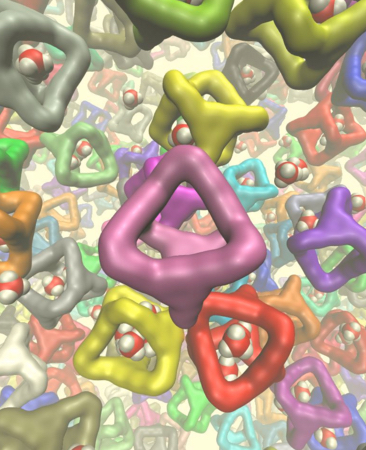
World’s first “porous liquid” (credit: Queen’s University Belfast)

Scientists at Queen’s University Belfast, Northern Ireland, and partners have invented a “porous liquid” that can dissolve unusually large amounts of gas, with the potential for a wide range of new uses, including carbon capture.

They designed the new liquid from the bottom up, designing the shapes of the “cage molecules” to form empty holes. The researchers say the concentration of unoccupied cages can be around 500 times greater than in other molecular solutions that contain cavities, enabling an eightfold increase in the solubility of methane gas, for example.

The results of their research were published Nov. 12 in the journal Nature.


Abstract of Liquids with permanent porosity

Porous solids such as zeolites and metal–organic frameworks are useful in molecular separation and in catalysis, but their solid nature can impose limitations. For example, liquid solvents, rather than porous solids, are the most mature technology for post-combustion capture of carbon dioxide because liquid circulation systems are more easily retrofitted to existing plants. Solid porous adsorbents offer major benefits, such as lower energy penalties in adsorption–desorption cycles, but they are difficult to implement in conventional flow processes. Materials that combine the properties of fluidity and permanent porosity could therefore offer technological advantages, but permanent porosity is not associated with conventional liquids5. Here we report free-flowing liquids whose bulk properties are determined by their permanent porosity. To achieve this, we designed cage molecules that provide a well-defined pore space and that are highly soluble in solvents whose molecules are too large to enter the pores. The concentration of unoccupied cages can thus be around 500 times greater than in other molecular solutions that contain cavities, resulting in a marked change in bulk properties, such as an eightfold increase in the solubility of methane gas. Our results provide the basis for development of a new class of functional porous materials for chemical processes, and we present a one-step, multigram scale-up route for highly soluble ‘scrambled’ porous cages prepared from a mixture of commercially available reagents. The unifying design principle for these materials is the avoidance of functional groups that can penetrate into the molecular cage cavities.

Experimental drug targeting Alzheimer’s disease shows anti-aging effects

As mice age, those treated with J147 (right) showed improved physiology, memory and appearance that more closely resembled younger mice (credit: the Salk Institute for Biological Studies)

Salk Institute researchers have found that an experimental drug candidate called called J147, which was aimed at combating Alzheimer’s disease, also has a host of unexpected anti-aging effects in animals.

The team used a mouse model of aging not typically used in Alzheimer’s research. When these mice were treated with J147, they had better memory and cognition, healthier blood vessels in the brain, and other improved physiological features, as detailed Nov. 12 in an open-access paper in the journal Aging.

The researchers used a comprehensive set of assays to measure the expression of all genes in the brain, along with 500 small molecules involved with metabolism in the brains and blood of three groups of the rapidly aging mice. The three groups included one set that was young, one set that was old, and one set that was old but fed J147 as they aged.

The old mice that received J147 performed better on memory and other tests for cognition and also displayed more robust motor movements. The mice treated with J147 also had fewer pathological signs of Alzheimer’s in their brains. Importantly, because of the large amount of data collected on the three groups of mice, it was possible to demonstrate that many aspects of gene expression and metabolism in the old mice fed J147 were very similar to those of young animals. These included markers for increased energy metabolism, reduced brain inflammation, and reduced levels of oxidized fatty acids in the brain.

Another notable effect was that J147 prevented the leakage of blood from the microvessels in the brains of old mice. “Damaged blood vessels are a common feature of aging in general, and in Alzheimer’s, it is frequently much worse,” says Antonio Currais, the lead author and a member of Professor David Schubert’s Cellular Neurobiology Laboratory at Salk.

The team aims to begin human trials of J147 next year.

Alzheimer’s disease is a progressive brain disorder, recently ranked as the third leading cause of death in the United States and affecting more than five million Americans. It is also the most common cause of dementia in older adults, according to the National Institutes of Health. While most drugs developed in the past 20 years target the amyloid plaque deposits in the brain (which are a hallmark of the disease), few have proven effective in the clinic.


Abstract of A comprehensive multiomics approach toward understanding the relationship between aging and dementia

Because age is the greatest risk factor for sporadic Alzheimer’s disease (AD), phenotypic screens based upon old age-associated brain toxicities were used to develop the potent neurotrophic drug J147. Since certain aspects of aging may be primary cause of AD, we hypothesized that J147 would be effective against AD-associated pathology in rapidly aging SAMP8 mice and could be used to identify some of the molecular contributions of aging to AD. An inclusive and integrative multiomics approach was used to investigate protein and gene expression, metabolite levels, and cognition in old and young SAMP8 mice. J147 reduced cognitive deficits in old SAMP8 mice, while restoring multiple molecular markers associated with human AD, vascular pathology, impaired synaptic function, and inflammation to those approaching the young phenotype. The extensive assays used in this study identified a subset of molecular changes associated with aging that may be necessary for the development of AD.