Bitdrones: Interactive quadcopters allow for ‘programmable matter’ explorations

Could an interactive swarm of flying “3D pixels” (voxels) allow users to explore virtual 3D information by interacting with physical self-levitating building blocks? (credit: Roel Vertegaal)

We’ll find out Monday, Nov. 9, when Canadian Queen’s University’s Human Media Lab professor Roel Vertegaal and his students will unleash their “BitDrones” at the ACM Symposium on User Interface Software and Technology in Charlotte, North Carolina.

Programmable matter

Vertegaal believes his BitDrones invention is the first step towards creating interactive self-levitating programmable matter — materials capable of changing their 3D shape in a programmable fashion, using swarms of tiny quadcopters. Possible applications: real-reality 3D modeling, gaming, molecular modeling, medical imaging, robotics, and online information visualization.

“BitDrones brings flying programmable matter closer to reality,” says Vertegaal. “It is a first step towards allowing people to interact with virtual 3D objects as real physical objects.”

Vertegaal and his team at the Human Media Lab created three types of BitDrones, each representing self-levitating displays of distinct resolutions.

PixelDrones are equipped with one LED and a small dot matrix display. Users could physically explore a file folder by touching the folder’s associated PixelDrone, for example. When the folder opens, its contents are shown by other PixelDrones flying in a horizontal wheel below it. Files in this wheel are browsed by physically swiping drones to the left or right.

PixelDrone (credit: Roel Vertegaal)

ShapeDrones are augmented with a lightweight mesh and a 3D-printed geometric frame; they serve as building blocks for real-time, complex 3D models.

ShapeDrones (credit: Roel Vertegaal)

DisplayDrones are fitted with a curved flexible high-resolution touchscreen, a forward-facing video camera and Android smartphone board. Remote users could move around locally through a DisplayDrone with Skype for telepresence. A DisplayDrone can automatically track and replicate all of the remote user’s head movements, allowing a remote user to virtually inspect a location and making it easier for the local user to understand the remote user’s actions.

DisplayDrone (credit: Roel Vertegaal)

All three BitDrone types are equipped with reflective markers, allowing them to be individually tracked and positioned in real time via motion capture technology. The system also tracks the user’s hand motion and touch, allowing users to manipulate the voxels in space.

“We call this a ‘real reality’ interface rather than a virtual reality interface. This is what distinguishes it from technologies such as Microsoft HoloLens and the Oculus Rift: you can actually touch these pixels, and see them without a headset,” says Vertegaal.

The system currently only supports a dozen comparatively large 2.5 to 5 inch sized drones, but the team is working to scale up their system to support thousands of drones measuring under a half-inch in size, allowing users to render more seamless, high-resolution programmable matter.

Other forms of programmable matter

BitDrones are somewhat related to MIT Media Lab scientist Neil Gershenfeld’s “programmable pebbles” — reconfigurable robots that self-assemble into different configurations (see A reconfigurable miniature robot), MIT’s “swarmbots” — self-assembling swarming microbots that snap together into different shape (see MIT inventor unleashes hundreds of self-assembling cube swarmbots), J. Storrs Hall’s “utility fog” concept in which a swarm of nanobots, called “foglets,” can take the shape of virtually anything, and change shape on the fly (see Utility Fog: The Stuff that Dreams Are Made Of), and Autodesk Research’s Project Cyborg, a cloud-based meta-platform of design tools for programming matter across domains and scales.


Human Media Lab | BitDrones: Interactive Flying Microbots Show Future of Virtual Reality is Physical


Abstract of BitDrones: Towards Levitating Programmable Matter Using Interactive 3D Quadcopter Displays

In this paper, we present BitDrones, a platform for the construction of interactive 3D displays that utilize nano quadcopters as self-levitating tangible building blocks. Our prototype is a first step towards supporting interactive mid-air, tangible experiences with physical interaction techniques through multiple building blocks capable of physically representing interactive 3D data.
3D-printed microchannels deliver oxygen, nutrients from artery to tissue implant

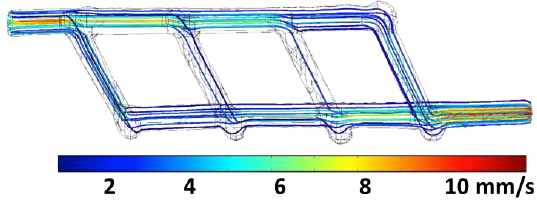
A miniature 3D-printed network of microchannels designed to link up an artery to a tissue implant to ensure blood flow of oxygen and nutrients. Inlet and outlet are ~1 millimeter in diameter; multiple smaller vessels are ~ 600 to 800 microns in diameter. Flow streamlines are color-coded corresponding to flow rate. Flow rate at the inlet is equal to 0.12 mL/min. (credit: Renganaden Sooppan et al./Tissue Engineering Part C: Methods)

Scientists have designed an innovative structure containing an intricate microchannel network of simulated blood vessels that solves one of the biggest challenges in regenerative medicine: How to deliver oxygen and nutrients to all cells in an artificial organ or tissue implant that takes days or weeks to grow in the lab prior to surgery.

The new study was performed by a research team led by Jordan Miller, assistant professor of bioengineering at Rice, and Pavan Atluri, assistant professor of surgery at Penn.

Stayin’ alive, stayin’ alive …

Miller explained that one of the hurdles of engineering large artificial tissues, such as livers or kidneys, is keeping the cells inside them alive. Tissue engineers have typically relied on the body’s own ability to grow blood vessels — for example, by implanting engineered tissue scaffolds inside the body and waiting for blood vessels from nearby tissues to spread via arbolization to the engineered constructs.

But that process can take weeks, and cells deep inside the constructs often starve or die from lack of oxygen before they’re reached by the slow-approaching blood vessels.

“What a surgeon needs in order to do transplant surgery isn’t just a mass of cells; the surgeon needs a vessel inlet and an outlet that can be directly connected to arteries and veins,” he said.

3D-printing pastry-inspired sugar glass to form an intricate microchannel capillary lattice

“We wondered if there were a way to implant a 3-D printed construct where we could connect host arteries directly to the construct and get perfusion [blood flow] immediately. In this study, we are taking the first step toward applying an analogy from transplant surgery to 3-D printed constructs we make in the lab.”

Miller turned to a method inspired by the intricate sugar glass cages crafted by pastry chefs to garnish desserts and that he had pioneered in 2012.

Description of sugar glass printing and initial flow testing. A: Extrusion print head in the process of printing a sugar glass lattice. B: Final sugar lattice prior to casting. The lattice contains a network of filaments supported by a surrounding well. Red line denotes the outer edge of the well that will be filled with PDMS silicone gel during casting. C: Schematic of printed sugar glass network. Drawing on the left denotes sugar filaments after printing, while the figure on the right shows trimmed filaments prior to casting. D: Final cast PDMS gel with microchannel network. (credit: Renganaden Sooppan et al./Tissue Engineering Part C: Methods)

Using an open-source 3-D printer to lay down individual filaments of sugar glass one layer at a time, the researchers printed a lattice of would-be blood vessels. Once the sugar hardened, they placed it in a mold and poured in silicone gel. After the gel cured, Miller’s team dissolved the sugar, leaving behind a network of small channels in the silicone.

“They don’t yet look like the blood vessels found in organs, but they have some of the key features relevant for a transplant surgeon,” Miller said. “We created a construct that has one inlet and one outlet, which are about 1 millimeter in diameter, and these main vessels branch into multiple smaller vessels, which are about 600 to 800 microns.”

Passing the surgeon-oriented test: normal blood flow

Collaborating surgeons at Penn in Atluri’s group then connected the inlet and outlet of the engineered gel to a major (femoral) artery in a small animal model. Using Doppler imaging technology, the team observed and measured blood flow through the construct and found that it withstood physiologic pressures and remained open and unobstructed for up to three hours.

They found that blood flowed normally through test constructs that were surgically connected to native blood vessels.

“This study provides a first step toward developing a transplant model for tissue engineering where the surgeon can directly connect arteries to an engineered tissue,” Miller said. “In the future, we aim to utilize a biodegradable material that also contains live cells next to these perfusable vessels for direct transplantation and monitoring long term.”
The report was published in an open-access paper in the journal Tissue Engineering Part C: Methods.

Abstract of Tissue Engineering Part C: Methods

The field of tissue engineering has advanced the development of increasingly biocompatible materials to mimic the extracellular matrix of vascularized tissue. However, a majority of studies instead rely on a multi-day inosculation between engineered vessels and host vasculature, rather than the direct connection of engineered microvascular networks with host vasculature. We have previously demonstrated that the rapid casting of 3D printed sacrificial carbohydrate glass is an expeditious and reliable method of creating scaffolds with 3D microvessel networks. Here, we describe a new surgical technique to directly connect host femoral arteries to patterned microvessel networks. Vessel networks were connected in vivo in a rat femoral artery graft model. We utilized laser Doppler imaging to monitor hind limb ischemia for several hours after implantation and thus measured the vascular patency of implants that were anastomosed to the femoral artery. This study may provide a method to overcome the challenge of rapid oxygen and nutrient delivery to engineered vascularized tissues implanted in vivo.

New dimension to high-temperature superconductivity discovered

In this artistic rendering, a magnetic pulse (right) and X-ray laser light (left) converge on a high-temperature superconductor to study the behavior of its electrons (credit: SLAC National Accelerator Laboratory)

The dream to push the operating temperature for superconductors to room temperature — leading to future advances in computing, electronics and power grid technologies — has just become more real.

A team led by scientists at the Department of Energy’s SLAC National Accelerator Laboratory has combined powerful magnetic pulses with some of the brightest X-rays on the planet, discovering a surprising 3-D arrangement of a material’s electrons that appears closely linked to high-temperature superconductivity.

The scientists say this unexpected twist marks an important milestone in the 30-year journey to better understand how materials known as high-temperature superconductors conduct electricity with no resistance at temperatures hundreds of degrees Fahrenheit above those of conventional metal superconductors (but still hundreds of degrees below freezing). The study was published today (Nov. 5) in Science.

There are already many uses for standard low-temperature superconducting technology, from MRI machines that diagnose brain tumors to a prototype levitating train, the CERN particle collider that enabled the Nobel Prize-winning discovery of the Higgs boson, and ultrasensitive detectors used to hunt for dark matter — the invisible constituent believed to make up most of the mass of the universe.

‘Totally unexpected’ physics

“This was totally unexpected, and also very exciting. This experiment has identified a new ingredient to consider in this field of study. Nobody had seen this 3-D picture before,” said Jun-Sik Lee, a SLAC staff scientist and one of the leaders of the experiment conducted at SLAC’s Linac Coherent Light Source (LCLS) X-ray laser.  (A planned upgrade to the LCLS, known as LCLS-II, will include a superconducting particle accelerator.) “This is an important step in understanding the physics of high-temperature superconductors.”

The 3-D effect that scientists observed in the LCLS experiment, which occurs in a superconducting material known as YBCO (yttrium barium copper oxide), is a newly discovered type of “charge density wave.” This wave does not have the oscillating motion of a light wave or a sound wave; it describes a static, ordered arrangement of clumps of electrons in a superconducting material. Its coexistence with superconductivity is perplexing to researchers because it seems to conflict with the freely moving electron pairs that define superconductivity.

The 2-D version of this wave was first seen in 2012 and has been studied extensively. The LCLS experiment revealed a separate 3-D version that appears stronger than the 2-D form and closely tied to both the 2-D behavior and the material’s superconductivity.

The experiment was several years in the making and required international expertise to prepare the specialized samples and construct a powerful customized magnet that produced magnetic pulses compressed to thousandths of a second. Each pulse was 10-20 times stronger than those from the magnets in a typical medical MRI machine.

A powerful blend of magnetism and light

This custom-made magnet was used in an experiment at SLAC’s Linac Coherent Light Source X-ray laser to study an effect known as a charge density wave. (credit: Jun-Sik Lee)

Those short but intense magnetic pulses suppressed the superconductivity of the YBCO samples and provided a clearer view of the charge density wave effects. They were immediately followed at precisely timed intervals by ultra-bright LCLS X-ray laser pulses, which allowed scientists to measure the wave effects.

“This experiment is a completely new way of using LCLS that opens up the door for a whole new class of future experiments,” said Mike Dunne, LCLS director.*

“I’ve been excited about this experiment for a long time,” said Steven Kivelson, a Stanford University physics professor who contributed to the study and has researched high-temperature superconductors since 1987.

Kivelson said the experiment sets very clear boundaries on the temperature and strength of the magnetic field at which the newly observed 3-D effect emerges. “There is nothing vague about this,” he said. “You can now make a definitive statement: In this material, a new phase exists.”

The experiment also adds weight to the growing evidence that charge density waves and superconductivity “can be thought of as two sides of the same coin,” he added.

A view of the X-ray Correlation Spectroscopy experimental station at SLAC’s Linac Coherent Light Source (LCLS) X-ray laser. This station was used for an experiment studying an effect in a superconducting material. (credit: SLAC National Accelerator Laboratory)

A more complete map

But it is also clear that YBCO is incredibly complex, and a more complete map of all of its properties is required to reach any conclusions about what matters most to its superconductivity, said Simon Gerber of SIMES and Hoyoung Jang of SSRL, the lead authors of the study.

Follow-up experiments are needed to provide a detailed visualization of the 3-D effect, and to learn whether the effect is universal across all types of high-temperature superconductors, said SLAC staff scientist and SIMES investigator Wei-Sheng Lee, who co-led the study with Jun-Sik Lee of SSRL and Diling Zhu of LCLS. “The properties of this material are much richer than we thought,” Lee said.

“We continue to make new and surprising observations as we develop new experimental tools,” Zhu added.

* Researchers conducted many preparatory experiments at SLAC’s Stanford Synchrotron Radiation Lightsource (SSRL), which also produces X-rays for research. LCLS and SSRL are DOE Office of Science User Facilities. Scientists from SIMES, the Stanford Institute for Materials and Energy Sciences at SLAC, and SSRL and LCLS were a part of the study.

Abstract of Three-Dimensional Charge Density Wave Order in YBa2Cu3O6.67 at High Magnetic Fields

Charge density wave (CDW) correlations have been shown to universally exist in cuprate superconductors. However, their nature at high fields inferred from nuclear magnetic resonance is distinct from that measured by x-ray scattering at zero and low fields. Here we combine a pulsed magnet with an x-ray free electron laser to characterize the CDW in YBa2Cu3O6.67 via x-ray scattering in fields up to 28 Tesla. While the zero-field CDW order, which develops below T ~ 150 K, is essentially two-dimensional, at lower temperature and beyond 15 Tesla, another three-dimensionally ordered CDW emerges. The field-induced CDW appears around the zero-field superconducting transition temperature; in contrast, the incommensurate in-plane ordering vector is field-independent. This implies that the two forms of CDW and high-temperature superconductivity are intimately linked.

Minuscule, flexible compound lenses magnify large fields of view

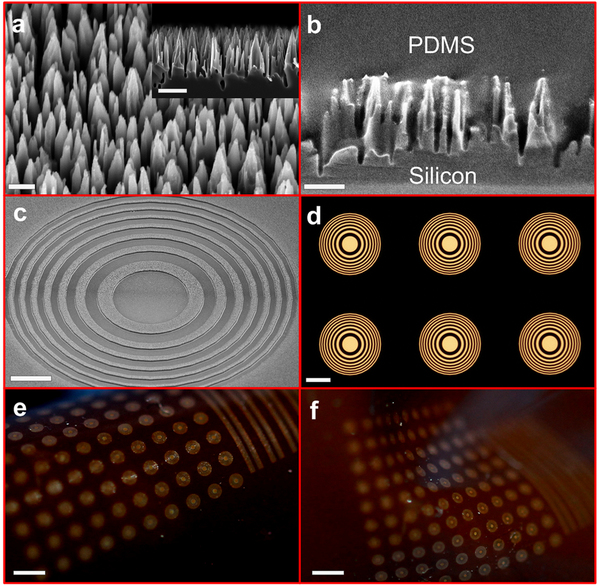
Tiny black silicon nanowire towers (a, b) make up dark regions of the flexible Fresnel zone lenses, minimizing unwanted reflections. Each individual lens resembles a bull’s-eye of alternating light and dark (c, d). Arrays of miniature lenses within a flexible polymer (e, f) can bend and stretch into different configurations. (credit: Hongrui Jiang)

Drawing inspiration from an insect’s multi-faceted eye, University of Wisconsin-Madison engineers have created miniature lenses with a vast range of vision. They’ve created the first flexible Fresnel zone plate microlenses with a wide field of view — a development that could allow everything from surgical scopes to security cameras and cell phones to capture a broader perspective at a fraction of the size required by conventional lenses.

Led by Hongrui Jiang, professor of electrical and computer engineering at UW-Madison, the researchers designed lenses no larger than the head of a pin and embedded them within flexible plastic. An array of the miniature lenses rolled into a cylinder can capture a panorama image covering a 170-degree field of view.

“We got the idea from compound eyes,” says Jiang, whose work was published in an open-access paper in the Oct. 30 issue of the journal Scientific Reports. “We know that multiple lenses on a domed structure give a large field of view.”

(a) Curved arrays of individual lenses (blue cylinder section) allow the tiny sensors to perceive a broader picture, bringing the Bucky mascot image into focus (c). The cylindrical arrangement shown in the schematic allowed researchers to resolve a 170-degree field of view. (credit: Hongrui Jiang)

The researchers can freely reconfigure the shape of the lens array, because rather than relying on conventional optics for focusing, they used Fresnel zone plates. Conventional lenses use refraction — the way light changes direction while passing through different substances (typically stiff, translucent ones, like glass) — to focus it on a single point. Instead, the Fresnel zone plates focus by diffraction — bending light as it passes the edge of a barrier.

Each of Jiang’s half-millimeter diameter lenses resembles a series of ripples on water emanating out from the splash of a stone. In bull’s-eye fashion, each concentric ring alternates between bright and dark. The distance between the rings determines the optical properties of the lens, and the researchers can tune those properties in a single lens by stretching and flexing it.

Previous attempts at creating Fresnel zone plate lenses have suffered from fuzzy vision. “The dark areas must be very dark,” explains Jiang, whose work is funded by the National Institutes of Health. “Essentially, it has to absorb the light completely. It’s hard to find a material that doesn’t reflect or transmit at all.”

Darker than dark

His team overcame this obstacle by using black silicon to trap light inside the dark regions of their Fresnel zone plate lenses. Black silicon consists of clusters of microscopic vertical pillars, or nanowires. Incoming light bouncing between individual silicon nanowires cannot escape the complex structure, making the material darker than dark.

Rather than laying down layers of black silicon on top of a clear backdrop, Jiang and his team took a bottom-up approach to generate their lenses. First they patterned aluminum rings on top of solid silicon wafers, and etched silicon nanowires in the areas between aluminum rings. Then they seeped a polymer between the silicon nanowire pillars. After the plastic support solidified, they etched away the silicon backing, leaving bull’s-eye patterned black silicon embedded in supple plastic.

This approach gave their lenses unprecedented crisp focusing capabilities, as well as the flexibility that enables them to capture a large field of view.

Jiang and his team are exploring ways to integrate the lenses into existing optical detectors and directly incorporate silicon electronic components into the lenses themselves.


Abstract of Micro-Fresnel-Zone-Plate Array on Flexible Substrate for Large Field-of-View and Focus Scanning

Field of view and accommodative focus are two fundamental attributes of many imaging systems, ranging from human eyes to microscopes. Here, we present arrays of Fresnel zone plates fabricated on a flexible substrate, which allows for the adjustment of both the field of view and optical focus. Such zone plates function as compact and lightweight microlenses and are fabricated using silicon nanowires. Inspired by compound eyes in nature, these microlenses are designed to point along various angles in order to capture images, offering an exceptionally wide field of view. Moreover, by flexing the substrate, the lens position can be adjusted, thus achieving axial focus scanning. An array of microlenses on a flexible substrate was incorporated into an optical system to demonstrate high resolution imaging of objects located at different axial and angular positions. These silicon based microlenses could be integrated with electronics and have a wide range of potential applications, from medical imaging to surveillance.

Graphene could take night-vision thermal imagers beyond ‘Predator’

Alien’s view of soldiers in the movie Predator (credit: 20th Century Fox, altered by icyone)

In the 1987 movie “Predator,” an alien who sees in the far thermal infrared region of the spectrum hunts down Arnold Schwarzenegger and his team — introducing a generation of science-fiction fans to thermal imaging.

The ability of humans (or aliens) to see in the infrared allows military, police, firefighters, and others to do their jobs successfully at night and in smoky conditions. It also helps manufacturers and building inspectors identify overheating equipment or circuits. But currently, many of these systems require cryogenic cooling to filter out background radiation, or “noise,” to create a reliable image. That complicates the design and adds to the cost and the unit’s bulkiness and rigidity.

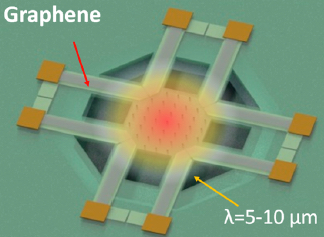
Schematic of graphene thermopile (credit: Allen L. Hsu et al./Nano Letters)

To find a more practical solution, researchers at MIT, Harvard, Army Research Laboratory, and University of California, Riverside, have developed an advanced device by integrating graphene with silicon microelectromechanical systems (MEMS) to make a flexible, transparent, and low-cost device for the mid-infrared range.

Testing showed it could be used to detect a person’s heat signature at room temperature (300 K or 27 degrees C/80 degrees F) without cryogenic cooling.

Future advances could make the device even more versatile. The researchers say that a thermal sensor could be based on a single layer of graphene, which would make it both transparent and flexible. Also, manufacturing could be simplified, which would bring costs down.

This work was reported in ACS journal Nano Letters. It has been supported in part by MIT/Army Institute for Soldier Nanotechnologies, Army Research Laboratories, Office of Naval Research GATE-MURI program, Solid State Solar Energy Conversion Center (S3TEC), MIT Center for Integrated Circuits and Systems, and Air Force Office of Scientific Research.

UPDATE Nov. 6, 2015: corrected wording to clarify that the device operates in the mid-infrared, not far-infrared range.


Abstract of Graphene-Based Thermopile for Thermal Imaging Applications

In this work, we leverage graphene’s unique tunable Seebeck coefficient for the demonstration of a graphene-based thermal imaging system. By integrating graphene based photothermo-electric detectors with micromachined silicon nitride membranes, we are able to achieve room temperature responsivities on the order of ∼7–9 V/W (at λ = 10.6 μm), with a time constant of ∼23 ms. The large responsivities, due to the combination of thermal isolation and broadband infrared absorption from the underlying SiN membrane, have enabled detection as well as stand-off imaging of an incoherent blackbody target (300–500 K). By comparing the fundamental achievable performance of these graphene-based thermopiles with standard thermocouple materials, we extrapolate that graphene’s high carrier mobility can enable improved performances with respect to two main figures of merit for infrared detectors: detectivity (>8 × 108 cm Hz1/2 W–1) and noise equivalent temperature difference (<100 mK). Furthermore, even average graphene carrier mobility (<1000 cm2 V–1 s–1) is still sufficient to detect the emitted thermal radiation from a human target.

Fastest brain-computer-interface speller developed

System diagram of the advanced SSVEP-based BCI speller. It consists of four main procedures: visual stimulation, EEG recording, real-time data processing, and feedback presentation. The 5 × 8 stimulation matrix includes the 26 letters of the English alphabet, 10 numbers, and 4 symbols (space, comma, period, and backspace). The image of the screen stimulation matrix shown here is only for illustration. (credit: Xiaogang Chen et al./PNAS)

Brain–computer interface (BCI) spellers allow a paralyzed patient to spell out words by looking at letters on a screen. Paralyzed patients can communicate by gazing at different letters to spell out a word.

Currently, the most advanced systems for doing this use “steady state visually evoked potential” (SSVEP). This method tags different characters on a screen by flashing each character at a different frequency (from 3.5 Hz to 75 Hz in one system). When a patient looks at a specific flashing character, the brain generates evoked electrical activity at the same (or multiples of) the specific frequency of the visual stimulus. This video demonstrates how that works:


Nikolay Chumerin |SSVEP-based mindspeller

However, the low communication rate (low number of characters per minute) for existing SSVEP systems is a remaining obstacle to improving BCI-based communication. That’s because the tagged visual evoked potentials are difficult to detect due to interference from spontaneous EEG signals.

A new world record for BCI spellers claimed

Researchers at Tsinghua University in China and State Key Laboratory Integrated Optoelectronics, Institute of Semiconductors (IOS), Chinese Academy of Sciences have now developed a significantly improved SSVEP system. It can achieve rates of about 60 characters (∼12 words) per minute (5.32 bits per second) — a claimed new world record for BCI spellers, using either non-invasive or invasive methods.

To achieve that, the 40 characters in the stimulation matrix (used on the display) are tagged with a more sophisticated flickering frequency and phase coding scheme similar to that used in telecommunications systems, along with user-specific decoding. Real-time data analysis recognizes the target character through pre-processing, feature extraction, and classification.

The researchers suggest that the spelling speed achieved with this system (~1 character per second) seems close to the speed limit of human gaze control.

The research was published in Proceedings of the National Academy of Sciences. It was supported by the Chinese National Basic Research Program, the National High-Tech R&D Program, the National Natural Science Foundation, and the Recruitment Program for Young Professionals.


Abstract of High-speed spelling with a noninvasive brain–computer interface

The past 20 years have witnessed unprecedented progress in brain–computer interfaces (BCIs). However, low communication rates remain key obstacles to BCI-based communication in humans. This study presents an electroencephalogram-based BCI speller that can achieve information transfer rates (ITRs) up to 5.32 bits per second, the highest ITRs reported in BCI spellers using either noninvasive or invasive methods. Based on extremely high consistency of frequency and phase observed between visual flickering signals and the elicited single-trial steady-state visual evoked potentials, this study developed a synchronous modulation and demodulation paradigm to implement the speller. Specifically, this study proposed a new joint frequency-phase modulation method to tag 40 characters with 0.5-s-long flickering signals and developed a user-specific target identification algorithm using individual calibration data. The speller achieved high ITRs in online spelling tasks. This study demonstrates that BCIs can provide a truly naturalistic high-speed communication channel using noninvasively recorded brain activities.

3-D printed ‘building blocks’ of life

Images of printed embryonic stem cells, or embryoid bodies (credit: Liliang Ouyang et al./Biofabrication)

Chinese and U.S. scientists have developed a 3-D printing method capable of producing embryoid bodies — highly uniform “blocks” of embryonic stem cells. These cells, which are capable of generating all cell types in the body, could be used to build tissue structures and potentially even micro-organs.

The results were published Wednesday Nov. 4 in an open-access paper in the journal Biofabrication. “The embryoid body is uniform and homogenous, and serves as a much better starting point for further tissue growth,” explains Wei Sun, a lead author on the paper.

The researchers, based at Tsinghua University, Beijing, China, and Drexel University, Philadelphia, used extrusion-based 3-D printing to produce a grid-like 3-D structure to grow an embryoid body that demonstrated cell viability and rapid self-renewal for 7 days while maintaining high pluripotentcy.

“Two other common methods of printing these cells are two-dimensional (in a petri dish) or via the ‘suspension’ method [see 'Better bioprinting with stem cells'], where a ‘stalagmite’ of cells is built up by material being dropped via gravity,” said Sun. ”However, these don’t show the same cell uniformity and homogenous proliferation. I think that we’ve produced a 3-D microenvironment that is much more like that found in vivo for growing embryoid bodies, which explains the higher levels of cell proliferation.”

The researchers hope that this technique can be developed to produce embryoid bodies at high throughput, providing the basic building blocks for other researchers to perform experiments on tissue regeneration and/or for drug screening studies.

The researchers say the next step is to find out more about how to vary the size of the embryoid body by changing the printing and structural parameters, and how varying the embryoid body size leads to “manufacture” of different cell types.

“In the longer term, we’d like to produce controlled heterogeneous embryonic bodies,” said Sun. “This would promote different cell types developing next to each other, which would lead the way for growing micro-organs from scratch within the lab.”


Abstract of Three-dimensional bioprinting of embryonic stem cells directs highly uniform embryoid body formation

With the ability to manipulate cells temporarily and spatially into three-dimensional (3D) tissue-like construct, 3D bioprinting technology was used in many studies to facilitate the recreation of complex cell niche and/or to better understand the regulation of stem cell proliferation and differentiation by cellular microenvironment factors. Embryonic stem cells (ESCs) have the capacity to differentiate into any specialized cell type of the animal body, generally via the formation of embryoid body (EB), which mimics the early stages of embryogenesis. In this study, extrusion-based 3D bioprinting technology was utilized for biofabricating ESCs into 3D cell-laden construct. The influence of 3D printing parameters on ESC viability, proliferation, maintenance of pluripotency and the rule of EB formation was systematically studied in this work. Results demonstrated that ESCs were successfully printed with hydrogel into 3D macroporous construct. Upon process optimization, about 90% ESCs remained alive after the process of bioprinting and cell-laden construct formation. ESCs continued proliferating into spheroid EBs in the hydrogel construct, while retaining the protein expression and gene expression of pluripotent markers, like octamer binding transcription factor 4, stage specific embryonic antigen 1 and Nanog. In this novel technology, EBs were formed through cell proliferation instead of aggregation, and the quantity of EBs was tuned by the initial cell density in the 3D bioprinting process. This study introduces the 3D bioprinting of ESCs into a 3D cell-laden hydrogel construct for the first time and showed the production of uniform, pluripotent, high-throughput and size-controllable EBs, which indicated strong potential in ESC large scale expansion, stem cell regulation and fabrication of tissue-like structure and drug screening studies.

A new 3-​​D printing method for creating patient-​​specific medical devices

The 3D magnetic printing process systematically aligns and selectively polymerizes groupings of voxels (volume “pixels”) programmed to have specific reinforcement orientation within each layer of printed material based upon a shifting field. The 3-D printer build plate peels after a layer is complete to print additional layers. (credit: Joshua J. Martin et al./Nature Communications)

Northeastern University engineers have devel­oped a 3-D printing process that uses mag­netic fields to shape com­posite materials (mixes of plas­tics and ceramics) into patient-specific biomedical devices, such as catheters.

The devices are intended to be stronger and lighter than cur­rent models and the cus­tomized design could ensure an appro­priate fit, said Ran­dall Erb, assis­tant pro­fessor in the Depart­ment of Mechan­ical and Indus­trial Engi­neering.

The magnetic field enables the engineers to con­trol how the ceramic fibers are arranged, allowing for con­trol of the mechan­ical prop­er­ties of the mate­rial. That con­trol is crit­ical if you’re crafting devices with com­plex archi­tec­tures, such as cus­tomized minia­ture bio­med­ical devices. Within a single patient-specific device, the cor­ners, the curves, and the holes must all be rein­forced by ceramic fibers arranged in just the right con­fig­u­ra­tion to make the device durable.

This is the strategy taken by many nat­ural com­pos­ites from bones to trees. Fibers of cal­cium phos­phate, the min­eral com­po­nent of bone, are nat­u­rally ori­ented precisely around the holes for blood ves­sels to ensure the bone’s strength and sta­bility to enable, say, your femur to with­stand a daily jog.

Aligning fibers with magnets

The 3D magnetic-printer setup. A digital light processor (DLP) photo-polymerizes resin with UV while a magnetic field is simultaneously applied via electromagnetic solenoids. (credit: Joshua J. Martin et al./Nature Communications)

Erb ini­tially described the role of magnets in the composite-making process in a 2012 paper in the journal Sci­ence. First the researchers “mag­ne­tize” the ceramic fibers by dusting them very lightly with iron oxide, which has been FDA-approved for drug-delivery appli­ca­tions.

They then apply ultra-low mag­netic fields to indi­vidual sec­tions of the com­posite material — the ceramic fibers immersed in liquid plastic — to align the fibers according to the exacting spec­i­fi­ca­tions dic­tated by the product they are printing.

In a video accom­pa­nying the Sci­ence article, you can see the fibers spring to atten­tion when the mag­netic field is turned on. “Mag­netic fields are very easy to apply,” says Erb. “They’re safe, and they pen­e­trate not only our bodies but many other materials.”

Finally, in a process called “stere­olith­o­g­raphy,” they build the product, layer by layer, using a computer-controlled laser beam that hardens the plastic. Each six-by-six inch layer takes a minute to complete.

Using mag­nets, the new printing method aligns each minus­cule fiber in the direc­tion that con­forms pre­cisely to the geom­etry of the item being printed.

“If you can print a catheter whose geom­etry is spe­cific to the indi­vidual patient, you can insert it up to a cer­tain crit­ical spot, you can avoid punc­turing veins, and you can expe­dite delivery of the contents.”

The engineers’ open-access paper on the new tech­nology appears in the Oct. 23 issue of Nature Com­mu­ni­ca­tions.

Custom-designing neonatal catheters

Erb has received a $225,000 Small Busi­ness Tech­nology Transfer grant from the National Institutes of Health to develop neonatal catheters with a local com­pany. “Another of our goals is to use cal­cium phos­phate fibers and bio­com­pat­ible plas­tics to design sur­gical implants.”

Neonatal preemie with catheters (credit: March of Dimes Foundation)

The new technology is especially valuable for prema­ture babies (“preemies”) in neonatal care units, some weighing just a bit over a pound, with plastic tubes snaking through their nose or mouth, or dis­ap­pearing into veins or other parts of the body. Those tubes, or “catheters,” are how the babies get the nec­es­sary oxygen, nutri­ents, fluid, and med­ica­tions to stay alive.

The problem is, today’s catheters only come in stan­dard sizes and shapes, which means they cannot accom­mo­date the needs of all pre­ma­ture babies. “With neonatal care, each baby is a dif­ferent size, each baby has a dif­ferent set of prob­lems,” says Erb.

Worldwide, “15 million babies are born too soon every year” and of those, “1 million children die each year due to complications of preterm birth,” according to a report by the World Health Organization. This data was cited in the “March of Dimes Premature Birth Report Card,” issued today (Nov. 5) by March of Dimes. “Babies who survive an early birth often face serious and lifelong health problems, including breathing problems, jaundice, vision loss, cerebral palsy, and intellectual delays,” the March of Dimes report noted.

The report provides rates and grades for major cities or counties in each U.S. state and Puerto Rico. It also provides preterm birth rates by race and ethnicity. The U.S. preterm birth rate ranks among the worst of high-resource countries, the March of Dimes says.


Abstract of Designing bioinspired composite reinforcement architectures via 3D magnetic printing

Discontinuous fibre composites represent a class of materials that are strong, lightweight and have remarkable fracture toughness. These advantages partially explain the abundance and variety of discontinuous fibre composites that have evolved in the natural world. Many natural structures out-perform the conventional synthetic counterparts due, in part, to the more elaborate reinforcement architectures that occur in natural composites. Here we present an additive manufacturing approach that combines real-time colloidal assembly with existing additive manufacturing technologies to create highly programmable discontinuous fibre composites. This technology, termed as ‘3D magnetic printing’, has enabled us to recreate complex bioinspired reinforcement architectures that deliver enhanced material performance compared with monolithic structures. Further, we demonstrate that we can now design and evolve elaborate reinforcement architectures that are not found in nature, demonstrating a high level of possible customization in discontinuous fibre composites with arbitrary geometries.

Chemical storage advance may enable more cost-effective concentrated solar-power storage

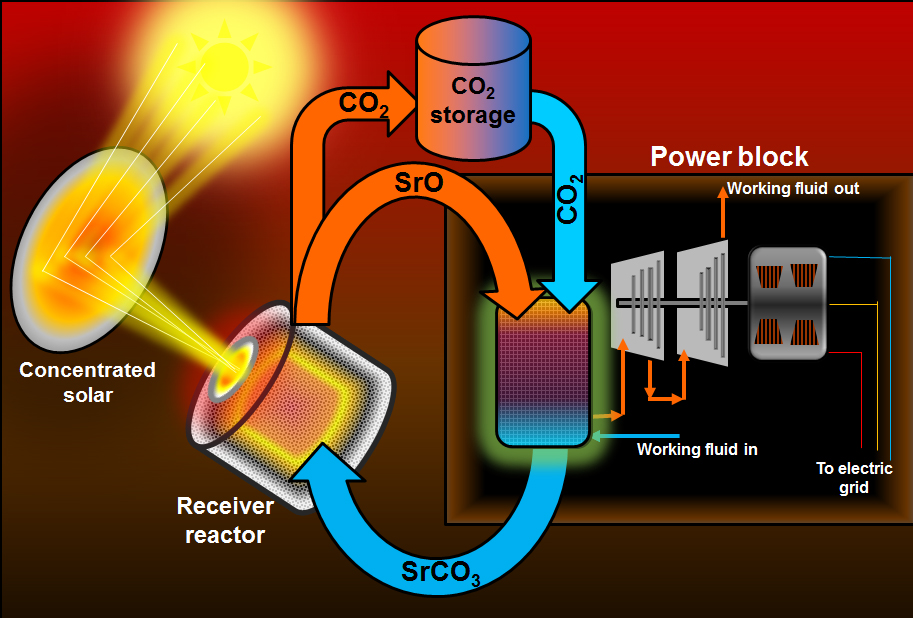
An advance in the storage of concentrated solar thermal energy may reduce reduce its cost and make it more practical to supply 24-hour on-demand electrical power (credit: Kelvin Randhir, courtesy of the University of Florida)

Oregon State University (OSU) engineers have developed an innovation in chemical storage of concentrated solar thermal energy that may reduce its cost and make it more practical for wider use.

The new system uses thermochemical storage, in which chemical transformation is used in repeated cycles to hold heat, use it to drive turbines to create electricity, and then be re-heated to continue the cycle. Most commonly, this might be done over a 24-hour period, with variable levels of solar-powered electricity available at any time of day, as dictated by demand.

Unlike conventional solar photovoltaic cells, concentrated solar thermal (a.k.a. concentrated solar power, or CSP) uses huge arrays of mirrors to focus light, typically onto a tower, for temporarily storing the energy, which is more cost-effective than batteries. (See Australian researchers set new world record in solar-energy efficiency.)

The PS10 Solar Power Plant in Spain concentrates sunlight from a field of  624 heliostats (movable mirrors) onto a central solar power tower, generating 11 megawatts (credit: Abengoa Solar, S.A.)

Storage of this type helps eliminate one of the key factors limiting the wider use of solar energy: The need to deliver the electricity immediately.

A ten-fold increase in energy density and twice as efficient

The OSU development overcomes a limitation in thermochemical energy storage. “In these types of systems, energy efficiency is closely related to use of the highest temperatures possible,” said Nick AuYeung, an assistant professor of chemical engineering in the OSU College of Engineering and corresponding author of a paper in ChemSusChem, a professional journal covering sustainable chemistry.

Thermochemical storage functions like a battery, in which chemical bonds are used to store and release heat (not electrical) energy.  However, the molten salts now being used to store solar thermal energy can only work at about 600 degrees centigrade, and also require large containers and corrosive materials, he explained. “The compound we’re studying can be used at up to 1,200 degrees, and might be twice as efficient as existing systems. There’s a significant potential to lower costs and increase efficiency.”

AuYeung said the new OSU system is based on the reversible decomposition of strontium carbonate into strontium oxide and carbon dioxide, which consumes thermal energy. During discharge, the recombination of strontium oxide and carbon dioxide releases the stored heat. These materials are nonflammable, readily available, and environmentally safe.

In comparison to existing thermochemical approaches, the new system could also allow a ten-fold increase in energy density (energy storage per unit volume), and it’s physically much smaller and would be cheaper to build. The proposed system could first be used to directly heat air, which would drive a turbine to produce electricity, and then residual heat could be used to make steam to drive yet another turbine.

However, in laboratory tests, the current energy storage capacity of the process declined after 45 heating and cooling cycles, due to some changes in the underlying materials. Further research will be needed to identify ways to reprocess the materials or significantly extend the number of cycles that could be performed before any reprocessing was needed, AuYeung said.

Other refinements may also be necessary to test the system at larger scales and resolve issues such as thermal shocks, he said, before a prototype could be ready for testing at a national laboratory.

The work was supported by the SunShot Initiative of the U.S. Department of Energy, and done in collaboration with researchers at the University of Florida.


Abstract of Solar Thermochemical Energy Storage Through Carbonation Cycles of SrCO3/SrO Supported on SrZrO3

Solar thermochemical energy storage has enormous potential for enabling cost-effective concentrated solar power (CSP). A thermochemical storage system based on a SrO/SrCO3 carbonation cycle offers the ability to store and release high temperature (≈1200 °C) heat. The energy density of SrCO3/SrO systems supported by zirconia-based sintering inhibitors was investigated for 15 cycles of exothermic carbonation at 1150 °C followed by decomposition at 1235 °C. A sample with 40 wt % of SrO supported by yttria-stabilized zirconia (YSZ) shows good energy storage stability at 1450 MJ m−3 over fifteen cycles at the same cycling temperatures. After further testing over 45 cycles, a decrease in energy storage capacity to 1260 MJ m−3 is observed during the final cycle. The decrease is due to slowing carbonation kinetics, and the original value of energy density may be obtained by lengthening the carbonation steps.

Engineers design enhanced magnetic protein nanoparticles to better track cells


X-ray crystal structure of iron storage ferritin PFt displaying the internal cavity of the protein in which one of the subunits is highlighted in yellow (credit: Yuri Matsumoto/Nature Communications)

MIT engineers have designed magnetic protein nanoparticles that can be used to track cells or to monitor interactions within cells. The particles, described Monday (Nov. 2) in an open-access paper in Nature Communications, are an enhanced version of a naturally occurring, weakly magnetic protein called ferritin.

“We used the tools of protein engineering to try to boost the magnetic characteristics of this protein,”  says Alan Jasanoff, an MIT professor of biological engineering and the paper’s senior author.

The new “hypermagnetic” protein nanoparticles can be produced within cells, allowing the cells to be imaged or sorted using magnetic techniques. This eliminates the need to tag cells with synthetic particles and allows the particles to sense other molecules inside cells.

Genetically encoded magnetic particles

Previous research has yielded synthetic magnetic particles for imaging or tracking cells, but it can be difficult to deliver these particles into the target cells.

In the new study, Jasanoff and colleagues set out to create magnetic particles that are genetically encoded. With this approach, the researchers deliver a gene for a magnetic protein into the target cells, prompting the cells to start producing the protein on their own.

“Rather than actually making a nanoparticle in the lab and attaching it to cells or injecting it into cells, all we have to do is introduce a gene that encodes this protein,” says Jasanoff, who is also an associate member of MIT’s McGovern Institute for Brain Research.

As a starting point, the researchers used ferritin, which carries a supply of iron atoms that every cell needs as components of metabolic enzymes. In hopes of creating a more magnetic version of ferritin, the researchers created about 10 million variants and tested them in yeast cells.

After repeated rounds of screening, the researchers used one of the most promising candidates to create a magnetic sensor consisting of enhanced ferritin modified with a protein tag that binds with another protein called streptavidin. This allowed them to detect whether streptavidin was present in yeast cells; however, this approach could also be tailored to target other interactions.

The mutated protein appears to successfully overcome one of the key shortcomings of natural ferritin: it’s difficult to load with iron, says Alan Koretsky, a senior investigator at the National Institute of Neurological Disorders and Stroke.

“To be able to make more magnetic indicators for MRI would be fabulous, and this is an important step toward making that type of indicator more robust,” says Koretsky, who was not part of the research team.

Sensing cell signals

Because the engineered ferritins are genetically encoded, they can be manufactured within cells that are programmed to make them respond only under certain circumstances, such as when the cell receives some kind of external signal, when it divides, or when it differentiates into another type of cell. Researchers could track this activity using magnetic resonance imaging (MRI), potentially allowing them to observe communication between neurons, activation of immune cells, or stem cell differentiation, among other phenomena.

Such sensors could also be used to monitor the effectiveness of stem cell therapies, Jasanoff says.

“As stem cell therapies are developed, it’s going to be necessary to have noninvasive tools that enable you to measure them,” he says. Without this kind of monitoring, it would be difficult to determine what effect the treatment is having, or why it might not be working.

The researchers are now working on adapting the magnetic sensors to work in mammalian cells. They are also trying to make the engineered ferritin even more strongly magnetic.


Abstract of Engineering intracellular biomineralization and biosensing by a magnetic protein

Remote measurement and manipulation of biological systems can be achieved using magnetic techniques, but a missing link is the availability of highly magnetic handles on cellular or molecular function. Here we address this need by using high-throughput genetic screening in yeast to select variants of the iron storage ferritin (Ft) that display enhanced iron accumulation under physiological conditions. Expression of Ft mutants selected from a library of 107 variants induces threefold greater cellular iron loading than mammalian heavy chain Ft, over fivefold higher contrast in magnetic resonance imaging, and robust retention on magnetic separation columns. Mechanistic studies of mutant Ft proteins indicate that improved magnetism arises in part from increased iron oxide nucleation efficiency. Molecular-level iron loading in engineered Ft enables detection of individual particles inside cells and facilitates creation of Ft-based intracellular magnetic devices. We demonstrate construction of a magnetic sensor actuated by gene expression in yeast.