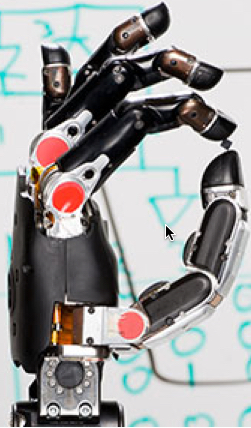
Creating an artificial sense of touch by electrical stimulation of the brain

(credit: DARPA)

Neuroscientists in a project headed by the University of Chicago have determined some of the specific characteristics of electrical stimuli that should be applied to the brain to produce different sensations in an artificial upper limb intended to restore natural motor control and sensation in amputees.

The research is part of Revolutionizing Prosthetics, a multi-year Defense Advanced Research Projects Agency (DARPA).

Experimental setup for investigating the ability of monkeys to detect and discriminate trains of electrical pulses delivered to their somatosensory cortex through chronically implanted electrode arrays (credit: Sungshin Kima et al./PNAS)

For this study, the researchers used monkeys, whose sensory systems closely resemble those of humans. They implanted electrodes into the primary somatosensory cortex, the area of the brain that processes touch information from the hand. The animals were trained to perform two perceptual tasks: one in which they detected the presence of an electrical stimulus, and a second task in which they indicated which of two successive stimuli was more intense.

The sense of touch is made up of a complex and nuanced set of sensations, from contact and pressure to texture, vibration and movement. The goal of the research is to document the range, composition and specific increments of signals that create sensations that feel different from each other.

Chronically implanted electrode arrays in a monkey brain. (Left) one 96-electrode array (UEA) was implanted in area 1 (green) of the somatosensory cortex and two 16-electrode arrays (FMA) were implanted in area 3b (yellow). (Center) Colors correspond to the 96 and 16 electrodes. (Right) Colors indicate which electrodes mapped to corresponding hand areas. (credit: Sungshin Kima et al./PNAS)

To achieve that, the researchers manipulated various features of the electrical pulse train, such as its amplitude, frequency, and duration, and noted how the interaction of each of these factors affected the animals’ ability to detect the signal.

Of specific interest were the “just-noticeable differences” (JND),” — the incremental changes needed to produce a sensation that felt different. For instance, at a certain frequency, the signal may be detectable first at a strength of 20 microamps of electricity. If the signal has to be increased to 50 microamps to notice a difference, the JND in that case is 30 microamps.*

“When you grasp an object, for example, you can hold it with different grades of pressure. To recreate a realistic sense of touch, you need to know how many grades of pressure you can convey through electrical stimulation,” said Sliman Bensmaia, PhD, Associate Professor in the Department of Organismal Biology and Anatomy at the University of Chicago and senior author of the study, which was published today (Oct. 26) in the Proceedings of the National Academy of Sciences. “Ideally, you can have the same dynamic range for artificial touch as you do for natural touch.”

“This study gets us to the point where we can actually create real algorithms that work. It gives us the parameters as to what we can achieve with artificial touch, and brings us one step closer to having human-ready algorithms.”

Researchers from the University of Pittsburgh and Johns Hopkins University were also involved in the DARPA-supported study.

* The study also has important scientific implications beyond neuroprosthetics. In natural perception, a principle known as Weber’s Law states that the just-noticeable difference between two stimuli is proportional to the size of the stimulus. For example, with a 100-watt light bulb, you might be able to detect a difference in brightness by increasing its power to 110 watts. The JND in that case is 10 watts. According to Weber’s Law, if you double the power of the light bulb to 200 watts, the JND would also be doubled to 20 watts.

However, Bensmaia’s research shows that with electrical stimulation of the brain, Weber’s Law does not apply — the JND remains nearly constant, no matter the size of the stimulus. This means that the brain responds to electrical stimulation in a much more repeatable, consistent way than through natural stimulation.

“It shows that there is something fundamentally different about the way the brain responds to electrical stimulation than it does to natural stimulation,” Bensmaia said.


Abstract of Behavioral assessment of sensitivity to intracortical microstimulation of primate somatosensory cortex

Intracortical microstimulation (ICMS) is a powerful tool to investigate the functional role of neural circuits and may provide a means to restore sensation for patients for whom peripheral stimulation is not an option. In a series of psychophysical experiments with nonhuman primates, we investigate how stimulation parameters affect behavioral sensitivity to ICMS. Specifically, we deliver ICMS to primary somatosensory cortex through chronically implanted electrode arrays across a wide range of stimulation regimes. First, we investigate how the detectability of ICMS depends on stimulation parameters, including pulse width, frequency, amplitude, and pulse train duration. Then, we characterize the degree to which ICMS pulse trains that differ in amplitude lead to discriminable percepts across the range of perceptible and safe amplitudes. We also investigate how discriminability of pulse amplitude is modulated by other stimulation parameters—namely, frequency and duration. Perceptual judgments obtained across these various conditions will inform the design of stimulation regimes for neuroscience and neuroengineering applications.
Cobalt atoms on graphene: a low-cost catalyst for producing hydrogen from water

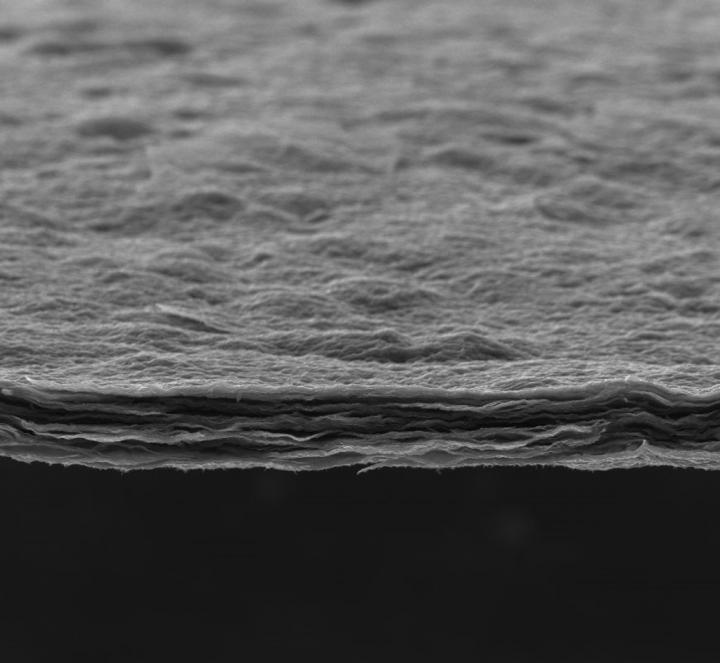
A new catalyst just 15 microns thick has proven nearly as effective as platinum-based catalysts but at a much lower cost, according to scientists at Rice University. The catalyst is made of nitrogen-doped graphene with individual cobalt atoms that activate the process. (credit: Tour Group/Rice University)

Graphene doped with nitrogen and augmented with cobalt atoms has proven to be an effective, durable catalyst for the production of hydrogen from water, according to scientists at Rice University.

The Rice University lab of chemist James Tour and colleagues has developed a robust, solid-state catalyst that shows promise to replace expensive platinum for hydrogen generation. (Catalysts can split water into its constituent hydrogen and oxygen atoms, a process required for fuel cells.)

The latest discovery, detailed in Nature Communications, is a significant step toward lower-cost catalysts for energy production, according to the researchers.

Disordered graphitic carbon doped with nitrogen and augmented with cobalt atoms serves as an efficient, robust catalyst for hydrogen separation from water. The material discovered at Rice University could challenge more expensive platinum-based catalysts. (credit: Tour Group/Rice University)

Cost-effective replacement for platinum

“What’s unique about this paper is that we show … the use of atoms,” Tour said, instead of the conventional use of metal particles or nanoparticles. “The particles doing this chemistry are as small as you can possibly get.”

Even particles on the nanoscale work only at the surface, he explained. “There are so many atoms inside the nanoparticle that never do anything. But in our process, the atoms driving catalysis have no metal atoms next to them. We’re getting away with very little cobalt to make a catalyst that nearly matches the best platinum catalysts.” He said that in comparison tests, the new material nearly matched platinum’s efficiency to begin reacting at a low onset voltage (the amount of electricity it needs to begin separating water into hydrogen and oxygen).

The researchers discovered that heat-treating graphene oxide and small amounts of cobalt salts in a gaseous environment forced individual cobalt atoms to bind to the material. Electron microscope images showed cobalt atoms widely dispersed throughout the samples. They also tested nitrogen-doped graphene on its own and found it lacked the ability to kick the catalytic process into gear. But adding cobalt in very small amounts significantly increased its ability to split acidic or basic water.

The new catalyst is mixed as a solution and can be reduced to a paper-like material or used as a surface coating. Tour said single-atom catalysts have been realized in liquids, but rarely on a surface. “This way we can build electrodes out of it,” he said. “It should be easy to integrate into devices.”

Cobalt atoms shine in an electron microscope image of a new catalyst for hydrogen production invented at Rice University. The widely separated cobalt atoms are bound to a sheet of nitrogen-doped graphene. (credit: Tour Group/Rice University)

“This is an extremely high-performance material,” Tour added. He noted platinum-carbon catalysts still boast the lowest onset voltage. “No question, they’re the best. But this is very close to it and much easier to produce and hundreds of times less expensive.”

Atom-thick graphene is the ideal substrate, Tour said, because of its high surface area, stability in harsh operating conditions, and high conductivity. Samples of the new catalyst showed a negligible decrease in activity after 10 hours of accelerated degradation studies in the lab.

Rice colleagues at the Chinese Academy of Sciences, the University of Texas at San Antonio, and the University of Houston were also involved in the research.


Rice University | H2 evolution


Abstract of Atomic cobalt on nitrogen-doped graphene for hydrogen generation

Reduction of water to hydrogen through electrocatalysis holds great promise for clean energy, but its large-scale application relies on the development of inexpensive and efficient catalysts to replace precious platinum catalysts. Here we report an electrocatalyst for hydrogen generation based on very small amounts of cobalt dispersed as individual atoms on nitrogen-doped graphene. This catalyst is robust and highly active in aqueous media with very low overpotentials (30 mV). A variety of analytical techniques and electrochemical measurements suggest that the catalytically active sites are associated with the metal centres coordinated to nitrogen. This unusual atomic constitution of supported metals is suggestive of a new approach to preparing extremely efficient single-atom catalysts.

How to 3-D print a heart

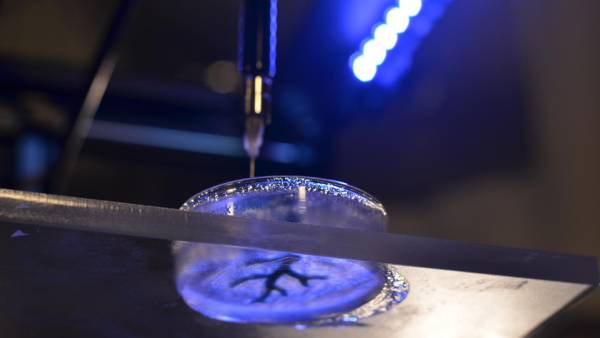
Coronary artery structure being 3-D bioprinted (credit: Carnegie Mellon University College of Engineering)

Carnegie Mellon scientists are creating cutting-edge technology that could one day solve the shortage of heart transplants, which are currently needed to repair damaged organs.

“We’ve been able to take MRI images of coronary arteries and 3-D images of embryonic hearts and 3-D bioprint them with unprecedented resolution and quality out of very soft materials like collagens, alginates and fibrins,” said Adam Feinberg, an associate professor of Materials Science and Engineering and Biomedical Engineering at Carnegie Mellon University.

Feinberg leads the Regenerative Biomaterials and Therapeutics Group, and the group’s study was published in an open-access paper today (Oct. 23) in the journal Science Advances.


College of Engineering, Carnegie Mellon University | Adam Feinberg Demonstrates 3-D Bioprinting Process

“The challenge with soft materials is that they collapse under their own weight when 3-D printed in air,” explained Feinberg. “So we developed a method of printing these soft materials inside a support bath material. Essentially, we print one gel inside of another gel, which allows us to accurately position the soft material as it’s being printed, layer-by-layer.”

A FRESH idea

A schematic of the FRESH process showing the hydrogel (green) — representing an artery — being added to the gelatin slurry support bath (yellow). The 3D object is built layer by layer and, when completed, is released by heating to 37°C and melting the gelatin. (credit: Thomas J. Hinton et al./Science Advances)

With this new FRESH (Freeform Reversible Embedding of Suspended Hydrogels) technique, after printing, the support gel can be easily melted away and removed by heating to body temperature, which does not damage the delicate biological molecules or living cells that were bioprinted.

(Left) A model of a section of a human right coronary arterial tree created from a 3D MRI image is processed at full scale into machine code for FRESH printing. (Right) An example of the arterial tree printed in alginate (black) and embedded in the gelatin slurry support bath. Scale bar: 10 mm. (credit: Thomas J. Hinton et al./Science Advances)

As a next step, the group is working toward incorporating real heart cells into these 3-D printed tissue structures, providing a scaffold to help form contractile muscle.

Accessible bioprinters

Most 3-D bioprinters cost more than $100,000 and/or require specialized expertise to operate, limiting wider-spread adoption. Feinberg’s group, however, has been able to implement their technique on a range of consumer-level 3-D printers, which cost less than $1,000 and use open-source hardware and software.

“Not only is the cost low, but by using open-source software, we have access to fine-tune the print parameters, optimize what we’re doing, and maximize the quality of what we’re printing,” Feinberg said.

More than 4,000 Americans are currently on the waiting list to receive a heart transplant. With failing hearts, these patients have no other options; heart tissue, unlike other parts of the body, is unable to heal itself once it is damaged.


Abstract of Three-dimensional printing of complex biological structures by freeform reversible embedding of suspended hydrogels

We demonstrate the additive manufacturing of complex three-dimensional (3D) biological structures using soft protein and polysaccharide hydrogels that are challenging or impossible to create using traditional fabrication approaches. These structures are built by embedding the printed hydrogel within a secondary hydrogel that serves as a temporary, thermoreversible, and biocompatible support. This process, termed freeform reversible embedding of suspended hydrogels, enables 3D printing of hydrated materials with an elastic modulus <500 kPa including alginate, collagen, and fibrin. Computer-aided design models of 3D optical, computed tomography, and magnetic resonance imaging data were 3D printed at a resolution of ~200 μm and at low cost by leveraging open-source hardware and software tools. Proof-of-concept structures based on femurs, branched coronary arteries, trabeculated embryonic hearts, and human brains were mechanically robust and recreated complex 3D internal and external anatomical architectures.

This microrobot could be a model for a future dual aerial-aquatic vehicle

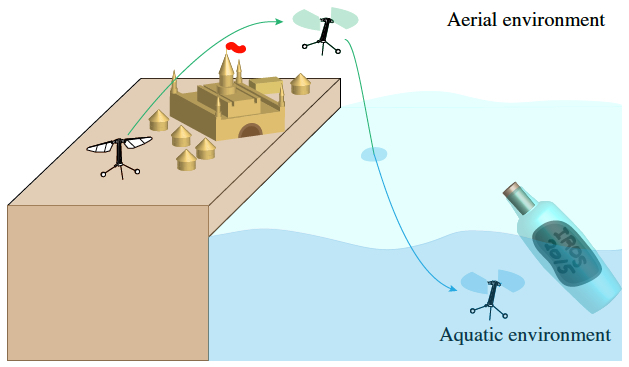
The Harvard RoboBee concept (credit: Harvard Microrobotics Lab)

In 1939, Russian engineer Boris Ushakov proposed a “flying submarine” — a cool James Bond-style vehicle that could seamlessly transition from air to water and back again. Ever since, engineers have been trying to design one, with little success. The biggest challenge: aerial vehicles require large airfoils like wings or sails to generate lift, while underwater vehicles need to minimize surface area to reduce drag.

Engineers at the Harvard John A. Paulson School of Engineering and Applied Science (SEAS) decided to try that a new version of their RoboBee microbot (see “A robotic insect makes first controlled test flight“), taking a clue from puffins. These birds with flamboyant beaks employ flapping motions that are similar in air and water.


Harvard University | RoboBee: From Aerial to Aquatic

But to make that actually work, the team had to first solve four thorny problems:

Surface tension. The RoboBee is so small and lightweight that it cannot break the surface tension of the water. To overcome this hurdle, the RoboBee hovers over the water at an angle, momentarily switches off its wings, and then crashes unceremoniously into the water to make itself sink.

Water’s increased density (1,000 times denser than air), which would snap the wing off the RoboBee. Solution: the team lowered the wing speed from 120 flaps per second to nine but kept the flapping mechanisms and hinge design the same. A swimming RoboBee simply changes its direction by adjusting the stroke angle of the wings, the same way it does in air.

Shorting out. Like the flying version, it’s tethered to a power source. Solution: use deionized water and coat the electrical connections with glue.

Moving from water to air. Problem: it can’t generate enough lift without snapping one of its wings. They researchers say they’re working on that next.

“We believe the RoboBee has the potential to become the world’s first successful dual aerial, aquatic insect-scale vehicle,” the researchers claim in a paper presented at the International Conference on Intelligent Robots and Systems in Germany. The research was funded by the National Science Foundation and the Wyss Institute for Biologically Inspired Engineering.

Hmm, maybe we’ll see a vehicle based on the RoboBee in a future Bond film?

Improving learning and memory in aged mice with cholesterol-binding membrane protein

SynCav1 gene delivery enhances granule cell neuron dendritic arborization (neuron branching in adult mice. Scale bar: 20 micrometers. (credit: Chitra D. Mandyam et al./Biological Psychiatry)

Using gene therapy to increase a crucial cholesterol-binding membrane protein called caveolin-1 (Cav-1) in neurons in the hippocampus* of the brain improved learning and memory in aged mice, according to findings from a new study led by scientists at The Scripps Research Institute (TSRI), the Veterans Affairs San Diego Healthcare System (VA) and University of California (UC) San Diego School of Medicine.

The result for treated mice was improved neuron growth and better retrieval of contextual memories — they froze in place, an indication of fear, when placed in a location where they’d once received small electric shocks.

The researchers believe that this type of gene therapy may be a path toward treating age-related memory loss, including loss resulting from alcohol and drug use. The researchers are now testing this gene therapy in mouse models of Alzheimer’s disease and expanding it to possibly treat injuries such as spinal cord injury and traumatic brain injury. ”

The study, published recently online ahead of print in the journal Biological Psychiatry, expands scientists’ understanding of neuroplasticity, the ability of neural pathways to grow in response to new stimuli.

* The hippocampus is a structure in the brain thought to participate in the formation of contextual memories — for example, if one remembers a past picnic when later visiting a park.


Abstract of Neuron-targeted caveolin-1 improves molecular signaling, plasticity and behavior dependent on the hippocampus in adult and aged mice

Background: Studies in vitro demonstrate that neuronal membrane/lipid rafts (MLRs) establish cell polarity by clustering pro-growth receptors and tethering cytoskeletal machinery necessary for neuronal sprouting. However, the effect of MLR and MLR-associated proteins on neuronal aging is unknown.

Methods: Here we assessed the impact of neuron-targeted overexpression of a MLR scaffold protein, caveolin-1 (via a synapsin promoter; SynCav1), in the hippocampus in vivo in adult (6-months-old) and aged (20-month-old) mice on biochemical, morphologic and behavioral changes.

Results: SynCav1 resulted in increased expression of Cav-1, MLRs, and MLR-localization of Cav-1 and tropomyosin-related kinase B (TrkB) receptor independent of age and time post gene transfer. Cav-1 overexpression in adult mice enhanced dendritic arborization within the apical dendrites of hippocampal CA1 and granule cell neurons, effects that were also observed in aged mice, albeit to a lesser extent, indicating preserved impact of Cav-1 on structural plasticity of hippocampal neurons with age. Cav-1 overexpression enhanced contextual fear memory in adult and aged mice demonstrating improved hippocampal function.

Conclusions: Neuron-targeted overexpression of Cav-1 in the adult and aged hippocampus enhances functional MLRs with corresponding roles in cell signaling and protein trafficking. The resultant structural alterations in hippocampal neurons in vivo are associated with improvements in hippocampal dependent learning and memory. Our findings suggest Cav-1 as a novel therapeutic strategy in disorders involving impaired hippocampal function.

Mass extinctions linked to comet and asteroid showers

Mass extinctions occurring over the past 260 million years were likely caused by comet and asteroid showers, a new study concludes. An artist’s illustration of a major asteroid impact on Earth. (credit: NASA/Don Davis)

Mass extinctions occurring over the past 260 million years were likely caused by comet and asteroid showers, scientists conclude in a new study published in an open-access paper in Monthly Notices of the Royal Astronomical Society.

For more than 30 years, scientists have argued about a controversial hypothesis relating to periodic mass extinctions and impact craters — caused by comet and asteroid showers — on Earth.

In their MNRAS paper, Michael Rampino, a New York University geologist, and Ken Caldeira, a scientist in the Carnegie Institution’s Department of Global Ecology, offer new support linking the age of these craters with recurring mass extinctions of life every 26 million years, including the demise of dinosaurs.

This cycle has been linked to periodic motion of the sun and planets through the dense mid-plane of our galaxy. Scientists have theorized that gravitational perturbations of the distant Oort comet cloud that surrounds the sun lead to periodic comet showers in the inner solar system, where some comets strike the Earth.

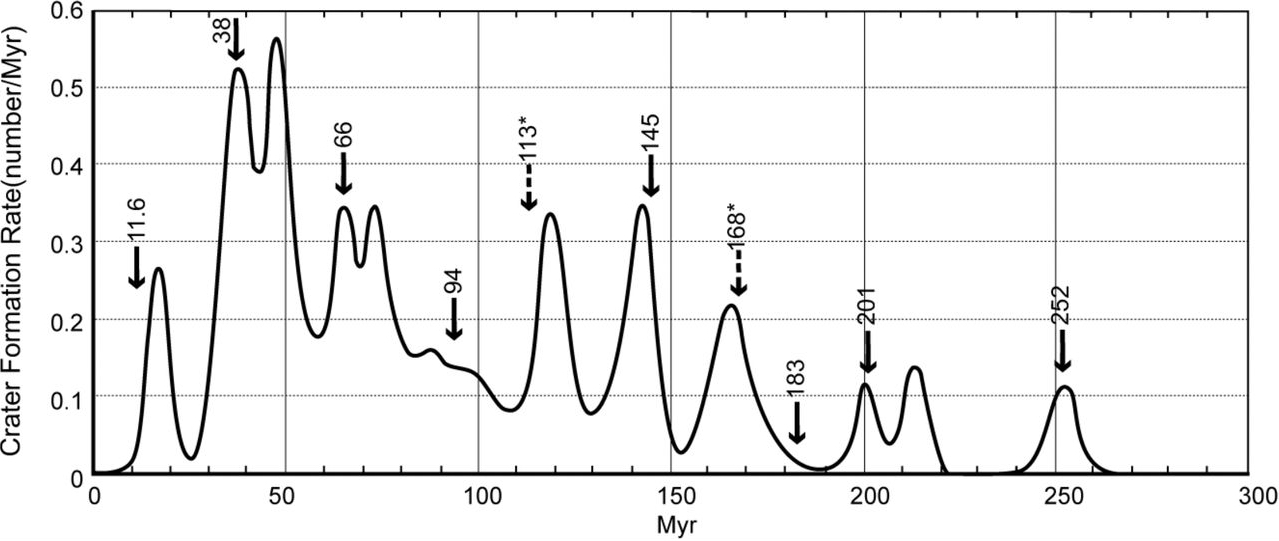
Crater formation rate per million years, with eight significant extinction events shown with solid arrows and two potential extinction events shown with broken arrows (credit: Michael R. Rampino and Ken Caldeira/MNRAS)

To test their hypothesis, Rampino and Caldeira performed time-series analyses of impacts and extinctions using newly available data offering more accurate age estimates. “The correlation between the formation of these impacts and extinction events over the past 260 million years is striking and suggests a cause-and-effect relationship,” says Rampino.

The sinkholes clustered around the trough of the Chicxulub crater suggest a prehistoric oceanic basin in the depression left by the impact. (credit: NASA)

One of the craters considered in the study is the large (180 km diameter) Chicxulub impact structure in the Yucatan, which dates at about 65 million years ago — the time of a great mass extinction that included the dinosaurs. And five out of the six largest impact craters of the last 260 million years on earth correlate with mass extinction events.


Abstract of Periodic impact cratering and extinction events over the last 260 million years

The claims of periodicity in impact cratering and biological extinction events are controversial. A newly revised record of dated impact craters has been analyzed for periodicity, and compared with the record of extinctions over the past 260 Myr. A digital circular spectral analysis of 37 crater ages (ranging in age from 15 to 254 Myr ago) yielded evidence for a significant 25.8 ± 0.6 Myr cycle. Using the same method, we found a significant 27.0 ± 0.7 Myr cycle in the dates of the eight recognized marine extinction events over the same period. The cycles detected in impacts and extinctions have a similar phase. The impact crater dataset shows 11 apparent peaks in the last 260 Myr, at least 5 of which correlate closely with significant extinction peaks. These results suggest that the hypothesis of periodic impacts and extinction events is still viable.

Largest astronomical image to date contains 46 billion pixels

A small section of the Milky Way photo showing the star Eta Carinae (credit: Lehrstuhl für Astrophysik/RUB)

Astronomers at the Ruhr-Universität Bochum in Germany have compiled the largest astronomical image to date: a picture of the Milky Way containing 46 billion pixels, viewable here (you can enter an object name, such as “Eta Carinae,” in the lower-left box).

The image was generated over a period of five years of astronomical observations by two telescopes at Bochum’s university observatory in the Atacama Desert in Chile. It only includes objects with variable brightness, which includes stars with a planet passing in front. The area that the astronomers observed is so large that they had to subdivide it into 268 sections.

False color image of the field containing the Galactic Center (credit: M. Haas et al./Astronomical Notes)


Abstract of The Bochum survey of the southern Galactic disk: I. Survey design and first results on 50 square degrees monitored in 2011

We are monitoring a 6° wide stripe along the southern Galactic disk simultaneously in the r and i bands, using a robotic 15-cm twin telescope of the Universitätsternwarte Bochum near Cerro Armazones in Chile. Utilising the telescope’s 2.7° field of view, the survey aims at observing a mosaic of 268 fields once per month and to monitor dedicated fields once per night. The survey reaches a sensitivity from 10m down to 18m (AB system), with a completeness limit of r ∼ 15.5m and i ∼ 14.5m which – due to the instrumental pixel size of 2.″4 – refers to stars separated by >3″. This brightness range is ideally suited to examine the intermediately bright stellar population supposed to be saturated in deep variability surveys with large telescopes. To connect to deep surveys or to explore faint long term variables, coadded images of several nights reach a depth of ∼ 20m. The astrometric accuracy is better than 1″, as determined from the overlap of neighbouring fields. We describe the survey design, the data properties and our procedures to derive the light curves and to extract variable stars. We present a list of ∼2200 variable stars identified in 50 square degrees with 50-80 observations between May and October 2011. For bright stars the variability amplitude A reaches down to A ∼ 0.05m, while at the faint end variations of A > 1m are detected. About 200 stars were known tobe variable, and their amplitudes and periods – as far as determinable from our six month monitoring – agree with literature values, demonstrating the performance of the Bochum Galactic Disk Survey (© 2012 WILEY-VCH Verlag GmbH & Co. KGaA, Weinheim)


Abstract of The Bochum Survey of the Southern Galactic Disk: II. Follow-up measurements and multi-filter photometry for 1323 square degrees monitored in 2010 – 2015

This paper is the second in a series describing the southern Galactic Disk Survey (GDS) performed at the Universitätssternwarte Bochum near Cerro Armazones in Chile. Haas et al. (2012, Paper I) presented the survey design and the characteristics of the observations and data. They identified ∼2200 variable stars in an area of 50 square degrees with more than 50 observations in 2011. Here we present the first complete version of the GDS covering all 268 fields with 1323 square degrees along the Galactic disk including revised data from Paper I. The individual fields were observed up to 272 times and comprise a maximum time span between September 2010 and May 2015. We detect a total of 64 151 variable sources, which are presented in a catalog including some of their properties and their light curves. A comparison with the International Variable Star Index (VSX) and All Sky Automated Survey (ASAS) indicates that 56794 of these sources are previously unknown variables. Furthermore, we present UBVr ′, i ′, z ′ photometry for all sources within the GDS, resulting in a new multi-color catalog of nearly 16×106 sources detected in at least one filter. Both the GDS and the near-infrared VISTA Variables in the Via Lactea survey (VVV) complement each other in the overlap area of about 300 square degrees enabling future comparison studies. (© 2015 WILEY-VCH Verlag GmbH & Co. KGaA, Weinheim)

Custom 3-D printed ear models help surgeons carve new ears

Children with under-formed or missing ears can undergo surgeries to fashion a new ear from rib cartilage, as shown in the above photo. But aspiring surgeons lack lifelike practice models. (credit: University of Washington)

A University of Washington (UW) otolaryngology resident and a bioengineering student have used 3-D printing to create a low-cost pediatric rib cartilage model that more closely resembles the feel of real cartilage, which is used in an operation called auricular reconstruction (ear replacement).

The innovation could make it possible for aspiring surgeons to become proficient in the sought-after but challenging procedure. And because the UW models are printed from a CT scan, they mimic an individual’s specific unique anatomy. That offers the opportunity for even an experienced surgeon to practice a particular tricky surgery ahead of time on a patient-specific rib model.

As part of the study, three experienced surgeons practiced carving, bending, and suturing the UW team’s silicone models, which were produced from a 3-D printed mold modeled from a CT scan of an 8-year-old patient. They compared their firmness, feel, and suturing quality to real rib cartilage, and to a more expensive material made out of dental impression material. They preferred the 3-D printed versions.

The UW team used a 3-D printer to create a negative mold of a patient’s ribs from a CT scan. Surgeons take pieces of those ribs and “carve” them into a new ear. (credit: University of Washington)

Co-author Sharon Newman, who graduated from the UW with a bioengineering degree in June, teamed up with lead author Angelique Berens, a UW School of Medicine otolaryngologist, while they both worked in the UW BioRobotics Lab under electrical engineering professor Blake Hannaford.

Newman figured out how to upload and process a CT scan through a series of free, open-source modeling and imaging programs, and ultimately use a 3-D printer to print a negative mold of a patient’s ribs.

Newman had previously tested different combinations of silicone, corn starch, mineral oil and glycerin to replicate human tissue that the lab’s surgical robot could manipulate. She poured them into the molds and let them cure to see which mixture most closely resembled rib cartilage.

The team’s next steps are to get the models into the hands of surgeons and surgeons-in-training, and hopefully to demonstrate that more lifelike practice models can elevate their skills and abilities.

“With one 3-D printed mold, you can make a billion of these models for next to nothing,” said Berens. “What this research shows is that we can move forward with one of these models and start using it.”

Long waiting list

Kathleen Sie, a UW Medicine professor of otolaryngology – head and neck surgery and director of the Childhood Communication Center at Seattle Children’s, said the lack of adequate training models makes it difficult for surgeons to become comfortable performing the delicate technical procedure.

There’s typically a six- to 12-month waiting list for children to have the procedure done at Seattle Children’s, she said.

“It’s a surgery that more people could do, but this is often the single biggest roadblock,” Sie said. “They’re hesitant to start because they’ve never carved an ear before.”

Their study results were presented at the American Academy of Otolaryngology — Head and Neck Surgery conference in Dallas.

Is your thinking chaotic? There’s a model for that.

A representation of a stable sequential working memory; different information items or memory patterns are shown in different colors. (credit: Image adopted from Rabinovich, M.I. et al. (2014))

Try to remember a phone number. You’re now using “sequential memory,” in which your mind processes a sequence of numbers, events, or ideas. It underlies how people think, perceive, and interact as social beings. To understand how sequential memory works, researchers have built mathematical models that mimic this process.

Cognitive modes

Taking this a step further, Mikhail Rabinovich, a physicist and neurocognitive scientist at the University of California, San Diego, and a group of researchers have now mathematically modeled how the mind switches among different ways of thinking about a sequence of objects, events, or ideas that are based on the activity of “cognitive modes.”

The new model, described in an open-access paper in the journal Chaos, may help scientists understand a variety of human psychiatric conditions that may involve sequential memory, including obsessive-compulsive disorder, bipolar, and attention deficit disorder, schizophrenia and autism.

Cognitive modes are the basic states of neural activity. Thinking, perceiving, and any other neural activity involve various parts of the brain that work together in concert, taking on well-defined patterns.

A pathological case (in particular, schizophrenia). The sequence is unstable — the initial sequence enters a chaotic valley after the purple unit. This happens when cognitive inhibition is weak. (credit: adopted from Rabinovich, M.I. et al. (2014))

Binding process

When the mind has sequential thoughts, the cognitive modes underlying neural activity switch among different modalities. This switching is called a binding process, because the mind “binds” each cognitive mode to a certain modality.

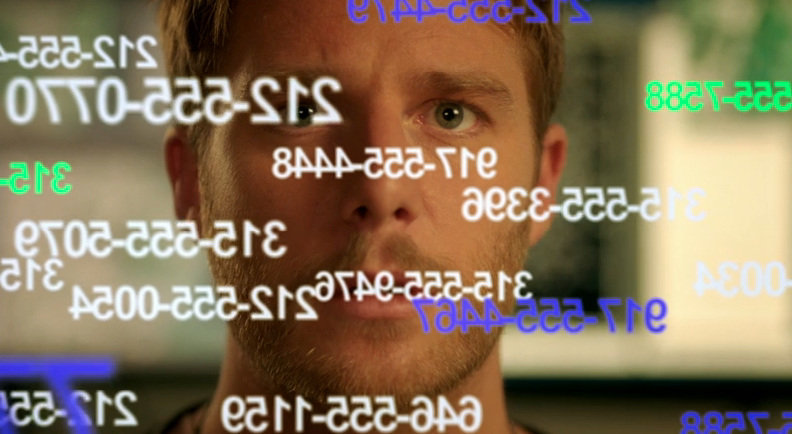
Limitless (credit: CBS)

Consider the TV show Limitless. In the show, FBI consultant Brian Finch, aided by the fictional cognitive enhancer NZT, is able to fluidly switch between complex sets of information (modalities), such as phone numbers, using different cognitive modes — rapidly processing a series of phone numbers of suspects on a screen, or analyzing a complex diagram showing potential criminal connections, then explaining it to colleagues, all without losing a beat.

In the new analysis, the mathematicians proved a theorem to show that in their model, this binding process is robust and able to withstand perturbations from the random disturbances in the brain. Your mind is full of other irregular neural signals — from things like other neural processes or external, sensory stimuli and distractions — but if they’re not too big, they don’t affect the thinking process.

This model could be used to better understand a variety of psychiatric disorders, such as obsessive-compulsive disorder, bipolar disorder, and attention deficit disorder, Rabinovich said. The way the mind binds to different modalities, and how such binding depends on time, may be related to conditions such as autism and schizophrenia. For example, some experiments suggest that for people with these conditions, the capacity of sequential binding memory is smaller.

Rabinovich worked with Valentin Afraimovich and Xue Gong, mathematicians at the Autonomous University of San Luis Potosi in Mexico and Ohio University, respectively.


Abstract of Sequential memory: Binding dynamics

Temporal order memories are critical for everyday animal and human functioning. Experiments and our own experience show that the binding or association of various features of an event together and the maintaining of multimodality events in sequential order are the key components of any sequential memories—episodic, semantic, working, etc. We study a robustness of binding sequential dynamics based on our previously introduced model in the form of generalized Lotka-Volterra equations. In the phase space of the model, there exists a multi-dimensional binding heteroclinic network consisting of saddle equilibrium points and heteroclinic trajectories joining them. We prove here the robustness of the binding sequential dynamics, i.e., the feasibility phenomenon for coupled heteroclinic networks: for each collection of successive heteroclinic trajectories inside the unified networks, there is an open set of initial points such that the trajectory going through each of them follows the prescribed collection staying in a small neighborhood of it. We show also that the symbolic complexity function of the system restricted to this neighborhood is a polynomial of degree L − 1, where L is the number of modalities.

A powerful new ‘tool’ for assembling biomolecules

Proposed new simplified chemical reaction for assembling biomolecules in a single chemical reaction (credit: Tiffany Piou & Tomislav Rovis/Nature)

Colorado State University chemists have invented a single chemical reaction that couples two constituent chemicals into a carbon-carbon bond, while simultaneously introducing a nitrogen component. The process promises to replace a multi-step, expensive, and complex process needed when synthesizing new chemicals — for drug creation and testing, for example.

The researchers were able to control this reaction to make the nitrogen atoms go exactly where they want them to, making for precision chemistry that they believe could revolutionize pharmaceutical and biomaterials manufacturing.

The achievement is detailed in the journal Nature, published today (Oct. 21).

Achieving a critical carbon-nitrogen bond

The researchers explain in a statement that “almost every significant carbon-based biomolecule contains a nitrogen compound, or amine. Achieving this carbon-nitrogen bond in the lab, though, is tricky business. Drug companies know it well…. They must first create the carbon-carbon bonds, and then introduce the nitrogen to make a molecule that will do something useful.”

Ball-and-stick model of the ethylene (ethene) molecule, C2H4, the simplest alkene (credit: Benjah-bmm27 CC)

The chemists’ starting materials were simply oil refinery byproducts called olefins, or alkenes. They mixed in a specially engineered reagant, then used a complex based on the precious metal rhodium to reliably and specifically trigger the elusive carbon-nitrogen bonds.

Allene (left) and propyne (right) are examples of isomers containing different bond types (double and triple carbon bonds in this case) — with different functionalities. (credit: Wikipedia)

The innovation also controls molecular isomers (an isomer is a molecule with the same chemical formula as another molecule, but with a different chemical structure). Some isomers are mirror images, like right and left gloves, and although they’re chemically identical, their functionalities are strikingly different. Being able to select for a single isomer is critical to safety and efficacy — so much so that the FDA mandates that only single-isomer drugs be marketed for human use.

Take thalidomide, infamous for causing severe birth defects when taken by pregnant women in the 1950s. Chemically, thalidomide comes in two mirror-image isomeric forms. One caused the defects, one didn’t.

“For this reason, spatial display of groups in molecules is incredibly important,” said organic chemist Tomislav Rovis, professor of chemistry in the College of Natural Sciences at CSU. Rovis led the research with postdoctoral researcher Tiffany Piou, who designed all the chemical building blocks and ran the experiments.

“Tiffany’s finding gives us a leg up to do this in a carboamination reaction, by making the carbon carbon bond, and delivering the nitrogen selectively,” Rovis said.

The researchers hope their approach, which they liken to a tool in a toolbox, can be polished, perfected and used widely to make organic chemistry easier, and applied to many different fields.


Abstract of Rhodium-catalysed syn-carboamination of alkenes via a transient directing group

Alkenes are the most ubiquitous prochiral functional groups—those that can be converted from achiral to chiral in a single step—that are accessible to synthetic chemists. For this reason, difunctionalization reactions of alkenes (whereby two functional groups are added to the same double bond) are particularly important, as they can be used to produce highly complex molecular architectures12. Stereoselective oxidation reactions, including dihydroxylation, aminohydroxylation and halogenation3456, are well established methods for functionalizing alkenes. However, the intermolecular incorporation of both carbon- and nitrogen-based functionalities stereoselectively across an alkene has not been reported. Here we describe the rhodium-catalysed carboamination of alkenes at the same (syn) face of a double bond, initiated by a carbon–hydrogen activation event that uses enoxyphthalimides as the source of both the carbon and the nitrogen functionalities. The reaction methodology allows for the intermolecular, stereospecific formation of one carbon–carbon and one carbon–nitrogen bond across an alkene, which is, to our knowledge, unprecedented. The reaction design involves the in situ generation of a bidentate directing group and the use of a new cyclopentadienyl ligand to control the reactivity of rhodium. The results provide a new way of synthesizing functionalized alkenes, and should lead to the convergent and stereoselective assembly of amine-containing acyclic molecules.