Most Earth-like worlds have yet to be born, says new NASA study

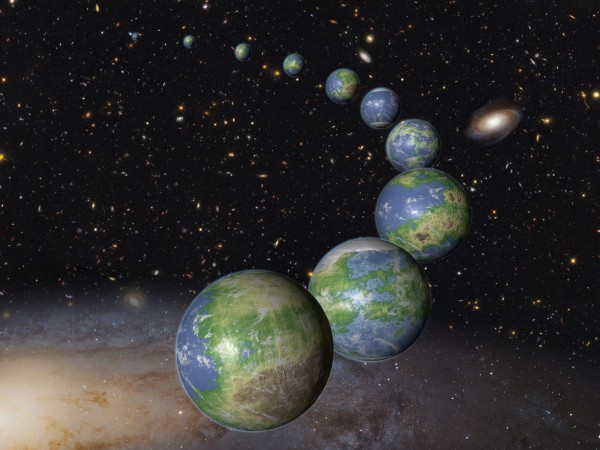
This is an artist’s impression of innumerable Earth-like planets that have yet to be born over the next trillion years in the evolving universe (credit: NASA, ESA, and G. Bacon (STScI); Science: NASA, ESA, P. Behroozi and M. Peeples (STScI))

When our solar system was born 4.6 billion years ago, only eight percent of the potentially habitable planets that will ever form in the universe existed, according to an assessment of data collected by NASA’s Hubble Space Telescope and Kepler space observatory and published today (Oct. 20) in an open-access paper in the Monthly Notices of the Royal Astronomical Society.


In related news, UCLA geochemists have found evidence that life probably existed on Earth at least 4.1 billion years ago, which is 300 million years earlier than previous research suggested. The research suggests life in the universe could be abundant, said Mark Harrison, co-author of the research and a professor of geochemistry at UCLA. The research was published Monday Oct. 19 in the online early edition of the journal Proceedings of the National Academy of Sciences.


The data show that the universe was making stars at a fast rate 10 billion years ago, but the fraction of the universe’s hydrogen and helium gas that was involved was very low. Today, star birth is happening at a much slower rate than long ago, but there is so much leftover gas available after the big bang that the universe will keep making stars and planets for a very long time to come.

A billion Earth-sized worlds

Based on the survey, scientists predict that there should already be 1 billion Earth-sized worlds in the Milky Way galaxy. That estimate skyrockets when you include the other 100 billion galaxies in the observable universe.

Kepler’s planet survey indicates that Earth-sized planets in a star’s habitable zone — the perfect distance that could allow water to pool on the surface — are ubiquitous in our galaxy. This leaves plenty of opportunity for untold more Earth-sized planets in the habitable zone to arise in the future — the last star isn’t expected to burn out until 100 trillion years from now.

The researchers say that future Earths are more likely to appear inside giant galaxy clusters and also in dwarf galaxies, which have yet to use up all their gas for building stars and accompanying planetary systems. By contrast, our Milky Way galaxy has used up much more of the gas available for future star formation.

A big advantage to our civilization arising early in the evolution of the universe is our being able to use powerful telescopes like Hubble to trace our lineage from the big bang through the early evolution of galaxies.

Regrettably, the observational evidence for the big bang and cosmic evolution, encoded in light and other electromagnetic radiation, will be all but erased away 1 trillion years from now, due to the runaway expansion of space. Any far-future civilizations that might arise will be largely clueless as to how or if the universe began and evolved.


Abstract of On The History and Future of Cosmic Planet Formation

We combine constraints on galaxy formation histories with planet formation models, yielding the Earth-like and giant planet formation histories of the Milky Way and the Universe as a whole. In the Hubble volume (1013 Mpc3), we expect there to be ∼1020 Earth-like and ∼1020giant planets; our own galaxy is expected to host ∼109 and ∼1010 Earth-like and giant planets, respectively. Proposed metallicity thresholds for planet formation do not significantly affect these numbers. However, the metallicity dependence for giant planets results in later typical formation times and larger host galaxies than for Earth-like planets. The Solar system formed at the median age for existing giant planets in the Milky Way, and consistent with past estimates, formed after 80 per cent of Earth-like planets. However, if existing gas within virialized dark matter haloes continues to collapse and form stars and planets, the Universe will form over 10 times more planets than currently exist. We show that this would imply at least a 92 per cent chance that we are not the only civilization the Universe will ever have, independent of arguments involving the Drake equation.


Abstract of Potentially biogenic carbon preserved in a 4.1 billion-year-old zircon

Evidence for carbon cycling or biologic activity can be derived from carbon isotopes, because a high12C/13C ratio is characteristic of biogenic carbon due to the large isotopic fractionation associated with enzymatic carbon fixation. The earliest materials measured for carbon isotopes at 3.8 Ga are isotopically light, and thus potentially biogenic. Because Earth’s known rock record extends only to ∼4 Ga, earlier periods of history are accessible only through mineral grains deposited in later sediments. We report 12C/13C of graphite preserved in 4.1-Ga zircon. Its complete encasement in crack-free, undisturbed zircon demonstrates that it is not contamination from more recent geologic processes. Its 12C-rich isotopic signature may be evidence for the origin of life on Earth by 4.1 Ga.

How to control heartbeats more precisely, using light

Using computer-generated light patterns, researchers were able to control the direction of spiraling electrical waves in heart cells. (credit: Eana Park)

Researchers from Oxford and Stony Brook universities has found a way to precisely control the electrical waves that regulate the rhythm of our heartbeat — using light. Their results are published in the journal Nature Photonics.

Cardiac cells in the heart and neurons in the brain communicate by electrical signals, and these messages of communication travel fast from cell to cell as “excitation waves.”

For heart patients there are currently two options to keep these waves in check: electrical devices (pacemakers or defibrillators) or drugs (e.g., beta blockers). However, these methods are relatively crude: they can stop or start waves but cannot provide fine control over the wave speed and direction.

Gil Bub, from Oxford University explained: ‘When there is scar tissue in the heart or fibrosis, this can cause part of the wave to slow down. That can cause re-entrant waves which spiral back around the tissue, causing the heart to beat much too quickly, which can be fatal. If we can control these spirals, we could prevent that.

The optogenetics solution

The solution the researchers found was optogenetics, which uses genetic modification to alter cells so that they can be activated by light. Until now, it has mainly been used to activate individual cells or to trigger excitation waves in tissue, especially in neuroscience research. “We wanted to use it to very precisely control the activity of millions of cells,” said Bub.

A light-activated protein called channelrhodopsin was delivered to heart cells using gene therapy techniques so that they could be controlled by light. Then, using a computer-controlled light projector, the team was able to control the speed of the cardiac waves, their direction and even the orientation of spirals in real time — something that never been shown for waves in a living system before.

In the short term, the ability to provide fine control means that researchers are able to carry out experiments at a level of detail previously only available using computer models. They can now compare those models to experiments with real cells, potentially improving our understanding of how the heart works. The research can also be applied to the physics of such waves in other processes. In the long run, it might be possible to develop precise treatments for heart conditions.

“Precise control of the direction, speed and shape of such excitation waves would mean unprecedented direct control of organ-level function, in the heart or brain, without having to focus on manipulating each cell individually,” said Stony Brook University scientist Emilia Entcheva.

The team stresses that there are significant hurdles before this could offer new treatments; a key issue is being able to alter the heart to be light-sensitized and being able to get the light to desired locations. However, as gene therapy moves into the clinic and with miniaturization of optical devices, use of this all-optical technology may become possible.

In the meantime, the research enables scientists to look into the physics behind many biological processes, including those in our own brains and hearts.

University of Oxford | Controlling heart tissue with light


Abstract of Optical control of excitation waves in cardiac tissue

In nature, macroscopic excitation waves are found in a diverse range of settings including chemical reactions, metal rust, yeast, amoeba and the heart and brain. In the case of living biological tissue, the spatiotemporal patterns formed by these excitation waves are different in healthy and diseased states. Current electrical and pharmacological methods for wave modulation lack the spatiotemporal precision needed to control these patterns. Optical methods have the potential to overcome these limitations, but to date have only been demonstrated in simple systems, such as the Belousov–Zhabotinsky chemical reaction. Here, we combine dye-free optical imaging with optogenetic actuation to achieve dynamic control of cardiac excitation waves. Illumination with patterned light is demonstrated to optically control the direction, speed and spiral chirality of such waves in cardiac tissue. This all-optical approach offers a new experimental platform for the study and control of pattern formation in complex biological excitable systems.

A portable paper-smartphone device that analyzes trace pesticides

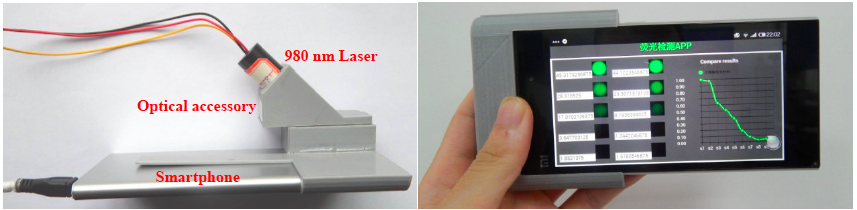
The prototype smartphone-based pesticide-detection system (credit: Qingsong Mei et al./Biosensors and Bioelectronics)

A new system that may allow people to detect pesticides cheaply and rapidly, combining a paper sensor and an Android program on a smartphone, has been developed by researchers in China and Singapore, according to a new study published in Biosensors and Bioelectronics.

As the potential effects of pesticides on health become clearer, it is increasingly important to be able to detect them in the environment and on foods, but existing gear that purpose is large, expensive, and slow.

Smaller detectors have been developed using paper as a sensor material, but they have not produced strong enough signals for detection. Now researchers at Hefei University of Technology in China and the National University of Singapore have developed a portable smartphone-based detection system using a paper sensor that they say produces signals stronger enough to allow for pesticide detection.

The researchers tested it on thiram, which is used to prevent fungal diseases in seed and crops and an animal repellent to protect fruit trees.

The device uses nanoparticles covered with copper ions that are coated onto paper, causing pesticide molecules to attach to the copper ions. A near-infrared mini-laser shines a light onto the paper, the smartphone detects the absorption spectrum, and an Android app then calculates pesticide concentration, down to 0.1 μM (micromolar) concentration.

The researchers are now developing kits that can multiplex (detect different molecules simultaneously), which would allow for testing food before using it in a meal, for example.

This work was supported by the National Natural Science Foundation of China and the Fundamental Research Funds for the Central Universities.


Abstract of Smartphone based visual and quantitative assays on upconversional paper sensor

The integration of smartphone with paper sensors recently has been gain increasing attentions because of the achievement of quantitative and rapid analysis. However, smartphone based upconversional paper sensors have been restricted by the lack of effective methods to acquire luminescence signals on test paper. Herein, by the virtue of 3D printing technology, we exploited an auxiliary reusable device, which orderly assembled a 980 nm mini-laser, optical filter and mini-cavity together, for digitally imaging the luminescence variations on test paper and quantitative analyzing pesticide thiram by smartphone. In detail, copper ions decorated NaYF4:Yb/Tm upconversion nanoparticles were fixed onto filter paper to form test paper, and the blue luminescence on it would be quenched after additions of thiram through luminescence resonance energy transfer mechanism. These variations could be monitored by the smartphone camera, and then the blue channel intensities of obtained colored images were calculated to quantify amounts of thiram through a self-written Android program installed on the smartphone, offering a reliable and accurate detection limit of 0.1 μM for the system. This work provides an initial demonstration of integrating upconversion nanosensors with smartphone digital imaging for point-of-care analysis on a paper-based platform.

A metamaterial that enhances thermal energy harvesting

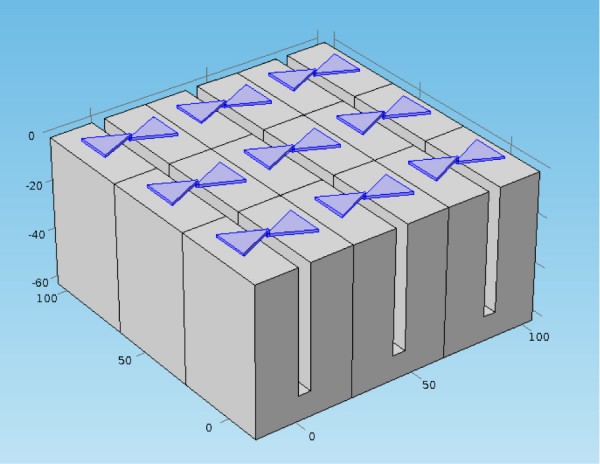
A rectenna metamaterial surface with bow-tie antennas for capture 10,000 to 100,000 times more thermal energy for conversion to DC electricity (credit: Won Park/University of Colorado)

Scientists from the University of Colorado are developing a new type of “rectenna” to efficiently “harvest” thermal emissions (waste heat) radiated from devices (a rectenna converts electromagnetic radiation to DC current).

Currently rectennas work best at low frequencies, but most heat is at higher radiation frequencies — up to the 100 THz (100 trillion cycles per second) range. So Won Park and his colleagues found a way to enhance thermal emission of hot bodies at the lower end of the spectrum (around 1 THz): by manipulating the surface of the object.

A metamaterial for engineering thermal emission

Park’s team uses software to analyze how the nanoscale topology of a surface — its bumps, holes or grooves — changes the way that electromagnetic radiation interacts with the surface. In some instances the geometry supports the formation of a wave of rippling electronic charges, called a plasmon, that hugs the surface.

“We design the surface to support a surface wave, because the presence of the wave offers a new avenue for engineering thermal emission,” Park said. For the case of optimizing thermal energy harvesting, the researchers found they could “spectrally tune” a surface to emit more radiation at 1 THz frequency.

The researchers first optimized the design, which consists of a copper plate with a regular array of tiny holes, using simulations. They then built the design in the lab and confirmed that the plate did indeed produce the type of surface waves predicted by the simulations.

The researchers also used computer modeling to design a bowtie-shaped antenna that would effectively capture the enhanced thermal emission. Simulations predict that an antenna placed near the holey surface could capture 10,000 to 100,000 times more thermal energy than an antenna in open space.

The team is in the process of experimentally testing this prediction and hopes to have new results to report soon. The results will also help the team calculate how rectenna thermal energy harvesting might compare to other ways of harvesting waste heat, such as thermoelectric materials.

The researchers described the system at the AVS 62nd International Symposium and Exhibition in San Jose, Calif. today (Monday, Oct. 19). The research is funded in part by a grant from Redwave Energy Inc.

Engineered viruses provide quantum-based enhancement of energy transport

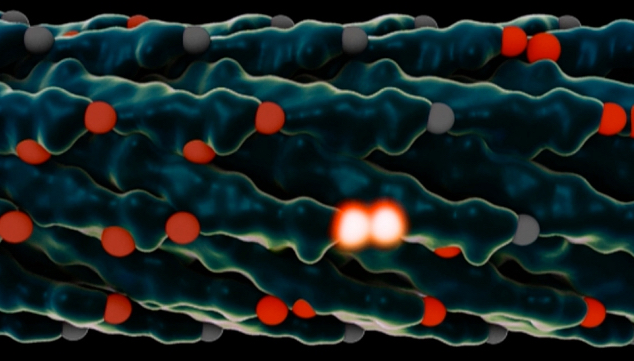
Rendering of a virus used in the MIT experiments. The light-collecting centers, called chromophores, are in red, and chromophores that just absorbed a photon of light are glowing white. After the virus is modified to adjust the spacing between the chromophores, energy can jump from one set of chromophores to the next faster and more efficiently. (credit: the researchers and Lauren Alexa Kaye)

MIT engineers have achieved a significant efficiency boost in a light-harvesting system, using genetically engineered viruses to achieve higher efficiency in transporting energy from receptors to reaction centers where it can be harnessed, making use of the exotic effects of quantum mechanics. Emulating photosynthesis in nature, it could lead to inexpensive and efficient solar cells or light-driven catalysis,

This achievement in coupling quantum research and genetic manipulation, described this week in the journal Nature Materials, was the work of MIT professors Angela Belcher, an expert on engineering viruses to carry out energy-related tasks, and Seth Lloyd, an expert on quantum theory and its potential applications, and 15 collaborators at MIT and in Italy.

The “Quantum Goldilocks Effect”

In photosynthesis, a photon hits a receptor called a chromophore, which in turn produces an exciton — a quantum particle of energy. This exciton jumps from one chromophore to another until it reaches a reaction center, where that energy is harnessed to build the molecules that support life, or photosynthesis.

But the hopping pathway of excitons is random and inefficient unless it takes advantage of quantum effects that allow it, in effect, to take multiple pathways at once and select the best ones, behaving more like a wave than a particle.

To do that, the chromophores have to be arranged just right, with exactly the right amount of space between them. This, Lloyd explains, is known as the “Quantum Goldilocks Effect.”

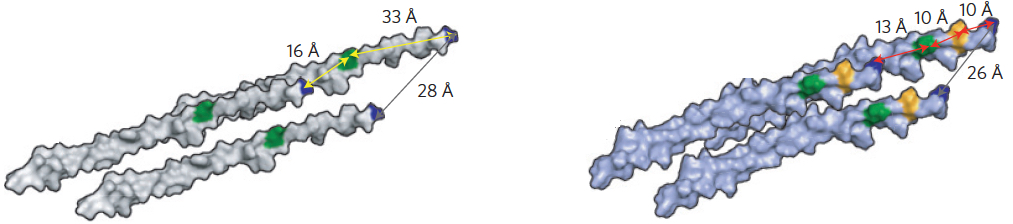
Molecular models of the genetically engineered viruses. Left virus has long inter-binding site distances of 16Å and 33Å within two proteins. Right virus has closer inter-binding site distances of approximately 10Å and 13Å, achieving faster excitation-energy transport speed. (credit: Heechul Park et al./Nature Materials)

That’s where the virus comes in. By engineering a virus that Belcher has worked with for years, the team was able to get it to bond with multiple synthetic chromophores — or, in this case, organic dyes. The researchers were then able to produce many varieties of the virus, with slightly different spacings between those synthetic chromophores, and select the ones that performed best.

In the end, they were able to more than double excitons’ speed, increasing the distance they traveled before dissipating — a significant improvement in the efficiency of the process.

The project started from a chance meeting at a conference in Italy. Lloyd and Belcher, a professor of biological engineering, were reporting on different projects they had worked on, and began discussing the possibility of a project encompassing their very different expertise. Lloyd, whose work is mostly theoretical, pointed out that the viruses Belcher works with have the right length scales to potentially support quantum effects.

In 2008, Lloyd had published a paper demonstrating that photosynthetic organisms transmit light energy efficiently because of these quantum effects. When he saw Belcher’s report on her work with engineered viruses, he wondered if that might provide a way to artificially induce a similar effect, in an effort to approach nature’s efficiency.

“I had been talking about potential systems you could use to demonstrate this effect, and Angela said, ‘We’re already making those,’” Lloyd recalls. Eventually, after much analysis, “We came up with design principles to redesign how the virus is capturing light, and get it to this quantum regime.”

Within two weeks, Belcher’s team had created their first test version of the engineered virus. Many months of work then went into perfecting the receptors and the spacings.

Once the team engineered the viruses, they were able to use laser spectroscopy and dynamical modeling to watch the light-harvesting process in action, and to demonstrate that the new viruses were indeed making use of quantum coherence to enhance the transport of excitons.

“It was really fun,” Belcher says. “A group of us who spoke different [scientific] languages worked closely together, to both make this class of organisms, and analyze the data. That’s why I’m so excited by this.”

Inexpensive and efficient solar cells or light-driven catalysis

While this initial result is essentially a proof of concept rather than a practical system, it points the way toward an approach that could lead to inexpensive and efficient solar cells or light-driven catalysis, the team says. So far, the engineered viruses collect and transport energy from incoming light, but do not yet harness it to produce power (as in solar cells) or molecules (as in photosynthesis). But this could be done by adding a reaction center, where such processing takes place, to the end of the virus where the excitons end up.

“This is exciting and high-quality research,” says Alán Aspuru-Guzik, a professor of chemistry and chemical biology at Harvard University who was not involved in this work. The research, he says, “combines the work of a leader in theory (Lloyd) and a leader in experiment (Belcher) in a truly multidisciplinary and exciting combination that spans biology to physics to potentially, future technology.”

“Access to controllable excitonic systems is a goal shared by many researchers in the field,” Aspuru-Guzik adds. “This work provides fundamental understanding that can allow for the development of devices with an increased control of exciton flow.”

The research was supported by the Italian energy company Eni through the MIT Energy Initiative. The team included researchers at the University of Florence, the University of Perugia, and Eni.


MIT | See how researchers genetically engineer viruses to more efficiently transport energy.


Abstract of Enhanced energy transport in genetically engineered excitonic networks

One of the challenges for achieving efficient exciton transport in solar energy conversion systems is precise structural control of the light-harvesting building blocks. Here, we create a tunable material consisting of a connected chromophore network on an ordered biological virus template. Using genetic engineering, we establish a link between the inter-chromophoric distances and emerging transport properties. The combination of spectroscopy measurements and dynamic modelling enables us to elucidate quantum coherent and classical incoherent energy transport at room temperature. Through genetic modifications, we obtain a significant enhancement of exciton diffusion length of about 68% in an intermediate quantum-classical regime.

3-D-printed ‘soft’ robotic tentacle with new level of octopus agility

Left: digital Mask Projection Stereolithography (DMP-SL) process; right: soft pneumatic actuator
being printed using elastomeric precursor (EP) (credit: Cornell University)

Cornell University engineers have developed a process for 3D-printing a soft robotic tentacle that mimics the complex movements and degree of freedom of an octopus tentacle.

The tentacle achieves its dexterity through a 3-dimensional arrangement of muscles in three mutually perpendicular directions (longitudinal, transverse and helical). The process uses an elastomeric (both elastic and flows) material combined with a low-cost, reliable, and simple method for 3D-printing elastomeric pneumatic actuators.

The invention is a “promising route to sophisticated, biomimetic systems,” according to Rob Shepherd, assistant professor of mechanical and aerospace engineering and senior author of a recent study published in the journal Bioinspiration & Biomimetics.

The research was funded by the Air Force Office of Scientific Research, 3M and the National Science Foundation.


Cornell University Media Relations | 3D-printed ‘soft’ robotic tentacle displays new level of agility


Abstract of 3D printing antagonistic systems of artificial muscle using projection stereolithography

The detailed mechanical design of a digital mask projection stereolithgraphy system is described for the 3D printing of soft actuators. A commercially available, photopolymerizable elastomeric material is identified and characterized in its liquid and solid form using rheological and tensile testing. Its capabilities for use in directly printing high degree of freedom (DOF), soft actuators is assessed. An outcome is the ~40% strain to failure of the printed elastomer structures. Using the resulting material properties, numerical simulations of pleated actuator architectures are analyzed to reduce stress concentration and increase actuation amplitudes. Antagonistic pairs of pleated actuators are then fabricated and tested for four-DOF, tentacle-like motion. These antagonistic pairs are shown to sweep through their full range of motion (~180°) with a period of less than 70 ms.

Carbon nanotubes found in cells from airways of asthmatic children in Paris

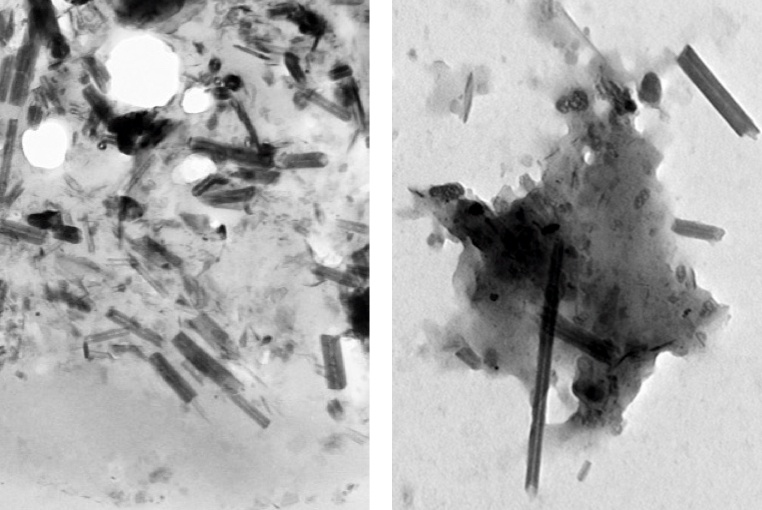
Carbon nanotubes (rods) and nanoparticles (black clumps) found inside a lung cell vacuole (left) are similar to those found in vehicle exhaust in tailpipes of cars in Paris (right) (credit: Fathi Moussa/Paris-Saclay University)

Carbon nanotubes (CNTs) have been found in cells extracted from the airways of Parisian children under routine treatment for asthma, according to a report in the journal EBioMedicine (open access) by scientists in France and at Rice University.

The cells were taken from 69 randomly selected asthma patients aged 2 to 17 who underwent routine fiber-optic bronchoscopies as part of their treatment. The researchers analyzed particulate matter found in the alveolar macrophage cells (also known as dust cells), which help stop foreign materials like particles and bacteria from entering the lungs.

The study partially answers the question of what makes up the black material inside alveolar macrophages, the original focus of the study. The researchers found single-walled and multiwalled carbon nanotubes and amorphous carbon among the cells.

The nanotube aggregates in the cells ranged in size from 10 to 60 nanometers in diameter and up to several hundred nanometers in length, small enough that optical microscopes would not have been able to identify them in samples from former patients. The new study used more sophisticated tools, including high-resolution transmission electron microscopy, X-ray spectroscopy, Raman spectroscopy, and near-infrared fluorescence microscopy to definitively identify them in the cells and in the environmental samples.

“The concentrations of nanotubes are so low in these samples that it’s hard to believe they would cause asthma, but you never know,” said Rice chemist Lon Wilson, a corresponding author of the paper. “What surprised me the most was that carbon nanotubes were the major component of the carbonaceous pollution we found in the samples.”

The study notes but does not make definitive conclusions about the controversial proposition that carbon nanotube fibers may act like asbestos, a proven carcinogen. But the authors did note that “long carbon nanotubes and large aggregates of short ones can induce a granulomatous (inflammation) reaction.”

The researchers also suggested previous studies that link the carbon content of airway macrophages and the decline of lung function should be reconsidered in light of the new findings. The researchers also suggested that the large surface areas of nanotubes and their ability to adhere to substances may make them effective carriers for other pollutants.

Carbon nanotubes from forest fires and cars?

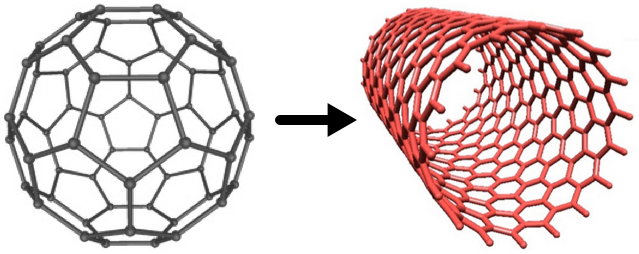
Fullerenes (left) can be converted to carbon nanotubes (right) with a catalytic process, according to Rice chemists (credits: Soroush83/CC and Matías Soto/Rice University)

However, similar nanotubes have been found in samples from the exhaust pipes of Paris vehicles, in dust gathered from various places around the city, in spider webs in India, and even in ice cores, the paper notes.

“We know that carbon nanoparticles are found in nature,” Wilson said, noting that round fullerene (C60) molecules are commonly produced by volcanoes, forest fires, and other combustion of carbon materials. “All you need is a little catalysis to make carbon nanotubes instead of fullerenes.”

A car’s catalytic converter, which turns toxic carbon monoxide into safer emissions, bears at least a passing resemblance to the Rice-invented high-pressure carbon monoxide, or HiPco, process to make carbon nanotubes, he said. “So it is not a big surprise, when you think about it,” Wilson said.

“Based on our discovery of CNTs in tailpipes, we propose that the catalytic converters of the automobiles are manufacturing carbon nanotubes, Wilson told KurzweilAI. “However, we have not actually proven that.”

We are all carbon-nanotube bearers now

For ethical reasons, no cells from healthy patients were analyzed, but because nanotubes were found in all of the samples, the study led the researchers to conclude that carbon nanotubes are likely to be found in everybody.

“It’s kind of ironic. In our laboratory, working with carbon nanotubes, we wear facemasks to prevent exactly what we’re seeing in these samples, yet everyone walking around out there in the world probably has at least a small concentration of carbon nanotubes in their lungs,” he said.

The study followed one released by Rice and Baylor College of Medicine earlier this month with the similar goal of analyzing the black substance found in the lungs of smokers who died of emphysema. That study found carbon black nanoparticles that were the product of the incomplete combustion of such organic material as tobacco.

Co-authors are from Paris-Saclay University, the Paediatric Pulmonology and Allergy Center and the Department of Anatomo-Pathology of the Groupe hospitalier La Roche-Guyon, and Paris Diderot University. The Welch Foundation partially supported the research.


Abstract of Anthropogenic Carbon Nanotubes Found in the Airways of Parisian Children

Compelling evidence shows that fine particulate matters (PM) from air pollution penetrate lower airways and are associated with adverse health effects even within concentrations below those recommended by the WHO. A paper reported a dose-dependent link between carbon content in alveolar macrophages (assessed only by optical microscopy) and the decline in lung function. However, to the best of our knowledge, PM had never been accurately characterized inside human lung cells and the most responsible components of the particulate mix are still unknown. On another hand carbon nanotubes (CNTs) from natural and anthropogenic sources might be an important component of PM in both indoor and outdoor air.

We used high-resolution transmission electron microscopy and energy dispersive X-ray spectroscopy to characterize PM present in broncho-alveolar lavage-fluids (n = 64) and inside lung cells (n = 5 patients) of asthmatic children. We show that inhaled PM mostly consist of CNTs. These CNTs are present in all examined samples and they are similar to those we found in dusts and vehicle exhausts collected in Paris, as well as to those previously characterized in ambient air in the USA, in spider webs in India, and in ice core. These results strongly suggest that humans are routinely exposed to CNTs.

Artificial ‘skin’ system transmits the pressure of touch

“Gimmie five”: Model robotic hand with artificial mechanoreceptors (credit: Bao Research Group, Stanford University)

Researchers have created a sensory system that mimics the ability of human skin to feel pressure and have transmitted the digital signals from the system’s sensors to the brain cells of mice. These new developments, reported in the October 16 issue of Science, could one day allow people living with prosthetics to feel sensation in their artificial limbs.

Artificial mechanoreceptors mounted on the fingers of a model robotic hand (credit: Bao Research Group, Stanford University)

The system consists of printed plastic circuits, designed to be placed on robotic fingertips. Digital signals transmitted by the system would increase as the fingertips came closer to an object, with the signal strength growing as the fingertips gripped the object tighter.

How to simulate human fingertip sensations

To simulate this human sensation of pressure, Zhenan Bao of Stanford University and her colleagues developed a number of key components that collectively allow the system to function.

As our fingers first touch an object, how we physically “feel” it depends partially on the mechanical strain that the object exerts on our skin. So the research team used a sensor with a specialized circuit that translates pressure into digital signals.

To allow the sensory system to feel the same range of pressure that human fingertips can, the team needed a highly sensitive sensor. They used carbon nanotubes in formations that are highly effective at detecting the electrical fields of inanimate objects.

Stretchable skin with flexible artificial mechanoreceptors (credit: Bao Research Group, Stanford University)

Bao noted that the printed circuits of the new sensory system would make it easy to produce in large quantities. “We would like to make the circuits with stretchable materials in the future, to truly mimic skin,” Bao said. “Other sensations, like temperature sensing, would be very interesting to combine with touch sensing.”


Abstract of A skin-inspired organic digital mechanoreceptor

Human skin relies on cutaneous receptors that output digital signals for tactile sensing in which the intensity of stimulation is converted to a series of voltage pulses. We present a power-efficient skin-inspired mechanoreceptor with a flexible organic transistor circuit that transduces pressure into digital frequency signals directly. The output frequency ranges between 0 and 200 hertz, with a sublinear response to increasing force stimuli that mimics slow-adapting skin mechanoreceptors. The output of the sensors was further used to stimulate optogenetically engineered mouse somatosensory neurons of mouse cortex in vitro, achieving stimulated pulses in accordance with pressure levels. This work represents a step toward the design and use of large-area organic electronic skins with neural-integrated touch feedback for replacement limbs.

Noninvasive imaging method can look twice as deep inside the living brain

In vivo 1.3-μm VCSEL SS-OCT imaging of a 12-week-old adult mouse with cranial window preparation. (a) Representative OCT image visualizing morphological details of the cerebral cortex and subsequent brain compartments. (b) OCT brain anatomy showing good correlation with photomicrograph of a Nissl-stained histology section of the same strain mouse brain. (credit: Allen Institute for Brain Science/Journal of Biomedical Optics)

University of Washington (UW) researchers have developed a noninvasive light-based imaging technology that can literally see inside the living brain at more than two times the depth, providing a new tool to study how diseases like dementia, Alzheimer’s, and brain tumors change brain tissue over time.

The work was reported Oct. 8 by Woo June Choi and Ruikang Wang of the UW Department of Bioengineering in the Journal of Biomedical Optics, published by SPIE, the international society for optics and photonics.

Noninvasive deep imaging

According to the authors, this new optical coherence tomography (OCT) approach to brain study may allow for examining acute and chronic morphological or functional vascular changes in the deep brain.

OCT is normally used to obtain sub-surface images of biological tissue at about the same resolution as a low-power microscope and can instantly deliver cross-section images of layers of tissue without invasive surgery or ionizing radiation. OCT images are based on light directly reflected from a sub-surface.

Widely used in clinical ophthalmology, OCT has recently been adapted for brain imaging in small animal models. Its application in neuroscience has been limited, however, because conventional OCT technology hasn’t been able to image more than 1 millimeter below the surface of biological tissue.

Portion of schematic of the 1.3-μm vertical cavity surface emitting laser (VCSEL) swept-source optical coherence tomography (SS-OCT) system. FC: optical fiber coupler; BD: dual balanced detector; DAQ: data acquisition. (credit: Woo June Choi and Ruikang K. Wang/Journal of Biomedical Optics)

In the paper, Choi and Wang describe how a new technique called “swept-source OCT” (SS-OCT) powered by a vertical-cavity surface-emitting laser (VCSEL) increases signal sensitivity, extending the imaging depth range to more than 2 millimeters. That may make it possible to do things that have been barely attempted in the OCT community, such as noninvasive imaging of the mouse hippocampus or full-length imaging of a human eye from cornea to retina.

It could also allow researchers to monitor deeper morphological changes caused by diseases such as Alzheimer’s disease and dementia, and even to study the effects of aging on the brain.


Abstract of Swept-source optical coherence tomography powered by a 1.3-μm vertical cavity surface emitting laser enables 2.3-mm-deep brain imaging in mice in vivo

We report noninvasive, in vivo optical imaging deep within a mouse brain by swept-source optical coherence tomography (SS-OCT), enabled by a 1.3-μm vertical cavity surface emitting laser (VCSEL). VCSEL SS-OCT offers a constant signal sensitivity of 105 dB throughout an entire depth of 4.25 mm in air, ensuring an extended usable imaging depth range of more than 2 mm in turbid biological tissue. Using this approach, we show deep brain imaging in mice with an open-skull cranial window preparation, revealing intact mouse brain anatomy from the superficial cerebral cortex to the deep hippocampus. VCSEL SS-OCT would be applicable to small animal studies for the investigation of deep tissue compartments in living brains where diseases such as dementia and tumor can take their toll.

Graphene nano-coils discovered to be powerful natural electromagnets

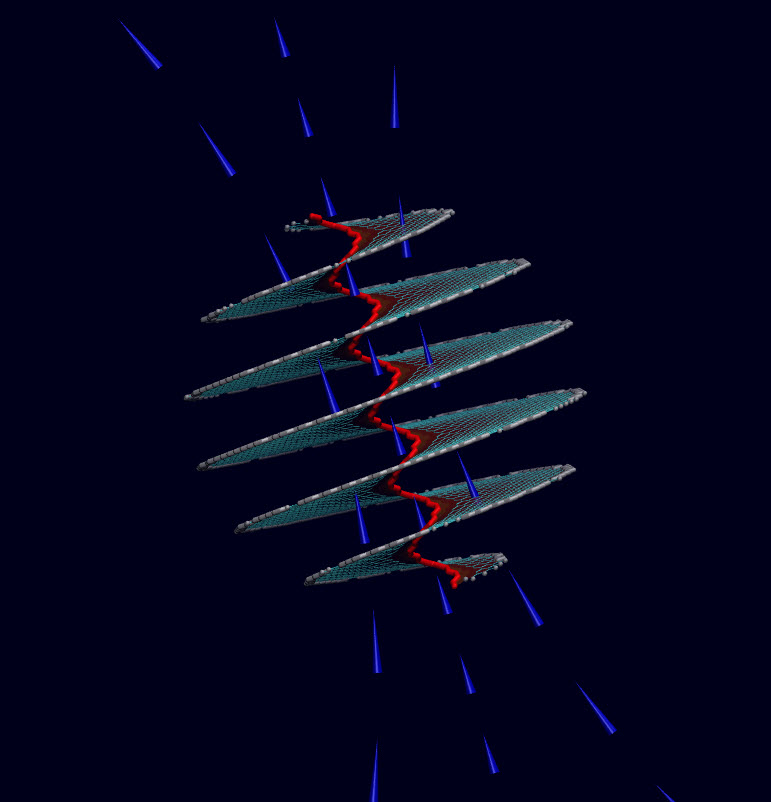
A nano-coil made of graphene could be an effective solenoid/inductor for electronic applications (credit: Yakobson Research Group/Rice University)

Rice University scientists have discovered that a widely used electronic part called a solenoid could be scaled down to nano-size with macro-scale performance.

The secret: a spiral form of atom-thin graphene that, remarkably, can be found in nature, even in common coal, according to Rice theoretical physicist Boris Yakobson and his colleagues.

The researchers determined that when a voltage is applied to such a “nano-coil,” current will flow around the helical path and produce a magnetic field, as it does in macroscale solenoids. The discovery is detailed in a new paper in the American Chemical Society journal Nano Letters.

“Perhaps this might work in reverse here: An electron current, pumped through by the applied voltage, at certain conditions may just cause the graphene spiral to spin, like a fast little electro-turbine,” Yakobson speculated.

Basic solenoid design. A current flowing through the coil generates a magnetic field, which causes a ferromagnetic plunger to be attracted or repelled. (credit: Society of Robots)

Solenoids are components with wires coiled around a metallic core. They produce a magnetic field when carrying current, turning them into electromagnets. These are widespread in electronic and mechanical devices, from circuit boards to transformers to cars.

They also serve as inductors, which are primary components in electric circuits that regulate current (the lump in power cables that feed electronic devices contains an inductor, which blocks RF interference). In their smallest form, inductors are a part of integrated circuits.

Nano-solenoids with a macro punch

While transistors get steadily smaller, basic inductors in electronics have become relatively bulky, said Fangbo Xu, a Rice alumnus and lead author of the paper. “It’s the same inside the circuits,” he said. “Commercial spiral inductors on silicon occupy excessive area. If realized, graphene nano-solenoids could change that.”

The nano-solenoids analyzed through computer models at Rice should be capable of producing powerful magnetic fields of about 1 tesla, about the same as the coils found in typical loudspeakers, according to Yakobson and his team — and about the same field strength as some MRI machines. They found the magnetic field would be strongest in the hollow, nanometer-wide cavity at the spiral’s center.

The spiral form is attributable to a simple topological trick, he said. Graphene is made of hexagonal arrays of carbon atoms. Malformed hexagons known as dislocations along one edge force the graphene to twist around itself, akin to a continuous nanoribbon that mimics a mathematical construct known as a Riemann surface.

The researchers demonstrated theoretically how energy would flow through the hexagons in nano-solenoids with edges in either armchair or zigzag formations. In one case, they determined the performance of a conventional spiral inductor of 205 microns in diameter could be matched by a nano-solenoid just 70 nanometers wide.

Multiple uses

Because graphene has no energy band gap (which gives a material semiconducting properties), electricity should move through without any barriers. But in fact, the width of the spiral and the configuration of the edges — either armchair or zigzag — influences how the current is distributed, and thus its inductive properties.

The researchers suggested it should be possible to isolate graphene screw dislocations from crystals of graphitic carbon (graphene in bulk form), but enticing graphene sheets to grow in a spiral would allow for better control of its properties, Yakobson said.

Xu suggested nano-solenoids may also be useful as molecular relays or switchable traps for magnetic molecules or radicals in chemical probes.

Co-authors are Rice graduate student Henry Yu and alumnus Arta Sadrzadeh. Yakobson is the Karl F. Hasselmann Professor of Materials Science and NanoEngineering and a professor of chemistry.

The research was supported by the Office of Naval Research’s Multidisciplinary University Research Initiative (MURI), the National Science Foundation and the Air Force Office of Scientific Research MURI.

The strongest known permanent-magnet in the world is at the Los Alamos National Laboratory campus of the National High Magnetic Field Laboratory, at 100 tesla. Does that mean 100 of these nanocoils could equal it? Comment below.


Abstract of Surfaces of Carbon as Graphene Nanosolenoids

Traditional inductors in modern electronics consume excessive areas in the integrated circuits. Carbon nanostructures can offer efficient alternatives if the recognized high electrical conductivity of graphene can be properly organized in space to yield a current-generated magnetic field that is both strong and confined. Here we report on an extraordinary inductor nanostructure naturally occurring as a screw dislocation in graphitic carbons. Its elegant helicoid topology, resembling a Riemann surface, ensures full covalent connectivity of all graphene layers, joined in a single layer wound around the dislocation line. If voltage is applied, electrical currents flow helically and thus give rise to a very large (∼1 T at normal operational voltage) magnetic field and bring about superior (per mass or volume) inductance, both owing to unique winding density. Such a solenoid of small diameter behaves as a quantum conductor whose current distribution between the core and exterior varies with applied voltage, resulting in nonlinear inductance.