Affordable camera reveals hidden details invisible to the naked eye

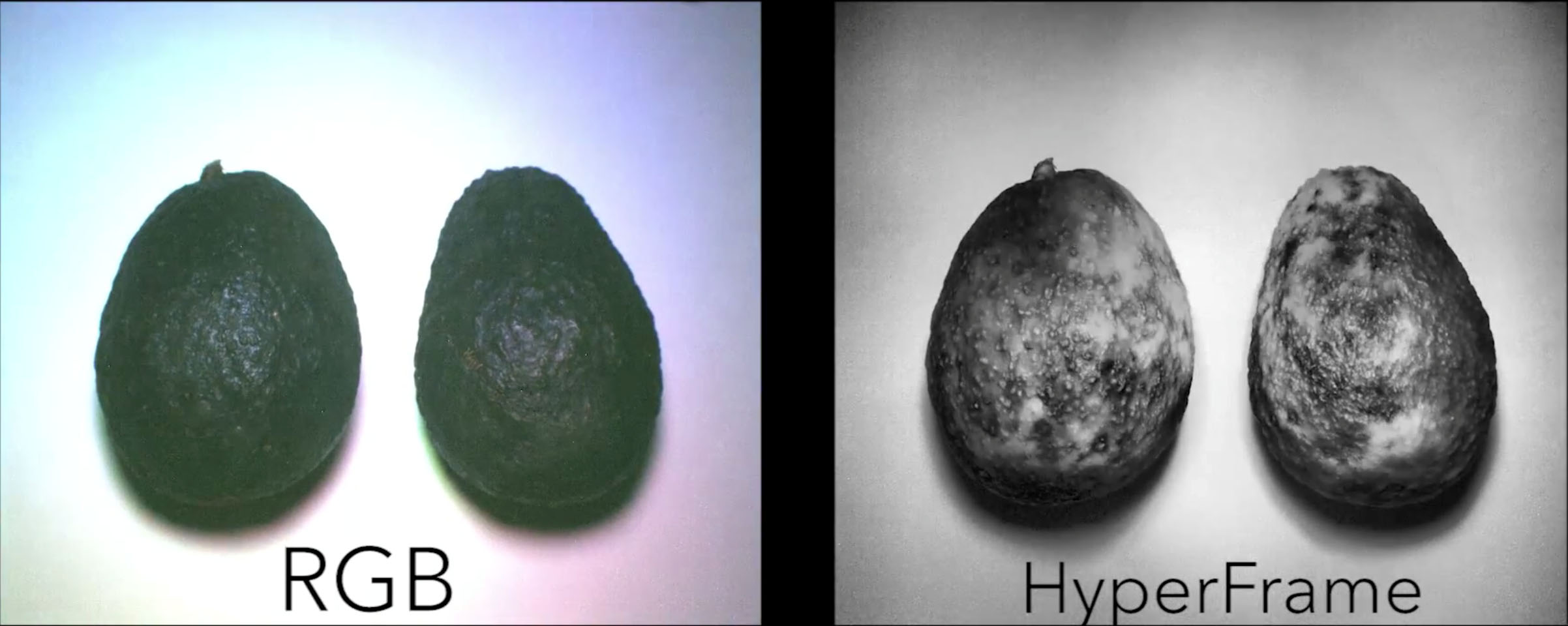
HyperFrames taken with HyperCam predicted the relative ripeness of 10 different fruits with 94 percent accuracy, compared with only 62 percent for a typical RGB (visible light) camera (credit: University of Washington)

HyperCam, an affordable “hyperspectral” (sees beyond the visible range) camera technology being developed by the University of Washington and Microsoft Research, may enable consumers of the future to use a cell phone to tell which piece of fruit is perfectly ripe or if a work of art is genuine.

The technology uses both visible and invisible near-infrared light to “see” beneath surfaces and capture unseen details. This type of camera, typically used in industrial applications, can cost between several thousand to tens of thousands of dollars.

In a paper presented at the UbiComp 2015 conference, the team detailed a hardware solution that costs roughly $800, or potentially as little as $50 to add to a mobile phone camera. It illuminates a scene with 17 different wavelengths and generates an image for each. They also developed intelligent software that easily finds “hidden” differences between what the hyperspectral camera captures and what can be seen with the naked eye.

In one test, the team took hyperspectral images of 10 different fruits, from strawberries to mangoes to avocados, over the course of a week. The HyperCam images predicted the relative ripeness of the fruits with 94 percent accuracy, compared with only 62 percent for a typical camera.

The HyperCam system was also able differentiate between hand images of users with 99 percent accuracy. That can aid in everything from gesture recognition to biometrics to distinguishing between two different people playing the same video game.

“It’s not there yet, but the way this hardware was built you can probably imagine putting it in a mobile phone,” said Shwetak Patel, Washington Research Foundation Endowed Professor of Computer Science & Engineering and Electrical Engineering at the UW.

Compared to an image taken with a normal camera (left), HyperCam images (right) reveal detailed vein and skin texture patterns that are unique to each individual (credit: University of Washington)

How it works

Hyperspectral imaging is used today in everything from satellite imaging and energy monitoring to infrastructure and food safety inspections, but the technology’s high cost has limited its use to industrial or commercial purposes. Near-infrared cameras, for instance, can reveal whether crops are healthy. Thermal infrared cameras can visualize where heat is escaping from leaky windows or an overloaded electrical circuit.

HyperCam is a low-cost hyperspectral camera developed by UW and Microsoft Research that reveals details that are difficult or impossible to see with the naked eye (credit: University of Washington)

One challenge in hyperspectral imaging is sorting through the sheer volume of frames produced. The UW software analyzes the images and finds ones that are most different from what the naked eye sees, essentially zeroing in on ones that the user is likely to find most revealing.

“It mines all the different possible images and compares it to what a normal camera or the human eye will see and tries to figure out what scenes look most different,” Goel said.

“Next research steps will include making it work better in bright light and making the camera small enough to be incorporated into mobile phones and other devices,” he said.


Mayank Goel | HyperCam: HyperSpectral Imaging for Ubiquitous Computing Applications


Abstract of HyperCam: hyperspectral imaging for ubiquitous computing applications

Emerging uses of imaging technology for consumers cover a wide range of application areas from health to interaction techniques; however, typical cameras primarily transduce light from the visible spectrum into only three overlapping components of the spectrum: red, blue, and green. In contrast, hyperspectral imaging breaks down the electromagnetic spectrum into more narrow components and expands coverage beyond the visible spectrum. While hyperspectral imaging has proven useful as an industrial technology, its use as a sensing approach has been fragmented and largely neglected by the UbiComp community. We explore an approach to make hyperspectral imaging easier and bring it closer to the end-users. HyperCam provides a low-cost implementation of a multispectral camera and a software approach that automatically analyzes the scene and provides a user with an optimal set of images that try to capture the salient information of the scene. We present a number of use-cases that demonstrate HyperCam’s usefulness and effectiveness.
Affordable camera reveals hidden details invisible to the naked eye

HyperFrames taken with HyperCam predicted the relative ripeness of 10 different fruits with 94 percent accuracy, compared with only 62 percent for a typical RGB (visible light) camera (credit: University of Washington)

HyperCam, an affordable “hyperspectral” (sees beyond the visible range) camera technology being developed by the University of Washington and Microsoft Research, may enable consumers of the future to use a cell phone to tell which piece of fruit is perfectly ripe or if a work of art is genuine.

The technology uses both visible and invisible near-infrared light to “see” beneath surfaces and capture unseen details. This type of camera, typically used in industrial applications, can cost between several thousand to tens of thousands of dollars.

In a paper presented at the UbiComp 2015 conference, the team detailed a hardware solution that costs roughly $800, or potentially as little as $50 to add to a mobile phone camera. It illuminates a scene with 17 different wavelengths and generates an image for each. They also developed intelligent software that easily finds “hidden” differences between what the hyperspectral camera captures and what can be seen with the naked eye.

In one test, the team took hyperspectral images of 10 different fruits, from strawberries to mangoes to avocados, over the course of a week. The HyperCam images predicted the relative ripeness of the fruits with 94 percent accuracy, compared with only 62 percent for a typical camera.

The HyperCam system was also able differentiate between hand images of users with 99 percent accuracy. That can aid in everything from gesture recognition to biometrics to distinguishing between two different people playing the same video game.

“It’s not there yet, but the way this hardware was built you can probably imagine putting it in a mobile phone,” said Shwetak Patel, Washington Research Foundation Endowed Professor of Computer Science & Engineering and Electrical Engineering at the UW.

Compared to an image taken with a normal camera (left), HyperCam images (right) reveal detailed vein and skin texture patterns that are unique to each individual (credit: University of Washington)

How it works

Hyperspectral imaging is used today in everything from satellite imaging and energy monitoring to infrastructure and food safety inspections, but the technology’s high cost has limited its use to industrial or commercial purposes. Near-infrared cameras, for instance, can reveal whether crops are healthy. Thermal infrared cameras can visualize where heat is escaping from leaky windows or an overloaded electrical circuit.

HyperCam is a low-cost hyperspectral camera developed by UW and Microsoft Research that reveals details that are difficult or impossible to see with the naked eye (credit: University of Washington)

One challenge in hyperspectral imaging is sorting through the sheer volume of frames produced. The UW software analyzes the images and finds ones that are most different from what the naked eye sees, essentially zeroing in on ones that the user is likely to find most revealing.

“It mines all the different possible images and compares it to what a normal camera or the human eye will see and tries to figure out what scenes look most different,” Goel said.

“Next research steps will include making it work better in bright light and making the camera small enough to be incorporated into mobile phones and other devices,” he said.


Mayank Goel | HyperCam: HyperSpectral Imaging for Ubiquitous Computing Applications


Abstract of HyperCam: hyperspectral imaging for ubiquitous computing applications

Emerging uses of imaging technology for consumers cover a wide range of application areas from health to interaction techniques; however, typical cameras primarily transduce light from the visible spectrum into only three overlapping components of the spectrum: red, blue, and green. In contrast, hyperspectral imaging breaks down the electromagnetic spectrum into more narrow components and expands coverage beyond the visible spectrum. While hyperspectral imaging has proven useful as an industrial technology, its use as a sensing approach has been fragmented and largely neglected by the UbiComp community. We explore an approach to make hyperspectral imaging easier and bring it closer to the end-users. HyperCam provides a low-cost implementation of a multispectral camera and a software approach that automatically analyzes the scene and provides a user with an optimal set of images that try to capture the salient information of the scene. We present a number of use-cases that demonstrate HyperCam’s usefulness and effectiveness.

Protein-folding discovery opens a window on basic life processes

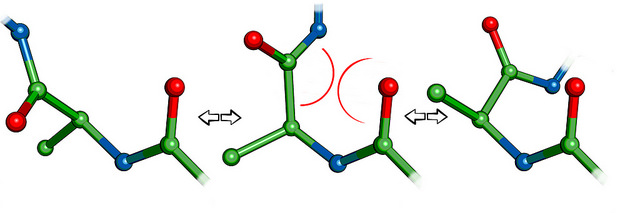
Biochemists have discovered “impossible” shapes of proteins as they shift from one stable shape to a different, folded one. (credit: Oregon State University)

Biochemists at Oregon State University have made a fundamental discovery about protein structure that sheds new light on how proteins fold — one of the most basic processes of life. Even the process of thinking involves proteins at the end of one neuron passing a message to different proteins on the next neuron.

The findings, announced today (Oct. 16) in an open-access paper in Science Advances, promises to help scientists better understand some important changes that proteins undergo.

Scientists previously thought is was impossible to characterize these changes, in part because the transitions are so incredibly small and fleeting. Proteins convert from one observable shape to another in less than one trillionth of a second, and in molecules that are less than one millionth of an inch in size. These changes have been simulated by computers, but no one had ever observed how they happen.

Hiding in plain sight

“Actual evidence of these transitions was hiding in plain sight all this time,” said Andrew Brereton, an OSU doctoral student and lead author on this study. “We just didn’t know what to look for, and didn’t understand how significant it was.”

X-ray crystallography has been able to capture images of proteins in their more stable shapes. But the changes in shape needed for those transitions are fleeting and involve distortions in the molecules that are extreme and difficult to predict.

What the OSU researchers discovered is that these stable shapes actually contained some parts that were  trapped in the act of changing shape, conceptually similar to finding mosquitos trapped in amber.

“We discovered that some proteins were holding single building blocks in shapes that were supposed to be impossible to find in a stable form,” said Andrew Karplus, the corresponding author on the study and a distinguished professor of biochemistry and biophysics in the OSU College of Science.

“Apparently about one building block out of every 6,000 gets trapped in a highly unlikely shape that is like a single frame in a movie,” Karplus said. “The set of these trapped residues taken together have basically allowed us to make a movie that shows how these special protein shape changes occur. And what this movie shows has real differences from what the computer simulations have predicted.”

As with most fundamental discoveries, the researchers said, the full value of the findings may take years or decades to play out.

The movie below, created by Andrew E. Brereton and P. Andrew Karplus, is an alanine dipeptide animation generated according to the “general” model of the ψ ~ +90° conformational transition described in their paper.


Abstract of Native proteins trap high-energy transit conformations

During protein folding and as part of some conformational changes that regulate protein function, the polypeptide chain must traverse high-energy barriers that separate the commonly adopted low-energy conformations. How distortions in peptide geometry allow these barrier-crossing transitions is a fundamental open question. One such important transition involves the movement of a non-glycine residue between the left side of the Ramachandran plot (that is, ϕ < 0°) and the right side (that is, ϕ > 0°). We report that high-energy conformations with ϕ ~ 0°, normally expected to occur only as fleeting transition states, are stably trapped in certain highly resolved native protein structures and that an analysis of these residues provides a detailed, experimentally derived map of the bond angle distortions taking place along the transition path. This unanticipated information lays to rest any uncertainty about whether such transitions are possible and how they occur, and in doing so lays a firm foundation for theoretical studies to better understand the transitions between basins that have been little studied but are integrally involved in protein folding and function. Also, the context of one such residue shows that even a designed highly stable protein can harbor substantial unfavorable interactions.

Moving cooling directly to the chip for denser, longer-life electronics

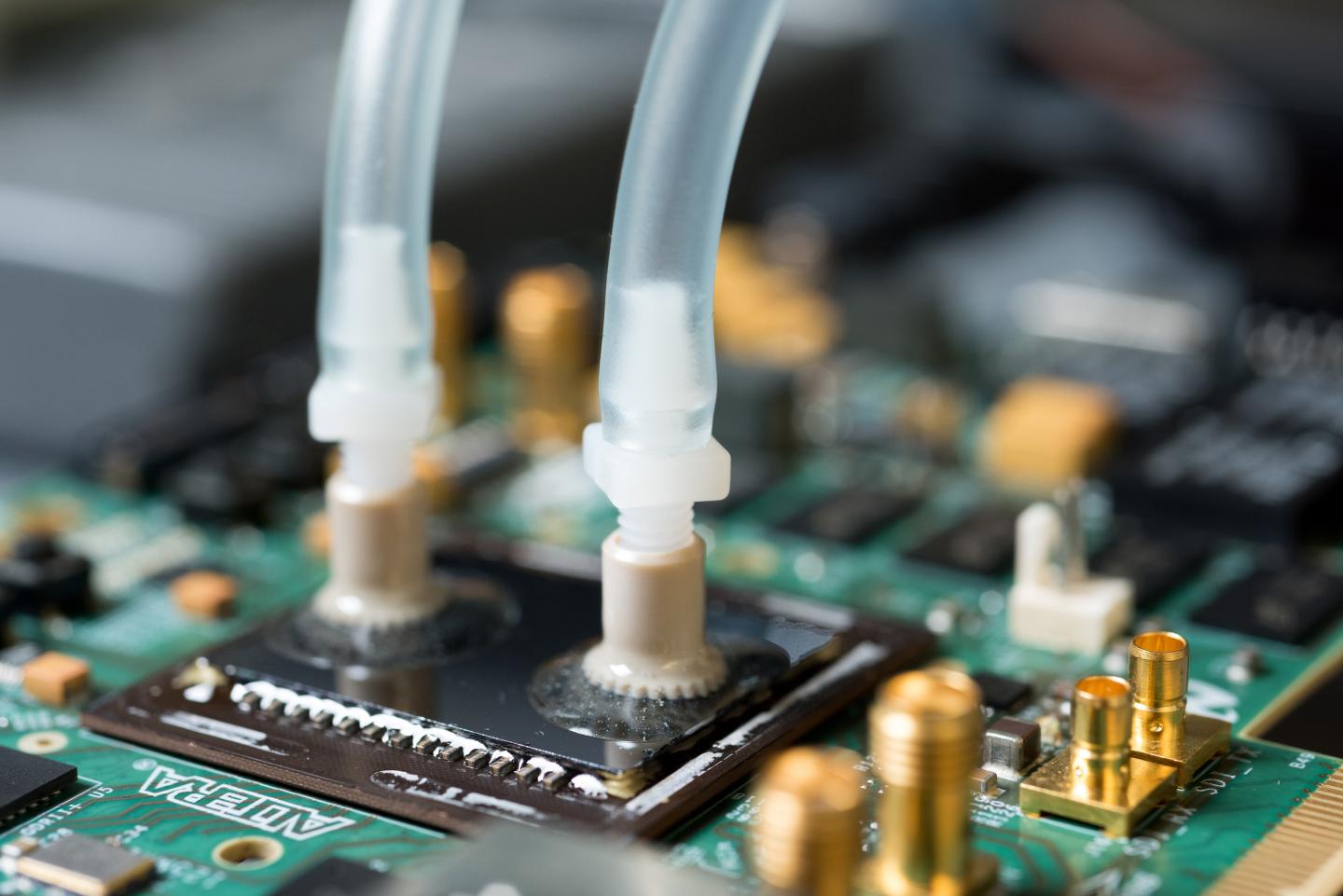
Liquid ports carry cooling water to specially designed passages etched into the backs of FPGA devices to provide more effective cooling. The liquid cooling provides a significant advantage in computing throughput. (credit: Rob Felt/Georgia Tech)

Using microfluidic passages cut directly into the backsides of production field-programmable gate array (FPGA) devices, Georgia Institute of Technology researchers have put liquid cooling where it’s needed the most: a few hundred microns away from where the transistors are operating.

Combined with connection technology that operates through structures in the cooling passages, the new technologies could allow development of denser and more powerful integrated electronic systems that would no longer require heat sinks or cooling fans on top of the integrated circuits.

Working with popular 28-nanometer FPGA devices made by Altera Corp., the researchers demonstrated a monolithically-cooled chip that can operate at temperatures more than 60 percent below those of similar air-cooled chips.

The lower temperatures can also mean longer device life and less current leakage. The cooling comes from simple de-ionized water flowing through microfluidic passages that replace the massive air-cooled heat sinks normally placed on the backs of chips.

Supported by the Defense Advanced Research Projects Agency (DARPA), the research is believed to be the first example of liquid cooling directly on an operating high-performance CMOS chip.

Liquid cooling has been used to address the heat challenges facing computing systems whose power needs have been increasing. However, existing liquid cooling technology removes heat using cold plates externally attached to fully packaged silicon chips — adding thermal resistance and reducing the heat-rejection efficiency.

In multiple tests, a liquid-cooled FPGA was operated using a custom processor architecture provided by Altera. With a water inlet temperature of approximately 20 degrees Celsius and an inlet flow rate of 147 milliliters per minute, the liquid-cooled FPGA operated at a temperature of less than 24 degrees Celsius, compared to an air-cooled device that operated at 60 degrees Celsius.

The research team chose FPGAs for their test because they provide a platform to test different circuit designs, and because FPGAs are common in many market segments, including defense. However, the same technology could also be used to cool CPUs, GPUs and other devices such as power amplifiers, according to the researchers.

In addition to improving overall cooling, the system could reduce hotspots in circuits by applying cooling much closer to the power source. Eliminating the heat sink could also allow more compact packaging of electronic devices.

The cooling research was funded by DARPA’s Microsystems Technology Office, through the ICECOOL program.


Abstract of Embedded Cooling Technologies For Densely Integrated Electronic Systems

In modern integrated systems, interconnect and thermal management technologies have become two major limitations to system performance.  In this paper we present a number of technologies to address these challenges.  First, low-loss polymer-embedded vias are demonstrated in thick wafers compatible with microfluidics.  Next, fluidic I/Os for delivery of fluid to microfluidic heat sinks are demonstrated in assembled 2.5D and 3D stacks.  Next, thermal coupling between dice in 2.5D and 3D systems is explored.  Lastly, the utility of microfluidic cooling is demonstrated through an FPGA, built in a 28nm process, with a monolithically integrated microfluidic heat sink.

Chemical transformation of human astroglial cells into neurons for brain repair

Astroglial cells before (top) and after (bottom) treatment with small-molecule cocktails (credit: Gong Chen lab, Penn State University)

Researchers have succeeded in transforming human support brain cells, called astroglial cells, into functioning neurons for brain repair.

The new technology opens the door to future development of drugs that patients could take as pills to regenerate neurons and to restore brain functions lost after traumatic injuries, stroke, or diseases such as Alzheimer’s.

Previous research, such as conventional stem-cell therapy, has required brain surgery, so it is much more invasive and prone to immune-system rejection and other problems.

The new research, led by Gong Chen, Professor of Biology and the Verne M. Willaman Chair in Life Sciences at Penn State University, was published online today (Oct. 15) in the journal Cell Stem Cell.

“We have discovered a cocktail of small molecules that can reprogram human brain astroglial cells into neuron-like cells after eight to ten days of chemical treatment,” Chen said. The reprogrammed nerves survived for more than five months in cell culture, where they formed functional synaptic networks.

The scientists also injected the reprogrammed human neurons into the brains of living mice, where they integrated into the neural circuits and survived there for at least one month.

“The small molecules are not only easy to synthesize and package into drug pills, but also much more convenient for use by patients than other methods now being developed,” Chen said.

Converting astroglial cells into neurons

Astroglial cells surround neurons and provide them with support, protection, oxygen, and nutrients. But when brain tissues are damaged by strokes or trauma, the astroglial cells react by multiplying — sometimes so much that they clog up the nervous system by forming a scar. These astroglial scars — a difficult research challenge for many decades — can cause health problems by preventing nerve regeneration and by blocking nerve-to-nerve communications between different regions of the brain.

Chen’s group previously invented a method to convert astroglial cells into neurons using viral particles. But Chen also wanted to investigate whether small chemical compounds, which could be packaged into swallowable pills, could also do the job.

Five students on Chen’s research team, led by graduate student Lei Zhang, tested hundreds of different conditions and eventually identified a cocktail of small molecules that can convert human astroglial cells into functional neurons in a cell-culture dish in the laboratory. The students found that adding small molecules in a certain sequence transformed the cultured human astroglial cells from a flat, polygon shape into a neuron-like shape with long “arms” called axons and dendrites.

“These chemically generated neurons are comparable to normal brain neurons in terms of firing electric activity and release of neurotransmitters,” Chen said. “Importantly, the human astroglial-converted neurons survived longer than five months in cell culture and longer than one month in the living mouse brain after transplantation.”

Chen acknowledges that further development, laboratory testing, and a series of clinical trials are still required, but he hopes that this new technology may have broad applications in the future treatment of stroke, Alzheimer’s disease, Parkinson’s disease, and other neurological disorders.

“Our dream is that, one day, patients with brain disorders can take drug pills at home to regenerate neurons inside their brains without any brain surgery and without any cell transplantation,” he said.

Scientists from Emory University School of Medicine were also involved in the research.


Abstract of Small Molecules Efficiently Reprogram Human Astroglial Cells into Functional Neurons

We have recently demonstrated that reactive glial cells can be directly reprogrammed into functional neurons by a single neural transcription factor, NeuroD1. Here we report that a combination of small molecules can also reprogram human astrocytes in culture into fully functional neurons. We demonstrate that sequential exposure of human astrocytes to a cocktail of nine small molecules that inhibit glial but activate neuronal signaling pathways can successfully reprogram astrocytes into neurons in 8-10 days. This chemical reprogramming is mediated through epigenetic regulation and involves transcriptional activation of NEUROD1 and NEUROGENIN2. The human astrocyte-converted neurons can survive for >5 months in culture and form functional synaptic networks with synchronous burst activities. The chemically reprogrammed human neurons can also survive for >1 month in the mouse brain in vivo and integrate into local circuits. Our study opens a new avenue using chemical compounds to reprogram reactive glial cells into functional neurons.

Surgeons reroute nerves to restore hand, arm movement to quadriplegic patients

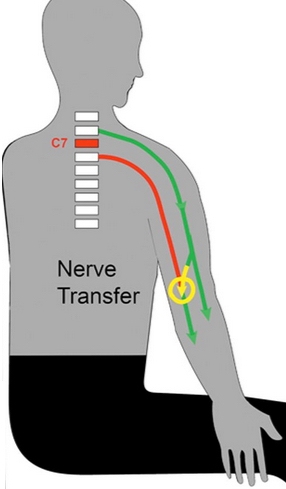
A nerve transfer bypasses the zone of a spinal cord injury (C7). Functional nerves (green) that are under volitional control are rerouted (yellow) to nerves (red) that come off below the spinal cord injury. (credit: Washington University in St. Louis)

A pioneering surgical technique has restored some hand and arm movement to nine patients immobilized by spinal cord injuries in the neck, reports a new study at Washington University School of Medicine in St. Louis.

Bypassing the spinal cord, the surgeons rerouted healthy nerves sitting above the injury site, usually in the shoulders or elbows, to paralyzed nerves in the hand or arm. Once a connection was established, patients underwent extensive physical therapy to train the brain to recognize the new nerve signals, a process that takes about 6–18 months.

The technique targets patients with injuries at the C6 or C7 vertebra, the lowest bones in the neck. It typically does not help patients who have lost all arm function due to higher injuries in vertebrae C1 through C5.

“Physically, nerve-transfer surgery provides incremental improvements in hand and arm function. However, psychologically, these small steps are huge for a patient’s quality of life,” said the study’s lead author, Ida K. Fox, MD, assistant professor of plastic and reconstructive surgery.

One of the most humbling effects of spine damage is the inability to manage bladder or bowel functions. “People with spinal cord injuries cannot control those functions because their brains can’t talk to the nerves in the lower body,” said Fox, who performs surgeries at Barnes-Jewish Hospital.

The study is published in an open-access paper in the October issue of the American Society of Plastic Surgeons’ journal, Plastic and Reconstructive Surgery.

Ultimately, medical professionals hope to discover a way to restore full movement to the estimated 250,000 people in the U.S. living with spinal cord injuries. More than half of such injuries involve the neck. However, until a cure is found, progress in regaining basic independence in routine tasks is important.


Abstract of Nerve transfers to restore upper extremity function in cervical spinal cord injury: Update and preliminary outcomes

Background: Cervical spinal cord injury can result in profound loss of upper extremity function. Recent interest in the use of nerve transfers to restore volitional control is an exciting development in the care of these complex patients. In this article, the authors review preliminary results of nerve transfers in spinal cord injury.

Methods: Review of the literature and the authors’ cases series of 13 operations in nine spinal cord injury nerve transfer recipients was performed. Representative cases were reviewed to explore critical concepts and preliminary outcomes.

Results: The nerve transfers used expendable donors (e.g., teres minor, deltoid, supinator, and brachialis) innervated above the level of the spinal cord injury to restore volitional control of missing function such as elbow extension, wrist extension, and/or hand function (posterior interosseous nerve or anterior interosseous nerve/finger flexors reinnervated). Results from the literature and the authors’ patients (after a mean postsurgical follow-up of 12 months) indicate gains in function as assessed by both manual muscle testing and patients’ self-reported outcomes measures.

Conclusions: Nerve transfers can provide an alternative and consistent means of reestablishing volitional control of upper extremity function in people with cervical level spinal cord injury. Early outcomes provide evidence of substantial improvements in self-reported function despite relatively subtle objective gains in isolated muscle strength. Further work to investigate the optimal timing and combination of nerve transfer operations, the combination of these with traditional treatments (tendon transfer and functional electrical stimulation), and measurement of outcomes is imperative for determining the precise role of these operations.

Telsa Motors to introduce new self-driving features Thursday


Tesla Model S (credit: Tesla)

Tesla Motors will introduce on Thursday (October 15, 2015) an advanced “beta test” set of autonomous driving features, The Wall Street Journal reports.

The software will allow hands- and feet-free driving in everything from stop-and-go traffic to highway speeds, and enables a car to park itself, the journal says. It will be available for 50,000 newer Model S cars world-wide via software download.

However, staying within licensing regulations, the software (at least the current version) requires the driver to grab the steering wheel every 10 seconds or so to avoid having the vehicle slow.

“Over time, long term, you won’t have to keep your hands on the wheel — we explicitly describe this as beta,” said Tesla Motors CEO Elon Musk at a press event. Notably, unlike other car makers, Tesla Motors is pushing the new features via an over-the-air software update.


Light-controlled ‘quantum Etch-a-Sketch’ could lead to advanced computers and quantum microchips

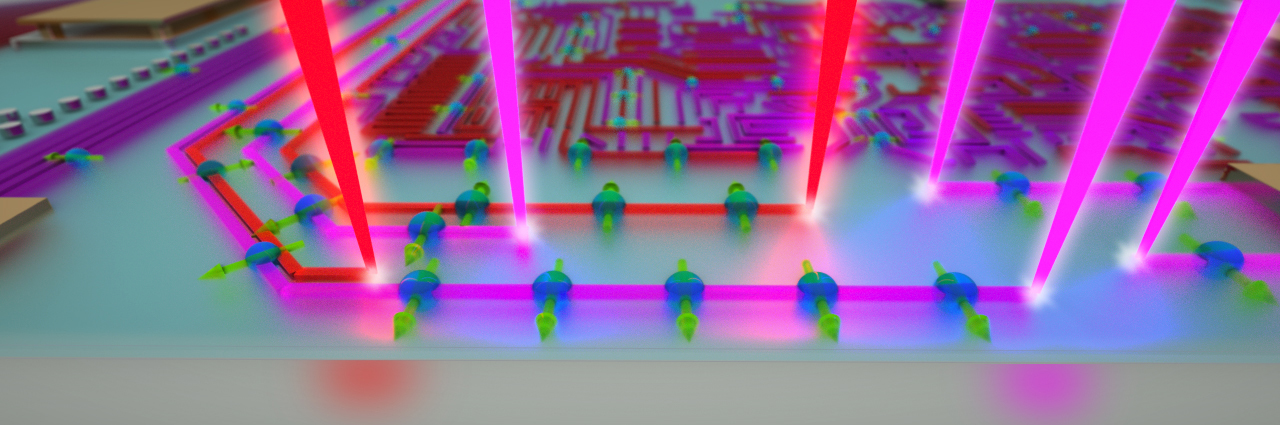
Artist’s rendition of optically defined quantum circuits in a topological insulator (credit: Peter Allen)

Penn State University and University of Chicago researchers say an accidental discovery of a “quantum Etch-a-Sketch” may lead to a new way to use beams of light to draw and erase quantum circuits, and that could lead to the next generation of advanced computers and quantum microchips.

The new technique is based on “topological insulators” (a material that behaves as an insulator in its interior but whose surface contains conducting states, meaning that electrons can only move along the surface of the material). The electrons in topological insulators have unique quantum properties that many scientists believe will be useful for developing spin-based electronics (such as disk drives) and quantum computers.

However, making even the simplest experimental circuits with topological insulators has proved difficult because traditional semiconductor engineering techniques tend to destroy their fragile quantum properties. Even a brief exposure to air can reduce their quality.

The researchers have now discovered a rewriteable “optical fabrication” process that allows them to “tune” the energy of electrons in these materials using light instead of chemicals — without ever having to touch the material itself. They used this effect to draw and erase one of the central components of a transistor — the p-n junction — in a topological insulator for the first time.

An accidental discovery

Optical fabrication (draw/erase) of a topological insulator (credit: Andrew L. Yeats et al./Science Advances)

Curiously, the scientists made the discovery when they noticed that a particular type of fluorescent light in the lab caused the surface of strontium titanate (the substrate material on which they had grown their samples) to become electrically polarized by ultraviolet light. The room lights happened to emit it at just the right wavelength. It turned out that the electric field from the polarized strontium titanate was leaking into the topological insulator layer, changing its electronic properties.

They found by intentionally focusing beams of light on their samples, they could draw electronic structures that persisted long after the light was removed. “It’s like having a sort of quantum Etch-a-Sketch in our lab,” said said David D. Awschalom, Liew Family Professor and deputy director in the Institute of Molecular Engineering at the University of Chicago. They also found that bright red light counteracted the effect of the ultraviolet light, allowing the researchers to both write (with UV) and erase (with red light).

“Instead of spending weeks in the clean room and potentially contaminating our materials, now we can sketch and measure devices for our experiments in real time,” said Awschalom. “When we’re done, we just erase it and make something else. We can do this in less than a second.”

To test whether the new technique might interfere with the unique properties of topological insulators, the team measured their samples in high magnetic fields. They found promising signatures of an effect called “weak anti-localization,” which arises from quantum interference between the different simultaneous paths that electrons can take through a material when they behave as waves.

To better understand the physics behind the effect, the researchers conducted a number of control measurements, which showed that the optical effect is not unique to topological insulators; it can also act on other materials grown on strontium titanate.

“In a way, the most exciting aspect of this work is that it should be applicable to a wide range of nanoscale materials such as complex oxides, graphene, and transition metal dichalcogenides,” said Awschalom. “It’s not just that it’s faster and easier. This effect could allow electrical tuning of materials in a wide range of optical, magnetic, and spectroscopic experiments where electrical contacts are extremely difficult or simply impossible.”

The research was published October 9, 2015 in an open-access paper in a new AAAS journal, Science Advances.


Abstract of Persistent Optical Gating of a Topological Insulator

The spin-polarized surface states of topological insulators (TIs) are attractive for applications in spintronics and quantum computing. A central challenge with these materials is to reliably tune the chemical potential of their electrons with respect to the Dirac point and the bulk bands. We demonstrate persistent, bidirectional optical control of the chemical potential of (Bi,Sb)2Te3 thin films grown on SrTiO3. By optically modulating a space-charge layer in the SrTiO3 substrates, we induce a persistent field effect in the TI films comparable to electrostatic gating techniques but without additional materials or processing. This enables us to optically pattern arbitrarily shaped p- and n-type regions in a TI, which we subsequently image with scanning photocurrent microscopy. The ability to optically write and erase mesoscopic electronic structures in a TI may aid in the investigation of the unique properties of the topological insulating phase. The gating effect also generalizes to other thin-film materials, suggesting that these phenomena could provide optical control of chemical potential in a wide range of ultrathin electronic systems.

Hybrid bio-robotic system models physics of human leg locomotion

Schematic of bio-robotic modeling system (credit: Benjamin D. Robertson and Gregory S. Sawicki/PNAS)

North Carolina State University (NC State) researchers have developed a bio-inspired system that models how human leg locomotion works, by using a computer-controlled nerve stimulator (acting as the spinal cord) to activate a biological muscle-tendon.

The findings could help design robotic devices that begin to merge human and machine to assist human locomotion, serving as prosthetic systems for people with mobility impairments or exoskeletons for increasing the abilities of able-bodied individuals.

The model is based on the natural spring-like physics (mass, stiffness, and leverage) of the ankle’s primary muscle-tendon unit (using a bullfrog’s muscle). The system used a feedback-controlled servomotor, simulating the inertial/gravitational environment of terrestrial gait.

Tuning for natural resonance

The research showed that the natural resonance* of the system is a likely mechanism behind springy leg behavior during locomotion, according to Gregory Sawicki, associate professor at NC State and University of North Carolina at Chapel Hill Joint Department of Biomedical Engineering. He is also co-author of a paper on the work published in Proceedings of the National Academy of Sciences.

In this case, the electrical system — the body’s nervous system — drives the mechanical system (the leg’s muscle-tendon unit) at a frequency that provides maximum power output.

The researchers found that by matching the stimulation frequency to the natural resonance frequency of the passive biomechanical system, muscle-tendon interactions (resulting in spring-like behavior) occur naturally and do not require closed-loop neural control — simplifying system design.

“In locomotion, resonance comes from tuning the interaction between the nervous system and the leg so they work together,” said Sawicki. “It turns out that if I know the mass, leverage, and stiffness of a muscle-tendon unit, I can tell you exactly how often I should stimulate it to get resonance in the form of spring-like, elastic behavior.”

“In the end, we found that the same simple underlying principles that govern resonance in simple mechanical systems also apply to these extraordinarily complicated physiological systems,” said Temple University post-doctoral researcher Ben Robertson, corresponding author of the paper.

“This outcome points to mechanical resonance as an underlying principle governing muscle-tendon interactions and provides a physiology-based framework for understanding how mechanically simple elastic limb behavior may emerge from a complex biological system comprised of many simultaneously tuned muscle-tendons within the lower limb,” the researchers conclude in the paper.

* NC State biomedical engineer Greg Sawicki likened resonance tuning to interacting with a slinky toy. “When you get it oscillating well, you hardly have to move your hand — it’s the timing of the interaction forces that matters.


Abstract of Unconstrained muscle-tendon workloops indicate resonance tuning as a mechanism for elastic limb behavior during terrestrial locomotion

In terrestrial locomotion, there is a missing link between observed spring-like limb mechanics and the physiological systems driving their emergence. Previous modeling and experimental studies of bouncing gait (e.g., walking, running, hopping) identified muscle-tendon interactions that cycle large amounts of energy in series tendon as a source of elastic limb behavior. The neural, biomechanical, and environmental origins of these tuned mechanics, however, have remained elusive. To examine the dynamic interplay between these factors, we developed an experimental platform comprised of a feedback-controlled servo-motor coupled to a biological muscle-tendon. Our novel motor controller mimicked in vivo inertial/gravitational loading experienced by muscles during terrestrial locomotion, and rhythmic patterns of muscle activation were applied via stimulation of intact nerve. This approach was based on classical workloop studies, but avoided predetermined patterns of muscle strain and activation—constraints not imposed during real-world locomotion. Our unconstrained approach to position control allowed observation of emergent muscle-tendon mechanics resulting from dynamic interaction of neural control, active muscle, and system material/inertial properties. This study demonstrated that, despite the complex nonlinear nature of musculotendon systems, cyclic muscle contractions at the passive natural frequency of the underlying biomechanical system yielded maximal forces and fractions of mechanical work recovered from previously stored elastic energy in series-compliant tissues. By matching movement frequency to the natural frequency of the passive biomechanical system (i.e., resonance tuning), muscle-tendon interactions resulting in spring-like behavior emerged naturally, without closed-loop neural control. This conceptual framework may explain the basis for elastic limb behavior during terrestrial locomotion.

FDA approves the first 3D-printed drug product

How ZipDose Technology works. The result is a porous drug product that disintegrates with just a sip of liquid. (credit: Aprecia Pharmaceuticals Company)

The FDA has approved the first 3D-printed drug — Aprecia’s SPRITAM (levetiracetam) for oral use as a prescription adjunctive therapy in the treatment of seizures in adults and children with epilepsy.

SPRITAM manufacturing uses 3D printing to produce a porous formulation that rapidly disintegrates with a sip of liquid, making it easier to swallow.

SPRITAM® levetiracetam, for oral use: 750 mg (foreground) and 1000 mg (background) (credit: Aprecia Pharmaceuticals Company)

The “ZipDose Technology” allows for delivering a high drug load, up to 1,000 mg in a single dose, which is expected to help patients take their medication as prescribed. SPRITAM is expected to be available in the first quarter of 2016.

Nearly three million people in the United States have been diagnosed with active epilepsy, with an estimated 460,000 of those cases occurring in children.