Vertical ‘light antennas’ grown from organic semiconductor crystals

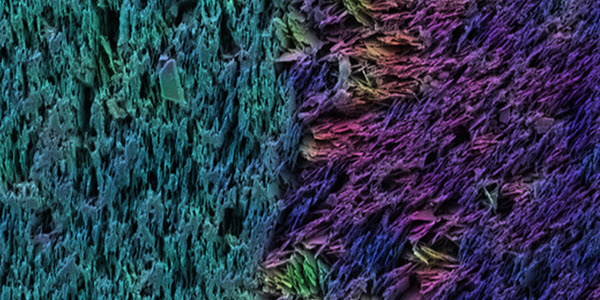
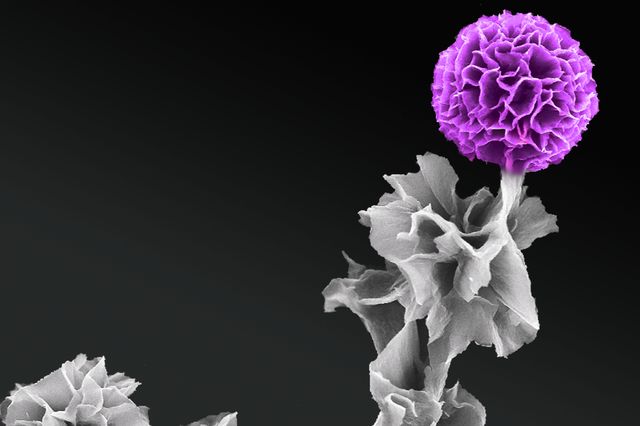
In full bloom: A scanning electron microscopy image of a vertical tetraanaline semiconductor crystal (credit: Jessica Wang)

Materials scientists from the California NanoSystems Institute at UCLA have discovered a way to make organic (carbon-based) semiconductors more powerful and efficient by creating “light antennas.” The thin, pole-like devices could absorb light from all directions, an improvement over today’s wide, flat panels that can only absorb light from one surface.

The breakthrough was in creating an improved structure for one type of organic semiconductor: a building block of a conductive polymer called tetraaniline (TANI). The scientists showed for the first time that tetraaniline crystals could be grown vertically.

The study, led by Richard Kaner, distinguished professor of chemistry and biochemistry and materials science and engineering, was recently published online by the journal ACS Nano.

Growing vertical organic semiconductors

Scanning electron microscope image showing TANI crystals oriented vertically based on graphene (credit: Yue Wang et al./ACS Nano)

The UCLA team grew the tetraaniline crystals vertically from a substrate made of graphene, so the crystals stood up like spikes instead of lying flat as they do when produced using current techniques. Scientists had previously grown crystals vertically in inorganic semiconducting materials, including silicon, but doing it in organic materials has been more difficult.

Tetraaniline is a desirable material for semiconductors because of its particular electrical and chemical properties, which are determined by the orientation of very small crystals it contains. Devices such as solar cells, photosensors, and supercapacitors would work better if the crystals grew vertically because vertical crystals can be packed more densely in the semiconductor, making it more powerful and more efficient at controlling electrical current.

Kaner and his colleagues also developed a one-step method for growing highly ordered, vertically aligned crystals for a variety of organic semiconductors using the same graphene substrate. “This technique enables us to pattern crystals wherever we want,” he said. “You could make electronic devices from these semiconductor crystals and grow them precisely in intricate patterns required for the device you want, such as thin-film transistors or light-emitting diodes.”

The research was supported by the Boeing Company, the National Science Foundation, the U.S. Department of Energy, and the Defense Threat Reduction Agency.


Abstract of Graphene-Assisted Solution Growth of Vertically Oriented Organic Semiconducting Single Crystals

Vertically oriented structures of single crystalline conductors and semiconductors are of great technological importance due to their directional charge carrier transport, high device density, and interesting optical properties. However, creating such architectures for organic electronic materials remains challenging. Here, we report a facile, controllable route for producing oriented vertical arrays of single crystalline conjugated molecules using graphene as the guiding substrate. The arrays exhibit uniform morphological and crystallographic orientations. Using an oligoaniline as an example, we demonstrate this method to be highly versatile in controlling the nucleation densities, crystal sizes, and orientations. Charge carriers are shown to travel most efficiently along the vertical interfacial stacking direction with a conductivity of 12.3 S/cm in individual crystals, the highest reported to date for an aniline oligomer. These crystal arrays can be readily patterned and their current harnessed collectively over large areas, illustrating the promise for both micro- and macroscopic device applications.

Method to replace silicon with carbon nanotubes developed by IBM Research

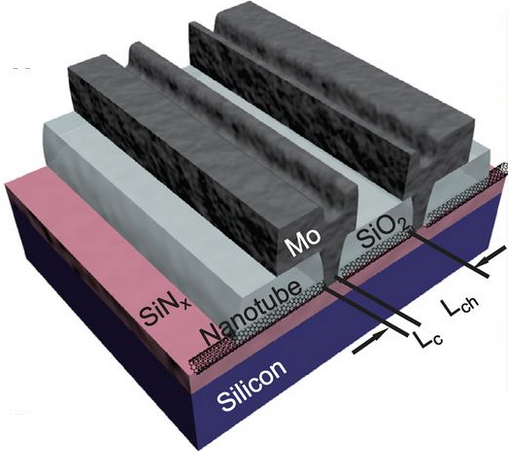
Schematic of a set of molybdenum (M0) end-contacted nanotube transistors (credit: Qing Cao et al./Science)

IBM Research has announced a “major engineering breakthrough” that could lead to carbon nanotubes replacing silicon transistors in future computing technologies.

As transistors shrink in size, electrical resistance increases within the contacts, which impedes performance. So IBM researchers invented a metallurgical process similar to microscopic welding that chemically binds the contact’s metal (molybdenum) atoms to the carbon atoms at the ends of nanotubes.

The new method promises to shrink transistor contacts without reducing performance of carbon-nanotube devices, opening a pathway to dramatically faster, smaller, and more powerful computer chips beyond the capabilities of traditional silicon semiconductors.

“This is the kind of breakthrough that we’re committed to making at IBM Research via our $3 billion investment over 5 years in research and development programs aimed a pushing the limits of chip technology,” said Dario Gil, VP, Science & Technology, IBM Research. “Our aim is to help IBM produce high-performance systems capable of handling the extreme demands of new data analytics and cognitive computing applications.”

The development was reported today in the October 2 issue of the journal Science.

Overcoming contact resistance

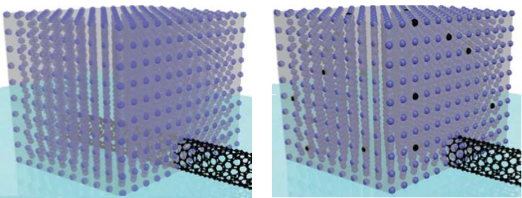
Schematic of carbon nanotube transistor contacts. Left: High-resistance side-bonded contact, where the single-wall nanotube (SWNT) (black tube) is partially covered by the metal molybdenum (Mo) (purple dots). Right: low-resistance end-bonded contact, where the SWNT is attached to the molybdenum electrode through carbide bonds, while the carbon atoms (black dots) from the originally covered portion of the SWNT uniformly diffuse out into the Mo electrode (credit: Qing Cao et al./Science)

The new “end-bonded contact scheme” allows carbon-nanotube contacts to be shrunken down to below 10 nanometers without deteriorating performance. IBM says the scheme could overcome contact resistance challenges all the way to the 1.8 nanometer node and replace silicon with carbon nanotubes.

Silicon transistors have been made smaller year after year, but they are approaching a point of physical limitation. With Moore’s Law running out of steam, shrinking the size of the transistor — including the channels and contacts — without compromising performance has been a challenge for researchers for decades.

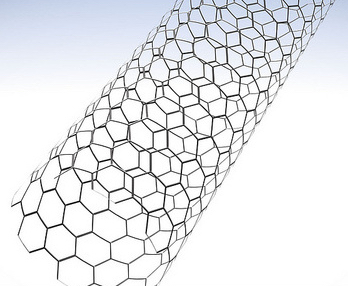
Single wall carbon nanotube (credit: IBM)

IBM has previously shown that carbon nanotube transistors can operate as excellent switches at channel dimensions of less than ten nanometers, which is less than half the size of today’s leading silicon technology. Electrons in carbon transistors can move more easily than in silicon-based devices and use less power.

Carbon nanotubes are also flexible and transparent, making them useful for flexible and stretchable electronics or sensors embedded in wearables.

IBM acknowledges that several major manufacturing challenges still stand in the way of commercial devices based on nanotube transistors.

Earlier this summer, IBM unveiled the first 7 nanometer node silicon test chip, pushing the limits of silicon technologies.


Study of protein folds adds to evidence that viruses are alive and ancient

The diverse physical attributes, genome sizes and lifestyles of viruses make them difficult to classify. A new study uses protein folds as evidence that viruses are living entities that belong on their own branch of the tree of life. (credit: Julie McMahon)

Viruses are actually living entities that share a long evolutionary history with cells, researchers report in a study that traces viral evolution back to a time when neither viruses nor cells existed in the forms recognized today.

The new findings appear in an open-access paper in the journal Science Advances.

Some scientists have argued that viruses are nonliving entities, bits of DNA and RNA shed by cellular life. They point to the fact that viruses are not able to replicate outside of host cells, and rely on cells’ protein-building machinery to function. But much evidence supports the idea that viruses are not that different from other living entities, said University of Illinois crop sciences and Carl R. Woese Institute for Genomic Biology professor Gustavo Caetano-Anollés, who led a new analysis with graduate student Arshan Nasir.

“Many organisms require other organisms to live, including bacteria that live inside cells, and fungi that engage in obligate parasitic relationships — they rely on their hosts to complete their lifecycle,” he said. “And this is what viruses do.”

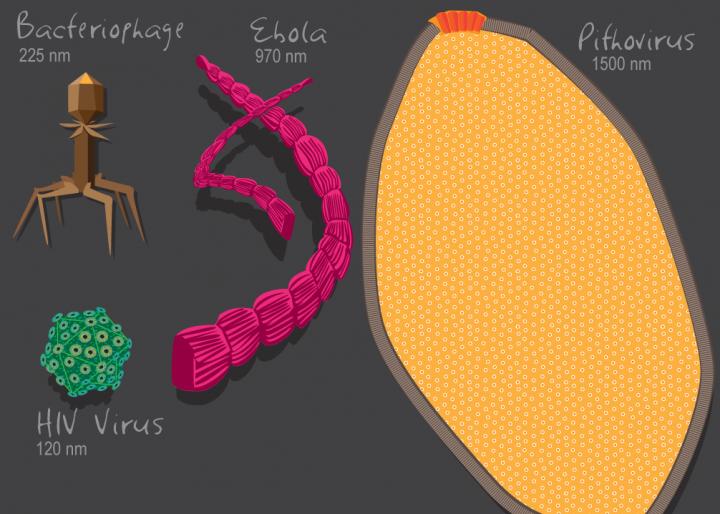
The discovery of the giant mimiviruses in the early 2000s challenged traditional ideas about the nature of viruses, Caetano-Anollés said. “These giant viruses were not the tiny Ebola virus, which has only seven genes. These are massive in size and massive in genomic repertoire,” he said. “Some are as big physically and with genomes that are as big or bigger than bacteria that are parasitic.”

Some giant viruses also have genes for proteins that are essential to translation, the process by which cells read gene sequences to build proteins, Caetano-Anollés said. The lack of translational machinery in viruses was once cited as a justification for classifying them as nonliving, he said.

“This is no more,” Caetano-Anollés said. “Viruses now merit a place in the tree of life. Obviously, there is much more to viruses than we once thought.”

A new virus taxonomy

Caetano-Anollés is the co-author of a report by the International Committee on the Taxonomy of Viruses that recognized seven orders of viruses, based on their shapes and sizes, genetic structure and means of reproducing.

“Under this classification, viral families belonging to the same order have likely diverged from a common ancestral virus,” the authors wrote. “However, only 26 (of 104) viral families have been assigned to an order, and the evolutionary relationships of most of them remain unclear.”

Part of the confusion stems from the abundance and diversity of viruses. Less than 4,900 viruses have been identified and sequenced so far, even though scientists estimate there are more than a million viral species. Many viruses are tiny — significantly smaller than bacteria or other microbes — and contain only a handful of genes. Others, like the recently discovered mimiviruses, are huge, with genomes bigger than those of some bacteria.

The new study focused on the vast repertoire of protein structures, called “folds,” that are encoded in the genomes of all cells and viruses. Folds are the structural building blocks of proteins, giving them their complex, three-dimensional shapes. By comparing fold structures across different branches of the tree of life, researchers can reconstruct the evolutionary histories of the folds and of the organisms whose genomes code for them.

A new study analyzes the distinct, three-dimensional “folds” structures found in proteins. Pictured here are folds found in viruses. (credit: Arshan Nasir)

The researchers chose to analyze protein folds because the sequences that encode viral genomes are subject to rapid change; their high mutation rates can obscure deep evolutionary signals, Caetano-Anollés said. Protein folds are better markers of ancient events because their three-dimensional structures can be maintained even as the sequences that code for them begin to change.

Shared protein folds between cells and viruses

The researchers analyzed all of the known folds in 5,080 organisms representing every branch of the tree of life, including 3,460 viruses. Using advanced bioinformatics methods, they identified 442 protein folds that are shared between cells and viruses, and 66 that are unique to viruses.

“This tells you that you can build a tree of life, because you’ve found a multitude of features in viruses that have all the properties that cells have,” Caetano-Anollés said. “Viruses also have unique components besides the components that are shared with cells.”

In fact, the analysis revealed genetic sequences in viruses that are unlike anything seen in cells, Caetano-Anollés said. This contradicts one hypothesis that viruses captured all of their genetic material from cells. This and other findings also support the idea that viruses are “creators of novelty,” he said.

Using the protein-fold data available in online databases, Nasir and Caetano-Anollés used computational methods to build trees of life that included viruses.

The data suggest “that viruses originated from multiple ancient cells … and co-existed with the ancestors of modern cells,” the researchers wrote. These ancient cells likely contained segmented RNA genomes, Caetano-Anollés said.

The data also suggest that at some point in their evolutionary history, not long after modern cellular life emerged, most viruses gained the ability to encapsulate themselves in protein coats that protected their genetic payloads, enabling them to spend part of their lifecycle outside of host cells and spread, Caetano-Anollés said. The protein folds that are unique to viruses include those that form these viral “capsids.”

“These capsids became more and more sophisticated with time, allowing viruses to become infectious to cells that had previously resisted them,” Nasir said. “This is the hallmark of parasitism.”


Abstract of A phylogenomic data-driven exploration of viral origins and evolution

The origin of viruses remains mysterious because of their diverse and patchy molecular and functional makeup. Although numerous hypotheses have attempted to explain viral origins, none is backed by substantive data. We take full advantage of the wealth of available protein structural and functional data to explore the evolution of the proteomic makeup of thousands of cells and viruses. Despite the extremely reduced nature of viral proteomes, we established an ancient origin of the “viral supergroup” and the existence of widespread episodes of horizontal transfer of genetic information. Viruses harboring different replicon types and infecting distantly related hosts shared many metabolic and informational protein structural domains of ancient origin that were also widespread in cellular proteomes. Phylogenomic analysis uncovered a universal tree of life and revealed that modern viruses reduced from multiple ancient cells that harbored segmented RNA genomes and coexisted with the ancestors of modern cells. The model for the origin and evolution of viruses and cells is backed by strong genomic and structural evidence and can be reconciled with existing models of viral evolution if one considers viruses to have originated from ancient cells and not from modern counterparts.

New test detects almost all viruses that infect people, animals

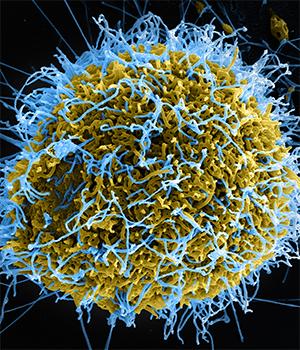
A new test developed at Washington University School of Medicine in St. Louis can detect virtually any virus that infects people and animals, including the Ebola virus (above) (credit: National Institute of Allergy and Infectious Diseases)

A new test that detects virtually any virus that infects people and animals has been developed at Washington University School of Medicine in St. Louis.

Current tests aren’t sensitive enough to detect low virus levels or are limited to detecting only those viruses suspected of being responsible for a patient’s illness.

“With this test, you don’t have to know what you’re looking for,” said the study’s senior author, Gregory Storch, MD, the Ruth L. Siteman Professor of Pediatrics. “It can efficiently detect viruses that are present at very low levels. We think the test will be especially useful in situations where a diagnosis remains elusive after standard testing or in situations in which the cause of a disease outbreak is unknown.”

Results published online in an open-access paper in the journal Genome Research demonstrate that in patient samples the new test, called ViroCap, can detect viruses not found by standard testing based on genome sequencing.

The test could be used to detect outbreaks of deadly viruses such as Ebola, Marburg, and severe acute respiratory syndrome (SARS), as well as more routine viruses, including rotavirus and norovirus, both of which cause severe gastrointestinal infections.

As sensitive as PCR assays, but also tests for related viruses and subtypes

Developed in collaboration with the university’s McDonnell Genome Institute, the test sequences and detects viruses in patient samples and is just as sensitive as the gold-standard polymerase chain reaction (PCR) assays, which are used widely in clinical laboratories. However, even the most expansive PCR assays can only screen for up to about 20 similar viruses at the same time.

“The test is so sensitive that it also detects variant strains of viruses that are closely related genetically,” said corresponding author Todd Wylie, an instructor of pediatrics. “Slight genetic variations among viruses often can’t be distinguished by currently available tests and complicate physicians’ ability to detect all variants with one test.”

In addition, because the test includes detailed genetic information about various strains of particular viruses, subtypes can be identified easily. For example, the study showed that while standard testing identified a virus as influenza A, which causes seasonal flu, the new test indicated that the virus was a particularly harsh subtype called H3N2.

Last flu season, H3N2 contributed to some 36,000 deaths in the United States. And in some patients — particularly young children, older adults and people with weakened immune systems — knowing that the H3N2 strain is present may alter treatment.

To develop the test, the researchers targeted unique stretches of DNA or RNA from every known group of viruses that infects humans and animals. In all, the research team included 2 million unique stretches of genetic material from viruses in the test. These stretches of material are used as probes to pluck out viruses in patient samples that are a genetic match. The matched viral material then is analyzed using high-throughput genetic sequencing. As completely novel viruses are discovered, their genetic material could easily be added to the test, Storch said.

The researchers plan to conduct additional research to validate the accuracy of the test, so it could be several years before it is clinically available.

In the meantime, the technology can be used by scientists to study viruses in a research setting. Kristine Wylie investigates the viruses that set up residence in and on the human body, collectively known as the virome. The new test will provide a way to capture the full breadth and depth of such viruses, and deepen understanding of how they play a role in keeping the body healthy.

“It also may be possible to modify the test so that it could be used to detect pathogens other than viruses, including bacteria, fungi and other microbes, as well as genes that would indicate the pathogen is resistant to treatment with antibiotics or other drugs,” said co-author Kristine Wylie, PhD, assistant professor of pediatrics.

* The researchers evaluated the new test in two sets of biological samples — for example, from blood, stool and nasal secretions — from patients at St. Louis Children’s Hospital. In the first, standard testing that relied on genome sequencing had detected viruses in 10 of 14 patients. But the new test found viruses in the four children that earlier testing had missed. Standard testing failed to detect common, everyday viruses: influenza B, a cause of seasonal flu; parechovirus, a mild gastrointestinal and respiratory virus; herpes virus 1, responsible for cold sores in the mouth; and varicella-zoster virus, which causes chickenpox.

In a second group of children with unexplained fevers, standard testing had detected 11 viruses in the eight children evaluated. But the new test found another seven, including a respiratory virus called human adenovirus B type 3A, which usually is harmless but can cause severe infections in some patients.

In all, the number of viruses detected in the two patient groups jumped to 32 from 21, a 52 percent increase.


Abstract of Enhanced virome sequencing through solution-based capture enrichment

Metagenomic shotgun sequencing (MSS) is an important tool for characterizing viral populations. It is culture-independent, requires no a priori knowledge of the viruses in the sample, and may provide useful genomic information. However, MSS can lack sensitivity and may yield insufficient data for detailed analysis. We have created a targeted sequence capture panel, ViroCap, designed to enrich nucleic acid from DNA and RNA viruses from 34 families that infect vertebrate hosts. A computational approach condensed nearly 1 billion base pair (bp) of viral reference sequence into less than 200 million bp of unique, representative sequence suitable for targeted sequence capture. We compared the effectiveness of detecting viruses in standard MSS versus MSS following targeted sequence capture. First, we analyzed two sets of samples, one derived from samples submitted to a diagnostic virology laboratory and one derived from samples collected in a study of fever in children. We detected 14 and 18 viruses in the two sets, comprising 19 genera from 10 families, with dramatic enhancement of genome representation following capture enrichment. The median fold-increases in percent viral reads post-capture were 674 and 296. Median breadth of coverage increased from 2.1% to 83.2% post-capture in the first set and from 2.0% to 75.6% in the second set. Next, we analyzed samples containing a set of diverse anellovirus sequences and demonstrated that ViroCap could be used to detect viral sequences with up to 58% variation from the references used to select capture probes. ViroCap substantially enhances MSS for a comprehensive set of viruses and has utility for research and clinical applications.

Invisibility cloak may enhance efficiency of solar cells

A special invisibility cloak redirects sunlight past solar-cell contacts to the active surface area of the solar cell (credit: Martin Schumann/KIT)

A new approach to increasing solar-cell panel efficiency using an “invisibility cloak” has been developed by scientists at Karlsruhe Institute of Technology (KIT) in Germany.

Up to one tenth of the surface area of solar cells is typically covered by “contact fingers” that extract current generated by solar cells. The fingers block some of the light from the active area of the solar cell, decreasing cell efficiency. By guiding the incident light around the contact fingers, the cloak layer makes the contact fingers nearly completely invisible, according to doctoral student Martin Schumann of the KIT Institute of Applied Physics, who conducted the experiments and simulations.

Coordinate transformations enabling invisible contacts on solar cells. The elongated metal contact can be arbitrarily shaped within the black region to make it invisible. (credit: Martin F. Schumann et al./Optica)

To achieve the cloaking effect, the scientists applied a polymer coating onto the solar cell and added a groove along the contact fingers, both helping to refract incident light away from the contact fingers and toward the active surface area of the solar cell. They expect an efficiency increase of 10 percent in followup tests.

The research was published Sept. 25 in an open-access article in the journal Optica.


Abstract of Cloaked contact grids on solar cells by coordinate transformations: designs and prototypes

Nontransparent contact fingers on the sun-facing side of solar cells represent optically dead regions which reduce the energy conversion per area. We consider two approaches for guiding the incident light around the contacts onto the active area. The first approach uses graded-index metamaterials designed by two-dimensional Schwarz–Christoffel conformal maps, and the second uses freeform surfaces designed by one-dimensional coordinate transformations of a point to an interval. We provide proof-of-principle demonstrators using direct laser writing of polymer structures on silicon wafers with opaque contacts. Freeform surfaces are amenable to mass fabrication and allow for complete recovery of the shadowing effect for all relevant incidence angles.

NIH and Kavli Foundation invest $185 million for BRAIN Initiative research

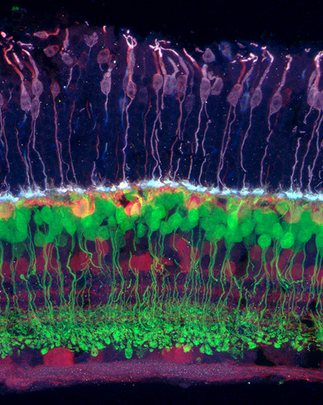
Scientists funded by the NIH BRAIN Initiative hope to diagram all of the circuits in the brain. One group will attempt to identify all of the connections among the retina’s ganglion cells (red), which transmit visual information from bipolar cells (green) and photoreceptors (purple) to the brain. (credit: Josh Morgan, Ph.D. and Rachel Wong, Ph.D./University of Washington)

The National Institutes of Health and the Kavli Foundation separately announced today (Oct. 1, 2015) commitments totaling $185 million in new funds supporting the BRAIN Initiative* — research aimed at deepening our understanding of the brain and brain-related disorders, such as traumatic brain injuries (TBI), Alzheimer’s disease, and Parkinson’s disease.

The NIH announced today its second wave of grants to support the goals of the Brain Research through Advancing Innovative Neurotechnologies (BRAIN) Initiative, bringing the total NIH investment to nearly $85 million in fiscal year 2015.

Sixty-seven new awards totaling more than $38 million will go to 131 investigators working at 125 institutions in the United States and eight other countries. These awards expand NIH’s efforts to develop new tools and technologies to understand neural circuit function and capture a dynamic view of the brain in action.

Projects include proposals to develop soft self-driving electrodes, ultrasound methods for measuring brain activity, and the use of deep brain stimulation to treat traumatic brain injuries.

NIH has also announced new funding opportunities.

Planning for the NIH component of the BRAIN initiative is guided by the long-term scientific plan, BRAIN 2025: A Scientific Vision, which details seven high priority research areas**.

Kavli Foundation and university partners commit $100 million to brain research

The Kavli Foundation and its university partners also announced today the commitment of more than $100 million in new funds to enable research that moves forward the BRAIN Initiative.

The majority of the funds will establish three new Kavli neuroscience institutes at the Johns Hopkins University (JHU), The Rockefeller University, and the University of California, San Francisco (UCSF). Each of the Institutes will receive a $20 million endowment supported equally by their universities and the Foundation, along with start-up funding. The three institutes will be joining an international network of seven Kavli Institutes carrying out fundamental research in neuroscience, and a broader network of 20 Kavli Institutes dedicated to astrophysics, nanoscience, neuroscience and theoretical physics.

The Foundation is also partnering with four other universities to build their Kavli Institute endowments further: at Columbia University; the University of California, San Diego; Yale University; and the Norwegian University of Science and Technology.

BRAIN Initiative event

A BRAIN Initiative event will be held October 20, 2015 at the Society for Neuroscience Annual Meeting in Chicago, featuring an interactive panel discussion/Q&A session with updates on activities and opportunities offered by the BRAIN Initiative. Representatives from federal agencies, private research foundations, and universities will be present.

* In 2014, President Obama launched the BRAIN Initiative as a large-scale effort to equip researchers with fundamental insights necessary for treating a wide variety of brain disorders like Alzheimer’s, schizophrenia, autism, epilepsy, and traumatic brain injury, with $46 million funding. These new tools and this deeper understanding will ultimately catalyze new treatments and cures for devastating brain disorders and diseases that are estimated by the World Health Organization to affect more than one billion people worldwide, according to NIH.

** From Brain Research through Advancing Innovative Neurotechnologies (BRAIN) Working Group Report to the Advisory Committee to the Director, NIH:

#1. Discovering diversity: Identify and provide experimental access to the different brain cell types to determine their roles in health and disease. It is within reach to characterize all cell types in the nervous system, and to develop tools to record, mark, and manipulate these precisely defined neurons in the living brain. We envision an integrated, systematic census of neuronal and glial cell types, and new genetic and non-genetic tools to deliver genes, proteins, and chemicals to cells of interest in non-human animals and in humans.

#2. Maps at multiple scales: Generate circuit diagrams that vary in resolution from synapses to the whole brain. It is increasingly possible to map connected neurons in local circuits and distributed brain systems, enabling an understanding of the relationship between neuronal structure and function. We envision improved technologies—faster, less expensive, scalable—for anatomic reconstruction of neural circuits at all scales, from non-invasive whole human brain imaging to dense reconstruction of synaptic inputs and outputs at the subcellular level.

#3. The brain in action: Produce a dynamic picture of the functioning brain by developing and applying improved methods for large-scale monitoring of neural activity. We should seize the challenge of recording dynamic neuronal activity from complete neural networks, over long periods, in all areas of the brain. There are promising opportunities both for improving existing technologies and for developing entirely new technologies for neuronal recording, including methods based on electrodes, optics, molecular genetics, and nanoscience, and encompassing different facets of brain activity.

#4. Demonstrating causality: Link brain activity to behavior with precise interventional tools that change neural circuit dynamics. By directly activating and inhibiting populations of neurons, neuroscience is progressing from observation to causation, and much more is possible. To enable the immense potential of circuit manipulation, a new generation of tools for optogenetics, chemogenetics, and biochemical and electromagnetic modulation should be developed for use in animals and eventually in human patients.

#5. Identifying fundamental principles: Produce conceptual foundations for understanding the biological basis of mental processes through development of new theoretical and data analysis tools. Rigorous theory, modeling, and statistics are advancing our understanding of complex, nonlinear brain functions where human intuition fails. New kinds of data are accruing at increasing rates, mandating new methods of data analysis and interpretation. To enable progress in theory and data analysis, we must foster collaborations between experimentalists and scientists from statistics, physics, mathematics, engineering, and computer science.

#6. Advancing human neuroscience: Develop innovative technologies to understand the human brain and treat its disorders; create and support integrated human brain research networks. Consenting humans who are undergoing diagnostic brain monitoring, or receiving neurotechnology for clinical applications, provide an extraordinary opportunity for scientific research. This setting enables research on human brain function, the mechanisms of human brain disorders, the effect of therapy, and the value of diagnostics. Meeting this opportunity requires closely integrated research teams performing according to the highest ethical standards of clinical care and research. New mechanisms are needed to maximize the collection of this priceless information and ensure that it benefits people with brain disorders.

#7. From BRAIN Initiative to the brain: Integrate new technological and conceptual approaches produced in Goals #1-6 to discover how dynamic patterns of neural activity are transformed into cognition, emotion, perception, and action in health and disease. The most important outcome of the BRAIN Initiative will be a comprehensive, mechanistic understanding of mental function that emerges from synergistic application of the new technologies and conceptual structures developed under the BRAIN Initiative.

The overarching vision of the BRAIN Initiative is best captured by Goal #7—combining these approaches into a single, integrated science of cells, circuits, brain, and behavior. For example, immense value is added if recordings are conducted from identified cell types whose anatomical connections are established in the same study. Such an experiment is currently an exceptional tour de force; with new technology, it could become routine. In another example, neuronal populations recorded during complex behavior might be immediately retested with circuit manipulation techniques to determine their causal role in generating the behavior. Theory and modeling should be woven into successive stages of ongoing experiments, enabling bridges to be built from single cells to connectivity, population dynamics, and behavior.

A promising new 2-D semiconductor material

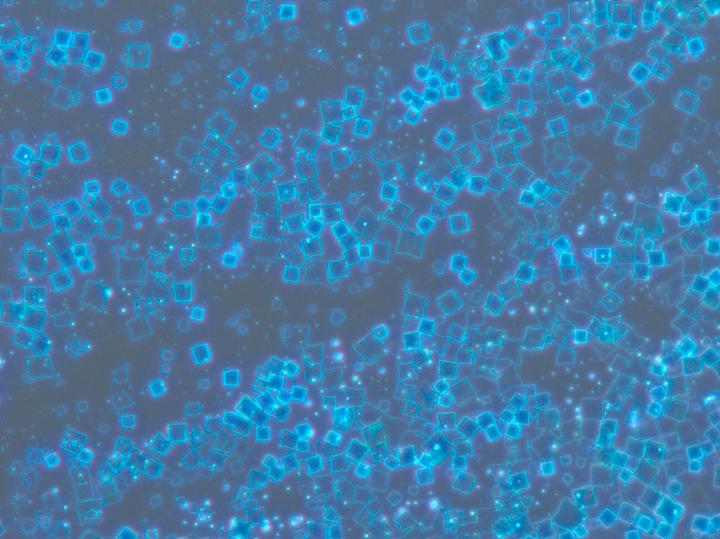
Ultrathin sheets of a new 2-D hybrid perovskite are square-shaped and relatively large in area, properties that should facilitate their integration into future electronic devices (credit: Peidong Yang, Berkeley Lab)

The first atomically thin 2D sheets of organic-inorganic hybrid perovskites have been created by Lawrence Berkeley National Laboratory (Berkeley Lab) researchers, adding to the growing list of two-dimensional semiconductors, such as graphene, boron nitride, and molybdenum disulfide, whose unique electronic properties make them potential successors to silicon in future devices.

However, unlike the other contenders, which are covalent semiconductors, these 2D hybrid perovskites are ionic materials, which gives them special properties of their own.

Traditional perovskites are typically metal-oxide materials that display a wide range of electromagnetic properties, including ferroelectricity and piezoelectricity, superconductivity and colossal magnetoresistance. As KurzweilAI has reported, perovskites have been solution-processed recently into thin films or bulk crystals for photovoltaic devices, reaching 20-percent power conversion efficiency; and have been used to create lower-cost, high-brightness LEDs.

2D atomically thin nanostructures

The new ultrathin sheets are of high quality, large in area, and square-shaped. They also exhibited efficient photoluminescence, color-tunability, and a unique structural relaxation not found in covalent semiconductor sheets.

“We believe this is the first example of 2D atomically thin nanostructures made from ionic materials,” says Peidong Yang, a chemist with Berkeley Lab’s Materials Sciences Division and world authority on nanostructures, who first came up with the idea for this research some 20 years ago.

“The results of our study open up opportunities for fundamental research on the synthesis and characterization of atomically thin 2D hybrid perovskites and introduce a new family of 2D solution-processed semiconductors for nanoscale optoelectronic devices, such as field effect transistors and photodetectors.”

Yang, who also holds appointments with the University of California (UC) Berkeley and is a co-director of the Kavli Energy NanoScience Institute (Kavli-ENSI), is the corresponding author of a paper describing this research in the journal Science. 

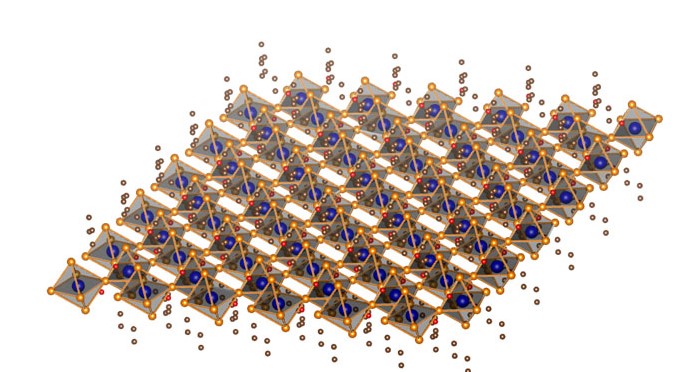
Structural illustration of a single layer of a 2D hybrid perovskite (C4H9NH3)2PbBr4), an ionic material with different properties than 2D covalent semiconductors (credit: Peidong Yang, Berkeley Lab)


Abstract of Atomically thin two-dimensional organic-inorganic hybrid perovskites

Organic-inorganic hybrid perovskites, which have proved to be promising semiconductor materials for photovoltaic applications, have been made into atomically thin two-dimensional (2D) sheets. We report the solution-phase growth of single- and few-unit-cell-thick single-crystalline 2D hybrid perovskites of (C4H9NH3)2PbBr4 with well-defined square shape and large size. In contrast to other 2D materials, the hybrid perovskite sheets exhibit an unusual structural relaxation, and this structural change leads to a band gap shift as compared to the bulk crystal. The high-quality 2D crystals exhibit efficient photoluminescence, and color tuning could be achieved by changing sheet thickness as well as composition via the synthesis of related materials.

A biomimetic dental prosthesis

Cross section of an artificial tooth under an electron microscope (pseudocolor). Ceramic platelets are oriented vertically in the enamel and horizontally in the dentin. (credit: Hortense Le Ferrand/ETH Zürich)

A new procedure that can mimic the complex fine structure of biological composite materials, such as teeth or seashells, has been developed by ETH Zurich researchers. It could allow for creating synthetic materials that are as hard and tough as their natural counterparts.

The secret of these hard natural biomaterials is in their unique fine structure: they are composed of different layers in which numerous micro-platelets are joined together, aligned in identical orientation in each layer.

Although methods exist that allow material scientists to imitate nacre (mother of pearl), it was a challenge to create a material that imitates the entire seashell, with comparable properties and structural complexity, according to the researchers, led by André Studart, Professor of Complex Materials.

The new procedure mimics the natural model almost perfectly. It recreates the multiple layers of micro-platelets with identical orientation in each layer in a single complex piece by using a “magnetically assisted slip casting” (MASC) procedure.

How to create a tooth

Here’s how the procedure works:

  1. Create a plaster cast to serve as a mold.
  2. Pour in a suspension containing magnetized ceramic platelets, such as aluminum oxide platelets. The pores of the plaster mold slowly absorb the liquid from the suspension, which causes the material to solidify and to harden from the outside in.
  3. Create an ordered layer-like structure by applying a magnetic field during the casting process, changing its orientation at regular intervals. As long as the material remains liquid, the ceramic platelets align to the magnetic field. In the solidified material, the platelets retain their orientation.

This continuous process can produce multiple layers with differing material properties in a single object and are almost perfect imitations of their natural models, such as nacre or tooth enamel, says Florian Bouville, a post-doc and co-lead author of the study, which is published in the journal Nature Materials. “Our technique is similar to 3-D printing, but 10 times faster and much more cost-effective.”

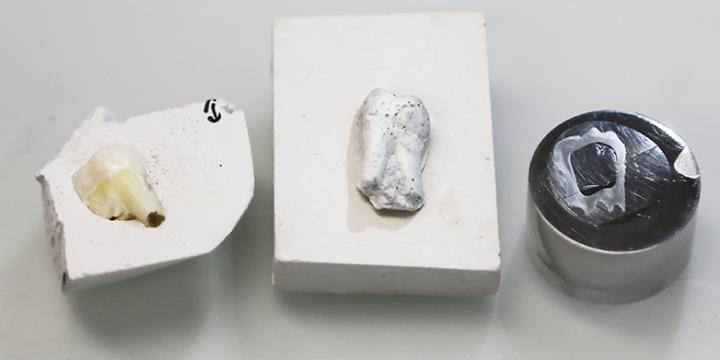
The left structure is showing the natural tooth in its gypsum mold. The middle structure is the artificial tooth (sintered but not yet polymer infiltrated). The model on the right has been sintered and polymer infiltrated. It is embedded in a “puck” to enable polishing and coated with platinum to prevent charging in the electron microscope. (credit: Tobias Niebel/ETH Zurich)

To demonstrate the process, Studart’s research group produced an artificial tooth with a microstructure that mimics that of a real tooth. The surface of the artificial tooth is as hard and structurally complex as real tooth enamel, while the layer beneath is as tough as the dentine of the natural model.

They began by creating a plaster cast of a human wisdom tooth. They then filled this mold with a suspension containing aluminum oxide platelets and glass nanoparticles as mortar. Using a magnet, they aligned the platelets perpendicular to the surface of the object. Once the first layer was dry, the scientists poured a second suspension without glass particles into the same mold. The aluminium oxide platelets in the second layer were aligned horizontally to the surface of the tooth using the magnet.

This double-layered structure was then sintered (“fired” in a kiln) at 1,600 degrees C to densify and harden the material. Finally, the researchers filled the pores that remained after the sintering with a synthetic monomer used in dentistry, which subsequently polymerized (formed into a complex material).

Artificial teeth that behave just like the real thing

“The profile of hardness and toughness obtained from the artificial tooth corresponds exactly with that of a natural tooth,” says Studart.

The current study is an initial proof-of-concept, which shows that the natural fine structure of a tooth can be reproduced in the laboratory, he says. “The appearance of the material has to be significantly improved before it can be used for dental prostheses.

He noted that the base substances and the orientation of the platelets can be combined as required, “which rapidly and easily makes a wide range of different material types with varying properties feasible.” For example, copper platelets could be used in place of aluminum oxide platelets, allowing for use in electronics.

One part of the MASC process, the magnetization and orientation of the ceramic platelets, has been patented.


Abstract of Magnetically assisted slip casting of bioinspired heterogeneous composites

Natural composites are often heterogeneous to fulfil functional demands. Manufacturing analogous materials remains difficult, however, owing to the lack of adequate and easily accessible processing tools. Here, we report an additive manufacturing platform able to fabricate complex-shaped parts exhibiting bioinspired heterogeneous microstructures with locally tunable texture, composition and properties, as well as unprecedentedly high volume fractions of inorganic phase (up to 100%). The technology combines an aqueous-based slip-casting process with magnetically directed particle assembly to create programmed microstructural designs using anisotropic stiff platelets in a ceramic, metal or polymer functional matrix. Using quantitative tools to control the casting kinetics and the temporal pattern of the applied magnetic fields, we demonstrate that this approach is robust and can be exploited to design and fabricate heterogeneous composites with thus far inaccessible microstructures. Proof-of-concept examples include bulk composites with periodic patterns of microreinforcement orientation, and tooth-like bilayer parts with intricate shapes exhibiting site-specific composition and texture.

Self-assembling material could lead to artificial arteries

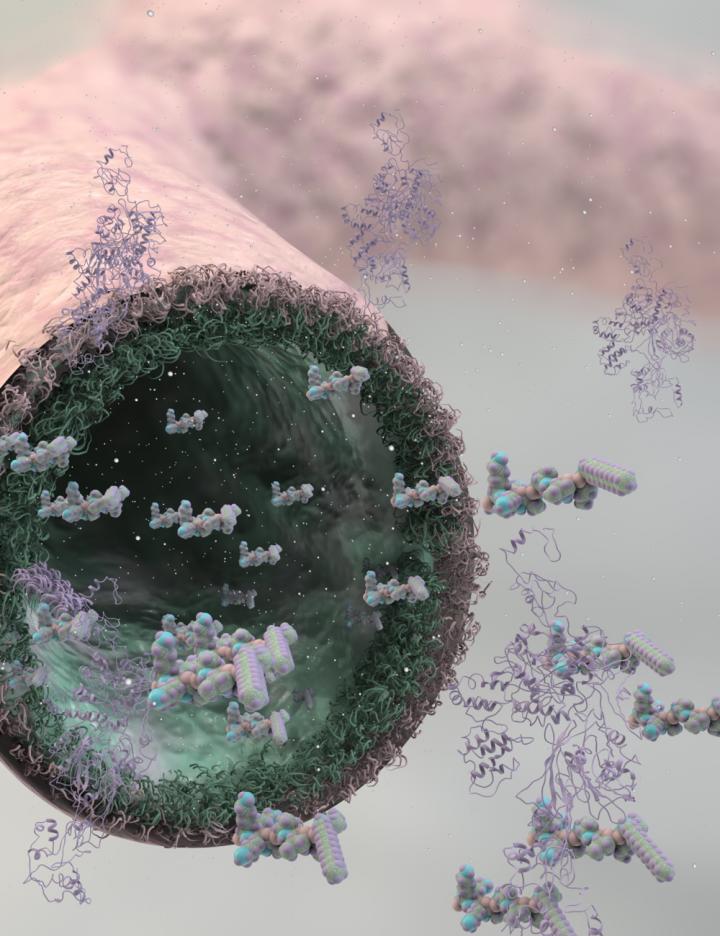
Illustration showing creation of synthetic capillaries from peptides and proteins (credit: QMUL)

Researchers at Queen Mary University of London (QMUL) have developed a new bioinspired process using self-assembling organic molecules that can develop into complex tubular tissue-like structures. The process could lead to creating synthetic tissues that emulate veins, arteries, or even the blood-brain barrier, and that exhibit dynamic behaviors found in biological tissues like growth, morphogenesis, and healing.

The process uses solutions of peptide and protein molecules that self-assemble to form a dynamic tissue that can be guided to grow into complex shapes without the use of molds or techniques like 3-D printing.

Adipose-derived stem cells (mADSCs) seeded onto the protein/peptide membrane (credit: QMUL)

According to the researchers, the finding could allow scientists to study diseases such as Alzheimer’s with a high level of similarity to the real tissue and create better implants, complex tissues, and more effective drug-screening methods.

The study appeared September 28 in the journal Nature Chemistry. It has been partly funded by the European Research Council.


QMUL | Demonstrating a dynamic self-assembling protein-peptide membrane


Abstract of Co-assembly, spatiotemporal control and morphogenesis of a hybrid protein–peptide system

Controlling molecular interactions between bioinspired molecules can enable the development of new materials with higher complexity and innovative properties. Here we report on a dynamic system that emerges from the conformational modification of an elastin-like protein by peptide amphiphiles and with the capacity to access, and be maintained in, non-equilibrium for substantial periods of time. The system enables the formation of a robust membrane that displays controlled assembly and disassembly capabilities, adhesion and sealing to surfaces, self-healing and the capability to undergo morphogenesis into tubular structures with high spatiotemporal control. We use advanced microscopy along with turbidity and spectroscopic measurements to investigate the mechanism of assembly and its relation to the distinctive membrane architecture and the resulting dynamic properties. Using cell-culture experiments with endothelial and adipose-derived stem cells, we demonstrate the potential of this system to generate complex bioactive scaffolds for applications such as tissue engineering.

New prosthesis bypasses brain damage by re-encoding memories

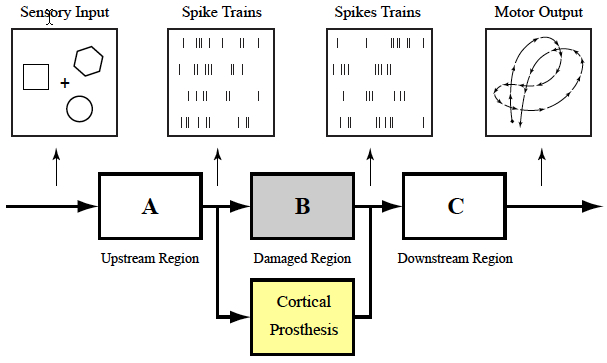
Cortical memory prosthesis uses internal brain signals (e.g., spike
trains) as inputs and outputs, bypassing damaged region (Dong Song et al.)

A brain prosthesis designed to help individuals suffering from memory loss has been developed by researchers at USC and Wake Forest Baptist Medical Center.

The prosthesis, which uses a small array of electrodes implanted into the brain, has performed well in laboratory testing in animals and is currently being evaluated in human patients.

The device builds on decades of research by Ted Berger and relies on a new algorithm created by Dong Song, both of the USC Viterbi School of Engineering. The development also builds on more than a decade of collaboration with Sam Deadwyler and Robert Hampson of the Department of Physiology & Pharmacology of Wake Forest Baptist, who have collected the neural data used to construct the models and algorithms.

electrode_array

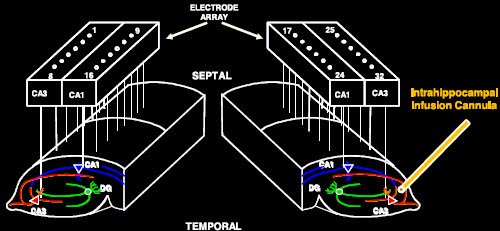
Electrode array for monitoring and duplicating hippocampus neuron activity (credit: T. Berger et al./Journal of Neural Engineering)

When your brain receives a sensory input, it creates a memory in the form of a complex electrical signal that travels through multiple regions of the hippocampus, the memory center of the brain. At each region, the signal is re-encoded until it reaches the final region as a wholly different signal that is sent off for long-term storage.

If there’s damage at any region that prevents this translation, there is the possibility that long-term memory will not be formed. That’s why an individual with hippocampal damage (for example, due to Alzheimer’s disease) can recall events from a long time ago — things that were already translated into long-term memories before the brain damage occurred — but have difficulty forming new long-term memories.

Bypassing a damaged hippocampal section

Song and Berger found a way to accurately mimic how a memory is translated from short-term memory into long-term memory, using data obtained by Deadwyler and Hampson, first from animals, and then from humans. Their prosthesis is designed to bypass a damaged hippocampal section and provide the next region with the correctly translated memory.

That’s despite the fact that there is currently no way of “reading” a memory just by looking at its electrical signal. “It’s like being able to translate from Spanish to French without being able to understand either language,” Berger said.

Their research was presented at the 37th Annual International Conference of the IEEE Engineering in Medicine and Biology Society in Milan on August 27, 2015.

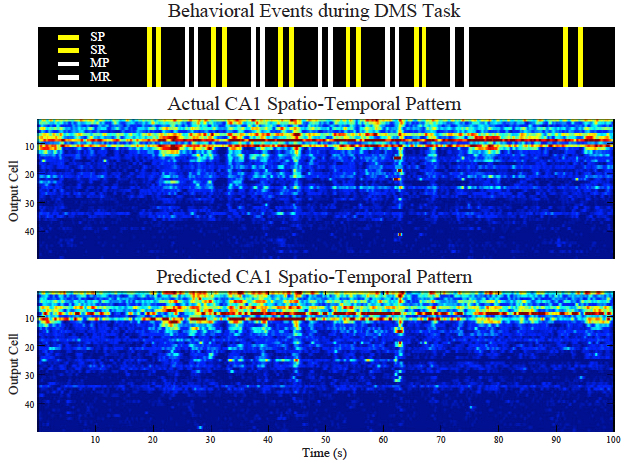
Predicting CA1 spatio-temporal patterns from CA3 spatio-temporal patterns with the sparse MIMO model. SP: sample presentation; SR: sample response; MP: match presentation; MR: match response. (Dong Song et al.)

The effectiveness of the model was tested by the USC and Wake Forest Baptist teams. With the permission of patients who had electrodes implanted in their hippocampi to treat chronic seizures, Hampson and Deadwyler read the electrical signals created during memory formation at two regions of the hippocampus, then sent that information to Song and Berger to construct the model.

The team then fed those signals into the model and read how the signals generated from the first region of the hippocampus were translated into signals generated by the second region of the hippocampus.

In hundreds of trials conducted with nine patients, the algorithm accurately predicted how the signals would be translated with about 90 percent accuracy.

“Being able to predict neural signals with the USC model suggests that it can be used to design a device to support or replace the function of a damaged part of the brain,” Hampson said.

Next, to try to bypass the damage and enable the formation of an accurate long-term memory, the team will attempt to send the translated signal back into the brain of a patient with damage at one of the regions.


Abstract of Sparse Generalized Volterra Model of Human Hippocampal Spike Train Transformation for Memory Prostheses

In order to build hippocampal prostheses for restoring memory functions, we build multi-input, multi-output (MIMO) nonlinear dynamical models of the human hippocampus. Spike trains are recorded from the hippocampal CA3 and CA1 regions of epileptic patients performing a memory-dependent delayed match-to-sample task. Using CA3 and CA1 spike trains as inputs and outputs respectively, second-order sparse generalized Laguerre-Volterra models are estimated with group lasso and local coordinate descent methods to capture the nonlinear dynamics underlying the spike train transformations. These models can accurately predict the CA1 spike trains based on the ongoing CA3 spike trains and thus will serve as the computational basis of the hippocampal memory prosthesis.