Ultrafast ‘electron camera’ visualizes atomic ripples in 2-D material

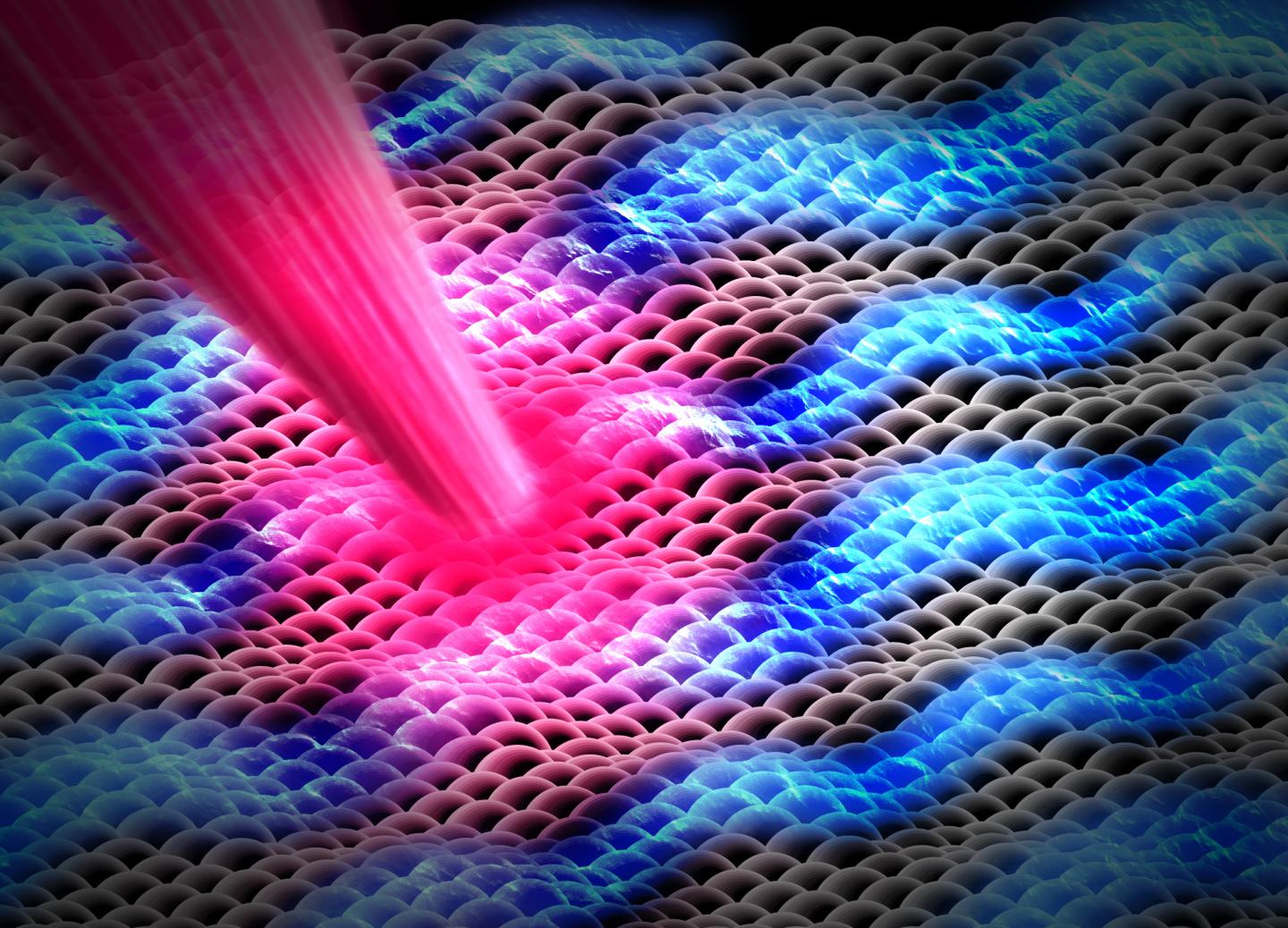
Researchers have used SLAC’s “electron cameras” to take snapshots of a three-atom-thick layer of a promising material called molybdenum disulfide as it wrinkles in response to a laser pulse. Understanding these dynamic ripples could provide crucial clues for the development of next-generation solar cells, electronics, and catalysts. (credit: SLAC National Accelerator Laboratory)

A new “electron camera” can capture images of individual moving atoms as they form wrinkles on a three-atom-thick material and in trillionths of a second — one of the world’s fastest. It has been developed by scientists from the Department of Energy’s SLAC National Accelerator Laboratory and Stanford University.

This unprecedented level of detail could guide researchers in developing more efficient solar cells, fast and flexible nanoelectronics, and high-performance chemical catalysts.

The breakthrough, published Aug. 31 in Nano Letters, was made possible by SLAC’s instrument for ultrafast electron diffraction (UED), which uses energetic electrons to take snapshots of atoms and molecules.

SLAC National Accelerator Laboratory | This animation explains how researchers use high-energy electrons at SLAC to study faster-than-ever motions of atoms and molecules relevant to important materials properties and chemical processes.

Extraordinary 2-D materials

Monolayers, or 2-D materials, contain just a single layer of molecules. In this form, they can take on new and exciting properties, such as superior mechanical strength and an extraordinary ability to conduct electricity and heat. But how do these monolayers acquire their unique characteristics? Until now, researchers only had a limited view of the underlying mechanisms.

A representative electron diffraction pattern from monolayer Molybdenum disulfide (MoS2) taken with the new SLAC electron camera, showing the crystalline nature of the sample (credit: (credit: SLAC National Accelerator Laboratory)

“The functionality of 2-D materials critically depends on how their atoms move,” said SLAC and Stanford researcher Aaron Lindenberg, who led the research team.

“However, no one has ever been able to study these motions on the atomic level and in real time before. Our results are an important step toward engineering next-generation devices from single-layer materials.”

The research team looked at molybdenum disulfide, or MoS2, which is widely used as a lubricant but takes on a number of interesting behaviors when in single-layer form.

For example, the monolayer form is normally an insulator, but when stretched, it can become electrically conductive. This switching behavior could be used to function like transistors in thin, flexible electronics and to encode information in data-storage devices.

Thin films of MoS2 are also under study as possible catalysts that facilitate chemical reactions. In addition, they capture light very efficiently and could be used in future solar cells.

Because of this strong interaction with light, researchers also think they may be able to manipulate the material’s properties with light pulses.

“To engineer future devices, control them with light, and create new properties through systematic modifications, we first need to understand the structural transformations of monolayers on the atomic level,” said Stanford researcher Ehren Mannebach, the study’s lead author.

Electron camera reveals ultrafast motions

Previous analyses showed that single layers of molybdenum disulfide have a wrinkled surface. However, these studies only provided a static picture. The new study reveals for the first time how surface ripples form and evolve in response to laser light.

Visualization of laser-induced motions of atoms (black and yellow spheres) in a molybdenum disulfide monolayer: The laser pulse creates wrinkles with large amplitudes — more than 15 percent of the layer’s thickness — that develop in a trillionth of a second. (credit: K.-A. Duerloo/Stanford)

Researchers at SLAC placed their monolayer samples, which were prepared by Linyou Cao’s group at North Carolina State University, into a beam of very energetic electrons. The electrons, which come bundled in ultrashort pulses, scatter off the sample’s atoms and produce a signal on a detector that scientists use to determine where atoms are located in the monolayer. This technique is called ultrafast electron diffraction.

The team then used ultrashort laser pulses to excite motions in the material, which cause the scattering pattern to change over time.

To study ultrafast atomic motions in a single layer of molybdenum disulfide, researchers followed a pump-probe approach: They excited motions with a laser pulse (pump pulse, red) and probed the laser-induced structural changes with a subsequent electron pulse (probe pulse, blue). The electrons of the probe pulse scatter off the monolayer’s atoms (blue and yellow spheres) and form a scattering pattern on the detector — a signal the team used to determine the monolayer structure. By recording patterns at different time delays between the pump and probe pulses, the scientists were able to determine how the atomic structure of the molybdenum disulfide film changed over time. (credit: SLAC National Accelerator Laboratory)

“Combined with theoretical calculations, these data show how the light pulses generate wrinkles that have large amplitudes — more than 15 percent of the layer’s thickness — and develop extremely quickly, in about a trillionth of a second. This is the first time someone has visualized these ultrafast atomic motions,” Lindenberg said.

Once scientists better understand monolayers of different materials, they could begin putting them together and engineer mixed materials with completely new optical, mechanical, electronic and chemical properties.

The research was supported by DOE’s Office of Science, the SLAC UED/UEM program development fund, the German National Academy of Sciences, and the U.S. National Science Foundation.


Abstract of Dynamic Structural Response and Deformations of Monolayer MoS2 Visualized by Femtosecond Electron Diffraction

Two-dimensional materials are subject to intrinsic and dynamic rippling that modulates their optoelectronic and electromechanical properties. Here, we directly visualize the dynamics of these processes within monolayer transition metal dichalcogenide MoS2 using femtosecond electron scattering techniques as a real-time probe with atomic-scale resolution. We show that optical excitation induces large-amplitude in-plane displacements and ultrafast wrinkling of the monolayer on nanometer length-scales, developing on picosecond time-scales. These deformations are associated with several percent peak strains that are fully reversible over tens of millions of cycles. Direct measurements of electron–phonon coupling times and the subsequent interfacial thermal heat flow between the monolayer and substrate are also obtained. These measurements, coupled with first-principles modeling, provide a new understanding of the dynamic structural processes that underlie the functionality of two-dimensional materials and open up new opportunities for ultrafast strain engineering using all-optical methods.

Tunable brain cells that morph on demand

PV+ interneuron (credit: Nathalie Dehorter et al./Science)

King’s College London researchers have developed a new molecular “switch” that controls the properties of certain neurons in response to changes in the activity of their neural network — suggesting that these circuits in our brain are tuneable and could have implications that go far beyond basic neuroscience.

The researchers, from the MRC Centre for Developmental Neurobiology (MRC CDN) at the Institute of Psychiatry, Psychology & Neuroscience (IoPPN), led by Professor Oscar Marín, have discovered that some neurons in the cerebral cortex can adapt their properties in response to changes in network activity, such as learning a motor (muscle) task.

The authors studied two apparently different classes of fast-spiking interneurons but discovered they were actually looking at the same neuron — one with the ability to oscillate between two different ground states. The authors then identified the molecular factor responsible for tuning the properties of these cells: a transcription factor (a protein able to influence gene expression) known as Er81.

Neurons with “tremendous plasticity”

Fast-spiking interneurons, known as FS PV+, are members of a general class of neurons whose primary role is regulating the activity of pyramidal cells (the principal cells of the cerebral cortex). These PV+ interneurons play a prominent role in the regulation of plasticity and learning.

The researchers believe that PV+ interneurons take on properties based on how they adapt and respond to internal and external influences to encode information. “In other words, that our [brain's] ‘hardware’ is tuneable, at least to some extent,” said Nathalie Dehorter of the MRC CDN and first author of the study, published in the journal Science on Sept. 11, 2015.

“Our study demonstrates the tremendous plasticity of the brain, and how this relates to fundamental processes such as learning,” said Marín. “Understanding the mechanisms that regulate this plasticity, and why it tends to dissipate when we age, has enormous implications that go beyond fundamental neuroscience, from informing education policies to developing new therapies for neurological disorders such as epilepsy.”


Abstract of Tuning of fast-spiking interneuron properties by an activity-dependent transcriptional switch

The function of neural circuits depends on the generation of specific classes of neurons. Neural identity is typically established near the time when neurons exit the cell cycle to become postmitotic cells, and it is generally accepted that, once the identity of a neuron has been established, its fate is maintained throughout life. Here, we show that network activity dynamically modulates the properties of fast-spiking (FS) interneurons through the postmitotic expression of the transcriptional regulator Er81. In the adult cortex, Er81 protein levels define a spectrum of FS basket cells with different properties, whose relative proportions are, however, continuously adjusted in response to neuronal activity. Our findings therefore suggest that interneuron properties are malleable in the adult cortex, at least to a certain extent.

New optogenetics process could lead to neurological enhancements and treatments

Artist’s representation of a calcium ion channel affected by OptoSTIM1 (credit: Institute for Basic Science)

An advanced process for precision control of cellular calcium ion (Ca2+) channels in living organisms has been engineered by a research team at the Korea Advanced Institute of Science and Technology (KAIST) and the IBS Center for Cognition and Sociality.

Calcium ions are a crucial part of diverse cellular functions such as contraction, excitation, growth, differentiation and death. Severe Ca2+ deficiency is linked to cardiac arrhythmia, cognitive impairment, and ataxia.

The new process uses optogenetics, or control of cells by light. The researchers added a new light-sensitive, plant-human hybrid protein to cells to efficiently modulate calcium ion channels in cells by shining blue light on them.

The hybrid protein combines a photoreceptor protein called cryptochrome 2 (Cry2) from a small, flowering plant Arabidopsis thaliana with the STromal Interaction Molecule 1 (STIM1), a protein found in almost all animals that opens cellular Ca2+ channels.

They named the resultant hybrid molecule OptoSTIM1.

When they shined blue light on the OptoSTIM1-expressing cells, they were able to coax them to open their Ca2+ channels and allow an influx of 5 to 10 times more Ca2+ than in previous studies.

Increasing learning capacity in mice

Mouse with blue light apparatus attached (credit: Institute For Basic Science)

To test the functional effect of the Ca2+ influx, the IBS team introduced OptoSTIM1 to the hippocampus of a living mouse. They compared sets of light-illuminated mice to non-illuminated mice expressing OptoSTIM1 in an environment in which they introduced a conditioning cue followed by a fear stimulus.

In subsequent tests they observed that light-illuminated mice with the OptoSTIM1 expression had a nearly twofold increase in fear response when placed in the testing environment without the conditioning cue than the non-light-stimulated mice. That indicated that the OptoSTIM1 expression (and resultant Ca2+ uptake) was an effective method for memory enhancement.

Neurological enhancements and treatments

The researchers say this work opens the door for future research into optogenetically enhanced memory and learning studies and into treating neurological diseases that are a result of a dysfunction in Ca2+ regulation.

This may also be a step towards discovering applications for drugs as well as therapeutic Ca2+ modulation. According to Kyung, “There are diseases that result from dysfunction in cellular Ca2+ regulation, such as Alzheimer’s disease, so we can apply our system to those areas and hopefully in the near future help people to recover from those diseases.”

This may also allow for future non-invasive and non-drug treatments or may help to mitigate and eventually cure some neurological diseases.

Team is led by Won Do Heo, associate professor together with Professor Yong-Mahn Han and Professor Daesoo Kim.


Abstract of Optogenetic control of endogenous Ca2+ channels in vivo

Calcium (Ca2+) signals that are precisely modulated in space and time mediate a myriad of cellular processes, including contraction, excitation, growth, differentiation and apoptosis. However, study of Ca2+ responses has been hampered by technological limitations of existing Ca2+-modulating tools. Here we present OptoSTIM1, an optogenetic tool for manipulating intracellular Ca2+ levels through activation of Ca2+-selective endogenous Ca2+ release−activated Ca2+ (CRAC) channels. Using OptoSTIM1, which combines a plant photoreceptor and the CRAC channel regulator STIM1 (ref. 4), we quantitatively and qualitatively controlled intracellular Ca2+ levels in various biological systems, including zebrafish embryos and human embryonic stem cells. We demonstrate that activating OptoSTIM1 in the CA1 hippocampal region of mice selectively reinforced contextual memory formation. The broad utility of OptoSTIM1 will expand our mechanistic understanding of numerous Ca2+-associated processes and facilitate screening for drug candidates that antagonize Ca2+ signals.

Changing behavior with synapse engineering

The worm turns: injecting a transgenic nematode worm with tyramine induces the worm to switch from forward locomotion (dashed red line, starting at X) to backward locomotion (dashed blue line) (credit: Jennifer K. Pirri et al./PLOS Biology)

In 1963, Yale professor of physiology and psychiatry Dr. Jose Delgado implanted an stimulating electrode in the caudate nucleus of a fighting bull, bravely jumped into the bullring, and stopped the animal in its tracks by remotely activating the electrode. Now UMass Medical School scientists have taken neural control precision down to the synapse level, reversing a C. elegans (nematode) worm’s head position or locomotion direction by simply switching one of its synapses (neuron-to-neuron connections) from inhibitory to excitatory (“off” to “on”).

The research, published in an open-access paper in PLOS Biology, offers a new approach for studying the neural circuits that govern behavior and has implications for refining the connectome (neural roadmap), which is important for understanding how the 100 billion neurons and quadrillion (1015) synapse process information and control behavior.

Currently, the connectome doesn’t include information about the activity of specific neurons or the signals they transmit. The complexity of the human brain makes it almost impossible to address questions such as how stable are neural circuits in the brain and how their wiring constrains the flow of information or the behaviors they control.

So Mark Alkema, PhD, associate professor of neurobiology, turned to the nematode C. elegans. A tiny worm with only 302 neurons, it is the only animal whose neural roadmap has been completely defined.

Worm mind control

Alkema and colleagues wanted to determine if flipping the sign (inhibitory or excitatory) of a synapse in the worm’s brain was enough to reverse a behavior. To do this, they analyzed the touch response that allows C. elegans  to escape from carnivorous fungi that use threadlike nooses to catch nematodes. During this escape response, neurotransmitters in C. elegans are released that activate an inhibitory ion channel. This causes the worm to relax its head and quickly reverse direction away from the predator.

Synapse firing is determined by the charge of the ions that flow through channels. So they replaced the inhibitory ion channel with an excitatory version of the channel in a live nematode. “Surprisingly, the engineered channel does not affect the worms’ development and is properly incorporated into the neural circuits of the worm brain,” said Alkema. “Cells that are normally inhibited in the brain now get activated.”

“What was most striking is that we were able to completely reverse behavior by simply switching the sign of a synapse in the neural network,” explained Alkema. “Now the animal contracts its head and tends to move forward in response to touch. This suggests that the neural wiring diagram is remarkably stable and allows these types of changes.”

“Our studies indicate that switching the sign of a synapse not only provides a novel synthetic mechanism to flip behavioral output but could even be an evolutionary mechanism to change behavior,” said Alkema. “As we start to unravel the complexity and design of the neural network, it holds great promise as a novel mechanism to test circuit function or even design new neural circuits in vivo.”


Abstract of A Change in the Ion Selectivity of Ligand-Gated Ion Channels Provides a Mechanism to Switch Behavior

Behavioral output of neural networks depends on a delicate balance between excitatory and inhibitory synaptic connections. However, it is not known whether network formation and stability is constrained by the sign of synaptic connections between neurons within the network. Here we show that switching the sign of a synapse within a neural circuit can reverse the behavioral output. The inhibitory tyramine-gated chloride channel, LGC-55, induces head relaxation and inhibits forward locomotion during the Caenorhabditis elegans escape response. We switched the ion selectivity of an inhibitory LGC-55 anion channel to an excitatory LGC-55 cation channel. The engineered cation channel is properly trafficked in the native neural circuit and results in behavioral responses that are opposite to those produced by activation of the LGC-55 anion channel. Our findings indicate that switches in ion selectivity of ligand-gated ion channels (LGICs) do not affect network connectivity or stability and may provide an evolutionary and a synthetic mechanism to change behavior.

A breakthrough in creating transparent brains

A transparent 3-D view of amyloid beta plaques (green) and blood vessels (red) in a region of cerebral cortex from a 20-month-old AD model mouse (credit: RIKEN)

Researchers at the RIKEN Brain Science Institute in Japan have created a new technique for converting brain tissue into transparent tissue to reveal 3D brain anatomy at very high resolution.

The researchers say they have used the new technique, called ScaleS, to provide new insights into Alzheimer’s disease plaques and for large-scale connectomic mapping and 3D neural circuit reconstruction.

CLARITY_stained

Three-dimensional view of stained hippocampus showing fluorescent-expressing neurons (green), connecting interneurons (red) and supporting glia (blue), created with the Stanford CLARITY technique (credit: Deisseroth lab)

Previous techniques, such as Stanford’s CLARITY, for creating transparent brain samples — a process called “optical clearing — are useful for microscopy, but the transparency process itself can damage the structures under study, the researchers note. The structures are also not firm enough for electron microscopy, which is used to provides images at a finer level.

These limitations are now overcome with ScaleS, according to the researchers. The internal structures also maintain their original shape and are firm enough to permit the micron-thick slicing necessary for more detailed analyses.

Published in Nature Neuroscience, the new technique combines sorbitol in the right proportion with urea. “We could create transparent brains with minimal tissue damage,” said lead scientist Atsushi Miyawaki. The technique can handle “both florescent and immunohistochemical labeling techniques, and is even effective in older animals,” he added.

Miyawaki believes that the quality and preservation of cellular structures viewed by electron microscopy with ScaleS is unparalleled.

New Alzheimer’s disease findings

A 2-D version of a 3-D image of amyloid beta plaques in entire brain hemispheres of an Alzheimer’s disease model mouse created with ScaleS. The inset (bottom right) shows a high-magnification volume rendering of a representative senile plaque (credit: RIKEN)

The researchers were able to use ScaleS to visualize the mysterious “diffuse” plaques seen in the postmortem brains of Alzheimer’s disease patients that are typically undetectable using 2D imaging. They found that contrary to current assumptions, the diffuse plaques proved to be not isolated; they showed extensive associations with microglia — mobile cells that surround and protect neurons.

The researchers also examined 3-D images of active microglial cells and amyloid beta plaques. While some scientists suggest that active microglial cells are located near plaques, a detailed 3D reconstruction and analysis using ScaleS clearing showed that association with active microglial cells occurs early in plaque development, but not in later stages of the disease, after the plaques have accumulated.

“Clearing tissue with ScaleS followed by 3D microscopy has clear advantages over 2D stereology or immunohistochemistry,” states Miyawaki. “Our technique will [also be useful] for examining normal neural circuits and pinpointing structural changes that characterize other brain diseases.”


Abstract of ScaleS: an optical clearing palette for biological imaging

Optical clearing methods facilitate deep biological imaging by mitigating light scattering in situ. Multi-scale high-resolution imaging requires preservation of tissue integrity for accurate signal reconstruction. However, existing clearing reagents contain chemical components that could compromise tissue structure, preventing reproducible anatomical and fluorescence signal stability. We developed ScaleS, a sorbitol-based optical clearing method that provides stable tissue preservation for immunochemical labeling and three-dimensional (3D) signal rendering. ScaleS permitted optical reconstructions of aged and diseased brain in Alzheimer’s disease models, including mapping of 3D networks of amyloid plaques, neurons and microglia, and multi-scale tracking of single plaques by successive fluorescence and electron microscopy. Human clinical samples from Alzheimer’s disease patients analyzed via reversible optical re-sectioning illuminated plaque pathogenesis in the z axis. Comparative benchmarking of contemporary clearing agents showed superior signal and structure preservation by ScaleS. These findings suggest that ScaleS is a simple and reproducible method for accurate visualization of biological tissue.

Low vitamin D associated with faster decline in cognitive function

(Credit: iStock)

A research team has found that Vitamin D insufficiency was associated with faster decline in cognitive functions among a group of ethnically diverse older adults, according to an open-access paper published in JAMA Neurology.*

According to the researchers — Joshua W. Miller, Ph.D., of Rutgers University, New Brunswick, N.J., and coauthors from the University of California, Davis — Vitamin D may influence all organ systems, not just calcium absorption and bone health.

Both the vitamin D receptor and the enzyme that converts 25-hydroxyvitamin D (25-OHD) to the active form of the vitamin are expressed in all human organs, including the brain. So research has increasingly examined the association between vitamin D status and a variety of health outcomes, including dementia and age-associated cognitive decline.

JAMA |Vitamin D and Cognitive Decline in Multiethnic Cohort of Older Adults

The authors report:

  • The average 25-OHD level among participants was 19.2 ng/mL, with 26.2 percent of participants being vitamin D deficient and 35.1 percent vitamin D insufficient.
  • Average 25-OHD levels were lower for African American and Hispanic participants compared with their white counterparts (17.9, 17.2 and 21.7 ng/mL, respectively).
  • Average 25-OHD levels were lower in the dementia group compared with mild cognitive impairment and cognitively normal groups (16.2, 20.0 and 19.7 ng/mL, respectively.
  • During an average follow-up of 4.8 years, rates of decline in episodic memory and executive function among vitamin D deficient and vitamin D insufficient participants were greater than those with adequate vitamin D status after adjusting for a variety of patient factors.
  • Vitamin D status was not significantly associated with decline in semantic memory or visuospatial ability.

The authors note limitations to their study including that they did not directly measure dairy intake, sun exposure or exercise, each of which can influence vitamin D levels.

“Our data support the common occurrence of VitD [vitamin D] insufficiency among older individuals. In addition, these data show that African American and Hispanic individuals are more likely to have VitD insufficiency or deficiency.

“Independent of race or ethnicity, baseline cognitive ability, and a host of other risk factors, VitD insufficiency was associated with significantly faster declines in both episodic memory and executive function performance, which may correspond to elevated risk for incident AD [Alzheimer disease] dementia.

“Given that VitD insufficiency is medically correctable, well-designed clinical trials that emphasize enrollment of individuals of nonwhite race/ethnicity with hypovitaminosis D could be useful for testing the effect of VitD replacement on dementia prevention,” the study concludes.

* The researchers examined baseline vitamin D status and change in subdomains of cognitive function as measured on assessment scales in an ethnically diverse group of 382 older adults.

Serum (blood) 25-OHD was measured and vitamin D status was defined as follows: deficient was less than 12 ng/mL; insufficient was 12 to less than 20 ng/mL; adequate was 20 to less than 50 ng/mL; and high was 50 ng/mL or higher.

Study participants were an average age of 75.5 years and nearly 62 percent were female, while 41.4 percent of the group was white, 29.6 percent were African American and 25.1 percent were Hispanic. At study enrollment, 17.5 percent of the participants had dementia, 32.7 percent had mild cognitive impairment and 49.5 percent were cognitively normal.


Abstract of Vitamin D Status and Rates of Cognitive Decline in a Multiethnic Cohort of Older Adults

Importance:  Vitamin D (VitD) deficiency is associated with brain structural abnormalities, cognitive decline, and incident dementia.

Objective:  To assess associations between VitD status and trajectories of change in subdomains of cognitive function in a cohort of ethnically diverse older adults.

Design, Setting, and Participants:  Longitudinal multiethnic cohort study of 382 participants in an outpatient clinic enrolled between February 2002 and August 2010 with baseline assessment and yearly follow-up visits. Serum 25-hydroxyvitamin D (25-OHD) was measured, with VitD status defined as the following: deficient, less than 12 ng/mL (to convert to nanomoles per liter, multiply by 2.496); insufficient, 12 to less than 20 ng/mL; adequate, 20 to less than 50 ng/mL; or high, 50 ng/mL or higher. Subdomains of cognitive function were assessed using the Spanish and English Neuropsychological Assessment Scales. Associations were evaluated between 25-OHD levels (as continuous and categorical [deficient, insufficient, or adequate]) and trajectories of cognitive decline.

Main Outcomes and Measures:  Serum 25-OHD levels, cognitive function, and associations between 25-OHD levels and trajectories of cognitive decline.

Results:  Participants (N = 382 at baseline) had a mean (SD) age of 75.5 (7.0) years; 61.8% were women; and 41.4% were white, 29.6% African American, 25.1% Hispanic, and 3.9% other race/ethnicity. Diagnosis at enrollment included 17.5% with dementia, 32.7% with mild cognitive impairment, and 49.5% cognitively normal. The mean (SD) 25-OHD level was 19.2 (11.7) ng/mL, with 26.2% of participants being VitD deficient and 35.1% insufficient. The mean (SD) 25-OHD levels were significantly lower for African American and Hispanic participants compared with white participants (17.9 [15.8] and 17.2 [8.4] vs 21.7 [10.0] ng/mL, respectively; P < .001 for both). The mean (SD) 25-OHD levels were similarly lower in the dementia group compared with the mild cognitive impairment and cognitively normal groups (16.2 [9.4] vs 20.0 [10.3] and 19.7 [13.1] ng/mL, respectively; P = .006). The mean (SD) follow-up was 4.8 (2.5) years. Rates of decline in episodic memory and executive function among VitD-deficient (episodic memory: β = −0.04 [SE = 0.02], P = .049; executive function: β = −0.05 [SE = 0.02], P = .01) and VitD-insufficient (episodic memory: β = −0.06 [SE = 0.02], P < .001; executive function: β = −0.04 [SE = 0.02], P = .008) participants were greater than those with adequate status after controlling for age, sex, education, ethnicity, body mass index, season of blood draw, vascular risk, and apolipoprotein E4 genotype. Vitamin D status was not significantly associated with decline in semantic memory or visuospatial ability. Exclusion of participants with dementia did not substantially affect the associations between VitD status and rates of cognitive decline.

Conclusions and Relevance:  Low VitD status was associated with accelerated decline in cognitive function domains in ethnically diverse older adults, including African American and Hispanic individuals who exhibited a high prevalence of VitD insufficiency or deficiency. It remains to be determined whether VitD supplementation slows cognitive decline.

Vitamin D3 sources and dosage (update Sept. 17, 2015)

The U.S. National Institutes of Health explains that Vitamin D can be obtained from “sun exposure, food, and supplements,” notes food sources, and makes recommended dietary allowances (RDA). Some sources, such as “The Real RDA for Vitamin D Is 10 Times Higher Than Currently Recommended,” recommend higher RDA.

Controlling brain cells with ultrasound

For the first time, sound waves are used to control brain cells. Salk scientists developed the new technique, dubbed sonogenetics, to selectively and noninvasively turn on groups of neurons in worms that could be a boon to science and medicine. (credit: Salk Institute)

Salk scientists have developed a new method, dubbed sonogenetics, to selectively activate brain, heart, muscle and other cells using ultrasonic waves (the same type of waves used in medical sonograms).

This new method may have advantages over the similar light-based approach known as optogenetics, particularly for human therapeutics. It is described today (Sept. 15, 2015) in the journal Nature Communications.

Experiment setup. (Left) Schematic of the computer-controlled imaging and ultrasound exposure system. (Right) Top-down view of petri dish with agar (food) plate with animals corralled into a small area by a copper barrier. (credit: Stuart Ibsen et al./Nature Communications)

Sreekanth Chalasani, an assistant professor in Salk’s Molecular Neurobiology Laboratory and senior author of the study, and his colleagues activated neurons in the nematode C. elegans that don’t usually react to ultrasound.

They found that microbubbles of gas outside of the worm were able to amplify the low-intensity ultrasound waves. “The microbubbles grow and shrink in [sync] with the ultrasound pressure waves,” Ibsen says. “These oscillations can then propagate noninvasively into the worm.”

They also found that when the ultrasound hits gas bubbles, they cause a membrane ion channel, TRP-4, to open up and activate the cell. Armed with that knowledge, the team tried adding the TRP-4 channel to neurons that don’t normally have it.

Possible human uses next

Worm exhibits reversals and omega bends upon ultrasound stimulus (single 10 ms pulse at 2.25 MHz with peak negative pressure of 0.9 MPa) in the presence of micro bubbles (credit: Stuart Ibsen et al./Nature Communications)

So far, sonogenetics has only been applied to C. elegans neurons. But TRP-4 could be added to any calcium-sensitive cell type in any organism including humans, Chalasani says. Here’s how it would work:

  1. The microbubbles are injected into the bloodstream, and are distributed throughout the body —- an approach already used in some human imaging techniques.
  2. Ultrasound could then noninvasively reach any tissue of interest, including the brain, be amplified by the microbubbles, and activate the cells of interest through TRP-4. (Many cells in the human body, he points out, can respond to the influxes of calcium caused by TRP-4.)

The researchers have already begun testing the approach in mice.

Both optogenetics and sonogenetics approaches, Chalasani says, hold promise in basic research by letting scientists study the effect of cell activation. And they also may be useful in therapeutics through the activation of cells affected by disease.

However, for either technique to be used in humans, researchers first need to develop safe ways to deliver the light or ultrasound-sensitive channels to target cells.

The work and the researchers involved were supported by a Salk Institute Pioneer Fund Postdoctoral Fellowship, a Salk Institute Innovation Grant, the Rita Allen Foundation, the W.M. Keck Foundation and the National Institutes of Health. A University of California, San Diego researcher was also involved in the research.


Abstract of Sonogenetics is a non-invasive approach to activating neurons in Caenorhabditis elegans

A major challenge in neuroscience is to reliably activate individual neurons, particularly those in  deeper brain regions. Current optogenetic approaches require invasive surgical procedures to  deliver light of specific wavelengths to target cells in order to activate or silence them. Here, we demonstrate the use of low-pressure ultrasound as a non-invasive trigger to activate specific ultrasonically-sensitized neurons in the nematode, Caenorhabditis elegans. We first show that wild-type animals are insensitive to low pressure ultrasound and require gas-filled microbubbles to transduce the ultrasound wave. We find that neuron-specific misexpression of TRP-4, the pore-forming subunit of a mechanotransduction channel, sensitizes neurons to ultrasound stimulus resulting in motor outputs. Furthermore, we use this approach to manipulate the  function of sensory neurons and interneurons and identify a role for the PVD sensory neurons in modifying locomotory behaviors. We suggest this method can be broadly applied to manipulate cellular functions in vivo.

Cocoa flavanols lower blood pressure and increase blood-vessel function in healthy people

Two recently published studies in the journals Age and the British Journal of Nutrition (BJN) demonstrate that consuming cocoa flavanols improves cardiovascular function and lessens the burden on the heart that comes with the aging and stiffening of arteries, while reducing the risk of developing cardiovascular disease (CVD)

As we age, our blood vessels become less flexible and less able to expand to let blood flow and circulate normally, and the risk of hypertension also increases. Arterial stiffness and blood vessel dysfunction are linked with cardiovascular disease — the number one cause of deaths worldwide.

Cocoa flavanols increase blood vessel flexibility and lower blood pressure

Cocoa pods (credit: Wikimedia Commons)

Cocoa flavanols are plant-derived bioactives from the cacao bean. Dietary intake of flavanols has been shown to have a beneficial effect on cardiovascular health, but the compounds are often destroyed during normal food processing.

Earlier studies have demonstrated that cocoa flavanol intake improves the elasticity of blood vessels and lowers blood pressure.

But, for the most part, these investigations have focused on high-risk individuals like smokers and people that have already been diagnosed with conditions like hypertension and coronary heart disease.

These two studies are the first to look at the different effects dietary cocoa flavanols can have on the blood vessels of healthy, low-risk individuals with no signs or symptoms of cardiovascular disease.

In the study* published in Age, they found that vasodilation was significantly improved in both age groups that consumed flavanols over the course of the study (by 33% in the younger age group and 32% in the older age group over the control intervention).

In the older age group, a statistically and clinically significant decrease in systolic blood pressure of 4 mmHg over control was also seen.

Improving cardiovascular health and lowering the risk of CVD

In the second study**, published in BJN, the researchers extended their investigations to a larger group (100) of healthy middle-aged men and women (35–60 years) with low risk of CVD.

“We found that intake of flavanols significantly improves several of the hallmarks of cardiovascular health,” says Professor Kelm. In particular, the researchers found that consuming flavanols for four weeks significantly increased flow-mediated vasodilation by 21%.

Increased flow-mediated vasodilation is a sign of improved endothelial function and has been shown by some studies to be associated with decreased risk of developing CVD. In addition, taking flavanols decreased blood pressure (systolic by 4.4 mmHg, diastolic by 3.9 mmHg), and improved the blood cholesterol profile by decreasing total cholesterol (by 0.2 mmol/L), decreasing LDL cholesterol (by 0.17 mmol/L), and increasing HDL cholesterol (by 0.1 mmol/L).

Data source: United Nations Dept. of Economic and Social Affairs Population Division (2014). World Population Ageing 2013 (credit: MARS Cocoa Health Science)

The researchers also calculated the Framingham Risk Score — a widely used model to estimate the 10-year cardiovascular risk of an individual — and found that flavanol intake reduced the risk of CVD. “Our results indicate that dietary flavanol intake reduces the 10-year risk of being diagnosed with CVD by 22% and the 10-year risk of suffering a heart attack by 31%,” says Professor Kelm.

The combined results of these studies demonstrate that flavanols are effective at mitigating age-related changes in blood vessels, and could thereby reduce the risk of CVD in healthy individuals.

The application of 10-year Framingham Risk Scores should be interpreted with caution as the duration of the BJN study was weeks not years and the number of participants was around 100, not reaching the scale of the Framingham studies.

Other longer-term studies, such as the 5-year COcoa Supplement and Multivitamin Outcomes Study (COSMOS) of 18,000 men and women, are now underway to investigate the health potential of flavanols on a much larger scale.

Poor diet and high blood pressure now number one risk factors for death

A related huge international study of global causes of death has revealed high blood pressure is the number one individual risk factor associated with Australian deaths, contributing to 28,500 deaths a year.

Smoking and high body mass index are number two and three respectively, while drug use is among the fastest growing risk factors for poor health in Australia, up 53 per cent between 1990 and 2013.

However, deaths from high cholesterol have decreased by 25 per cent, and deaths from diets low in fruit and vegetables have decreased by 10 per cent.

The finding is from a new analysis of global cause-of-death data by the University of Melbourne and the University of Washington published in The Lancet last week.

Researchers looked at 79 risk factors for death in 188 countries between 1990 and 2013.

The risk factors examined in the study contributed to almost 31 million deaths worldwide in 2013, up from 25 million deaths in 1990. The top risks associated with the deaths of both men and women in Australia are high blood pressure, smoking, high body mass index, and high fasting plasma glucose.

Top risk factors for the rest of the world include:

  • In much of the Middle East and Latin America, high body mass index is the number-one risk associated with health loss.
  • In South and Southeast Asia, household air pollution is a leading risk, and India also grapples with high risks of unsafe water and childhood under-nutrition.
  • Alcohol is the number-two risk in Russia.
  • Smoking is the number-one risk in many high-income countries, including the United Kingdom.
  • The most marked differences are found in sub-Saharan Africa, which, unlike other regions, is dominated by a combination of childhood malnutrition, unsafe water and lack of sanitation, unsafe sex, and alcohol use.
  • Wasting (low weight) accounts for one in five deaths of children under five-years-old, highlighting the importance of child malnutrition as a risk factor.
  • Unsafe sex took a huge toll on global health, contributing to 82 per cent of HIV/AIDS deaths and 94 per cent of HIV/AIDS deaths among 15- to 19-year-olds in 2013. This has a greater impact on South Africa than any other country, 38 per cent of South African deaths were attributed to unsafe sex. The global burden of unsafe sex grew from 1990 and peaked in 2005.

The study included several risk factors in its analysis for the first time: wasting (low weight for a person’s height), stunting (low height for a person’s age), unsafe sex, HIV, no hand-washing with soap, intimate partner violence.

In Australia, increases in deaths due to high body mass index and diabetes-related illnesses have been increased 35 per cent and 47 per cent respectively. Australians are also grappling with poor kidney function and low physical activity, both of which are not among the top-10 global risk factors.

The leading risk factors associated with poor health in Australia in 2013 were high body mass index, smoking, and high blood pressure. While these were also in the top-five risk factors in 1990, smoking has decreased slightly, by 4 per cent.

Senior author on the study, University of Melbourne Professor Alan Lopez, said many of these risk factors for Australian deaths are preventable with lifestyle changes.

“While our study shows that public policy in Australia has been effective in reducing the health impacts of high cholesterol and insufficient fruit and vegetables in our diet, progress against some large, avoidable risks has been less impressive,” Prof Lopez said.

“Smoking, high blood pressure and obesity are still prevalent among adult Australians and remain a large cause of disease burden. We can, and ought, to be more conscientious in reducing these exposures among all Australians, not only those considered at high risk.”

The study was conducted by an international consortium of researchers working on the Global Burden of Disease project and led by the Institute for Health Metrics and Evaluation (IHME) at the University of Washington.

* Two groups of 22 young (<35 years of age) and 20 older (50-80 years of age) healthy men consumed either a flavanol-containing drink, or a flavanol-free control drink, twice a day for two weeks. The researchers then measured the effect of flavanols on hallmarks of cardiovascular aging, such as arterial stiffness (as measured by pulse wave velocity), blood pressure and flow-mediated vasodilation (the extent to which blood vessels dilate in response to nitric oxide).

** The participants were randomly and blindly assigned into groups that consumed either a flavanol-containing drink or a flavanol-free control drink, twice a day for four weeks. The researchers also measured cholesterol levels in the study groups, in addition to vasodilation, arterial stiffness and blood pressure.


Abstract of Cocoa flavanol intake improves endothelial function and Framingham Risk Score in healthy men and women: a randomised, controlled, double-masked trial: the Flaviola Health Study

Cocoa flavanol (CF) intake improves endothelial function in patients with cardiovascular risk factors and disease. We investigated the effects of CF on surrogate markers of cardiovascular health in low risk, healthy, middle-aged individuals without history, signs or symptoms of CVD. In a 1-month, open-label, one-armed pilot study, bi-daily ingestion of 450 mg of CF led to a time-dependent increase in endothelial function (measured as flow-mediated vasodilation (FMD)) that plateaued after 2 weeks. Subsequently, in a randomised, controlled, double-masked, parallel-group dietary intervention trial (Clinicaltrials.gov: NCT01799005), 100 healthy, middle-aged (35–60 years) men and women consumed either the CF-containing drink (450 mg) or a nutrient-matched CF-free control bi-daily for 1 month. The primary end point was FMD. Secondary end points included plasma lipids and blood pressure, thus enabling the calculation of Framingham Risk Scores and pulse wave velocity. At 1 month, CF increased FMD over control by 1·2 % (95 % CI 1·0, 1·4 %). CF decreased systolic and diastolic blood pressure by 4·4 mmHg (95 % CI 7·9, 0·9 mmHg) and 3·9 mmHg (95 % CI 6·7, 0·9 mmHg), pulse wave velocity by 0·4 m/s (95 % CI 0·8, 0·04 m/s), total cholesterol by 0·20 mmol/l (95 % CI 0·39, 0·01 mmol/l) and LDL-cholesterol by 0·17 mmol/l (95 % CI 0·32, 0·02 mmol/l), whereas HDL-cholesterol increased by 0·10 mmol/l (95 % CI 0·04, 0·17 mmol/l). By applying the Framingham Risk Score, CF predicted a significant lowering of 10-year risk for CHD, myocardial infarction, CVD, death from CHD and CVD. In healthy individuals, regular CF intake improved accredited cardiovascular surrogates of cardiovascular risk, demonstrating that dietary flavanols have the potential to maintain cardiovascular health even in low-risk subjects.


Abstract of Global, regional, and national comparative risk assessment of 79 behavioural, environmental and occupational, and metabolic risks or clusters of risks in 188 countries, 1990–2013: a systematic analysis for the Global Burden of Disease Study 2013

Background: The Global Burden of Disease, Injuries, and Risk Factor study 2013 (GBD 2013) is the first of a series of annual updates of the GBD. Risk factor quantification, particularly of modifiable risk factors, can help to identify emerging threats to population health and opportunities for prevention. The GBD 2013 provides a timely opportunity to update the comparative risk assessment with new data for exposure, relative risks, and evidence on the appropriate counterfactual risk distribution.

Methods: Attributable deaths, years of life lost, years lived with disability, and disability-adjusted life-years (DALYs) have been estimated for 79 risks or clusters of risks using the GBD 2010 methods. Risk–outcome pairs meeting explicit evidence criteria were assessed for 188 countries for the period 1990–2013 by age and sex using three inputs: risk exposure, relative risks, and the theoretical minimum risk exposure level (TMREL). Risks are organised into a hierarchy with blocks of behavioural, environmental and occupational, and metabolic risks at the first level of the hierarchy. The next level in the hierarchy includes nine clusters of related risks and two individual risks, with more detail provided at levels 3 and 4 of the hierarchy. Compared with GBD 2010, six new risk factors have been added: handwashing practices, occupational exposure to trichloroethylene, childhood wasting, childhood stunting, unsafe sex, and low glomerular filtration rate. For most risks, data for exposure were synthesised with a Bayesian meta-regression method, DisMod-MR 2.0, or spatial-temporal Gaussian process regression. Relative risks were based on meta-regressions of published cohort and intervention studies. Attributable burden for clusters of risks and all risks combined took into account evidence on the mediation of some risks such as high body-mass index (BMI) through other risks such as high systolic blood pressure and high cholesterol.

Findings: All risks combined account for 57·2% (95% uncertainty interval [UI] 55·8–58·5) of deaths and 41·6% (40·1–43·0) of DALYs. Risks quantified account for 87·9% (86·5–89·3) of cardiovascular disease DALYs, ranging to a low of 0% for neonatal disorders and neglected tropical diseases and malaria. In terms of global DALYs in 2013, six risks or clusters of risks each caused more than 5% of DALYs: dietary risks accounting for 11·3 million deaths and 241·4 million DALYs, high systolic blood pressure for 10·4 million deaths and 208·1 million DALYs, child and maternal malnutrition for 1·7 million deaths and 176·9 million DALYs, tobacco smoke for 6·1 million deaths and 143·5 million DALYs, air pollution for 5·5 million deaths and 141·5 million DALYs, and high BMI for 4·4 million deaths and 134·0 million DALYs. Risk factor patterns vary across regions and countries and with time. In sub-Saharan Africa, the leading risk factors are child and maternal malnutrition, unsafe sex, and unsafe water, sanitation, and handwashing. In women, in nearly all countries in the Americas, north Africa, and the Middle East, and in many other high-income countries, high BMI is the leading risk factor, with high systolic blood pressure as the leading risk in most of Central and Eastern Europe and south and east Asia. For men, high systolic blood pressure or tobacco use are the leading risks in nearly all high-income countries, in north Africa and the Middle East, Europe, and Asia. For men and women, unsafe sex is the leading risk in a corridor from Kenya to South Africa.

Interpretation: Behavioural, environmental and occupational, and metabolic risks can explain half of global mortality and more than one-third of global DALYs providing many opportunities for prevention. Of the larger risks, the attributable burden of high BMI has increased in the past 23 years. In view of the prominence of behavioural risk factors, behavioural and social science research on interventions for these risks should be strengthened. Many prevention and primary care policy options are available now to act on key risks.

Funding: Bill & Melinda Gates Foundation.

Japanese paper art inspires new 3-D fabrication method that goes beyond 3-D printing limitations

A new assembly method based on an ancient Japanese paper art quickly transforms 2-D structures into complex 3-D shapes. The results, reported by a Northwestern University and University of Illinois research team, could be useful in tissue engineering and microelectromechanical systems. (credit: University of Illinois)

A research team has created complex 3-D micro- and nanostructures out of silicon and other materials used in advanced technologies by employing a new assembly method that uses a Japanese Kirigami paper-cutting method.

The method builds on the team’s “pop-up” fabrication technique — going from a 2-D material to 3-D in an instant, like a pop-up children’s book — reported in January this year on KurzweilAI and in the journal Science. Those earlier ribbon-like structures yielded open networks, with limited ability to achieve closed-form shapes or to support more complex spatially extended devices.

In their new work, the research team at Northwestern University, University of Illinois and Tsinghua University solved this problem by borrowing ideas from Kirigami, the ancient Japanese technique for forming paper structures by folding and cutting. The Kirigami study was published last week (Sept. 8) in the Proceedings of the National Academy of Sciences (PNAS).

Two-dimensional precursors, finite-element analysis predictions, and scanning electron microscope images for five 3-D membrane–ribbon hybrid mesostructures (credit: Yihui Zhang et al./PNAS)

Starting with 2-D structures formed using state-of-the-art methods in semiconductor manufacturing and carefully placed “Kirigami cuts,” the researchers created more than 50 different mostly closed 3-D structures that, in theory, could contain cells or support advanced electronic or optoelectronic devices. The structures also suggest use in tissue engineering and industrial applications, such as biomedical devices, energy storage and microelectromechanical systems.

Creating 3-D pop-ups by cutting at strain points

“The key concept in Kirigami is a cut,” said Yonggang Huang, the Walter P. Murphy Professor of Civil and Environmental Engineering and Mechanical Engineering at Northwestern’s McCormick School of Engineering. “Cuts usually lead to failure, but here we have the opposite: cuts allow us to produce complex 3-D shapes we wouldn’t have otherwise,” he said. “This unique 3-D fabrication technique now can be used by others for their own creations and applications.”

Huang and his team worked with the research group of John A. Rogers, the Swanlund Chair and professor of materials science and engineering at the University of Illinois. Rogers and Huang are co-corresponding authors of the study.

The research team made 3-D structures from materials including silicon, polymers, metals and dielectrics. Some structures combined a number of materials, such as gold and a semiconductor, including patterns that provide useful optical responses.

The Kirigami technique is suitable for mass production, and the breadth of materials that can be manipulated illustrates its usefulness over 3-D printing, which is generally only applied with polymers, the researchers suggest. The Kirigami method also is fast, while 3-D printing is slow.

The researchers started with a flat material adhered at certain places to a stretched substrate. They strategically made “cuts” in the material so that when the stretch is released and the surface “pops up” into three-dimensions, all the physical strain from the new 3-D shape is released through the cuts, keeping the structure from breaking. The cuts are made in just those places where strain normally would be concentrated.

Computer simulations

The “cuts” are not made physically in the material, Huang explained. Instead, methods based on manufacturing approaches for computer chips allow these features to be defined in the material with extremely high engineering control. The researchers successfully predicted by computer simulation the 2-D shape and cuts needed to produce the actual 3-D structure. The ability to make predictions eliminates the time and expense of trial-and-error experiments.

The sizes of the 3-D structures range from 100 nanometers square to 3 centimeters square while the cuts themselves are typically between 1 micron and 10 microns wide for silicon 3-D structures — small enough to interface directly with cells or intracellular structures or to manipulate components in microelectronics.

The researchers also can reversibly tune the optical properties of their structures by mechanical stretching, after they are formed. They demonstrated a simple optical shutter based on arrays of rotating microplates, operating much like shutters on a window.


Abstract of A mechanically driven form of Kirigami as a route to 3D mesostructures in micro/nanomembranes

Assembly of 3D micro/nanostructures in advanced functional materials has important implications across broad areas of technology. Existing approaches are compatible, however, only with narrow classes of materials and/or 3D geometries. This paper introduces ideas for a form of Kirigami that allows precise, mechanically driven assembly of 3D mesostructures of diverse materials from 2D micro/nanomembranes with strategically designed geometries and patterns of cuts. Theoretical and experimental studies demonstrate applicability of the methods across length scales from macro to nano, in materials ranging from monocrystalline silicon to plastic, with levels of topographical complexity that significantly exceed those that can be achieved using other approaches. A broad set of examples includes 3D silicon mesostructures and hybrid nanomembrane–nanoribbon systems, including heterogeneous combinations with polymers and metals, with critical dimensions that range from 100 nm to 30 mm. A 3D mechanically tunable optical transmission window provides an application example of this Kirigami process, enabled by theoretically guided design.

‘Lab-on-a-Chip’ microfluidics technology may cut costs of lab tests for diseases and disorders

The Rutgers lab-on-a chip is three inches long and an inch wide — the size of a glass microscope slide (credit: Mehdi Ghodbane)

Rutgers engineers have developed a breakthrough microfluidics device that can significantly reduce the cost of sophisticated lab tests while using 90 percent less sample fluid than needed in conventional tests.

It uses miniaturized channels and valves to replace “benchtop” assays — tests that require large samples of blood or other fluids and expensive chemicals that lab technicians manually mix in trays of tubes or plastic plates with cup-like depressions.

The device also requires only one-tenth of the chemicals used in a conventional multiplex immunoassay, which can cost as much as $1500, and it automates much of the skilled labor involved in performing tests, according to Mehdi Ghodbane, who earned his doctorate in biomedical engineering at Rutgers and now works in biopharmaceutical research and development at GlaxoSmithKline.

Ghodbane and six Rutgers researchers recently published their results in the Royal Society of Chemistry’s journal, Lab on a Chip.

A schematic diagram of the Rutgers lab-on-a-chip (credit: Mehdi Ghodbane)

“The results are as sensitive and accurate as the standard benchtop assay,’’ said Martin Yarmush, the Paul and Mary Monroe Chair and Distinguished Professor of biomedical engineering at Rutgers and Ghodbane’s adviser.

Until now, animal research on central nervous system disorders, such as spinal cord injury and Parkinson’s disease, has been limited because researchers could not extract sufficient cerebrospinal fluid to perform conventional assays. “With our technology, researchers will be able to perform large-scale controlled studies with comparable accuracy to conventional assays,” Yarmush said.

The discovery could also lead to more comprehensive research on autoimmune joint diseases such as rheumatoid arthritis through animal studies. As with spinal fluid, the amount of joint fluid, or synovial fluid, researchers are able to collect from lab animals is minuscule.

The Rutgers team has combined several capabilities for the first time in the device they’ve dubbed “ELISA-on-a-chip” (for enzyme-linked immunosorbent assay). A single device analyzes 32 samples at once and can measure widely varying concentrations of as many as six proteins in a sample.

While there has been a lot of research in lab-on-a-chip technology covered on KurzweilAI, the new device is unique in using commercially available reagents, which allows the analytes of interest to be easily changed and can measure 6 proteins in 32 samples simultaneously using only 4.2 microliters of sample volume, the researchers note in the paper.

The researchers are exploring the commercial potential of their technology. The research was partially funded by the National Institute of Health grants, the National Institute of Health Rutgers Biotechnology Training Program, the National Science Foundation Integrated Science and Engineering of Stem Cells Program, The New Jersey Commission on Brain Injury Research, and Corning Inc.


Abstract of Development and validation of a microfluidic immunoassay capable of multiplexing parallel samples in microliter volumes

Immunoassays are widely utilized due to their ability to quantify a vast assortment of biomolecules relevant to biological research and clinical diagnostics. Recently, immunoassay capabilities have been improved by the development of multiplex assays that simultaneously measure multiple analytes in a single sample. However, these assays are hindered by high costs of reagents and relatively large sample requirements. For example, in vitro screening systems currently dedicate individual wells to each time point of interest and this limitation is amplified in screening studies when the investigation of many experimental conditions is necessary; resulting in large volumes for analysis, a correspondingly high cost and a limited temporal experimental design. Microfluidics based immunoassays have been developed in order to overcome these drawbacks. Together, previous studies have demonstrated on-chip assays with either a large dynamic range, high performance sensitivity, and/or the ability to process samples in parallel on a single chip. In this report, we develop a multiplex immunoassay possessing all of these parallel characteristics using commercially available reagents, which allows the analytes of interest to be easily changed. The device presented can measure 6 proteins in 32 samples simultaneously using only 4.2 μL of sample volume. High quality standard curves are generated for all 6 analytes included in the analysis, and spiked samples are quantified throughout the working range of the assay. In addition, we demonstrate a strong correlation (R2 = 0.8999) between in vitro supernatant measurements using our device and those obtained from a bench-top multiplex immunoassay. Finally, we describe cytokine secretion in an in vitro inflammatory hippocampus culture system, establishing proof-of-concept of the ability to use this platform as an in vitro screening tool. The low-volume, multiplexing abilities of the microdevice described in this report could be broadly applied to numerous situations where sample volumes and costs are limiting.