Omega-3 supplements fail to stem cognitive decline in the aged, NIH study shows

NIH study raises doubt about any benefits omega-3 and dietary supplements like these may have for cognitive decline (credit: Photo courtesy of NEI)

While some research suggests that a diet high in omega-3 fatty acids can protect brain health, a large clinical trial by researchers at the National Institutes of Health found that omega-3 supplements did not slow cognitive decline in older persons.

With 4,000 patients followed over a five-year period, the study is one of the largest and longest of its kind. It was published Tuesday August 25 in the Journal of the American Medical Association.

“Contrary to popular belief, we didn’t see any benefit of omega-3 supplements for stopping cognitive decline,” said Emily Chew, M.D., deputy director of the Division of Epidemiology and Clinical Applications and deputy clinical director at the National Eye Institute (NEI), part of NIH.

Chew leads the Age-Related Eye Disease Study (AREDS), which was designed to investigate a combination of nutritional supplements for slowing age-related macular degeneration (AMD), a major cause of vision loss among older Americans. That study established that daily high doses of certain antioxidants and minerals — called the AREDS formulation — can help slow the progression to advanced AMD.

A later study, called AREDS2, tested the addition of omega-3 fatty acids to the AREDS formula. But the omega-3’s made no difference.

Omega-3 fatty acids are made by marine algae and are concentrated in fish oils; they are believed to be responsible for the health benefits associated with regularly eating fish, such as salmon, tuna, and halibut. Where studies have surveyed people on their dietary habits and health, they’ve found that regular consumption of fish is associated with lower rates of AMD, cardiovascular disease, and possibly dementia. “We’ve seen data that eating foods with omega-3 may have a benefit for eye, brain, and heart health,” Chew explained.

Cognitive function tests

With AREDS2, Dr. Chew and her team saw another opportunity to investigate the possible cognitive benefits of omega-3 supplements, she said. Participants were given cognitive function tests at the beginning of the study to establish a baseline, then at two and four years later.*

The tests, all validated and used in previous cognitive function studies, included eight parts designed to test immediate and delayed recall, attention and memory, and processing speed. The cognition scores of each subgroup decreased to a similar extent over time, indicating that no combination of nutritional supplements made a difference.

“The AREDS2 data add to our efforts to understand the relationship between dietary components and Alzheimer’s disease and cognitive decline,” said Lenore Launer, Ph.D. senior investigator in the Laboratory of Epidemiology and Population Science at the National Institute on Aging. “It may be, for example, that the timing of nutrients, or consuming them in a certain dietary pattern, has an impact. More research would be needed to see if dietary patterns or taking the supplements earlier in the development of diseases like Alzheimer’s would make a difference.”

*All participants had early or intermediate AMD. They were 72 years old on average and 58 percent were female. They were randomly assigned to one of the following groups:

  1. Placebo (an inert pill)
  2. Omega-3 [specifically docosahexaenoic acid (DHA, 350 mg) and eicosapentaenoic acid (650 mg)]
  3. Lutein and zeaxanthin (nutrients found in large amounts in green leafy vegetables)
  4. Omega-3 and Lutein/zeaxanthin

Because all participants were at risk for worsening of their AMD, they were also offered the original or a modified version of the AREDS formulation (without omega-3 or lutein/zeaxanthin).


Abstract of Effect of Omega-3 Fatty Acids, Lutein/Zeaxanthin, or Other Nutrient Supplementation on Cognitive Function

Importance  Observational data have suggested that high dietary intake of saturated fat and low intake of vegetables may be associated with increased risk of Alzheimer disease.

Objective  To test the effects of oral supplementation with nutrients on cognitive function.

Design, Setting, and Participants  In a double-masked randomized clinical trial (the Age-Related Eye Disease Study 2 [AREDS2]), retinal specialists in 82 US academic and community medical centers enrolled and observed participants who were at risk for developing late age-related macular degeneration (AMD) from October 2006 to December 2012. In addition to annual eye examinations, several validated cognitive function tests were administered via telephone by trained personnel at baseline and every 2 years during the 5-year study.

Interventions  Long-chain polyunsaturated fatty acids (LCPUFAs) (1 g) and/or lutein (10 mg)/zeaxanthin (2 mg) vs placebo were tested in a factorial design. All participants were also given varying combinations of vitamins C, E, beta carotene, and zinc.

Main Outcomes and Measures  The main outcome was the yearly change in composite scores determined from a battery of cognitive function tests from baseline. The analyses, which were adjusted for baseline age, sex, race, history of hypertension, education, cognitive score, and depression score, evaluated the differences in the composite score between the treated vs untreated groups. The composite score provided an overall score for the battery, ranging from −22 to 17, with higher scores representing better function.

Results  A total of 89% (3741/4203) of AREDS2 participants consented to the ancillary cognitive function study and 93.6% (3501/3741) underwent cognitive function testing. The mean (SD) age of the participants was 72.7 (7.7) years and 57.5% were women. There were no statistically significant differences in change of scores for participants randomized to receive supplements vs those who were not. The yearly change in the composite cognitive function score was −0.19 (99% CI, −0.25 to −0.13) for participants randomized to receive LCPUFAs vs −0.18 (99% CI, −0.24 to −0.12) for those randomized to no LCPUFAs (difference in yearly change, −0.03 [99% CI, −0.20 to 0.13]; P = .63). Similarly, the yearly change in the composite cognitive function score was −0.18 (99% CI, −0.24 to −0.11) for participants randomized to receive lutein/zeaxanthin vs −0.19 (99% CI, −0.25 to −0.13) for those randomized to not receive lutein/zeaxanthin (difference in yearly change, 0.03 [99% CI, −0.14 to 0.19]; P = .66). Analyses were also conducted to assess for potential interactions between LCPUFAs and lutein/zeaxanthin and none were found to be significant.

Conclusions and Relevance  Among older persons with AMD, oral supplementation with LCPUFAs or lutein/zeaxanthin had no statistically significant effect on cognitive function.
3D-printed swimming microrobots can sense and remove toxins

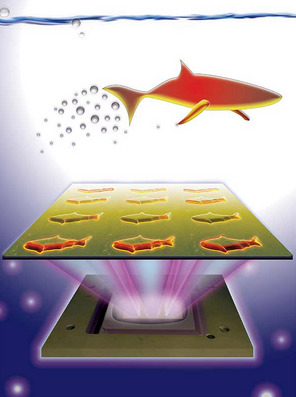
3D-printed microfish contain functional nanoparticles that enable them to be self-propelled, chemically powered and magnetically steered. The microfish are also capable of removing and sensing toxins. (credit: J. Warner, UC San Diego Jacobs School of Engineering)

A new kind of fish-shaped microrobots called “microfish” can swim around efficiently in liquids, are chemically powered by hydrogen peroxide, and magnetically controlled. They will inspire a new generation of “smart” microrobots that have diverse capabilities such as detoxification, sensing, and directed drug delivery, said nanoengineers at the University of California, San Diego.

To manufacture the microfish, the researchers used an innovative 3D printing technology they developed, with numerous improvements over other methods traditionally employed to create microrobots, such as microjet engines, microdrillers, and microrockets.

Most of these microrobots are incapable of performing more sophisticated tasks because they feature simple mechanical designs — such as spherical or cylindrical structures — and are made of homogeneous inorganic materials.

The research, led by Professors Shaochen Chen and Joseph Wang of the NanoEngineering Department at the UC San Diego, was published in the Aug. 12 issue of the journal Advanced Materials.

A microrobotic toxin scavenger

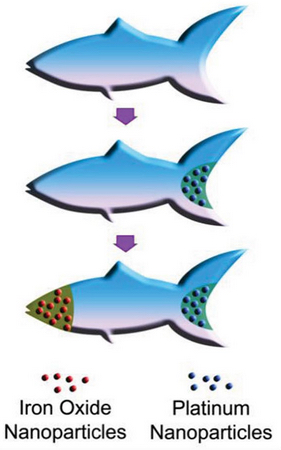
Platinum nanoparticles in the tail of the fish achieve propulsion via reaction with hydrogen peroxide; iron oxide nanoparticles are loaded into the head of the fish for magnetic control (credit: W. Zhu and J. Li, UC San Diego Jacobs School of Engineering)

The nanoengineers were able to easily add functional nanoparticles into certain parts of the microfish bodies.

They installed platinum nanoparticles in the tails, which react with hydrogen peroxide to propel the microfish forward, and magnetic iron oxide nanoparticles in the heads, which allowed them to be steered with magnets.

“We have developed an entirely new method to engineer nature-inspired microscopic swimmers that have complex geometric structures and are smaller than the width of a human hair.

With this method, we can easily integrate different functions inside these tiny robotic swimmers for a broad spectrum of applications,” said the co-first author Wei Zhu, a nanoengineering Ph.D. student in Chen’s research group at the Jacobs School of Engineering at UC San Diego.

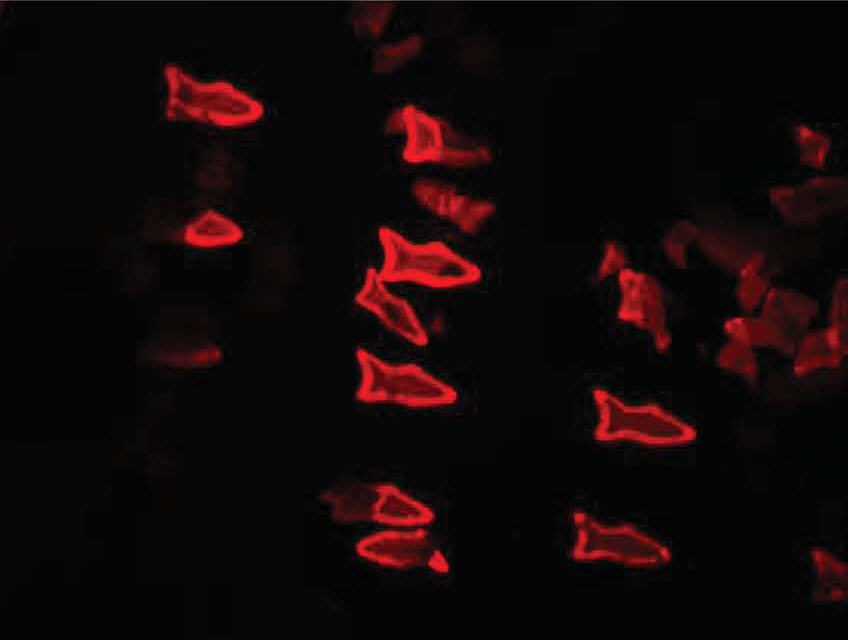
As a proof-of-concept demonstration, the researchers incorporated toxin-neutralizing polydiacetylene (PDA) nanoparticles throughout the bodies of the microfish to neutralize harmful pore-forming toxins such as the ones found in bee venom.

The researchers noted that the powerful swimming of the microfish in solution greatly enhanced their ability to clean up toxins.

When the PDA nanoparticles bind with toxin molecules, they become fluorescent and emit red-colored light. The team was able to monitor the detoxification ability of the microfish by the intensity of their red glow. “The neat thing about this experiment is that it shows how the microfish can doubly serve as detoxification systems and as toxin sensors,” said Zhu.

“Another exciting possibility we could explore is to encapsulate medicines inside the microfish and use them for directed drug delivery,” said Jinxing Li, the other co-first author of the study and a nanoengineering Ph.D. student in Wang’s research group.

3D-printing microrobots

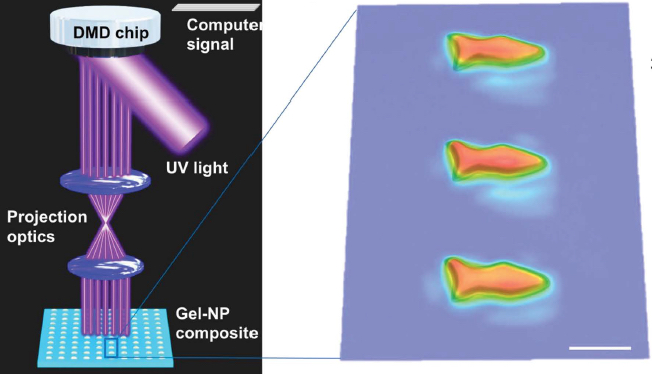
Schematic illustration of the μCOP method to fabricate microfish. (Left) UV light illuminates mirrors, generating an optical pattern specified by the control computer. The pattern is projected through optics onto the photosensitive monomer solution to fabricate the fish layer-by-layer. (Right) 3D microscopy image of an array of printed microfish. Scale bar, 100 micrometers. (credit: Wei Zhu et al./Advanced Materials)

The new microfish fabrication method is based on a rapid, high-resolution 3D printing technology called microscale continuous optical printing (μCOP) developed in Chen’s lab, offering speed, scalability, precision, and flexibility.

The key component of the μCOP technology is a digital micromirror array device (DMD) chip, which contains approximately two million micromirrors. Each micromirror is individually controlled to project UV light in the desired pattern (in this case, a fish shape) onto a photosensitive material, which solidifies upon exposure to UV light. The microfish are constructed one layer at a time, allowing each set of functional nanoparticles to be “printed” into specific parts of the fish bodies.

Fluorescent images demonstrating the detoxification capability of microfish containing encapsulated PDA nanoparticles (credit: Wei Zhu et al./Advanced Materials)

Within seconds, the researchers can print an array containing hundreds of microfish, each measuring 120 microns long and 30 microns thick. This process also does not require the use of harsh chemicals. Because the μCOP technology is digitized, the researchers could easily experiment with different designs for their microfish, including shark and manta ray shapes. They could also build microrobots in based on other biological organisms, such as birds, said Zhu.

“This method has made it easier for us to test different designs for these microrobots and to test different nanoparticles to insert new functional elements into these tiny structures. It’s my personal hope to further this research to eventually develop surgical microrobots that operate safer and with more precision,” said Li.


Abstract of 3D-Printed Artificial Microfish

Hydrogel microfish featuring biomimetic structures, locomotive capabilities, and functionalized nanoparticles are engineered using a rapid 3D printing platform: microscale continuous ­optical printing (μCOP). The 3D-printed ­microfish exhibit chemically powered and magnetically guided propulsion, as well as highly efficient detoxification capabilities that highlight the technical versatility of this platform for engineering advanced functional microswimmers for diverse biomedical applications.

Anti-cancer vaccine uses patient’s own cancer cells to trigger immune responses

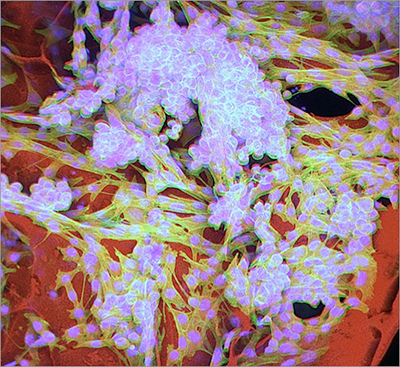
Cancerous melanoma cells, shown with their cell bodies (green) and nuclei (blue), are nestled in tiny hollow lumens (tubes) within the cryogel (red) structure. (credits: Thomas Ferrante, Sidi A. Bencherif / Wyss Institute at Harvard University)

A new biologically inspired “injectable cryogel whole-cell cancer vaccine” combines patient-specific harvested cancer cells and immune-stimulating chemicals or biological molecules to help the body attack cancer. It has been developed by scientists at Harvard’s Wyss Institute and Dana-Farber Cancer Institute.

This new approach is simpler and more economical than other cancer cell transplantation therapies, which harvest tumor cells and then genetically engineer them to trigger immune responses once they are transplanted back into the patient’s body, the researchers say.

The research, headed by Wyss Core Faculty member David Mooney, Ph.D., was reported online in an open-access paper in Nature Communications on August 12.

Minimally invasive cryogels

The new anti-cancer vaccine uses the patient’s own cancer cells to trigger immune responses. The cryogels are a type of hydrogel made up of hydrophilic (water-compatible) polymer chains that are cross-linked and can hold up to 99 percent water.

They are created by freezing a solution of the polymer that is in the process of gelling. When thawed back again to room temperature, the substance turns into a highly interconnected pore-containing hydrogel, which is similar in composition to bodily soft tissues in terms of their water content, structure, and mechanics.

This scanning electron microscopy image shows the thawed cryogel with its well-organized interconnected porous architecture ready to be infused with cancer cells and immune factors. (credits: Ellen Roche, James Weaver, Sidi A. Bencherif / Wyss Institute at Harvard University)

By adjusting their shape, physical properties, and chemical composition, Mooney’s team generated sponge-like, porous cryogels that can be infused with living cells, biological molecules, or drugs for a variety of potential therapeutic applications, including cancer immunotherapy.

The cryogels are minimally invasive because of their extreme flexibility and resilience, enabling them to be compressed to a fraction of their size and injected underneath the skin via a surgical needle. Once injected, they quickly bounce back to their original dimensions to do their job.

“After injection into the body, the cryogels can release their immune-enhancing factors in a highly controlled fashion to recruit specialized immune cells, which then make contact and read unique signatures off the patient’s tumor cells, also contained in the cryogels,” said Sidi Bencherif, the study’s co-first author and a Research Associate in Mooney’s research group.

This has two consequences, he said: “Immune cells become primed to mount a robust and destructive response against patient-specific tumor tissue and the immune tolerance developing within the tumor microenvironment is broken.”

Shrinking tumors

In experimental animal models on melanoma (skin) tumors, results show that using the cryogel to deliver whole cells and drugs triggers a dramatic immune response that can shrink tumors and even prophylactically (in advance) protect animals from tumor growth. With the pre-clinical success of the new cancer cell vaccination technology, Mooney and his team are going to explore how this cryogel-based method could be more broadly useful to treat a number of different cancer types.

“This new injectable form of this biomaterials-based cancer vaccine will help to expand the cancer immunotherapy arsenal, and it’s a great example of how engineering and materials science can be used to mimic the body’s own natural responses in a truly powerful way,” said Don Ingber, the Wyss Institute’s Founding Director, who also is the Judah Folkman Professor of Vascular Biology at Harvard Medical School and Boston Children’s Hospital, and Professor of Bioengineering at SEAS.

Mooney is also the Robert P. Pinkas Family Professor of Bioengineering at the Harvard John A. Paulson School of Engineering and Applied Sciences.


Abstract of Automated adaptive inference of phenomenological dynamical models

Dynamics of complex systems is often driven by large and intricate networks of microscopic interactions, whose sheer size obfuscates understanding. With limited experimental data, many parameters of such dynamics are unknown, and thus detailed, mechanistic models risk overfitting and making faulty predictions. At the other extreme, simple ad hoc models often miss defining features of the underlying systems. Here we develop an approach that instead constructs phenomenological, coarse-grained models of network dynamics that automatically adapt their complexity to the available data. Such adaptive models produce accurate predictions even when microscopic details are unknown. The approach is computationally tractable, even for a relatively large number of dynamical variables. Using simulated data, it correctly infers the phase space structure for planetary motion, avoids overfitting in a biological signalling system and produces accurate predictions for yeast glycolysis with tens of data points and over half of the interacting species unobserved.

How to reprogram cancer cells back to normal

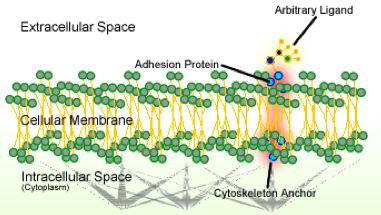
Schematic of cell adhesion (credit: Wikipedia)

A way to potentially reprogram cancer cells back to normalcy has been discovered by researchers on Mayo Clinic’s Florida campus.

The finding, published in Nature Cell Biology, represents “an unexpected new biology that provides the code, the software for turning off cancer,” says the study’s senior investigator, Panos Anastasiadis, Ph.D., chair of the Department of Cancer Biology on Mayo Clinic’s Florida campus.

MicroRNAs — short, non-coding RNAs present in all living organisms that were formerly considered “junk DNA” — have been shown to regulate the expression of at least half of all human genes. These single-stranded RNAs exert their regulatory action by binding messenger RNAs and preventing their translation into proteins. (credit: Firefly BioWorks)

That code was unraveled by the discovery that adhesion proteins — the glue that keeps cells together — interact with a key player in the production of molecules called microRNAs (miRNAs).

The miRNAs orchestrate whole cellular programs by simultaneously regulating expression of a group of genes. The investigators found that when normal cells come in contact with each other, a specific subset of miRNAs suppresses (or blocks) genes that promote cell growth.

However, when adhesion is disrupted in cancer cells, these miRNAs are misregulated and cells grow out of control. The investigators showed, in laboratory experiments, that restoring normal miRNA levels in cancer cells can reverse that aberrant cell growth.

“The study brings together two so-far unrelated research fields — cell-to-cell adhesion and miRNA biology — to resolve a long-standing problem* about the role of adhesion proteins in cell behavior that was baffling scientists,” says the study’s lead author Antonis Kourtidis, Ph.D., a research associate in Anastasiadis’ lab. “Most significantly, it uncovers a new strategy for cancer therapy,” he adds.

“By administering the affected miRNAs in cancer cells to restore their normal levels, we should be able to re-establish the brakes and restore normal cell function,” Anastasiadis says. “Initial experiments in some aggressive types of cancer are indeed very promising.”


Mayo Clinic | Mayo Clinic Researchers Find New Code That Makes Reprogramming of Cancer Cells Possible

* That problem arose from conflicting reports about E-cadherin and p120 catenin — adhesion proteins that are essential for normal epithelial tissues to form, and which have long been considered to be tumor suppressors.

“However, we and other researchers had found that this hypothesis didn’t seem to be true, since both E-cadherin and p120 are still present in tumor cells and required for their progression,” Anastasiadis says. “That led us to believe that these molecules have two faces — a good one, maintaining the normal behavior of the cells, and a bad one that drives tumorigenesis.”

Their theory turned out to be true, but what was regulating this behavior was still unknown. To answer this, the researchers studied a new protein called PLEKHA7, which associates with E-cadherin and p120 only at the top, or the “apical” part of normal polarized epithelial cells. The investigators discovered that PLEKHA7 maintains the normal state of the cells, via a set of miRNAs, by tethering the microprocessor to E-cadherin and p120. In this state, E-cadherin and p120 exert their good tumor suppressor sides.

However, “when this apical adhesion complex was disrupted after loss of PLEKHA7, this set of miRNAs was misregulated, and the E-cadherin and p120 switched sides to become oncogenic,” Dr. Anastasiadis says.

“We believe that loss of the apical PLEKHA7-microprocessor complex is an early and somewhat universal event in cancer,” he adds. “In the vast majority of human tumor samples we examined, this apical structure is absent, although E-cadherin and p120 are still present. This produces the equivalent of a speeding car that has a lot of gas (the bad p120) and no brakes (the PLEKHA7-microprocessor complex).


Abstract of Distinct E-cadherin-based complexes regulate cell behaviour through miRNA processing or Src and p120 catenin activity

E-cadherin and p120 catenin (p120) are essential for epithelial homeostasis, but can also exert pro-tumorigenic activities. Here, we resolve this apparent paradox by identifying two spatially and functionally distinct junctional complexes in non-transformed polarized epithelial cells: one growth suppressing at the apical zonula adherens (ZA), defined by the p120 partner PLEKHA7 and a non-nuclear subset of the core microprocessor components DROSHA and DGCR8, and one growth promoting at basolateral areas of cell–cell contact containing tyrosine-phosphorylated p120 and active Src. Recruitment of DROSHA and DGCR8 to the ZA is PLEKHA7 dependent. The PLEKHA7–microprocessor complex co-precipitates with primary microRNAs (pri-miRNAs) and possesses pri-miRNA processing activity. PLEKHA7 regulates the levels of select miRNAs, in particular processing of miR-30b, to suppress expression of cell transforming markers promoted by the basolateral complex, including SNAI1, MYC and CCND1. Our work identifies a mechanism through which adhesion complexes regulate cellular behaviour and reveals their surprising association with the microprocessor.

Anti-aging effects (in mice) of a dietary supplement called alpha lipoic acid

Shortened telomeres, the protective caps at the ends of chromosomes (credit: NIGMS)

Scientists at Emory University School of Medicine have found that the dietary supplement alpha lipoic acid (ALA) can stimulate telomerase, the enzyme that lengthens telomeres, with positive effects in a mouse model of atherosclerosis.

In human cells, shortened telomeres, the protective caps at the ends of chromosomes, are a sign of aging and also contribute to aging.

The discovery highlights a potential avenue for the treatment for chronic diseases like atherosclerosis and diabetes.

The results were published in an open-access paper on Thursday, August 20 in Cell Reports.

“Alpha lipoic acid has an essential role in mitochondria, the energy-generating elements of the cell,” says senior author Wayne Alexander, MD, PhD, professor of medicine at Emory University School of Medicine. “It is widely available and has been called a ‘natural antioxidant.’ Yet ALA’s effects in human clinical studies have been a mixed bag.”

How ALA works in blood vessels

ALA appears to exert its effects against atherosclerosis by spurring the smooth muscle cells that surround blood vessels to make PGC1 (peroxisome proliferator-activated receptor gamma co-activator 1)-alpha.**

“The effects of chronic diseases such as atherosclerosis and diabetes on blood vessels can be traced back to telomere shortening,” Alexander says. “This means that treatments that can restore healthy telomeres have great potential.”

“What’s new here is that we show that PGC1-alpha is regulating telomerase, and that has real beneficial effects on cellular stress in a mouse model of atherosclerosis,” says Shiqin Xiong, PhD, instructor in the division of cardiology and first author of the paper.*

As a way to boost PGC1-alpha in cells more conveniently, Xiong and Alexander turned to alpha lipoic acid or ALA. ALA is a sulfur-containing fatty acid used to treat diabetic neuropathy in Germany, and has previously been shown to combat atherosclerosis in animal models.

Treating isolated smooth muscle cells with ALA for just one day could stimulate both PGC1-alpha and telomerase, the authors found. ALA’s effects on vascular smooth muscle cells could also be seen when it was injected into mice.

Other effects of ALA

Xiong and Alexander say they are now investigating the effects of ALA on other tissues in mice.

Telomerase is turned off in most healthy cell types and only becomes turned on when cells proliferate. Because telomerase is active in cancer cells and enables their continued growth, researchers have been concerned that stimulating telomerase in all cells might encourage cancer growth or have other adverse effects. They have not observed increased cancers in ALA-treated mice, but say more thorough investigation is needed to fully assess cancer risk.

“While ALA is present in many foods and its effects in animal models look promising, it may be problematic for clinical use because of its poor solubility, stability and bioavailability,” Xiong says. “We are designing new ways to formulate and deliver ALA-related compounds to resolve these issues.”

* Xiong and Alexander used a model of atherosclerosis where mice lacked the ApoE cholesterol processing gene and were fed a high-fat diet. In this model, mice also lacking PGC1-alpha have more advanced plaques in their blood vessels, but only in older animals, the authors show.

Consistent with the poorer state of their blood vessels, aortic cells from PGC1-alpha-disrupted mice had shorter telomeres and reduced telomerase activity. Having shortened telomeres led the smooth muscle cells to display more oxidative stress and damage to the rest of their DNA.

The authors show that introducing PGC1-alpha back into vascular smooth muscle cells lacking that gene with a gene-therapy adenovirus could restore telomerase activity and lengthen the cells’ telomeres.

** PGC1-alpha was already well known to scientists as controlling several aspects of how skeletal muscles respond to exercise. While the Emory researchers did not directly assess the effects of exercise in their experiments, their findings provide molecular clues to how exercise might slow the effects of aging or chronic disease in some cell types.


Abstract of PGC-1α Modulates Telomere Function and DNA Damage in Protecting against Aging-Related Chronic Diseases

Cellular senescence and organismal aging predispose age-related chronic diseases, such as neurodegenerative, metabolic, and cardiovascular disorders. These diseases emerge coincidentally from elevated oxidative/electrophilic stress, inflammation, mitochondrial dysfunction, DNA damage, and telomere dysfunction and shortening. Mechanistic linkages are incompletely understood. Here, we show that ablation of peroxisome proliferator-activated receptor γ coactivator-1α (PGC-1α) accelerates vascular aging and atherosclerosis, coinciding with telomere dysfunction and shortening and DNA damage. PGC-1α deletion reduces expression and activity of telomerase reverse transcriptase (TERT) and increases p53 levels. Ectopic expression of PGC-1α coactivates TERT transcription and reverses telomere malfunction and DNA damage. Furthermore, alpha lipoic acid (ALA), a non-dispensable mitochondrial cofactor, upregulates PGC-1α-dependent TERT and the cytoprotective Nrf-2-mediated antioxidant/electrophile-responsive element (ARE/ERE) signaling cascades, and counteracts high-fat-diet-induced, age-dependent arteriopathy. These results illustrate the pivotal importance of PGC-1α in ameliorating senescence, aging, and associated chronic diseases, and may inform novel therapeutic approaches involving electrophilic specificity.

‘Tricorder’-style handheld MouthLab detects patients’ vital signs, rivaling hospital devices

Johns Hopkins’ MouthLab is intended to collect vital signs and ultimately to also obtain noninvasive biochemical and biophysical measurements from the saliva and breath and estimate blood-sugar level. A prototype can obtain vital signs and an electrocardiogram (ECG). (credit: Gene Y. Fridman et al./Annals of Biomedical Engineering)

Inspired by the Star Trek tricorder, engineers and physicians at the Johns Hopkins University School of Medicine have developed a hand-held, battery-powered device called MouthLab that quickly picks up vital signs from a patient’s lips and fingertip.

Updated versions of the prototype could replace the bulky, restrictive monitors now used to display patients’ vital signs in hospitals and actually gather more data than is typically collected during a medical assessment in an ambulance, emergency room, doctor’s office, or patient’s home.

The MouthLab prototype’s measurements of heart rate, blood pressure, temperature, breathing rate, and blood oxygen from 52 volunteers compared well with vital signs measured by standard hospital monitors. The device also takes a basic electrocardiogram. The study was published in the September issue of the Annals of Biomedical Engineering.

Early warning for non-doctors

“We see it as a ‘check-engine’ light for humans,” says the device’s lead engineer, Gene Fridman, Ph.D., an assistant professor of biomedical engineering and of otolaryngology–head and neck surgery at Johns Hopkins. “It can be used by people without special training at home or in the field.” He expects the device may be able to detect early signs of medical emergencies, such as heart attacks, or avoid unnecessary ambulance trips and emergency room visits when a patient’s vital signs are good.

MouthLab hand-held unit with one attached mouthpiece, and two other mouthpieces (of the 25 total produced) on the left panel. The right panel shows the MouthLab being used by a subject with the data from the MouthLab sensors and vital signs estimates displayed on the laptop in real time. (credit: Gene Y. Fridman et al./Annals of Biomedical Engineering)

Because it monitors vital signs by mouth, future versions of the device will be able to detect chemical cues in blood, saliva, and breath that act as markers for serious health conditions. “We envision the detection of a wide range of disorders,” Fridman says, “from blood glucose levels for diabetics, to kidney failure, to oral, lung and breast cancers.”

Comparable to hospital devices, more compact

The MouthLab prototype consists of a small, flexible mouthpiece like those that scuba divers use, connected to a hand-held unit about the size of a telephone receiver. The mouthpiece holds a temperature sensor and a blood-volume sensor. The thumb pad on the hand-held unit has a miniaturized pulse oximeter for measuring blood oxygen level— a smaller version of the finger-gripping device used in hospitals. Other sensors measure breathing from the nose and mouth.

MouthLab also has three electrodes for ECGs — one on the thumb pad, one on the upper lip of the mouthpiece and one on the lower lip. These work about as well as the chest and ankle electrodes used on basic ECG equipment in many ambulances or clinics, says Fridman.

That ECG signal is also the basis for MouthLab’s novel way of recording blood pressure. When the signal shows the heart is contracting, the device optically measures changes in the volume of blood reaching the thumb and upper lip. Unique software converts the blood flow data into systolic and diastolic pressure readings. The study found that MouthLab blood-pressure readings effectively match those taken with standard, arm-squeezing cuffs.

The hand unit relays data by Wi-Fi to a nearby laptop or smart device, where graphs display real-time results. The next generation of the device will display its own data readouts with no need for a laptop, says Fridman. Ultimately, he explains, patients will be able to send results to their doctors via cellphone, and an app will let physicians add them to patients’ electronic medical records.

A 3-D printer made the parts for the prototype, “which looks a lot like a hand-held taser,” Fridman says. “Our final version will be smaller, more ergonomic, more user-friendly and faster. Our goal is to obtain all vital signs in under 10 seconds.”


Abstract of MouthLab: A Tricorder Concept Optimized for Rapid Medical Assessment

The goal of rapid medical assessment (RMA) is to estimate the general health of a patient during an emergency room or a doctor’s office visit, or even while the patient is at home. Currently the devices used during RMA are typically “all-in-one” vital signs monitors. They require time, effort and expertise to attach various sensors to the body. A device optimized for RMA should instead require little effort or expertise to operate and be able to rapidly obtain and consolidate as much information as possible. MouthLab is a battery powered hand-held device intended to acquire and evaluate many measurements such as non-invasive blood sugar, saliva and respiratory biochemistry. Our initial prototype acquires standard vital signs: pulse rate (PR), breathing rate (BR), temperature (T), blood oxygen saturation (SpO2), blood pressure (BP), and a three-lead electrocardiogram. In our clinical study we tested the device performance against the measurements obtained with a standard patient monitor. 52 people participated in the study. The measurement errors were as follows: PR: −1.7 ± 3.5 BPM, BR: 0.4 ± 2.4 BPM, T: −0.4 ± 1.24 °F, SpO2: −0.6 ± 1.7%. BP systolic: −1.8 ± 12 mmHg, BP diastolic: 0.6 ± 8 mmHg. We have shown that RMA can be easily performed non-invasively by patients with no prior training.

Rechargeable batteries with almost infinite lifetimes coming, say MIT-Samsung engineers

Illustration of the crystal structure of a superionic conductor. The backbone of the material is a cubic-like arrangement of sulphur anions (yellow). Lithium atoms are depicted in green, PS4 tetrahedra in violet, and GeS4 tetrahedra in blue. (credit: Yan Wang)

MIT and Samsung researchers have developed a new approach to achieving long life and a 20 to 30 percent improvement in power density (the amount of power stored in a given space) in rechargeable batteries — using a solid electrolyte, rather than the liquid used in today’s most common rechargeables. The new materials could also greatly improve safety and last through “hundreds of thousands of cycles.”

The results are reported in the journal Nature Materials. Solid-state electrolytes could be “a real game-changer,” says co-author Gerbrand Ceder, MIT visiting professor of materials science and engineering, creating “almost a perfect battery, solving most of the remaining issues” in battery lifetime, safety, and cost.

Superionic lithium-ion conductors

The electrolyte in rechargeable batteries is typically a liquid organic solvent whose function is to transport charged particles from one of a battery’s two electrodes to the other during charging and discharging. That material has been responsible for the overheating and fires that, for example, resulted in a temporary grounding of all of Boeing’s 787 Dreamliner jets.

With a solid electrolyte, there’s no safety problem, he says. “You could throw it against the wall, drive a nail through it — there’s nothing there to burn.”

The key to making all this feasible, Ceder says, was finding solid materials that could conduct ions fast enough to be useful in a battery. The initial findings focused on a class of materials known as superionic lithium-ion conductors, which are compounds of lithium, germanium, phosphorus, and sulfur. But the principles derived from this research could lead to even more effective materials, the team says, and they could function below about minus 20 degrees Fahrenheit.

Researchers at the University of California at San Diego and the University of Maryland were also involved in the study.

The article title was corrected to read “infinite” instead of indefinite.


Abstract of Design principles for solid-state lithium superionic conductors

Lithium solid electrolytes can potentially address two key limitations of the organic electrolytes used in today’s lithium-ion batteries, namely, their flammability and limited electrochemical stability. However, achieving a Li+ conductivity in the solid state comparable to existing liquid electrolytes (>1 mS cm−1) is particularly challenging. In this work, we reveal a fundamental relationship between anion packing and ionic transport in fast Li-conducting materials and expose the desirable structural attributes of good Li-ion conductors. We find that an underlying body-centred cubic-like anion framework, which allows direct Li hops between adjacent tetrahedral sites, is most desirable for achieving high ionic conductivity, and that indeed this anion arrangement is present in several known fast Li-conducting materials and other fast ion conductors. These findings provide important insight towards the understanding of ionic transport in Li-ion conductors and serve as design principles for future discovery and design of improved electrolytes for Li-ion batteries.

Why wind — and soon solar — are already cheaper than fossil fuels

Global levelized cost of energy (LCOE) by various fuel types in $/megawatt-hours (credit: Citigroup)

Citigroup has published an analysis of the costs of various energy sources called “Energy Darwinism II.” It concludes that if all the costs of generation are included (known as the levelized cost of energy), renewables turn out to be cheaper than fossil fuels and a “benefit rather than a cost to society,” RenewEconomy reports.

“Capital costs are often cited by the promoters of fossil fuels as evidence that coal and gas are, and will, remain cheaper than renewable energy sources such as wind and gas. But this focuses on the short-term only — a trap repeated by opponents of climate action and clean energy, who focus on the upfront costs of policies.

Actually, fuel costs can “account for 80 per cent of the cost of gas-fired generation, and more than half the cost of coal,” RenewEconomy says.

Reneweables ahead

The graph above shows that the lowest-cost wind (in the best regions) is already beating coal and gas. Solar in the sunniest regions will do so by 2020, based on conservative estimates. And the cost of solar and wind will continue to fall, with solar eventually beating wind, RenewEconomy projects.

Citigroup estimates a “learning rate” of 19 per cent — meaning that solar costs will fall that much with each doubling in capacity (a variation of Moore’s Law). This translates into cost falls of 2 per cent a year.

“But as real-life experience shows, cost falls are happening faster than that. Last week, one of the big solar module manufacturers, Trina Solar, said costs had fallen 19 per cent in the past year, and would continue to fall by at least 5 per cent to 6 per cent a year in coming years as efficiencies were improved.”

“We should think of installing renewable energy as a benefit rather than a cost to society,” Citigroup writes.


Making hydrogen fuel from water and visible light at 100 times higher efficiency

Test unit schematic for temperature-induced photocatalytic hydrogen production from H2O with methanol as a sacrificial agent: (1) thermocouple (temperature sensor), (2) black Pt/TiO2 on SiO2 substrate, (3) quartz wool, (4) quartz tube reactor, (5) electrical tube furnace; (GC) gas chromatograph (analyzes gas components) (credit: Bing Han and Yun Hang Hu/Journal of Physical Chemistry)

Researchers at Michigan Technological University have found a way to convert light to hydrogen fuel more efficiently — a big step closer to mimicking photosynthesis.

Current methods for creating hydrogen fuel are based on using electrodes made from titanium dioxide (TiO2), which acts as a catalyst to stimulate the light–>water–>hydrogen chemical reaction. This works great with ultraviolet (UV) light, but UV comprises only about 4% of the total solar energy, making the overall process highly inefficient.*

The ideal would be to use visible light, since it constitutes about 45 percent of solar energy. Now two Michigan Tech scientists — Yun Hang Hu, the Charles and Carroll McArthur professor of Materials Science and Engineer, and his PhD student, Bing Han — have developed a way to do exactly that.

They report in Journal of Physical Chemistry that by absorbing the entire visible light spectrum, they have increased the yield and energy efficiency of creating hydrogen fuel by up to two magnitudes (100 times) greater than previously reported.**

As described in the paper, they used three new techniques to achieve that:

  • “Black titanium dioxide” (with 1 percent platinum) on a silicon dioxide substrate;
  • A “light-diffuse-reflected surface” to trap light;
  • An elevated reaction temperature (280 degrees Celsius).

In addition, the new setup is “convenient for scaling up commercially,” said Ho.

* TiO2 has a relatively large band gap energy (3.0−3.2 eV) and thus it can absorb only ultraviolet (UV) light (about 4% of the total solar energy), leading to a low photoconversion efficiency (less than 2% under AM 1.5 global sunlight illumination).

** The new method achieves a photo hydrogen yield of 497 mmol/h/g and an apparent quantum efficiency of 65.7% for the entire visible light range at 280 °C.


Abstract of Highly Efficient Temperature-Induced Visible Light Photocatalytic Hydrogen Production from Water

Intensive effort has led to numerous breakthroughs for photoprocesses. So far, however, energy conversion efficiency for the visible-light photocatalytic splitting of water is still very low. In this paper, we demonstrate (1) surface-diffuse-reflected-light can be 2 orders of magnitude more efficient than incident light for photocatalysis, (2) the inefficiency of absorbed visible light for the photocatalytic H2 production from water with a sacrificial agent is due to its kinetic limitation, and (3) the dispersion of black Pt/TiO2 catalyst on the light-diffuse-reflection-surface of a SiO2 substrate provides a possibility for exploiting a temperature higher than H2O boiling point to overcome the kinetic limitation of visible light photocatalytic hydrogen production. Those findings create a novel temperature-induced visible light photocatalytic H2production from water steam with a sacrificial agent, which exhibits a high photohydrogen yield of 497 mmol/h/gcat with a large apparent quantum efficiency (QE) of 65.7% for entire visible light range at 280 °C. The QE and yield are one and 2 orders of magnitude larger than most reported results, respectively.

Why you’re smarter than a chicken

Sorry, wrong protein — you’re dinner (credit: Johnathan Nightingale via Flickr)

A single molecular event in a protein called PTBP1 in our cells could hold the key to how we evolved to become the smartest animal on the planet, University of Toronto researchers have discovered.

The conundrum: Humans and frogs, for example, have been evolving separately for 350 million years and use a remarkably similar repertoire of genes to build organs in the body. So what accounts for the vast range of organ size and complexity?

Benjamin Blencowe, a professor in the University of Toronto’s Donnelly Centre and Banbury Chair in Medical Research, and his team believe they now have the key: alternative splicing (AS).

With alternative splicing, the same gene can generate three different types of protein molecules, as in this example (credit: Wikipedia)

Here’s how alternative splicing works: specific sections of a gene called exons may be included or excluded from the final messenger RNA (mRNA) that expresses the gene (creates proteins). And that changes the arrangement of amino acid sequences.

This image shows a frog and human brain, brought to scale. Although the brain-building genes are similar in both, alternative splicing ensures greater protein diversity in human cells, which fuels organ complexity. (credit: Jovana Drinjakovic)

There are two forms of PTBP1: one that is common in all vertebrates, and another in mammals. The researchers showed that in mammalian cells, the presence of the mammalian version of PTBP1 unleashes a cascade of alternative splicing events that lead to a cell becoming a neuron instead of a skin cell, for example.

To prove that, they engineered chicken cells to make mammalian-like PTBP1, and this triggered alternative splicing events that are found in mammals, creating a smart chicken (no relation to the eponymous brand). Also, in turns out that alternative splicing prevalence increases with vertebrate complexity.

The end result: all those small accidental changes across specific genes have fueled the evolution of mammalian brains.

The study is published in the August 20 issue of Science.


Abstract of An alternative splicing event amplifies evolutionary differences between vertebrates

Alternative splicing (AS) generates extensive transcriptomic and proteomic complexity. However, the functions of species- and lineage-specific splice variants are largely unknown. Here we show that mammalian-specific skipping of polypyrimidine tract–binding protein 1 (PTBP1) exon 9 alters the splicing regulatory activities of PTBP1 and affects the inclusion levels of numerous exons. During neurogenesis, skipping of exon 9 reduces PTBP1 repressive activity so as to facilitate activation of a brain-specific AS program. Engineered skipping of the orthologous exon in chicken cells induces a large number of mammalian-like AS changes in PTBP1 target exons. These results thus reveal that a single exon-skipping event in an RNA binding regulator directs numerous AS changes between species. Our results further suggest that these changes contributed to evolutionary differences in the formation of vertebrate nervous systems.