Is there a hidden ‘Planet 9’ in our solar system?

For more than a century, astronomers have been captivated by the idea that an undiscovered planet could be lurking in the furthest reaches of our solar system.

The search for this elusive, hypothetical planet has taken many forms over the decades. The discovery of Neptune in 1846 demonstrated that an unseen planet might be inferred from its gravitational effects on other worlds. Based on this, the search for a ninth planet began in earnest, seemingly culminating with the discovery of Pluto by astronomer Clyde W. Tombaugh in 1930.

However, decades later in August 2006, Pluto's long-held planetary status was withdrawn after its formal reclassification as a dwarf planet, launching a debate over the Kuiper Belt object's identity that continues today. Yet beyond the controversy over how Pluto should be classified, the quest to determine whether a hidden ninth planet may exist in our solar system continues — and some astronomers are more confident than ever that its discovery could be imminent.

What do we know?

The story of our solar system's unconfirmed ninth planet takes us back to the early decades of the last century. At that time, astronomers began to suspect that, much like Neptune's discovery based on irregularities in the motion of Uranus, evidence of even more distant planets might begin to surface through similar observations. This prompted American astronomer Percival Lowell to advance the idea that orbital irregularities displayed by both Uranus and Neptune could point to the existence of a distant, unknown planet — one he dubbed "Planet X."

Today, although Lowell's name for this hypothetical planet is sometimes used interchangeably with the idea of a "Planet Nine," the concepts are slightly different. While the early search for Planet X relied on observations of the motion of Uranus and Neptune, new data that included Voyager 2's encounters with those planets in the 1980s helped reveal that their orbital behavior could be explained without the introduction of an unknown ninth planet.

By contrast, modern proponents of the existence of a ninth planet focus their searches further out, looking instead to orbital peculiarities in smaller objects that occupy the distant reaches of the solar system. This approach to solving the Planet Nine mystery was put forward in 2016 by Caltech astronomers Konstantin Batygin and Michael Brown, who argued that an undiscovered planet could account for the odd orbital patterns displayed by several extreme trans-Neptunian objects in the distant solar system.

a blue orb on a black, starry background

An illustration of the hypothesized Planet Nine. (Image credit: Mark Garlick/Science Photo Library/Getty Images)

What remains unknown?

In 2024, the Caltech team presented additional findings, which specifically focused on long-period, low-inclination objects that are known to traverse Neptune's orbit.

"These objects are dynamically unstable, so the population has to be continuously replenished," Batygin recently told Space in an email. "In our 2024 work, we found that Planet Nine naturally produces the observed population, whereas the model without Planet Nine is strongly inconsistent with the data once observational biases are accounted for."

According to Batygin, the Planet Nine theory can potentially explain several unusual attributes about the distant solar system, which include the phenomena of orbital clustering, large perihelion distances some objects exhibit, the presence of retrograde bodies, and objects with highly inclined orbits (meaning their orbital paths are tilted at large angles).

Right now, Batygin says the only thing still lacking from the growing body of evidence is a direct detection of Planet Nine itself. Still, while he concedes that such direct detections remain elusive, he also maintains that something must account for the current data he, Brown, and others have collected.

"If the observed dynamical structure is real," Batygin told Space, "there is presently no comparably compelling alternative theoretical explanation."
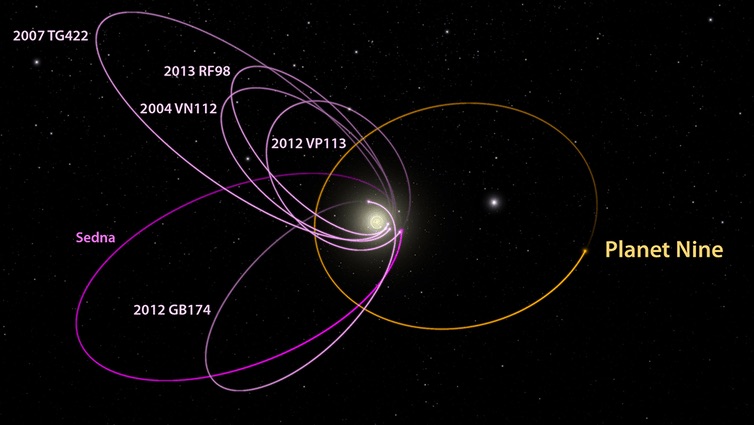
The existence of a roughly Neptune-mass Planet Nine could explain why the few known extreme trans-Neptunian objects seem to be clustered together in space. The diagram was created using WorldWide Telescope. (Image credit: Caltech/R. Hurt (IPAC))

The mystery continues

Fortunately, powerful facilities like the Vera C. Rubin Observatory in Chile could soon provide the observations currently missing from the body of data needed to support the existence of a ninth planet.

In the meantime, some promising additional discoveries have been made in recent years, which could help to strengthen the statistical case for things like orbital clustering being related to an undiscovered object at the edge of the solar system.

However, Batygin advises that astronomers should be cautious in interpreting such findings.

"I would say the picture has become more complicated, rather than simply stronger or weaker," Batygin told Space. "One has to be careful about quoting a single significance for 'clustering,' because the theory does not predict that every distant object should be clustered."

As far as what would offer the clearest support for Planet Nine's existence — short of obtaining direct visual confirmation — Batygin says ongoing discoveries of distant objects in the solar system, and the patterns that emerge in their behavior, could provide the most promising new data.

"For me, the clearest non-imaging evidence would be for the dynamical patterns in the outer solar system to sharpen dramatically as the sample grows," Batygin told Space, noting that this would particularly be the case "if several independent observables converge on the same Planet Nine parameters."

"If a much larger, well-characterized sample simultaneously exhibited the predicted apsidal structure, orbital-plane structure, perihelion distribution, inclination distribution, and Neptune-crossing population, it would become very difficult to explain the observations without a common gravitational perturber," Batygin says.

With an ever-growing number of powerful ground and space-based observatories going into service, it could be just a matter of time before we receive the final confirmation that a ninth planet has been lurking out there—or that another explanation can be proven to account for its apparent gravitational fingerprints.

Until then, the search for Planet Nine remains much like what "Planet X" was more than a century ago: a captivating idea awaiting a breakthrough observation — one that could lead to a major discovery that significantly expands our knowledge of the solar system.

The Vela Incident: Did an American satellite detect a secret nuclear test in 1979?

It began with an unusual flash detected off the coast of South Africa by an aging American satellite — and to this day, debate continues over whether this odd Cold War event involved an illicit atmospheric nuclear test.

The strange story of the "South Atlantic Flash," better known as the Vela Incident, began on Sept. 22, 1979. At that time, Vela 6911, a satellite in a constellation developed by the United States for the specific purpose of detecting nuclear detonations, observed something that immediately alarmed officials: a peculiar flash of light emanating from somewhere over the South Atlantic Ocean.

A significant part of what concerned U.S. officials at the time had been the double flash of light detected during the event — a distinctive feature that strongly resembled the flashes produced by a nuclear explosion in Earth's atmosphere. The characteristic double flash results from the rapidly changing brightness of the fireball and shock wave produced by an atmospheric nuclear detonation, creating a distinctive optical signature that Vela's sensors were specifically designed to recognize. The South Atlantic event, therefore, seemed like a prime candidate for a secretive nuclear test being carried out by an unknown party — but if that were the case, who was responsible?

What do we know?

U.S. officials responded to a possible nuclear test

Then-President Jimmy Carter was promptly alerted to the situation, as evidenced in diaries the former U.S. leader would publish years later. "There was indication of a nuclear explosion in the region of South Africa," Carter wrote in an entry on the same date of the event. A later entry penned the following February would go on to add that "We have a growing belief among our scientists that the Israelis did indeed conduct a nuclear test explosion in the ocean near the southern end of Africa."

a man in a suit sits at a large wooden desk beside a globe

President Jimmy Carter, seated at a desk in the Oval Office of the White House in 1980. (Image credit: Bettmann/Getty Images)

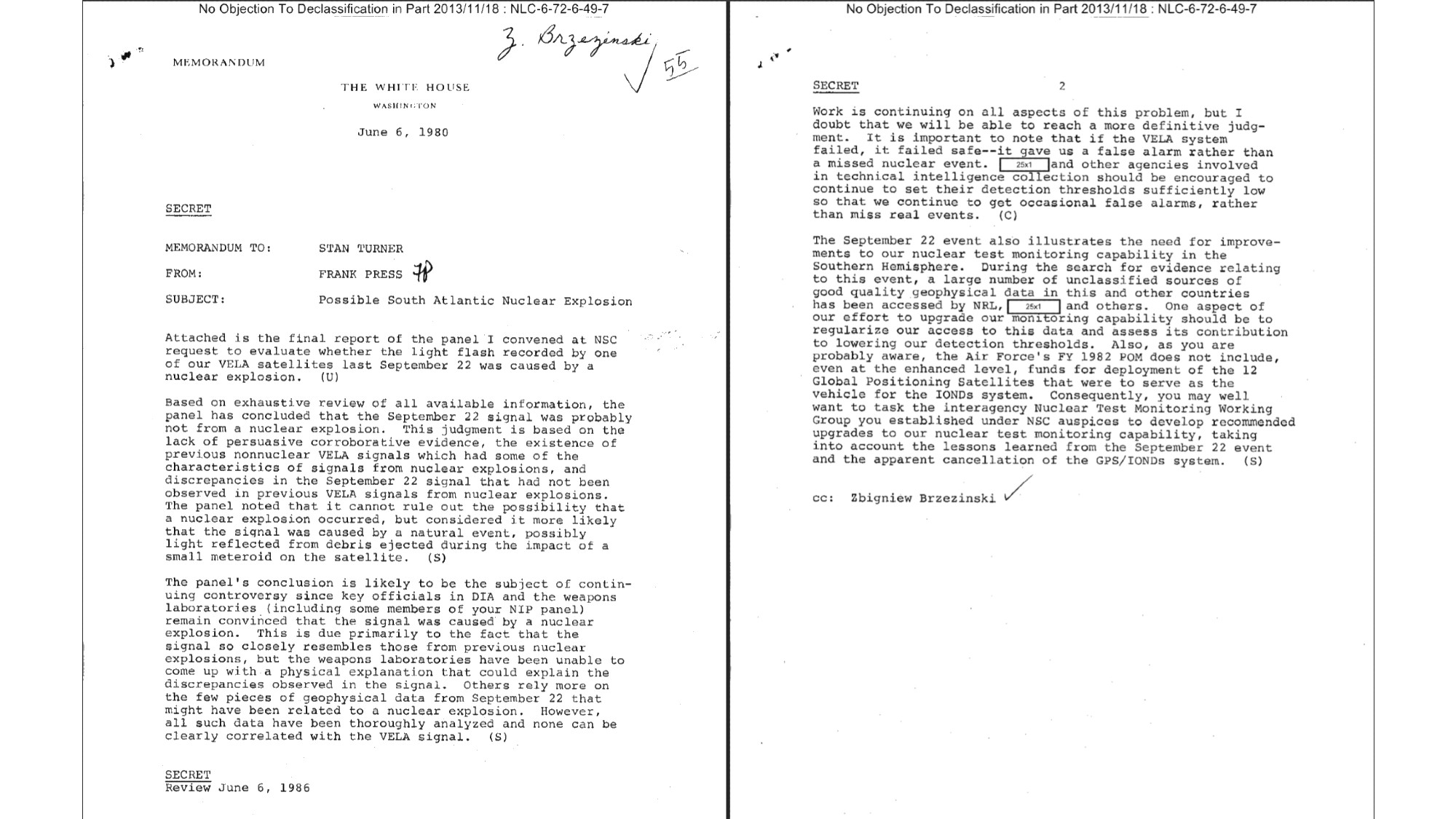
Despite that belief regarding the possibility of a clandestine nuclear test, a scientific panel assembled in 1980, chaired by MIT professor Jack Ruina, eventually put forward an alternative explanation: that the flash had more likely been an anomaly caused by a small meteoroid striking the satellite.

Notably, the panel did not rule out the possibility of a nuclear explosion at the time, although the alternative they put forward remained controversial among scientists and intelligence officials.

a memorandum on white house stationary

A memorandum to Director of Central Intelligence Stansfield Turner from Frank Press, White House science adviser, in which Press explains the reasoning behind the Ruina panel's conclusion that the Vela flash was "probably not from a nuclear explosion" and was therefore more likely "caused by a natural event." (Image credit: Public Domain/National Security Archive)

Documents and government insiders surface

By the turn of the 21st century, formerly classified documents began to surface that revealed the extent of the inner tensions between U.S. government agencies over what caused the Vela incident.

Among the critics of the debris-induced "anomaly" hypothesis had been Defense Intelligence Agency Vice Director Jack Varona. According to documents released in 2006, Varona said the investigations by the 1980 scientific panel had been a politically motivated "whitewash," and that evidence collected by the U.S. intelligence community included detections "unique to nuclear shots in a maritime environment," based on an analysis by the Naval Research Laboratory.

Varona wasn't alone. Other former intelligence officials who came forward over the years included Stansfield Turner, the former Director of Central Intelligence during the Carter administration, who in 2003 described the Vela detection as a "man-made phenomenon."

Similar views were advanced by retired CIA officer Tyler Drumheller, who in 2006 wrote that he had sources at the time who "collectively provided incontrovertible evidence that the [South African] apartheid government had in fact tested a nuclear bomb in the South Atlantic in 1979, and that they had developed a delivery system with assistance from the Israelis."

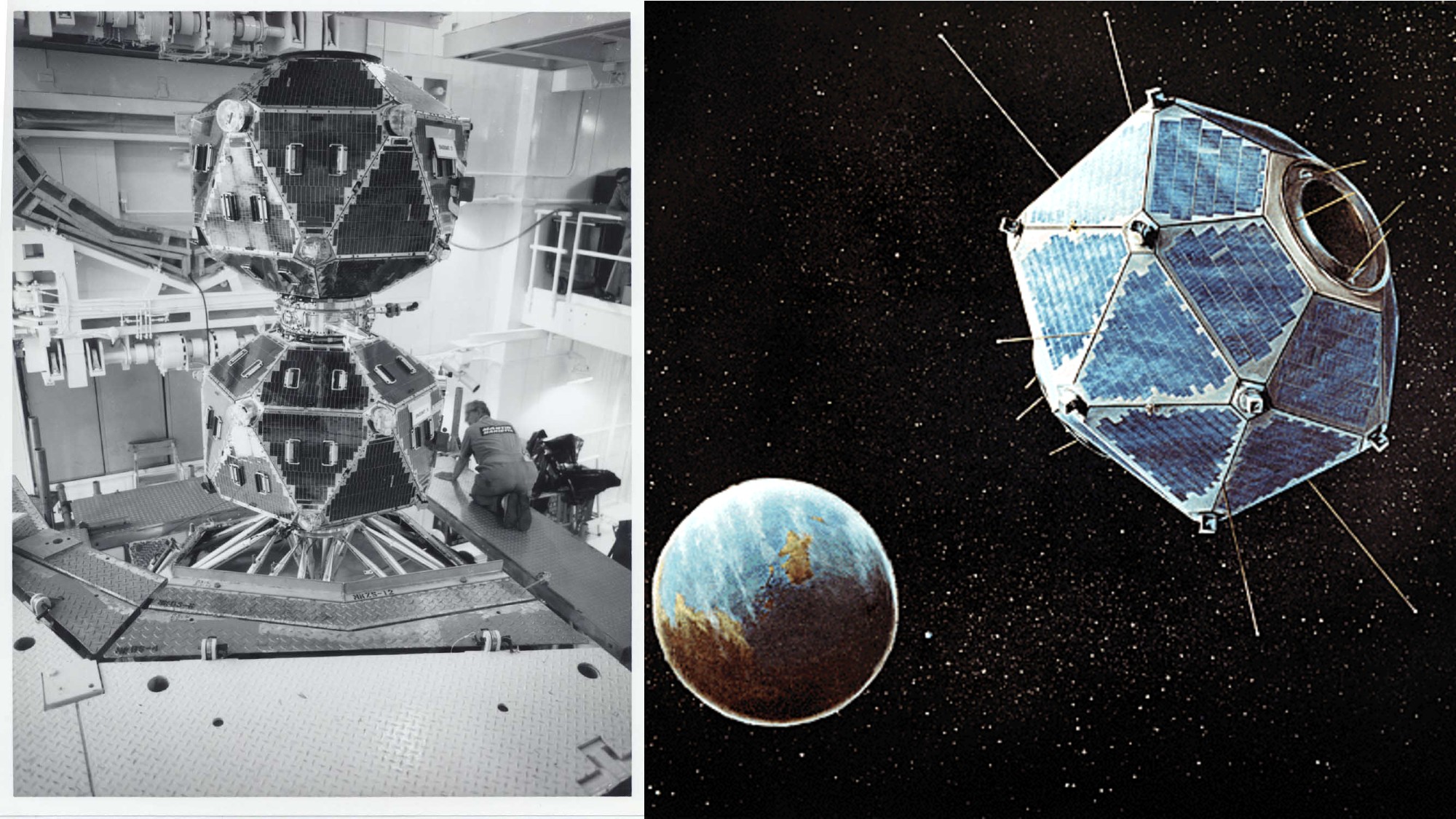
a dodecahedron-shaped satellite in a clean room; and an illustration of the same satellite in orbit above earth

The Vela-5A & B satellites in a cleanroom at Los Alamos National Laboratory (left); and an illustration of one of the satellites in orbit above Earth (right). (Image credit: Los Alamos National Laboratory)

What remains unknown?

Scientists revisit the mystery

While we still don't know if the South Atlantic Flash was a nuclear test, several scientists have reexamined the available evidence within the last decade, and what they found has lent further weight to the idea that the Vela incident had involved a detonation of some kind.

Among the most significant assessments, a 2017 study by Christopher Wright and Lars-Erik De Geer combined modern research into interplanetary dust and hypervelocity impacts with revelations from recently declassified documents, as well as publicly available information that had been previously overlooked.

Their conclusion: while no model was presented for the tenuous "meteoroid" theory advanced by the May 1980 scientific panel, the double flash observed by the Vela satellite in 1979 was indeed "consistent with a nuclear explosion, albeit detected by an aged satellite for which background modulation was abnormal and/or commenced earlier," adding that additional radionuclide and hydroacoustic evidence existed which supported the conclusion "that the Vela Incident was a nuclear weapon test explosion."

Wright and De Geer weren't alone either. A 2022 study examined data collected by NASA's Nimbus-7 satellite just 16 minutes and 44 seconds after the double flash over the South Atlantic, which suggested a disturbance in the ozone layer that appeared to be consistent with a blast-generated shock wave.

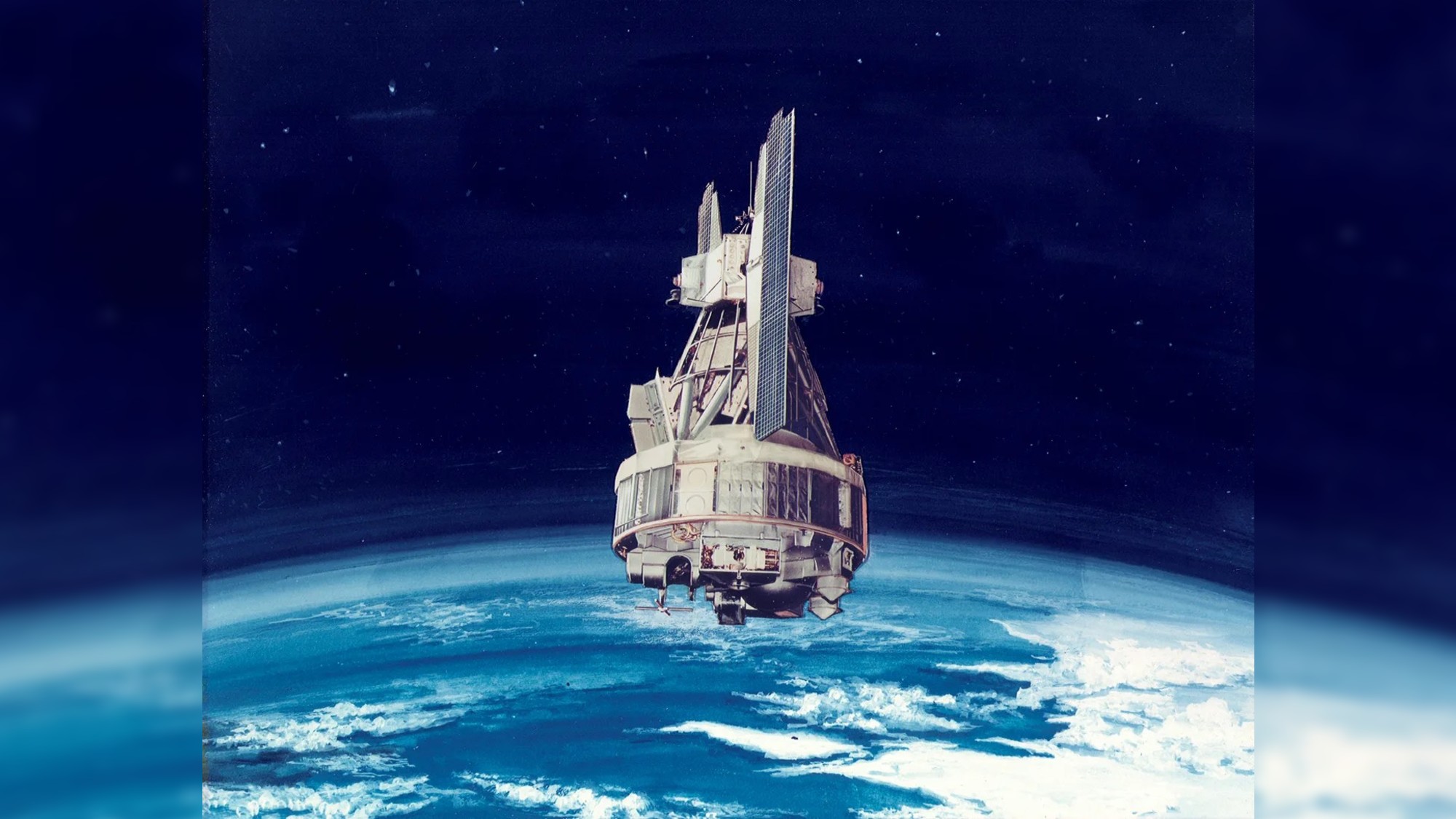
an illustration of a hexagonal satellite with two wing-like solar panels in orbit above earth

Artist's concept of a Nimbus spacecraft in orbit over Earth. (Image credit: NASA)

Still, some of the original members of the 1980 scientific panel have defended its work amid the more recent scientific studies. Richard Mueller, who served as the panel's youngest member at the time, defended the group's conclusions in a November 2019 oral history conference, maintaining that the chances the Vela incident had involved a nuclear event were "as close to zero as it gets."

This determination, Mueller argued, was made despite early interpretations by many panelists that a nuclear event had seemed most likely. Wright and De Geer, both of whom attended the 2019 oral history conference, were among the participants that pushed back on Mueller's views.

Who was responsible?

Amid the mounting evidence over the last several decades suggesting the Vela incident was indeed a nuclear test, debate continues over who was most likely to have been responsible.

Although suspicions have long centered on a cooperative — and secret — strategic effort between apartheid-era South Africa and Israel, publicly available evidence remains lacking, and a fair amount of information in declassified documents that could point to this possibility remains redacted.

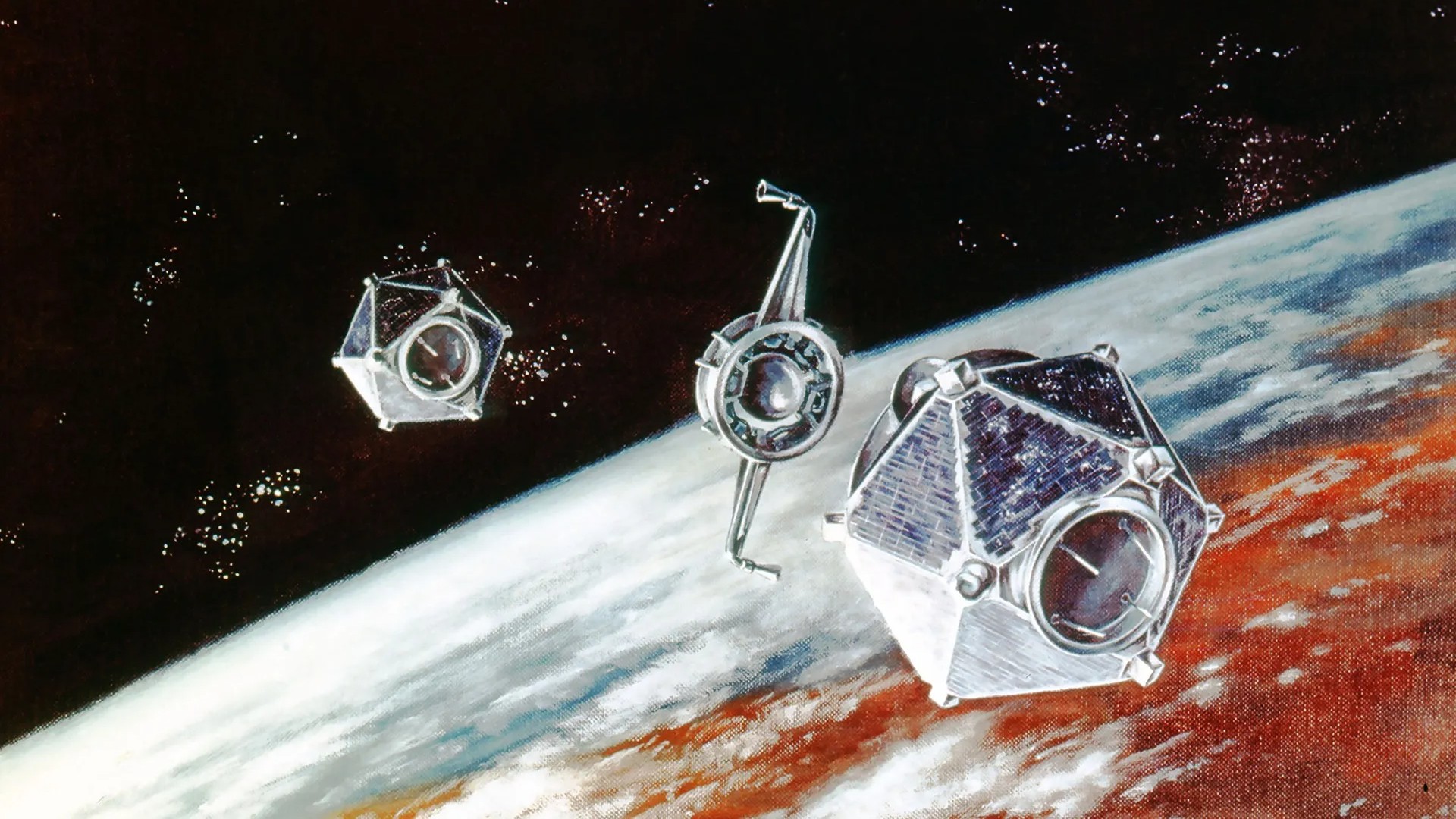
a dodecahedron-shaped satellite in orbit above earth

An illustration of two Vela satellites separating in orbit. (Image credit: Los Alamos National Laboratory)

The mystery remains

Thus, after more than four decades, questions continue to linger over the famous Vela incident, including what nations might have been involved in such a test if it occurred. Despite that uncertainty, one thing does seem evident: information conveyed in unredacted portions of declassified records, combined with modern scientific analyses, increasingly point to the likelihood that the strange "South Atlantic Flash" in 1979 was anything but natural.