
5 days beneath the waves: What it’s like to live in an underwater ‘space station’

Living underwater was surprisingly peaceful. It was in many ways exactly what I imagine living on Mars would be like one day. There were no humans around us, except for my three SEA STAR crewmembers and me. Apart from the human noises we made, we couldn't hear anything other than the life support systems keeping us alive submerged 22 feet (7 meters) below the surface.

We were living in these extreme conditions to study the challenges astronauts may face on long-duration space missions. Since performing research in space is still rare and expensive, there are numerous facilities around the world that focus on recreating space-like conditions on Earth. One of those stations is the Jules' Undersea Lab, where the SEA STAR simulated space mission took place.

This underwater habitat was called "La Chalupa" when it was built in the 1970s. Its purpose was to allow divers to live and perform research as aquanauts — people who spend more than 24 hours underwater in a so-called state of saturation. Today, the Jules' Undersea Lab is located near Key Largo, in Florida. However, it was originally designed to be mobile — inside a barge 20 feet wide and 60 feet long (6 to 18 meters).
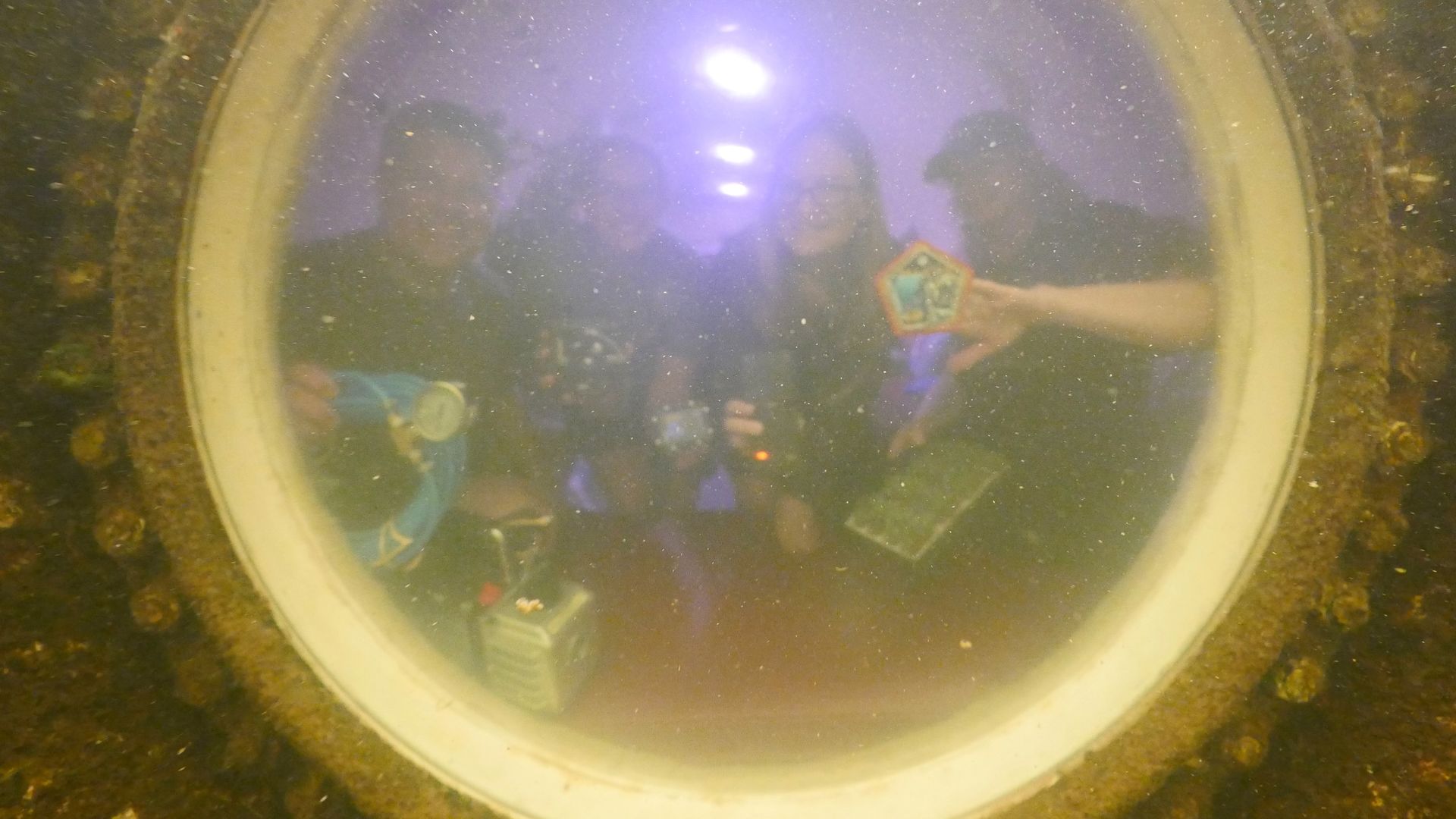
photo of three women and one man, seen fuzzily through a circular porthole

The SEA STAR crew inside the Jules' Undersea Lab, as seen from the outside of the station by a member of Mission Control. (Image credit: Ozlem Berg)

The aquanauts could choose an ideal site for their research expeditions underwater and then have the facility be submerged. They did that by flooding most of its inside space, turning it from a boat to a submarine. Once their work was done, they could remove the water and move "La Chalupa" to another location.

Unfortunately, the funding to keep this facility running ran out over time, and it was moved one last time to its current home. Since then, the now Jules' Undersea Lab served as the research station for tens of different aquanaut missions, including a NASA 30-day project and two missions that set world records for the longest time living underwater (73 and 100 days).
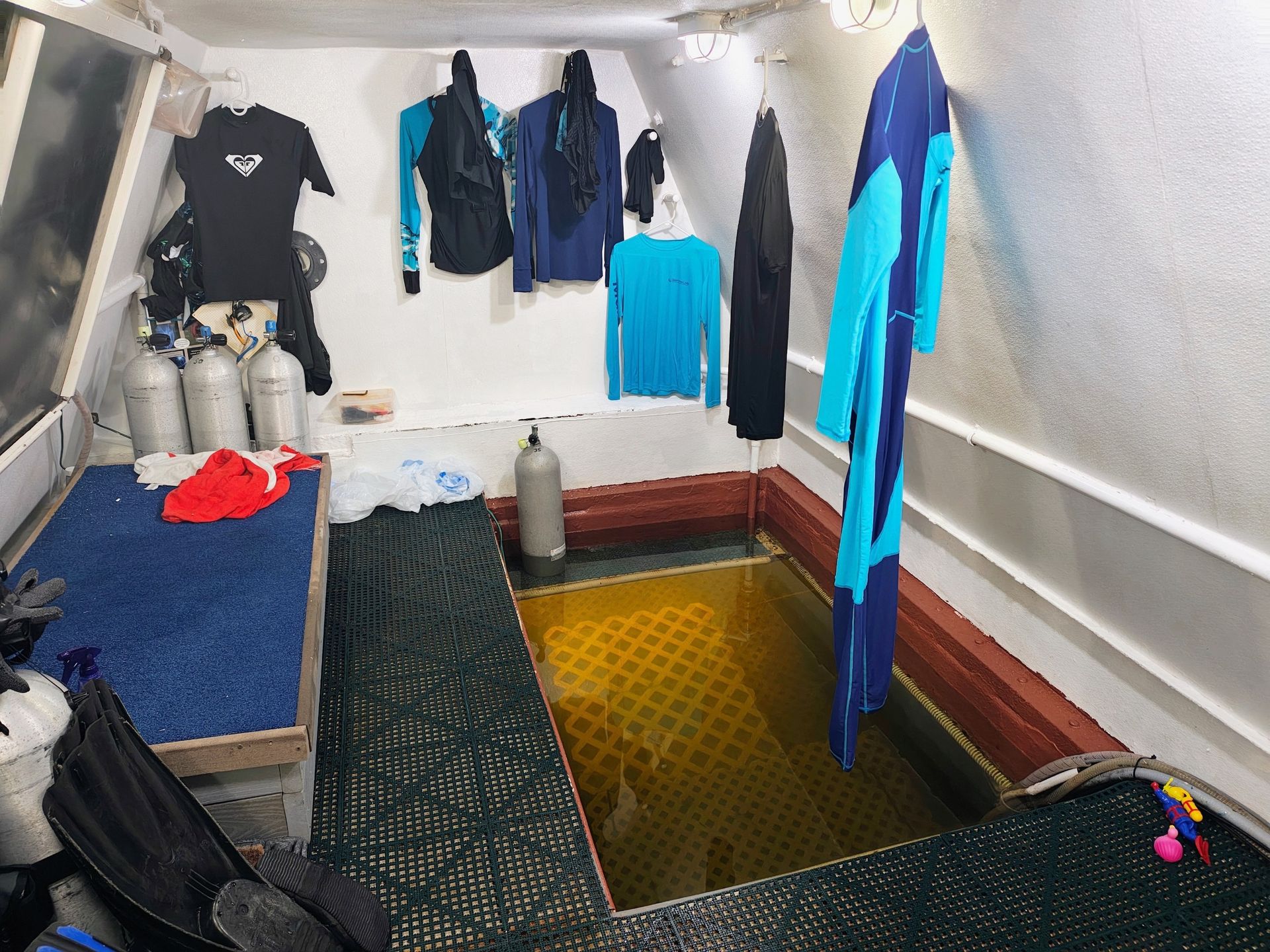
photo inside a small room of a research station, showing wet suits and scuba gear arrayed along the walls

The "moon pool" of the Jules' Undersea Lab, through which aquanauts enter and exit the station. (Image credit: Dr. Michaela Musilova)

On the inside, the underwater station is made up of a galley with a kitchen and dining/work area. Next to it there is a basic toilet, shower and the "moon pool," which is the equivalent of a door to get inside the habitat. The final area is the bedroom with two bunk beds, which can be split in the middle to create two bedrooms and provide additional privacy. Three windows throughout the habitat provide its dwellers with a view of a mostly green outside world.

To start our SEA STAR simulated space mission, we waved goodbye to our Mission Control team on "Earth" and dove down to enter the Jules' Undersea Lab through the "moon pool" at 25 feet (7.6 m) underwater. After that, we did not return to the surface again until five days later. We lived and worked the whole time underwater, performing our space-related research and "spacewalks" (a.k.a. exploration dives in scuba gear).
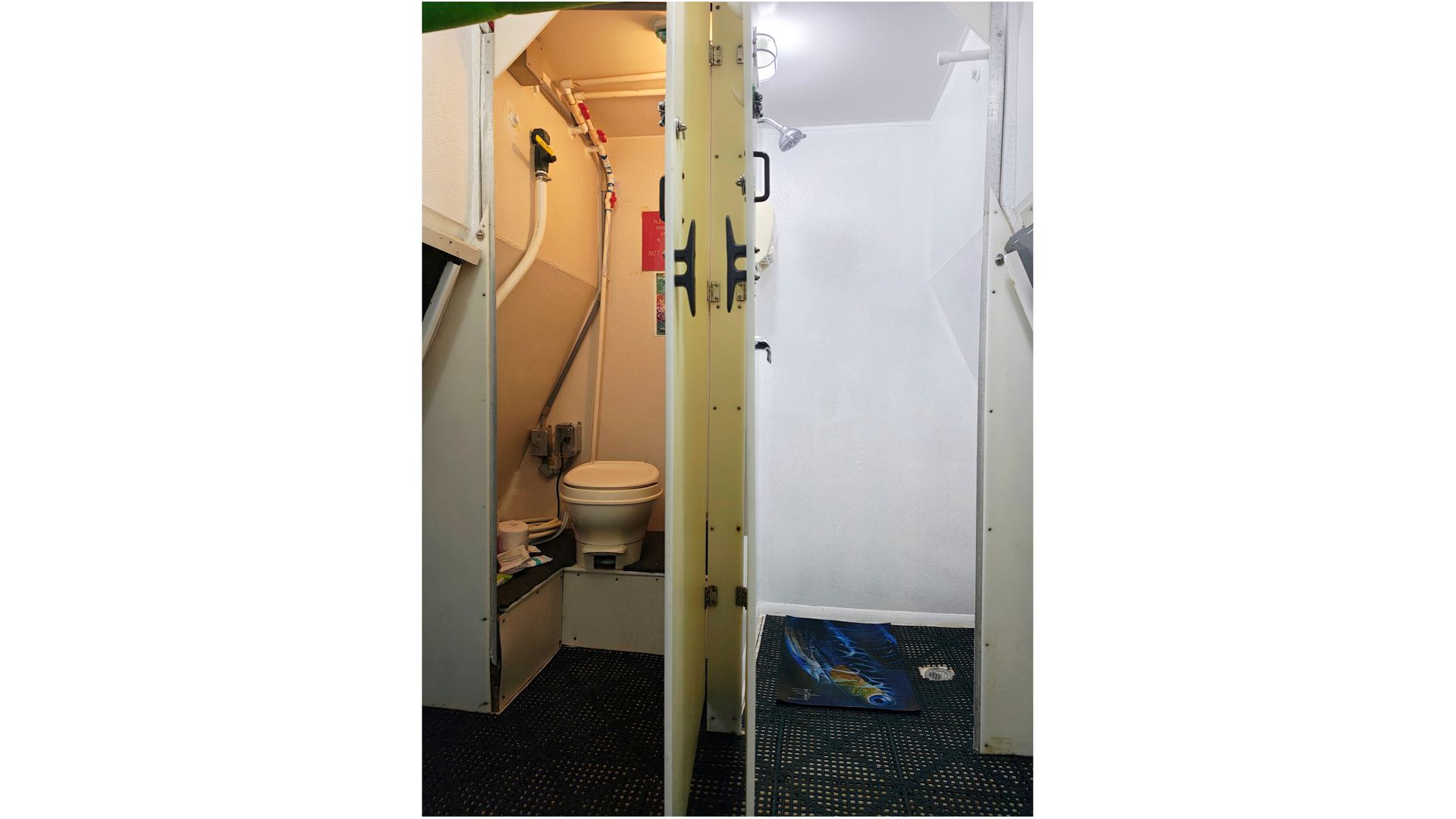
view of a toilet stall with the door open

The bathroom and shower of the Jules' Undersea Lab. (Image credit: Dr. Michaela Musilova)

We were able to survive all this time in such a challenging environment thanks to a number of important life support systems keeping us alive. The communications and umbilical support cables (providing air, fresh water and power) for the habitat were originally supplied by NASA. All the piping and fittings are inside the submerged barge, protected from the air-sea interface and from encrusting marine creatures. There was also a direct line to Mission Control "on Earth" to help us in case of any emergencies.

Our schedule kept us busy all day every day to simulate what astronauts experience on the International Space Station (ISS). All four of us on the SEA STAR crew had research projects that we were responsible for, as well as daily tasks. These tasks involved cooking, medical checkups, cognitive tests, maintenance work and taking care of unexpected issues. As the Commander of the crew, I also made sure everyone was on top of their work and addressed any problems that came up.
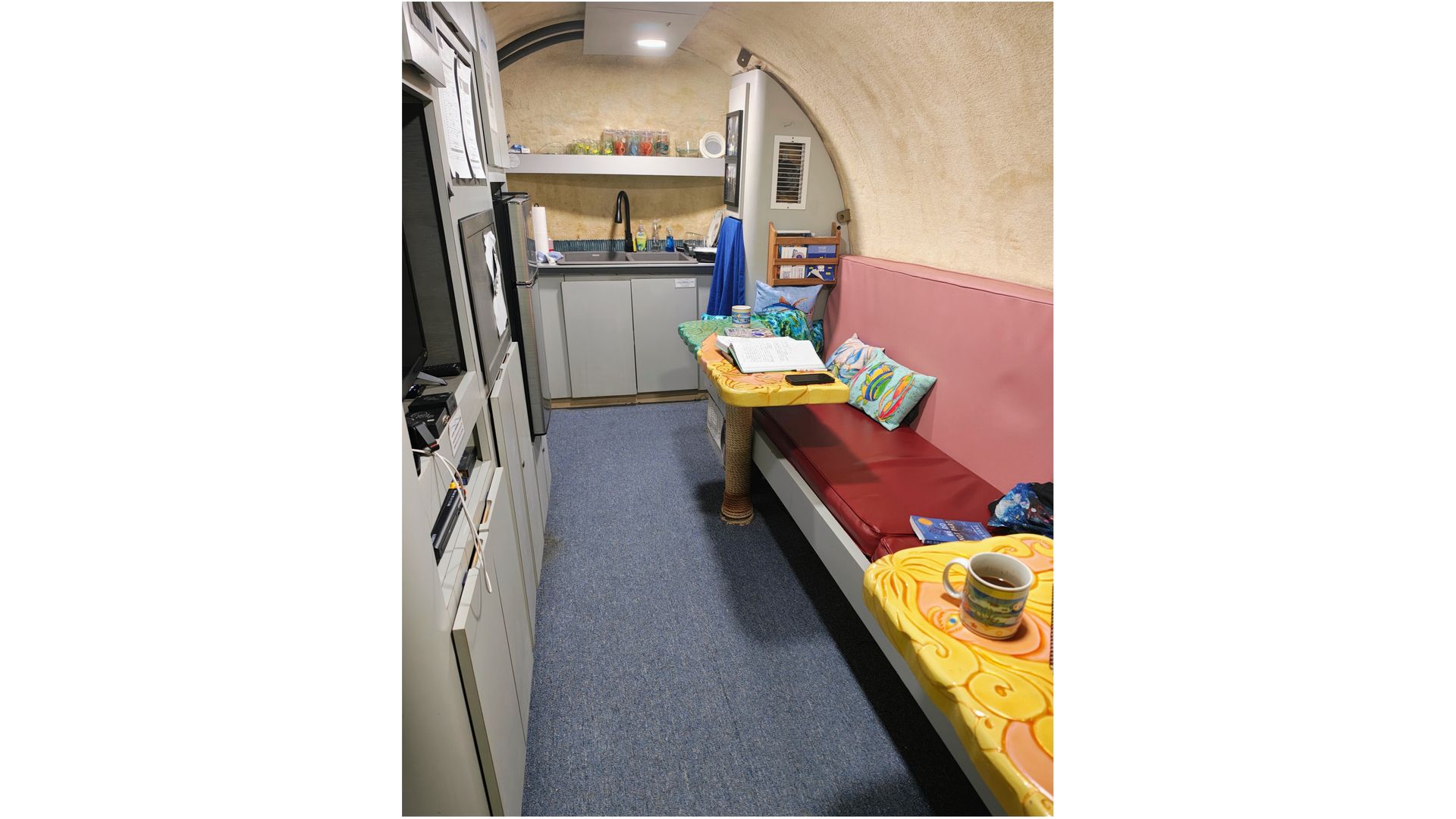
view of a skinny kitchen/eating area inside a research station

The galley of the Jules' Undersea Lab, which includes a kitchen and a dining/work area. (Image credit: Dr. Michaela Musilova)

We performed "spacewalks" in between all those other activities. They were pretty physically exhausting, which meant that we did not do additional exercise during the mission. I have been the Commander of 40 simulated space missions, and normally we exercise for at least an hour or two during each mission, just like astronauts on the ISS. Nonetheless, the pressure in the Jules' Undersea Lab was approximately twice as high as it was on the surface at sea level. This caused the crew to experience additional stress to their bodies, which is why no further exercise was required.

Even though our hands were full with activities during the mission, none of us felt particularly stressed out. Whether it was because of the effects of the pressurized conditions or thanks to good planning, we actually enjoyed our time living underwater. One of the nice surprises of the mission was that the food wasn't too bad, either. We were allowed to use a small crock pot, which meant we could eat soups, stews and overnight oats. Small joys like that boosted our spirits immensely.
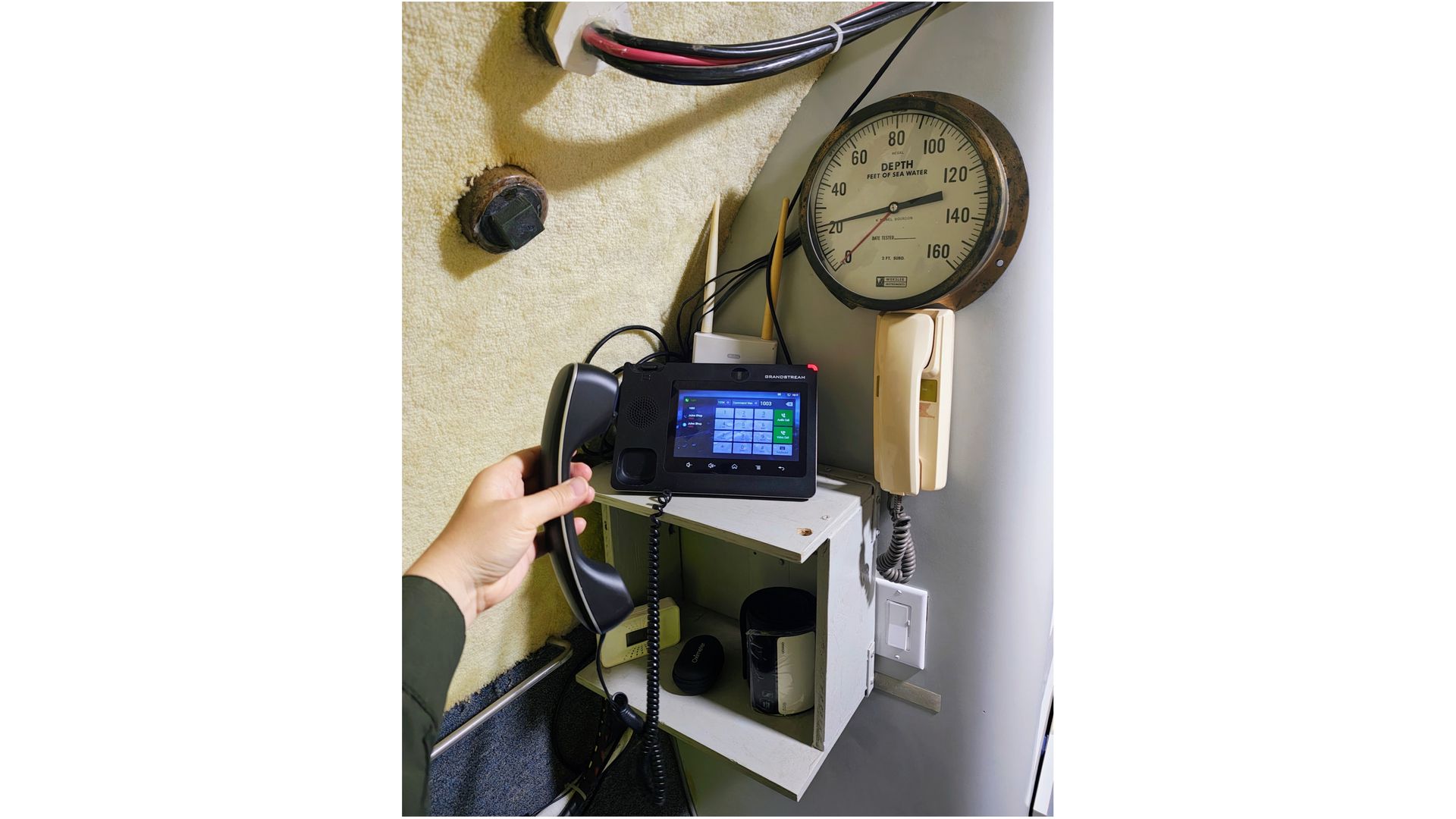
closeup photo of a hand holding a black phone

A direct connection between the Jules' Undersea Lab and Mission Control on "Earth" for emergency purposes. (Image credit: Dr. Michaela Musilova)

Having said all that, the Jules' Undersea Lab did also make the isolation from our lives on Earth feel very realistic. While we didn't have a view of Earth like the astronauts on the ISS, our very green view of a completely different world outside our windows gave us an impression of living on another planet. It was the alien nature of our lifestyle 22 feet underwater and all the challenges that came with it that made this mission feel Mars-like. Our daily schedule grounded us, the extreme environment around us kept us on our toes and our scientific exploration helped us reach new frontiers.

You can follow Dr. Michaela Musilova at her website and on social media: @astro_michaela (Instagram, TikTok and Threads), @Dr. Michaela Musilova (Facebook) and @astro-michaela.bsky.social (Bluesky).
How ‘spacewalking’ underwater made me feel like I was really in space

I was breathing just fine through my life support systems, but I kept feeling an urge to double check that everything was ok with my "spacesuit" before heading out on this "spacewalk." I have worn many different types of spacesuits on Earth during my career, but for the first time in my life, I knew that I couldn’t just stop to breathe the air outside if there were an emergency. That's because I was underwater.

On this excursion, I was leading a simulated space mission underwater called SEA STAR. My "spacesuit" was actually scuba diving gear, and the simulated spacewalks, or EVAs (Extra-Vehicular Activities), included outings where we explored underwater environments. Being underwater, if we encountered a major problem with our gear, we would have had to treat it as seriously as if we were astronauts on the International Space Station. There was no immediate "out." This was serious.

Before this underwater mission, I had worked as the commander of nearly 40 analog missions that simulated crewed missions to the moon and Mars. The goal of these types of missions is to test what living and working in lunar or Martian environments might be like. We study everything from the psychology of living in extreme conditions, or in isolation, to the technology that astronauts might use to complete those missions successfully.

Testing spacesuit technology is also an important part of these analog space missions. These suits are usually a much simpler version of the ones astronauts use in space, which can weigh around 310 pounds (141 kilograms) when fully equipped with life support systems.

Analog spacesuits usually weigh a maximum of 30 pounds (14 kg). While there are many differences between suits designed for use in space and these suits designed for testing on Earth, the biggest one is that, on an analog mission, crew members can open their helmets and breathe the outside air if necessary.

Images from Michaela Musilova's aquanaut mission.

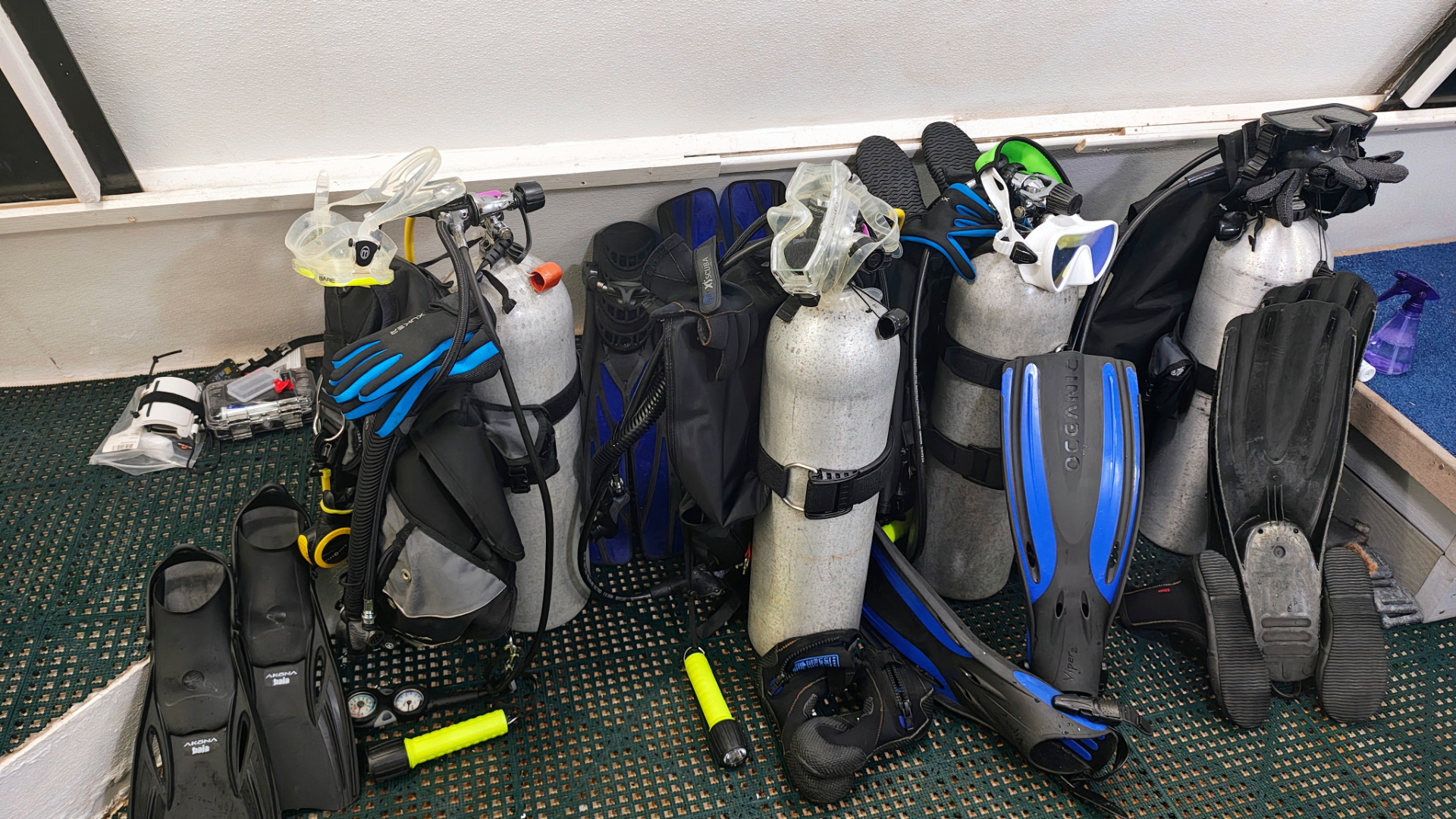
Scuba "spacesuit" equipment for simulated "spacewalks" during the SEA STAR mission. (Image credit: Michaela Musilova)

Astronauts in space don’t have that advantage. But neither do aquanauts, those performing a simulated space mission underwater.

Aquanauts spend at least 24 hours underwater in a so-called state of saturation. That’s a physiological condition achieved by a person who breathes underwater long enough for the body’s tissues to absorb the maximum possible amount of inert gas (like nitrogen), for a specific depth and pressure.

Water leaking into our suits or into our underwater habitat can pose serious risks for the crew, as well as health problems related to the higher pressures underwater, amongst other challenges unique to this environment.

This is what pushed me to be extra thorough, and perhaps even a bit paranoid, when preparing for my scuba diving "spacewalks." While scuba diving, the dangers of your equipment failing or decompression sickness can be as lethal as some of the difficulties astronauts face during their spacewalks. That’s why we follow strict protocols when preparing to go on underwater EVAs and during the outings themselves.

Images from Michaela Musilova's aquanaut mission.

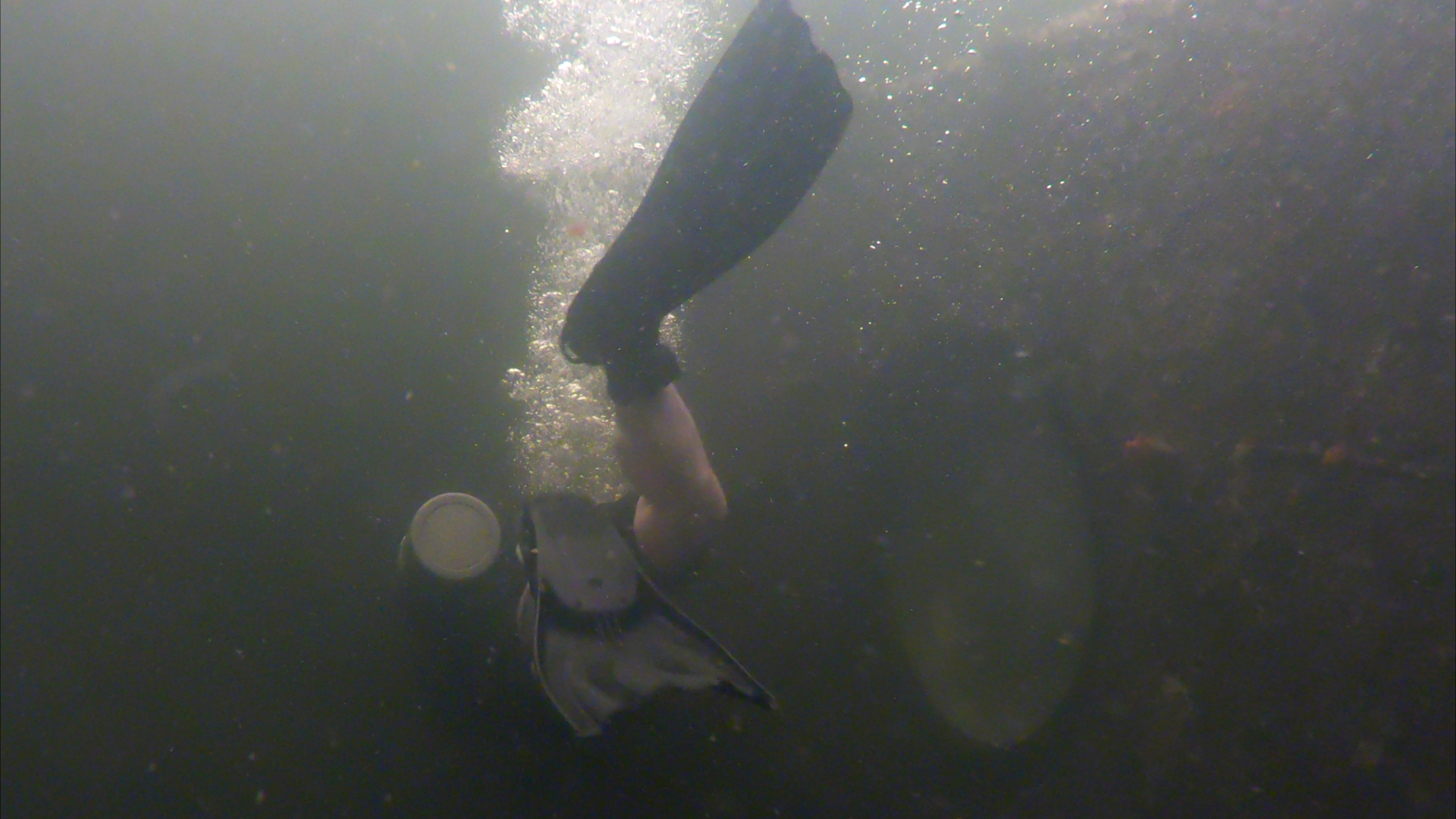
A SEA STAR crewmember performing a simulated "spacewalk" underwater. (Image credit: Michaela Musilova)

As an experienced scuba diver, I wasn’t concerned with the scuba diving aspect of the mission itself. In many ways, it was much easier than some dives in pitch black water I performed in the open ocean or cave dives. But for these EVAs, I was more on edge because I was the Commander of the SEA STAR crew living 22 feet (7 meters) underwater in the station, called the Jules’ Undersea Lab, in Florida. Being responsible for other people’s lives made me extra cautious and also more worried than usual when diving.

Despite the many challenges of these underwater EVAs, these experiences and lessons learned can teach us a lot about what we still need to improve for future long-duration space missions.

Our aquanaut "spacesuits" were essentially the same as scuba gear, with the exception of two important accessories that aren’t always necessary for normal dives. Those were gloves and flashlights. We needed the gloves as protection from a number of factors in the environment around us, like barnacles and other sharp natural formations. They also made using cameras and vacuums for environmental cleaning underwater more challenging, which was a good approximation for how gloves limit astronauts’ dexterity during spacewalks.

The underwater environment around us had very low visibility, which is why the flashlights were a mandatory component of our EVAs. They helped us to navigate through the darkness and find each other. Even still, with just the small flash of light we could only see a couple of feet ahead of us. That is why it was also vital that we worked together and moved side-by-side.

Good communication skills were another crucial component of our underwater simulated space mission. Before each EVA, we prepared a plan, talked about backup plans and went over emergency procedures. During the EVA, we used standard scuba diving sign language to communicate, and we created some new mission-specific signals as well. This visual communication is very useful during simulated space missions on land, too, especially in situations when our communications technologies have not worked properly.

No matter how much we prepared, though, the fear of the unknown and of getting lost can still get to a crew. A common safety protocol when diving is to safely return to the surface if you get lost or separated from your team and cannot find them. However, during the SEA STAR mission, we planned on staying underwater for the full five-day duration of our mission. That meant that such an option was out of the question, except of course in emergency scenarios.

Personally, I enjoyed the challenge of the low visibility in new terrain. It allowed me to hone my orientation and navigation skills, as well as my abilities as a leader in challenging environments. Though I was more vigilant than I perhaps needed to be, once I dove out of our submerged station, I went straight into my favorite mode: exploration. Despite not being able to see very much ahead of me, and all while keeping a watchful eye on my crewmembers, I finally truly felt like an astronaut on a spacewalk. Darkness was all around me, but my determination and curiosity propelled me toward exploring the unknown.

You can follow Dr. Michaela Musilova at her website and on social media: @astro_michaela (Instagram, TikTok and Threads), @Dr. Michaela Musilova (Facebook) and @astro-michaela.bsky.social (Bluesky).