
NASA announces experimental X-70 Fractal aircraft: A ‘new beginning for aeronautics’

NASA has revealed a glimpse of its next X-plane, known as the X-70 Fractal.

Or at least what it thinks the X-70 will look like once built. The agency released a short statement on Wednesday (Nov. 4) announcing the X-plane, or experimental plane, declaring it to be a highly maneuverable test bed with a "rapidly reconfigurable flight-control technology," allowing NASA to swap both external and internal components on-the-fly. This modular architecture will allow NASA to "explore aircraft maneuverability in ways never before demonstrated in crewed flight," according to the agency's statement.

The announcement was made alongside an AI-generated image showing two canted vertical tail fins emerging from swirling smoke. Little can be gleaned from the image about what final form the X-70 might take, but the tail fins are somewhat reminiscent of the Lockheed Martin F-22 Raptor or Boeing F/A-18 Super Hornet.

"The X-70 Fractal gives NASA a crewed, high-performance platform to test advanced flight-control, maneuverability, and other cutting-edge technologies in real flight," NASA Administrator Jared Isaacman said in the statement. The NASA chief called the aircraft "just one part of this new beginning for aeronautics" and said that the agency expects the X-70 to make its first flight within two years.

"This is why people come to NASA: to build, to learn, and most importantly, to fly," Isaacman added.

NASA's statement fleshes out a few details about the X-70's capabilities. According to the agency, Fractal will fly at a cruise speed of Mach .75, about the same as a Boeing 737 Classic. The X-70 will be able to reach altitudes of up to 45,000 feet (13.7 kilometers), and will have a range exceeding 1,726 miles (2,777 kilometers, or 1,500 nautical miles).

The X-70 Fractal will also be able to carry around 2,000 pounds (900 kg) of experimental payloads both internally and externally, which will allow for a "wide range of research and flight-testing opportunities," NASA said in the statement.

NASA adds it will have a takeoff weight of 10,000 pounds (4,535 kilograms), around the same weight as the Scaled Composites- and Northrop Grumman-developed Model 437 Vanguard experimental aircraft. In fact, the two aircraft share a similar silhouette — at least in the AI image of the X-70 Fractal NASA has released so far.
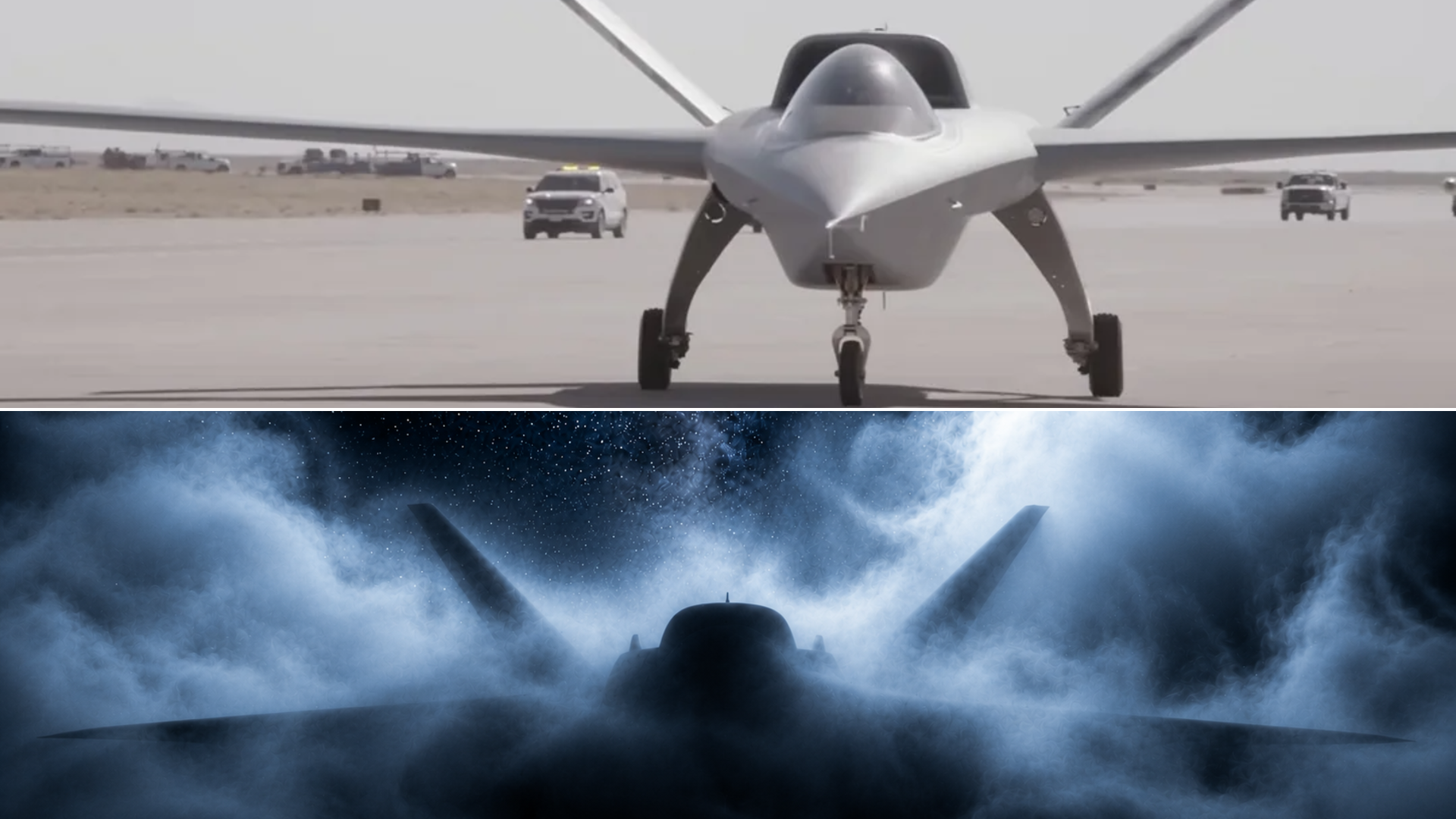
two images of sleek jets both featuring twin canted tail fins

Scaled Composites' Model 437 Vanguard experimental aircraft (top); NASA's render of its upcoming X-70 Fractal (bottom). (Image credit: Northrop Grumman/NASA)

The agency's most recent X-plane, the X-59, has been flying for over a year. That jet features a radical long-nosed geometry without a forward windscreen; pilots fly by way of an augmented reality screen that combines views from sensors and a forward-facing camera.

That geometry dampens the shockwaves coming off of the X-59 when it flies faster than the sound barrier, allowing it to fly at speeds over Mach 1 without the thunderous sonic booms that typically accompany supersonic flight.
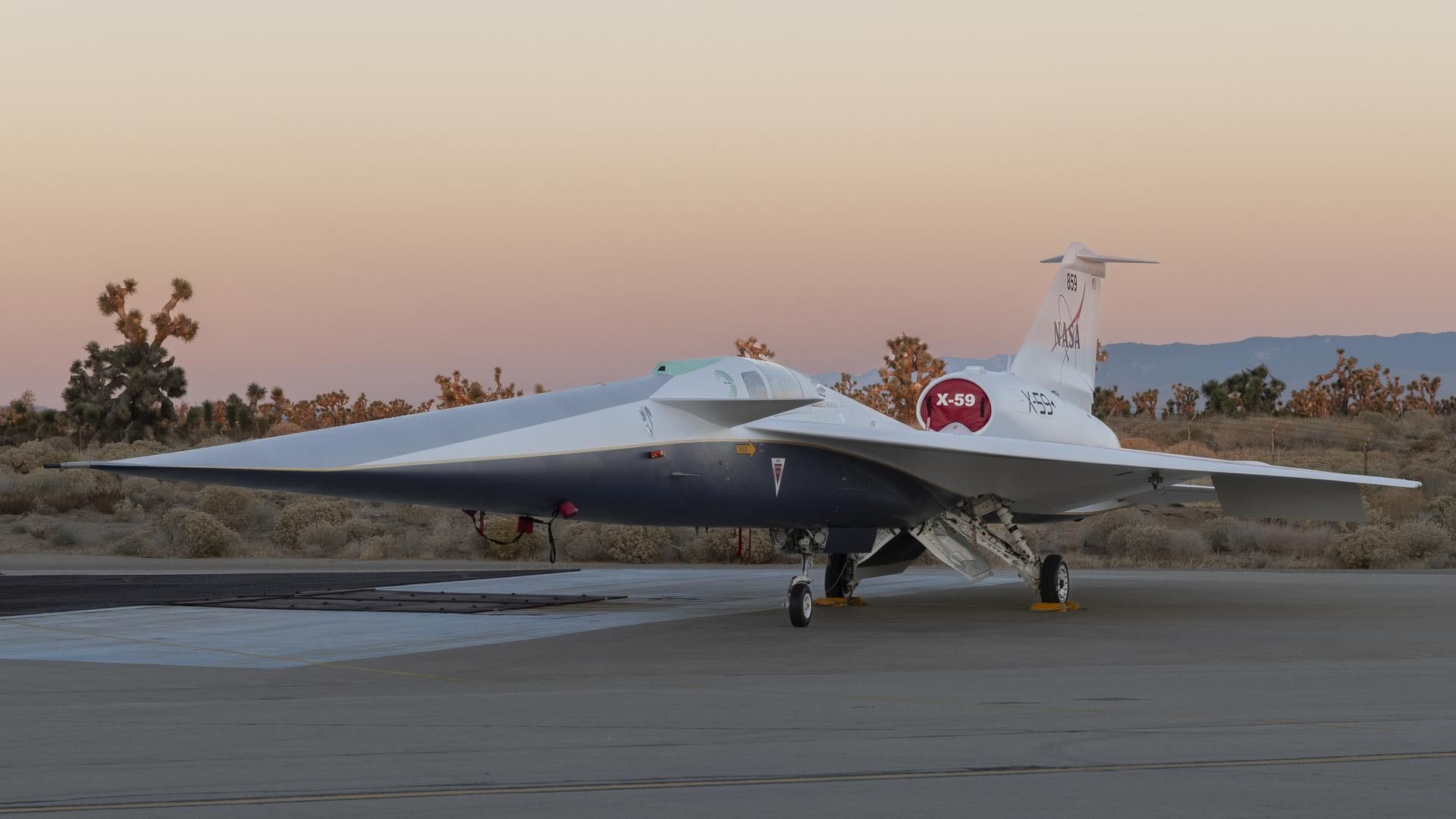
a white jet with an elongated nose section sits on a tarmac at sunset

NASA's X-59 jet. (Image credit: NASA/Steve Freeman)

There are numerous experimental aircraft being developed by private companies, such as Boom Supersonic's X-1 jet, which, like the X-59, aims to develop technologies that lessen the auditory impact of sonic booms on the ground.

In terms of other government X-plane projects, Boeing is working on the F-47, a next-generation stealth fighter for use by the U.S. military, and DARPA, the Pentagon's research agency, has an X-plane project of its own known as CRANE.

The battlefield now extends all the way to the moon, U.S. military’s highest-ranking officer says

The U.S. military must be ready to engage the enemy farther from home than ever before, according to its highest-ranking officer.

"Today's modern battlefield operates from the seabed to cislunar space," Gen. Dan Caine, the chairman of the Joint Chiefs of Staff, said Wednesday (Sept. 16) during a keynote address at the Air & Space Forces Association's Air, Space & Cyber Conference in National Harbor, Maryland.

Cislunar space extends from Earth all the way out to the orbit of the moon and includes the lunar surface. For several years now, military officials have been stressing the strategic importance of this huge region, which could get quite a bit busier in the next decade or so.

a military man in a blue uniform speaks at a silver lectern

Gen. Dan Caine, chairman of the Joint Chiefs of Staff, speaks at the Air & Space Forces Association’s Air, Space & Cyber Conference in National Harbor, Maryland, on Sept. 16, 2026. (Image credit: Craig Hudson, for Air & Space Forces Association)

For example, both the United States and China plan to build bases near the moon's south pole, which is thought to harbor large amounts of water ice. Winning this new moon race is critical, U.S. officials have stressed, because whoever does so will be able to establish norms of behavior on and around Earth's nearest neighbor.

China has already demonstrated impressive capabilities in the lunar sphere. In 2019, the nation's robotic Chang'e 4 mission pulled off the first-ever soft landing on the moon's mysterious far side. In 2024, Chang'e 6 returned far-side samples to Earth — another first.

Caine didn't cite such missions or even mention China by name. And he provided no details about what conflict on the cislunar battlefield might look like (though presumably it would be entirely robotic, with satellites seeking to take out adversary craft via jamming or blinding).

But he invoked the cislunar battlefield twice and noted that U.S. military branches cannot assume continued dominance of their various domains.

"Future conflicts will demand that we operate without the assumptions of uncontested access, secure rare areas or uninterrupted or uncontested sustainment," Caine said. "Our task, my friends, is to adapt right now, so the joint force is prepared to fight, endure and win in global contested environments, from the seabed to cislunar space."

The United States' long-held advantage in the final frontier will be key to securing such victories, he added.

"We must continue to ensure that the United States of America can strike anywhere on the globe at the time and place of our choosing, and sustain that force," Caine said. "Our United States Space Force must provide unrivaled space superiority and sustain the associated networks, domain awareness [and] data advantage that the joint force needs to win in space, both now and in the future."

We now know that part of the Space Force's strategy for maintaining that crucial superiority is the operation of weapons in Earth orbit. The branch's chief, Gen. Douglas Schiess, admitted as much during an address at the same conference on Tuesday (Sept. 15).

"Let me be crystal clear: Today, guardians operate on-orbit weapons that can defend the joint force against space-enabled attacks,” Schiess said during his speech. ("Guardian" is the official name for a member of the Space Force, just as members of the U.S. Navy are called sailors and members of the Army are soldiers.)

Schiess provided few details about these weapons but, later in the speech, implied that they are electromagnetic rather than kinetic in nature. That is, they're probably designed to knock out key systems of adversary satellites rather than destroy the entire spacecraft (which would create a cloud of potentially troublesome debris).

It's no surprise the U.S. possesses and employs such technology; the newsworthy bit is that a top official said it so openly. The nation's chief rivals in the space domain, China and Russia, possess advanced counterspace technologies as well. For example, both have destroyed defunct satellites with missiles and conducted close approaches of spacecraft with "inspector" vehicles.