Scientists told them, ‘No, it’s too dangerous,’ but they did it anyway: Inside Japan’s super-close asteroid flyby

Japan's Hayabusa2 spacecraft returned spectacular images of a near-Earth asteroid following a super-close flyby on July 5, but heated debate was needed before teams signed off on the daring attempt.

When images of the asteroid Torifune arrived on the morning of July 6 Japan time, Makoto Yoshikawa and his team at the Japan Aerospace Exploration Agency (JAXA) got two surprises at once. Torifune turned out to be a contact binary, in which two chunks of rock have come together under gravity, and the returned images were also larger than hoped.

"We did not imagine such a contact binary," Yoshikawa, former mission manager of Hayabusa2, told scientists gathered at the Asteroids, Comets and Meteors conference in Poznan, Poland, on July 10. "Originally, we didn't think we could have such a very big image. Maybe we will take a very small one, but the image was much larger than we expected."
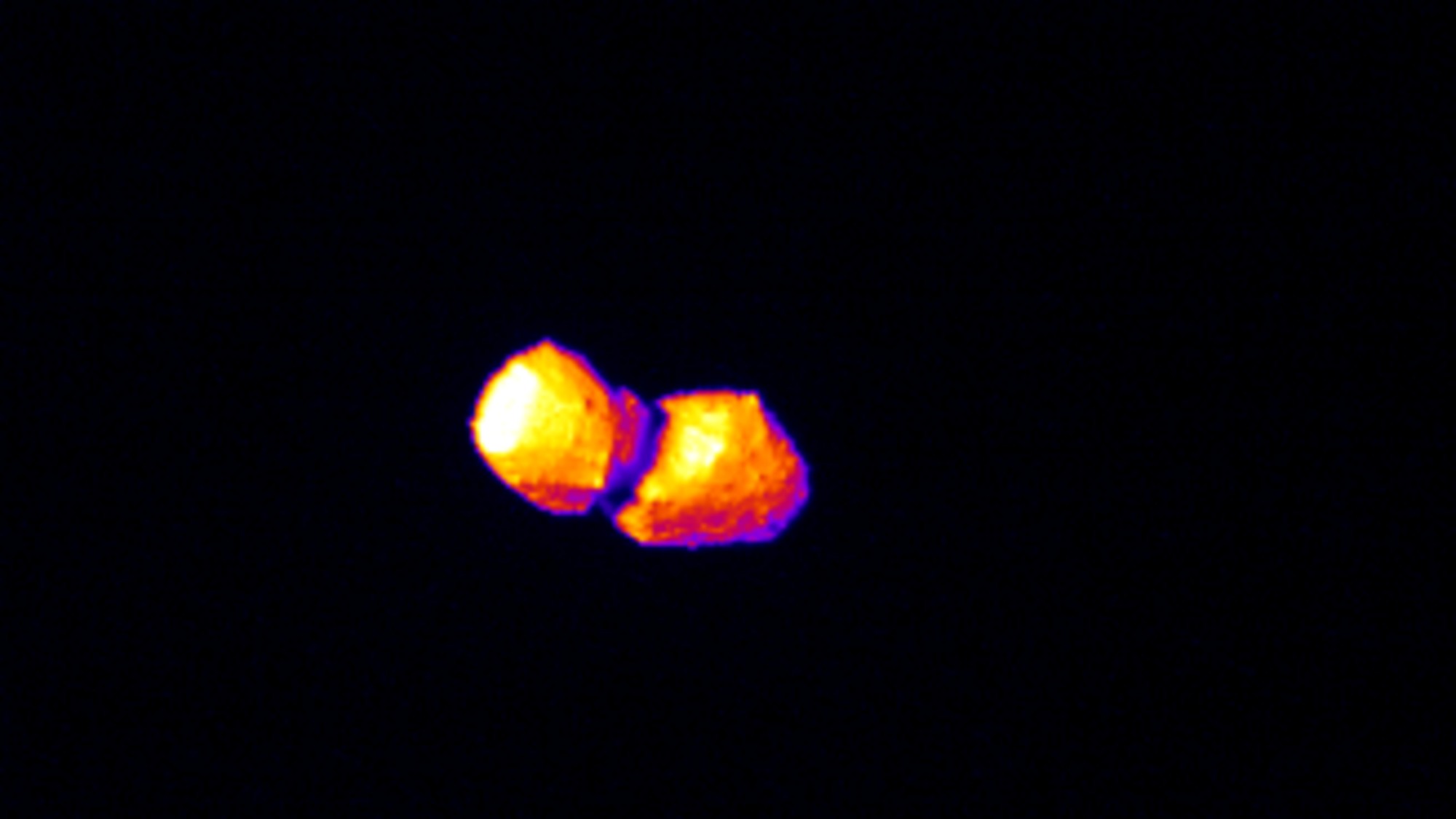
a double-lobed space rock on a black background, depicted in a gradient of false colors ranging from white-yellow to deep violet

The asteroid Torifune as seen by Hayabusa2's Mid-Infrared Camera during the July 5 flyby. (Image credit: JAXA)

The double surprise was the payoff of months of debate between science and engineering teams, and a last-minute proposal that alarmed some of the scientists it was meant to serve. In the end, the flyby was so close as to be at the very edge of what the aging spacecraft was designed to conduct.

Hayabusa2 launched in December 2014 and rendezvoused with the asteroid Ryugu four years later. The spacecraft collected samples and delivered them to Earth in 2020, completing its primary objectives. JAXA then made plans for an asteroid flyby and a rendezvous with the tiny asteroid 1998 KY26 in 2031.

Usually for flybys, the closest distance is 100 kilometers (62 miles), Yoshikawa said, but in Hayabusa2's case this would not be close enough to gather good images. Hayabusa2 was designed for rendezvous and proximity operations, including hovering, correcting and landing — not for a high-speed pass at 5.3 kilometers per second (3.3 miles per second). Its cameras were also not designed for high-speed slewing.

According to Yoshikawa, science team members pushed back. At a distance of 100 kilometers, Hayabusa2's cameras would barely resolve the asteroid's global shape. Engineering responded with a proposal of 10 kilometers (6.2 miles). Science said that was acceptable, but the team kept pushing. Eventually, engineers confirmed they could get to within 1 kilometer (0.6 miles) of the asteroid's center. "Science people were very happy, because they could have a nice photo," Yoshikawa said.

Then, just one month before the flyby, extended mission team leader Yuya Mimasu proposed going even closer. "Yuya Mimasu said the closest distance should be 800 meters," Yoshikawa recounted. "Some science people said 'No, it's too dangerous,' and a very heated discussion started."

One major issue was the unknown size and dimensions of Torifune and the safety of the spacecraft. The team had assumed a worst-case asteroid size of 1,400 meters by 400 meters (4,600 by 1,300 feet) based on ground-based observations. A pass 800 meters (2,625 feet) from the center of the target would sit just outside that exclusion zone. The spacecraft's optics had also been affected by dust from sampling Ryugu. The final navigation analysis put the targeting error ellipse at around 200 meters (656 feet). "The distance fixed is 800 meters," Yoshikawa said, "but this is quite a big challenge for us."

Hayabusa2 detected Torifune on June 19. The spacecraft used ground-based guidance up to three hours before the flyby, before switching to onboard guidance. "This is quite new," Yoshikawa said. "We developed software for this, and we sent it to the spacecraft."

The result was the stunning, up-close imagery of the dual-lobed Torifune, captured by the probe's Optical Navigation Camera Telescope (ONC-T). But all four of Hayabusa2's science instruments returned data. The Thermal Infrared Imager (TIR) captured nine seconds of thermal imaging between 09:29:50 and 09:29:59 GMT on July 5, just a second before closest approach, independently confirming the contact binary structure in heat emission.
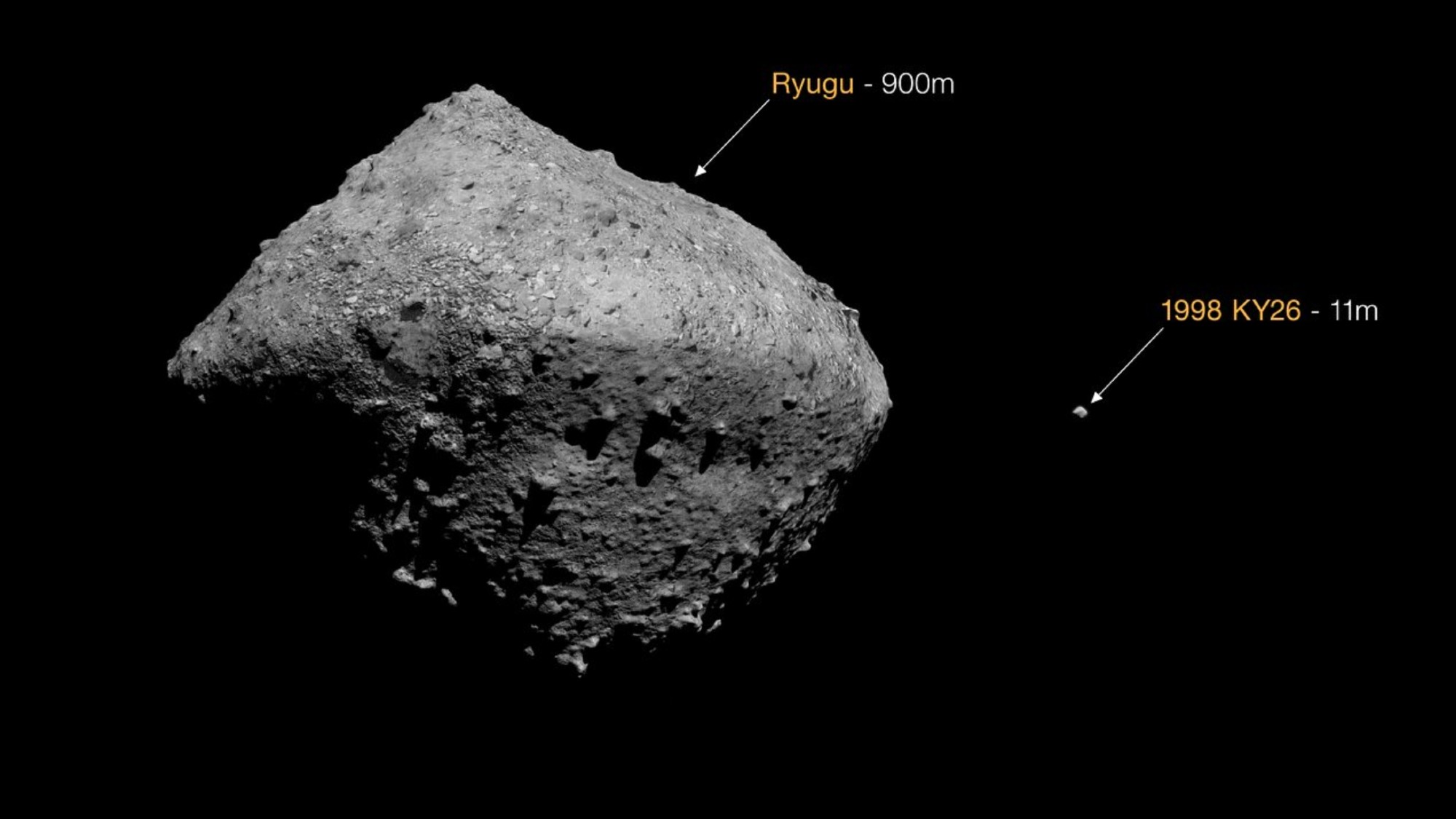
two lumpy grey rocks on a black background; the one on the left is hundreds of times larger than the one on the right

A size comparison between asteroid Ryugu, which was visited by Hayabusa2 in 2020, and its next target, 1998 KY26. (Image credit: ESO/M. Kornmesser. Asteroid models: T. Santana-Ros, JAXA/University of Aizu/Kobe University)

The Near Infrared Spectrometer (NIRS3) and laser altimeter (LIDAR) also got data, with the latter delivering what Yoshikawa described as possibly the first successful LIDAR ranging measurement during an asteroid flyby. But while the most urgent 25 MB of data was downlinked, teams will need to wait months for the rest of the 300 MB of total science data. Hayabusa2's ion engine system restarted on July 9 to begin the cruise toward two Earth flybys in 2027 and 2028 and will fire for around four months. Only after this can the rest of the data be sent to Earth.

Yoshikawa explained that the Torifune flyby was more than just a bonus milestone and photo and science op. The successful super-close flyby means that "JAXA has acquired the technology to collide spacecraft with a small celestial body," he said in his closing remarks at ACM, drawing a parallel to NASA's DART mission. "This flyby mission can be said to serve as a demonstration of the fast reconnaissance concept in planetary defense," verifying the ability to characterize an unknown asteroid rapidly — a capability that could provide crucial information ahead of an impactor mission.

This is not the end for Hayabusa2. The ultimate destination for the spacecraft's extended mission is the tiny asteroid 1998 KY26, a roughly 36-foot-wide (11 m), rapidly rotating rock with which it is scheduled to rendezvous in 2031.
China announces plan to build early-warning system for dangerous asteroids

China has announced that it wants to develop a "space-ground" asteroid early-warning network, while providing few details on what it could look like. But recent papers and presentations to the United Nations provide clues as to what the country has in mind for planetary defense.

The China National Space Administration (CNSA) made the announcement on June 30 — International Asteroid Day — stating plans to construct a coordinated ground-and-space monitoring system for near-Earth asteroids. Li Mingtao, chief scientist at CNSA's Asteroid Monitoring and Early Warning Research Center, told state media that China is studying the feasibility of an asteroid defense system, with the ground-space monitoring network as its core.

"No asteroid has so far been identified that will definitely collide with Earth in the foreseeable future, but concerns over impact risks are not unfounded. Many near-Earth asteroids remain undetected," the state-run media outlet Xinhua quoted Li as saying in a report by Science and Technology Daily.

Li added that China will deploy multiple large-aperture optical telescopes at carefully chosen sites in order to be able to survey the sky, while adding a space-based monitoring constellation, free from atmospheric disruption and day-night constraints, with a particular focus on threats from the sunward direction, which are, from the ground, lost in the glare of the sun. The meteor that exploded over Chelyabinsk, Russia, in 2013, approached roughly from a sunward direction and was only detected once it entered the atmosphere.

Li told Science and Technology Daily that more than 40,000 near-Earth asteroids have been discovered so far, including over 95% of asteroids at least 1 kilometer (0.6 miles) wide, which are capable of causing a globally catastrophic impact. However, only around 45% of asteroids in the 140-meter (460-foot) class have been detected, which are large enough to devastate a small country.

The June 30 reports and CNSA statements were vague on what China's actual plans for its monitoring network may be. However, recent journal papers and a 2025 presentation to the U.N.'s Committee on the Peaceful Uses of Outer Space (COPUOS) give more detail on the country's thinking.

For example, a paper published in the Journal of Deep Space Exploration in June 2026, co-authored by Wu Weiren, chief designer of China's lunar exploration program and a leading voice on the country's asteroid defense plans, lays out the options under study.

For the space-based component, the paper names four candidate orbital positions for a monitoring network: the Sun-Earth L1 Lagrange point, an Earth-leading or trailing orbit, a Venus-like heliocentric orbit, and an Earth-companion distant retrograde orbit (DRO). The paper also describes ongoing research into each option's monitoring effectiveness.

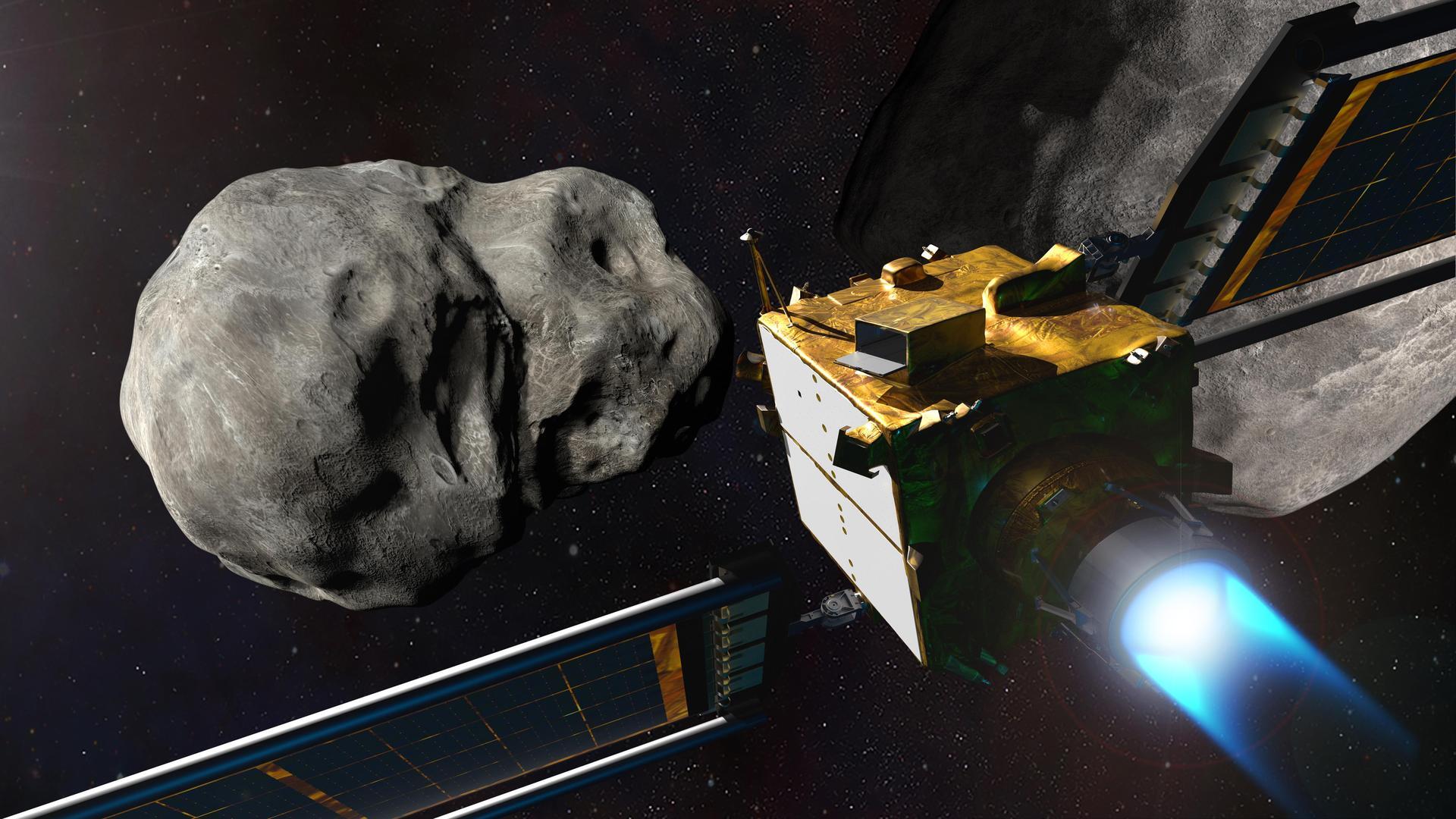
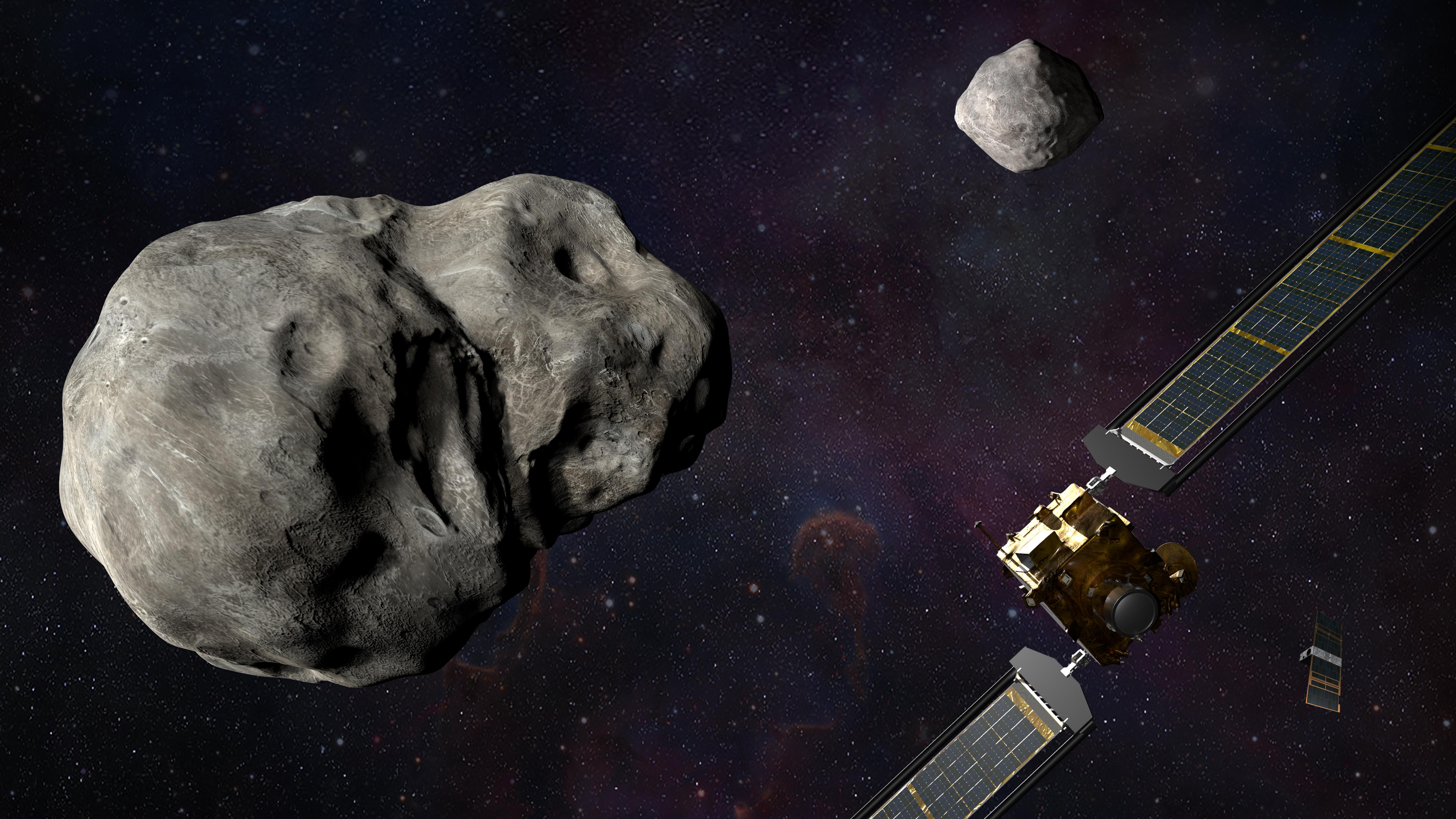
a cube-shaped spacecraft with two wing-like solar arrays flies towards two large rocks in space

In 2022, NASA's Double Asteroid Redirection Test (DART) mission slammed into the asteroid Dimorphos, which orbits a larger asteroid named Didymos, and changed the binary system's orbit around the sun. (Image credit: NASA/Johns Hopkins APL/Steve Gribben)

A similar outline was found in a 2025 technical presentation to COPUOS by Chinese researcher Chen Yongcai. A "basic model" would consist of a single satellite at Sun-Earth L1, an orbit about 1.5 million kilometers (930,000 miles) inside that of Earth, paired with northern and southern ground stations. An "extended model" includes spacecraft in the three additional orbits stated in the Wu Weiren paper. The Venus-like option in particular closely tracks an earlier proposal known as CROWN, a constellation of small satellites in Venus-like orbits designed to survey the sunward sky and use its favorable geometry to track other populations of near-Earth asteroids.

The status and timelines of these plans are unclear, but they do indicate a clear interest in and commitment to planetary defense by China. The country's 15th Five-Year Plan, approved in March, states that an asteroid defense engineering project is under study, while China is developing a kinetic-impact and observation demonstration mission, similar to NASA's DART mission and the European Space Agency's (ESA) follow-on Hera project, which is scheduled to launch in 2027.

While China's apparent plans are not unique, they could augment global efforts. Anne Virkki, an asteroid researcher at the University of Helsinki who's familiar with international monitoring efforts, noted that NASA and ESA have plans to send missions to Sun-Earth L1 to search for asteroids in infrared light — NEO Surveyor and NEOMIR respectively.

"If China launches a similar mission, hopefully it has some capability that the other two do not, and that it shares the data internationally and not only for Chinese scientists," Virkki said.

Virkki noted that asteroids approaching from the sun's direction aren't physically unusual, but they are simply harder to track, which statistically makes them more likely to produce a surprise. She also pointed to the persistent, less-discussed gap in radar tracking capacity. That capacity took a serious hit with the 2020 collapse of the Arecibo Observatory in Puerto Rico, with no U.S. successor in the works.

China has discussed building its own radar capability, which Virkki said would be a welcome addition, provided the data is shared openly. China has built the "China Compound Eye" or Fuyan project near Chongqing in the country's southwest, which can be used for near-Earth asteroid monitoring. Wu's paper also notes ground-based radar in the proposal for asteroid monitoring.

"Hopefully, as China's planetary defense plans become more specific, we'll see telescopes and space telescopes that complement the existing or planned capabilities of other countries, rather than repeat redundantly, and contribute data openly and collaboratively," Virkki said. She noted that there are likely about 100,000 near-Earth asteroids that could cause significant local damage if they hit Earth, and we know the orbits of less than half of all such space rocks.

2029 will mark the International Year of Planetary Defense, when the infamous asteroid Apophis will fly past the Earth just within the orbit of geostationary satellites. "There is a lot of work left to do, and international collaboration is crucial," said Virkki.

China releases 1st photo of Earth’s elusive ‘quasi-moon’ Kamo’oalewa

China's first-ever asteroid sampling mission has sent home a picture of its first target, the "quasi-moon" Kamo'oalewa.

The Tianwen-2 probe launched in 2025 and traveled 620 million miles (1 billion kilometers) to reach a safe distance about 12 miles (20 km) away from Kamo'oalewa, more formally known as asteroid 2016HO3. The spacecraft will spend nearly a year studying the asteroid with a suite of 11 different scientific instruments before attempting to collect a sample from its surface, which will be sent back to Earth.

The new photo was taken on July 2, according to China's Xinhua news outlet, and reveals the asteroid to be a small, asymmetrical rock measuring around 50–65 feet (16–20 meters) in diameter. While its origin isn't known, some scientists believe this quasi-moon could have been created when a massive impact knocked a chunk of our own moon into space between 1 million and 10 million years ago.

So-called quasi-moons (or quasi-satellites) are small bodies like Kamo'oalewa that circle the sun on orbits that keep them close to our planet. Earth has at least seven known quasi-satellites, and our planet's gravity will occasionally capture others temporarily before they are flung back out into orbit around the sun. In general, the orbits of these quasi-moons are less stable than the orbits of true moons.

Unlike most near-Earth asteroids that are thought to originate from the main asteroid belt between Mars and Jupiter, Kamo'oalewa could have come from much closer to home. A 2024 study published in Nature Astronomy proposes Kamo'oalewa could be material ejected from the moon by the impact that formed Giordano Bruno crater.

Sample of the asteroid collected by Tianwen-2 could help prove that hypothesis, if the mission is successful.

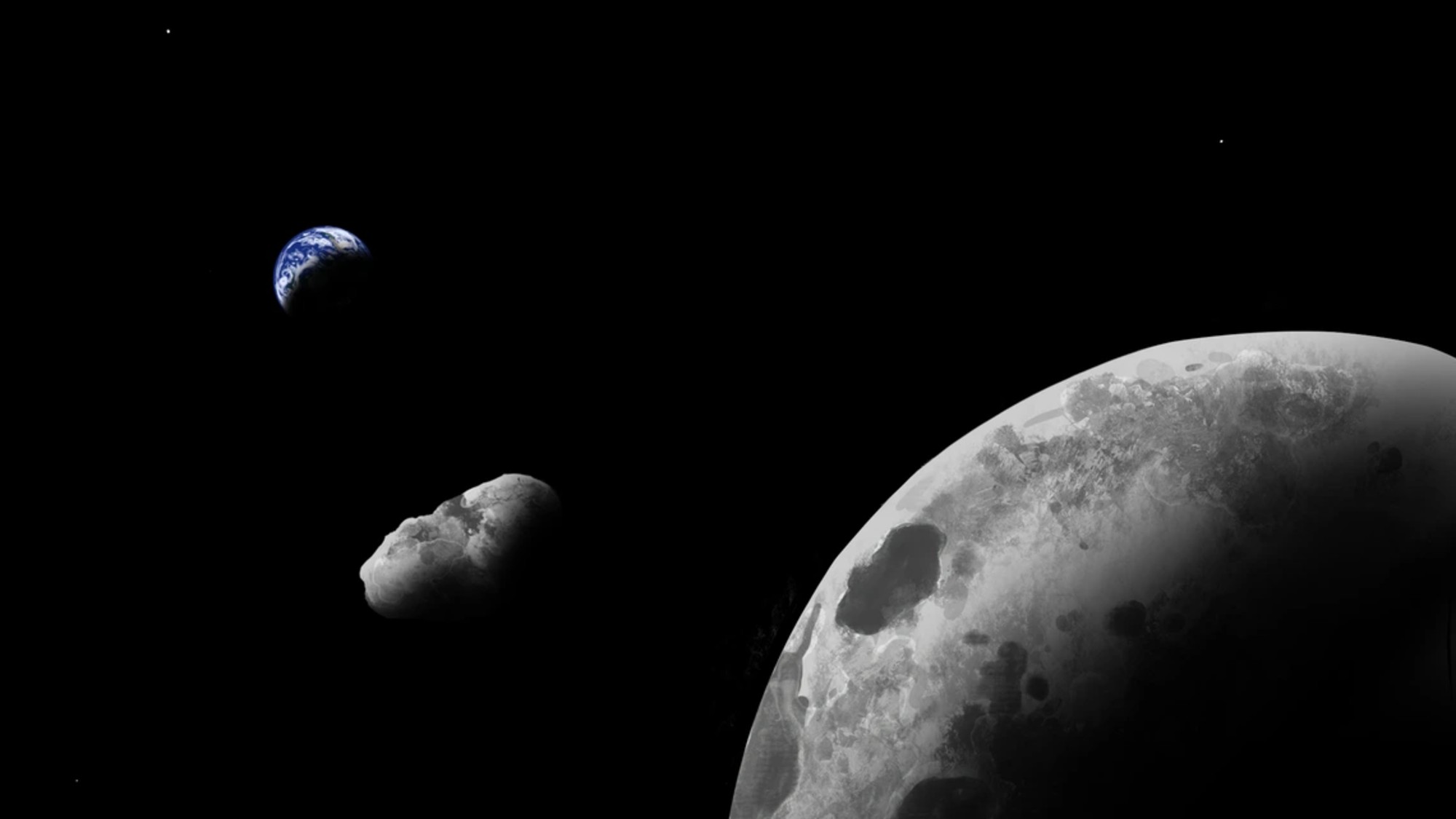
an illustration of the moon, with earth visible in the far distance, and a small grey rock in between the two

An artist's impression of Kamo'oalewa near the Earth-moon system. (Image credit: Addy Graham/University of Arizona)

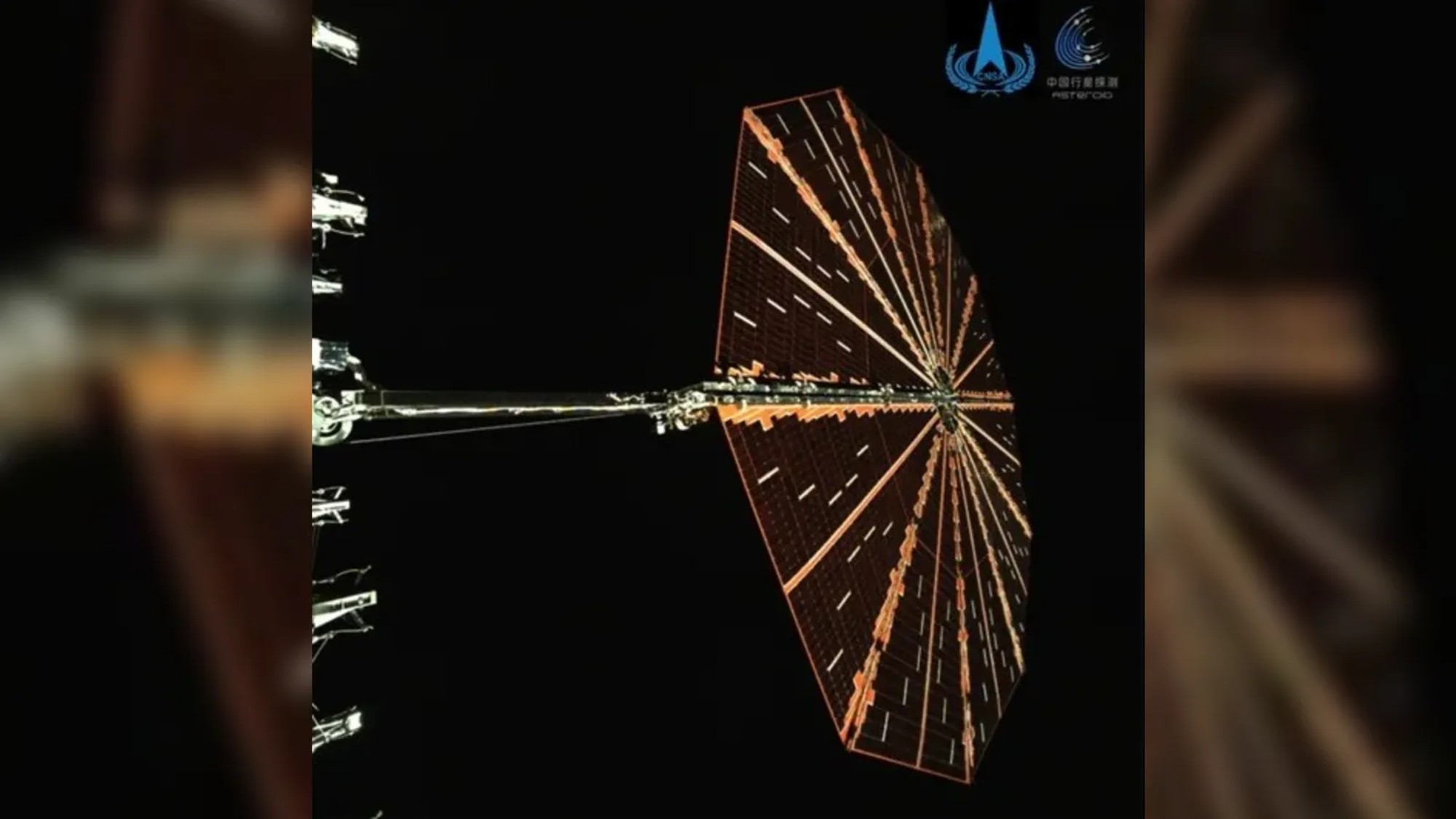
Tianwen-2 launched on May 28, 2025 atop a Long March 3B rocket from Xichang spaceport in southwestern China. The appearance of the spacecraft wasn't revealed until China's space agency released an image beamed home by Tianwen-2 when it was 1.8 million miles (3 million km) away from Earth. This occurred just over a week past launch.

an octagonal solar panel on the end of a metal arm that extends outward from a metallic rectangle, just out of view on the left side of the image

The first public image of China's Tianwen 2 spacecraft, released by China's space agency well after the spacecraft was on its way to its first asteroid target. (Image credit: CNSA)

While Tianwen-2 marks China's first asteroid sample attempt, Japan and the United States have already performed successful space-rock-sample missions of their own. Japan's Hayabusa spacecraft executed the world's first asteroid sample return mission when it sent material from asteroid 25143 Itokawa back to Earth in 2010.

The United States accomplished the feat in 2023 with the OSIRIS-REx mission that snagged material from asteroid Bennu. Those samples have already produced surprising scientific data, including the fact they contain the amino acids we consider vital for life here on Earth.

Tianwen-2 is China's first-ever mission to an asteroid and its second planetary exploration mission overall. Its first interplanetary endeavor, Tianwen-1, saw an orbiter and a rover reach Mars in 2020.

More Tianwen missions are in the works. China plans to launch the Tianwen-3 Mars sample-return mission in 2028 and Tianwen 4 two years later to study Jupiter and Uranus.

Chinese scientists find the best way to nuke an asteroid on its way to impact Earth

How do you stop a large, threatening asteroid on its way to Earth? A new Chinese paper, investigating the issue, suggests a "pre-excavation detonation" could be the solution if there's enough warning time.

There may be millions of asteroids in our solar system, with a tiny percentage of them posing a possible, very tiny threat to our planet. NASA and many other entities keep an eye on the skies, and continue discovering new asteroids, but have found no imminent threats yet; Apophis, previously believed to be a small threat during its 2068 flyby of Earth, has now been ruled out as a problem for the foreseeable future.

But Earth has been smacked by space rocks in the past, with even the moderate-sized Chelyabinsk incident of 2013 causing reported property damage near its blast site in Russia. And as the researchers of a new paper point out, asteroids tens of meters in size and larger have been tracked flying safely, but closely, by Earth.

Assuming a theoretical space rock is on an imminent collision course and exceeds about 330 feet (100 meters) in size, simply blasting it (or even guiding it away) may not be a viable option, the researchers said in a peer-reviewed study in the journal Space: Science and Technology.

"Traditional kinetic impact, or long‑term force deflection methods, offer limited energy and cannot achieve effective deflection within short timeframes," the researchers said in a press release, adding they found few comprehensive analyses of how to do so. (NASA did successfully deflect an asteroid moonlet's orbit with the DART spacecraft in 2022, for example, but that was a unique test case in space.)

So the team, led by Xiaowei Wang from the China Academy of Launch Vehicle Technology, instead proposed using one of two "defense modes" for large incoming asteroids.

The first mode is a more simple impact detonation — simply put, smacking the asteroid's surface to create a shallow crater, in which a nuclear device is exploded. The other mode is a "pre-excavation detonation", or using a penetration device to create a deeper crater before exploding a nuclear warhead to "achieve deep detonation" in the interior of the asteroid.

The researchers' modeling included the energy of a launch vehicle, the velocity of the impact spacecraft, and changes to the velocity of the asteroid, in each of these two modes. The two modes were also tested against a "virtual threat asteroid database" assuming warning times of anywhere between one year and 20 years.

All in all, assuming enough time is available, it seems the deep-crater method wins out. "The flyby pre-excavation detonation mode, due to its ability to autonomously select the cratering location and achieve deep detonation, offers stronger energy coupling," the researchers wrote in the press release.

Such an impact could "destroy" asteroids that are roughly 330 feet (100 meters) or of that range, and push away asteroids of a size reaching about 0.6 miles (1 km) by imparting a velocity change of roughly 1 m/s in about 60 days.

a cube-shaped spacecraft with two wing-like solar arrays flies towards two large rocks in space

In 2022, NASA's Double Asteroid Redirection Test (DART) mission slammed into the asteroid Dimorphos, which orbits a larger asteroid named Didymos, and changed the binary system's orbit around the sun. (Image credit: NASA/Johns Hopkins APL/Steve Gribben)

A spacecraft with solar panels heads for an asteroid in the darkness of space

(Image credit: NASA/Johns Hopkins APL/Steve Gribben)

While a shallow-crater mission could be launched more quickly, the researchers added, "the impact location is random, energy coupling is weak, and requirements for the nuclear device's impact resistance and detonation timing are extremely stringent."

Real-world missions would also have to take into account the composition of an asteroid (as a pile of rubble would likely require a different approach than a solid rock), whether the pathways of any pieces generated by an impact pose a threat, and how to safely get the nuclear warhead into space in the first place, among many other technical issues. The researchers did not raise these considerations in the press release.

They did, however, provide "recommended solutions" for when to use each of the two options. The shallow impact might be preferable "for emergency defense" on a huge asteroid if there is an extremely short warning time, because that mission is less complex. Otherwise, the "deep impact" would be the way to go.

Japan’s Hayabusa2 probe captures remarkable photo of a two-headed asteroid 62 million miles away

A Japanese spacecraft has gotten up close and personal with yet another asteroid, beaming home stunning new imagery of the distant space rock.

On Sunday (July 5), the Japan Aerospace Exploration Agency (JAXA)'s Hayabusa2 probe performed a close flyby of asteroid Torifune, a 1,475-foot (450-meter) space rock currently traveling through space some 62 million miles (100 million kilometers) from Earth. It was expected to be one of the closest-ever high-speed passes a spacecraft has had with an asteroid.

During the flyby, Hayabusa2 captured this breathtaking new image of Torifune using its optical camera, and was able to transmit it back to JAXA controllers. The probe captured additional scientific data about the asteroid, but will beam those results home at a later date, according to JAXA.

Hayabusa2 also imaged asteroid Torifune using its Mid-Infrared Camera (TIR), which allows scientists to measure asteroids' surface temperatures, thermal inertia and surface roughness, according to JAXA. This mid-infrared image reveals Torifune to be much cooler in what appear to be shadowed regions seen in the optical image, and much warmer where the surface faces the sun.

a double-lobed space rock on a black background, depicted in a gradient of false colors ranging from white-yellow to deep violet

Asteroid Torifune as seen by the Hayabusa2 probe's Mid-Infrared Camera (TIR) on July 5, 2026. (Image credit: JAXA)

Torifune orbits the sun every 383 days and rotates every 5 hours. It belongs to the Apollo group, a classification of near-Earth asteroids whose orbits cross Earth's as they make their way around the sun.

Hayabusa2's flyby of Torifune was not part of its original mission, and one of the members of the probe's scientific team previously told Space.com the flyby was a "risky operation" due to the unknowns surrounding the asteroid.

These new images add to the growing list of incredible accomplishments the Hayabusa2 probe has notched on its now nearly 12-year mission.

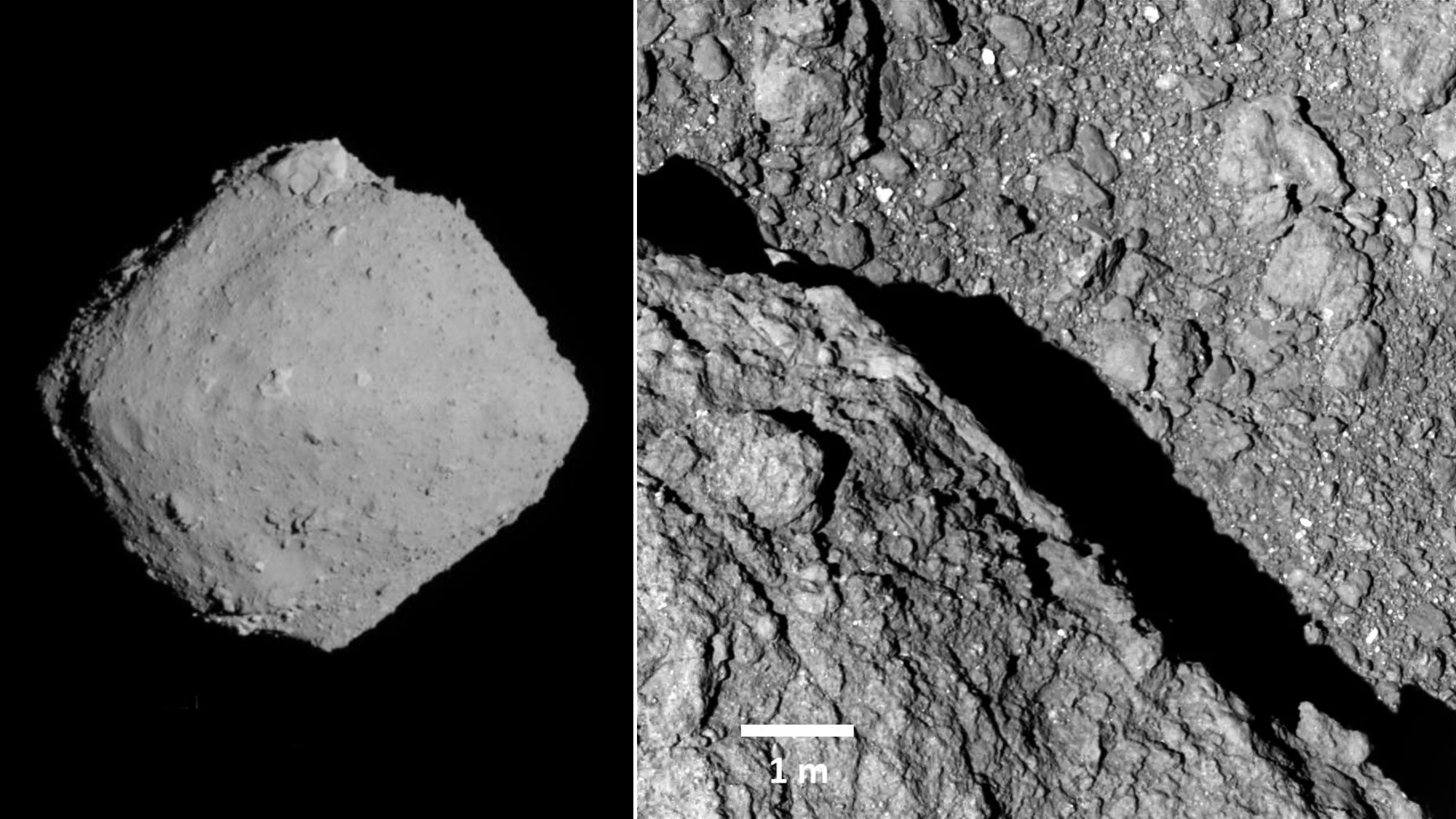
a two panel image of a grey, boulder-covered rock

Asteroid Ryugu, also seen by JAXA's Hayabusa2 spacecraft. (Image credit: JAXA, University of Tokyo, Kochi University, Rikkyo University, Nagoya University, Chiba Institute of Technology, Meiji University, University of Aizu and AIST.)

Hayabusa2 launched in December 2014 on an ambitious mission to collect asteroid samples and return them back to Earth. The probe did just that in December 2020 when JAXA successfully landed samples of asteroid Ryugu in the Australian desert.

Since then, scientists have used the samples to peer back in cosmic time at the history of our solar system and have even discovered that Ryugu contains all five nucleobases found within DNA and RNA.

After collecting its precious samples, Hayabusa2 left Ryugu in 2019. It's ultimate goal is now to flyby asteroid 1998 KY26, which could become the smallest asteroid ever visited by a spacecraft. 1998 KY26 is just 36 feet (11 meters) across, close to the size of the asteroid that exploded above Chelyabinsk, Russia in 2013.

two lumpy grey rocks on a black background; the one on the left is hundreds of times larger than the one on the right

A size comparison between asteroid Ryugu, which was visited by Hayabusa2 in 2020, and its next target, 1998 KY26. (Image credit: ESO/M. Kornmesser. Asteroid models: T. Santana-Ros, JAXA/University of Aizu/Kobe University)

Hayabusa2 is expected to reach 1998 KY26 in the year 2031. Once there, the probe will orbit the space rock before attempting to touch down on its surface. JAXA hopes the mission will help scientists more about the structure and composition of small asteroids.