Though their origins may be shrouded in mystery, fast radio bursts (FRBs) could be used to probe some of the universe's biggest puzzles. This includes probing the nature of dark matter, the invisible sort of matter that somehow dominates the universe, and dark energy, the mysterious force causing the expansion of our universe to accelerate. They could even shed light on the mysteries of neutrinos, or "ghost particles." Let's dive into how.
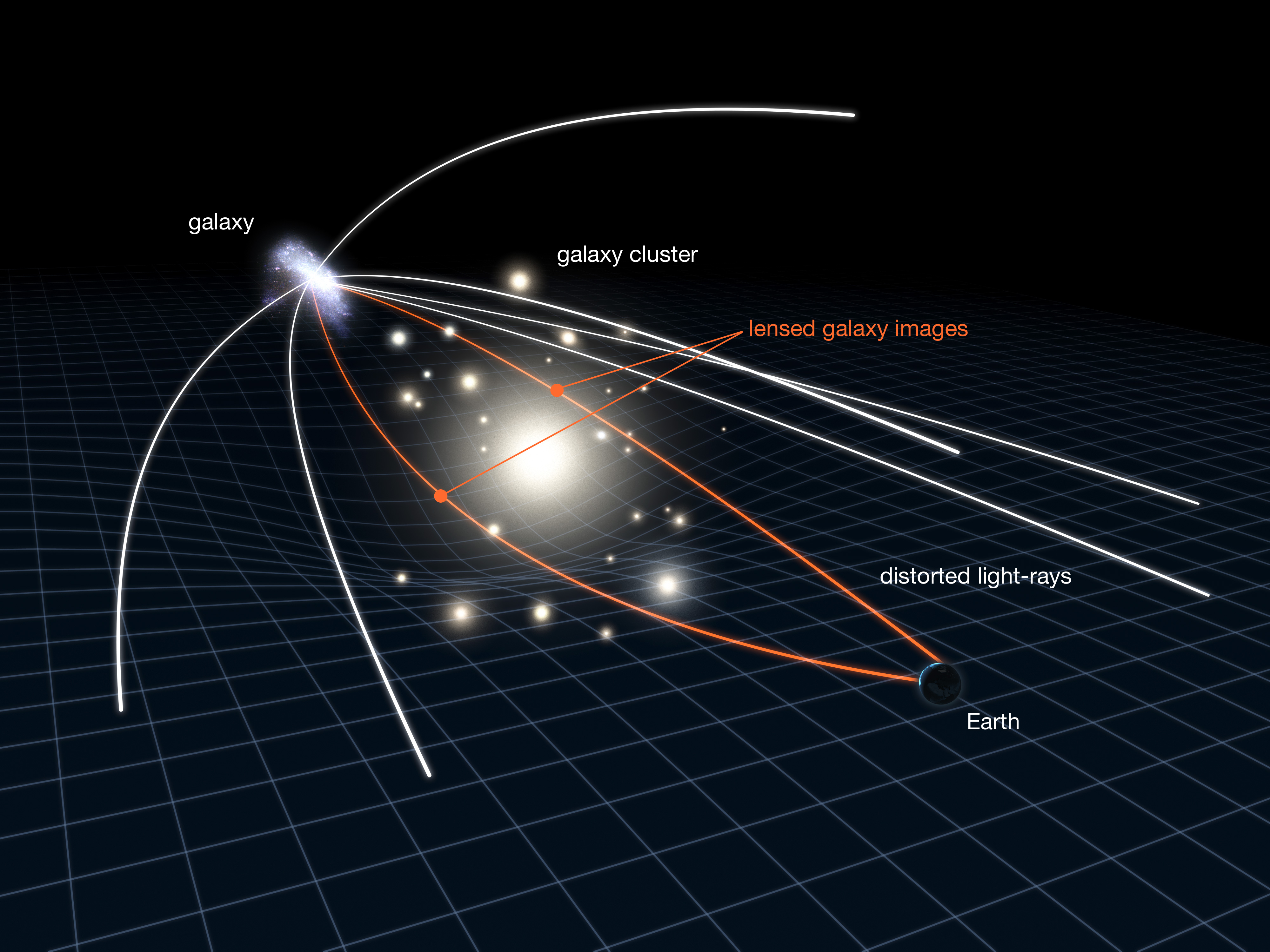
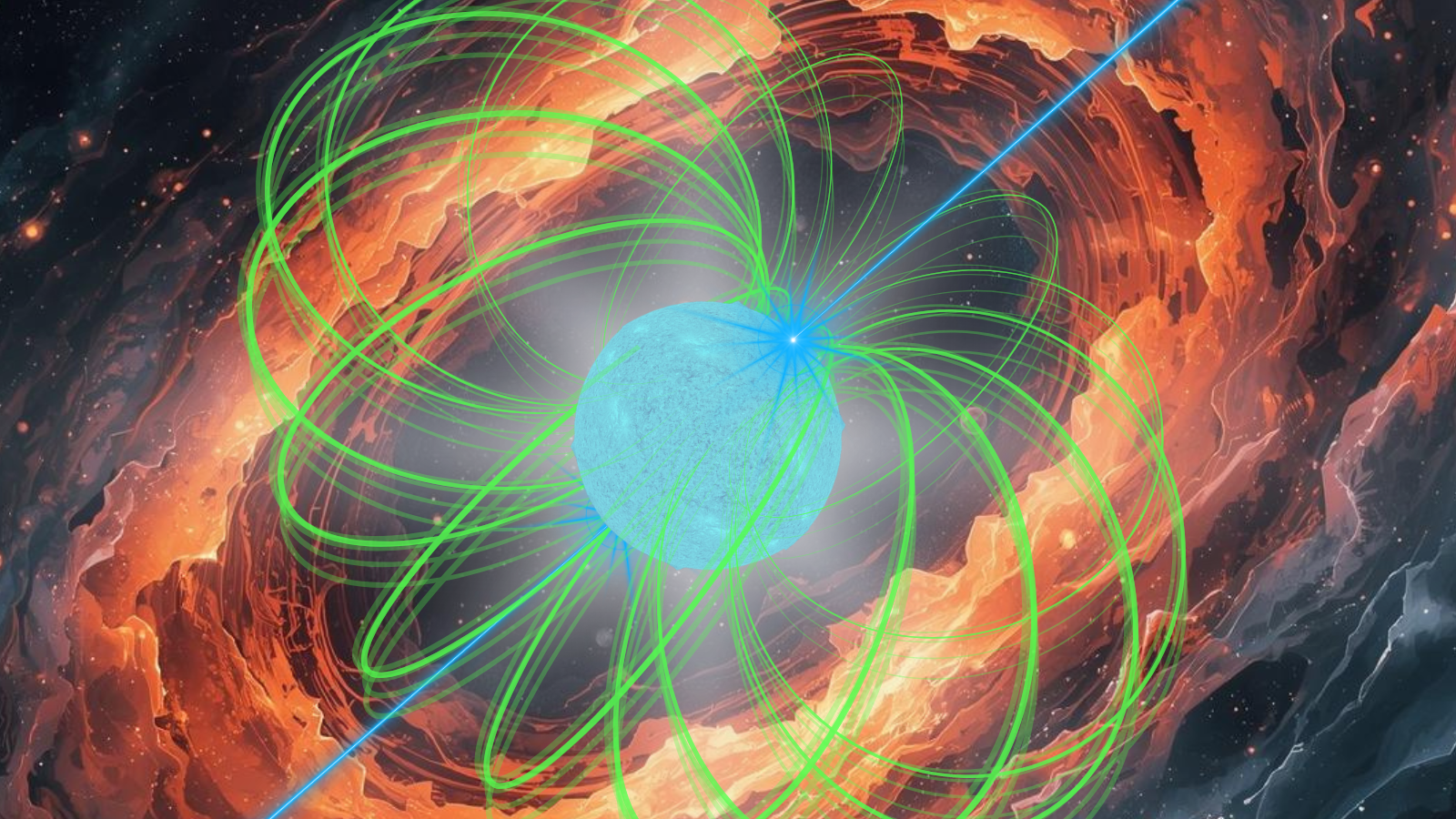
FRBs are brief but intense blasts of radio waves currently thought to erupt from rapidly rotating dead stars with the universe's strongest magnetic fields, called magnetars. As FRBs travel billions of light-years to reach Earth, they pass through dense clouds of gas and dust in galaxies. This "cosmic fog" changes the original FRB signal. What this means is these blasts of radio waves carry the fingerprints of how matter in the universe is distributed.
Mapping the distribution and "clumpiness" of ordinary matter in galaxies can then help trace the distribution of dark matter, the effect of dark energy and the mass of neutrinos.
"We've established that FRBs are a leading probe of the distribution of matter in the universe," team leader Kritti Sharma, a graduate student working with Vikram Ravi, a professor of astronomy at the California Institute of Technology (Caltech) and also part of the team, said in a statement. "These FRB data can be used to enhance cosmology experiments that are trying to answer questions about dark matter, dark energy, and the mass of neutrinos."
For this research, Ravi and Sharma analyzed a sample of about 100 FRBs. This represents the first time scientists have used FRBs to directly measure the impact of so-called "feedback" from galaxies on the clumpiness of matter in the large-scale regions between galaxies.
Cosmic ghosts and the dark universe
Ordinary matter, composed of atoms made up of electrons, protons and neutrons, accounts for just around 5% of the universe's energy/matter budget despite comprising stars, planets, moons, our bodies, next door's cat and everything we see around us on a day-to-day basis.
Of this budget, the other 95% is composed of dark energy (68%) and dark matter (27%). It's little wonder that scientists are very keen to better understand these two aspects of the cosmos, sometimes collectively referred to as the "dark universe."
Things get even more murky when considering how, of that 5%, the second most abundant particles in the universe, aside from particles of light or photons, are neutrinos. These get their nickname of "ghost particles" because they interact with other matter particles so infrequently that approximately 100 trillion neutrinos pass through your body every second without leaving any trace. This is possible because neutrinos are virtually massless, and scientists are keen to accurately measure the mass of these cosmic ghosts.
These three mysterious elements of the cosmos have played a vital role in the evolution of large-scale cosmic structures like galaxies and galaxy clusters. That means, in turn, that measuring the clustering of matter can reveal details about the aspects of the universe that influenced that clustering.
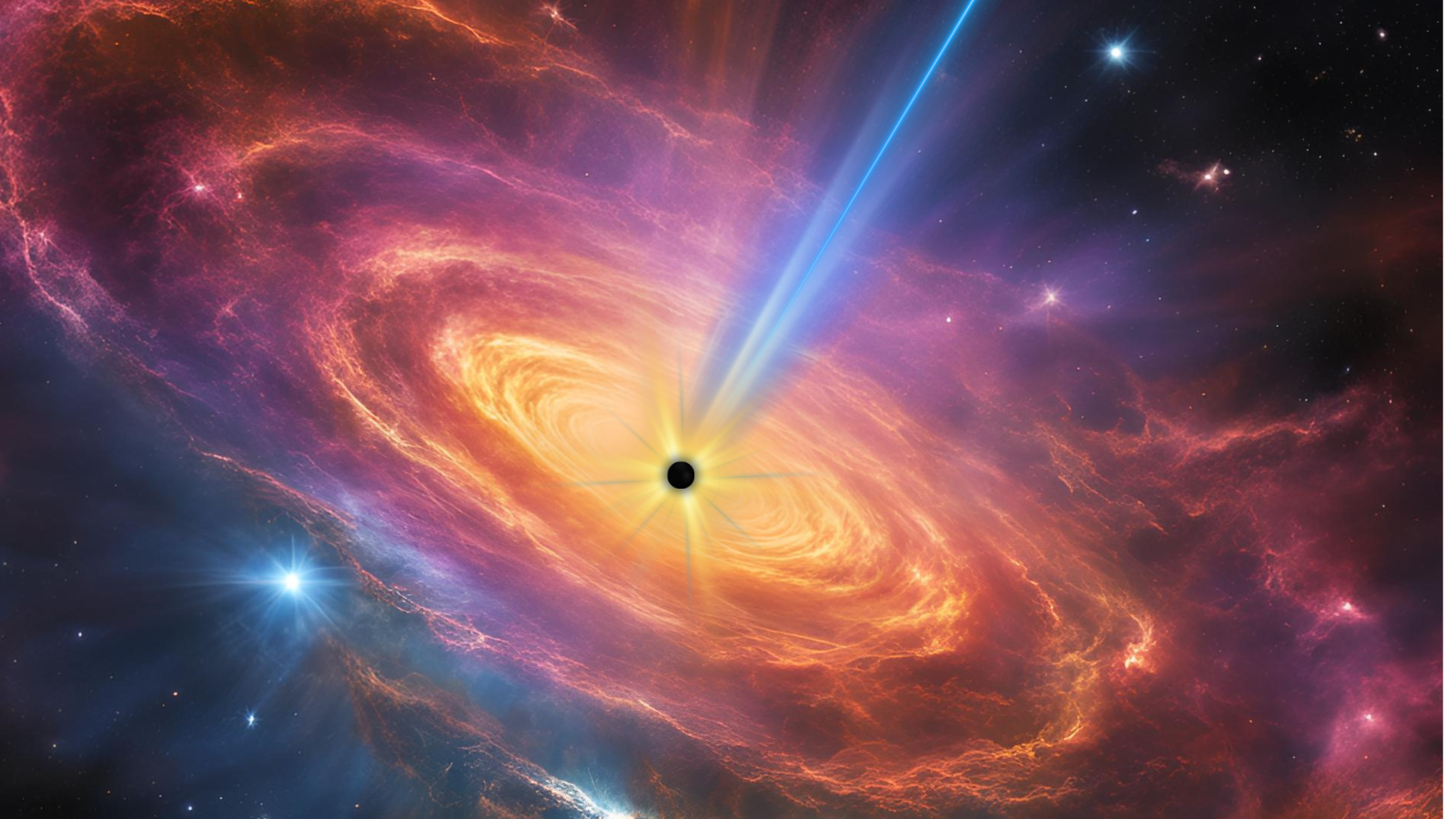
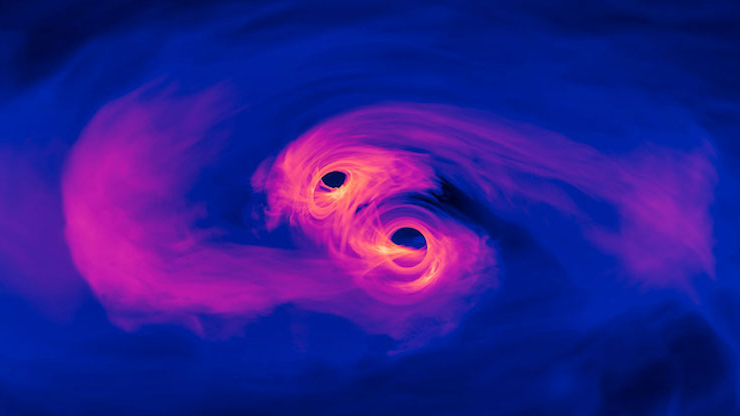
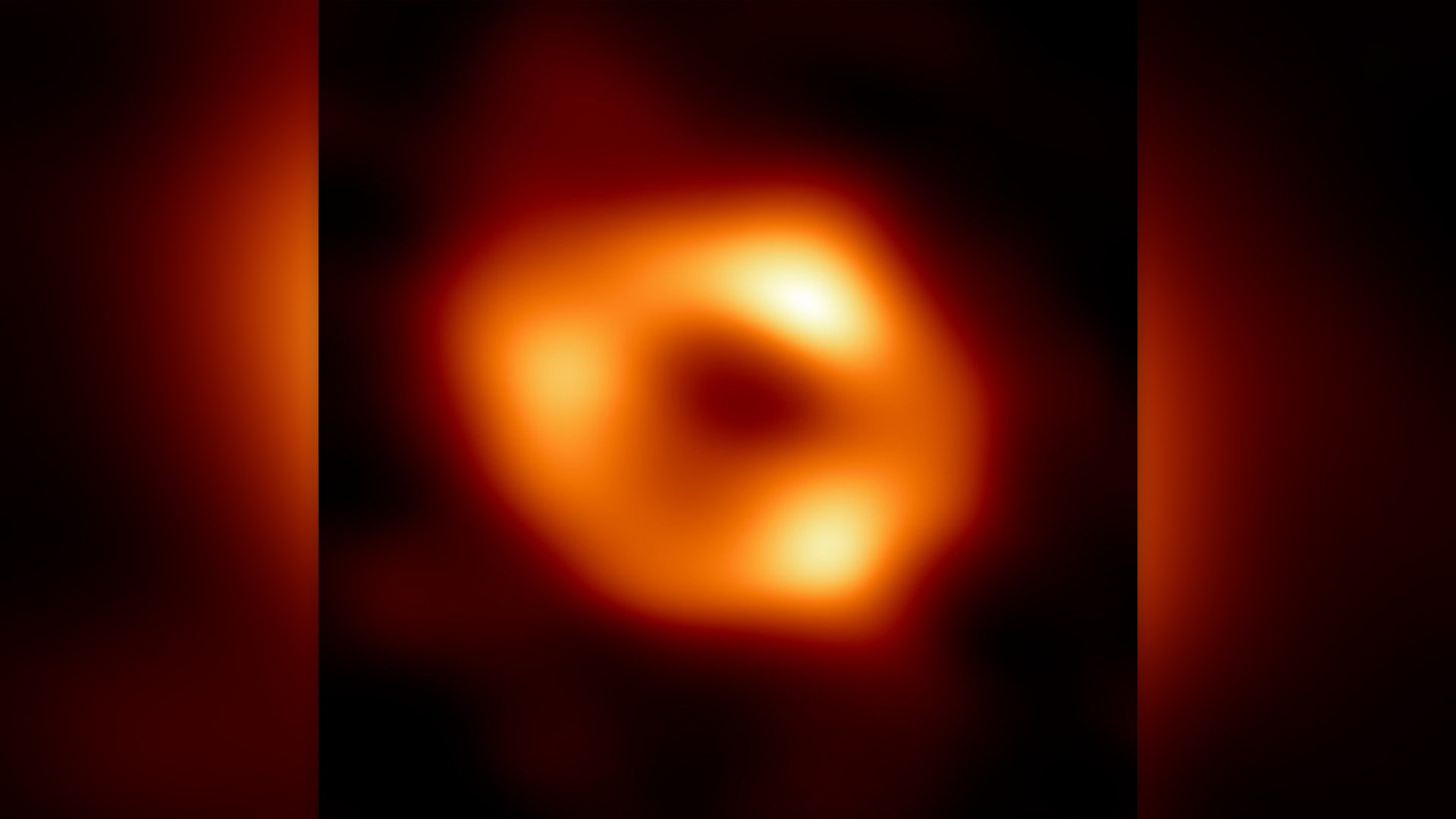
However, to do that, scientists also have to understand how other factors smooth out cosmic clumpiness. That includes the energy pumped out from the hearts of galaxies by feeding supermassive black holes, a type of cosmic feedback that smooths out clumpy cosmic matter lying outside galaxies.
"The feedback process thins the gas around the galaxies, redistributing matter across vast distances. It smooths out clumps of matter in a way that looks astonishingly similar to what massive neutrinos do, or what dark energy or dark matter theories predict," Ravi said. "Unless scientists can independently measure this contribution from feedback, they can't tell these effects apart."
That's where FRBs come in.
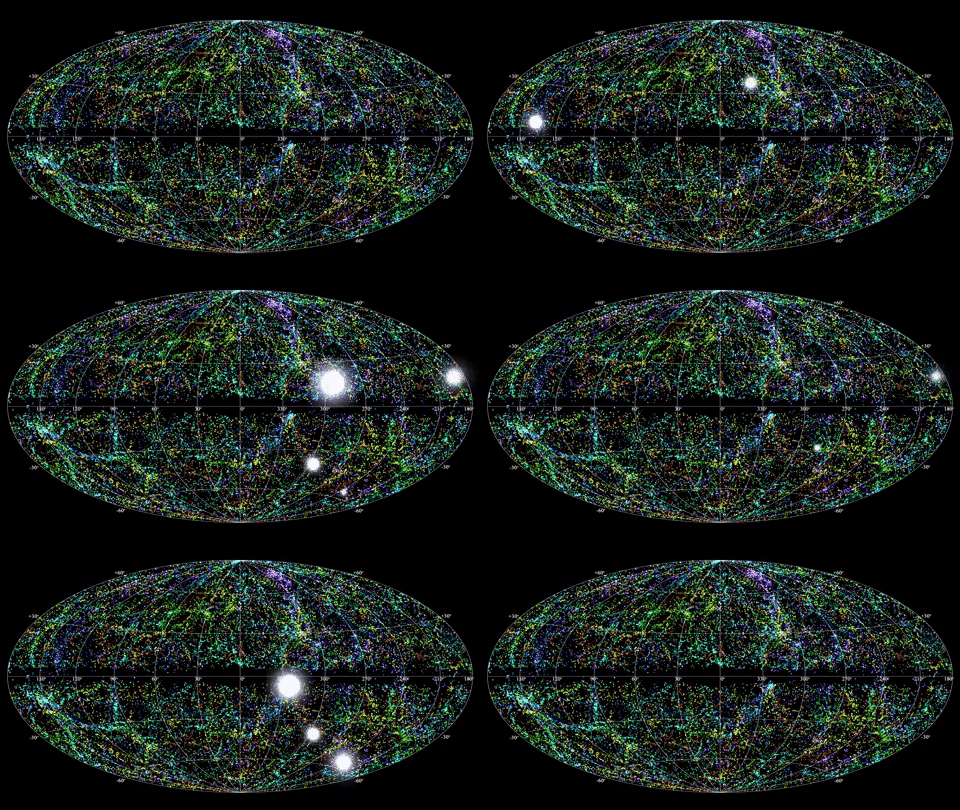
The researchers found that, while galactic feedback does indeed smooth surrounding material, making it less clumpy, the effect is weaker than has previously been measured.
"Our analysis of FRBs reveals how gas ejected by astrophysical feedback suppresses cosmic structure," team member Elisabeth Krause of the University of Arizona said in the statement. "This is amazing considering we only had about 100 FRBs in our sample. It's only the beginning."
The investigation of the universe with FRBs could get a major boost in 2029 when Caltech's Deep Synoptic Array (DSA) begins operating in Nevada. This powerful radio telescope is expected to find tens of thousands of FRBs, a major boon for cosmology.
The team's research was published on Tuesday (Sept. 8) in the journal Nature Astronomy.