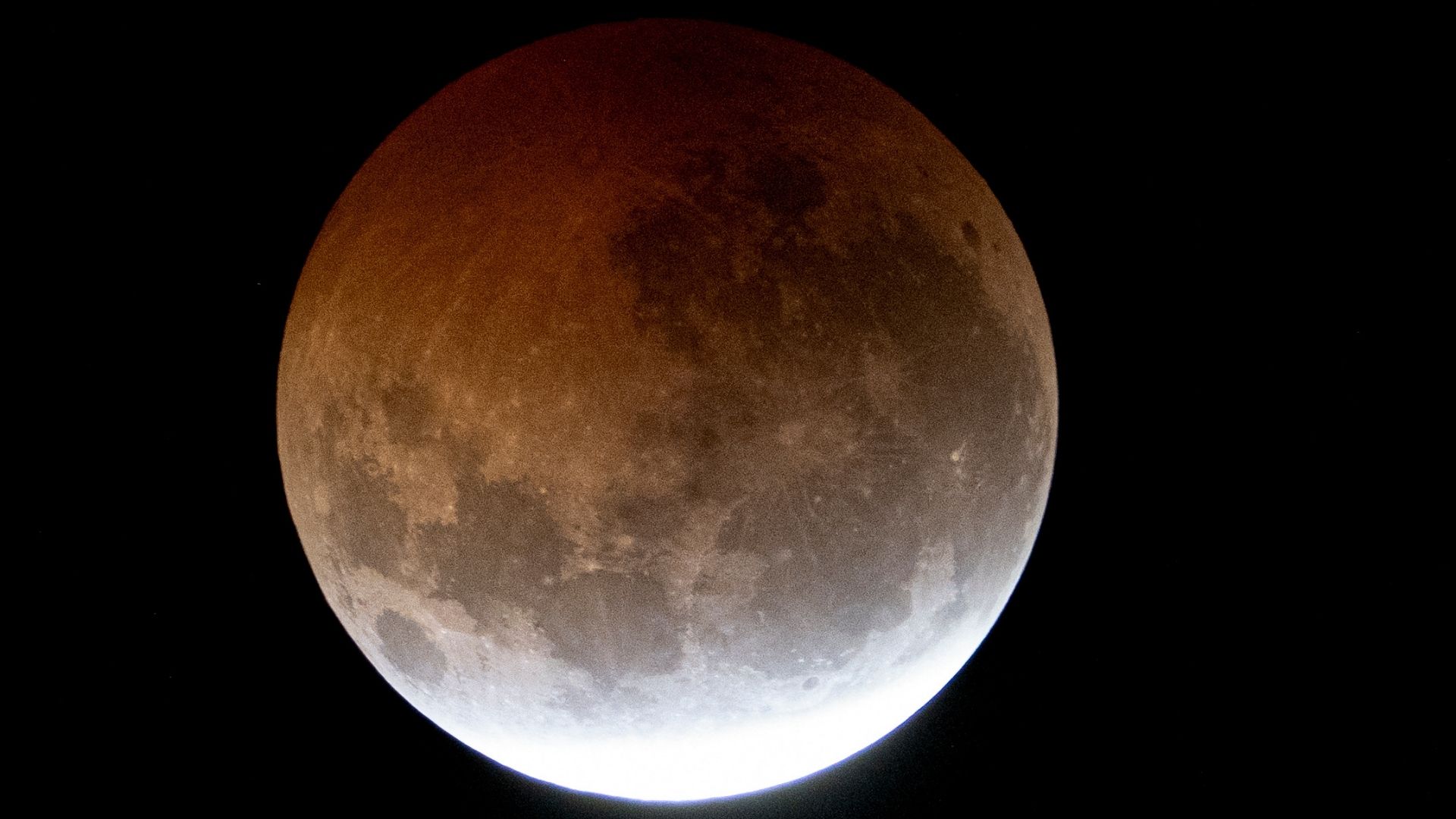
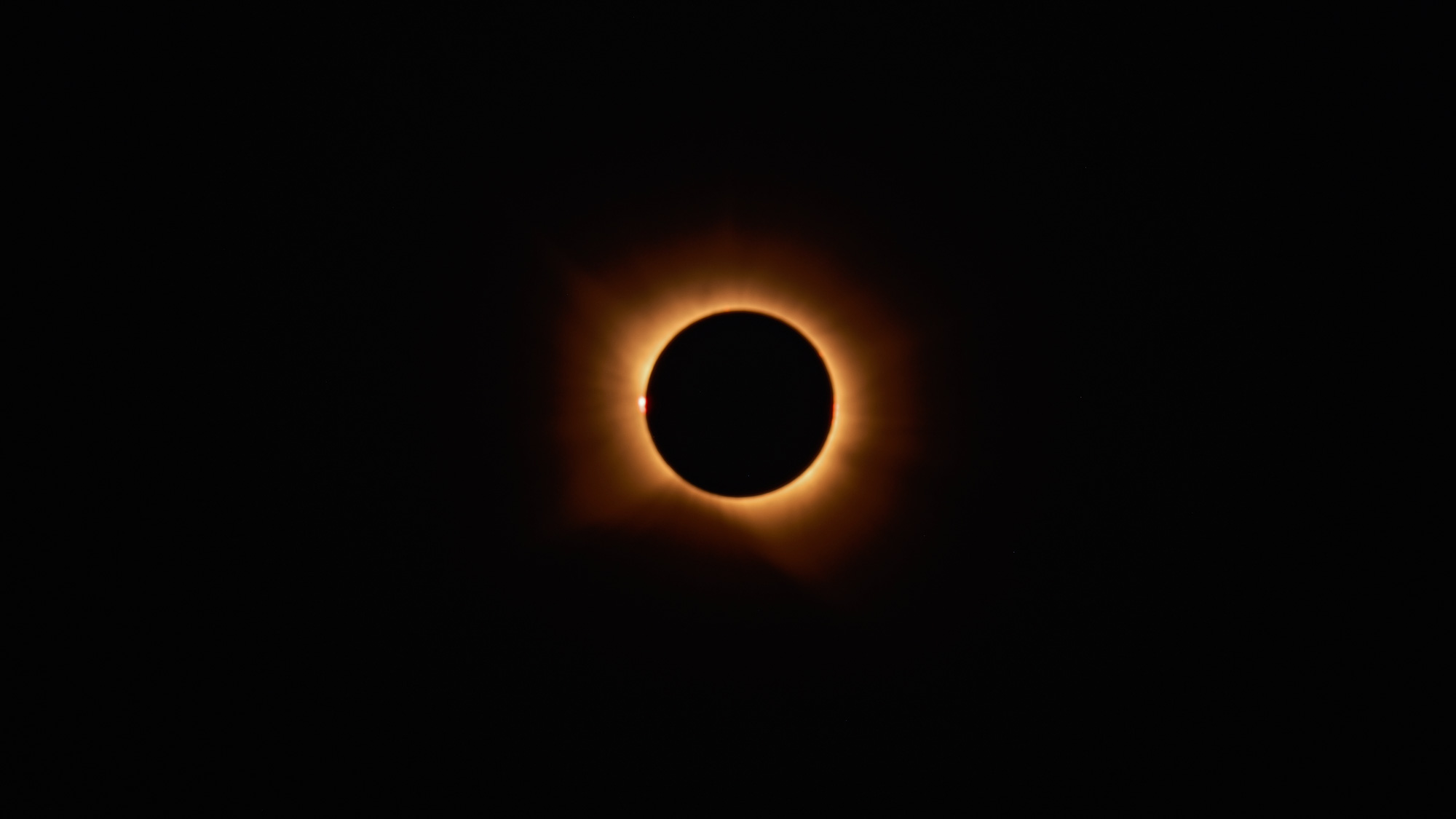
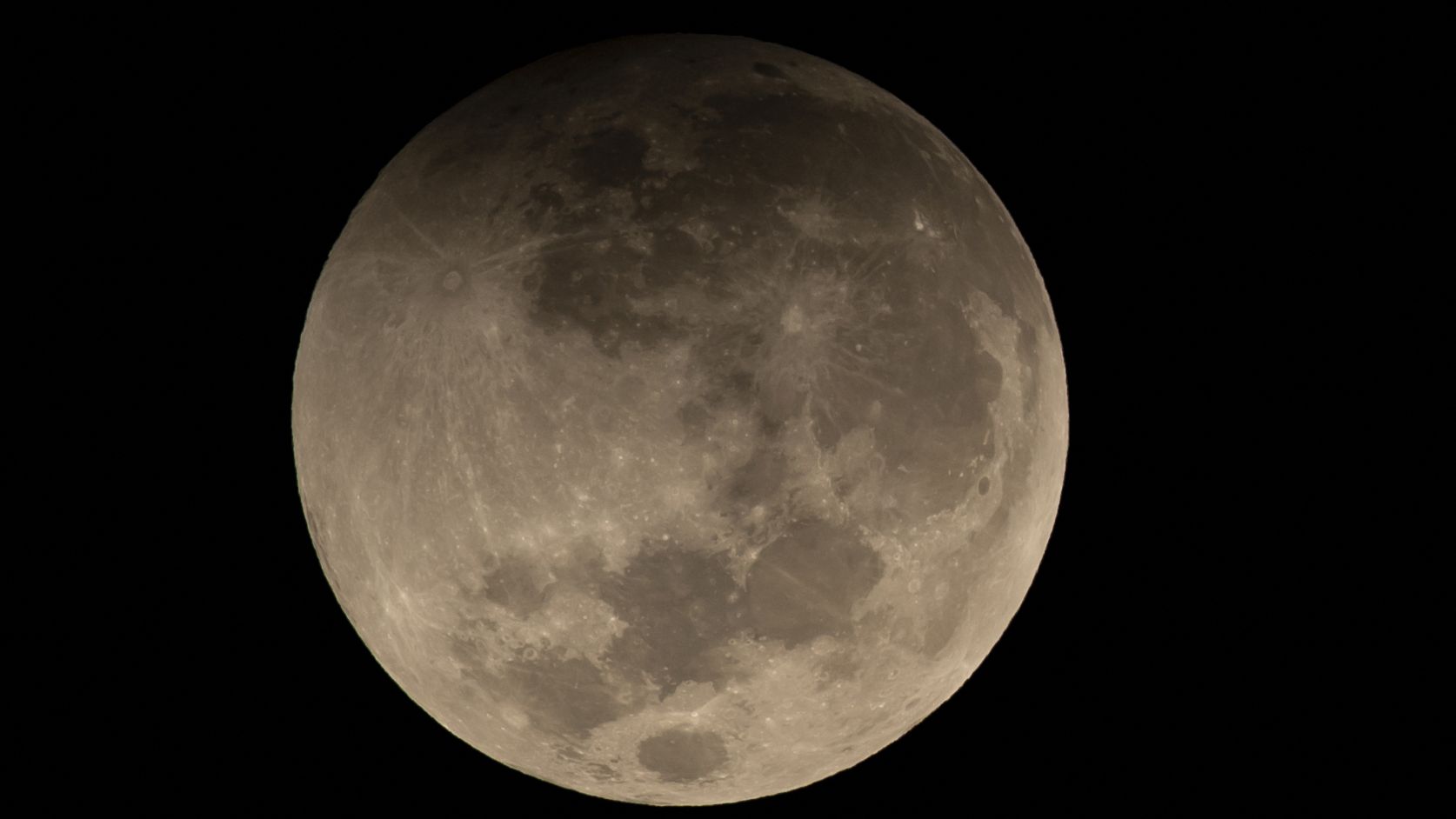
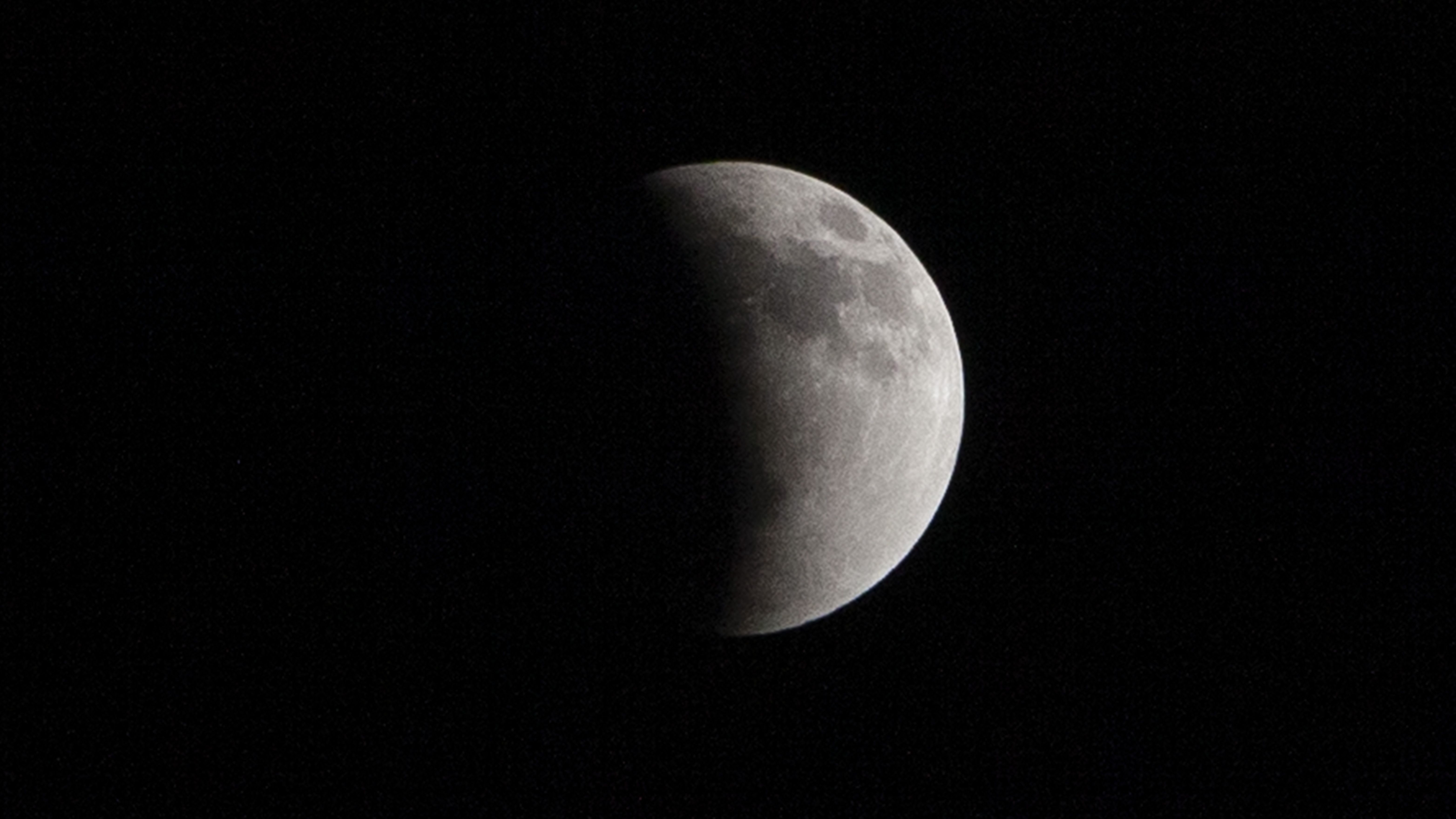
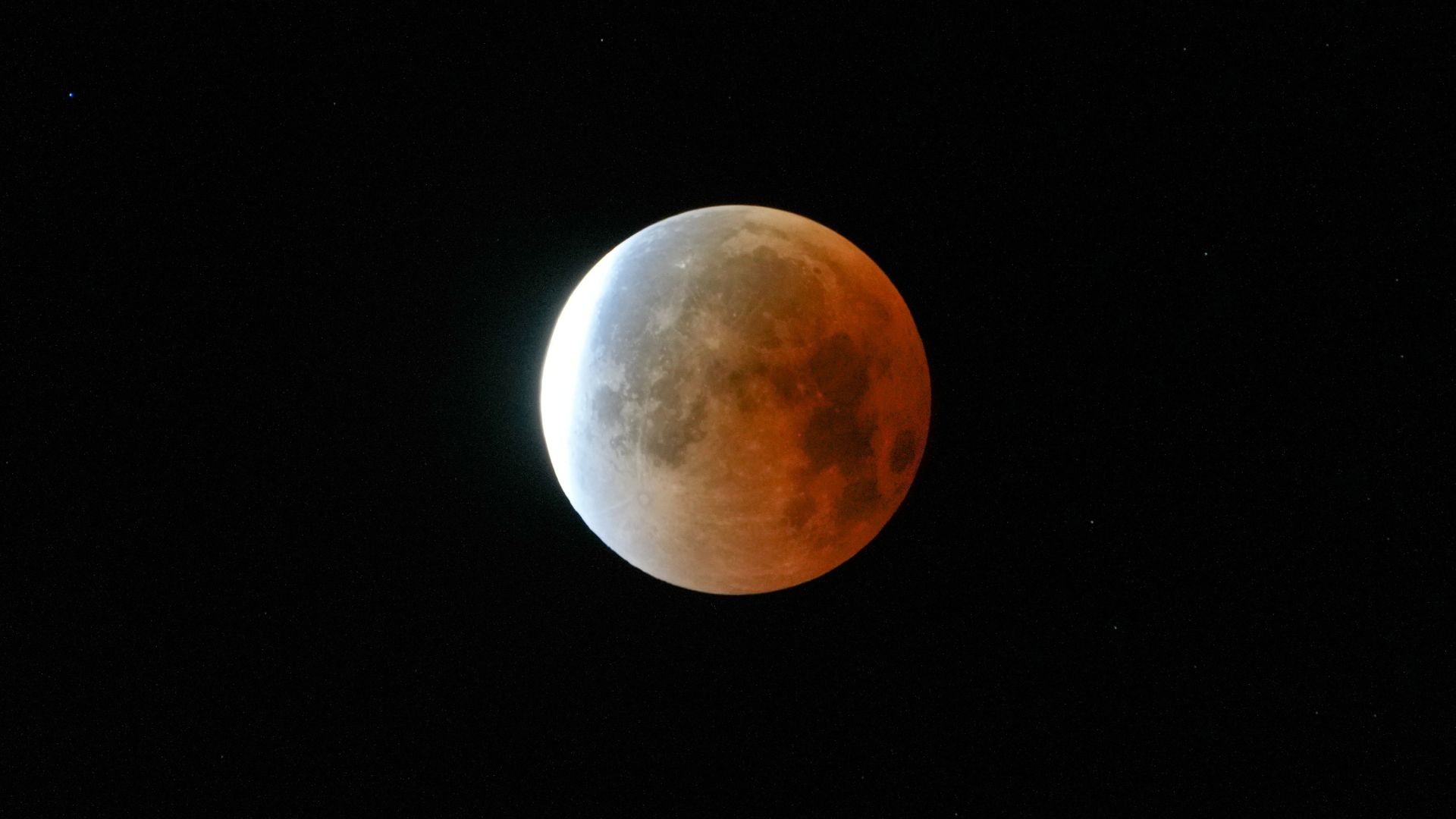
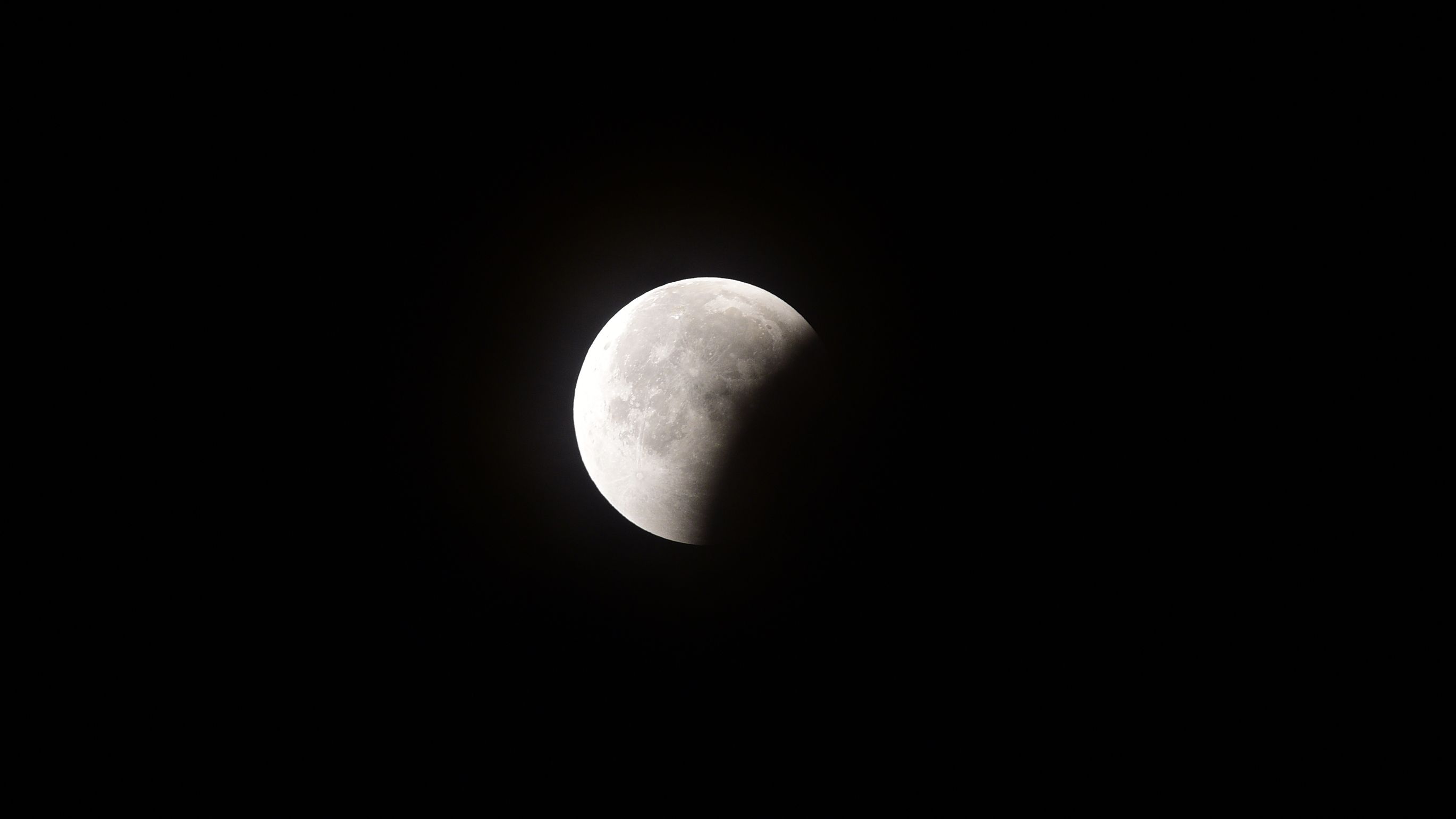
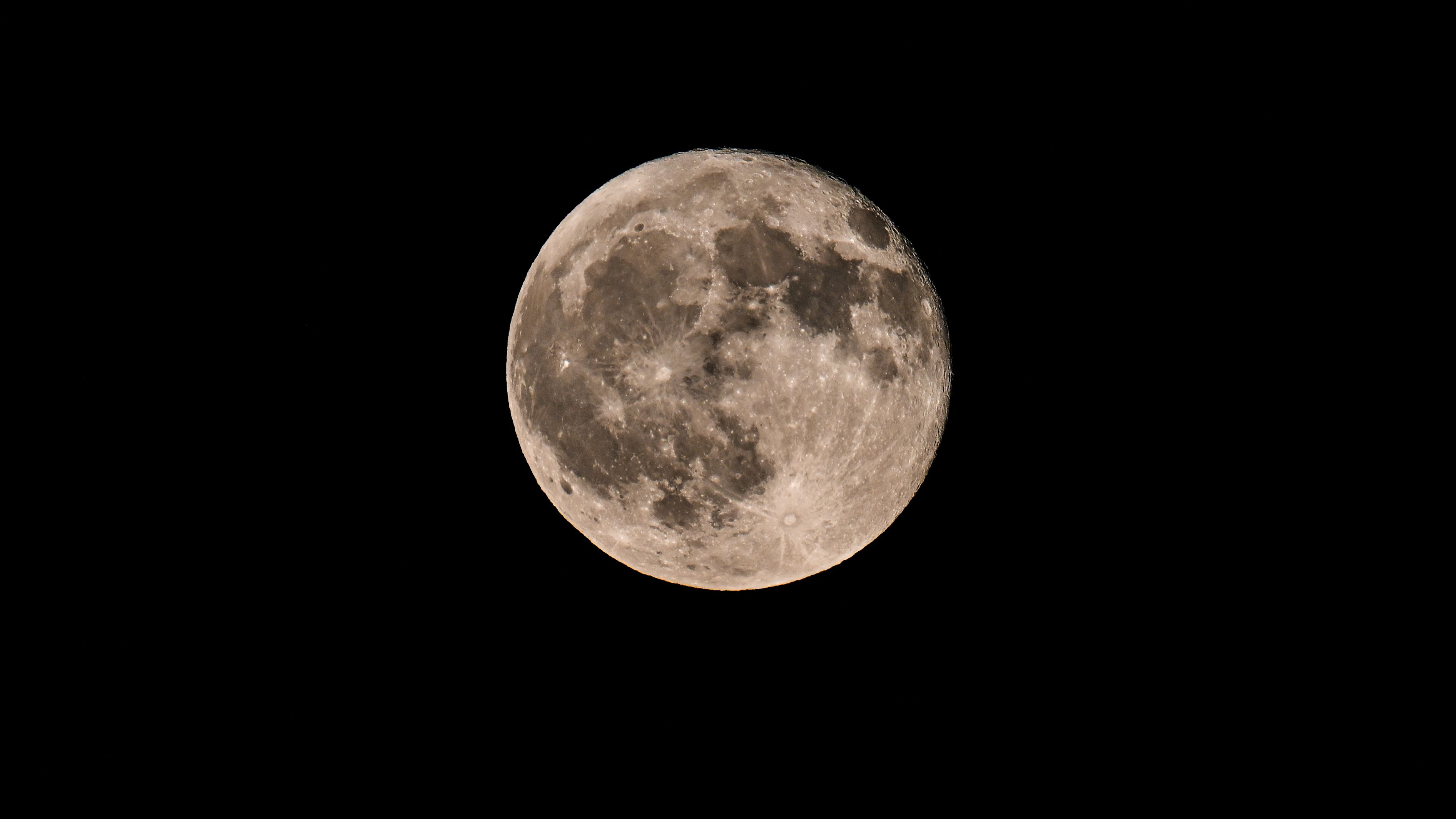
August's "almost Blood Moon" partial lunar eclipse has come and gone, delighting stargazers with a gorgeous natural light show as light filtered by our planet's atmosphere turned it a deep crimson around the point of maximum eclipse.
Earth won't darken the moon again until Feb. 20, 2027, when a penumbral eclipse will cast our planet's soft outer shadow across February's full "Snow Moon", so named for the freezing weather that occurs around the time it rises.
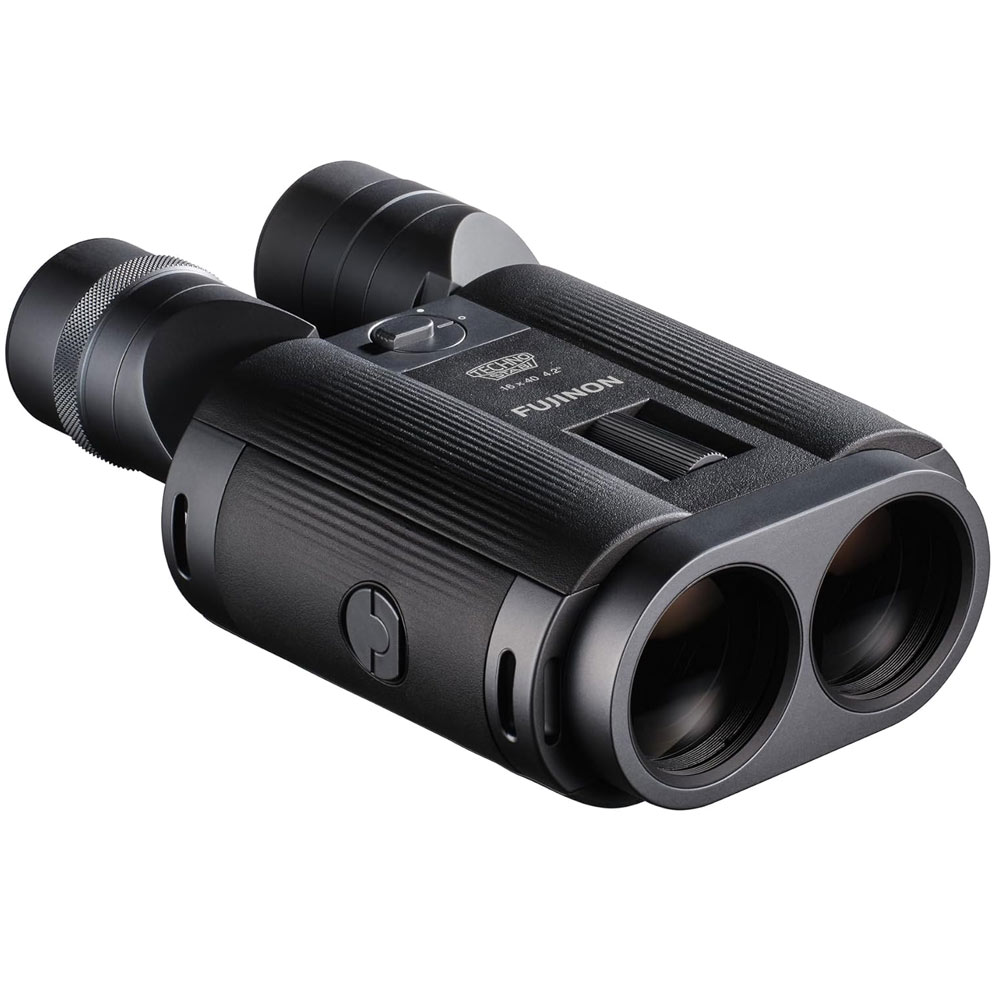
Fujinon Techno-Stabi 1640
(Image credit: Fujifilm)
With 16x magnification and some of the strongest image stabilization available, these binoculars deliver detailed views of the moon without needing a tripod by completely eliminating hand-shake.
The darkening will be incredibly subtle compared to that of a partial lunar eclipse, where the moon passes into Earth's intense inner shadow — the umbra — revealing our planet's curved silhouette on the lunar surface.
Our planet's deeper umbral shadow will miss the moon entirely on Feb. 20, 2027, setting the stage for an understated show of orbital mechanics, as the moon's silver lustre is almost imperceptibly dimmed by Earth's penumbra.
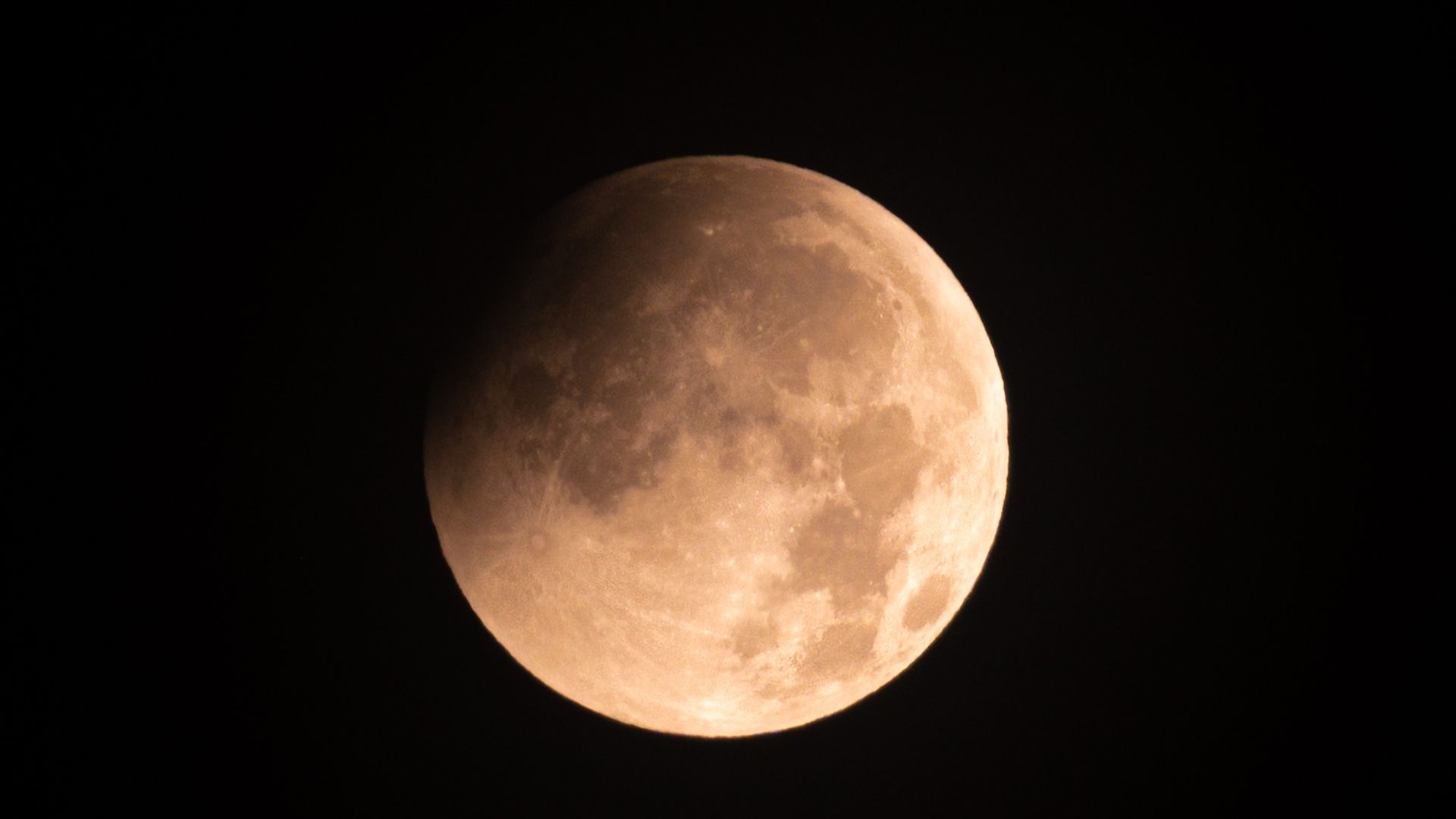
The soft penumbral shadow will be most apparent at 6:12 p.m. EST (2312 GMT) on Feb. 20, as the moon passes closer to our planet's umbra, according to Time and Date. The shadow will be deepest around the moon's north polar region, but even then the effect will be very subtle.
Earth's penumbral shadow darkens the moon during a lunar eclipse. (Image credit: Photo by Ritesh Shukla/NurPhoto via Getty Images)
The next lunar eclipse to rival August's won't occur until New Year's Eve in December 2028, when a magnificent total lunar eclipse will transform Earth's satellite into a magnificent "Blood Moon" in the skies over Asia, Australia and the Pacific.
Editor's Note: If you would like to share your astrophotography with Space.com's readers, then please send your photo(s), comments, and your name and location to spacephotos@space.com.
A gorgeous partial lunar eclipse delighted stargazers overnight on Aug. 27-28, as Earth's shadow darkened the full "Sturgeon Moon" in an impressive display of orbital mechanics, and we've got the photos to prove it!
The lunar eclipse occurred as Earth passed between the sun and the moon, granting viewers a spectacular view of our planet's deep umbral shadow as it advanced to cover 96% of the lunar disk, leaving a tiny crescent exposed to direct sunlight.
Photographers were ready and waiting to capture the moon as it turned blood red around the point of maximum eclipse on Aug. 28, as light filtered through Earth's atmosphere via Rayleigh Scattering saturated its shadowed surface. Read on to see our favorite photos of the Aug. 27-28 partial lunar eclipse.
Partial lunar eclipse August 2026: Best photos from around the world
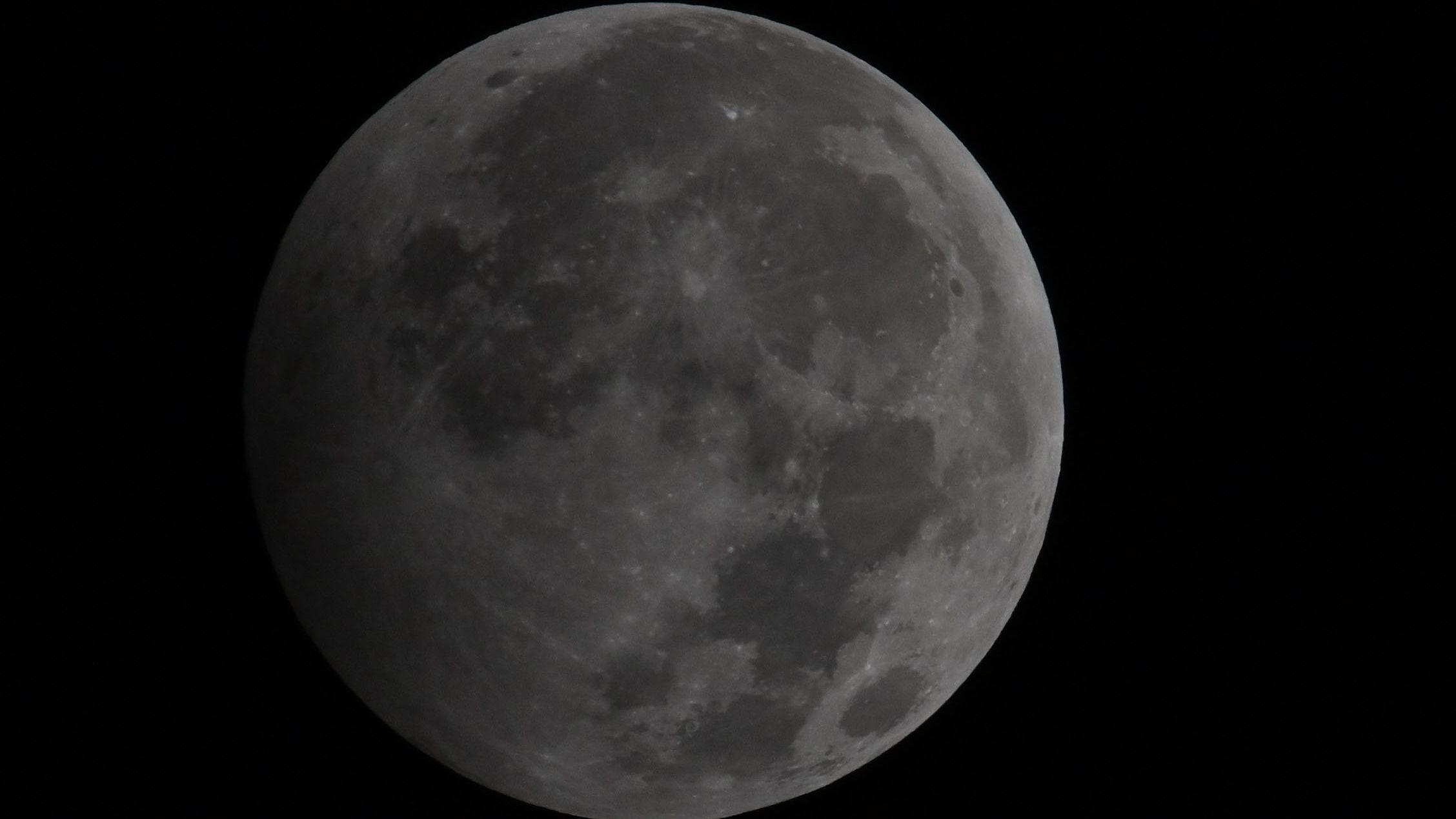
We kick off with a gorgeous photo of the full moon was captured from the Hungarian village of Zsujta by Robert Nemeti just as Earth's shadow took its first "bite" out of the lunar disk, shortly after the partial phase of the eclipse began at 10:33 p.m. EDT on Aug. 27 (0233 GMT on Aug. 28).
Tycho Crater is visible in the lower region of the lunar disk close to the shadow, while bright ejecta rays of reflective material brighten the darker lunar seas, where lava solidified to form basaltic plains billions of years ago.
Earth's inner shadow touches the lunar disk in the skies over Hungary. (Image credit: Photo by Robert Nemeti/Anadolu via Getty Images)
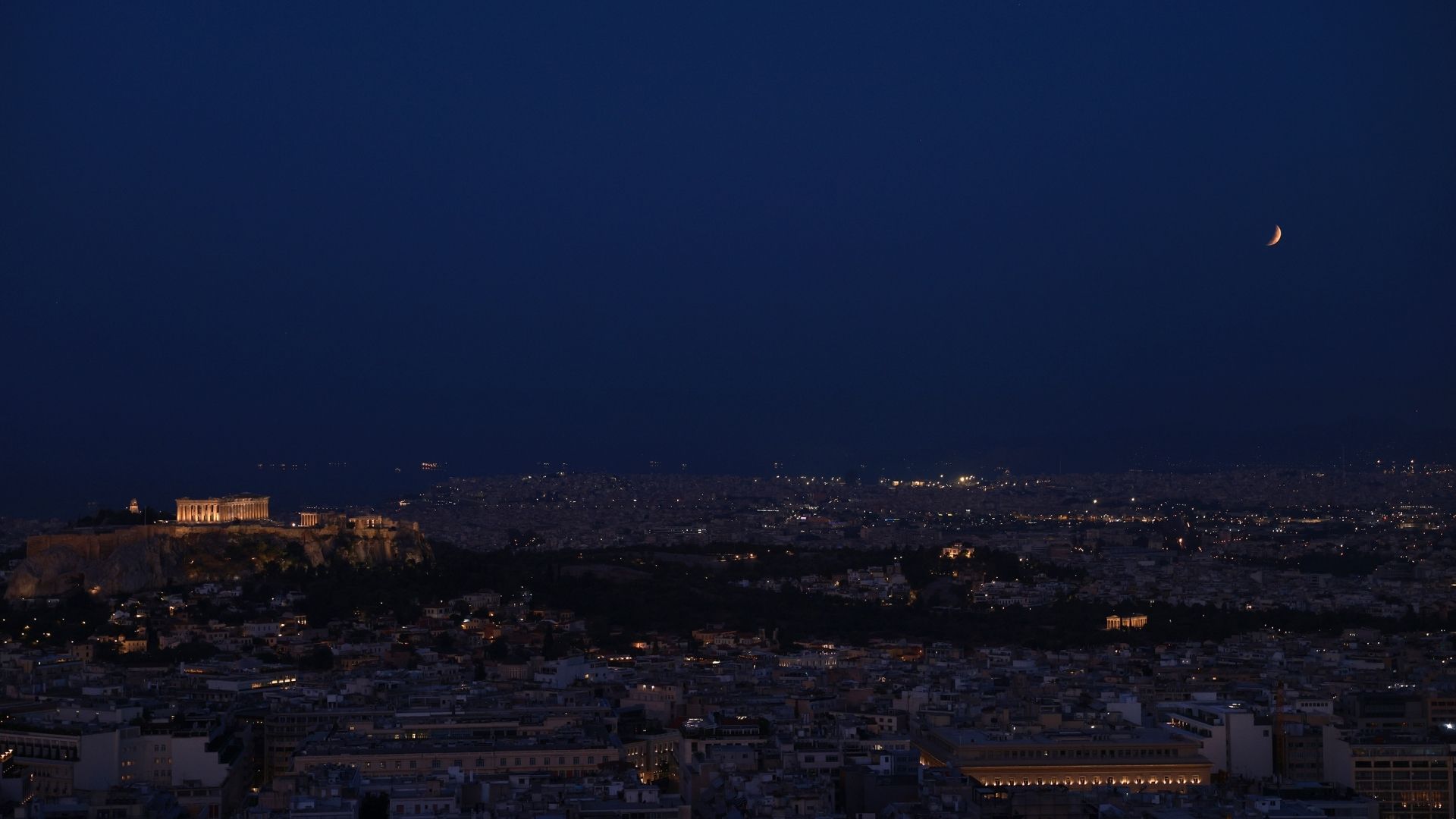
The eclipsed moon shared the stage with the Parthenon in Athens in this tranquil wide-angle photo from Costas Baltas. Earth's curved silhouette can be seen clearly on the lunar disk, serving as proof of our planet's spherical shape, just as it did for the ancient Greek philosophers who helped pioneer the idea over 2,000 years ago.
The eclipsed moon shines over the Parthenon in Athens, Greece (Image credit: Photo by Costas Baltas/Anadolu via Getty Images)
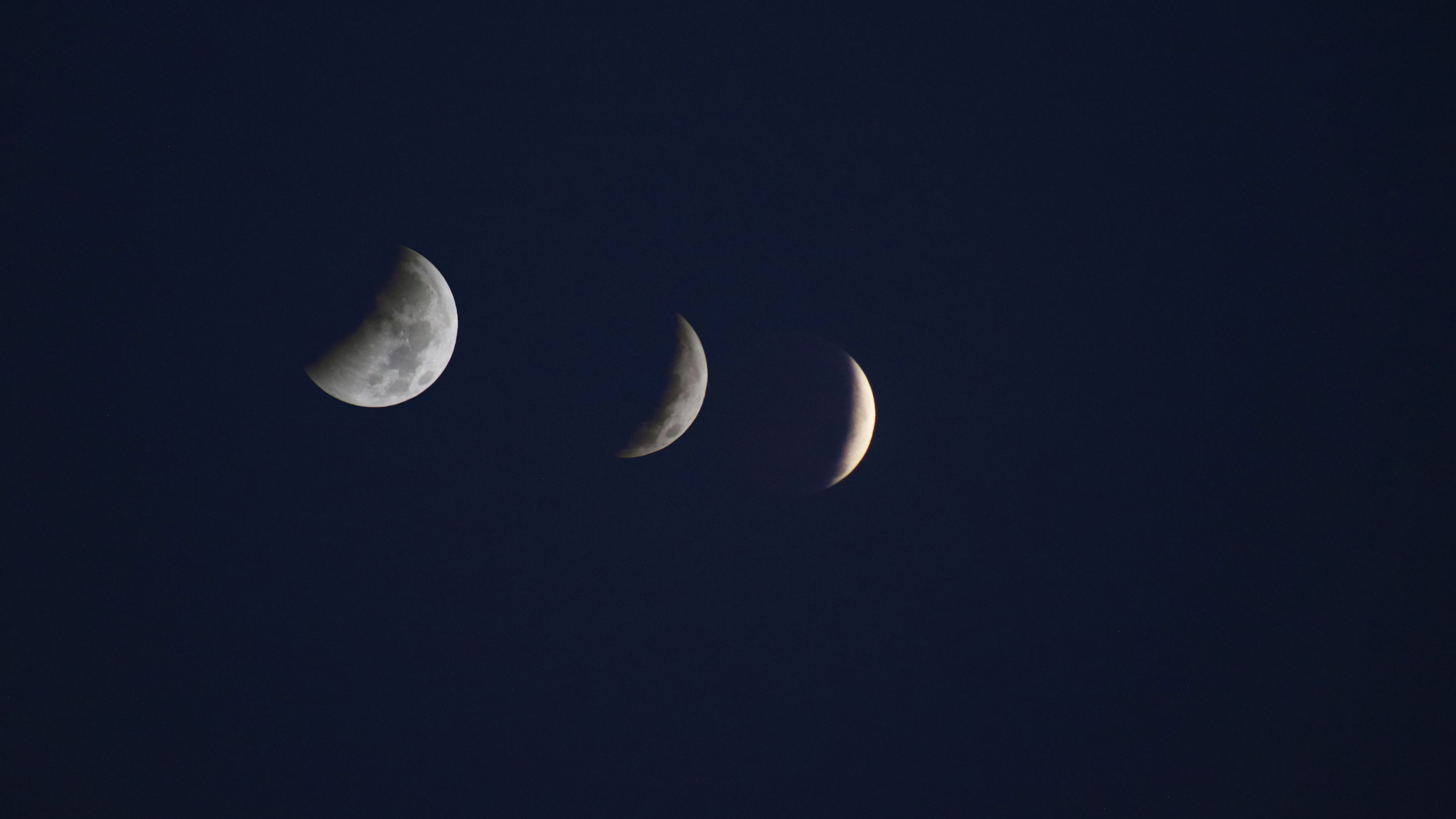
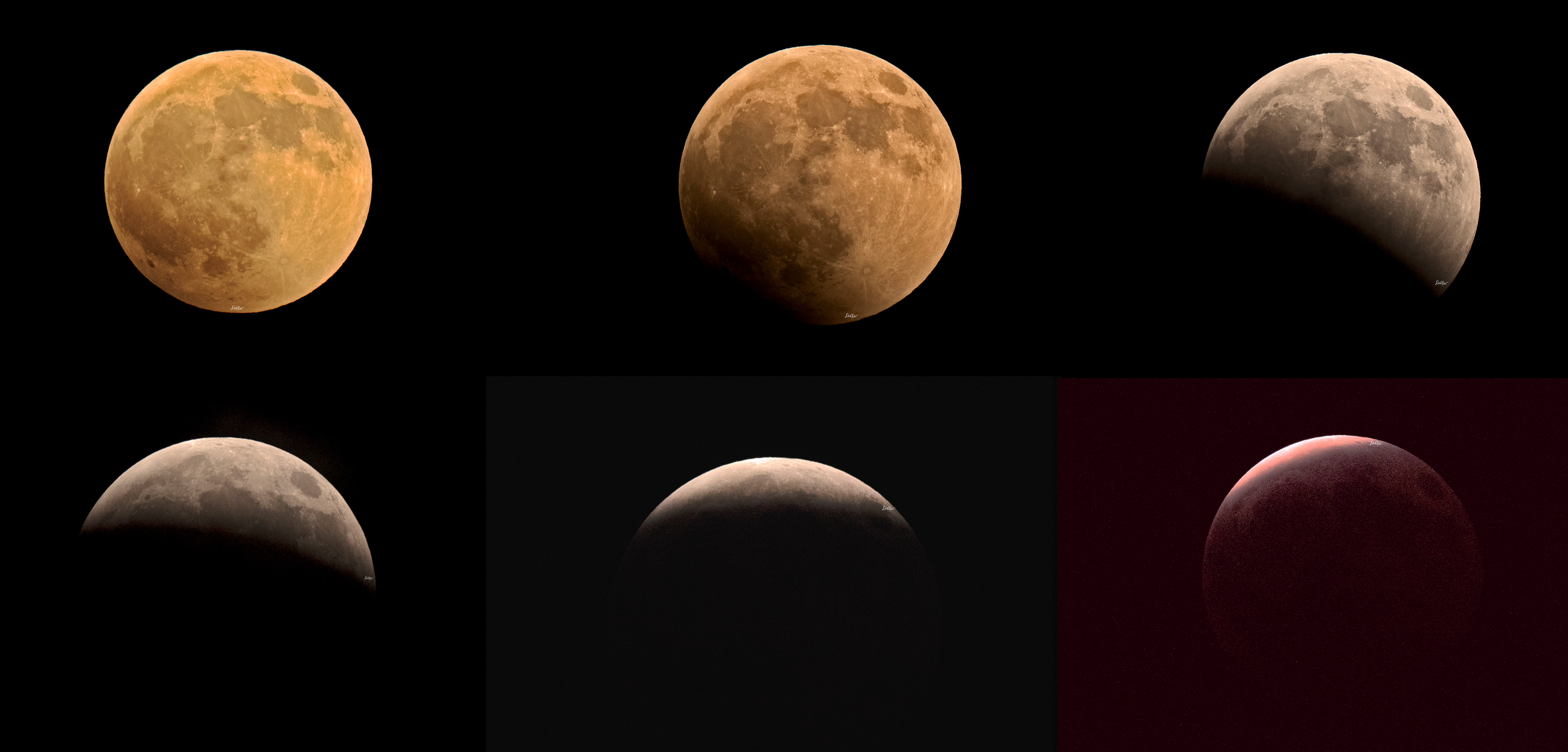
Giuseppe Pappa created a stunning composite image of the eclipse depicting Earth's shadow as it rolled across the lunar surface during the partial phase from Pedara, Sicily.
Pappa snapped the images using a Canon 760D with a 300 mm lens to capture the lunar seas standing out on the remaining sunlit portion of the lunar surface.
A composite shot of August's partial lunar eclipse. (Image credit: Giuseppe Pappa)
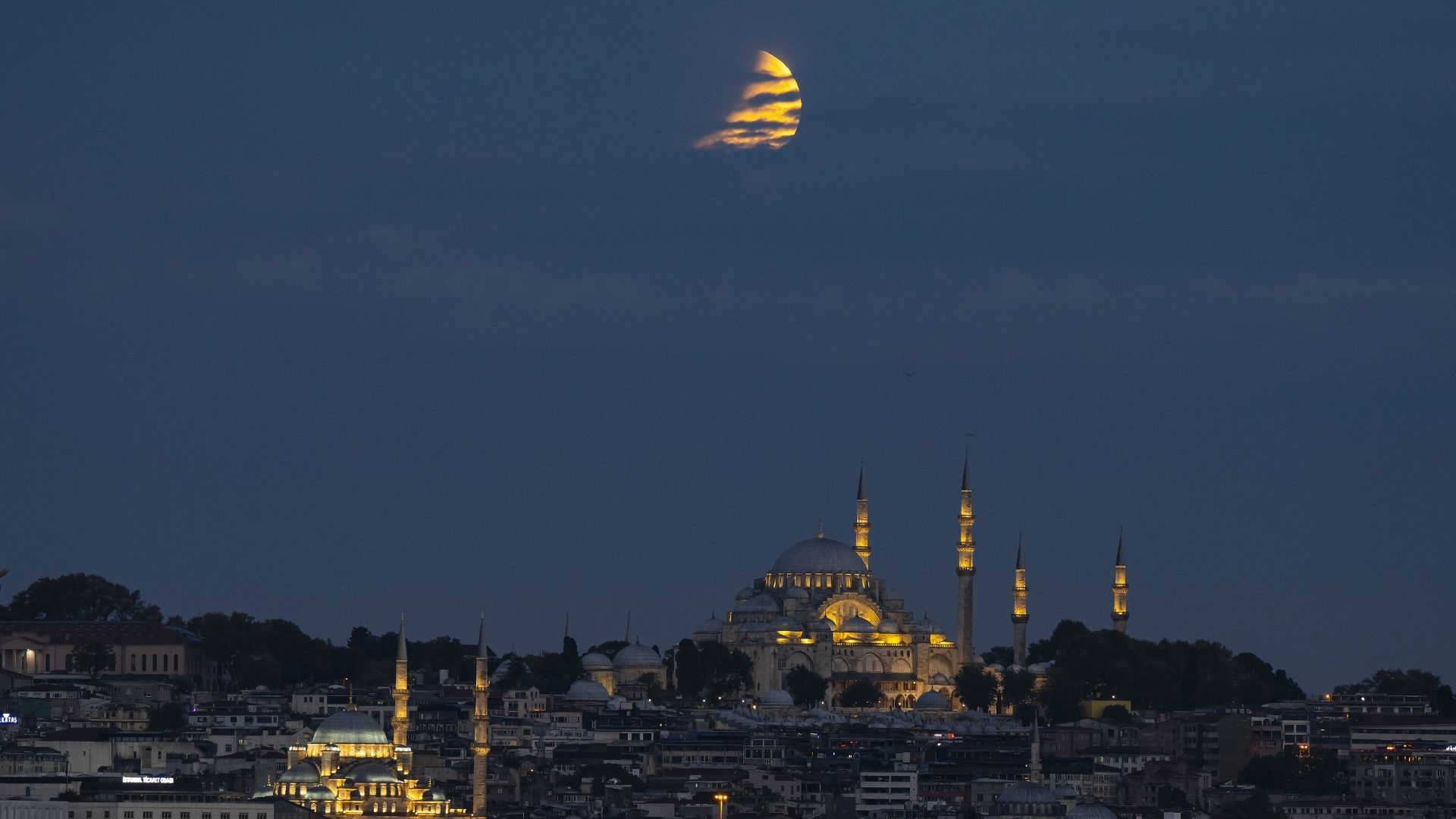
This atmospheric view of the partially eclipsed moon shining over the Suleymaniye Mosque in Istanbul, Turkiye, was taken by Isa Terli.
The partially eclipsed moon shines over Istanbul, Turkiye. (Image credit: Photo by Isa Terli/Anadolu via Getty Images)
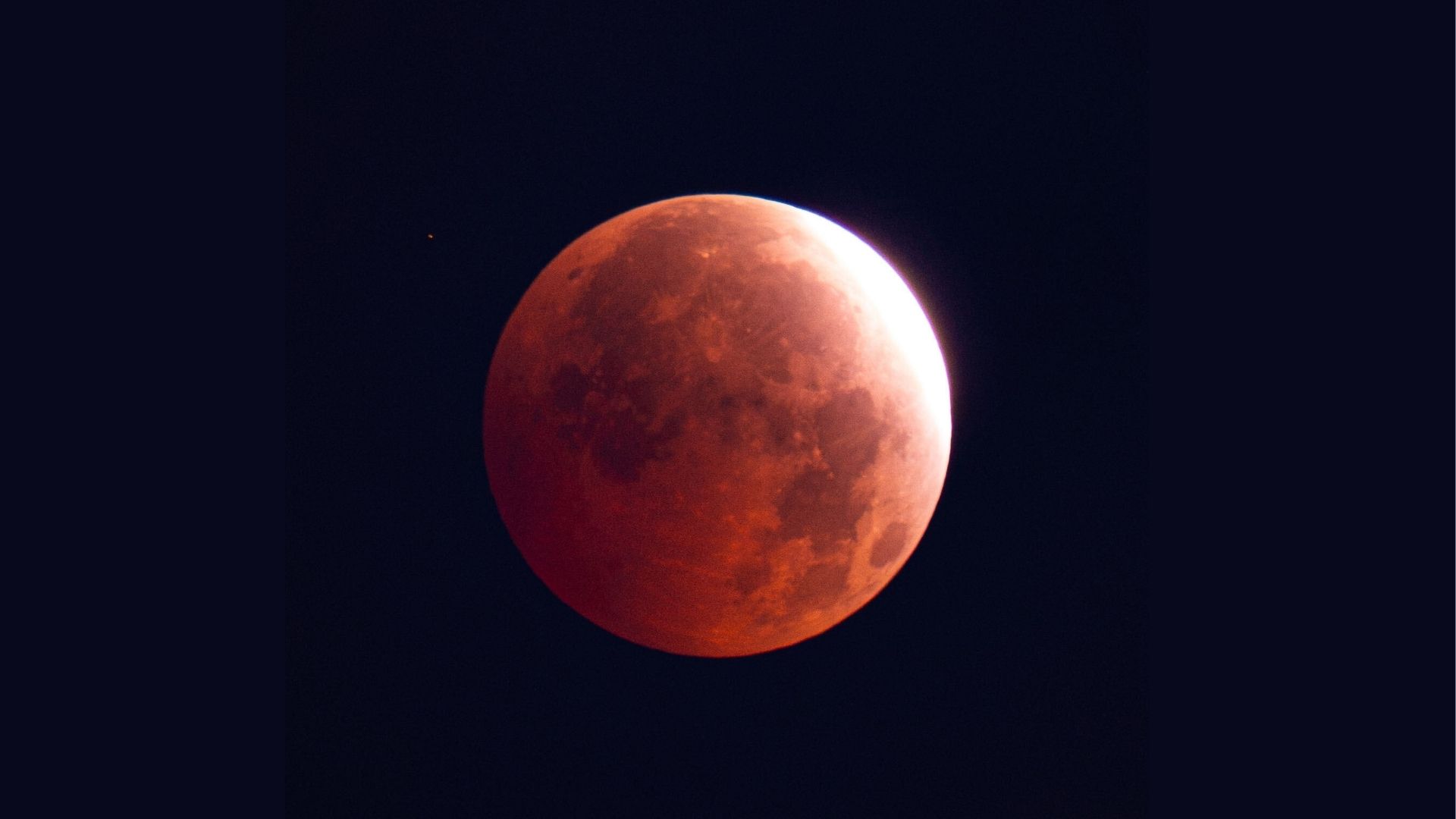
Kevin McCarthy captured a spectacular view as the eclipsed moon shone blood red in the skies over North Carolina, after a brief weather scare!
"With thunderstorms in the area throughout the night, I was worried I may miss the chance to capture this event," McCarthy told Space.com. "But, at the last minute, as the maximum shadow coverage approached, the clouds parted long enough for me to get the shot."
Deep partial lunar eclipse from Charlotte, North Carolina. (Image credit: Kevin McCarthy)
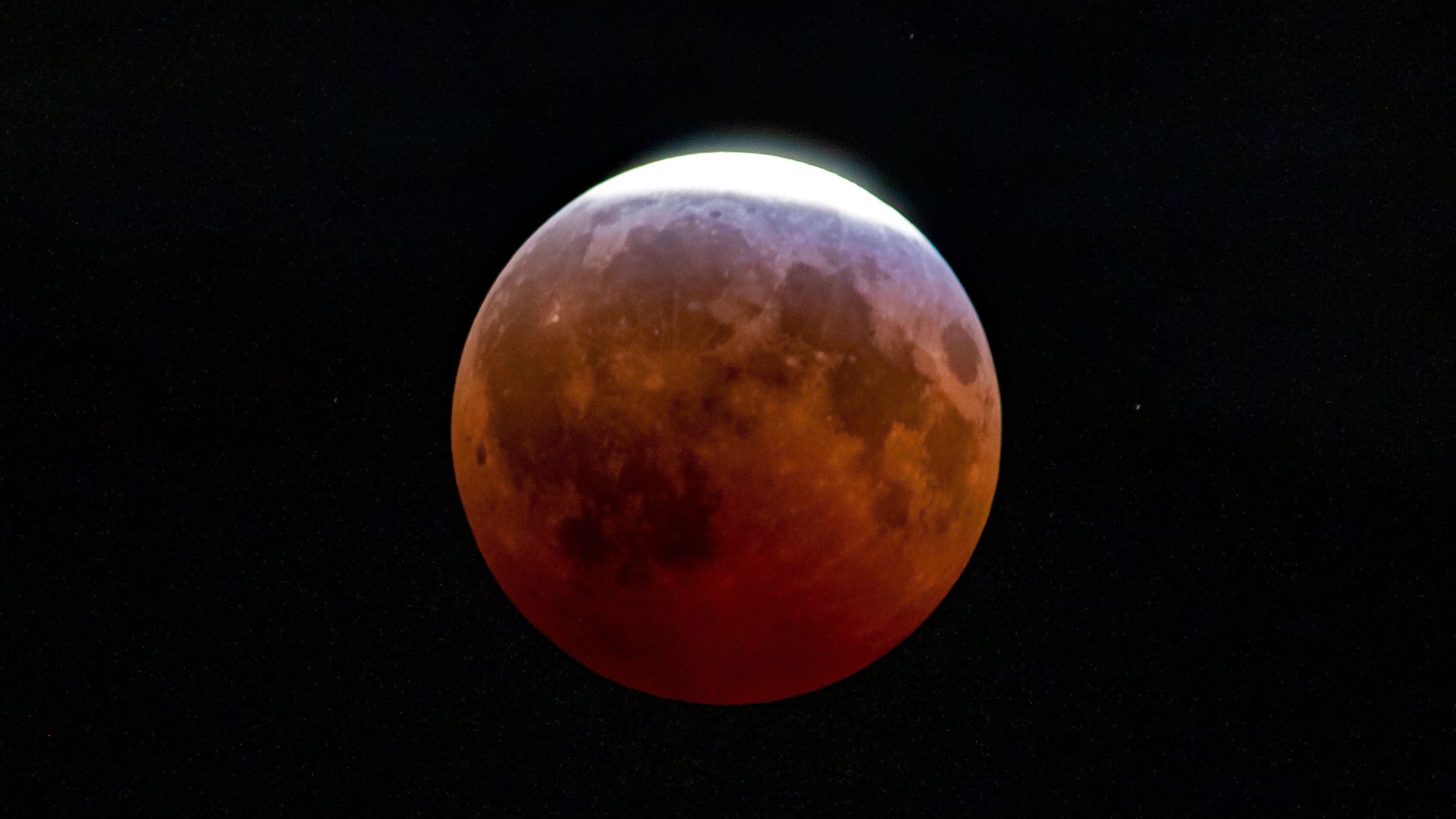
Photographer Josh Dury snapped his own incredible view of that same eclipsed lunar disk as glowed in the predawn sky over the United Kingdom
"The fantastic moment when the moon turned red," Dury said to Space.com. "Nearly didn't get this image due to unexpected fog at my first location. My gut said - 'move'. Approaching the peak of the eclipse this was the image I was able to capture."
(Image credit: Josh Dury)
The almost blood moon's crimson coloring was also on full display in this shot from Mauro Pimentel, taken as a thin crescent of the lunar disk was left exposed to direct sunlight in the skies over Rio de Janeiro, Brazil.
The Sturgeon Moon captured over Brazil. (Image credit: Photo by MAURO PIMENTEL / AFP via Getty Images)
Another stunning composite view of last night's lunar shenanigans was taken by Kohinoor Kar, who documented the transformation of the lunar disk from full Sturgeon Moon to an eclipsed near-blood moon from Phoenix, Arizona.
Partial lunar eclipse from Pheonix, Arizona. (Image credit: Kohinoor Kar)
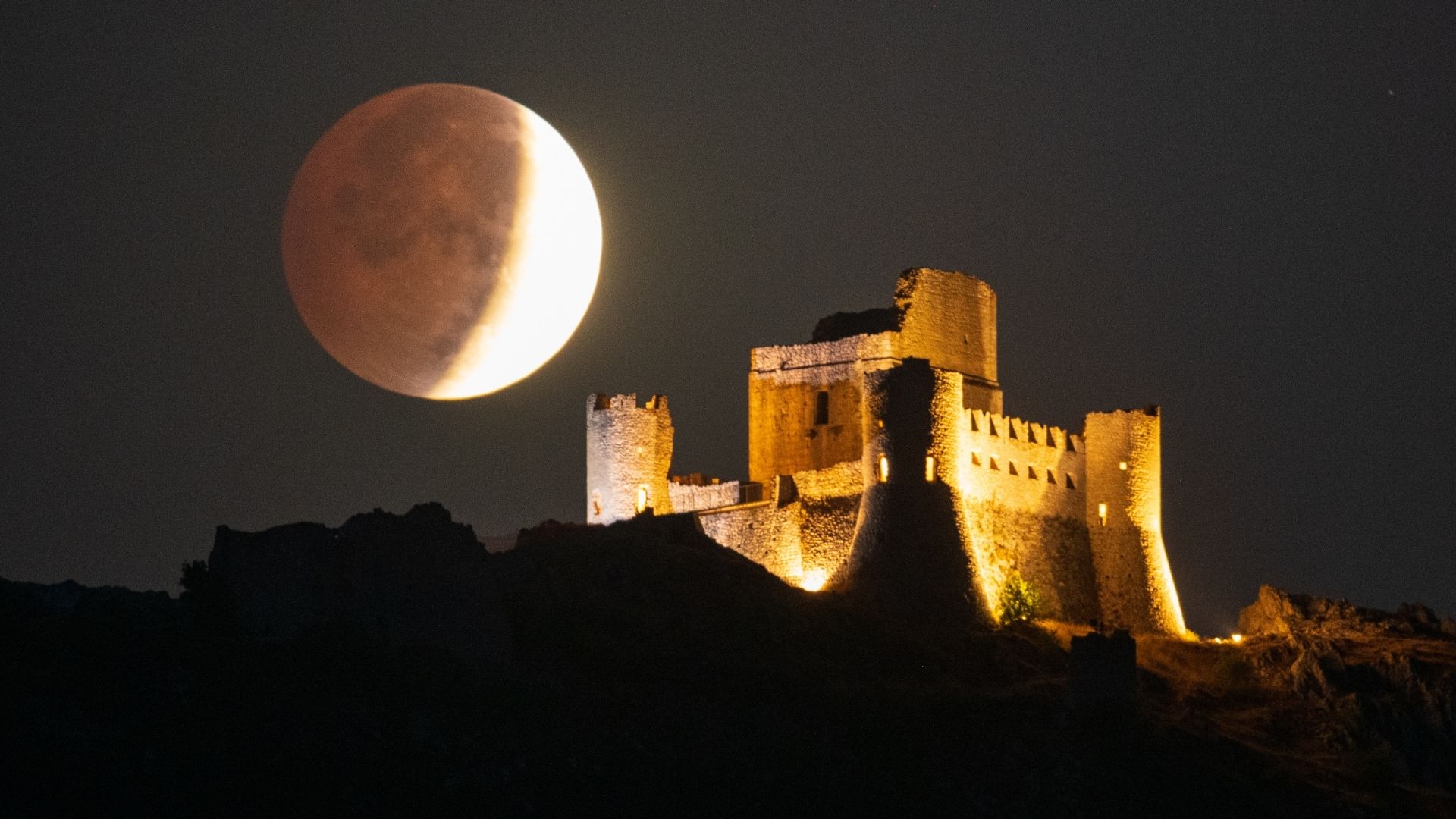
Photographer Lorenzo Di Cola lined up a stunning shot of the full moon as it glowed close to the Rocca Calascio fortress in Calascio, Italy, on Aug. 28, as Earth's shadow retreated from the lunar disk following the point of maximum eclipse.
The eclipsed moon shines close to the Rocca Calascio fortress in Italy. (Image credit: Photo by Lorenzo Di Cola/NurPhoto via Getty Images)
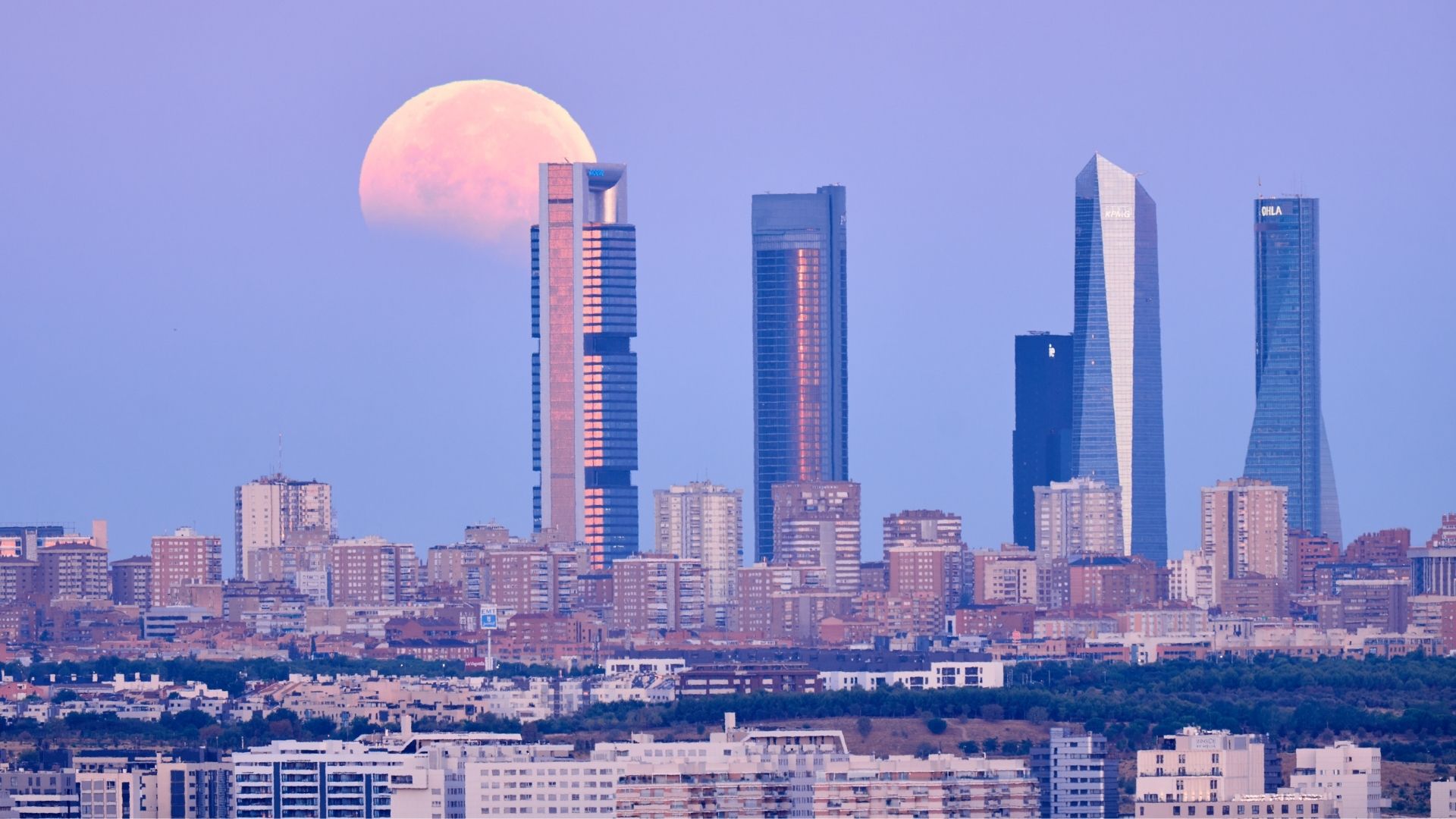
Finally, Angel Martinez captured this gorgeous shot of the eclipsed Sturgeon Moon setting behind a cluster of skyscrapers in Madrid, Spain, as atmospheric effects distorted the true color and outline of the lunar disk.
The moon bids farewell in the skies over Spain. (Image credit: Photo by Angel Martinez/Getty Images)
The next great lunar eclipse won't occur until New Year's Eve in December 2028, when a blood moon eclipse will transform Earth's satellite for 5.3 billion people across Asia, Australia and the Pacific, along with parts of Europe, Africa and the U.S.
Thankfully, we'll only have to wait until Feb. 6, 2027, for the next annular solar eclipse, when the moon will pass in front of the sun to create a magnificent 'ring of fire' along a narrow path crossing South America and West Africa.
Editor's Note: If you would like to share your astrophotography with Space.com's readers, then please send your photo(s), comments, and your name and location to spacephotos@space.com.
August's 96% partial lunar eclipse has been and gone, putting on a mesmerizing show for stargazers across the night side of Earth as out planet's shadow slipped silently across the face of the moon, forcing it to adopt a striking crimson hue at the point of maximum eclipse.
Tonight (Aug. 27-28), the full Sturgeon Moon will slip into Earth's shadow, creating a stunning "almost blood moon" as up to 96.2% of the lunar surface disappears into the darkest part of our planet's shadow, the umbra.
At maximum eclipse, much of the moon may take on an eerie reddish hue as sunlight filtered through Earth's atmosphere is refracted into the shadow and onto the lunar surface. Only a thin sliver of moon will escape Earth's umbra, appearing as a bright arc against an otherwise dim, rusty-red lunar disk.
Lunar eclipses are entirely safe to watch with the naked eye. Unlike a solar eclipse, you don't need filters or certified glasses. Just find the moon at the right time, then simply sit back, relax and enjoy the show. If you can't watch the eclipse in person, you can watch all the action unfold here on Space.com with these free livestreams, weather permitting. You can also follow along with the latest updates with our lunar eclipse live blog.
Who can see it?
The partial lunar eclipse favors observers across North and South America. About 12% of the world's population — 987 million people — will be able to see all phases of the eclipse, according to Time and Date, weather permitting.
Skywatchers across parts of Europe and Africa will also see the lunar eclipse. However, for many observers, including those in the UK, the moon will set shortly after maximum eclipse, cutting off the later stages of the partial phase.
When to look
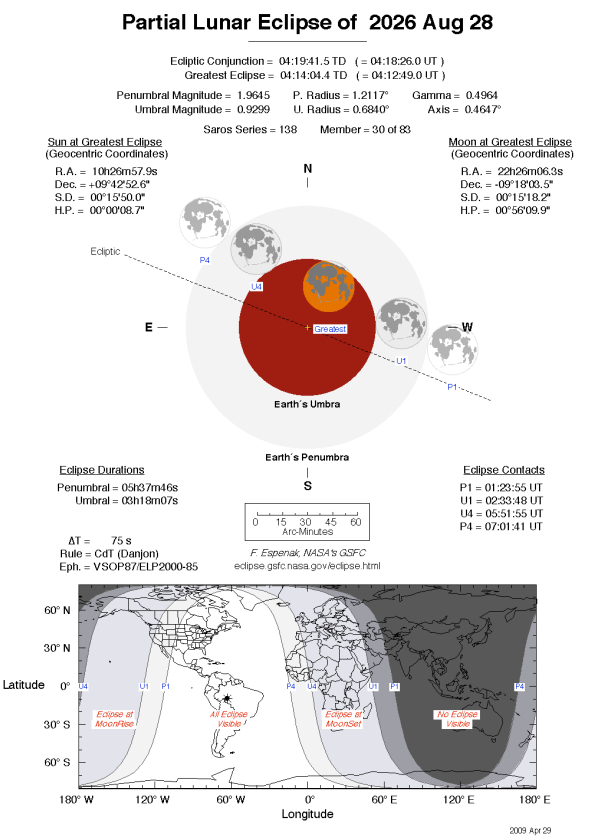
A map of the lunar eclipse on Aug. 27-28, 2026. Click the arrows in the bottom-left corner to expand to full screen. (Image credit: F. Espenak, NASA's GSFC)
The eclipse reaches its maximum at 12:12 a.m. EDT (0412 GMT) on Aug. 28, when 96.2% of the lunar surface will be covered by Earth's dark umbral shadow.
But if you have the time, it's worth settling in to watch as much of the eclipse as possible, particularly from the start of the partial phase at around 10:33 p.m. EDT on Aug. 27 (0233 GMT on Aug. 28).
The penumbral phase begins earlier, at 9:23 p.m. EDT on Aug. 27 (0123 GMT on Aug. 28), but the initial dimming will be extremely subtle because Earth's outer penumbral shadow is so faint.
I'd recommend starting your observations when the partial phase starts. From then on, you'll see Earth's shadow take progressively larger "bites" out of the moon. It can almost feel like watching the moon's monthly phases sped up into just a few hours as its appearance changes before your eyes.
Editor's Note: If you capture a photo of the August lunar eclipse and want to share it with Space.com's readers, then please send your photo(s), comments, name and location to spacephotos@space.com.
I had never seen a total solar eclipse. That's a strange thing to admit for the skywatching writer at Space.com, but the truth is that the opportunity had simply never come up.
When it comes to eclipses, I've always been beguiled by their beauty from afar. I've always hoped to see that strange moment when a black sun manifests to extend a glowing atmosphere into the fleeting twilight of totality. But after 37 years I hadn't once found myself in the path of the moon's inner shadow, and it was starting to feel like something that simply happened to other people.
That all changed when I joined Space.com and my life became anchored in the movements of the planets, moon and stars. I was offered the chance to report on the 2026 total solar eclipse from Spain, while our skywatching editor, Daisy Dobrijevic, witnessed totality from an HX Expedition's cruise aboard MS Spitsbergen in East Greenland. In the end, my first eclipse experience would be everything I had hoped for and more. A perfect blend of science, awe, culture and faith, that I'll carry with me for the rest of my life.
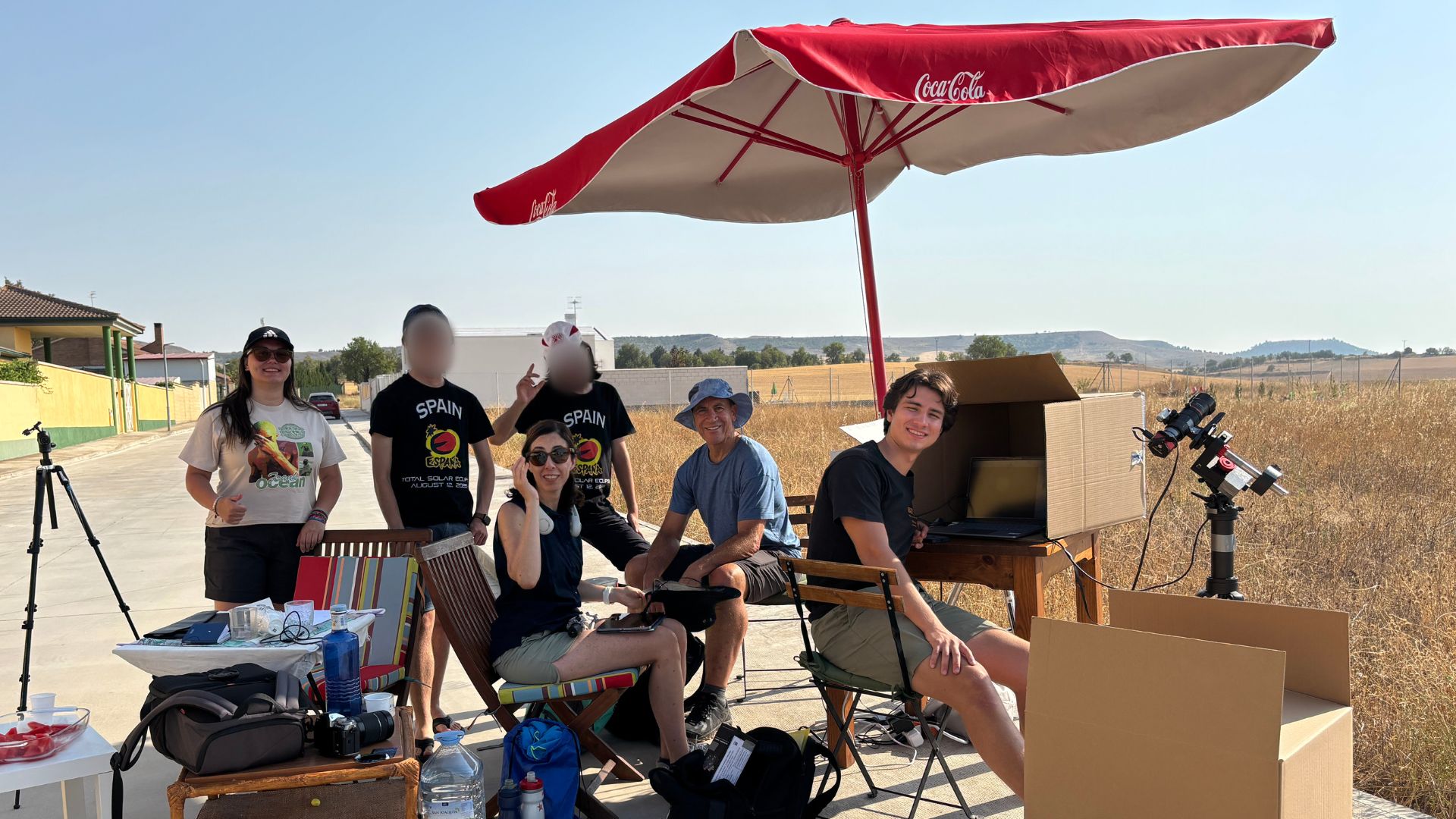
I covered the Aug. 12 eclipse from the small village — or pueblo — of Valoria la Buena in central Spain. There, I joined a team of citizen scientists from the Dynamic Eclipse Broadcast (DEB) Initiative, a voluntary initiative guided by professional astronomers from Southern Illinois University and, where possible, part funded by grants from the NASA Science Mission Directorate and the National Science Foundation. For this eclipse, the DEB was tasked with capturing data on the sun's corona while transmitting a live feed to a NASA webcast from within the path of totality.
Months of preparation, writing and trading emails with the DEB team lead Charles Greenwald came and went. Before I knew it my bags were packed, my passport was in hand and I was standing in a taxi rank outside the Madrid-Barajas Airport in the heart of Spain.
Hours of mild embarrassment ensued as I used broken Spanish and hand gestures to negotiate my way across the city to the Chamartín-Clara Campoamor station. Then onto a high-speed train heading north to Valladolid — a beautiful city whose pronunciation I butchered for the entirety of my stay.
Into the path of totality
Upon arrival I was met by Charles' brother in law Santiago and nephew Andreas, who had travelled from Guadalajara, Mexico to witness the eclipse. Andreas led us on a short detour to hunt down some quality coffee beans — he's something of an aficionado. Then on to Valoria la Buena, by means of a final 30-minute car ride that would take us deep into the path of totality.
I had embraced Charles' idea of joining the DEB group not only for the citizen science, but also because of the unique opportunity to observe the eclipse with a multinational group hailing from Mexico, the U.S. and, more locally, members from Madrid and Valladolid.
Half of the group spoke fluent English while the other spoke none at all — a mix that set the stage for an intoxicating blend of meaningful conversation and rapt observation, as the group talked passionately in Spanish over magnificent home-cooked food prepared chiefly by Santiago, his wife Gaby and Andreas.
Once at the house in Valoria la Buena I finally got the chance to connect face to face with Charles, after months of sporadic video calls. In the months leading up to the eclipse Charles had dedicated precious down time to prepare his team and test new software for the solar telescopes.
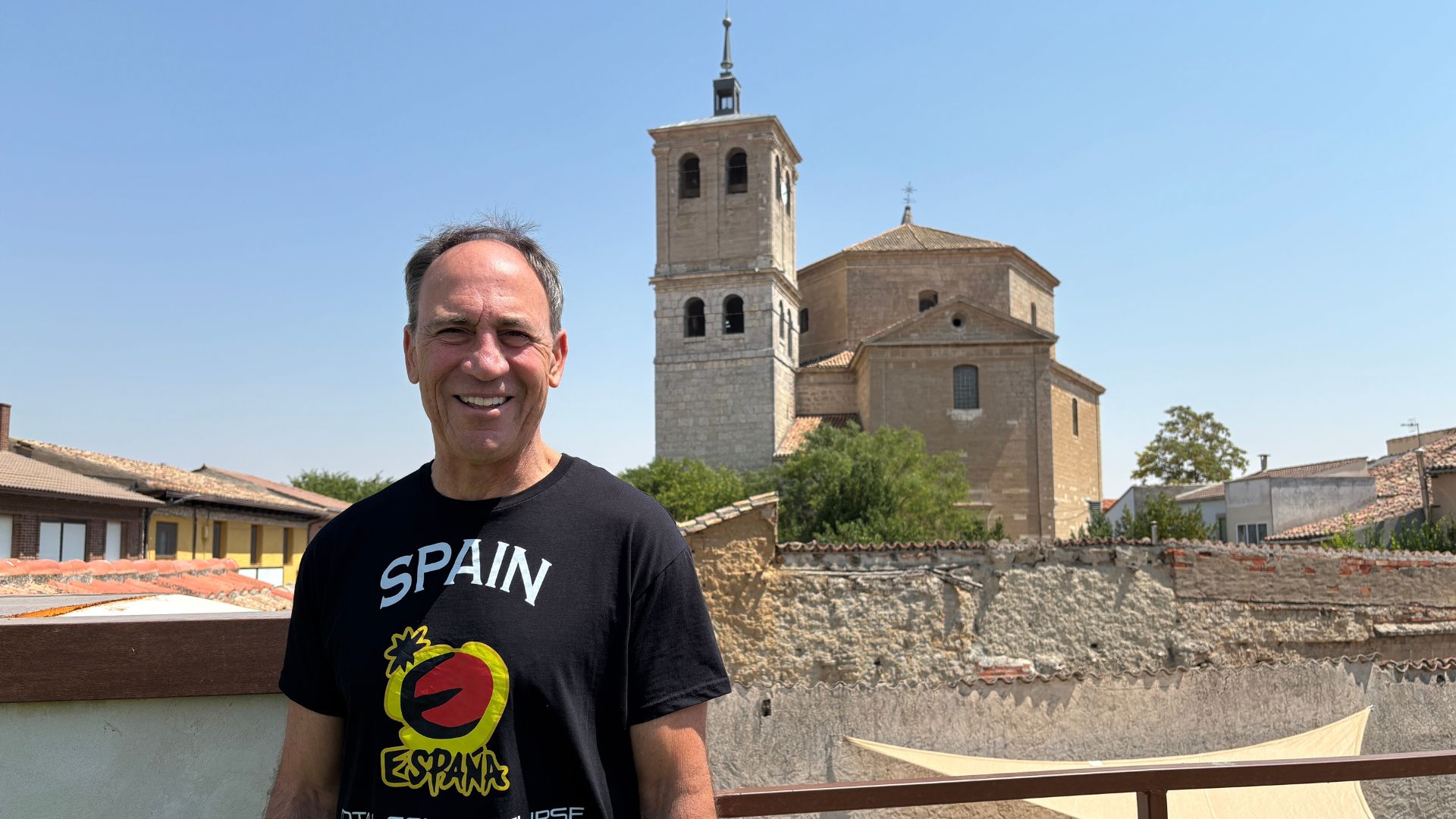
Charles Greenwald photographed in front of the church in Valoria la Buena, Spain. (Image credit: Anthony Wood)
As an undergraduate, Charles had studied optics and physics before ultimately pursuing a career in aviation, which nowadays sees him fly around the world for the global shipping and logistics giant FedEx. Over dinner that first night I discovered that he was also a retired colonel in the United States Air Force, and had flown some 35 different aircraft ranging from an F15 fighter to a C-17 globemaster over the course of his military career.
He had first discovered the DEB in an article from Sky & Telescope during a brief FedEx stopoff in Sydney, Australia. After heeding the call for volunteers and spent the next year assembling a team of family and students to capture the Great American Eclipse of 2024.
Several members of the group, including Santiago, Andreas and Arath — a student at the Universidad de Guadalajara — are veterans of that first campaign. For others, like myself, it would be an incredible first. But Charles' passion is what brought it all together.
1 day to totality
In the blink of an eye it was Aug. 11 — and we had just one day to go.
With prep time running short, I packed my camera gear and headed out to our eclipse site, where the DEB team was busy practicing with their solar scope.
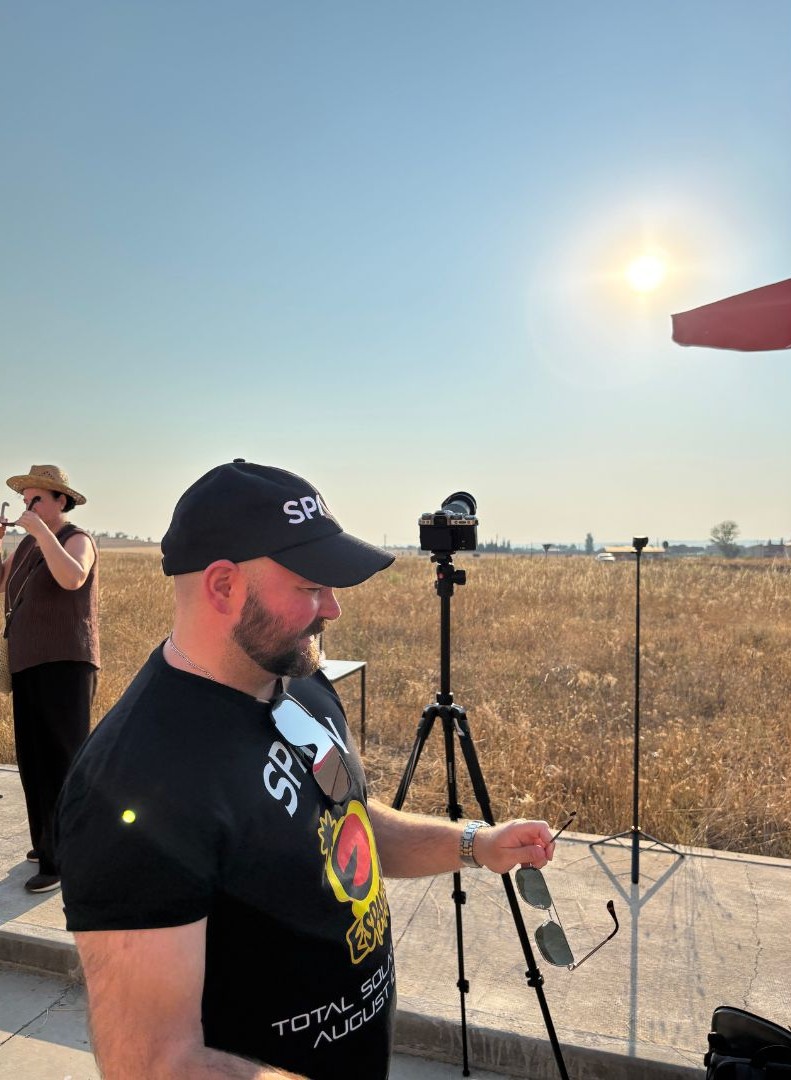
Slowly getting cooked by the Spanish sun at the observing site. (Image credit: Anthony Wood)
My goal was to observe and get the lay of the land. I also needed a little time to practice with my own humble setup — a Fujifilm X-T5 camera with a XF 70-300 mm lens, plus a Manfrotto tripod and a handy solar filter courtesy of Celestron, which worked magic with the aid of a little Blu Tack.
The team had managed to convince a kindly resident to let us set up outside their villa, and to use their internet to ensure connectivity for the NASA stream.
It was a perfect spot with a near-pristine view to the west — an important feature considering that the sun would be less than 10 degrees above the horizon at totality — less than the width of a clenched fist held at arm's length.
There had been a little commotion earlier that day. Upon hearing that his parents had agreed to let perfect strangers access their internet, the son had, understandably, cautioned against letting Charles use the Wi-Fi, fearing that his story was a little too fanciful, and that he was some kind of scam! Thankfully it all got straightened out with a quick Google search, and we didn't have the ethernet plug pulled on the operation.
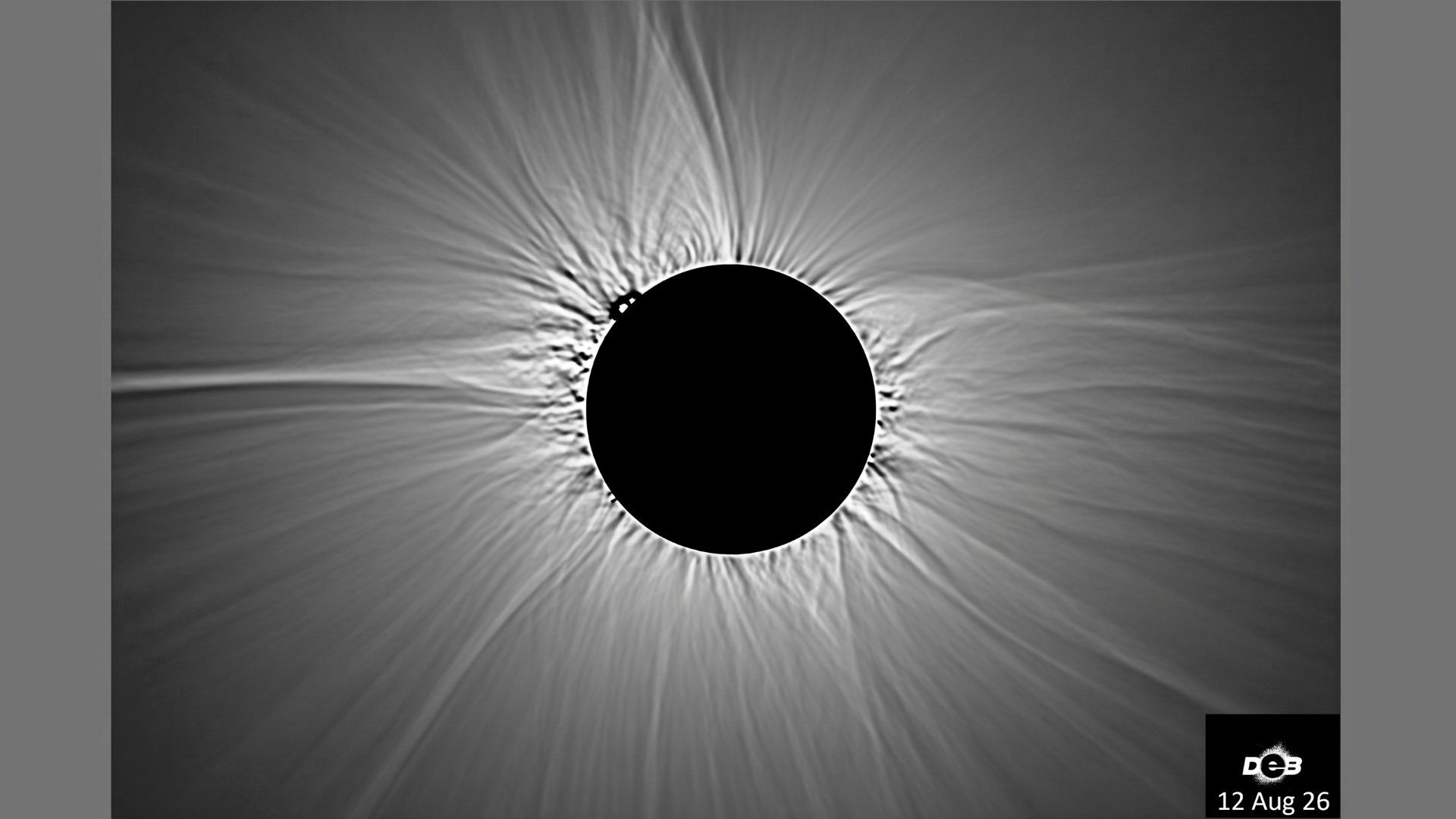
A composite view of the Aug. 12 eclipse captured through the scope of a DEB telescope in Spain. (Image credit: Dynamic Eclipse Broadcast Initiative)
Charles and Arath were already getting the telescope to track the sun by the time I arrived. They'd also tested their uplink with NASA and the connection to the main DEB team 91 miles (147 kilometers) to the northwest in the city of Leon, which was looking stable.
I took the opportunity to catch up with Arath, who dreamed of pursuing a masters degree in mathematics at Cambridge University upon completing his studies at the Universidad de Guadalajara in Mexico. Nearby, Aimar and Aaron — a pair of passionate high schoolers from Spain — had their heads down as they worked on their own mathematical equations in the patch of shade cast by a solitary umbrella. They had reached out to join the group after hearing about the DEB on a university noticeboard, and later that day quizzed me on the best places to find the latest scientific studies. I'm 80% sure that they're already smarter than me.
All the while I was getting to grips with solar photography. I had — with a little help — managed to centre the sun in my frame and after 15 minutes of toying with settings had snapped my first crisp shot of the solar disk.
From left to right, DEB volunteers Rocío, Adriana, Charles and Arath on location the day before the total solar eclipse. (Image credit: Anthony Wood)
Everything was looking great. The weather, our greatest potential adversary, was playing nicely. As I noted earlier, the sun would be low in the sky around the time of totality, putting a lot of atmosphere between us and the eclipse for potential clouds to coalesce in.
But Charles had been tracking the forecasts closely, and everything he'd seen indicated that the western sky would be clear as the eclipse darkened the sky on the 12th. Only one unlikely threat to totality remained.
The summer had seen Europe endure an oppressively dry, hot summer, which had seen wildfires spring up across the continent. Having spent a week just north of the Spanish border in Carcassonne, France in July, I could testify to the colossal smoke clouds that billow up from such a fire, which could easily obscure the sun as firefighters worked to bring it under control on the ground below. Thankfully, no such threat materialized.
I sought a little solitude on that final night before the eclipse. The terrace was unoccupied, so I laid back on the astroturf, traced out the constellations above and allowed my anticipation to build. As I watched, a single Perseid raced through the stars of the Summer Triangle — a stunning opening act for the solar spectacle to come.
Eclipse day in Valoria la Buena
The day of the total solar eclipse had finally arrived — and with it a strange nervous energy that made me feel as if I was vibrating on a cellular level. I was hours from seeing something that had terrified and awed my ancestors, drawn adventurers half way across the globe and allowed scientists to understand the true nature of our parent star.
Charles, on the other hand, confessed to being rested and ready, despite working through a last minute technical glitch that had reared its head in the past few days.
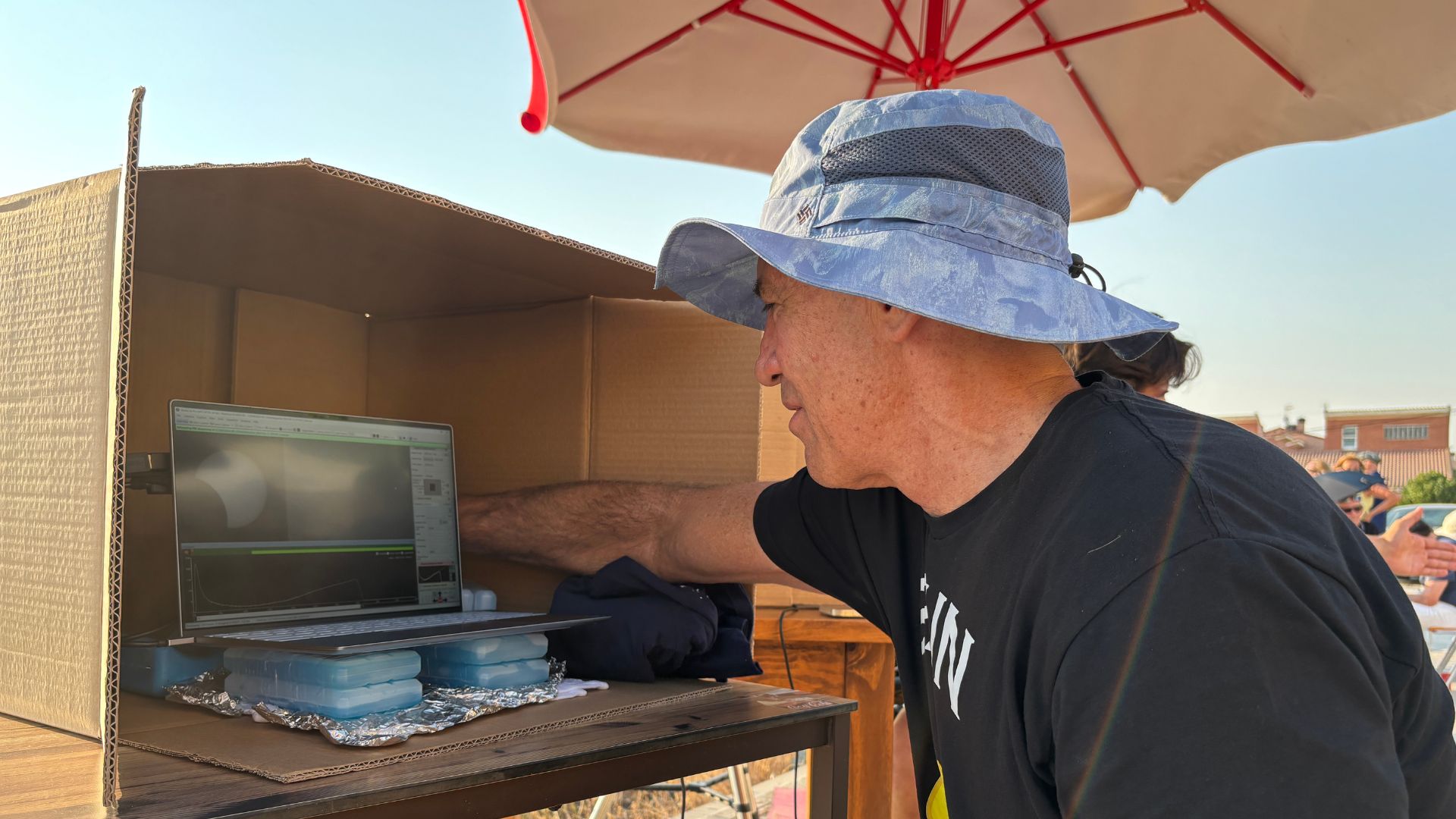
The fan on the computer responsible for sending commands to the telescope and uplinking to NASA had simply given out. At the height of Spanish summer. In the middle of an oppressive heatwave. Ordinarily that would probably have been game over. But this is a team including physics heads, an engineer and all round brilliant people, so they came up with a plan. They built a DIY heatsink.
Greenwald and the homemade heatsink fight the Spanish heat. (Image credit: Anthony Wood)
The gameplan went as follows: Andreas put a bunch of wet towels in the freezer overnight. Said towels were then transported in a cooler and placed at the bottom of a nice, shaded cardboard box at the observation site, with foil between the towel and the computer.
Add to that a hand fan and cooler blocks from the freezer and Viola, you've got yourself a homemade heatsink. Human ingenuity versus technology and a Spanish heatwave. We would know the victor soon enough.
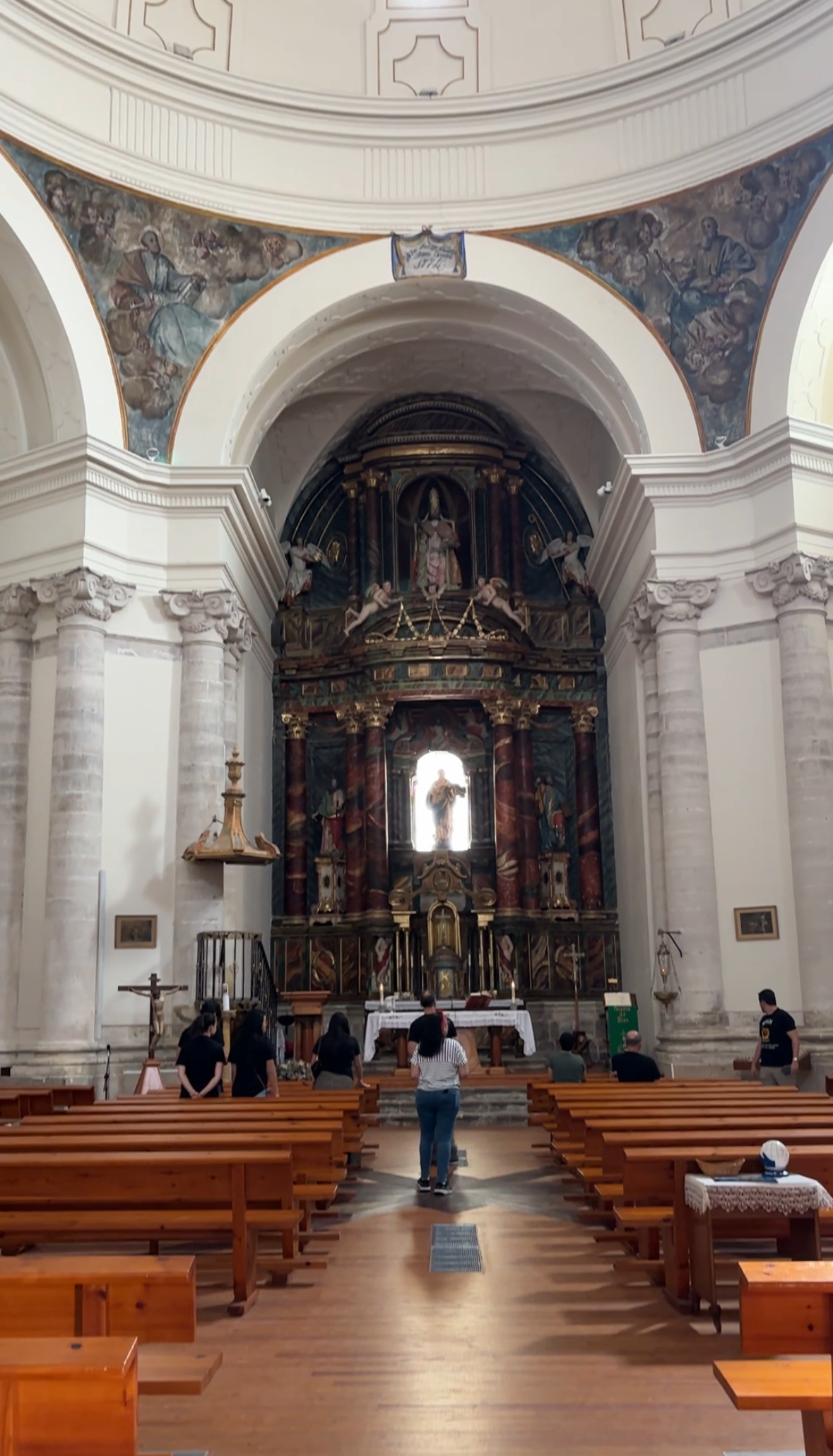
The church at the heart of Valoria la Buena. (Image credit: Anthony Wood)
In the meantime I had another first to experience. Andreas had arranged for a local Catholic priest to hold a special Mass at the local church to mark the day of the eclipse. And I'd been invited to join them.
I am not a Catholic myself, but have always been taken with the beauty of European churches and cathedrals, and was keen to experience Mass. After quizzing Andreas on theology and triple checking it wasn't an imposition, I gratefully accepted.
The church bells had been a constant companion during my stay in Valoria la Buena, chiming every hour on the hour since my arrival. They emanated from a stunning 250-year-old church located at the heart of the pueblo, which had been constructed over three distinct phases.
During Mass, the priest remarked in Spanish on the incredible nature of the upcoming eclipse as the group listened attentively while wearing specially made eclipse t-shirts. A poignant moment of religion and science in absolute harmony.
A unique eclipse
After, I disappeared to prepare while Charles and the DEB team ferried the scope and equipment to our observing site. There was time for one final communication test with NASA.
Then it was time. And it wasn't just us.
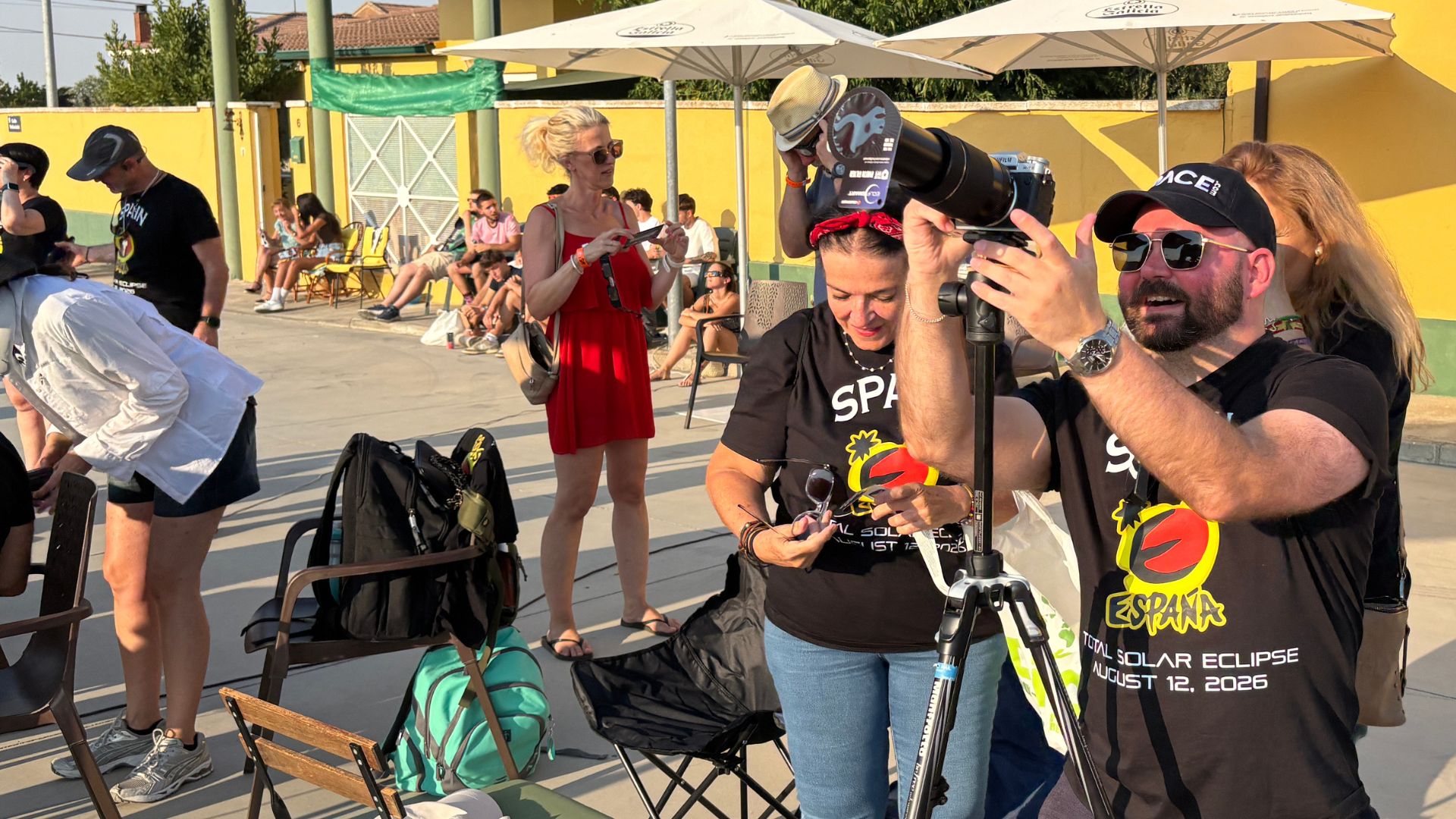
Half the town must have turned out to experience the eclipse. Citizen scientists and family mingled with friends and locals as an impromptu block party got underway in Valoria la Buena.
I set up my camera close to Charles and the DEB scope, as the DIY heatsink worked to cool the fanless laptop in defiance of the Spanish heatwave.
Working to capture my first photo of the eclipsed sun. (Image credit: Anthony Wood)
Aaron, Aimar, Rosa and Siempre watched on as I double-checked the solar filter and settings on my camera, while glancing paranoid at the eclipse timings on my laptop. We were quickly joined by a semi-circle of enthusiastic locals curious about everything from the eclipse and the DEB to science journalism and Space.com.
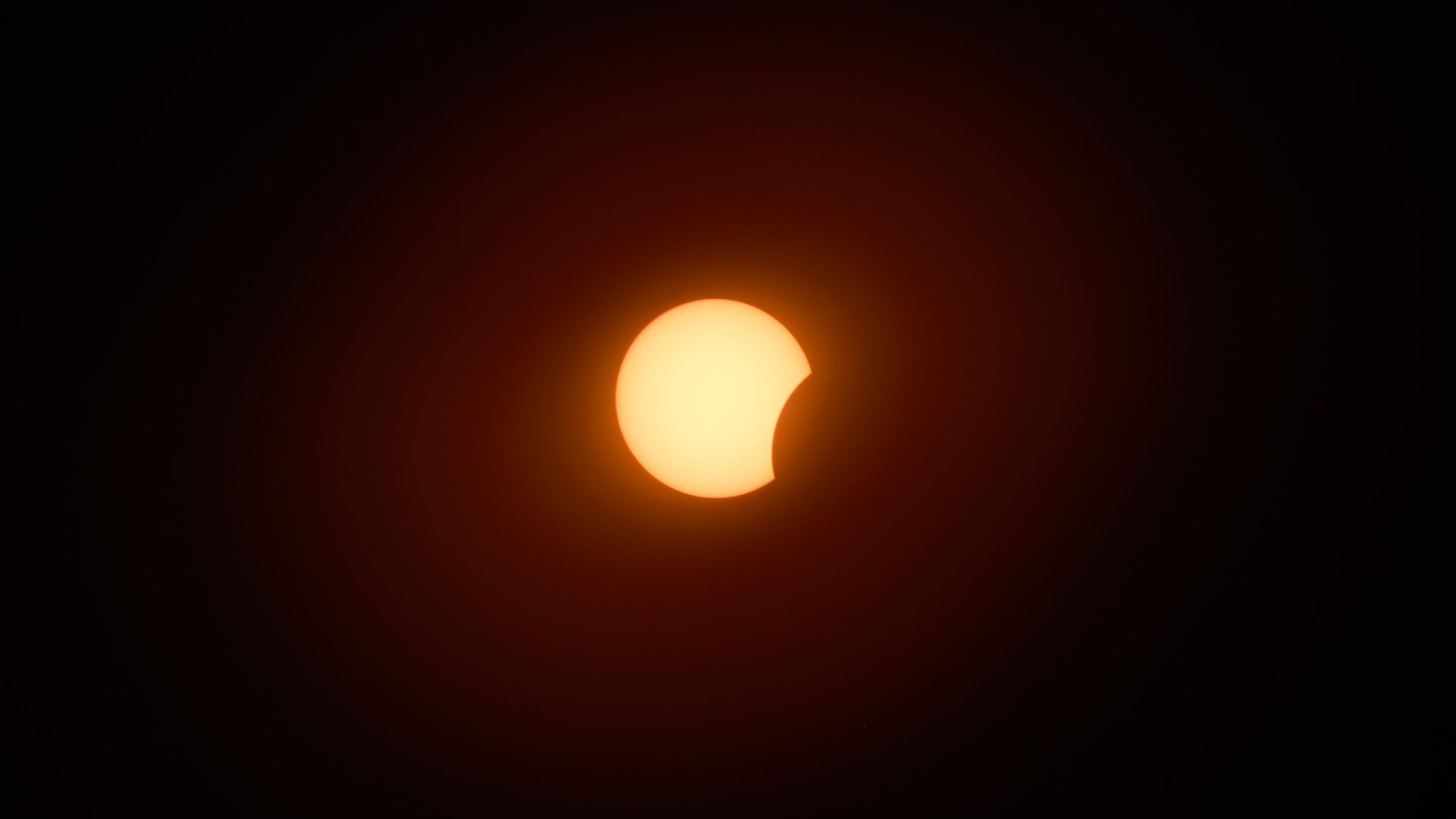
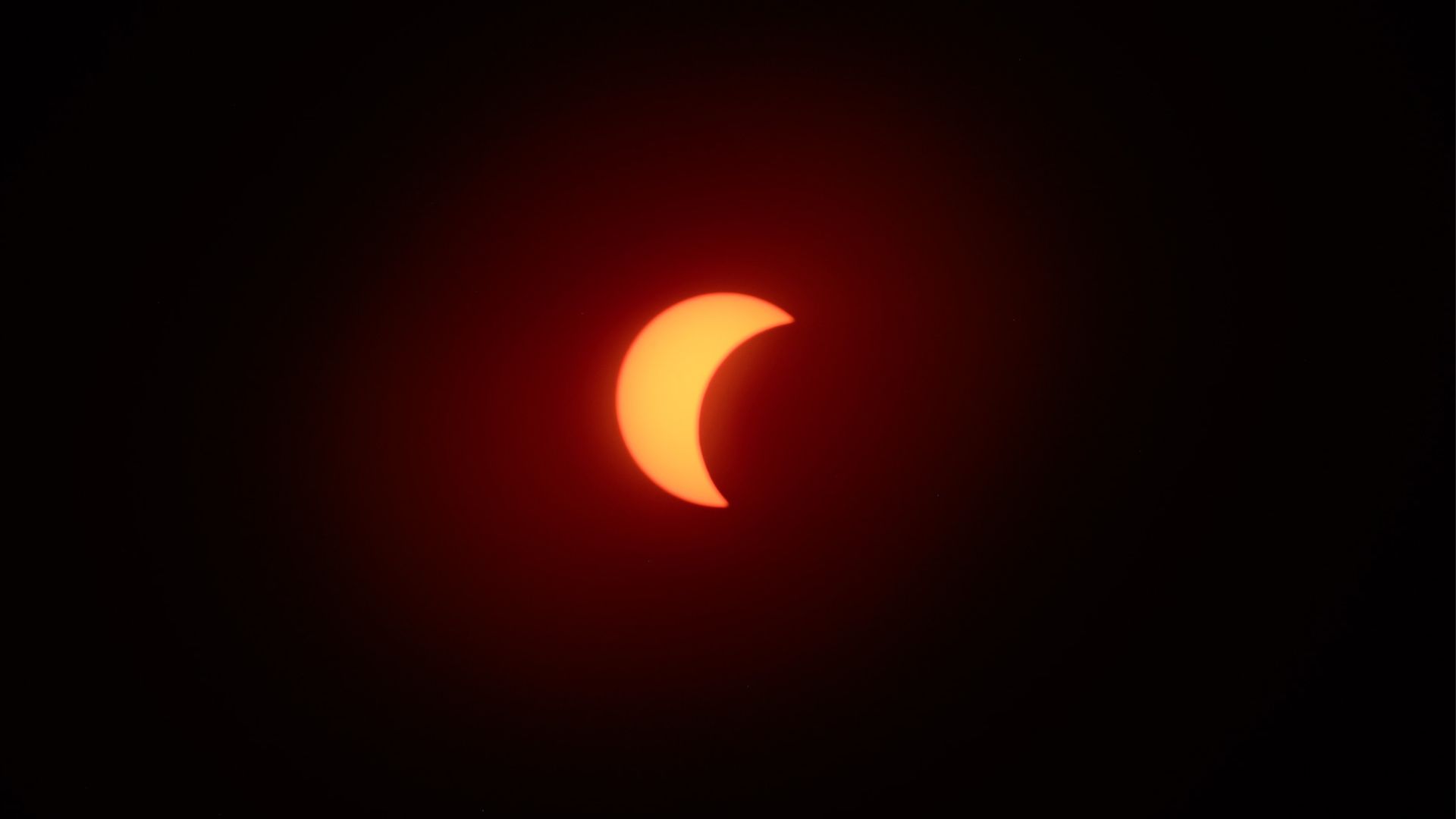
As a result I was lost in conversation as the moment of first contact arrived and the moon took its first tentative bite out of the sun. Someone shouted and I snapped to. I immediately forgot how to use a camera. Remembered. And snapped my first photograph of the eclipsed sun.
My first instinct was that something was ineffably wrong. The sight had activated an ancient and superstitious circuit in my brain that insisted the sun simply shouldn't look this way. That I should be doing something to make it whole again.
Anthony WoodAnthony WoodAnthony Wood
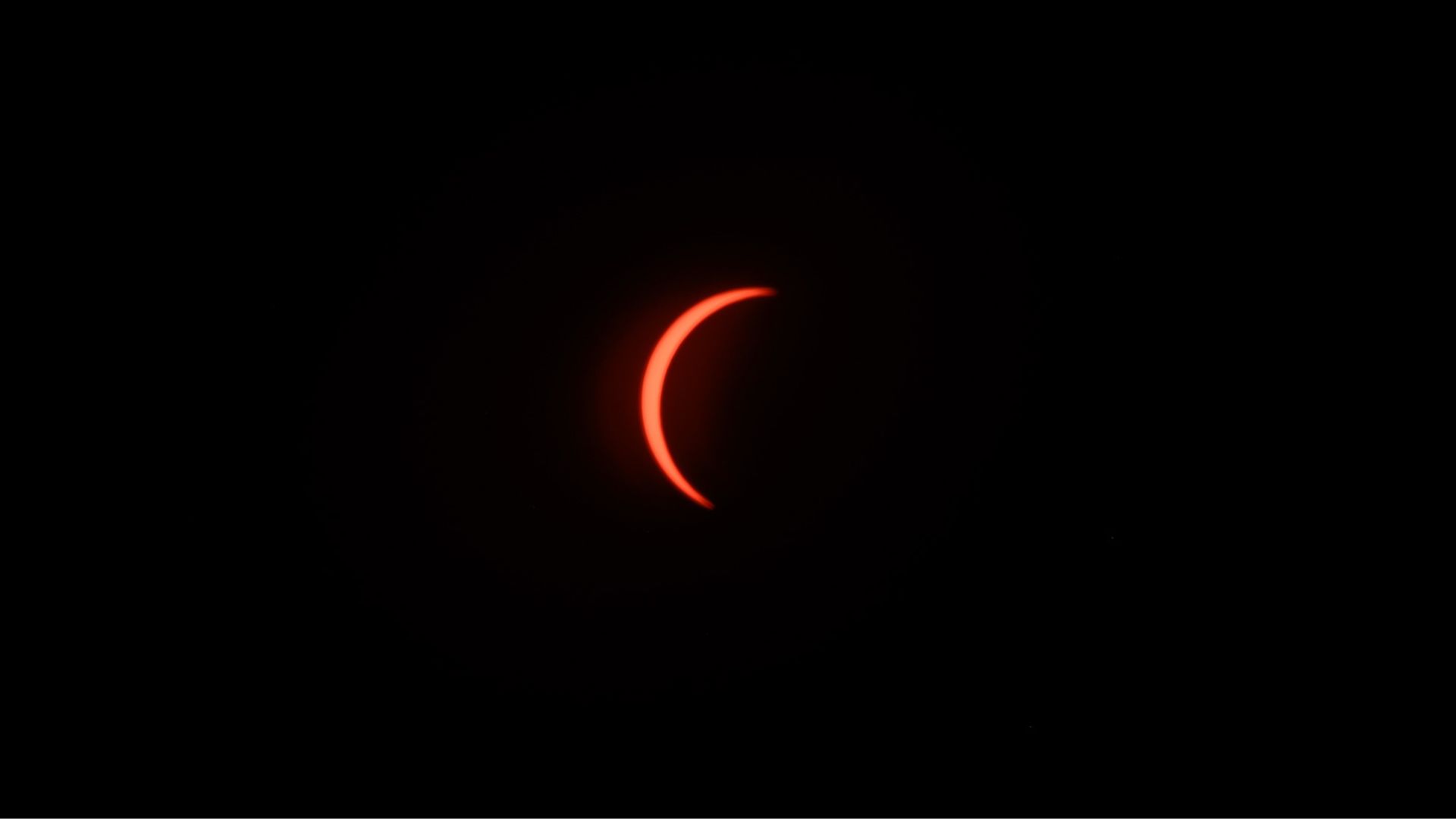
Nervous excitement waxed in time with the waning of the solar crescent, which grew thinner with each minute as the moon's silhouette sank ever deeper into the sun. It was spectacular, but in hindsight little more than a prelude to the wonder of totality.
As the last of the solar disk threatened to slip behind the moon I panicked. Alternating between eclipse glasses and my hastily retrieved solar binoculars, unsure which would provide the best experience.
The binoculars.
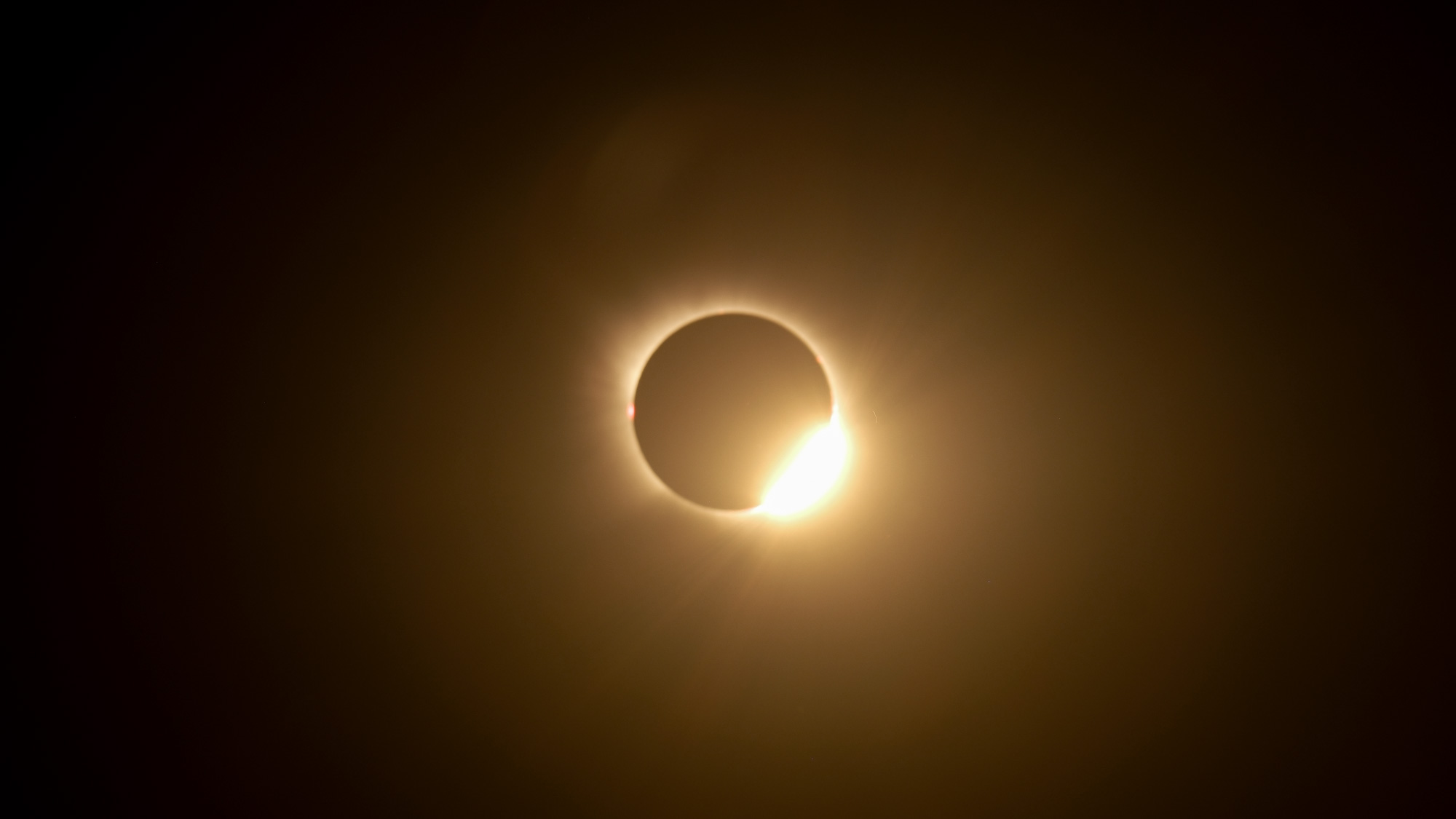
Shouts of awe echoed behind as the final shred of the solar disk created a magnificent Diamond ring flare effect on the trailing edge of the lunar disk. I ripped the solar filter away from my camera and lowered the binoculars from my eyes.
The last sliver of the sun's disk forms a "diamond ring" effect around the moon on Aug. 12. (Image credit: Anthony Wood)
The moment I had envisioned for years in my mind's eye years had finally arrived, more spectacular than I could have hoped.
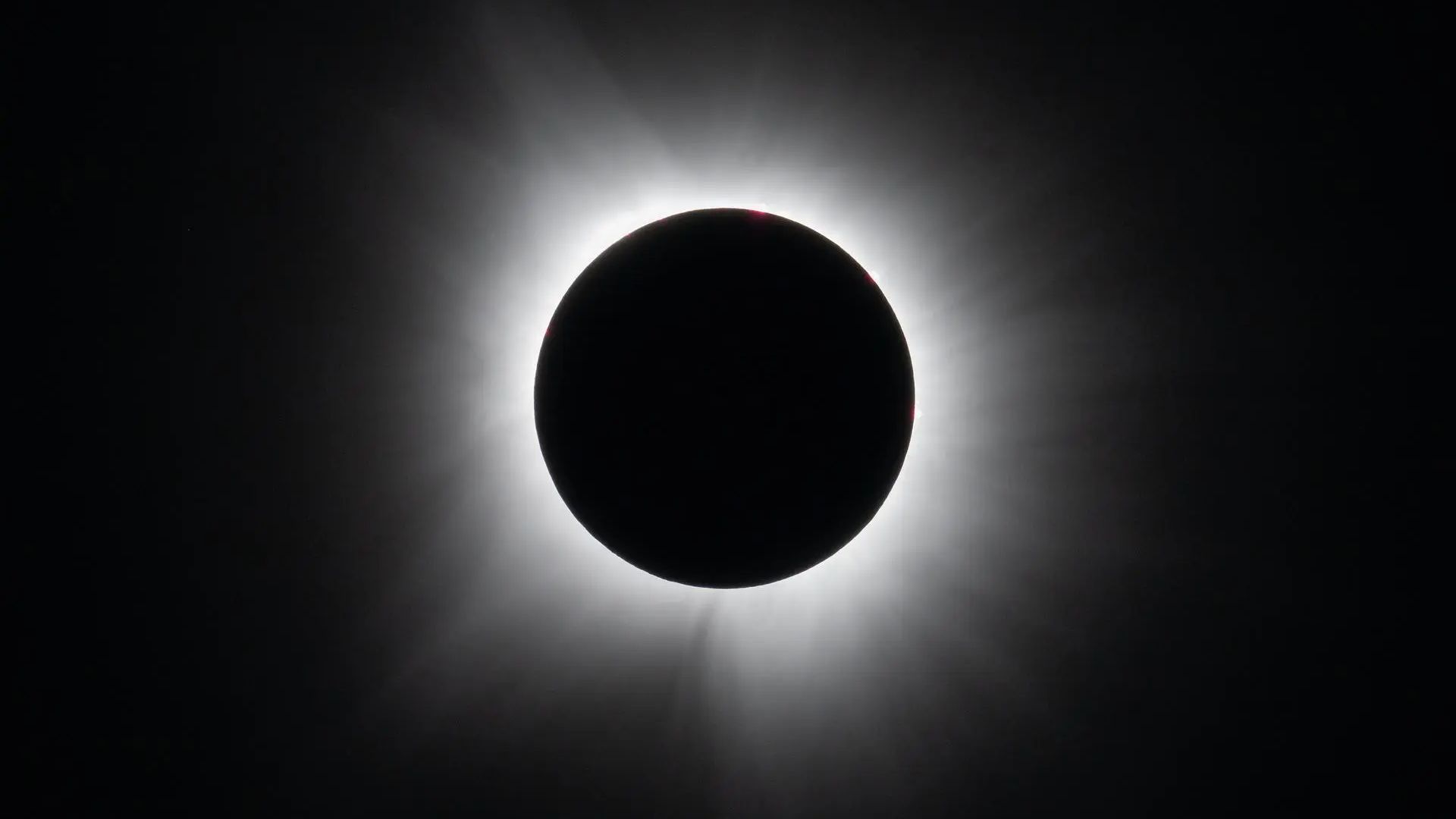
With my own eyes I saw the sun's atmosphere reach out from behind the moon's silhouette. A black star shining in a false twilight.
As before, the sight stroked a primal part of my psyche that told me it was all wrong. Like watching a leviathan pass just beneath the surface in a fathomless ocean. To my senses, the eclipsed sun seemed to fill the sky. Venus was visible gleaming star-like and brilliant above, but the impossible sun was our only focus.
I grabbed my unfiltered binoculars for a closer look - something that can only be done when the sun's photosphere is completely masked by the moon during totality. A bright prominence glowed to the left of the lunar disk, outshining the corona that surrounded the natural satellite.
A black star shines during totality over Valoria la Buena. (Image credit: Anthony Wood)
It was our eclipse. 1 minute and 37 seconds of totality. Another will follow in 2027, but it wouldn't be the same. It'll be a different corona, at a different altitude, enjoyed with different people. Utterly unique.
I triggered my camera shutter a dozen times. I'd knocked it out of focus upon removing the solar filter. It didn't seem to matter.
As the sun emerged from behind the moon I turned my eyes back to my camera, which had decided to stop talking to my phone at some point during totality. Ten minutes of berating the inanimate object later the connection was back, and my (out of focus) views of totality were on their way to our solar eclipse live blog.
Charles and the team had been diligently capturing data on the sun's atmosphere throughout totality, while streaming live views to NASA as they held their eclipse show in Leon.
It was, to me, a shining example of citizen science, which had brought family, friends, locals and students together as one to enjoy one of the most spectacular sights that our solar system has to offer.
The partially eclipsed sun set over the western horizon as Charles accepted the cheers of the DEB group. Our last night in Valoria la Buena was spent among newfound friends, discussing the Strokes, love and coffee, all while enjoying a little rum.
My return journey was a malaise of delayed trains, a cancelled flight and a sea of unfamiliar faces. But none of that mattered. I was dwelling on that magnificent black sun at the moment of totality, of the unnatural twilight and of the people I met along the way.
August's 96% partial lunar eclipse has been and gone, putting on a mesmerizing show for stargazers across the night side of Earth as out planet's shadow slipped silently across the face of the moon, forcing it to adopt a striking crimson hue at the point of maximum eclipse.
A spectacular partial lunar eclipse will darken 96% of the full "Sturgeon Moon" tonight (Aug. 27-28). Here's how you can watch the "almost blood moon eclipse" live online from the comfort of your home.
Each phase of the partial lunar eclipse will occur simultaneously for everyone on the night side of Earth. But if clouds ruin your view — or the moon is below the horizon at the time of the eclipse — there's no need to fret!
Read on to discover a selection of YouTube live streams that'll let you watch each phase of the August partial lunar eclipse online for free. You can also follow along with all the action with our lunar eclipse live blog.
Time and Date
Time and Date will host a livestream of the eclipse on its YouTube channel starting at 10 p.m. EDT on Aug. 27 (0200 GMT on Aug. 28). The stream will feature real-time views of the Sturgeon Moon as Earth's shadow darkens its surface in the skies above Portugal and Spain, weather permitting.
Experienced hosts astrophysicist Graham Jones and Journalist Anne Buckle will provide expert commentary and scientific insights on the nature of the eclipse throughout the event.
The Griffith Observatory
Los Angeles' famous Griffith Observatory will also host a livestream, which will begin at 10:25 p.m. EDT on Aug. 27 (0225 GMT on Aug. 28), providing live views — and public onsite viewing — as the moon turns a deep crimson at the peak of the lunar eclipse.
The Virtual Telescope Project
The Virtual Telescope Project YouTube stream of the lunar eclipse starts at 9:30 p.m. EDT on Aug. 27 (1:30 GMT on Aug. 28), featuring live views of the Sturgeon Moon captured by telescopes in Manciano, Italy and Chile. The stream will be accompanied by commentary and insights from astrophysicist and astronomer Gianluca Masi.
Editor's Note: If you would like to share your astrophotography with Space.com's readers, then please send your photo(s), comments, and your name and location to spacephotos@space.com.
August's 96% partial lunar eclipse has been and gone, putting on a mesmerizing show for stargazers across the night side of Earth as out planet's shadow slipped silently across the face of the moon, forcing it to adopt a striking crimson hue at the point of maximum eclipse.
A dramatic partial lunar eclipse will occur tonight (Aug. 27-28), with almost the entire moon slipping into Earth's shadow.
At its peak, at 12:12 a.m. EDT (0412 GMT) on Aug. 28, 96.2% of the lunar surface will be covered by Earth's dark umbral shadow, leaving only a slender portion of the moon directly illuminated by the sun. The rest of the lunar surface may take on an eerie reddish-orange hue, creating an impressive 'almost blood moon'. The eclipse will be visible from North and South America, Europe and Africa, though exactly how much you'll see will depend on your location (and clouds!).
The eclipse begins when the moon enters Earth's faint outer shadow at 9:23 p.m. EDT on Aug. 27 (0123 GMT on Aug. 28).
Things get much more interesting at 10:33 p.m. EDT (0233 GMT), when the partial eclipse begins and Earth's dark umbral shadow starts to creep across the lunar surface.
Maximum eclipse occurs at 12:12 a.m. EDT (0412 GMT) on Aug. 28, when 96.2% of the moon will be immersed in Earth's umbra.
The partial phase ends at 1:51 a.m. EDT (0551 GMT), with the penumbral eclipse concluding at 3:01 a.m. EDT (0701 GMT).
A map of the lunar eclipse on Aug. 27-28, 2026. Click the arrows in the bottom left corner to expand to full screen. (Image credit: F. Espenak, NASA's GSFC)
North and South America are particularly well-placed for the entire eclipse.
For European skywatchers, the eclipse takes place during the early morning of Aug. 28, with the moon setting while the partial eclipse is still underway. From London, maximum eclipse occurs at 5:12 a.m. BST, just over an hour before moonset.
How to view the lunar eclipse
Unlike a solar eclipse, you don't need any special equipment to view a lunar eclipse. Simply head outside and look up. If you own binoculars or a telescope, take a look through them for an even better view of Earth's shadow sweeping across the lunar surface.
Editor's Note: If you capture a photo of the August lunar eclipse and want to share it with Space.com's readers, then please send your photo(s), comments, name and location to spacephotos@space.com.
Here's what to expect during each stage of the Aug. 27-28 partial lunar eclipse, as our planet's colossal shadow swallows 96% of the moon's surface for billions on the night side of Earth.
August's lunar eclipse is the closing act of a dramatic two-part show, the opening act of which began on Aug. 12 as the moon covered the face of the sun to trigger a spectacular total solar eclipse over parts of Greenland, Iceland and Spain.
cted during a lunar eclipse are staggeringly different from its solar equivalent. One major bonus of a lunar eclipse is that each stage unfolds simultaneously for everyone on the night side of Earth, where the lunar disk is above the horizon. However, the local time for each stage will differ based on your location.
Lunar eclipses are also completely safe to view with the naked eye, or even through a pair of binoculars of a telescope, which will offer a magnified view of the moon as Earth's shadow sweeps across its cratered landscape.
Earth's shadow is divided into two concentric cones that are only visible during the brief window of a lunar eclipse. The outer penumbral cone casts a soft, wide shadow, while the inner umbra reveals the distinct curve of Earth's silhouette.
The 5 stages of the partial lunar eclipse August 2026
Stage 1: Earth's penumbral shadow sweeps across the moon
The penumbral stage of the May 2021 lunar eclipse, captured over Chile. (Image credit: Photo by MARTIN BERNETTI/AFP via Getty Images)
The eclipse officially begins at 9:23 p.m. EDT on Aug. 27 (0123GMT on Aug. 28), as Earth's outer penumbral shadow begins to cover the moon's surface, according to TimeandDate.com.
Darkening of the lunar disk during this stage is incredibly subtle, becoming most apparent in the moments before Earth's inner shadow appears to transform August's "Sturgeon Moon", which is named for the time of year when the large fish were easily caught in North America.
Stage 2: Partial lunar eclipse begins
Earth's shadow swallows the moon during the partial phase of a lunar eclipse. (Image credit: Photo by Aditya Irawan/NurPhoto via Getty Images)
Earth's inner umbral shadow will take its first "bite" out of the moon at 10:33 EDT on Aug. 27 (0233 GMT on Aug. 28), announcing the start of the partial phase of today's deep lunar eclipse.
The umbral shadow will first appear as a small semicircle of shadow close to the dark expanses of Oceanus Procellarum (the Ocean of Storms) and Mare Humorum on the moon's southwestern edge, before swiftly spreading to swallow the nearby moonscape.
This partial phase of a lunar eclipse is the only opportunity most of us will get to see the grand sweep of Earth's silhouette with our own eyes, as our planet performs like a doll in a cosmic marionette, casting its shape in shadow against the backdrop of its natural satellite.
Stage 3: Maximum eclipse
The moon takes on a red hue as the majority of its surface passes within Earth's shadow during a lunar eclipse. (Image credit: Photo by Thilina Kaluthotage/NurPhoto via Getty Images)
The eclipse will reach its peak at 12:12 a.m. EDT (0412 GMT) on Aug. 28, as 96% of the lunar disk is smothered in Earth's umbral shadow, leaving a dazzling crescent exposed to direct sunlight on the moon's northern limb.
Around this time, you may notice a subtle red hue infuse the moon, as sunlight filtered through Earth's atmosphere is refracted, or bent onto its surface. It may appear as if the light from every sunset and sunrise on Earth is simultaneously striking the lunar disk, revealing prominent craters and dark lunar seas in spite of the shadow covering it.
Stage 4: Earth's inner shadow slips from the moon
Earth's shadow retreats from the lunar disk in the skies over Nepal. (Image credit: Photo by Narayan Maharjan/NurPhoto via Getty Images)
Earth's inner umbral shadow will steadily retreat from the moon in the hours. The crimson hue that may have been visible at the height of the eclipse will gradually fade as the crescent of the lunar disk exposed to direct sunlight grows, and normality reasserts itself over the natural satellite.
The last vestige of Earth's inner shadow will depart the lunar surface at 1:51 a.m. EDT (0551 GMT) on Aug. 28.
Stage 5: Earth's outer shadow exits the Sturgeon Moon
Dark lunar seas and bright craters mark the Surface of August's Sturgeon Moon. (Image credit: Photo by Tayfun Coskun/Anadolu via Getty Images)
Our planet's outer penumbral shadow will disappear from the Sturgeon Moon shortly after at 3:01 a.m. EDT (0701 GMT), bringing the eclipse to an end. We won't see another like it until New Year's Eve 2028, when a total lunar eclipse will be visible across Asia, Australia and Europe
Editor's Note: If you capture a photo of the August lunar eclipse and want to share it with Space.com's readers, then please send your photo(s), comments, name and location to spacephotos@space.com.
Earth's shadow will swallow 96% of the lunar surface overnight on Aug. 27-28, potentially turning the moon a gorgeous shade of crimson as it bathes in light filtered and refracted by our planet's atmosphere.
The partial lunar eclipse will occur as Earth passes between the sun and moon during the monthly full moon phase. Around this time, Earth's curved inner shadow will appear to creep across the lunar surface while leaving a thin crescent exposed to direct sunlight at the point of maximum eclipse.
But who will actually get to see it? As usual, it's all a matter of location.
Where is the August 2026 partial lunar eclipse visible?
The Aug. 27-28 partial lunar eclipse will be visible to roughly 3.3 billion people spread across North America, South America and parts of Europe and Africa. Each phase will occur simultaneously for everyone watching from Earth, through the local timings for each eclipse phase will vary depending on your location.
A map of the lunar eclipse on Aug. 27-28, 2026. Click the arrows in the bottom left corner to expand to full screen. (Image credit: F. Espenak, NASA's GSFC)
For stargazers on the West Coast of America in cities like Los Angeles, California and Portland, Oregon, the point of maximum eclipse will arrive just a few hours after sunset. While anyone watching from East Coast cities including New York and Jacksonville will see the lunar spectacle peak around midnight local time.
For the United Kingdom, Europe and Africa, the eclipse will be an early morning affair, occurring shortly before sunrise as the moon arcs low towards the western horizon. You can check the exact timings and altitude of the moon during key phases of the Aug. 27-28 eclipse on TimeandDate.com.
The full extent of a partial lunar eclipse can be enjoyed by anyone who happens to be on the night side of Earth at the time that it occurs. You also won't need safety glasses or specialized equipment to view a lunar eclipse. It'll look magnificent to the naked eye, though binoculars, or even a telescope can heighten the experience by granting a magnified view of the moon as Earth's shadow slowly marches across its cratered surface!
Sadly, the moon will be out of sight below the horizon for anyone on the day side of Earth as the eclipse unfolds, making it impossible to view with the naked eye from a host of countries including Australia, India, China and Japan to name but a few.
But we've got you covered.
Space.com will be sharing details on how to watch the partial lunar eclipse live online closer to the time, along with all the latest news via our live blog. Why not also read up our expert tips on how to photograph the moon using a DSLR or mirrorless camera to ensure that you're ready to immortalize the deepest lunar eclipse until New Years Eve 2028-2029?
Editor's Note: If you capture a photo of the partial lunar eclipse and want to share it with Space.com's readers, then please send your photo(s), comments, name and location to spacephotos@space.com.
On Aug. 21, 1914, a total solar eclipse temporarily darkened skies across Europe and Asia. A young German astronomer and friend of Albert Einstein's, Erwin Finlay-Freundlich, led an expedition to the Crimean Peninsula of Russia, where he hoped to record observations that would verify Albert Einstein's general relativity theory.
This theory predicted that the light from distant stars appearing very close to the sun's edge should shift due to the curvature of space. Those stars would only be visible during a total solar eclipse, when the moon blocks out the sun's bright light. Unfortunately, the start of World War I just 20 days before the eclipse foiled the expedition. After Germany declared war on Russia, Freundlich and his colleagues were captured by the Russian army and their equipment was confiscated.
The 2026 total solar eclipse. (Image credit: NASA/Keegan Barber)
Why it mattered
Today, Einstein's general relativity theory is a given. This theory is firmly cemented in our modern understanding of how the universe works (not counting fringe conspiracists). But looking back just over 100 years, it is interesting to see how hard scientists had to work to gather evidence to validate this theory and consider the way war and geopolitics played a part in postponing this work.
Scientists continue to validate the theory to this day through a variety of methods and observations, though a modern trek to witness a total solar eclipse would be a lot easier than it would have been in 1914.
This expedition, or rather the planned expedition, took place well over 100 years ago. Whether for the purposes of trying to validate Einstein's general theory of relativity or just for fun, people have experienced eclipses for as long as we can date back.
It's fascinating to look at the parallels between this planned expedition over 100 years ago and the treks that people around the world (including Space.comreporters) take in modern times to see a total solar eclipse. For example, during the 2026 total solar eclipse, people flocked from all over to locations like Spain and Iceland to experience the eclipse far from home.
When the 11,000-ton cruise ship Le Boréal set sail from Nice, France, on Thursday, Aug. 6, its 205 passengers and 136 crew members began a voyage whose success would depend not only on careful planning, but also on the ship's ability to outmaneuver clouds at the last critical hour.
The ship is owned and operated by the French cruise line Compagnie du Ponant. This eclipse cruise was the result of more than a year's planning by Ponant, and most of those who signed on were there specifically to witness the celestial spectacle; that shared purpose heightened the drama of the eclipse itself.
This was going to be a sunset eclipse, with the sun no more than three degrees above the horizon. To picture that height, make a fist and hold it out at arm's length. Place the bottom of your fist on the horizon; the top of your fist measures about ten degrees. During totality, the sun would appear only about one-third of a fist-width above the horizon. Even if the sky overhead was clear, clouds could still gather near the horizon, leaving open the possibility that the sun might be hidden at the critical moment.
I was on board Le Boréal as both a lecturer and the ship's onboard meteorologist. The main advantage of using a cruise ship to view an eclipse is its two-dimensional mobility, allowing it to maneuver around potential cloud cover. In practice, that meant working with Captain Mathieu Tsingrilaras to position Le Boréal on eclipse day in a location free of any clouds that might otherwise obscure the total eclipse.
Although the Iberian Peninsula and the adjacent waters of the Balearic Sea — a body of water between mainland Spain's eastern coast and the Balearic Islands — typically enjoy warm, dry, clear weather in August, the circumstances of this eclipse could still prove problematic.
The cruise ship Le Boréal. (Image credit: Joe Rao)
Also serving as a lecturer for the cruise was Serge Brunier, a well-known French photographer, reporter, and writer who has specialized in popular depictions of astronomical subjects. He is also the co-author of the beautiful coffee-table book, Glorious Eclipses.
Serge would accommodate the French-speaking passengers onboard. Early in the cruise, as we were speaking with each other, a French passenger came up to Serge and asked, "Le temps sera-t-il dégagé pour l'éclipse?" ("Will we have clear weather for the eclipse?"). Serge nodded toward me and replied: "Il faudra demander à Joe ; c'est lui qui s'occupe de la météo." ("You will have to ask Joe; he is in charge of the weather.")
Our itinerary took us to many different places during our eight-day cruise, including two towns in Corsica (Calvi and Bonifacio), the French cities of Marseille and Port-Vendres as well as Spain where we stopped at Barcelona and Palma de Mallorca in the Balearic Islands. Through it all, we experienced weather that was mainly sunny, very warm and quite humid. An upper-level ridge of high pressure acted as a heat dome over much of Europe.
Weather threat on eclipse day
The first warning came on Aug. 10, when a minor disturbance rippled through the heat ridge and produced widespread clouds, showery rains and thunderstorms across eastern Spain, spilling into the eclipse zone over the adjacent Balearic Sea. Had the eclipse taken place that day, no amount of mobility would have brought us a clear view. Fortunately, the disturbance quickly moved east, allowing high pressure to build back over the region.
By eclipse day, Aug. 12, conditions appeared to have turned in our favor. The day began beautifully sunny and continued that way into the afternoon. Our ship was docked at Palma de Mallorca, then set sail at 4 p.m. Central European Summer Time (CEST) for our preselected viewing location, heading west-northwest along the center line of the path of totality.
Shortly after departure, images from EUMETSAT, a geostationary weather satellite looking down from 22,000 miles (35,400 km) above Europe, revealed the problem we had been trying to avoid.
A large convective cloud — formed when warm, damp air rises into colder air above — began to rapidly evolve over part of Spain's coastline just inland from the Gulf of Valencia. It soon became apparent that if we did not alter course, that cloud would almost certainly block our view of the total eclipse.
After consulting with Captain Tsingrilaras, we decided to take Le Boréal southwest. That maneuver would cause the cloud, then directly ahead of us, to shift to the right of the sun as it descended the west-northwest sky, improving our odds for viewing totality.
That course correction became the turning point of the voyage.
Joe Rao (left) and Le Boréal captain Mathieu Tsingrilaras (right). (Image credit: Joe Rao)
Totality at sea
As the eclipse began, other cruise ships apparently stayed their original courses. Le Boréal's course change, however, kept us clear of significant cloudiness, aside from a few thin clouds that occasionally crossed the sun but did little to hinder the show. At 7:37 p.m. CEST, the moon took its first bite out of the lower right limb of the sun.
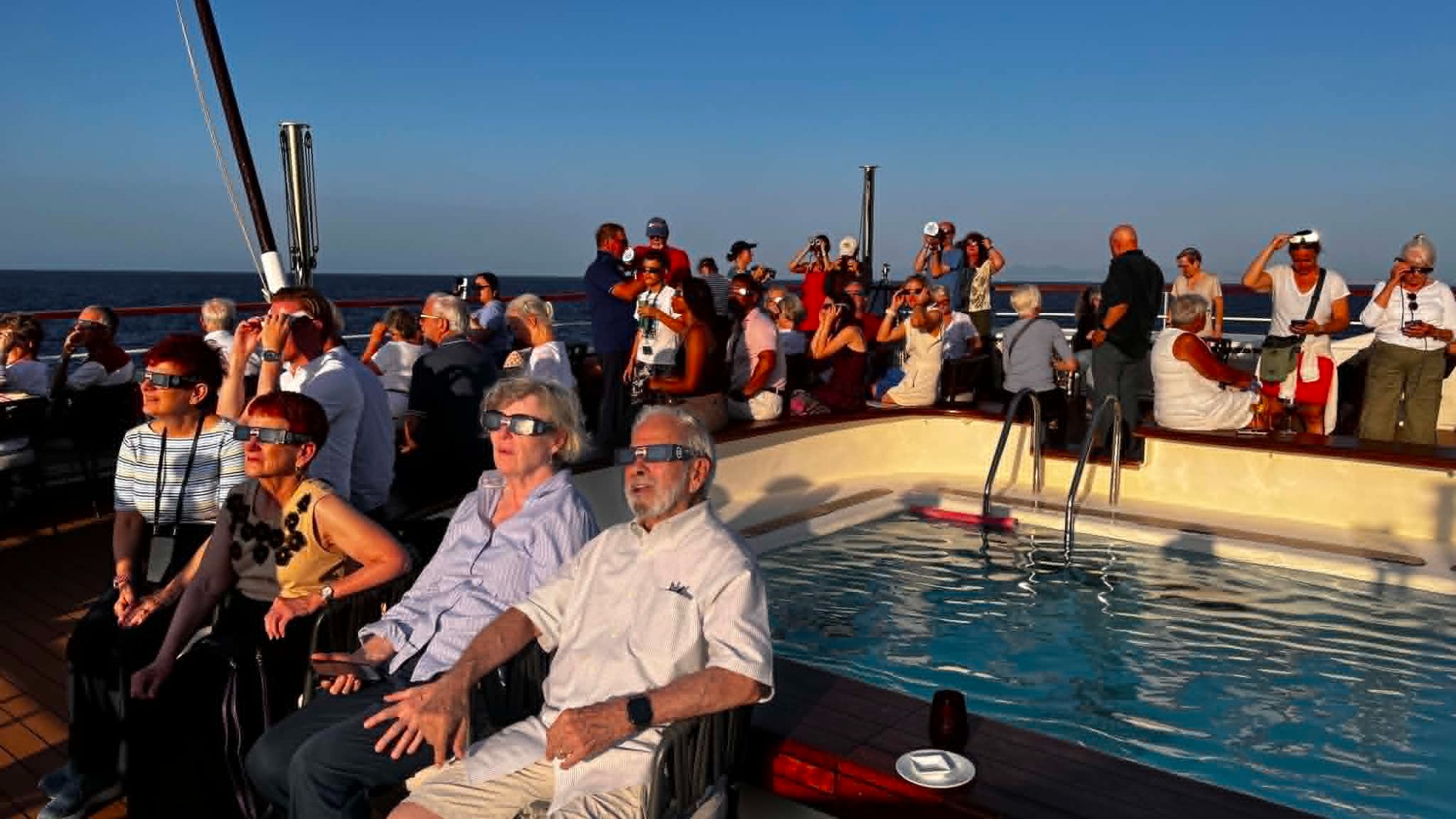
At 8 p.m., Captain Tsingrilaras oriented Le Boréal, so that the back of the ship (the stern) faced directly toward the sun. Crowds gathered on the top three decks of the ship, observing the sun through special eclipse glasses that had been distributed the previous evening.
Passengers aboard Le Boréal prepare for the moment of totality. (Image credit: Joe Rao)
Moments before totality, when only a sliver of sun remained, I told passengers that I had been asked since the start of the day about what our chances were for seeing the total eclipse. "I think our chances of seeing it are now 100 percent!" That comment was met with a resounding cheer.
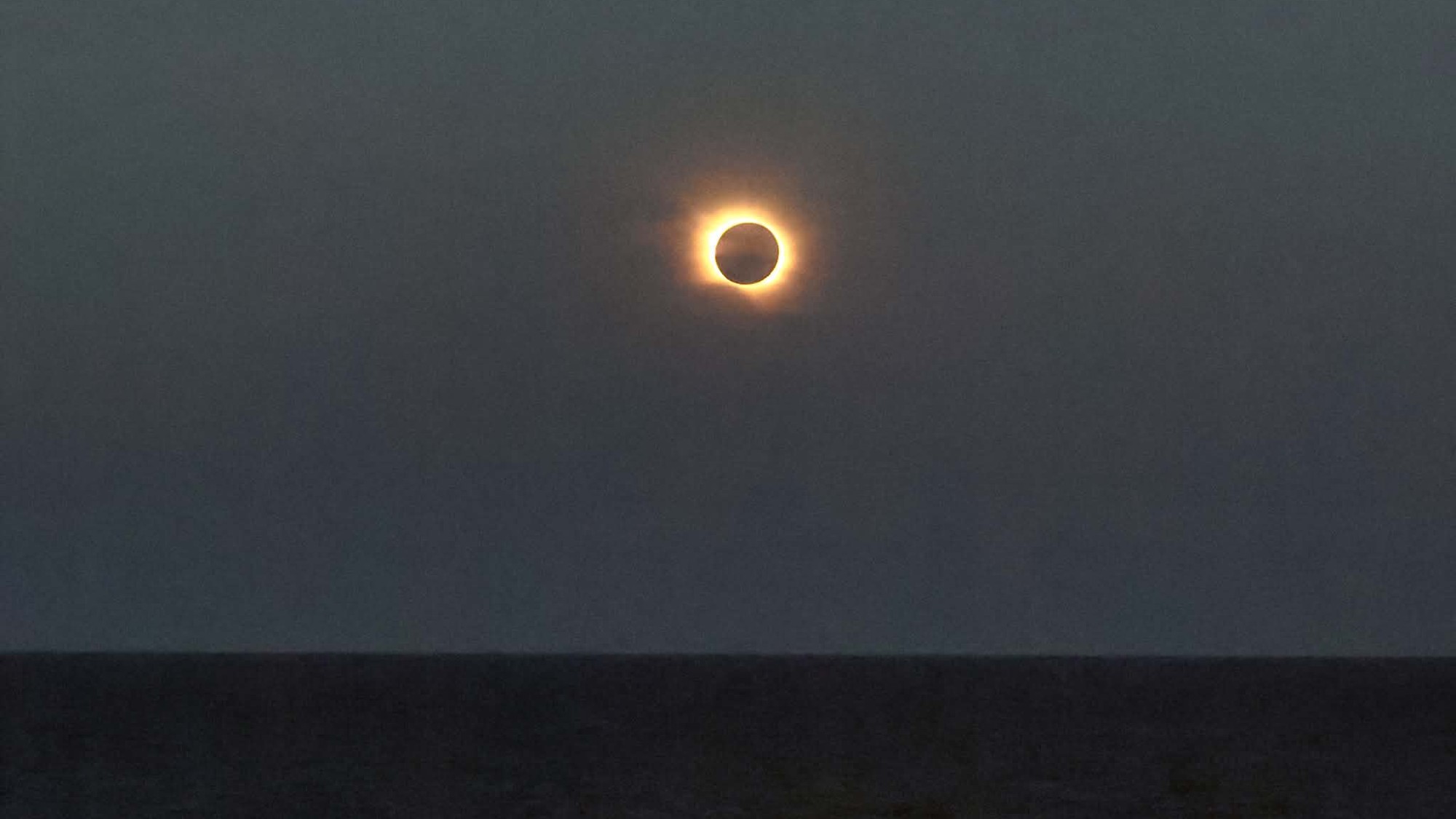
What was particularly striking was the approach of the moon's shadow; a diffuse darkening accompanied by a rapid west-to-east sweep of darkness. The onset of totality was marked by a dazzling diamond ring effect which lasted a couple of seconds, then a circular corona appeared around the darkened solar disk; it appeared somewhat yellowish in color as opposed to pearly white, likely due to a layer of haze near the horizon.
A total eclipse on Aug. 12, 2026 as seen from the cruise ship Le Boréal near the Balearic Islands. (Image credit: Joe Rao)
An unusually large and brilliant red prominence, readily visible even with the unaided eye, appeared at the 9 o'clock position. Because the sun was so low in the sky, the famous moon illusion caused it to appear especially large. This only added to the beauty of the spectacle.
Totality lasted 95 seconds. Even at its midpoint the overall light never became so dim that the second hand on a watch was hard to see. The only other object that was plainly visible in the sky was Venus, well off to the upper left of the eclipsed sun. The air temperature did not change much, probably due to the thermal inertia of the surrounding water.
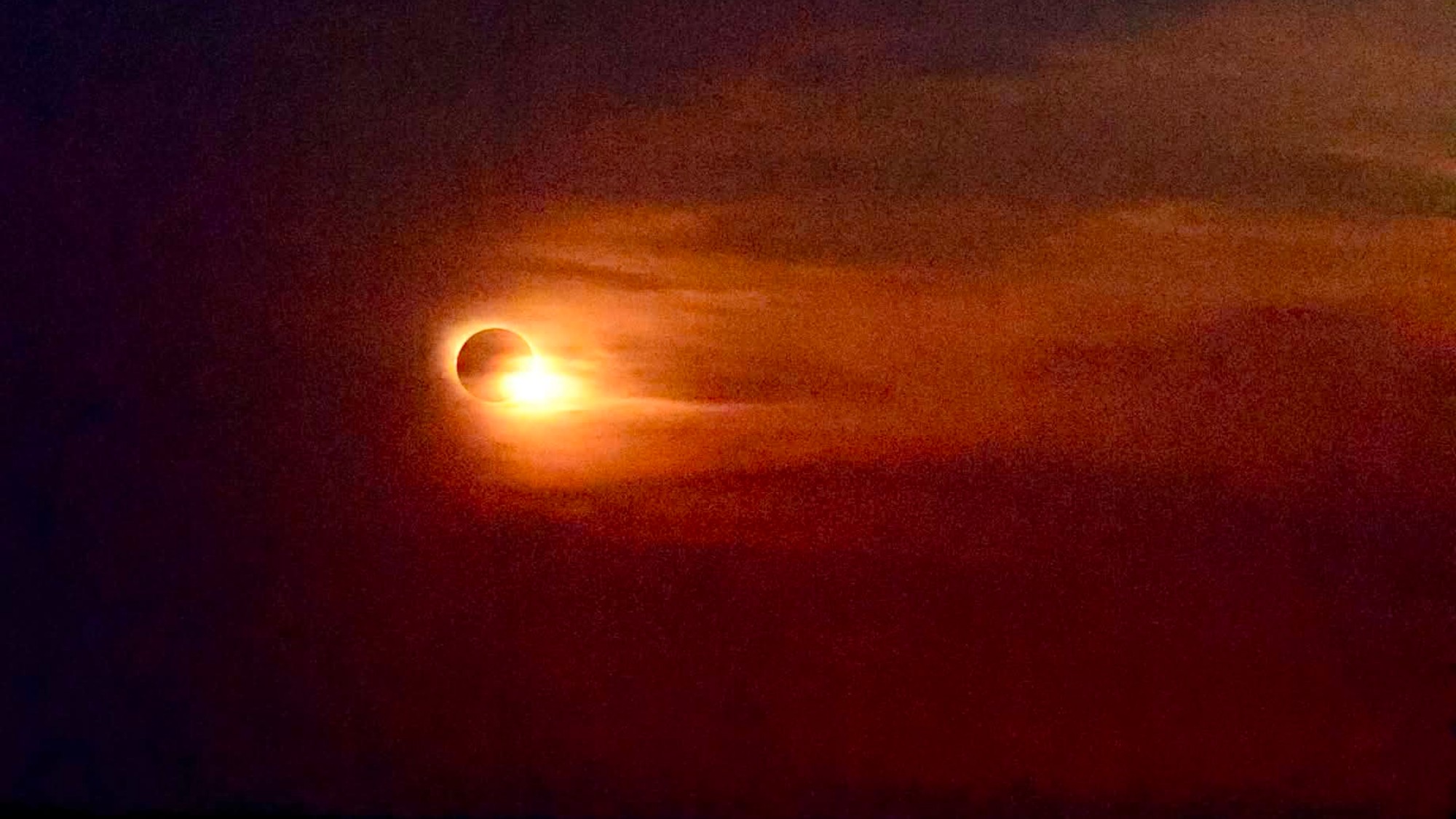
The terminal diamond ring was perhaps even more stunning than the first. The corona could be kept in view for several seconds by blocking out the emerging crescent of sunlight with one's thumb. It seems that no shadow bands were observed either before or after totality.
A 'diamond ring' effect near the end of a total eclipse on Aug. 12, 2026 as seen from the cruise ship Le Boréal near the Balearic Islands. (Image credit: Joe Rao)
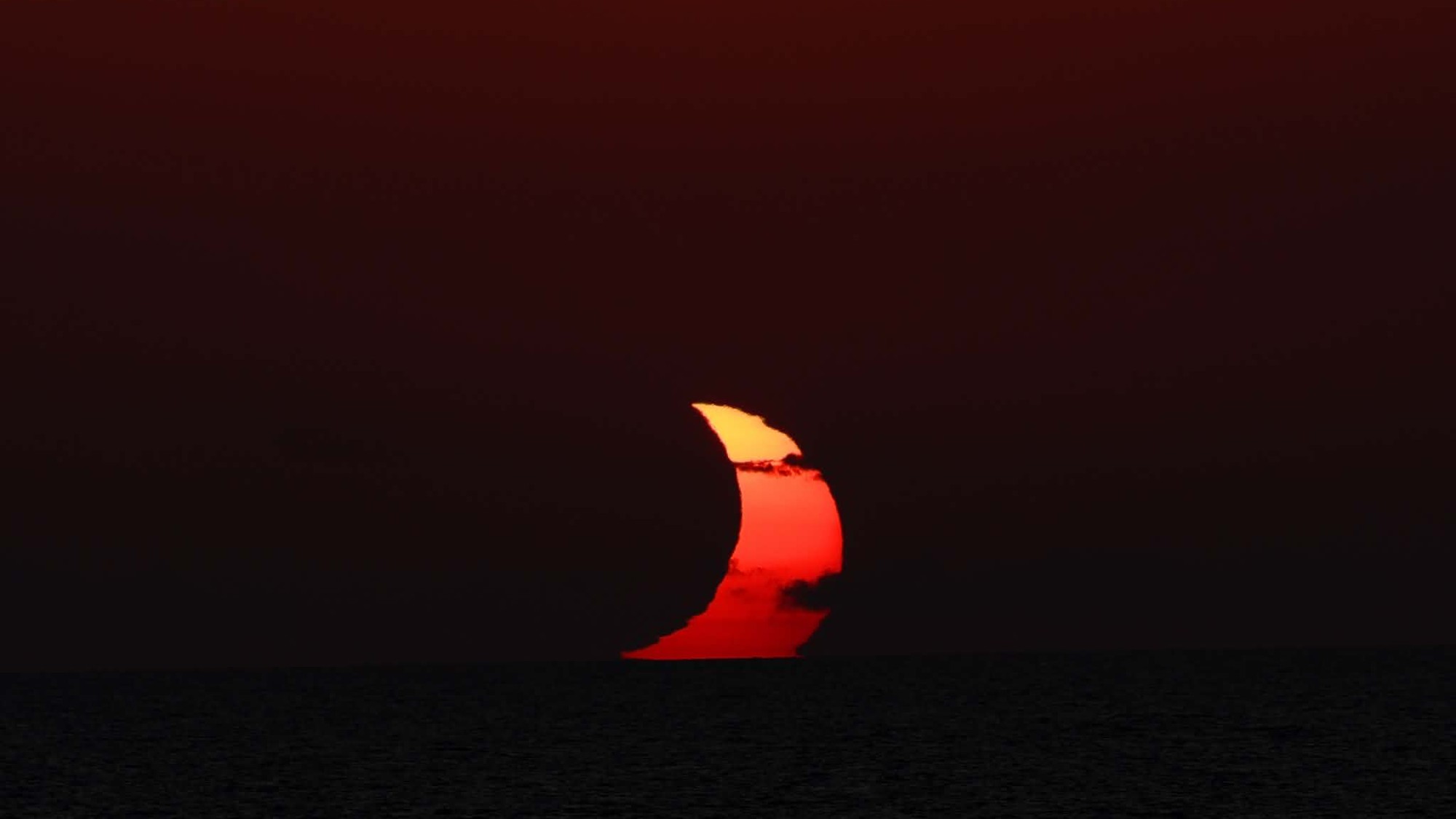
As the sun gradually emerged from behind the moon, it sank lower in the sky and was still about two-thirds covered when it took on the shape of an orange-red shark fin disappearing beyond the horizon — a fitting final image for a spectacular eclipse at sea.
A partial solar eclipse following a total eclipse on Aug. 12, 2026 as seen from the cruise ship Le Boréal near the Balearic Islands. (Image credit: Joe Rao)
Nothing succeeds like success
In the end, Le Boréal's successful eclipse viewing was a reminder that even the most carefully planned astronomical event still depends on swift judgment and adaptability. By combining advance preparation with a timely course correction, the voyage transformed a looming weather threat into an unforgettable view of totality.
I would also like to thank my wife, Renate, who accompanied me on this amazing adventure and for reading so much for reading my first draft of this article and to my daughter Maria and Scott Zimmerman for assisting me with my video and image selections.