25 years ago, a NASA astronaut witnessed the tragic 9/11 attacks from space. Here’s what he saw.

Frank Culbertson had a birds-eye view of one of the most memorable and tragic events in American history.

The NASA astronaut was the only American off of Earth on Sept. 11, 2001. He was circling the planet aboard the International Space Station (ISS) when terrorists flew commercial jets into the twin towers of the World Trade Center in New York City, killing more than 2,700 people.

The ISS passed over New York shortly after the attacks took place, so Culbertson saw the devastation from an eerie remove. He shared his thoughts with Mission Control at NASA's Johnson Space Center in real time, chronicling the tragedy like no one else could.

satellite photo of a large city on a bay, with a river running through it and smoke rising from the center of the city

The aftermath of the 9/11 attacks on the World Trace Center in New York City, as seen by the astronauts onboard the International Space Station on Sept. 11, 2001. (Image credit: NASA)

"We could see New York City and the smoke from the fires," Culbertson said. "Our prayers and thoughts go out to all the people there and everywhere else here — I'm looking up and down the East Coast to see if I can see anything else — and to the people in Washington."

Terrorists hijacked four commercial planes on 9/11, flying two of them into the World Trade Center and one into the Pentagon in Washington, D.C. Passengers on the fourth plane overpowered the hijackers, forcing it to crash in a field in Pennsylvania rather than hit the terrorists' intended target, which was likely the U.S. Capitol building or the White House.

"I hope that the people responsible are caught and brought to justice as soon as possible," Culbertson added. "But first, our prayers and condolences to all involved. And I just wanted the folks to know that their city still looks very beautiful from space. I know it's very difficult for everybody in America right now, and I know folks are struggling very hard to to deal with this and recover from it. But the country still looks good, and, for New Yorkers, your city still looks great from up here."

Culbertson gave a more complete accounting of his thoughts in an open letter, which he published a day after the attacks.

"The world changed today. What I say or do is very minor compared to the significance of what happened to our country today when it was attacked," he wrote.

"It's horrible to see smoke pouring from wounds in your own country from such a fantastic vantage point," Culbertson added. "The dichotomy of being on a spacecraft dedicated to improving life on the Earth and watching life being destroyed by such willful, terrible acts is jolting to the psyche, no matter who you are."

a man floats in zero gravity holding a camera in each hand

NASA astronaut and ISS commander Frank Culbertson on Sept. 17, 2001 aboard the International Space Station. (Image credit: NASA)

Culbertson arrived at the ISS on Aug. 12, 2001 aboard the space shuttle Discovery along with cosmonauts Vladimir Dezhurov and Mikhail Tyurin. The trio comprised Expedition 3, the third-ever crewed mission to the orbiting lab, which ran through December of that year.

We're now up to Expedition 75, and there have been no breaks: The ISS has been continuously staffed by rotating astronaut crews since November 2000.

Expedition 3 was Culbertson's third and final spaceflight. He retired from NASA in August 2002 and went to work in the private sector. Among other roles, he led human spaceflight efforts at Orbital Sciences Corp., which built the Cygnus ISS resupply spacecraft. Cygnus still flies today, for the aerospace giant Northrop Grumman, which bought Orbital Sciences in 2018.

Culbertson, 77, retired from Northrop Grumman in 2018. He currently serves on the board of directors of the nonprofit Space Foundation, among other roles.

two male astronauts hold up a bag full of small american flags inside a spacecraft

NASA astronauts Mark Kelly (left) and Dan Tani hold a bag of American flags on the flight deck of the space shuttle Endeavour. The flags carried on the shuttle included 6,000 small U.S. flags, one U.S. flag that was recovered from the debris of the World Trade Center, a Marine Corps flag that was retrieved from the Pentagon, and an American flag from the State of Pennsylvania. (Image credit: NASA)

You can read more about Culbertson's experiences on NASA's dedicated 9/11 page. That page also outlines how the agency helped emergency managers assess the damage in New York City just after the attacks and discusses some of the ways NASA has honored 9/11 victims and their families over the years.

For example, NASA flew nearly 6,000 small American flags on the STS-108 mission of the space shuttle Endeavour, which launched on Dec. 5, 2001 and landed 12 days later.

"Students working out of Johnson Space Center in Houston assembled commemorative packages that included the space‑flown flags, which were then presented to victims' families," NASA officials wrote about the project. "Distribution began on June 14, 2002 — National Flag Day — during a ceremony at the American Museum of Natural History’s Rose Center for Earth and Space in New York."
Astronaut Jonny Kim leaves NASA, will return to active military duty

Jonny Kim is leaving NASA to continue his military career.

The 42-year-old astronaut, who has one of the most jaw-dropping resumes of any person alive, is departing today (Aug. 27) after nine years with the agency. He has one mission under his belt, a long-duration flight to the International Space Station (ISS).

"Jonny has been an integral part of the agency, and his immeasurable impact will be felt for generations to come," Vanessa Wyche, director of NASA's Johnson Space Center (JSC) in Houston, said in a statement today. "From advancing groundbreaking science to inspiring the next generation, Jonny has been an incredible source of inspiration to our nation. His exceptional talent, determination, and grit will leave a lasting legacy at NASA."

NASA picked Kim as part of its 2017 astronaut class, the 22nd in the agency's history. He and his 11 fellow selectees nicknamed themselves "The Turtles."

Kim was already incredibly accomplished before he got the NASA nod. He's a physician with a medical degree from Harvard. He served in the U.S. military, as a dual-designated naval aviator and flight surgeon as well as a Navy SEAL — a commando trained to conduct special operations on sea, air and land (hence the acronymic name).

"Over the course of more than 100 combat operations, he served as a medic, sniper, navigator and point man, earning the Silver Star, Bronze Star with Combat 'V,' and numerous additional commendations," NASA officials said in the same statement.

After completing his mandatory two years of NASA astronaut training, Kim served as a CAPCOM ("capsule communicator") at JSC, relaying information between Mission Control and crewmembers on the ISS.

"Kim also contributed to Artemis program development through his work in the astronaut exploration branch, leading the astronaut crew operations branch, and serving as increment lead for Expedition 65," NASA officials said in the same statement. "His experiences as a Navy SEAL, physician and naval aviator provided unique perspectives in mission operations and crew support."

In April 2025, Kim got the chance to go to space himself. He launched to the ISS aboard a Russian Soyuz spacecraft along with Russian cosmonauts Sergey Ryzhikov and Alexey Zubritsky.

The trio lived and worked in space for 245 days, circling Earth 3,920 times and traveling a total of nearly 104 million miles (167 million kilometers), according to NASA. During that time, Kim conducted a variety of scientific experiments that could advance technological development and aid space exploration down the road.

Kim, Ryzhikov and Zubritsky returned to Earth in December, touching down in their Soyuz on the steppe of Kazakhstan .

Kim isn't walking off into the sunset now. Far from it: He's going back to active duty, "to finish out the remainder of his military career within naval aviation training," according to NASA.

"Contributing to space exploration and serving NASA has been the honor of a lifetime," Kim said in the same NASA statement.

"Throughout my career, I’ve learned that beyond the missions, the training, and the hardware, success always comes down to the people," he added. "They are our greatest asset, and leading with love and empathy is how we achieve the impossible. I look forward to carrying my commitment to service, my enduring love for space and technology, and the hard-earned lessons of this past decade into my next chapter to make a meaningful impact on humanity’s future."

Kim isn't the only astronaut to hang up his spacesuit in 2026. NASA's Mike Fincke stepped away this year, as did Canadian Jeremy Hansen, who was one of the four crewmembers on NASA's Artemis II flight around the moon.

Astronauts make history repairing the ISS | Space photo of the day for Aug. 25, 2026

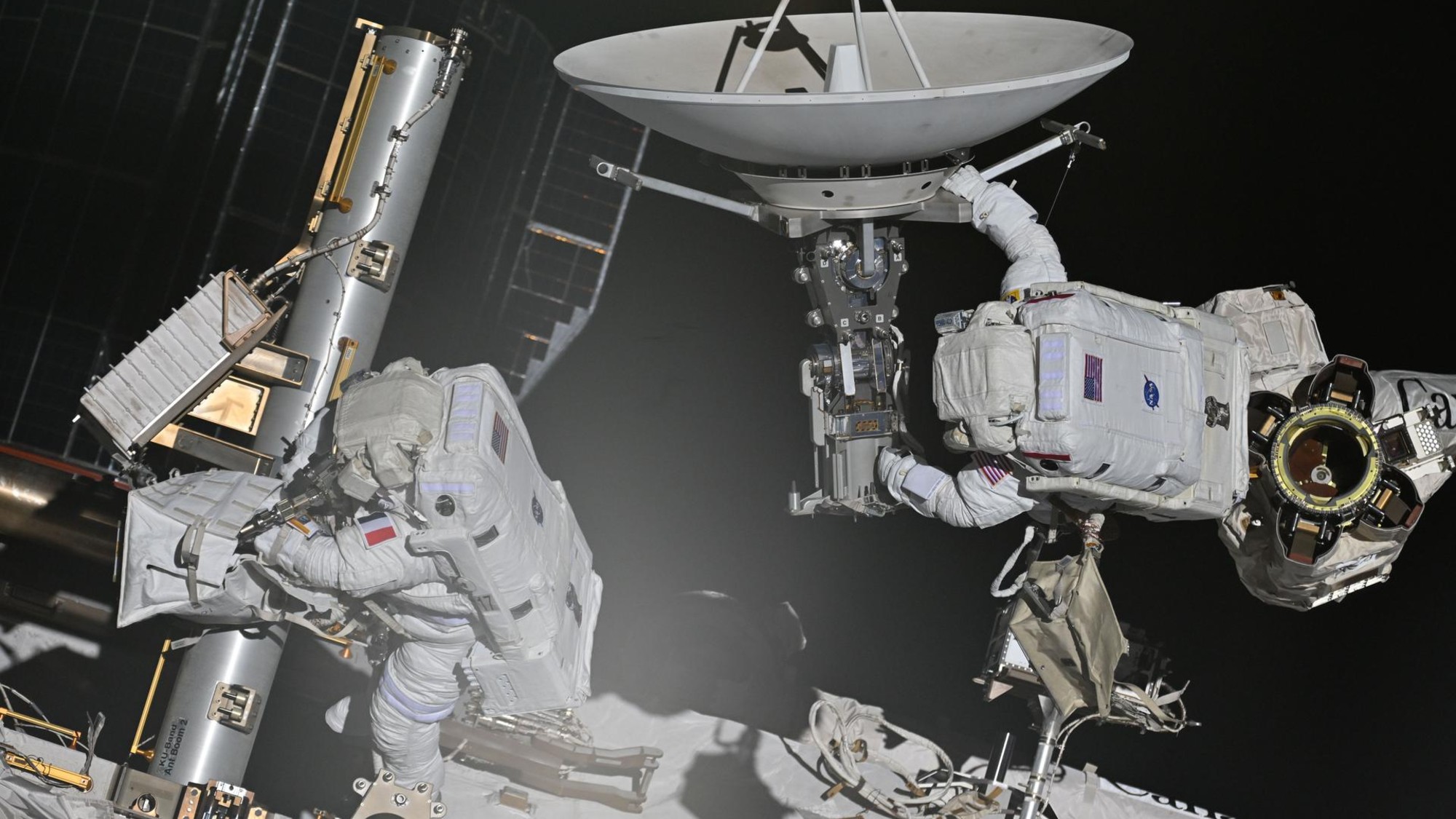
two astronauts in bulky white space suits maneuver on the outside of a large facility covered in solar panels and machinery

ESA astronaut Sophie Adenot and NASA astronaut Anil Menon complete a spacewalk on Aug. 18, 2026. (Image credit: Roscosmos/Anna Kikina)

Intensely focused and tethered to a floating laboratory in the vacuum of space, two astronauts spent over 6 hours working on the International Space Station during a historic spacewalk.

What is it?

Two astronauts aboard the ISS set out on a spacewalk recently (Aug. 18). European Space Agency astronaut Sophie Adenot and NASA astronaut Anil Menon set out recently a historic spacewalk.

This was Adenot's first spacewalk and, in journeying out into the darkness of space she became the first French woman to conduct a spacewalk (or, formally, an extravehicular activity, or EVA).

In this snapshot from the space station, you can see Adenot on the left and Menon on the right, both hard at work on their mission.

On this spacewalk, which took the pair 6 hours and 23 minutes, the astronauts were tasked with removing a failed antenna from the space station. However, while it was a successful outing, the pair didn't have enough time to replace the old antenna with a new, working one.

Why is it incredible?

Getting to space is hard enough. And then once you're there, venturing out of an orbiting laboratory into the darkness of space to do a physically demanding but technically complex repair job on that laboratory is certainly no picnic.

But these two astronauts pushed through almost six-and-a-half hours of grueling space work to remove the broken antenna before running out of time. And this big step forward in this fix is critical, as these antennae help to connect the space station to Earth, which is of the utmost importance.

The antenna, a "Space-to-Ground" antenna, started malfunctioning months ago and a second antenna has temporarily taken over. But this solution was temporary and a more permanent replacement was needed as this antenna ensures that astronauts on the space station can quickly transmit critical information back down to Mission Control back on Earth.

On this day in space! Aug. 22, 1963: X-15 sets world altitude record

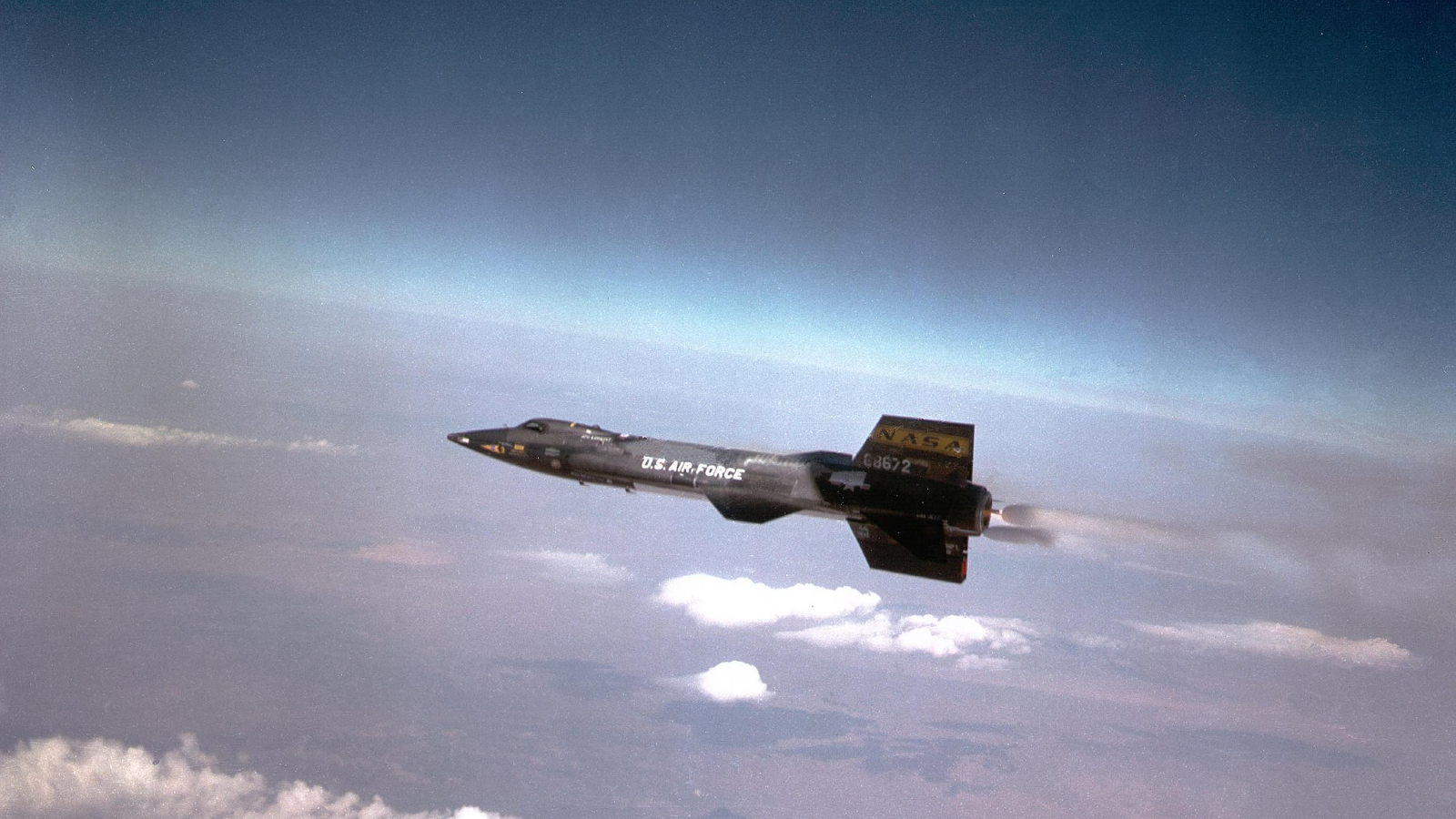
On Aug. 22, 1963, U.S. Air Force Captain Joe Walker flew an X-15 rocket plane higher than any pilot had ever flown before.

Walker reached an altitude of over 67 miles (108 kilometers). That's about 5 miles (8 km) above the edge of space! Walker experienced about five minutes of weightlessness over the course of the 11-minute flight.

This was the second and final suborbital spaceflight of the X-15 program. Walker piloted both flights and became the first person to go to space twice. For both flights, he flew in the space plane X-15 #3, which also became the first reused spacecraft to return to space.

Photos: X-15 Rocket Plane Reaches Space in Test Flights

A dark colored plane glides above the clouds

A rocket-powered X-15 flies over the western U.S. during a NASA/U.S. Air Force research mission in the 1960s. (Image credit: U.S. Air Force)

Why it mattered

Walker's flight was part of an X-15 program that helped aerospace engineers learn how humans and vehicles operate at hypersonic speeds and transition between the atmosphere and the vacuum of space. The rocket planes tested reaction-control systems for maneuvering where the air was too thin for normal aerodynamic controls, while gathering data on heating, stability, structural loads, human performance and piloting techniques during reentry. Those lessons contributed to NASA's Mercury, Gemini and Apollo programs and, later, the development of the Space Shuttle.

Walker's Aug. 22 flight also highlighted an idea that would become increasingly important decades later: reusability. The same X-15 #3 had already carried Walker beyond the Kármán line a month earlier, making it one of the earliest demonstrations that a spacecraft could fly to space, return safely and then fly again. NASA's space shuttle became the central example of spacecraft reuse when it was introduced in the 1980s. Today, SpaceX's Falcon 9 rocket is the leader in reusable space vehicles, with nearly 600 launches of boosters that have lifted off at least once before, and counting.

Scientists create ‘laundry gun’ for astronauts to clean their clothes by shooting out plasma

If you have ever shared a room with multiple people for days on end, you may know how clothes and living conditions can rapidly turn rather smelly. Imagine that happening in a confined spacecraft.

Even worse, since water on a space mission is in short supply, space travelers can't easily do their laundry. This is more than a body odor problem — unclean clothes and linens are ripe feeding grounds for infectious bacteria. Astronauts might wear the same clothes for days or even weeks, seal away used clothes in airtight bags, then return them to Earth for cleaning or cast them away to burn up in Earth's atmosphere.

This is fine for short trips near Earth, but what about a months-long odyssey to Mars? Engineers have devised a new way for astronauts to dry-clean their dirty laundry. They've crafted a prototype "laundry gun" that sterilizes fabric by shooting violet-colored plasma into it.

"This will reduce the microbial load and keep clothes and other soft surfaces clean, at least microbially, for astronaut health," says Gabe Xu, a professor at the University of Alabama in Huntsville and one of the laundry gun's creators, in a statement. "It could also be used to sterilize space suits and tools before they leave the habitat and step foot on Mars."

A plasma is an energized soup of charged particles, ions and electrons. While many plasmas like that in the sun are very hot, the laundry gun's plasma is "cold," closer to room temperature.

Its electrons are key to killing bacteria. As the laundry gun shoots plasma into fabric, the electrons collide with gas molecules in the surrounding air, such as oxygen (O2) and water vapor (H2O). These collisions create other molecules like ozone (O3), which chemists call "oxidizing species". These oxidizing species can chemically react with the membrane that surrounds a bacterium, damaging and destroying it.

In collaboration with NASA's Marshall Space Flight Center, Xu and colleagues have created a prototype plasma gun, about the size of a pen, which can sanitize about a square centimeter at a time. In their tests, the prototype reduced spore colonies on a scrap of fabric by more than 75%.

Earthly disinfectants like peroxide and bleach also attack bacteria by oxidizing them in this way. The laundry gun's creators could allow astronauts to travel without such cleaning chemicals. Instead, the apparatus creates its cleaning plasma from the spacecraft’s own air and water vapor. In space travel, where every gram of mass matters, this is a major advantage.

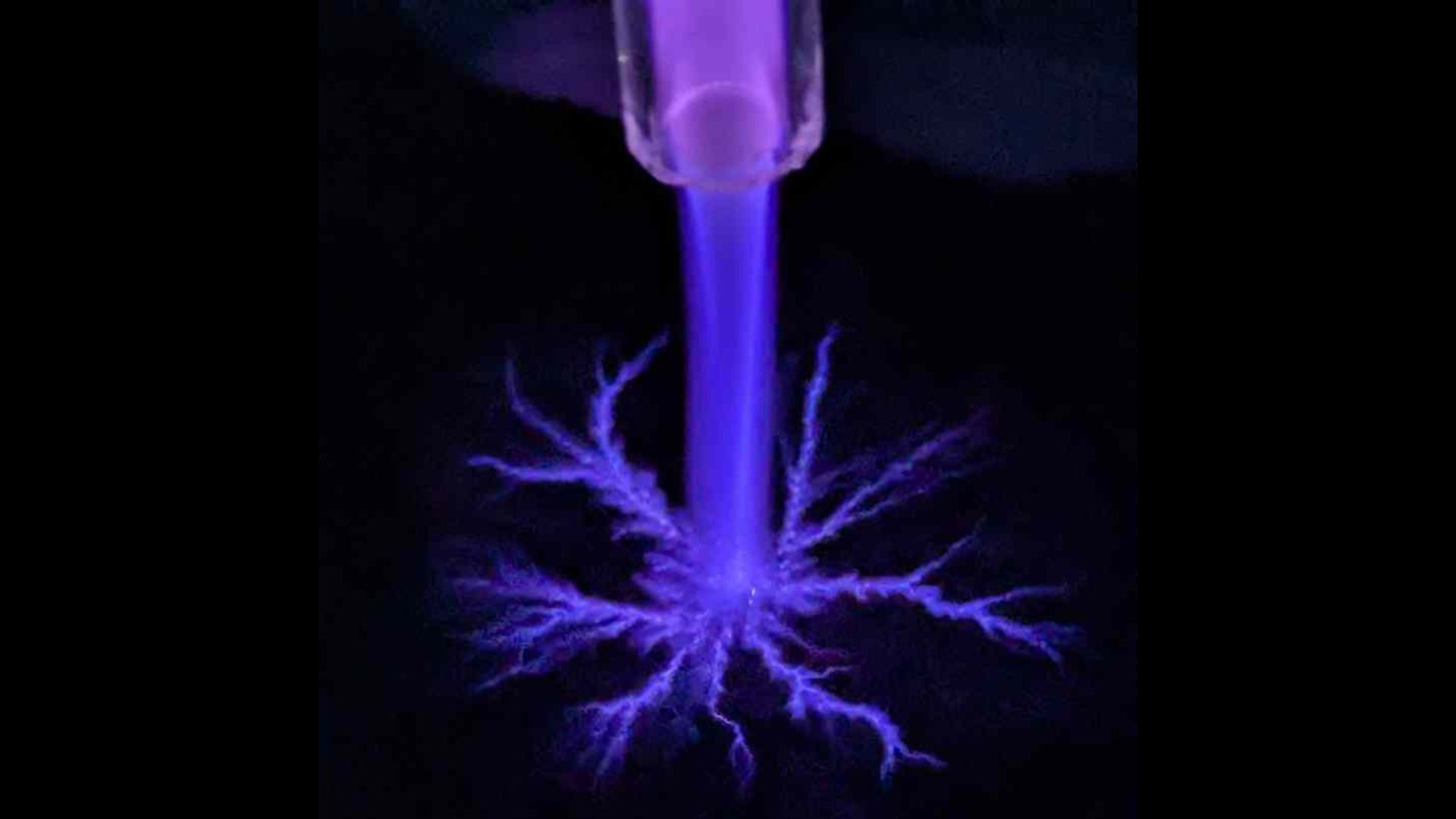
A purple beam that ends in little streaks of lightning bolts.

The plasma gun at work. (Image credit: Gabe Xu | UAH)

"The use of plasma treatment could significantly reduce the mass of goods needed for a human mission, especially one to Mars where resupply is difficult," Xu wrote in the statement.

That said, the "laundry gun" is not a perfect replacement for the standard washing machine — not yet, at any rate. "This won't remove coffee or grass stains (though we haven't tried that)," Xu wrote in the statement.

Moreover, a pen-sized laundry gun is too small to be practical. Xu and colleagues are planning to build larger, but still handheld, devices. They'll also need to deal with their plasma gun's ozone, which can be harmful in large quantities — they're working on a filtration system to remove this.

Space laundry is a rather active area of research today — astronauts on the International Space Station (ISS) recently tested a space detergent, and the Chinese space program has developed a washing machine suitable for low-water use.

It’s harder to poop in space. Scientists may finally know why

Astronauts have long struggled with constipation in space. Now, scientists may finally understand why.

A new study of 52 astronauts who lived aboard the International Space Station (ISS) suggests that microgravity may slow the movement of food through the intestines, changing how gut bacteria break down nutrients. The findings could ultimately help researchers develop dietary strategies to keep astronauts' digestive systems running smoothly during future missions to the moon and Mars — while offering new clues about digestive problems here on Earth, according to a statement from the University of Copenhagen.

Constipation is a common problem among astronauts, but exactly what happens inside the gut during spaceflight has remained less clear. To investigate, researchers from the University of Copenhagen and NASA analyzed blood samples collected from astronauts before, during and after missions aboard the space station.

"We see changes in astronauts' blood samples that indicate that the gut bacteria begin to ferment protein to a greater extent than usual within weeks after the astronauts arrive in space, and this change continues until they are back on Earth," Giorgia La Barbera, co-lead author of the study and associate professor at the Department of Nutrition, Exercise and Sports, said in the statement.

The team used a technique called metabolomics to measure small molecules circulating in the blood, providing a biochemical snapshot of how the astronauts' bodies — and the microbes living inside them — were responding to spaceflight.

In total, the researchers analyzed 488 plasma samples from 52 astronauts who spent between two and nine months aboard the orbiting lab between 2006 and 2018. They identified changes in around 40 circulating compounds during spaceflight, including several metabolites produced when bacteria in the colon ferment proteins. Those compounds increased while the astronauts were in space, suggesting food was spending more time moving through their intestines, according to the statement.

Normally, bacteria in the colon ferment fiber and carbohydrates for energy. But when digestion slows, those carbohydrates can become depleted, causing microbes to break down more proteins instead and produce different metabolites that can enter the bloodstream. The changes appeared shortly after astronauts entered space and largely subsided within days of their return to Earth, providing biochemical evidence that digestion slows in space. Differences in diet, including caffeine, fish and fat intake, accounted for less than one-third of the metabolic changes, suggesting diet alone couldn't explain the effect.

"The lack of gravity in space probably causes food to move more slowly through the intestine, and this fits with the fact that we are seeing signs of increased protein fermentation," Henrik Roager, co-author of the study and also an associate professor at the Department of Nutrition, Exercise and Sports, said in the statement. "This may also help explain constipation in astronauts."

However, while the researchers did not directly measure how quickly food moved through the astronauts' digestive systems, the metabolic changes they observed suggest that it moved more slowly through the gut.

The findings could become increasingly important as astronauts spend months — or eventually years — away from Earth. Beyond the discomfort of constipation, increased protein fermentation can produce compounds such as ammonia and hydrogen sulfide, and the researchers say some of the metabolites associated with this process have been linked to other negative health effects.

One potential countermeasure may be relatively simple: more fiber. The team suggests increasing astronauts' intake of slowly fermented carbohydrates, which could give gut microbes more carbohydrates to consume and reduce their reliance on protein fermentation.

Understanding how microgravity affects digestion and gut bacteria could help keep astronauts healthy on increasingly long missions to the moon and Mars, while also offering new clues for treating digestive problems on Earth by revealing how slower movement through the gut changes microbial activity.

Similar studies of astronaut health in microgravity have also yielded insights for people back on Earth. Bone loss is one prominent example. Astronauts lose bone density much faster in microgravity than people typically do on Earth, and efforts to prevent that loss have helped scientists better understand osteoporosis and age-related bone loss. Spaceflight research has also offered insights into muscle loss, cardiovascular health and immune-system changes associated with aging and disease.

Their findings were published June 29 in the journal Nature Communications.

On this day in space! Aug. 16, 1963: Wingless M2-F1 completes 1st glide flight

On Aug. 16, 1963, NASA's M2-F1 aircraft prototype made its first glide flight.

This wingless aircraft kind of looked like a flying bathtub. NASA made it to test a new concept called the lifting body, which was an unpowered glider that provided an alternative way to return piloted spacecraft to Earth. Instead of pummeling out of the sky in a ballistic reentry, the lifting body landed sort of like an airplane.

For its first test flight, the M2-F1 was towed 5,200 feet into the air by a C-47 Skytrain and then released. Test pilot Milt Thompson was in the cockpit, and he brought the glider in for a smooth landing in California after a two-minute descent.

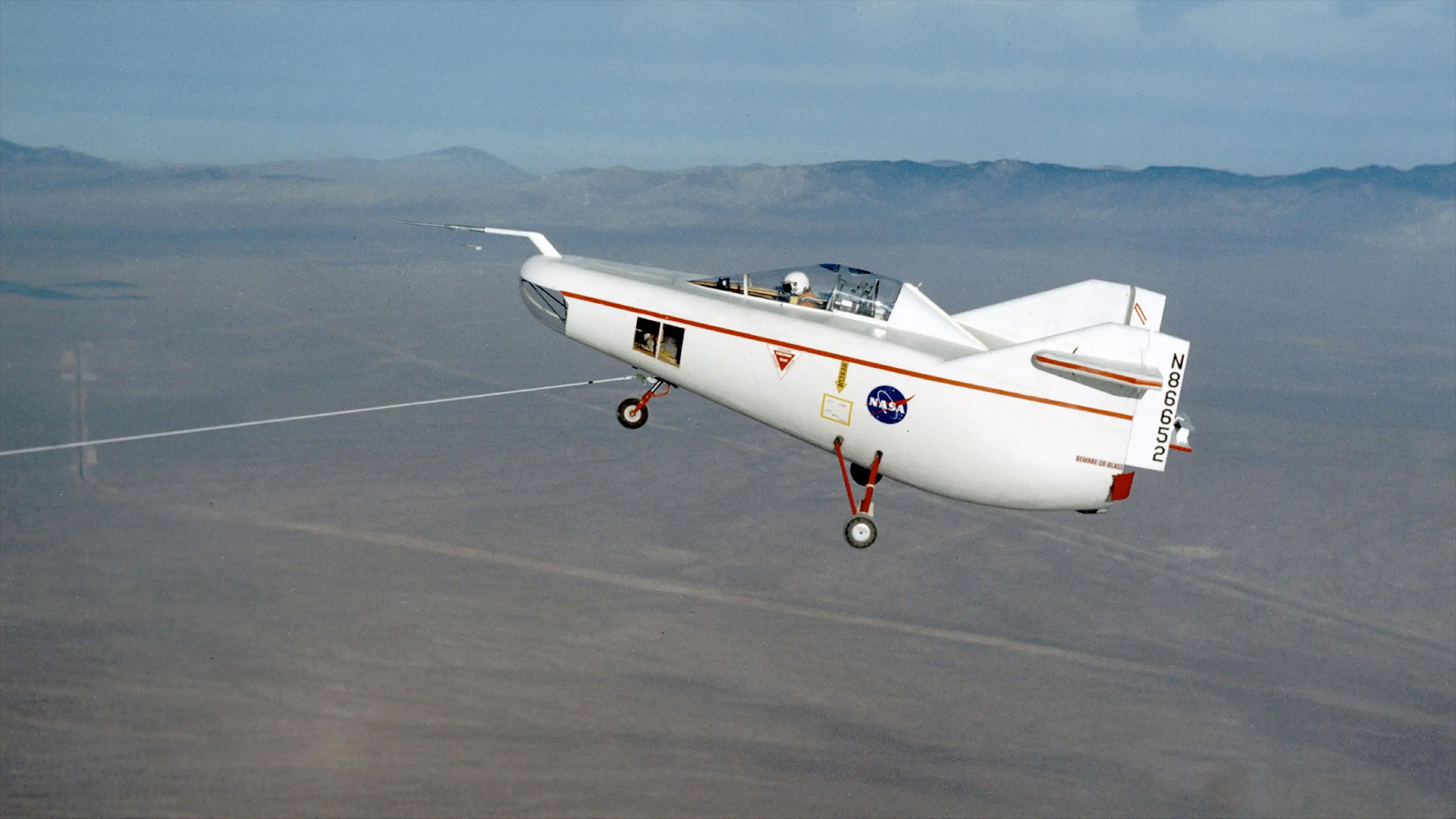
a small white aircraft with a pilot aboard is towed in flight by line extending to the dry lake bed below.

On Aug. 16, 1963, NASA's M2-F1 aircraft prototype made its first glide flight. (Image credit: NASA)

Why it mattered

The success of M2-F1's first glide flight proved a wingless lifting-body aircraft could be controlled and landed safely. The introduction of a second potential method of returning astronauts from space was a crucial consideration during a time when NASA was racing against the Soviet Union for access to space and, ultimately, the moon.

Though NASA opted for the familiar capsule and heat shield design used during the Mercury, Gemini and Apollo programs, the M2-F1 and its subsequent test flights paved the way for NASA's continued research into lifting-bodies, and led to the development of an entire family of lifting-body test vehicles like the M2-F2, M2-F3, HL-10, and the U.S. Air Force's X-24A and X-24B, which executed lifting-body flights at much higher speeds and altitudes.

Eventually, data from these programs was applied to the development of the space shuttle, and the real-life practice of landing a spacecraft back on Earth the same way you would an airplane.

Cards Against Humanity wants to erect a monument to ‘honor’ Elon Musk

Cards Against Humanity isn't done with its scorched-Earth campaign against SpaceX and Elon Musk.

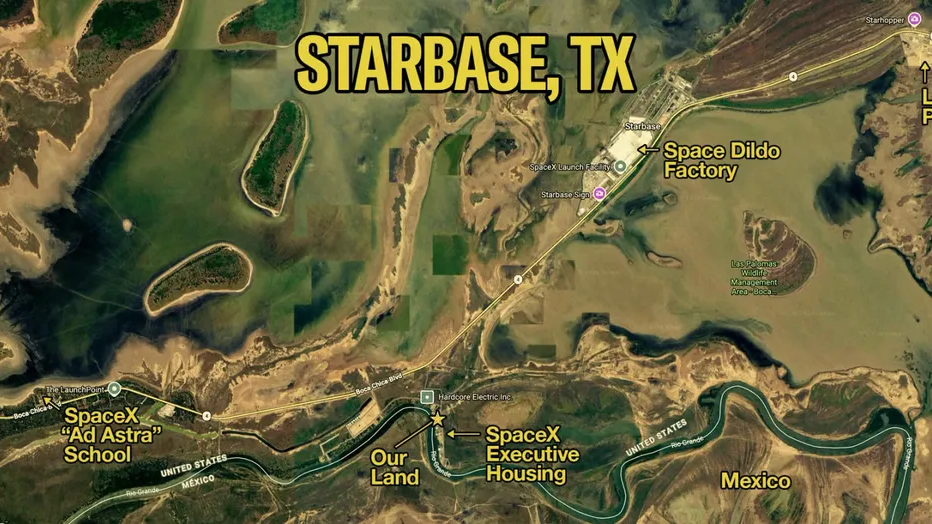
The Chicago-based company behind the popular fill-in-the-blank adult card game is inviting the public to join its design committee to erect an "Elon Musk is a Sad Little B----- with No Friends" monument on a stretch of land it owns near SpaceX's Starbase manufacturing and test facility in South Texas.

Cards Against Humanity (CAH) brought a $15 million lawsuit against SpaceX in 2024 for illegally dumping construction materials and other equipment on land owned by CAH. SpaceX decided to settle with the company in 2025 and removed its "gravel, tractors, and space garbage" from the property prior to the area's annexation for the city of Starbase's incorporation, according to CAH. But the company, and its apparent distaste for "racist billionaires," as it has labeled Musk, as well as President Trump, is still pushing back.

Trump's role in the ordeal informs why CAH owns the Texas property in the first place. The company launched the "Cards Against Humanity Saves America" campaign during Trump's first term in 2017, which included an effort to throw a roadblock in the U.S. government's ability to complete construction of a U.S.-Mexico border wall.

The campaign attracted 150,000 contributors who paid $15 each, enabling CAH to purchase the land and retain the services of an eminent domain law firm "to make it as time-consuming and expensive as possible for Trump to build his wall."

SpaceX had already purchased much of the surrounding land by then and officially broke ground at what would become Starbase in 2014. Starbase is the center of development and operations for SpaceX's Starship rocket — a fully reusable launch vehicle that will clock in as the world's largest, most powerful rocket in history once it's operational.

Major construction at Starbase began in earnest in 2018, with the first Starship prototype vehicle tests beginning in 2019. When CAH filed its lawsuit against SpaceX in 2024, SpaceX had already managed to launch four full-stack Starship test flights and begun construction of a second Starbase launch pad. That's around when the facility's general expansion began to encroach on CAH's property, according to a complaint the company filed in Texas' Cameron County 404th District Court.

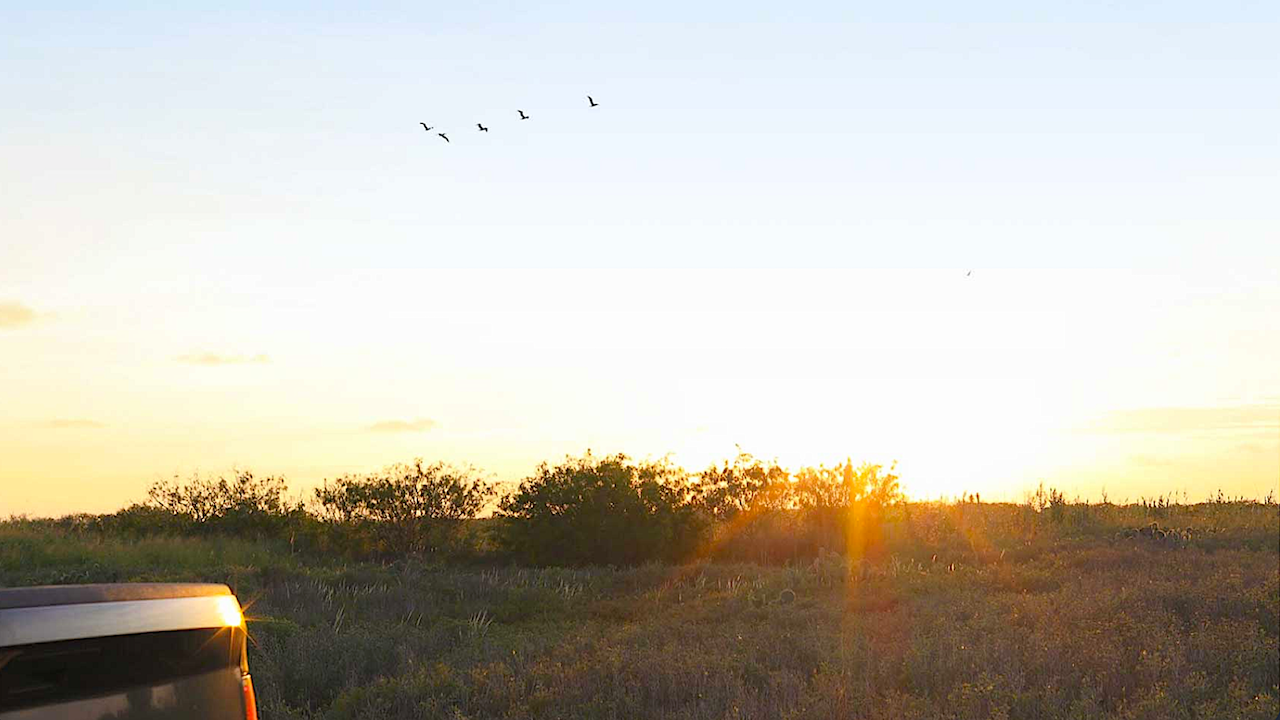
Sunrise in a grassy meadow with birds in flight
Cards Against Humanity's property before SpaceX's trespassing violation.Cards Against Humanity
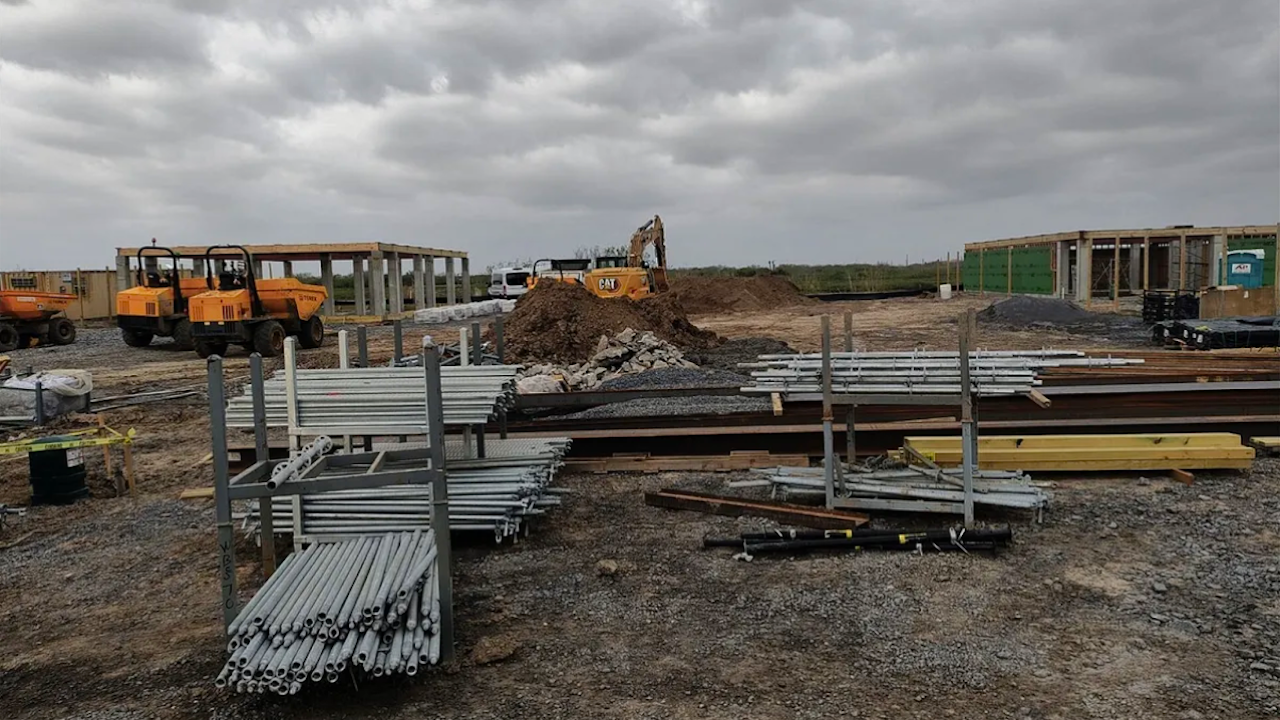
a parking lot filled with equipment and junk
Cards Against Humanity's property after SpaceX's trespassing violation.Cards Against Humanity

Starbase's location at the very southern tip of Texas provides a safe and remote area for testing giant rockets. But SpaceX's increased activity there has triggered a large influx of employees in search of housing in and around the unincorporated Boca Chica area, which had been sparsely populated. SpaceX eventually began constructing clusters of homes for its employees around its facilities, and, in an effort to obtain some control over local governance for things like zoning and permitting, workers and residents voted to incorporate Starbase as its own city in May 2025.

That CAH's plot of land was annexed as part of Starbase's official incorporation has apparently not sat well with the people behind the popular card game, and they are once again engaging the public to try to get Musk's attention. In a Threads post on Aug. 13, the company asked, "Who wants to f---- with Elon Musk?"

"Now, our parcel has been annexed into a 'town' called 'Starbase' — a corporate hellscape littered with broken rockets and ugly mansions for Musk's executives," the post says. In typically colorful CAH fashion, it adds, "But hope is not lost! We still have our rights as proud Texas landowners: We can build something on our land. Something that will annoy Elon Musk. A grand monument to make him wonder, for a brief moment, 'Wait, am I a sad little b---- with no friends?'"

A map labeles locations around Starbase, TX, with SpaceX Executive housing shown next to property owned by Cards Against Humanity.

A map from CAH showing its land in Starbase, Texas. (Image credit: Cards Against Humanity)

The announcement calls for the formation of a design committee for the aforementioned monument, which CAH describes as "a movement of like-minded people working together … to force a moment of introspection" for Musk, available for anyone to join for $10 at "ElonHasNoFriends.com". The post also advertises that 10% of profits from sales of its new game expansion decks will go toward funding the monument as well.

CAH isn't alone in criticizing Musk and SpaceX's Starbase activities. Musk's public persona has grown exponentially with SpaceX's successes over the past decade or so and his 2022 purchase of the social media platform Twitter, which he renamed X. Musk has also drawn criticism for his comments and actions during the 2024 election, which he may have helped swing via the donation of nearly $300 million to Trump and other Republican candidates. As early as 2022, a group of anonymous SpaceX employees posted an open letter to executives on an internal company forum saying, "Elon's behavior in the public sphere is a frequent source of distraction and embarrassment."

Others, however, praise Musk for the inarguable contribution of reusable rockets that SpaceX introduced with the Falcon 9, and his aspiration to make humanity a multi-planetary species. He was also named Time Magazine's person of the year in 2021, and SpaceX has become an indispensable asset to NASA and U.S. spaceflight. The company's Crew Dragon capsule is currently the only American-launched spacecraft capable of transporting astronauts to the International Space Station, and NASA has contracted SpaceX to design a lunar lander version of Starship to deliver astronauts to the surface of the moon on Artemis IV in 2028.

SpaceX's activities at Starbase have received scrutiny as well. When the Federal Aviation Administration (FAA) conducted its environmental assessment of Starbase to approve Starship launches from the site in 2021, more than 18,000 comments were submitted by members of the public, delaying the report's publication for nearly half a year as each one was reviewed. When the FAA did publish its assessment, SpaceX was cleared for Starship launches out of Starbase, pending nearly 80 actions needed to ensure its reduced environmental impact on the area, which SpaceX soon addressed.

To date, SpaceX has launched 13 Starship test flights with varying degrees of success. Some have resulted in the awesome return and catch of the rocket's Super Heavy booster using the "Mechazilla" chopstick arms on the Starbase launch tower, others featured Starship debris raining down within view of populated areas like The Bahamas, and at least a couple launches ended with a combination of both those outcomes.

The very public display of exploding rockets from SpaceX over the last several years has raised more than a few eyebrows of people wondering about the repercussions of where that potential aerospace carnage might come crashing down. But those results are also indicative of SpaceX's iterative "test like you fly" philosophy for vehicle development.

Musk sees Starship as humanity's ticket to extending our species' footprint to the moon, Mars and beyond, and is often quoted saying, about Starship and other subject matter, that "we live on the most interesting timeline." If Starship lives up to Musk and SpaceX's promises, it stands to create another monumental, industry-changing impact on spaceflight history, with the potential to launch our civilization into the cosmos. And, if it has to lift off within sight of a monument calling SpaceX's CEO "a sad little b---- with no friends," that would be pretty interesting indeed.

NASA astronaut Mike Fincke retires after 30 years at the space agency

Prolific NASA astronaut Mike Fincke has announced his retirement from the U.S. space agency after 30 years of public service.

NASA announced Fincke's decision on Wednesday (Aug. 12), celebrating his contributions to spaceflight and long career of accomplishments.

“Few people have had the opportunity to shape as many chapters of NASA’s history as Mike Fincke,” NASA Administrator Jared Isaacman said that day in a statement. Fincke departs as NASA's fourth-most flown astronaut, racking up a cumulative 549 days in space over four separate spaceflights. During those, he performed nine spacewalks and served twice as commander of the International Space Station (ISS). Most recently, he launched as pilot on SpaceX's Crew-11 mission to the ISS, stepping into the role of commander for ISS Expedition 74 from August 2025 to January 2026.

Before his acceptance into NASA's 16th astronaut class in 1996, Fincke earned two bachelor's degrees from the Massachusetts Institute of Technology (MIT), in aeronautics and astronautics as well as Earth science, atmospheric and planetary sciences. Following his time at MIT, he did a summer stint at the Moscow Aviation Institute and later earned master's degrees in aeronautics and astronautics, and in planetary geology from Stanford and the University of Houston-Clear Lake, respectively.

Fincke also served in the U.S. Air Force prior to his career at NASA. He graduated from the U.S. Air Force Test Pilot School in 1994, then was assigned as a space systems engineer and flight test engineer at Edwards and Eglin Air Force bases in California and Florida, respectively. Those stints were followed by his role as U.S. flight-test liaison for the Japanese-U.S. XF-2 fighter program in Japan.

Following his two years of astronaut-candidate training, Fincke was assigned to NASA's Astronaut Office Station Operations Branch's Crew Test Support Team in Russia. There, he served as ISS CAPCOM (Spacecraft Communicator) and ISS crew procedures team lead until he began official spaceflight training in 1999.

His first rocket launch was aboard the Soyuz TMA-4 mission to the ISS in 2004, where he served as science officer and flight engineer for Expedition 9 and completed four EVAs (extravehicular activities, or spacewalks).

Fincke's second launch brought him back to the ISS in 2008, as a member of Soyuz TMA-13. It was then that Fincke took command of the space station for the first time. As Expedition 18 commander, Fincke added two more EVAs to his career total and oversaw the preparation of ISS facilities to begin supporting an increase from three-person to six-person crews.

Fincke was also aboard for the final launch of NASA's space shuttle Endeavour on the STS-134 mission in 2011, which returned him to the ISS for a third time. As mission specialist and robotic-arm operator, he supported the installation of the space station's dark-matter-hunting Alpha Magnetic Spectrometer (AMS) instrument, and performed three additional EVAs that marked the official completion of ISS orbital assembly and were the last-ever spacewalks by a space shuttle crew.

By 2014, Fincke was serving as chief of the Astronaut Office’s Commercial Crew Branch, where he played a key role in the development and testing of the SpaceX Crew Dragon and Boeing Starliner spacecraft. In January 2019, he was assigned to Boeing’s Crew Flight Test (CFT) mission as joint operations commander, and he remained on the prime crew until June 2022, when he transitioned to the CFT backup crew.

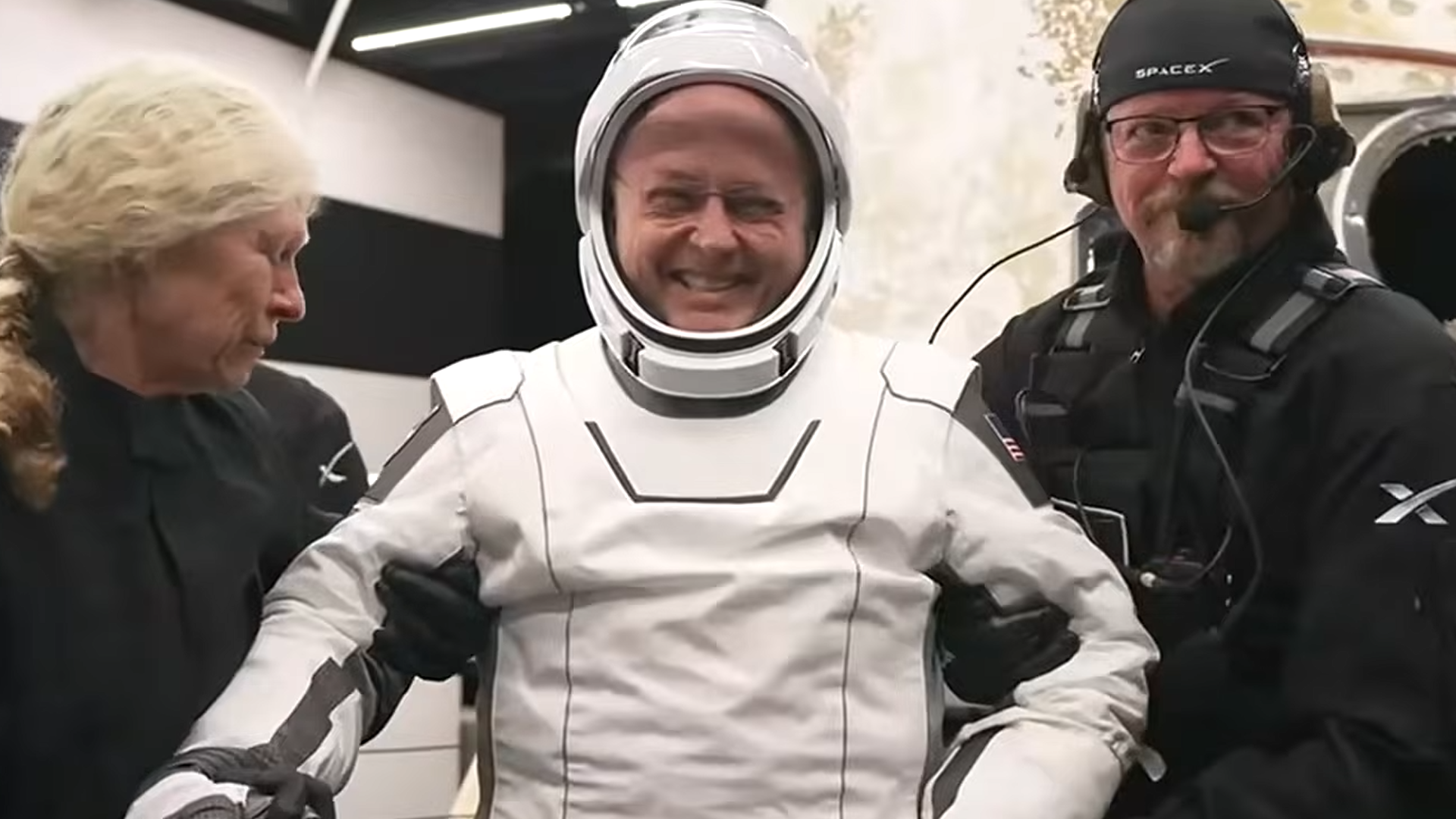
a man in a white spacesuit smiles as he is helped to his feet by two people dressed in black

Mike Fincke is helped off SpaceX's Crew Dragon after Crew-11 splashdown in the Pacific Ocean on Jan. 15, 2026. (Image credit: NASA/SpaceX)

Fincke's most recent mission, Crew-11, launched to the ISS in August 2025. It was the second time he was appointed commander of the space station, this time for Expedition 74, but his stint, and that of the other Crew-11 astronauts, was cut short due to an unexpected medical issue.

Leading up to what would have been his 10th career EVA, NASA abruptly canceled spacewalk prep by Fincke and fellow NASA astronaut Zena Cardman after a "medical concern" arose that took priority over the planned station maintenance. Though not considered an emergency, the episode was deemed serious enough for NASA to return the Crew-11 astronauts to Earth earlier than expected, and Fincke and his fellow crewmates safely splashed down in the Pacific Ocean aboard their SpaceX Crew Dragon a week later.

During the mission, NASA did not reveal the afflicted astronaut's name and condition, citing privacy concerns. A little more than a month after Crew-11's return, however, NASA and Fincke revealed that he was the crew member who experienced the medical issue, which he later described as a temporary inability to speak, according to an Associated Press report. Fincke fully recovered from the episode and is now in good health.

“Mike approached every assignment with experience, humility, and an unwavering focus on the mission,” said Scott Tingle, chief of NASA's Astronaut Office, in the agency's announcement. “Whether flying aboard the station, supporting crews from the ground, or helping shape the spacecraft that future crews will rely on, he consistently strengthened our team. His legacy is woven into the way we fly today.”

NASA did not indicate if Fincke plans to continue his involvement with the space industry through the private sector, but did highlight his dedication to support humanity's drive to explore the cosmos.

"I remain deeply committed to the work of exploration," Fincke said in the statement. “NASA gave me the extraordinary privilege of serving alongside remarkable people, flying and helping develop spacecraft, and contributing to the International Space Station from its earliest days through command in orbit … I am excited to carry those lessons forward and help prepare the next generation of engineers, explorers, and leaders."

NASA astronaut, 2 cosmonauts return to Earth after 241 days on space station (video)

A U.S.-Russian crew returned to Earth from the International Space Station early Sunday morning (July 26), after 241 days in orbit.

A Soyuz spacecraft carrying NASA astronaut Chris Williams and Sergey Kud-Sverchkov and Sergei Mikaev of the Russian space agency Roscosmos undocked from the orbiting lab on Sunday at 3:03 a.m. EDT (0703 GMT).

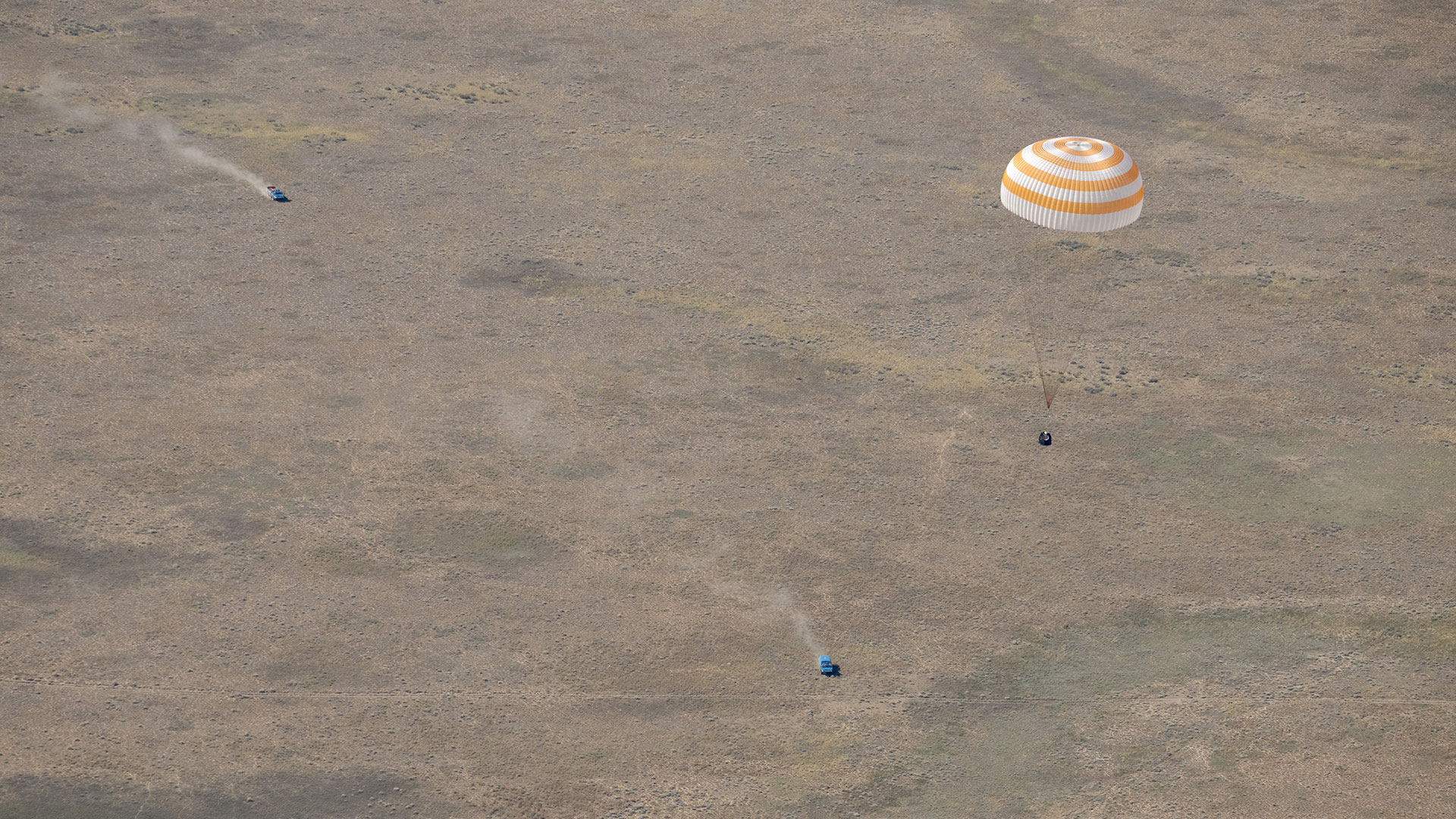
The Soyuz, known as MS-28, landed on the steppe of Kazakhstan 3 hours and 24 minutes later, at 6:27 a.m. EDT (1027 GMT).

an aerial photograph of a space capsule descending under a large white and orange parachute to a landing on a barren steppe as recovery vehicles approach.

Roscosmos' Soyuz MS-28 spacecraft is seen as it lands in a remote area near the town of Dzhezkazgan, Kazakhstan with Expedition 74 NASA astronaut Chris Williams and Roscosmos cosmonauts Sergey Kud-Sverchkov, and Sergei Mikaev aboard, on Sunday, July 26, 2026. (Image credit: NASA/Bill Ingalls)

The crew's departure activities began on Saturday morning with a change-of-command ceremony aboard the International Space Station (ISS). Kud‑Sverchkov handed over the reins of the orbiting lab to NASA astronaut Jessica Meir, part of the transition from ISS Expedition 74 to Expedition 75 (which officially began when Soyuz MS‑28 undocked).

The crew then gave their farewells and closed the hatches between the ISS and Soyuz MS-28 on Saturday night.

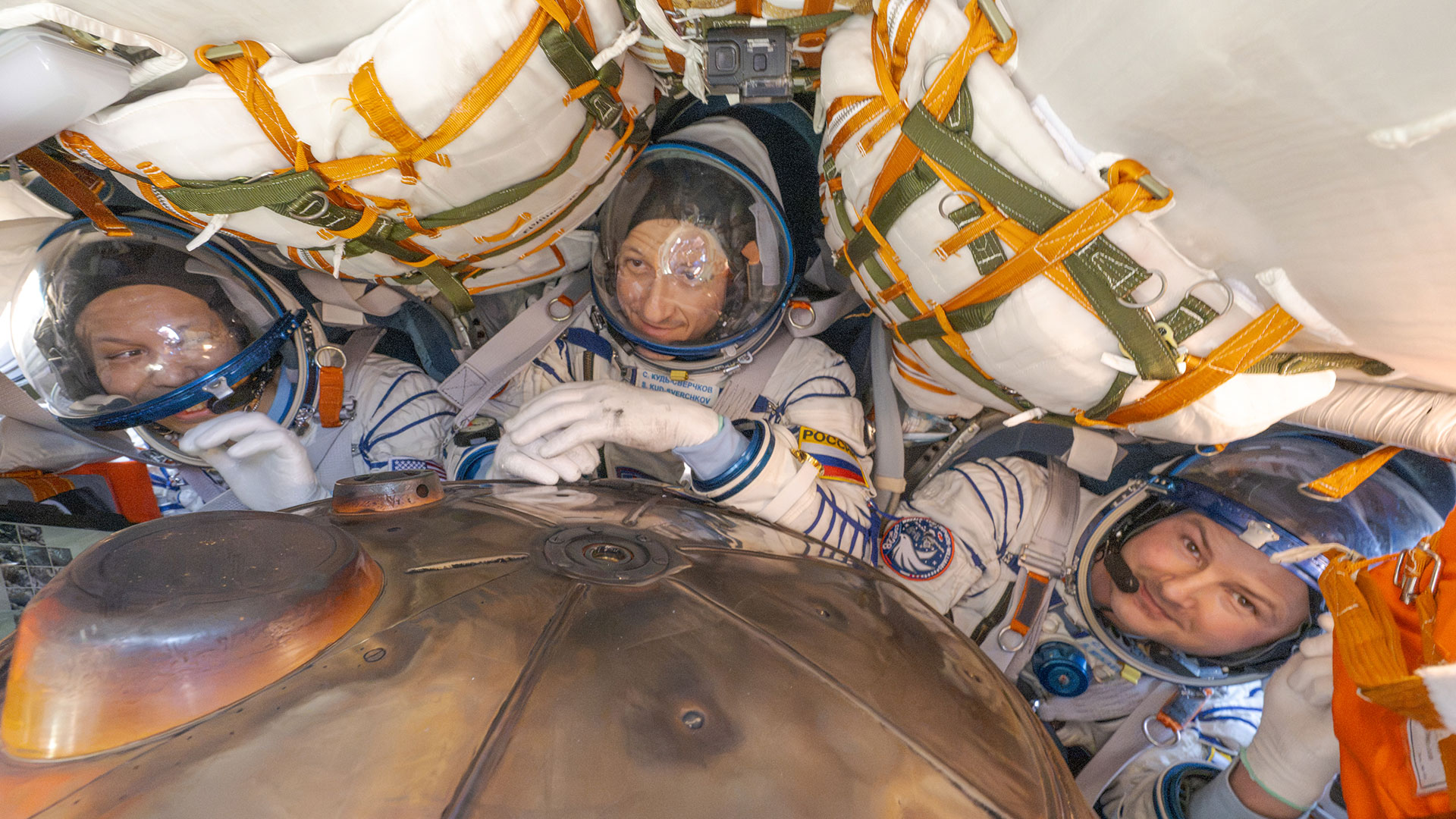
three men in white and blue striped pressure suits are seen from above inside a cramped space capsule

NASA astronaut Chris Williams, left, Roscosmos cosmonaut Sergey Kud-Sverchkov, center, and Roscosmos cosmonaut Sergei Mikaev are seen inside the Soyuz MS-28 spacecraft after they landed in Kazakhstan on Sunday, July 26, 2026. (Image credit: NASA/Bill Ingalls)

Soyuz MS-28 launched to the ISS on Nov. 27, which was Thanksgiving Day. That liftoff kicked off the first space mission for Williams and Mikaev and the second for Kud‑Sverchkov, who now has logged 426 days and 9 minutes in space.

The MS-28 trio orbited Earth 3,856 times and traveled a total of more than 102 million miles (164 million kilometers).

Now back on Earth, the three spaceflyers were first flown by helicopter to Karaganda, Kazakhstan, where recovery teams were based. Williams then will return to NASA's Johnson Space Center in Houston, while Kud‑Sverchkov and Mikaev head back to their training base in Star City, Russia.