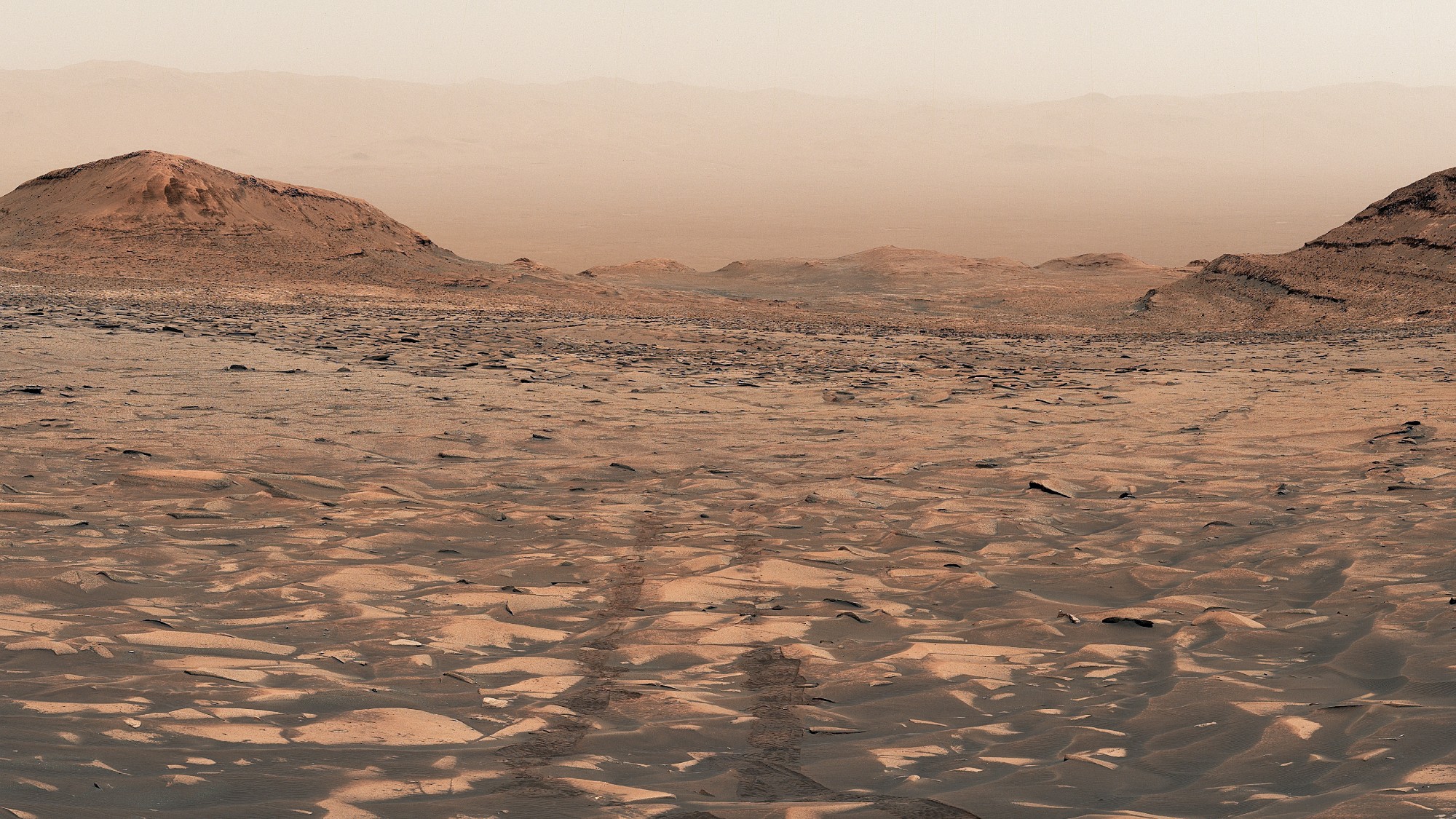
Curiosity climbs to new heights on Mars | Space photo of the day for Aug. 28, 2026

A photograph taken by NASA's Curiosity Mars rover from the floor of Gale Crater, on Aug. 1 and Aug. 2, 2026, the 4,972nd and 4,973rd Martian days, or sols, of the rover's mission. The photo captures a valley on the side of Mount Sharp, the 3-mile-tall (5-kilometer) mountain the rover has been climbing since 2014. (Image credit: NASA/JPL-Caltech/MSSS)

One of NASA's intrepid Mars rovers has notched another impressive milestone during its exploration of the Red Planet.

What is it?

NASA's Curiosity Mars rover used its Mastcam camera to capture a panorama made up of 323 individual images. The images were taken on Aug. 1 and Aug. 2, 2026, the 4,972nd and 4,973rd Martian days (or sols) of the rover's mission, just as Curiosity notched a total of 1 kilometer (0.6 miles) of elevation gain throughout its now 14-year exploration of the Red Planet.

The images show the wide expanse of a broad valley nicknamed "Valle Grande," a depression on the side of Mars' Mount Sharp, the 3-mile-tall (5-kilometer) mountain the rover has been climbing since 2014. The valley's floor and northern rim can be seen in the distance.

Why is it incredible?
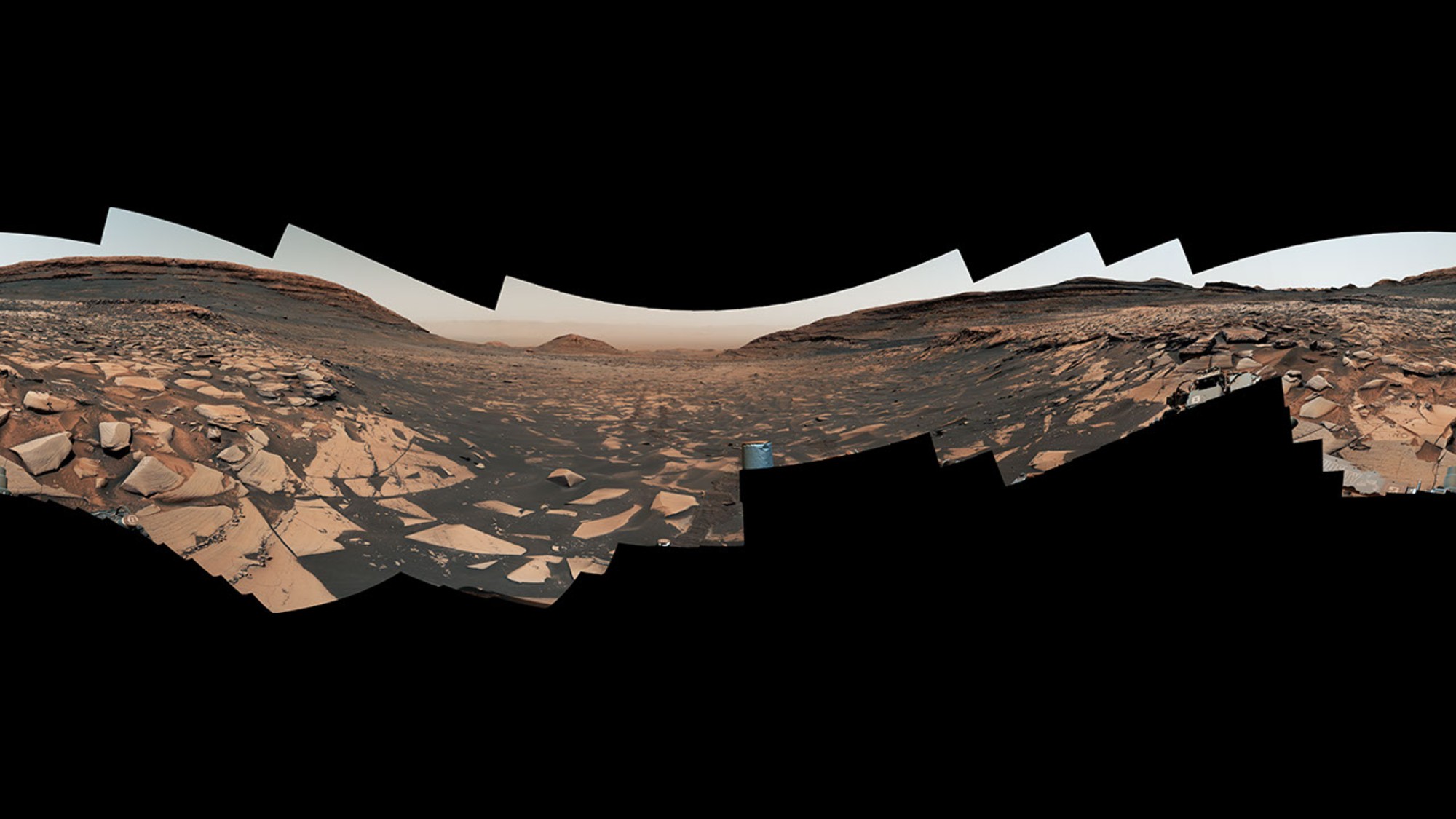
a panoramic image showing a reddish orange, dusty landscape

A panorama of Mars' Mount Sharp, captured by NASA's Curiosity rover from the floor of Gale Crater, on Aug. 1 and Aug. 2, 2026, the 4,972nd and 4,973rd Martian days, or sols, of the rover's mission. (Image credit: NASA/JPL-Caltech/MSSS)

Curiosity's mission has been incredible for a number of reasons. For one, the daring "sky crane" maneuver that NASA and the Jet Propulsion Laboratory used to land the SUV-sized robot on the Red Planet changed Mars landings forever.

Since then, Curiosity has discovered clues that liquid water once flowed across the surface of Mars and has found tantalizing evidence of complex organic molecules on the Red Planet, including some that scientists consider to be the "building blocks" of life.

And even after 14 years of traveling across the Red Planet and suffering considerable damage to its wheels, NASA says Curiosity has plenty of exploration and science left to conduct.

Another one of NASA's Mars rovers, Perseverance, recently notched a travel milestone of its own when it surpassed 26.2 miles (42.2 km) of travel  — the length of a marathon  — across the Martian surface.
Mars rover watches Earth disappear behind Phobos | Space photo of the day for Aug. 6, 2025

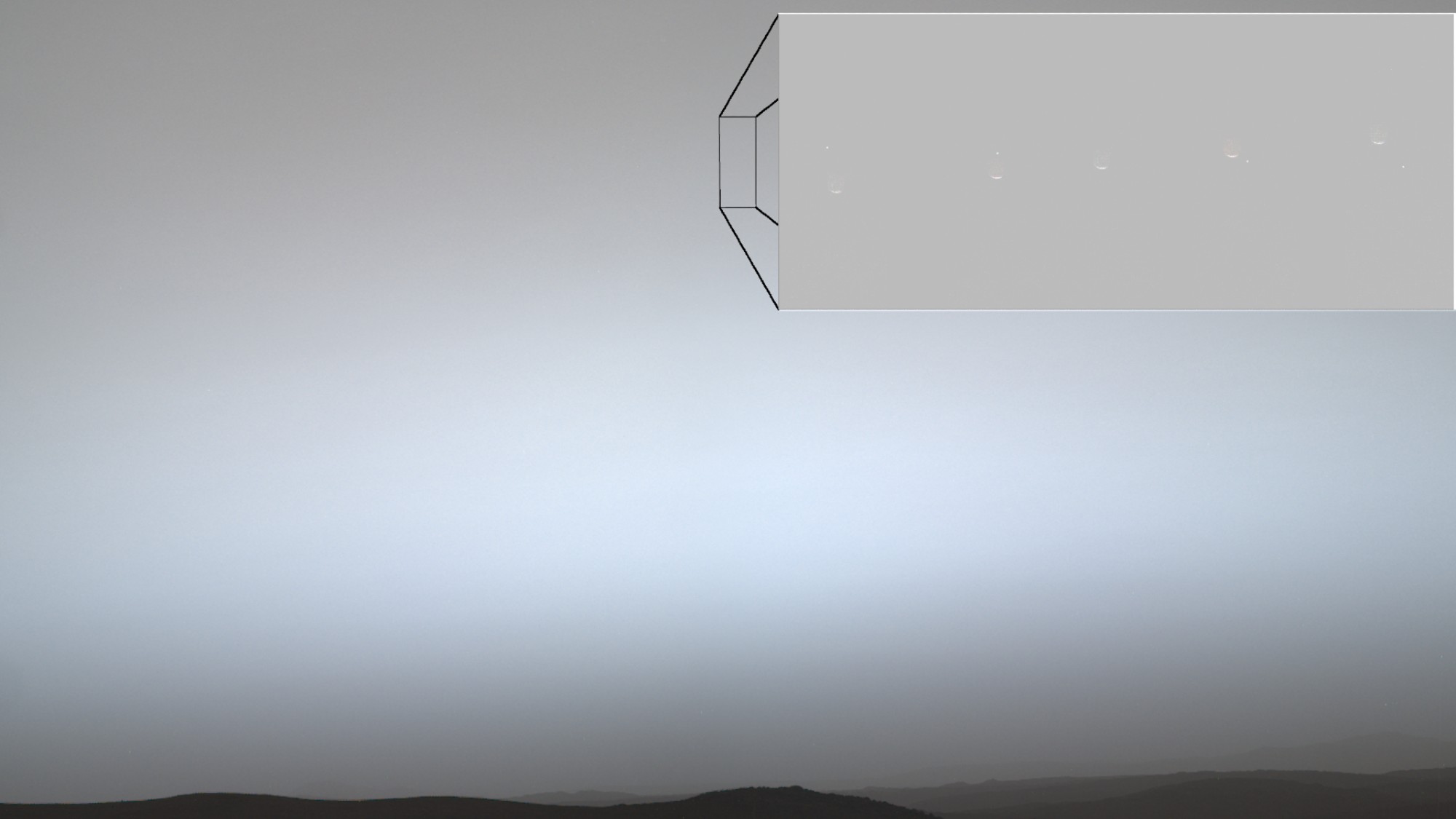
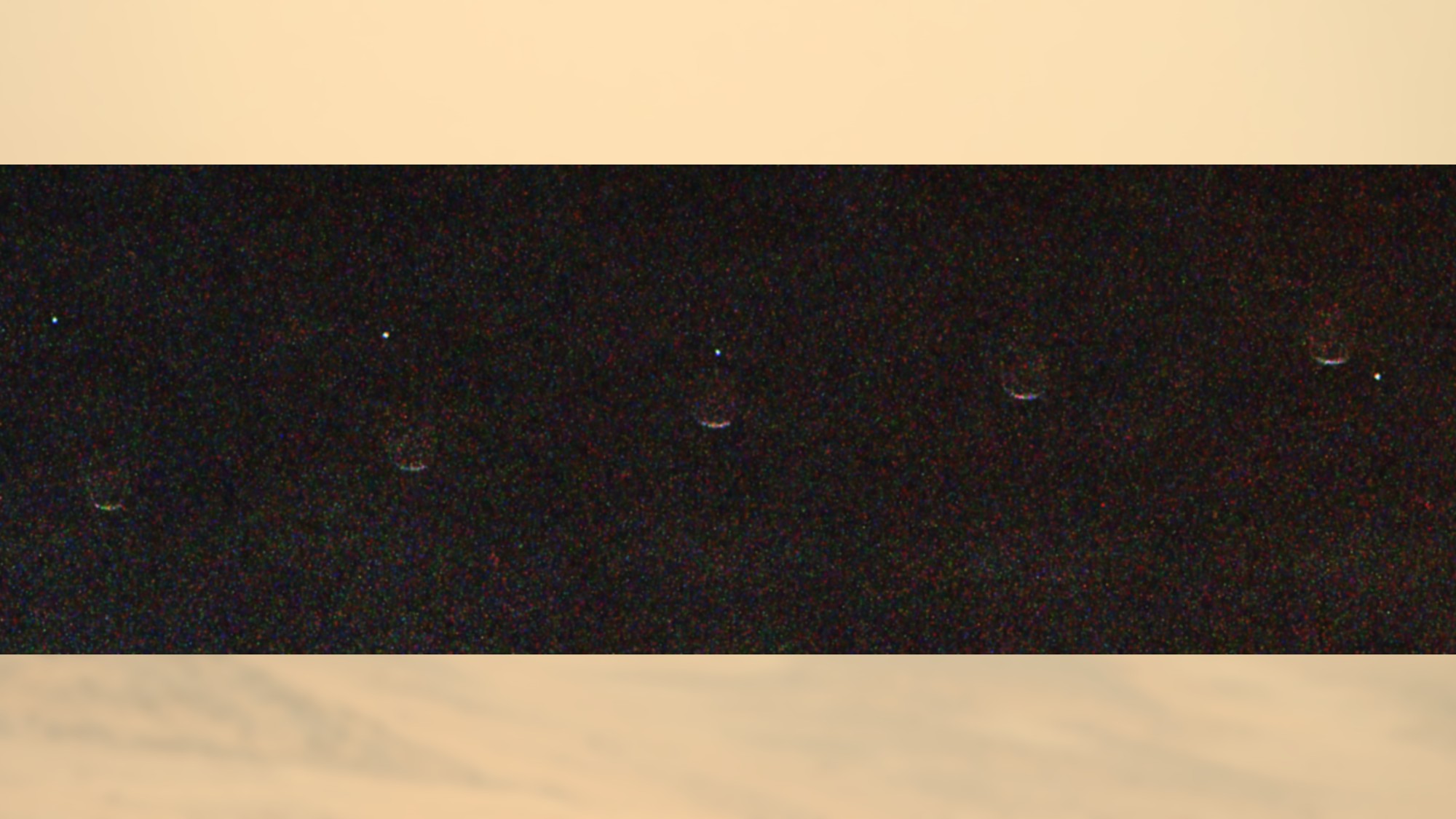
A composite image captured by NASA's Perseverance rover on July 2, 2026 showing Earth (the bright dot) passing behind Mars' moon Phobos in the Red Planet sky. (Image credit: NASA/JPL-Caltech/ASU/MSSS/SSI)

NASA's Perseverance rover witnessed a rare event recently, when Earth briefly disappeared behind Mars' moon Phobos in the Red Planet sky.

What is it?

These new composite images were released by NASA's Jet Propulsion Laboratory (JPL) and taken on July 2, 2026, the 1,907th Martian day of Perseverance's mission. They consist of nine different images taken by the rover's Mastcam-Z instrument as it pointed up into the hazy Martian sky, watching our planet, seen here as a pale dot, cross behind the Mars moon Phobos.

This type of event is known as an occultation, from the Latin word occultare, meaning "to hide." On Earth, the most common type of occultation occurs when our moon passes in front of background stars or when planets pass behind the moon.

Mars has two moons, Phobos and Deimos. Phobos is the larger and innermost moon. Both are lumpy and irregularly shaped, and astronomers aren't sure whether they came from the asteroid belt or were formed from an ancient impact near or on the Red Planet.

a dot of light disappears behind a crescent of light on a grey background

A composite of nine different images captured by NASA's Perseverance rover on July 2, 2026 showing Earth (the bright dot) passing behind Mars' moon Phobos in the Martian sky. (Image credit: NASA/JPL-Caltech/ASU/MSSS/SSI)

Why is it incredible?

The image took careful preparation and required Perseverance to be in the right place at the right time.

"Phobos crosses the Martian sky three times a day, and Earth is visible for months at a stretch, but catching one directly behind the other takes planning and a little luck," said Mark Lemmon, a Mastcam-Z co-investigator at the Space Science Institute.

Aside from catching Earth passing behind Phobos, Perseverance has also witnessed Phobos passing in front of the sun, in what JPL calls a "Martian solar eclipse."

Curiosity Mars rover inspects cracked wheel | Space photo of the day for July 27, 2026

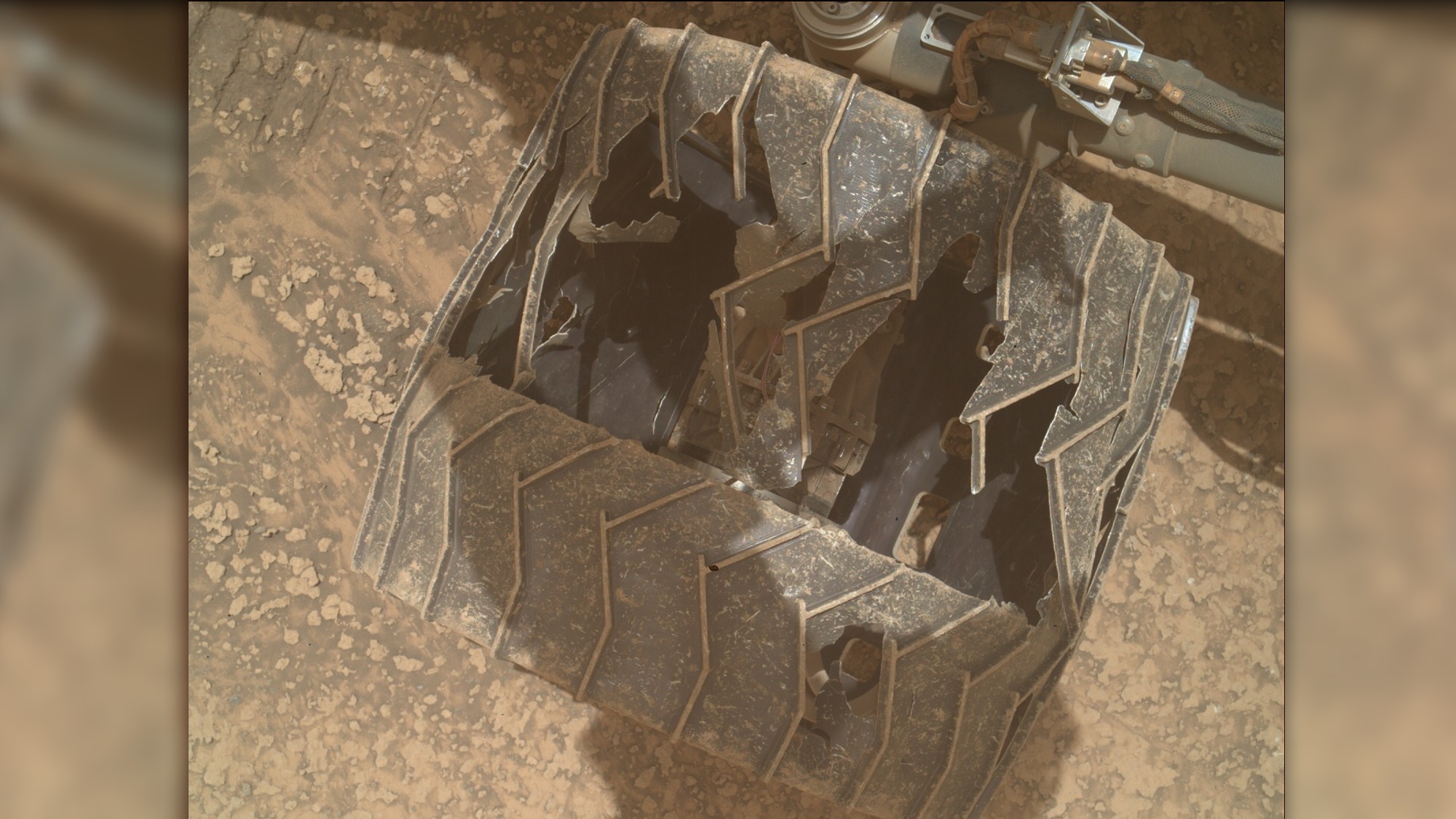
A photo of one of NASA's Curiosity Mars rover's wheels, taken by the rover using its Mars Hand Lens Imager (MAHLI) on July 23, 2026, or Sol 4963 of its mission. (Image credit: NASA/JPL-Caltech/MSSS)

NASA's Curiosity Mars rover has experienced some serious wear and tear during its nearly 14 years on the Red Planet.

A new photo posted to Curiosity's raw image server offers a close-up of the damage one of the rover's wheels has experienced as it explores the Martian surface.

What is it?

Curiosity landed in Mars' Gale Crater on Aug. 5, 2012, touching down while hanging under a 'sky crane' that lowered it to the planet's surface. Since then, the rover has traveled over 20 miles (32 kilometers) across the rocky Martian soil, searching for potential signs of ancient life on the Red Planet.

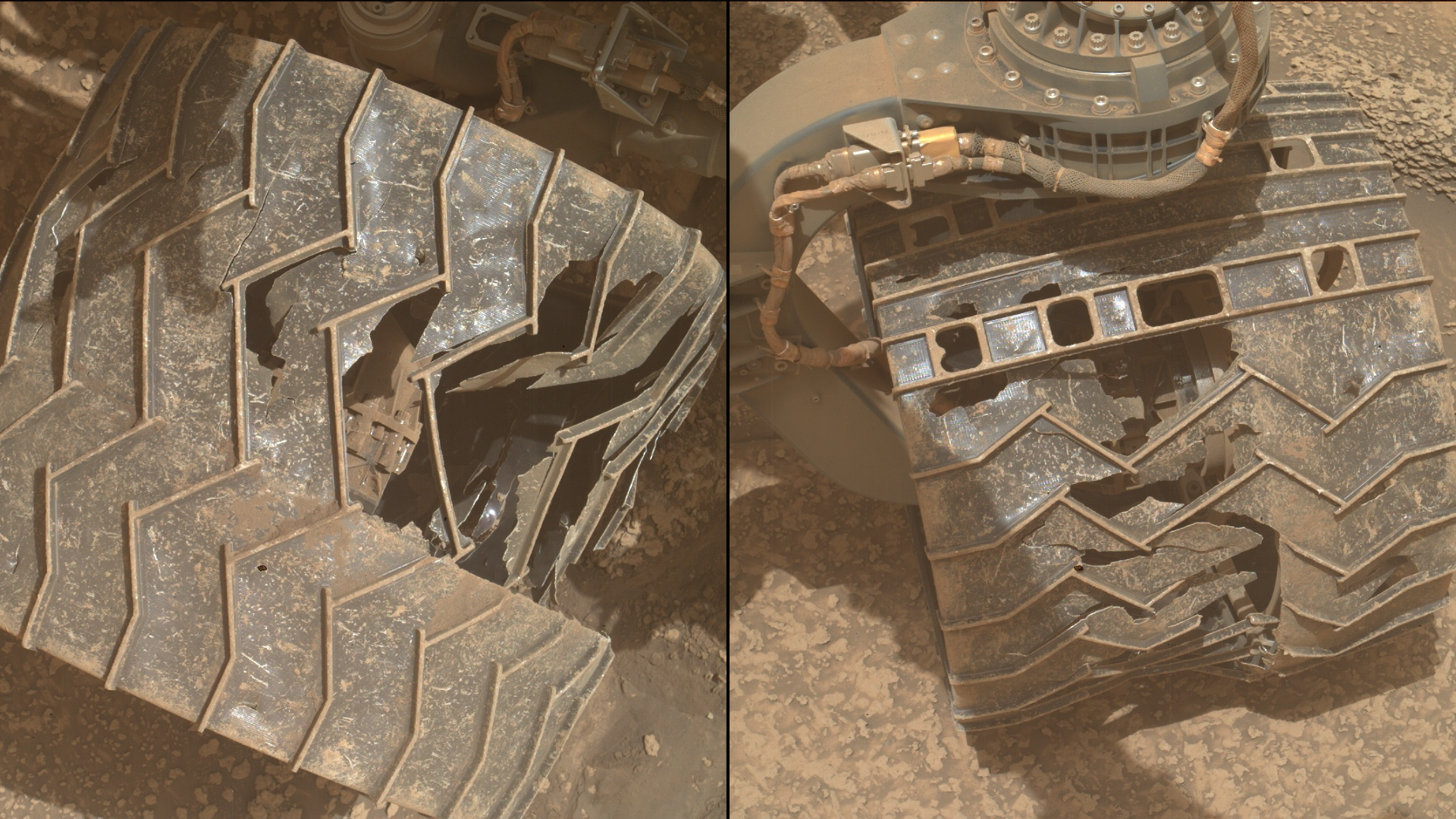
All of that mileage has taken a toll on the rover, as these new images show. Curiosity weighs over one ton, and the terrain on Mars can be quite rocky and rugged.

NASA and the Jet Propulsion Laboratory (JPL) periodically use the rover's cameras to check on the wheels, and despite the holes and cracks, the agency said in a 2024 statement that they're "holding up well despite taking some of the worst abuse from Mars."

Images of NASA's Curiosity Mars rover's wheels, taken by the rover on July 23, 2026, or Sol 4963 of its mission. (Image credit: NASA/JPL-Caltech/MSSS)

Why is it amazing?

We've been exploring Mars for decades now, so it can be easy to take for granted how incredible it is that we get new images beamed from the surface of another planet to Earth daily from NASA's two robotic explorers.

These images of Curiosity's wheels help illustrate the incredible feats of engineering and science it took to place wheeled robots safely on the surface of another planet where they spend years and travel dozens of miles to bring us answers about what other worlds are like.

While they might not be human, Curiosity and Perseverance nonetheless represent humanity's first foray into becoming an interplanetary species. The groundwork laid by the rovers and other Mars orbiters, landers and probes could someday help humanity take its first steps on another planet.

Mars orbiter watches Perseverance rover cross the marathon finish line | Space photo of the day for June 29, 2026

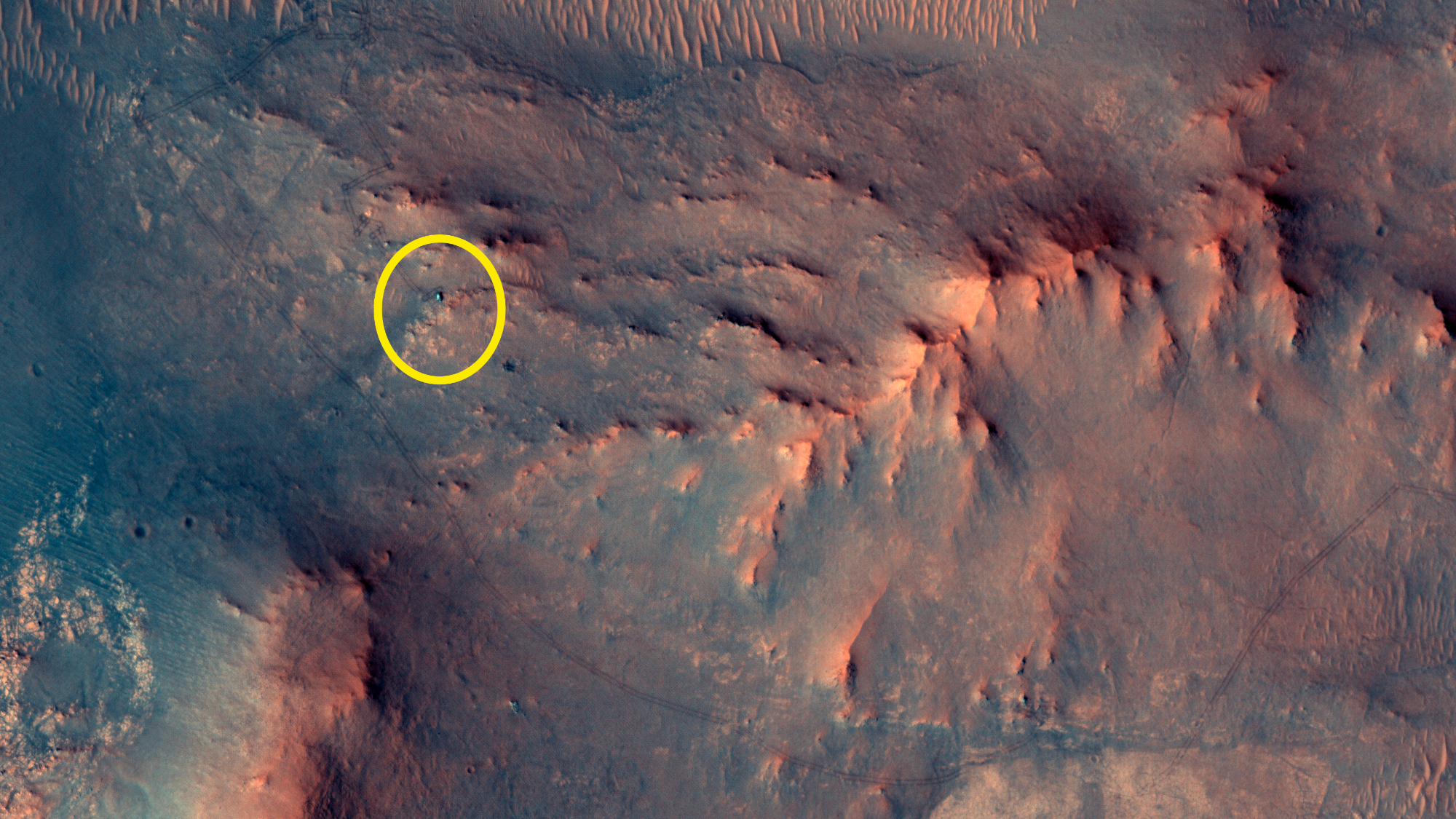
The reddish surface of Mars with a yellow circle indicating the location of Perseverance.

NASA's Mars Reconnaissance Orbiter spotted Perseverance rover as it completed driving the distance of a marathon (26.2 miles or 42 kilometers) on the Red Planet. (Image credit: Credits: NASA/JPL-Caltech/University of Arizona)

A spacecraft orbiting Mars watched as its "friend," the Perseverance rover, finished its first marathon on the Martian surface. There weren't any medals handed out, and there wasn't any competition, but we're proud either way.

What is it?

On June 14, 2026, NASA's Perseverance Mars rover completed the equivalent of a marathon, having driven 26.2 miles (42.2 kilometers). After landing in the ancient lakebed Jezero Crater in 2021, the rover has been hard at work exploring, sampling, and collecting information to help scientists put the pieces of Mars' history together.

NASA's Opportunity rover also managed to reach a marathon distance on Mars, though it took over 11 years to make it that far. Perseverance managed to make it to this marathon milestone in just 5 years and 4 months, and the rover is still going strong.

But Perseverance isn't making history alone; it has the Mars Reconnaissance Orbiter (MRO) watching from orbit. In this image captured on June 13 by MRO, we can see Perseverance in the home stretch of its marathon, rolling toward that finish line in a region of Jezero Crater called "Arbot."

While the rover is barely a speck from this orbital distance, this additional vantage point allows researchers a different perspective on the robotic explorer. With the speed at which the rover completed this marathon, and how well it continues to explore on Mars, who knows, maybe Perseverance will be the first to manage an ultramarathon on the Red Planet.

Why is it incredible?

While crossing the marathon finish line on Mars is an exciting milestone, Perseverance has done so much more than just travel this impressive distance.

In the past 5 years, and over 26.2 miles, Perseverance has accomplished quite a lot. The rover has captured an incredible wealth of imagery, data, and even samples of Martian material.

Last year, observations made with the rover revealed the most-compelling possible biosignature found yet on the planet. And more recently, the rover found even more evidence of possible past life in a similar location.