A newly found Mars meteorite is revealing the secrets of a previously hidden time period of Red Planet geological history.
The 1.27-billion-year-old space rock, called Northwest Africa (NWA) 13441, was discovered in Algeria in 2019 — but its age was not confirmed until recently. Now scientists say the meteorite helps answer questions about a huge gap in the Martian geologic record: a span of time between 600 million years ago and 2.4 billion years ago.
This vast timespan has no known examples of meteorites containing igneous (solid magma) shergottites, which are the most abundant type of Martian meteorites, chunks of the Red Planet that were blasted away by impacts, ejected into space and eventually fell to Earth. The only meteorites known from this time range, roughly 1.3 billion to 1.4 billion years ago, are rarer types known as chassignites and nahklites. As such, the newly analyzed meteorite is opening new insights already about this time period.
"The characteristics of this meteorite were entirely surprising," stated Boston College Earth and environmental sciences professor Ethan Baxter, co-author of a study published Aug. 1 in the journal Geochimica et Cosmochimica Acta. "No other Martian meteorite like this has an age of 1.27 billion years old."
NWA 13441 was surprising to researchers in two ways. The first was its composition — while it is a shergottite, the space rock also contains isotopes (element types) of a rare-Earth metal called neodymium. Neodymium is usually found in chrondrites — another kind of meteorite made up of unmelted rocks — and chondrites were common in the solar system when it was formed 4.56 billion years ago.
This blended composition of shergottite and chrondrite suggests deeper parts of Mars have remained relatively untouched since the planet was formed, Baxter stated. That finding aligns with what scientists already know about Mars, which likely formed only five million years after the solar system was formed. (Mars also has no plate tectonics, making it different from Earth and which allows the earliest bits of it to remain undisturbed by the types of geologic processes that take place on our planet.)
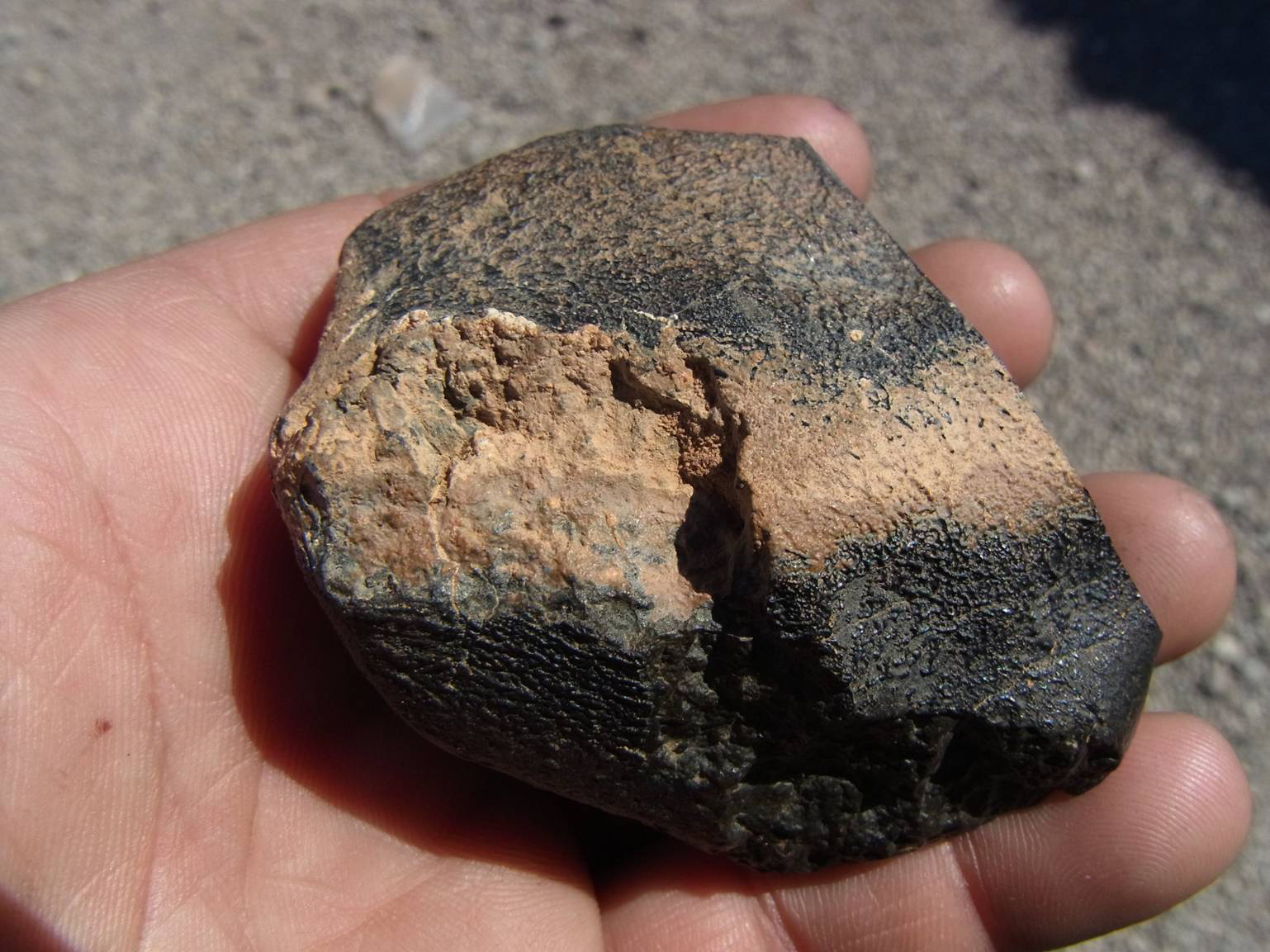
A different Mars meteorite found in Northwest Africa, known as 7635. It is a shergottite believed to be around 2.5 billion years old. (Image credit: Mohammed Hmani)
Peering deeper at the chondrites added a second surprise: the composition of the isotopes, or element types, are helping establish "new boundaries on the processes that happened in the very early solar system as Mars formed," the authors stated. The paper's abstract added this information suggests the meteorite may have come from a "previously unsampled" reservoir on the Red Planet lying between "enriched and depleted shergottite sources."
Scientists hope that more analysis of this meteorite will reveal "magmatic and volcanic activity on Mars," Seal said in the same statement. Next up will be looking at the meteorite's isotopes to figure out its connection to other meteorites formed early in Martian history.
Picture it: A swarm of tiny robot helicopters descends through a reddish-brown sky, landing gracefully on the Martian surface. What are they wearing? Tiny capes.
NASA's SkyFall mission will send a trio of mini rotorcraft to Mars equipped with ground penetrating radar technology which happens to look like little capes. These uniquely designed swaths of fabric look decidedly strange or even accidental in new videos from NASA's Jet Propulsion Laboratory (JPL) that show the little drones practice landing. But these capes are actually flexible antennae that will allow the craft to peer beneath the Red Planet's surface in search of water ice.
"The only way to detect shallow subsurface ice remotely is to fly close to the ground," Adrian Tang, SkyFall’s ground-penetrating radar lead instrument scientist at JPL, said in a statement on Thursday (Aug. 6). "By flying low and slow, a SkyFall helicopter could capture radar images that resolve the fine layering where dry soil gives way to ice, detecting its presence and mapping its extent."
Orbiting spacecraft have studied Mars for decades, imaging the planet and mapping it with radar. But from orbit, their radar is unable to see the first few feet of material just below the planet's surface — a zone where scientists expect to find shallow ice deposits mixed in with the rocks and dust. This work could be important for future astronauts who need to better understand the ground below their feet for safety reasons, and for future travelers searching for accessible ice to process for drinking water, oxygen and fuel.
Skyfall will follow in the footsteps of Ingenuity, the first rotorcraft on another world, which hitched a ride to Mars aboard NASA's Perseverance rover. The new choppers are based heavily on Ingenuity, which weighed just 4 pounds (1.8 kilograms) here on Earth. But Skyfall will be more capable than Ingenuity, whose main job was to show that choppers can explore the thin skies of Mars.
SkyFall's tiny cape ground-penetrating radar, which uses a type of flexible antenna called Vivaldi that was invented back in 1978, is designed to survey up to 16 feet (5 meters) below the Martian surface. The radar will be able to reach anywhere from several yards below the planet's surface to the uppermost layers of surface material.
And the antenna's unique design ensures that the SkyFall drones will be able to make these subsurface observations without damaging the equipment during landing.. The antenna is extremely lightweight, and the team miniaturized it to be both the right size and shape to fit the tiny helicopters, which sit just 6 inches (15 centimeters) above the ground at rest. The tricky thing was, the designers had to miniaturize the radar antennae while maintaining functionality. But they did just that, and these tiny radar capes will be able to bend and move out of the way as the rotorcraft do their thing, flying above and landing on the Red Planet.
"Although we managed to shrink the antenna quite a bit, it is about 1.5 times longer than the helicopter’s legs," Christine Gebara, SkyFall ground-penetrating radar mechanical lead at JPL, added in the statement.
"That means during landing, the Vivaldi has to bend out of the way — and if it lands on a rock, it bends even further," she added. "But when the helicopter takes off again, the antenna must spring back into place for data collection. Because SkyFall is expected to make dozens of flights exploring Mars, we needed an antenna that could repeatedly handle those pressures without losing its shape in flight."
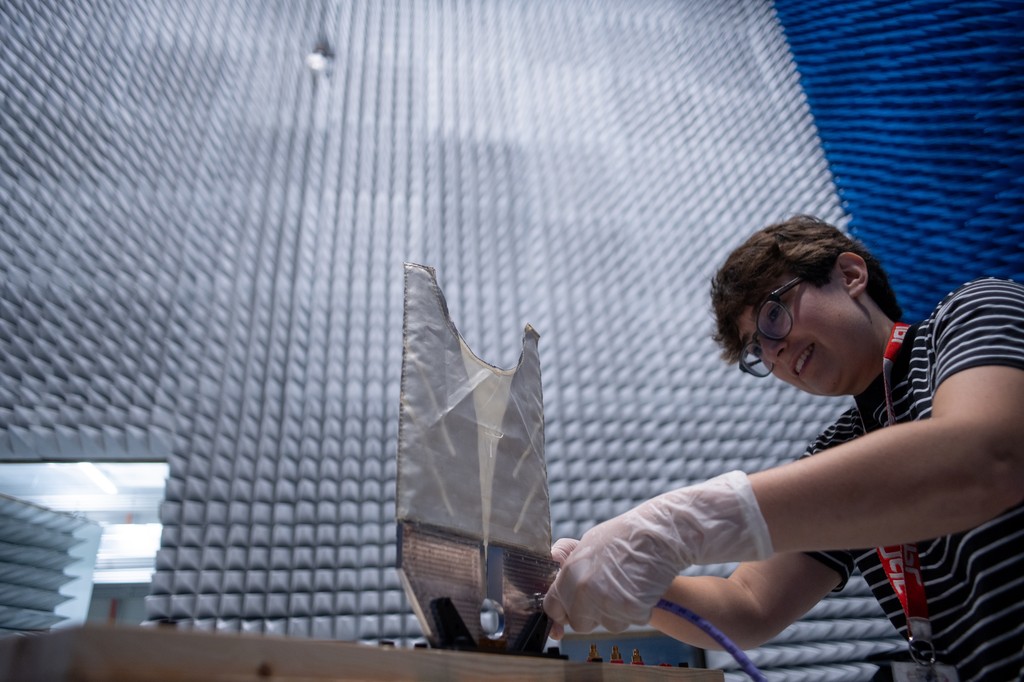
A radar engineer at NASA JPL works to test the antenna on the SkyFall helicopter. (Image credit: NASA/JPL-Caltech)
To make these little capes capable of withstanding incredible feats on another world, the engineers behind the helicopters covered the antenna in layers of polyester and Vectran, a flexible (but incredibly strong) material that was previously used for the airbag that cushioned NASA's Spirit and Opportunity Mars rovers during their touchdowns in 2004. The antenna's shape is also reinforced with flexible fiberglass tape springs and a lightweight structure. In total, each antenna weighs a miniscule 5 ounces (142 grams).
But a crafty design isn't enough. Getting to Mars is no small feat, and NASA needs to be sure that these little helicopters and their gear are up to the challenge. So, in JPL's Environmental Test Laboratory, which recreates different elements of environments beyond Earth, the SkyFall team put the rotorcraft and its little radar antenna to the test. They bent and flexed the antenna over and over, recreating multiple landings on the surface, exposed the craft to extreme temperatures, and continually checked to make sure that, throughout this testing, the helicopter could still transmit and receive radar signals. At the end of this testing, the antenna had endured 200 simulated Mars landings and was still working just fine. That is more than twice the number of landings expected from the mission.
"This test checked every box it was supposed to and answered our biggest technical questions," Tang added. "While we still have work ahead of us before the antenna is fully flight-qualified, this was a major milestone, and the hardware performed exactly as expected."
The trio of SkyFall helicopters will put their radar capes to the ultimate test when they fly to Mars. NASA plans to launch this mission to the Red Planet in 2028 aboard NASA's Space Reactor-1 Freedom, the first nuclear fission-powered interplanetary spacecraft.
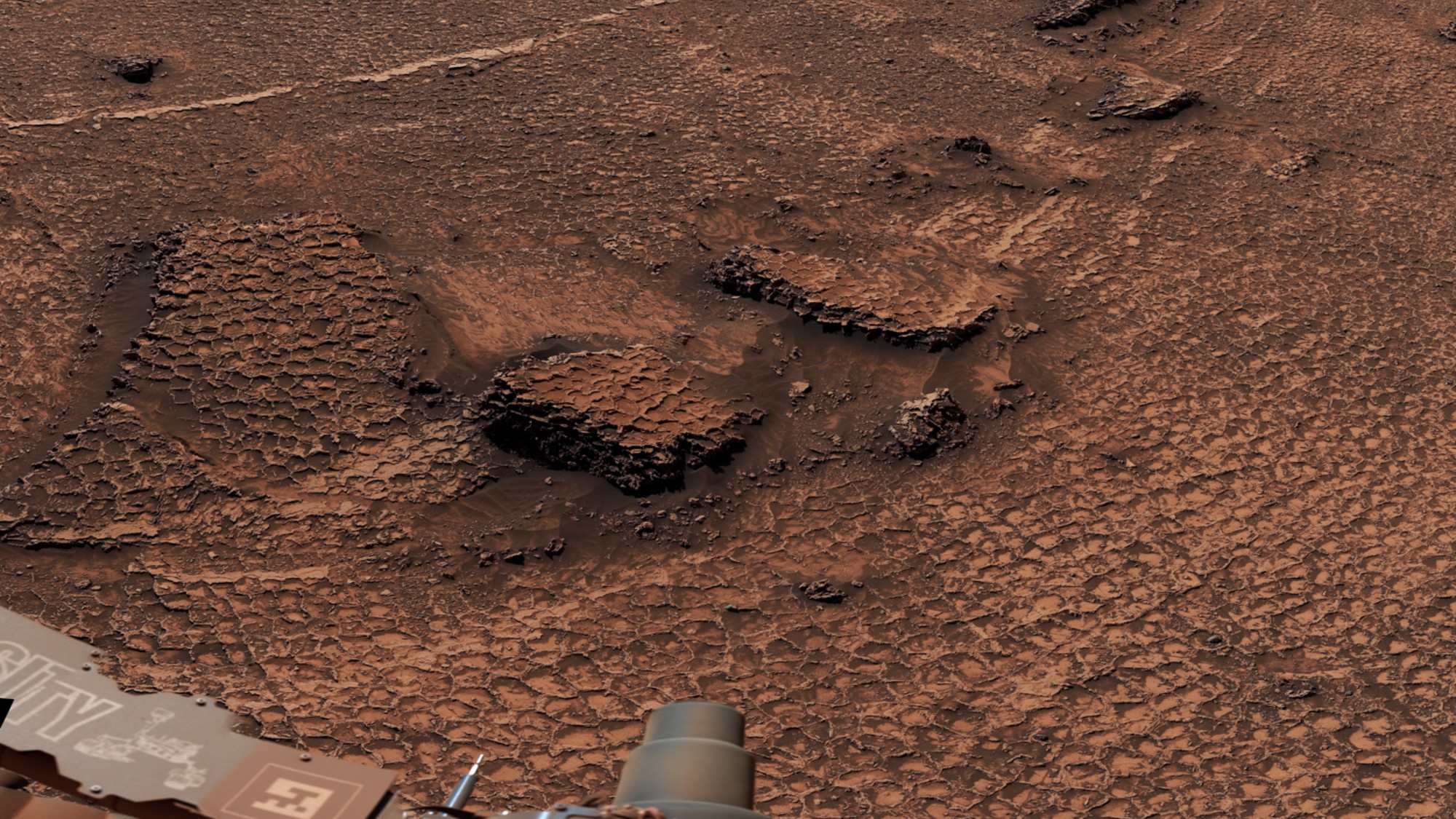
A close-up of the polygon fractures discovered by NASA's Curiosity Mars rover highlights their honeycomb-like textures. (Image credit: NASA/JPL-Caltech/MSSS)
NASA's Curiosity Mars rover spotted surprising shapes in the Red Planet soil while exploring a large valley.
What is it?
These images were captured on June 19 and 20, 2026, or the 4,930th and 4,931st Martian days of Curiosity's mission. They show honeycomb-like patterns referred to as "polygonal fractures" found in a valley on Mars known as Valle Grande. They measure about 1.5 to 3 inches (4 to 8 centimeters) across.
While Curiosity has seen other curious geometric patterns on Mars before, scientists were surprised by this most recent find.
"We've seen a lot of fascinating landscapes through Curiosity's eyes, but this sea of polygons took our breath away," project scientist Ashwin Vasavada of NASA's Jet Propulsion Laboratory said in a statement. "We measured their shapes and chemistry carefully and are hopeful there are clues in the data as to how these features formed."
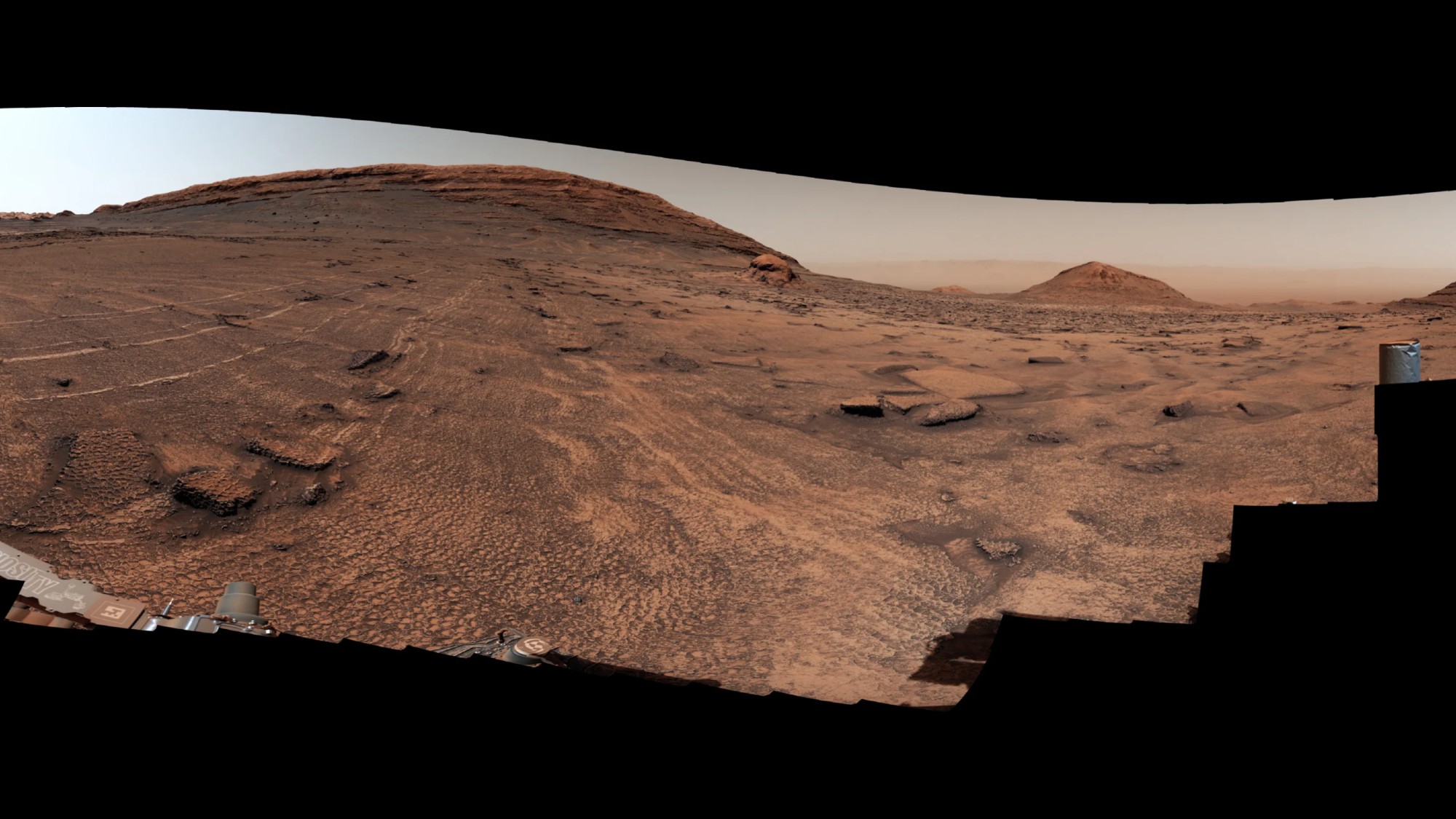
A panorama taken by NASA's Curiosity Mars rover showing a large field of hexagonal shapes in the Martian soil. (Image credit: NASA/JPL-Caltech/MSSS)
Why is it incredible?
This field of polygons in Valle Grande extends as far as Curiosity's instruments could see, even around the base of a steep hill scientists named "Miraflores."
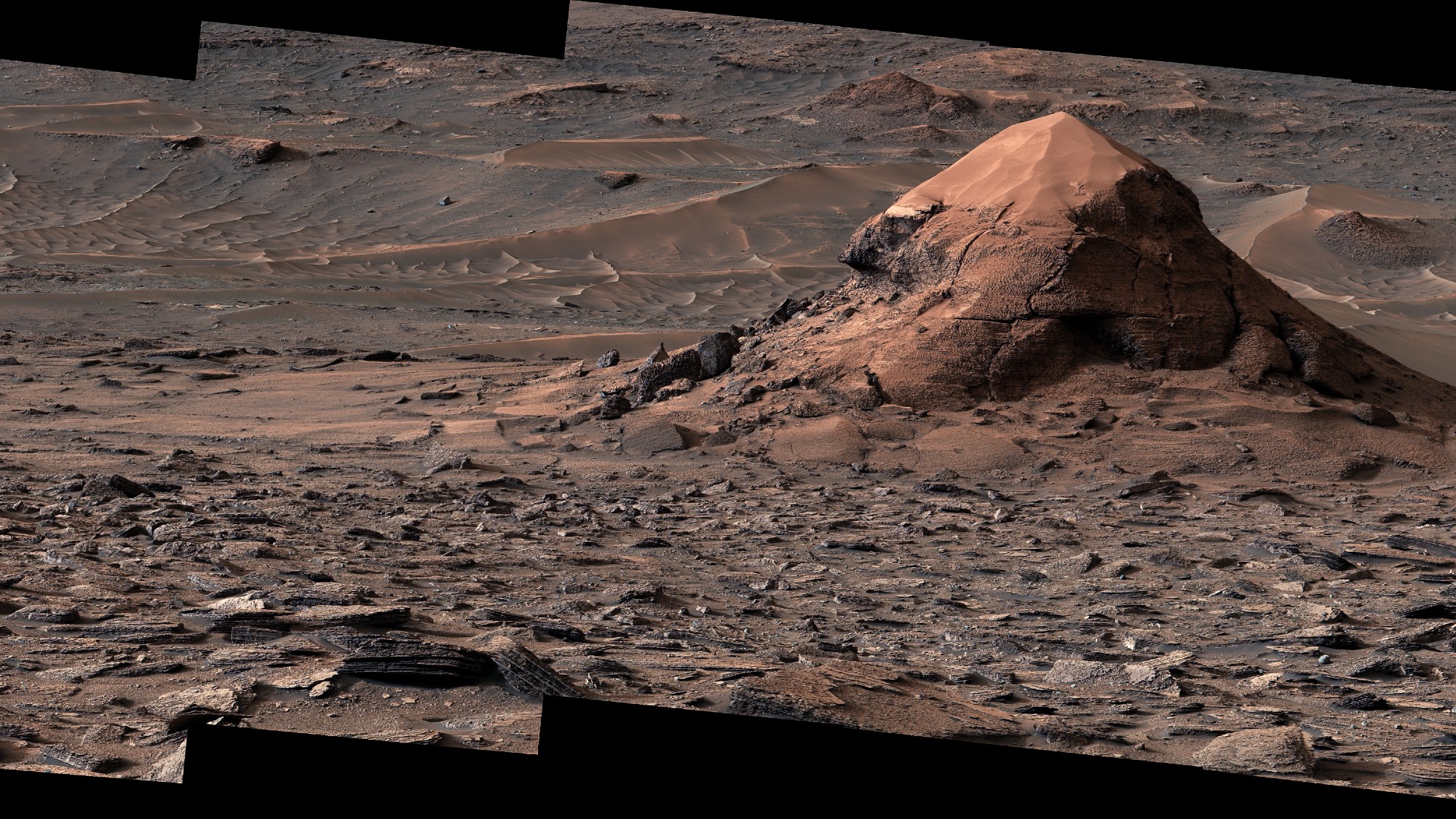
NASA's Curiosity Mars rover captured this sand-capped butte, nicknamed "Miraflores," estimated to be about 20 feet (6 meters) tall, on June 11, 2026. (Image credit: NASA/JPL-Caltech/MSSS)
While mission scientists have theories about how these structures form, it ultimately remains a mystery how they formed.
It's thought that changes in temperatures on Mars could have caused water to squeeze through sediment layers, but scientists will need to collect more data before they can reach a conclusive answer.
Planting boots on Mars is hard enough. But getting "breathing room" on the Red Planet without inhaling toxic dust is yet another issue.
Given NASA's plans to eventually put astronauts on the Red Planet, the agency assembled a Martian Dust Limit Working Group earlier this year to review what's known and unknown about the toxicological hazard to human crews from exposure to Mars dust. The ultimate goal was to establish a permissible exposure limit for humans on the Red Planet by compiling a comprehensive set of expert perspectives regarding Martian dust toxicology, exposure pathways and mitigation strategies.
The working group's conclusions reinforced the view that an initial Martian dust standard "must balance conservatism with operational feasibility while accommodating architectural and scientific uncertainty," the report states. Furthermore, the report explains, "as additional Martian data and toxicological research become available, this standard should be periodically revisited to ensure continued protection of crew health during human exploration of Mars."
Unique study
A panel member for that study was Brian Hynek professor in the Department of Earth Science and a research associate at the Laboratory for Atmospheric and Space Physics, both at the University of Colorado, Boulder.
"It was a unique study," Hynek told Space.com, conducted by NASA specialists, space medicine experts, habitat designers, including toxicologists, volcanologists and geologists. "The task was to help gauge health hazards to humans, both for short and long-term stays," he said.
Just highlighting the differences between the moon and Mars played a role, said Hynek. "The moon is worse in some ways and Mars is worse in other ways."
Disneyland of dust
To be sure, one outcome from Apollo moonwalkers – the "dusty dozen" – is that dealing with lunar dust proved to be troublesome, much more than expected. The aged moon is a Disneyland of dust and crews that went there attested to that fact.
Once out and about, moonwalkers coped with very fine, tiny particles composed of sharp, glassy material. Lunar dust stuck to everything it came in contact with; dust eroded their spacesuits, caused overheating on equipment and instrumentation, compromised seals on their spacesuits, even irritated the eyes and lungs of moonwalkers.
"On Mars, dust particles are a little more rounded, not as jagged and cutting into you. But then you have all the extra chemical components and minerals that you don't have on the moon, like really unhealthy perchlorates," Hynek said. "We can use the lunar knowledge, but Mars is a totally different place," he added.
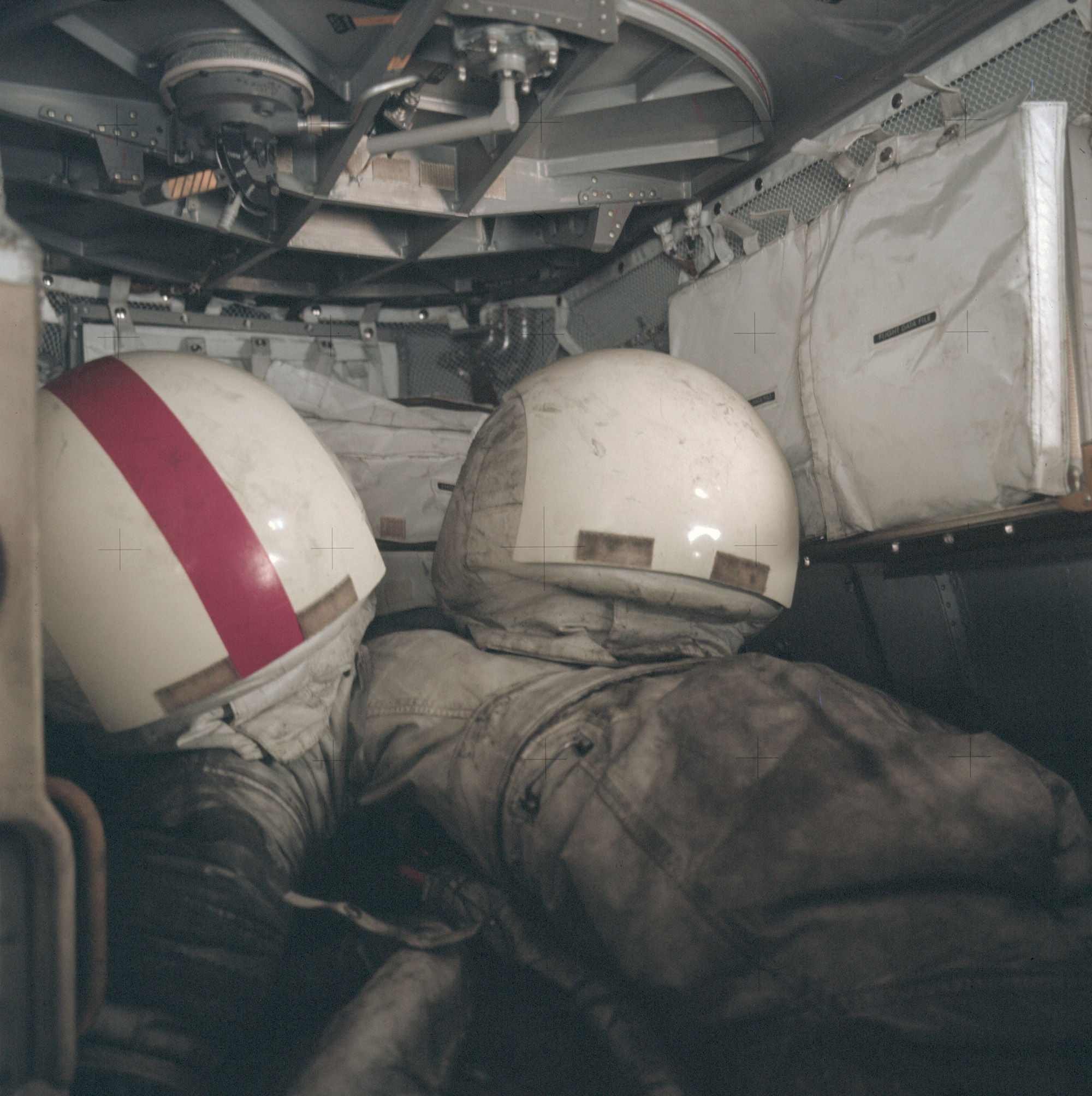
At the conclusion of Apollo 17's mission in December 1972, moonwalking suits and space helmets are covered by lunar dust. (Image credit: NASA)
Heavy metals
Hynek noted that Martian dust is known to contain various carcinogens, such as silica and numerous heavy metals. He co-authored a recent paper on "Potential Health Impacts, Treatments, and Countermeasures of Martian Dust on Future Human Space Exploration."
"There's talk about growing crops on Mars," Hynek observed. "The martian soil is full of all these nasty chemicals. So the astronauts might get more exposure from what they are growing on Mars than the actual airborne dust," said Hynek.
Then there's the dust that will assuredly find its way into the habitat, Hynek said, so engineers are looking at filtering systems and just how much time will be required to clean the inside of the habitat.
"It's good to have the forethought and to start considering the Martian dust and its hazards. It poses a lot more health hazards than the lunar dust," Hynek concluded.
Learned our lesson
Joel Levine, a research professor in applied science at William and Mary in Williamsburg, Virginia, is a leading expert on lunar dust, engineering and safety concerns. He was not a panel member of the NASA report.
Levine cited earlier thinking from a recent National Academy of Sciences report on human exploration of Mars. Two goals noted in that 2026 report are Mars dust-related:
Determine what controls the onset and evolution of major dust storms, which dominate present-day atmospheric variability.
Characterize the effects of Martian dust on human physiology and hardware lifetime.
"This indicates that Mars dust is on the minds of mission planners! This is good news based on our experience with lunar dust on the Apollo landings," said Levine. "It looks like we learned our lesson about dust at future human landing sites."
Levine stated that Mars sample returns would be very helpful to characterize Martian dust samples for chemical composition and other qualities. "Unfortunately, it does not look like the Mars samples already collected will ever be returned to the Earth for analysis," he said.
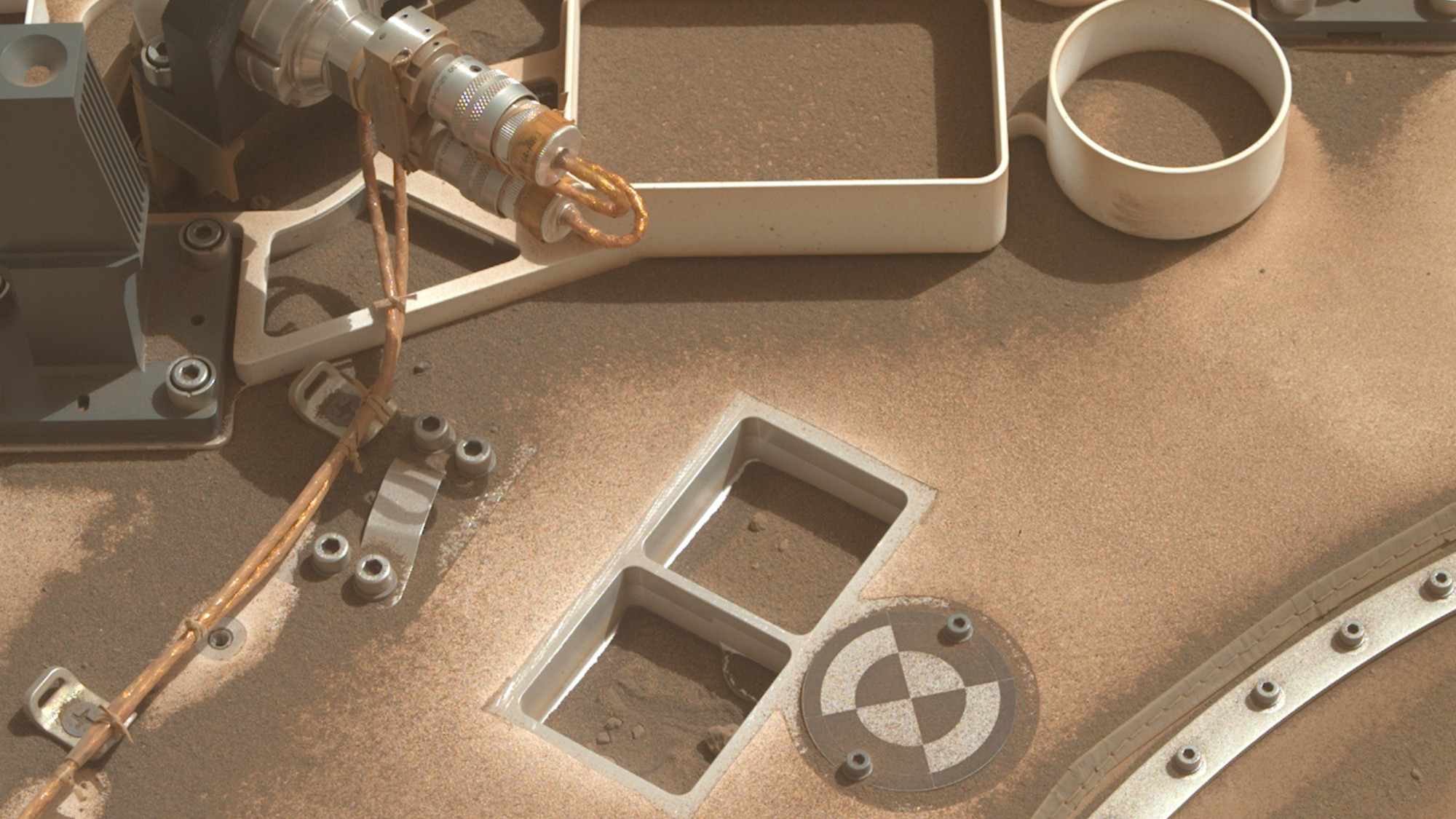
Martian dust seen on NASA's Perseverance rover on July 27, 2026 (Sol 1932) by the rover's Right Mastcam-Z camera. (Image credit: NASA/JPL-Caltech/ASU)
Major takeaways
Shaunna Morrison, an associate professor in the Department of Earth and Planetary Sciences at Rutgers University in New Jersey, served as a panel member on the Martian Dust Limit Working Group.
"One of the major takeaways from the Mars dust working group is that martian dust is a real crew-health and engineering issue, but it is also a tractable one if it is treated as a design requirement from the beginning," Morrison emphasized.
The worry is not that Mars dust is uniquely or catastrophically toxic based on what we know now, Morrison told Space.com.
"The concern is that future crews will be living and working in a closed habitat, repeatedly going outside, bringing dust back in on suits and equipment, in a low-humidity environment," said Morrison. That's a condition in which small particles are more prone to becoming airborne and potentially inhaled, she said, and potentially crew members being exposed to fine respirable particles over many days.
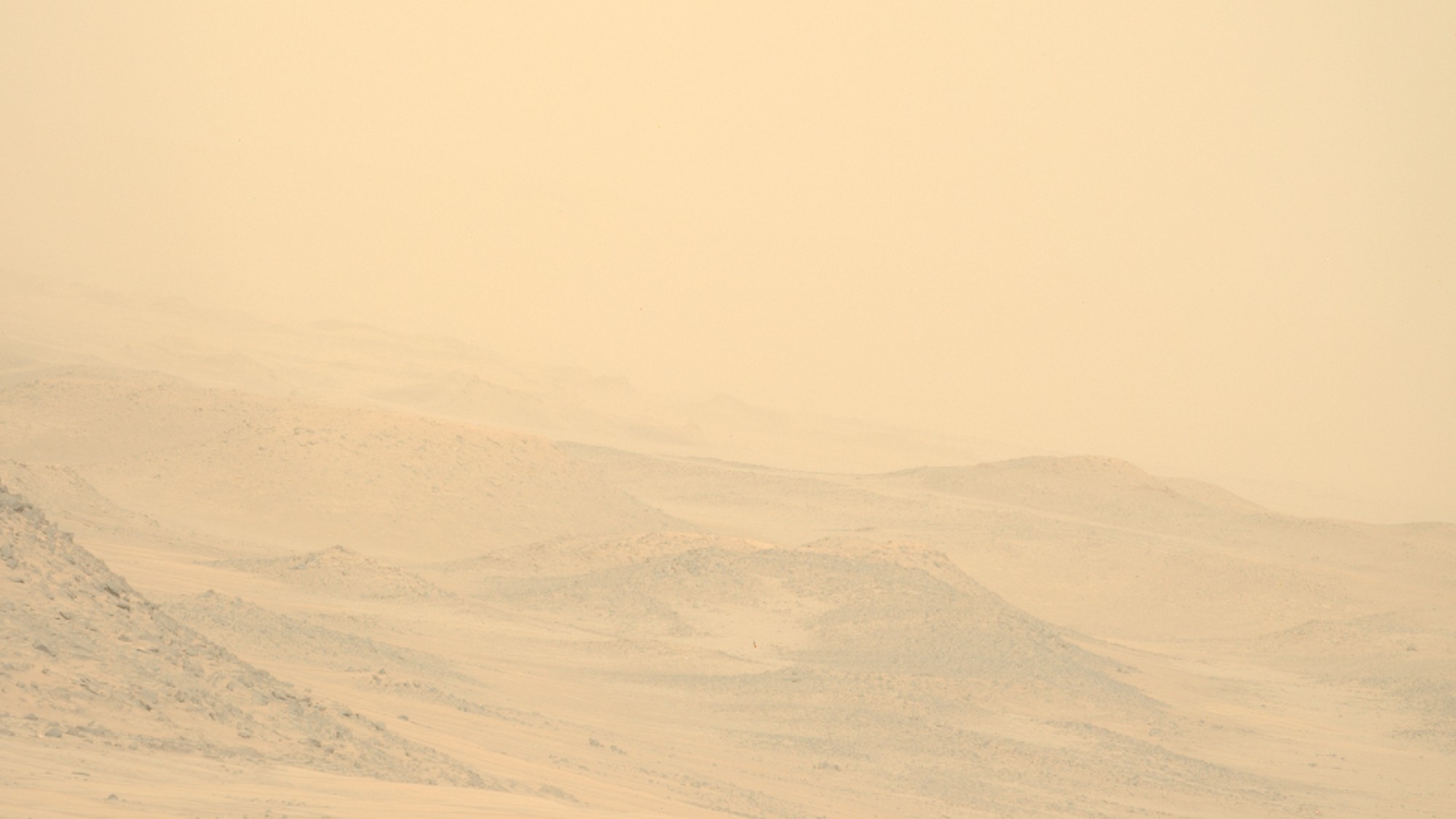
A region-wide seasonal dust storm obscures the Jezero Crater in this image from NASA's Mars Perseverance rover, acquired using its Left Mastcam-Z camera on Aug. 20, 2024 (Sol 1244, or Martian day 1,244 of the rover's mission). (Image credit: NASA/JPL-Caltech/ASU)
Prevention first
Morrison said that a key point is that we do not have as yet returned samples of authentic airborne martian dust. So NASA has to build a conservative standard using the best available evidence: lunar dust toxicology, Mars simulant studies, and the very extensive chemical and mineralogical datasets from Mars rovers and landers, she pointed out.
"The best strategy is prevention first," Morrison said. "Keep as much dust as possible outside the habitat, remove it quickly when it gets in, monitor airborne particles, and design the system so crews are not relying on medical countermeasures after exposure," she advised.
More than 20 years after NASA's Spirit rover began exploring Mars, scientists have uncovered a hidden clue in its archival data that adds to mounting evidence that the Red Planet was once rich in liquid water.
Researchers reanalyzed measurements collected by Spirit between 2004 and 2010, revealing widespread traces of crystalline hematite and altered magnetite in ordinary Martian soil — iron-bearing minerals that point to ancient chemical changes consistent with interactions between water and rock. The findings suggest liquid water may have been more widespread across Mars than scientists previously thought, according to a statement from Edith Cowan University (ECU) in Australia.
The team combined hundreds of individual measurements from 32 undisturbed soil sites inside Gusev Crater, where Spirit landed in January 2004, creating the most detailed iron-mineral profile yet assembled for typical Martian soil, according to the statement.
"One of the most important discoveries was finding crystalline hematite in ordinary Martian soil," Paulo de Souza, lead author of the study and an ECU professor, said in the statement. "This mineral's widespread presence suggests not only that water was present, but that significant areas of Mars may have once been covered by water."
Crystalline hematite has long been considered one of the strongest mineral indicators of past water on Mars. While it can also form through volcanic or hydrothermal activity, it commonly develops when iron-bearing rocks interact with liquid water.
The discovery is particularly significant because previous analyses concluded that crystalline hematite was largely absent from Spirit's landing site. According to the researchers, the mineral's signature was simply too faint to stand out in individual rover measurements. By combining thousands of spectra collected over the mission, however, the team was able to tease the signal out of the background noise.
The researchers also identified altered magnetite, suggesting the original volcanic minerals in the Martian soil were chemically transformed over time. Together, the altered magnetite and crystalline hematite provide new evidence that water played an important role in reshaping the planet's surface. And, because similar dust and soil blanket much of Mars, the findings could have implications well beyond Gusev Crater, suggesting water-related chemical processes may have been more widespread across the planet than previously believed.
The results add to a growing body of evidence that Mars was once far more habitable than it is today. During its mission, Spirit discovered water-altered rocks and minerals in the Columbia Hills, while NASA's Curiosity rover later found evidence that Gale Crater once hosted long-lived lakes. More recently, Perseverance has been exploring the remnants of an ancient river delta inside Jezero Crater, where scientists hope to determine whether the environment could once have supported microbial life.
Beyond revealing another chapter of Mars' watery past, the research also highlights the lasting scientific value of spacecraft data long after a mission has ended.
"This work shows that important discoveries are not always made by collecting new data," de Souza said in the statement. "Sometimes they come from looking at existing data with fresh eyes and better analytical techniques."
Hey, Space Fans! Every weekend here at Space.com, you may have noticed we highlight the latest episode of the podcast This Week In Space, a TWiT show co-hosted by yours truly and my friend and colleague Rod Pyle, a space historian and editor of the National Space Society magazine Ad Astra.
This Week In Space episodes usually drop each Saturday, but this week we're doing something a bit different. To mark the 50th anniversary of NASA's Viking landings (Viking 1 touched down on Mars on July 20, 1976), Rod and I will host a special live taping of the podcast to discuss all things Martian starting at 1:30 p.m. EDT (1730 GMT). It should last up to 90 minutes.
Joining us on the podcast will be:
Dr. Pascal Lee, a planetary scientist, geologist and artist with the SETI Institute, Mars Institute and NASA Ames Research Center.
Dr. Penny Boston, an astrobiologist and speleologist (the study of caves) with the New Mexico Institute of Mining and Technology.
During our discussion, we'll touch on the personal and scientific impacts of NASA's Viking Mars landings and look at where Mars exploration may go in the modern age. We might even discuss the best places for the hunt for signs of life: the surface or inside Martian caves?
So if you're a Mars fan or a casual space aficionado, join us today at 1:30 p.m. EDT to get a detailed look at NASA's Viking Mars landings and their lasting impact on Martian exploration.
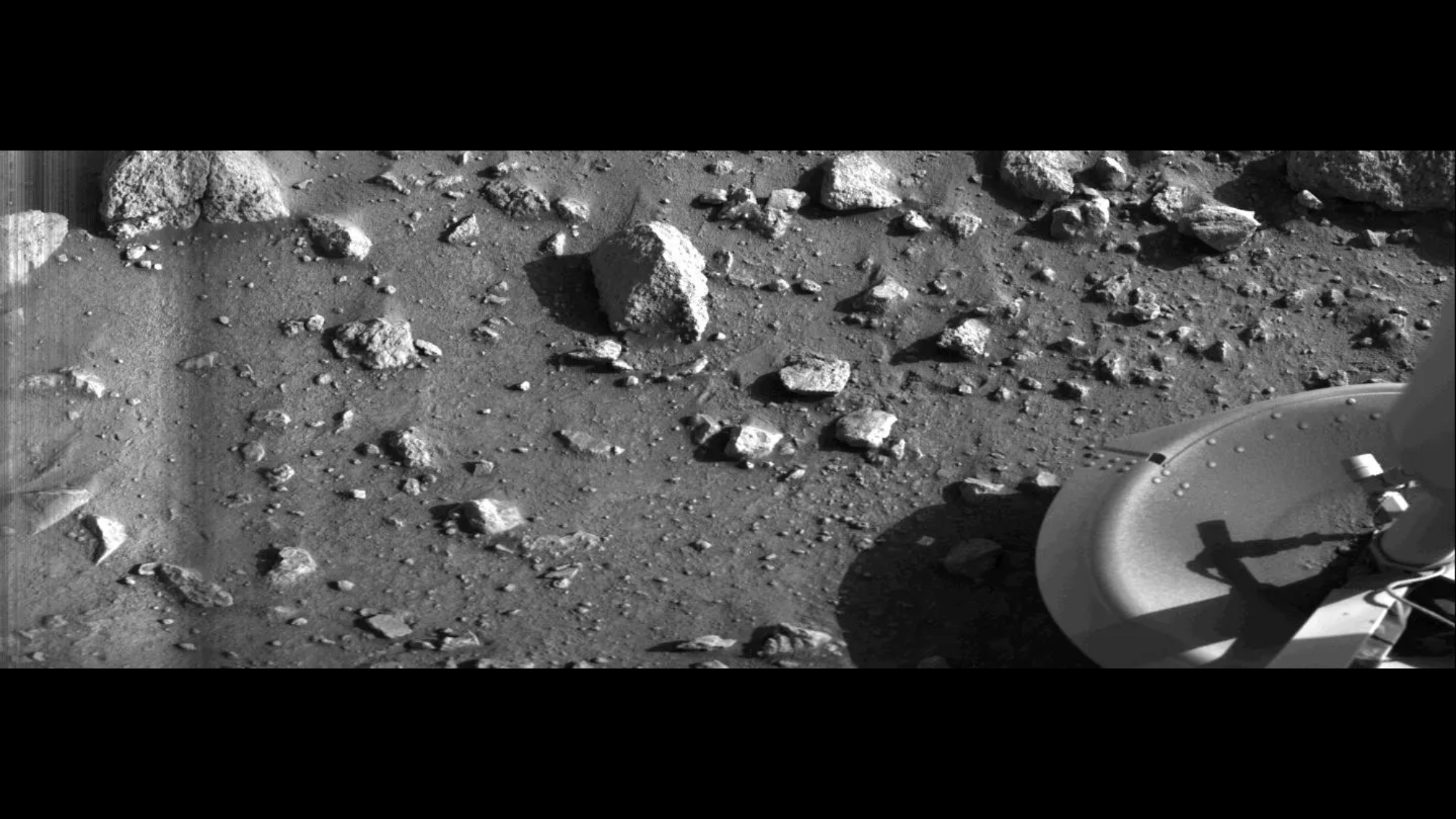
The first-ever photo captured on the surface of Mars, snapped on July 20, 1976 by NASA's Viking 1 lander. (Image credit: NASA/JPL)
You're looking at history. What might seem like a simple black-and-white picture of some rocks is actually the first photograph ever taken on the surface of Mars.
What is it?
Bright and early on the morning of July 20, 1976, NASA's Viking 1 lander touched down on the surface of Mars. This moment 50 years ago marked the first fully successful touchdown on the Red Planet, and, pretty much as soon as it landed, Viking 1 captured the first image of the Martian surface.
The Soviet Union had already made multiple Mars landing attempts, all of them failures to some degree. The nation's Mars 3 lander did manage to survive its landing initially in December 1971, but it lost contact less than two minutes later.
Viking 1 did more than just survive. While its mission tasked the lander with studying the planet for 90 days after landing, it lasted over six years on the planet and made some incredible observations. The Viking 1 lander worked in tandem with an orbiter by the same name, and was soon joined at Mars by Viking 2, another lander/orbiter pair.
Why is it incredible?
It has now been 50 years since Viking 1's historic first, which opened our eyes to the Martian surface. And NASA has kept improving technologies and exploring further on Mars ever since. Agency rovers began scouring the planet's surface in the 1990s, so we have gathered data on the planet's surface for decades upon decades at this point.
But in 1976, no one had ever seen the surface of Mars close up. This view was preceded by science fiction like Ray Bradbury's "The Martian Chronicles," which painted fantastical possibilities about what it might really be like on Mars. With Viking 1's view, we finally got some concrete evidence of the reality on the planet.
In 50 years, our understanding of Mars, our solar system and beyond has grown tremendously. But with each major accomplishment, we can look back at previous milestones such as this to see the stepping stones that paved the way to get us there.
Swelling from a razor-thin crescent into a cratered world before fading back into the darkness, Mars gave NASA's Psyche spacecraft both a spectacular view — and a 1,000-mph boost toward its namesake asteroid.
A new time-lapse video released by NASA, stitched from images taken throughout May, captures the probe's month-long encounter with Mars. On May 15, Psyche swooped within 2,864 miles (4,609 kilometers) of the surface, using the planet's gravity to boost its speed and adjust its trajectory toward asteroid Psyche, a metal-rich world in the main asteroid belt between Mars and Jupiter that the spacecraft is scheduled to reach in 2029.
"This gravity assist was years in the making, and the navigation team nailed it — Psyche flew by Mars on exactly the trajectory we needed to set us on a path to rendezvous with the asteroid in the summer of 2029," Bob Mase, Psyche's project manager at NASA's Jet Propulsion Laboratory in California, said in a statement.
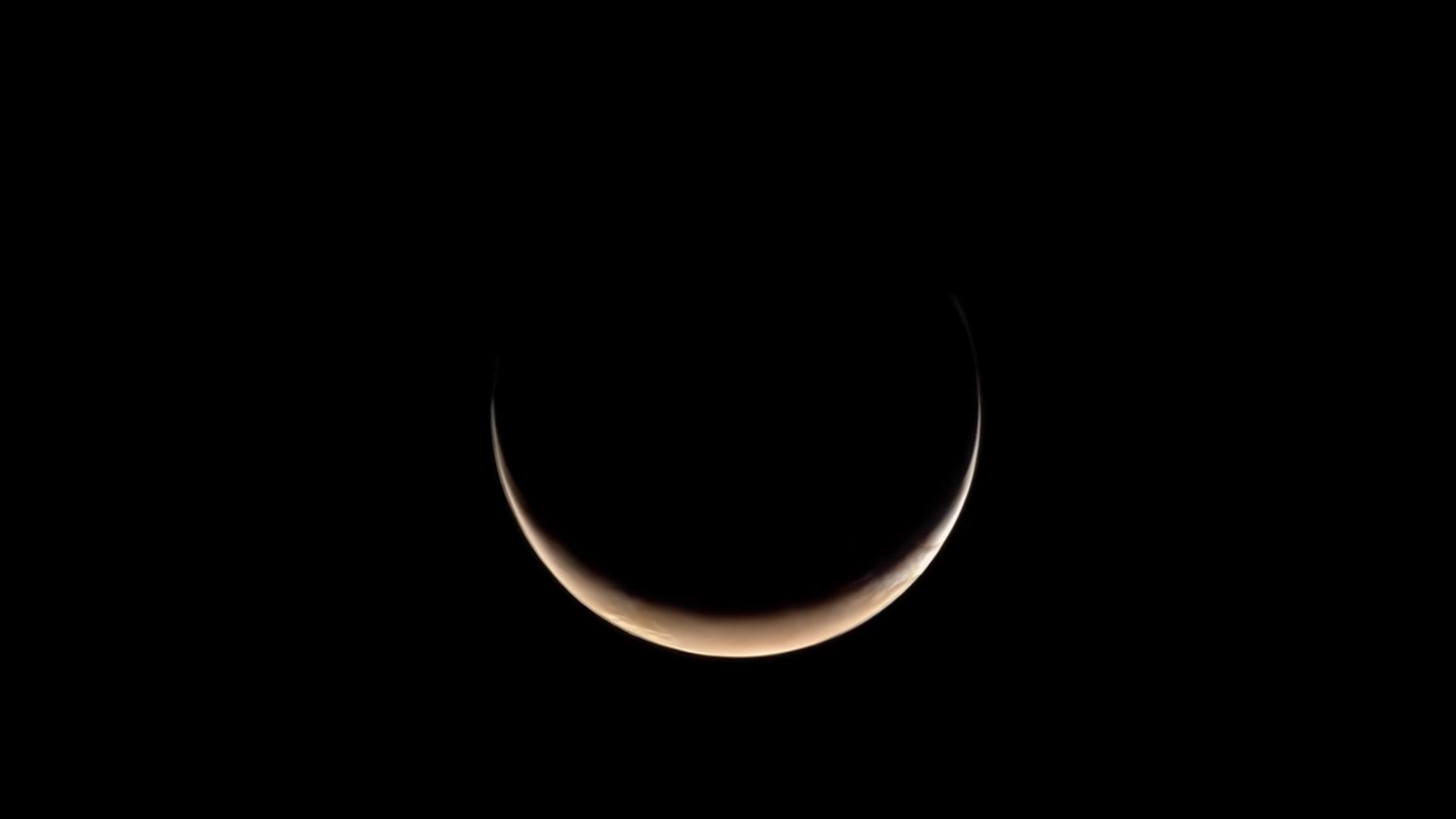
A screenshot from the timelapse, showing Psyche approaching a crescent Mars. (Image credit: NASA/JPL-Caltech/ASU/True Story Films)
Approaching from a steep or what scientists call a "high phase" angle relative to the sun, Psyche initially caught Mars as a slender crescent with just 4 percent of its disk illuminated and its thin atmosphere glowing in scattered sunlight, Hannah Zigo, a Psyche team member at the Arizona State University, said in a NASA video accompanying the statement.
As the spacecraft closed in, the video follows Mars steadily expanding to reveal numerous craters puncturing its surface, the ancient double-ringed Huygens crater and the south polar ice cap before receding in the spacecraft's rearview.
The flyby served a dual purpose. By aiming Psyche's suite of instruments at a well-studied world, engineers say they calibrated and validated the spacecraft's scientific payload ahead of its 2029 destination.
"We didn't anticipate big discoveries, given how extensively the planet has been studied," Lindy Elkins-Tanton, principal investigator for the Psyche mission at the University of California, Berkeley, said in the statement, "but we did complement Mars science with the data we collected through Psyche's unique perspective."
All three of the spacecraft's science instruments performed as expected, according to NASA. Its gamma-ray and neutron spectrometer, designed to determine the asteroid's elemental makeup, detected the predicted surge of escaping neutrons during closest approach, confirming its operational readiness.
The mission's magnetometer, which will search for evidence that asteroid Psyche is the metallic core of an early planetesimal, recorded its first magnetic signature from a planetary body since its launch in 2023, detecting the bow shock where the solar wind meets Mars' magnetic environment.
Psyche's twin multispectral cameras also passed their calibration tests, capturing the frames for the time-lapse while spotting Mars' tiny moons, Phobos and Deimos, from a distance, the NASA statement read.
Spotting the moons served as "a practice for the satellite search that we'll use at the asteroid Psyche to look for any moonlets there," Jim Bell, a planetary scientist at Arizona State University who leads the multispectral imager instrument team, said in the statement.
With Mars in its rearview and its instruments fully vetted, Psyche remains locked on course for its summer 2029 rendezvous with the metal asteroid.
"The spacecraft is in great shape, and we're on schedule to resume sustained thrusting with the solar-electric propulsion system later this fall," Mase said.
Half a century after first putting hardware down on Mars, NASA is looking to explore the Red Planet's skies.
On July 20, 1976, the Viking 1 lander touched down in the western reaches of Chryse Planitia (the "Golden Plain"), a large circular landform that lies 22.5 degrees north of the Martian equator.
It was the first-ever Mars landing for NASA. Viking 1, along with its twin Viking 2, went on to conduct the first fully successful mission on the Red Planet's surface. (The Soviet Union's Mars 3 probe survived its touchdown attempt on Dec. 2, 1971 but died less than two minutes later.) And those missions have left a rich and intriguing legacy.
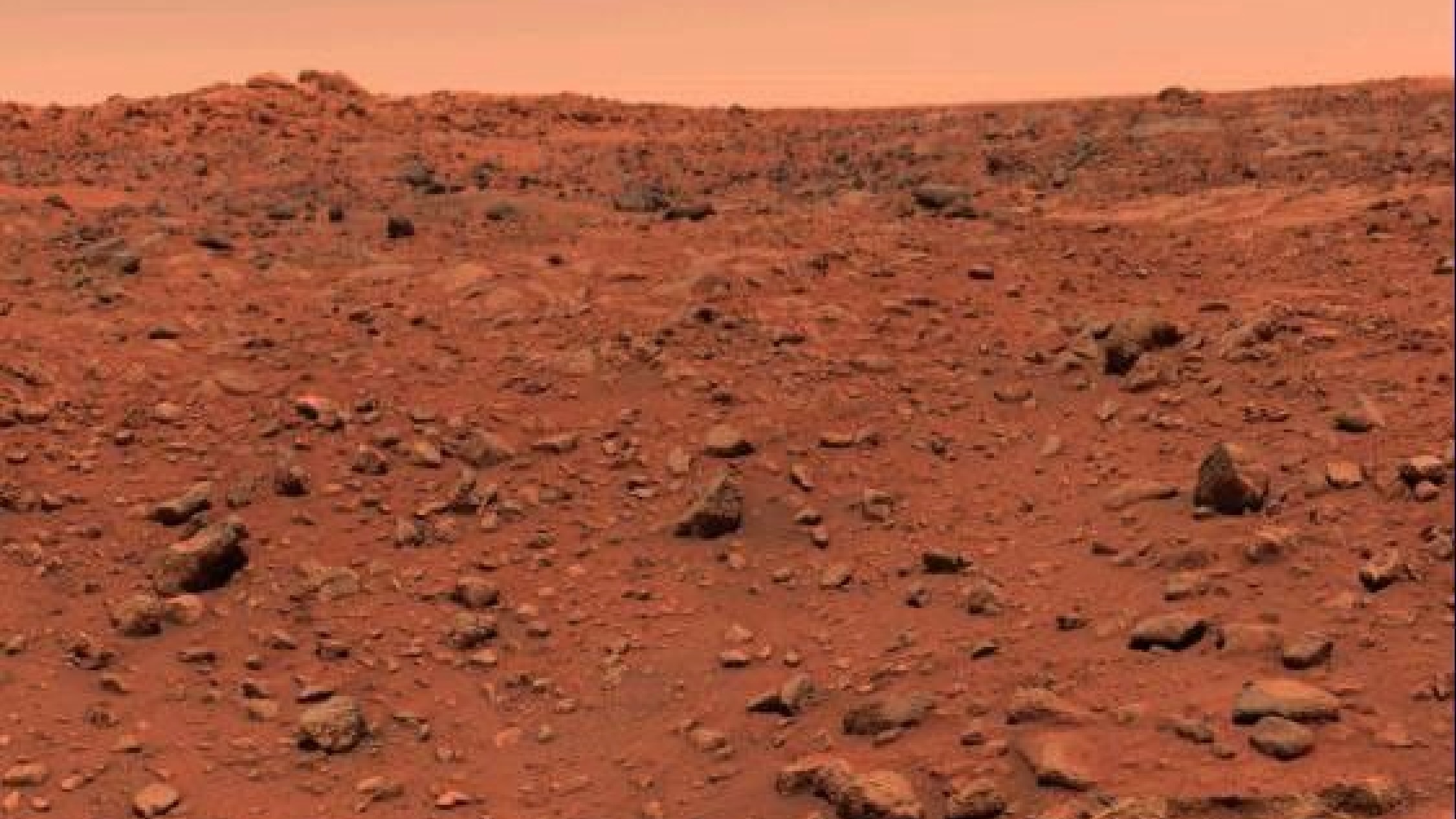
The first color image ever captured on the surface of Mars. NASA's Viking 1 lander took this photo on July 21, 1976. (Image credit: NASA)
Viking 1 and Viking 2 — which touched down in a different Red Planet region on Sept. 3, 1976 — were sent to the surface to search for signs of life on Mars. (Each mission also featured an orbiter, which studied the planet from above.)
The landers did this using three different experiments, two of which returned negative results. But the third, called Labeled Release (LR), was different. LR observed a steady stream of carbon dioxide gas coming from dirt into which it had introduced nutrients — a possible sign of microbial metabolism.
Some scientists deemed the LR results a likely life detection. But most disagreed, ascribing them to abiotic reactions and stressing that, overall, the Viking data paint a picture of a dead planet.
That disagreement illustrates one of the main legacies of the Viking program: It showed researchers that hunting for extraterrestrial life is a complicated business, and they needed to learn more about Mars before attempting the search again on the Red Planet.
NASA didn't send a surface craft to Mars for another two decades, a hiatus caused in part by the Vikings' ambiguous results and high price tag, as well as a shifting of funds to the nascent space shuttle program.
The dry spell was broken in July 1997, when the agency's Pathfinder lander touched down in Chryse Planitia, about 530 miles (850 kilometers) from Viking 1. The main goals of Pathfinder's mission were to demonstrate a new "faster, better, cheaper" method of Mars exploration, prove out a new airbag-based landing system and get a mobile robot onto the red dirt.
Pathfinder achieved all of these objectives, notching the third by deploying a small rover named Sojourner. The little wheeled robot stumbled across rounded pebbles — strong evidence that they had been exposed to flowing water.
This discovery helped shape a new NASA Mars exploration strategy, one that aims to make an informed search for alien life after "following the water." Life as we know it depends on water, so the agency built rovers designed to hunt for signs of past liquid water and potentially habitable environments.
The twin golf-cart-sized rovers Spirit and Opportunity landed in 2004, and the car-sized Curiosity followed suit in August 2012. Then came Perseverance, which landed inside Mars' Jezero Crater in February 2021.
All of these wheeled explorers found evidence of past aqueous environments. Curiosity and Perseverance — with their more extensive and sophisticated scientific payloads — delved even deeper, discovering complex organic molecules that may have been produced by life as we know it.
The two latter rovers are continuing their work; both remain active on the Red Planet. (Pathfinder and Sojourner operated for about three months; Spirit was declared dead in 2010 and Opportunity fell victim to a Mars dust storm in 2018.)
Perseverance has collected a variety of Mars samples, which NASA wants to return to Earth for detailed study. As the Vikings' experience suggests, such a level of intense scrutiny may be necessary to make a definitive detection of life on Mars, if it indeed exists. (Getting those samples home is not a foregone conclusion, however; NASA's original plan was deemed too expensive, and it's now looking into a new return strategy.)
Perseverance also carried a little robotic companion, which heralded a new phase of Red Planet exploration — the Ingenuity helicopter.
Ingenuity was a technology demonstration, designed to show that rotorcraft could effectively ply the thin Red Planet skies. (Mars' atmosphere is just 1% as dense as that of Earth at sea level.)
The $80 million mission was a rousing success. The 4-pound (1.8 kilograms) Ingenuity was expected to make just five short hops on Mars but ended up flying 72 times over the course of nearly three years of activity. (Its first flight occurred on April 19, 2021, and its last was on Jan. 18, 2024.)
So NASA aimed higher, drawing up plans for future helicopter missions that could collect valuable scientific data. And such a mission is on course to launch in 2028, if all goes according to plan: Skyfall, which will send three Ingenuity-like choppers to Mars on a nuclear-powered rocket.
"Equipped with a suite of scientific instruments, these aerial scouts will map hidden ice deposits and analyze weather patterns," NASA officials wrote in a description of Skyfall. "The mission will also demonstrate how aerial vehicles can generate wide terrain and subsurface maps to identify safe and resource-rich destinations for future American astronauts venturing to Mars."
And Skyfall could be just another step toward even more ambitious aerial exploration on the Red Planet. NASA's Jet Propulsion Laboratory in Southern California, which built and operated Ingenuity, is looking into larger, more capable Mars helicopters that could do a wider variety of work on the Red Planet.
This is all part of Viking 1's legacy. That historic touchdown on Mars half a century ago lifted exploration up — all the way into the skies of another world.
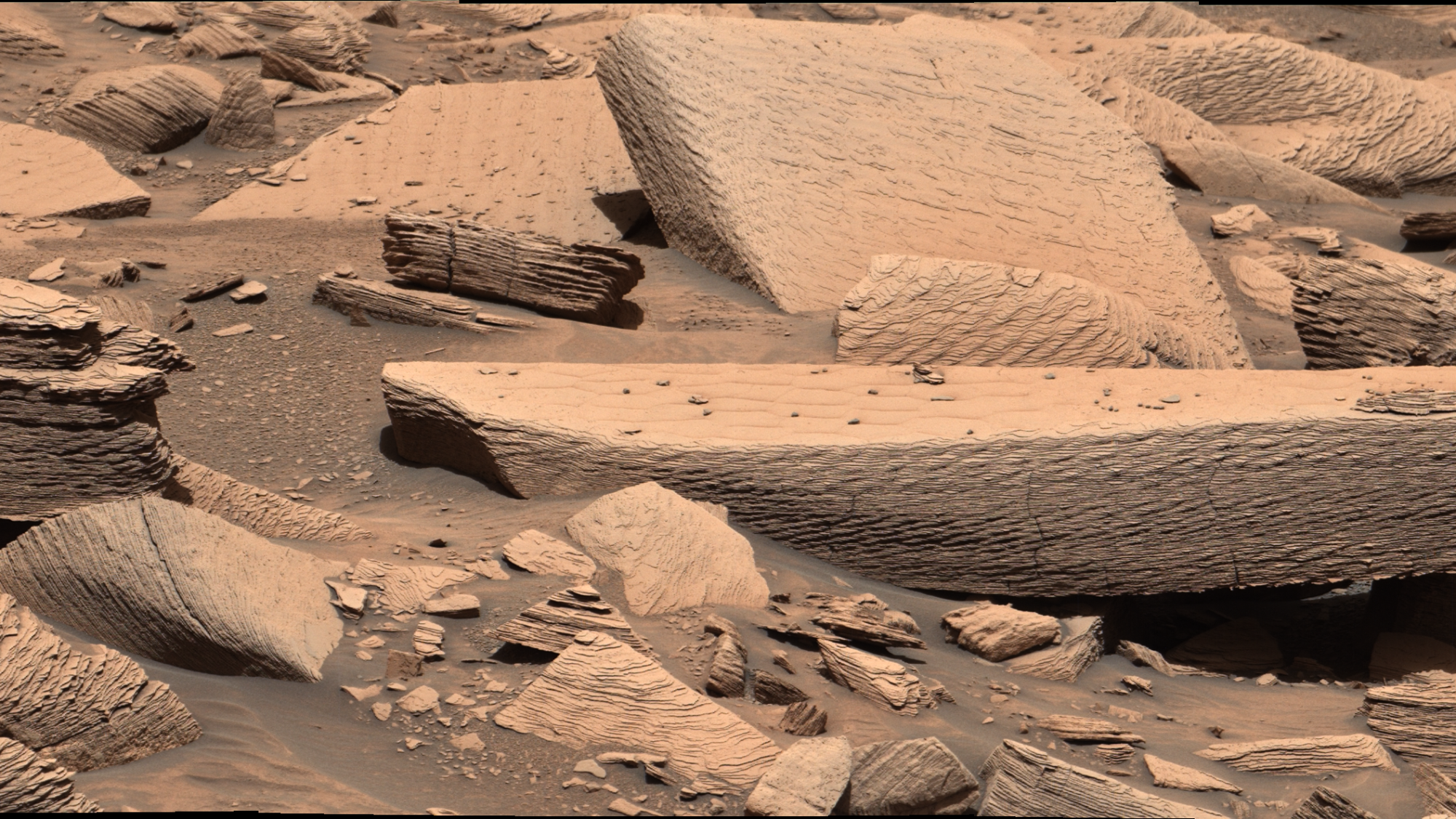
NASA's Curiosity rover snapped this image on the surface of Mars, and scientists think it's the wreckage of an ancient sandstorm. (Image credit: NASA/JPL-Caltech/MSSS)
NASA's Curiosity rover has uncovered evidence of ancient sandstorms on the Red Planet.
What is it?
Scientists think ancient Mars was quite different than it is today. While we might know it now as a barred, reddish wasteland, billions of years ago it actually had an atmosphere. Scientists even think that it had flowing rivers and expansive lakes.
And with observations from the Curiosity rover, researchers are exploring ancient sandstorms they think blew across the Martian landscape.
In this image Curiosity snapped, you can see what experts think is the aftermath of an especially extreme sandstorm in a spot nicknamed "Jawbone Canyon." Winds from this storm were likely so extreme that they pushed sand into rippling waves that eventually hardened into rock.
And if you really look closely at this image, you can almost see how the rocks appear to have ripples on them.
While the image was captured in 2024, a new investigation of the observation and discovery of this sandstorm was described in a study published this year in the journal Geology.
Why is it incredible?
This observation by Curiosity is part of a long history of exploration on the Martian surface that actually began 50 years ago today.
On July 20, 1976, NASA's Viking 1 lander touched down on the Red Planet. Aside from the Soviet Mars 3 lander that lasted only a few seconds on the world before losing contact, Viking 1 was the first Mars lander to survive landing and successfully went on to study the planet.
Viking-1 took the first-ever images on the surface of Mars, studied the planet's soil and really sparked investigation of whether or not the world may have ever supported life. Thanks to the success of this mission 50 years ago, today we have rovers like Curiosity and Perseverance on Mars leading us at the cutting edge of exploration.