
Mercury is shrinking faster than we thought. What’s going on inside of it?

Wrinkles on the surface of Mercury have revealed that the closest planet to the sun is shrinking faster than scientists thought.

New research suggests that Mercury is shrinking between 10% and 30% faster than had been previously estimated. The team behind this research calculated that the planet has lost nearly 12 miles (19 kilometers) of its total diameter since it formed.

The researchers think that the extremity of this shrinking has gone unnoticed previously because bombardment from space rocks over time has created craters that obscured the evidence of this process.

Scientists say determining the extent of the shrinking of Mercury is key to investigating the composition of the planet's interior.

"More shrinking means Mercury could have a larger metal core, less light elements like silicon mixed into the metal core, or a higher starting temperature," team leader Gaku Nishiyama, of the German Aerospace Center (DLR) Institute of Space Research said in a statement.

Mercury's rocky past

Like all rocky planets in the solar system, Mercury was formed 4.5 billion years ago during a violent and turbulent time in the solar system's history, as rocks and asteroids collided with each other and were bound together.

These impacts generated heat, which Mercury has been losing ever since. As the interior of Mercury cooled, it also shrank. This caused geological wrinkles in the form of scarps and ridges to develop in the rocky outer layers of Mercury.

This cooling should result in Mercury shrinking in a roughly uniform way, and that would make these shortening structures common across the planet. However, asteroid impacts throughout its history have not only created craters that obscure signs of its geological history, but have also spread debris across the surface of Mercury. This makes wrinkles tougher to spot among the accumulation of billions of years' worth of geological features.
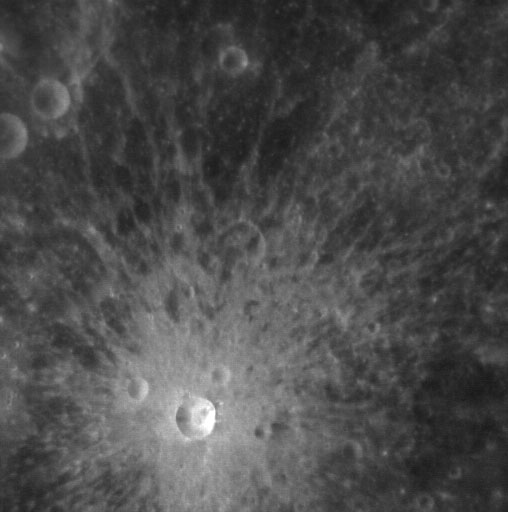
A rough grey surface with circular indentations

NASA's Messenger spacecraft spots an apparently fresh crater on Mercury during its early orbits on March 29, 2011. (Image credit: NASA/JHUAPL/CIW)

The team combined previous maps of Mercury's geology with new observations of the entire planet's surface roughness. They found the roughest terrain of Mercury featured the fewest wrinkles.

"It made us think that there's a process obscuring shortening structures," said Nishiyama, who thinks that impact debris in the roughest regions of Mercury is covering shrinking wrinkles.

The team then used the ridges and scarps in regions less affected by the dispersal of debris to estimate the amount of contraction. This indicated that missing features in rough areas could amount to 10% to 30% extra shrinkage over the 4.5 billion-year lifetime of Mercury. That amounts to a total change in diameter of up to 14.5 miles (23 kilometers) rather than the currently estimated 2.5 to 10 miles (4 to 16 kilometers).

"30% is a little bit surprising, but the corrected amount of contraction actually makes sense to me," Nishiyama said.
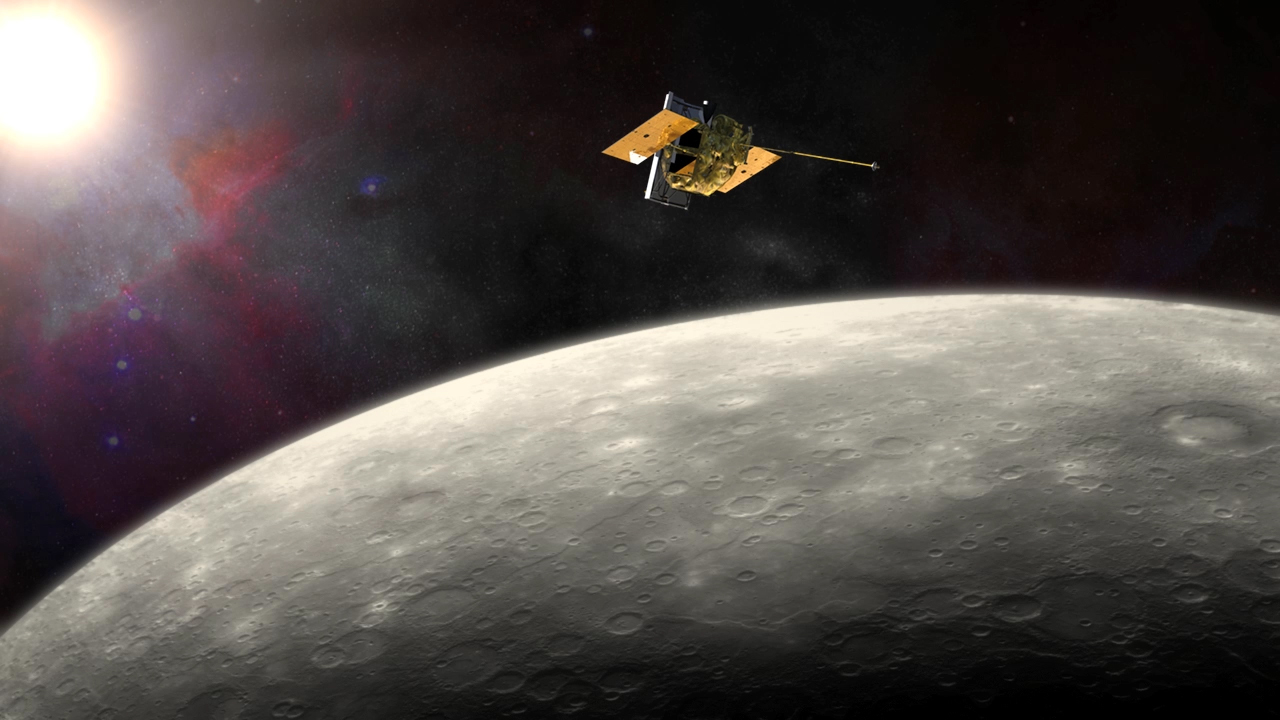
A grey sphere with a silver and gold spacecraft over it

An illustration of NASA's MESSENGER probe over the surface of Mercury (Image credit: NASA/JHU-APL)

There may be more surprises in store. Nishiyama believes that the updated figures could still be an underestimate. This estimate is based on data collected by NASA's MESSENGER probe, which ended in 2015. MESSENGER could only distinguish features larger than around 3 miles (5 kilometers) across.

In November 2026, the BepiColombo mission will start conducting scans of Mercury's surface in much higher resolution than this, and that could reveal even more shrinkage features.

The team's research was published on Thursday (Sept. 10) in the journal Geophysical Research Letters.
2 spacecraft will soon reach Mercury after 8 years in space. Here’s what BepiColombo can do

Mercury, the tiniest and least-explored planet in the inner solar system, is hiding mysteries far larger than itself — and finally, scientists will soon be getting not one but two spacecraft designed to decode the strange world.

That's thanks to the BepiColombo mission, a joint project of the European Space Agency (ESA) and Japan Aerospace Exploration Agency (JAXA) that launched in October 2018. After a harrowing journey through the inner solar system, the mission is tackling a crucial maneuver on Thursday (Sept. 3): separating its science equipment from the transport that carried it all that way. By April 2027, scientists hope the mission's two instrument-heavy probes will be gathering a slew of observations that could help solve puzzles about Mercury — and maybe even the solar system we call home.

"I think being able to see new data come out about Mercury is going to be so fantastic," Rachel Klima, a planetary geologist at the Johns Hopkins University Applied Physics Laboratory, told Space.com. The planet, she says, is "just so weird and beautiful and interesting."

An enigmatic planet

For now, Mercury holds the dubious honor of being the least-explored planet in the inner solar system, visited by only two missions to date. NASA's Mariner 10 spacecraft made a trio of zippy flybys in 1974 and 1975, giving scientists their first glimpses of the planet's cracked and cratered surface, as well as confirming the world has both a very tenuous atmosphere and a magnetic field.

"It really gave us our first close-up view of Mercury," Sean Solomon, a planetary scientist at Columbia University, told Space.com. "But it left a lot of pages blank."

And for decades, that was it. Scientists didn't return to Mercury until 2011, when NASA's MESSENGER spacecraft, with Solomon as its principal investigator, arrived at the tiny world. (Mercury has a radius of 1,516 miles, or 2,440 kilometers, meaning its width is just over a third of Earth's.) The spacecraft was packed with tools tailored to the job, such as spectrometers tuned to gamma-rays, X-rays and neutrons, and instruments to sniff out the atmosphere and measure the magnetic field, and it was there to stay. Four years of observations with MESSENGER showed scientists Mercury's complete surface for the first time, and by late in its mission, the spacecraft was passing just 15.5 miles (24.9 km) above the planet's surface.

But even MESSENGER wasn't sophisticated enough to crack Mercury's puzzles or unveil the strange planet's beginnings. "I think the jury's still out on exactly how Mercury got assembled," Solomon said.

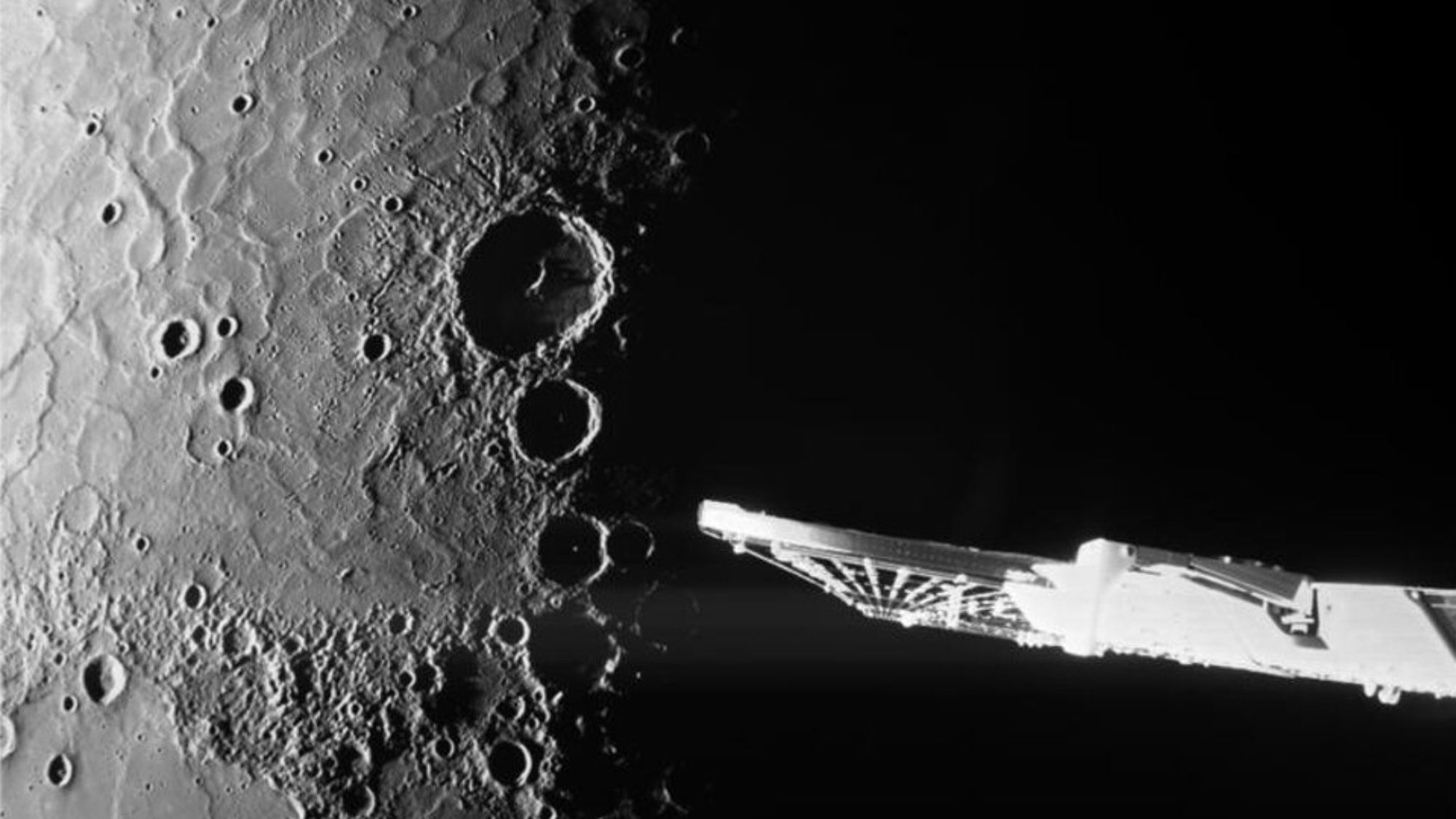
Deep craters seen on a planet in this black and white image. A solar wing is visible on the right side.

Flying over Mercury's north pole gave BepiColombo's monitoring camera 1 (M-CAM 1) a unique opportunity to peer down into the shadowy polar craters on Jan. 8, 2025. (Image credit: ESA/BepiColombo/MTM)

MESSENGER opened up some smaller mysteries, too. It discovered bright, steep-sided pits that scientists dubbed "hollows." It found a suite of elements — that planetary scientists call "volatiles" for their tendency to slip free of rock — somehow more prevalent in Mercury's surface than Earth's. It calculated that the center of the planet's magnetic field is wildly offset from the planet's core. Plus, MESSENGER's tricky orbit also meant the spacecraft never saw the southern half of the planet as sharply as the northern half, leaving one side shadowed in doubt.

The arrival of BepiColombo

It's these mysteries that the ambitious BepiColombo mission hopes to tackle. By April, if all goes well, the mission will consist of two separate spacecraft gathering independent but coordinated data about Mercury.

Europe's Mercury Planetary Orbiter, or MPO, will focus on the planet proper. It's packed with 11 science instruments that will map the terrain, minerals in the crust, and the gravity field, investigate the hollows and volcanic deposits, and observe how the barrage of charged particles from the sun affects this innermost planet.

Japan's Mercury Magnetospheric Orbiter, or Mio, meanwhile, will focus on the planet's surroundings — its magnetosphere and wispy atmosphere, as well as the dust cluttering up its neighborhood.

Both spacecraft also carry instruments to measure the planet's magnetic field, offering simultaneous observations of different parts of the field to scientists who typically make do with data gathered from just one location at a time.

In fact, some of these instruments have been able to gather observations during BepiColombo's long trek to Mercury and its six quick flybys of the planet so far. But because of how the spacecraft were configured for the journey, most of the instruments have not — and will not — get to work until after MPO and Mio have separated. That is expected to happen in December.

The mission's science, then, has begun only in dribbles, while the bulk of its promise still lies ahead. "There is a growing literature of new results that have come from the BepiColombo flybys, but I expect that will explode once they go into orbit," Solomon said.

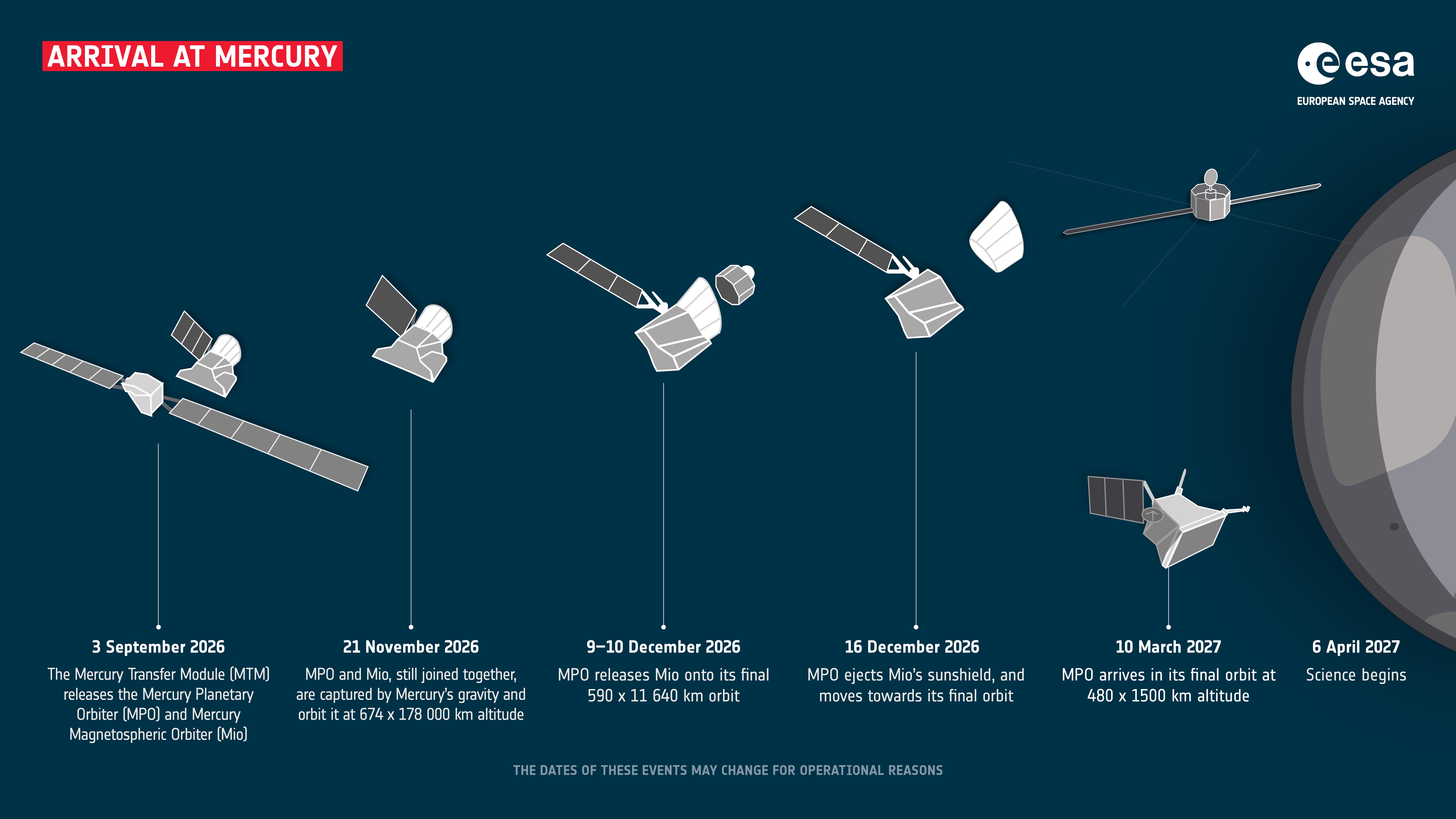
Diagram showing the key moments in the BepiColombo mission's arrival at Mercury.

A diagram showing BepiColombo's path to getting near Mercury. (Image credit: ESA)

He's especially excited to see the spacecraft's sharp views of the southern hemisphere, and particularly find hidden deposits of water ice across the area. These deposits would exist in deep craters that never feel the sun's heat. In examining this region of the planet, scientists will be able to reduce the northerly bias of MESSENGER's data and better see Mercury's complete picture.

Meanwhile, Klima is most eagerly awaiting MPO's work to map elements and minerals in the planet's surface. This work eluded MESSENGER, which used a technique that relied on these rocks being rich in iron and similar materials — but as it turned out, those elements were absent, leaving scientists stymied. MPO carries different technology that will be able to read rocks on the world even without iron, which Klima said could help reveal how Mercury — and our whole solar system, as a matter of fact — formed.

Klima says she hopes BepiColombo can get people excited about Mercury, the overlooked terrestrial planet of the solar system: "It certainly doesn't get the love and attention that Mars and Venus and everywhere else gets."