Scientists trace 7 stages of a meteorite’s life, from hurtling space rock to Earth’s surface

Studying 75 meteorites falling to Earth, scientists have identified the seven stages a space rock goes through as it crashes through our atmosphere, each of which is determined by different physical processes.

The research found that there are more factors than mere evaporation that determine how fragments of asteroids and comets lose mass and speed passing through the atmosphere before slamming into the ground as meteorites. As well as just "burning up" in the atmosphere, space rocks also go through periods of melting and fragmentation that occur at different altitudes.

Aside from shining light on the life cycles of meteorites, the team's research could help us better understand what would happen if a large, potentially hazardous asteroid were to enter Earth's atmosphere.

"We used to think that solid rocks would evaporate from the enormous heat and brilliant light generated in the air collision," team leader Peter Jenniskens of the SETI Institute and NASA Ames Research Center said in a statement. "We found instead that first melting and then fragmentation control how a rock loses mass."

Seven stages to Earthfall

The first stage, phase 1, identified by the team, begins high in Earth's atmosphere. The falling space rock creates a shock wave in front of it that heats it and the gas surrounding it. This turns the falling space rock into a "shooting star" streaking across the sky.

Phase 2 begins when the fragment reaches denser air, and the meteor begins to brighten. At this stage, astronomers can determine how the rock is spinning based upon changes in brightness.

This brightening continues until phase 3, at which point the space rock becomes a fireball. The team found that it is at this stage that the falling rock loses the most mass via melting. This happens as air flows rapidly around the rock and pulls away melted matter, leaving a trail of droplets that continue to evaporate.
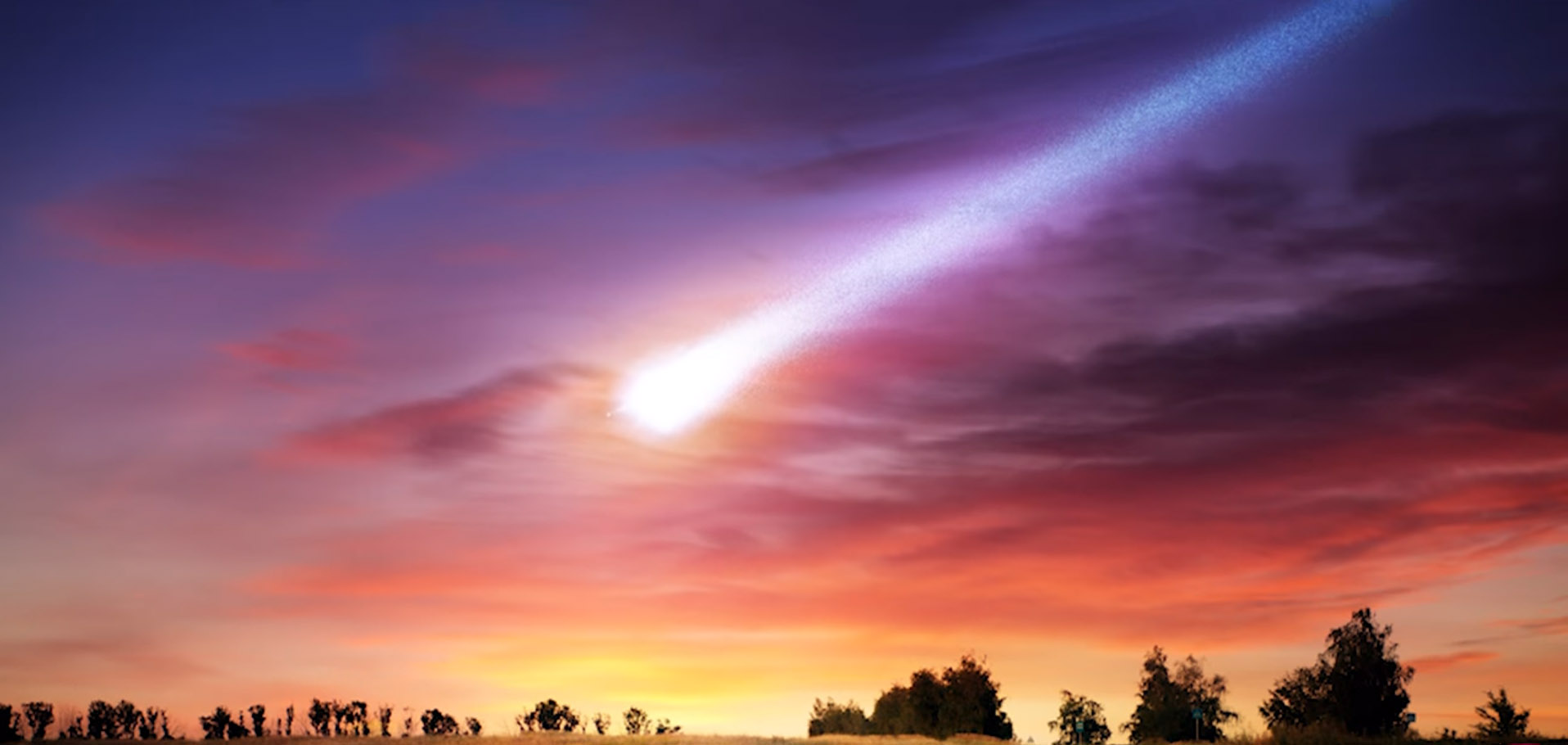
An illustration of a meteor streaking across the sky.

An illustration of a fireball streaking across the sky. (Image credit: Shutterstock)

At around 40 miles (60 kilometers) over the surface of Earth phase 4 begins, which sees the fireball reaching a melting equilibrium. By this point, the initial space rock may have lost up to 40% of its original mass.

Phase 5 marks the point at which the rock starts to fragment, with individual pieces often flaring as they break away from the main body. The team found that this breaking apart often occurs earlier than expected, putting that down to cracks that may have already existed in the rock due to collisions in space.

What remains of the rock by this stage shrinks rapidly, also slowing significantly, with this slowdown occurring faster if the rock has fragmented more successfully.

"Our modeling shows that as long as the back of the space rock remains intact, that rock pulls a vacuum in its wake into which fragments tend to flow," team member Darrel Robertson of NASA Ames Research Center said. "Those small meteorites fall in a narrow strip on the ground."
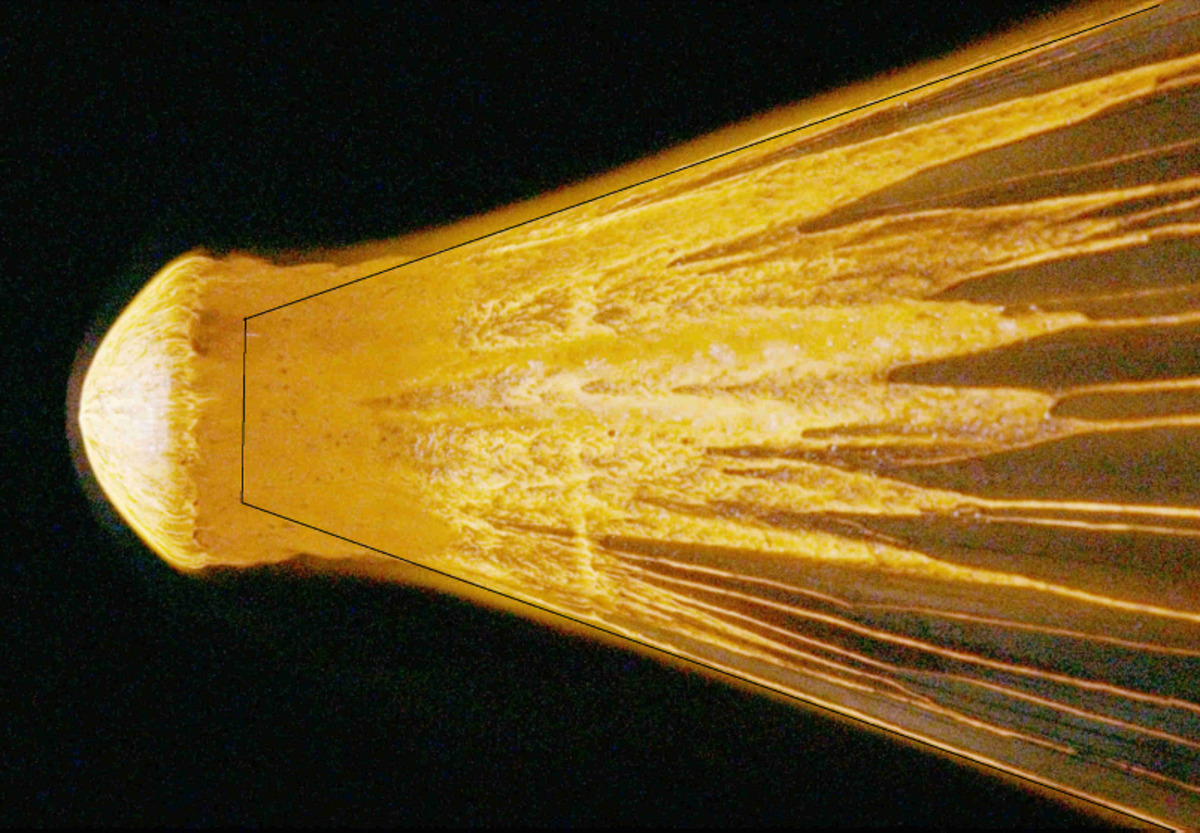
A stony meteorite in NASA Ames Research Center's Arcjet Interaction Heating Facility.

A stony meteorite in NASA Ames Research Center's Arcjet Interaction Heating Facility. (Image credit: NASA Ames/SETI Institute, courtesy of Zev Hoover and Ron Dantowitz, Dexter Southfield Schools/MARS Scientific.)

The fireball flares for the final time during phase 6, as pieces of the space rock break away more rapidly.

"That final disruption sends fragments flying at higher relative speeds," said Jenniskens. "In past falls, we noticed that meteorites larger than about 20 grams tended to be scattered wider, and many came from close to the surface of the original space rock, which must have been its backside."

At the start of phase 7, melting and fragmentation are still occurring, but what is left of the space rock has slowed down enough to stop glowing. Melting then ceases, leaving a thin crust on the surface of the fragment.

The team determined that meteorites that reach terra firma ironically went through more melting and fragmentation, which slowed them down enought to actually land. The fragments are often small and slow enough at this stage to allow Earth's winds to carry them off course and determine where they land as meteorites.
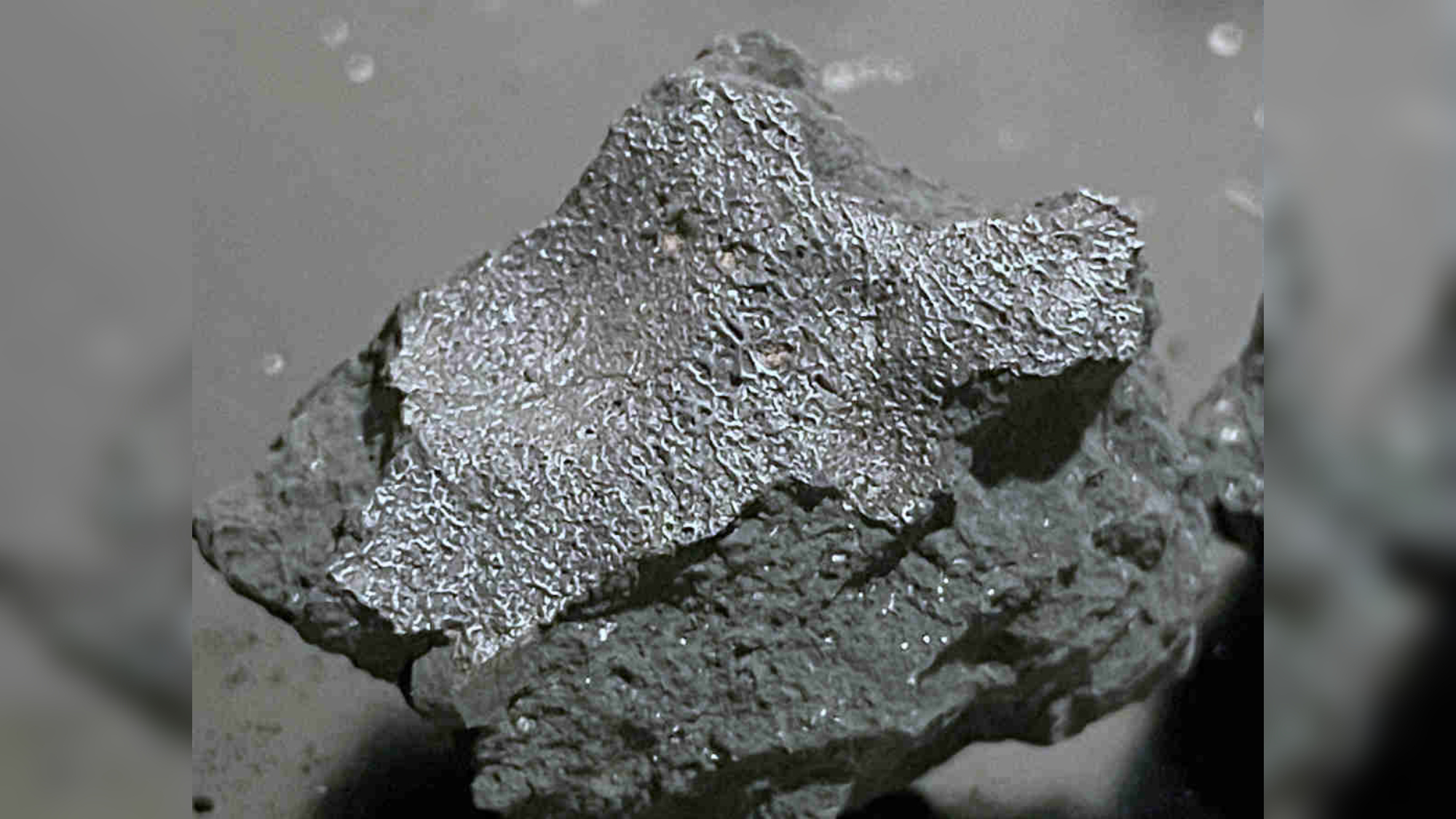
a lumpy black rock in a glass case

A fragment of the Hillsborough meteorite. (Image credit: SETI Institute)

Of the 75 meteorites investigated in this research, the team identified several different types of space rock composed of different materials. They were able to determine the altitudes at which these different types of space rock went through each of the seven identified phases.

Identifying the processes that occur to solid objects passing through the atmosphere could help scientists better understand what would happen to larger, more dangerous objects about to hit Earth. This includes objects that cause damage when they erupt as "airbursts" or potential "planet-killer" asteroids the size of city blocks.

"Asteroids up to tens of meters in size are also solid rocks because they tend to spin faster than do the larger rubble pile asteroids," said Jenniskens. "The 20-meter [66 feet] diameter asteroid that caused the airburst over Chelyabinsk, Russia, in 2013 went through the same phases."

The team's findings appear in a paper published on the Wiley Online Library.
Is the Perseid meteor shower going to get even more spectacular? Jupiter could send more ‘shooting stars’ towards Earth in 2028

The Perseid meteor shower dazzled stagazers with a spectacular natural light show around its peak on Aug. 12-13. But could we be in for even more impressive displays of shooting stars in the years to come?

Perseid shooting stars can be seen each year as Earth crashes through the trail of debris shed by the icy comet 109P/Swift-Tuttle. Many of these cometary shards are no larger than a single grain of sand. Yet they're capable of burning bright enough to be seen with the naked eye as they collide with our planet's atmosphere at 37 miles (59 kilometers) per second, often destroying themselves in the process.

The 2026 Perseid shower peaked overnight on Aug. 12-13, as Earth plunged into the densest region of Comet Swift-Tuttle's debris stream. But as spectacular as this year's display was, Jupiter's powerful gravity could make 2028 an even more impressive year for the Perseid meteor shower, as the gas giant passes close to Swift-Tuttle's debris stream, drawing more of the meteoroids into a collision course with Earth's atmosphere.

Are the Perseids going to get stronger in 2028?

According to scientists, there is a distinct possibility that our solar system's largest planet could influence the Perseid meteor shower in the upcoming years. "Jupiter passes close to a portion of the stream of particles generated by comet 109P/Swift-Tuttle once every twelve years," meteor expert Robert Lunsford of the American Meteor Society (AMS) told Space.com. "The timing and position of this intersection determines if the particles will pass closer or further from Earth. The 2028 passage indicates that some particles will shift into an orbit closer to Earth so that hourly rates could be higher than usual."

Lunsford notes that while computer models are helpful for predicting when a surge in meteor activity may occur, they lack key data on the density of particles within the stream, which are usually separated by hundreds, or even thousands of miles from one another. As such, predictions on hourly rates for upcoming meteors are best treated as educated guesses, Lunsford said.

"The results of the 2027 display should provide a clue," continued Lunsford. "If rates during 2027 are enhanced to at least 100 per hour, then we can expect 200-300 per hour for 2028."

Will moonlight be a problem?

Even if 2027 does see an uptick in Perseid activity, we may not necessarily be able to appreciate it.

That year, the Perseids will peak in the glare of a waxing moon just four days from turning full, and the moonlight will hide many of the shower's fainter shooting stars. Though there will be a few hours before dawn when the moon sets below the western horizon, granting peak meteor hunting conditions.

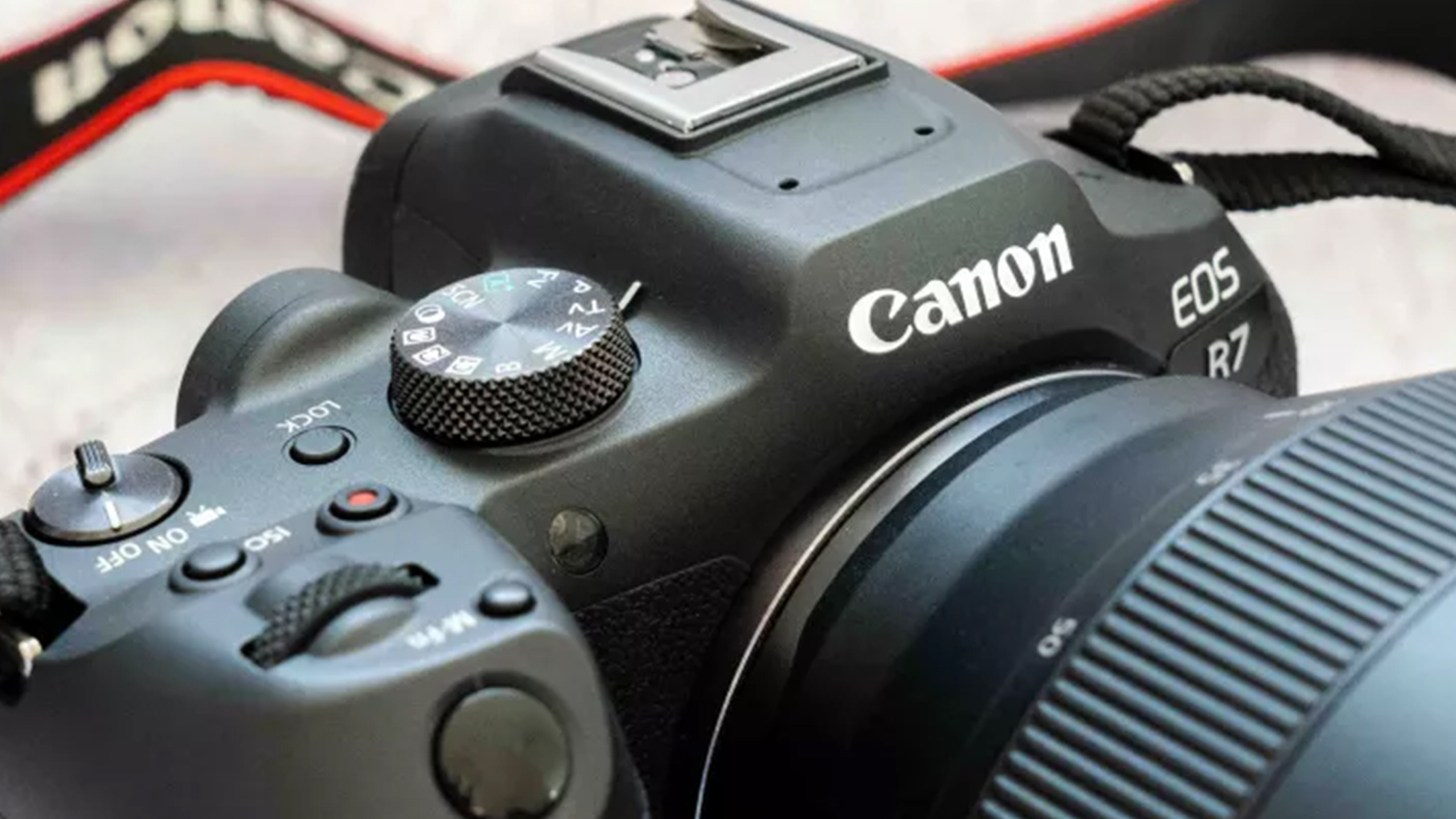
Canon EOS R7 camera

Canon EOS R7 review photo

(Image credit: Future/Kimberley Lane)

The Canon EOS R7 is the best camera for beginners. Despite its crop sensor, the EOS R7 can rival most full-frame cameras. Read our full Canon EOS R7 review to find out more!

In 2028 — the year of the potential Jupiter-caused Perseid outburst — the shower will peak around Aug. 12-13 in the light of a third quarter moon, which will rise after midnight and be present until sunrise.

"This is much better than having a full moon, but the faintest meteors may still be obscured if your sky is not transparent," said Lunsford. "You could also view prior to moonrise for the 2028 event, but the radiant will be low. The timing of greatest intensity seems to be between 23-00 Universal Time on Aug.13/14, 2027 and 5-6 UT on Aug. 12, 2028."

Want to be ready to capture the next big meteor shower? Then be sure to read our guide to photographing shooting stars, along with our roundups of the best cameras and lenses for astrophotography in 2026.

Editor's Note: If you would like to share your astrophotography with Space.com's readers, then please send your photo(s), comments, and your name and location to spacephotos@space.com.

On this day in space! Aug. 14, 1992: Meteorite shower hits Uganda

On Aug. 14, 1992, a space rock entered the atmosphere over Mbale, Uganda and exploded into hundreds of pieces!

Debris from this meteorite shower was strewn over an area of about 2 by 4 miles (3.2 to 6.4 kilometers), and the biggest piece weighed more than 60 pounds (27 kilograms)! Scientists estimated that the original space rocket weighed more than 2,000 pounds (900 kg). A young boy was hit in the head with a small meteorite fragment, but thankfully no one was seriously injured or killed by any of the falling space rocks.

In October 2012, a fragment of the Mbale meteorite was put up for sale by Heritage Auctions in New York City.

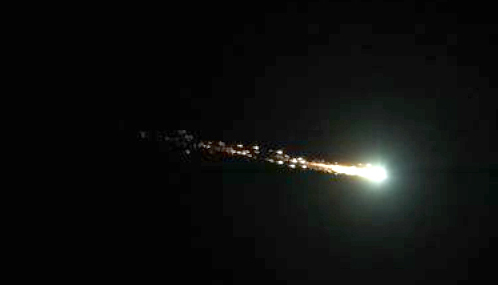
This image shows a fireball over California on Oct. 17, 2012.

This image shows a fireball over California on Oct. 17, 2012. (Image credit: Paola-Castillo)

Why it mattered

The Mbale meteorite provided scientists with a glimpse of how space rocks of this size can impact communities where they happen to land, and allowed researchers a look at large fragments found by recovery expeditions for radionuclide studies within just 12 days of falling to Earth.

NASA classified Mbale as a type L5/6 ordinary chondrite, and calculated that its breakup in Earth's atmosphere occurred between about 15.5 miles (25 km) and 6 miles (10 km) in altitude. By October 1993, 863 fragments of the meteorite had been recovered, with an overall estimate of 330 pounds (150 kg) of material surviving the atmospheric plunge to reach Earth's surface.

The Perseid meteor shower peak was spectacular: Here are our favorite photos

The Perseid meteor shower peaked last night in spectacular fashion, dazzling stargazers as countless shooting stars blazed overhead mere hours after a total solar eclipse saw the lunar disk hide the sun over Greenland, Iceland and Spain.

Perseid shooting stars appear as Earth enters the debris trail cast off by the icy comet 109P/Swift-Tuttle. Each year, countless shards of this ancient comet collide with our wandering planet. What follows is truly spectacular.

Most are no larger than a particle of dust, or grain of sand. Yet the incredible velocity at which they strike our atmosphere — 37 miles (59 kilometers) per second on average — sees many carve a fiery path as they disintegrate in Earth's sky, which is easily visible to the naked eye.

Countless photographers were primed and ready to capture this magnificent display as Earth passed through the densest region of Swift-Tuttle debris trail, heralding the appearance of hundreds of shooting stars.

Read on to see a selection of our favorite photos of the 2026 Perseid meteor shower, taken in the beautifully dark nights surrounding the August new moon phase.

Best photos of the 2026 Perseid meteor shower

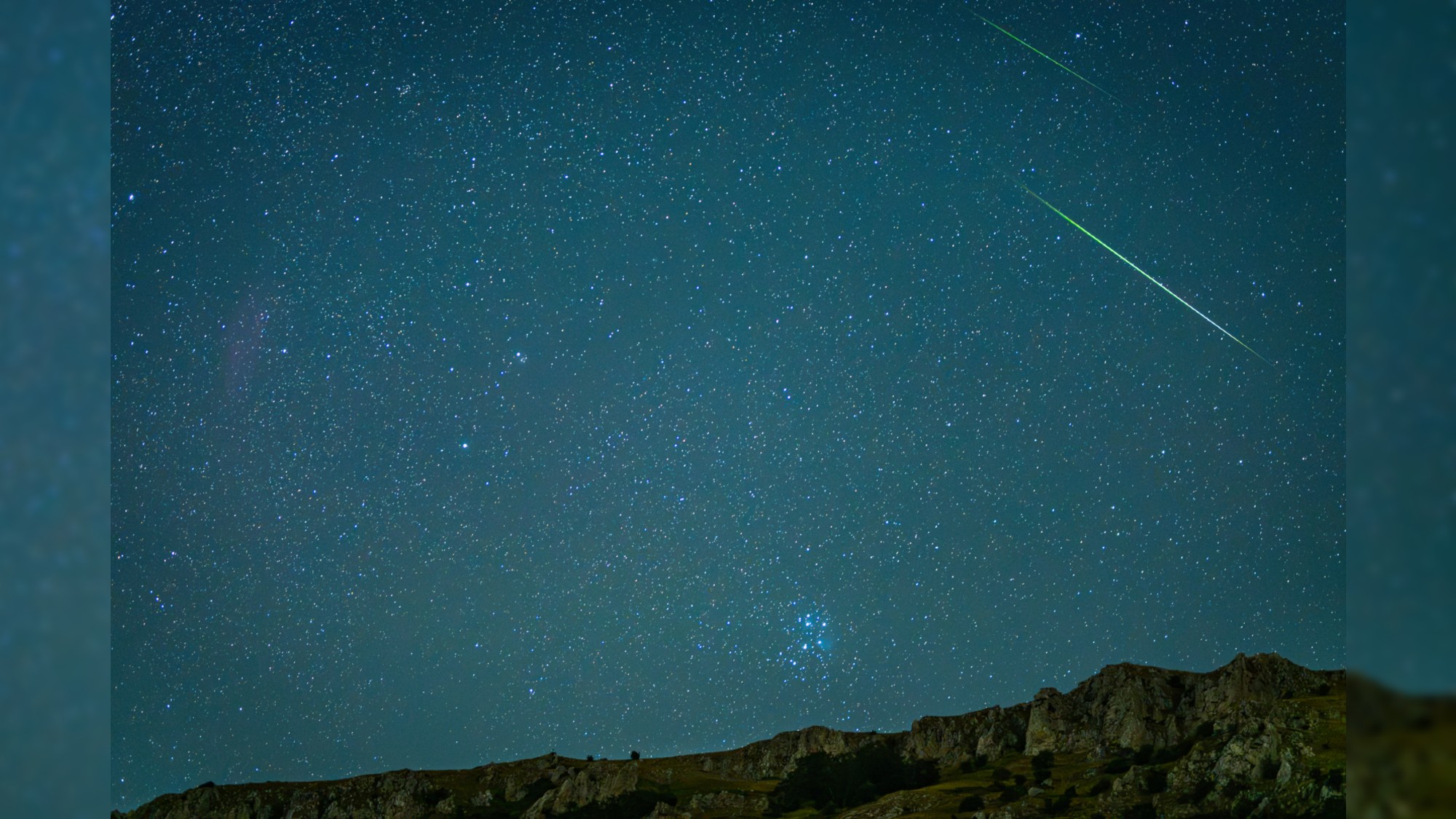
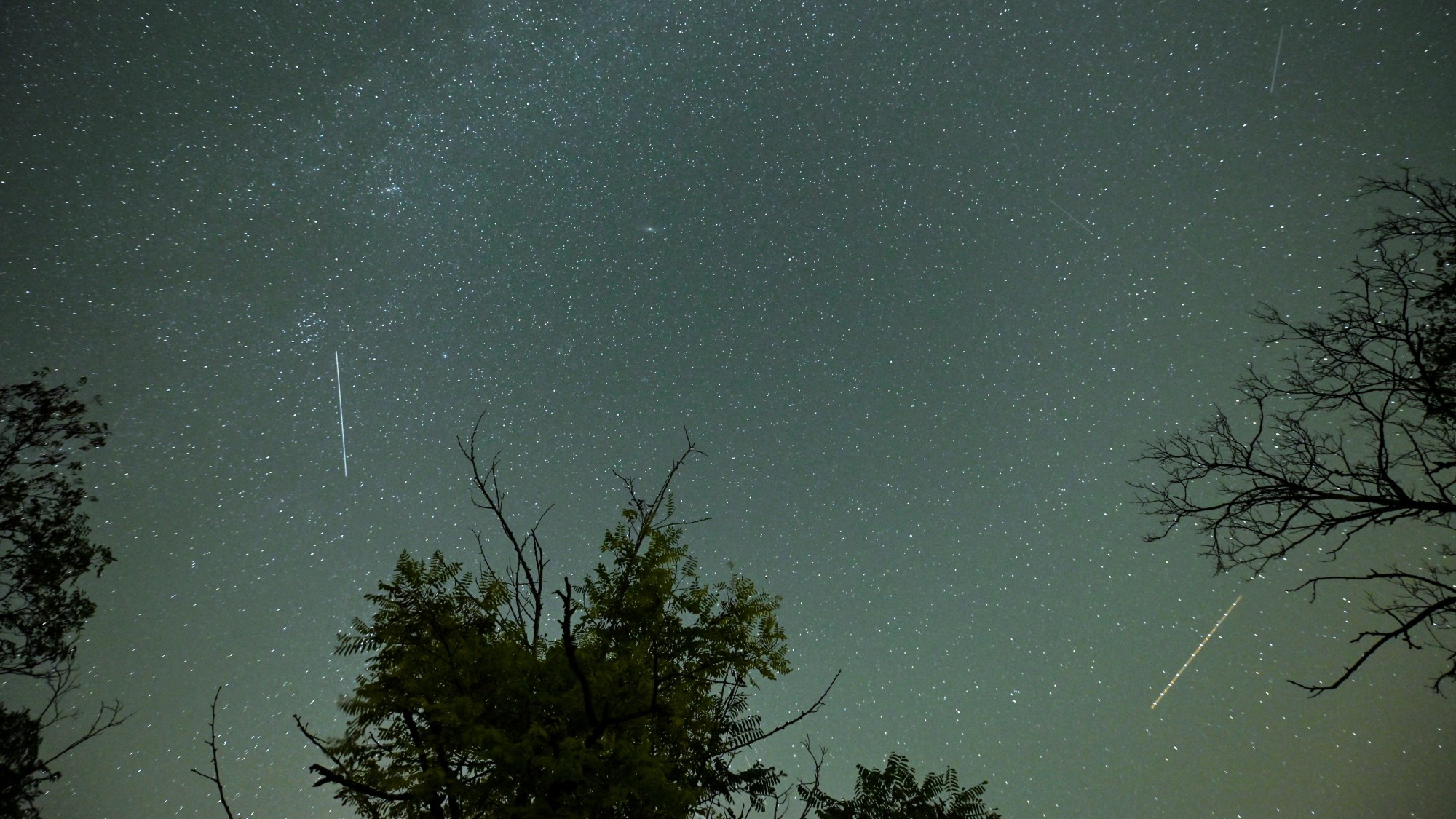
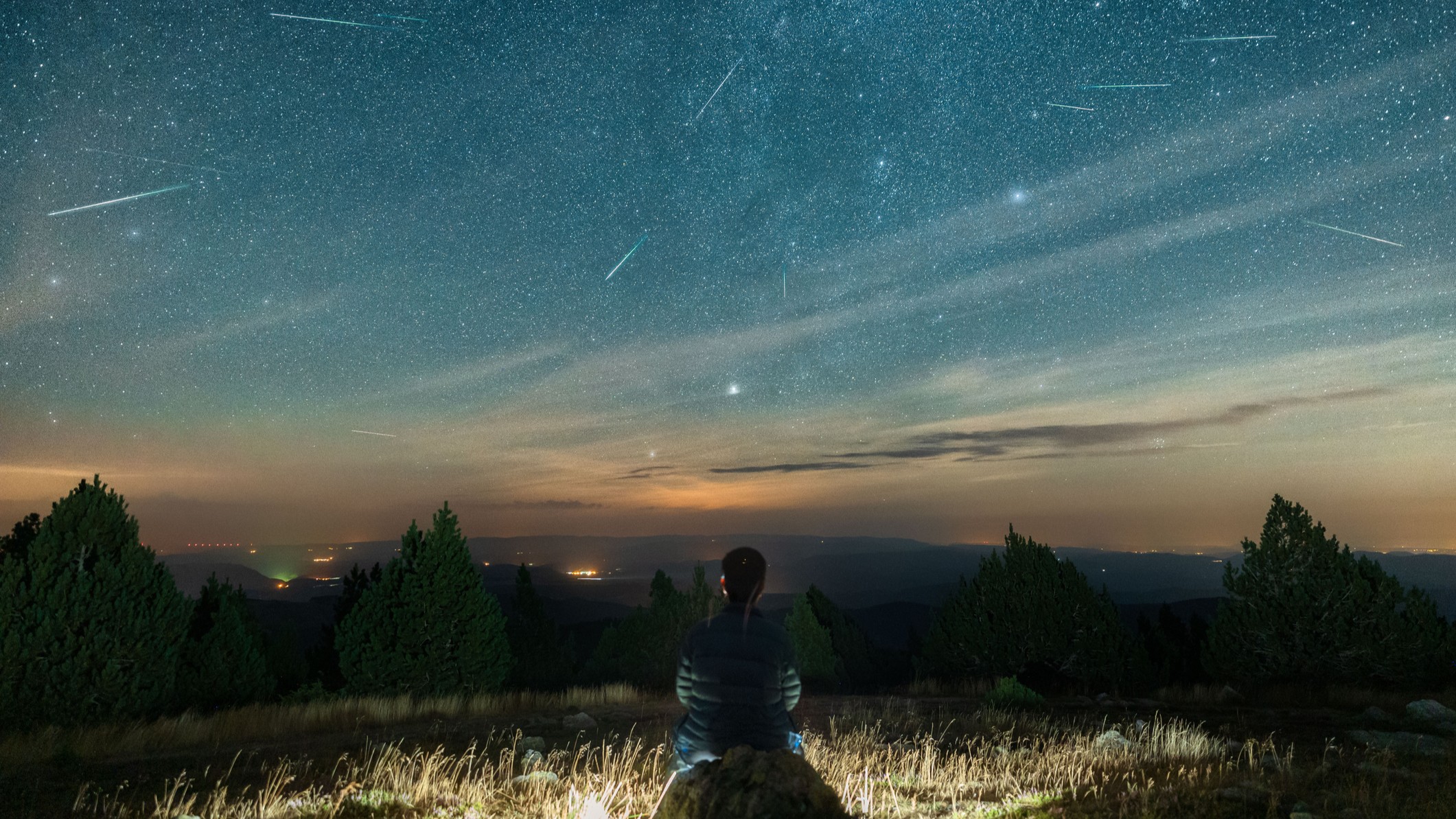
One of our readers sent in this gorgeous shot. Dimitar Birachoski, from Ohrid, Macedonia caught several Perseid meteors streaking over Galicica National Park on Aug. 12, 2026, using a Nikon Z6iii camera.

"I've got the Pleiades, Andromeda galaxy and Milky Way with the Perseids," Birachoski told Space.com via email.

a streak of light crosses through the night sky

(Image credit: Dimitar Birachoski)

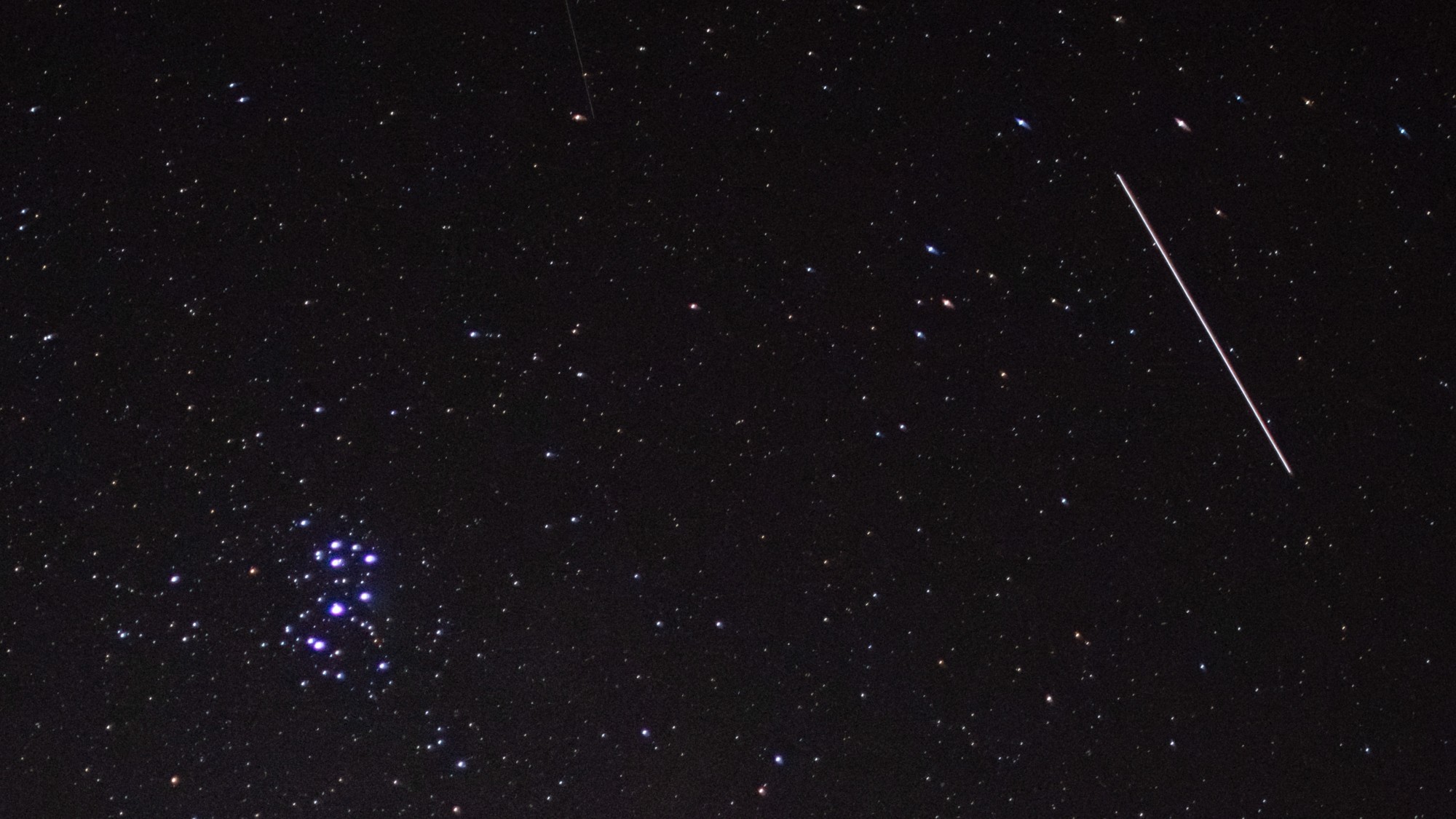
Photographer Morteza Nikoubazl also caught a Perseid meteor streaking beside the famous Pleaides star cluster as seen from Semnan, Iran.

a streak of light crosses through the night sky

(Image credit: Morteza Nikoubazl/NurPhoto via Getty Images)

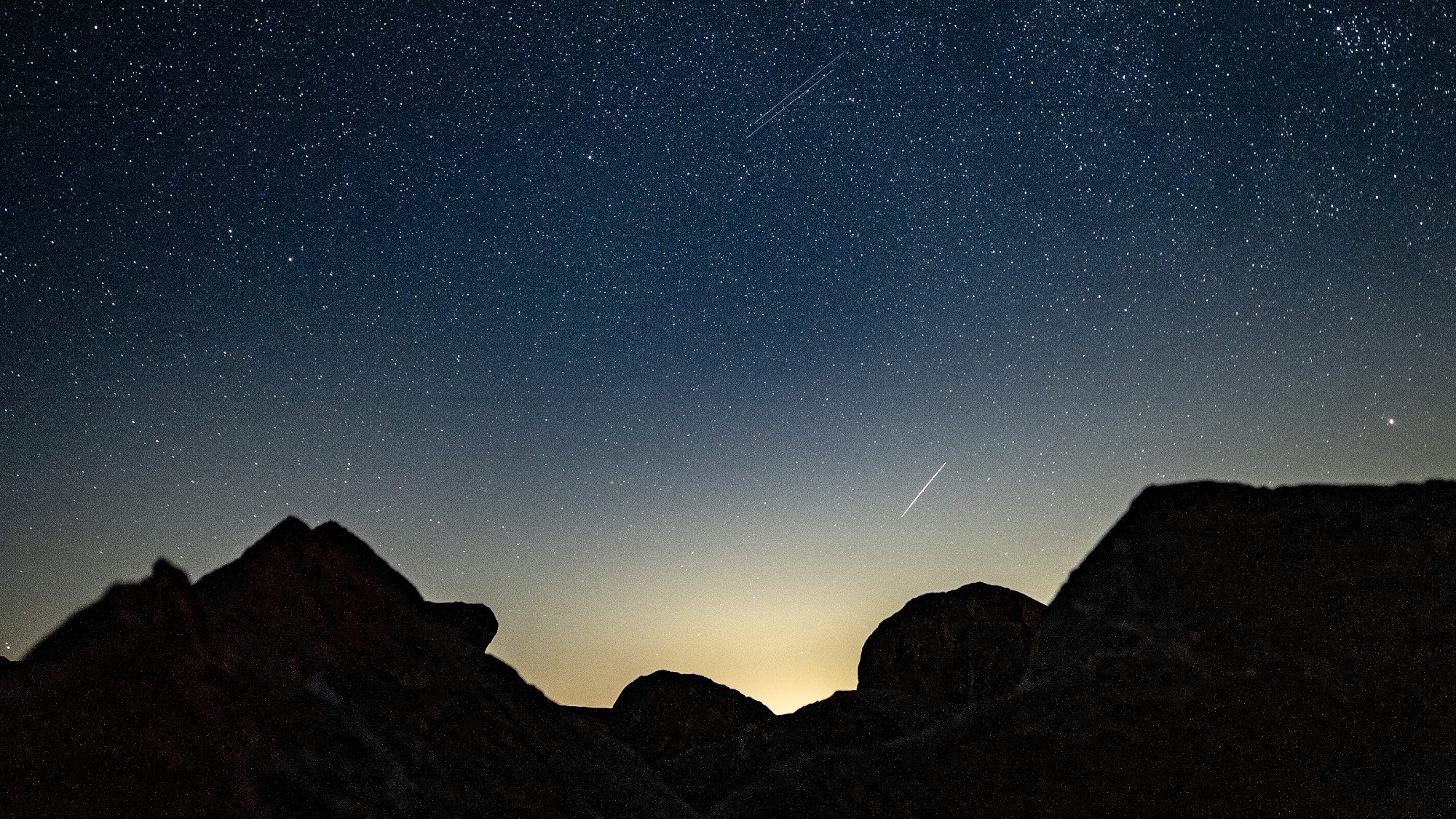
Meanwhile, a Perseid meteor was spotted as the setting sun illuminated the skies over the Negev Desert in southern Israel, on Aug. 11, 2026.

a streak of light crosses through the night sky

(Image credit: Mostafa Alkharouf/Anadolu via Getty Images)

The Milky Way Galaxy also showed its face during the Perseid meteor shower over the Negev Desert on Aug. 11, 2026.

a streak of light crosses through the night sky

(Image credit: Mostafa Alkharouf/Anadolu via Getty Images)

This long streak left by a Perseid meteor was photographed above Pedernales Falls State Park in Johnson City, Texas on Aug. 12, 2026.

a streak of light crosses through the night sky

(Image credit: Rick Kern/Getty Images)

A meteor (left) lit up the night sky during the Perseid meteor shower just hours after a total solar eclipse was seen from San Asensio, Spain on Aug. 12, 2026. 

a streak of light crosses through the night sky

(Image credit: ANDER GILLENEA / AFP via Getty Images)

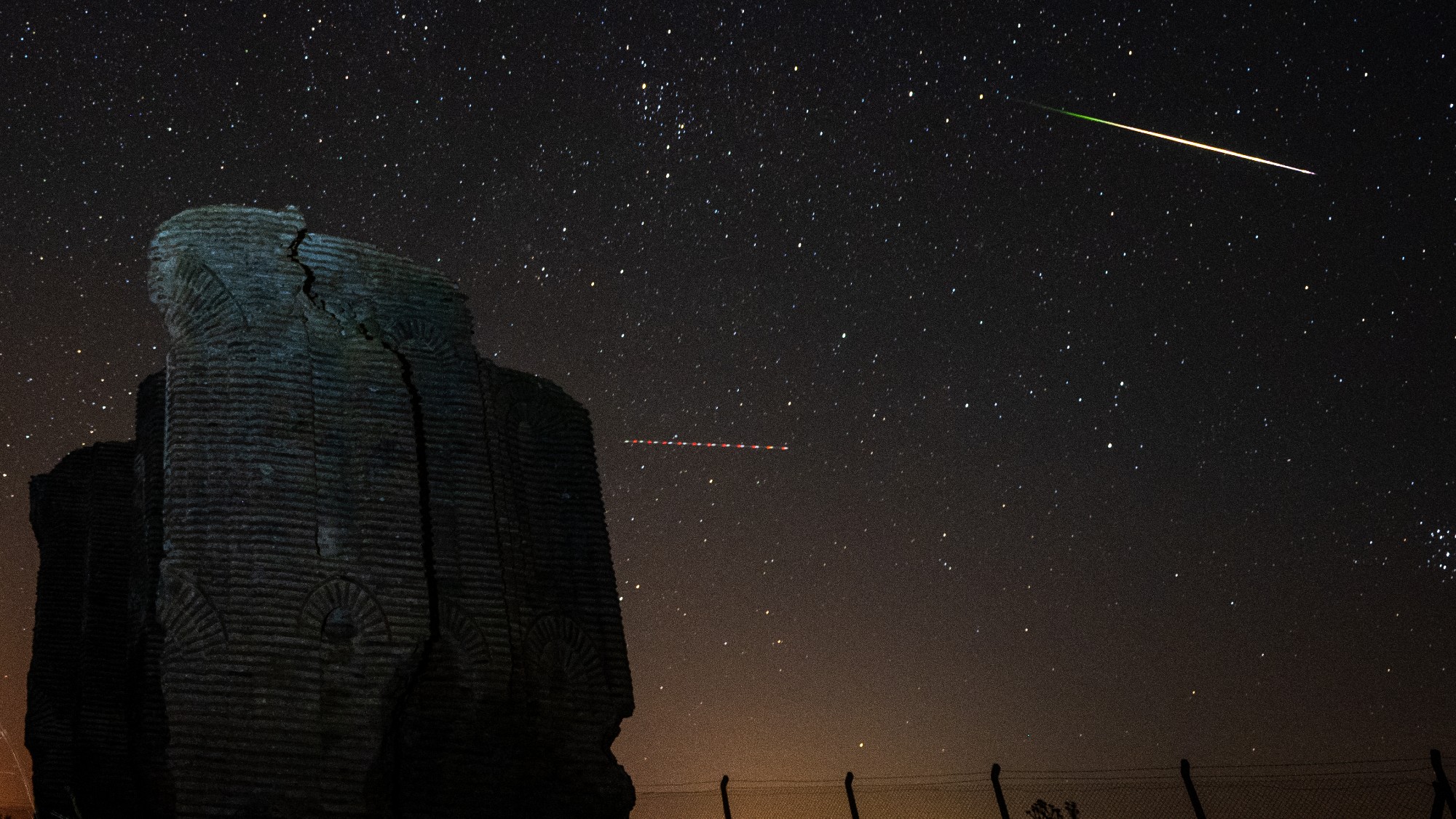
Farther east, Ismail Aslandag caught a green meteor above Ucayak Church in Kirsehir, Turkiye on Aug. 12, 2026.

a streak of light crosses through the night sky

(Image credit: Ismail Aslandag/Anadolu via Getty Images)

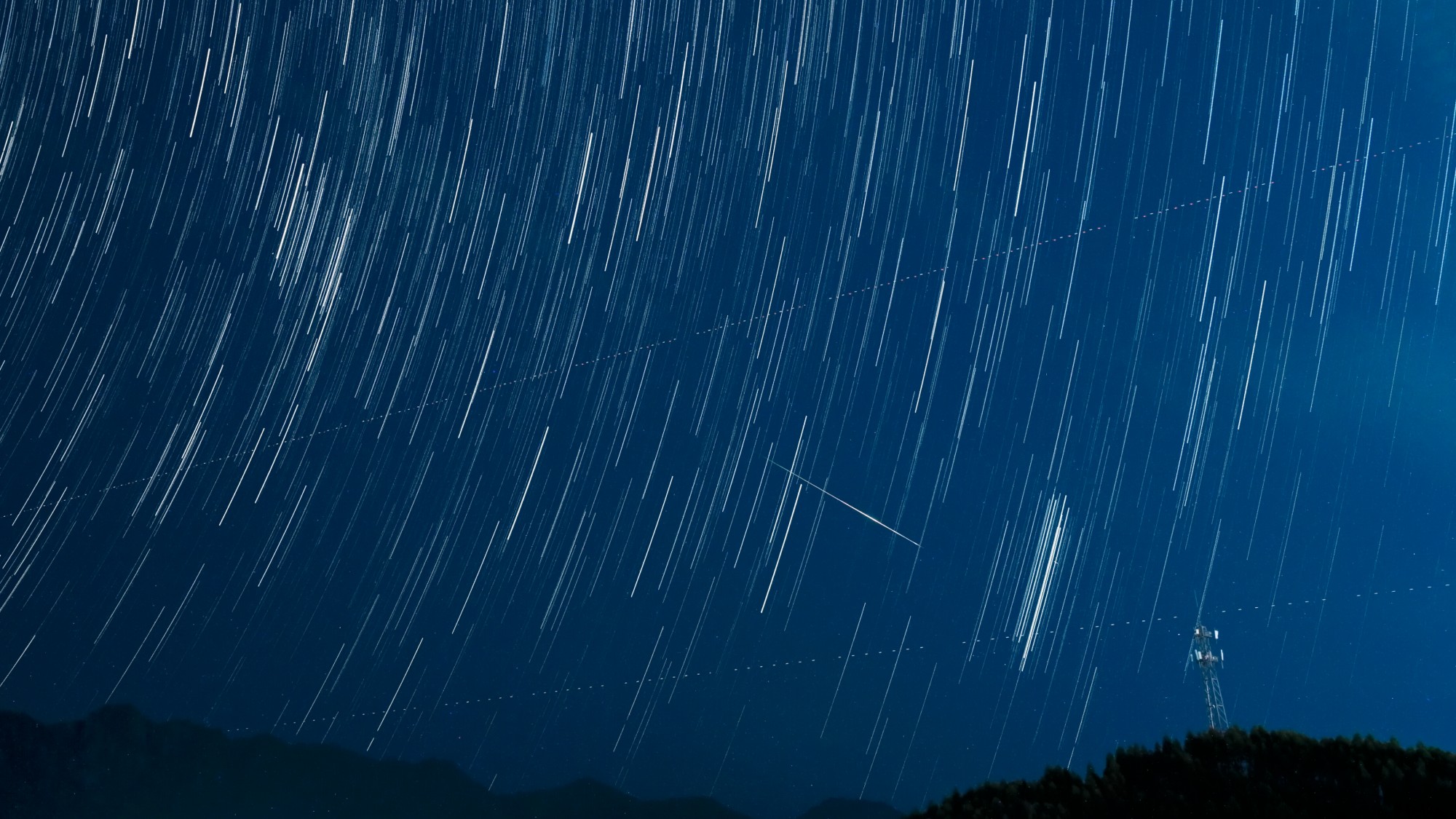
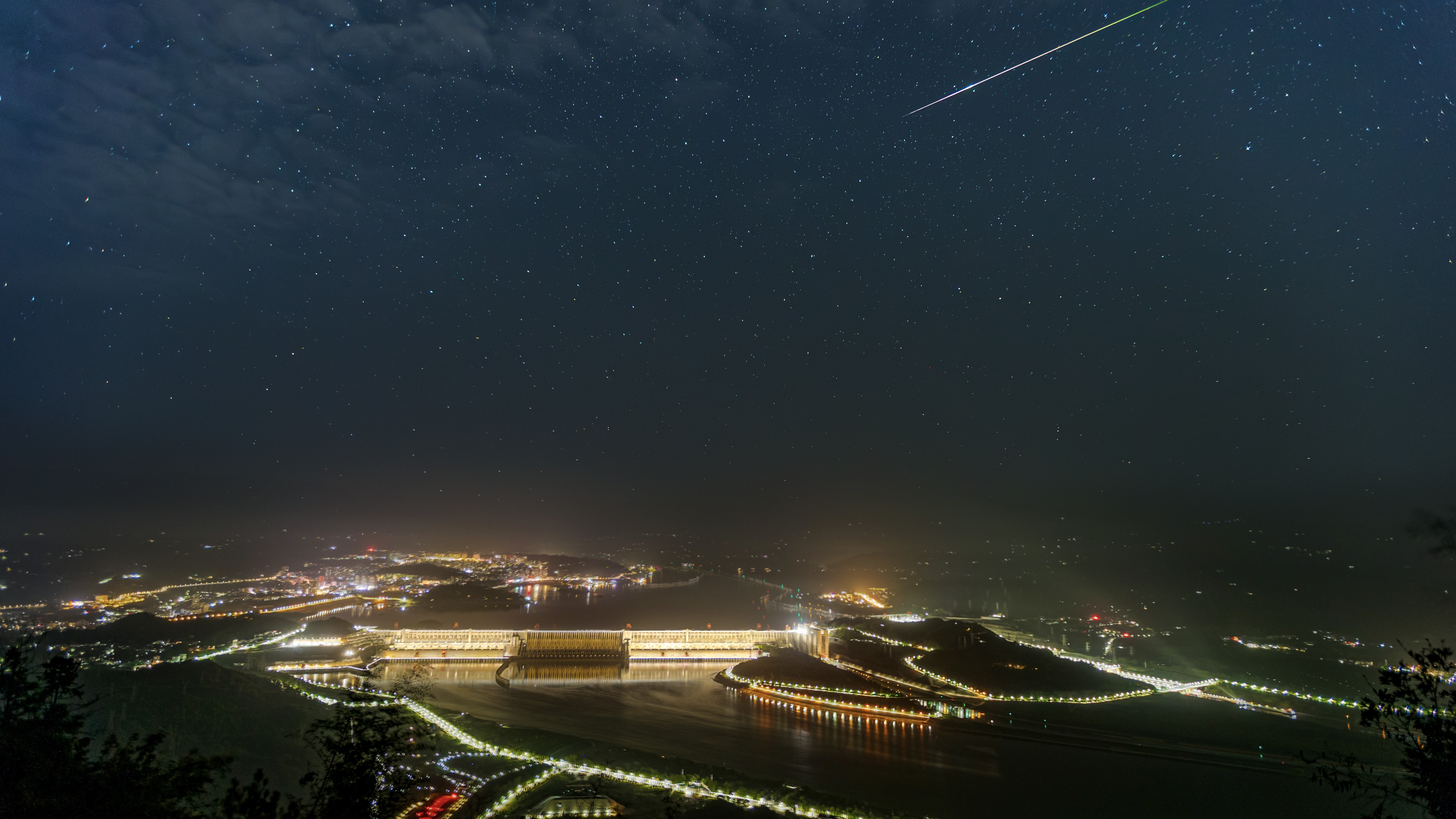
This long exposure captures Earth's rotation in the form of circular star trails. A Perseid "shooting star" lit up the swirling scene above Shaoguan in China's Guangdong Province on Aug. 12, 2026.

a streak of light crosses through the night sky

(Image credit: Wang Fanlu/VCG via Getty Images)

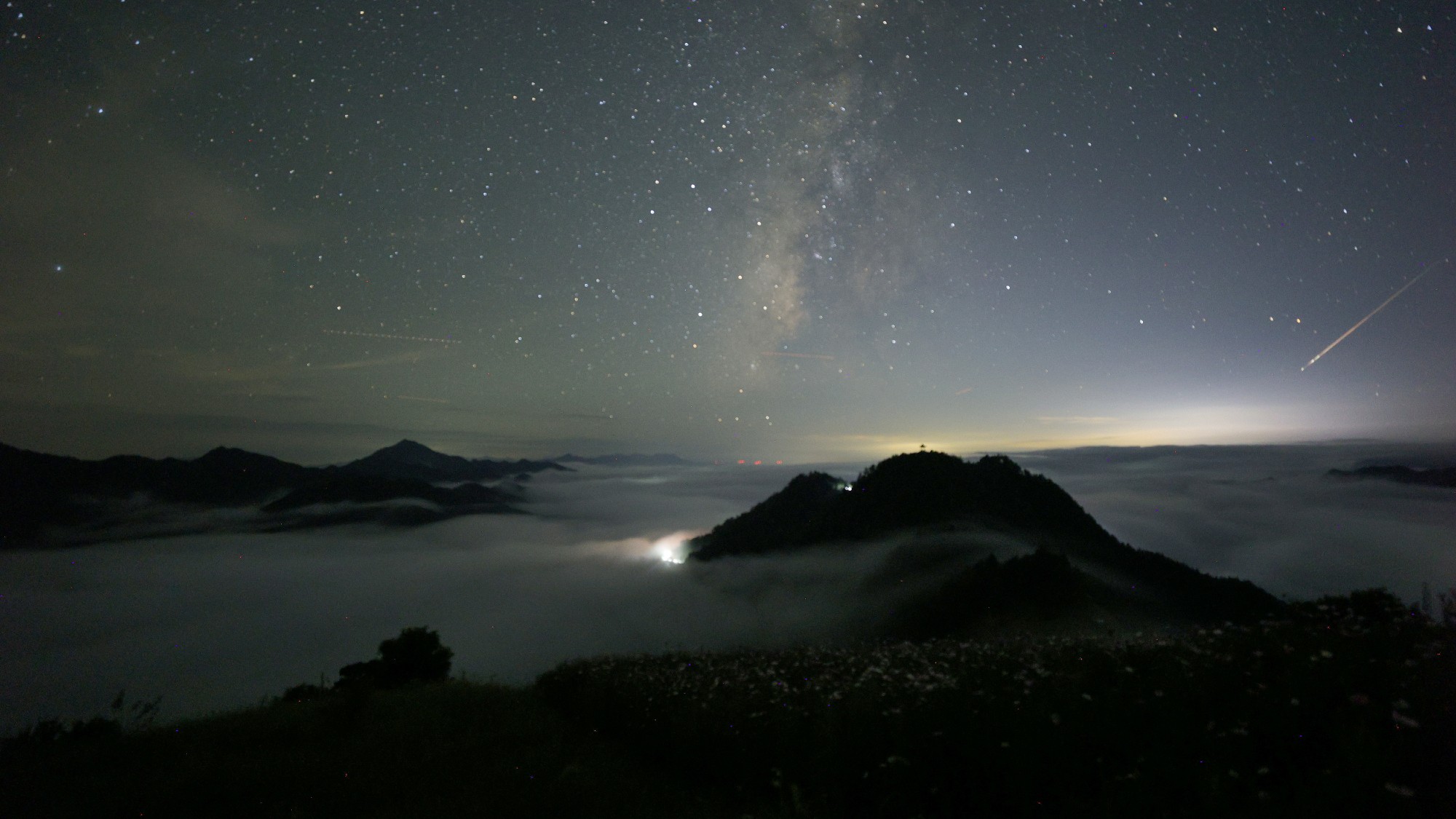
Farther north, photographer Fan Chengzhu saw a Perseid meteor streaking into the distance over Shitan Village in China's Anhui Province on Aug. 13, 2026.

a streak of light crosses through the night sky

(Image credit: Fan Chengzhu/VCG via Getty Images)

Earth won't break free of Swift-Tuttle's debris trail until Aug. 24, so there are still plenty of Perseids to be seen brightening the summer sky if you're a little late to the show. Just be prepared for a significantly lower hourly rate compared to the peak.

Want to try your hand at capturing one? Then be sure to read our guide to photographing shooting stars, along with our roundups of the best cameras and lenses for astrophotography.

Editor's Note: Did you snag a photo of a Perseid and want to share it with Space.com's readers? Then please send your photo(s), comments, name and location to spacephotos@space.com.

Perseid meteor shower peaks under perfect skies tonight — here’s what to expect

The Perseid meteor shower, one of the most prolific and impressive meteor showers of the year, peaks tonight!

Widely regarded as one of the best meteor showers of the year, the Perseids can produce up to 100 meteors per hour under ideal viewing conditions and weather permitting.

This year's display is particularly favorable because the shower peaks on the night of the new moon, leaving skies free from bright moonlight that can wash out fainter meteors.

What time should I look?

The Perseids can produce meteors throughout the night, but the best viewing begins around 11 p.m. local time, with activity increasing after midnight and continuing until the predawn hours. Under dark, clear skies, patient observers could see dozens of meteors every hour with the highest rates expected just before dawn.

Where do they come from?

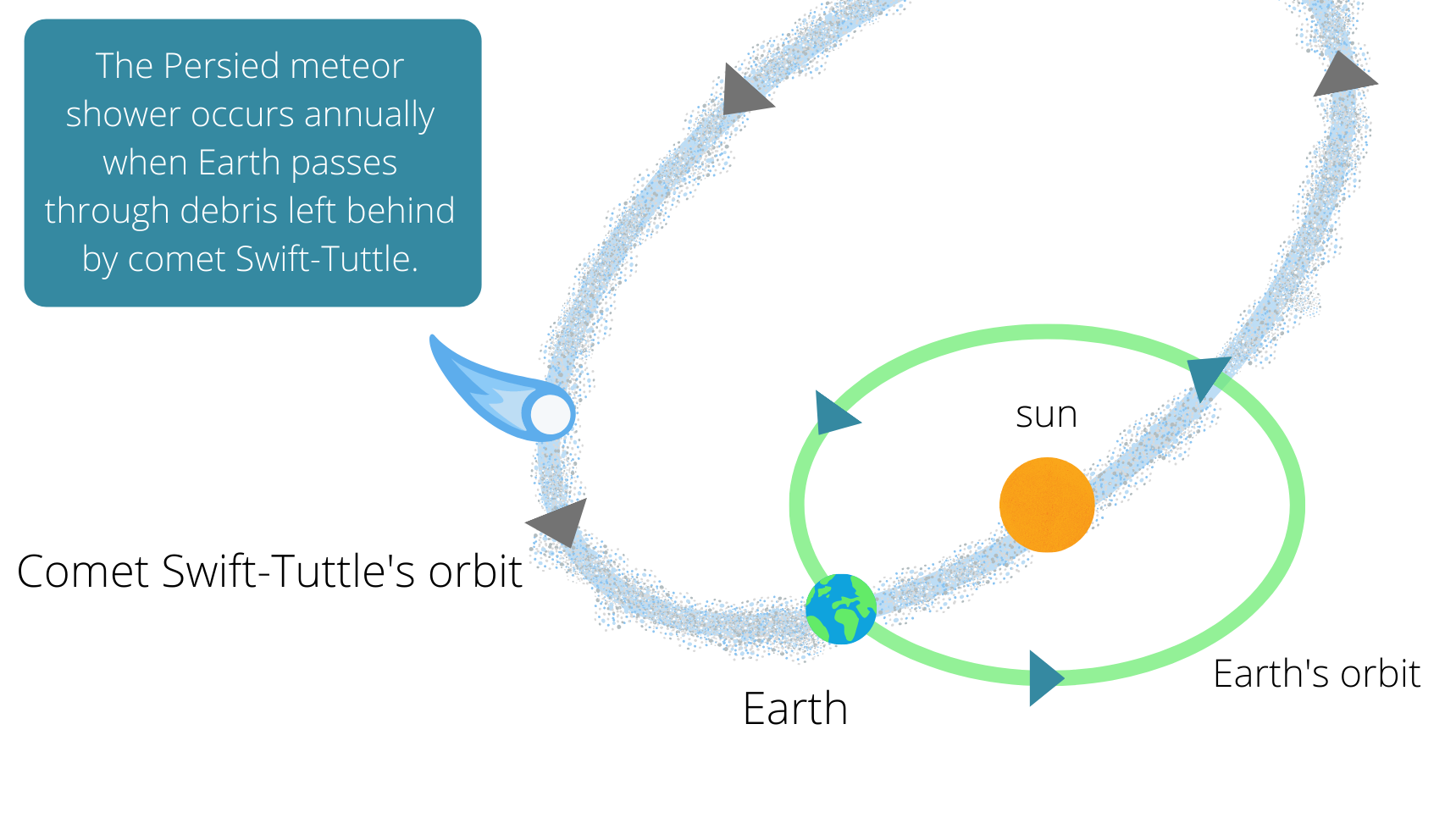
The annual show occurs as Earth passes through a trail of comet dust and rocky debris left behind by Comet 109P/Swift-Tuttle. Every year, our planet plows through this stream of cometary material, causing tiny fragments — many no larger than a grain of sand — to slam into Earth's atmosphere at around 133,000 mph (214,000 km/h).

As these particles compress and heat the air in front of them, they burn up high above Earth's surface, creating the brilliant streaks of light we know as meteors or shooting stars.

Every year, Earth passes through the path of Comet Swift-Tuttle. With the Perseid meteor shower's peak occurring when Earth passes through the densest, dustiest area. (Image credit: Future)

How can I see the Perseids?

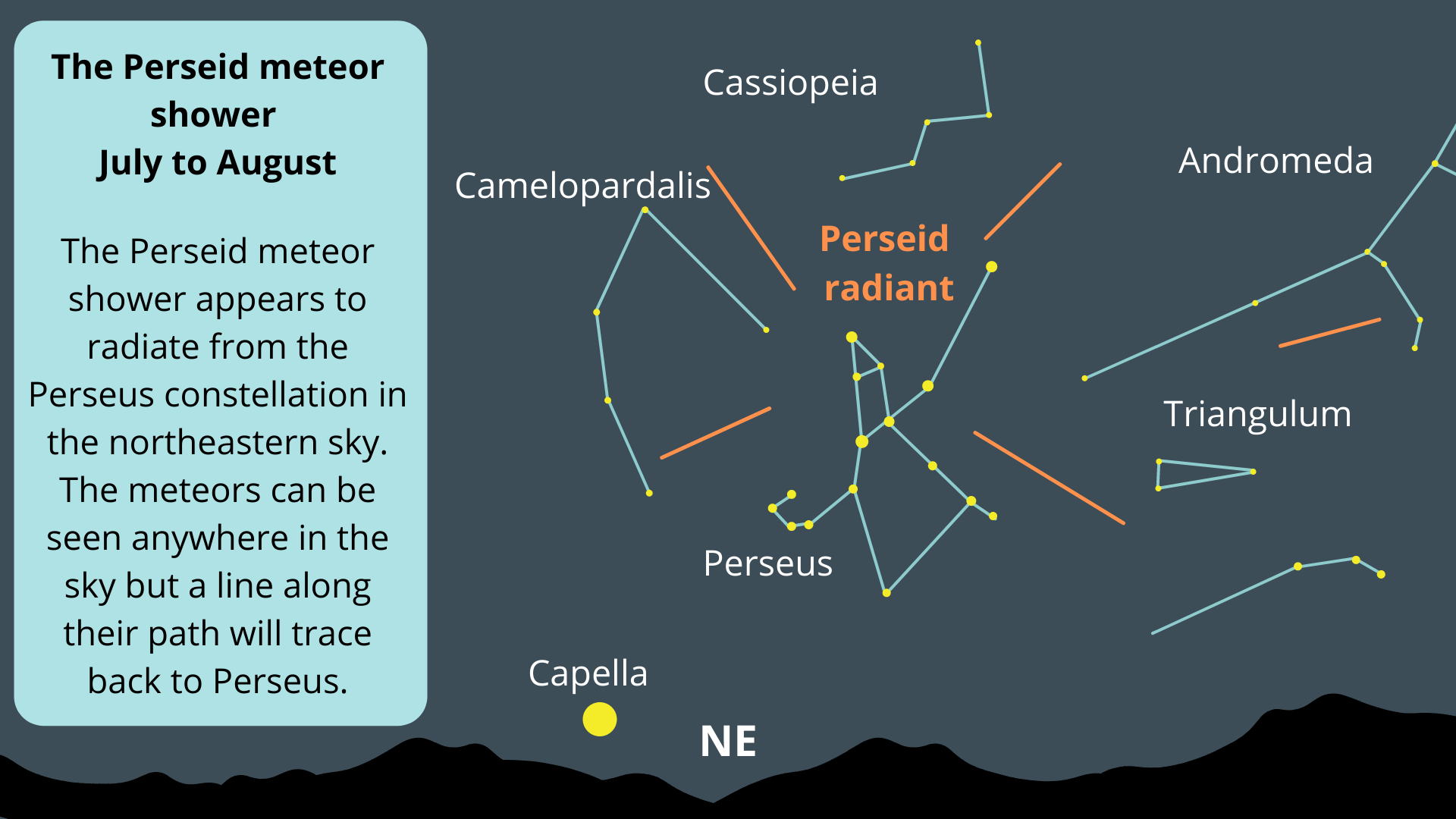
The Perseids appear to radiate from the constellation Perseus, but you don't need to look directly at the constellation to enjoy the show. In fact, the longest and brightest meteors appear about 45 degrees away from the radiant, when you're not viewing them head-on.

To give yourself the best chance of seeing as many meteors as possible, head somewhere with dark skies, away from city lights and give your eyes around 30 minutes to adjust to the darkness. Avoid checking bright phone screens (easier said than done!) and leave the telescope or binoculars at home — meteors are best enjoyed with the naked eye.

The Perseid meteor shower will appear to radiate from the Perseus constellation. (Image credit: Future)

The highest number of meteors occurs in the predawn hours because it's when the side of Earth you're situated on has rotated into the stream of comet debris. You can think of it a bit like driving through rain — the windshield catches more raindrops than the rear window because it's facing the direction of travel. Likewise, before dawn, your location on Earth is facing into the stream of comet debris, meaning more meteoroids collide with Earth's atmosphere overhead.

A rare double sky show

Best cameras for astrophotography

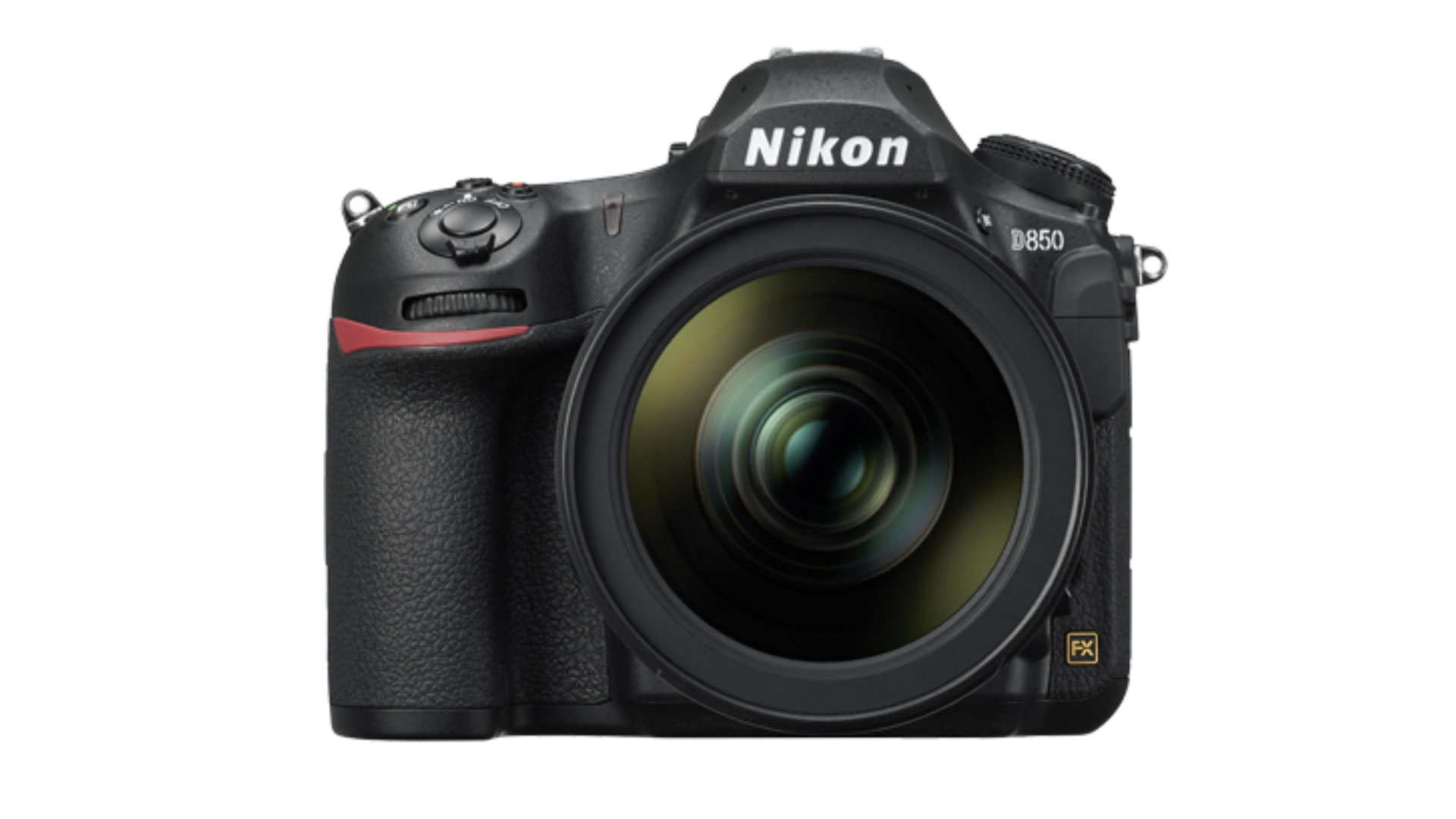
The Nikon D850 DSLR

(Image credit: Nikon)

If you're looking for a good camera for meteor showers and astrophotography, our top pick is the Nikon D850.

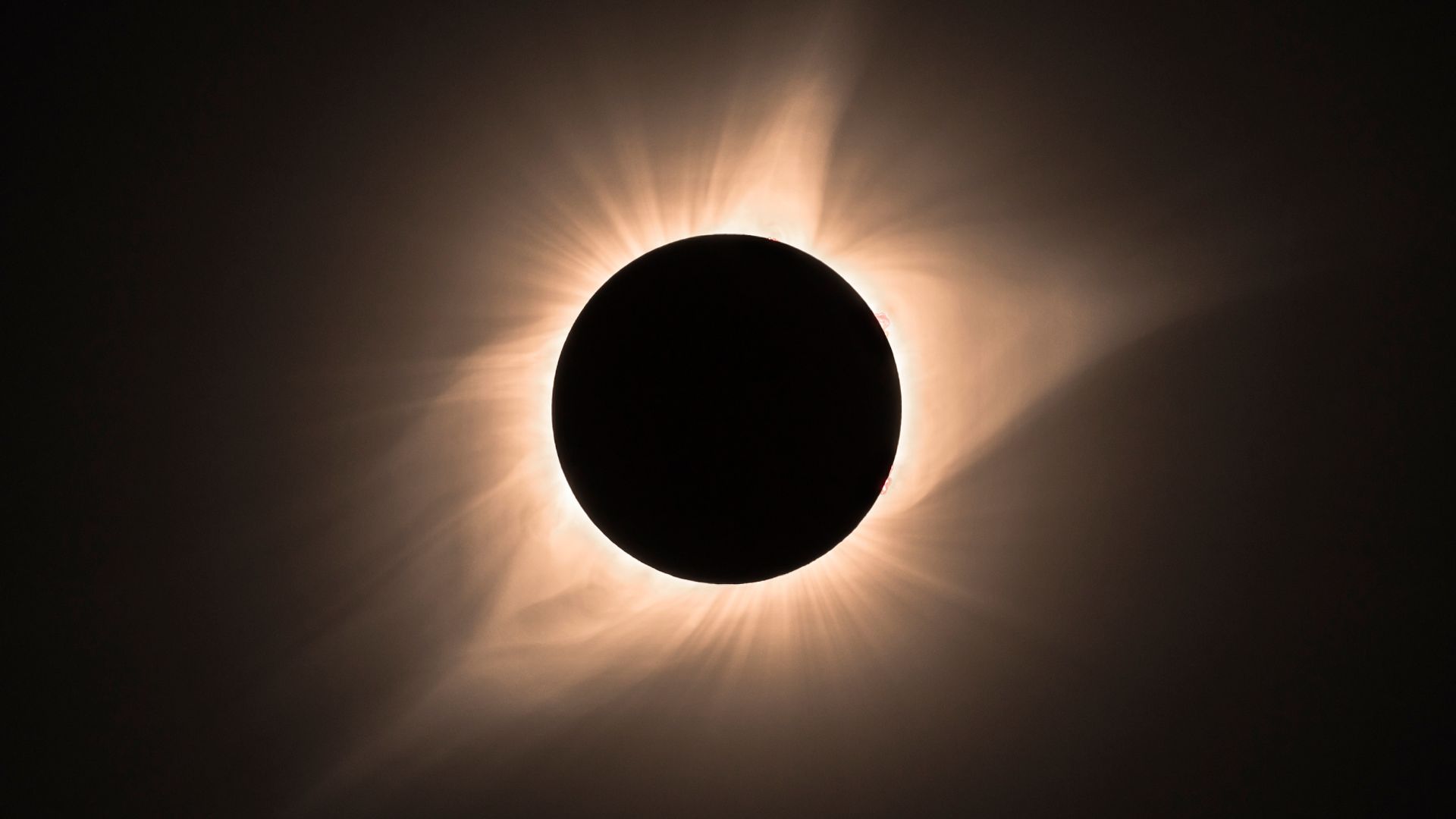
Why have one remarkable sky event when you can have two? This year's Perseid peak arrives on the heels of today's total solar eclipse that crosses parts of Greenland, Iceland and Spain, making it possible to witness two of the year's most spectacular celestial events within just a few hours of each other.

If you're unable to catch the Perseids tonight, don't worry! While meteor numbers will gradually decline after the peak, the Perseids remain active through Aug. 24, meaning there are still opportunities to catch plenty of shooting stars under clear, dark skies.

If you're looking to snap photos of the meteor shower or the night sky in general, check out our guide on how to photograph meteor showers, as well as our best cameras for astrophotography and best lenses for astrophotography.

Will Perseid shooting stars be visible during the Aug. 12 total solar eclipse?

A spectacular total solar eclipse will coincide with the peak of the Perseid meteor shower on Aug. 12-13. But will you be able to spot shooting stars in the false twilight of totality?

Perseids appear as Earth plows through the stream of debris shed by comet Swift-Tuttle. Up to 100 shooting stars may be seen each hour around its peak under ideal dark skies, as particles from the ancient comet collide with our atmosphere at speeds of 133,200 mph (214,365 km/h) to etch a fiery path through the summer night sky.

It's an unmissable highlight of the skywatching calendar, supercharged in 2026 by the spectacle of a total solar eclipse, which will plunge millions across Greenland, Iceland and Spain into the darkness of an eerie twilight, as the moon crosses the face of the sun.

Is it possible to see shooting stars during totality?

Yes. The most brilliant Perseid shooting stars can shine bright enough to be spotted in the brief twilight of totality. But it's all a question of timing.

"It would have to be a fireball that passed through the darkest portion of the sky," Robert Lunsford of the American Meteor Society told Space.com in an email. "The Perseids usually produce about one fireball per three hours at night. That's asking a lot for one of these bright meteors to appear during a 2-3 minute window. If anyone does see one, they had better go play the lottery asap!"

The sky will take on the appearance of dusk as totality falls. (Image credit: John Finney Photography via Getty Images)

NASA Meteoroid Environments Office head Bill Cooke added his own word of caution, noting that the relatively bright sky during totality will likely hide all but the most brilliant Perseids from sight.

"Only Perseid fireballs will be visible," Cooke told Space.com in an email. "Given the brightness and duration of the eclipse, you might see one if you're extremely, extremely lucky. [The] most likely scenario is that you will see no meteors whatsoever."

The odds are definitely stacked against you. But you never know. A piece of comet Swift-Tuttle could've broken away at just the right time, at just the right point in its orbit to meet a fiery end in Earth's atmosphere, just as the sun slips from view. As for our advice? Keep your eyes locked firmly on the eclipse as it unfolds in the skies above you. There'll be plenty of time for hunting Perseids later.

Want to capture gorgeous photos of the Aug. 12 cosmic doubleheader? Then be sure to read our expert guides to imaging a total solar eclipse, along with tips on photographing fast-moving meteors. You can also stay up to date with all the latest news and reports for the field with our total solar eclipse live blog!

Editor's Note: If you would like to share your astrophotography with Space.com's readers, then please send your photo(s), comments, and your name and location to spacephotos@space.com.

Billions of miles and thousands of years in the making: This is the life of a Perseid shooting star

Picture it: A slash of vivid green light splits the starry sky. There for a moment and then gone, leaving nothing but a short-lived glowing trail and a moment of pure joy. You've finally caught it, your first Perseid shooting star of the season.

What you saw was the final moment of a story billions of miles and thousands of years in the making. A story that began with that same shooting star locked inside the icy body of the wandering comet 109P/Swift-Tuttle.

The 16-mile-wide (26 kilometer) giant of a comet spends its life journeying back and forth between the outer and inner solar system, where its frigid body is heated by the sun, triggering dramatic outbursts of activity. While in close proximity to our star, ice near to the surface of the comet is transformed into gas, skipping the water stage entirely as it escapes out into the vastness of interplanetary space.

Embedded within that ice was once a micrometeoroid no larger than a grain of sand, destined to become the Perseid shooting star you saw.

The violence of the newborn micrometeoroid's exile was followed by an epoch of utter silence, as its orbit was subtly influenced by the unseen forces of the solar system. It would be easy to think of this as a lonely existence, but we'd be wrong.

Our cosmic pebble was joined by millions of others, all shed in the wake of Swift-Tuttle. A great stream of primordial material that threads through the inner solar system, crossing the path of Earth before extending in a great swarm that messily traces the elliptical orbit of their comet progenitor, below the plane of the solar system. Beyond the orbit of Pluto.

Each follows its own unique path. Trajectories are shaped by the force of a micrometeoroid's expulsion from the comet's nucleus, along with the gentle push of radiation from the sun and the gravitational tug of the planets.

A perseid blazes earthward over Hubei province in China. (Image credit: Photo credit should read CFOTO/Future Publishing via Getty Images))

It's impossible to know how long our shooting star drifted through the cold expanse of interplanetary space. Was it hundreds or many thousands of years? How many times might it have journeyed around the sun before its fateful rendezvous with our Blue Marble?

We can never know. What we do know is how its journey ended.

Civilizations could have risen to their zenith and crumbled in the time our micrometeoroid spent traversing the unfeeling expanse of interplanetary space, but its demise lasted but a fraction of a second. It collided with our planet's gaseous shell at 132,000 miles per hour (212,433 kmph), cutting a brilliant green trail through the summer sky as atmospheric friction vaporized the cometary shard.

It's that fiery demise that you spotted tonight — an experience that will repeat hundreds of times each and every hour at the height of the Perseid meteor shower, as Earth passes through the densest part of the debris stream cast off by comet Swift-Tuttle.

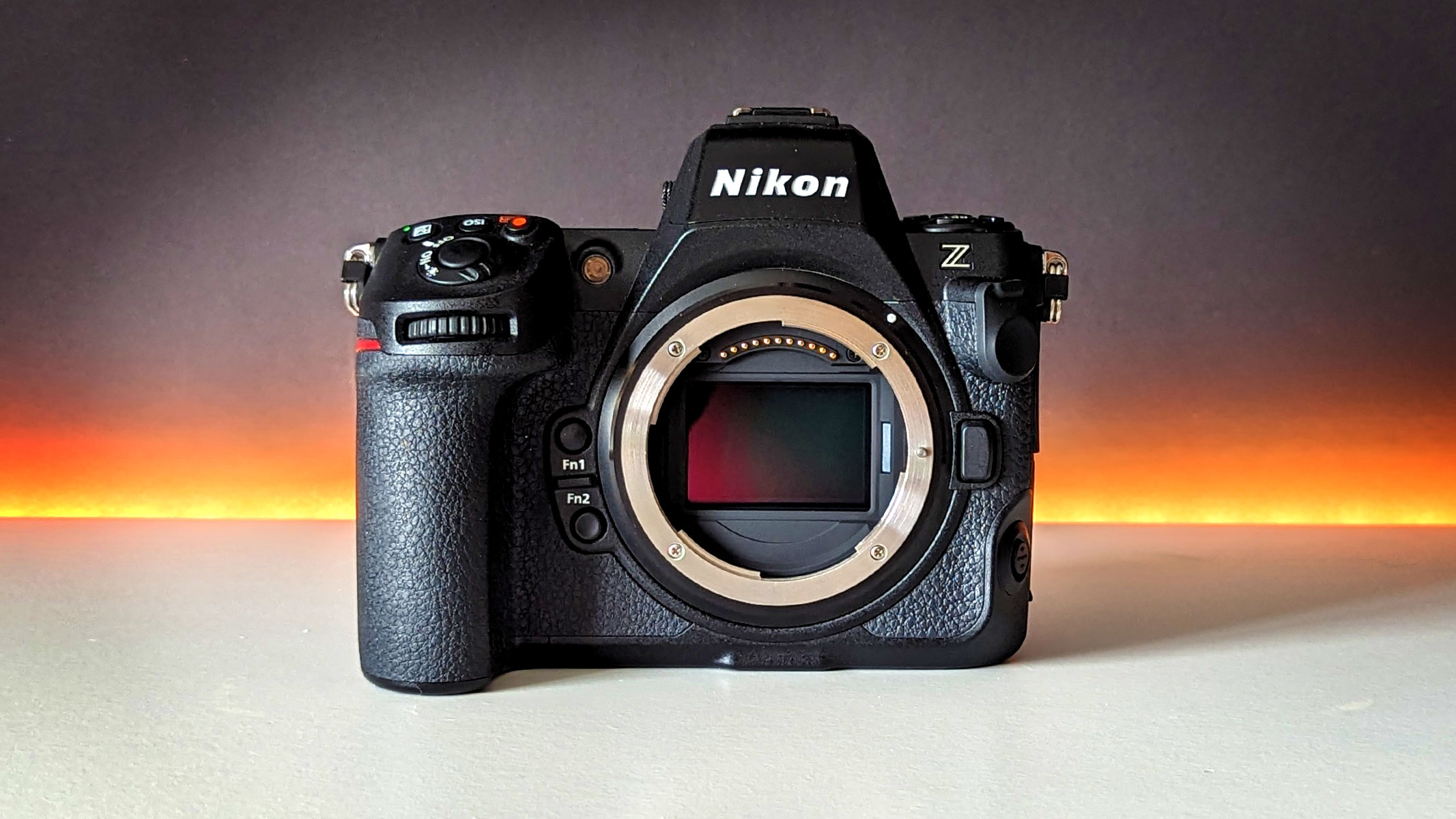
Nikon Z8

Nikon Z8 on a white table

(Image credit: Jase Parnell-Brookes)

The Nikon Z8 excels in just about every department and we rate it as the best overall camera out there. It features a full-frame 45.7MP sensor, 8K video capabilities and excellent low-light performance. Check out our Nikon Z8 review for more!

The Perseid meteor shower is active from now until Aug. 24, with the best viewing window occurring in the early hours of Aug. 13, as the shower's radiant rises to its highest point on the night of the shower's peak.

This year's peak will be particularly spectacular, unfolding as it does in the pristinely dark skies surrounding the Aug. 12 new moon, which will also cause a spectacular total solar eclipse to be visible across parts of Spain, Iceland and Greenland. If you find yourself in the path of totality and have luck on your side, then you might just spot a Perseid fireball brightening the false twilight that falls as the moon hides the face of the sun at the crescendo of the eclipse!

Want to capture a shooting star that will stay with you forever? Then be sure to read our guide to photographing fast-moving meteors, along with our roundups of the best cameras and lenses for astrophotography if you're looking to upgrade your gear.

Editor's Note: Did you catch a photo of a Perseid shooting star and want to share it with Space.com's readers? Then please go ahead and send your photos along with your comments, name and location to spacephotos@space.com.

Beyond the Perseids: 6 meteor showers worth watching this summer

The Perseids may be the summer meteor shower everyone marks on the calendar, but they are not the only reason to look up this season.

From mid-July through late August, Earth plows through several other streams of comet and asteroid debris, triggering a series of lesser-known meteor showers across Northern Hemisphere skies.

Most will not deliver the dazzling hourly rates of the Perseids, and moonlight will spoil some peak nights in 2026. But for patient skywatchers under dark skies, these lesser-known showers can still serve up bright fireballs, faint streaks and a preview of the main event to come.

The duration in days of a shower we provide here is somewhat arbitrary, since the beginning and ending are gradual and indefinite. While the hourly rates from these other meteor streams provide but a fraction of the numbers produced by the Perseids, combined, overall, they provide a wide variety of meteors of differing colors, speeds and trajectories.

Capricornids

First to appear are the Capricornids, starting around July 10, with their maximum on July 25 and end on Aug. 15. Under the best conditions only a few bright meteors per hour come from this stream, so you'll hardly know it is in progress unless you plot meteor trails on a star map and trace them back to their common intersection point; most of the meteors you'll see will be sporadics or members of another shower.

The radiant reaches its highest point at about 30 degrees high in the south, about 2:00 a.m. local daylight time. The waxing gibbous moon will have set at around 1:40 a.m. on the night of the peak, leaving the rest of the night dark for prospective meteor watchers.

Delta Aquarids

Next come the Delta Aquarids, July's most prolific shower, with maximum on July 29, and as many as two or three dozen meteors per hour under ideal conditions. The shower lasts from July 12 to Aug. 23. It has a double radiant, indicating that we are seeing two distinct streams of celestial debris burning up in the Earth's atmosphere.

The meteors are mostly faint; a few bright, 5-10% leave persistent trains; they move at medium-slow speeds because they are coming in sideways across Earth's orbit. On peak night this year, the double radiant will be highest — roughly 40 degrees above the southern horizon — at 3:30 a.m. Unfortunately, in 2026, peak activity will coincide with full moon, so most of these streaks will likely be squelched by bright moonlight.

Piscis Australids

Another weak shower is the Piscis Australids, on July 30, with normal limits July 10 to Aug. 10. This is a lesser stream; only about eight members per hour are seen under best conditions to observers in the Southern Hemisphere, where the radiant — near the bright star Fomalhaut — climbs high in the sky.

As is the case with the Delta Aquarids, the moon, only one day past full, unfortunately, wrecks any chances of getting any decent views this year.

Alpha Capricornids

The final shower peaking in July is the Alpha Capricornids, which begin about July 7, peak on July 31, and end on Aug. 15. The radiant reaches its highest point, about 30 degrees high in the south at about 1:00 a.m. local daylight time. Though sparse (5 per hour) in number, the Alpha Capricornids are photogenic, frequently producing bright yellow fireballs that can be quite spectacular. Sadly, the bright moon, 93% illuminated, is in eastern Capricornus and will seriously impact the peak of this year's display.

Iota Aquarids

The last minor shower before the Perseids is the Iota Aquarids, a two-radiant shower having detectable members from July 15 to Aug. 25. At peak activity on Aug. 6, only about six members per hour are seen under good conditions; the radiants are at their highest point, about 40 degrees in the south at 2:30 a.m. A last quarter moon will be about one-third up in the eastern sky at that hour, which will interfere to an extent with viewing these meteors.

Perseids

The Perseids are predicted to reach their peak in 2026 on the morning of Aug. 13. Meteors whose paths extended backward intersect at a spot near the Perseid-Cassiopeia border not far from the famous Double Cluster in Perseus.

It rises at dusk and is highest in the sky — nearly overhead — at 5:40 a.m. When maximum occurs in a dark sky, as will be the case this year, this rich stream offers a crescendo in hourly rates averaging more than 50 members per hour, though double this rate has been seen on occasion. Many flaring meteors with trains are seen. This shower normally extends from July 17 through Aug. 24.

The Perseid meteor shower will be one of the top skywatching events this year as it will enjoy minimal interference from the moon. (Image credit: SEN LI via Getty Images)

Kappa Cygnids

The last summer shower is the Kappa Cygnids. The limits of this shower run from Aug. 3 to Aug. 25, with the peak on Aug. 17. Though the maximum rate is only about four per hour, the stream does provide slow-moving flaring fireballs, and a careful observer may be nicely rewarded for the time spent.

The radiant is just north of the star Kappa Cygni and is nearly overhead — some 80 degrees high — at around 10:00 p.m. local time. At about that same time, a waxing crescent moon is low in the southwest and is about to set and will offer little viewing interference.

Where to look

The radiant is the place in the sky where the paths of shower members, if extended backward, would intersect when plotted on a star chart. Many people are misled into thinking that this is the best place to look for these meteors, but only stationary meteors — ones coming nearly straight at you — can be seen here.

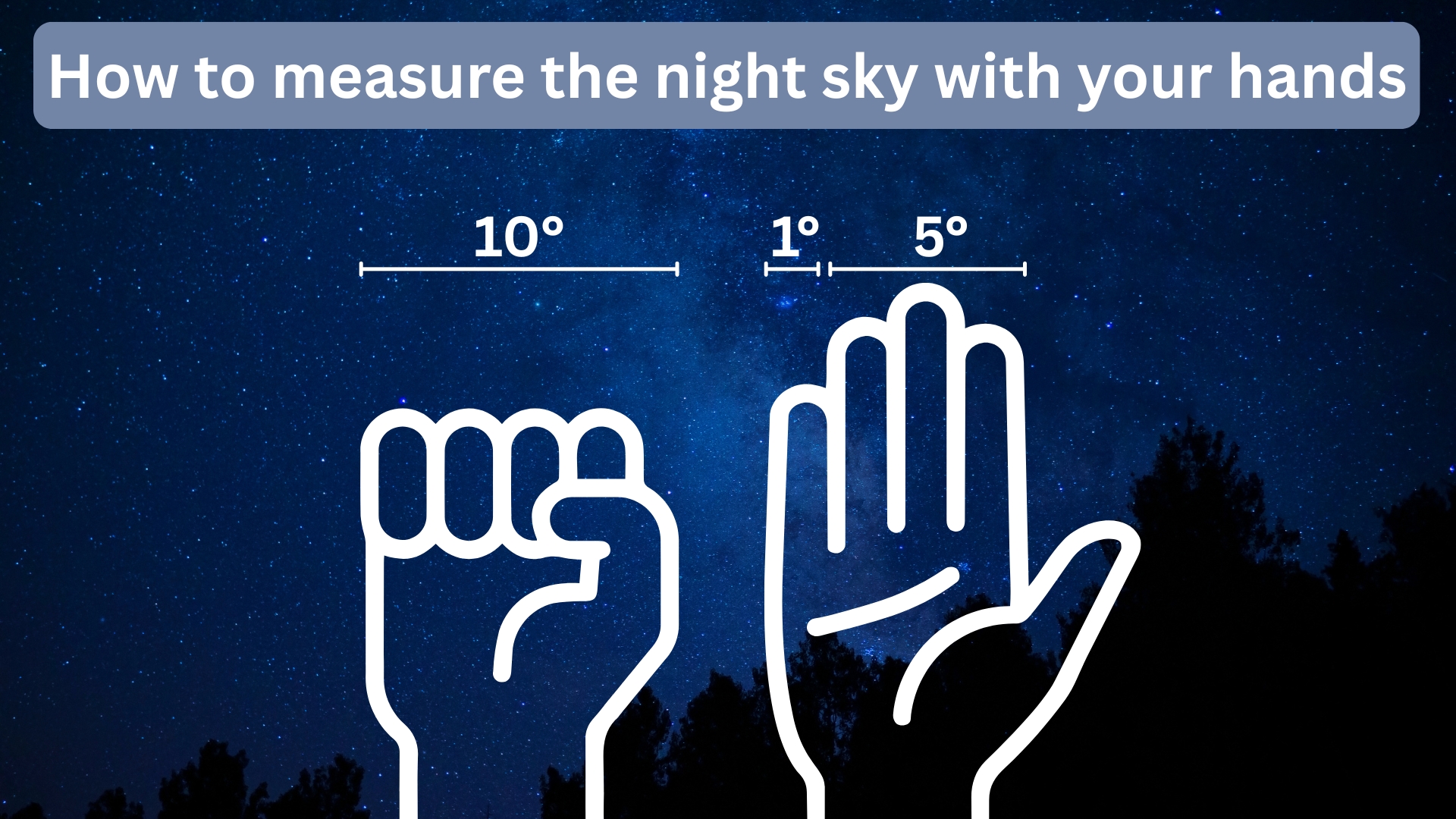
You hand held out at arm's length can be a useful tool for measuring the night sky. (Image credit: Created in Canva Pro)

The greatest numbers will be seen perhaps 30 degrees away from the radiant, in the general direction of the zenith. Remember that your clenched fist held at arm's length is roughly equal to 10 degrees.

In addition to shower meteors, there are always sporadic ones, apparently unrelated to one another, that occur at an average rate of about 7 per hour. The duration in days of a particular shower is somewhat arbitrary, since the beginning and ending are gradual and indefinite.

Skywatching tips

The only equipment you'll need is your eyes and a modest amount of patience.

The number of meteors an observer can see in an hour depends strongly on sky conditions. The rates quoted here are based on a limiting star magnitude of +6.5 (an exceptionally good, dark sky), an experienced observer, and the assumption that the radiant is directly overhead.

The lower the radiant in the sky, the fewer the numbers that will be seen. At an altitude of about 30 degrees, the hourly rate is halved, at 15 degrees it is one-third. No two observers prepare for a meteor vigil the same way.

Expect the overnight low temperature to be well below what the weather forecast suggests. When you sit quite still, close to the rapidly cooling ground, and if the air is even just slightly damp, you can become very chilled. It helps to take a late afternoon nap, followed by a shower, and to wear fresh clothing. Heavy blankets, sleeping bags, a ground cloth, an auto cushion, and a pillow are all necessary equipment. Some food and non-alcoholic beverages will help keep you comfortable.

Don't forget the moon

Another factor is the phase of the moon, which this year will be full on July 29 and new on Aug. 12. This makes it a very favorable year for viewing the Perseids, but not so favorable for those displays peaking at the end of July into early August. However, most are also active for a good number of days before and after maximum activity, so you can also watch for them when moonlight is not a hindrance.

Are these meteor showers worth watching?

In short, minor summer meteor showers are worth watching if you enjoy patient, low-key skywatching, but they are not ideal if you expect a dramatic display.

They offer a long observing season, require no equipment, and can produce a variety of meteors with different colors, speeds, paths, and occasionally bright fireballs. They also give observers more chances to watch when skies are clear and moonlight is less intrusive.

However, most are weak when compared to the Perseids, with low hourly rates and many faint meteors. Moonlight, low radiant positions, overlapping showers, and sporadic meteors can make them harder to see and identify, so observers need dark skies and patience.

Joe Rao serves as an instructor and guest lecturer at New York's Hayden Planetarium. He writes about astronomy for Natural History magazine, Sky and Telescope, The Old Farmer's Almanac and other publications.

The Perseid meteor shower starts this week. Here’s why you should look up now

People keep asking me about the total solar eclipse on August 12. That's understandable. For anyone in the Northern Hemisphere, it is shaping up to be a joyous day of astronomy. Totality will cross eastern Greenland, western Iceland and northern Spain, but much of Europe will see a very deep partial eclipse, and even parts of North America will see a small bite taken from the sun. Then, just hours later, the Perseid meteor shower will peak beneath perfectly moonless skies. What a double-act!

The problem with promoting days and nights like that is that they make us think skywatching is only worth doing at very specific times. Everything becomes about moments, peaks and countdowns. That rings true for an eclipse, of course, but for the Perseids, it's less so.

The Perseid meteor shower actually begins right now. It's active from July 17 through August 24. Yes, it reaches a strong maximum overnight on August 12-13, where observers under ideal dark skies could see 50 or more "shooting stars" per hour. That's absolutely the night to aim for if you only go stargazing once a month. But for stargazers with a little more time, the hunt can begin right now.

The best Perseid is the first one you see. In these weeks before the peak, there's less expectation, less focus on the weather. An unexpected streak while you are outside feels accidental.

For me, it often happens when I've stopped observing properly for the night. Last summer, I was moving my telescope indoors late at night after a fairly unremarkable session looking at a few globular clusters. As I went back inside, I did my usual pause and look at the stars one last time. As I did, my peripheral vision caught a bright meteor whizzing across rooftops in the northeast. Summer's meteor season had begun with a bang when I least expected it to.

The Perseids officially build gradually over several weeks as Earth slowly enters the broad debris stream left behind by Comet Swift-Tuttle. It was last in the inner solar system in 1992 and will return in 2126. The peak around August 12—13 marks the densest part of the stream, but in mid-July, only a handful of meteors will appear each hour. That's exactly why early Perseids feel so special — you stumble across a meteor when you least expect it. Its gradual beginning also explains why some of the earliest Perseids can be surprisingly dramatic. The shower is famous for bright fireballs — large, vivid meteors that sometimes leave glowing trails lingering for several seconds. Even when overall meteor rates remain low in July, a single bright Perseid can add some magic to a night's observing.

What's happening and when to look

a long meteor streaks through the sky a person below shines a flashlight.

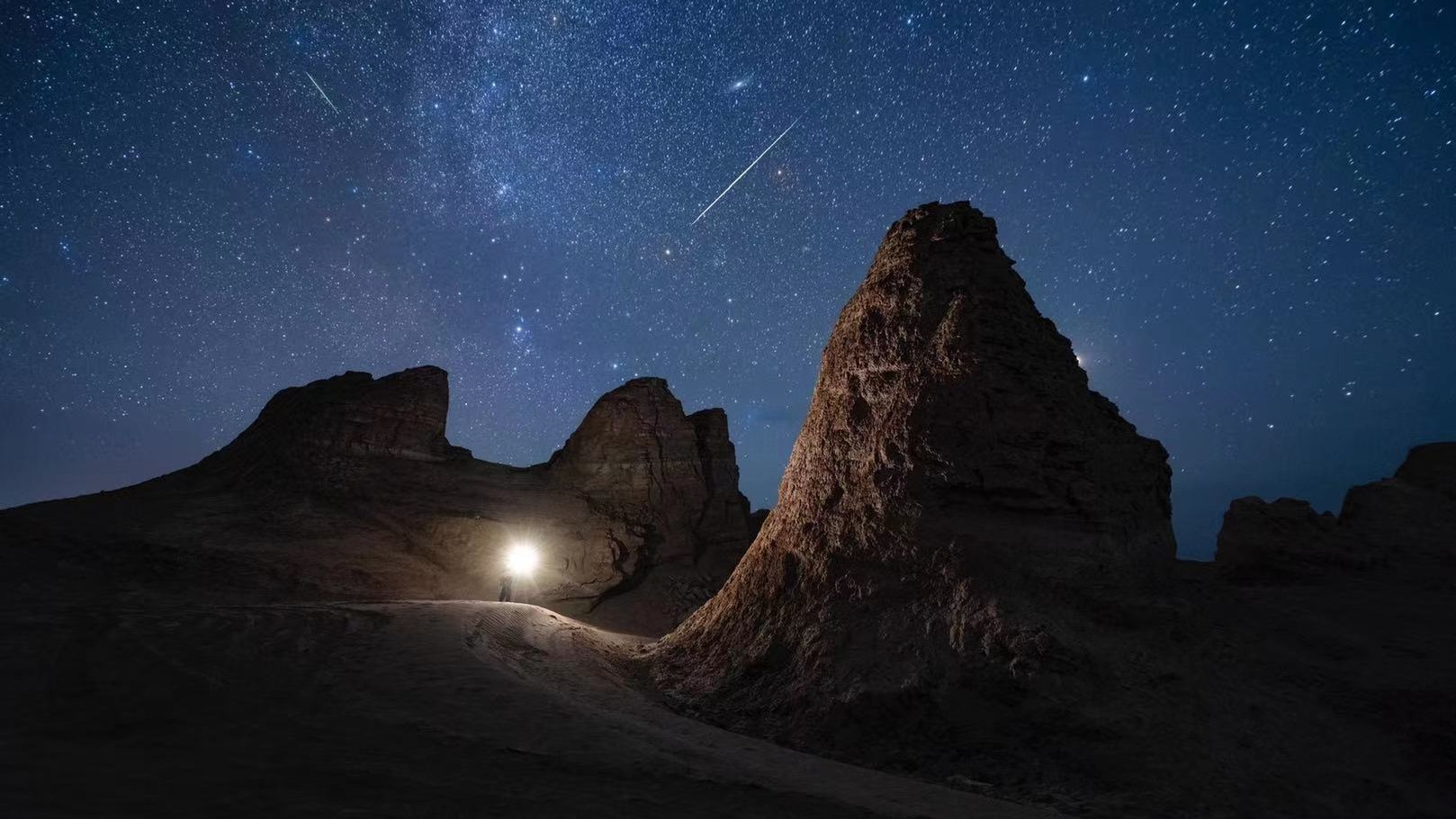
Meteors can technically appear anywhere in the night sky, but will appear to have come from the constellation Perseus. This photo shows a Perseid meteor over the Eboliang Yardang landform on August 12, 2022 in Haixi Mongolian and Tibetan Autonomous Prefecture, Qinghai Province of China. (Image credit: Photo by Wu Zhengjie/VCG via Getty Images)

If you want to begin watching for Perseids this week, the best time is after midnight through the small hours before dawn, when the radiant constellation, Perseus, climbs higher in the northeastern sky. "Shooting stars" can appear anywhere in the night sky, but if their paths backward point roughly toward Perseus, it's a Perseid. That's what gives the shower its name.

There's more to look at than Perseids because July is quietly crowded with other meteor showers. The Southern Delta Aquariids begin strengthening through the second half of the month. From southern latitudes, they can produce roughly 25 meteors per hour under dark skies, though observers farther north tend to see fewer because the radiant stays low in the southern sky. These meteors are usually softer and subtler than Perseids — medium-speed streaks without many dramatic fireballs or glowing trails.

Running alongside them are the Alpha Capricornids, active from early July into mid-August. Technically, this is a weak shower, often producing only a handful of meteors per hour, but it compensates with unusually bright, slow-moving fireballs.

Unfortunately, both showers peak this year beneath an almost full Buck Moon on July 30-31, which will wash out many fainter meteors. But bright meteors and fireballs should still occasionally punch through the moonlight.

Every year, Earth passes through the path of Comet Swift-Tuttle. With the Perseid meteor shower's peak occurring when Earth passes through the densest, dustiest area. (Image credit: Future)

How and when I'm watching it

I will probably begin meteor season the same way I always do: accidentally. I'll increase the odds by lingering outdoors slightly longer than necessary on warm nights, staying up later than I should and using my smart telescope to collect data on deep-sky objects while I search the skies for the first Perseid. It's best done now, before the moon waxes to full, and certainly before early August, when it wanes — the worst moon phase for observing meteors because it's in the sky just as meteor activity peaks.

Stargazer's corner: July 17-24, 2026

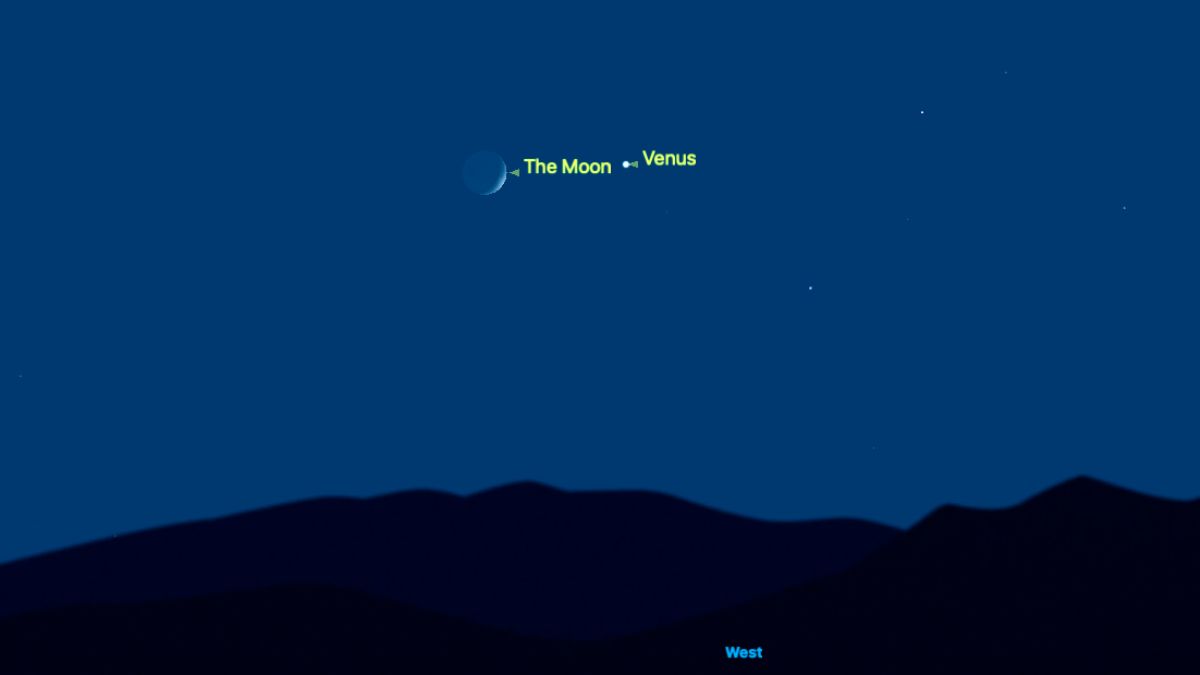
See a crescent moon and Venus on July 17. (Image credit: Starry Night)

With a new moon on July 14, this weekend is perfect for watching the return of a waxing crescent moon to the night sky. Look low in the west during dusk on Friday, July 17, to see a 16%-illuminated waxing crescent moon to the left of Venus. Watch it climb higher into the evening sky night after night, leaving genuinely dark late-night skies once it sets. It's good timing for the first serious Perseid-watching session of the season, particularly after midnight when meteor activity naturally increases as Earth rotates into the direction of travel around the sun.

Meanwhile, the Summer Triangle — formed by Vega, Deneb and Altair — hangs almost overhead during the darkest hours, making this one of the easiest seasonal star patterns for beginners to learn. Saturn now rises comfortably before midnight and dominates the southeastern sky by dawn, when it's joined by Mars and the stunning Pleiades open cluster.

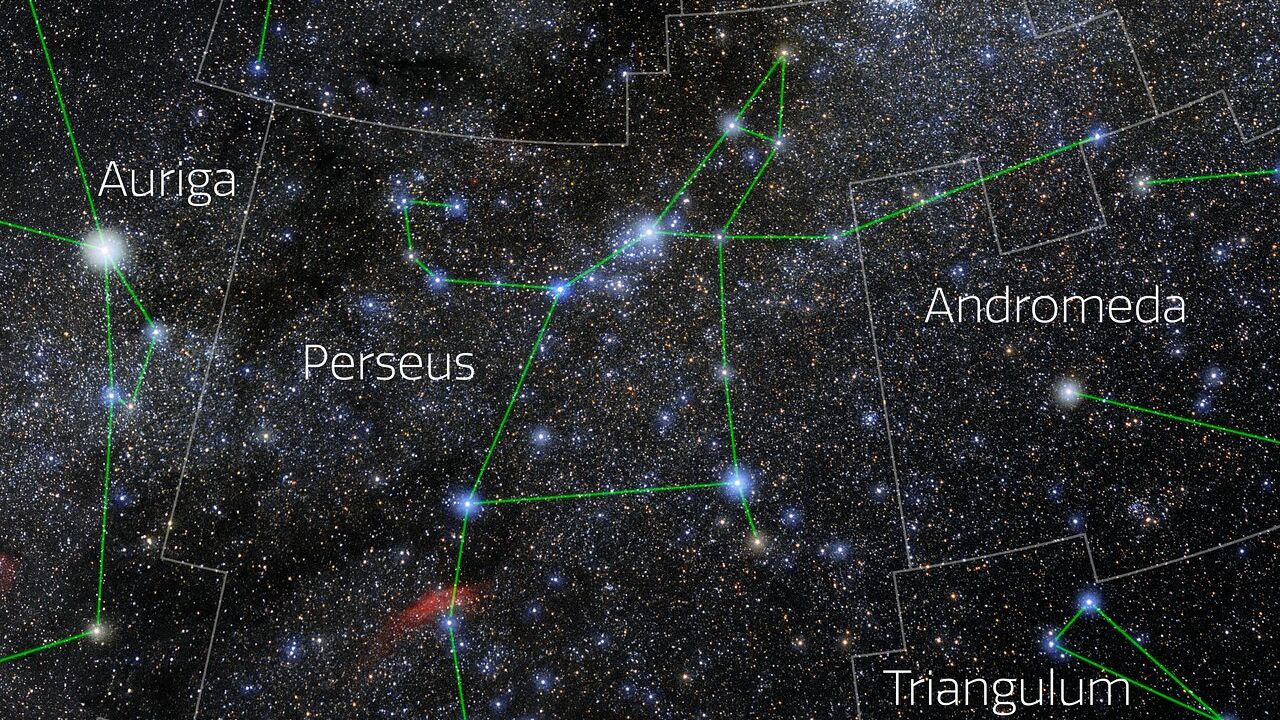
Constellation of the week: Perseus

The constellation Perseus. (Image credit: E. Slawik/NOIRLab/NSF/AURA/M. Zamani)

Perseus, "The Hero," never quite looks how beginners expect. Rising into the northeastern night sky around midnight this week between bright star Capella and Saturn in the east, its name suggests something dramatic, but the constellation itself appears more like a loose chain of stars stretching below Cassiopeia in the northeastern sky. At this time of year, Perseus rises late, which is why the best Perseid activity happens after midnight once the radiant climbs higher. Beginners often assume meteors appear only near the radiant itself, but the longest and most impressive Perseids usually streak much farther away across the sky. Perseus matters less as a viewing target than as a reminder that meteor showers are fundamentally about perspective. The meteors are not actually emerging from the constellation at all — Earth is simply driving through comet debris head-on.

The Perseid meteor shower is here! How to see the best shooting stars this summer

Look up! The Perseid meteor shower is finally active, bringing the potential for gorgeous shooting stars and fireballs as Earth plunges into the trail of debris shed by the icy comet Swift-Tuttle. Here's what you need to know.

The Perseid meteor shower 2026 is set to be a truly magnificent affair and a stark contrast to last year, when moonlight drowned out all but the brightest shooting stars. The shower will reach peak activity overnight on Aug. 12-13 under the dark skies of the new moon. During the peak, up to 100 shooting stars may be seen each hour as they cut fiery paths through the summer sky, according to the American Meteor Society.

You could even spot a Perseid brightening the false twilight triggered at the climax of the Aug. 12. eclipse, as the moon perfectly hides the surface of our parent star. But for that to happen you'd have to find yourself in the path of totality just as a large fireball-producing meteoroid struck Earth's atmosphere. It's certainly possible, but let's just say that the odds aren't stacked in your favor.

If you're not in the path of totality then there's no need to despair, you stand a much better chance of spotting Perseids the old fashioned way anyway!

How to spot Perseid shooting stars

Perseid meteors can be spotted anytime after dark from tonight onwards, streaking away from a patch of sky, or radiant, located close to the red supergiant star Eta Persei in the constellation Perseus.

How to measure distances in the night sky using your outstretched hand. (Image credit: Created in Canva Pro)

To find the best meteors, you'll first want to locate Perseus glistening above the northwestern horizon after dark. Next, find a patch of sky 40 degrees above it, and settle in for one of the year's premier natural light shows. This is where the shooting star trails will be at their longest.

The Perseids are also famed for producing vivid green fireballs capable of briefly turning night to day as larger chunks of debris collide with Earth's atmosphere at speeds of up to 37 miles per second (59 kilometers per second).

When to look for Perseid meteors

Perseid meteors may be spotted anytime from 10 p.m. onward for viewers in the U.S., though the number of visible shooting stars will be higher in the hours before dawn, when the radiant rises to its highest point in the summer night sky. Try to head away from city lights and allow at least 20 minutes for your eyes to adapt to the darkness.

Relatively few shooting stars will be visible in the days following the shower's awakening compared to the peak. However, if you do catch one, you'll have seen the demise of a meteoroid that's likely been flying through space for thousands of years before reaching Earth.

Nikon Z8

Nikon Z8 on a white table

(Image credit: Jase Parnell-Brookes)

The Nikon Z8 excels in just about every department and we rate it as the best overall camera out there. It features a full-frame 45.7MP sensor, 8K video capabilities and, of course, excellent low-light performance. Check out our Nikon Z8 review for more.

"The meteors we see early and late during the activity are most likely the oldest as they have obviously been perturbed from the main orbit of the comet, which we encounter in mid-August," said Robsert Lunsford of the American Meteor Society in an email to Space.com.

The greatest number of meteors can be seen in the predawn hours of Aug. 13 as the shower reaches peak activity, when Earth passes through the densest section of the debris stream left behind by comet Swift-Tuttle.

Want to capture your own photos of the Perseid meteor shower? Then be sure to read our guide detailing how to image shooting stars, along with our roundups of the best cameras and lenses for astrophotography.

Editor's Note: Did you capture a photo of a Perseid and want to share it with Space.com's readers? Then please send your photos and comments, along with your name and location to spacephotos@space.com.