Pluto losing its planet status may be the best thing that ever happened to solar system diversity

Unpopular opinion time, but someone has to say it: I think Pluto being reclassified as a dwarf planet was a great thing for our understanding of the solar system and for the former planet itself. Let me try to convince you, too.

First, a little background. The Pluto planet controversy began exactly 20 years ago on Aug. 24, 2006, when the International Astronomical Union (IAU) reclassified the solar system's (former) ninth planet as a dwarf planet.

The reason for the change was the result of the discovery of worlds similar to Pluto in the Kuiper Belt, the ring of icy bodies and debris extending out beyond the orbit of Neptune. It suddenly became necessary to determine if these bodies are planets or whether the definition of what a planet is needs to be reshaped. The IAU decided on the latter. Pluto took the hit.

The 2006 definition developed for the IAU by the Uruguayan astronomers Julio Ángel Fernández and Gonzalo Tancredi says a planet is "a celestial body in the solar system that is in orbit around the sun, has sufficient mass to assume hydrostatic equilibrium [it is round or nearly round], and it has 'cleared the neighborhood' around its orbit."

That meant a new definition had to be introduced for large round bodies orbiting the sun, one that meets these first two criteria, but fails to meet the the third. Thus, dwarf planets were defined by the IAU as: "an object in orbit around the sun that is large enough to pull itself into a nearly round shape but has not been able to clear its orbit of debris."

Pluto fell out of the planet category and into the dwarf planet category because, as it orbits the sun out beyond Neptune, other bodies cross its orbital path. Thus, Pluto hasn't cleared its neighborhood. Not a planet then, sorry.

But don't feel too bad. It is a good thing, honestly.

Pluto helped put dwarf planets on the cosmic map

The redefinition of Pluto has had a strange effect on the general public and even some scientists, who seem to "feel sorry" for the former planet, almost as if it has somehow been demoted. There are several Change.Org petitions and petitions on other sites that demand to restore Pluto's planethood. One of these, established in 2024, has over 1,000 signatures.

Some petitions to make Pluto a planet again fundamentally misunderstand why Pluto isn't a planet anymore. Take this one on slightly tongue-in-cheek petition on iPetitions, which states: "Pluto should not have its planet rights taken away form {sic] it just because it is small, so is Daniel, but that doesn't make him not a human anymore! This is a very urgent matter! This is an EMERGENCY!!"

I don't know who Daniel is, but I do know that Pluto being reclassified as a dwarf planet really exemplified how diverse the solar system actually is.
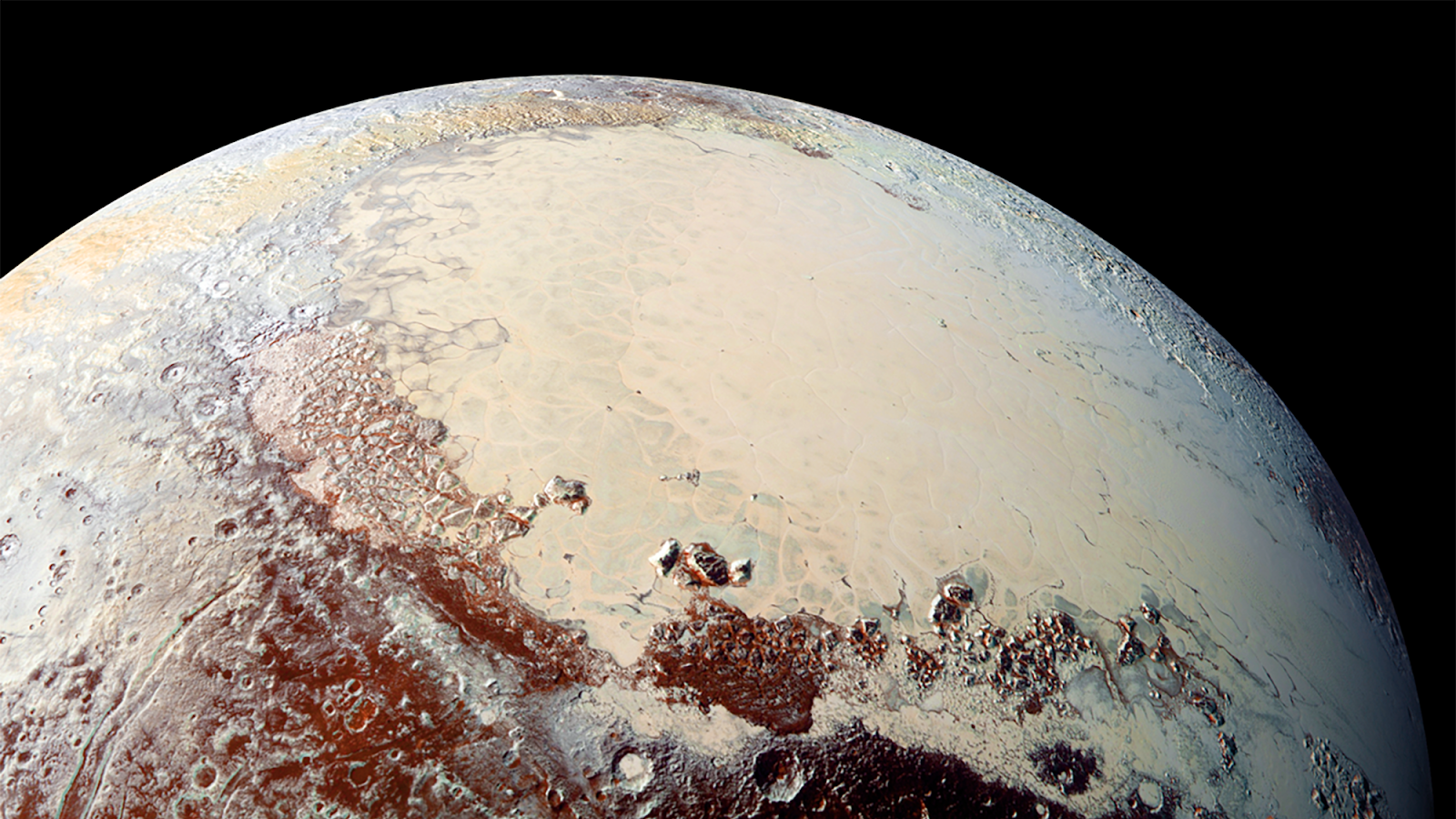
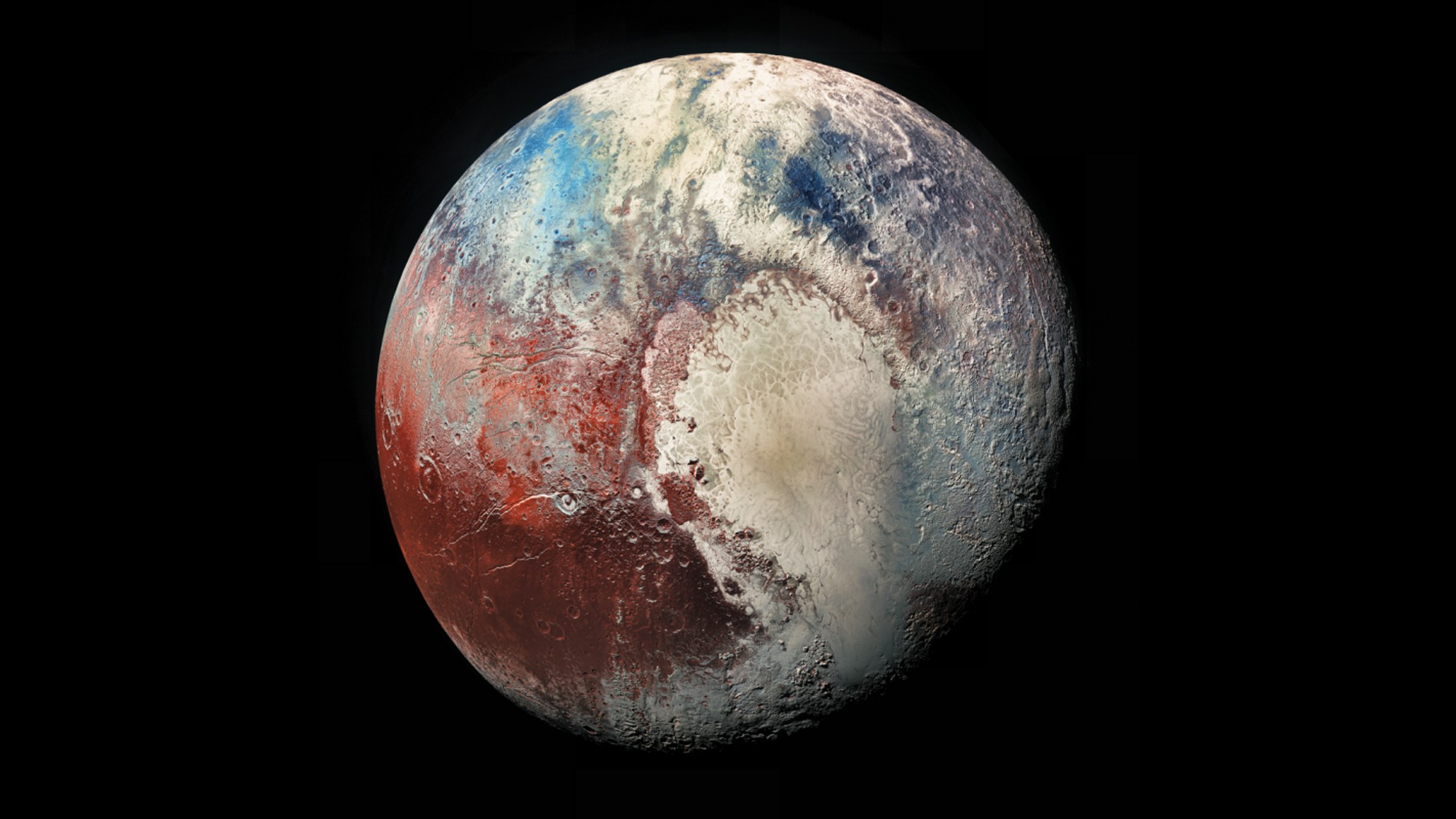
A planet with red patches and cream patches against a dark background.

Pluto as seen by NASA's New Horizons spacecraft in 2015. (Image credit: NASA/Johns Hopkins University Applied Physics Laboratory/Southwest Research Institute )

When we think of the solar system, we think of the planets orbiting the sun, and the moons orbiting their planets. Maybe we picture the occasional visit by an asteroid or comet. The reclassification of Pluto ensures that the general public can't really ignore the fact that there are many solar system bodies with sizes between planets and asteroids that are no less important than the planets themselves.

Many of these dwarf planets exist far from the sun, and don't visit the inner solar system — meaning they don't get blasted by high levels of solar radiation. Likewise, they generally haven't been affected by geological processes, meaning that the material they are composed of is unspoiled. Thus, dwarf planets could act as time capsules that allow us to study the matter that existed in the solar system when planets like Earth started to form.

We shouldn't ignore dwarf planets when we talk about the solar system, and as the king of the dwarfs, Pluto ensures we can't. Its change in status made the study of Kuiper Belt objects seem equally as important as the study of moons and planets.

There is also a really simple and logistical reason not to make Pluto a planet again. Though the IAU currently recognizes only five dwarf planets  — Ceres, Pluto, Haumea, Makemake and Eris  — astronomers think there are as many as 100 of them still waiting to be discovered.

If we let Pluto back into the planet party, then all these other dwarf planets should be allowed back in too, right? Keeping Pluto a dwarf planet better defines what a planet is and prevents an awkward situation in the future in which schoolchildren (and the rest of us) would have to remember upwards of 100 planets.

Don't 'feel sorry' for Pluto

If you are going to feel sorry for any dwarf planet, maybe it should be Ceres. The closest dwarf planet to Earth, it was discovered in 1801, 129 years before Pluto, and was therefore the first dwarf planet to be discovered (though it was not defined as such initially).

Pluto has really stolen Ceres' thunder as the solar system's most prominent dwarf planet.

Spare a thought for Eris as well. Also located beyond the orbit of Neptune, this dwarf planet is 1,445 miles (2,326 kilometers) wide, making it just a hair smaller than the largest solar system dwarf planet, Pluto, which is 1,477 miles (2,377 km) across. But Eris is actually more massive than Pluto, making it the most massive dwarf planet in the solar system, and Eris never even got the chance to be called a planet.

Where is the petition for Ceres or Eris, eh? Nowhere, that's where.
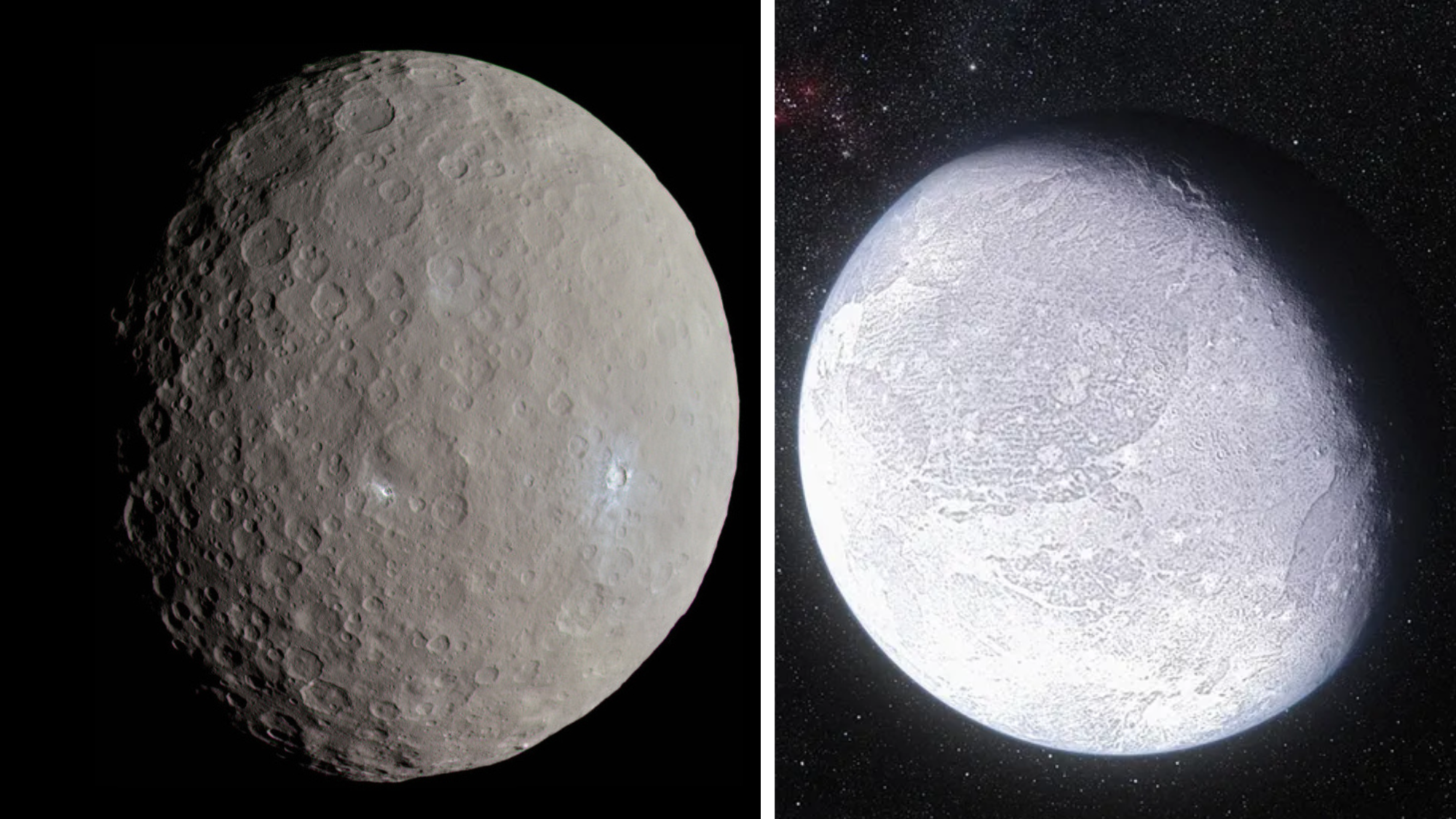
Spare a though for Ceres (left) and Eris (right) important dwarf planets that have never been classified as a planet

Spare a though for Ceres (left) and Eris (right) important dwarf planets that have never been classified as planets. (Image credit: NASA/ESO/L. Calçada)

But seriously, there is something crucial to remember in all this: The redefinition of Pluto as a dwarf planet took away none of the former planet's wonder or beauty.

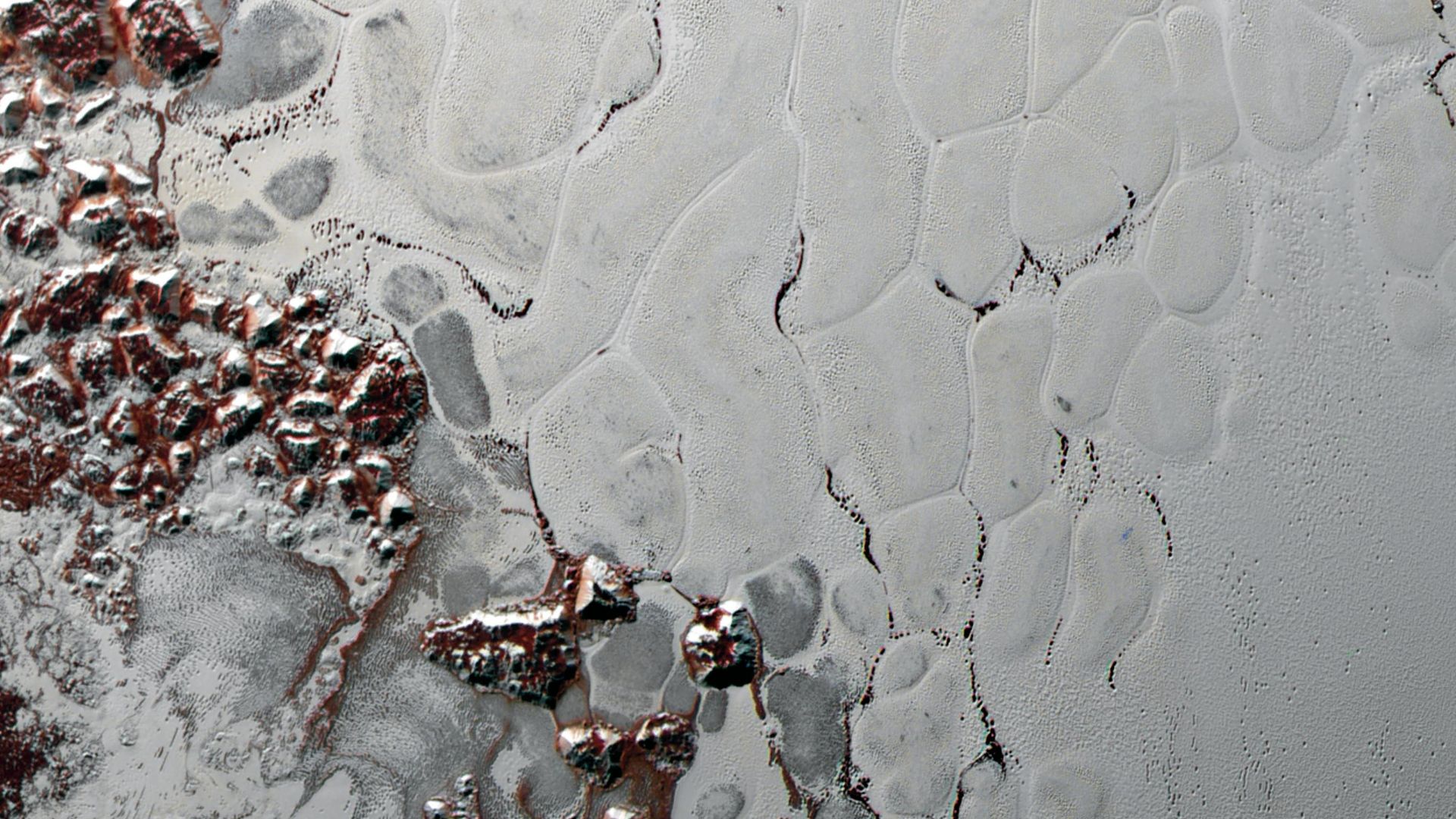
Is the bright heart-shaped plain of Sputnik Planitia, composed of squishy nitrogen ice, any less spectacular because it belongs to a dwarf planet? Are the towering 11,000-foot-high (3,350 m) ice mountains of Pluto any less majestic because they rise from the surface of a dwarf planet, not a planet?

What about the blue haze that envelops the dwarf planet? Or Pluto's regions of shifting ice that show the former planet to be far more active than we once thought? Are they less scientifically fascinating?
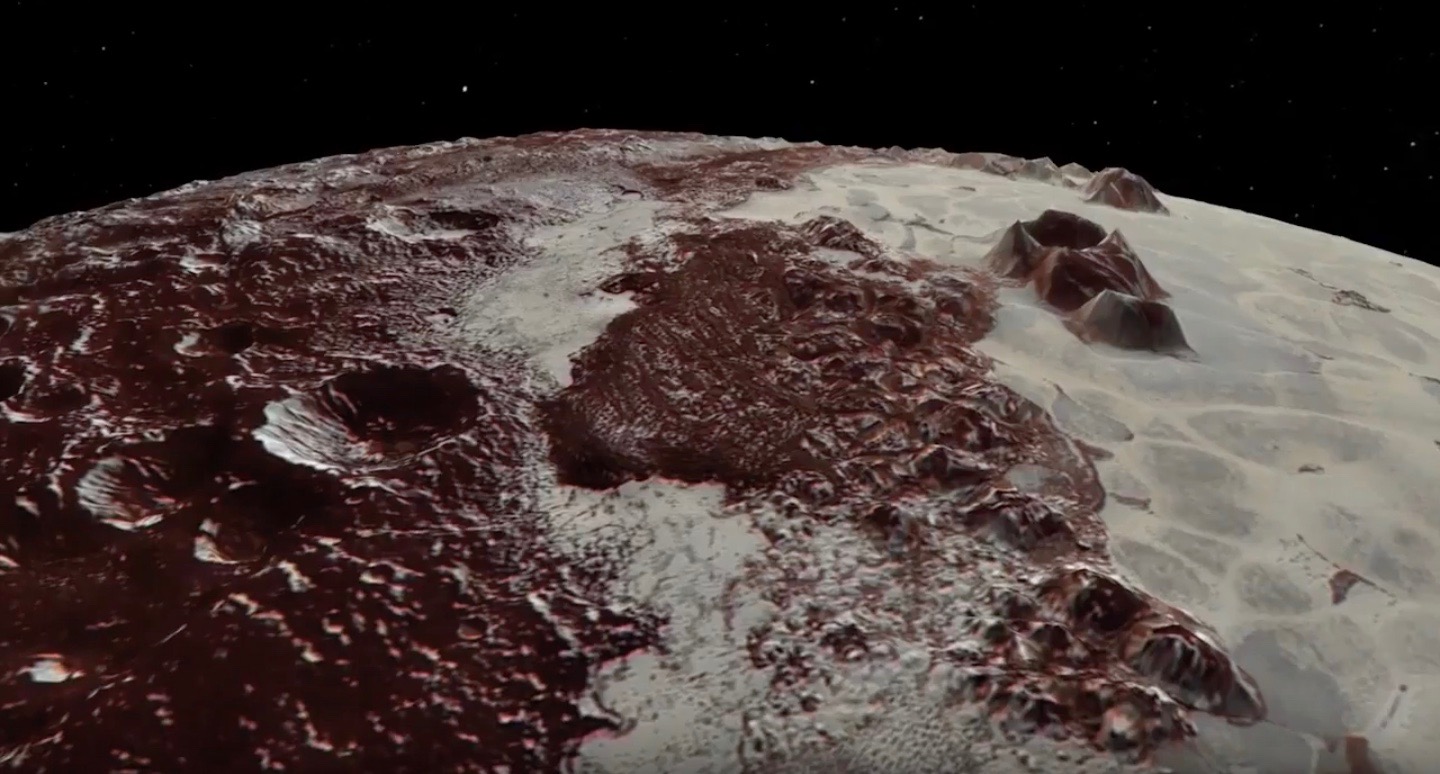
New Horizons' view of Pluto, as seen in a new NASA video released on July 14, 2017, the second anniversary of the probe's epic flyby of the dwarf planet.

New Horizons' view of Pluto, as seen in a new NASA video released on July 14, 2017. (Image credit: NASA/JHUAPL/SwRI/Paul Schenk and John Blackwell, Lunar and Planetary Institute)

Were the observations made by NASA's New Horizons spacecraft less monumental for humanity, or less of an impressive scientific achievement, because this was only a nine-year trip to a dwarf world?

Of course, the answer to all of the above questions is definitely no.

Pluto may not be the ninth planet, but it still sits at the forefront of dwarf planets in our minds and helped to define a whole population of solar system bodies.

Let's give Pluto its due.

Why do we care so much that Pluto isn’t a planet?

Twenty years after Pluto lost its planetary status, people are still arguing about it.

This spring, NASA Administrator Jared Isaacman publicly threw his support behind "make Pluto a planet again," reigniting the familiar debate. Social media threads are filled with people arguing over whether Pluto should be grandfathered into the planetary club, whether dwarf planets are simply another kind of planet, and whether the distinction matters at all.

The disagreement dates to August 24, 2006, when members of the International Astronomical Union adopted a definition of a planet that placed Pluto in the dwarf-planet category. The scientific debate over how best to define a planet has continued in the years since, and the public has many thoughts, too — many people still cling to Pluto's identity as a planet. But why?

The planet we grew up with

From its discovery on February 18, 1930 to its demotion, Pluto belonged to one of the first maps of the universe that students learned: our solar system. There were nine planets, usually memorized in order through classroom diagrams, models and mnemonics such as "My Very Elegant Mother Just Served Us Nine Pies."

Deana Weibel, a cultural anthropologist at Grand Valley State University, says those childhood associations have staying power long into adulthood. As a planet, Pluto was also particularly memorable: the farthest planet, the smallest planet, and a relatively recent addition to the solar system. "It was the knowledge that new planets could be added, with its story of being discovered in the 20th century," says Weibel.

For people who absorbed that version of the solar system as children, the 2006 decision required replacing something that had been an established fact. Laurie Groh, a licensed psychotherapist and owner of Shoreside Therapies in Milwaukee, says that helps explain why the change could provoke an emotional reaction disproportionate to its effect on everyday life. "People aren't grieving a planet," says Groh. "They're grieving the idea that what they learn is permanent. It isn't. Science changes and evolves."

Blue-tinged haze around Pluto captured by NASA's New Horizons probe.

The haze around Pluto captured by NASA's New Horizons probe. (Image credit: NASA/JHUAPL/SwRI)

That attachment may fade as generations raised with eight planets get older — but there's not a black-and-white cutoff date. Rob Crotzer, founder and editor of OuterSpaceTrip.com, has watched his own nine-planet upbringing filter down to his daughter Emily, who was born well after Pluto's reclassification. She learned about Pluto from him, her grandmother, and an astronomy atlas published before the 2006 vote. "My daughter was born into the eight-planet solar system," Crotzer says, "yet she has decided that eight isn't enough."

Why our brains resist recategorization

Nostalgia isn't the only force at play. "Our brains work via comparison and categories. That's how we make sense of anything and everything," says Matthew Leahy, a licensed clinical psychologist who studies memory and cognition. Humans rely on categories to organize enormous amounts of information, and changing an established category requires revising a framework that was already functioning perfectly well.

But Pluto presents an especially curious case because the stakes for most people are so low — its planetary status hardly affects the general public day-to-day. "The emotional meaning of a category can sometimes matter much more to us than its practical importance," says Leahy.

Groh also points to the way the change happened. Unlike Pluto's naming, when the public suggested monikers for the new planet, the public didn't participate in the scientific process of its recategorization. Changes imposed quickly from outside, Groh says, can invite resistance even when there is a solid reason behind them.

Rooting for the underdog

Then there is Pluto itself: small, distant, and lonely. "For many people, the issue is less about astronomy and more about rooting for the little guy, the underdog," says Kevin Schindler, historian and public information officer at Lowell Observatory, where Clyde Tombaugh discovered Pluto in 1930.

The language surrounding the change encourages that interpretation. Pluto is routinely described as having been "demoted," rather than simply reclassified, turning a technical distinction into something that sounds punitive. "We don't like the idea of the 'little guy' getting kicked out," Groh says. "We personify Pluto when we have that reaction."

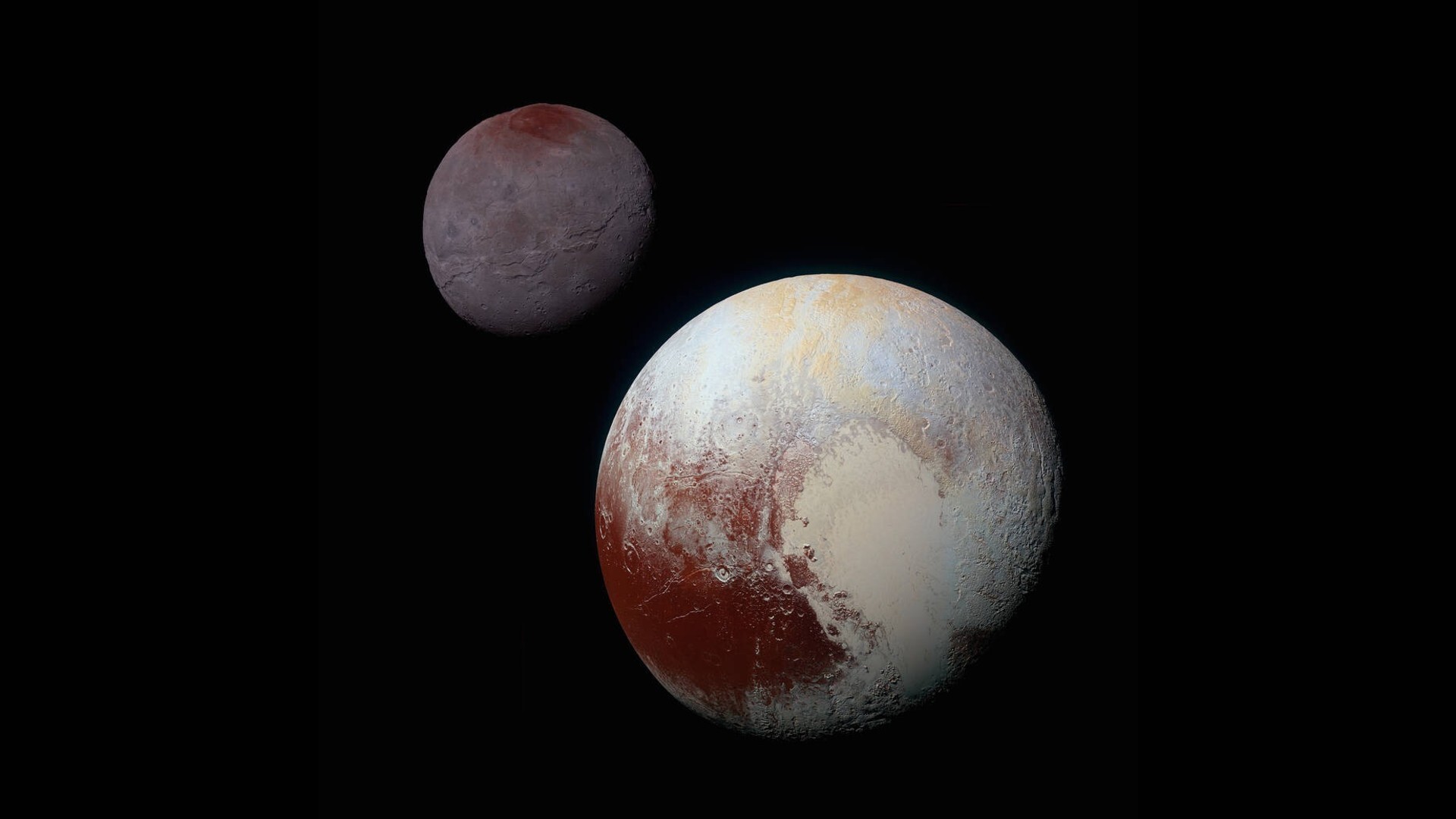
A close up of Pluto (a red and white planet in the front) and its moon Charon (a darker reddish sphere) in the back in the darkness of space

An image showing Pluto and Charon, the world's moon. (Image credit: NASA/JHUAPL/SwRI)

That personification has helped give Pluto a cultural life all its own. At Lowell Observatory, affection for the dwarf planet is strong enough to inspire the annual I Heart Pluto Festival, a multi-day celebration of its discovery, science, and history. Nearly a century after Tombaugh first spotted Pluto from Flagstaff — and two decades after its reclassification — people still gather specifically to celebrate it.

In other words, becoming a dwarf planet didn't necessarily diminish Pluto's popularity; if anything, it gave people another reason to rally behind it.

Does it matter what Pluto is called?

Scientifically, yes, it does matter how we classify Pluto. Jessica Libby-Roberts, an assistant professor and exoplanet scientist at the University of Tampa, points to Pluto's unusual orbit, small size, and similarities to other Kuiper Belt objects as reasons the dwarf-planet classification makes sense. Categories allow researchers to compare objects and make sense of how the solar system formed.

But Libby-Roberts doesn't view its exclusion from the eight planets as a knock against Pluto. "Honestly, I think Pluto would rather not be grouped in with the boring rule-abiding planets anyway," she says. "It seems much happier doing its own thing."

A scientific label doesn't determine whether Pluto is interesting, either. Libby-Roberts notes that the 2015 New Horizons mission overturned expectations of a relatively generic, cratered world, instead revealing a dynamic one with mountains, glaciers, and an atmosphere.

"In some ways, it doesn't matter what Pluto is called because regardless of what label we humans assign to it, Pluto will keep orbiting the sun and doing its thing," Schindler says.

On this day in space! Aug. 24, 2006: Pluto loses its planet status

On Aug. 24, 2006, the International Astronomical Union (IAU) decided that Pluto wasn't a planet anymore.

Since that date, Pluto has been officially classified as a dwarf planet along with four other confirmed dwarf planets in the outskirts of the solar system.

This decision sparked outrage around the world, and the controversy is still very much alive today. Astronomers in favor of Pluto's demotion argued that a planet by definition should have cleared its orbit around the sun. Pluto and the more distant dwarf planets fail to meet this criterion.

a mottled white, blue and brown orb on a black background

On Aug. 24, 2006, the International Astronomical Union (IAU) decided that Pluto wasn't a planet anymore. (Image credit: NASA/Johns Hopkins University Applied Physics Laboratory/Southwest Research Institute)

Why it mattered

When Pluto was reclassified as a dwarf planet, many astronomers and scientists weren't happy with the result.

"I'm embarrassed for astronomy," said Alan Stern, leader of NASA's New Horizon's mission to Pluto and a scientist at the Southwest Research Institute. "Less than 5 percent of the world's astronomers voted."

Stern argued that according to the IAU's new definition, many other planets in our solar system would fail to meet the same criterion. Earth, Mars, Jupiter and Neptune, for example, all share their orbits with asteroids.

But if Pluto were to keep its planetary status, many of the solar system's dwarf planets would also need to be classified as planets  — and there could be hundreds in our solar system.

While astronomers continue to debate the definition of planet and the implications thereof, the public has come together multiple times to defend Pluto's title.

For now, Pluto will just have to be the king of the dwarf planets. And that's pretty cool, too.

Want more space history? Check out our full On This Day In Space Story archive and watch our On This Day In Space videos on YouTube.

It’s been 20 years since Pluto lost planet status. Will it ever get its title back?

In August of 2006, astronomers at the International Astronomical Union (IAU) democratically voted to reclassify Pluto as a dwarf planet — but 20 years later, with our greater knowledge and understanding of planetary systems, is it time to revisit the controversial decision? Should Pluto be called a planet again?

For several years before the IAU vote, there had been agitators among the astronomical community lobbying for our solar system's nine worlds to become eight, and for Pluto's planetary status to be revoked. In 2000, Neil DeGrasse Tyson even went as far as to remove Pluto from the planets display at the Hayden Planetarium in New York. The questioning of Pluto's status began even earlier, in the 1990s, with the discovery of distant objects in the Kuiper belt beyond Neptune which had similar orbits to Pluto.

It all came to a head in July of 2005 with the discovery of Eris, which is a Pluto-size body even further from the sun than Pluto is. Was Eris the 10th planet? If it was not a planet, then how could we still call Pluto a planet? A year later, the issue was debated at a meeting of the IAU, where astronomers from all over the world convened to discuss various conundrums. Numerous proposals and counter-proposals were put forward, some of which even increased the number of recognized planets to as many as 14. But in the end, Pluto became a dwarf planet.

Though Pluto was officially "reclassified," to many in the public it seemed as though Pluto had experienced a demotion. This viewpoint was the one promoted by those scientists who were against the decision such as Alan Stern, who was the principal investigator on the New Horizons mission to Pluto. Stern's spacecraft would launch in 2005 on a journey to a planet, but arrive at a dwarf planet in 2015.

Some argued that Pluto was still a kind of planet, just a small one. This argument is undermined somewhat by the IAU giving Pluto a minor planet number — 134340 — which is typically reserved for asteroids. Nationalistic arguments from some in the United States said Pluto should remain a planet because it was discovered by an American astronomer, Clyde Tombaugh, at Arizona's Lowell Observatory in 1930. And when New Horizons reached Pluto, it revealed not a minor body, but rather a complex world in its own right.

What is Pluto?

Nevertheless, for 20 years, Pluto has remained a dwarf planet, but on the anniversary of that fateful IAU vote, is it time to revisit that decision? Paul Byrne, a planetary astronomer at the University of Washington in St Louis, certainly thinks so.

"Yes, Pluto is a planet," he told Space.com. And not just Pluto, but the other dwarf planets too: Ceres, Eris, Makemake and Haumea, not to mention the likes of Sedna and Quaoar that are dwarf planets in all but name.

"Ultimately I think they are all planets and I don't think there's any benefit to not including Pluto as a planet," Byrne said.

To a point this entire debate is semantics, and Byrne accepts this viewpoint, reminding us that: "Nature doesn't care what we call Pluto."

However, perception is another matter, which is where Byrne thinks that the IAU's 2006 decree ultimately failed us. Byrne describes how, when he gives public talks about the planets, members of the audience don't ask questions about Pluto's amazing active nitrogen glaciers or what formed its giant heart-shaped feature. Instead, they want to know why it was demoted. The entire issue has got in the way of presenting the science to the public.

"We've done a massive disservice to the public from a science communication perspective," Byrne said. "The messaging has got in the way of trying to understand what Pluto is."

A view of white sections of a world with some reddish areas toward the left.

Pluto's active nitrogen glaciers are typical of planetary processes. (Image credit: NASA/JHUAPL/SwRI)

One of the arguments in 2006 was that models of the solar system's formation predict that there could be hundreds of objects like Pluto and Eris that remain undiscovered in the Scattered Disk and the Oort Cloud, which is a vast unexplored region that could extend up to a light-year from the sun.

"One of the issues people brought up was, how would kids remember the names of 200 planets?" said Byrne. "But just look at how many Pokémon there are that kids know the names of. If ultimately there are 200 planets in the solar system, then so what?"

The IAU definition of a planet

Semantics or not, how we categorize celestial objects has to be grounded in some kind of scientific thinking. In 2006, the IAU came up with a three-point plan on what makes a planet.

First, a planet had to be in hydrostatic equilibrium, meaning that its gravity has pulled it into a spherical shape. Furthermore, its interior will have become differentiated, with the heavier elements sinking to the core. Everyone seems to agree with this part of the planetary definition.

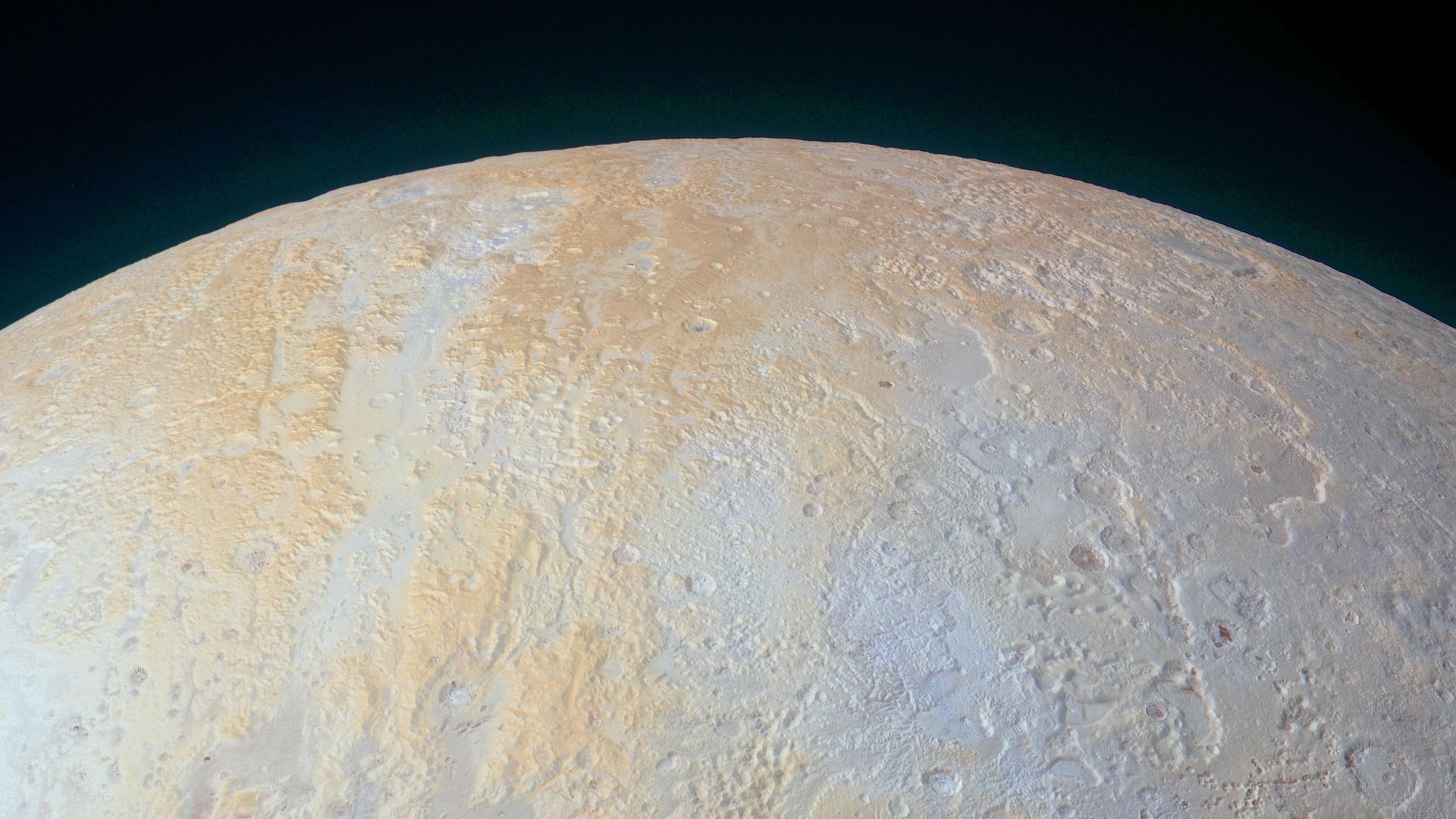
A view of a white world with ridges.

Pluto's gravity has shaped it into a spherical object. (Image credit: NASA/JHUAPL/SwRI)

Second was that it must be in orbit around the sun, so a moon isn't a planet because a moon doesn't orbit the sun, it orbits a planet instead (though Byrne notes that if he had his way, he'd call the large moons planets too). Strictly speaking, this rules out exoplanets because they don't orbit our sun, but common sense dictates that they're fine because they orbit their own star instead. However, what about rogue planets that wander interstellar space alone? Astronomers are now beginning to discover very many of these free-floating worlds. It could be argued that most of these did indeed form in orbit around a star only to be ejected, so it's okay to still call them planets, but some rogue planets seem to have formed directly from the collapse of a gas cloud without having a parent star. Such planets fall through the gaps in the IAU's definition.

It's the third point that draws the critics' ire the most. It states that to be a planet, an object must have cleared its neighborhood. In other words, it must be dominant in the region around its orbit, its gravity having swept away any other bodies. Pluto fails at this because its orbit actually crosses Neptune's, and it's accompanied by other Kuiper belt objects in neighboring orbits. But then you could say Neptune mustn't be a planet because it has Pluto infringing on its orbital realm. And what about the existence of near-Earth asteroids? Does their existence mean that Earth isn't a planet because it hasn't cleared those away yet? There certainly does seem to be some sloppiness in this part of the definition of a planet, perhaps resulting from the somewhat rushed nature of the vote 20 years ago.

Planetary processes

But if the IAU decision were to be rejected, what should replace it? How should we classify planets? Byrne has some ideas.

"Being round and having some amount of differentiation makes a lot of sense to me," he said. "Geophysically, if they are big enough to pull themselves into balls, then they are big enough to have undergone some kind of internal chemical processing and are capable of having some kind of active geology, in terms of the outgassing of volatiles to form an atmosphere, volcanism, surface geomorphological processes, even a short-lived magnetic field. That's why I count the moon as a planet because it has had these planetary processes."

Byrne acknowledges that gas giants don't have these properties since they have no solid surface, but no one is doubting Jupiter's planetary credentials, and when it comes to Uranus and Neptune we don't actually know whether or not there is some sort of super-Earth itself lurking deep within them.

The moniker "dwarf" doesn't impress Byrne either. To him, it sounds like it implies there is a hierarchy of planets with the gas giants at the top and the dwarf planets at the bottom.

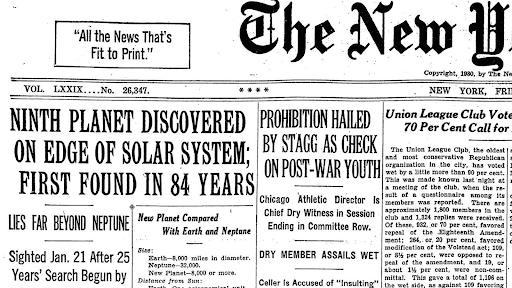
A front-page headline in the New York Times announcing the discovery of a ninth planet.

The New York Times article from when Pluto was discovered. (Image credit: The New York Times Archive)

"There is no natural hierarchy; they don't form according to one," he said. And although Pluto, Eris and the other dwarf planets are made from detritus left over from the construction of the solar system, they still coalesced in the same way as the other planets, in the sense that building blocks came together to form these larger objects.

A counterargument to Pluto being a planet, however, is that if it is just one of 200, then it is nothing special; it would become forgotten and ultimately treated almost incidentally. As a dwarf planet, it is the standard bearer of its kind, the guardian of an entire realm of similarly sized worlds. It's a choice between being a big fish in a little pond, or a little fish in a big pond.

The other 200 planets?

The real test will come when astronomers begin to discover some of these purported 200 or so planets far from the sun. As long as they are all roughly Pluto-size, there will be no debate — but what happens when astronomers discover one the size of Mars, or one even as large as Earth? We would surely think of an object so large as a planet. Perhaps this world would have formed closer to the sun but was kicked out through gravitational interactions with one of the giant planets, but on the other hand perhaps it formed out there in the outer solar system from the same detritus as Pluto did.

"By the IAU definition it would fail to be defined as a planet because it wouldn't have cleared its neighborhood," said Byrne. "If we did find such a planet it would be another nail in the coffin of trying to distinguish these things solely on the basis of where they are and not what they are."

Whatever the case, if Pluto is to be a planet again, it must deserve to be so scientifically. Nostalgia, or nationalistic pride, or giving kids names of planets to remember aren;t sufficient reasons to revoke the original IAU decision. Revisiting the name "dwarf planet" and finding a more appropriate category could be the way to go instead.

Or, perhaps we just don't have the words to describe the things that we are discovering. Concepts such as planets are rooted in history going back millennia when there was no understanding what these wandering "stars" really were, so perhaps it is not surprising that we are now running into difficulty when trying to apply the term "planet" to our modern understanding of the different types of worlds. If there is no way of categorizing these objects that is consistent and satisfactory to everyone, then perhaps we ought to stop worrying so much about it.

Whatever we decide to call it, Pluto will always be Pluto.

Pluto’s atmosphere is collapsing as it drifts away from the sun into a deep freeze

Pluto's atmosphere appears to be freezing out as the dwarf planet moves ever further away from the sun, according to careful observations of Pluto astronomers made as it was seen passing in front of stars in the sky.

Pluto is already cold. Its surface temperature is about –382 degrees Fahrenheit (–230 degrees Celsius), while its upper atmosphere is a little warmer at –333 degrees Fahrenheit (–203 degrees Celsius). As Pluto moves away from the sun it will grow even colder and its nitrogen-rich atmosphere should start to collapse and freeze out, condensing as frost on the frigid surface.

Now, a team led by Amanda Sickafoose of Arizona's Planetary Science Institute believe they have seen the onset of this process. "We're at a particularly interesting point for Pluto," said Sickafoose in a statement. "Our work suggests that the atmosphere has recently started decreasing in pressure."

Pluto's orbit is highly elliptical and very oblique to the ecliptic plane of the solar system. In fact, so eccentric is Pluto's orbit that for ten years either side of its perihelion in 1989 (when Pluto was closest to the sun), it was actually closer to the sun than Neptune was.

However, ever since 1989 Pluto has been moving away from the sun on its 248-year-long orbit – we've not even seen Pluto complete half of its orbit yet since its discovery in 1930. Pluto will reach its furthest point from the sun – called aphelion – in the year 2114 when it will be about 49 astronomical units (7.3 billion kilometers/4.6 billion miles) distant.

When NASA's New Horizons mission flew past Pluto in July 2015, it measured Pluto's atmospheric pressure to be 10 microbars. This is a tiny amount, millions of times lower than the atmospheric pressure on Earth, resulting from Pluto's thin nitrogen atmosphere that also contains hazes made from organic molecules including methane and carbon monoxide.

a hazy blue ring of light on a black background

An image taken by NASA's New Horizons spacecraft that offered scientists the first look at Pluto's atmosphere in infrared wavelengths when it was taken in July 2015. (Image credit: NASA/JHUAPL/SwRI)

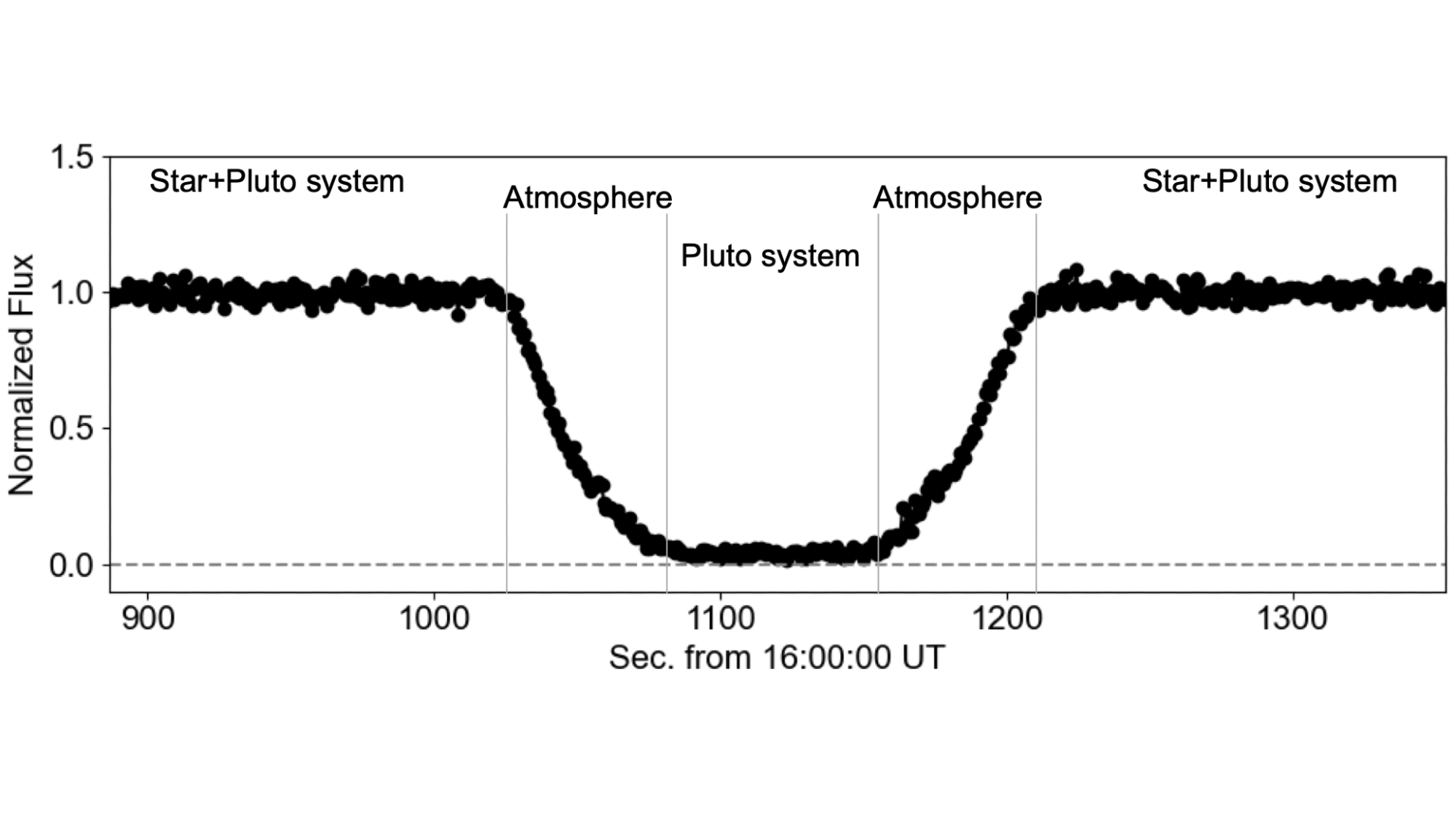
With New Horizons now having flown past Pluto and deeper into the Kuiper Belt, astronomers have to instead rely on more distant and less direct means of keeping tabs on Pluto's atmosphere. From our point of view on Earth, Pluto is sometimes seen to pass in front of a distant star. This is called a stellar occultation. When an airless body, such as an asteroid, occults (or hides) a background star the star's light winks out in an instant, before suddenly reappearing. When there is an atmosphere involved, however, the light of the star doesn't go out all at once when blocked by Pluto, but steadily fades as the atmosphere scatters and refracts the starlight before the star vanishes behind the dwarf planet's solid body.

Between 2017 and 2023, Sickafoose's team probed Pluto's atmosphere during ten occultations of stars ranging in brightness from about magnitude 12 to magnitude 18, far below naked-eye visibility.

Observing stellar occultations is not always a simple matter. They are not visible from everywhere on Earth, but only along narrow tracks, often in difficult to reach areas. The tracks, which are just a few kilometers wide, are effectively Pluto's shadow falling on the Earth. By spacing observers across the width of the track, it is possible to measure the extent of Pluto's atmosphere (there usually also has to be an unlucky observer just outside the track to confirm that is indeed the edge of the shadow track).

"I'm constantly amazed at how the simple technique of watching starlight dim and reappear allows us to study a thin atmosphere – a few millionths of the Earth's – on a world two-thirds the size of our moon and 30 times farther from the sun," said Sickafoose.

Of the ten occultations, four could be seen from observatories in multiple locations, which meant that the different observatories could confirm each other's results.

"We often prefer to observe predicted occultations that have shadow paths over large observatories because that equipment and data have proven successful," said Sickafoose. "Then, we try to improve those datasets by collaborating with local observers in the shadow paths."

a U-shaped graph of dots with labels that read, from left to right, star+Pluto system, atmosphere, Pluto system, atmosphere, star+Pluto system

Light curve from the June 1, 2026 occultation, observed from Savannah Skies Observatory in Chillagoe, Queensland, Australia. The gray vertical lines indicate different stages of the occultation. The baseline flux level contains combined light from the star and the Pluto system (Pluto plus all of its moons). The flux drops gradually as the starlight bends and scatters in Pluto's atmosphere, reaching nearly zero flux as defined by only light coming from the Pluto system. As the star appears on the other side of Pluto, the light gradually reappears in the atmosphere before returning to full strength. (Image credit: A. Sickafoose/Planetary Science Institute)

Previous work had suggested that Pluto's atmosphere began freezing out in 2018, but Sickafoose's team found that actually, Pluto's atmosphere remained constant from 2015 to midway through 2021. However, between mid-2021 and the last occultation that Sickafoose's team observed in 2023, Pluto's atmospheric pressure dropped by 16 per cent.

The pressure drop was deduced from the light curves, which show how the star's brightness changed with time during an occultation. The light curves revealed that while the structure of Pluto's upper atmosphere remained fixed, the lower atmosphere changed.

Sickafoose's team interprets this as being the haze particles settling towards lower latitudes. This is what is expected to happen when the atmospheric pressure drops.

"I am hopeful that we'll be able to get more data in the next years to decades to specifically confirm or refute this trend," said Sickafoose.

It is thought that Pluto's atmosphere won't have completely frozen onto the dwarf planet's surface by the time it reaches aphelion, and then as Pluto begins moving in towards the sun once more the feeble solar heating that Pluto receives will slowly begin to increase, causing nitrogen frost to sublimate from the surface and thicken the atmosphere once more.

The findings were published on July 31 in the Planetary Science Journal.

Astronomers discover landslides on Pluto large enough to bury entire cities on Earth

The aftermath of landslides have been found in images of Pluto's surface taken when the New Horizons mission flew past the dwarf planet in 2015. The landslides are evidence that the icy world is still active, albeit on geological timescales.

A team led by geologist Marco Emanuele Discenza pored over images taken by New Horizons' LORRI (Long-Range Reconnaissance Imager) instrument, which was capable of detecting surface features as small as 984 feet (300 meters). They found convincing evidence for six landslides in total that have taken place down the inner walls of three craters on the western edge of Sputnik Planitia, the heart-shaped feature that characterizes Pluto's appearance.

Previously, geological features left behind by landslides have been found on a host of bodies in the solar system, including Mars, Ceres in the asteroid belt, some of the icy moons of the gas giants, and even Pluto's companion, Charon. However, these are the first to be found on Pluto.

A landslide that fell 1.4 miles (2.2 kilometers) was identified in Pluto's Coughlin crater, close to a secondary crater on Coughlin's rim that may have triggered the landslide in the first place. Two further landslide features were seen in Giclas crater, and another three were spotted in a third, unnamed, crater.

The landslides were identifiable by their large debris aprons that spilled out onto the crater floors, the distance the landslide material travelled ranging being between 6.3 and 9 miles (10.1 and 14.5 km). Some of these debris aprons appeared bumpy, as if they contain large boulders of solid ice, while the areas around the source of the landslides feature well-defined, concave-shaped cliffs where material has broken away and tumbled down the craters' steep walls.

The great lengths that the debris rolled means that Pluto's landslides are among the most mobile in the solar system, a product of low gravity and low-friction icy rubble. The largest of the debris aprons covers 50 square miles (130 square kilometers), which would be large enough to bury a small city or a large town.

Landslides are important processes in shaping planetary surfaces, enabling the transport of material across great distances. The trigger for Pluto's landslides, however, is not yet clear. While the landslide in Coughlin appears to have been caused by a smaller impact nearby, the other five have less certain origins. One possibility is thermal stresses in the surface ice caused by the slight temperature changes that cause Pluto's volatile materials – among them molecular nitrogen, carbon monoxide and methane – to periodically sublimate and then condense again. These temperature changes are the result of Pluto subtly heating up and cooling down as its elliptical orbit brings it slightly closer to the sun, crossing inside Neptune's orbit, and then moving farther away again.

There is also evidence for more landslides in other craters, but New Horizons' coverage of Pluto's surface was limited as it hurriedly flew past on July 4, 2015, and the imagery required to confirm these other landslides is lacking.

The findings were published in the journal Icarus.