Astronomers discover mysterious 10-sided cloud structure at Saturn’s south pole

A mysterious giant 10-sided pattern of clouds has recently formed around Saturn's south pole, a new study finds.

This newfound "decagon" joins the bizarre colossal hexagon seen for decades at Saturn's north pole. Saturn's hexagon — a cloud pattern about 20,000 miles (32,000 kilometers) wide — was first discovered in 1988 by scientists reviewing data from NASA's Voyager flybys of Saturn in 1980 and 1981. Despite decades of observations, no similar structure was seen anywhere else on Saturn  — until now, as scientists have discovered an even larger structure on Saturn.

The newfound decagon is about 104,250 miles (167,820 kilometers) wide, with each of its 10 sides measuring about 10,425 miles (16,782 km) long. "This is a very unusual atmospheric phenomenon that is helping us to advance our understanding of meteorology in general," study lead author Agustin Sanchez-Lavega, a planetary scientist at the University of the Basque Country in Bilbao, Spain, told Space.com. "It tells us that the hexagon is not a unique, singular feature, as was previously thought."

In the new study, researchers investigated recent images of Saturn captured with NASA's Hubble Space Telescope. The way that Saturn's axis is tilted meant that the ringed planet's southern hemisphere was not visible from Earth from 2012 to 2023.

Hubble images from 2023 revealed the decagon to scientists for the first time. "It certainly came as a surprise," Sanchez-Lavega said. Ever since the hexagon was discovered in Saturn's north, he and his colleagues had investigated pictures of Saturn "to see if there was a polygonal formation in the south. And there was no sign of it."

The decagon moves slowly. "It takes about 800 days to complete a rotation about Saturn," Sanchez-Lavega said.

Previous research suggested Saturn's hexagon results from an eastward jet within its atmosphere flowing in a curving path near the ringed planet's north pole. Small perturbations in the jet — the kind one might expect from jostling with other air currents — made it meander into a hexagonal shape.
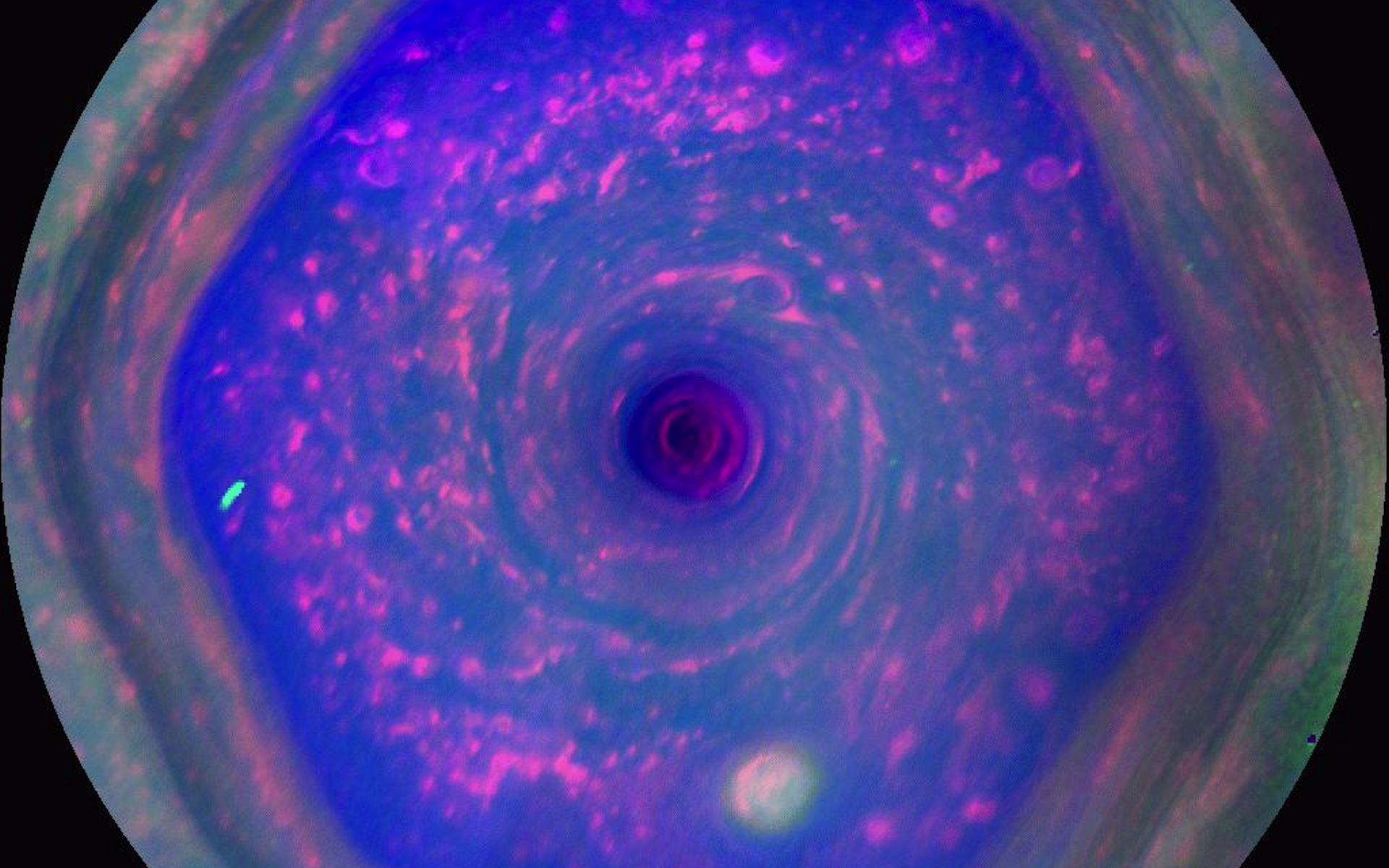
a blue swirling hexagon on a grey orb

This colorful space wallpaper from NASA's Cassini mission is the highest-resolution view of the unique six-sided jet stream at Saturn's north pole known as the hexagon. Image obtained on Dec. 10, 2012 and released Dec. 4, 2013. (Image credit: NASA/JPL-Caltech/SSI/Hampton)

Similarly, experiments that Sanchez-Lavega and his colleagues performed with computer simulations of currents in shallow water suggest the decagon formed because of a meandering wave trapped by a curving atmospheric jet. Unlike the hexagon, whose sides and points have remained equally dark for decades, the decagon varies in darkness across its features. This could mean that it may still be evolving.

"We need to understand how the decagon evolves — in other words, whether in the coming years it will become unstable and break up, or conversely, become more stable and robust as solar radiation increases, which will peak at its latitude of around 60 degrees south in 2032," Sanchez-Lavega said.

The scientists also want to gain a more detailed understanding of the three-dimensional structure of the decagon's clouds, hazes, winds and temperatures. This will help them "develop more advanced models of its formation," Sanchez-Lavega said.

The scientists detailed their findings Sept. 2 in the journal Science Advances.
‘Titan is actually a very reasonable destination for humans’: Scientists start mapping out crewed mission to huge Saturn moon

BOULDER, Colorado — After Earth's moon and Mars, where could humans plant their footprints?

The "Humans to Titan Summit 2026" was held here on June 11 and June 12 to explore the concept of Titan, the largest moon of Saturn, as the next human exploration destination, post-Mars.

Researchers looked into how demanding such a trek could be and what would be required to make it, along with next steps to further that ambitious goal.

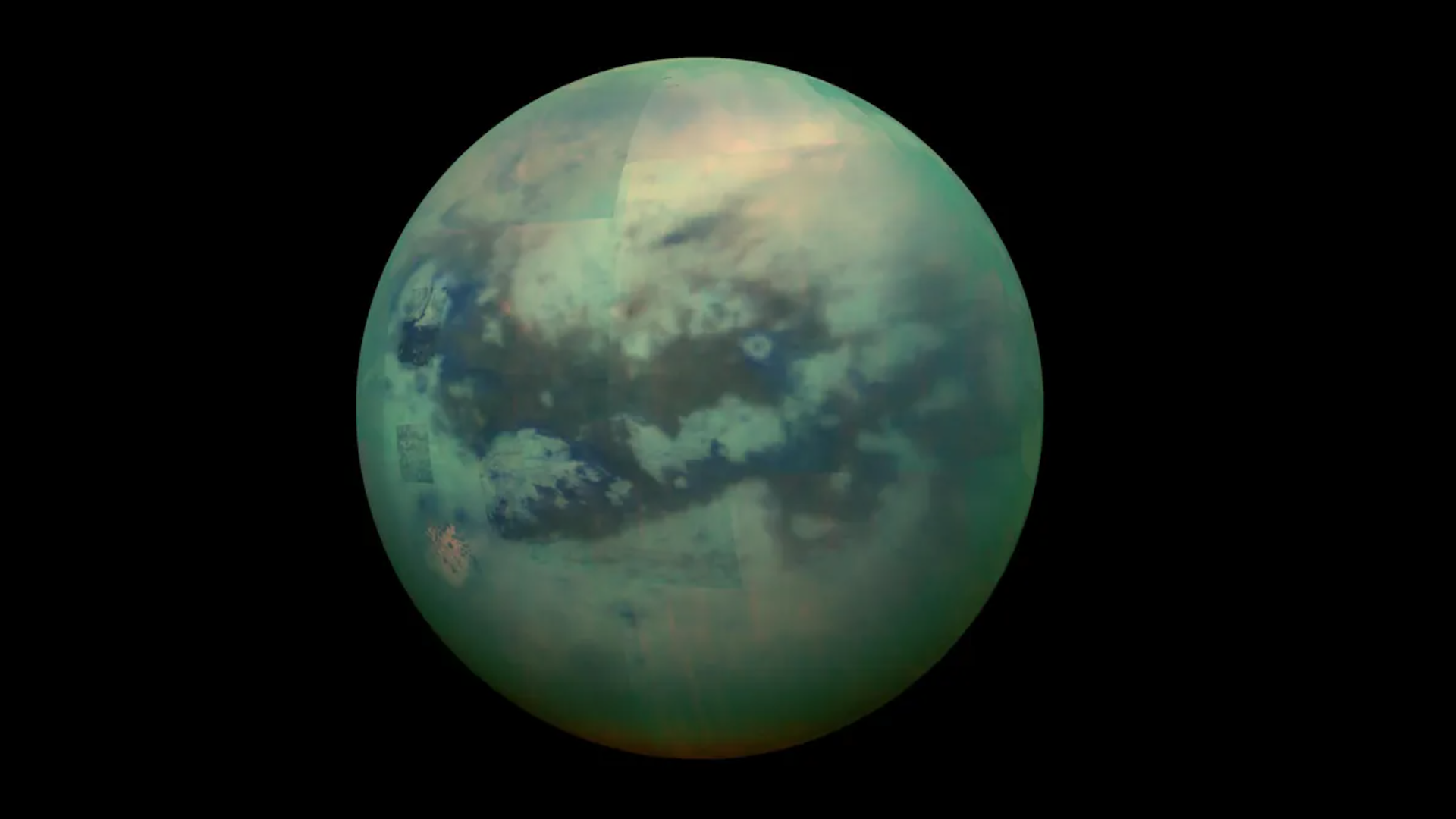
A NASA image of Saturn's moon, Titan It looks like a turquoise marble in space.

A NASA image of Saturn's largest moon, Titan. (Image credit: NASA/JPL-Caltech)

Normalizing the idea

As a first-of-its-kind gathering of experts, the Humans to Titan Summit 2026 was invigorating, taking seriously the prospect of one day sending humans to Titan, said Amanda Hendrix, director of the Planetary Science Institute, which is headquartered in Tucson, Arizona.

Hendrix is also president of the advocacy group Explore Titan and co-author of "Beyond Earth: Our Path to a New Home in the Planets" (Pantheon Books, 2016).

"Everyone recognizes that the reality of this is a long way off," Hendrix told Space.com, "but normalizing the idea   — that Titan is actually a very reasonable destination for humans  — is important."

Taking this goal seriously means that "we can have a next destination in our minds, after Mars," she added. "That keeps the momentum going."

Dense atmosphere

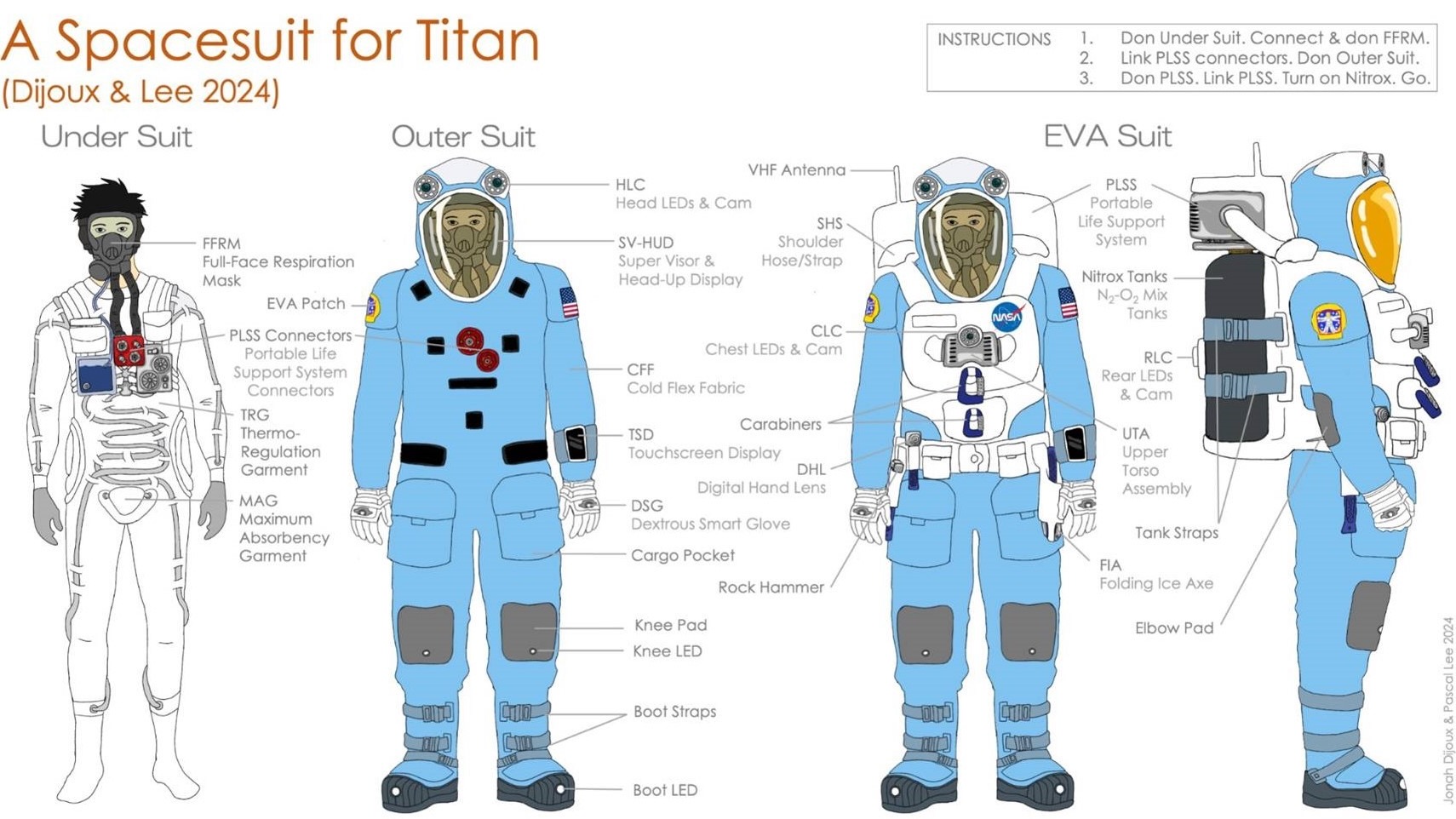
The assembly of experts explored an array of Titan topics, from spacesuits and modes of transportation, habitat designs and airlock concepts to light levels and possible encounters with monsoons and floods on the frigid, exotic moon, which has a weather system based on hydrocarbons rather than water.

Additionally, making use of Titan as a hub for launching sample-return missions to other moons within the Saturn system, like Enceladus, was viewed as a big plus.

So too was utilizing the moon's rich bounty of resources — like methane, nitrogen and oxygen — to fuel expansive, far-deeper exploration beyond Titan itself.

"We've got a lot of planning to do," said Hendrix, "but we have time!"

A top priority is figuring out how to either shorten the trip time to Titan or accommodate it and mitigate the negative effects on astronauts, Hendrix said.

"The top reason in my mind that Titan is such a good spot for humans is the dense atmosphere," Hendrix said. That nitrogen-dominated atmosphere provides natural shielding from harmful radiation of many types.

several dozen well-dressed people pose for a photo on an outside staircase

The first "Humans to Titan Summit" drew a unique cadre of experts. (Image credit: Explore Titan)

Precursor missions

Appreciation of what human visitors will face on the moon was boosted by the European Space Agency's robotic Huygens probe, which touched down on Titan on Jan. 14, 2005 as part of the NASA-ESA Cassini-Huygens mission to Saturn.

Next up for setting down on Titan is NASA's nuclear-powered Dragonfly, now projected to launch no earlier than 2028 for a six-year voyage to the faraway moon.

During its over three-year surface mission, Dragonfly's rotors will carry it for miles across Titan's surface, auto-piloting its way to a variety of areas. The vehicle is designed to snag samples of surface material for analysis inside the rotorcraft by scientific instruments.

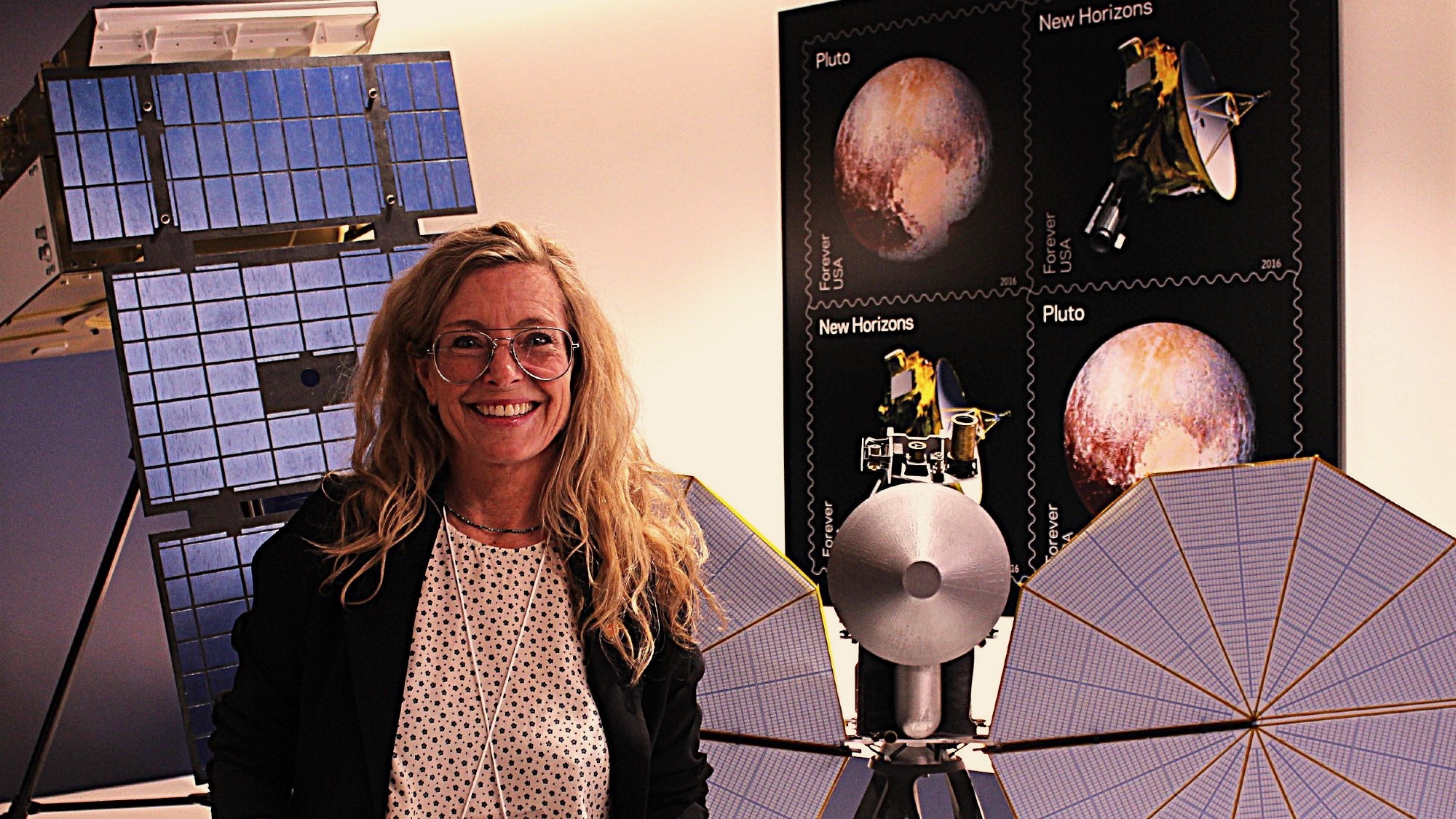
a woman wearing glasses smiles in front of a model of a spacecraft with two large octagonal solar arrays

Amanda Hendrix, director of the Planetary Science Institute and president of Explore Titan, an advocacy group. (Image credit: Barbara David/Future)

Extraordinarily ambitious

Taking part in the two-day gathering was Scot Rafkin, director of the Department of Space Studies at the Southwest Research Institute (SwRI) and a planetary and atmospheric scientist. The summit was held at SwRI's Solar System Science & Exploration Division facilities.

"Everyone recognized that sending humans to Titan is extraordinarily ambitious. But history shows that the greatest achievements in exploration begin when people are willing to pursue goals that seem beyond reach," said Rafkin. Sharing with Space.com his own personal thoughts, he said the summit marked "the beginning of a long-term effort to imagine and ultimately achieve something transformative."

Titan is one of the most compelling worlds in the solar system, Rafkin said; it's a place with rivers, lakes, weather, dunes and complex chemistry unlike anywhere else we know of. Pursuing human exploration of Titan, he said, creates a long-term framework and provides a scientific purpose that transcends the moon and Mars.

diagram showing four views of a notional spacesuit, with the parts labeled

What the best-dressed Titan explorer may wear. (Image credit: Dijoux and Lee)

'Not a question of physics'

Rafkin said that targeting Titan will also accelerate technologies needed not only for exploring that moon but for voyaging throughout the solar system.

"Human exploration of Titan is not a question of physics," said Rafkin. "It is a question of time, technology, and commitment. We understand most of the major challenges. We know many of the critical science and engineering gaps that remain."

Every advance in propulsion, power systems, manufacturing, robotics, computing, life support and communications, Rafkin said, brings Titan closer while simultaneously enabling exploration throughout the solar system.

Not every solution exists today, Rafkin continued, but the path forward is increasingly clear.

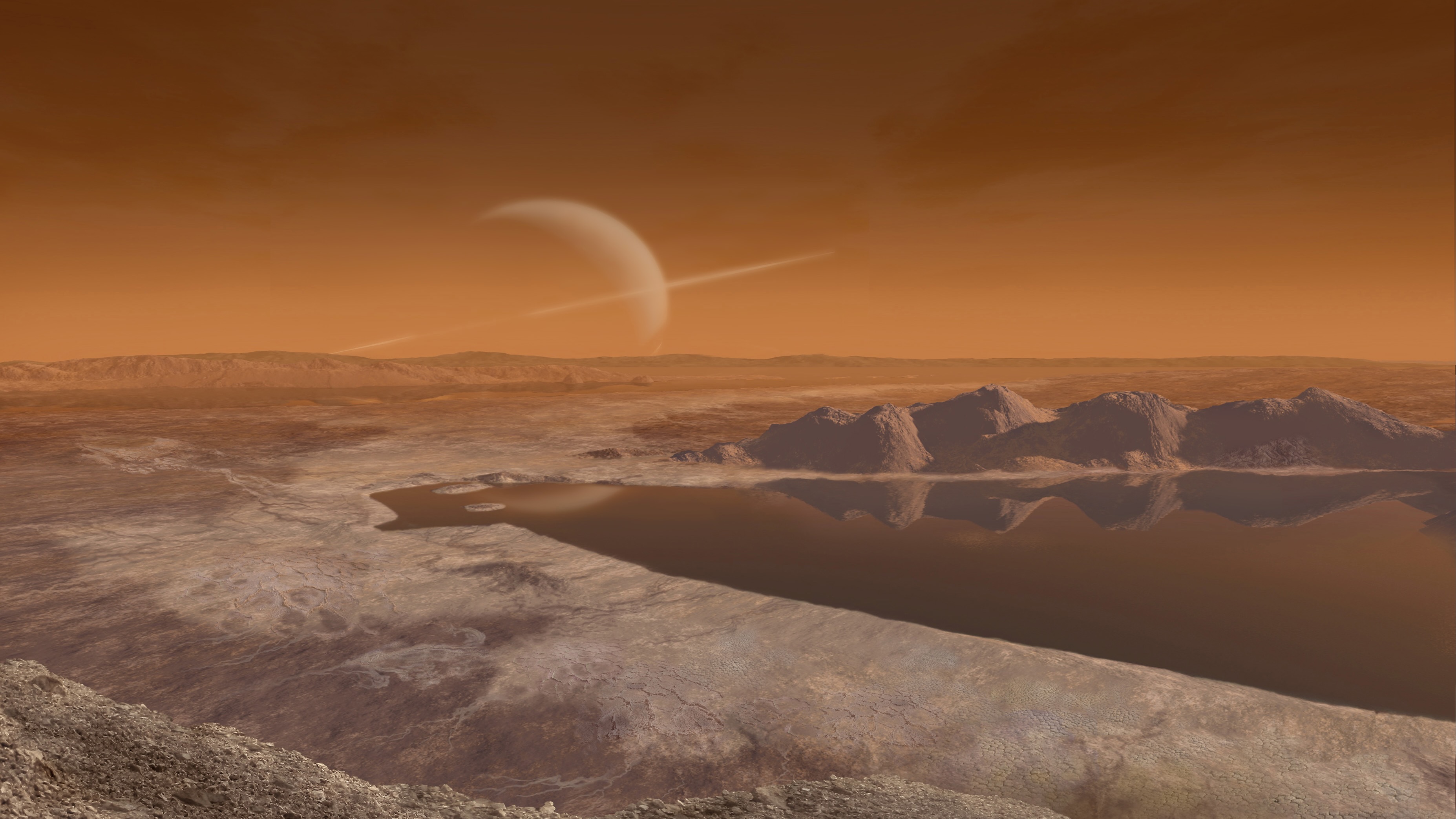
illustration showing the surface of a brown alien landscape with a lake in the foreground and saturn hanging in the sky in the background

Artistic view of Titan, the largest moon of Saturn. (Image credit: ©Michael Carroll; used with permission)

Starting a movement

"Some steps can be taken now, such as sending an orbiter to better characterize the Titan system," said Rafkin. "Other capabilities will require decades or even generations of development. The challenge is immense, but it is achievable."

Rafkin said that the summit was not about planning a mission.

"It was about starting a movement. If space exploration has taught us anything, it is that ambitious goals accelerate innovation in ways we cannot fully predict. The destination is Titan, but the investment is in ourselves," Rafkin concluded.

A second Humans to Titan Summit, said Hendrix, is slated around the launch date in 2028 of the NASA Dragonfly mission.