SpaceX launched yet another Starlink mission today (Aug. 21), sending 29 more of the broadband satellites to orbit from Florida's Space Coast.
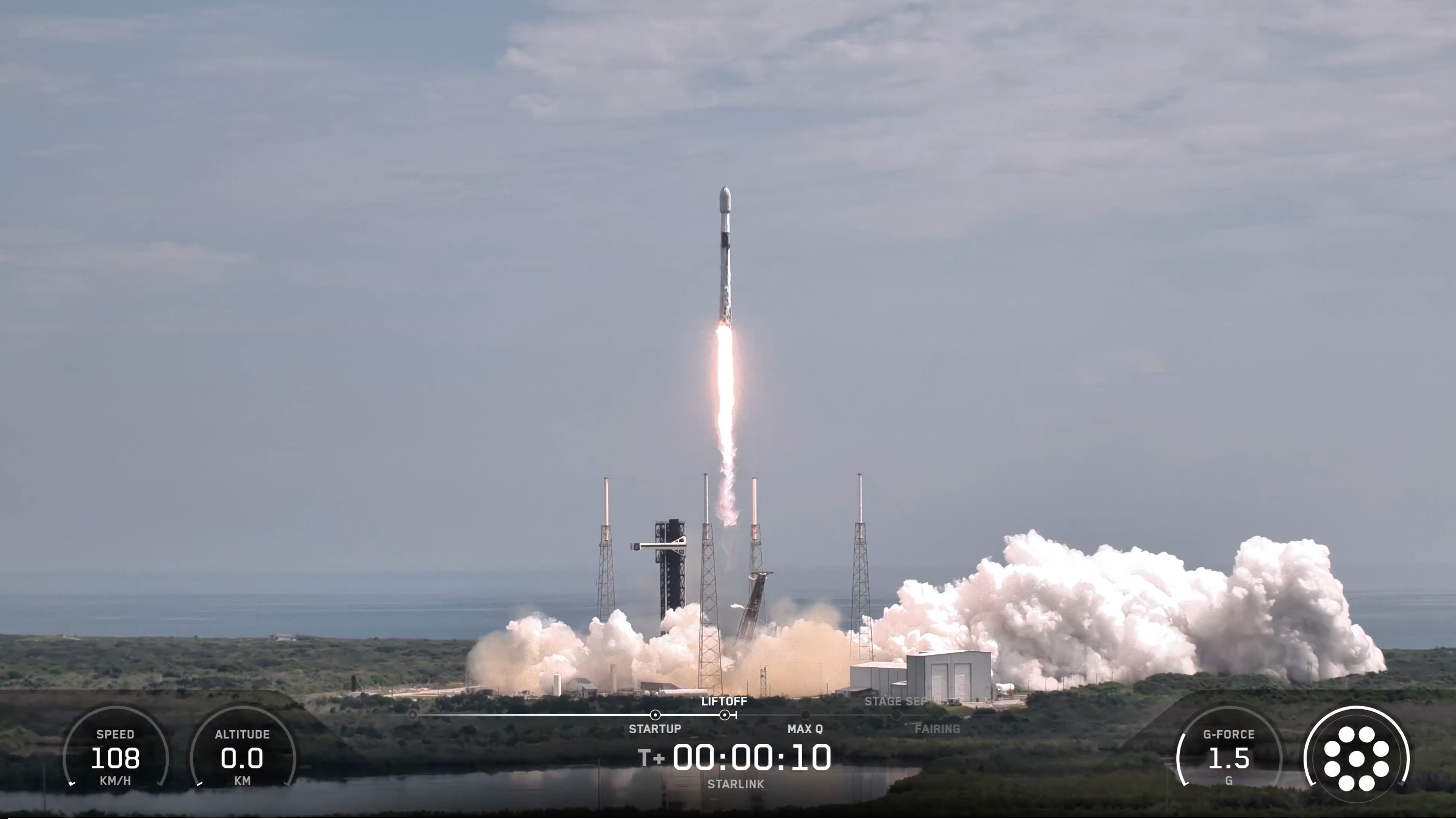
The spacecraft flew aboard a Falcon 9 rocket, which lifted off from Florida's Cape Canaveral Space Force Station today at 11:14 a.m. EDT (1514 GMT). That was a day later than planned; SpaceX scrubbed a liftoff attempt on Thursday (Aug. 20) for reasons that were not immediately clear.
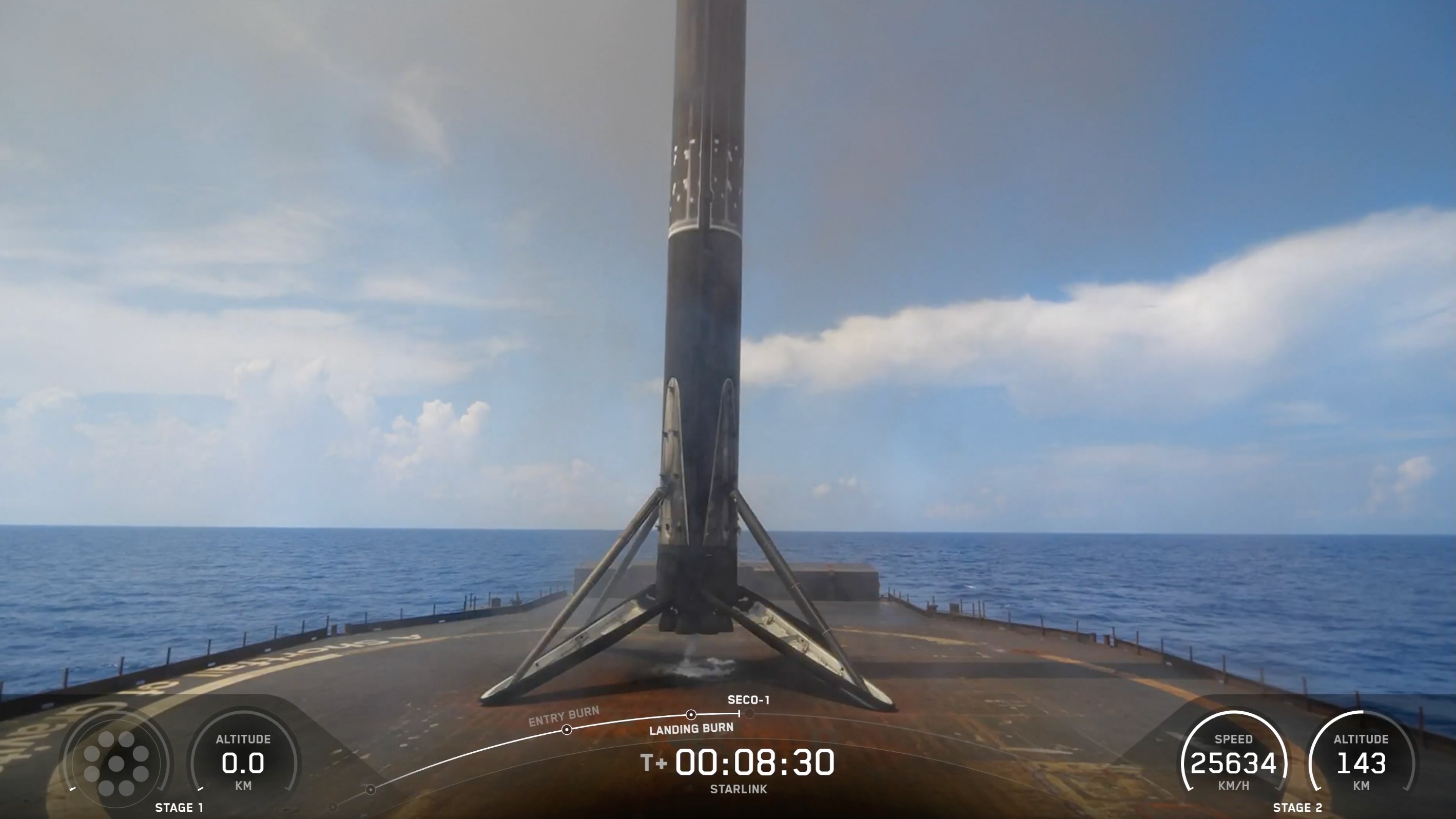
The Falcon 9's first stage came back to Earth as planned today, landing about 8.5 minutes after launch in the Atlantic Ocean atop the SpaceX droneship "A Shortfall of Gravitas." It was the 30th liftoff and touchdown for this particular booster, which is designated B1078.
A SpaceX Falcon 9 rocket launches 29 Starlink internet satellites from Florida’s Cape Canaveral Space Force Station on Aug. 21, 2026. (Image credit: SpaceX)
The Falcon 9's upper stage, meanwhile, continued hauling the Starlink satellites skyward. It will deploy the new batch into low Earth orbit 61.5 minutes after liftoff, if all goes to plan.
There are already quite a few operational Starlink spacecraft up there —nearly 11,000, in fact, according to astronomer and satellite tracker Jonathan McDowell.
The Falcon 9's first stage rests on the deck of a drone ship shortly after its touchdown on Aug. 21, 2026. (Image credit: SpaceX)
Today's launch was the 98th Falcon 9 flight of the year already. Seventy-five of them have been dedicated Starlink missions.
SpaceX also has three other liftoffs under its belt in 2026 — one launch of its Falcon Heavy rocket and two test flights of its Starship megarocket, which is still in development.
We'll have to wait a bit longer for a highly anticipated Starship milestone, it appears.
On Aug. 4, SpaceX founder and CEO Elon Musk said the company aimed to attempt the first-ever catch of Starship's upper stage on the vehicle's next test flight, which is tentatively targeted for late August.
But that doesn't seem to be in the cards anymore. "Looks like we will probably catch the ship with the tower in a few months," Musk said early this morning (Aug. 20) via X, the social media platform he bought in 2022.
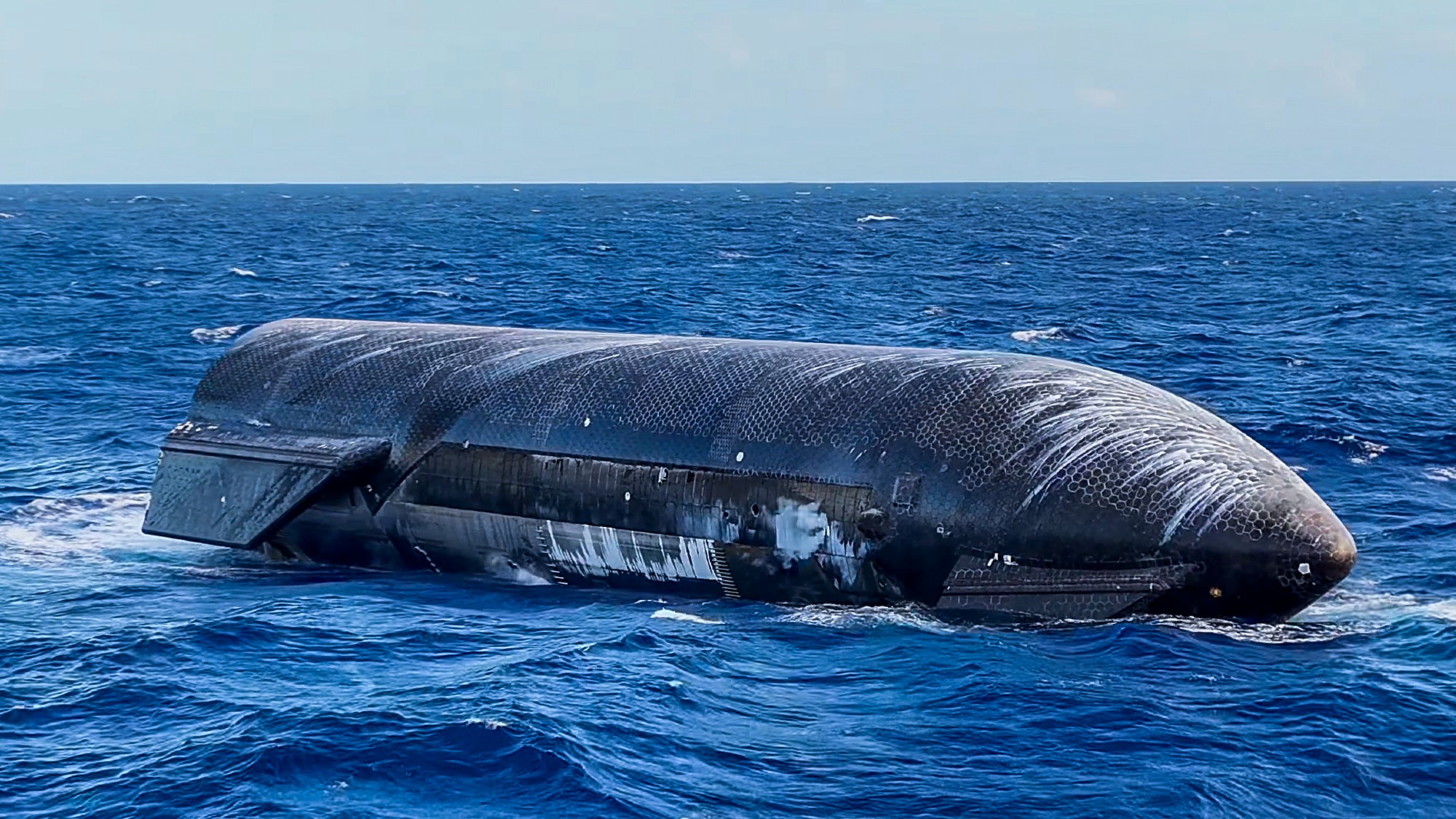
Starship's Ship upper stage floats in the Indian Ocean after surviving the vehicle's Flight 13, which launched on July 24, 2026. (Image credit: SpaceX via X)
SpaceX has high hopes for Starship, the biggest and most powerful rocket ever built. It consists of a giant first-stage booster called Super Heavy and an upper-stage spacecraft known as Starship, or simply Ship.
Both of these elements are designed to be fully and rapidly reusable. Rapid reuse will be enabled by landings directly on the launch mount, with the aid of the launch tower's "chopstick" arms.
SpaceX has already pulled off such chopstick catches with Super Heavy on three of Starship's 13 suborbital test flights to date. And two of those missions featured a used Super Heavy: Flight 9 used the same booster as Flight 7, and Flight 11 employed the one from Flight 8.
SpaceX has not yet tried to catch Ship, however, because it's a tougher ask: The upper stage comes back down to Earth from much greater heights, and at much higher speeds, than Super Heavy.
But the company has made progress toward this goal recently. For example, on Flight 13, which launched on July 24, Ship survived reentry through Earth's atmosphere and splashed down in its target zone, a patch of the Indian Ocean off the coast of Western Australia.
The vehicle even remained intact after toppling over, a feat none of its predecessors had pulled off. SpaceX subsequently towed Ship to Christmas Island and will study it in depth to inform future iterations of the vehicle.
This encouraging performance led to optimism about a coming tower-catch try for Ship.
"I'd say things look very good, and that's why we, assuming we receive regulatory approval to do so, will attempt to catch the Ship with the tower on the next flight, which is tentatively scheduled for the end of this month," Musk said on Aug. 4, during SpaceX's first call with investors as a public company.
As that quote indicates, however, a Ship tower catch is not entirely up to SpaceX. It also requires approval from regulators — specifically, the U.S. Federal Aviation Administration. It's possible that such approval has not yet been secured for Flight 14, and that's why the timeline has shifted.
After all, Musk has continued to voice confidence in Ship's abilities.
"If there had been a tower out to sea where we practiced landing the ship, it would have been caught," he added in this morning's X post. "First reflight of the ship will be either end of this year or early next. That will be a fork in the road of history for consciousness reaching the stars."
Even without a Ship catch attempt, Flight 14 should still feature some exciting action. During the earnings call, Musk said that Starship will go orbital on Flight 14, something it has never done before.
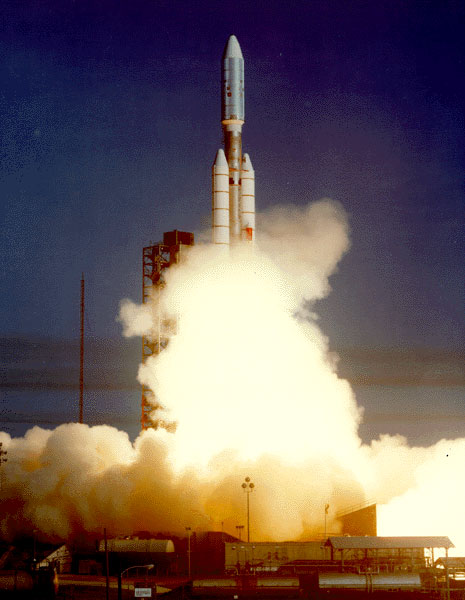
On Aug. 20, 1977, NASA launched the Voyager 2 spacecraft on a mission to explore the outer planets. Despite its name, this was the first of the two Voyager missions NASA launched that year.
Thanks to a rare alignment of the planets, NASA had the opportunity to send a spacecraft on an unprecedented journey to Jupiter, Saturn, Uranus and Neptune.While Voyager 1 ended its planetary mission after Saturn, Voyager 2 completed a 12-year journey to Neptune. But they didn't stop there!
Voyager 1 left the solar system and entered interstellar space in 2012, and Voyager 2 followed suit in 2018. As it approaches 50 years of operation, the probe continues to return data from three functioning science instruments.
NASA's Voyager 2 launched on Aug. 20, 1977. (Image credit: NASA)
Why it mattered
Nearly half a century later, it remains the only spacecraft to visit all four has giants in our solar system, and the only spacecraft humanity has ever sent past Uranus and Neptune. Some of Voyager 2’s biggest surprises came from the moons orbiting those planets. Its images of Neptune’s largest moon, Triton, revealed active geyser-like plumes blasting nitrogen miles above the surface — making it one of only three geologically active moons in the solar system (maybe four, depending on what Europa Clipper finds).
Decades beyond its original mission, Voyager 2 has begun studying the Kuiper Belt environment beyond the Sun’s protective heliosphere, giving scientists measurements from a region no spacecraft had been designed to reach. Voyager 2's plutonium power supply drops in efficiency about four watts per year, and NASA engineers were recently able to reduce how much power Voyager 2 needs by switching off a number of non-science components to adapt a less demanding method of warming the spacecraft while it continues traveling ever farther away from the sun.
Rocket Lab launched a private Japanese satellite to orbit this morning (Aug. 20), adding to a growing constellation of Earth-observing spacecraft.
An Electron vehicle lifted off from Rocket Lab's New Zealand site at 9:04 a.m. EDT (1304 GMT; 1:04 a.m. on Aug. 21 local New Zealand time), carrying aloft a radar satellite for the Tokyo-based company iQPS.
The nine 3D-printed Rutherford engines that power Electron's first stage shut off as planned about 2.5 minutes after liftoff. Separation with the rocket's second stage immediately followed, which burned for another 6.5 minutes before releasing Electron's "kick stage" with the IQPS payload for a 40-minute coast phase.
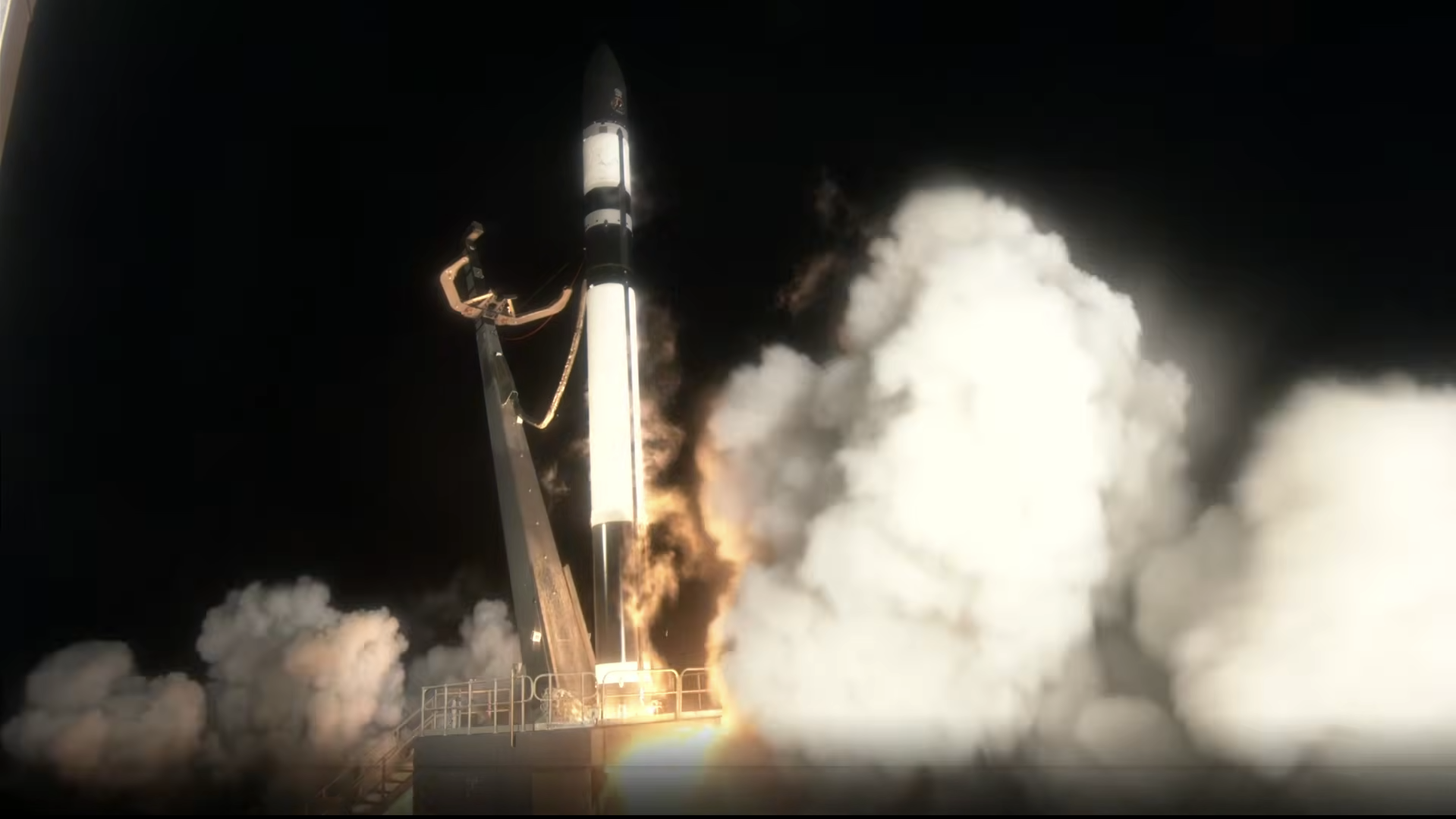
Electron lifts off from Rocket Lab's New Zealand launch site at 9:04 a.m. EDT (1304 GMT) on Aug. 20. (Image credit: Rocket Lab)
This was Rocket Lab's ninth launch for iQPS, which is building a constellation of 36 synthetic aperture radar (SAR) satellites in low Earth orbit (LEO). Such spacecraft can study Earth day or night, and they can peer through cloud cover as well.
The iQPS network "is being developed and deployed at a rapid pace to provide high resolution and near-real time SAR imagery to its global users," Rocket Lab wrote in a description of today's mission, which it calls "The Lightning God Defends."
That name is a reference to the satellite going up today: It's nicknamed SUSANOO-II, after a Japanese lightning god.
Following the 40-minute coast phase of Electron's kick stage, the rocket completed one final burn to circularize its orbit and successfully deployed SUSANOO-II about 50 minutes after launch, at an altitude of 357 miles (575 kilometers).
Today's flight was Rocket Lab's 14th of 2026 and 93rd overall. The company's most recent launch, on Aug. 6, also lofted an iQPS satellite to LEO.
The vast majority of the company's flights have been performed by Electron, a 59-foot-tall (18 meters) rocket that gives small satellites dedicated rides to Earth orbit and beyond. Rocket Lab also operates a suborbital variant of Electron called HASTE, which allows customers to test sensors and other tech in the hypersonic flight environment.
NASA is calling off the effort to save its Neil Gehrels Swift Observatory after a private rescue spacecraft couldn't overcome its own problems in orbit.
LINK, the specialized probe from Katalyst Space that NASA contracted for the Swift Boost mission, was delivered to space on an air-launched Northrop Grumman Pegasus XL rocket on July 3. The vehicle was designed to rendezvous with the Swift Observatory in order to grapple and raise it to a more stable orbit, but LINK ran into trouble when it began to spin uncontrollably about three weeks after launch.
Today (Aug. 19), NASA announced an official end to LINK's efforts to boost Swift's orbit, citing ongoing attitude control issues with the private spacecraft, but the agency hasn't canceled the mission outright. LINK will still attempt a rendezvous with Swift in order to practice proximity operations and demonstrate its capabilities other than spacecraft capture, which could aid future missions down the road.
From its inception, the Swift Boost mission was always viewed as a long shot. Increased solar activity had already begun decaying the observatory's orbit faster than anticipated when NASA awarded the $30 million Swift Boost contract to Katalyst in 2025, giving the Arizona-based company less than a year to complete LINK's design, manufacture and testing before time to save Swift would run out.
"NASA should be willing to move quickly and take smart risks when the potential return is worth it, and that is exactly what we did with this mission," NASA Administrator Jared Isaacman said in a statement today. "This is not the outcome we were working toward, but it does not change why this mission was worth attempting. The team moved with extraordinary speed to give Swift a chance to carry out more science while advancing capabilities America will need for satellite servicing in the future."
Swift is a one-of-its kind orbital observatory designed to study high-energy phenomena across the universe. It can detect sudden events like gamma-ray bursts and quickly direct its instruments to study them in X-ray, ultraviolet and visible light. The spacecraft is also routinely redirected for rapid response research to study things like newly discovered supernovae, black-hole ejections, fast radio bursts and other short-lived astronomical events.
With LINK now incapable of boosting Swift's orbit, NASA estimates the observatory will dip catastrophically low into Earth's atmosphere before the end of the year. After Swift dies, the agency says it will "continue to prioritize finding new options to react rapidly to cosmic events, using current missions to help fill the gap in the meantime."
Katalyst is working closely with NASA as the Swift Boost mission enters its next phase. Together, the company and space agency are evaluating logistics for LINK's rendezvous and maneuvering demonstration within Swift's vicinity, which will provide data for potential future servicing missions to other satellites, NASA's statement says.
If you have ever shared a room with multiple people for days on end, you may know how clothes and living conditions can rapidly turn rather smelly. Imagine that happening in a confined spacecraft.
Even worse, since water on a space mission is in short supply, space travelers can't easily do their laundry. This is more than a body odor problem — unclean clothes and linens are ripe feeding grounds for infectious bacteria. Astronauts might wear the same clothes for days or even weeks,seal away used clothes in airtight bags, then return them to Earth for cleaning or cast them away to burn up in Earth's atmosphere.
This is fine for short trips near Earth, but what about a months-long odyssey to Mars? Engineers have devised a new way for astronauts to dry-clean their dirty laundry. They've crafted a prototype "laundry gun" that sterilizes fabric by shooting violet-colored plasma into it.
"This will reduce the microbial load and keep clothes and other soft surfaces clean, at least microbially, for astronaut health," says Gabe Xu, a professor at the University of Alabama in Huntsville and one of the laundry gun's creators, in astatement. "It could also be used to sterilize space suits and tools before they leave the habitat and step foot on Mars."
A plasma is an energized soup of charged particles, ions and electrons. While many plasmas likethat in the sun are very hot, the laundry gun's plasma is "cold," closer to room temperature.
Its electrons are key to killing bacteria. As the laundry gun shoots plasma into fabric, the electrons collide with gas molecules in the surrounding air, such as oxygen (O2) and water vapor (H2O). These collisions create other molecules like ozone (O3), which chemists call "oxidizing species". These oxidizing species can chemically react with the membrane that surrounds a bacterium, damaging and destroying it.
In collaboration with NASA's Marshall Space Flight Center, Xu and colleagues have created a prototype plasma gun, about the size of a pen, which can sanitize about a square centimeter at a time. In their tests, the prototype reduced spore colonies on a scrap of fabric by more than 75%.
Earthly disinfectants like peroxide and bleach also attack bacteria by oxidizing them in this way. The laundry gun's creators could allow astronauts to travel without such cleaning chemicals. Instead, the apparatus creates its cleaning plasma from the spacecraft’s own air and water vapor. In space travel, where every gram of mass matters, this is a major advantage.
The plasma gun at work. (Image credit: Gabe Xu | UAH)
"The use of plasma treatment could significantly reduce the mass of goods needed for a human mission, especially one to Mars where resupply is difficult," Xu wrote in the statement.
That said, the "laundry gun" is not a perfect replacement for the standard washing machine — not yet, at any rate. "This won't remove coffee or grass stains (though we haven't tried that)," Xu wrote in the statement.
Moreover, a pen-sized laundry gun is too small to be practical. Xu and colleagues are planning to build larger, but still handheld, devices. They'll also need to deal with their plasma gun's ozone, which can be harmful in large quantities — they're working on a filtration system to remove this.
Space laundry is a rather active area of research today — astronauts on the International Space Station (ISS)recently tested a space detergent, and the Chinese space programhas developed a washing machine suitable for low-water use.
A mysterious incident over the southern Indian Ocean forced a U.S. Air Force aircraft to turn around due to an unnamed hazard in space.
According to several New Zealand-based news outlets, a U.S. Air Force (USAF) C-17 Globemaster transport aircraft left Christchurch Airport on New Zealand's South Island on Tuesday (Aug. 18) bound for McMurdo Station in Antarctica. Aircraft trackers using flight radar software noticed the C-17 turn around over the ocean some two hours into its flight.
According to a statement from New Zealand's Civil Aviation Authority given to the country's Stuff news outlet, the C-17 turned around after the Russian Air Traffic Management Corporation issued a notice advising of "space activity, potentially hazardous to aviation en route to Antarctica." It still remains unknown what that activity might have entailed, and the USAF has yet to issue a statement.
The U.S. Federal Aviation Administration (FAA) issued a NOTAM (Notice to Airmen) on Aug. 10 for a large region of airspace over Australia and the Indian Ocean known as the Melbourne Flight Information Region, or YMMM. The notice states that, beginning on Aug. 14, "Russian aerospace activities will take place" and that there is "possible debris" in several areas throughout the massive YMMM airspace.
It's possible that the notice that caused the C-17 to turn around was related to this NOTAM, which was still active as of Tuesday.
A NOTAM issued by the FAA on Aug. 14 stating there was "possible debris" due to "Russian aerospace activities" throughout a large region of airspace covering Australia and the Indian Ocean. (Image credit: FAA)
There is precedent that might give some clues as to what that aerospace activity might have been.
In the last few years, pieces of falling space debris reentering Earth's atmosphere have caused several airspace closures. In November 2022, for example, the core stage of a Chinese Long March 5B rocket fell to Earth in an uncontrolled reentry over Spain, prompting multiple airspace closures out of caution.
In January 2025, SpaceX's Starship exploded on its seventh test flight, raining fiery debris over the Atlantic Ocean near the Turks and Caicos islands. The FAA activated a "Debris Response Area" near the falling debris, causing some aircraft to have to divert to secondary airports due to low fuel.
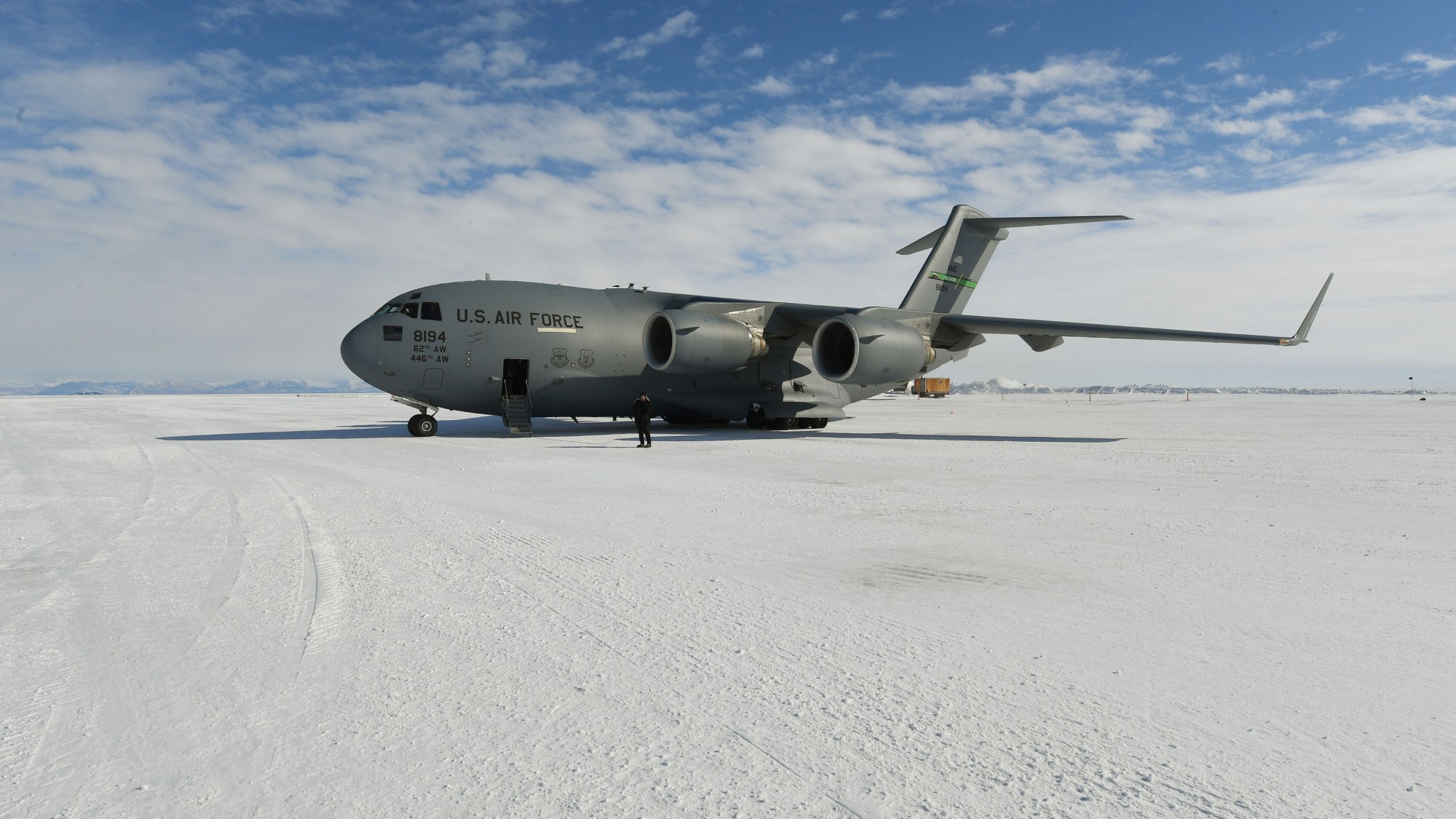
A U.S. Air Force C-17 Globemaster set to leave Antarctica for New Zealand from McMurdo Station, Antarctica on Nov. 12, 2016. (Image credit: MARK RALSTON/AFP via Getty Images)
That same month, a study published in the journal Scientific Reports found there is a 26% chance of "an uncontrolled space debris reentry in busy airspaces" due to the sharp increase in space traffic in recent years. But experts say much more data is needed to determine how to mitigate risks and how to respond in the event of such debris incidents.
Of course, there remains the chance that Russia's notice to air crews wasn't caused by falling space debris at all. Governments regularly issue similar notices when they are testing weapons that fly to high altitudes, such as ballistic missiles.
Typically, however, such tests are planned far in advance, meaning any notices would have been issued long before the USAF's C-17 took to the air.
On Aug. 19, 1997, the Philippines' first satellite launched into space. Before then, the country's only communications satellite was one that had been purchased from Indonesia after it was already in orbit.
But 29 years ago today, the Mabuhay Philippines Satellite Corporation sent its own satellite into orbit using a Chinese Long March 3B rocket. The new satellite was named Agila-2 in honor of the great Philippine eagle. To this day, it provides the most powerful satellite coverage in Asia and the Pacific, though its ownership has change: In 2009, the Philippines sold it to the Asia Broadcast Satellite company.
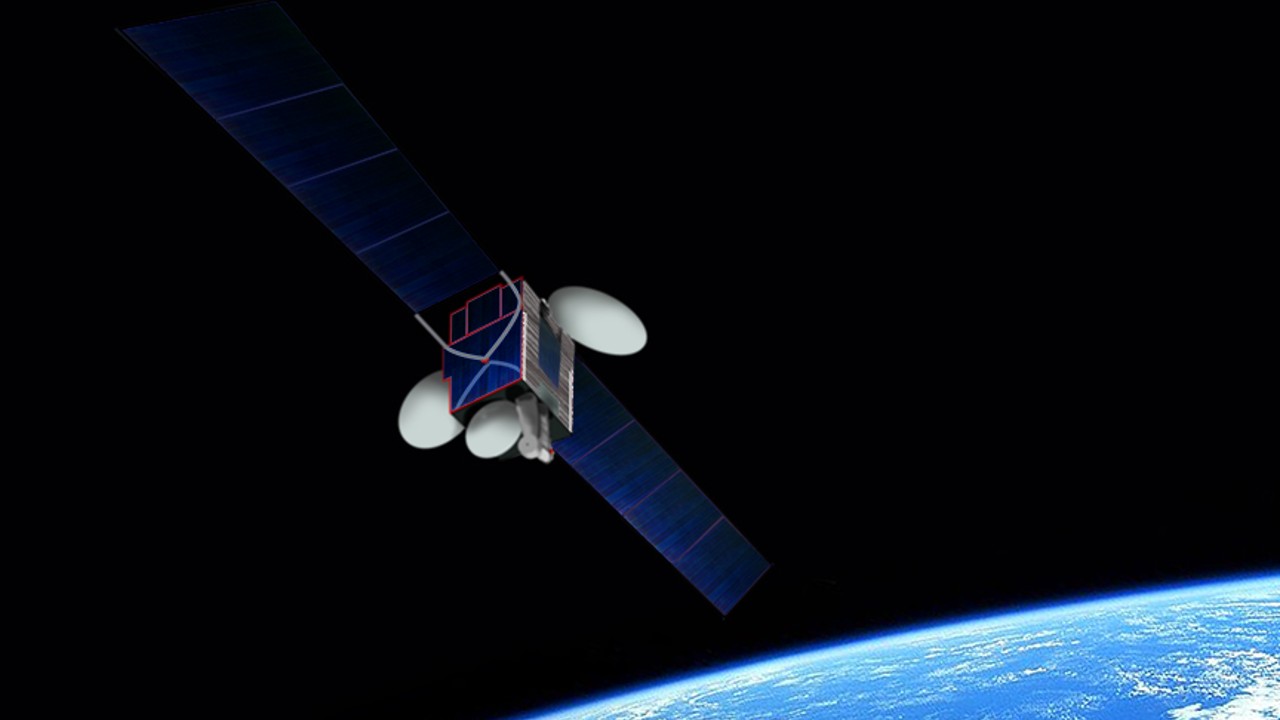
Artist's illustration of the Filipino satellite Agila-2. (Image credit: Wikimedia Commons)
Why it mattered
International collaboration is a key enabler of progress in space. For example, astronauts from around the world work together to stay safe and push scientific progress forward on board the International Space Station (ISS). And more and more nations are getting involved in the final frontier these days. Over 70 different nations have signed the Artemis Accords, a U.S.-backed set of guiding principles for responsible space exploration.
The Agila-2 launch was a major breakthrough for Filipino progress in the space sector. It was followed up almost two decades later with the Diwata-1 microsatellite, which launched to the ISS on April 27, 2016. And the momentum kept growing from there, as the Philippine Space Agency was formalized in 2019. Since then, the Philippines has collaborated with NASA and JAXA (the Japan Aerospace Exploration Agency) to develop and launch two more satellites, Diwata-2 and Maya-1.
China just notched another big spaceflight milestone.
The Beijing startup LandSpace successfully landed the first stage of its Zhuque-3 rocket this evening (Aug. 18), becoming the first Chinese company ever to do so during an orbital launch.
It was just the second Chinese orbital rocket touchdown overall. The first was pulled of on July 10 by a Long March 10B, which is built by the state-owned China Aerospace Science and Technology Corporation (CASC).
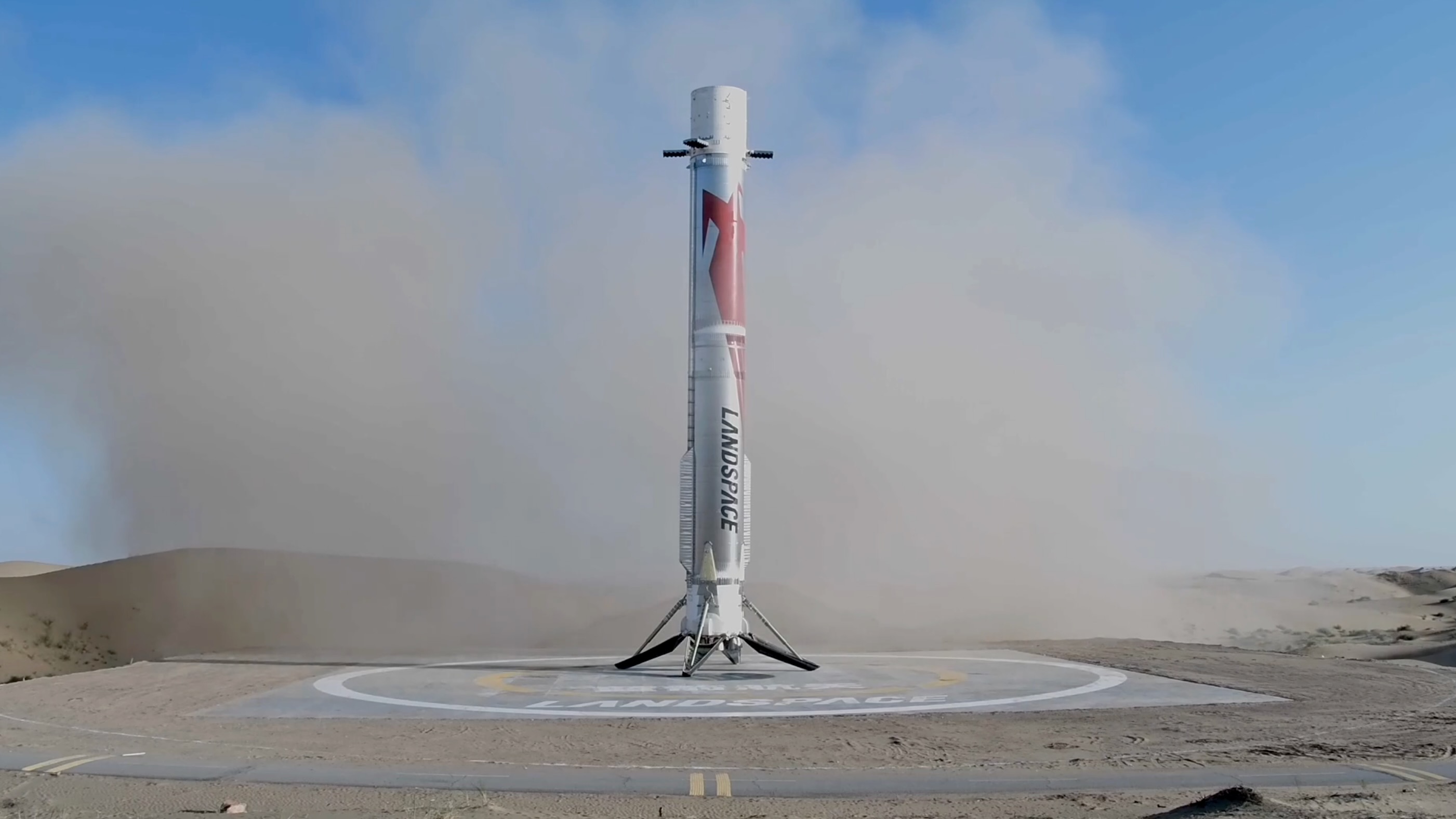
The first stage of Landspace's Zhuque-3 rocket rests on its landing pad shortly after its historic touchdown on Aug. 18, 2026. (Image credit: LandSpace)
The Long March 10B had some help returning to Earth, settling softly into a net-like device affixed to a ship at sea. But Zhuque-3 came down on terra firma and stayed upright thanks to a set of landing legs, like those sported by SpaceX's workhorse Falcon 9 rocket.
"This mission marks China's first-ever successful recovery attempt of the first stage of an orbital-class launch vehicle using landing legs, and China's first successful booster recovery on land," LandSpace said via X this evening.
"It is a pivotal flight test for Zhuque-3 as it transitions from the technological demonstration and verification phase toward the engineering application phase of reusability," the company added. "This mission further verified the design correctness and reliability of the Zhuque-3 reusable launch vehicle system, validated its first-stage recovery capability and engineering maturity."
Zhuque-3 broadly resembles the Falcon 9, which made its first landing way back in 2015 and now has more than 600 of them under its belt. Both feature a reusable booster and an expendable upper stage, and they're about the same height — 230 feet (70 meters) for the Falcon 9 and 216 feet (66 m) for Zhuque-3.
Their lifting power is similar as well. Zhuque-3 can haul about 40,350 pounds (18,300 kilograms) to low Earth orbit, while the Falcon 9's LEO payload capacity is 50,265 pounds (22,800 kg).
The two rockets use two very different fuels, however — a combination of liquid oxygen (LOX) and rocket-grade kerosene for the Falcon 9, compared to LOX and liquid methane for Zhuque-3. This "methalox" mixture is also used by Starship, the fully reusable megarocket that SpaceX is developing to help humanity settle the moon and Mars, among other spaceflight tasks.
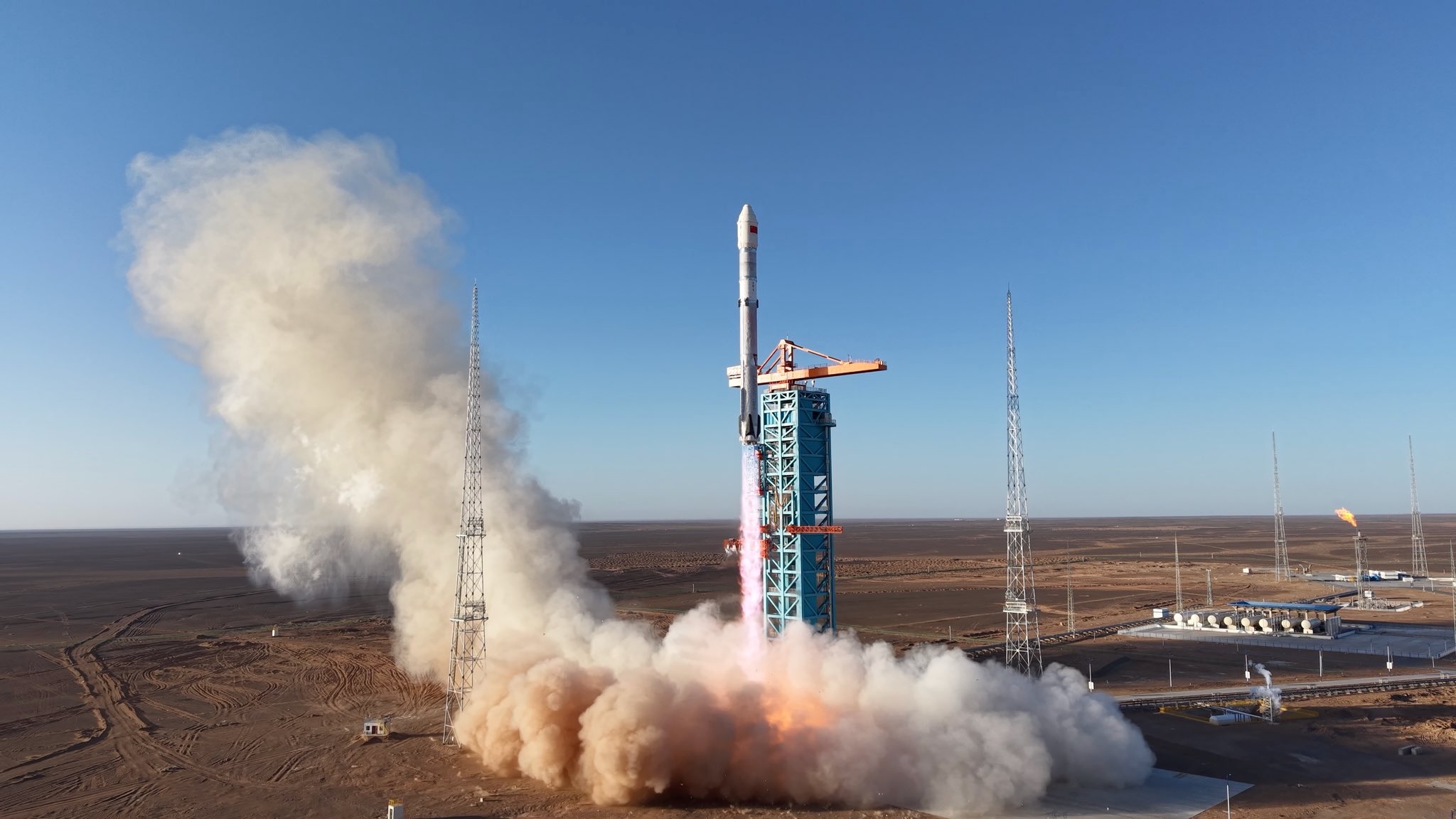
LandSpace's Zhuque-3 rocket launches on its second-ever mission on Aug. 18, 2026. The flight was a success, and Zhuque-3's first stage returned to Earth for a landing — the first ever for a private Chinese orbital rocket. (Image credit: LandSpace)
Today's launch — which occurred from the Dongfeng Commercial Space Innovation Pilot Zone in northwest China at 7:35 p.m. EDT (2335 GMT; 7:35 a.m. on Aug. 19 Beijing time) — was the second overall for the Zhuque-3. The rocket first flew on Dec. 2, 2025, on a mostly successful debut; Zhuque-3's upper stage reached orbit as planned, which is rare for a first flight.
LandSpace tried to bring the booster back for a touchdown that day as well, but the attempt failed. Zhuque-3 suffered "an abnormal combustion" as it neared the ground, according to the state-run outlet Xinhua (translation by Google), and ended up exploding near the designated landing pad.
Today's mission, however, was an unqualified success for the Zhuque-3: The rocket's upper stage delivered a satellite called Honghu 03, which was developed by Hongqing Technology, to its designated orbit, LandSpace wrote in another X post today.
MISSION SUCCESS | ZhuQue-3 Y2 Reusable Launch Vehicle Achieved Full Success in Orbital Insertion and First-Stage RecoveryOn August 19, 2026, at 07:35 (UTC+8), the ZhuQue-3 (ZQ-3) Y2 reusable launch vehicle lifted off from the Dongfeng Commercial Space Innovation Pilot Zone.… pic.twitter.com/fshijOxgtcAugust 19, 2026
Zhuque-3 is part of a concerted Chinese push toward rocket reusability, an efficiency-boosting feature that has helped make the Falcon 9 the world's leading launcher by far. (The SpaceX rocket flew 165 times in 2025, roughly equalling the activity of all other orbital launchers combined.)
For example, CASC isn't just working on the Long March 10 line (which includes the 10A crew-carrying variant); its Long March 12A and 12B rockets will also have reusable first stages. The Long March 12A has lifted off once to date, in December 2025, and its debut was similar to that of Zhuque-3: The Long March 12A second stage reached orbit successfully, but its booster failed to stick the landing.
And then there are the private rockets. A number of Chinese companies in addition to LandSpace are working on vehicles with reusable first stages, including CAS Space, Deep Blue Aerospace, Galactic Energy, iSpace, Orienspace and Space Pioneer. So Chinese rocket landings may not be a novelty for much longer.
Two astronauts — including the first French woman in history to perform a spacewalk — worked outside of the International Space Station (ISS) on Tuesday (Aug 18), becoming temporary TV repairpersons. Just like what frequently happens on Earth, the work required more time than the "appointment" allowed, requiring a second visit to be scheduled.
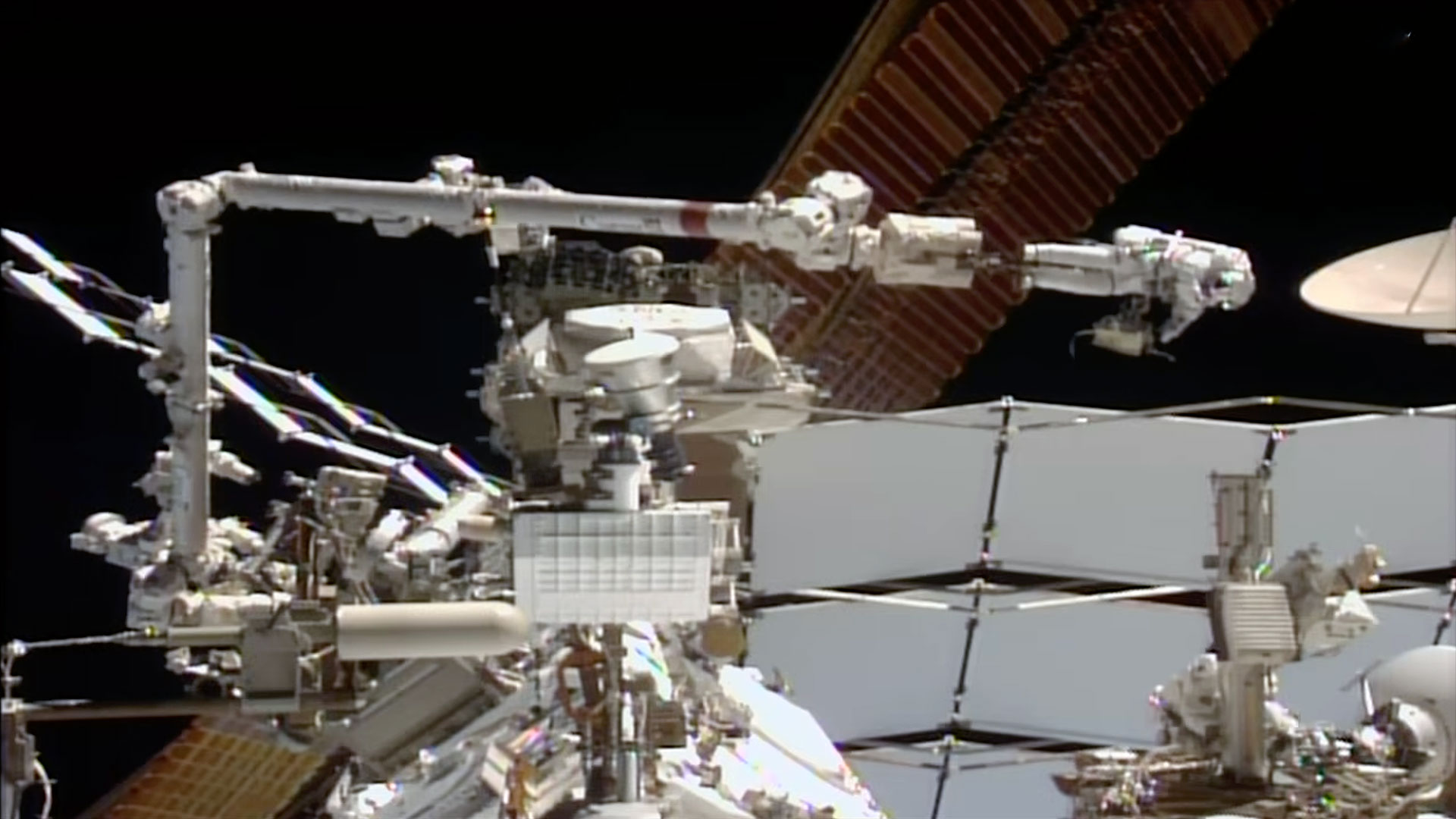
NASA astronaut Anil Menon and ESA (European Space Agency) astronaut Sophie Adenot were tasked with the removal and replacement of a Space-to-Ground antenna that since November had ceased being able to track NASA's data relay satellites, rendering it unusable. A second antenna has been in use since, continuing the transmission of critical data and enabling high-speed communications with Mission Control Houston.
Spacewalk planners had allocated about six and a half hours for the work to be completed. The two Expedition 75 crewmates were successful in removing the failed Space-to-Ground antenna from its mount on the station's truss but ran into delays disconnecting its electrical connections and and locking down gimbal bolts, or pins, to secure the large dish assembly during its transport to its temporary stowage location.
"We got into this with the mindset that we wanted everything to go perfectly," said Menon as the spacewalk came to an end. "Things were a lot different than expected, but what I would say that I am really impressed with is that all of those contingencies were well thought out."
As such, flight controllers had the astronauts tether the failed antenna to the truss and waived them off installing the replacement antenna, leaving it for a future extravehicular activity (EVA) still to be scheduled. Mission managers will decide whether to add that task to a spacewalk already planned for next Tuesday (Aug. 25) or to leave it for a later outing.
"We are looking at times," radioed Mission Control to the spacewalkers. "We are going to go directly to the long-duration tie-down of this SGANT on the Z-1 truss."
NASA astronaut Anil Menon is maneuvered outside of the International Space Station by the Candarm 2 robotic arm, Tuesday, Aug. 18, 2026. (Image credit: NASA)
Menon and Adenot began the spacewalk at 8:29 a.m. EDT (1229 GMT) when they switched their spacesuits to battery power. Their EVA ended once they were back inside the U.S. Quest airlock and re-pressurization began at 2:52 p.m. EDT (1852 GMT).
Their total time logged on this spacewalk was 6 hours and 23 minutes.
Tuesday's spacewalk was the 282nd in support of ISS assembly, maintenance and upgrades. It was Menon's second EVA since making his first outing with fellow NASA astronaut Jessica Meir on Aug. 6, increasing his total spacewalking time to 12 hours and 50 minutes.
It was the first time that Sophie Adenot ventured into the vacuum of space, making her the first female and fifth citizen of France to perform a spacewalk after Jean-Loup Chrétien, Jean-Pierre Haigneré, Philippe Perrin, and Thomas Pesquet.
"What a day!" said Adenot. "My deepest gratitude to everyone who made this possible — the pioneers who came before us, but also the incredible teams working behind the scenes today."
This was the fifth spacewalk conducted out of the International Space Station this year, the second for Expedition 75 and the 97th using U.S. extravehicular mobility unit (EMU) spacesuits at the space station.