On Episode 226 of This Week In Space, Rod Pyle and Tariq Malik are joined by Dr. Rainer Zitelmann to discuss the history of capitalism and how it applies to our future in space.
Capitalism — and a strong profit motivation — has driven enterprise for centuries. Two notable examples are the East India Company and the US transcontinental railroad, and the various tycoons who built it. In neither case, by today's standards, were the operations fair or ethical on a number of fronts. Can we do better in space?
Zitelmann joins us to discuss capitalism and the importance of extraterrestrial land ownership as an enabler of human expansion off-Earth. He's got a lot to say, and not all of it is what you might expect. Join us for this fascinating and informative look at one business case for newspace.
This Week in Space covers the new space age. Every Friday we take a deep dive into a fascinating topic. What's happening with the new race to the moon and other planets? When will SpaceX really send people to Mars?
Join Rod Pyle and Tariq Malik from Space.com as they tackle those questions and more each week on Friday afternoons. You can subscribe today on your favorite podcatcher.
Creator Gene Roddenberry's "Wagon Train To The Stars," has certainly lived long and prospered since "Star Trek" first launched on the NBC Television Network on Sept. 8, 1966 with the hour-long debut episode titled "The Man Trap."
Since then, this hopeful space fantasy franchise flourished and grew to encompass a total of 9 live-action series, 3 animated series, and 14 feature films across six decades, inspiring multiple generations with its adventurous spirit, enduring optimism, and thoughtful humanism.
Now, as its 60th anniversary approaches, Paramount and its crew of worldwide partners are celebrating the milestone occasion with global fan events, theatrical screenings, special TV programming, and even a voyage into orbit.
Here’s a short list of some of the more notable "Star Trek" festivities planned for Earth:
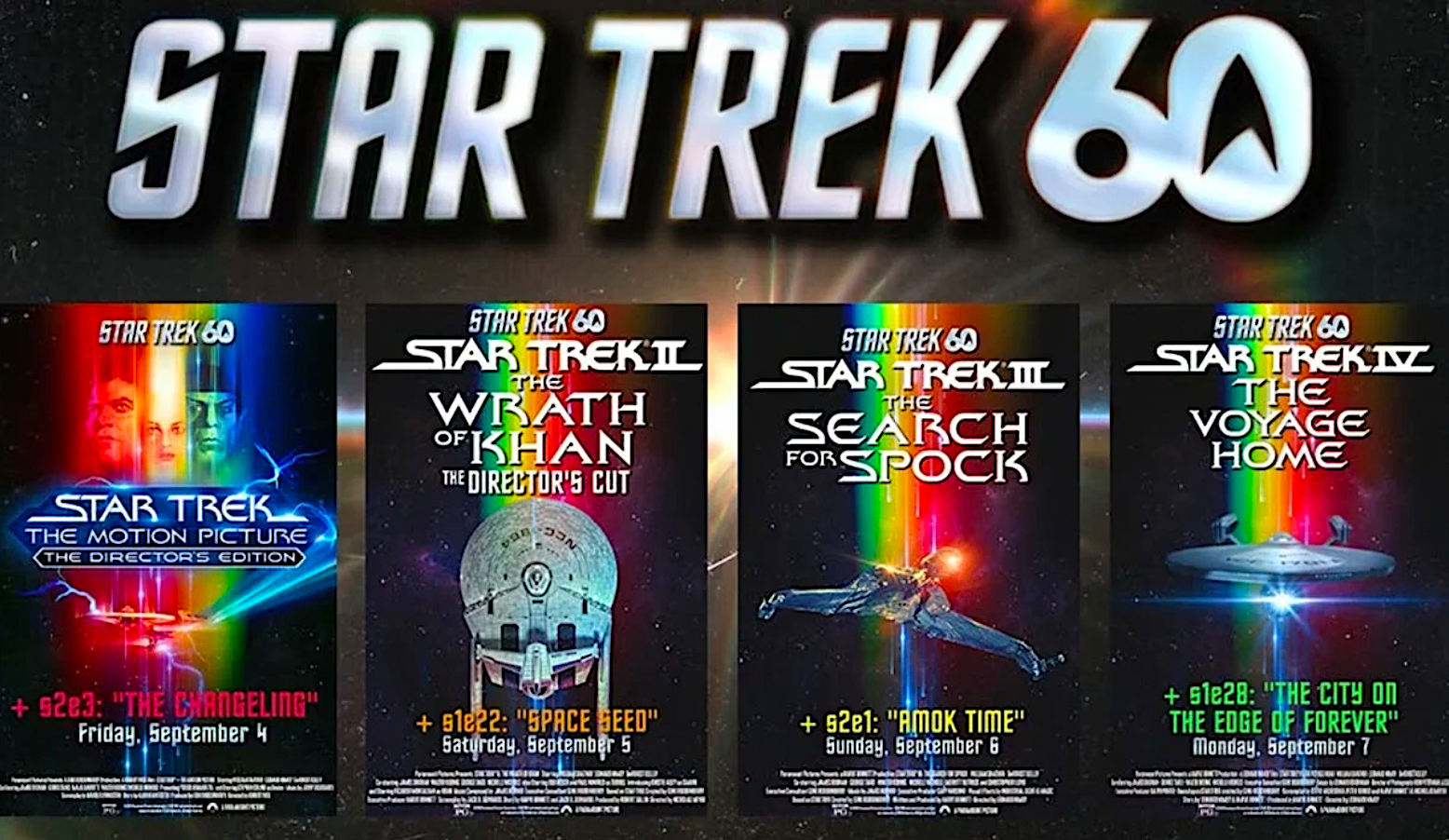
Firstly, limited-release restored 4K screenings of the initial four "Star Trek" feature films will blaze across the big screen at 750 AMC, Cinemark Alamo Drafthouse, and Regal Cinemas across the country from Sept. 4-8, perfectly paired with the "Star Trek: The Original Series" episodes they were inspired by.
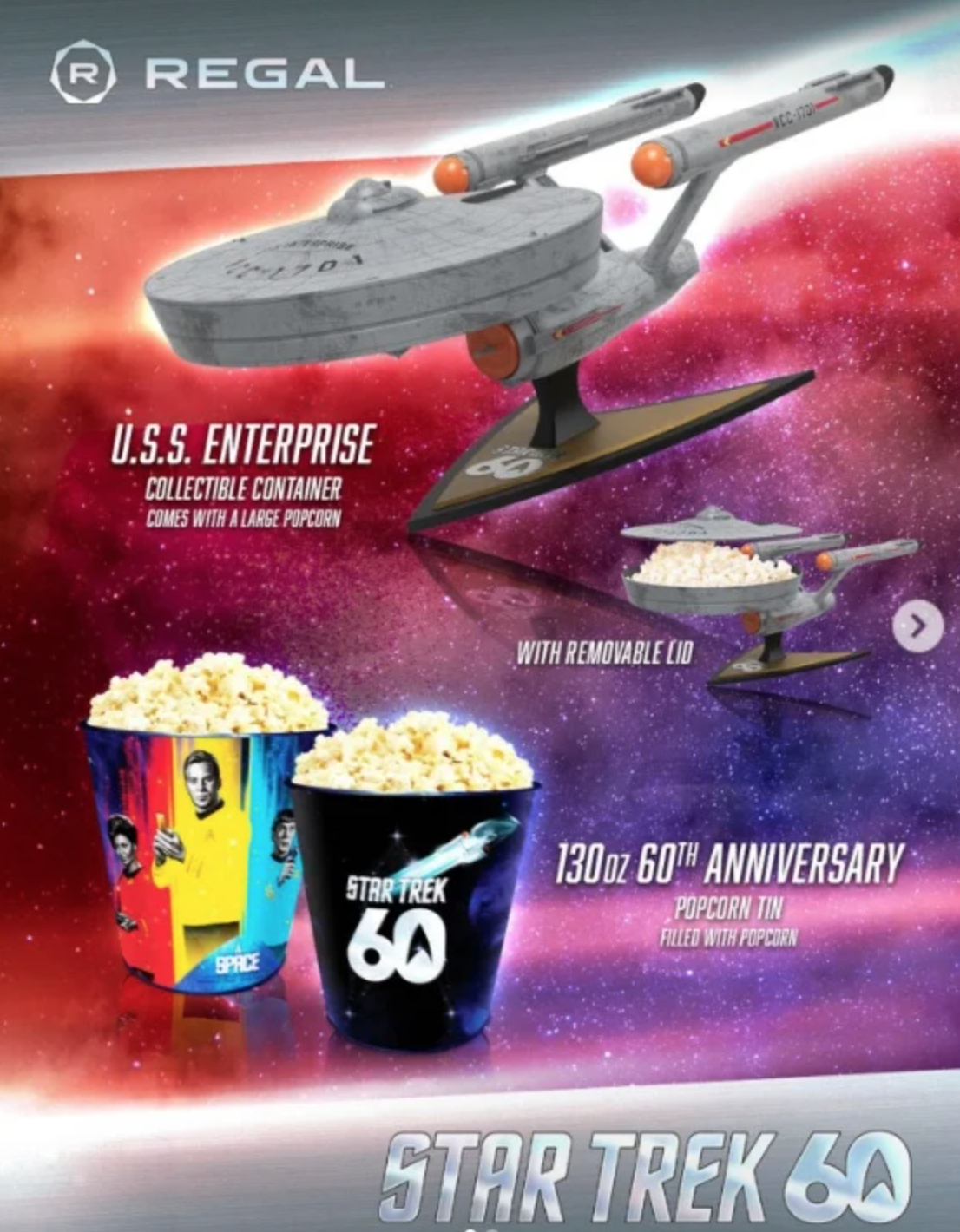
Each of these monumental showings will offer limited-edition "Star Trek" Enterprise popcorn buckets and cool multi-colored anniversary drink cups at most participating theaters... until they're all gobbled up!
Special 4K "Star Trek" feature films will be matched with "The Original Series" TV episodes for the very first time (Image credit: Paramount)
On Sept. 7, "Entertainment Tonight" is broadcasting an "ET Vault Unlocked" episode showcasing archival interviews with Gene Roddenberry and cast luminaries from the franchise.
If you’re into game shows, both "The Price Is Right" and "Let’s Make a Deal" will air special "Star Trek" themed episodes Sept. 8 on CBS and Paramount+, including guest appearances by "Strange New Worlds"' Rebecca Romijn and Ethan Peck.
Not to be left out of the party, Nick at Nite delivers a marathon of "The Big Bang Theory's" most geeky “Star Trek” episodes that same day.
For fans across the pond, Trekkies can participate in a free live world record attempt on Sept. 8 at the Science Museum in London when loyal fans try to break the Guinness World Record for the most humans flashing the "Star Trek" Vulcan Salute at once!
In Tinsel Town, Gene Roddenberry’s Hollywood Walk of Fame star will receive a polished-up restored plaque on Hollywood Boulevard for the "Star Trek" creator courtesy of the Roddenberry family, the Hollywood Historic Trust and the Hollywood Chamber of Commerce.
Please beam us up a pricey Enterprise popcorn bucket! (Image credit: Regal)
Finally, and most appropriately, the European Space Agency will bring "Star Trek" up into the final frontier with ESA astronaut Sophie Adenot adorning her uniform with the Captain’s Delta badge from "Star Trek: Strange New Worlds" while aboard the International Space Station on Sept. 8, accompanied by commemorative content.
You know you want one of those $80 USS Enterprise popcorn vessels! Resistance is futile! However you celebrate "Star Trek's" anniversary, here's to another 60 years of "Star Trek"... or perhaps we should say, may it live long and prosper!
So far the Enterprise has encountered Martians, hangovers and Muppets, and now its latest mission, "Like Chronitons Through the Hourglass", has made a detour into full-on soap opera territory.
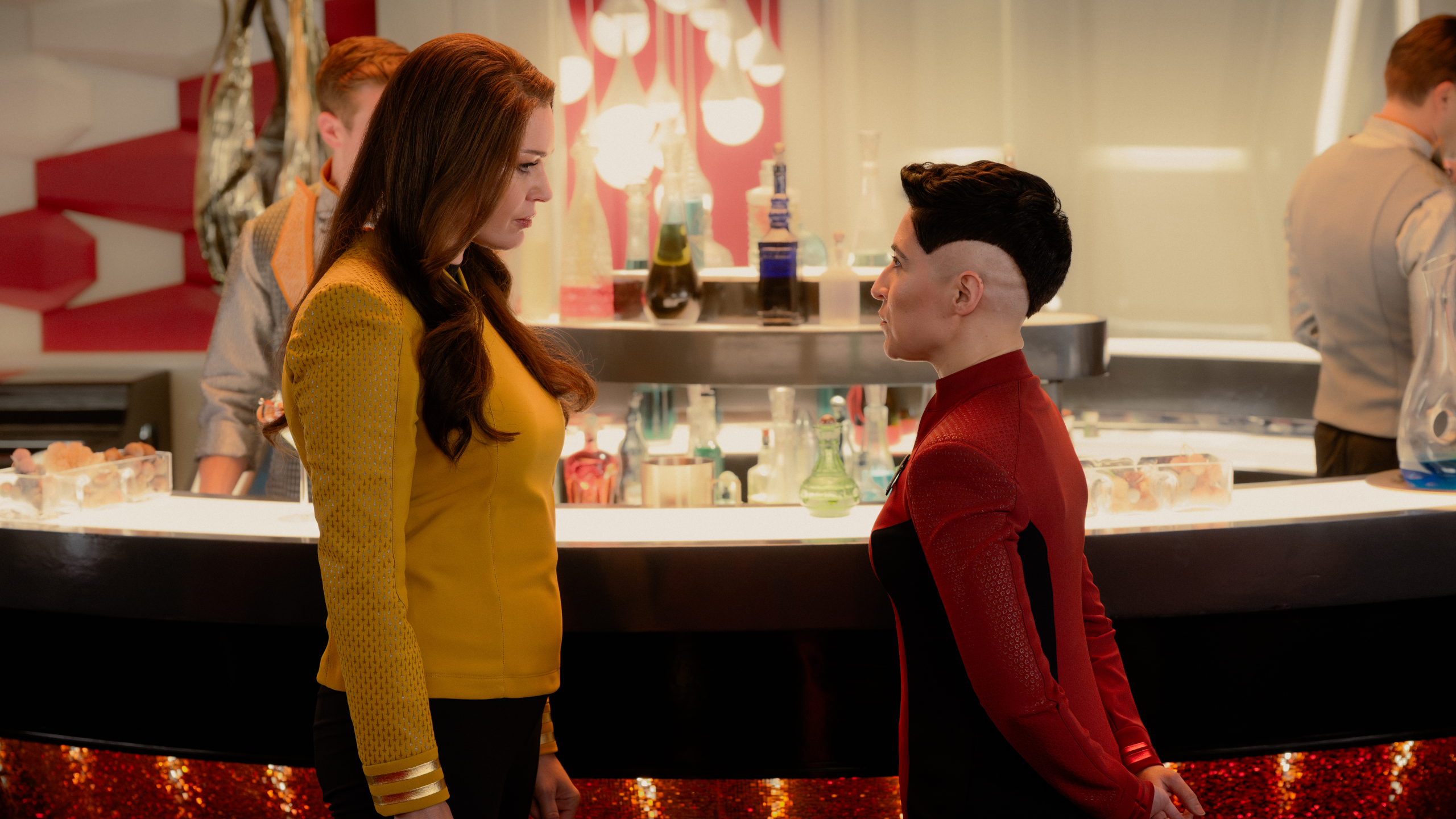
Thanks to the meddling of Q junior Trelane (Rhys Darby), the ship's lighting is slightly off, day-to-day operations are punctuated by ad breaks, and the crew has developed a tendency to stare wistfully into the middle distance. Reminders that Starfleet's finest are living out their very own "Days of Our Lives"-style TV show are everywhere, but — for all the deliberate overacting and pauses. In. All the. Wrong. Places — is it really that different from regular life on a starship? Isn't "Star Trek" essentially a soap opera anyway?
Dictionary definitions of soap operas vary, but the general gist is that they follow the daily lives of a bunch of characters over an extended period of time. They're a broad church — the more glamorous US soaps are very different to their gritty, slice-of-life UK counterparts — but they're usually characterized by interpersonal dramas and a long-running nature.
So, aside from the fact that episodes of "Star Trek" are bunched into seasons, and there's usually a story of the week, the franchise effectively fits the bill.
(Image credit: Paramount)
That wasn't so much the case in the Original Series days, where episodes were resolutely standalone and most of the regulars on the bridge — even Sulu, Uhura and Chekov — were given minimal character development. Even Uhura's famous kiss with Captain Kirk was a one-off affair.
But by the time "The Next Generation" left Spacedock, interpersonal relationships were very much on the agenda — so much so that the Enterprise-D needed a counselor on the ship's manifest.
(Image credit: Paramount)
From day one, the show was getting busy establishing the backstories of the characters, with Commander Riker's previous relationship with Counselor Troi a matter of record, and Captain Picard's complicated past with Dr Beverly Crusher (her late husband, Jack, was Jean-Luc's best friend) adding an extra frisson to their working relationship.
Even as the show adhered, more or less, to its adventure-of-the-week format, these will they/won't they romances sizzled in the background (albeit on a very low heat), until belatedly coming to fruition in "Star Trek: Insurrection" and "Star Trek: Picard", respectively. We also met various members of Picard, Troi, and Worf's families, while Troi and Worf found the time for a brief fling — much to Riker's annoyance.
The more serialized nature of "Deep Space Nine" was even more suited to space opera-meets-soap opera storytelling. As the Dominion War rumbled on in the background, Worf and Jadzia Dax found love (and later married) against a backdrop of the Bajoran Wormhole, before widower Captain Sisko and new flame Kasidy Yates said "I do" for themselves, and became parents.
(Image credit: Paramount)
Romantic sparks also flew between Colonel Kira Nerys and shapeshifting security chief Odo, and Dr Julian Bashir and Ezri Dax. (The latter took on the Dax symbiont after Jadzia Dax's death, a complication that not even the craziest US soaps have dared to explore.) And then there was Chief O'Brien, the first "Trek" regular to juggle his Starfleet duties with a settled home life.
Meanwhile, "Voyager"'s journey through the Delta Quadrant was punctuated by various births, deaths, and marriages, alongside the various unlikely friendships that developed among the marooned crew. On "Enterprise", Trip Tucker managed to find his way past T'Pol's logical exterior to share a romance with the ship's resident Vulcan — though only after his captain had experienced some rather awkward feelings towards his First Officer in "A Night in Sickbay".
Crews in more recent "Trek" series have tended to be more in touch with their feelings than their predecessors. "Discovery" may be packed with 31st-century tech so advanced it resembles magic, but the crew hasn't evolved past old-school interpersonal drama (and hugging). And at "Starfleet Academy", dealing with hormones tends to be as important to the curriculum as learning to handle the Borg or Nus Braka.
(Image credit: Paramount)
The difference with "Like Chronitons Through the Hourglass" is simply that it's more blatant in its references to soap operas, which — based on Pike's reaction to Trelane's shipwide experiment — are apparently still a thing in the 23rd century. Which raises the awkward question of why no one on the Enterprise has noticed that ship's counselor, Dr Chivers, looks a lot like Marlena Evans from "Days of Our Lives"? Both characters are played by actor Deidre Hall.
Overblown medical conditions like "cosmic amnesia" and "space madness" — or Pike learning he's Uhura's long-lost father — intentionally push the episode into the realms of ridiculousness.
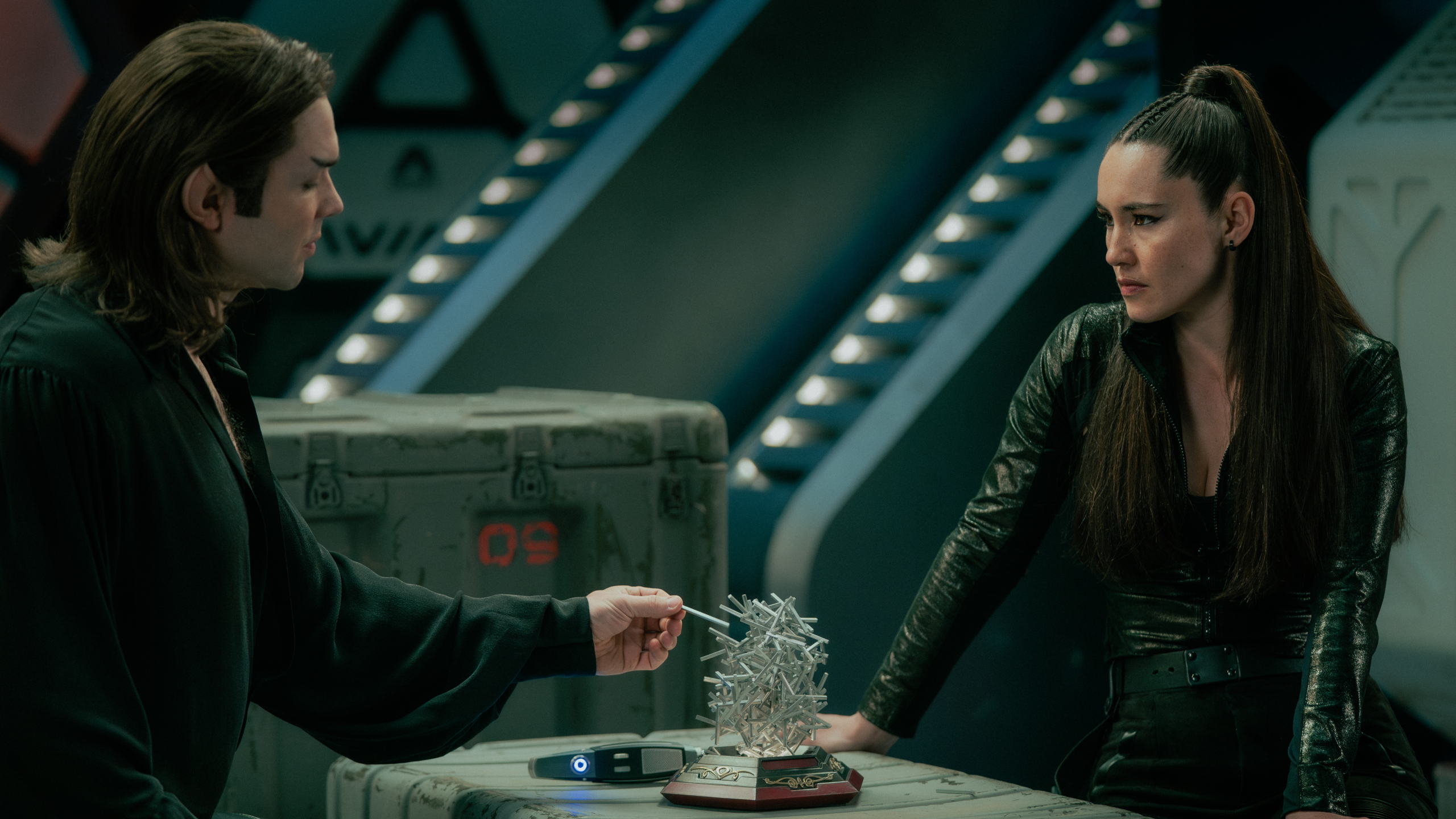
Tone down the silliness, however, and these twists wouldn't look out of place as "Trek" B-plots. Indeed, while La'an's meeting with Spock's "evil twin" Sybok is right out of the American soap opera handbook — remember Hans Ramoray, Dr Drake Ramoray's morally dubious sibling in the "Friends" version of "Days of Our Lives"? — a similar storyline has also played out in "Star Trek", courtesy of Data and his dodgy big brother Lore.
(Image credit: Paramount)
Ultimately, this episode exists as an excuse for Pike to confront long-buried feelings about the loss of partner Marie Batel, and Juliet, the daughter he had in an imaginary existence.
That the captain can actually hear the episode's incidental music is kinda weird (that stuff's supposed to be non-diegetic), but "Like Chronitons through the Hourglass"'s soap opera stylings should otherwise be all in a day's work for the captain of the Enterprise.
New episodes of "Star Trek: Strange New Worlds" debut on Paramount+ on Thursdays.
Famed author Thomas Wolfe coined the phrase "You Can’t Go Home Again" with the title of his classic 1940 novel, and while that actually might be true in some cases, "The Mandalorian and Grogu" gets its homecoming as it arrives on Disney+ for fans today, Sept. 2, 2026.
Honestly, this is probably where the $166 million "The Mandalorian" spinoff movie should have premiered in the first place, but Disney decided to test the big screen waters with its charismatic clansman and Baby Yoda. Sadly, it came up a bit short when all the tickets were tallied, but everyone loves second chances, and we're pretty psyched to see the space fantasy back where it belongs: in the vast streaming universe.
"The Mandalorian and Grogu" was directed by Jon Favreau from a script co-written by Lucasfilm President and CCO Dave Filoni and Noah Floor ("The Book of Boba Fett"). It stars Pedro Pascal as bounty hunter Din Djarin, Sigourney Weaver as Colonel Ward, Jeremy Allen White voicing Jabba the Hutt's beefy son, Rotta, and Grogu as… Grogu.
The intergalactic duo hits Disney+ starting Sept. 2, 2026. (Image credit: Disney+)
"The evil Empire has fallen, and Imperial warlords remain scattered throughout the galaxy," states the official synopsis. "As the fledgling New Republic works to protect everything the Rebellion fought for, they have enlisted the help of legendary Mandalorian bounty hunter Din Djarin and his young apprentice Grogu.”
The adventurous sci-fi spinoff also launched on Home Video on Aug. 25 in 4K Ultra HD and Blu-ray, packed with exclusive bonus content, featurettes, and audio commentary. A Beskar Collector's Edition SteelBook release includes special deluxe packaging and collectible metal posters.
As Labor Day Weekend approaches and with current theatrical offerings this time of year pretty slim, there’s a certain sense of optimism in the galaxy far, far away that "The Mandalorian and Grogu" will perform well and attract fresh audiences that might have been sitting on the sidelines until now.
"The Mandalorian and Grogu" lands on Disney+ starting Sept. 2, 2026 (AKA right now).
At the turn of the century, sci-fi evolved to new heights, which fortunately had nothing to do with Y2K (even if previous sci-fi movies might have led us to believe it would).
Propelling themselves through the 00s, iconic franchises continued to thrive with both Star Wars and Star Trek maintaining their dominion over sci-fi cinema.
The decade also saw the birth of the Marvel Cinematic Universe (MCU) with 2008's Iron Man. The MCU now consists of 38 movies and counting, with many of them sitting firmly in the sci-fi genre.
It wasn't all legacy franchises, though; our list is chock-full of original stories that joined the upper echelons of sci-fi history. In fact, it was such a fantastic decade for science fiction flicks that we've had to extend our "best of" list to 12 entries, because we simply could not narrow it down to ten.
So, let's all meet up in the year 2000 (to 2009), with our list of the 12 best sci-fi movies of the 2000s. Oh, and when you're done here, we've also covered the best sci-fi movies of the 1970s, 1980s, and 1990s.
12. Iron Man
(Image credit: Marvel)
Release date: May 2, 2008 | Cast: Robert Downey Jr., Gwyneth Paltrow, Terrence Howard, Jeff Bridges, and more | Director: Jon Favreau | RT score: 94% critics, 91% audience
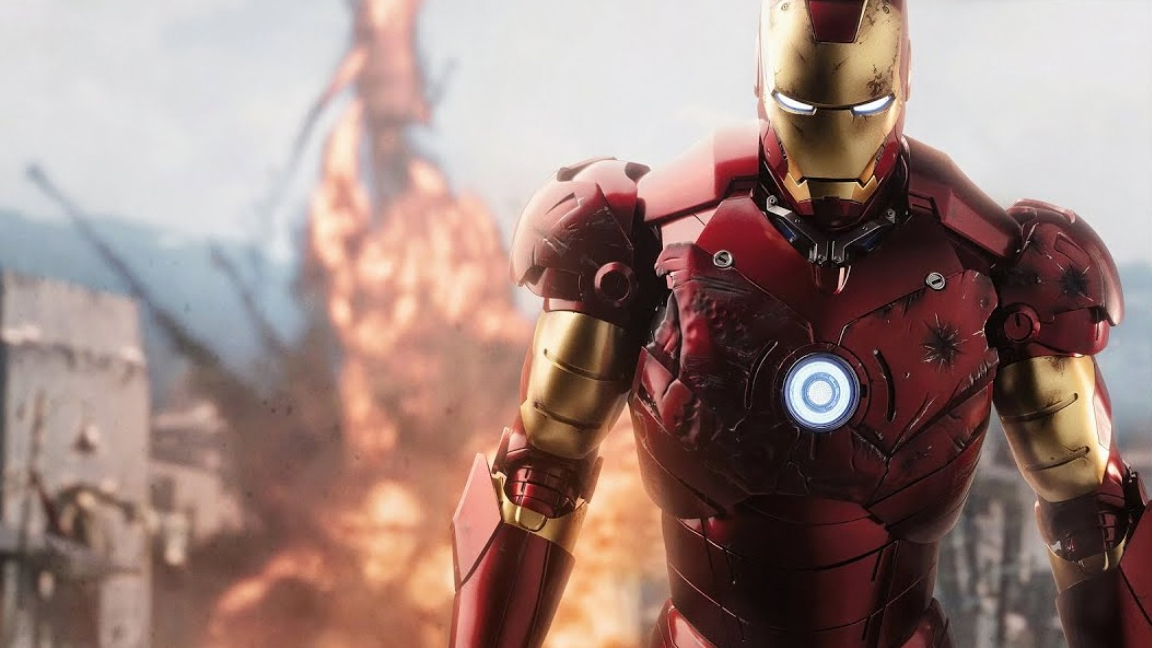
The Marvel Cinematic Universe is simply that, a universe that weaves and threads through a multitude of movies all centered on Marvel Comics. Over almost three decades, there have been phased releases (with plenty more in the pipeline), but the movie that started it all was Iron Man in 2008. Not only did it kick-start the MCU, but it catapulted Robert Downey Jr. back into the limelight for his stellar performance after being rocked with personal issues prior.
Iron Man follows billionaire engineer Tony Stark, who wasn't born with special powers, but can sure as heck pay and use his powerful mind to give himself them. Crafting the iconic weaponized suit to save himself from a terrorist kidnapping, Iron Man is born.
If you watch the Marvel movies in orderchronologically, it's technically not the first, with both Captain America: The First Avenger and Captain Marvel taking place before it, but it was the first in release order, and it's still one of the best MCU movies to date.
Release date: May 8, 2009 | Cast: Chris Pine, Zachary Quinto, Simon Pegg, Leonard Nimoy, and more |Director: J. J. Abrams |RT score: 94% critics, 91% audience
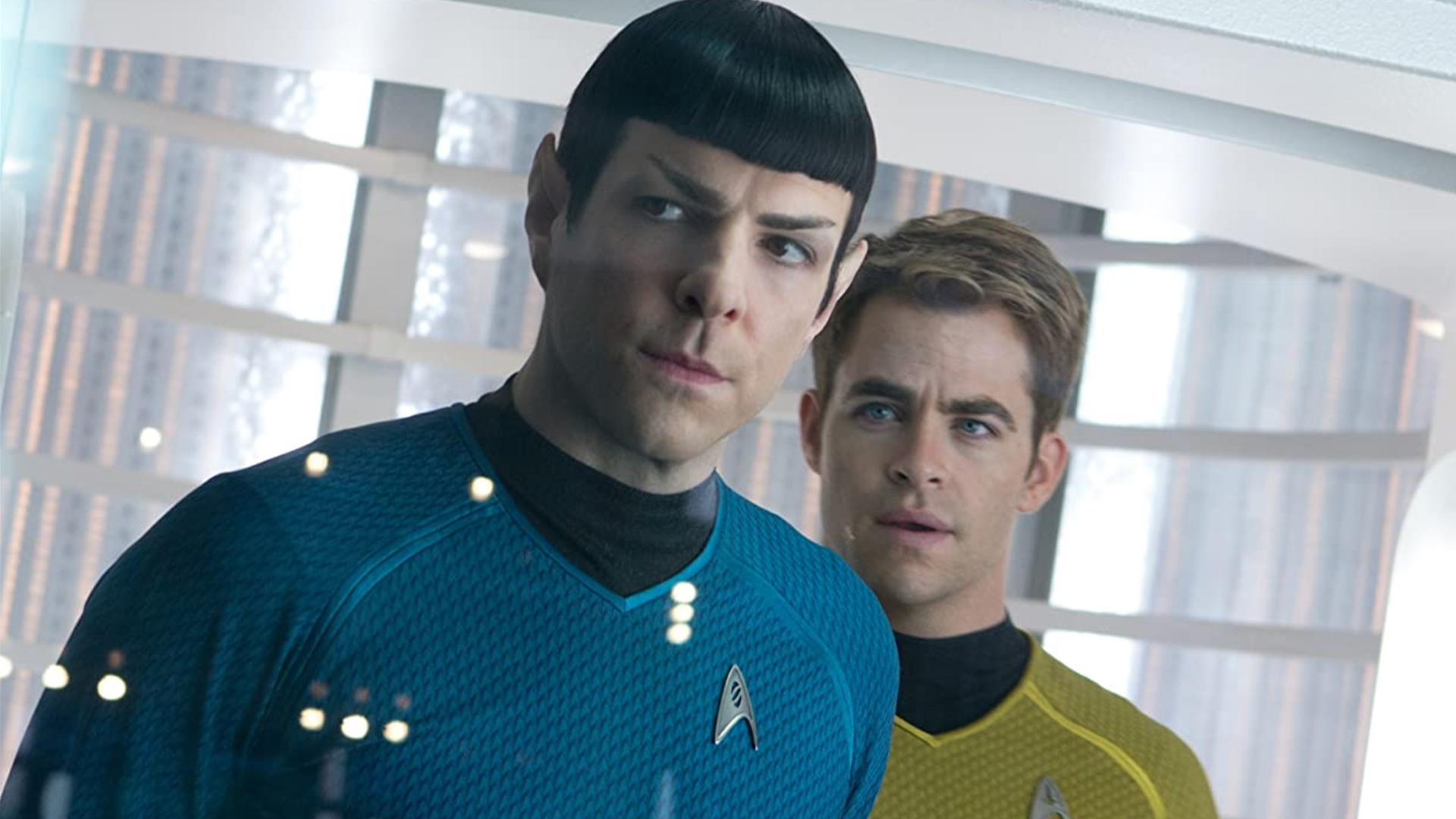
Another iconic sci-fi franchise makes an appearance now, as Star Trek returned to the big screen towards the tail end of the 2000s. While Star Trek has been around for decades, in 2009, renowned director J. J. Abrams brought the franchise back with an incredible cast, vibrant visuals, and an epic story.
James T. Kirk (Chris Pine) and Spock (Zachary Quinto) board the USS Enterprise to embark on an epic space adventure to take down a Romulan commander, Nero (Eric Bana).
Reigniting the much-loved franchise, it mostly stays true to the source material, whilst giving it an appropriately modern twist. Whilst it's basically a reboot, Star Trek 2009 uses some time travel shenanigans to establish this Kelvin timeline into the wider Trek universe, with Original Series legend Leonard Nimoy playing a significant role in the flick.
Curious to see how this spin-off fits into the main timeline? Check out our guide on how to watch the Star Trek movies in order.
Release date: August 14, 2009 | Cast: Sharlto Copley, David James, Jason Cope, Vanessa Haywood, and more | Director: Neill Blomkamp | RT score: 90% critics, 82% audience
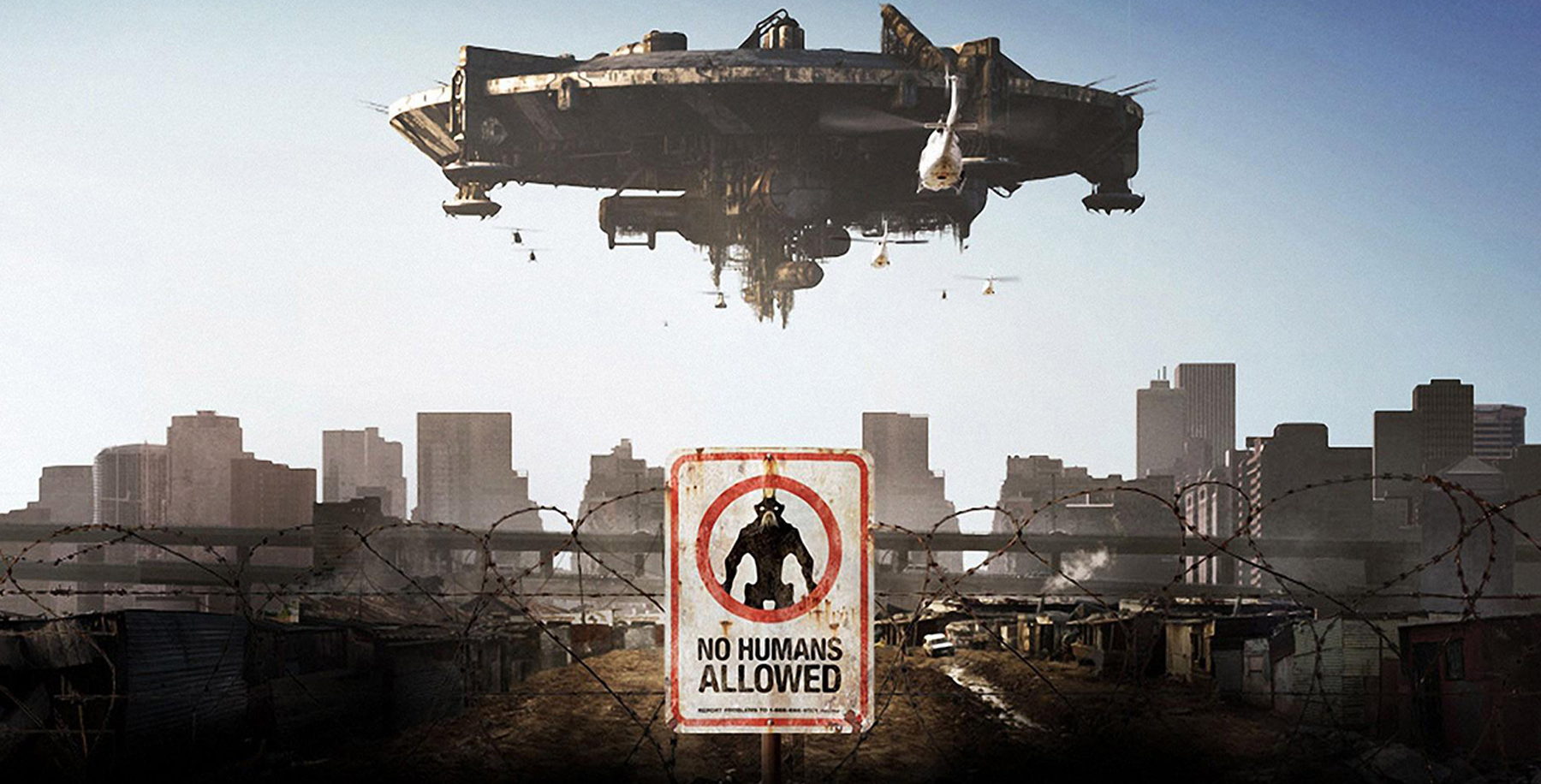
South African sci-fi movie District 9 is a thriller that blends action and poignant emotional moments, all set in an alternate timeline.
Aliens land in Johannesburg in 1982 seeking refuge, but instead they're crammed into an internment camp called District 9. Skip forward to 2010, and a forced relocation is underway to kick the "Prawns" — now seen as second-class citizens — to the outskirts of the city.
Wikus van de Merwe (Sharlto Copley) plays a government agent working in the Department of Alien Affairs, who gets caught up in a world of questionable ethics and violence. Things only get worse when he gets infected with alien blood that starts to transform him into one of them.
It's a unique take on the mockumentary format, playing out in fictional interviews, news segments, and surveillance videos, alongside the present-day storyline. It's an obvious allegory for apartheid with a sci-fi thriller twist and an incredibly unique offering to the genre.
Release date: April 6, 2007 | Cast: Cillian Murphy, Rose Byrne, Chris Evans, Michelle Yeoh and more | Director: Danny Boyle | RT score: 77% critics, 73% audience
Danny Boyle is an iconic British director, and after phenomenal pieces of cinema like Shallow Grave, Trainspotting, and The Beach, he finally went to outer space with Sunshine.
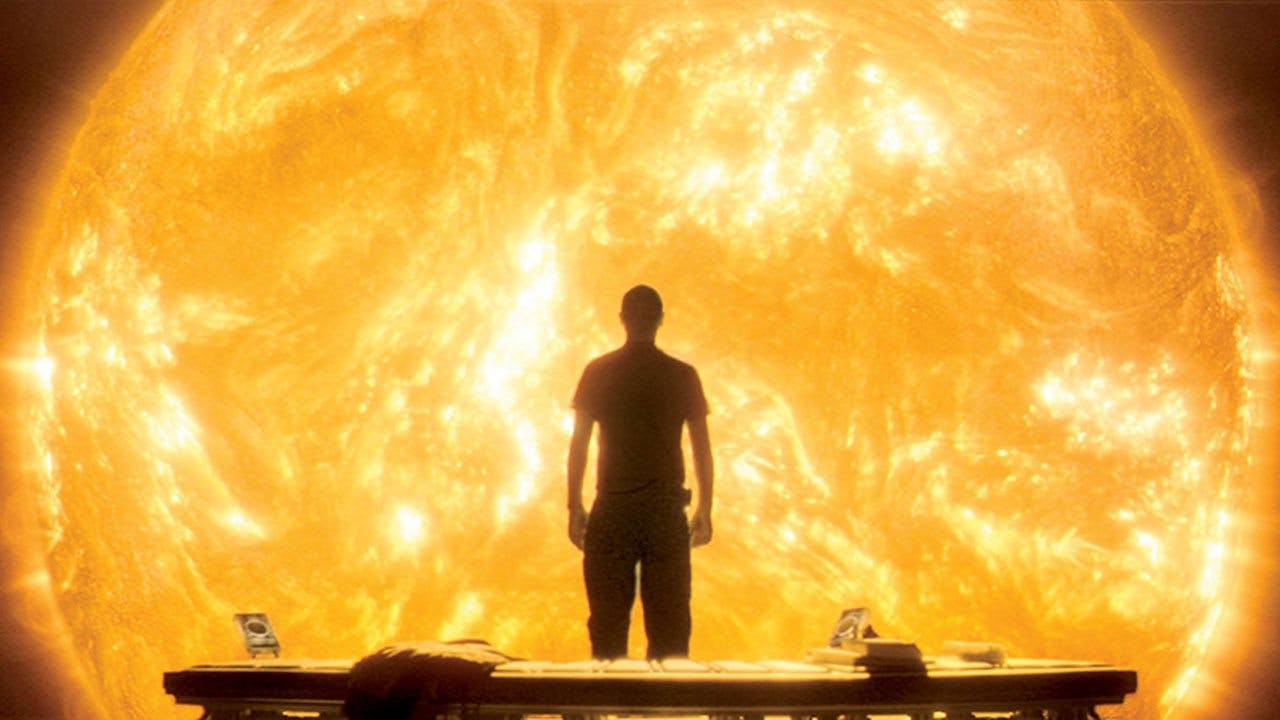
Sunshine is a twisty sci-fi thriller set in the near future. The year is 2057, and the sun is dying, threatening human existence. To save the planet, a crew is sent on a mission to give the sun back its shine… by nuking the crap out of it.
As with a lot of death-defying space missions, it doesn't go as planned, or it wouldn't make a very good movie. Funnily enough, heading into space to try and fix the sun with a nuclear fission bomb is a pretty volatile plan, though it's not the bomb that ends up being the biggest threat (No spoilers here, just go watch it). The resulting tension — and some breathtaking moments — cement this movie's spot on our list.
Fun fact: Sunshine was made in collaboration with Alex Garland, the writer of The Beach who would later go on to write and direct another iconic piece of sci-fi cinema, Ex Machina.
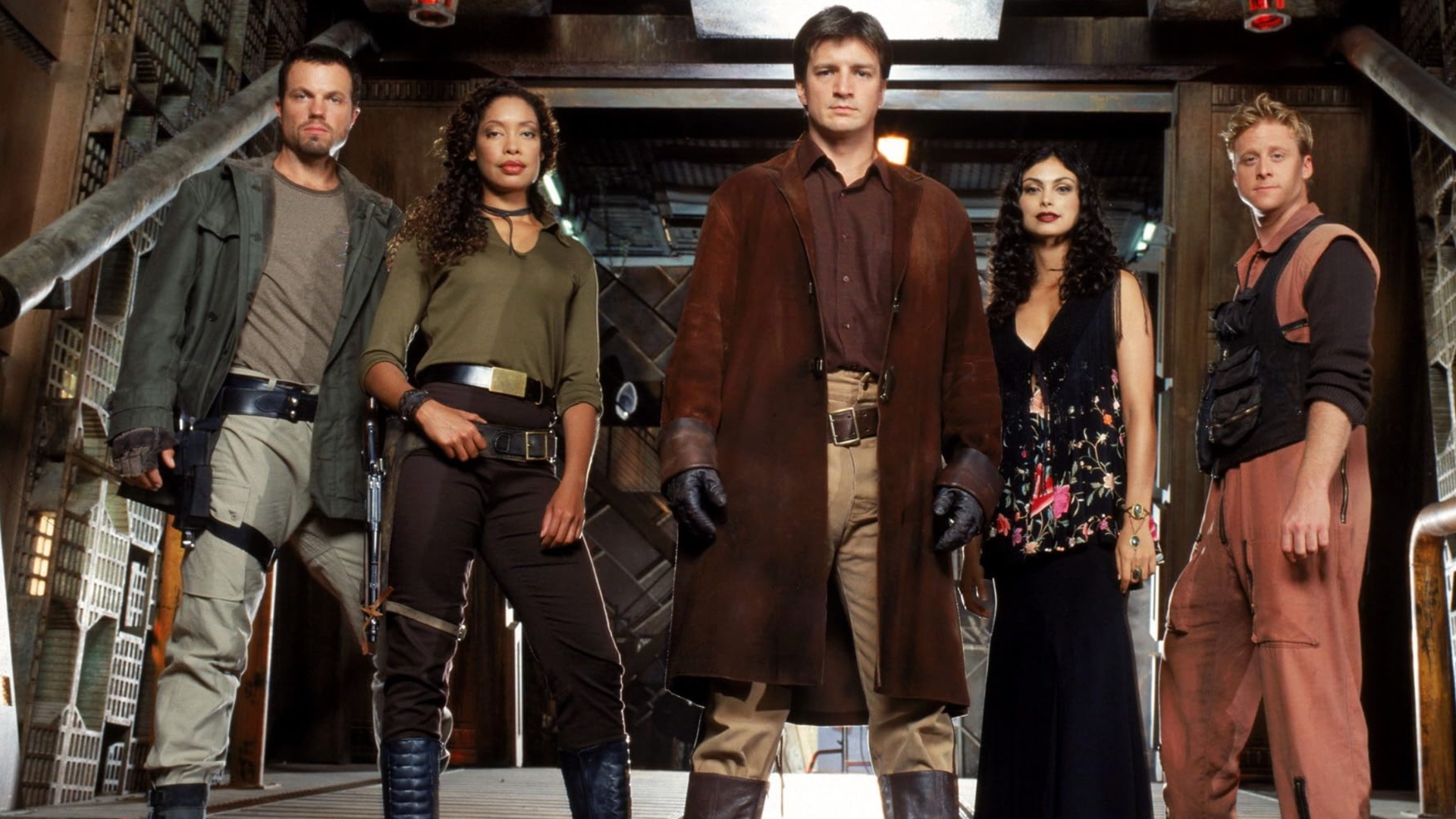
Release date: September 30, 2005 | Cast: Nathan Fillion, Gina Torres, Chiwetel Ejiofor, Alan Tudyk, and more | Director: Joss Whedon | RT score: 82% critics, 91% audience
After director Joss Whedon's TV show Firefly was discontinued, fans feared that was the end of the iconic space Western. Luckily, it was given a new lease of life in Serenity.
With the same cast reprising their roles, Serenity takes place after the events of the final episode, providing closure for fans of the unfortunately short-lived series, which sits amongst the best sci-fi TV shows of all time.
Serenity follows the crew of the ship as they try to avoid the Alliance forces and protect River, the powerful telepath they are harboring onboard. Skirting bravely around the edges of space to seek solace, they’re hunted by the Operative (Chiwetel Ejiofor), a deadly Alliance assassin on a mission who seeks to recapture her.
For fans of the original show, it's a fitting send-off, and for new fans it's a fun adventure with an impressive cast and unique space western charm.
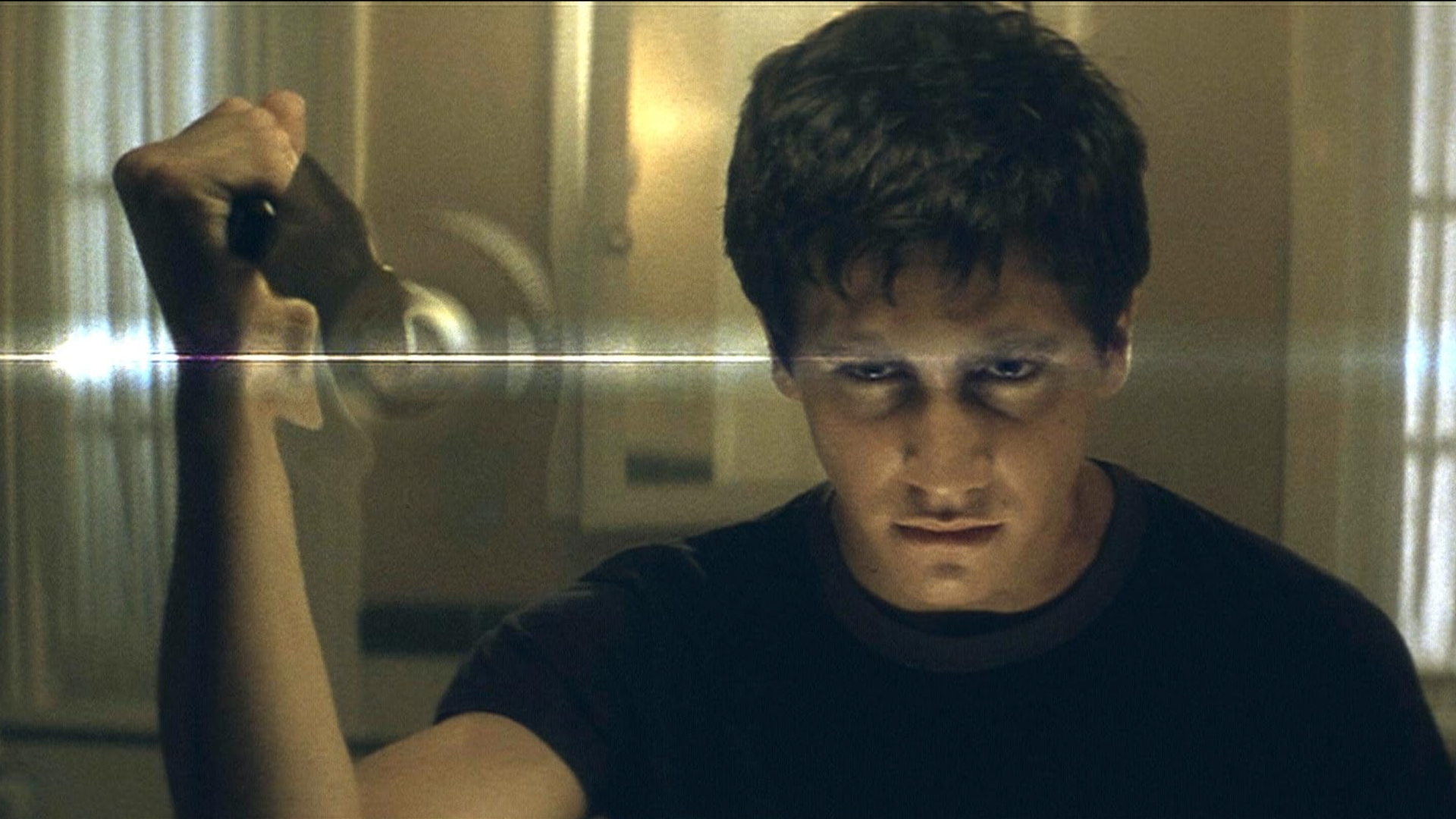
Release date: October 26, 2001 | Cast: Jake Gyllenhaal, Jena Malone, Mary McDonnell, and more | Director: Richard Kelly | RT score: 87% critics, 80% audience
This psychological thriller was one of Jake Gyllenhaal's most prolific roles to date and an unlikely foray into sci-fi for the actor. Yet, his role as Donnie Darko, a troubled teen with a bunny costume-wearing friend that only he can see, is most certainly one of his finest performances.
After a freak accident, Frank the bunny appears in an outstandingly creepy fashion to inform Donnie Darko of the world's impending doom. The following adventure is a wild blend of time travel, crime, and a warped version of reality. You'll be left theorizing on what you've witnessed in Richard Kelly's sci-fi classic.
It might not have got off to the best box office start, but it's certainly secured its cult status now. Fair warning, though: the tension-building of the movie is not for the faint-hearted.
(Image credit: Anchor Bay Entertainment/Shoreline Entertainment)
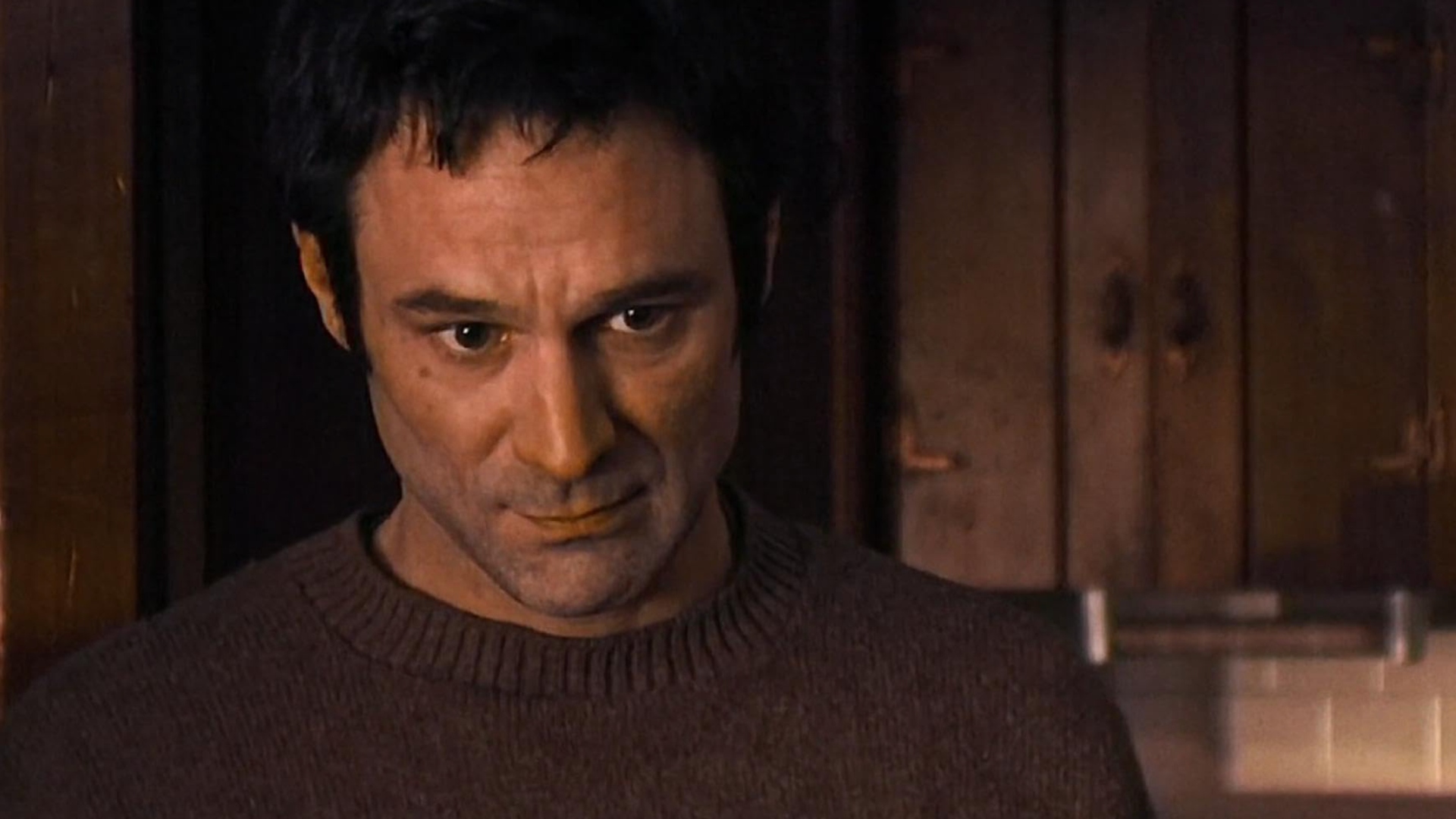
Release date: November 13, 2007 | Cast: David Lee Smith, Tony Todd, John Billingsley, and more | Director: Richard Schenkman | RT score: 100% critics, 85% audience
Compared to the rest of this list, The Man From Earth stands alone as a unique flick. Why? Because it strips the sci-fi genre back to basics: there's no crazy CGI (marking an interesting exclusion in the 2000s), no intergalactic adventures (or misadventures), or even dystopian reimaginings.
Retiring college professor John Oldman (David Lee Smith) reveals to his colleagues during a surprise goodbye party that he is, in fact, thousands of years old. As his peers press him about his life on Earth, he unravels his historic tale that touches on a lot of thought-provoking topics.
It's Earth-based as we know it and aims to stun viewers with a simple design, yet complex tale. A goal it very much achieves.
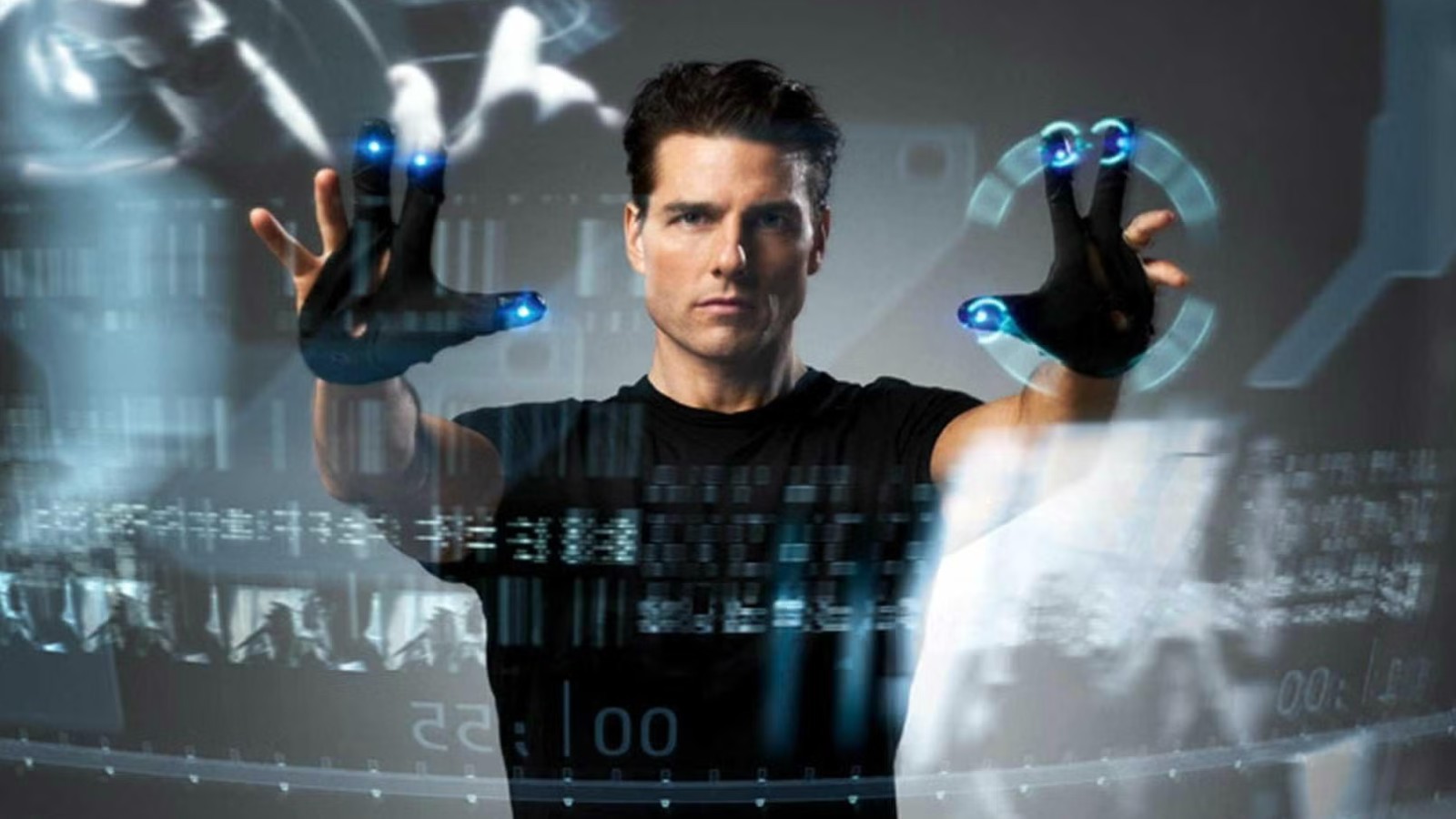
Release date: June 21, 2002 | Cast: Tom Cruise, Colin Farrell, Samantha Morton, and more | Director: Steven Spielberg | RT score: 89% critics, 80% audience
Loosely based on a novella of the same name by Philip K. Dick, Minority Report imagines a world in 2054 (less than 30 years away now) where criminals are stopped in their tracks before they commit a crime. Aided by three psychics called the 'precogs,' a special police department has been set up to apprehend the assailants before they manage to execute their wrongdoing.
This fascinating cyberpunk flick is fronted by Tom Cruise as Precrime Chief John Anderton, a troubled soul determined to complete the department's mission until he becomes a target for precrime himself. Desperately on the run and fighting for his innocence, the system he’s so devoutly believed in begins to unravel.
It's a prescient movie in more ways than one; some of the technology that's predicted in Minority Report, such as iris scanners and multi-touch interfaces, has become a reality today. This is owing to the fact that director Steven Spielberg actually invited scientific experts to think about the kind of technologies they may expect in the future and, interestingly (or worryingly), they proved to be true.
Thank goodness the projectile vomit-inducing 'sick sticks' aren't real…yet.
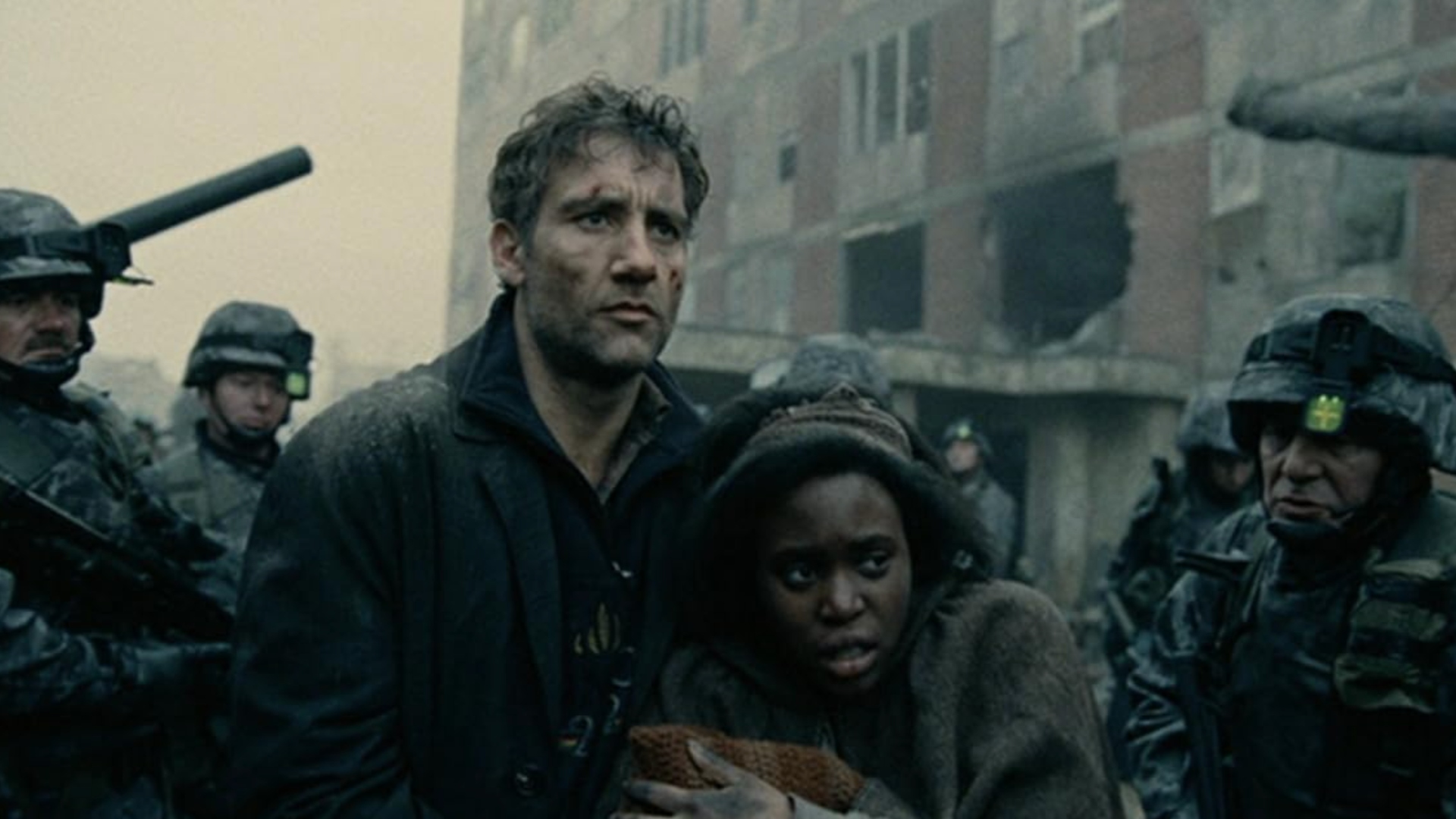
Release date: December 25, 2006 | Cast: Clive Owen, Julianne Moore, Michael Caine, and more | Director: Alfonso Curaón | RT score: 92% critics, 85% audience
There was a recurring theme inspiring sci-fi movies in the 2000s, and it was looking into the near future rather than the far-flung space age.
For Children of Men, the year is 2027 and 18 years of infertility have left Earth facing extinction… that is until a woman gets pregnant. In a dystopian world of desperation and war, small glimmers of hope keep society from crumbling completely. In the face of an intense political climate, Theo (Clive Owen) takes it upon himself to transport the pregnant woman to safety and rebuild humanity at a sanctuary at sea.
Alongside incredibly poignant themes running throughout, Children of Men offers a stunning visual style thanks to director Alfonso Curaón's prowess, which he later expands on in 2013's Gravity.
Rent or buy Children of Men on Amazon Prime Video:
Release date: March 19, 2004 | Cast: Jim Carrey, Kate Winslet, Tom Wilkinson, Elijah Wood, and more | Director: Michael Gondry | RT score: 92% critics, 94% audience
Joel (Jim Carrey) is shocked to discover his ex-girlfriend and love of his life, Clementine (Kate Winslet), has had their entire relationship erased from her memory. Amidst the heartache and upset, he decides to get the same procedure. As his memories begin to fade, he's left in a panic, not wanting to lose everything.
It's a sci-fi tale that blends wholeheartedly with romance, offering a unique look at a world where humanity can choose to forget. When the option of erasing heartbreak is so readily available, is this a kindness or a cruel, emotional violation?
Prepare to be psychologically ruined by the performances from both Carrey and Winslet, which are compelling and heart-wrenching in equal measure.
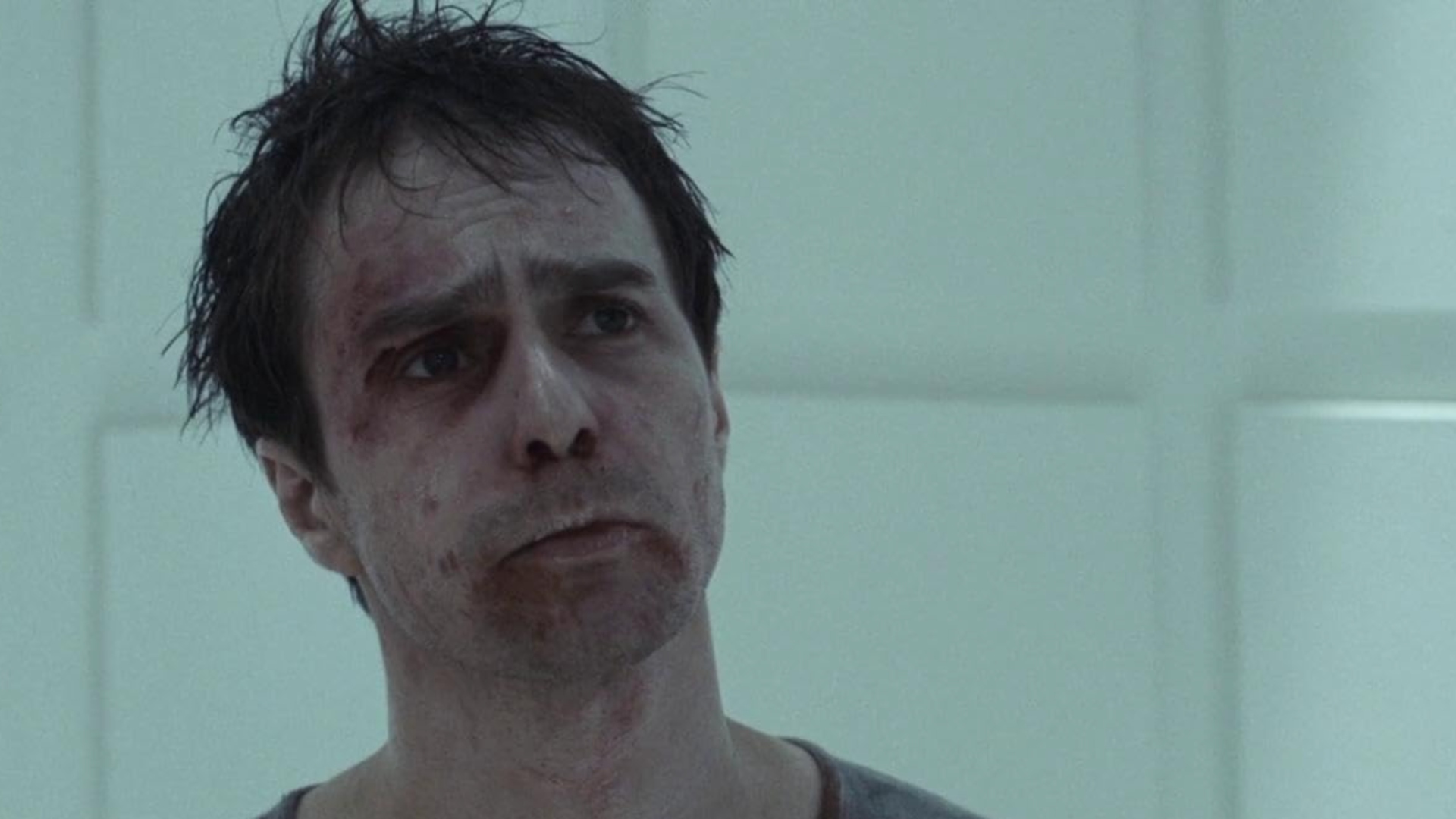
Release date: June 12, 2009 | Cast: Sam Rockwell, Kevin Spacey, Dominique McElligott, and more | Director: Duncan Jones | RT score: 90% critics, 89% audience
Sam Bell (Sam Rockwell) is the sole employee of a lunar station on the Moon. For three years, he's been tasked with sending a fuel resource, helium-3, back to Earth. Totally isolated, Sam's only company is his intelligent computer, GERTY (voiced by Kevin Spacey), and he yearns to return home to his family.
In the final two weeks of Sam's mission, an accident threatens his return to Earth. What happens next are the most dramatic and twisted moments of his life, as these mysterious events bring Sam face-to-face with his younger self.
It's one of the best sci-fi movies of all time for good reason, owed mainly to Rockwell's outstanding performance that makes you feel almost as entirely alone as he is.
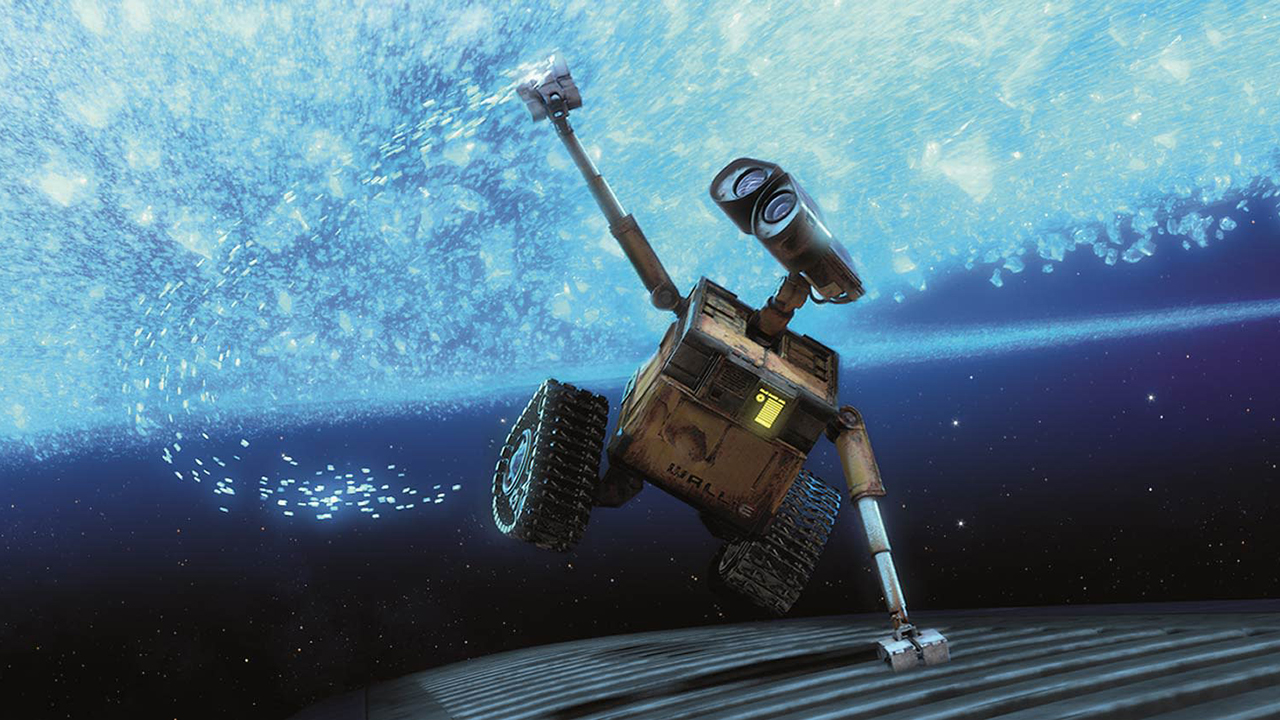
Release date: June 27, 2008 | Cast: Ben Burtt, Elissa Knight, Jeff Garlin, and more | Director: Andrew Stanton | RT score: 95% critics, 90% audience
Disney Pixar is no stranger to a good story. Over the decades, they've brought us tales full of adventure, comedy, monsters, and even bugs. Then, in 2008, Pixar turned to sci-fi and introduced us to one of the best movie robots ever: WALL-E.
He's a cute, charming, waste-collecting robot who communicates only in beeps. He has no one to talk to anyway, sadly, as he is the last of his kind, having remained behind on Earth to clean up the mess that humans abandoned. With seemingly no hope in his mission to save our trash-covered planet, WALL-E is surprised and delighted to meet EVE – a companion for a wild adventure.
Beneath the bubbly, fun edge, there's a deeper message that takes a hard look at humanity and tackles environmental issues through the lens of a heart-warming adventure, making this one of sci-fi's most profound and moving animated tales.
Now, if someone could just invent that pizza plant, that would be great.
On Episode 225 of This Week In Space, Rod Pyle and Tariq Malik are joined by Adam Kall of KMI to discuss their work on the ISS, the goals of the company, and how nature — via the humble octopus and gecko lizards — may provide answers for orbital debris mitigation.
The mitigation of orbital debris is an increasingly serious problem that has not gotten enough attention, but this is changing. Commercial companies are addressing orbital debris, and one of them, KMI Space, has flown its experiments aboard the International Space Station, performing over 170 individual rendezvous-and-grab operations. The results are very promising, and the company is moving ahead with ever more ambitious designs.
This Week in Space covers the new space age. Every Friday we take a deep dive into a fascinating topic. What's happening with the new race to the moon and other planets? When will SpaceX really send people to Mars?
Join Rod Pyle and Tariq Malik from Space.com as they tackle those questions and more each week on Friday afternoons. You can subscribe today on your favorite podcatcher.
Warning: Potential "Silo" Spoilers Ahead! Get back in the Silo if you aren't up to date!
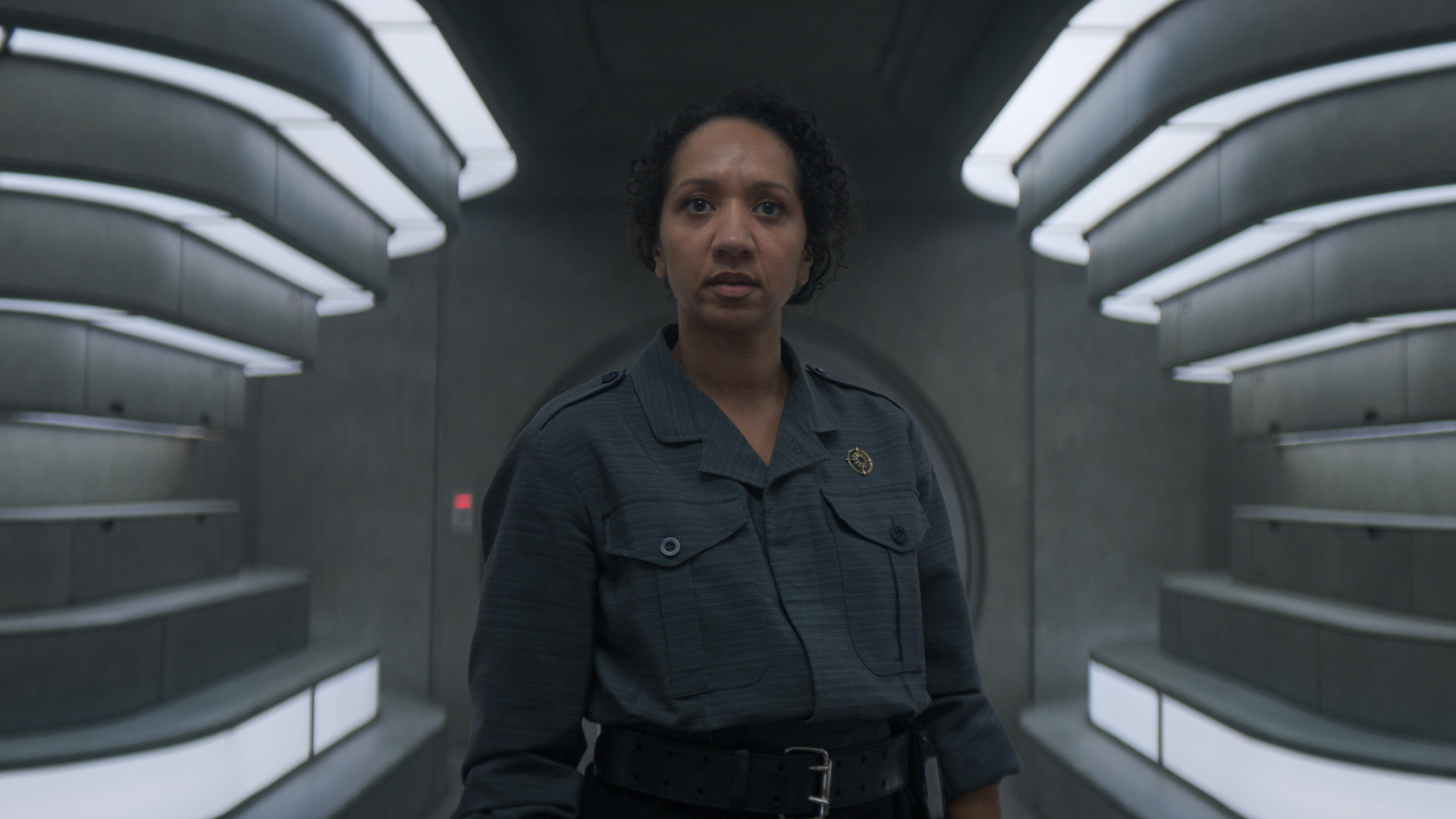
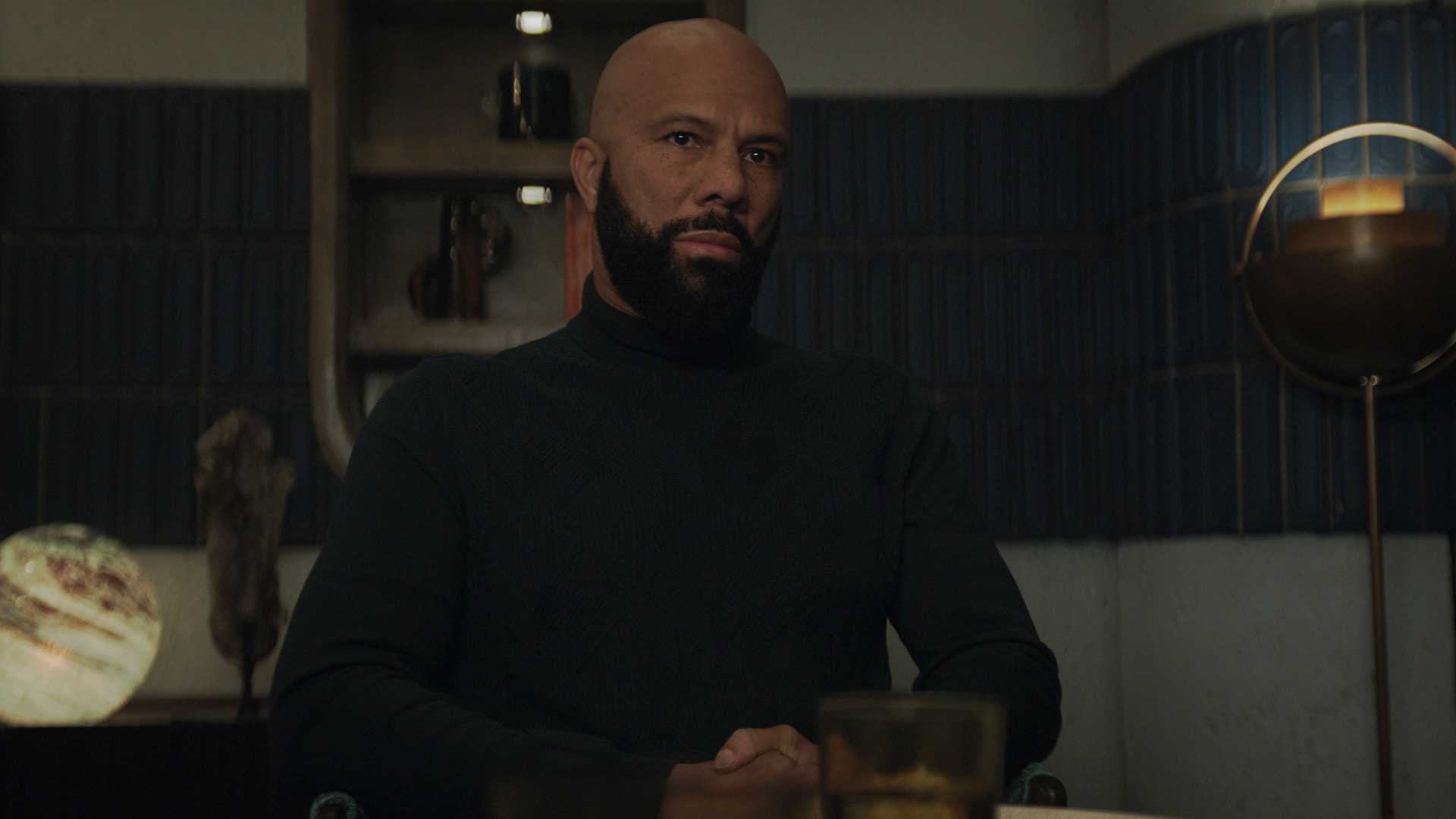
Apple TV's "Silo" season 3is nearing its final two episodes, depicting the Before Times’doomsday silo project as well as the shakeup inside Silo 18 with Juliette’s memory returning. The ongoing tempest includes Camille Sims (Alexandria Riley) having to prevent a Safeguard extermination as the new Head of IT this year, and the revelation of ex-security chief Robert Sims (Common) regarding Bernard (Tim Robbins).
With the married couple of Robert and Camille Sims careening off onto very different moral trajectories, Camille must confront troubling truths as her conscience plummets into the pits of Hades, while Robert is on a profound journey of salvation.
"The writers are incredible on this show, and we were so excited when we first saw what they were going to do," Riley tells Space. "It was said to us in a harsh way. They said, 'We’re going to tear you apart.' As an actor, for both of us, it was so fun to play with.
"We see a whole roller coaster of emotions that these two go through," continues Riley. "I think it's interesting as an audience because we’ve come from such a stable unit where we’ve been the most level and the most tactical. So to shake that up and splinter them off has been a real trip for me. We sat with it quite a bit."
Alexandria Riley as Camille Sims in Apple TV's "Silo"season 3 (Image credit: Apple TV)
Her better half is steering away from his murderous past towards enlightenment, which is bright news to fans who hoped his character would find a sense of peace.
"Camille is in a difficult place," Common adds. "Robert is in a difficult place. It is redemptive, but it's scary too, because as a character he doesn't know where he is right now. He's spent his whole life with judicial, like for the government, and that was because he believed it was good for the people of the silo. But now that trust is dispersed. It's gone. He doesn't believe that's the truth, so now he’s trying to find the truth; I love that they’ve given our characters this much of a journey.
"People used to always approach me and say, 'Man, you’re the bad guy. I like you'. Or 'I don’t like you'. And I was like, 'This dude is not a bad guy.' Now in season 3 you'll get to see the different colors of who Sims is, or Camille is, and you can make a decision."
Riley's scenes as the Head of IT, having to interact with The Algorithm’s voice piped in from Silo 1 delivering demands and ultimatums, were incredibly engrossing.
"The voice was there so I could act off that emotion, which was nice," she notes. "But in terms of visuals, there was nothing. They were really intense scenes. I loved being in that room. It reminded me of doing almost like a one-woman show sometimes. It was just you in a stark domed theater. And we’d often run the scenes together, so it was like once you’re on the train you couldn’t get off. You were going through the turmoil constantly, take after take. It was sublime. It was a challenge, but I absolutely loved it."
Common as Robert Sims in Apple TV's "Silo" season 3 (Image credit: Apple TV)
In one quiet scene in the "Farewell" episode, Sims has a poignant moment with Bernard, just before the former Head of IT is forced out into the toxic external environment. The on-set chemistry in this scene is among the best the series has to offer.
"Tim Robbins and I discovered that at this moment in time, Sims and Bernard are two of the closest people in the silo," Common explains. "Bernard was somebody who I actually really cared about. Tim expressed to me through one of the scenes we did that he realized Robert Sims was a person Bernard loved.
"I think all our history and journey as people in the silo, in that moment when he was leaving, I felt like we were able to express that without saying anything. Just a look and an acknowledgement and an honor and respect and a love. I was kinda nervous about that moment, to be honest. But Tim did some things in it that kept it so alive and real."
"Silo" season 3 is currently airing exclusively on Apple TV.
Every so often, "Star Trek" likes to put its brave interstellar adventurers through hell. You know the drill — a bunch of one-off crew members will probably be blown up and/or sucked into space, while set dressers get to have fun making starship bridges look like they've been through the wars. We all know that seeking out new life and new civilisations is the prime directive on that final frontier, but sometimes we just want to see how Starfleet officers respond when the chips are down.
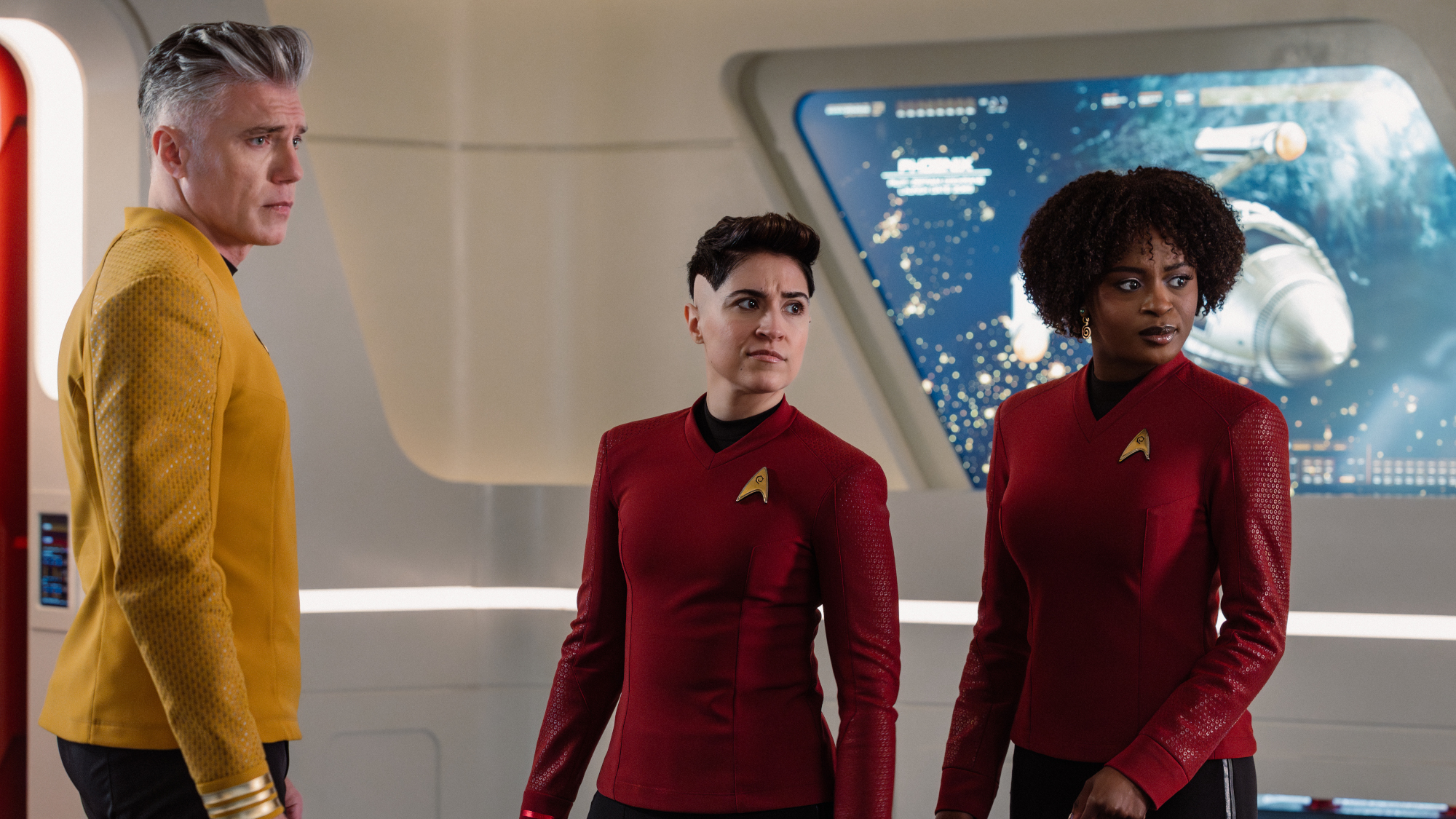
The latest episode of "Strange New Worlds" season 4, "Off-Hour", is one of "Trek"'s semi-regular life-or-death outings. The Enterprise finds itself trapped in a bizarre slipstream wormhole that threatens to destroy the ship if Pike and co can't find a solution before the "24"-style ticking clock (sorry, "Shipboard Chronometer") counts down to zero. It also leaves the fates of several key characters (one in particular) hanging in the balance… or at least it would, if the show wasn't a prequel, with most of its lead characters guaranteed to reappear in subsequent "Trek" canon.
Minor spoilers ahead for "Off-Hour". If you haven't seen the latest episode of "Star Trek: Strange New Worlds" yet, report to transporter room 3 and get out of here at once.
The likes of "The Wrath of Khan", "Voyager "'s two-parter "Year of Hell", and "Strange New Worlds"' very own "Memento Mori" have all gone to extreme lengths to mess up the normally pristine interiors of Starfleet vessels. "The Search for Spock" went even further, leaving the Enterprise in such a bad state that Admiral James T Kirk had no choice but to deploy its in-built self-destruct system.
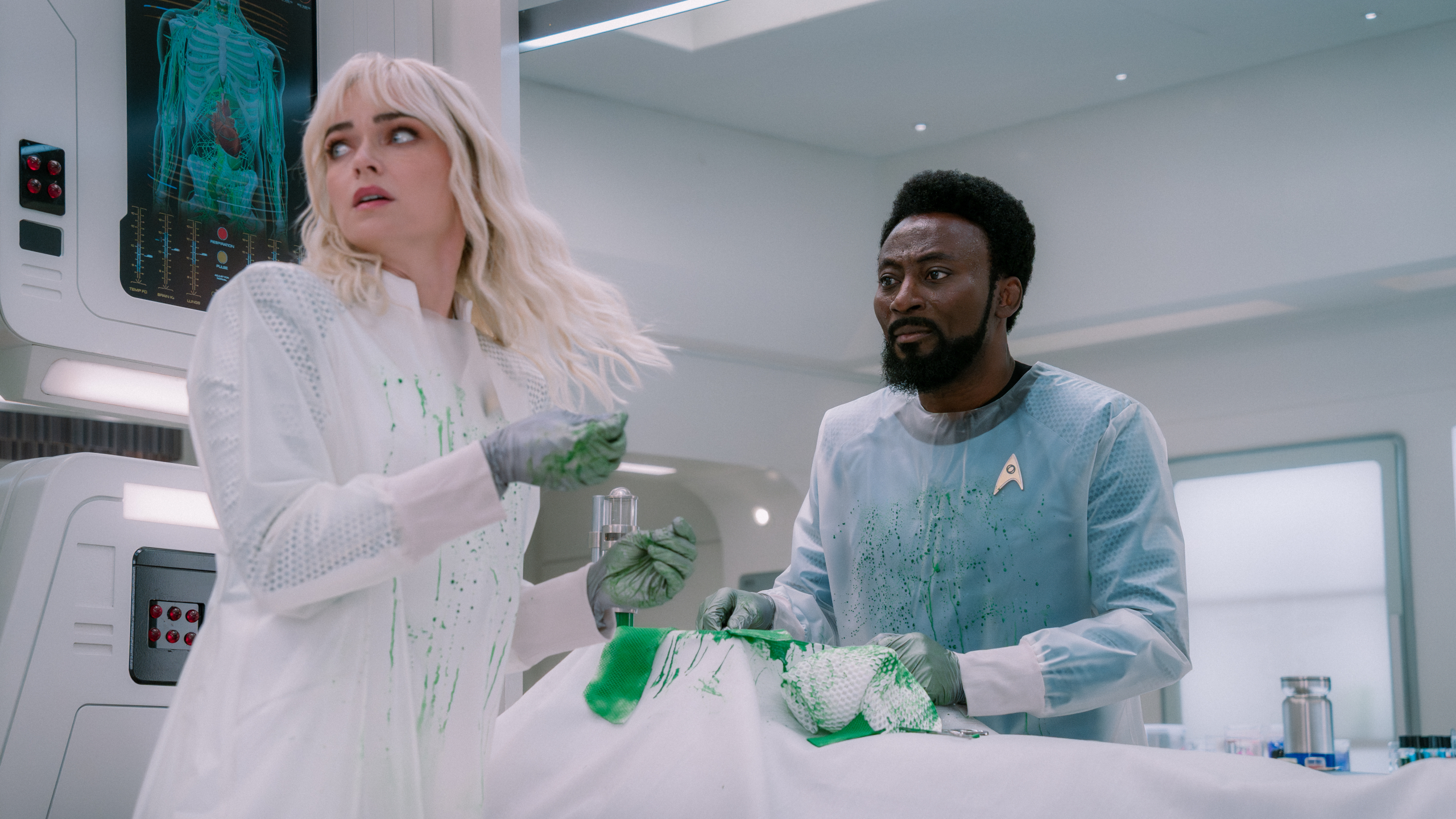
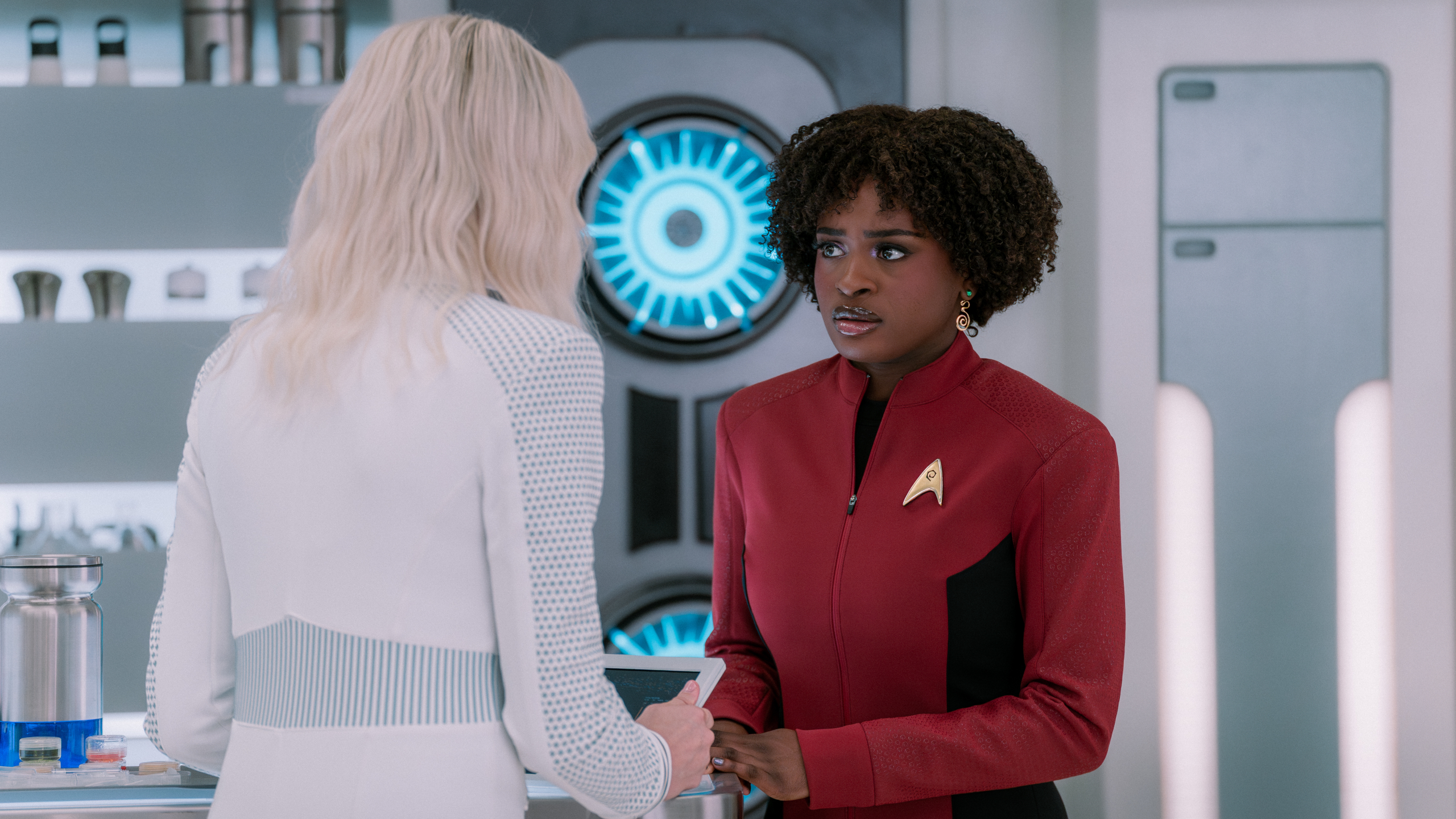
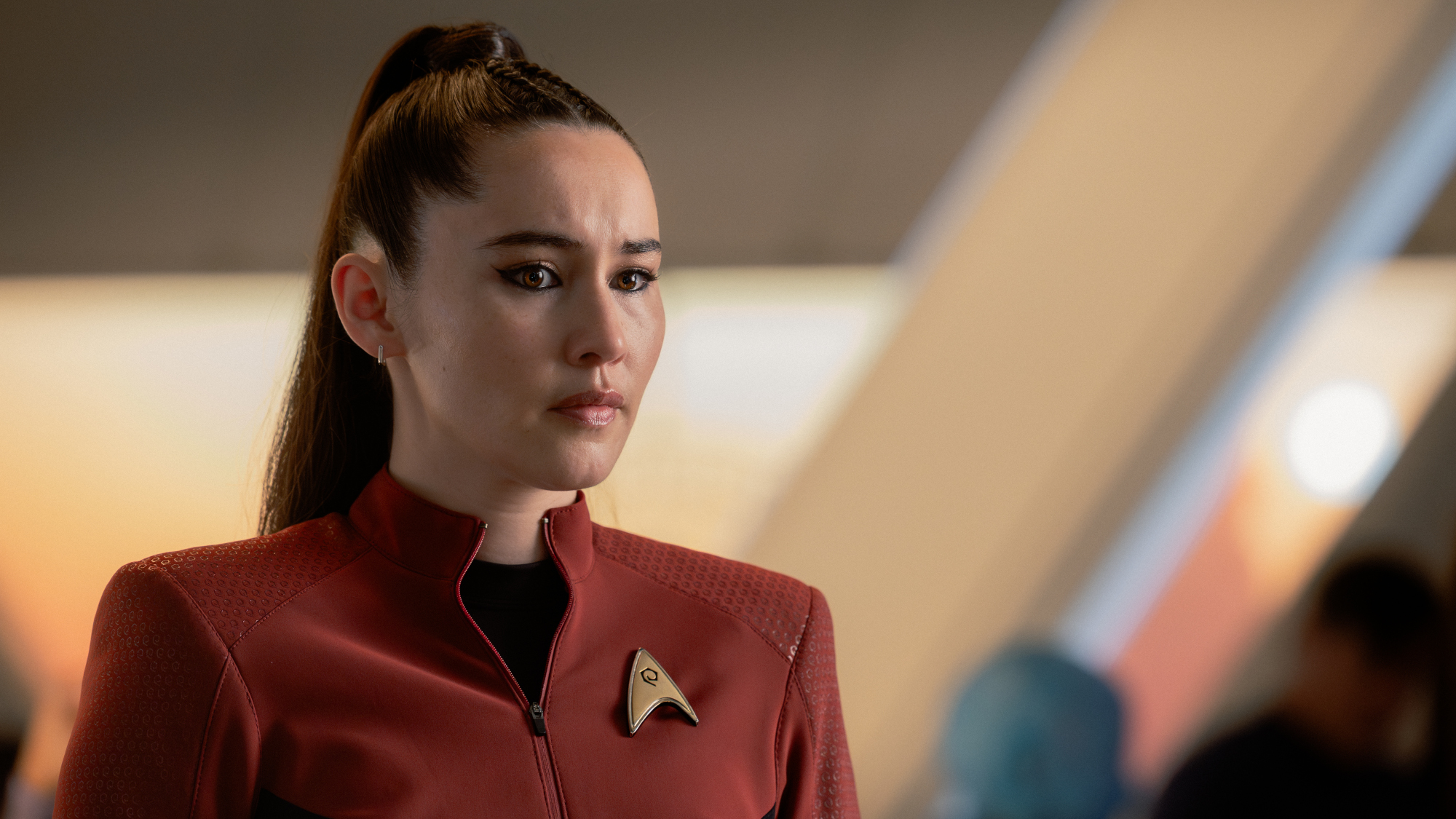
Unfolding in real-time, "Off-Hour" is built from similar blueprints, as the aforementioned anomaly turns the Enterprise into a nightmarish environment where pretty much anything can kill you. Pike getting an electric shock while turning on the shields is just the tip of the iceberg, as Una "Number One" Chin-Riley snaps her leg in a pocket of extreme gravity, Christine Chapel loses a finger to extreme cold, and an unfortunate group of redshirts finds themselves trapped on the wrong side of a barrier with some lethal neutrino radiation.
(Image credit: Paramount)
But it's Dr Joseph M'Benga who has the worst day at the office, and by a distance. His quick and noble actions pushing Christine out of the way of an out-of-control medical table leave him pinned against a wall with a fatal trans-lumbar severance — the only thing keeping him alive is the table itself, his internal organs doomed as soon as it's pulled out of the way. Like the clichéd movie cop starting his last day on the beat, he picked the wrong day to tell Christine he's thinking of quitting the Enterprise — especially as his likely replacement, Boyce, is already on board.
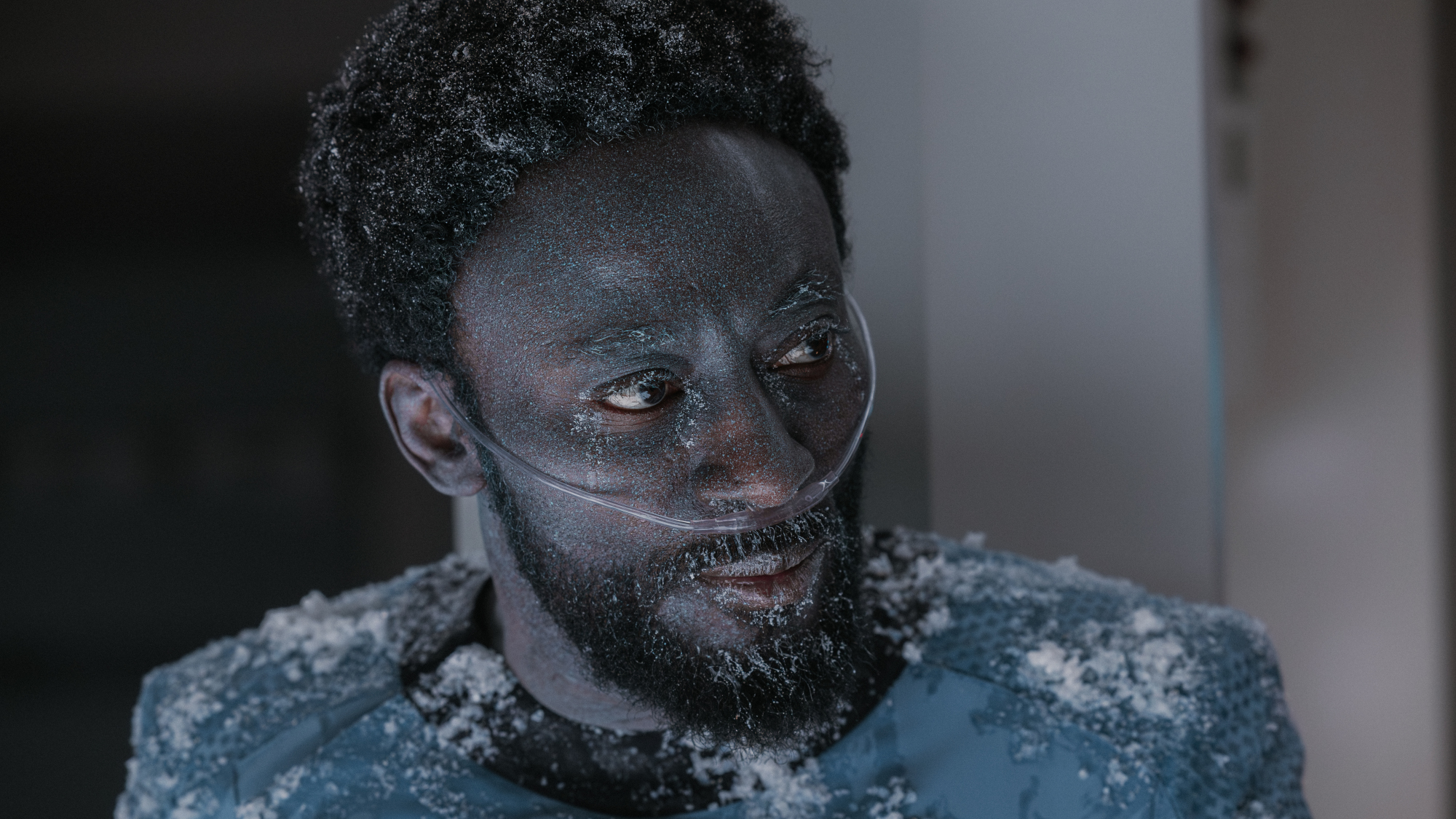
There is no way M'Benga should survive this — Boyce even orders Chapel to make the patient comfortable when the inevitable happens — and in most other TV shows you'd think that actor Babs Olusanmokun was about to receive his final paycheck.
But "Star Trek" fans know that M'Benga (then played by Booker Bradshaw) filled in for Dr McCoy in two episodes of the Original Series, meaning that his deathbed chats with Chapel aren't quite as deep and meaningful as they'd be in "ER" or even this episode's biggest influence, "24".
(Image credit: Paramount)
For the same reason, you never fear for Scotty when he beams into a Jefferies Tube, unsure whether there'll be oxygen or heat waiting for him. Or wonder if Spock will survive the radiation burns he endures in a high-risk spacewalk on the Enterprise's hull. In fact, the only lead character who could be in any danger at all is La'an. As one of the few regulars whose post-"Strange New Worlds" fate remains unknown, canon offers little protection when she steps out of the airlock to rescue Spock.
"Star Trek" isn't "Game of Thrones", and shouldn't ever get into the habit of killing off characters for fun. Spock's (albeit temporary) demise in "The Wrath of Khan" still resonates because it was so emotional, dramatic, and unprecedented, as does the death of Kirk's son, David, in "The Search for Spock". William Shatner's performances in the aftermath of both are among the best of his career.
"Strange New Worlds" itself hasn't been afraid to wield the grim reaper's bat'leth when necessary, though it's always been with characters — such as original chief engineer Hemmer — who have no existing legacy in the franchise.
(Image credit: Paramount)
The question facing any prequel, however, is whether you can play around with life-and-death stakes as you would in a story whose conclusion is open-ended. Surely an "anyone could die at any time" plot is redundant when canon has the same protective properties as the Super Stars that make Mario invincible.
The exception that proves the rule is "Andor"'s majestic second season — Mon Mothma's had-to-happen escape from the Galactic Senate turned out to be one of the most unbearably tense TV moments of last year. But that show mostly reserved its highest stakes for characters who didn't have an appointment with the Original Trilogy.
Indeed, when you pretend that a beloved character might die even though they can't, you risk cheapening the drama the same way "The Rise of Skywalker" did when it led us to believe Chewbacca had been blown up, before revealing he was on a different ship all along. You're telling life-or-death stories, without ever having to deal with the messy death part — something that, as we all know from "The Wrath of Khan", even the legendary James T Kirk was never much good at.
(Image credit: Paramount)
As a result, you spend the whole of "Off-Hour" waiting for the inevitable "magical" intervention to save the day. It's certainly not a massive surprise when Chapel works out that using previously theoretical strong-force neutrinos might repair M'Benga's broken body — and a not-at-all unexpected twist when Scotty reveals they could also fix the ship's faltering engines. "Almost sounds too good to be true, I know,” Scotty admits.
Future events will always weigh heavy on any prequel, but surely stories have a responsibility to better acknowledge that viewers know what's coming. Is "Off-Hour" a brilliant example of "Star Trek" at its most tense or a cheap play on our emotions? It's probably a bit of both.
New episodes of "Star Trek: Strange New Worlds" debut on Paramount+ on Thursdays.
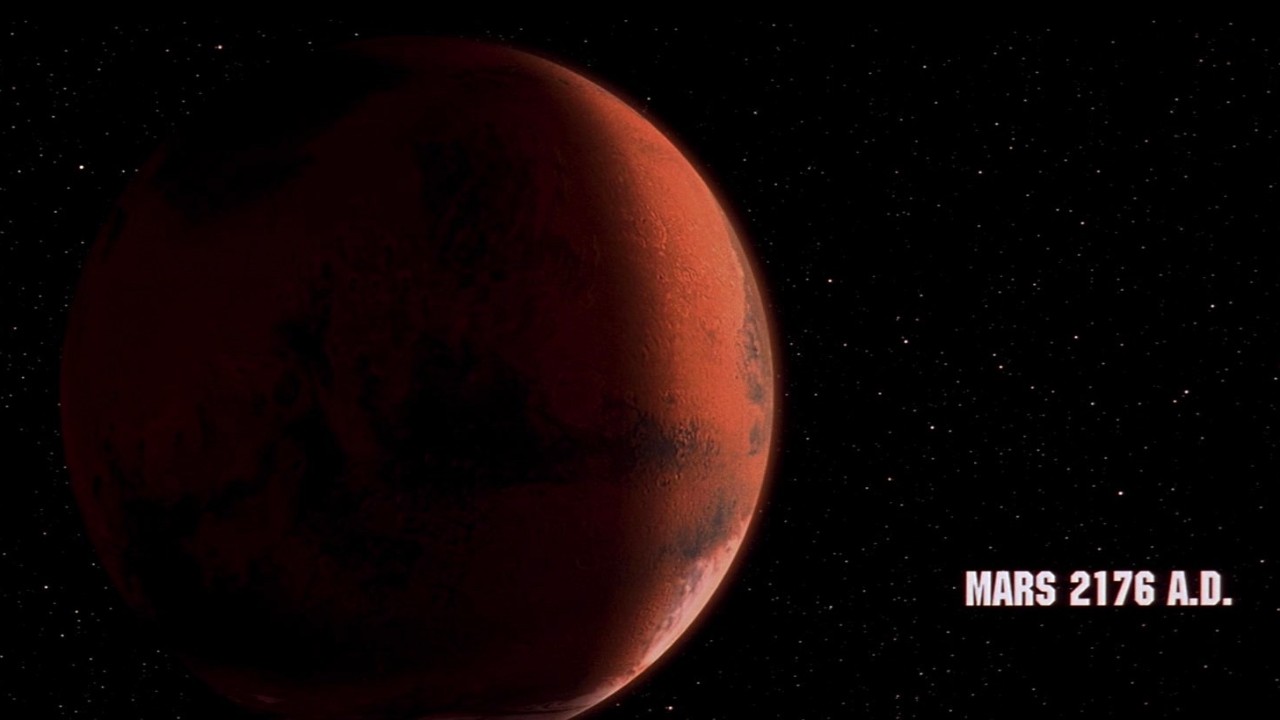
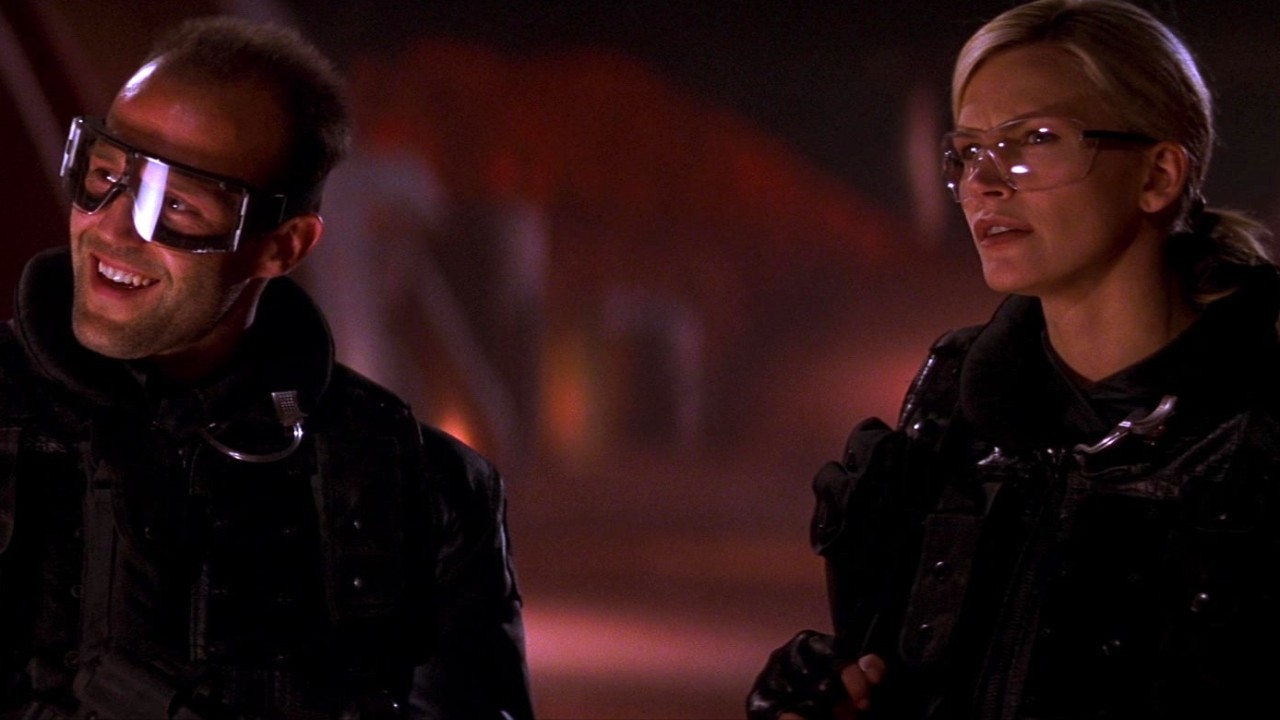
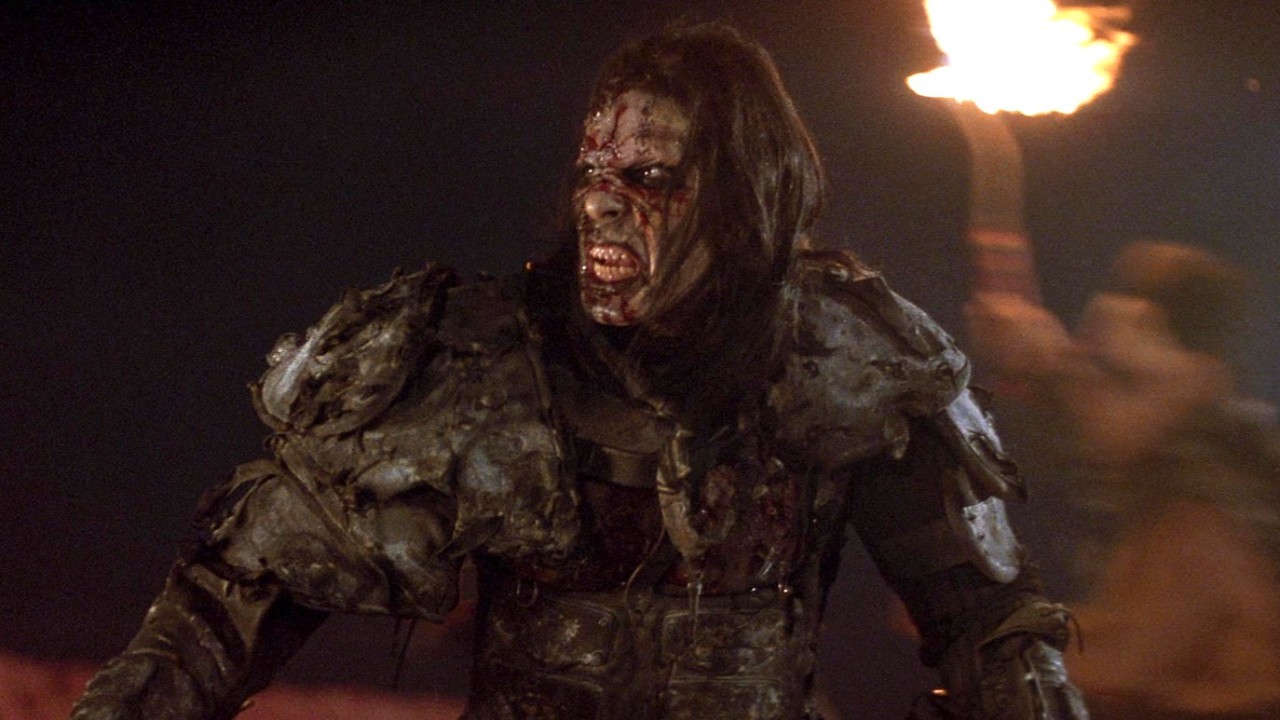
In August 2001, filmmaker John Carpenter said "Boo!" and unleashed "Ghosts of Mars" on the world. While not one of Carpenter's most revered works, it's still a neat sci-fi horror movie in which Mars has been terraformed – 84% terraformed to be exact – and inhabited by humans. Plus, it has Jason Statham and Ice Cube in it, so it's automatically 99% better than all other movies ever made.
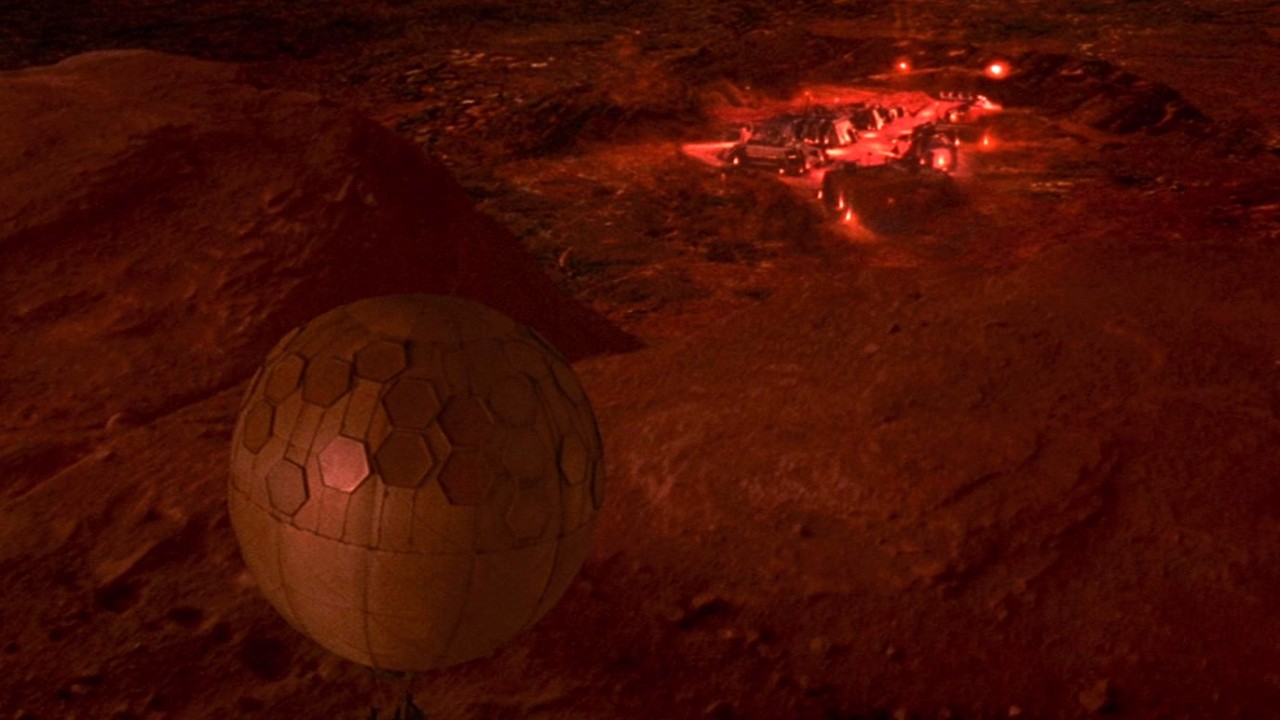
Now, the action takes place at Shining Canyon, a remote mining outpost on Mars that has a gritty wild west/Mad Max-ness vibe; it's cold, harsh, and so so so so soooooo dusty – not exactly a dream home location.
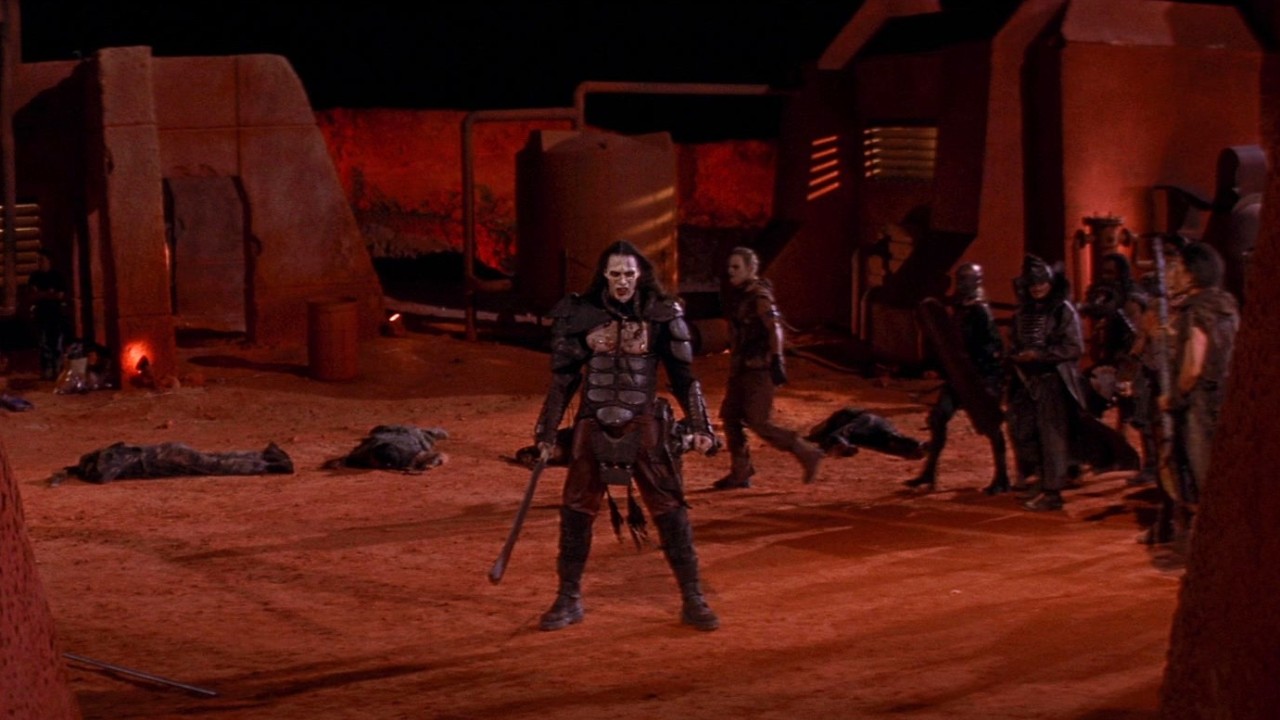
Then there's the whole "scary horde possessed by ancient extraterrestrial evil spirits trying to kill you" thing. But let's remove the spooky elements and put them aside for one second, and really consider the possibility of actually living on Mars. It's been 25 years since the movie was released, so how much closer are we to calling the Red Planet our new home?
(Image credit: Screen Gems)
Chief Scientist at the Planetary Society, Dr. Bruce Betts, isn't optimistic. "I don't think we're in a position to do global terraforming due to the technology and lack of resources. The papers indicate now you have only a tiny fraction of carbon dioxide, and then there's just the political and economic realityof it. Any method I've ever heard of is really outrageously expensive over time, and you would have to have multi-year, multi-generational support for programs at a high level. You'd have the whole world having opinions on whether you could or should do it. Then there's also the planetary protection agreements that many countries have agreed to. But the lack of carbon dioxide is the showstopper, really." Even in the movie, they're still 10 years away from having air like we do on Earth.
Dr. Mark Gallaway, an astronomer, science pundit, and founder of Starlight Planetarium, also mentions the cost and carbon dioxide issues as major obstacles, as well as two other challenges that may make attempts to live on Mars near impossible. "There have been enclosed habitats we've built on Earth. A number of times external teams have had to go in and break groups up, because there have been fistfights [...] so that's going to be a long-term problem." And that’s probably going to be an extra big problem when people are cooped up at a remote mining outpost.
(Image credit: Screen Gems)
"The other big problem is we have no idea how human physiology works at 0.38G. The only way we could do 0.38 of a G is to have some kind of spin habitat and have people live there. So, without actually knowing what that surface gravity is going to do to us, it's a bit tricky. We might find that they're on Mars for a year, and when they come back, they can't function anymore."
Recent studies about the state of Mars haven't been too promising either. Betts views Bruce Jakosky and Christopher Edwards' 2018 research paper, where it explicitly states "terraforming Mars is not possible using present-day technology," as the biggest reality check.
"The Jakosky and Edwards paper about CO₂ makes me very negative," Betts says. "There have been thoughts of using exotic technologies, such as nanorods and aerogel, but even with the aerogel, I believe they're talking about using it to create localized domes, and you'd create the interior of that and try to terraform it. It's certainly more plausible than doing the whole planet, but still seems like [there are a lot of implications]. [...] People are coming up with new, nifty technologies, but I just don't see how they can be implemented, even if they did work."
(Image credit: Screen Gems)
Science fiction tends to depict Mars as a possibility for human occupation, but Gallaway points out another big blow for any terraforming ambitions: "We've made recent discoveries that the soil on Mars is actually quite toxic to life. So the scene in 'The Martian' where Mark Watney grows potatoes? That's just not possible. It means if you're going to colonize Mars, you're going to have to bring all your topsoil, which is a big problem."
In addition to all of this, there are the ethical dilemmas that need to be addressed. Astronomer, teacher, and author Dr. Jeffrey Bennett wrote "Life in the Universe" along with Seth Shostak, Nicholas Schneider, and Meredith MacGregor.
In the book, there's a section that discusses introducing greenhouse gas to the Martian atmosphere in order for humans to walk around without a spacesuit. However, this leads to serious questions about the effects of colonization and whether humans have the right to fundamentally change another planet's atmosphere and potentially wreck it for other possible lifeforms already living there. Remember, "it's their planet… we are the aliens."
(Image credit: Screen Gems)
For Bennett, he questions whether terraforming Mars is even an option if humans can't get their own house in order: "Given that we can't even seem to keep Earth's climate functioning the way we'd like it to – for example, global warming is making the climate worse for humans and other life – I find it difficult to believe that our present level of knowledge would allow us to turn an inhospitable place like Mars into a livable world. Perhaps this may become possible in the future, but certainly not before we first learn how to take care of our home planet's climate."
Clearly, living on Mars isn't possible at the moment, but "Ghosts of Mars" takes place in the future, so we still have time because who knows what scientific advancements await us? Alas, experts tend to agree that it's unlikely to happen by 2176 at this current rate, though developments could happen: "I think that people will continue researching on the small scale of things you could do, but I don't think we're going to be any closer to terraforming Mars in reality by 2176 than we are now," Betts says. So, I guess you could say we "don’t stand a ghost of a chance."
(Image credit: Screen Gems)
Gallaway suggests an interesting alternative to terraforming Mars, or any other planet: "From a personal point of view, I actually think we should be looking at space habitats rather than planet-based habitats. Get to what we call an M-type asteroid: [...] Get the platinum group metals out, sell those, then spin the asteroid up, and you can live on it – inside at 1G. I'm a big fan of the late Iain M. Banks and his science fiction, where virtually everybody is living in inhabitable orbital structures, because it's easier to make the environment than it is to change it."
Hmm… Gallaway may have just pitched the perfect sequel. Yeah, "Ghosts of the Asteroid" sounds decent, doesn't it? Just as long as Statham somehow returns and punches everything in sight.
Watch "Ghosts of Mars" on Prime Video or Apple TV.
The "Star Trek" franchise's 60th anniversary is coming straight at us warp speed and will be arriving on Sept. 8, 2026. "Trek" faithful from around the globe are expected to pause and salute this space fantasy institution created by Gene Roddenberry in whichever way they deem appropriate.
The celebration has already begun earlier this year at the2026 Rose Parade and will accelerate past September and into the fall, where there’ll no doubt be 40th anniversary screenings of "Star Trek IV: The Voyage Home" and 30th anniversary tributes to "Star Trek: First Contact" in November, amid a galaxy of other 'Trek'-centric events and retrospectives.
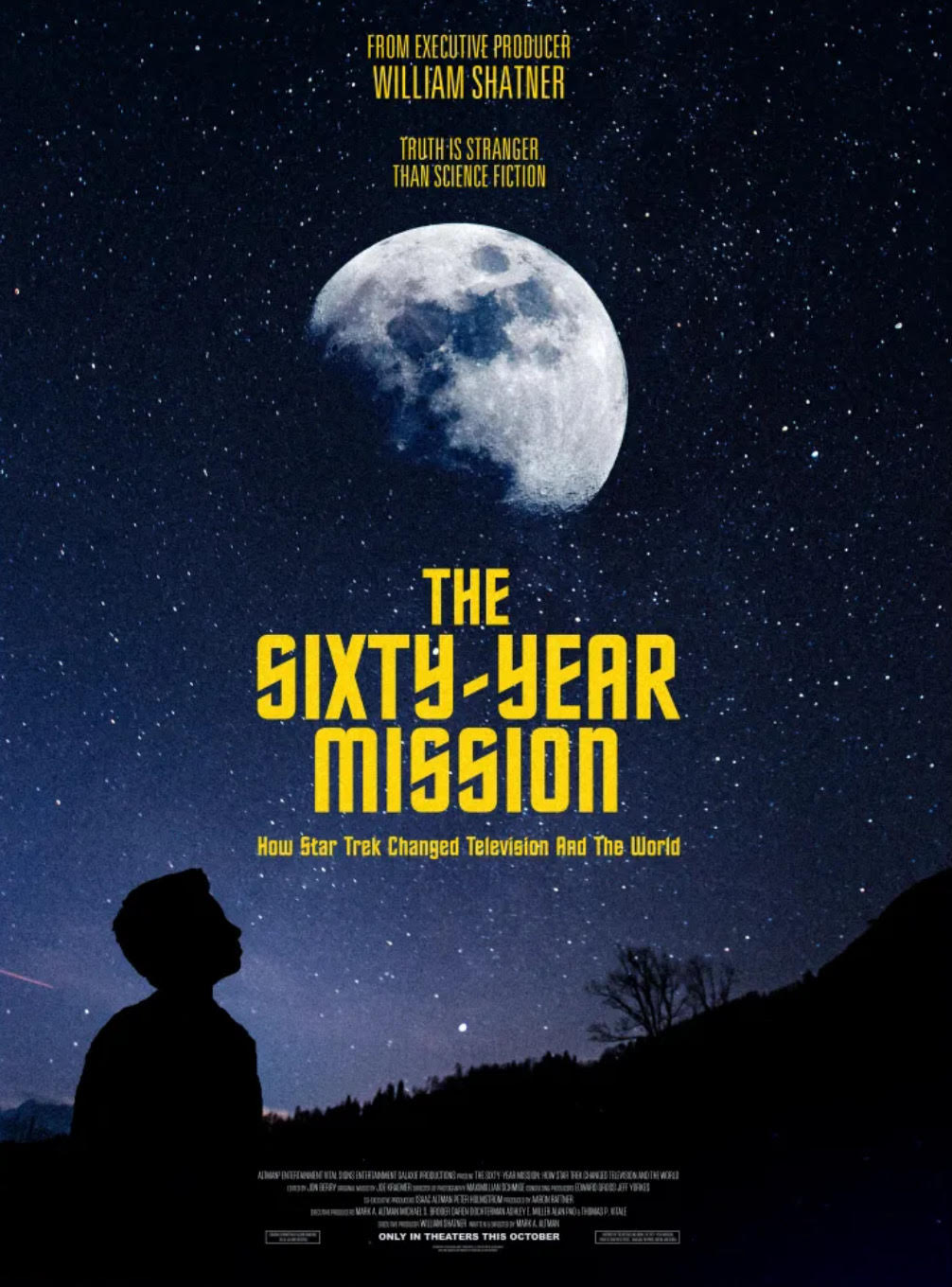
William Shatner's innumerable contributions to the "Star Trek" universe are as infinite as the heavens, and to add to the historic occasion’s festivities, he's co-executive produced a new documentary about the show's history and impact.
Titled "The Sixty-Year Mission: How Star Trek Changed Television And The World", the documentary will launch exclusively into Regal Cinemas beginning on Oct. 9, 2026.
Executive produced by William Shatner, "The Sixty-Year Mission" lands in theaters on October 9, 2026. (Image credit: Galaxie Pictures)
Written and directed by Mark A. Altman ("Star Trek: The Fifty-Year Mission") in association with Michael S. Broder of Galaxie Pictures, "The Sixty-Year Mission" will focus on the rare combination of creative genius, epic struggles, personal conflicts, and indefatigable spirit that caused the cosmic tumblers to align and birth "Star Trek: The Original Series" in 1966.
"This film is a love letter to 'Star Trek,'" Altman told Deadline. "I’m immensely grateful to Regal to offer this gift to fans for the show’s 60th birthday. I'm confident that the film will appeal both to longtime fans of the franchise as well as new viewers who might be wondering what the unique alchemy of this pop culture icon is really about."
"The Sixty-Year Mission" burrows into the genesis of the seminal TV series that, against all odds, forever altered the landscape of small screen science fiction and ushered in a true classic.
It's brimming with archival footage and fresh insights from "The Original Series" luminaries William Shatner, Walter Koenig, and George Takei, as well as visits with Gene “Rod” Roddenberry, Jr., Jonathan Frakes, Brent Spiner, Gates McFadden, Ethan Peck, Robert Picardo, Christina Chong, and Denise Crosby.
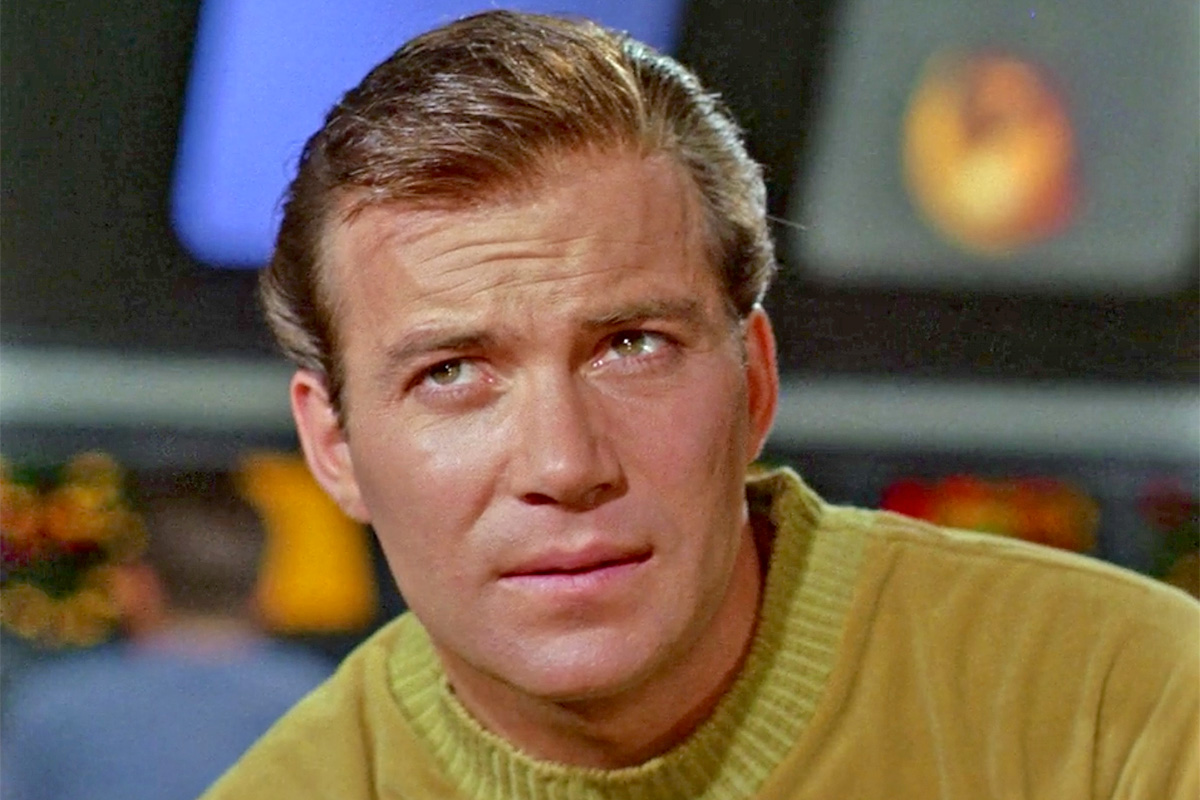
William Shatner as James T. Kirk in "Star Trek: The Original Series" (Image credit: Paramount)
“"We could not be more excited to partner with Regal to ensure that fans have a chance to see this remarkable film honoring the incredible 60-year legacy of 'Star Trek,'" adds Broder. "I am delighted to join forces with William Shatner and many of the franchise’s greatest stars and creatives to bring this film to theaters. And since every birthday deserves a party, we’ll be bringing key 'Star Trek' talent to theaters for exclusive Q&A’s."
Except for the two-part pilot, "The Menagerie," Shatner appeared as the USS Enterprise's Captain James T. Kirk in every one of "Star Trek: The Original Series"' 79 episodes over three seasons and forged a palpable bond with viewers that helped forge "Star Trek's" legacy. His involvement with this documentary at the age of 95 gives the project a definite luster.
"The Sixty-Year Mission" will dock in Regal theaters starting Oct. 9, 2026.