We all love Steven Spielberg and his innumerable contributions to the art of cinema over the decades. His latest entry into the genre, "Disclosure Day", wasn't quite as warmly received by audiences, but it's nevertheless an entertaining sci-fi flick that's worth checking out. And good news on that front, because "Disclosure Day" will be streaming on Peacock from Oct. 9, 2026.
Produced by Universal Pictures and Amblin Entertainment for a cost of roughly $200 million (including marketing), "Disclosure Day" first touched down in cinemas on June 12, 2026. It had some of that old Spielberg magic, but ultimately felt a decade late to the UAP party; a story linked to another era where folks got all their news from local television stations.
Critics were tepid toward the alien conspiracy movie, with our own "Disclosure Day" review calling it a "close encounter with Spielberg's brilliance that doesn't quite make contact". Despite it not living up to the highs of "Close Encounters" or "E.T.", it's still a compelling thriller.
Word of mouth wasn't exactly overly enthusiastic either, and it ended its theatrical run collecting $241 million worldwide. By Hollywood's math, a movie needs to return 2.5 times its initial budget to break even, which means that "Disclosure Day" wasn't really the lucrative summer firecracker that the studio had hoped for.
"Disclosure Day" stars Emily Blunt, Josh O'Connor, Colin Firth, Eve Hewson and Colman Domingo in an often engaging but sometimes confusing cover-up plot about a Kansas City meteorologist and a tech whistleblower chased by a sinister group trying to sequester evidence that alien beings have been living amongst us on Earth.
Directed by Steven Spielberg from a screenplay by longtime collaborator David Koepp ("Jurassic Park," "The Lost World: Jurassic Park"), "Disclosure Day" will begin streaming exclusively on Peacock starting Oct. 9, 2026.
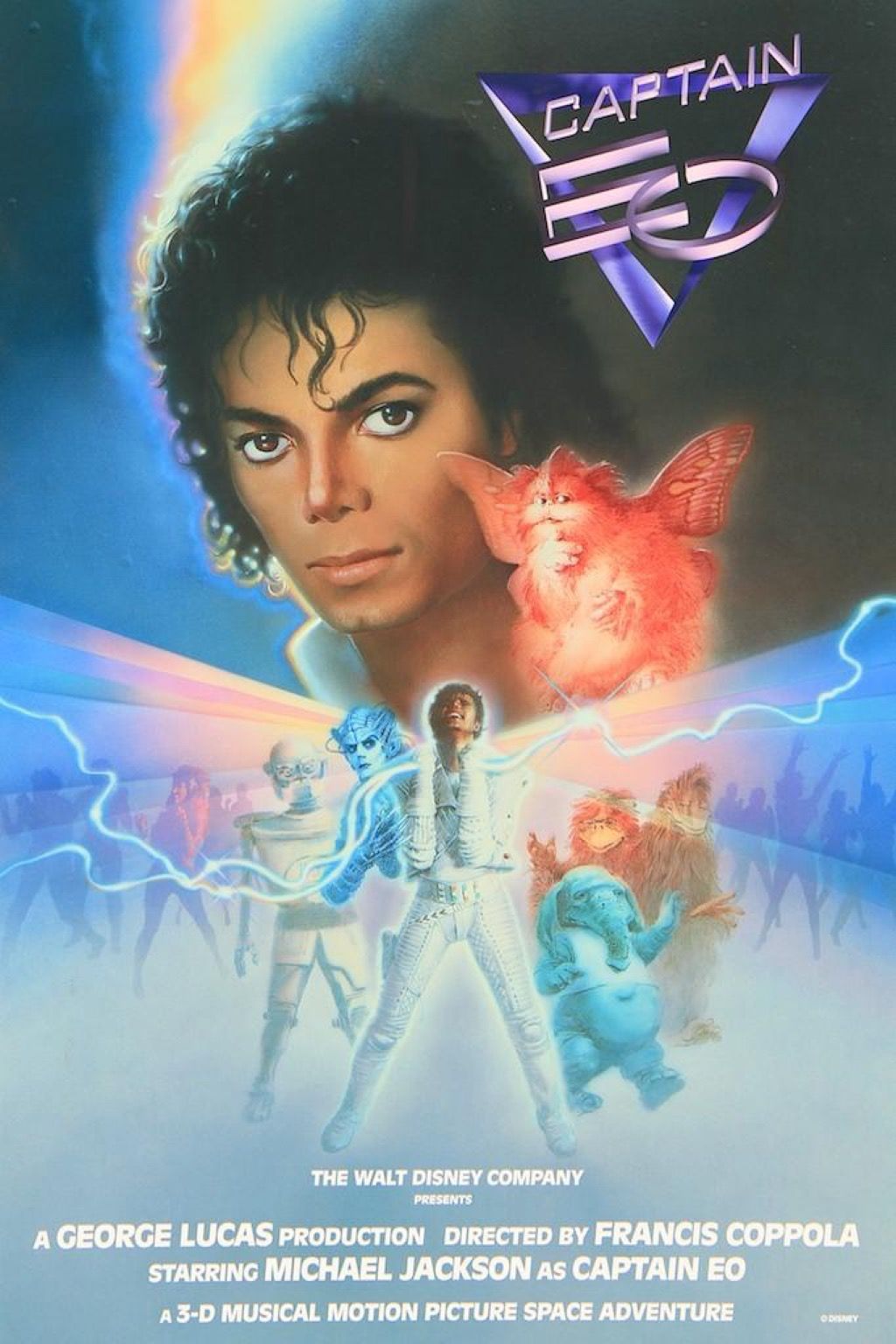
40 years ago on Sept. 12, 1986, musical icon Michael Jackson debuted in "Captain EO," a 17-minute long 3D sci-fi fantasy film. The catch? You could only see it at Walt Disney World's EPCOT Center in Florida, or — six days later — at Disneyland’s Magic Eye Theater over in Tomorrowland.
Jackson had already been anointed the King of Pop in the ‘80s with the stellar multi-platinum album "Thriller" when the creative cosmic tumblers aligned, joining the immense talents of Jackson, George Lucas, Francis Ford Coppola and the wizards of Disney's Imagineering to create one of the most unique sci-fi entertainment offerings ever conceived.
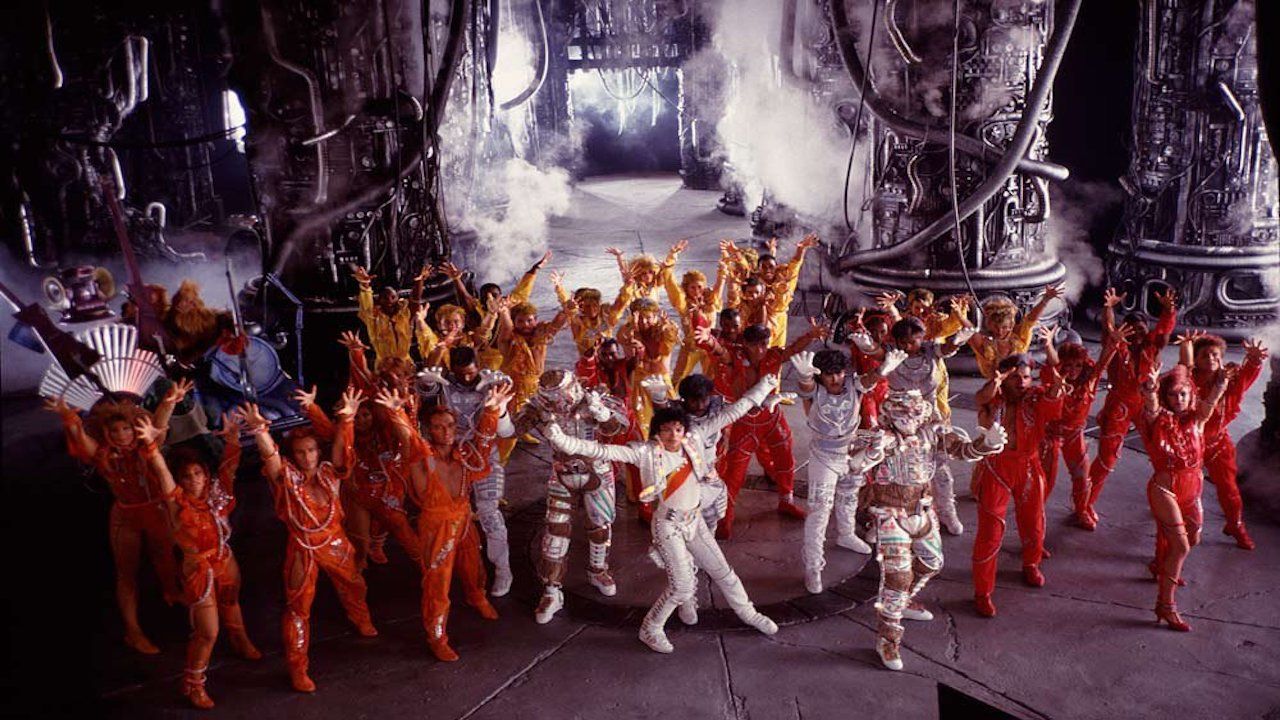
With impressive special effects, catchy songs, dynamic dance numbers and co-starring Academy Award-winning actress Anjelica Huston as the witch queen known as the Supreme Leader, "Captain EO" was a huge attraction seen by millions of Disney guests.
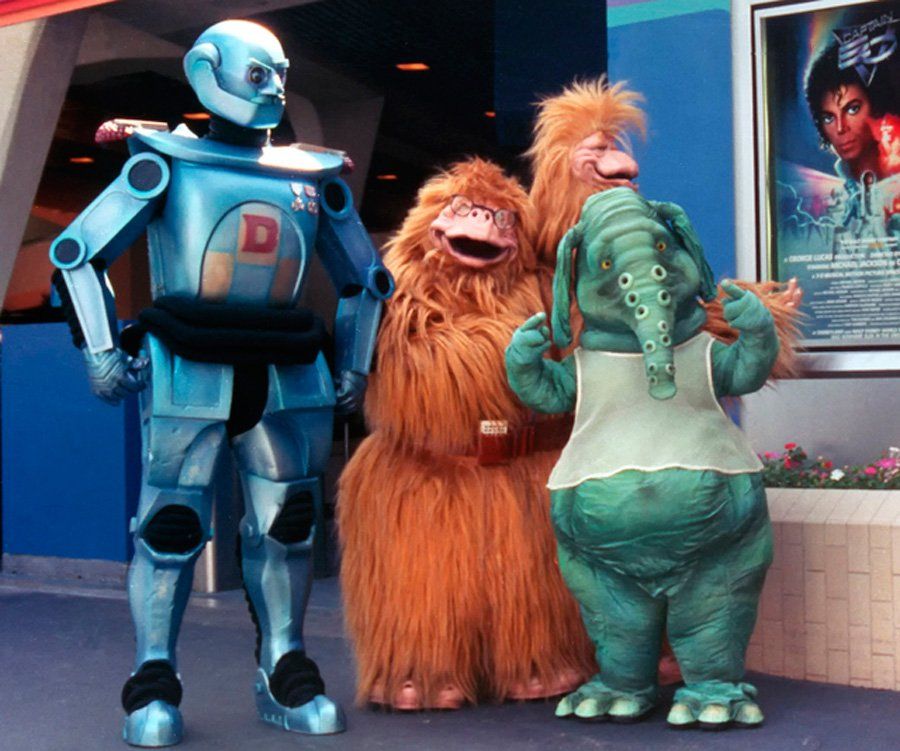
It told the story of a rag-tag crew of space misfits led by Jackson's charismatic Captain EO (in a sweet white leather uniform) on a mission to a sinister industrial planet to deliver a mysterious gift to its despotic ruler. Plenty of hijinks ensue with EO's oddball companions: Major Domo, Hooter, Idy & Ody, and a winged kitten creature named Fuzzball.
After crash landing on the dark world directly onto the homing beacon, EO and his crazy crew are apprehended by a gang of warrior henchmen and hauled into the throne room to face the wicked alien ruler who is imprisoned in anger and hate.
Huston is electrifying in her Giger-esque makeup, supported by a tangle of banded black cables and sporting long fingernails that were deliciously thrust into audiences’ eyes using the magic of 3D and the special red-and-blue-lensed glasses handed out when arriving for each screening.
When EO's crew manifests into a musical band to offer a song to the Supreme Leader, Hooter trips over the power cord to ruin the performance. The commotion tries the queen’s patience and she dispatches her cruel Whip Warriors to capture EO and send him to her deepest, darkest dungeon.
But EO fights back with an illuminating t-shirt (hey, it was the '80s!), some fancy dance moves and a surge of musical energy to unlock her beauty. This transforms Huston into a colorful enchantress with her grim lair now becoming a lush Greek-like temple. Darkness turns to light and everyone leaves as peaceful galactic friends.
It's an honest plot with heart and humor filled with cool tunes and a sprinkling of in-your-face 3D moments for the whole family, and really, what else would you expect from a Jackson/Disney collaboration in the decade of excess?
Michael Jackson in heroic form as the titular "Captain EO" (Image credit: Disney)
The two prominent songs — the original "We Are Here to the Change the World," and "Another Part of Me" — are used to great effect throughout the simple narrative. I can fondly remember leaving the Magic Eye Theater the first time I saw it in the 1990s with an uplifted attitude and the renewed vigor needed to brave the epic summertime Disneyland crowds. Over the years I’d revisited the film a dozen times and it's remained a fun time capsule of unbridled spirit perfect for its age and even more relevant today.
Production began on "Captain EO" in the summer of 1985 with "Star Wars"' creator George Lucas serving as producer and legendary Francis Ford Coppola of The Godfather fame in the director's chair. James Horner, who’d later go on to compose the music for "Titanic," was enlisted to pen the original score. Essentially an expanded music video similar in format to 1983’s horror short, "Thriller," "Captain EO" was filmed entirely in Los Angeles with Lucas's ILM unit called in for a VFX polish.
Costing nearly $30 million to produce, "Captain EO" was, at the time, the most expensive short ever filmed on a per-minute basis. It was also a pioneering attraction that used in-theater 4D techniques that delivered floodlights, fog, smoke, starfields, meteors and LED laser effects out into the audience in conjunction with the added visual component of its 70MM 3D filming process.
"Captain EO's" Major Domo, Idy & Ody and Hooter at Disneyland (Image credit: Disney)
"For all those who share Walt Disney's dream and delight in the promise of the future, we cut this ribbon signifying the opening of the 3-D musical motion picture space adventure, 'Captain EO!,'" proclaimed Coppola at its 1986 Disneyland premiere.
The attraction ran continuously at Disney World’s EPCOT Center until 1994 and lasted three years longer at Disneyland's Magic Kingdom before it was closed in 1997.
Upon Jackson’s untimely death in 2009 it returned for an encore tribute run between 2010 and 2015, including re-releases at Tokyo Disneyland and Disneyland Paris before vanishing completely to be locked up forever in the Disney Vault. It was also broadcast once though on MTV for a 1995 Michael Jackson tribute.
"Captain EO" rocked the cosmos in Disney theme parks 40 years ago (Image credit: Disney)
While an official Disney streaming option is nowhere to be found, there are YouTube channels that have uploaded enhanced and/or upscaled copies of "Captain EO" if you've got a hankering for some heart-warming sci-fi.
With so many dire warnings, dystopian fare and AI doomsdays prophesied everywhere you turn, maybe we all need a little bit of Captain EO's hopeful “The planets are linin' up, we're bringin' brighter days” message.
Unless you’ve been living in a galaxy far, far away, you probably already know that 2027 marks the 50th anniversary of "Star Wars", as George Lucas’s sprawling space opera first struck theaters back on May 25, 1977.
To celebrate this milestone occasion, Disney and Lucasfilm are bringing the original Star Wars theatrical release to IMAX screens for the first time.
Depending on the IMAX setups available, audiences can see the legendary space opera at official IMAX locations in either digital or physical film for its triumphant re-release on Feb. 19, 2027.
This newly restored "Star Wars" print — apparently being shown without its “A New Hope” subtitle, Special Edition clutter, or CGI enhancements — will also screen at a limited number of IMAX 70mm sites.
You know what that means, right? Han will once again fire his blaster at Greedo first!
Coming to our galaxy in 2027! (Image credit: Disney/Lucasfilm)
As a stellar follow-up, "Star Wars: Starfighter" will blast off over the 50th anniversary weekend on May 28, 2027. It’s a standalone sci-fi adventure from director and producer Shawn Levy ("Real Steel," "Deadpool & Wolverine," "Stranger Things") headlined by Ryan Gosling ("Drive," "Blade Runner 2049," "Project Hail Mary").
Here, the omnipresent superstar portrays Kade Auberon, a cynical rogue confronted by his mysterious past. The eclectic cast also includes Matt Smith, Mia Goth, Aaron Pierre, Jamael Westman, Daniel Ings, Flynn Gray, and Amy Adams.
"Star Wars: Starfighter" was filmed for IMAX and shot with certified IMAX-approved digital cameras framed for IMAX screen ratios before being converted to IMAX 70mm film prints for screening in an exclusive number of IMAX venues in the U.S.
IMAX spots for "Star Wars" and "Star Wars: Starfighter" can be found online HERE.
The "Star Wars" IMAX re-release is coming Feb. 19, 2027. "Star Wars: Starfighter" hits theaters on May 28, 2027.
Unless you’re a naked mole rat or a worm-lizard, you were never meant to live your life out underground like the poor doomsday denizens of Apple TV's "Silo."
Season 3 has revealed how a trillionaire industrialist named Per Stenson (Colin Hanks) funded the insane project to build 50 subterranean bunkersin Georgia, housing 10,000 people each, as a bold failsafe effort against humanity’s inevitable extinction in the face of global nanotech warfare.
Hollywood has mined the sci-fi subgenre of underground exploratory movies for decades, and it’s amusing to see how real science has been either faithfully depicted or completely ignored over the years.
Regardless of geological accuracy, venturing into unnatural environments unfit for sun-seeking individuals makes for fantastic drama, from titles like "Journey to the Center of the Earth" and "The Core" to "The Mole People" and "City of Ember."
Let’s burrow into this list of subterranean sci-fi flicks to see which ones rise to the top!
10. "The Mole People"
Release date: December 1, 1956 | Director: Virgil W. Vogel
We sure love a campy black-and-white creature feature, and this 1950s favorite ticks all the boxes.
Descend thousands of feet into the center of the Earth and meet this unknown Egyptian-like empire of darkness where vicious mole monsters exist in subterranean lairs. Archaeologists and scientists join a globe-trotting expedition to find a tunnel leading to this lost civilization of pale-skinned Sumerians who enslave these hideous mole mutants to harvest their mushroom crops.
Human sacrifices, a corny romance, and truly frightening makeup effects make this cult B-movie well worth a watch. And who knew a flashlight could become such a potent weapon!
9. "10 Cloverfield Lane"
Release date: March 11, 2016 | Director: Dan Trachtenberg
John Goodman (Howard) stars in this slightly deranged sequel to 2008’s "Cloverfield" that’s considered part of the whole interconnected Cloverfield Universe that also includes the 2018 space-based thriller, "The Cloverfield Paradox."
Most of the film takes place in an underground survival bunker after a girl named Michelle (Mary Elizabeth Winstead) is rescued from a car crash by Howard and taken inside the shelter where Emmett (John Gallagher Jr.), the bunker’s designer, also exists.
Howard and Emmett try to convince Michelle that the outside world has been poisoned by an alien invasion, but she’s not buying it. With threats above ground trying to get inside, intense paranoia and jealousy growing within, this smart little gem becomes an interesting successor to producer J.J. Abrams and director Matt Reeves’ "Cloverfield" that delivers the big scares.
8. "The Core"
Release date: March 28, 2003 | Director: Jon Amiel
Toss most scientific logic out the window and just strap in for a super silly but entertaining romp into the bowels of the Earth.
Loosely based on Jules Verne’s Journey to the Center of the Earth" and packing an ensemble cast that includes Aaron Eckhart, Hilary Swank, Delroy Lindo, Stanley Tucci, Bruce Greenwood, Alfre Woodard, and Richard Jenkins, "The Core" is no cerebral affair, to be certain, but it packs ambitious set pieces and great visual effects... for the time.
The Earth’s inner core has stopped spinning, and a group of scientists must go down deep inside a special drilling vessel and restart the core with atom bombs before the world tears itself apart from magnetic anomalies.
All ends well, making this kooky B-movie a guilty pleasure.
7. "Journey to the Center of the Earth"
Release date: July 11, 2008 | Director: Eric Brevig
"We’re still falling!" This 3D remake of the 1959 classic stars Brendan Fraser as an acclaimed scientist on the hunt for a missing brother, accompanied by his young nephew (Josh Hutcherson) and a mountaineer (Anita Briem).
The VFX are updated from the '50s version, but it lacks the earnestness and charm that the original adaptation carries. Perhaps we're all just too jaded and have lost our sense of wonder in these complex modern times. This 2008 project definitely elicits more of a YA-type entertainment but sticks pretty close to the source material, with special effects that have no right to look this good after 18 years.
CGI has definitely taken a turn for the worse in the last decade, and this beautiful film helps prove that point. It's packed with rampaging dinosaurs, glowing lava, rickety raft rides, Avatar-like flora, and toothy sea monsters.
Don’t think too hard, and let the sci-fi fantasy adventure unfold.
6. "At The Earth's Core"
Release date: July 15, 1976 | Director: Kevin Connor
England's Amicus Productions takes a stab at the classic 1914 book from fantasy master Edgar Rice Burroughs, which postulates the existence of a hollow Earth containing an entire prehistoric civilization.
This cult movie is pure Saturday afternoon popcorn entertainment, with Peter Cushing as a Victorian scientist who’s invented a behemoth drill and his strapping American partner, played by Doug McClure, as they plunge 4,000 miles into the planet's interior on an exploratory mission.
It’s stuffed with silly rubber-suited monsters and light-hearted dialogue that make you completely overlook the campy winged beasts nourished by the blood of sacrificial maidens!
5. "The Descent"
Release date: July 8, 2005 | Director: Neil Marshall
Spelunking, or cave exploring, is an unnerving hobby for anyone with even a mild case of claustrophobia, so if you have a fear of tight spaces — especially those inhabited by marauding cannibal humanoids — then this might be one to avoid.
Marshall’s movie takes place in a network of unexplored caverns where six adventurous women encounter a race of flesh-eating feral beings. Discovered in an unmapped region of North Carolina’s Appalachian Mountains, these nimble creatures have existed down in the Earth's depths for thousands of years.
It's a bloody good horror romp with excellent Crawler effects but can be disturbing for those of a more delicate constitution. It did make enough box office bucks to spawn a solid 2009 sequel!
4. "First Men in the Moon"
Release date: August 6, 1964 | Director: Nathan Juran
Five years before the Apollo 11 mission that sent Neil Armstrong and Buzz Aldrin to the moon in July of 1969, came "First Men in the Moon", which took its cast deep beneath the lunar surface. This rousing sci-fi flick is adapted from the 1901 novel of the same name by H.G. Wells.
The storyline tracks an international moon expedition that discovers evidence of a secret British mission some six decades earlier. It also showcases legendary stop-motion pioneer Ray Harryhausen’s Dynamation techniques in depicting the underground dwelling insectoid Selenite beings and caterpillar-ish Moon Cattle.
The movie's dual timelines, flashing back from the present to that 19th-century mission, provide an interesting framing device hinting at the notion that the Selenites were doomed by a common cold à la Wells's "The War of the Worlds."
3. "City of Ember"
Release date: October 10, 2008 | Director: Gil Kenan
Just like the post-apocalyptic bunkers in "Silo," this movie also deals with a massive underground city meant to serve as humanity's last hope for 200 years in case of a nuclear war or other extinction-level calamities.
The plot follows two teens named Lina (Saoirse Ronan) and Doon (Harry Treadaway) who discover clues to an escape route left behind by the original architects of the vast subterranean shelter. It's based on the 2003 sci-fi novel, "The City of Ember," by American author Jeanne DuPrau and offers some impressive production design and engaging characters.
There are a lot of coincidental similarities here shared with "Silo," including a seriously shady Mayor (Bill Murray) hiding the truth from survivors, droning machinery, food and supplies running low, causing civil unrest, and even an appearance by Tim Robbins, who plays the duplicitous Bernard Holland in Apple TV’s hit dystopian series.
2. "Hidden"
Release date: September 15, 2015 | Director: The Duffer Brothers
Hidden is a highly underrated gem that has sadly been forgotten by audiences over the last decade.
Written and directed by The Duffer Brothers, who brought us five incredible seasons of Netflix’s sci-fi horror series Stranger Things, "Hidden" tells the story of a family who stumbles across a fallout shelter after military bombing drives them underground. Following on from some sort of viral outbreak, humanoid creatures now try to hunt them down as they fight for survival.
This was The Duffers’ first feature film and stars Alexander Skarsgård, Andrea Riseborough, and Emily Alyn Lind in a low-budget thriller released by Warner Bros.
"Hidden" was barely noticed on release, and we think that's a real shame. It’s got A Quiet Place vibes, and we totally recommend searching for it on major streaming platforms.
1. "Journey To The Center of the Earth"
Release date: December 16, 1959 | Director: Henry Levin
Here's an earnest attempt to adapt one of the true classics of science fiction literature, Jules Verne's "Journey to the Center of the Earth," which was first published back in 1864.
This lavish production begins at the mouth of an Icelandic volcano where a rift in the Earth has provided a possible passageway into the planet’s interior. Along for the ambitious trek are a famed geologist (James Mason), his loyal assistant (Pat Boone), a widow (Arlene Dahl), and a burly Icelander (Peter Rowan) as they discover hidden marvels while trying to evade a rival scientist (Thayer David).
It’s a breathtaking movie filmed in vivid De Luxe color to highlight all the wondrous inner-Earth rock formations, sparkling quartz grottoes, luminous inner oceans, and the fabled Lost City of Atlantis.
On Episode 227 of This Week In Space, Rod Pyle and Tariq Malik are joined by Michael Okuda, who with wife and others have been central to the look, feel, and substance of the Star Trek universe.
Hold onto your phasers, but it's been 60 years since Star Trek's debut, and the franchise is still going strong.
From the LCARS computer graphical system to alien languages to the designs and color schemes, and even the digital effects remastering of the original series, Mike has been the Cardinal of Canon when it comes to all things Trek. He has also been involved with many more space-related shows, books, and NASA projects. Join us for this very special episode.
This Week in Space covers the new space age. Every Friday we take a deep dive into a fascinating topic. What's happening with the new race to the moon and other planets? When will SpaceX really send people to Mars?
Join Rod Pyle and Tariq Malik from Space.com as they tackle those questions and more each week on Friday afternoons. You can subscribe today on your favorite podcatcher.
Raise shields and charge phasers, because we're running down the best "Star Trek" spaceships from across the galaxy.
When Matt Jefferies started designing the original USS Enterprise, "Star Trek" creator Gene Roddenberry told him he didn't want to see rockets or jets propelling the ship. "I bought whatever I could find on 'Buck Rogers' and 'Flash Gordon' and pinned it up on the wall," Jefferies explained. "I said, 'That we will not do.'"
It's fair to say the artist came up with a truly brilliant solution, as the saucer/warp nacelle design of Kirk's Enterprise became a cultural icon. Its legacy survives 60 years later, with an updated version of that famous ship currently flying through "Strange New Worlds", and every other "Trek" spin-off featuring a descendant of that famous design. Starfleet crews have also faced off against some similarly iconic alien spacecraft along the way.
Now, 60 years after James T Kirk launched his original five-year-mission, we've looked back at some of the most memorable vessels ever to leave Spacedock (or its non-Federation equivalents).
We've limited ourselves to three Enterprises — Captain Archer's NX-01 did not make the cut — but you'll find plenty more of the best "Star Trek" spaceships below, whether friendly or hostile.
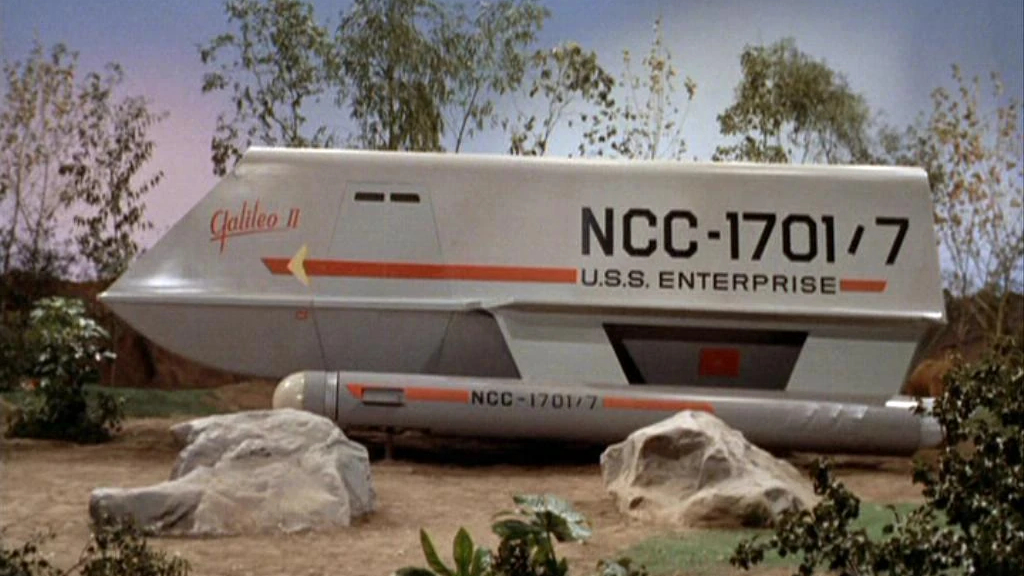
"Star Trek" famously got around the challenge of landing on a new planet every week by inventing the transporter beam. There are times, however, when only a shuttlecraft is up to the task, and the Galileo flew its first mission in "Star Trek"'s first season — it even gives its name to an episode, "The Galileo Seven".
It's essentially just a box with warp nacelles stuck to the bottom, but the design is so timeless that the shuttlecraft of "The Next Generation" era and beyond are essentially variations on the same theme. The Galileo may be small, but it's also perfectly formed.
2. USS Enterprise (Constitution Class, post-refit)
(Image credit: Getty Images (Sunset Boulevard))
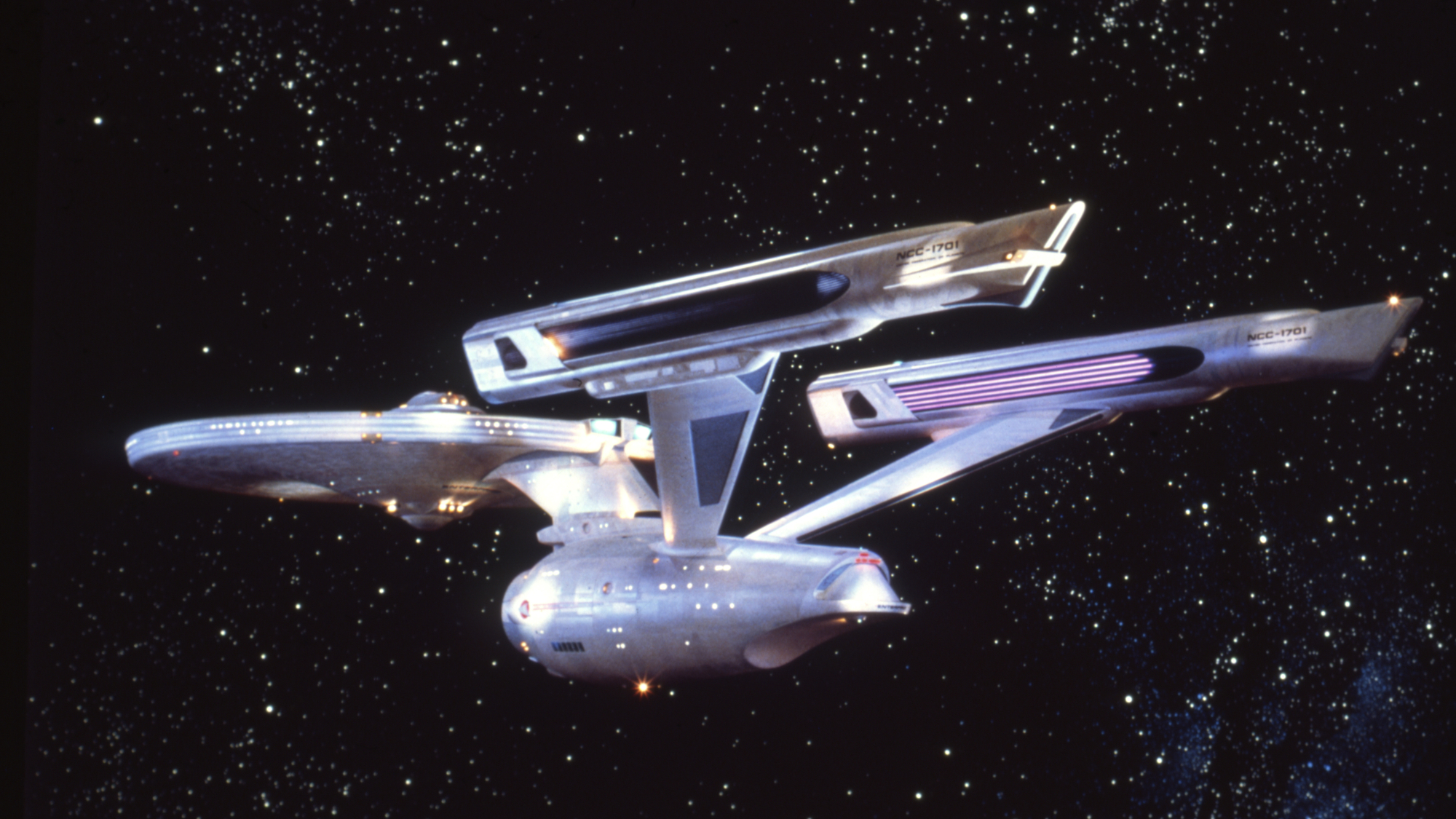
Matt Jefferies' Original Series Enterprise was — like the crew's uniforms — an instant design classic, but the NCC-1701 reached its peak when it got a top-to-bottom refit for "Star Trek: The Motion Picture".
Andrew Probert's update replaced the cylindrical nacelles with a squarer, sleeker look, and thoroughly modernized the saucer and stardrive sections. This iteration would ultimately be destroyed in "The Search for Spock", but the follow-up NCC-1701-A used the same blueprints. Arguably the most iconic Enterprise of them all.
3. USS Reliant (Miranda Class)
(Image credit: Paramount)
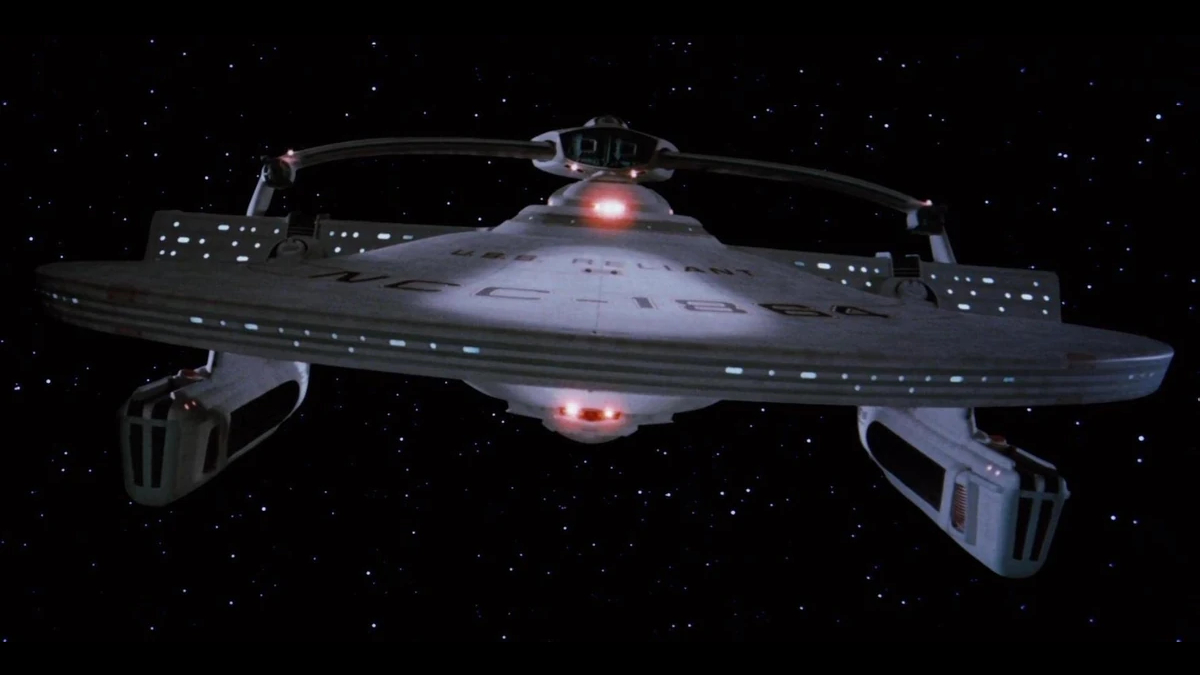
The script for "Star Trek II: The Wrath of Khan" necessitated Kirk's crew going head-to-head with another Starfleet vessel. A clone of the Enterprise would have made things confusing, while a complete design overhaul would have seemed incongruous.
The USS Reliant was the perfect halfway house, a design that kept things consistent with its trademark Federation saucer section, but shook things up by putting the warp nacelles under the primary hull. Less elegant than the Enterprise, perhaps, but still much more noteworthy than "The Search for Spock"'s USS Grissom and USS Excelsior.
4. HMS Bounty (Klingon Bird of Prey)
(Image credit: Paramount)
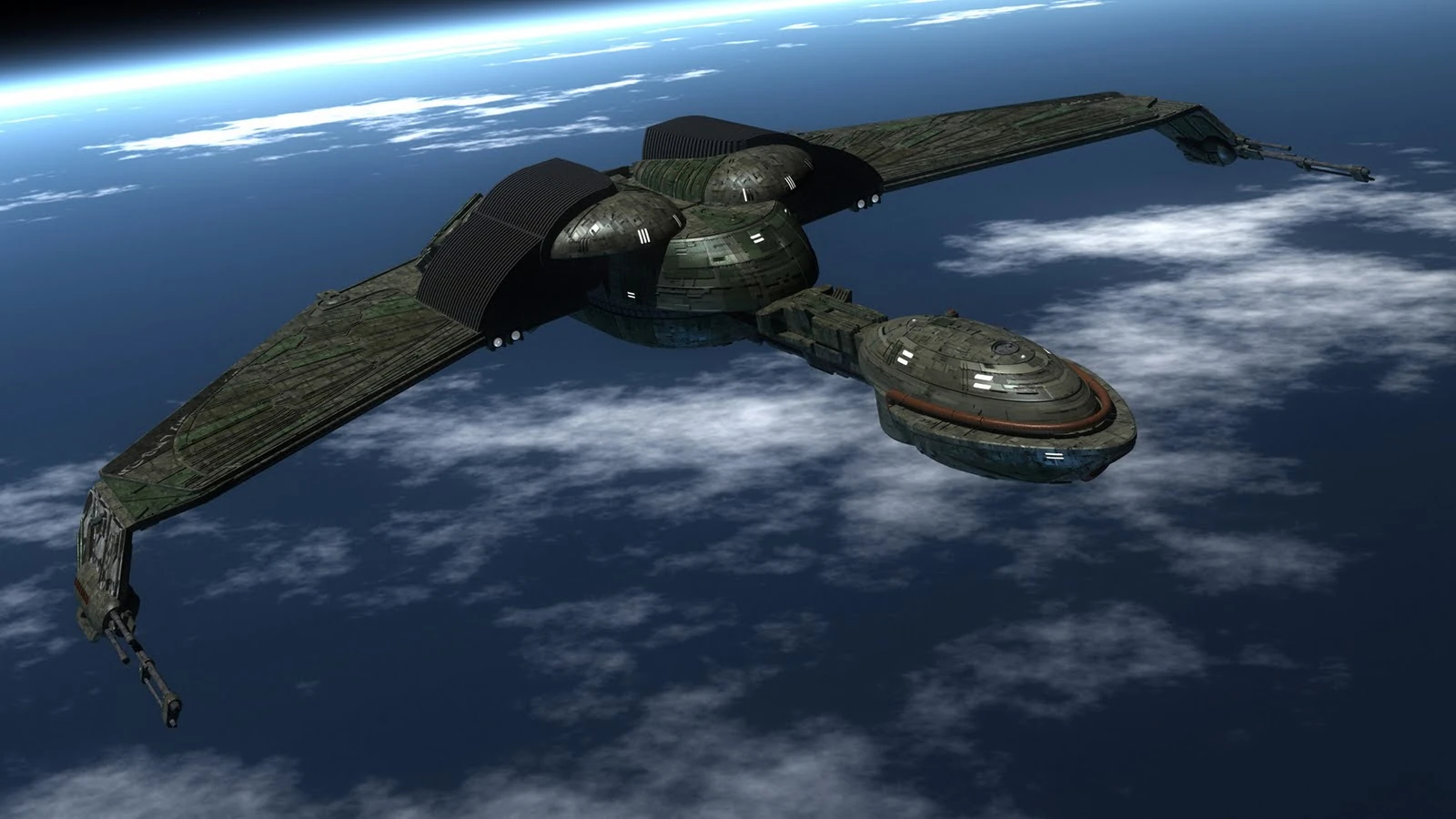
It was the Romulans who flew Birds of Prey in the Original Series, and they were all set to be the primary antagonists of "The Search for Spock" until Paramount executives pushed for the more famous Klingons. Luckily, Commander Kruge was allowed to hold on to the ship, because variants of this design went on to become a mainstay in later movies and into the "Next Generation" era.
There's a pleasing, "Star Wars"-like grubbiness to the hull, while the powerful weapons and movable wings make it look like an apex predator. The cloaking device is helpful, too, particularly when Kirk takes the rebranded "HMS Bounty" to the 20th century to pick up some whales in "The Voyage Home".
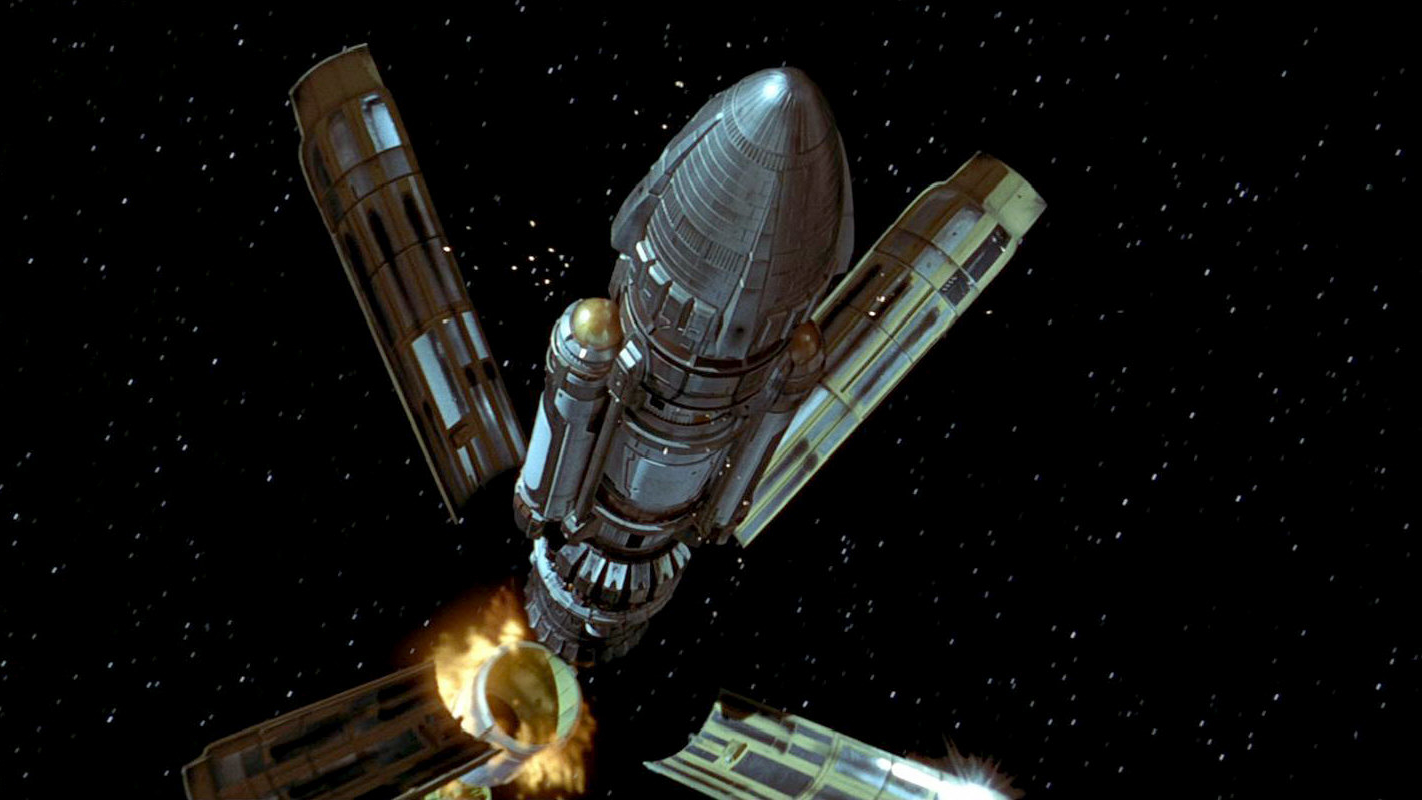
5. The whale probe
(Image credit: Paramount)
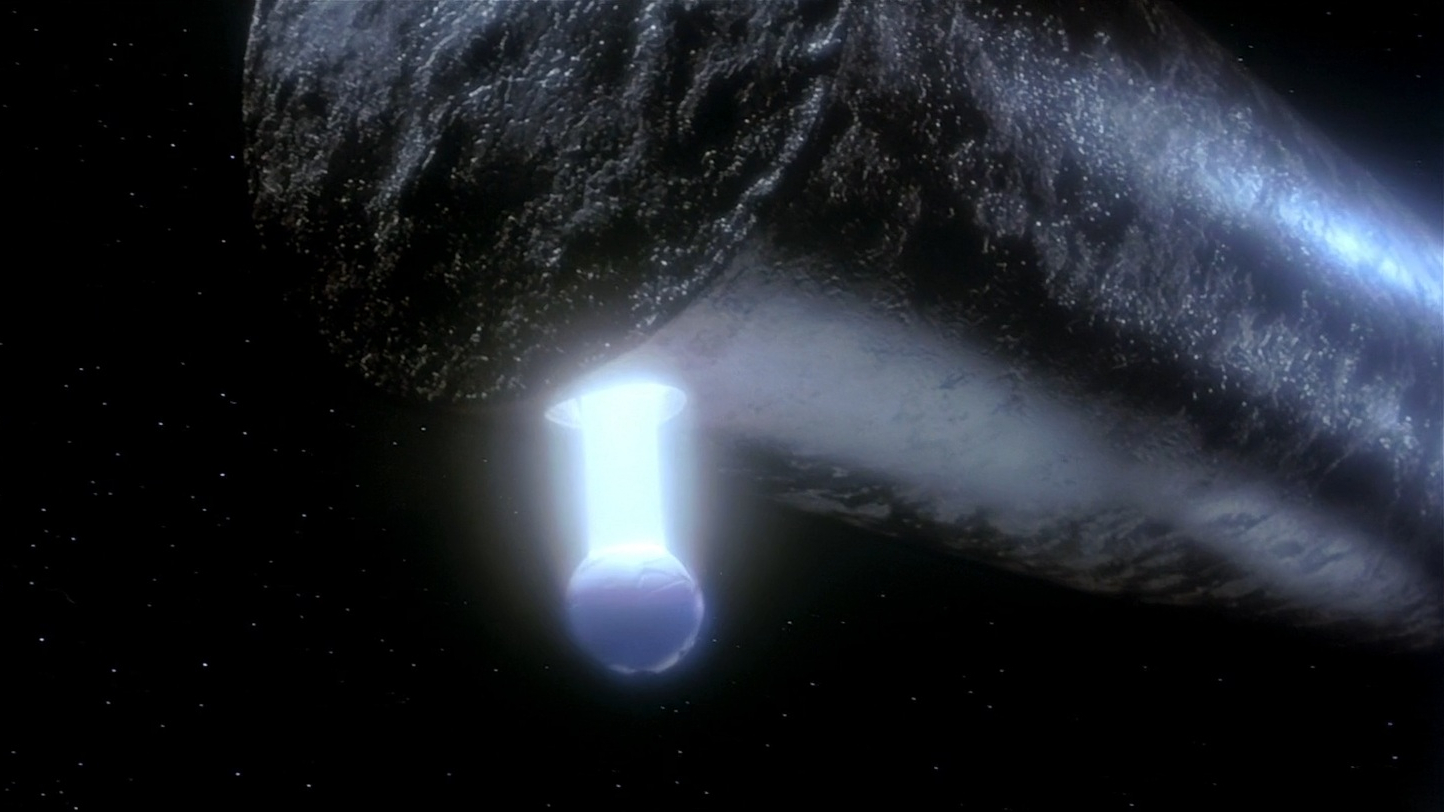
It's never entirely clear whether the whale probe is a vessel or a lifeform in its own right, but we're going to assume the former. What is obvious is that this vast probe possesses great power, enough to threaten human existence as it tries to make contact with humpback whales who — thanks to their extinction in the 21st century — have stopped phoning home.
It's the probe's design that's the masterstroke, however: a minimalist and surprisingly effective combination of giant log, energy beam and floating ball. The spacecraft's unknowability — along with its haunting cry — is what makes it so intimidating.
6. USS Enterprise-D (Galaxy Class)
(Image credit: Paramount Pictures)
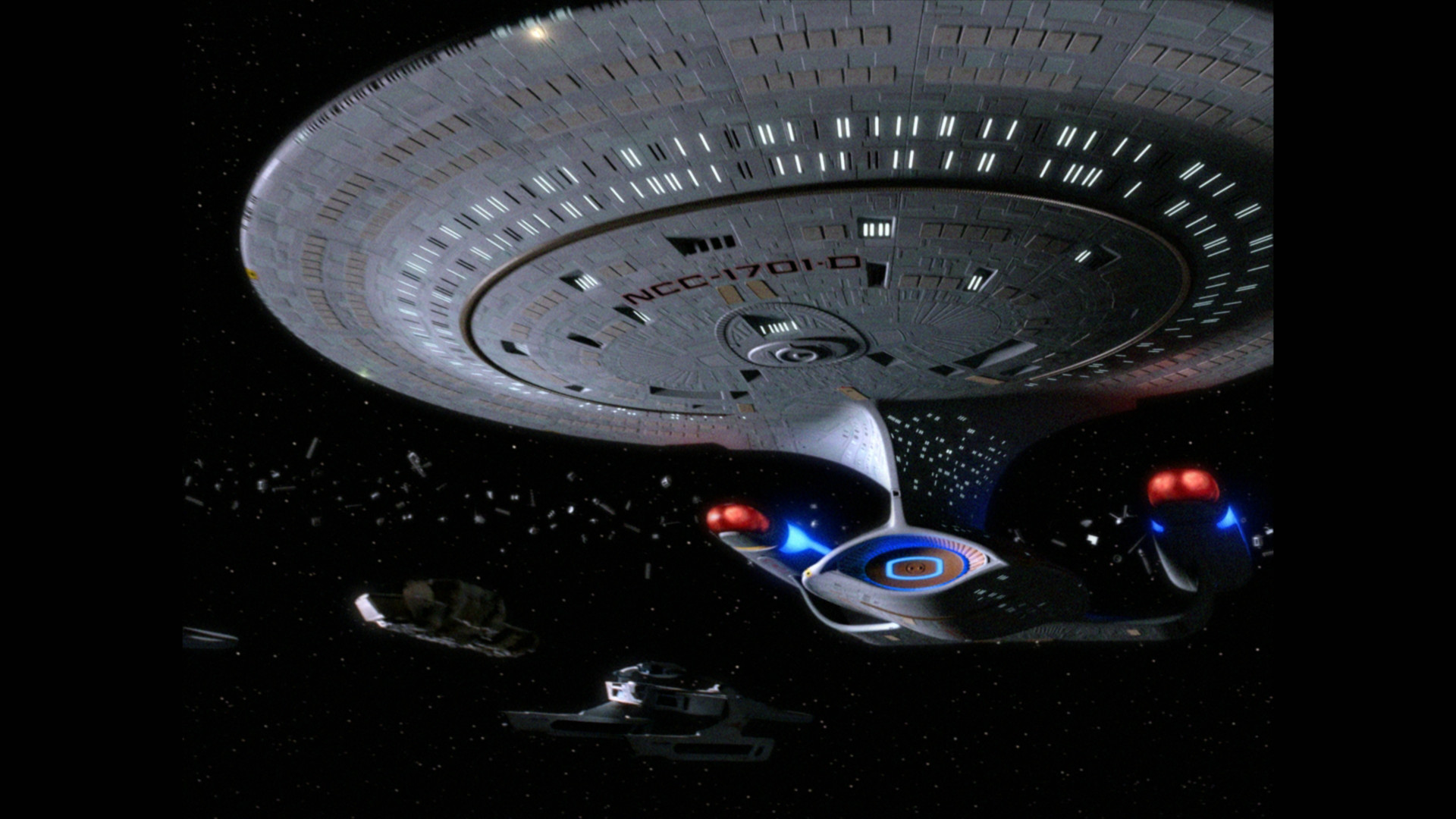
Probert also designed the flagship of "The Next Generation", albeit with a very different brief. Set decades after the voyages of Kirk and Spock in an even more enlightened future, the new show needed a friendlier home for its space explorers.
"I felt like it was an ambassador for Starfleet," said Probert. "It should look unthreatening, it should be very soft." That meant an oversized saucer section, a curvier secondary hull, and plenty of room for families.
It also has the rarely used capability to split into two sections — something that came in very handy in the brilliant episode "The Best of Both Worlds".
7. Romulan Warbird (D'Deridex Class)
(Image credit: Paramount)
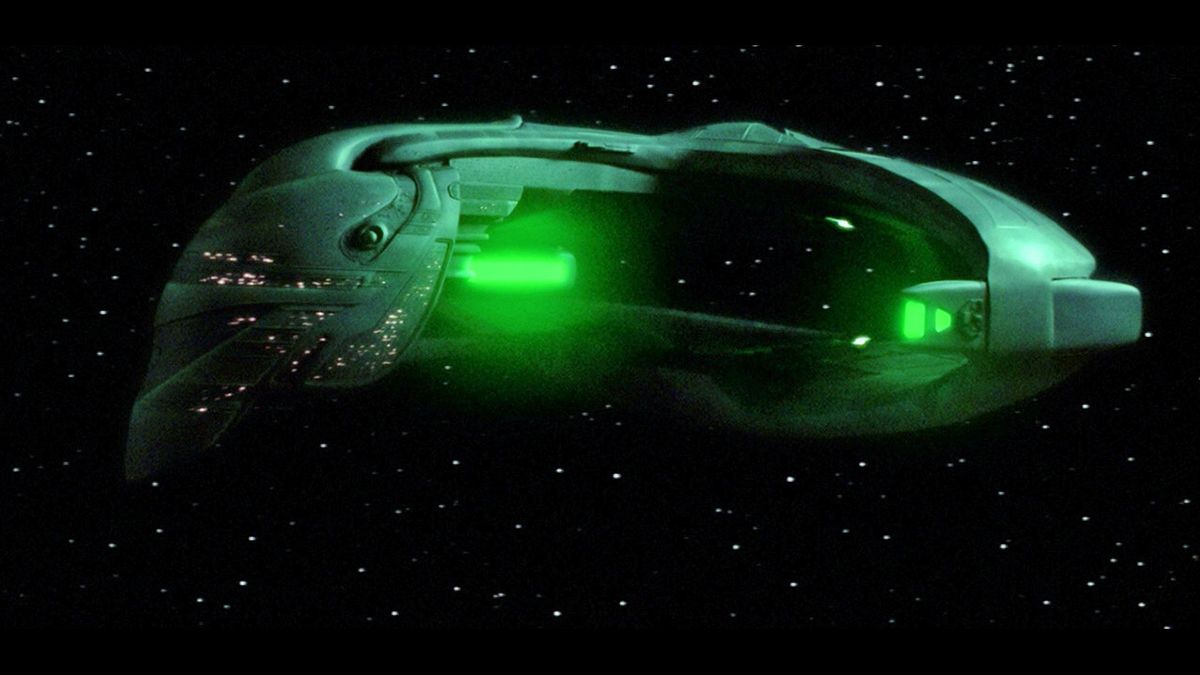
Nobody had heard a peep from the Romulans in decades when they turned up in "The Next Generation" episode "The Neutral Zone".
It turned out they'd gone back to the starship drawing board in a big way, replacing the veteran Bird of Prey with a creepy, green design light years away from the shiny white exteriors beloved of the Federation.
The front of the hull is reminiscent of "Battlestar Galactica"'s OG Cylon helmets (Probert worked on both), while their decloaking maneuver is disconcertingly ghostly.
8. Borg Cube
(Image credit: Paramount)
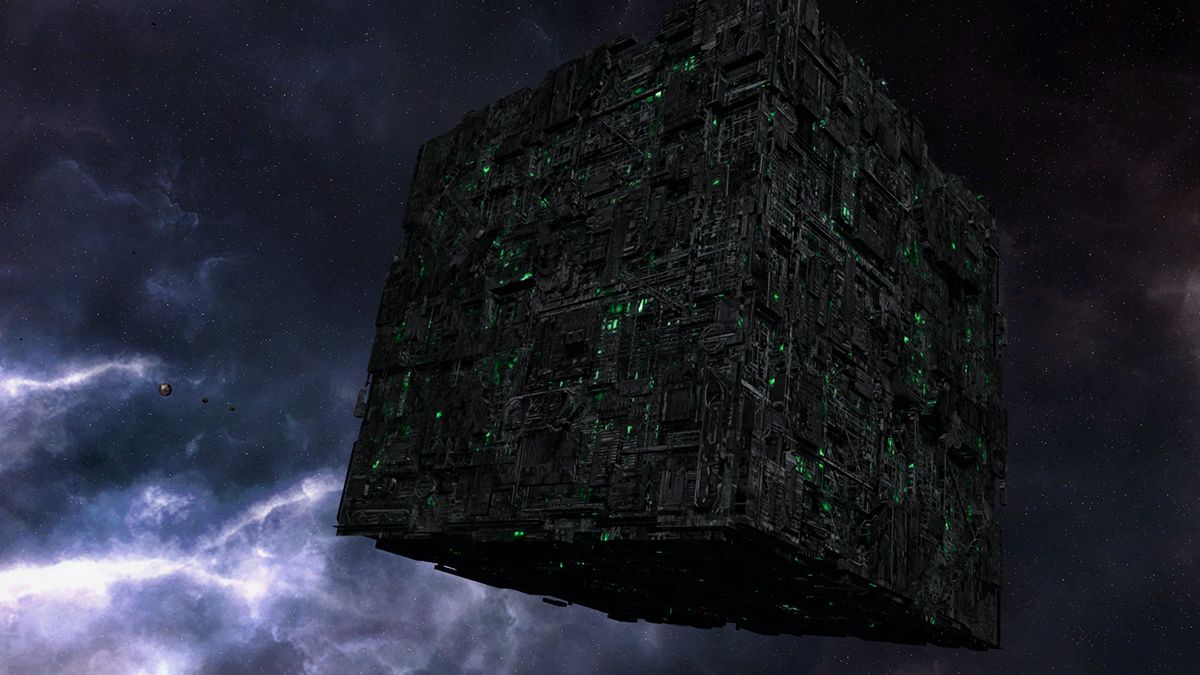
It may look like what happens when other ships get crushed at a scrapyard, but the standard-issue Borg Cube is one of the most intimidating sights in the "Star Trek" universe.
Lacking a front or back — or, indeed, any distinguishable features — the design's uniformity is a cover for seemingly limitless power. Frustratingly impervious to most forms of attack, capable of self-repair, and surprisingly speedy (largely thanks to their ability to negotiate transwarp conduits), Borg Cubes are something you never want to see on your viewscreen.
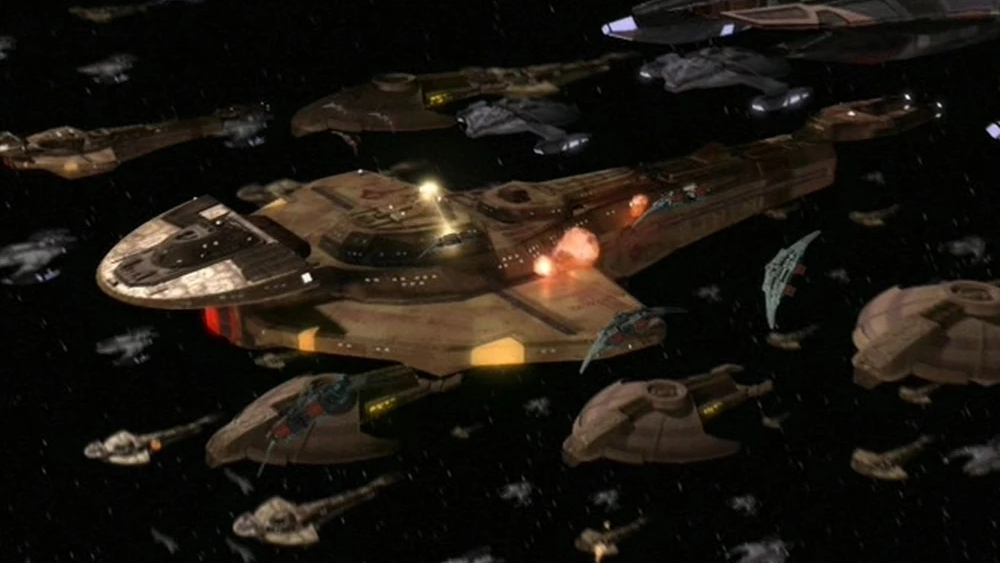
9. Cardassian Galor Class
(Image credit: Paramount)
Cardassian designs had a major role in "Deep Space Nine", seeing as they built the original Terok Nor station.
Their most significant contribution to "Star Trek" aesthetics, however, may just be their military cruiser, an elaborate design inspired by the emblem of the Cardassian Union (Not the last time a Trek ship would be designed around a logo, as "Starfleet Academy"'s USS Athena also looks a lot like the combadges worn within the faculty).
The Galor Class isn't much to look at in profile, but from above there's a definite invertebrate vibe to the silhouette, even if the ship's back-to-front styling makes it look like it's perpetually in reverse gear.
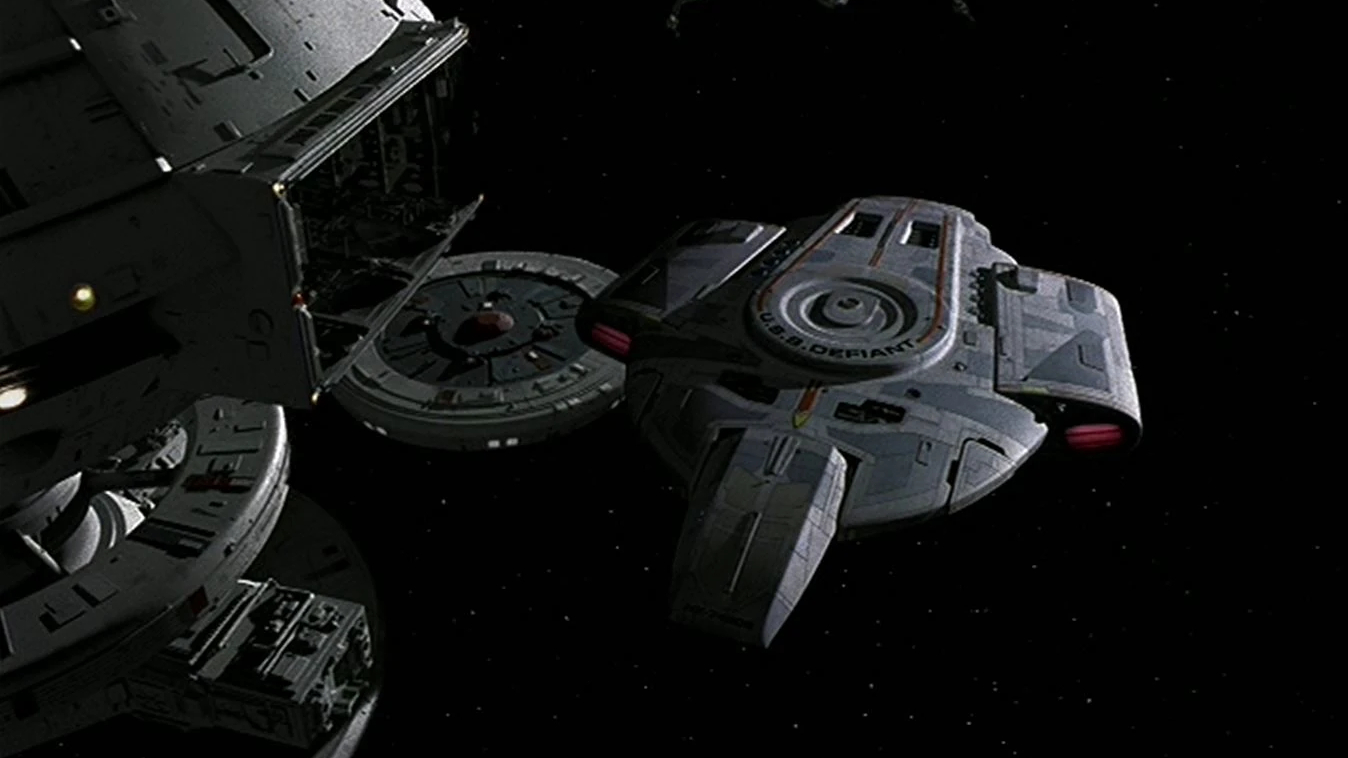
10. USS Defiant (Defiant Class)
(Image credit: Paramount)
"Deep Space Nine"'s space station setting ensured it was more static than its predecessors, with the crew's occasional away missions undertaken on Runabouts.
The onset of the Dominion War ensured Sisko and co were given something with a little more punch, a "tough little ship" built for battle, supplied with special "ablative armor" and — thanks to a unique deal with the Romulans — its own cloaking device.
Color scheme aside, it's a complete break from Starfleet norms, the design owing as much to the Millennium Falcon as the USS Enterprise. So iconic that — following the destruction of the original USS Defiant — the replacement USS Sao Paulo took its name.
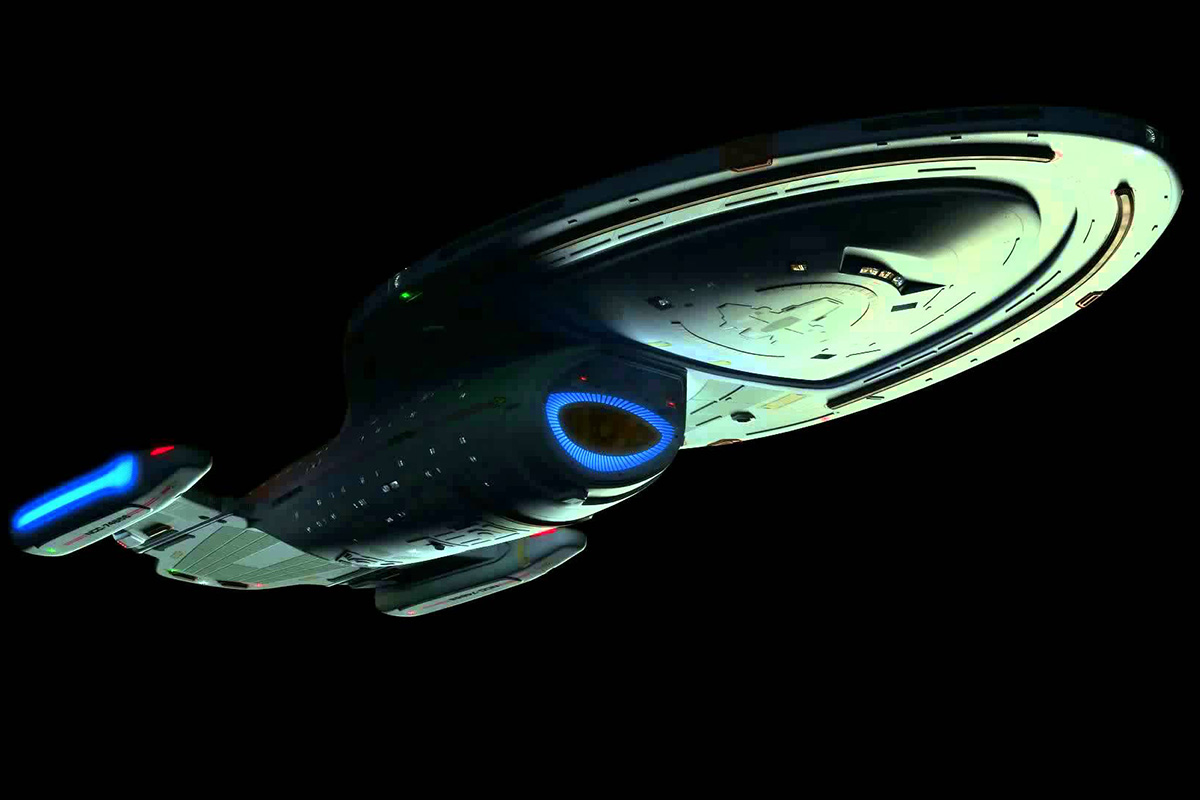
11. USS Voyager (Intrepid Class)
(Image credit: Paramount)
Unlike the Enterprises, Voyager was never designed to be the flagship of the Federation. This was always a more midtable vessel, equipped with some state-of-the-art technologies but only headline-worthy thanks to its extended jaunt across the Delta Quadrant.
Still, this nimble ship is one of the most good-looking in the fleet, with saucer and drive sections that feel like an organic whole, and — in a cool innovation — nacelles that move before a jump to warp.
It also, in season 2 "Voyager" episode "The 37s", became "Star Trek"'s first lead ship to intentionally land on the surface of a planet.
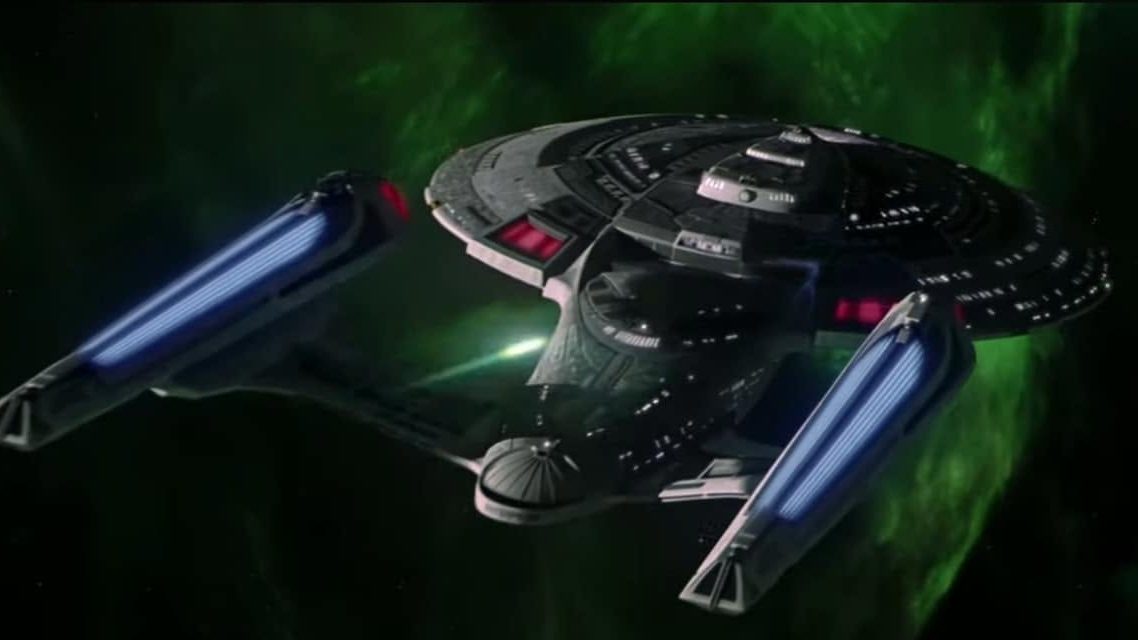
12. USS Enterprise-E (Sovereign Class)
(Image credit: Paramount)
After the Enterprise-D's saucer section crash-landed on the surface of Veridian III in "Generations", Picard and the "TNG" crew needed a new home.
The new-look USS Enterprise-E is more divisive than its predecessors, though it was a result of designer John Eaves' efforts to create a ship that looked better at multiple angles than the notoriously hard-to-shoot Enterprise-D model. In canon, the design reflected the Federation's shift to a more warlike stance after tussles with the Borg and the Dominion.
This was a more functional ship, crafted for battle rather than comfort, with a flatter, more streamlined profile, and — controversially — an elongated saucer section.
13. The Phoenix
(Image credit: Paramount)
AKA where it all began. The Phoenix is the ship warp pioneer Zefram Cochrane used to break the lightspeed barrier, attract the attention of some passing Vulcans, and usher in an era of (give-or-take) galactic peace.
The irony that it's constructed from a World War III nuclear missile is noted, though it's the optional extras that make the Phoenix so memorable — it's like a pair of extendable warp nacelles have been added to a modern-day rocket. There's also a built-in sound system.
The Phoenix is so important to the 'history' of spaceflight in canon that it featured alongside Apollo and the International Space Station in "Star Trek: Enterprise"'s opening credits.
14. Species 8472 Bioship
(Image credit: Paramount)
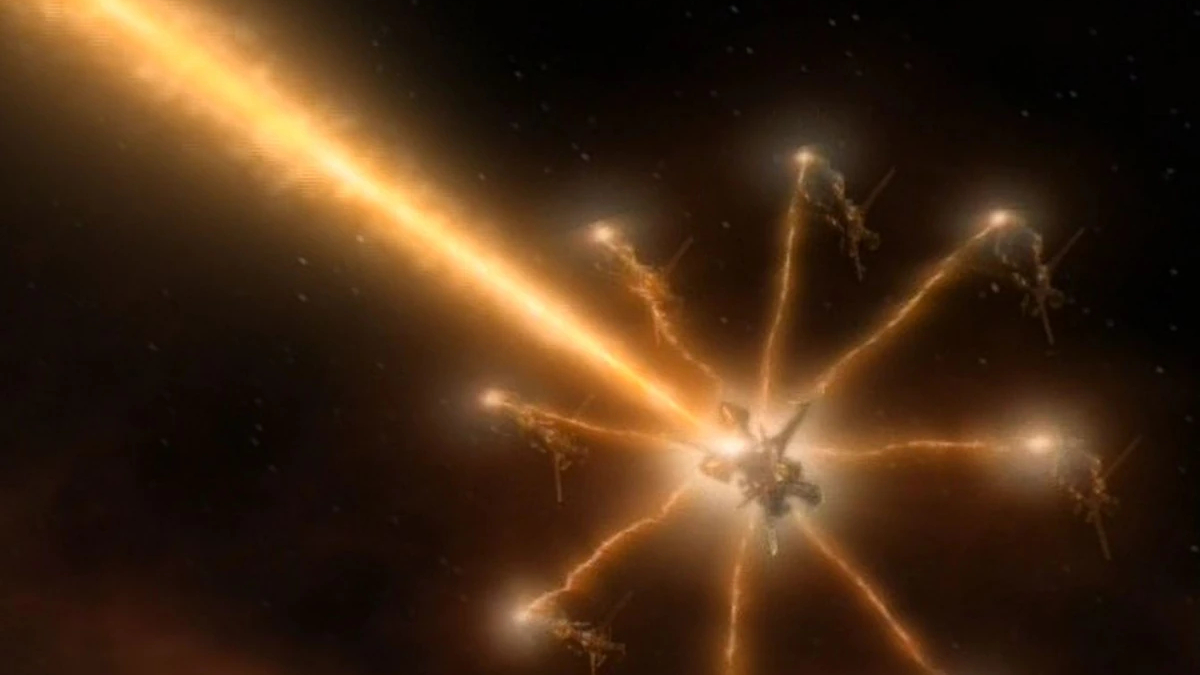
"Babylon 5"'s computer-driven VFX meant the show featured organic designs from its early days, but with "Star Trek"'s space scenes still dominated by model work, the debut of Species 8472 in the 1997 "Voyager" episode "Scorpion" brought a whole new breed of starship to the franchise.
These squid-like vessels (created in "fluidic space", but similarly adept in a vacuum) were more than a match for the Borg and could join forces to fire a single energy blast of Death Star-esque proportions.
The Star Trek franchise has hit the ripe old age of 60 this week. September 8 is the official 'Star Trek Day' and marks the anniversary of the 'Original Series', which first broadcast in 1966.
For fans of all things Star Trek, Paramount+ is the place to be with all seasons of the 'Original Series', plus the new series 'Star Trek: Strange New Worlds', which is currently in Season 4 and hits its exciting finale on September 24.
If you travel regularly, a regional lock can cut off your Paramount+ subscription the moment you step abroad. A reliable VPN solves this instantly — masking your location so you can stream all your favorite Star Trek content without interruption, just like you’re sitting on your couch at home.
NordVPN is our top choice among the best VPN services, and right now, they have great deals on 2-year plans, offering a bonus three months free when you sign up.
NordVPN is the top-rated VPN provider from our expert colleagues at TechRadar and offers fantastic value at just $4.49 per month for 27-months on the Complete Plan. There are other options to choose from at NordVPN with various pricing and discounts of 69%, but the Complete Plan offers the best discount and value for money.
Along with a host of online security features, a VPN lets you watch all your space and sci-fi streaming shows and movies from anywhere in the world.
A lot of exciting sci-fi series are coming in the next few months, including Star Trek: Strange New Worlds, widely considered the best new live-action Star Trek series. We're currently midway through the ten-episode season 4 of Strange New Worlds, which is streaming on Paramount+ every Thursday.
The crew of the U.S.S. Enterprise — led by Captain Christopher Pike (Anson Mount) — has embarked on another season of thrilling and emotional adventures across the stars. Rebecca Romijn, who plays Commander Una Chin-Riley in the acclaimed sci-fi series, told fans, "We're so proud of this Strange New Worlds, and we're really proud of season 4; we think it's our best season yet."
Season 5 of Strange New Worlds is set for a 2027 release on Paramount+. If you can't wait until then, you'll also find classic Star Trek shows including 'The Next Generation', 'Deep Space Nine', 'Voyager', and 'Enterprise'.
NordVPN bypasses streaming blocks while securing your connection on risky public Wi-Fi. Packed with anti-malware, an ad blocker, a password manager, and identity theft protection, it delivers fast speeds so you can stream, work, and browse safely anywhere in the world.
These NordVPN deals are live now, with prices and offers varying depending on the plan chosen and your location.
Key features: Up to 75% discount, high-speed VPN, ad and tracker blocker, anti-malware protection, up to $1m in identity theft insurance and $100K in cyber extortion insurance, password manager and data-breach scanner, 1TB encrypted cloud storage, and monitoring alerts and services.
Price history: Before today's deal, the price of the NordVPN Complete plan was $493.83 for 24 months, or $20.57 a month. It's now up to 75% off and comes with the bonus of three months free.
✅ Buy it if: You're looking for maximum online security, and you want to stream all your favorite Star Trek and sci-fi shows anywhere in the world.
❌ Don't buy it if: Either you already have a VPN, or you're not in the market for one. Those are the only reasons you wouldn't make the most of this excellent value offer.
We test and review VPN services in the context of legal recreational uses. For example: 1. Accessing a service from another country (subject to the terms and conditions of that service). 2. Protecting your online security and strengthening your online privacy when abroad. We do not support or condone the illegal or malicious use of VPN services. Consuming pirated content that is paid-for is neither endorsed nor approved by Future Publishing.
To boldly dress as no one has dressed before… In another universe, that could have been the "Star Trek" mission statement.
Sure, the veteran franchise has spent much of its 60-year lifetime seeking out new life and new civilisations, but it's also been preoccupied with keeping crews fashionable as they explore the final frontier. It seems that nobody wants to make first contact sporting last year's jumpsuit.
The sheer volume of uniforms worn on Federation duty is mind-boggling, as Starfleet has turned regular style updates into one of its prime directives. So, as "Trek" celebrates its 60th anniversary, we take a warp-speed tour through the outfits Kirk, Picard, Sisko, Janeway, and the rest have hung in their wardrobes. Make it sew, number one!
Captain Kirk and his crew, sporting their iconic uniforms on "Star Trek: The Original Series". (Image credit: Star Trek: The Original Series)
Departments denoted by: Logos in Starfleet delta, color of sweater (Command: Gold/Green, Science/Medical: Blue, Operations: Red)
Rank denoted by: Bands on sleeve cuffs
Although the ranks were lifted directly from the Navy, "Star Trek" creator Gene Roddenberry didn't want the Enterprise to feel militaristic — this was the enlightened 23rd century, after all, when exploration was more important than war. As such, the uniforms worn by Kirk and co were rather more casual than standard forces' issue.
By the time the Enterprise started its five-year mission in earnest, the outfits had been through a couple of subtly different evolutionary stages (in pilot episodes "The Cage" and "Where No Man Has Gone Before") before costume designer William Ware Theiss zeroed in on those now-iconic designs.
Captain Pike and his bridge crew in the "Star Trek: The Original Series" pilot episode "The Cage". (Image credit: Star Trek: The Original Series)
They featured sweaters and black pants for the men, peak-'60s minidresses for the women, and all of them were color-coded blue (Science/Medical), red (Operations), or green (Command) to show off the wonders of those new-fangled color television sets.
And yes, we did say green. The command sweaters worn by Kirk, Sulu, and Chekov were actually green in real life, but a combination of studio lights, early color TV tech, and the velour fabric made them appear gold on screen.
Captain Kirk wearing his occasionally used green wraparound top in "Star Trek: The Original Series". (Image credit: Star Trek: The Original Series)
The casual wraparound number occasionally worn by Kirk was made from a different material, and hints at the green Theiss originally intended.
The Animated Series later retconned canon to match public perception, making gold Starfleet's official color of command.
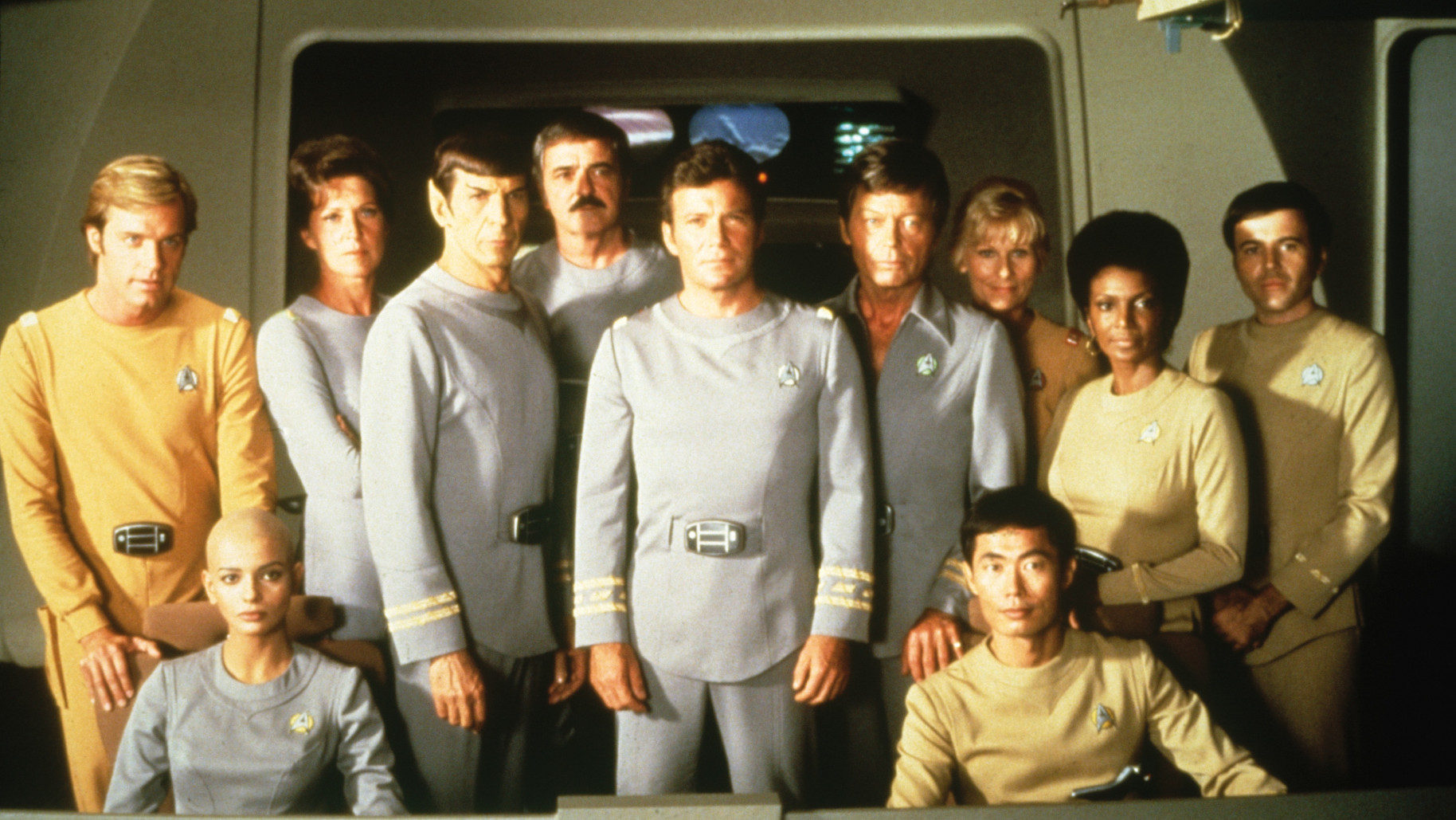
The Motion Picture
(Image credit: Paramount Pictures)
Departments denoted by: Flash of color behind badge (Command: White, Science: Orange, Medical: Green, Engineering: Red, Operations: Gold, Security: Silver)
Rank denoted by: Bands on sleeve cuffs
The primary colors were ditched for Trek's first big-screen adventure, as director Robert Wise and costume designer Robert Fletcher opted for subdued "Space: 1999"-esque pastels.
The loose-fitting, pajama-like uniforms came in an exciting range of light blue and beige (newly promoted Admiral Kirk had his own special design), with departments denoted by a flash of color behind the Starfleet delta logo.
Uniforms came with a built-in fanny pack (a medical monitor, apparently), while engineering and security were given protective clothing. The crew also got jackets to wear on chilly away missions.
The other Original Series movies
The iconic maroon Starfleet uniforms that debuted in "Star Trek II: The Wrath of Khan". (Image credit: Paramount)
Departments denoted by: Color of turtleneck (Command: White, Science: Gray, Medical: Green, Operations: Ochre: Operations, Red: Cadets/trainees)
Rank denoted by: Metal insignia on epaulettes/cuffs
"The Motion Picture" uniforms didn't last long, as "The Wrath of Khan" director Nicholas Meyer decided he wanted a more militaristic look for his "Hornblower in space" epic. "When I watched the TV show, I never understood why they were all running around in pajamas," he said, "so I tried to change some stuff".
The one thing that did remain from the Original Series was the voluminous cut of the pants, albeit enhanced by a natty red stripe down the side. Otherwise, this was a complete overhaul, as Fletcher introduced maroon tunics — arguably more flattering to the ageing crew's waistlines — over color-coded turtlenecks. The tunic was secured via a matching epaulette that also carried rank-specific insignia.
(Image credit: Paramount)
The "Wrath of Khan" look would remain intact until "Generations" 12 years later, and the design persisted in canon for decades — in classic "Next Generation" time travel episode "Yesterday's Enterprise", the doomed Enterprise-C crew still dressed in those maroon tunics, though by the mid-24th century they'd ditched the turtlenecks.
Variations appeared in later original crew movies, including bomber jackets and a vest which — handily for chief engineer Mr Scott — comes with multiple pockets.
The Next Generation era
(Image credit: Paramount+)
Departments denoted by: Color of uniform/shoulders/turtleneck (Command: Red;Science/Medical: Blue, Operations: Gold)
Rank denoted by: Metal pips on collar
Loose fits were out as "Star Trek" reached the late 24th century. Roddenberry demanded a future free from the tyranny of zippers and buttons, while returning TOS costume designer Theiss instituted a "no wrinkles" rule for fabrics.
The resulting skintight Spandex suits were a nightmare for the "Next Generation" cast, causing so many back issues that Patrick Stewart's chiropractor intervened. The suits also had an unpleasant knack of retaining body odor.
They subsequently switched to a two-piece design for the show's third season, though there were variations. Jean-Luc Picard occasionally stepped out in a bespoke red jacket, Worf donned a Klingon sash, acting ensign Wesley Crusher introduced his own brand of smart/casual to the Enterprise bridge, and Counselor Troi seemingly wore whatever the hell she wanted. Early seasons also featured occasional sightings of men in dress-like skants, intended to be a reflection of a more progressive future.
There was also a color scheme switch, with red worn by command, and gold allocated to operations. Rank was now depicted by metal pips pinned into the collar, and the Starfleet chest badge became a portable communicator.
(Image credit: Paramount)
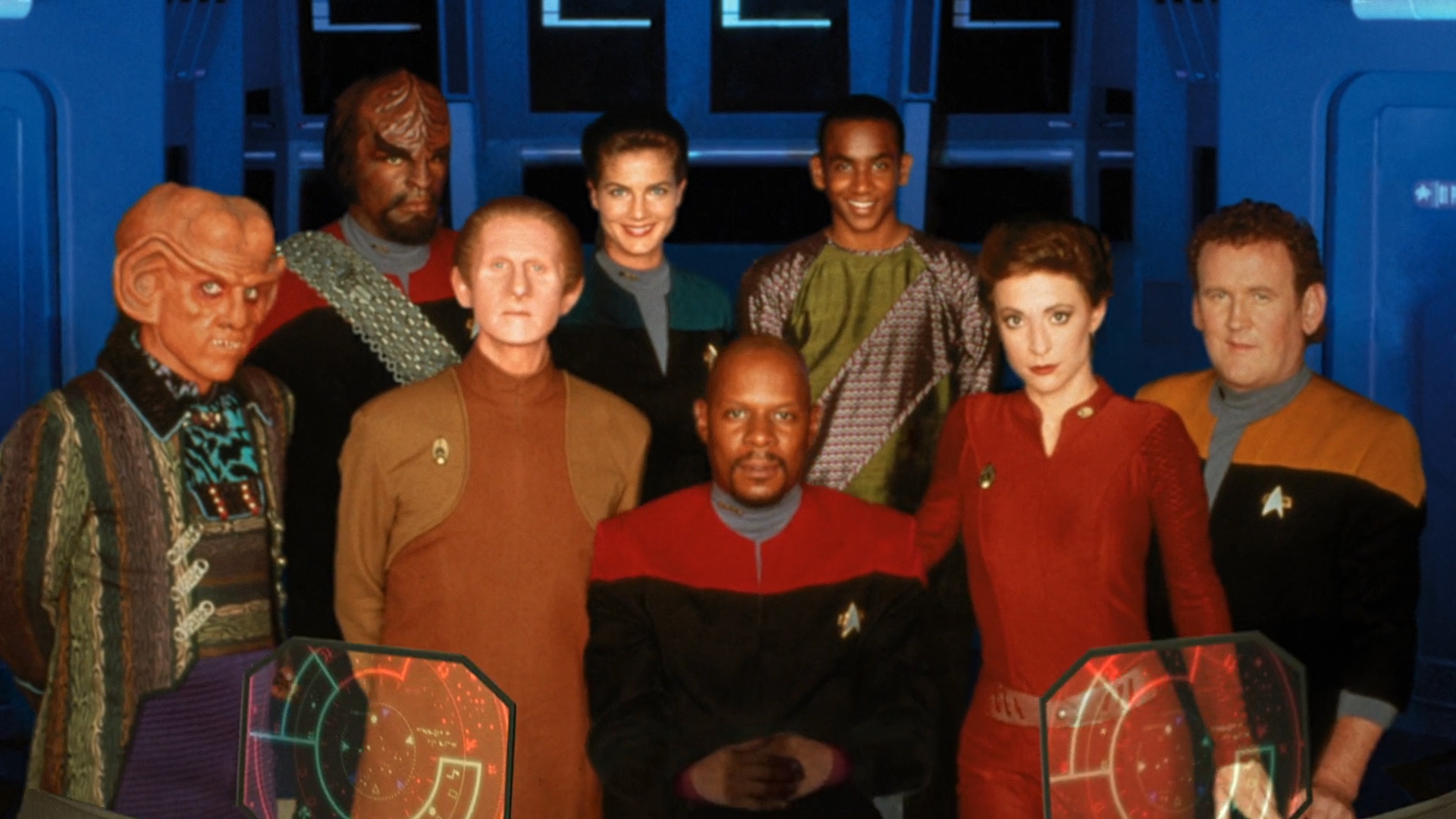
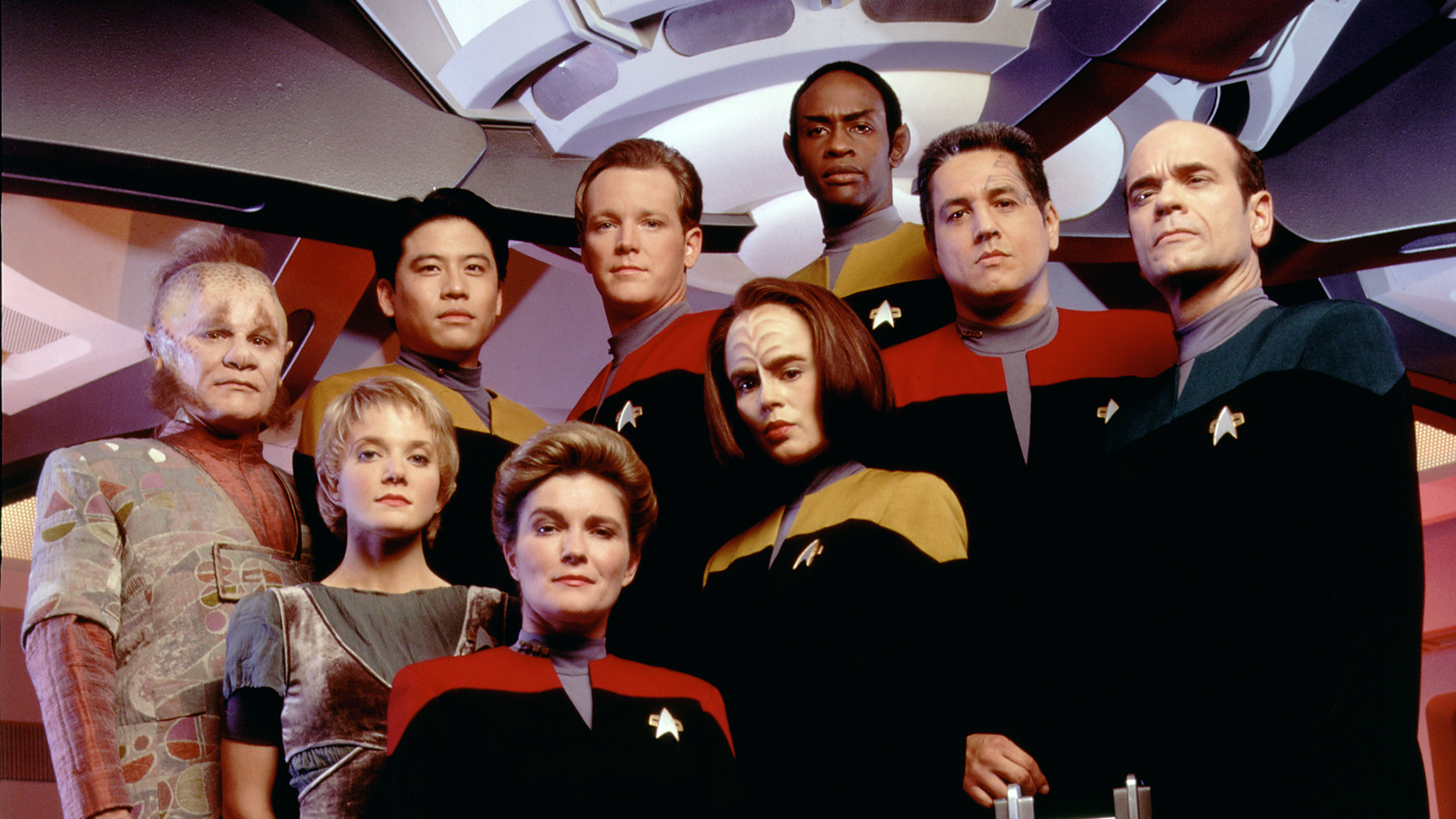
"Deep Space Nine" made comfort a priority, putting its crew in black jumpsuits with color-coded shoulders to denote department, and rank pips appearing on a light blue turtleneck.
They also turned up in the first "Next Generation" movie, "Generations", though that wasn't always the plan. The production had intended to dress the crew in new-look uniforms, but when they didn't work out, they instead turned out in a selection of "TNG" and "DS9" outfits.
Unfortunately, they didn't have time to tailor outfits for everyone, meaning that Jonathan Frakes (Riker) and LeVar Burton (LaForge) had to borrow suits previously worn by Avery Brooks (Sisko) and Colm Meaney (O'Brien) in "DS9" — rewatch the film, and it's clear they don't fit the actors properly.
(Image credit: Paramount Pictures)
When Picard and co returned to the big screen in "First Contact," they had new uniforms to go with their sparkly new Enterprise-E. The black jumpsuit look remained (albeit in a more tailored form), though everyone now sported the same blue/gray shoulders — the departmental color-coding was instead shifted to the obligatory turtleneck.
This design was quickly rolled out on board Deep Space Nine, though poor old Voyager — trapped thousands of light-years from Earth — had to stick with the old jumpsuits until the crew made it home.
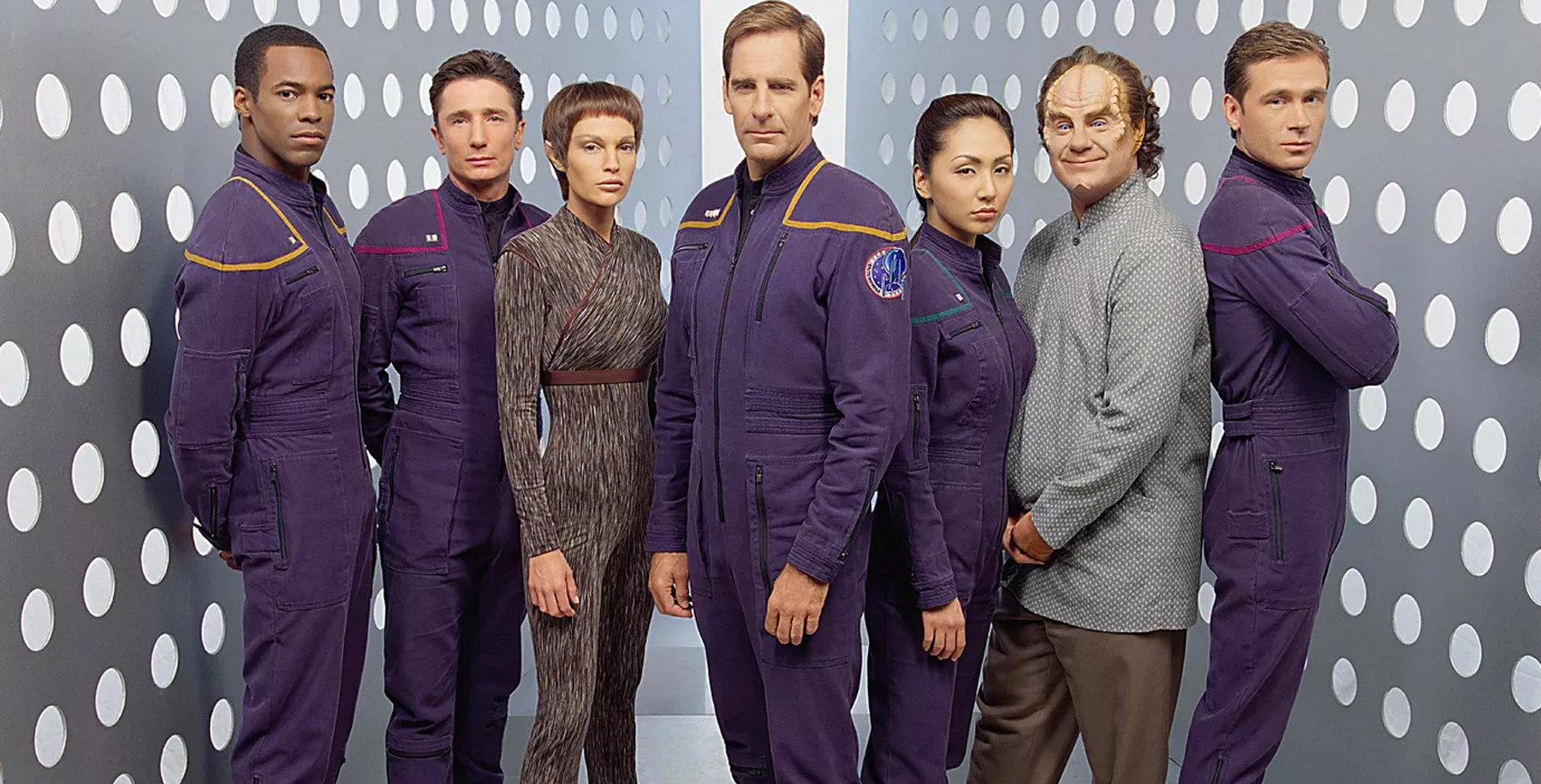
The uniforms in the prequel series were closer to contemporary designs than those from other "Treks". In fact, you could almost imagine a modern astronaut wearing those blue jumpsuits, well stocked as they were with zippers and pockets. The outfits worn by the admiralty even featured old-school collars andties.
The departmental color scheme was the same as the Original Series. Slightly incongruously, however, "Enterprise" utilized the same ranking pips as the "TNG" era — Starfleet seemingly ditched this system for a century or so, before bringing it back for the voyages of the Enterprise-D.
The Kelvinverse
(Image credit: Paramount)
Departments denoted by: Color of sweater (Command: Gold/green, Science/Medical: Blue, Operations: Red)
Rank denoted by: Bands on sleeve cuffs
Starfleet uniforms in this alternative timeline were remarkably similar to the original TOS models, though they were given a thoroughly modern makeover.
The classic sweaters from the '60s now came in two parts, with a colored top sitting over a black crewneck undershirt. Adding to the look, costume designer Michael Kaplan integrated loads of tiny Starfleet deltas into the fabric.
Perhaps the most remarkable thing about the Kelvinverse trilogy, however, was how many distinct uniform designs there were. There was seemingly something for every occasion, and even the regular crew uniforms went through a significant overhaul for the third film in the series, "Star Trek Beyond".
When "Discovery" brought "Star Trek" back to TV in 2017, Starfleet had given its couture a major rethink. This time out, the crew wore figure-hugging uniforms that looked a lot like tracksuits, featured Roddenberry-defying zippers, and used shiny, magpie-friendly styling for the obligatory departmental color coding. The design also 'homaged' the Kelvinverse look by integrating tiny Starfleet deltas into the fabric.
Strange New Worlds
(Image credit: Paramount)
Departments denoted by: Logos in Starfleet delta/sleeve design, color of sweater (Command: Gold/green, Science/Medical: Blue, Operations: Red)
Rank denoted by: Bands on sleeve cuffs
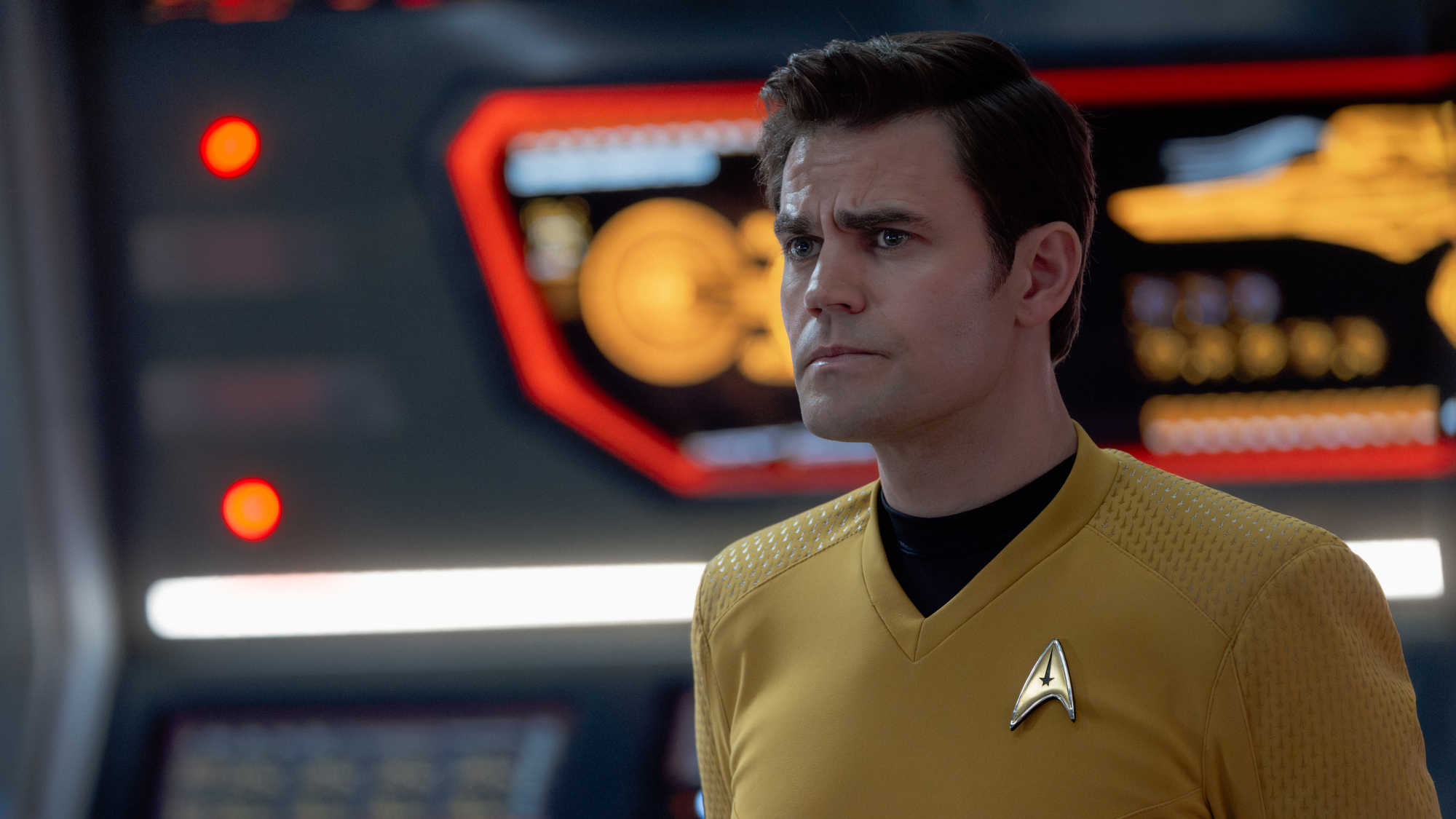
When the Enterprise's Christopher Pike turned up in season two, he wore a modern riff on Original Series uniforms, which was subsequently given another update when he returned for "Discovery" spin-off/TOS prequel "Strange New Worlds". This borrowed heavily from the original Kelvinverse sweater/undershirt design, though with a more pronounced V-neck and tiny departmental logos (rather than Starfleet deltas) woven into the fabric of the sleeves.
Discovery (32nd century)
(Image credit: Paramount Plus)
Departments denoted by: Color of uniform (Command: Red;Science: Blue, Operations: Gold, Medical: White)
Rank denoted by: Pips on Starfleet combadge, collar, and epaulettes
Meanwhile, when the USS Discovery blasted off to the distant future, the crew were introduced to the asymmetrical fashions of the 32nd century.
It was never quite clear why the two halves of the tunic didn't line up properly, though future Starfleet had, at least, decided to stick with the "Next Generation"-era color scheme. Rank was advertised in at least four different places (shoulders, neck, and chest).
Starfleet Academy
(Image credit: Paramount)
Departments denoted by: Color of uniform (Command: Red;Science: Blue, Operations: Gold, Medical: White)
Rank denoted by (when used): Pips on Starfleet combadge, collar and epaulettes
Similar rules now apply in "Starfleet Academy", though cadets — like admirals, strangely — wear predominantly gray outfits.
Lower Decks
(Image credit: Paramount)
Departments denoted by: Color of uniform (Command: Red;Science/Medical: Blue, Operations: Gold)
Rank denoted by: Metal pips on collar
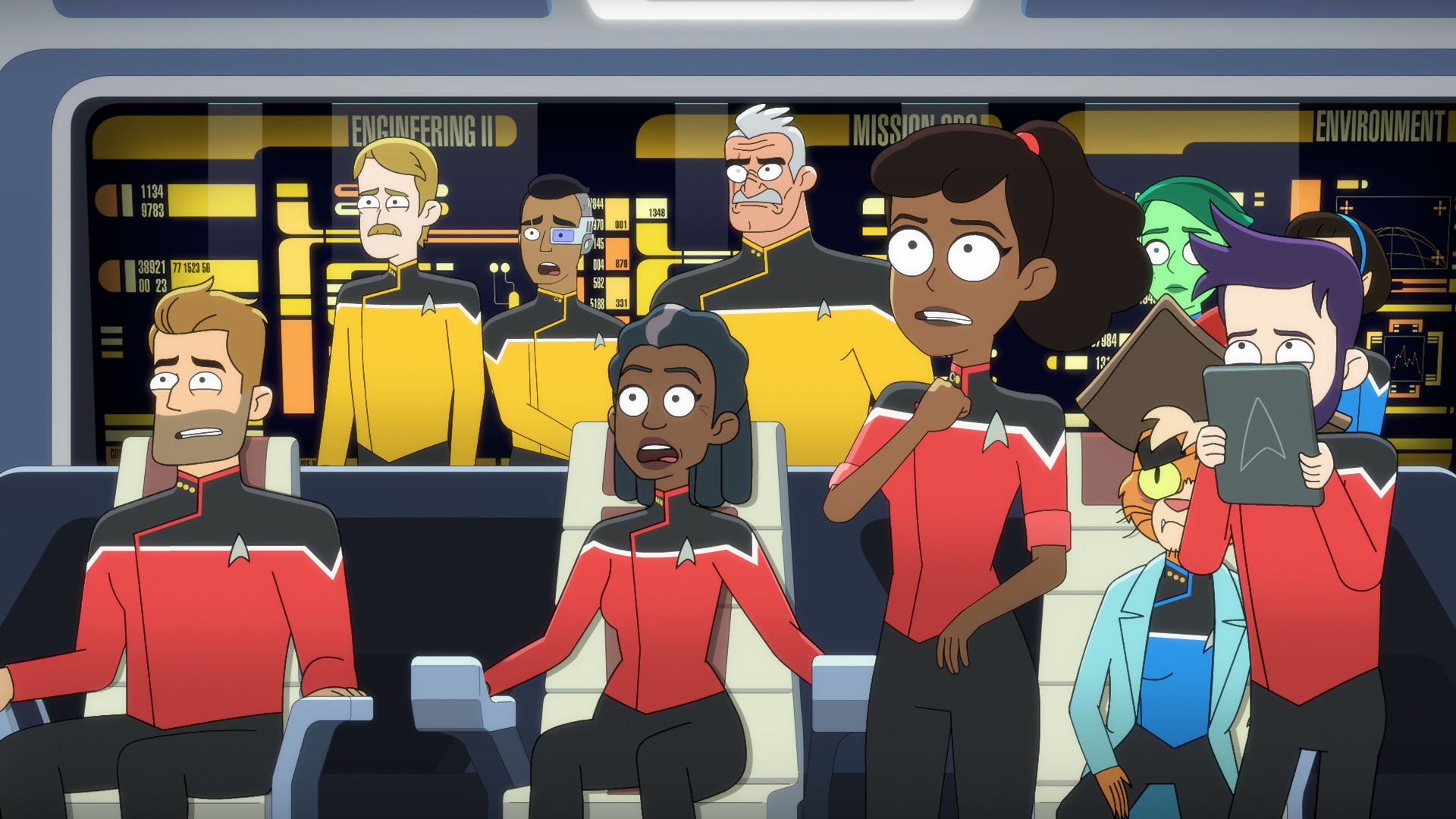
And when "Lower Decks" and "Picard" returned to the (more-or-less) "Next Generation" era, the crews' stylists didn't break the wheel. The USS Cerritos uniforms were TNG-adjacent, though borrowed heavily from the aforementioned designs that were ditched ahead of "Generations"
They also allowed for some Chief O'Brien-homaging sleeve-rolling.
Picard
(Image credit: Paramount)
Departments denoted by: Color of uniform (Command: Red;Science/Medical: Blue, Operations: Gold)
Rank denoted by: Metal pips on collar
The outfits in "Picard"'s third season, meanwhile, were effectively the "Deep Space Nine"/"Voyager" jumpsuits given a Kirk-style wraparound update.
As to the fashion future, no one knows what Trek has in store for us. There are no new shows announced yet, and only vague whispers of a new movie in the works. Time will tell, but we can't wait to see what the 24th century innovations they can bring to the jumpsuit next.
In the meantime, you can check out all of Star Trek on Paramount+.
During the recent press rounds for Apple TV's Ryan Reynolds/Kenneth Branagh vehicle "Mayday", writer/director duo Jonathan Goldstein and John Francis Daley talked about their plans for the next "Star Trek" movie. As well as confirming their story will feature an all-new crew, they mentioned that the in-development project will be inspired by a pair of hit films from the '90s and '00s, both of which — coincidentally — feature Denzel Washington operating at very different ends of the moral spectrum.
"Training Day" is a gritty police drama, where Ethan Hawke's rookie finds himself under the ethically dubious wing of the Oscar-winning Washington's corrupt cop Alonzo Harris. "Crimson Tide", meanwhile, is a tense submarine thriller in which Washington's executive officer argues with Gene Hackman's captain about whether to launch some nuclear weapons. The stakes? Only kicking off the Third World War.
The latter feels particularly suited to a Starfleet bridge. The greatest "Star Trek" movie of all, "The Wrath of Khan", also borrowed heavily from submarine movies, with the USS Enterprise given a naval makeover and space battles that played out like games of underwater cat-and-mouse. And while "Crimson Tide" doesn't necessarily fit with Gene Roddenberry's vision of a conflict-free professional environment, it's easy to picture a seasoned starship captain locking horns with an idealistic first officer about the right course of action.
In fact, if Paramount executives are having doubts about the premise, they should check out the latest episode of "Strange New Worlds", which has just given the premise a dry run. Because to all intents and purposes, "Orders of Magnitude" is "'Crimson Tide' in space" — and it's every bit as thrilling as that sounds.
MAJOR SPOILERS AHEAD! ANYONE YET TO WATCH "ORDERS OF MAGNITUDE" SHOULD PROCEED WITH CAUTION TO AVOID VIOLATING TEMPORAL PRIME DIRECTIVES.
(Image credit: Paramount)
The chances of Captain Christopher Pike and first officer Una "Number One" Chin-Riley coming to blows on the bridge are slim, especially as Michael Burnham's mutiny on the USS Shenzhou (in the opening episode of "Star Trek: Discovery") will still be fresh in Starfleet minds. Writer Alan B McElroy instead makes the smart move of marooning Pike and Chin-Riley on an alien planet, forcibly detained by a group of Andorian mercenaries.
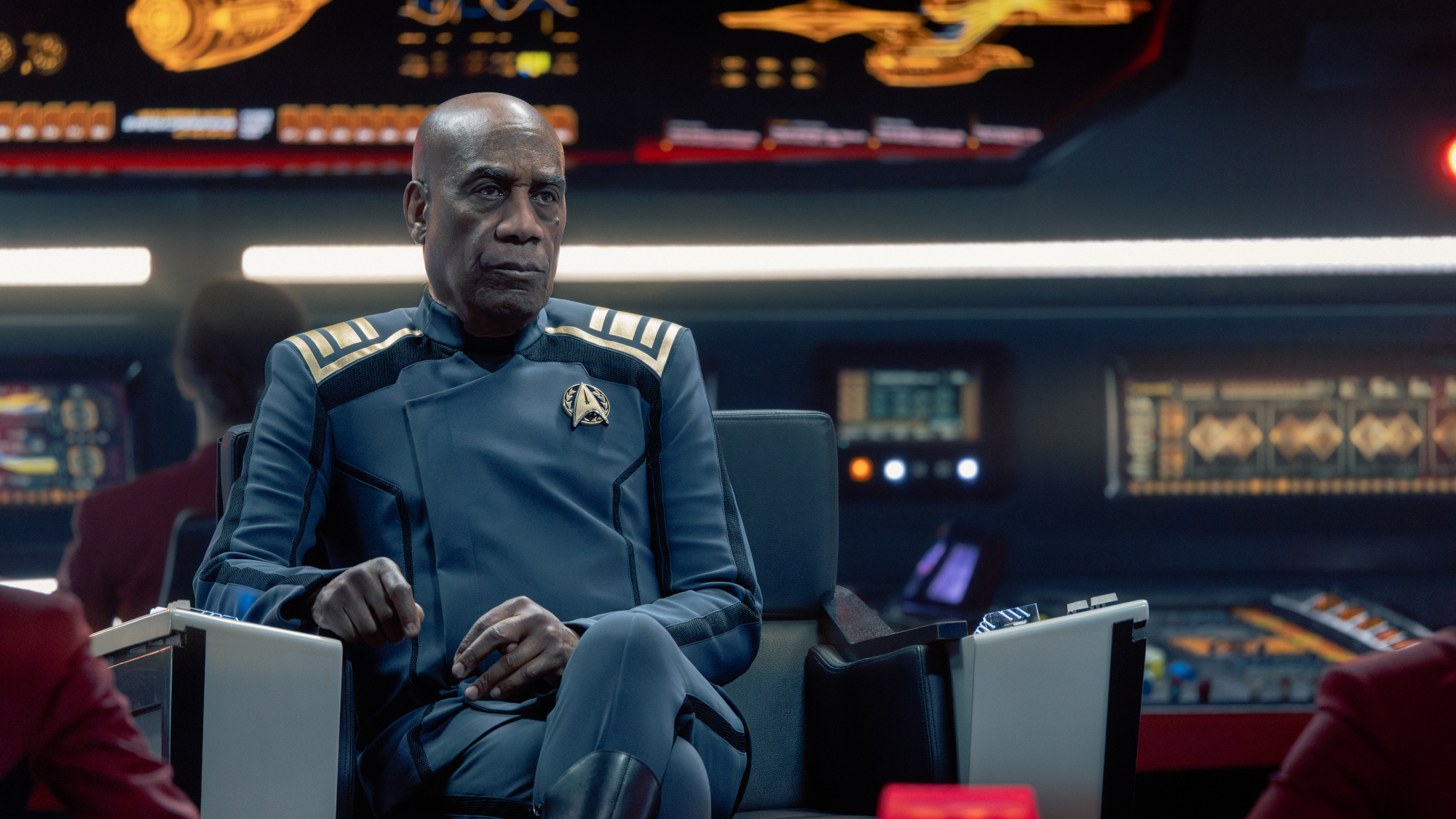
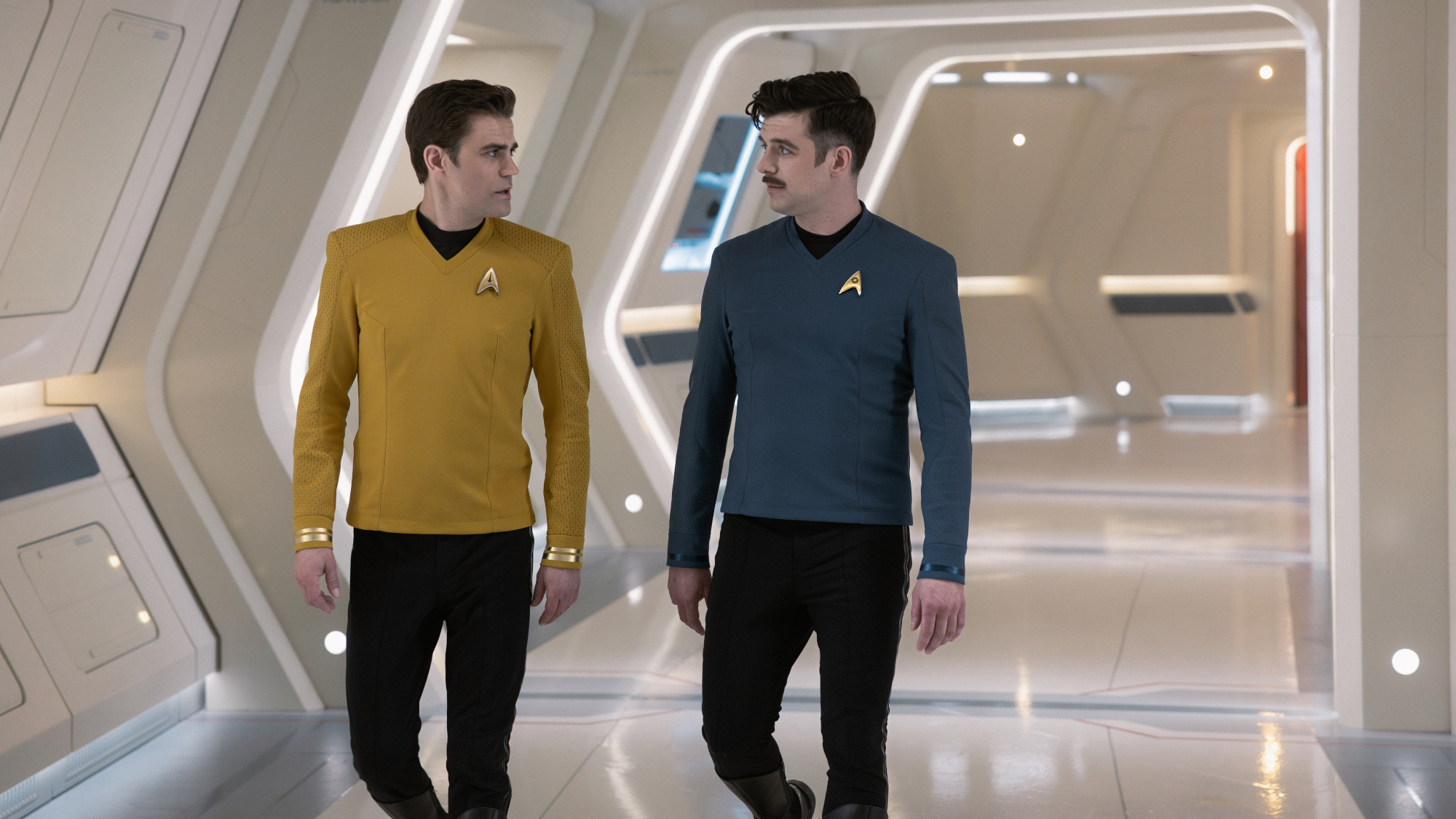
So when self-proclaimed "wily old war dog" Admiral Simon Reeger (guest star Joe Morton) comes on board to commandeer the Enterprise for the top-secret pursuit of a cloaked enemy vessel, it's ranking officer James T Kirk — making one of his implausibly frequent visits to his future home — who steps up to become the ship's temporary number one.
(Image credit: Paramount)
Reeger initially seems like the ideal commanding officer, friendly and considerate enough to learn his subordinates' names before he arrives. But — as happened with Captain Ramsey and Lt Commander Hunter in "Crimson Tide" — it quickly becomes clear that this working relationship with Kirk is going to be a fraught one.
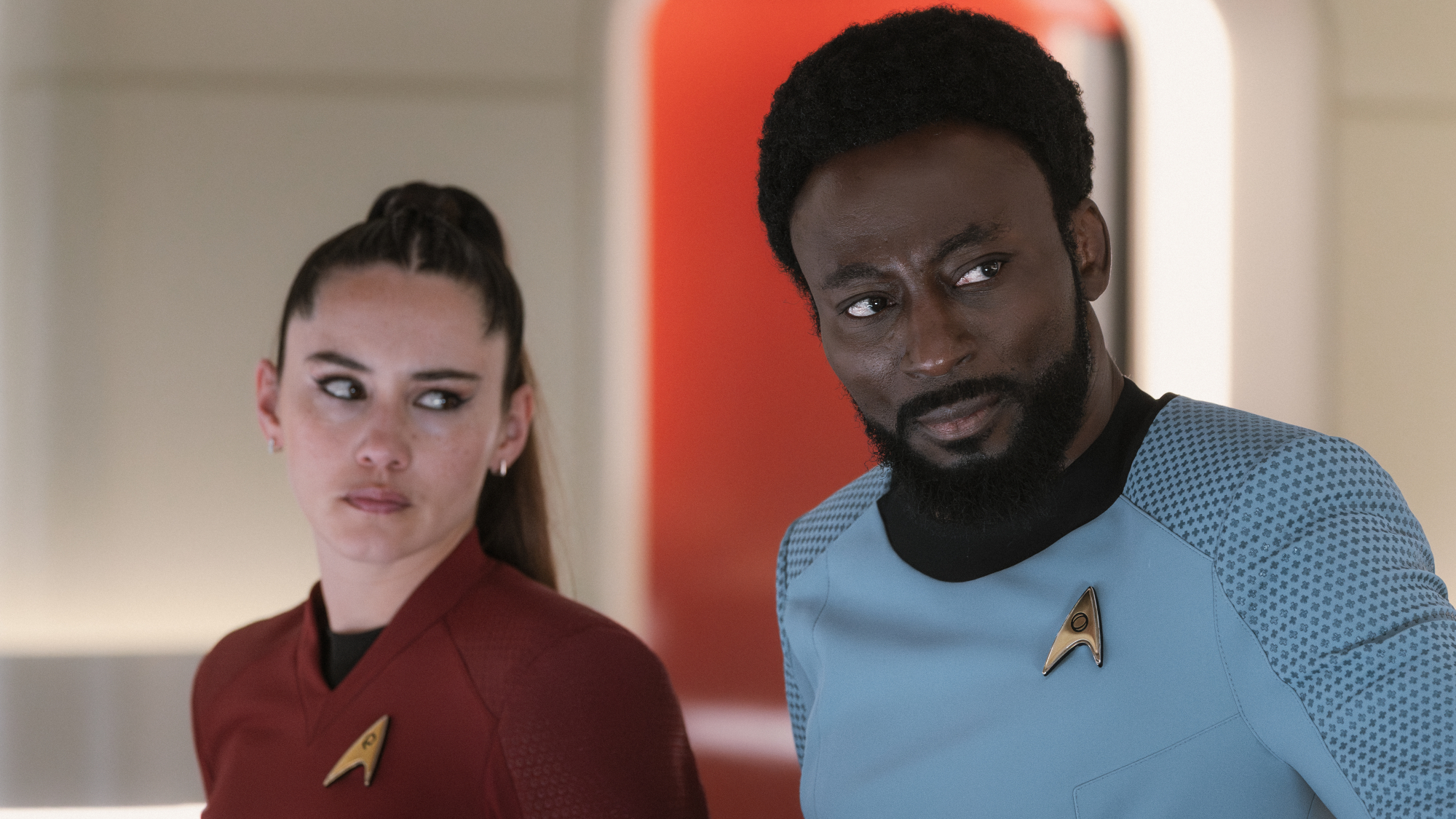
He scolds his new first officer for questioning his decision to leave Pike and the away team behind, and not being on the bridge quickly enough when red alert is sounded. This is a man who doesn't appreciate being undermined in public, for whom — as Dr M'Benga, who served under Reeger on the USS Constitution, puts it — the "mission is everything".
(Image credit: Paramount)
The story also hinges on a very "Crimson Tide"-like dilemma. In director Tony Scott's movie, the USS Alabama receives incomplete firing orders — Captain Ramsey believes this means they should launch nuclear weapons at the proposed target, but Hunter advises caution, insisting they should pause until the orders are verified.
In "Orders of Magnitude", meanwhile, Reeger surmises that the ship the Enterprise is pursuing — believed to be responsible for the deaths of five million people in the Vaardan Massacre — is hiding on the surface of Argus II. Concerned the cloaked vessel might escape, he orders the destruction of everything on the planet's surface — but with thousands of innocent lives on the line, it's an order that Kirk cannot, in good conscience, execute.
What follows is right out of the "Crimson Tide" playbook, as chains of command are stretched past breaking point, the "math of command" is questioned, and the bridge crew throw increasingly awkward glances between themselves. Kirk risks putting himself on the fast track to a court-martial, receiving radiation burns to sabotage the phasers, and drugging Reeger so M'Benga can declare him unfit for duty — an act M'Benga ultimately takes the rap for.
(Image credit: Paramount)
It also puts Kirk at odds with La'an (who's resolutely sticking to the admiral's orders), and forces him to ask big, potentially career-ending favors of big brother Sam.
"Orders of Magnitude" also makes things personal in a way "Crimson Tide" never did. Reeger lost his family on Vaardan and is out for revenge, but — perhaps more pivotally — he served with the Kirks' dad, George, on the Constitution.
Reeger became a hero after taking out several Klingon cruisers at the Battle of Zeta Reticuli, but he was actually incapacitated at the time and took the credit for George's heroic actions, stalling Kirk Sr's career in the process.
(Image credit: Paramount)
In the episode's climactic bridge showdown, the tone shifts to another '90s classic, as Jim Kirk goads Reeger into a confession about the Constitution scandal. The admiral's "You're damn right!" is pretty much a direct lift of Jack Nicholson's "You're goddamn right I did!" in the famous final act of timeless legal drama "A Few Good Men". And yes, Kirk can handle the truth — even if he doesn't want to.
It's unclear whether "Strange New Worlds" showrunners had any idea a "Star Trek" movie inspired by "Crimson Tide" was on the cards — or if Goldstein and Daley knew this brilliant episode was on the way. But if their movie does become "Trek"'s first big-screen outing since 2016's "Star Trek Beyond", they could do worse than taking a few notes from "Orders of Magnitude".
New episodes of "Star Trek: Strange New Worlds" debut on Paramount+ on Thursdays.
September 8th, 1966 was a Thursday. Not a fresh-start-Monday or an exciting Saturday. A regular old Thursday; except that this one catalysed a cultural phenomenon. This was the Thursday that "Star Trek" was first broadcast, drawing viewers across the United States into a space-age world that revolutionised television.
The thing is, in 1966 no exoplanets (planets beyond our Solar System) had actually been discovered. Yet the franchise gave audiences a galaxy brimming with desert planets, ocean worlds, binary sunsets, and countless versions of Earth. Sixty years later, astronomers have confirmed more than 6,000 planets beyond the Solar System, known as exoplanets.
But how well do "Star Trek"’s fictional worlds compare with those astronomers have actually discovered?
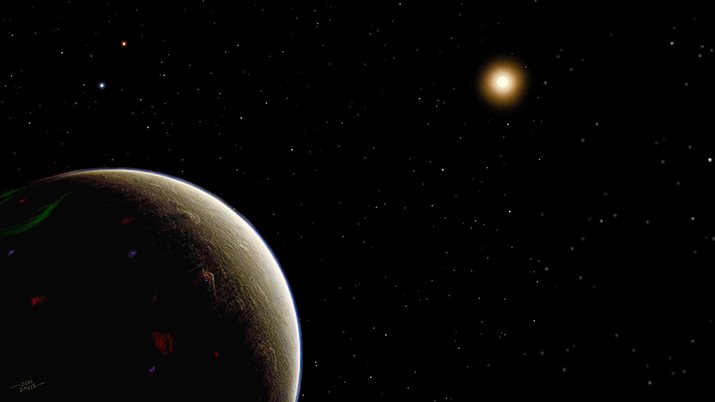
When many of us think "Star Trek", the first planet that comes to mind is the dry, hot, and rocky Vulcan. Canonically, it orbits 40 Eridani A, a real star around 16 light-years from Earth. Real stars invite real observations, which led to astronomers announcing a possible planet in orbit in 2018. Of course, this was nicknamed Vulcan. However, later work has shown that this apparent signal was likely caused by stellar activity, rather than a planet in orbit.
This is, unfortunately, a common issue. Stellar activity, such as starspots, convection, and other magnetic activity, is very good at producing signals that look incredibly planetary.
(Image credit: Don Davis)
Although the candidate planet was ultimately discredited, genuine hot, rocky planets do exist around other stars. Many of them orbit extremely close, completing an orbit in less than an Earth day. Some may have molten surfaces, atmospheres poisoned with vapourised rock, or even permanent day and night sides. While Vulcan itself may not be real, nature has produced rocky worlds considerably more hostile than Spock’s birthplace.
In contrast to Vulcan, "Star Trek" also gave us planets almost entirely covered with water. One particularly intriguing case is The Waters, from Voyager’s Thirty Days episode. The Waters is a sphere of water, with no solid core, kept together by a containment field. This is a little different to what an astronomer would refer to as a water world, but a planet-sized mass of water could theoretically be held together by its own gravity, without the need for a containment field.
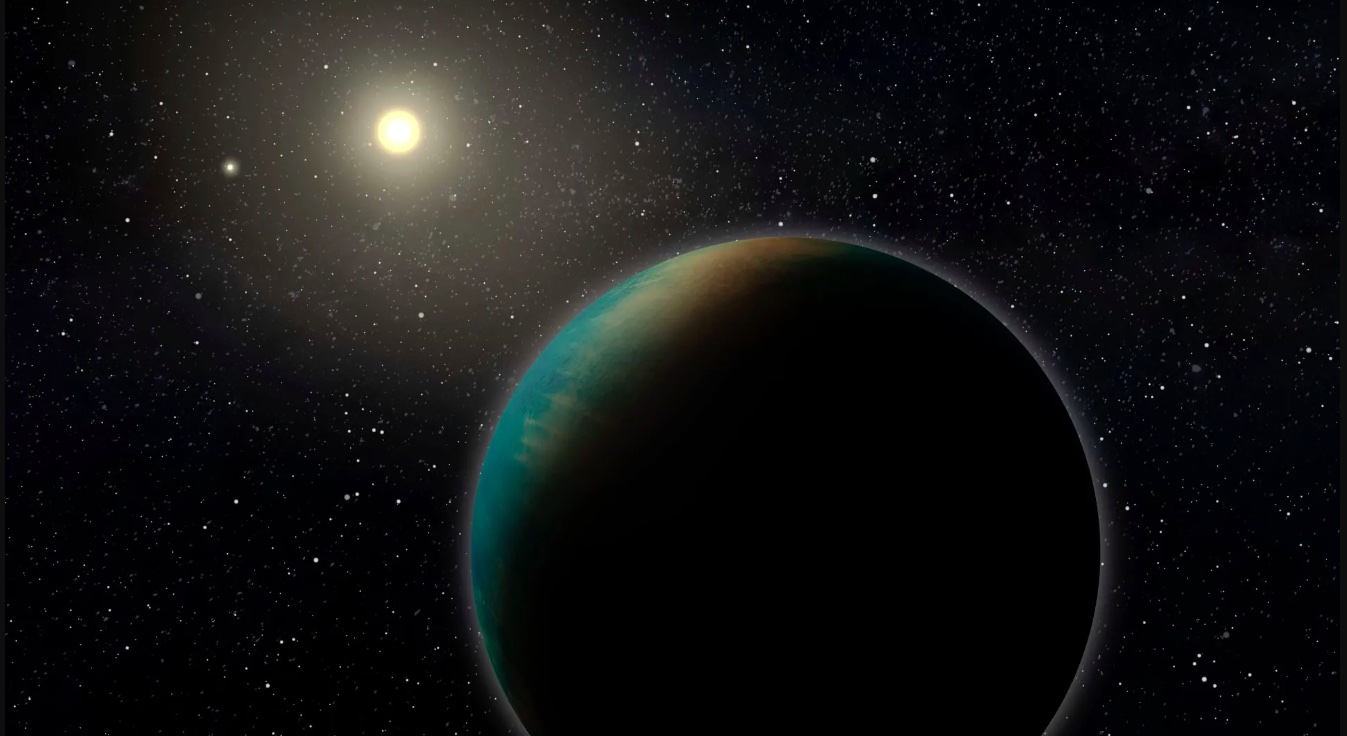
However, the immense pressure deep inside this would transform much of the water into high-pressure ice rather than leaving it as one enormous liquid ocean. While no exoplanet has been definitively proven to have a global ocean, there are candidates like TOI-1452 b — a super-Earth orbiting a red dwarf star — that could contain a much larger proportion of water than Earth. It’s important to keep in mind, however, that a water-rich planet doesn’t necessarily make a good home. Water could exist beneath a chokingly thick atmosphere, as high-pressure ice, or sitting above an inhospitable interior.
(Image credit: Benoit Gougeon, Université de Montréal, CC BY-ND)
Something "Star Trek" got very right is planets with two or more suns, such as Risa under its twin stars. The first confirmed planet orbiting two stars — known as a circumbinary planet — was Kepler-16 b. As it orbits a binary star system, it would experience a double sunset from the surface…if a surface existed.
Unlike many of the fictional planets in "Star Trek", Kepler-16b is a cold, gas giant; not somewhere we could sit and admire the view. In 1966, not only had exoplanets not yet been discovered, but astronomers had no observational evidence that planets could form and remain stable in dynamically complicated multiple star systems.
There are, however, many circumstances where reality goes far beyond what was imagined in "Star Trek".
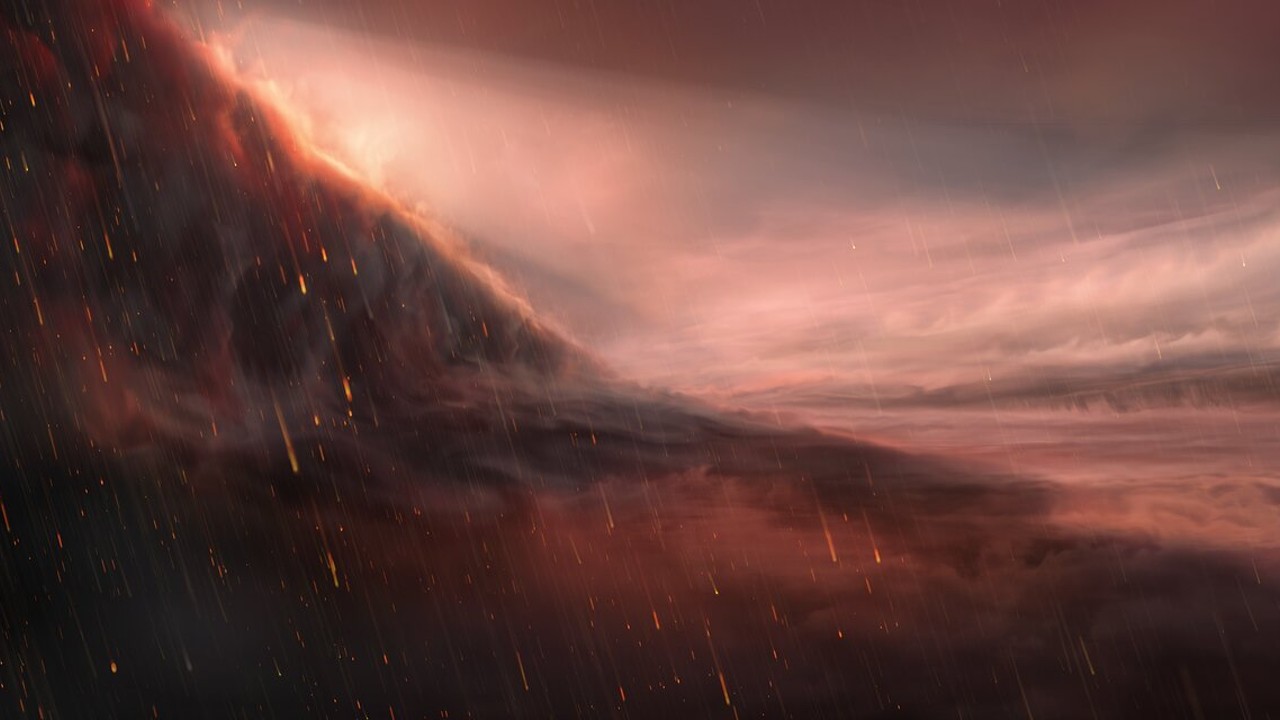
(Image credit: ESO/M. Kornmesser)
Take WASP-76 b, an ultra-hot gas giant around 640 light-years away. The planet has a dayside so hot that iron vaporises, and it could be re-condensing into iron-rain on the cooler nightside. KELT-9 b is similarly hot, with molecules torn apart by the heat and metals existing in the atmosphere. 55 Cancri e is a super-Earth that orbits its host star every 18 hours, and could be covered by a magma ocean. There are also rogue planets, wandering through space with no host star.
"Star Trek" frequently invented strange planets by changing one familiar feature, but nature stared at the rulebook and ripped it to shreds. We’ve observed planets that have combinations of temperature, gravity, chemistry, and orbital architecture that writers in 1966 never could have anticipated.
The greatest scientific accuracy in "Star Trek" wasn’t the description of any given planet. Instead, it beautifully predicted that we live in a galaxy in which planets are abundant, gorgeously varied, found around a huge range of stars, and worth investigating even when they are nothing like Earth.
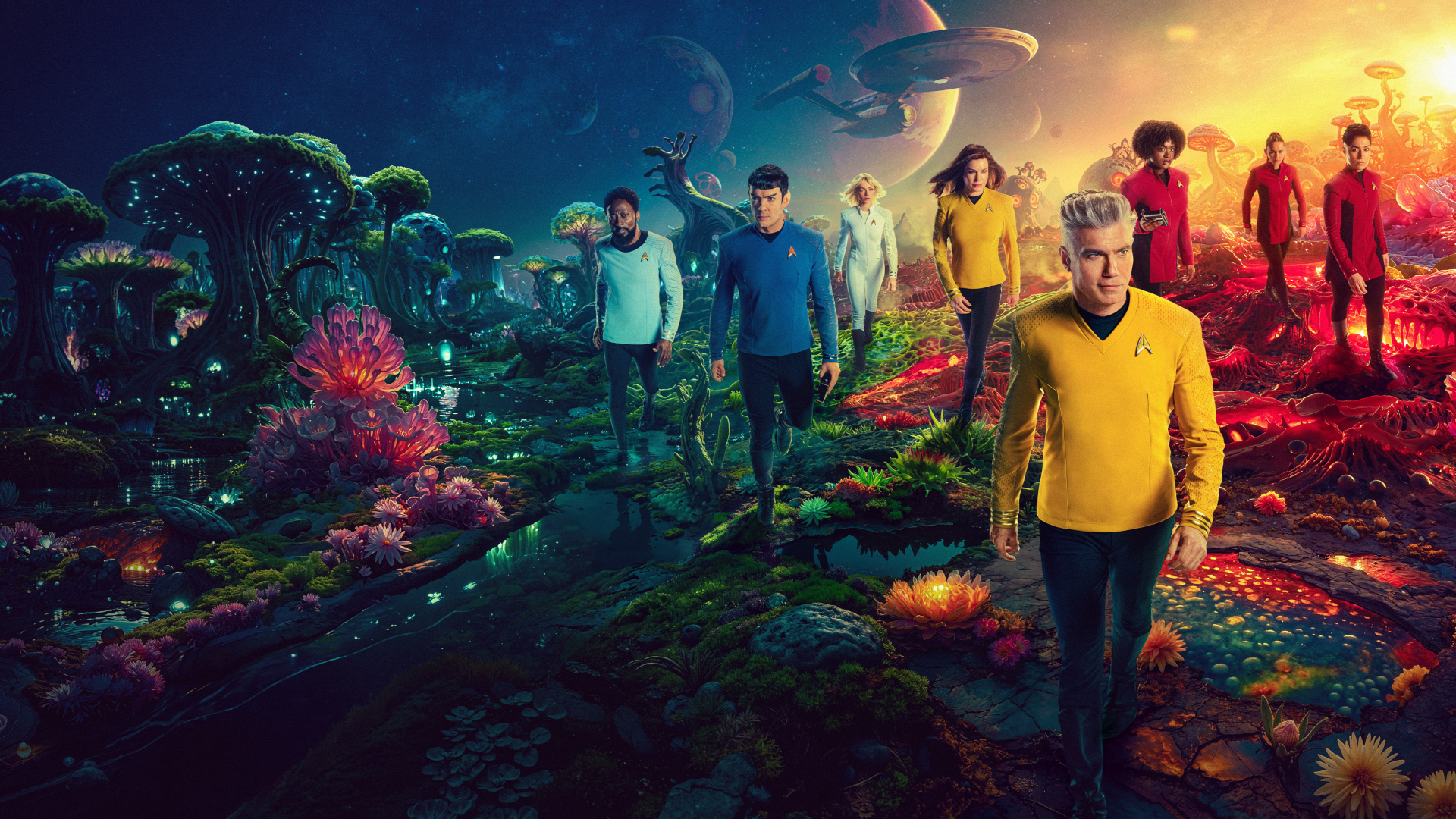
(Image credit: Paramount)
The necessity of a large population of conveniently habitable, human-safe worlds for "Star Trek"’s storytelling definitely set a limitation on the types of planets explored throughout the franchise. Our discoveries so far show that finding planets with Earth-like conditions is incredibly difficult, but not that they aren’t out there, somewhere.
"Star Trek" gave us a galaxy teeming with strange new worlds. Sixty years later, the surprise isn’t that these worlds exist, but that the real ones are even stranger than writers dared to imagine.