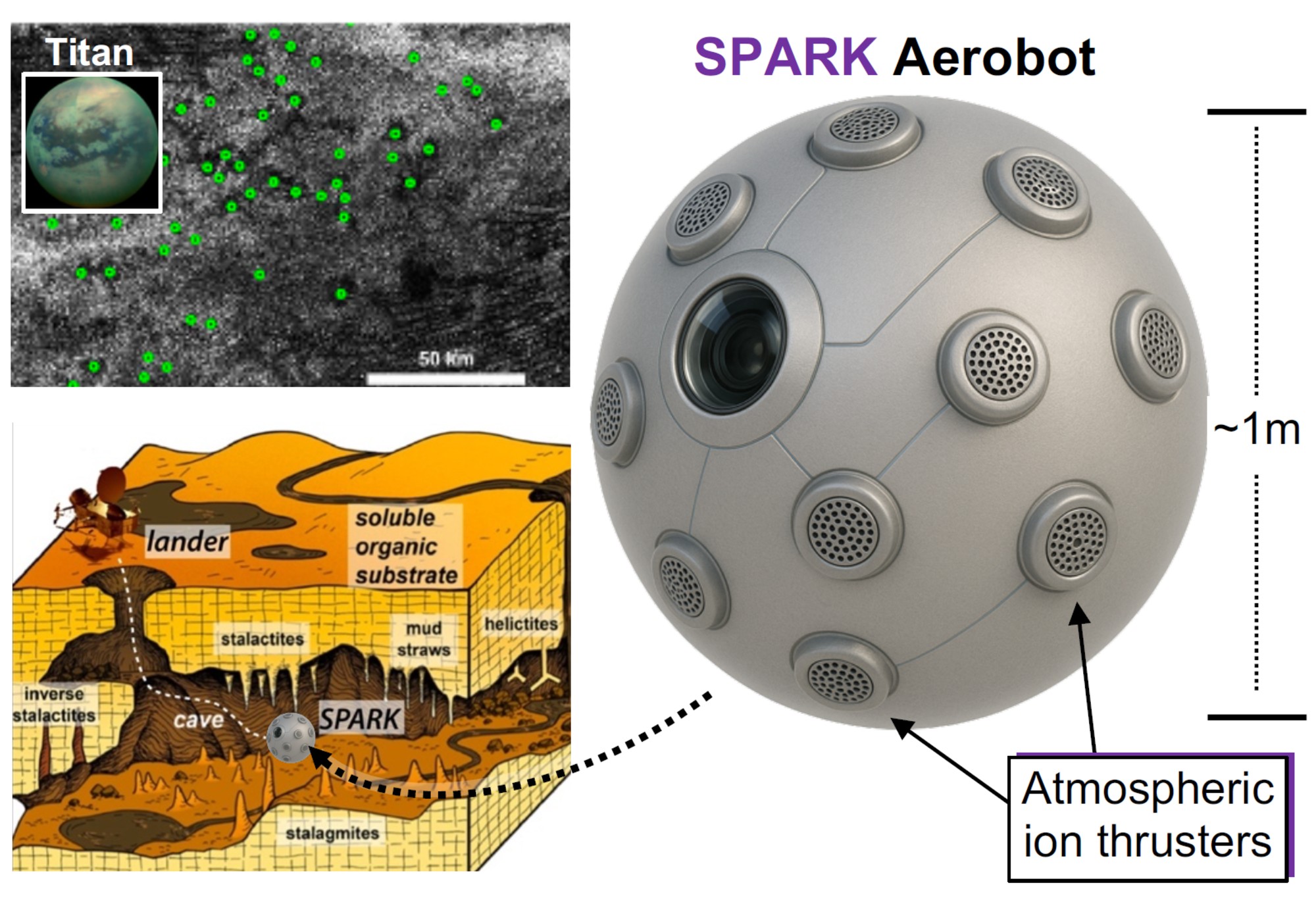
Spherical "Aerobots" may one day swarm the caves of Titan — a moon of Saturn that NASA says is one of the most Earthlike in our solar system.
Titan is covered in rivers, lakes and seas of hydrocarbons, like methane and ethane, as well as a strange "karst" terrain including underground sinkholes and caves. No rover could easily traverse this surface, but flying vehicles may have more success.
So a new grant, under the early-stage NASA Innovative Advanced Concepts (NIAC) program, aims to create small, flying vehicles that could explore those caves. It's unclear if the aerobots — called SPARK, or Solid-state Propulsion for Autonomous Reconnaissance of Karst — would be ready in time for NASA's Dragonfly mission to Titan, project lead Daniel Drew, an assistant professor at the University of Hawaii at Mānoa, told Space.com.
That's because SPARK is beginning a nine-month Phase 1 grant and would need to at least get through the up-to-two-year Phase 2 before things look "more realistic" for a liftoff, he noted. Dragonfly, meanwhile, is targeted for a 2028 launch but if the mission is delayed, that provides more possibilities for late-mission additions.
"Where does that line up with the current Titan mission timeline, assuming we've missed the window for Dragonfly? I don't know," Drew said of SPARK. But whenever the mission lifts off, Drew said SPARK has a good chance of doing well on Titan with its novel ion (electric) thrusters.
Drew said his design could "provide persistence, maneuverability, robustness to the challenging near-cryogenic [icy] conditions, and minimize downwash disturbance of scientifically-important hydrocarbon layering." He hopes that SPARK, he added, could be a cave-exploration forerunner at Titan similar to the Ingenuity helicopter on Mars that made 72 flights — more than tenfold what the Red Planet demo mission was supposed to do.
Drew has been working on a particular type of ion thrusters, called electrohydrodynamic (EHD) propulsion, since he did graduate school at the University of California, Berkeley. Thanks in part to a National Science Foundation (NSF) fellowship, Drew explored several designs for flying and became interested in creating robots that flap their wings in a way similar to real-life creatures.
While exploring, he stumbled on the hobbyist "lifter" community "pretty much by chance," he said. "These [prototypes] are triangular balsa wood, magnet wire, and aluminum foil prototypes. You connect them to 40,000 volts from a flyback transformer that you rip out of a microwave or CRT monitor or whatever, and they can float above the table. There are plenty of examples of people making these on YouTube," he said.
More plumbing the archives revealed early experiments and studies at NASA and the Air Force similar to what the hobbyists were using. And by coincidence, NIAC awarded funding to another research group, led by the Massachusetts Institute of Technology, that was interested in using EHD propulsion for Earthborne aircraft. As such, Drew sensed a fruitful direction for research.
"Long story short, I ran with that idea," Drew said, "and wrote a bunch of papers where I created microfabricated centimeter-scale flying robots propelled by atmospheric ion thrusters." His accomplishments prior to the NIAC grant included what he says is the first demonstration of microfabricated EHD actuators (mechanical devices), and other firsts such as a centimeter-scale "ionocraft" taking off and subsequently, carrying a payload.
"We recently published the design and takeoff of the first ion-propelled micro-hovercraft," he added, referring to a paper on preprint server arXiv. "That may seem like a pretty decent list of significant milestones, but it's really not a crowded space of people working on this topic. I'm mostly racing against myself here."
Now with the NIAC support, Drew said he hopes to dive deeper into the benefits of EHD propulsion, such as its scalability, the fact that it's virtually silent, and its simplicity (being solid state, there are fewer parts to worry about).
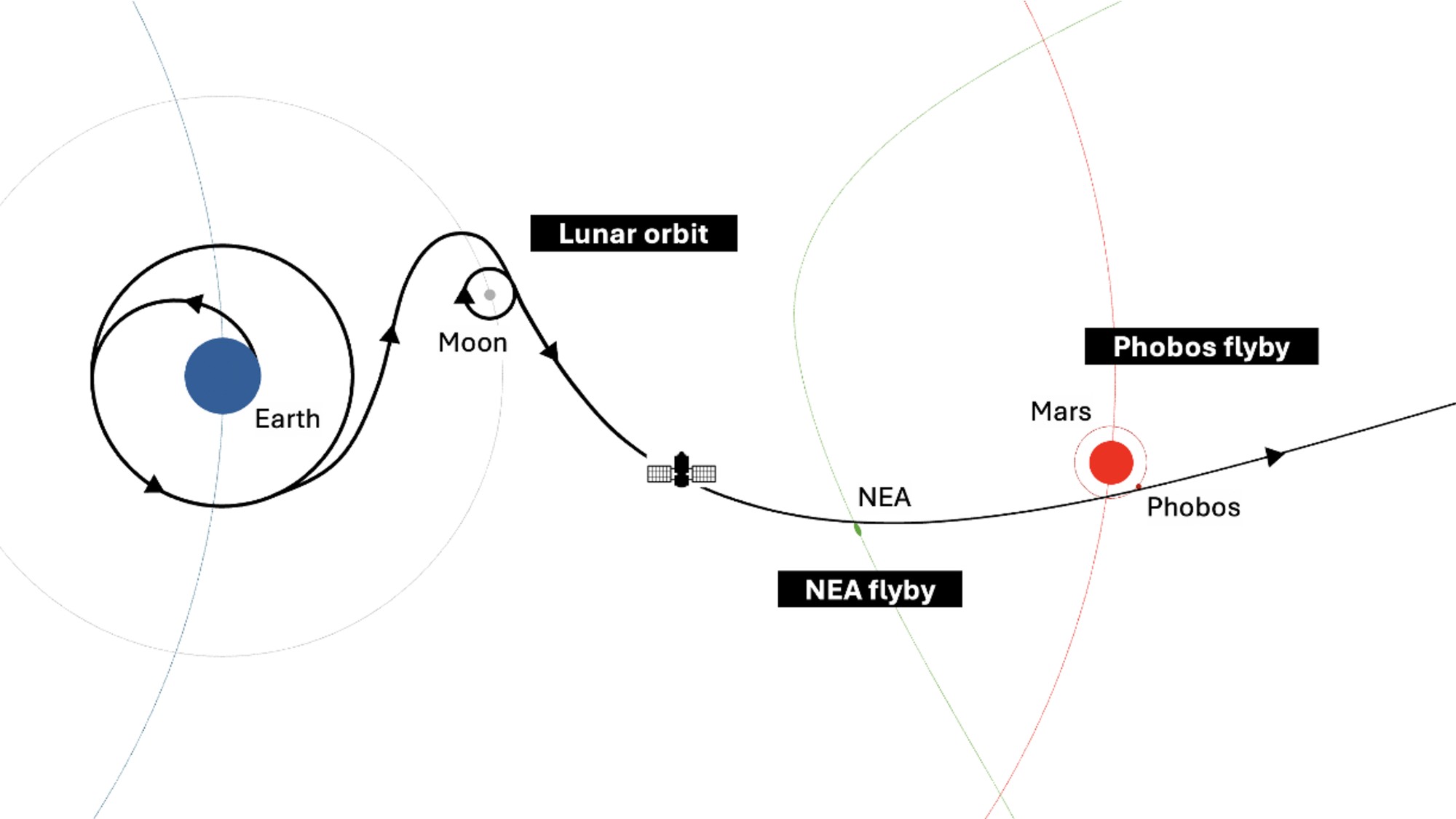
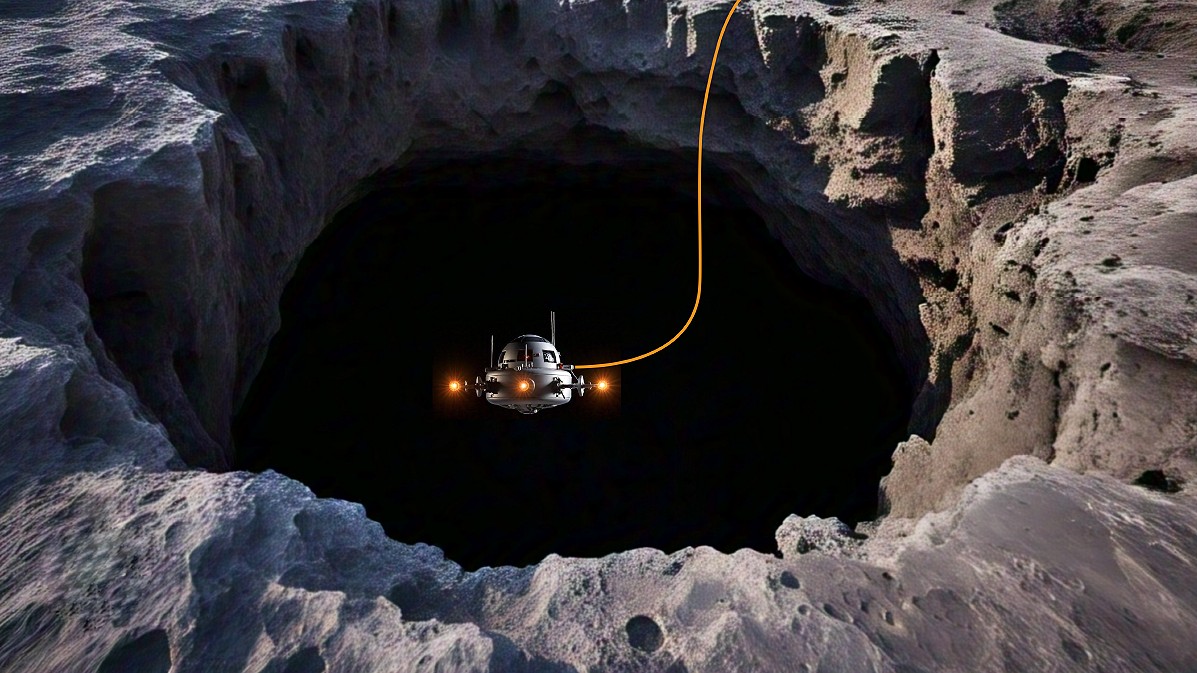
A graphic depiction of the SPARK concept being developed by Daniel Drew of the University of Hawaii. (Image credit: Daniel Drew/University of Hawaii)
More applications could come outside of Titan, he noted: all-electric aircraft, indoor drones, and mini-flying swarms are just some ideas, but he said the utility will be limited. "The huge weakness is that it just isn't very efficient," he said of EHD propulsion. "Barring a major breakthrough, it will be impossible to really compete with more conventional propulsion techniques, like rotors and jet engines, for the vast majority of terrestrial applications."
As Phase 1 only encompasses about nine months, Drew and his collaborators—including Ethan Schaler and Jacob Izraelevitz from NASA's Jet Propulsion Laboratory, as well as Michael Malaska from the Blue Marble Space Institute of Science—plan to quickly design experiments, perform a "trade study" of which subsystems are best to prioritize for aspects like power, and model matters like the thermal effects on the power system.
"I think the idea of 'standing on the shoulders of giants' is very much ingrained into the NIAC culture," Drew noted. "Our major contribution at the end of this process is a comprehensive, public report. Leveraging past related reports, and other open research in the field, is critical for doing a good job with this."
A cutting-edge hypersonic vehicle just hit a big flight milestone.
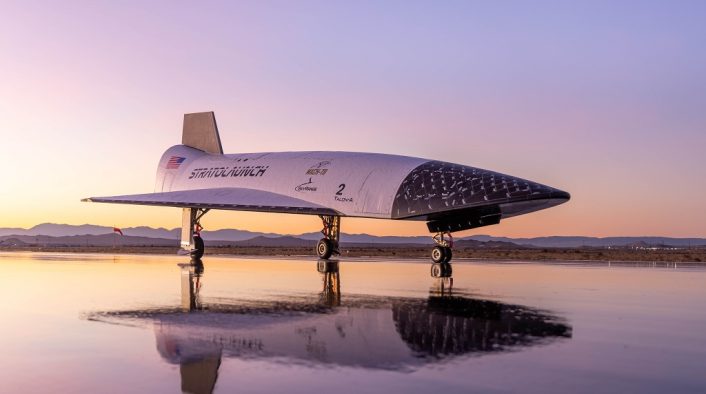
Stratolaunch's reusable, autonomous Talon-A craft now has more than 10 successful flights under its belt, the California-based company announced late last month.
"Reaching more than 10 successful hypersonic flights with Talon-A is a testament to our team's dedication and the robustness of our technology," Stratolaunch President and CEO Zachary Krevor said in a July 22 statement. "We are transforming hypersonic testing from a rare event into a routine service, empowering our customers to innovate at unprecedented speed."
Stratolaunch has two Talon-A vehicles, each of which is about 28 feet (8.5 meters) long with a wingspan of 11.3 feet (3.4 m). The craft can travel through Earth's atmosphere at more than five times the speed of sound (Mach 5) — the definition of hypersonic flight.
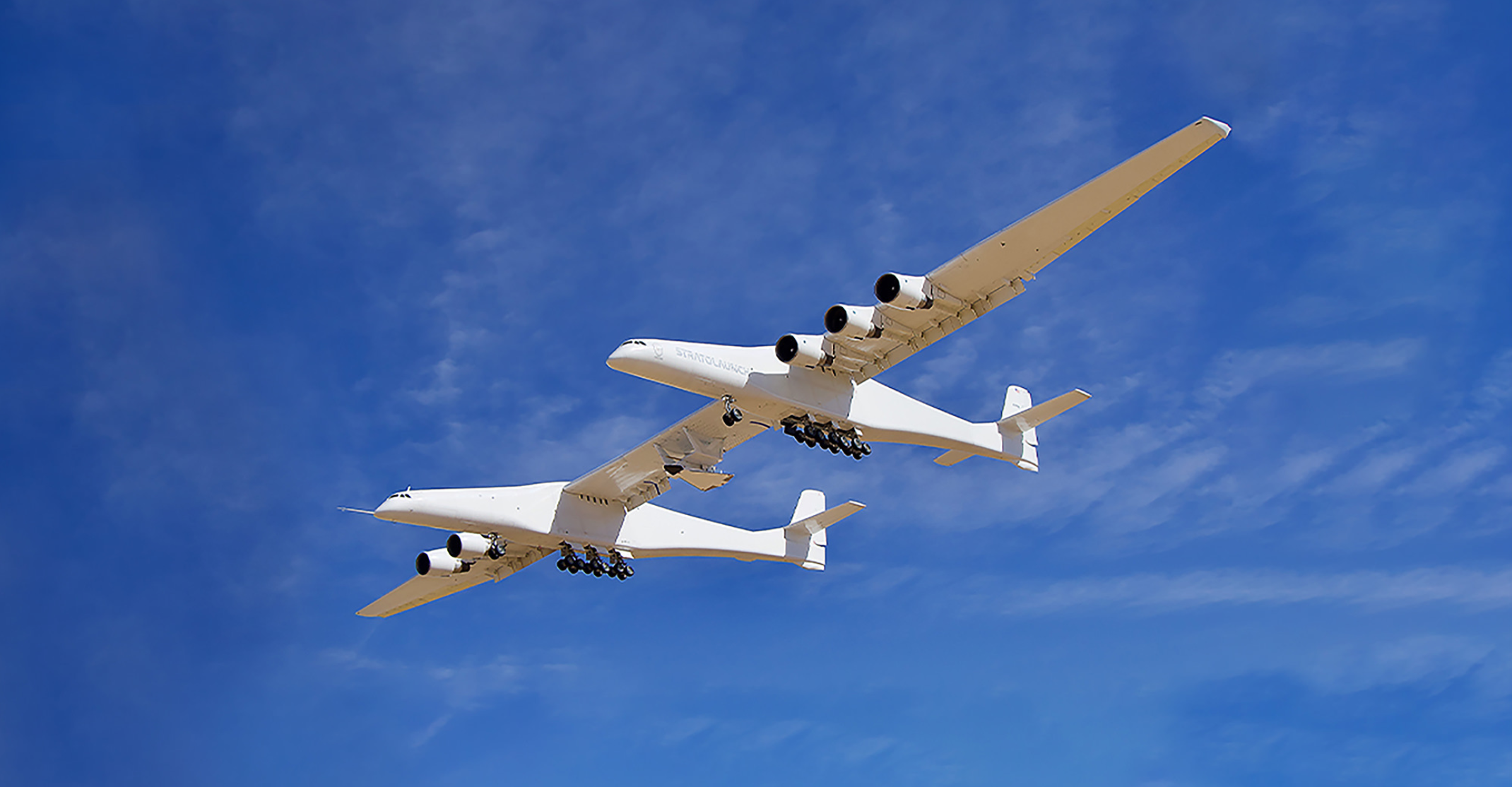
Talon-A missions start beneath the belly of a carrier plane, which hauls the robotic vehicle into the sky and drops it down. Stratolaunch has two such carriers — a modified Boeing 747 called Spirit of Mojave and Roc, a custom-built vehicle that measures a whopping 385 feet (117 m) from wingtip to wingtip, the biggest wingspan in aviation history.
Roc and Spirit of Mojave lift off from Mojave Air and Space Port in southeastern California and tend to drop Talon-A over the Pacific Ocean. After completing its hypersonic flight, the vehicle comes back for a runway landing in California, generally at Vandenberg Space Force Base, on the state's scenic central coast.
These jaunts test sensors and advanced new materials in the hypersonic flight environment, among other tasks. Details about Talon-A's payloads tend to be sparse, likely because many Stratolaunch customers — the U.S. Missile Defense Agency, for example — are tight-lipped by nature.
Indeed, military agencies around the world are increasingly interested in hypersonic tech. Superfast, maneuverable vehicles like Talon-A are tougher to track and intercept than ballistic missiles, which follow predictable trajectories despite moving fast. (To be clear: Talon-A itself is not a weapon or weapon-delivery system; it's a technology testbed.)
Stratolaunch's giant carrier plane, Roc, with a Talon prototype aircraft tucked under its wing. (Image credit: Stratolaunch)
Stratolaunch isn't the only company that gives customer payloads hypersonic rides. Rocket Lab provides this service with HASTE, a suborbital version of its workhorse Electron rocket.
HASTE debuted in June 2023 and now has nine flights under its belt. But the vehicle's cadence will likely increase soon; in March, Rocket Lab signed a $190 million contract to conduct 20 HASTE missions for the U.S. military.
Dimensions: : Folded 5.63 x 3.26 x 2.44 in / 143 x 82.8 x 62 mm / Unfolded 6.59 x 8.57x2.44 in / 167.4 x 217.8 x 62 mm
Weight: 8.78 oz / 249 g
The sub-250 g drone market shows no signs of reducing competition, with manufacturers racing to offer advanced features at increasingly affordable prices. While DJI maintains its dominance as the market leader, brands such as Holy Stone have been steadily improving their offerings to compete in this popular segment of the drone market.
The Holy Stone HS900 Pro is being sold as the company's most capable consumer drone to date, and is aimed at beginners and enthusiasts looking for premium features without the premium price tag.
In reality, this is much more difficult than it sounds because the beginner market is so competitive that even DJI beginner models are impressively affordable. We’ll have to wait and see if the HS900 Pro is good enough to be one of the best beginner drones.
(Image credit: James Abbott)
The HS900 Pro includes a range of intelligent flight modes designed to simplify aerial photography and videography. Features such as Follow Me, Point of Interest, Waypoint Flight and various automated shooting modes make it easy to capture dynamic footage with minimal experience.
At the heart of the drone is a 48MP camera capable of capturing 4K video. While it lacks obstacle avoidance technology found on some competitor models, the HS900 Pro delivers a reasonable blend of performance, image quality and flight features, but it undoubtedly has a handful of shortcomings that will hopefully be ironed out with firmware updates.
The folding design is useful for storage and transportation. (Image credit: James Abbott)
Folding design
Sub-250 g drone
Folding controller
The Holy Stone HS900 Pro looks like most other sub-250 g drones with its compact folding design and light gray finish. This type of design is great for beginners and more experienced pilots because the folding element makes these drones easy to carry all day on trips out or in a camera bag with other kit.
The drone is just 5.63x3.26x2.44 in / 143x82.8x62 mm when folded, and 6.59x8.57x2.44 in / 167.4x217.8x62 mm unfolded. Most sub-250 g drones are around these dimensions, so there’s nothing out of the ordinary here, and build quality is fantastic - no complaints either. The airframe is made of a lightweight yet strong plastic, which is, once again, in keeping with similar drones.
The HS900 PRO has basic sensors, but obstacle avoidance is absent.James AbbottThe kit comes with a handy shoulder bag.James AbbottThe batteries provide around 23 minutes of flight.James Abbott
The controller that comes with the HS900 Pro is the same as that which came with the HS900, but is light rather than dark gray to match the drone.
This is a folding controller where the phone attaches to handles that fold out at the bottom of the controller in a similar way to the old DJI Mavic 2 controller and accommodate smartphones of all sizes. This is nice and compact at 6.0x1.85 x3.23 in / 152.5x47x82 mm when folded. Detachable control sticks that can be stowed away at the bottom of the controller.
The HS900 Pro controller provides all of the controls you need and more for operating the drone and the camera; you have the control sticks, a power button, a Return to Home button (RTH), a speed control button, a gimbal dial, a customisable Fn button with dual functionality, a small joystick for adjusting camera settings and photo and video capture buttons.
The phone sites in a holder below the controller.James AbbottThe controller folds to a small size for storage and transportation.James Abbott
The 2250 mAh batteries are claimed to provide up to 30 minutes of flight time, and during testing, flight times were typically coming in around 23 minutes in what you might call normal wind conditions. Return to Home is initiated at 20% battery charge, so at this point the drone will either automatically Return to Home or you can take over and fly it back manually.
Holy Stone HS900 Pro: Functionality
The HS900 Pro flies well and has level 5 wind resistance. (Image credit: James Abbott)
Stable flight
Decent subject tracking
Level 5 wind resistance
Flight performance is impressive, with smooth, responsive controls that make it easy to capture stable video and execute precise manoeuvres. Despite its lightweight design, the HS900 Pro offers Level 5 wind resistance, allowing it to cope with winds of up to 24 mph.
Stable, Normal and Sport modes provide maximum speeds of 11 mph, 22 mph and 31 mph respectively, while safety features include Smart Return-to-Home, Low Battery Return-to-Home and Signal Loss Return-to-Home.
Automated flight patterns include Follow Me, Point of Interest (Orbit), Waypoint Flight, Gesture Control, Spiral Flight and Cruise Control. These features work reasonably well, and subject tracking is more effective than with the older HS900.
The HS900 Pro's AI Subject Tracking keeps the subject centred in the frame. Whether you're capturing a person walking, cycling or taking part in outdoor activities, the drone can follow their movement smoothly without constant manual input. This is a feature that’s becoming much more popular and often makes subject tracking more effective.
There are two tracking modes available: AI Following keeps the drone behind the subject at a set distance and height, making it ideal for recording movement naturally and steadily, while AI Parallel flies alongside the subject, providing a more cinematic side-on perspective. Following works well, but when Parallel was tested, the HS900 Pro vibrated heavily during flight. This is a glitch that will need to be ironed out with a firmware update.
The build quality of the HS900 Pro is fantastic. (Image credit: James Abbott)
The time-lapse feature is easy to use and automatically creates finished videos based on your chosen interval and duration. Unlike DJI drones, however, flight control remains separate from the feature, making it harder to judge the speed and distance needed for hyperlapse shots. Wind can also affect results because the drone may drift in gusty conditions.
As a result, time-lapses are generally smooth but can appear slightly uneven in gusty conditions. Cruise Control, another feature, allows the drone to continue flying after you release the control sticks, making it useful for maintaining a constant speed and direction during long video sequences.
Compared to the original HS900, the HS900 Pro is an extremely similar drone, and the camera quality and functionality appear to be similar, potentially identical. The main differences are in the improvements to subject tracking and the automated flight patterns. This makes the drone feel like more of an incremental update rather than a more significant upgrade.
This isn’t a drone that offers obstacle avoidance either, so there are no sensors for this purpose, although it does have TOF ranging which can help to achieve more stable flight, including improved position holding when GPS is weak.
There is also optical flow positioning that aids positioning indoors. These are useful, but when other beginner drones are beginning to offer obstacle avoidance, the bar has been raised somewhat.
Holy Stone HS900 Pro: Performance
The camera can capture up to 48MP photos and 4K video. (Image credit: James Abbott)
1/2.3-inch 48MP CMOS sensor
Up to 4K 30 FPS video
Poor RAW photo quality
The Holy Stone HS900 Pro produces reasonable image quality in both photos and videos that will more than meet the needs of beginners and enthusiasts. At launch, this does come with a caveat we’ll discuss in a moment, but first let’s take a look at the camera specs.
The HS900 Pro camera features a 48MP 1/2.3-inch Sony CMOS sensor with an 83-degree field of view, which roughly equates to the equivalent of 24mm in full-frame/35mm terms, with a fixed f/2.6 aperture. Video can be captured in 4K at 30 FPS and FHD up to 60 FPS, which is adequate but not outstanding.
Video quality is good and comparable to the original HS900 with a maximum bitrate of up to 100 Mbps. Photo shooting modes include Single Shot, Burst Shot, Timer Shot, Time-Lapse, Slow Motion, Camera Filter and Panorama. Then there’s Dolly Zoom for video, which works well despite using the camera’s digital zoom.
Photo quality is strangely better with JPEGs than RAW.James AbbottPhotos are captured in a 16:9 ratio.James AbbottThe camera is limited but does offer manual control.James AbbottImage quality is best in brighter conditions.James AbbottThe metering system of the camera is reliable.James Abbott
Photo quality is inconsistent and something of a paradox, but not in the way you might normally expect. The HS900 Pro can capture up to 48MP photos and RAW and JPEG formats, and the JPEGs look good – no major criticisms here. Where things quickly go downhill, however, is when capturing RAW photos in DNG format.
RAW photos have terrible color casts that are so bad that you can’t color correct them using white balance controls in software such as Adobe Lightroom. It’s basically impossible to neutralize the color cast, which makes the RAW files unusable. This is one area where Holy Stone seriously needs to issue a firmware update to resolve the issue.
Please note the footage below was shot in 4K, but our video player only plays in HD.
The camera controls available allow you to take as much control as you need, alongside auto shooting if you prefer. Two features that are still, unfortunately, missing after the HS900 are a histogram to assist with setting exposure correctly and Automatic Exposure Bracketing. These are essential for the drone to compete more effectively in a highly competitive market.
Holy Stone HS900 Pro: Price
In the past, Holy Stone was initially released in the US, with availability expanding to other regions afterwards. The kit includes the drone, a controller, two batteries, cables, spare propellers and a carry bag. This is everything you need to get started in terms of the drone itself.
The kit costs around $389.99 / £369.99, which would have once been attractive for a drone with the features of the HS900 Pro, but you can get a lot more in terms of features and image quality around this price point. This is illustrative of just how the competitiveness of the sub-250 g drone market shows no signs of slowing. In fact, it’s still heating up.
Should you buy the Holy Stone HS900 Pro?
If you're looking for an affordable camera drone that offers more than the basics, the Holy Stone HS900 Pro is a reasonable option, but certainly not the best available. It combines a lightweight sub-250 g design with features often found on more expensive models, while flight performance is impressive, with accurate GPS positioning, stable hovering and dependable Return to Home functionality.
There is no obstacle avoidance, which is a feature we’re now seeing in beginner models and puts the HS900 Pro at a distinct disadvantage in terms of both price and functionality. But the main issue with the drone is that some of the features and functionality feel incomplete. Not in terms of the hardware, but rather that they’re in need of refinement from a firmware update. Whether this will happen is impossible to say, but Holy Stone will probably improve these weaker areas.
If this drone isn't for you
The DJI Mini 5 Pro is the most advanced sub-250 g drone available, offering unrivalled features, functionality and professional image quality in a small and lightweight form factor.
The DJI Lito 1 is DJI’s least expensive drone to feature obstacle avoidance. It offers subject tracking functionality and up to 4K at up to 100 FPS, all in a beginner model. This model is currently unavailable in the USA
The Potensic Atom 2 is one of the best value sub-250 g propositions available. Image quality is great for photos and videos, while flight performance is solid alongside reasonably quiet flight.
Frame rates: 4K 100 FPS / 2.7K vertical up to 60 FPS / FHD up to 100 FPS
Battery: 2590 mAh up to 36 minutes flight
Charger type: USB-C cable/battery charging hub
Modes: Cine, Normal, Sport
Video transmission range: 9.3 miles (IC) / 4.97 miles (CE/SRRC/MIC)
Dimensions: : Folded 5.67 x 3.70 x 2.44 in / 144 x 94 x 62 mm / Unfolded 7.20 x 9.88 x 3.11 in / 183 x 251 x 79 mm
Weight: 8.78 oz / 249 g
The drone market is hotter than ever, with newbie and slightly more experienced drone pilots now able to enjoy some seriously impressive features on low-cost drones. The new DJI Lito series replaces the older Mini series, with the exception of the DJI Mini 5 Pro, which is DJI’s flagship sub-250 g drone. There are two models available and in this review, we are going to take a look at the DJI Lito 1.
The Lito 1 may be the entry-level Lito model, but it still comes with a feature we’ve been waiting to see on a beginner drone for ages - 5-lux omnidirectional obstacle sensing, otherwise known as collision avoidance. This is a feature that, up until now, has only been available on more advanced and expensive drones, despite being a feature that beginners can truly benefit from.
The DJI Lito 1 is an inexpensive sub-250 g beginner drone. (Image credit: James Abbott)
There are also intelligent flight modes, including ActiveTrack, QuickShots, MasterShots, Hyperlapse, and Panorama, that help you to capture professional-looking photos and videos at the touch of a button. The subject tracking modes are particularly impressive, especially for an entry-level drone, thanks to the omnidirectional obstacle sensing.
The Lito 1 features a 48MP 1/2-inch CMOS sensor with video capture available up to 4K at 100 FPS and photos in JPEG and Raw format. Video can only be captured in the normal profile, which is perfect for beginners because it can be used straight out of camera with no need for color grading.
DJI Lito 1 has two obstacle avoidance sensors. (Image credit: James Abbott)
Sub-250 g drone
Compact folding design
Respectable battery life
The Lito 1 is a small, lightweight camera drone that looks much like other DJI ‘mini’ drones, with a folding design that makes it even more compact for travel and storage. At 8.78 oz / 249 g, this regulator-friendly drone is just 5.67 x 3.70 x 2.44 in / 144 x 94 x 62 mm when folded, and 7.20 x 9.88 x 3.11 in / 183 x 251 x 79 mm unfolded.
In terms of overall design, it won’t win any innovation awards with its typically DJI light gray build, but it’s undoubtedly a functional drone with great build quality. One of the main visual differences between the Lito 1 and the DJI Mini 4K, for example, is that the Lito 1 has one 5-Lux omnidirectional obstacle sensor on the top of the drone, and another on the bottom.
The drone offers reliable DJI build quality.James AbbottThe folding design is typical of sub-250 g drone modelsJames AbbottThe smart batteries produce respectable flight times.James Abbott
These two sensors provide highly effective 360-degree obstacle avoidance that will give beginner drone pilots confidence, but you can never fully rely on them to avoid obstacles. Omnidirectional obstacle sensing is fantastic, but it’s no substitute for flying with care and attention. You can also change the way it behaves to suit different situations.
The Lito 1 comes with the DJI RC-N3 controller in the Fly More Combo. This is the most basic DJI controller, where you attach your phone to a telescopic phone holder at the top to give you a camera view and access to settings.
It’s not as convenient as a smart controller but it does its job well and helps to keep costs down. The DJI RC-N3 has a decent battery life and is comfortable to hold, with detachable control sticks that stow away at the bottom of the controller when not in use.
The DJI RC-N3 is a basic yet solid controller.James AbbottThe DJI RC-N3 controller has removable control sticks that stow away at the bottom of the unit.James Abbott
Battery life of the drone itself is great but the claimed 36 minutes of flight time doesn’t quite translate to reality. Flight times came in at around 24 minutes before the battery reached around 16% and 'Return to Home' was initiated. This is still great for small 2590 mAh batteries and plenty of time if you have three batteries from the 'Fly More Bundle' to offer over an hour of flight time.
DJI Lito 1: Functionality
'Quick Takeoff' allows take off before satellite signals have been fixed for GPS, making city flying easier. (Image credit: James Abbott)
Quick takeoff
No internal storage
Non-GPS RTH
The Lito 1 is a nimble drone capable of some respectable flight speeds, with a maximum speed of 40.27 mph in sport mode and 26.84 mph in normal mode and when tracking subjects. Cine mode is also available with reduced speed and less sensitive controls to assist pilots when capturing cinematic footage. Wind resistance is also great at 23.94 mph, so it will only be on the most windy days when you can’t fly.
Controls are responsive, and you undoubtedly enjoy a robust DJI flight experience with the drone. Plus, video transmission is faultless, and there were no issues whatsoever during testing. Then there are the intelligent flight modes, which include ActiveTrack, QuickShots, MasterShots, Hyperlapse, and Panorama; these all help beginners and experienced pilots alike to capture professional-looking photos and videos at the touch of a button.
The jewel in the crown feature has to be the Omnidirectional Obstacle Sensing because this is the first time it’s been available on a beginner drone model, not to mention one that is so competitively priced. There are several modes available, including Brake and Bypass, so you can select the option that suits the flying situation, and despite having only two sensors – one on the top and one on the bottom of the drone – it does a fantastic job. The subject-tracking modes are impressive, thanks to omnidirectional obstacle sensing and selecting a subject to track is incredibly easy.
The Lito 1 looks identical to its slightly higher spec sibling, the Lito X1. (Image credit: James Abbott)
Other useful features include Quick Takeoff and Return to Home (RTH). The former allows you to take off before satellite signals have been fixed for GPS, which is useful in more built-up locations.
RTH is the feature pilots know and appreciate, but where it differs slightly from the Lito 1 is that during the latter stages of the RTH process, the drone tracks its take-off route, so a strong GPS connection isn’t essential. This wasn't tested because there were always strong signals, but on paper, it sounds great.
One missing feature is internal storage, so you’ll have to rely on using a microSD card to save your photos and videos. It’s certainly not a dealbreaker and is typical of beginner models. It does, however, offer Wi‑Fi 6 QuickTransfer at up to 50 MB/s, so you can transfer imagery to your smartphone using the DJI Fly app quickly.
DJI Lito 1: Performance
Image quality is impressive despite a a 1/2-inch sensor. (Image credit: James Abbott)
1/2-inch 48MP CMOS sensor
Up to 4K 100 FPS video
Raw & JPEG photos
The Lito 1 is the absolute beginner model in the new Lito line-up, and as such it has the smaller sensor of the two available models. The camera features a 1/2-inch 48MP CMOS sensor and the lens offers an equivalent focal length of 26.2mm. The aperture is fixed at f/1.8 while focus is available from 4m to infinity.
Image quality is impressive overall, despite the small sensor, and much better than many drones at a similar price point with a small sensor. So, despite this being a beginner model, there’s no doubt that the Lito 1 will keep most beginner pilots happy for years to come before the desire to upgrade to a more advanced model takes hold.
The Lito 1 produces great image quality despite the small sensor.James AbbottImage quality is superior to most similarly priced drones.James AbbottYou can capture photos in both Raw and JPEG formats.James AbbottThe camera allows you to shoot maually or in full auto.James AbbottThe Lito 1, like most drones, captures the best photos on brighter days.James Abbott
Photos are typically sharpest in the central area of the frame with some fall-off towards the edges of the frame. Video quality is better, as is usually the case, but this is due to using fewer sensor pixels and the centre of the lens. Not to mention, video is much more forgiving than photos because the image is moving.
Photos can be captured in Raw and/or JPEG using shooting modes including Single Shot, Burst Shooting, Automatic Exposure Bracketing (AEB) and Timed shots with delays between two and 60 seconds. This is exactly what you need for shooting photos with a drone.
Please note the footage below was shot in 4K, but our video player only plays in HD.
Video can be captured at up to 4K 100 FPS, 2.7K vertical up to 60 FPS and FHD up to 100 FPS. Video can only be captured in the Normal color profile for straight out of camera footage, so there’s no need for color grading.
The main downside for more advanced users is that the Lito 1 doesn’t capture video in the 10-bit D-Log M color profile, but if you need this, the slightly higher-spec Lito X1 is the model for you.
DJI Lito 1: Price
The DJI Lito 1 is competitively priced at just £429 for the Fly More Combo, or £299 for the drone and a battery if you already own a DJI RC-N3 controller. The Fly More Combo includes three batteries, a charging hub, a carry case, and accessories, along with the drone and the controller. At the time of writing, the drone is unfortunately unavailable in the United States.
This is a great price for an entry-level drone in a Fly More Combo with all those useful accessories. It’s slightly more expensive than some other entry-level drones, but the main advantage of the Lito 1 is that it has Obstacle Sensing.
Should you buy the DJI Lito 1?
If you’re an absolute beginner looking for a solid drone that will meet your needs for some time to come, the DJI Lito 1 is one of the most attractive drones available. If you’d like the same drone but with some additional features, the DJI Lito X1 is a more advanced version.
Flight performance is excellent, and the omnidirectional obstacle sensing is incredibly useful for beginners because it can seriously reduce the risk of crashing. Image quality is also impressive considering the size of the camera sensor, although it’s not a drone that you’d choose to use professionally.
Alongside the omnidirectional obstacle sensing, another impressive and indeed useful feature is subject tracking, which performs incredibly well. This is a feature you don’t often see in entry-level drones, and when you do, it doesn’t work well, but with the Lito 1, the performance can’t be faulted.
If this drone isn't for you
The DJI Lito X1 is the higher spec model of the two new Lito models and features a larger sensor alongside forward-facing LiDAR for improved obstacle sensing. It can also capture video in the flat D-Log M color profile.
If you’d like the most advanced sub-250 g drone available, the DJI Mini 5 Pro offers the best image quality, features and functionality of any compact and lightweight drone.
If you’d like a sub-250 g drone at a competitive price but don’t need obstacle avoidance, the Potensic Atom 2 is a fantastic sub-250 g drone capable of capturing 4K video and photos in Raw and JPEG.
Frame rates: 4K 100 FPS / 2.7K vertical up to 60 FPS / FHD up to 200 FPS
Battery: 2788 mAh up to 36 minutes flight
Charger type: USB-C cable/battery charging hub
Modes: Cine, Normal, Sport
Video transmission range: 9.3 miles (IC) / 4.97 miles (CE/SRRC/MIC)
Dimensions: : Folded 5.67 x 3.70 x 2.44 in / 144 x 94 x 62 mm / Unfolded 7.20 x 9.88 x 3.11 in / 183 x 251 x 79 mm
Weight: 8.78 oz / 249 g
Drones are more accessible than ever before, and DJI shows no signs of slowing down in its aggressive drive to take over the beginner drone market. The DJI Neo 2 is both affordable and impressive as a selfie, camera and FPV drone, but with the new DJI Lito X1, high-end features and functionality have finally made it to a beginner model.
The Lito X1 features a 48MP 1/1.3-inch CMOS sensor with video capture available up to 4K at 100 FPS and photos in JPEG and Raw format. The drone features a 5-lux omnidirectional obstacle sensing and forward-facing LiDAR for safer flights in complex environments. Obstacle sensing is a no-brainer for beginner drones, and it’s finally here.
The DJI Lito X1 is a sub-250 g beginner drone. (Image credit: James Abbott)
Then there are intelligent flight modes, including ActiveTrack, QuickShots, MasterShots, Hyperlapse, and Panorama, which make it incredibly easy to capture professional-looking imagery. The subject tracking modes are great performers thanks to the omnidirectional obstacle sensing, where you can be confident that the chances of the drone crashing are greatly reduced.
The Lito X1 is priced competitively and is arguably excellent value for money, with the DJI Lito X1 Fly More Combo (DJI RC 2) costing just £599; this is the bundle that features a smart controller with a built-in screen. It’s safe to say that this could be both one of the best beginner drones and possibly even one of the best camera drones available.
The DJI Lito X1 folds for storage and transportation. (Image credit: James Abbott)
Compact folding design
Sub-250 g model
Two controller options
With its standard DJI folding design, build quality and light gray color, the DJI Lito X1 is a solid yet unremarkable drone from a design point of view.
That said, there’s nothing wrong with this at all, and the Lito X1 is undoubtedly an impressive performer. The drone is just 5.67 x 3.70 x 2.44 in / 144 x 94 x 62 mm folded and 7.20 x 9.88 x 3.11 in / 183 x 251 x 79 mm unfolded, with a regulator-friendly weight of 8.78 oz / 249 g.
There are two obstacle avoidance sensors on the top and bottom of the drone.James AbbottThe Fly More Bundle includes a useful carry bag.James AbbottThe FLy More Bundle also includes three batteries and a charging hub.James Abbott
The Lito X1 looks like most other drones in the sub-250 g class, but one standout feature is the 5-Lux Omnidirectional obstacle sensors – one on the top of the drone and the second one on the bottom.
These provide up, down, left, right, forward and backward obstacle avoidance, and despite there being just two sensors, the system performs incredibly well. There’s also forward-facing LiDAR for increased precision. The inclusion of these features is a first for a beginner drone.
With the Fly More Combos, you can opt for either the DJI RC-N3 controller, which requires a phone to be used with the DJI Fly app, or the DJI RC 2 smart controller with a built-in 5.5 in FHD touchscreen. This more advanced controller isn’t much more expensive and is significantly more convenient than the standard controller, so it’s well worth consideration.
You can choose either the he DJI RC-N3 controller or the DJI RC 2 smart controller. (Image credit: James Abbott)
In terms of battery life, the standard batteries are claimed to last up to 36 minutes, but during testing, flights were coming in at around 24 minutes before Return to Home was initiated when the battery reached around 16%. This is still pretty good, although the higher capacity Prlus batteries will extend flight times further to a claimed 52 minutes.
One point to make is that the Plus batteries take the weight of the drone over 250 g, so you have to be aware of this and its regulatory implications. For most people, the standard batteries offering flight times around 24 minutes will be more than sufficient and keep things simple by maintaining the X1’s sub-250 g weight.
DJI Lito X1: Functionality
'Quick Takeoff' makes getting started easier without having to wait for satellite positioning. (Image credit: James Abbott)
Quick takeoff
42GB of internal storage
Non-GPS RTH
Despite its small size and light weight, the Lito X1 is still a fairly fast and powerful drone with a maximum speed of 40.27 mph in Sport Mode and 26.84 mph in Normal Mode and when tracking. Wind resistance comes in at a respectable 23.94 mph. There’s also Cine Mode, which reduces speed further and reduces the sensitivity of controls to help you to capture more cinematic footage.
Video transmission is solid, and there was no image breakup or stuttering during testing. The maximum range goes far beyond the legal flight distance limits, so they’re impossible to test, but with such robust transmission, you’re pretty much guaranteed a great connection within the legal range.
The X1 flies as well as you’d expect for a DJI drone, so no complaints here. Plus, ActiveTrack, QuickShots and MasterShots all perform particularly well. Subject tracking is excellent thanks to the collision avoidance system, which provides confidence with the drone flying autonomously. Other useful shooting modes include Hyperlapse and Panorama, which make capturing these types of photos and videos incredibly easy.
The Lito range supercedes Mini drones except for the Mini 5 Pro. (Image credit: James Abbott)
Another standout set of features is Quick Takeoff and Smart RTH. The former allows you to take off before stallites have been fixed, instead using vision positioning until satellites are connected.
For the latter, the Lito X1 memorizes flight routes in well-lit environments, which helps to provide a safe Return to Home without satellite connection for GPS. This is unlikely, but still useful, and the system aids RTH in all situations.
While the Lito X1 has a microSD slot for removable storage, there’s also 42GB of internal storage that can be used independently or as a backup when using a memory card.
Then there’s QuickTransfer, where files can be transferred to your smart device at up to 50 MB/s via Wi-Fi 6. You can also plug the drone into a computer when it’s switched off and connect to its storage to download photos and videos without switching the drone on.
DJI Lito X1: Performance
The camera features a 48MP 1/1.3-inch CMOS sensor. (Image credit: James Abbott)
1/1.3-inch CMOS sensor
Raw & JPEG photos
10-Bit D-Log M
The Lito X1 is an advanced beginner drone, and despite the small sensor size, image quality is surprisingly good. It’s not on par with more expensive drones such as the DJI Mini 5 Pro, DJI Air 3S or DJI Mavic 4 Pro, unsurprisingly, but you could produce both photos and videos to a professional level with the drone.
The camera features a 48MP 1/1.3-inch CMOS sensor that can be set to shoot 12MP and 48MP photos. The lens has a full-frame equivalent focal length of 24mm, while the fixed aperture is f/1.7.
Photos can be captured in Raw and/or JPEG using Single Shot, Burst Shooting, Automatic Exposure Bracketing (AEB) or Timed shots with delays ranging from two to 60 seconds.
Image quality is fantastic for a beginner drone.James AbbottA histogram in the DJI fly app helps you to maintain highlights.James AbbottColor rendition is fairly natural.James AbbottYou can capture photos in Raw and JPEG with the DJI Lito X1James AbbottOn-screen guides help to make composition a breeze.James Abbott
Like most drones, photos are sharpest in the central area of the frame with a small amount of fall-off towards the edges. Plus, as usual, results are typically better in brighter conditions.
Video quality is sharper across the frame because shooting at up to 4K uses a crop of the full sensor, and the moving image is much more forgiving.
Please note the footage below was shot in 4K, but our video player only plays in HD.
Video can be captured at up to 4K 100 FPS, 2.7K vertical up to 60 FPS and FHD up to 200 FPS. Video can be captured in the Normal color profile at 8-bit or 10-bit for straight out-of-camera footage.
if you’d like to capture more professional video that needs to be color graded, you can shoot in the 10-bit D-Log M color profile with a maximum bitrate of 130 Mbps. Log footage is generally not available with beginner drone models, so this is impressive.
DJI Lito X1: Price
The DJI Lito X1 comes in at a beginner-friendly price considering the impressive features and functionality on offer. At the time of writing, the drone is unavailable in the United States.
For UK residents, the X1 costs £369 for just the drone and a battery, which is ideal if you already own a compatible DJI controller. The DJI Lito X1 Fly More Combo (DJI RC-N3) costs £509, while the DJI Lito X1 Fly More Combo (DJI RC 2) costs £599. A DJI Lito X1 Fly More Combo Plus (DJI RC 2), which includes higher capacity batteries for longer flight times, costs £669.
The Fly More combos include three batteries, a charging hub, a carry case, and accessories, along with the drone and the relevant controller. For just an extra £90, the DJI RC 2 smart controller Fly More Combo is extremely attractive and offers a much more convenient experience than the DJI RC-N3 controller.
Should you buy the DJI Lito X1?
If you’re looking for a highly capable sub-250 g drone, but one that’s less expensive than the DJI mini 5 Pro, the DJI Lito X1 is one of the most impressive beginner drones we’ve ever tested.
Flight performance is excellent, while image quality for photo and video capture certainly won’t disappoint; capture photos in Raw and JPEG, while you can capture up to 4K 100 FPS video in Standard and D-Log M color profiles.
What makes this drone stand out from the competition, besides this, is the omnidirectional obstacle sensing and forward-facing LiDAR that make flights even safer.
This is a first for beginner drones and a most welcome pair of features that set a new bar for beginner drones. If you’re on a budget but would still like a drone with professional features and functionality, the Lito X1 is a fantastic option.
If this drone isn't for you
The DJI Neo 2 is a highly affordable selfie drone featuring autonomous flight modes and subject tracking. It can also be flown as a camera drone or an FPV drone when paired with different controllers.
The DJI Mini 5 Pro is the most advanced sub-250 g drone available with excellent features, functionality and image quality, making it ideal for professionals and enthusiasts alike.
If you’re on a tight budget and don’t need obstacle sensing, the Potensic Atom 2 is one of the best budget sub-250 g drones available. It shoots Raw and JPEG photos, alongside video up to 4K.
An open-source flight-control system found in consumer drones has been installed in Ukraine’s latest cruise missile, showing how cheap technology is making military hardware accessible to all
A drone that spins 25 times a second can avoid being spotted by becoming nothing more than a vague blur – though the creators admit that it can still be easily heard
A miniature X-ray machine is set to transform astronauts' health prospects following a successful test in orbit. As a bonus, as well as checking for broken bones on the moon, the technology could also be distributed to small towns and villages in rural areas to provide enhanced medical care far from major hospitals.
For much of the Space Age, astronauts have only had access to ultrasound machines as tools to diagnose injuries. Unlike ultrasound, which requires a medium through which sound waves can pass, X-rays can be used in a vacuum. The problem with X-ray machines is that traditionally they have been big and bulky, they use a lot of power, they have difficulty imaging something that isn't perfectly stationary (resulting in blurred images), and they tend to get damaged when jostled about during launch and atmospheric re-entry. Yet, as human spaceflight and voyages beyond Earth-orbit come to prominence once more, with proposals for an outpost on the moon, there is a greater chance of an astronaut being injured and therefore a greater need for medical X-rays in space.
Technology has now reached the stage where small-scale, portable X-ray devices are commonplace on Earth.
"Portable X-ray machines are in use everywhere — at the Kentucky Derby, on the sidelines of the Super Bowl and around the globe in low-resource areas — because they can run on solar power and can be operated by individuals with no medical expertise," Sheyna Gifford, who is a medical doctor and assistant professor of aerospace medicine at Mayo Clinic in Rochester, Minnesota, said in a statement.
Gifford wanted to put one of these portable X-ray devices to the test in space. The first chance her team got to simulate taking an X-ray in space conditions was during a parabolic flight in 2022 (when an aircraft simulates microgravity by climbing high on a parabolic trajectory, as in the famous "Vomit Comet") when members of the flight crew used a portable X-ray machine to produce an X-ray image of someone's hand.
The real test, though, came on March 31, 2025, with the launch of the private Fram2 mission, which took four first-time astronauts on a 3.5-day mission around Earth on board a SpaceX Crew Dragon. The astronauts, none of whom were medical experts, received four hours training on the portable X-ray device before launch, and then while in orbit they were tasked with taking X-rays of a smartwatch, a hand, an abdomen, a pelvis and a chest. These X-ray images were recorded digitally, enabling the astronauts to review them straight away without having to develop film.
Back on Earth, three independent medical experts compared the Fram2 X-rays with similar X-rays taken prior to launch. They found that while the ground-based X-rays were better quality, the space-based ones were good enough to be used to diagnose injuries such as broken bones.
Furthermore, the X-ray device made it back to Earth on board the Crew Dragon with only minimal damage to its exterior after being buffeted around. The Fram2 crew members all reported that the X-ray machine was easy to use, and they recommended that in future it be designed to be easier to clamp securely into place inside the crew cabin.
Representative preflight, in-flight, and postflight chest radiographs. Radiographs of the chest were acquired (A) preflight by a crewmember, (B, C) in-flight on day 3 after launch (L+3) by a crewmember, and (D) postflight by a non-crew operator using the same imaging protocol. (Image credit: Radiological Society of North America (RSNA))
"We believed an off-the-shelf portable system would stand a very good chance of surviving pre-launch testing and be operational in space by crew members with minimal training," said Gifford. "By acquiring the first human and equipment X-rays in space, our study demonstrates the feasibility of in-orbit radiography and expanded diagnostic capabilities for crew health and hardware evaluation."
The usefulness of X-ray machines in space extends beyond just applying them to human health. X-rays can be used to inspect potential damage to electronics and spacesuits, to diagnose problems with malfunctioning satellites, and even be strapped to lunar rovers for analyzing the surface of the moon.
The next step, says Gifford, is to make the portable systems even smaller.
"It is my hope that we can further reduce the size of portable imaging systems and improve their ruggedness and usability so they can be included in future missions," she said.
The technology can also prove its value here on Earth. Easy to use and highly portable X-ray devices that can produce digital images that can be scrutinized on a tablet or even a smartphone would be invaluable to rescue teams in remote areas or tight spaces. It would also transform medical care in rural towns and villages that are far from large hospitals — reducing the burden on those large hospitals in the process.
"Disseminating autonomous miniature X-ray systems around the globe could also change the game in public health," said Gifford. "The sky is not the limit when it comes to X-rays in space and here on Earth."
The findings from the X-ray tests were reported on July 14 in the journal Radiology.
Powerful artificial intelligence models built by Chinese companies have gone from inducing widespread panic to being met with a shrug of the shoulders – what changed?
A company just produced kidney and liver tissue in space for the first time, using a method called bioprinting, which 3D-prints living tissue.
The announcement comes from California-based Auxilium Biotechnologies, whose AMP-1 orbital bioprinter made the breakthrough. The bioprinter used cell and tissue designs from the Wake Forest Institute for Regenerative Medicine in North Carolina.
"The ability to manufacture multiple tissue types alongside clinically relevant medical products highlights both the versatility and scalability of our technology," Auxilium CEO Jacob Koffler said in a statement today (July 9).
Auxilium Biotechnologies successfully bioprinted kidney and liver tissues aboard the International Space Station, marking the first time either tissue type has been manufactured in space. (Image credit: Auxilium Biotechnologies)
The experiments took place aboard the International Space Station in June. In addition to bioprinting kidney, liver, and cartilage tissues, the AMP-1 machine also created 28 nerve repair implants. The bioprinted materials returned to Earth on a SpaceX Dragon cargo capsule that splashed down in the Pacific Ocean on June 17.
"Successfully bioprinting living liver and kidney tissue aboard the International Space Station marks an important step forward for regenerative medicine," WFIRM director Anthony Atala said in a statement today (July 9). "The uniform cell distribution achieved aboard the space station points to real possibilities for manufacturing medical devices and tissues in space."
Auxilium Biotechnologies successfully completed the first-ever mission to bioprint both medical implants and biological tissues during a single spaceflight aboard the International Space Station. This image shows a nerve repair implant. (Image credit: Auxilium Biotechnologies)
This wasn't the first bioprinting experiment to be conducted on the ISS. For example, in 2018, Russian cosmonaut Oleg Kononenko tested a machine called the "Bioprinter Organ.Aut," which successfully assembled cartilage cells using a magnetic field.
However, Auxilium’s AMP-1 bioprinter is the first tool that has produced multiple types of tissue in space, as well as the first to make kidney and liver tissue in the final frontier. Auxilium says this flexibility will be important as commercial interests expand manufacturing hubs in space for biotech, healthcare and advanced materials development.
"This mission marks an exciting step forward for in-space biomanufacturing and demonstrates what can be achieved when innovative technology is paired with strong collaboration," Isac Lazarovits, Auxilium's engineering vice president, said in the same statement.
"Demonstrating multiple product classes and meaningful production volume within a single mission is an important milestone as we continue advancing toward routine manufacturing operations in orbit," Lazarovits continued.