New nanomanufacturing technique for extremely high-resolution imaging, biological sensing

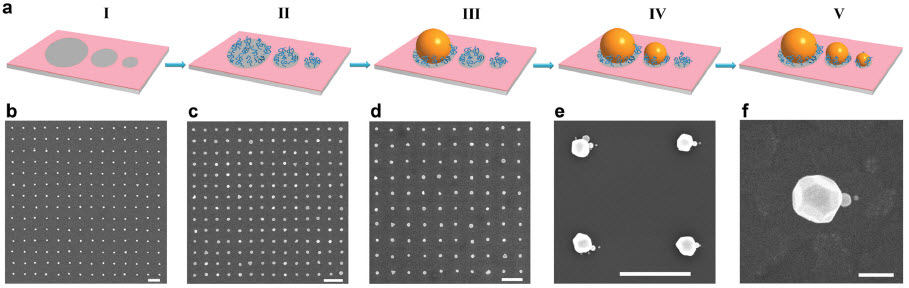
Schematic of the fabrication process and SEM images of the nanostructures used to create a nanolens. (credit: Augustine Urbas et al./Advanced Materials)

Researchers have developed a method of constructing nanolenses that could focus incoming light into a spot much smaller than possible with conventional microscopy, making possible extremely high-resolution imaging or biological sensing.

They precisely aligned three spherical gold nanoparticles of graduated sizes in a string-of-pearls arrangement  to produce the focusing effect.

The first step employs the lithographic methods used in making printed circuits to create a chemical mask that leaves a pattern of three spots of decreasing size exposed on a substrate such as silicon or glass that won’t absorb the gold nanoparticles. Lithography allows for extremely precise and delicate patterns, but it can’t produce three-dimensional structures. So the scientists used chemistry to build polymer chains atop the patterned substrate in three dimensions, tethered to the substrate through chemical bonds.

“The chemical contrast between the three spots and the background makes the gold particles go only to the spots,” said Xiaoying Liu, senior research scientist at the University of Chicago’s Institute for Molecular Engineering. To get each of the three sizes of nanospheres to adhere only to its own designated spot, the scientists played with the strength of the chemical interaction between spot and sphere. “We control the size of the different areas in the chemical pattern and we control the interaction potential of the chemistry of those areas with the nanoparticles,” said Nealey.

The spheres are separated by only a few nanometers. It is this tiny separation, coupled with the sequential ordering of the different-sized spheres, that produces the nanolensing effect.

High-resolution sensing using spectroscopy

The scientists are already exploring using this “hot spot” for high-resolution sensing using spectroscopy. “If you put a molecule there, it will interact with the focused light,” said Liu. “The enhanced field at these hot spots will help you to get orders of magnitude stronger signals. And that gives us the opportunity to get ultra-sensitive sensing. Maybe ultimately we can detect single molecules.”

The researchers also foresee applying their manufacturing technique to nanoparticles of other shapes, such as rods and stars.

Scientists at the Air Force Research Laboratory and Florida State University were also involved in the research, which is described in the latest edition of Advanced Materials.


Abstract of Deterministic Construction of Plasmonic Heterostructures in Well-Organized Arrays for Nanophotonic Materials

Plasmonic heterostructures are deterministically constructed in organized arrays through chemical pattern directed assembly, a combination of top-down lithography and bottom-up assembly, and by the sequential immobilization of gold nanoparticles of three different sizes onto chemically patterned surfaces using tailored interaction potentials. These spatially addressable plasmonic chain nanostructures demonstrate localization of linear and nonlinear optical fields as well as nonlinear circular dichroism.
Social-media news consumers at higher risk of ‘information bubbles’

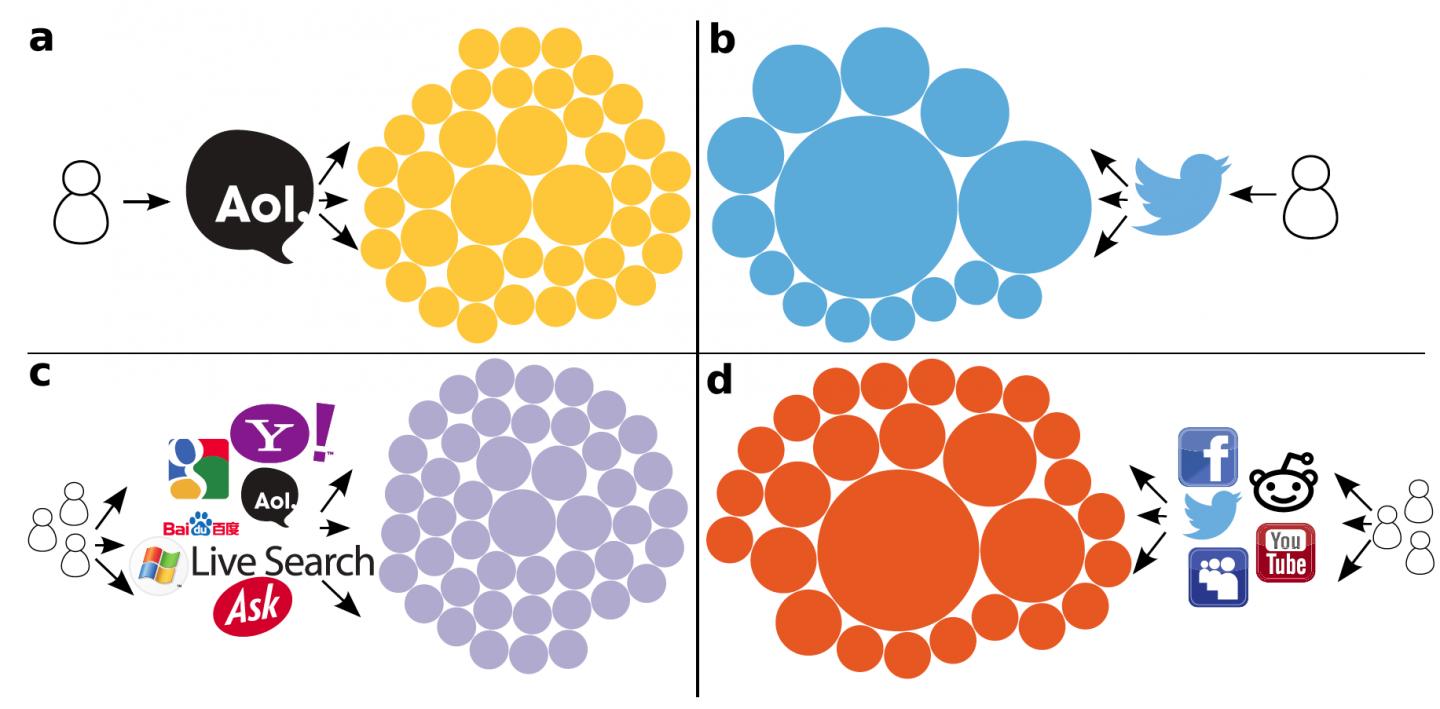
Each circle is proportional to the number of clicks to a website from a single user (a, b) or a group of users (b, d) referred by search engines (a, c) vs. social media (b, d). Social media concentrate clicks to fewer sources, as shown by the larger circles. (credit: Dimitar Nikolov)

Do you find your news and information from social media instead of search engines? If so, you are at risk of becoming trapped in a “collective social bubble.”

That’s according to Indiana University researchers in a study, “Measuring online social bubbles,” recently published in the new open-access online journal PeerJ Computer Science, based on an analysis of more than 100 million Web clicks and 1.3 billion public posts on social media*.

“These findings provide the first large-scale empirical comparison between the diversity of information sources reached through different types of online activity,” said Dimitar Nikolov, a doctoral student in the School of Informatics and Computing at Indiana University (IU), lead author of the study.

Collective social bubble

“Our analysis shows that people collectively access information from a significantly narrower range of sources on social media compared to search engines.”

To measure the diversity of information accessed over each medium, the researchers developed a method that assigned a score for how user clicks from social media versus search engines were distributed across millions of sites.

A lower score indicated users’ Web traffic concentrated on fewer sites; a higher score indicated traffic scattered across more sites. A single click on CNN and nine clicks on MSNBC, for example, would generate a lower score than five clicks on each site.

Overall, the analysis found that people who accessed news on social media scored significantly lower in terms of the diversity of their information sources than users who accessed current information using search engines.

The results show the rise of a “collective social bubble” where news is shared within communities of like-minded individuals, said Nikolov, noting a trend in modern media consumption where “the discovery of information is being transformed from an individual to a social endeavor.”

How “friends” limit your sphere of information

Nikolov noted that people who adopt this behavior as a coping mechanism for “information overload” may not even be aware they’re filtering their access to information by using social media platforms, such as Facebook, where the majority of news stories originate from friends’ postings.

“The rapid adoption of the Web as both a source of knowledge and social space has made it ever more difficult for people to manage the constant stream of news and information arriving on their screens,” added study co-author Filippo Menczer, professor of informatics and computing, director of the Center for Complex Networks and Systems Research. “These results suggest the conflation of these previously distinct activities may be contributing to a growing ‘bubble effect’ in information consumption.”

“Compared to a baseline of information-seeking activities, this evidence shows, empirically, that social media does in fact expose communities and individuals to a significantly narrower range of news sources, despite the many information channels on the medium,” Nikolov said.

It would also be interesting to see how social media as sources compare to news publications, and how social media may make users more vulnerable to propaganda and other forms of information and opinion control.

* IU scientists applied their analysis to three massive sources of information on browsing habits. An anonymous database compiled by the researchers, contained the Web searches of 100,000 users at IU between October 2006 and May 2010 (the primary source). Two other datasets contained identifiers, enabling the scientists to confirm that information access behavior at the community level reflected the behavior of individual users: a dataset containing 18 million clicks by more than half a million users of the AOL search engine in 2006; and 1.3 billion public posts containing links shared by over 89 million people on Twitter between April 2013 and April 2014. To measure the range of news sources accessed by users, the IU scientists used an open directory of news sites, filtering out blogs and wikis, resulting in 3,500 news outlets.


Abstract of Measuring online social bubbles

Social media have become a prevalent channel to access information, spread ideas, and influence opinions. However, it has been suggested that social and algorithmic filtering may cause exposure to less diverse points of view. Here we quantitatively measure this kind of social bias at the collective level by mining a massive datasets of web clicks. Our analysis shows that collectively, people access information from a significantly narrower spectrum of sources through social media and email, compared to a search baseline. The significance of this finding for individual exposure is revealed by investigating the relationship between the diversity of information sources experienced by users at both the collective and individual levels in two datasets where individual users can be analyzed—Twitter posts and search logs. There is a strong correlation between collective and individual diversity, supporting the notion that when we use social media we find ourselves inside “social bubbles.” Our results could lead to a deeper understanding of how technology biases our exposure to new information.

Stanford researcher scans his own brain for a year and a half — the most studied in the world

humanconnectome

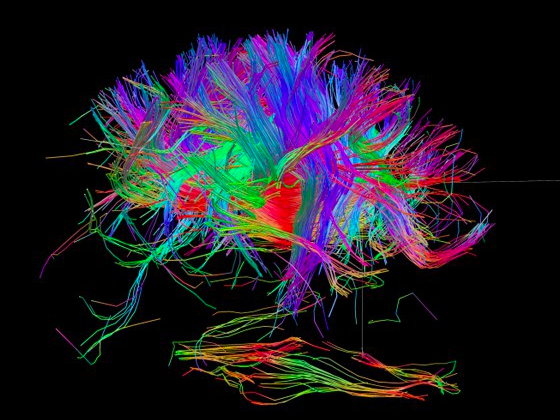
Human connectome (Credit: NIH Human Connectome Project)

You’ve probably seen the “connectome” map of the major networks between different functional areas of the human brain. Cool graphic. But this is just an average.

It raises a lot of questions: How does this map relate to your brain? Do these connections persist over a period of months or more? Or do they vary with different conditions (happy or sad mood, etc.)? And what if you’re a schizophrenic, alcoholic, meditator, or videogamer, etc., how does your connectome look?

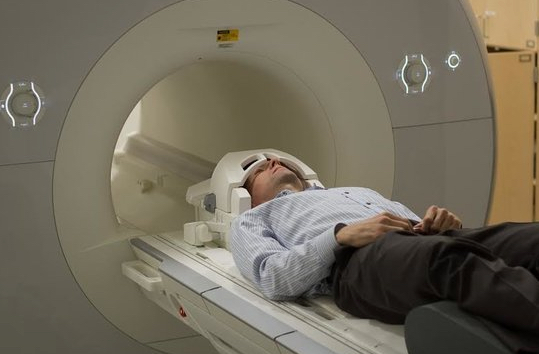
These questions obsessed Stanford psychologist Russell Poldrack, leading to his “MyConnectome project.” In the noble DIY tradition of Marie Curie, Jonas Salk, and Albert Hoffman, he started off his day by climbing into an MRI machine and scanning his brain for 10 minutes Tuesdays and Thursdays every week for a year and a half — making his brain the most studied in the world.

Poldrack’s morning FMRI scan (credit: Russell Poldrack)

He also fasted and drew blood on Tuesdays for testing with metabolomics (chemical fingerprints in biological fluids) and genomics (gene tests, performed by 23andMe).

The results — the most complete study of the brain’s network connections over time — are published in open-access Nature Communications.

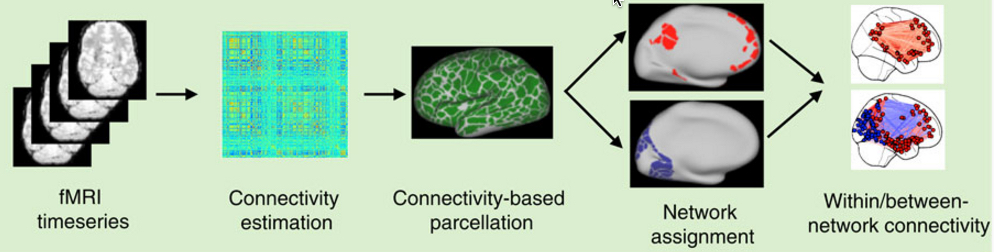
An overview of the resting-state fMRI analysis pipeline (credit: Russell A. Poldrack et al./Nature Communications)

Here is some of what he found out:

  • His connectivity was surprisingly consistent, which is good news for researchers studying differences between healthy brains and those of patients with neurological disorders that might suffer from disrupted connectivity, such as schizophrenia or bipolar disorder.
  • There was a strong correlation between brain activity and changes in the expression of many different families of genes. The expression of genes related to inflammation and immune response matched Poldrack’s psoriasis flare-ups, for example.
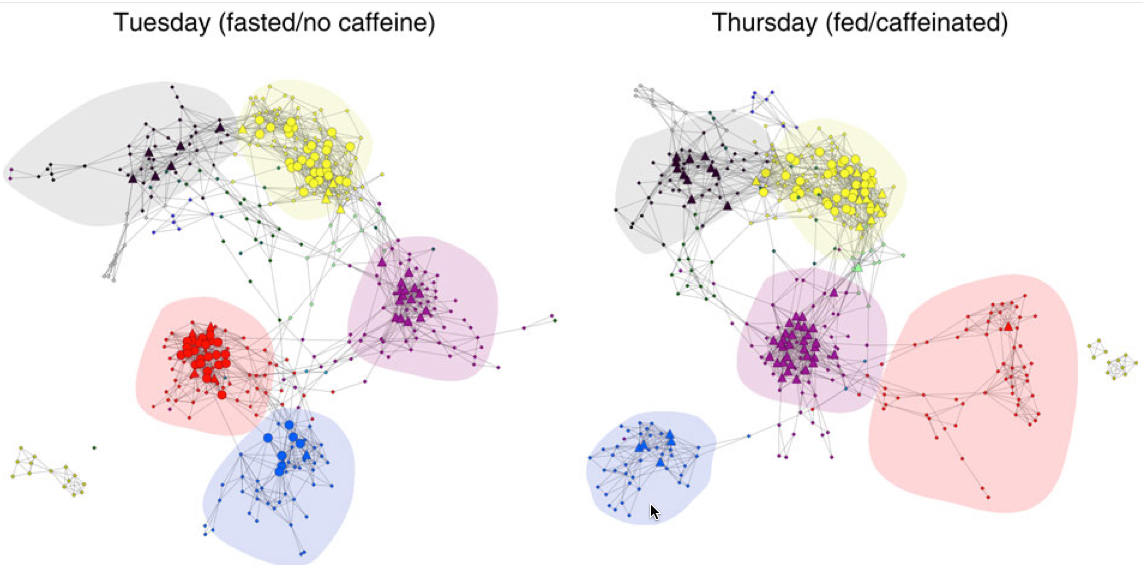
  • Fasting with no caffeine on Tuesdays radically changed the connection between the somatosensory motor network and the higher vision network: it grew significantly tighter without caffeine. “That was totally unexpected, but it shows that being caffeinated radically changes the connectivity of your brain,” Poldrack said. “We don’t really know if it’s better or worse, but it’s interesting that these are relatively low-level areas. It may well be that I’m more fatigued on those days, and that drives the brain into this state that’s focused on integrating those basic processes more.”

Network connections for Tuesdays (fasted) and Thursdays (fed/caffeinated). Hubs are shown as larger nodes, with provincial hubs depicted as circles and connector hubs depicted as triangles. Network module membership is coded by node color; major networks are shaded, including somatomotor (red), second visual (blue), cingulo-opercular (purple), fronto-parietal (yellow) and default mode (black). (credit: Russell A. Poldrack et al./Nature Communications)

What’s next

“I’m generally a pretty happy and even-keeled person,” Poldrack said. “My positive mood is almost always high, and my negative mood is almost always non-existent. It would be interesting to scan people with a wider emotional variation and see how their connections look over time.” As he suggests in the video (below), “We need to learn a lot more about how individual brains differ from one another. … There are many more questions yet to be answered. … When it comes to understanding the brain. we really just scratched the surface.”

Fortunately, Poldrack and his colleagues have made the entire data set and the ready-built tools to analyze it available here. The data set is large and deep; Poldrack said he hopes people will approach it from innovative angles and uncover connections that will help advance the research. Meanwhile, Poldrack plans to hone software to elucidate the interplay between brain function and gene expression.

But so far we only have a experimental population of one. Any volunteers (and funders) for a follow-up study?

* In any action that a person undertakes, many different regions of the brain communicate with each other, serving as a sort of check-and-balance system to make sure that the correct actions are taken to deal with the situation at hand. These messages are communicated over more than a dozen networks, sets of functional areas of the brain that preferentially talk to one another.

There are multiple networks for vision, a somatosensory/motor network, and there are others that are attributed to attention or task management. Collectively, these are known as the connectome. Because the strength or efficiency of these individual networks can affect behavior, they have become of greater interest to researchers in recent years. To isolate these connections, researchers examine functional MRI data collected while the patient is at rest.


Stanford | Stanford researcher scans his own brain for a year and a half


Abstract of Long-term neural and physiological phenotyping of a single human

Psychiatric disorders are characterized by major fluctuations in psychological function over the course of weeks and months, but the dynamic characteristics of brain function over this timescale in healthy individuals are unknown. Here, as a proof of concept to address this question, we present the MyConnectome project. An intensive phenome-wide assessment of a single human was performed over a period of 18 months, including functional and structural brain connectivity using magnetic resonance imaging, psychological function and physical health, gene expression and metabolomics. A reproducible analysis workflow is provided, along with open access to the data and an online browser for results. We demonstrate dynamic changes in brain connectivity over the timescales of days to months, and relations between brain connectivity, gene expression and metabolites. This resource can serve as a testbed to study the joint dynamics of human brain and metabolic function over time, an approach that is critical for the development of precision medicine strategies for brain disorders.