‘Stomach tap’ to let obese people empty their gut after eating
Even Indoor Kids Should Worry About California’s 30 Million Dead Trees

Volcanoes Celebrate the 25th Anniversary of Pinatubo’s Eruption With Some Epic Rumbles

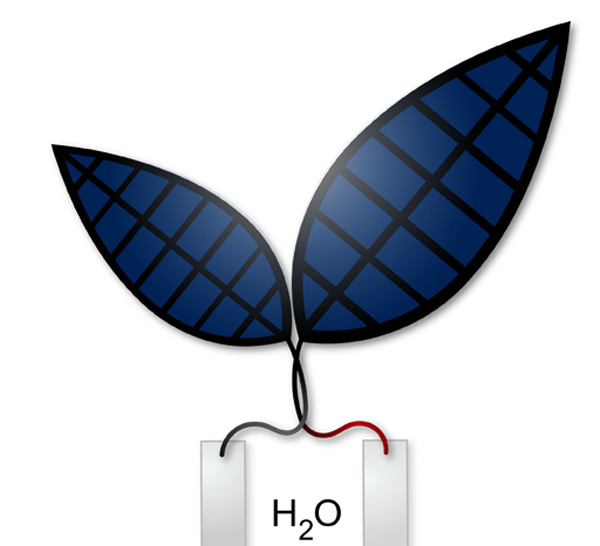
Bionic leaf 2.0

Bionic leaf 2.0: An artificial photosynthesis system (credit: Jessica Polka)
Harvard scientists have created a system a system that uses solar energy plus hydrogen-eating bacteria to produce liquid fuels with 10 percent efficiency, compared to the 1 percent seen in the fastest-growing plants.
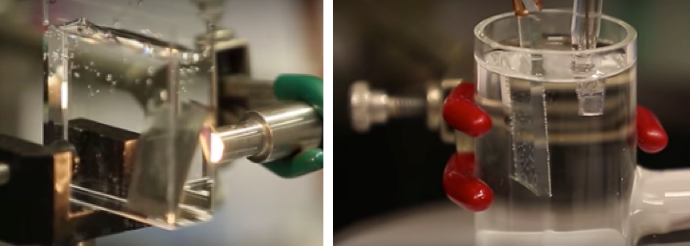
The system, co-created by Daniel Nocera, the Patterson Rockwood Professor of Energy at Harvard University, and Pamela Silver, the Elliott T. and Onie H. Adams Professor of Biochemistry and Systems Biology at Harvard Medical School, uses solar energy to split water molecules into hydrogen and oxygen molecules.
A paper on the research was published June 3 in Science.
“This is a true artificial photosynthesis system,” Nocera said. “Before, people were using artificial photosynthesis for water-splitting, but this is a true A-to-Z system, and we’ve gone well over the efficiency of photosynthesis in nature.”

“What we’ve invented is an artificial leaf. You just drop it in water and sunlight hits it, and out one side comes hydrogen and out the other side comes oxygen.” — Daniel Nocera
“The beauty of biology is it’s the world’s greatest chemist: Biology can do chemistry we can’t do easily,” said Silver, who is also a founding core member of the Wyss Institute at Harvard University. “In principle, we have a platform that can make any downstream carbon-based molecule. So this has the potential to be incredibly versatile.”
Dubbed “bionic leaf 2.0,” the new system builds on previous work by Nocera, Silver and others, which faced a number of challenges. Mainly, the catalyst they used to produce hydrogen (a nickel-molybdenum-zinc alloy) also created reactive oxygen species — molecules that attacked and destroyed the bacteria’s DNA. To avoid that problem, researchers were forced to run the system at abnormally high voltages, resulting in reduced efficiency.
Ready for commercial applications, with a new model
“For this paper, we designed a new cobalt-phosphorus alloy catalyst, which we showed does not make reactive oxygen species,” Nocera said. “That allowed us to lower the voltage, and that led to a dramatic increase in efficiency.”
Nocera and colleagues were also able to expand the portfolio of the system to include isobutanol (a solvent) and isopentanol (used in geothermal power production to drive turbines), along with PHB, a bioplastic precursor.

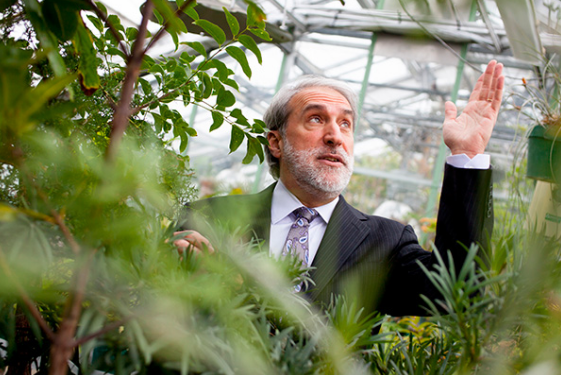
“Instead of having a gas station, the Sun is hitting your house, you have the artificial leaf, you could be generating your own fuel.” — Daniel Nocera (credit: Rose Lincoln/Harvard Staff Photographer)
The new catalyst’s chemical design also allows it to “self-heal,” meaning it won’t leach material into solution — it’s biologically compatible.
Nocera said the system is already effective enough to consider possible commercial applications but within a different model for technology translation. “It’s an important discovery… [that] can do better than photosynthesis,” Nocera said. “But I also want to bring this technology to the developing world.”
Working in conjunction with the First 100 Watts Project at Harvard, which helped fund the research, Nocera hopes to continue developing the technology and its applications in nations such as India with the help of that country’s scientists.
In many ways, Nocera said, the new system marks fulfillment of the promise of his “artificial leaf,” which used solar power to split water and make hydrogen fuel (see ‘Artificial leaf’ harnesses sunlight for efficient, safe hydrogen fuel production).
“If you think about it, photosynthesis is amazing,” he said. “It takes sunlight, water and air—and then look at a tree. That’s exactly what we did, but we do it significantly better, because we turn all that energy into a fuel.”
The work, a direct result of the First 100 Watts Project established at Harvard University, was was supported by Office of Naval Research Multidisciplinary University, Research Initiative Award, Air Force Office of Scientific Research Grant, and the Wyss Institute for Biologically Inspired Engineering. The Harvard University Climate Change Solutions Fund is supporting ongoing research into the “bionic leaf” platform.
Harvard University | Bionic Leaf Turns Sunlight Into Liquid Fuel
Abstract of Water splitting–biosynthetic system with CO2 reduction efficiencies exceeding photosynthesis
Artificial photosynthetic systems can store solar energy and chemically reduce CO2. We developed a hybrid water splitting–biosynthetic system based on a biocompatible Earth-abundant inorganic catalyst system to split water into molecular hydrogen and oxygen (H2 and O2) at low driving voltages. When grown in contact with these catalysts, Ralstonia eutropha consumed the produced H2 to synthesize biomass and fuels or chemical products from low CO2 concentration in the presence of O2. This scalable system has a CO2 reduction energy efficiency of ~50% when producing bacterial biomass and liquid fusel alcohols, scrubbing 180 grams of CO2 per kilowatt-hour of electricity. Coupling this hybrid device to existing photovoltaic systems would yield a CO2 reduction energy efficiency of ~10%, exceeding that of natural photosynthetic systems.
Wearable artificial kidney prototype successfully tested

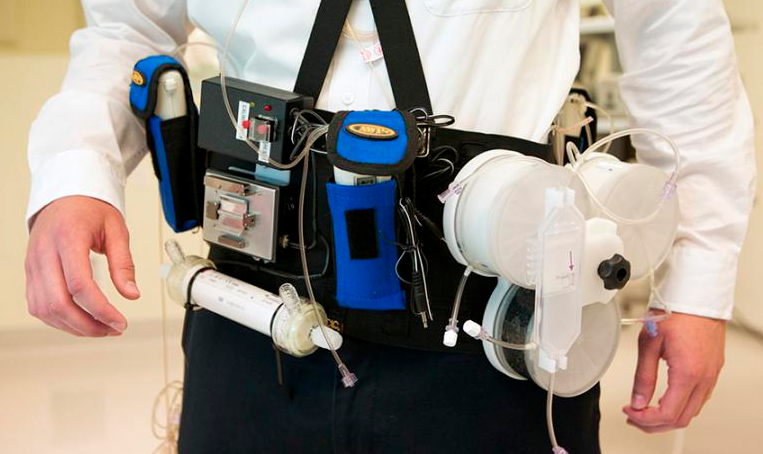
Working prototype of wearable artificial kidney developed by Victor Gura, MD, and his team (credit: Stephen Brashear/University of Washington)
An FDA-approved exploratory clinical trial of a prototype wearable artificial kidney (WAK) — a miniaturized, wearable hemodialysis machine — at the University of Washington Medical Center in Seattle has been completed, the researchers reported June 2 in an open-access paper in JCI Insight.
The seven patients enrolled in the study reported “significantly greater treatment satisfaction during the WAK treatment period compared with ratings of care during periods of conventional in-center hemodialysis treatment,” according to the researchers.
“During the study, hemodynamic parameters remained stable, ultrafiltration was achieved as intended, and there were no unexpected adverse treatment effects.” The study was led by the device inventor, Victor Gura, M.D., of Cedars-Sinai Medical Center in Los Angeles and Blood Purification Technologies Inc.
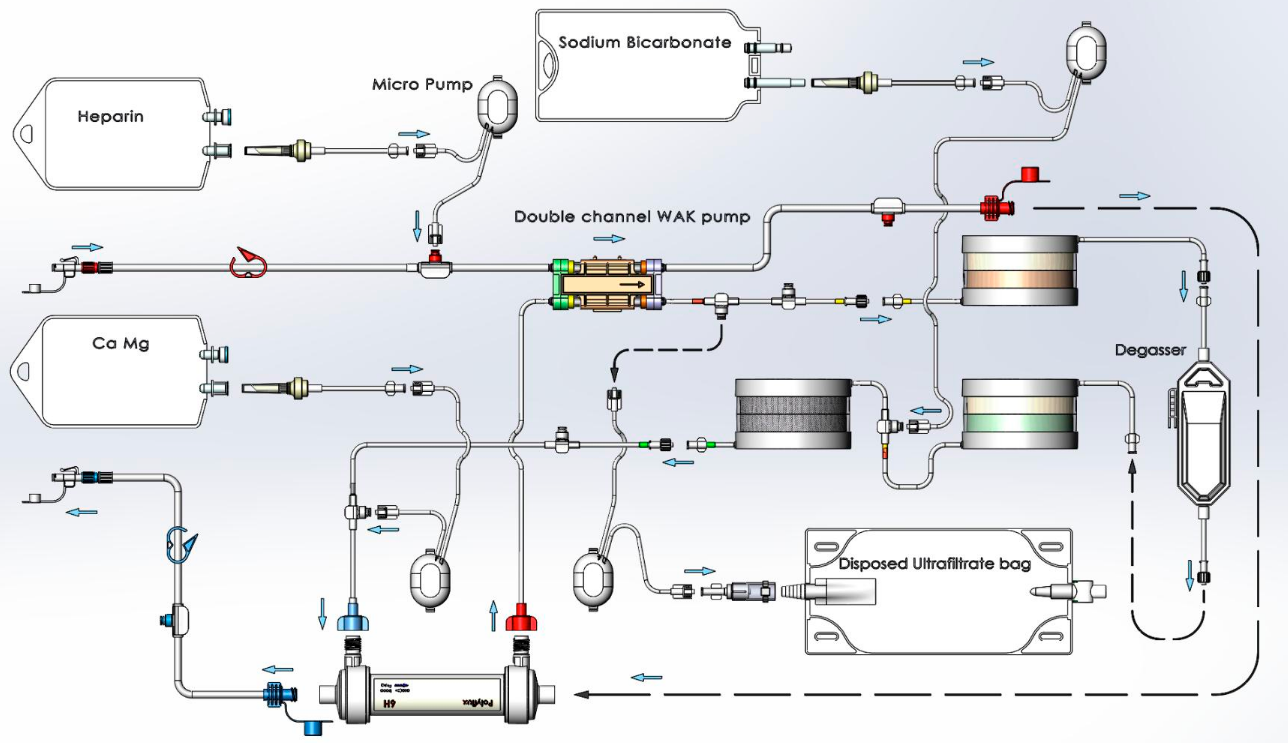
The trial was stopped after the seventh subject due to device-related technical problems, including excessive carbon dioxide bubbles in the dialysate circuit and variable blood and dialysate flows, which the scientists plan to fix.

Detailed schematic flow diagram of wearable artificial kidney blood and dialysate circuits. ZP: zirconium phosphate; HZO: hydrous zirconium oxide; CO2EF: semipermeable degassing bubble removal mechanism. (credit: Victor Gura et al./JCI Insight)
More than 2 million people worldwide experience end-stage renal disease (ESRD), which is currently treated with hemodialysis therapies that require patients to adhere to restrictive dietary and fluid intake limitations and are associated with a high pill burden, according to the researchers. Adjusted rates of all-cause mortality are up to 8 times greater for dialysis patients compared with age-matched individuals in the general population, they note.
The WAK is designed to be worn and used by patients for up to 24 hours per day. The hope is that treatment can be administered at the patients’ homes either by the patients themselves or caretakers. Being able to be ambulatory while undergoing dialysis, if further proven in additional studies, “would liberate patients from the need to be tethered to a stationary machine during dialysis treatments,” according to the researchers.

(credit: Blood Purification Technologies Inc.)
The researchers caution that “long-term safety of continuous treatment with the WAK has not been established yet. Longer-term studies treating patients in the outpatient and home environment are necessary to address safety issues during ambulation and the home operation of the device by patients and to incorporate additional human factor elements.”
To learn more or donate, contact Wearable Artifical Kidney Foundation, which funded the study along with Blood Purification Technologies Inc.
UWMedicineHealth | Wearable Artificial Kidney: first U.S. clinical trial
Why Zika Is No Reason to Cancel the Olympics

SpaceX Is Totally Gonna Land a Rocket on a Drone Boat Again. Right? Right?

Gene circuits in live cells that perform complex analog/digital computations

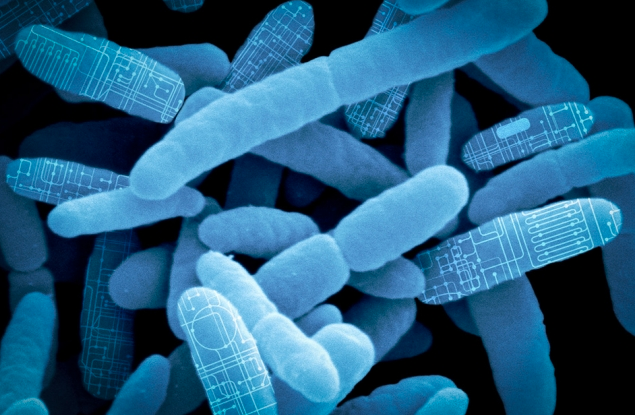
MIT researchers have developed synthetic biological circuits (from bacteria, for example, as shown here) that combine analog and digital computation as “living therapeutics” to treat major diseases and rare genetic disorders (credit: Synlogic)
MIT researchers have developed synthetic biological circuits that combine both analog (continuous) and digital (discrete) computation — allowing living cells to carry out complex processing operations, such as releasing a drug in response to low glucose levels.
The research is presented in an open-access paper published in the journal Nature Communications.
Background: analog vs. digital biological circuits
Like electronic circuits, living cells are capable of performing computations that are either continuous (analog) — like the way eyes adjust to gradual changes in the light levels — or digital, involving simple discrete on or off processes, such as a cell’s self-programmed death (apoptosis). Current synthetic biological systems, in contrast, have tended to focus on either analog or digital processing, limiting the range of uses.
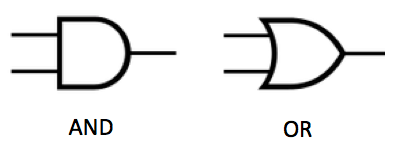
Two basic logic circuits. An AND gate fires only if both inputs are “true” (for example, both inputs have a 1 volt signal, not zero). An OR gate fires if either (or both) of the inputs is true (for example, the top input has a 1 volt signal and the bottom input has zero. (credit: KurzweilAI)
Digital systems are based on a simple binary output, such as 0 or 1, so performing complex computational operations requires the use of a large number of parts (such as AND and OR logic gates) to make the decision, which is difficult to achieve in synthetic biological systems. (There are seven basic logic gates: AND, OR, XOR, NOT, NAND, NOR, and XNOR, as explained here.)
Using genes (instead of voltages), synthetic biologists design genetic circuits (arrangements of DNA components) that can perform new functions. For example, here’s a gene circuit that was constructed using Escherichia coli bacteria (source: Imperial College London/Nature Communications study):
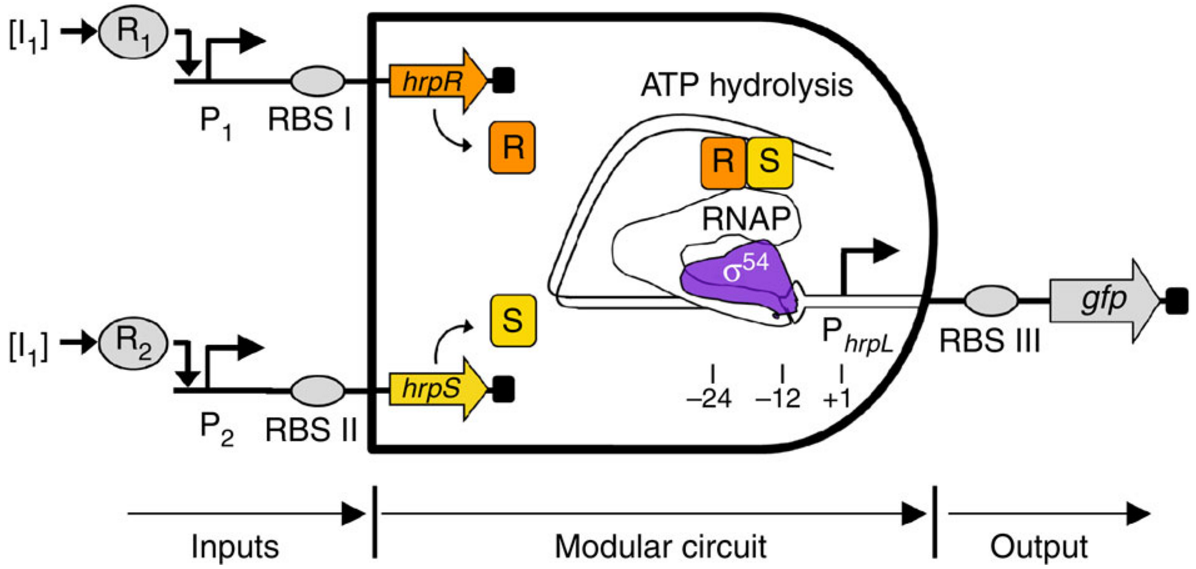
Example of a biological AND gate. Two environment-responsive gene promoters (a region of DNA that initiates transcription — that is, copying a particular segment of DNA into RNA), P1 and P2, act as the inputs to drive the transcriptions of hrpR and hrpS genes, and respond to small molecules. Transcription of the output promoter gfp is turned on only when both proteins HrpR and HrpS are present. (credit: Baojun Wang et al./Nature Communications)
“Most of the work in synthetic biology has focused on the digital approach, because [digital systems] are much easier to program,” says Timothy Lu, an associate professor of electrical engineering and computer science and of biological engineering, and head of the Synthetic Biology Group at MIT’s Research Laboratory of Electronics.
The new synthetic circuits can measure the level of an analog input, such as a particular chemical relevant to a disease, and then make a binary decision — for example, turning on an output, such as a drug that treats the disease if the level is in the right range.
The new circuits are based on multiple elements. For example, a threshold module consists of a sensor that detects analog levels of a particular chemical, which controls the expression of the second digital component, a recombinase gene, which can then switch on or off a segment of DNA by converting it into a digital (on or off) output. (This conversion process is similar to electronic devices known as comparators, which take analog input signals and convert them into a digital output.)
If the concentration of the chemical reaches a certain level, the threshold module expresses the recombinase gene, causing it to flip the DNA segment (which contains a gene or gene-regulatory element, which then alters the expression of a desired output).
“So this is how we take an analog input, such as a concentration of a chemical, and convert it into a 0 or 1 signal,” Lu says. “And once that is done, and you have a piece of DNA that can be flipped upside down, then you can put together any of those pieces of DNA to perform digital computing,” he says.
Ternary logic for three-way glucose decisions
The team has also built an analog-to-digital converter circuit that implements ternary (three-valued) logic. The circuit, which is capable of producing two different outputs, will only switch on in response to either a high or low concentration range of an input.
In the future, the circuit could be used to detect glucose levels in the blood and respond in one of three ways depending on the concentration, he says. “If the glucose level was too high, you might want your cells to produce insulin, if the glucose was too low you might want them to make glucagon, and if it was in the middle you wouldn’t want them to do anything,” he says.
Similar analog-to-digital converter circuits could also be used to detect a variety of chemicals, simply by changing the sensor, Lu says.
Detecting inflammation and environmental conditions
The researchers are investigating the idea of using analog-to-digital converters to detect levels of inflammation in the gut caused by inflammatory bowel disease, for example, and releasing different amounts of a drug in response.
Immune cells used in cancer treatment could also be engineered to detect different environmental inputs, such as oxygen or tumor lysis (cell breakdown) levels, and vary the immune-call therapeutic activity in response.
Other research groups are also interested in using the devices for environmental applications, such as engineering cells that detect concentrations of water pollutants, Lu says.
The research team recently created a spinout company, called Synlogic, which is now attempting to use simple versions of the circuits to engineer probiotic bacteria that can treat diseases in the gut. The company hopes to begin clinical trials of these bacteria-based treatments within the next 12 months.
Abstract of Synthetic mixed-signal computation in living cells
Living cells implement complex computations on the continuous environmental signals that they encounter. These computations involve both analogue- and digital-like processing of signals to give rise to complex developmental programs, context-dependent behaviours and homeostatic activities. In contrast to natural biological systems, synthetic biological systems have largely focused on either digital or analogue computation separately. Here we integrate analogue and digital computation to implement complex hybrid synthetic genetic programs in living cells. We present a framework for building comparator gene circuits to digitize analogue inputs based on different thresholds. We then demonstrate that comparators can be predictably composed together to build band-pass filters, ternary logic systems and multi-level analogue-to-digital converters. In addition, we interface these analogue-to-digital circuits with other digital gene circuits to enable concentration-dependent logic. We expect that this hybrid computational paradigm will enable new industrial, diagnostic and therapeutic applications with engineered cells.

Nobody Waived the HIPAA Privacy Law in Orlando After All