
Auto twitcher recognises different bird songs even when noisy
Artificial intelligence that recognises a wide variety of different types of birdsong is a boon for conservationists



Science and reality

Can we respect the expressions of gender-crossing children without being so “affirming” of their declarations that we accidentally steer them to a transgender path they might otherwise not want or need to take?
The post The Big Problem With Outlawing Gender Conversion Therapies appeared first on WIRED.


Horses need more than two weeks to recover from a tough race. That's why it's so hard for one to win the Triple Crown.
The post Science Says American Pharoah Won’t Win the Triple Crown appeared first on WIRED.

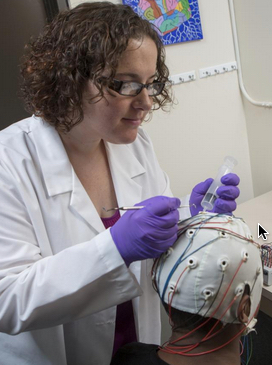
Sarah Laszlo, an assistant professor of psychology, adjusting an EEG electrode (credit: Jonathan Cohen, Binghamton University)photographer
The way your brain responds to certain words could be used to replace passwords, according to a study by researchers from Binghamton University, published in academic journal Neurocomputing.
The psychologists recorded volunteers’ EEG signals from volunteers reading a list of acronyms, focusing on the part of the brain associated with reading and recognizing words.
Participants’ “event-related potential” signals reacted differently to each acronym, enough that a computer system was able to identify each volunteer with 94 percent accuracy, using only three electrodes.
The results suggest that brainwaves could be used by security systems to verify a person’s identity.
Better than fingerprints or retinal patterns in the eye
According to Sarah Laszlo, assistant professor of psychology and linguistics at Binghamton University and co-author of the “Brainprint” paper, brain biometrics are appealing because they are cancellable (can be reset) and cannot be stolen by malicious means, such as copying a fingerprint.
“If someone’s fingerprint is stolen, that person can’t just grow a new finger to replace the compromised fingerprint — the fingerprint for that person is compromised forever. Fingerprints are ‘non-cancellable.’ Brainprints, on the other hand, are potentially cancellable.
So, in the unlikely event that attackers were actually able to steal a brainprint from an authorized user, the authorized user could then ‘reset’ their brainprint,” Laszlo said, meaning the user could simply record the EEG pattern associated with another word or phrase.
Useful in high-security environments
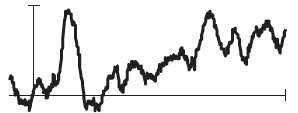
Sample correctly classified brainprint recording (credit: B.C. Armstrong/Neurocomputing)
Zhanpeng Jin, assistant professor at Binghamton University’s departments of Electrical and Computer Engineering, and Biomedical Engineering, doesn’t see brainprint as the kind of system that would be mass-produced for low security applications (at least in the near future*) but it could have important security applications.
“We tend to see the applications of this system as being more along the lines of high-security physical locations, like the Pentagon, where there aren’t that many users that are authorized to enter, and those users don’t need to constantly be authorizing the way that a consumer might need to authorize into their phone or computer,” Jin said.
The project is funded by the National Science Foundation and Binghamton University’s Interdisciplinary Collaboratino Grants (ICG) Program.
* Widespread use of low-cost EEG devices could potentially change that.
Abstract of Brainprint: Assessing the uniqueness, collectability, and permanence of a novel method for ERP biometrics
The human brain continually generates electrical potentials representing neural communication. These potentials can be measured at the scalp, and constitute the electroencephalogram (EEG). When the EEG is time-locked to stimulation – such as the presentation of a word – and averaged over many such presentations, the Event-Related Potential (ERP) is obtained. The functional characteristics of components of the ERP are well understood, and some components represent processing that may differ uniquely from individual to individual—such as the N400 component, which represents access to the semantic network. We applied several pattern classifiers to ERPs representing the response of individuals to a stream of text designed to be idiosyncratically familiar to different individuals. Results indicate that there are robustly identifiable features of the ERP that enable labeling of ERPs as belonging to individuals with accuracy reliably above chance (in the range of 82–97%). Further, these features are stable over time, as indicated by continued accurate identification of individuals from ERPs after a lag of up to six months. Even better, the high degree of labeling accuracy achieved in all cases was achieved with the use of only 3 electrodes on the scalp—the minimal possible number that can acquire clean data.
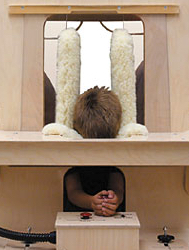
Part of the calming “Squeeze Machine” designed by Temple Grandin (credit: Therafin Corp.)
A new open-access study shows that social and sensory overstimulation drives autistic behaviors and supports the unconventional view that the autistic brain is actually hyper-functional. The research offers new hope, with therapeutic emphasis on paced and non-surprising environments tailored to the individual’s sensitivity.
For decades, autism has been viewed as a form of mental retardation, a brain disease that destroys children’s ability to learn, feel and empathize, thus leaving them disconnected from our complex and ever-changing social and sensory surroundings. From this perspective, the main kind of therapeutic intervention in autism to date aims at strongly engaging the child to revive brain functions believed dormant.
Predictability is key
Now researchers at the Swiss Federal Institute of Technology in Lausanne (EPFL) have completed a study that turns this traditional view of autism completely around. The study, conducted on rats exposed to a known risk factor in humans, demonstrates that unpredictable environmental stimulation drives autistic symptoms at least as much as an impoverished environment does.
It also shows that predictable stimulation can prevent these symptoms.
The study is also evidence for a drastic shift in the clinical approach to autism, away from the idea of a damaged brain that demands extensive stimulation. Instead, autistic brains may be hyper-functional and thus require enriched environments that are non-surprising, structured, safe, and tailored to a particular individual’s sensitivity.
“The valproate rat model used is highly relevant for understanding autism, because children exposed to valproate in the womb have an increased chance of presenting autism after birth,” says Prof. Henry Markram, co-author of the study and father of a child with autism. He notes that the rats exposed to valproate in early embryonic development demonstrate behavioral, anatomical and neurochemical abnormalities that are comparable to characteristics of human autism.
The scientists here show that if these rats are reared in a home environment that is calm, safe, and highly predictable with little surprise — while still rich in sensory and social engagement — they do not develop symptoms of emotional over-reactivity such as fear and anxiety, nor social withdrawal or sensory abnormalities.
“We were amazed to see that environments lacking predictability, even if enriched, favored the development of hyper-emotionality in rats exposed to the prenatal autism risk factor,” says Markram.
The study critically shows that in certain individuals, non-predictable environments lead to the development of a wider range of negative symptoms, including social withdrawal and sensory abnormalities. Such symptoms normally prevent individuals from fully benefiting from and contributing to their surroundings, and are thus the targets of therapeutic success.
The study identifies drastically opposite behavioral outcomes depending on levels of predictability in the enriched environment, and suggests that the autistic brain is unusually sensitive to predictability in rearing environment, but to different extent in different individuals.
Hyper-functional brain microcircuits
The study is strong evidence for the Intense World Theory of Autism, proposed in 2007 by neuroscientists Kamila Markram and Henry Markram, both co-authors on the present study. This theory is based on recent research suggesting that the autistic brain, in both humans and animal models, reacts differently to stimuli.
It proposes that an interaction — between an individual’s genetic background with biologically toxic events early in embryonic development — triggers a cascade of abnormalities that create hyper-functional brain microcircuits, the functional units of the brain.
Once activated, these hyper-functional circuits could become autonomous and affect further brain functional connectivity and development. These would lead to an experience of the world as intense, fragmented, and overwhelming; while differences in severity between persons with autism would stem from the system affected and the timing of the effect.
Stable, structured environment
Instead, a stable, structured environment rich in stimuli could help children with autism, by providing a safe haven from an overload of sensory and emotional stimuli, the authors suggest.
This study has immediate implications for clinical and research settings. It suggests that if brain hyper-function can be diagnosed soon after birth, at least some of the debilitating effects of a supercharged brain can be prevented by highly specialized environmental stimulation that is safe, consistent, controlled, announced and only changed very gradually at the pace determined by each child.
The research supports the work of Temple Grandin, PhD, an author and professor of animal science at Colorado State University. One of the therapeutic methods she developed (and used herself) was the “hug machine” (AKA “squeeze machine”), a deep-pressure device designed to calm hypersensitive persons. The device is featured in an award-winning biographical film, Temple Grandin.
Abstract of Predictable enriched environment prevents development of hyper-emotionality in the VPA rat model of autism
Understanding the effects of environmental stimulation in autism can improve therapeutic interventions against debilitating sensory overload, social withdrawal, fear and anxiety. Here, we evaluate the role of environmental predictability on behavior and protein expression, and inter-individual differences, in the valproic acid (VPA) model of autism. Male rats embryonically exposed (E11.5) either to VPA, a known autism risk factor in humans, or to saline, were housed from weaning into adulthood in a standard laboratory environment, an unpredictably enriched environment, or a predictably enriched environment. Animals were tested for sociability, nociception, stereotypy, fear conditioning and anxiety, and for tissue content of glutamate signaling proteins in the primary somatosensory cortex, hippocampus and amygdala, and of corticosterone in plasma, amygdala and hippocampus. Standard group analyses on separate measures were complemented with a composite emotionality score, using Cronbach’s Alpha analysis, and with multivariate profiling of individual animals, using Hierarchical Cluster Analysis. We found that predictable environmental enrichment prevented the development of hyper-emotionality in the VPA-exposed group, while unpredictable enrichment did not. Individual variation in the severity of the autistic-like symptoms (fear, anxiety, social withdrawal and sensory abnormalities) correlated with neurochemical profiles, and predicted their responsiveness to predictability in the environment. In controls, the association between socio-affective behaviors, neurochemical profiles and environmental predictability was negligible. This study suggests that rearing in a predictable environment prevents the development of hyper-emotional features in animals exposed to an autism risk factor, and demonstrates that unpredictable environments can lead to negative outcomes, even in the presence of environmental enrichment.
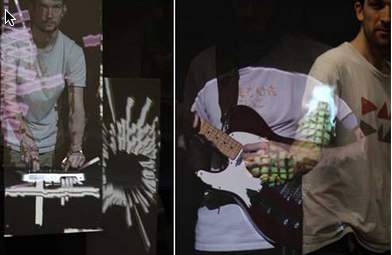
Virtual content being displayed on stage and overlapping the instruments and the performers (credit: Florent Berthaut)
University of Bristol researchers have developed a new augmented-reality display that allows audiences to better appreciate digital musical performances
The research team from the University’s Bristol Interaction and Graphics (BIG) has been investigating how to improve the audiences experience during performances with digital musical instruments, which are played by manipulating buttons, mich, and various other controls.
Funded by a Marie Curie grant, the IXMI project, led by Florent Berthaut, aims to show the mechanisms of digital instruments, using 3D virtual content and mixed-reality displays.
Their first creation Reflets is a mixed-reality environment that allows for displaying virtual content anywhere on stage, even overlapping the instruments or the performers. It does not require the audience to wear glasses or to use their smartphones to see the augmentations, which remain consistent at all positions in the audience.
Reflets relies on combining the audience and stage spaces using reflective transparent surfaces and having the audience and performers reveal the virtual content by intersecting it with their bodies or physical props.
The research is being presented at the 15th International Conference on New Interfaces for Musical Expression (NIME) in the U.S. [May 31 -- June 3].
BristolIG | Ixmi: Improving the experience of the audience with digital instruments
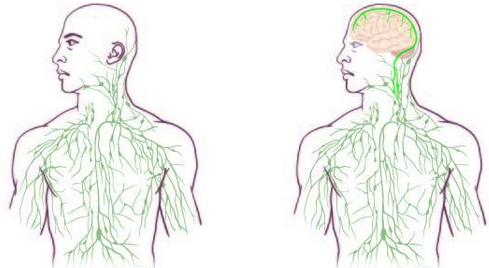
Maps of the lymphatic system: old (left) and updated (right) (credit: University of Virginia Health System)
Overrturning decades of textbook teaching, researchers at the University of Virginia School of Medicine have discovered that the brain is directly connected to the immune system by vessels previously thought not to exist.
The finding could have significant implications for the study and treatment of neurological diseases ranging from autism to Alzheimer’s disease to multiple sclerosis.
“It changes entirely the way we perceive the neuro-immune interaction. We always perceived it before as something esoteric that can’t be studied. But now we can ask mechanistic questions.” said Jonathan Kipnis, PhD, professor in the UVA Department of Neuroscience and director of UVA’s Center for Brain Immunology and Glia (BIG).
“We believe that for every neurological disease that has an immune component to it, these vessels may play a major role,” Kipnis said. “Hard to imagine that these vessels would not be involved in a [neurological] disease with an immune component.”
“Very Well Hidden”
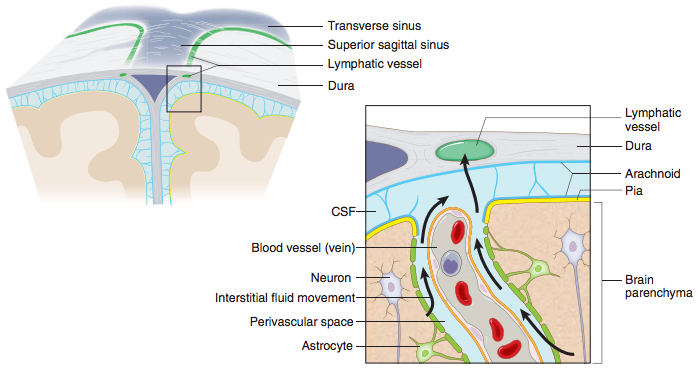
A schematic representation of a connection between the glymphatic system, responsible for collecting of the interstitial fluids from within the central nervous system parenchyma to cerebrospinal fluid, and the newly identified meningeal lymphatic vessels (credit: Antoine Louveau et al./Nature)
The discovery was made possible by the work of Antoine Louveau, PhD, a postdoctoral fellow in Kipnis’ lab, who noticed vessel-like patterns in the distribution of immune cells on his slides of a mouse’s meninges — the membranes covering the brain.
So how did the brain’s lymphatic vessels manage to escape notice all this time? Kipnis described them as “very well hidden” — they follow a major blood vessel down into the sinuses, an area difficult to image. “It’s so close to the blood vessel, you just miss it… if you don’t know what you’re after.”
Alzheimer’s, Autism, MS and Beyond
The unexpected presence of the lymphatic vessels raises a tremendous number of questions that now need answers, both about the workings of the brain and the diseases that plague it.
For example: “In Alzheimer’s, there are accumulations of big protein chunks in the brain,” Kipnis said. “We think they may be accumulating in the brain because they’re not being efficiently removed by these vessels.”
He noted that the vessels look different with age, so the role they play in aging is another avenue to explore. And there’s an enormous array of other neurological diseases, from autism to multiple sclerosis, that must be reconsidered in light of the presence of something science insisted did not exist.
The findings have been published online by the journal Nature and will appear in a forthcoming print edition.
Abstract of Structural and functional features of central nervous system lymphatic vessels
One of the characteristics of the central nervous system is the lack of a classical lymphatic drainage system. Although it is now accepted that the central nervous system undergoes constant immune surveillance that takes place within the meningeal compartment1, 2, 3, the mechanisms governing the entrance and exit of immune cells from the central nervous system remain poorly understood4, 5, 6. In searching for T-cell gateways into and out of the meninges, we discovered functional lymphatic vessels lining the dural sinuses. These structures express all of the molecular hallmarks of lymphatic endothelial cells, are able to carry both fluid and immune cells from the cerebrospinal fluid, and are connected to the deep cervical lymph nodes. The unique location of these vessels may have impeded their discovery to date, thereby contributing to the long-held concept of the absence of lymphatic vasculature in the central nervous system. The discovery of the central nervous system lymphatic system may call for a reassessment of basic assumptions in neuroimmunology and sheds new light on the aetiology of neuroinflammatory and neurodegenerative diseases associated with immune system dysfunction.

(credit: AMC)
AMC announced today HUMANS, an eight-part TV science-fiction thriller that takes place in a parallel present featuring sophisticated, life-like robot servants and caregivers called Synths (personal synthetics).
The show explores conflicts as the lines between humans and machines become increasingly blurred.
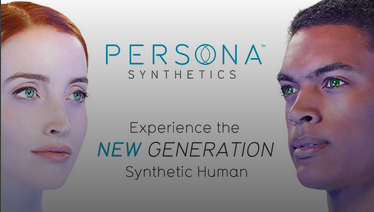
The upgrade you’ve been waiting for is here (credit: AMC)
The series is set to premiere on AMC June 28 with HUMANS 101: The Hawkins family buys a Synth, Anita. But are they in danger from this machine and the young man Leo who seems desperate to find her?
The show features Oscar-winning actor William Hurt, Katherine Parkinson (The IT Crowd), Colin Morgan (Merlin), and Gemma Chan (Secret Diary of a Call Girl).
AMC