
A geneticist and a brewery in Nova Scotia have teamed up to breed a mildew-resistant version of their favorite hops.
The post Mmm, Beer: Brewers Are on a Quest to Breed a Better Hop appeared first on WIRED.

Science and reality
A geneticist and a brewery in Nova Scotia have teamed up to breed a mildew-resistant version of their favorite hops.
The post Mmm, Beer: Brewers Are on a Quest to Breed a Better Hop appeared first on WIRED.

Yesterday on the ISS, Expedition 44 crew members dined on their first meal of space-grown romaine lettuce.
The post Those Veggies Grown on the ISS Get Humans Closer to Mars appeared first on WIRED.

A parasite in cat poop might cause schizophrenia, but only if you're a baby. And even then, it's a maybe.
The post Big Question: Is My Cat Making Me Crazy? appeared first on WIRED.


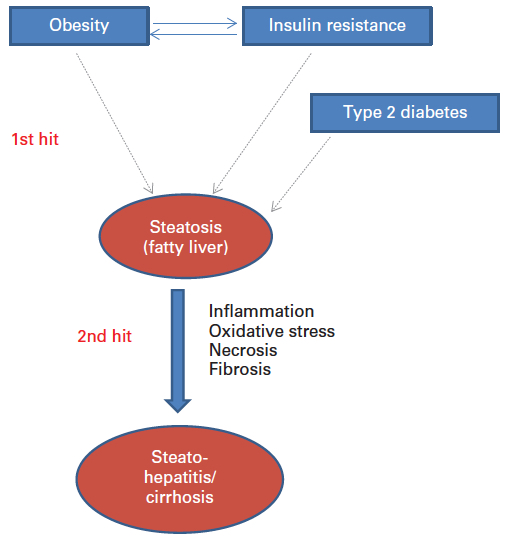
Two-hit model of non-alcoholic fatty liver disease (credit: ILSI Europe)
In an open-access paper in the British Journal of Nutrition, a coalition of 17 experts explain how elevated unresolved chronic inflammation is involved a range of chronic diseases, and how nutrition influences inflammatory processes and helps reduce chronic risk of diseases.
According to the authors, “the nutrition status of the individual with for example a deficiency or excess of certain micronutrients (e.g. folate, vitamin B12, vitamin B6, vitamin 1, vitamin E, zinc) may lead to an ineffective or excessive inflammatory response.
“Studies have showed that high consumption of fat and glucose may induce post-prandial inflammation (manifesting itself after the consumption of a meal), which may have consequences for the development of diabetes and cardiovascular diseases. The Western-style diet, rich in fat and simple sugars but often poor in specific micronutrients, is linked to the increased prevalence of diseases with strong immunogical and autoimmune components, including allergies, food allergies, atopic dermatitis and obesity.”
“Inflammation acts as both a friend and foe, being essential in metabolic regulation, with unresolved low-grade chronic inflammation being a pathological feature of a wide range of chronic conditions including the metabolic syndrome and cardiovascular diseases,” commented a co-author, Prof. Anne Marie Minihane, University of East Anglia (UK).
Abstract of Low-grade inflammation, diet composition and health: current research evidence and its translation
The importance of chronic low-grade inflammation in the pathology of numerous age-related chronic conditions is now clear. An unresolved inflammatory response is likely to be involved from the early stages of disease development. The present position paper is the most recent in a series produced by the International Life Sciences Institute’s European Branch (ILSI Europe). It is co-authored by the speakers from a 2013 workshop led by the Obesity and Diabetes Task Force entitled ‘Low-grade inflammation, a high-grade challenge: biomarkers and modulation by dietary strategies’. The latest research in the areas of acute and chronic inflammation and cardiometabolic, gut and cognitive health is presented along with the cellular and molecular mechanisms underlying inflammation–health/disease associations. The evidence relating diet composition and early-life nutrition to inflammatory status is reviewed. Human epidemiological and intervention data are thus far heavily reliant on the measurement of inflammatory markers in the circulation, and in particular cytokines in the fasting state, which are recognised as an insensitive and highly variable index of tissue inflammation. Potential novel kinetic and integrated approaches to capture inflammatory status in humans are discussed. Such approaches are likely to provide a more discriminating means of quantifying inflammation–health/disease associations, and the ability of diet to positively modulate inflammation and provide the much needed evidence to develop research portfolios that will inform new product development and associated health claims.
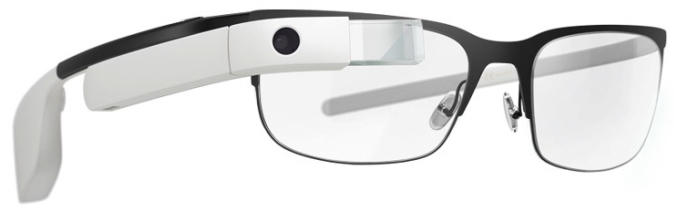
(credit: Google)
Researchers at the University of Massachusetts Medical School have found that Google Glass — presumably the Enterprise Edition — could effectively extend bedside toxicology consults to distant health care facilities such as community and rural hospitals to diagnose and manage poisoned patients, according to a paper in the Journal of Medical Toxicology.
“In the present era of value-based care, a toxicology service using hands-free devices, such as Google Glass, could conceivably expand its coverage area and enhance patient care, while potentially decreasing overall treatment costs,” said Peter R. Chai, MD, toxicology fellow at UMass Medical School. “Our work shows that the data transmitted by Google Glass can be used to supplement traditional telephone consults, validate bedside physical exams, and diagnose and manage patients.”
Traditional telemedicine devices usually consist of large desktop or laptop computers affixed to a big cart that has to be rolled from exam room to exam room. “Glass is positioned perfectly as an emergency medicine telemedical device. Its small, hands free and portable, so you can bring it right to the bedside and have a real-time specialist with you when you need one,” he said.
In the study, emergency medicine residents at UMass Memorial Medical Center performed 18 toxicology consults with Google Glass. ER physicians wearing Google Glass evaluated the patients at bedside while a secure video feed was sent to the toxicology supervising consultant. The supervising consultant then guided the resident through text messages displayed on the Glass. Consultants also obtained static photos of medication bottles, electrocardiograms (EKG) and other pertinent information at the discretion of the supervisor.
As a result of using Google Glass, consulting toxicologists reported being more confident in diagnosing specific toxidromes. Additional data collected showed that the use of Google Glass also changed management of patient care in more than half of the cases seen. Specifically, six of those patients received antidotes they otherwise would not have. Overall, 89 percent of the cases seen with Glass were considered successful by the consulting toxicologist.
Google currently lists several companies involved in the medical field as Glass At Work partners, such as Advanced Medical Applications, which specializes in “solutions in telemedicine, live-surgery demonstrations, and remote medical training.”
According to 9to5Google sources, the Google Glass Enterprise Edition will feature “a robust hinge mechanism that allows the computer and battery modules to fold down like a regular pair of glasses, and a hinge for folding down the left side of the band as well.” It also “includes a larger prism display for a better viewing experience, an Intel Atom processor that brings better performance, moderately improved battery life, and better heat management.”
Abstract of The Feasibility and Acceptability of Google Glass for Teletoxicology Consults
Teletoxicology offers the potential for toxicologists to assist in providing medical care at remote locations, via remote, interactive augmented audiovisual technology. This study examined the feasibility of using Google Glass, a head-mounted device that incorporates a webcam, viewing prism, and wireless connectivity, to assess the poisoned patient by a medical toxicology consult staff. Emergency medicine residents (resident toxicology consultants) rotating on the toxicology service wore Glass during bedside evaluation of poisoned patients; Glass transmitted real-time video of patients’ physical examination findings to toxicology fellows and attendings (supervisory consultants), who reviewed these findings. We evaluated the usability (e.g., quality of connectivity and video feeds) of Glass by supervisory consultants, as well as attitudes towards use of Glass. Resident toxicology consultants and supervisory consultants completed 18 consults through Glass. Toxicologists viewing the video stream found the quality of audio and visual transmission usable in 89 % of cases. Toxicologists reported their management of the patient changed after viewing the patient through Glass in 56 % of cases. Based on findings obtained through Glass, toxicologists recommended specific antidotes in six cases. Head-mounted devices like Google Glass may be effective tools for real-time teletoxicology consultation.
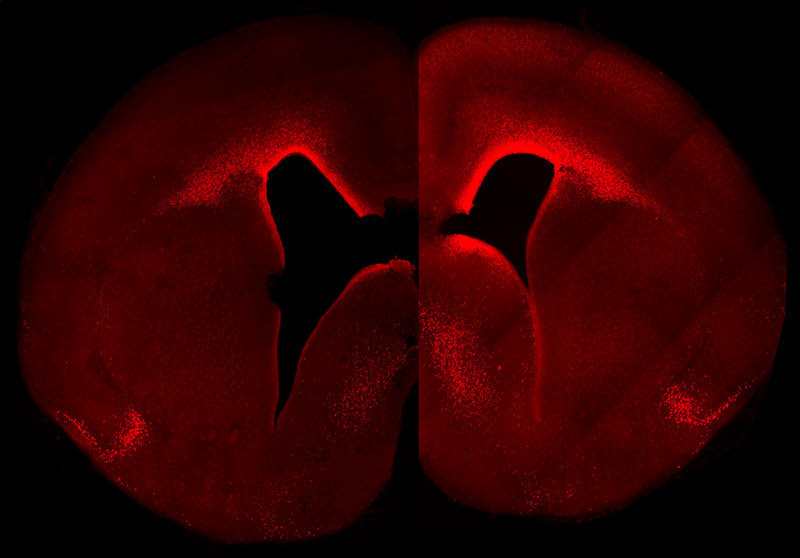
The left-brain hemisphere of a normal mouse shows the normal level and cellular distribution of the Pax6 gene expression in the developing neocortex. The right-brain hemisphere shows a sustained, primate-like Pax6 expression pattern in the neocortex of a double transgenic mouse embryo. These animals have more Pax6-positive progenitor cells and a higher Pax6 expression level in the germinal layer close to the ventricle in the right hemisphere. (credit: © MPI of Molecular Cell Biology & Genetics)
Researchers at the Max Planck Institute of Molecular Cell Biology and Genetics have created a transgenic mouse in which a gene called Pax6, during embryonic development, is highly expressed in a specific group of brain cortical cells called neural progenitor stem cells (the cells that generate all cells that make up the brain).
The resulting mouse brain generated more neurons than normal and exhibited primate-like features — notably those in the top layer, a characteristic feature of an expanded neocortex.
Mouse basal progenitors, in contrast to human, do not express Pax6. In humans, basal progenitors can undergo multiple rounds of cell division, thereby substantially increasing neuron number and ultimately the size of the neocortex.
“The evolutionary expansion of the neocortex is a hallmark of species with higher cognitive functions,” explains Wieland Huttner, the research group leader and director at the MPI-CBG. “Our findings contribute to our understanding of the molecular mechanisms underlying this expansion. While the findings demonstrate how altering the expression of a single key gene can make a big difference to brain development, a future challenge will be to obtain a comprehensive, integrated view of all the molecular changes that made our brains big.”
The study was published in an open-access paper in the journal PLOS Biology.
The paper, reassuringly, did not mention plans to create a transgenic genius cat in case the transgenic mouse gene escaped the laboratory.
Abstract of Sustained Pax6 Expression Generates Primate-like Basal Radial Glia in Developing Mouse Neocortex
The evolutionary expansion of the neocortex in mammals has been linked to enlargement of the subventricular zone (SVZ) and increased proliferative capacity of basal progenitors (BPs), notably basal radial glia (bRG). The transcription factor Pax6 is known to be highly expressed in primate, but not mouse, BPs. Here, we demonstrate that sustaining Pax6 expression selectively in BP-genic apical radial glia (aRG) and their BP progeny of embryonic mouse neocortex suffices to induce primate-like progenitor behaviour. Specifically, we conditionally expressed Pax6 by in utero electroporation using a novel, Tis21–CreERT2 mouse line. This expression altered aRG cleavage plane orientation to promote bRG generation, increased cell-cycle re-entry of BPs, and ultimately increased upper-layer neuron production. Upper-layer neuron production was also increased in double-transgenic mouse embryos with sustained Pax6 expression in the neurogenic lineage. Strikingly, increased BPs existed not only in the SVZ but also in the intermediate zone of the neocortex of these double-transgenic mouse embryos. In mutant mouse embryos lacking functional Pax6, the proportion of bRG among BPs was reduced. Our data identify specific Pax6 effects in BPs and imply that sustaining this Pax6 function in BPs could be a key aspect of SVZ enlargement and, consequently, the evolutionary expansion of the neocortex.
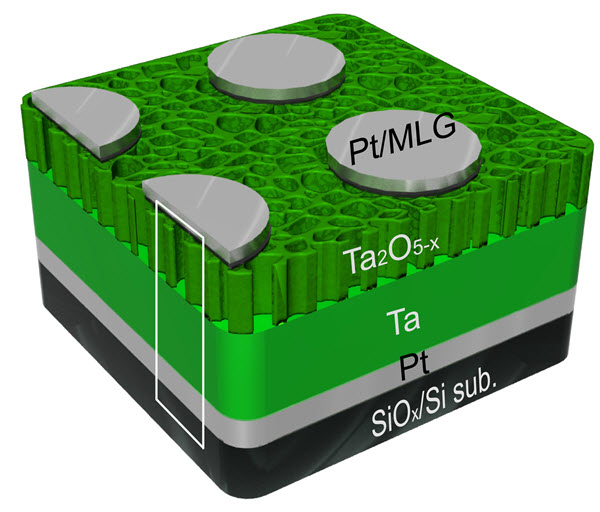
A schematic shows the layered structure of new type of solid-state memory developed at Rice University (credit: Tour Group/Rice University)
Scientists in the Rice University lab of chemist James Tour have created a solid-state memory technology that allows for high-density 162 gigabits nonvolatile storage, much higher than other oxide-based memory systems under investigation by scientists. (Eight bits equal one byte; a 162-gigabit unit would store about 20 gigabytes of information.)
Applying voltage to a 250-nanometer-thick sandwich of graphene, tantalum, nanoporous tantalum oxide (an insulator), and platinum creates addressable bits where the layers meet. Control voltages shift oxygen ions and vacancies to switch the bits between ones and zeroes.
Like the Tour lab’s previous discovery of silicon oxide memories, the new devices require only two electrodes per circuit, making them simpler than present-day flash memories, which use three. “This is a new way to make ultradense, nonvolatile computer memory,” Tour said.
Nonvolatile random-access memories, such as such as flash memory in smartphones and tablets, hold their data even when the power is off, unlike volatile random-access computer memories (in most computers), which lose their contents when the machine is shut down.
Modern memory chips have many requirements: They have to read and write data at high speed and hold as much as possible. They must also be durable and show good retention of that data while using minimal power. These are provided by Rice’s new design, which requires only one hundredth the amount of energy required with present devices, Tour says.
“This tantalum memory is based on two-terminal systems, so it’s all set for 3-D memory stacks,” he said. “And it doesn’t even need diodes or selectors, making it one of the easiest ultradense memories to construct. This will be a real competitor for the growing memory demands in high-definition video storage and server arrays.”

A layered structure of tantalum, tantalum oxide, multilayer graphene, and platinum is the basis for a new type of nonvolatile memory (credit: Tour Group/Rice University)
In making the material, the researchers found the tantalum oxide gradually loses oxygen ions, changing from an oxygen-rich, nanoporous semiconductor at the top to oxygen-poor at the bottom. Where the oxygen disappears completely, it becomes pure tantalum, a metal. The graphene does double duty as a barrier that keeps platinum from migrating into the tantalum oxide and causing a short circuit.*
Rice University | Tantalum oxide memory: Slices taken from a tantalum oxide-based memory developed at Rice University show the partially interconnected and randomly distributed internal pores in the material.
Tour said tantalum oxide memories can be fabricated at room temperature. He noted the control voltage that writes and rewrites the bits is adjustable, which allows a wide range of switching characteristics.
(As the researchers note in a paper in the journal Nano Letters, nonvolatile resistive oxide-based memories can also offer faster switching speed. That suggests that tantalum oxide memories might one day further improve MIT’s “BlueDBM” solution for improved handling of big data by making nonvolatile memory more efficient, as described on KurzweilAI last week.)
The remaining hurdles to commercialization of tantalum oxide memories include the fabrication of a dense enough crossbar device to address individual bits and a way to control the size of the nanopores.
The research is described online in the American Chemical Society Researchers at Korea University-Korea Institute of Science and Technology and University of Massachusetts, Amherst where also involved.
Tour is the T.T. and W.F. Chao Chair in Chemistry as well as a professor of materials science and nanoengineering and of computer science and a member of Rice’s Richard E. Smalley Institute for Nanoscale Science and Technology.
Rice University | Tantalum oxide memory 2
* The researchers determined three related factors give the memories their unique switching ability:
Abstract of Three-Dimensional Networked Nanoporous Ta2O5–x Memory System for Ultrahigh Density Storage
Oxide-based resistive memory systems have high near-term promise for use in nonvolatile memory. Here we introduce a memory system employing a three-dimensional (3D) networked nanoporous (NP) Ta2O5–x structure and graphene for ultrahigh density storage. The devices exhibit a self-embedded highly nonlinear I–V switching behavior with an extremely low leakage current (on the order of pA) and good endurance. Calculations indicated that this memory architecture could be scaled up to a ∼162 Gbit crossbar array without the need for selectors or diodes normally used in crossbar arrays. In addition, we demonstrate that the voltage point for a minimum current is systematically controlled by the applied set voltage, thereby offering a broad range of switching characteristics. The potential switching mechanism is suggested based upon the transformation from Schottky to Ohmic-like contacts, and vice versa, depending on the movement of oxygen vacancies at the interfaces induced by the voltage polarity, and the formation of oxygen ions in the pores by the electric field.

A short earthquake swarm hit the Waimangu Valley in New Zealand, reminding us of its volcanic nature.
The post Swarm of Tremors in New Zealand Means Magma May Be Stirring appeared first on WIRED.