
Common chemicals may act together to increase cancer risk, international study finds

Disruptive potential of environmental exposures to mixtures of chemicals (credit: William H.Goodson III et al./Carcinogenesis)

Common environmental chemicals assumed to be safe at low doses may act separately or together to disrupt human tissues in ways that eventually lead to cancer, according to a task force of almost 200 scientists from 28 countries.

In a nearly three-year investigation of the state of knowledge about environmentally influenced cancers, the scientists studied low-dose effects of 85 common chemicals not considered to be carcinogenic to humans.

Common chemicals

The researchers reviewed the actions of these chemicals against a long list of mechanisms that are important for cancer development. Drawing on hundreds of laboratory studies, large databases of cancer information, and models that predict cancer development, they compared the chemicals’ biological activity patterns to 11 known cancer “hallmarks” – distinctive patterns of cellular and genetic disruption associated with early development of tumors.

The chemicals included bisphenol A (BPA), used in plastic food and beverage containers; rotenone, a broad-spectrum insecticide; paraquat, an agricultural herbicide; and triclosan, an antibacterial agent used in soaps and cosmetics.

In their survey, the researchers learned that 50 of the 85 chemicals had been shown to disrupt functioning of cells in ways that correlated with known early patterns of cancer, even at the low, presumably benign levels at which most people are exposed.

For 13 of them, the researchers found evidence of a dose-response threshold — a level of exposure at which a chemical is considered toxic by regulators. For 22, there was no toxicity information at all.

Synergistic effects over time

“Our findings also suggest these molecules may be acting in synergy to increase cancer activity,” said William Bisson, an assistant professor and cancer researcher at Oregon State University and a team leader on the study. For example, EDTA, a metal-ion-binding compound used in manufacturing and medicine, interferes with the body’s repair of damaged genes.

“EDTA doesn’t cause genetic mutations itself,” said Bisson, “but if you’re exposed to it along with some substance that is mutagenic, it enhances the effect because it disrupts DNA repair, a key layer of cancer defense.”

Bisson said the main purpose of this study was to highlight gaps in knowledge of environmentally influenced cancers and to set forth a research agenda for the next few years. He added that more research is still necessary to assess early exposure and to understand early stages of cancer development.

The study is part of the Halifax Project, sponsored by the Canadian nonprofit organization Getting to Know Cancer. The organization’s mission is to advance scientific knowledge about cancer linked to environmental exposures. The team’s findings are published in an open-access paper in a special issue of the journal Carcinogenesis.

Traditional risk assessment has historically focused on a quest for single chemicals and single modes of action — approaches that may underestimate cancer risk, said Bisson, an expert on computational chemical genomics (the modeling of biochemical molecular interactions in cancer processes). This study takes a different tack, examining the interplay over time of independent molecular processes triggered by low-dose exposures to chemicals.

“Cancer is a disease of diseases,” said Bisson. “It follows multi-step development patterns, and in most cases it has a long latency period. It has to be tackled from an angle that considers the complexity of these patterns.

“A better understanding of what’s driving things to the point where they get uncontrollable will be key for the development of effective strategies for prevention and early detection.”


Abstract of Assessing the carcinogenic potential of low-dose exposures to chemical mixtures in the environment: the challenge ahead

Lifestyle factors are responsible for a considerable portion of cancer incidence worldwide, but credible estimates from the World Health Organization and the International Agency for Research on Cancer (IARC) suggest that the fraction of cancers attributable to toxic environmental exposures is between 7% and 19%. To explore the hypothesis that low-dose exposures to mixtures of chemicals in the environment may be combining to contribute to environmental carcinogenesis, we reviewed 11 hallmark phenotypes of cancer, multiple priority target sites for disruption in each area and prototypical chemical disruptors for all targets, this included dose-response characterizations, evidence of low-dose effects and cross-hallmark effects for all targets and chemicals. In total, 85 examples of chemicals were reviewed for actions on key pathways/mechanisms related to carcinogenesis. Only 15% (13/85) were found to have evidence of a dose-response threshold, whereas 59% (50/85) exerted low-dose effects. No dose-response information was found for the remaining 26% (22/85). Our analysis suggests that the cumulative effects of individual (non-carcinogenic) chemicals acting on different pathways, and a variety of related systems, organs, tissues and cells could plausibly conspire to produce carcinogenic synergies. Additional basic research on carcinogenesis and research focused on low-dose effects of chemical mixtures needs to be rigorously pursued before the merits of this hypothesis can be further advanced. However, the structure of the World Health Organization International Programme on Chemical Safety ‘Mode of Action’ framework should be revisited as it has inherent weaknesses that are not fully aligned with our current understanding of cancer biology.
Deep Genomics launches, uniting deep learning and genome biology

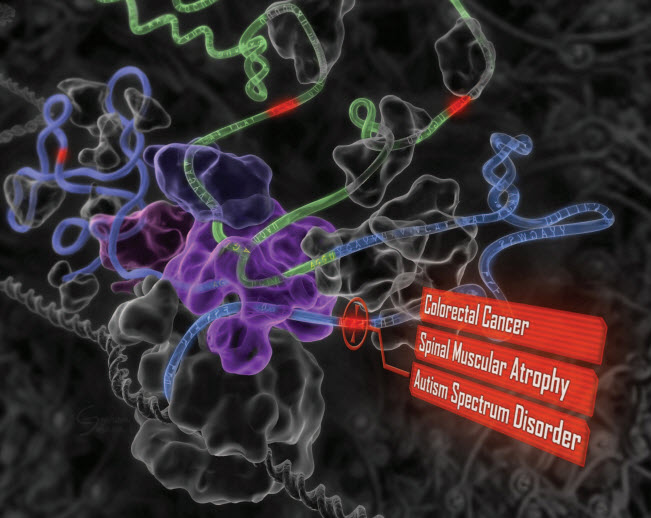
“Deep learning” reveals the genetic origins of disease. A computational system mimics the biology of RNA splicing by correlating DNA elements with splicing levels in healthy human tissues. The system can scan DNA and identify damaging genetic variants, including those deep within introns.This procedure has led to insights into the genetics of autism, cancers, and spinal muscular atrophy. (credit: Hui Y. Xiong et al./Science)

Deep Genomics, a University of Toronto spinoff, launched today (July 22), combining deep learning and artificial intelligence with the study of the human genome. The company is building on more than a decade of research and expertise in both fields.

Using deep learning allows Deep Genomics to predict the consequences of genomic alteration on various cell mechanisms to make life-changing decisions, potentially via personalized medicine treatment, the researchers say.

“Our vision is to change the course of genomic medicine and help save lives by determining smarter treatment options,” says Brendan Frey, the company’s president and CEO, a Fellow of the Canadian Institute for Advanced Research, and a Professor at the University of Toronto.

SPIDEX, a Google for DNA mutation effects

Professor Brendan Frey (center-right) and colleagues at the University of Toronto Faculty of Applied Science & Engineering (credit: Roberta Baker/ U of T Engineering)

The scientific community has spent decades searching for mutations within specific genes that can be connected to disease, such as the BRCA-1 and BRCA-2 genes for breast cancer. But there is a vast amount of mutations and combinations of mutations that have neither been observed nor studied, posing a challenge for diagnostics and therapeutics today.

“We envision a future where computers are trusted to predict the outcome of laboratory experiments and treatments, long before anyone picks up a test tube. Our first step will be to open up a genome-wide database of over 300 million potentially disease-causing variants, most of which are in regions of the genome that can’t be examined using other methods.”

Deep Genomics’ first product, called SPIDEX, provides information about how these DNA mutations may alter splicing in the cell, a process that is crucial for normal development. It also connects the dots between a variant or mutation of unknown significance and a variant that has been linked to a disease to determine its level of danger.

Because errant splicing is behind many diseases and disorders, including cancers and autism spectrum disorder, SPIDEX has immediate and practical importance for genetic testing and pharmaceutical development. The science validating the SPIDEX tool was described in the January 9, 2015 issue of the journal Science.

Labs will send the mutations they’ve collected to Deep Genomics, and the company will use their proprietary deep learning system, which includes SPIDEX, to “read” the genome and assess how likely the mutation is to cause a problem. SPIDEX can also connect the dots between a variant of unknown significance and a variant that has been linked to disease.

The company plans to further grow its team of machine learning, genome biology, and computational biology experts, and continue to invent new deep learning technologies and work with diagnosticians and biologists to understand the many complex ways that cells interpret DNA.

The company’s scientific advisory board includes Yann LeCun, Director, Facebook AI Research; Stephen Scherer, Director, The Center for Applied Genomics; and Jordan Lerner-Ellis, Director, Molecular Diagnostics at Mount Sinai Hospital.

More information: www.deepgenomics.com.


Abstract of The human splicing code reveals new insights into the genetic determinants of disease

To facilitate precision medicine and whole-genome annotation, we developed a machine-learning technique that scores how strongly genetic variants affect RNA splicing, whose alteration contributes to many diseases. Analysis of more than 650,000 intronic and exonic variants revealed widespread patterns of mutation-driven aberrant splicing. Intronic disease mutations that are more than 30 nucleotides from any splice site alter splicing nine times as often as common variants, and missense exonic disease mutations that have the least impact on protein function are five times as likely as others to alter splicing. We detected tens of thousands of disease-causing mutations, including those involved in cancers and spinal muscular atrophy. Examination of intronic and exonic variants found using whole-genome sequencing of individuals with autism revealed misspliced genes with neurodevelopmental phenotypes. Our approach provides evidence for causal variants and should enable new discoveries in precision medicine.

Korean researchers grow wafer-scale graphene on a silicon substrate

Wafer-scale (4 inch in diameter) synthesis of multi-layer graphene using high-temperature carbon ion implantation on nickel/SiO2/silicon (credit: J.Kim/Korea University, Korea)

Taking graphene a step closer to realistic commercial applications in silicon microelectronics, Korea University researchers have developed a simple microelectronics-compatible method for growing multi-layer graphene on a high-quality, wafer-scale (four inches in diameter) silicon substrate.

The method is based on the ion implantation technique — a process in which ions are accelerated under an electrical field and smashed into a semiconductor. The impacting ions change the physical, chemical, or electrical properties of the semiconductor.

Because of its high conductivity, “graphene is a potential contact electrode and an interconnection material linking semiconductor devices to form the desired electrical circuits, explained Jihyun Kim, the team leader and a professor in the Department of Chemical and Biological Engineering at Korea University.

However, “to deposit large-area graphene that is free of wrinkles, tears, and residues on silicon wafers requires low temperatures. That can’t be achieved with conventional chemical vapor deposition, which requires a high growth temperature — above 1,000 degrees Celsius.” That can cause strains, metal spiking, cracks, wrinkles, and contaminants from diffusion of dopants.

“Our synthesis method is controllable and scalable, allowing us to obtain graphene as large as the size of the silicon wafer,” Kim said. The researchers’ next step is to further lower the temperature in the synthesis process and to control the thickness of the graphene for manufacturing production.

The research is described in an open-access paper published this week in the journal Applied Physics Letters.


Abstract of Wafer-scale synthesis of multi-layer graphene by high-temperature carbon ion implantation

We report on the synthesis of wafer-scale (4 in. in diameter) high-quality multi-layer graphene using high-temperature carbon ion implantation on thin Ni films on a substrate of SiO2/Si.Carbon ions were bombarded at 20 keV and a dose of 1 × 1015 cm−2 onto the surface of the Ni/SiO2/Si substrate at a temperature of 500 °C. This was followed by high-temperature activation annealing (600–900 °C) to form a sp2-bonded honeycomb structure. The effects of post-implantation activation annealing conditions were systematically investigated by micro-Raman spectroscopy and transmission electron microscopy. Carbon ion implantation at elevated temperatures allowed a lower activation annealing temperature for fabricating large-area graphene. Our results indicate that carbon-ion implantation provides a facile and direct route for integrating graphene with Si microelectronics.

Deep neural network program recognizes sketches more accurately than a human

The Sketch-a-Net program successfully identified a seagull, pigeon, flying bird and standing bird better than humans (credit: QMUL, Mathias Eitz, James Hays and Marc Alexa)

The first computer program that can recognize hand-drawn sketches better than humans has been developed by researchers from Queen Mary University of London.

Known as Sketch-a-Net, the program correctly identified the subject of sketches 74.9 per cent of the time compared to humans that only managed a success rate of 73.1 per cent.

As sketching becomes more relevant with the increase in the use of touchscreens, it could lead to new ways to interact with computers. Touchscreens could understand what you are drawing enabling you to retrieve a specific image by drawing it with your fingers, which is more natural than keyword searches for finding items such as furniture or fashion accessories.

The improvement could also aid police forensics when an artist’s impression of a criminal needs to be matched to a mugshot or CCTV database.

The research also showed that the program performed better at determining finer details in sketches. For example, it was able to successfully distinguish “seagull,” “flying-bird,” “standing-bird” and “pigeon” with 42.5 per cent accuracy compared to humans, who only achieved 24.8 per cent.

Sketch-a-Net is a “deep neural network” program, designed to emulate the processing of the human brain. It is particularly successful because it accommodates the unique characteristics of sketches, particularly the order the strokes were drawn. This was information that was previously ignored but is especially important for understanding drawings on touchscreens.


Abstract of Sketch-a-Net that Beats Humans

We propose a multi-scale multi-channel deep neural network framework that, for the first time, yields sketch recognition performance surpassing that of humans. Our superior performance is a result of explicitly embedding the unique characteristics of sketches in our model: (i) a network architecture designed for sketch rather than natural photo statistics, (ii) a multi-channel generalisation that encodes sequential ordering in the sketching process, and (iii) a multi-scale network ensemble with joint Bayesian fusion that accounts for the different levels of abstraction exhibited in free-hand sketches. We show that state-of-the-art deep networks specifically engineered for photos of natural objects fail to perform well on sketch recognition, regardless whether they are trained using photo or sketch. Our network on the other hand not only delivers the best performance on the largest human sketch dataset to date, but also is small in size making efficient training possible using just CPUs.

Metal foams found to excel in shielding X-rays, gamma rays, neutron radiation

Lightweight composite metal foams like this one have been found effective at blocking X-rays, gamma rays and neutron radiation, and are capable of absorbing the energy of high impact collisions — holding promise for use in nuclear safety, space exploration, and medical technology applications (credit: Afsaneh Rabiei, North Carolina State University)

North Carolina State University researchers have found that lightweight composite metal foams they had developed are effective at blocking X-rays, gamma rays, and neutron radiation, and are capable of absorbing the energy of high-impact collisions. The finding holds promise for use in nuclear power plants, space exploration, and CT-scanner shielding.

“This work means there’s an opportunity to use composite metal foam to develop safer systems for transporting nuclear waste, more efficient designs for spacecraft and nuclear structures, and new shielding for use in CT scanners,” says

Afsaneh Rabiei, a professor of mechanical and aerospace engineering at NC State, first developed the strong, lightweight metal foam made of steel, tungsten, and and vanadium for use in transportation and military applications. But she wanted to determine whether the foam could be used for nuclear or space exploration applications — could it provide structural support and protect against high impacts while providing shielding against various forms of radiation?

So she and her colleagues conducted multiple tests to see how effective it was at blocking X-rays, gamma rays, and neutron radiation. She then compared the material’s performance to the performance of bulk materials that are currently used in shielding applications. The comparison was made using samples of the same “areal” density – meaning that each sample had the same weight, but varied in volume.

Better than lead and non-toxic

The researchers found that the high-Z foam was comparable to bulk materials at blocking high-energy gamma rays, but was much better than bulk materials — even bulk steel — at blocking low-energy gamma rays; it outperformed other materials at blocking neutron radiation; and was better than most materials at blocking X-rays. It was not quite as effective as lead, but with the advantages of  being lightweight and more environmentally friendly.

“However, we are working to modify the composition of the metal foam to be even more effective than lead at blocking X-rays, and our early results are promising,” Rabiei says. “And our foams have the advantage of being non-toxic, which means that they are easier to manufacture and recycle. In addition, the extraordinary mechanical and thermal properties of composite metal foams, and their energy absorption capabilities, make the material a good candidate for various nuclear structural applications.”

The research paper was published in Radiation Physics and Chemistry. It was supported by DOE’s Office of Nuclear Energy under Nuclear Energy University Program.


Abstract of Attenuation efficiency of X-ray and comparison to gamma ray and neutrons in composite metal foams

Steel-steel composite metal foams (S-S CMFs) and Aluminum-steel composite metal foams (Al-S CMFs) with various sphere sizes and matrix materials were manufactured and investigated for nuclear and radiation environments applications. 316 L stainless steel, high-speed T15 steel and aluminum materials were used as the matrix material together with 2, 4 and 5.2 mm steel hollow spheres to manufacture various types of composite metal foams (CMFs). High-speed T15 steel is selected due to its high tungsten and vanadium concentration (both high-Z elements) to further improve the shielding efficiency of CMFs. This new type of S-S CMF is called High-Z steel-steel composite metal foam (HZ S-S CMF). Radiation shielding efficiency of all types of CMFs was explored for the attenuation of X-ray, gamma ray and neutron. The experimental results were compared with pure lead and Aluminum A356, and verified theoretically through XCOM and Monte Carlo Z-particle Transport Code (MCNP). It was observed that the radiation shielding effectiveness of CMFs is relatively independent of sphere sizes as long as the ratio of sphere-wall thickness to its outer-diameter stays constant. However, the smaller spheres seem to be more efficient in general due to the fine fluctuation in the gray value profile of their 2D Micro-CT images. S-S CMFs and Al-S CMFs are respectively 275% and 145% more effective for X-ray attenuation than Aluminum A356. Compared to pure lead, CMFs show adequate attenuation with additional advantages of being lightweight and more environmentally friendly. The mechanical performance of HZ S-S CMFs under quasi-static compression was compared to that of other classes of S-S CMF. It is observed that the addition of high-Z elements to the matrix of CMFs improved their shielding against X-rays, low energy gamma rays and neutrons, while maintained their low density, high mechanical properties and high-energy absorption capability.

Russian billionaire, Hawking announce $100 million search for ET

Green Bank Telescope (credit: Geremia/Wikimedia Commons)

Russian billionaire Yuri Milner, Stephen Hawking, Martin Rees, Frank Drake and others announced at The Royal Society today $100 million funding for Breakthrough Listen — the “most powerful, comprehensive, and intensive scientific search ever undertaken for signs of intelligent life beyond Earth.”

They also announced $1 million prize funding for Breakthrough Message, a competition to generate messages representing humanity and planet Earth.

“It’s time to commit to finding the answer to search for life beyond Earth,” said Hawking. “We are live, we are intelligent, we must know … if we are alone in the dark.”

The search will be done at two of the largest radio telescopes, the 100 Meter Robert C. Byrd Green Bank Telescope in West Virginia, the world’s largest steerable radio telescope; and the 64-metre diameter Parkes Telescope in New South Wales, Australia.  And the Automated Planet Finder Telescope at Lick Observatory in California will undertake the world’s deepest and broadest search for optical laser transmissions.

More sensitive, faster, wider spectrum, more sky coverage

The Breakthrough Listen initiative will be 50 times more sensitive than previous programs dedicated to SETI research, the scientists say. It will cover ten times more of the sky than previous programs and will scan at least five times more of the radio spectrum, and 100 times faster.  It will survey the one million closest stars to Earth and the 100 closest galaxies.

The program will generate what may be the largest amount of scientific data ever made available to the public, at tens of gigaHertz bandwidth, the scientists said, and all data and software will be open-source and available to the public. The initiative will also be joining and supporting SETI@home, UC Berkeley’s distributed computing platform, with 9 million volunteers donating their spare computing power to search astronomical data for signs of life.

The second initiative, Breakthrough Message, will be an international competition to create digital messages that represent humanity and planet Earth, with prizes totaling $1,000,000. It will not be a commitment to send messages.

Other leaders for the two initiatives are astronomer Pete Worden, Chairman, Breakthrough Prize Foundation and former Director, NASA Ames Research Center; professor of astronomy Geoff Marcy, UC Berkeley; writer/producer Ann Druyan, Creative Director of the Interstellar Message, NASA Voyager; SETI@home project chief scientist Dan Werthimer; and Andrew Siemion, Director, Berkeley SETI Research Center.

More information: Breakthrough Initiatives.


Breakthrough Life In The Universe Initiatives Press Conference

Brain-inspired algorithms may make for optimized computational networks

Salk and Carnegie Mellon researchers developed a new model for building efficient networks by studying the rate at which the brain prunes back some of its connections during development. In this model, nodes (such as neurons or sensors) make too many connections (left) before pruning back to connections that are most relevant (right). The team applied their synaptic pruning-based algorithm to air flight patterns and found it was able to create routes to allow passengers to reach their destinations efficiently. (credit: Salk Institute and Carnegie Mellon University)

The developing brain prunes (eliminates) unneeded connections between neurons during early childhood. Now researchers from the Salk Institute for Biological Studies and Carnegie Mellon University have determined the rate at which that happens, and the implications of that finding for computational networks.


Neurons create networks through a process called pruning. At birth and throughout early childhood, the brain’s neurons make a vast number of connections — many more than the brain actually needs to function. So as the brain matures and learns, it begins to quickly cut away connections that aren’t being used. When the brain reaches adulthood, it has about 50 to 60 percent less synaptic connections than it had at its peak in childhood. Understanding how the network of neurons in the brain organizes to form its adult structure is key to understanding how the brain learns and functions.


“By thinking computationally about how the brain develops, we questioned how rates of synapse pruning may affect network topology and function,” says Saket Navlakha, assistant professor at the Salk Institute’s Center for Integrative Biology and a former postdoctoral researcher in Carnegie Mellon’s Machine Learning Department. “We have used the resulting insights to develop new algorithms for constructing adaptive and robust networks in other domains.” The findings were recently published in an open-access paper in PLOS Computational Biology,

But the processes the brain and network engineers conventionally use to learn the optimal network structure are very different. Computer science and engineering networks initially contain a small number of connections and then add more connections as needed.

An improved computer-network algorithm based on brain pruning

“Engineered networks are built by adding connections rather than removing them. You would think that developing a network using a pruning process would be wasteful,” says Ziv Bar-Joseph, associate professor in Carnegie Mellon’s Machine Learning and Computational Biology departments. “But as we showed, there are cases where such a process can prove beneficial for engineering as well.”

The researchers first determined key aspects of the pruning process by counting the number of synapses present in a mouse model’s somatosensory cortex over time. After counting synapses in more than 10,000 electron microscopy images, they found that synapses were rapidly pruned early in development, and then as time progressed, the pruning rate slowed.

The results of these experiments allowed the team to develop an algorithm for designing computational networks based on the brain pruning approach. Using simulations and theoretical analysis they found that the neuroscience-based algorithm produced computer networks that were much more efficient than the current engineering methods. The flow of information was more direct, and provided multiple paths for information to reach the same endpoint, minimizing the risk of network failure.

Optimizing airline routes as a test case

Delta U.S. routes (not the focus of this study) (credit: David Galvin/University of Notre Dame)

“We took this high-level algorithm that explains how neural structures are built during development and used that to inspire an algorithm for an engineered network,” says Alison Barth, professor in Carnegie Mellon’s Department of Biological Sciences and member of the university’s BrainHubSM initiative. “It turns out that this neuroscience-based approach could offer something new for computer scientists and engineers to think about as they build networks.”

Improving airline efficiency and robustness using pruning algorithms. Based on actual data of travel frequency among 122 popular cities from the 3rd quarter of 2013, researchers derived a comparison of efficiency (travel time in terms of number of hops) and robustness (number of alternative routes with the same number of hops) using different algorithms. Decreasing-rate pruning produced more efficient networks with similar robustness. (credit: Saket Navlakha1et al. PLOS Computational Biology)

As a test of how the algorithm could be used outside of neuroscience, Navlakha applied the algorithm to flight data from the U.S. Department of Transportation. He found that the synaptic pruning-based algorithm created the most effective routes to allow passengers to reach their destinations.

“We realize that it wouldn’t be cost effective to apply this to networks that require significant infrastructure, like railways or pipelines,” Navlakha said. “But for those that don’t, like wireless networks and sensor networks, this could be a valuable adaptive method to guide the formation of networks.”


Abstract of Decreasing-rate Pruning Optimizes the Construction of Efficient and Robust Distributed Networks

Robust, efficient, and low-cost networks are advantageous in both biological and engineered systems. During neural network development in the brain, synapses are massively over-produced and then pruned-back over time. This strategy is not commonly used when designing engineered networks, since adding connections that will soon be removed is considered wasteful. Here, we use this process as inspiration for a new network design algorithm, which also led to a new experimental hypothesis. In particular, we show that for large distributed routing networks, network function is markedly enhanced by hyper-connectivity followed by aggressive pruning and that the global rate of pruning, a developmental parameter not previously studied by experimentalists, plays a critical role in optimizing network structure. We first used high-throughput image analysis techniques to quantify the rate of pruning in the mammalian neocortex across a broad developmental time window and found that the rate is decreasing over time. Based on these results, we analyzed a model of computational routing networks and show using both theoretical analysis and simulations that decreasing rates lead to more robust and efficient networks compared to other rates. We also present an application of this strategy to improve the distributed design of airline networks. This inspiration from neural network formation suggests effective ways to design distributed networks across several domains.

Can your phone really know you’re depressed?

StudentLife app, sensing, and analytics system architecture (credit: Rui Wang et al.)

Northwestern scientists believe an open-access android cell phone app called Purple Robot can detect depression simply by tracking the number of minutes you use the phone and your daily geographical locations.

The more time you spend using your phone, the more likely you are depressed, they found in a small Northwestern Medicine study published yesterday (July 15) in the Journal of Medical Internet Research. The average daily usage for depressed individuals was about 68 minutes, while for non-depressed individuals it was about 17 minutes.

Another factor was your location. Spending most of your time at home and most of your time in fewer locations — as measured by GPS tracking — also are linked to depression.

In addition, having a less regular day-to-day schedule, leaving your house and going to work at different times each day, for example, also is linked to depression.

Based on those three factors, they claim they could identify which of 28 individuals they recruited from Craig’s List had depressive symptoms — based on a standardized questionnaire measuring depression called the PHQ-9 — 87 percent accuracy.

Example phone usage data from a participant. Each row is a day, and the black bars show the extent of time during which the phone has been is use. The bars on the right side show the overall phone usage duration for each day. (credit: Sohrab Saeb et al./Journal of Medical Internet Research)

“The significance of this is we can detect if a person has depressive symptoms and the severity of those symptoms without asking them any questions,” said senior author David Mohr, director of the Center for Behavioral Intervention Technologies at Northwestern University Feinberg School of Medicine. “We now have an objective measure of behavior related to depression. And we’re detecting it passively. Phones can provide data unobtrusively and with no effort on the part of the user.”

Better than questionnaires

The smartphone data was more reliable in detecting depression than daily questions participants answered about how sad they were feeling on a scale of 1 to 10. Those answers may be rote and often not reliable, said lead author Sohrob Saeb, a postdoctoral fellow and computer scientist in preventive medicine at Feinberg.

“The data showing depressed people tended not to go many places reflects the loss of motivation seen in depression,” said Mohr, who is a clinical psychologist and professor of preventive medicine at Feinberg. “When people are depressed, they tend to withdraw and don’t have the motivation or energy to go out and do things.”

The research could ultimately lead to monitoring people at risk of depression and enabling health care providers to intervene more quickly, they suggest.

While the phone usage data didn’t identify how people were using their phones, Mohr suspects people who spent the most time on them were surfing the web or playing games, rather than talking to friends. “People are likely, when on their phones, to avoid thinking about things that are troubling, painful feelings or difficult relationships,” Mohr said. “It’s an avoidance behavior we see in depression.”

That assumption seems questionable; non-depressed people often spend time on phones texting, checking Facebook, reading, emails, etc.

But Saeb also analyzed the GPS locations and phone usage for 28 individuals (20 females and eight males, average age of 29) over two weeks. The sensor tracked GPS locations every five minutes.

To determine the relationship between phone usage and geographical location and depression, the subjects took a widely used standardized questionnaire measuring depression, the PHQ-9, at the beginning of the two-week study. The PHQ-9 asks about symptoms used to diagnose depression such as sadness, loss of pleasure, hopelessness, disturbances in sleep and appetite, and difficulty concentrating. Then, Saeb developed algorithms using the GPS and phone usage data collected from the phone, and correlated the results of those GPS and phone usage algorithms with the subjects’ depression test results.

Of the participants, 14 did not have any signs of depression and 14 had symptoms ranging from mild to severe depression.

The goal of the research is to passively detect depression and different levels of emotional states related to depression, Saeb said. The information ultimately could be used to monitor people who are at risk of depression to, perhaps, offer them interventions if the sensor detected depression or to deliver the information to their clinicians. Future Northwestern research will look at whether getting people to change those behaviors linked to depression improves their mood.

“We will see if we can reduce symptoms of depression by encouraging people to visit more locations throughout the day, have a more regular routine, spend more time in a variety of places or reduce mobile phone use,” Saeb said.

In addition to studies that use mobile phone sensor data to better understand depression, Mohr’s team also is running clinical trials to treat depression and anxiety using evidence-based interventions.

Contact ehealth@northwestern.edu or 855-682-2487 to learn how to join one of their paid research studies, or visit http://cbitshealth.northwestern.edu/.

This research was funded by research grants from the National Institute of Mental Health of the National Institutes of Health.


Abstract of Mobile Phone Sensor Correlates of Depressive Symptom Severity in Daily-Life Behavior: An Exploratory Study

Background: Depression is a common, burdensome, often recurring mental health disorder that frequently goes undetected and untreated. Mobile phones are ubiquitous and have an increasingly large complement of sensors that can potentially be useful in monitoring behavioral patterns that might be indicative of depressive symptoms.

Objective: The objective of this study was to explore the detection of daily-life behavioral markers using mobile phone global positioning systems (GPS) and usage sensors, and their use in identifying depressive symptom severity.

Methods: A total of 40 adult participants were recruited from the general community to carry a mobile phone with a sensor data acquisition app (Purple Robot) for 2 weeks. Of these participants, 28 had sufficient sensor data received to conduct analysis. At the beginning of the 2-week period, participants completed a self-reported depression survey (PHQ-9). Behavioral features were developed and extracted from GPS location and phone usage data.

Results: A number of features from GPS data were related to depressive symptom severity, including circadian movement (regularity in 24-hour rhythm;r=-.63, P=.005), normalized entropy (mobility between favorite locations; r=-.58,P=.012), and location variance (GPS mobility independent of location; r=-.58,P=.012). Phone usage features, usage duration, and usage frequency were also correlated (r=.54, P=.011, and r=.52, P=.015, respectively). Using the normalized entropy feature and a classifier that distinguished participants with depressive symptoms (PHQ-9 score ≥5) from those without (PHQ-9 score <5), we achieved an accuracy of 86.5%. Furthermore, a regression model that used the same feature to estimate the participants’ PHQ-9 scores obtained an average error of 23.5%.

Conclusions: Features extracted from mobile phone sensor data, including GPS and phone usage, provided behavioral markers that were strongly related to depressive symptom severity. While these findings must be replicated in a larger study among participants with confirmed clinical symptoms, they suggest that phone sensors offer numerous clinical opportunities, including continuous monitoring of at-risk populations with little patient burden and interventions that can provide just-in-time outreach.

How to regenerate axons to recover from spinal-cord injury

HKUST researchers cut mouse corticospinal tract axons (labeled red). A year later, they deleted the Pten gene in the experimental group (bottom) but not the control group. The Pten gene removal resulted in axon regrowth in seven months, unlike the control group (top). (credit: Kaimeng Du et al./The Journal of Neuroscience)

Researchers at the Hong Kong University of Science and Technology (HKUST) have found a way to help patients recover from chronic spinal cord injury (SCI) by stimulating the growth of axons.

Chronic SCI prevents a large number of injured axons from crossing a lesion, particularly in the corticospinal tract (CST). Patients inflicted with SCI often suffer a temporary or permanent loss of mobility and paralysis.

As reported in the July 1st issue of The Journal of Neuroscience, the researchers found that deleting the PTEN gene in mice neurons results in stimulation of growth of axons across the lesion (wound) and past it —- even when treatment was delayed up to 1 year after the original injury.

The deletion also up-regulated (increased) the activity of another gene called MTOR (the mammalian target of rapamycin), which further promoted regeneration of  the axons.

Corticospinal tract (credit: Gray’s Anatomy/Wikimedia Commons)

“As one of the long descending tracts controlling voluntary movement, the corticospinal tract (CST) plays an important role for functional recovery after spinal cord injury,” says Kai Liu, PhD, the study’s senior author and assistant professor in life sciences at HKUST.

“The regeneration of CST has been a major challenge in the field, especially after chronic injuries. Here we developed a strategy to modulate PTEN/mTOR signaling in adult corticospinal motor neurons in the post-injury paradigm.

“It not only promoted the sprouting of uninjured CST axons, but also enabled the regeneration of injured axons past the lesion in a mouse model of spinal cord injury, The results considerably extend the window of opportunity for regenerating CST axons severed in spinal cord injuries.

“It is interesting to find that chronically injured neurons retain the ability to reform tentative synaptic connections,” says Liu. “PTEN inhibition can be targeted on particular neurons, which means that we can apply the procedure specifically on the region of interest as we continue our research.”


Abstract of Pten Deletion Promotes Regrowth of Corticospinal Tract Axons 1 Year after Spinal Cord Injury

Chronic spinal cord injury (SCI) is a formidable hurdle that prevents a large number of injured axons from crossing the lesion, particularly the corticospinal tract (CST). This study shows that Pten deletion in the adult mouse cortex enhances compensatory sprouting of uninjured CST axons. Furthermore, forced upregulation of mammalian target of rapamycin (mTOR) initiated either 1 month or 1 year after injury promoted regeneration of CST axons. Our results indicate that both developmental and injury-induced mTOR downregulation in corticospinal motor neurons can be reversed in adults. Modulating neuronal mTOR activity is a potential strategy for axon regeneration after chronic SCI.

SIGNIFICANCE STATEMENT As one of the long descending tracts controlling voluntary movement, the corticospinal tract (CST) plays an important role for functional recovery after spinal cord injury. The regeneration of CST has been a major challenge in the field, especially after chronic injuries. Here we developed a strategy to modulate Pten/mammalian target of rapamycin signaling in adult corticospinal motor neurons in the postinjury paradigm. It not only promoted the sprouting of uninjured CST axons, but also enabled the regeneration of injured axons past the lesion in a mouse model of spinal cord injury, even when treatment was delayed up to 1 year after the original injury. The results considerably extend the window of opportunity for regenerating CST axons severed in spinal cord injuries.

Could this new electrical brain-zap method help you learn muscle skills faster?

Three electrical brain-stimulation methods. Vertical axis: current-flow intensity; horizontal axis: time. (adapted from Shapour Jaberzadeh et al./PLOS ONE)

Researchers headed by Shapour Jaberzadeh and his group at Monash University have discovered a new noninvasive technique that could rev up your brain to improve your physical performance — for athletes and musicians, for instance — and might also improve treatments for brain-related conditions such as stroke, depression, and chronic pain.

The two neuroelectrical treatment methods currently in use are transcranial direct current simulation (tDCS) — low intensity direct current (direct current is what a battery creates) — and transcranial alternating current simulation (tACS) — current that constantly changes and reverses polarity (alternating current, or AC, is used in houses and buildings).

Introducing transcranial pulsed current stimulation

The newest method, called transcranial pulsed current stimulation (tPCS), increases more corticospinal (muscle-movement-related) excitability, according to the researchers.

“We discovered that this new treatment produced larger excitability changes in the brain,” said Jaberzadeh. In addition, increasing the length of the pulse and decreasing the [time] interval between pulses heightened excitability even further.

The research is described in a paper published Wednesday (July 15) in the open-access journal PLOS ONE.

“When we learn a task during movement training (for example playing the piano), gradually our performance gets better. This improvement coincides with enhancement of the brain excitability. Compared to tDCS, our novel technique can play an important role in enhancement of the brain excitability, which may help recipients learn new tasks faster.”

Jaberzadeh said the technique had exciting implications for a whole host of conditions in which “enhancement of the brain excitability” has a therapeutic effect. These include training for treatment of stroke and other neurological disorders, mental disorders, and even management of pain.

“Our next step is to investigate the underlying mechanisms for the efficacy of this new technique. This will enable us to develop more effective protocols for application of tPCS in patients with different pathological conditions.”

One side effect of the treatment: the patient sees lights flashing in their eyes (retinal phosphenes) — actually a plus for trippers.

New tinnitus treatment uses TMS

Transcranial magnetic stimulation being applied for tinnitus by Sarah Theodoroff, Ph.D., assistant professor of Otolaryngology/Head and Neck Surgery at OHSU (credit: VA Portland Health Care System/OHSU)

In related neuromodulation news, transcranial magnetic stimulation (TMS) significantly improved tinnitus symptoms for more than half of study participants in recent research at the VA Portland Medical Center and Oregon Health & Science University.

“For some study participants, this was the first time in years that they experienced any relief in symptoms,” according to the the researchers.

The study was funded by the Veterans Administration and published in the journal JAMA Otolaryngology — Head & Neck Surgery.

Tinnitus affects nearly 45 million Americans. People with this condition hear a persistent sound that can range from ringing or buzzing to a hissing or white noise hum when there is no external sound source. Currently, there are no proven treatments available.

Currently, the Food and Drug Administration has only approved transcranial magnetic stimulation for treatment of depression.


Abstract of Anodal Transcranial Pulsed Current Stimulation: The Effects of Pulse Duration on Corticospinal Excitability

The aim is to investigate the effects of pulse duration (PD) on the modulatory effects of transcranial pulsed current (tPCS) on corticospinal excitability (CSE). CSE of the dominant primary motor cortex (M1) of right first dorsal interosseous muscle was assessed by motor evoked potentials, before, immediately, 10, 20 and 30 minutes after application of five experimental conditions: 1) anodal transcranial direct current stimulation (a-tDCS), 2) a-tPCS with 125 ms pulse duration (a-tPCSPD = 125), 3) a-tPCS with 250 ms pulse duration (a-tPCSPD = 250), 4) a-tPCS with 500 ms pulse duration (a-tPCSPD = 500) and 5) sham a-tPCS. The total charges were kept constant in all experimental conditions except sham condition. Post-hoc comparisons indicated that a-tPCSPD = 500 produced larger CSE compared to a-tPCSPD = 125(P<0.0001), a-tPCSPD = 250 (P = 0.009) and a-tDCS (P = 0.008). Also, there was no significant difference between a-tPCSPD = 250 and a-tDCS on CSE changes (P>0.05). All conditions except a-tPCSPD = 125 showed a significant difference to the sham group (P<0.006). All participants tolerated the applied currents. It could be concluded that a-tPCS with a PD of 500ms induces largest CSE changes, however further studies are required to identify optimal values.

Abstract of Repetitive Transcranial Magnetic Stimulation Treatment for Chronic Tinnitus: A Randomized Clinical Trial

Importance Chronic tinnitus negatively affects the quality of life for millions of people. This clinical trial assesses a potential treatment for tinnitus.

Objectives To determine if repetitive transcranial magnetic stimulation (rTMS) can reduce the perception or severity of tinnitus and to test the hypothesis that rTMS will result in a statistically significantly greater percentage of responders to treatment in an active rTMS group compared with a placebo rTMS group.

Design, Setting, and Participants A randomized, participant and clinician or observer–blinded, placebo-controlled clinical trial of rTMS involving individuals who experience chronic tinnitus. Follow-up assessments were conducted at 1, 2, 4, 13, and 26 weeks after the last treatment session. The trial was conducted between April 2011 and December 2014 at Portland Veterans Affairs Medical Center among 348 individuals with chronic tinnitus who were initially screened for participation. Of those, 92 provided informed consent and underwent more detailed assessments. Seventy individuals met criteria for inclusion and were randomized to receive active or placebo rTMS. Sixty-four participants (51 men and 13 women, with a mean [SD] age of 60.6 [8.9] years) were included in the data analyses. No participants withdrew because of adverse effects of rTMS.

Interventions Participants received 2000 pulses per session of active or placebo rTMS at a rate of 1-Hz rTMS daily on 10 consecutive workdays.

Main Outcomes and Measures The Tinnitus Functional Index (TFI) was the main study outcome. Our hypothesis was tested by comparing baseline and posttreatment TFIs for each participant and group.

Results Overall, 18 of 32 participants (56%) in the active rTMS group and 7 of 32 participants (22%) in the placebo rTMS group were responders to rTMS treatment. The difference in the percentage of responders to treatment in each group was statistically significant (χ21 = 7.94, P < .005).

Conclusions and Relevance Application of 1-Hz rTMS daily for 10 consecutive workdays resulted in a statistically significantly greater percentage of responders to treatment in the active rTMS group compared with the placebo rTMS group. Improvements in tinnitus severity experienced by responders were sustained during the 26-week follow-up period. Before this procedure can be implemented clinically, larger studies should be conducted to refine treatment protocols.

Trial Registration clinicaltrials.gov Identifier: NCT01104207