What time is the total solar eclipse on Aug. 12, 2026?

If you're planning to watch the total solar eclipse on Aug. 12, knowing exactly when to look up is crucial.

While totality will be visible from parts of Greenland, Iceland and Spain, millions more people across Europe will experience a dramatic partial solar eclipse. Whether you're chasing the moon's shadow in Reykjavik or watching the moon take a 'bite' out of the sun from London, Paris, or Berlin, timing is everything.

You can keep up with the latest total solar eclipse news and coverage with our total solar eclipse live blog.

Total solar eclipse timings

Location

Totality begins (local time)

Duration

Scoresby Sund, Greenland

4:35 p.m.

1m 46s

Reykjavik, Iceland

5:48 p.m.

1m 1s

Snæfellsjökull, Iceland

5:45 p.m.

2m 10s

Gijón, Spain

8:26 p.m.

1m 46s

A Coruña, Spain

8:27 p.m.

1m 15s

Burgos, Spain

8:28 p.m.

1m 44s

Mallorca, Spain

8:31 p.m.

1m 36s

Partial solar eclipse timings for major cities

Location

Local time (maximum coverage)

% of sun's disk covered

New York City

1:54 p.m.

9%

St. John's, Newfoundland, Canada

3:35 p.m.

53%

Nuuk, Greenland

4:35 p.m.

79%

Oslo, Norway

7:57 p.m.

83%

Berlin, Germany

8:08 p.m.

84%

London, U.K.

7:13 p.m.

91%

Paris, France

8:17 p.m.

92%

Tangier, Morocco

7:40 p.m.

92%

Dublin, Ireland

7:10p.m.

94%

Lisbon, Portugal

7:36 p.m.

94%

Nice, France

8:24 p.m.

95%

Madrid, Spain

8:32 p.m.

99.96%

Barcelona, Spain

8:29 p.m.

99.82%

Looking for your own eclipse time? The interactive map and resources from Time and Date let you search by city and view detailed timing information for every stage of the eclipse.

What is a total solar eclipse?
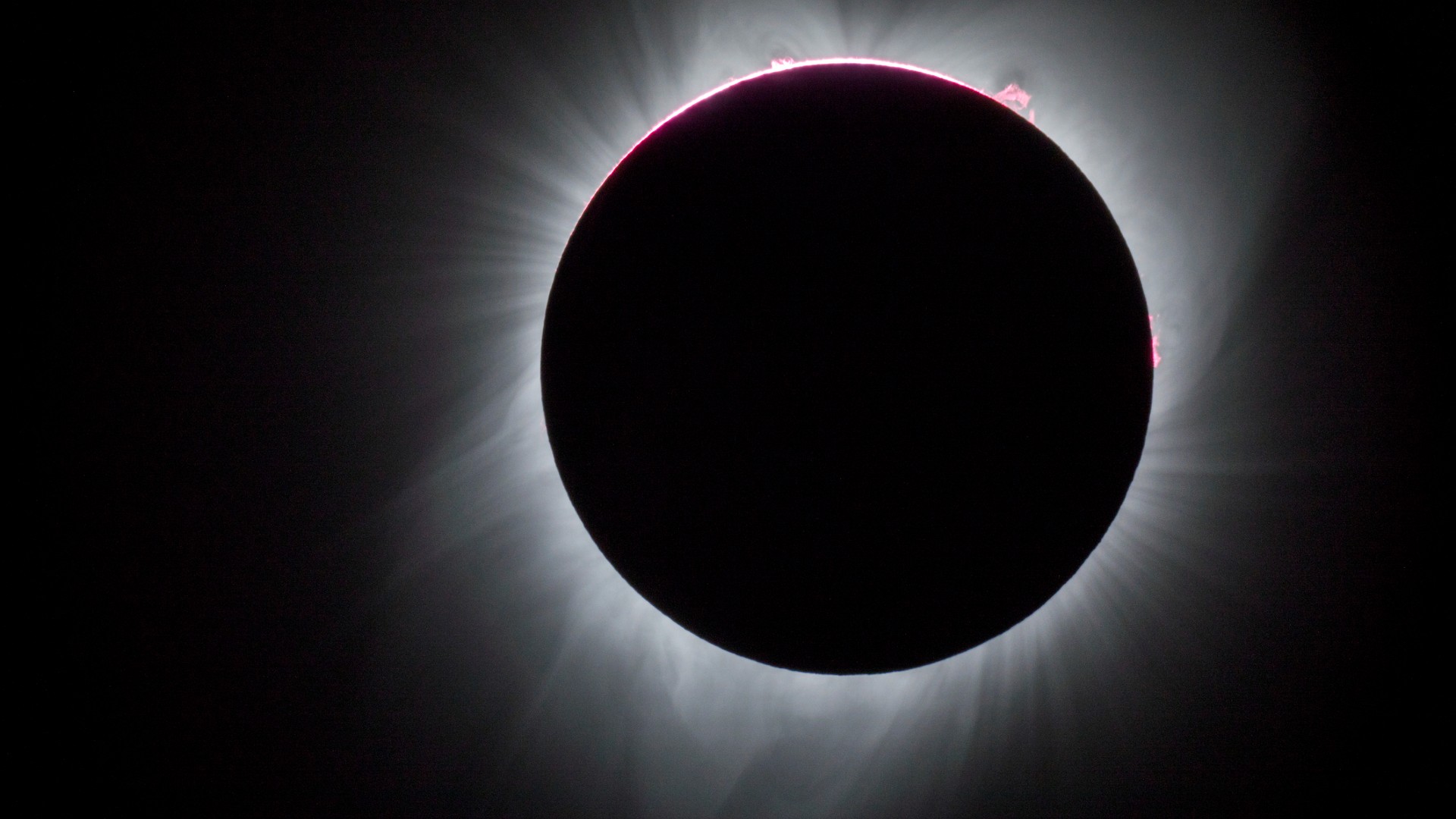
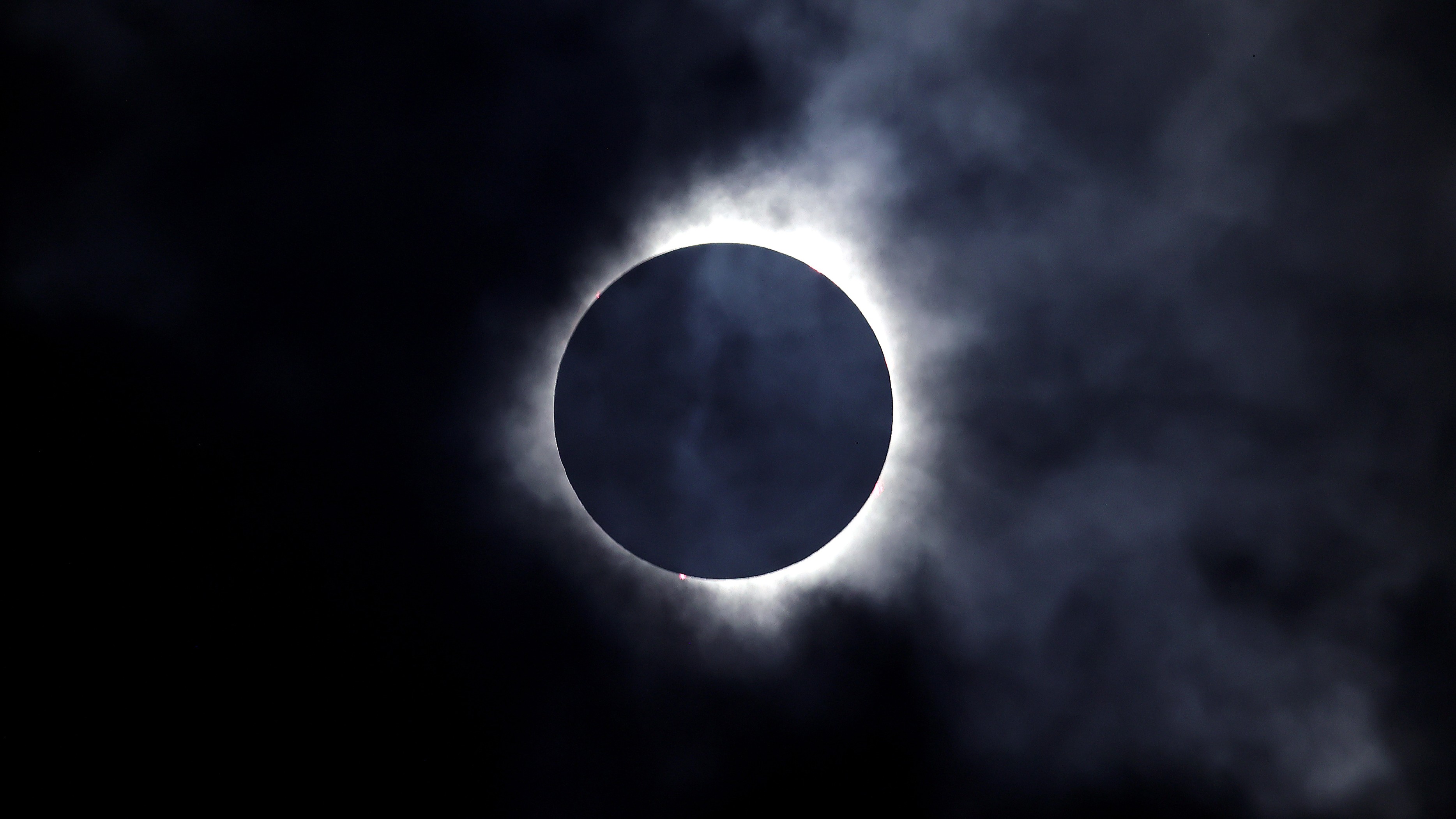
A total solar eclipse occurs when the moon moves in front of the sun and blocks it from view. (Image credit: Paul Souders/Getty Images)

A total solar eclipse occurs when the moon moves directly between Earth and the sun, completely blocking the sun's disk from view.

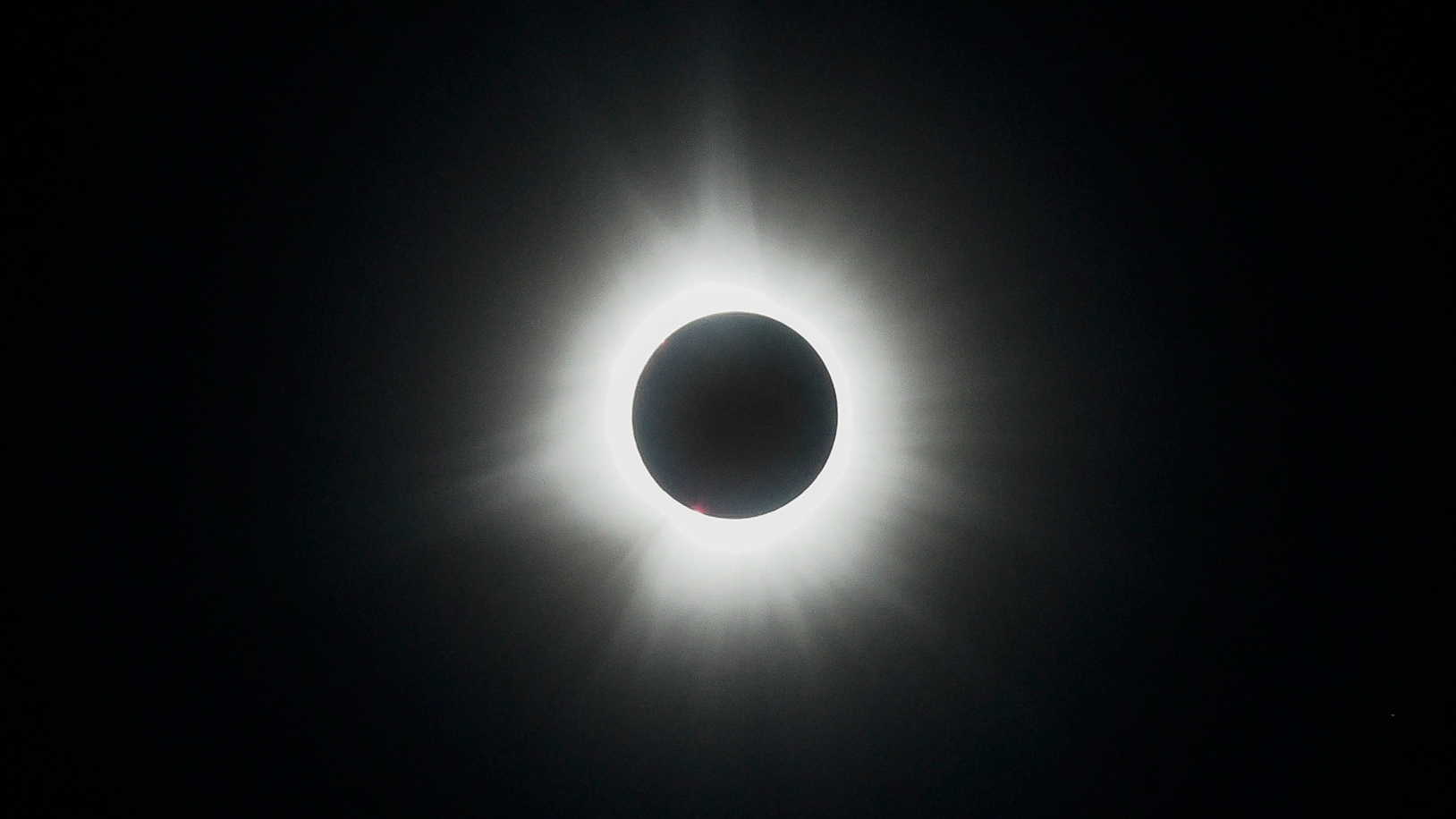
During totality, the sky darkens significantly, temperatures drop and bright stars and planets can even become visible. Observers can also catch a glimpse of the sun's outer atmosphere, known as the corona, glowing around the silhouetted moon.

Totality — when the sun is completely obscured — is only visible within the narrow path of the moon's shadow. Outside that path, observers may see a partial solar eclipse, whereby only a portion of the sun is covered.

REMEMBER to NEVER look directly at the sun. To view this solar eclipse safely, you must use solar filters. Only during the brief period of totality when the moon completely covers the sun, is it safe to look at the sun without protection. Observers will need to wear solar eclipse glasses, and cameras, telescopes and binoculars must have solar filters placed in front of their lenses at all other times.

Our how to observe the sun safely guide tells you everything you need to know about safe solar observations.

After this, when is the next solar eclipse?

After the total solar eclipse on Aug. 12, 2026, the next solar eclipse will be an annular solar eclipse on Feb. 6, 2027 visible across parts of Africa and South America. The next total solar eclipse will be a spectacular event on Aug. 2, 2027. Visible across North Africa, it will be the longest totality on land since 1991.
Where will the total solar eclipse 2026 be visible from?

The total solar eclipse on Aug. 12, 2026 will sweep across parts of the Northern Hemisphere, offering millions of people a chance to witness one of nature's most spectacular sights.

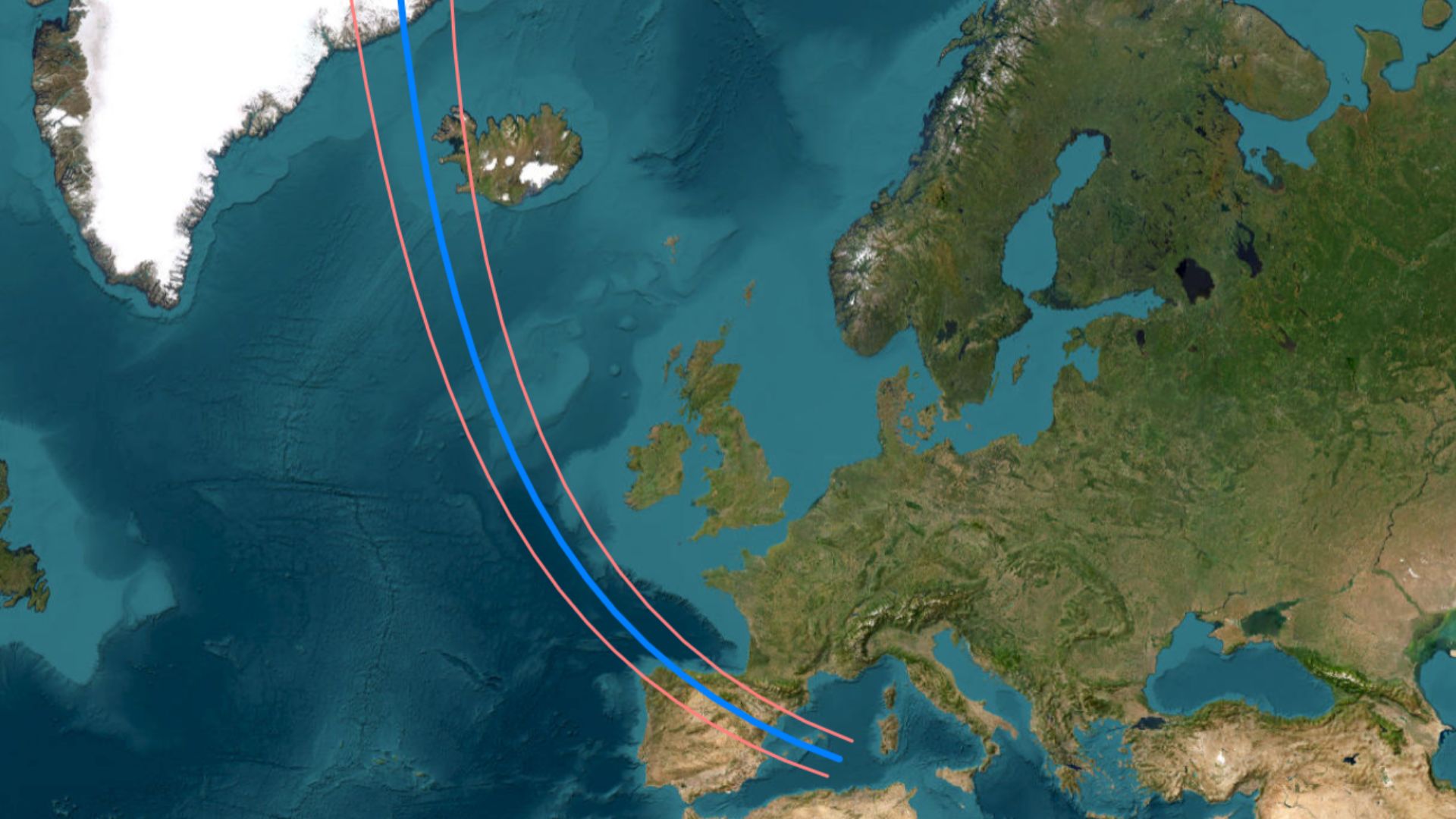
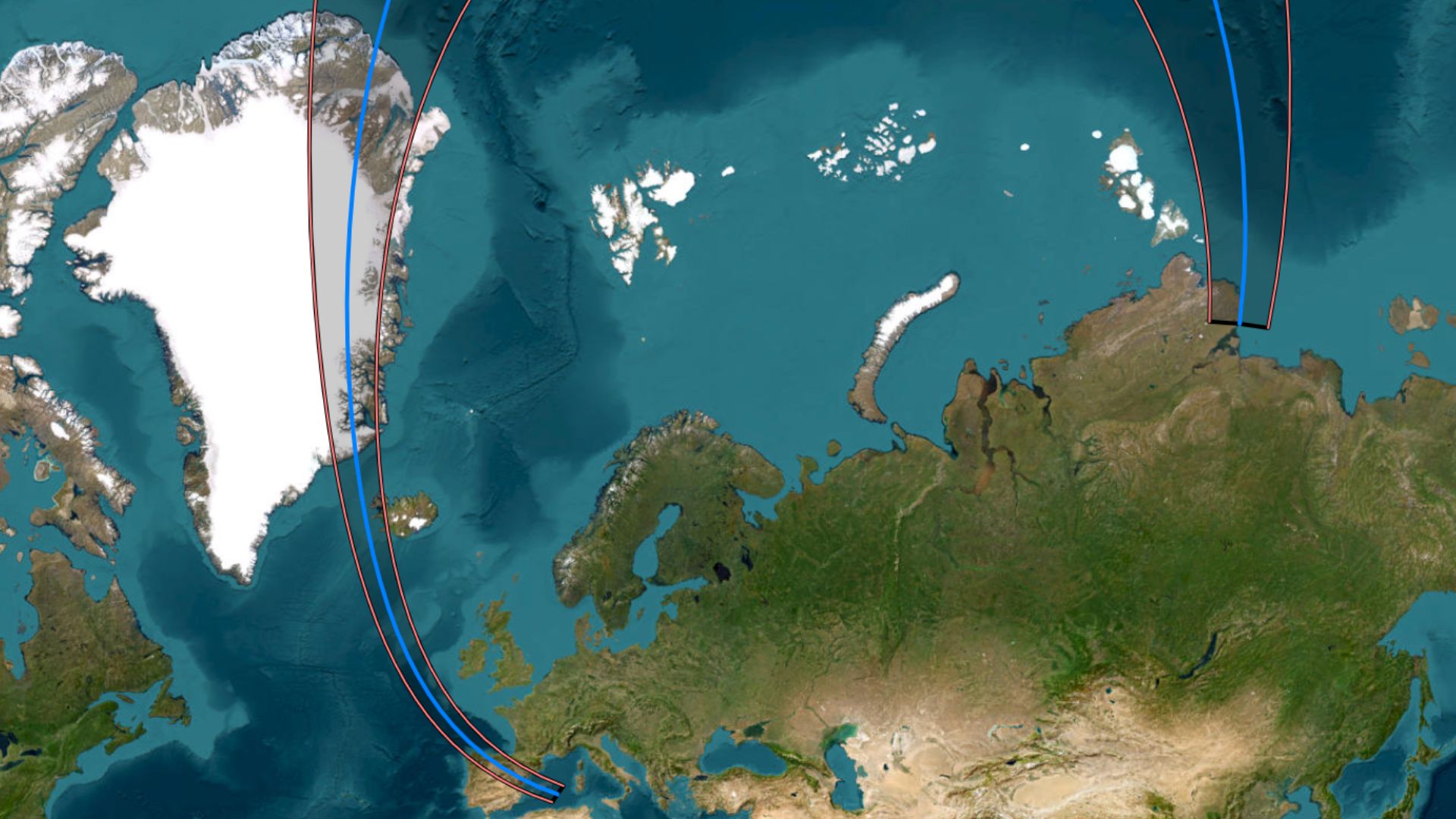
The path of totality — in which the moon completely covers the sun — begins over the Arctic Ocean, before crossing eastern Greenland, western Iceland and northern Spain. It then passes over the Balearic Islands before ending over the Mediterranean Sea.

Only skywatchers inside this relatively narrow path, just 182 miles (293 kilometers) wide, will experience totality, where day briefly turns to twilight. Here, you'll be able to safely see the sun's outer atmosphere, known as the corona, with the naked eye during the fleeting moment when the moon completely obscures the sun.

A much larger region surrounding the path of totality will instead see an impressive partial solar eclipse. Much of Europe, including the U.K., Ireland, France, Germany, Italy and Scandinavia, will witness the moon take a "bite" out of the sun.

Northern Spain is expected to be one of the most popular destinations for eclipse chasers thanks to its relatively accessible location and the low evening sun on the big day, which could create dramatic views as totality unfolds close to sunset. Greenland and Iceland offer very different experiences, with totality taking place higher in the sky against the nations' spectacular Arctic landscapes.

We'll have reporters on the ground to keep you updated each step of the way. Be sure to follow along on our total solar eclipse live blog to stay up to date with all the latest news and action as Skywatching Editor Daisy Dobrijevic embarks on an eclipse expedition to Greenland with HX Expeditions and Skywatching Writer Anthony Wood heads to Spain to experience the eclipse with NASA's DEB initiative and citizen scientists.

The global path of the total solar eclipse on Aug. 12, 2026. (Image credit: Created and annotated by Jamie Carter using MapHub.net. Sources: Esri, Maxar, GeoEye, Earthstar Geographics, CNES/Airbus DS, USDA, USGS, AeroGRID, IGN and the GIS user community. Eclipse path by Xavier Jubier)

How to watch

Wherever you plan to watch from, remember that it is never safe to look directly at the sun without proper eye protection. Certified solar eclipse glasses or a solar filter fitted to telescopes, binoculars and cameras must be used throughout the partial phases. Only during the brief period of totality, when the moon completely blocks the sun, can you safely remove your eclipse glasses and look directly at the eclipse.

We will also be livestreaming the eclipse here on Space.com; details will be released closer to the time.

Want to know exactly where the eclipse will be visible and how long totality will last at different locations? Check out our complete guide to where to see the Aug. 12, 2026 total solar eclipse, including detailed maps, timings and viewing advice.

Total solar eclipse Aug. 12, 2026 live updates — 2 days to totality

On Aug. 12, 2026, Europe will experience its first total solar eclipse since 1999, as the moon's shadow sweeps across Greenland, Iceland, northern Spain and the Balearic Islands.

Along the narrow path of totality, day will briefly turn to twilight as the moon completely covers the sun, revealing its elusive outer atmosphere — the corona. Meanwhile, millions more skywatchers across much of Europe, as well as parts of northeastern United States and eastern Canada, will witness a partial solar eclipse as the moon appears to take a bite out of the sun.

Live reporting from the path of totality

We'll be following the eclipse from two locations along the path of totality.

Our skywatching editor Daisy Dobrijevic is currently aboard HX Expeditions' MS Spitsbergen exploring Greenland's dramatic coast. She'll be aiming to witness totality from Scoresby Sund, the world's largest and longest fjord system. Dobrijevic is hoping for more eclipse luck than last time, when unfortunately, totality was a total bust, but not for the reason you may think.

Meanwhile, our skywatching writer Anthony Wood is joining the DEB initiative in Valoria la Buena, Spain, where the eclipsed sun will hang low above the western horizon shortly before sunset. It will be Wood's first-ever total solar eclipse.

Complete guide | Solar viewing tips | What is a solar eclipse?

One week until the total solar eclipse 2026: The countdown has begun... are you ready?

The moon's silhouette is visible in front of a fully eclipsed sun in a black sky, with the sun's white atmosphere creating a halo around the lunar disk.

The countdown has begun! The total solar eclipse 2026 will occur on Aug. 12. (Image credit: Photo by Erin Clark/The Boston Globe via Getty Images)

In just one week, millions of people across Greenland, Iceland and Spain will witness one of nature's greatest spectacles as the moon completely covers the sun.

Our team will be following the eclipse from two incredible locations, aboard an expedition ship in East Greenland with HX Expeditions and from northern Spain with the DEB initiative, bringing you live updates throughout the lead-up to the eclipse and on the day itself

Read more: 1 week to go until a dramatic total solar eclipse darkens the skies over Spain, Iceland and Greenland

Last call for eclipse glasses!

Get your solar eclipse glasses early; they always sell out before an eclipse.

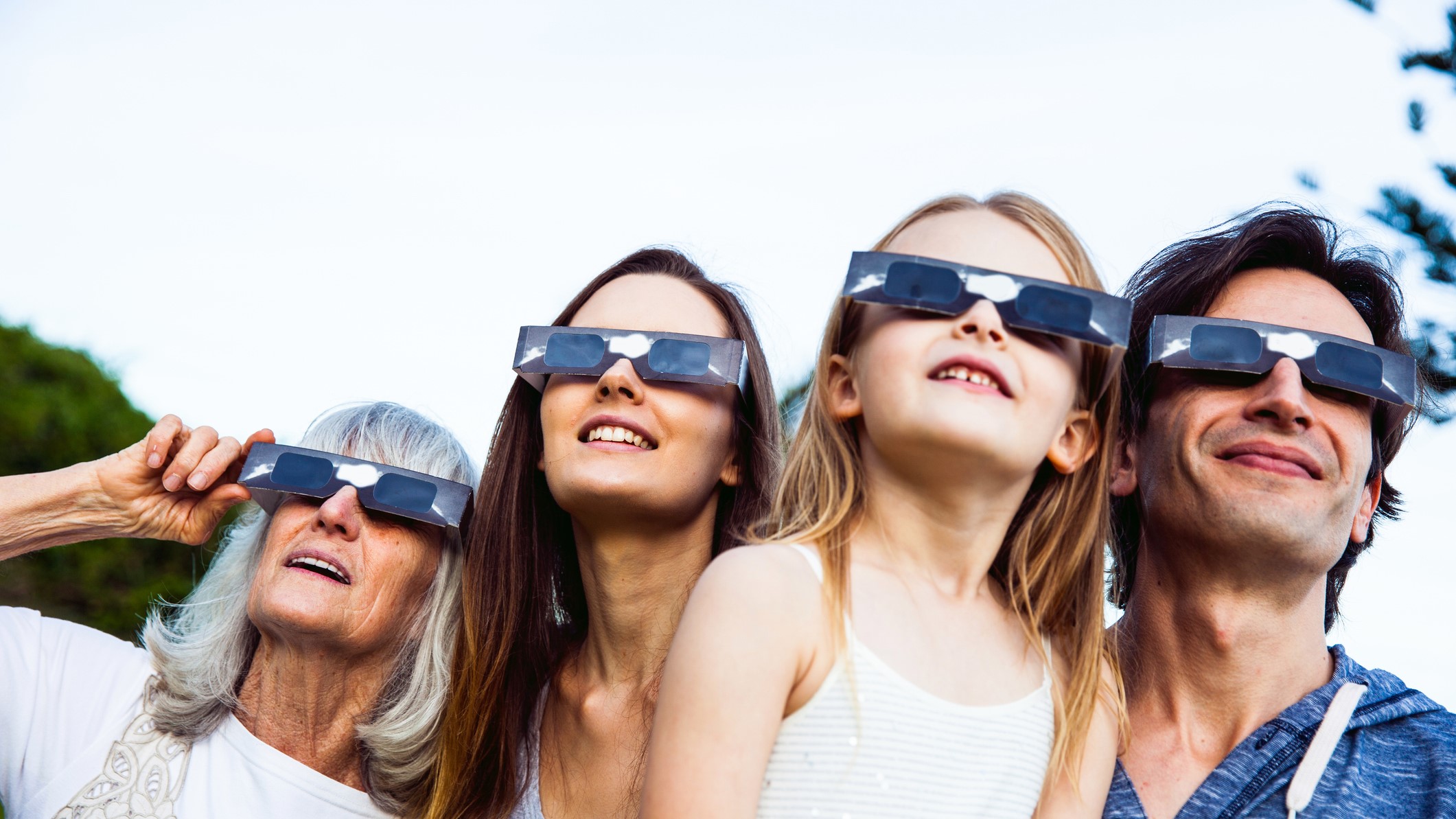
Eclipse glasses must be worn whenever the sun's disk is visible. (Image credit: LeoPatrizi / Getty Images)

If you're planning on viewing the Aug. 12 total solar eclipse then you'll need to get hold of a pair of quality eclipse glasses. Be sure to get a pair from a reputable dealer that conforms to the all important ISO 123-12 - 2 certification and never use an old pair if they appear scratched or damaged in any way!

Read More: Heading to Europe or the U.K. for the Aug. 12 solar eclipse? Best eclipse glasses to buy before you leave — or after you arrive.

Where will the eclipse be visible?

composite graphic image showing a location marker with a total solar eclipse image inside it, situated on top of a background showing earth viewed from space.

Find out where you can experience totality on Aug. 12, 2026. (Image credit: Created in Canva Pro)

Not everyone will experience totality on Aug. 12.

Some places will see the moon completely cover the sun, while others will experience a partial solar eclipse and for some… no eclipse at all. Womp womp.

Wondering what you'll see from your location? Find out where the eclipse will be visible

Also worth downloading before the big day: The best apps for following the eclipse

Do clouds ruin a total solar eclipse?

A solar eclipse is seen through the clouds on April 8, 2024 in Niagara Falls, Ontario, Canada.

Clouds won't necessarily sour your eclipse expedition. (Image credit: Vaughn Ridley/Getty Images)

One of the biggest worries before any eclipse is weather.

While a perfectly blue sky is ideal, you don't necessarily need one to enjoy the experience. Even under thin clouds, many of the most dramatic effects of totality can still be visible.

Read more: Here's why cloud cover doesn't always mean an eclipse is ruined.

Have you sorted your eclipse glasses yet?

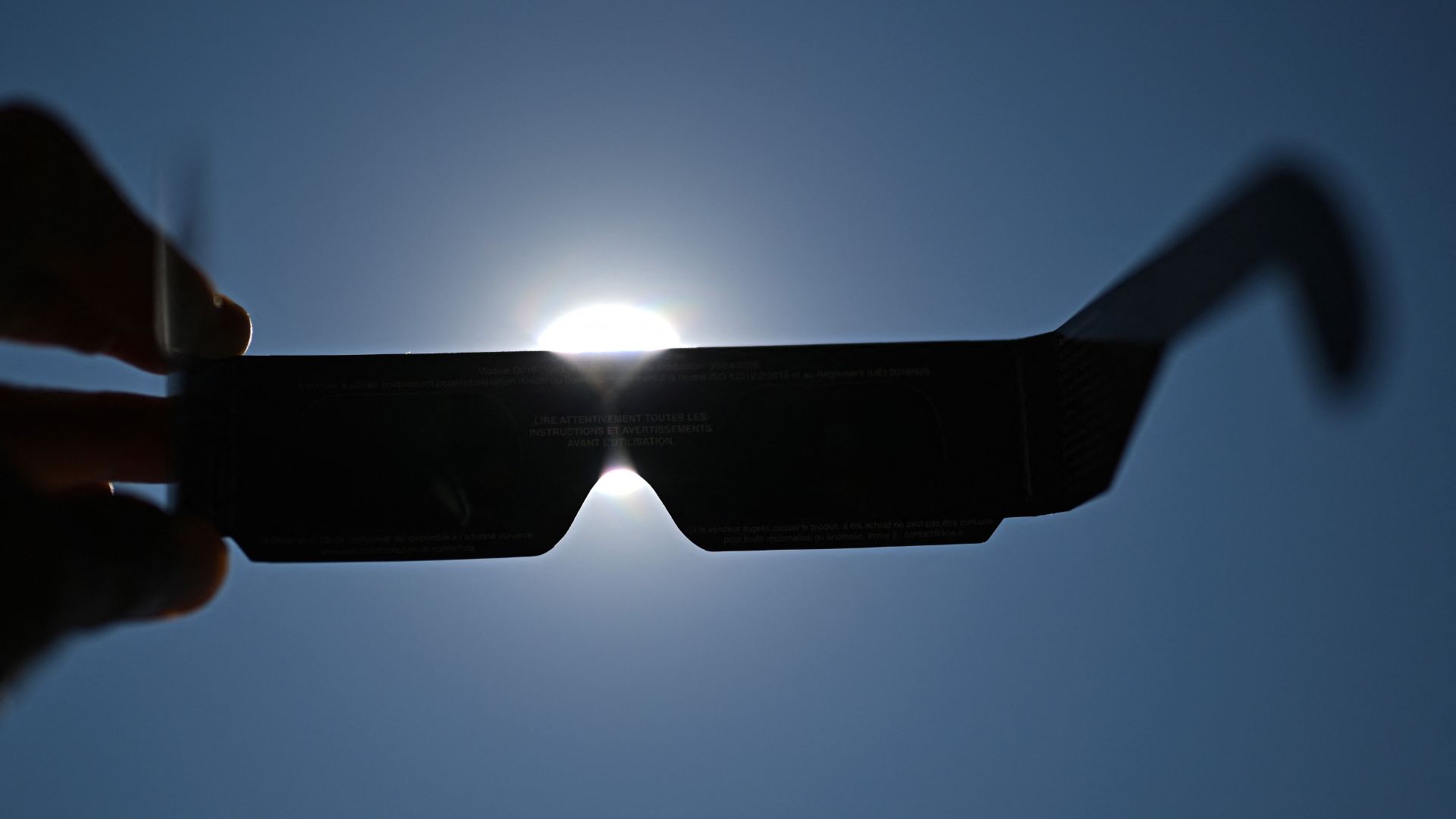
A pair of eclipse glasses are held up close to the sun, which shines in a blue sky.

Sunglasses are vital to safely view the partial stages of a solar eclipse. (Image credit: Photo by Gabriel BOUYS / AFP via Getty Images)

If you'll be looking at any part of the partial eclipse, you'll need proper eye protection. Never look directly at the sun without certified eye protection.

Don't have eclipse glasses? You can still safely enjoy the eclipse using simple projection methods with everyday household objects.

Check out our how to view the sun safely and what to look for guide for more solar viewing inspiration.

What actually happens during a total solar eclipse?

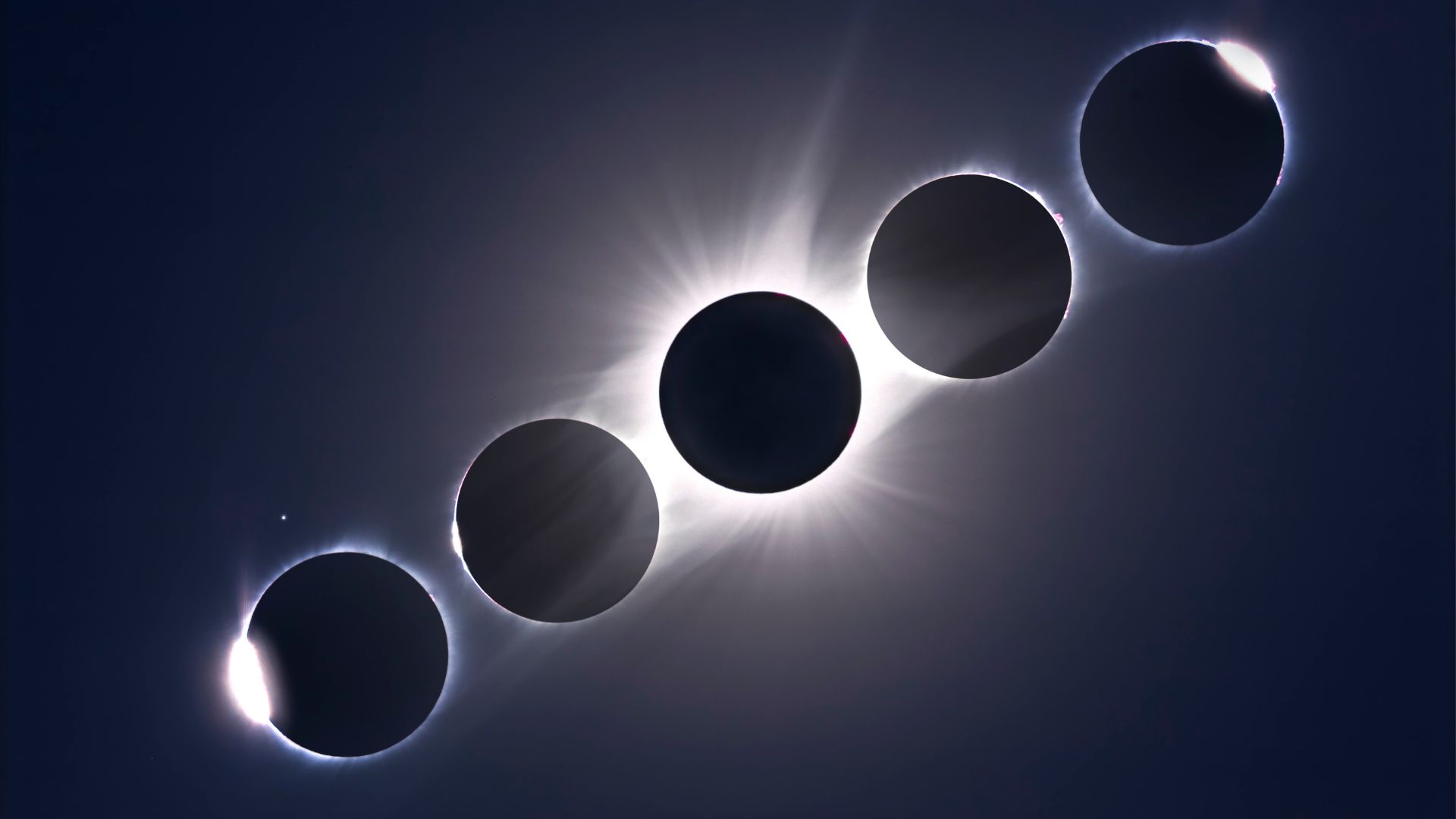
A composite image of 5 sun/moon conjunctions showing the stages of a total solar eclipse arrayed in a diagonal line in a dark sky, with the point of maximum eclipse in the middle.

A composite image revealing the beauty of each stage surrounding totality. (Image credit: Photo by: Alan Dyer/VW Pics/UIG via Getty Images)

Totality lasts only a few minutes, but a lot is happening before, during and after.

From first contact and the dramatic diamond ring effect to the appearance of the sun's corona, each stage offers something unique.

Read more: What to expect at each stage of the total solar eclipse 2026.

The citizen scientists keeping an eye on the Aug. 12 total solar eclipse

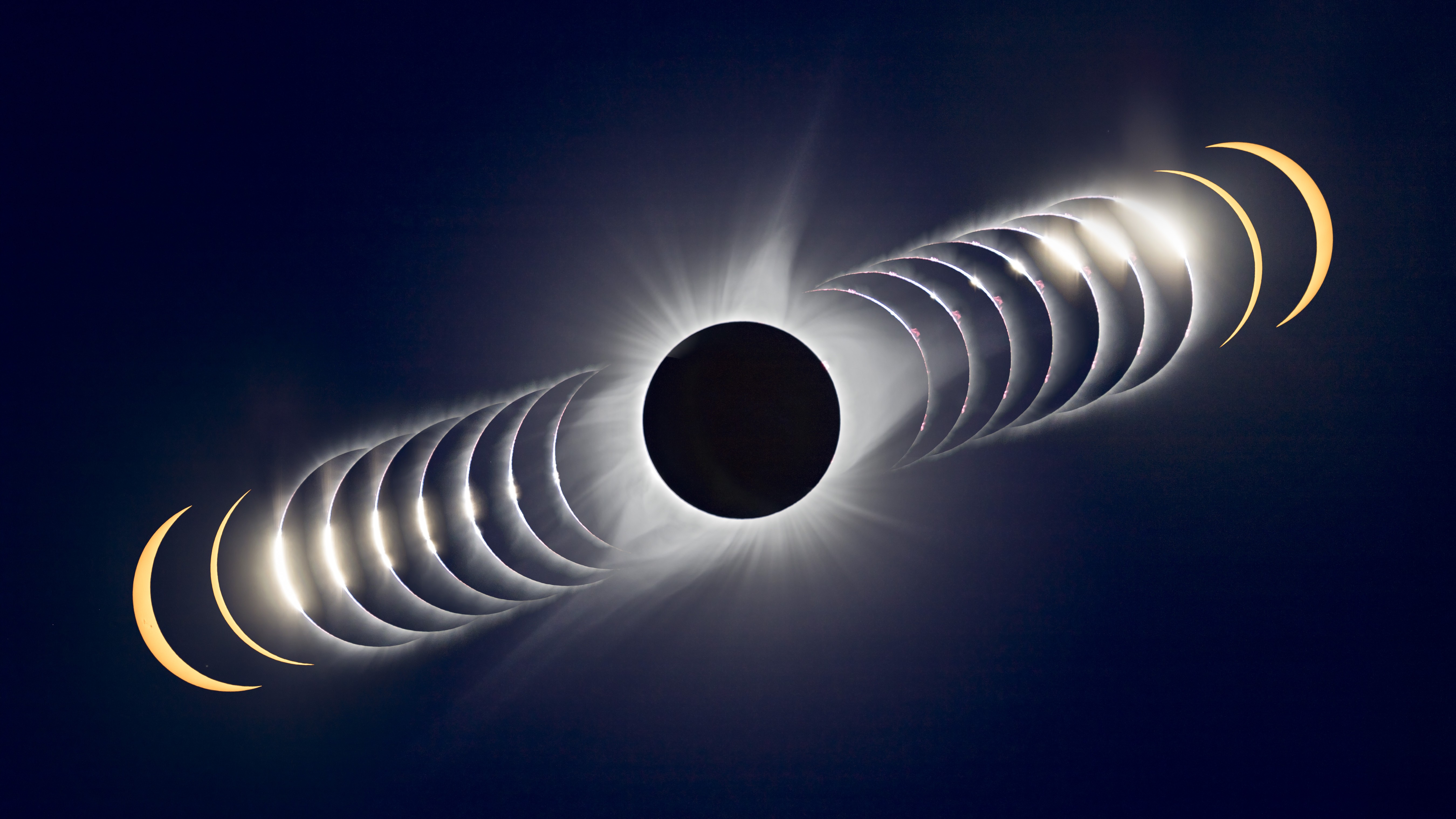
A composite image showing totality as the lunar disk hides the face of the sun. Images are stacked diagonally either side showing the moon and sun just before and after totality.

Two teams of Dynamic Eclipse Broadcast volunteers with observe totality on Aug. 12. (Image credit: Photo by: Alan Dyer/VW Pics/UIG via Getty Images)

Countless eyes will be watching the moon's silhouette swallow the light of our parent star during the climactic phase of totality on Aug. 12.

Among them will be volunteers from the Dynamic Eclipse Broadcast Initiative — a passion-driven volunteer network of solar observers led by professional astronomers from the Southern Illinois University Carbondale and part funded by NASA.

Discover more on their efforts to capture valuable data on the sun's atmosphere while bringing the public closer to the Aug. 12 total solar eclipse below.

Read more: When a total solar eclipse darkens the sky on Aug. 12, these citizen scientists will be watching.

Just 2 days to go! What time should you look up?

total solar eclipse phases with a clock graphic covering the center image of totality to convey the what time is the solar eclipse theme of the article.

The eclipse doesn't happen at the same time everywhere. Knowing exactly when the partial eclipse begins and when totality occurs is the most important part of planning your day. Read more: What time is the total solar eclipse on Aug. 12, 2026? (Image credit: Created in Canva Pro)

Could the northern lights appear during the eclipse?

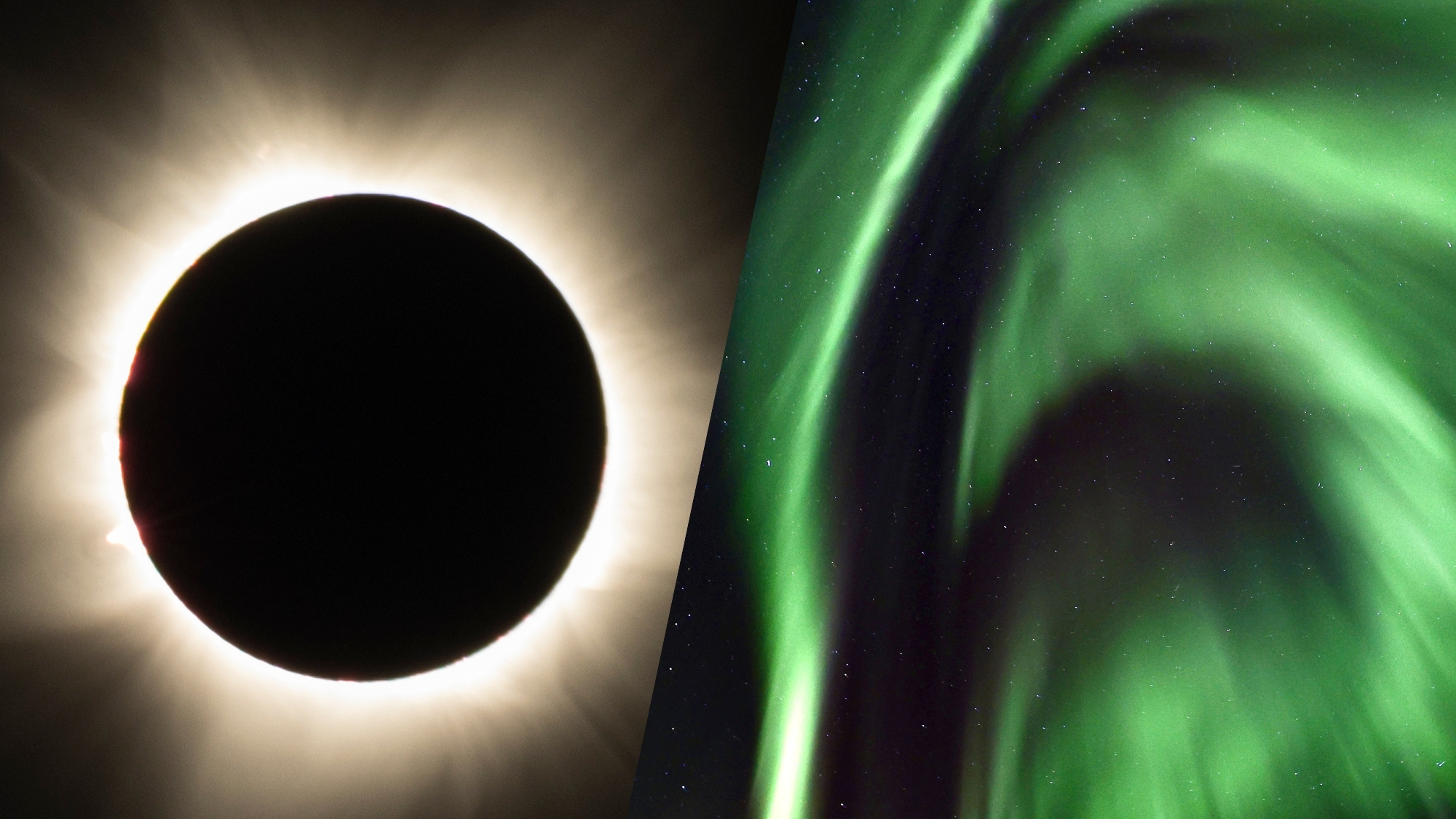
two panel image on the left is a total solar eclipse with the corona glowing like a while halo around the moon on the right is a beautiful green auroral corona - whereby it appears overhead and looks like it is reaching down toward the observer.

Could we see the northern lights during totality? (Image credit: Left: Canva Pro. Right: Daisy Dobrijevic)

It's one of the questions we've seen pop up a fair bit ahead of Aug. 12.

For observers above the Arctic Circle, since totality briefly turns day into twilight, could they also see the northern lights?

Well, you'd have to be incredibly lucky, but it is not impossible.

Read more: Could the northern lights be visible during the total solar eclipse 2026?

Greetings from East Greenland - Weather prospects are not looking promising for eclipse day

a cup of coffee in the foreground and then a large body of water and distant mountains

If only we could bring this good weather with us for eclipse day. (Image credit: Daisy Dobrijevic/Future)

Good morning space fans! What a beautiful start to the day here in East Greenland. If only we could bring this good weather with us on Wednesday. The current forecast is not looking good, so we will make a decision later today on where to head for our best chance of some clear skies on eclipse day. Despite the far from ideal weather forecast, spirits are still high on HX Expeditions' MS Spitsbergen as we all soak in the jaw-dropping Greenlandic scenery. -- Daisy Dobrijevic

An ‘almost blood moon’ is coming on Aug. 27 and it’ll be the best lunar eclipse until NYE 2028

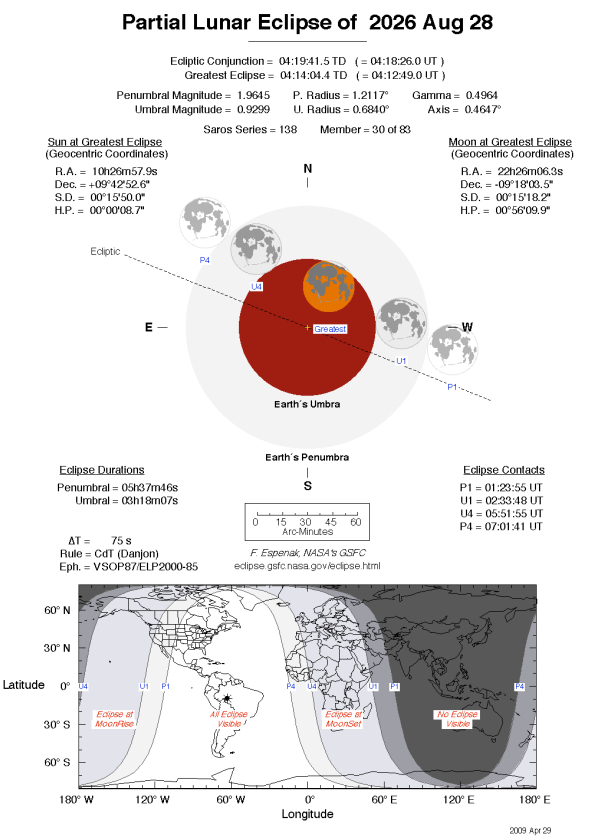
One month from today, skywatchers across the Americas, Europe and Africa will have the chance to witness the best lunar eclipse until New Year's Eve 2028.

On Aug. 28, Earth's shadow will cover up to 96% of the moon's disk in an exceptionally deep partial lunar eclipse. At maximum eclipse, only a thin sliver of the moon will remain outside Earth's darkest shadow, creating an "almost blood moon" with nearly the entire lunar surface glowing a deep reddish-orange.

Unlike a solar eclipse, a lunar eclipse is completely safe to observe with the naked eye and requires no special equipment. All you need is clear skies and a view of the moon.

Where can I see the lunar eclipse?

A map of the lunar eclipse on Aug. 27-28, 2026. Click the arrows in the bottom left corner to expand to full screen. (Image credit: F. Espenak, NASA's GSFC)

The eclipse will be visible across Europe, Africa, the Americas and parts of western Asia, though exactly what you'll see depends on your location.

The Americas are particularly well-placed to catch the eclipse's most dramatic stages, as many locations will see the moon rise already deep within Earth's shadow. Across eastern North America, observers will see the "almost blood moon" climb above the horizon shortly before or during maximum eclipse.

Across Europe and Africa, the eclipse occurs before dawn on Aug. 28. Observers in the U.K. and western Europe will see the moon low in the western sky during the final stages of the eclipse, before it sets shortly after maximum. Farther east, progressively less of the eclipse will be visible before moonset.

  • North & South America: Best overall views
  • Europe & Africa: Excellent predawn moonset eclipse
  • Western Asia: Limited views before moonset
  • Eastern Asia: Little or no visibility.

What will it look like?

A deep partial lunar eclipse makes for an impressive skywatching event. (Image credit: Laurie LaPorte via Getty Images)

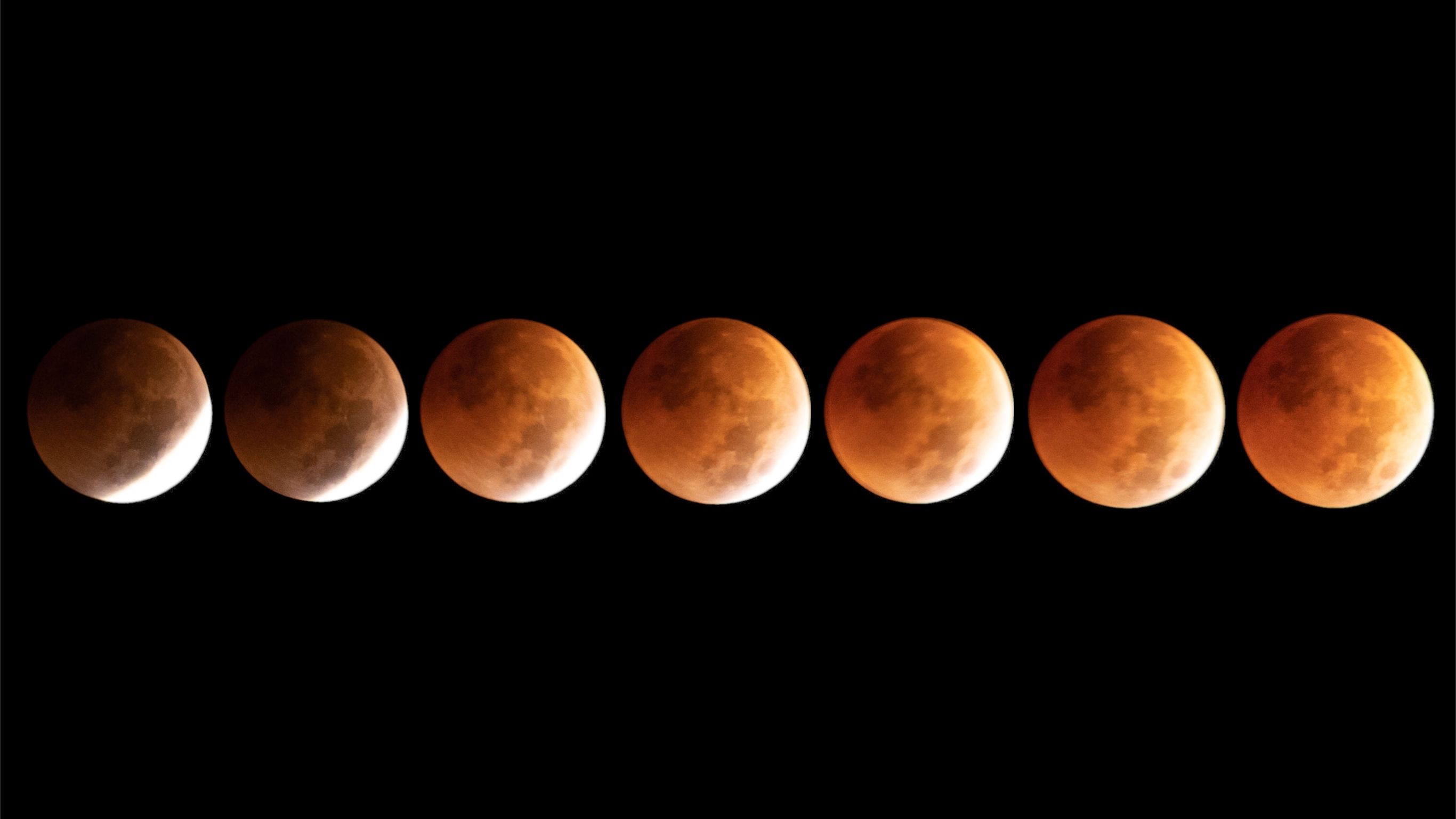
Because 96% of the moon will pass through Earth's central dark shadow, known as the umbra, this eclipse is expected to look remarkably similar to a total lunar eclipse or a "blood moon" lunar eclipse. The moon will likely take on a deep coppery-red hue with only a narrow bright silver lining remaining.

Follow along with Space.com

Over the coming month, Space.com will bring you everything you need to prepare for eclipse night. From viewing guides and photographing the event to a live blog bringing you the latest news and action from the best lunar eclipse until NYE 2028. We'll also be releasing details on how you can watch the eclipse online if you're unable to catch it in person.

1 month until the total solar eclipse 2026 — Here’s what you need to know

One month from today, millions will turn their eyes to the skies for one of the most anticipated skywatching events of the year: the total solar eclipse on Aug. 12, 2026.

The eclipse will sweep across parts of Greenland, Iceland and Spain, briefly turning day into night for those lucky enough to be within the narrow path of totality.

It's been a long time coming for European skywatchers, as the event marks Europe's first total solar eclipse since 1999.

Where can I see the total solar eclipse?

If you're hoping to experience totality, now is the time to finalize your plans. The path of totality crosses Greenland, Iceland and northern Spain, with maximum eclipse lasting up to 2 minutes and 18 seconds.

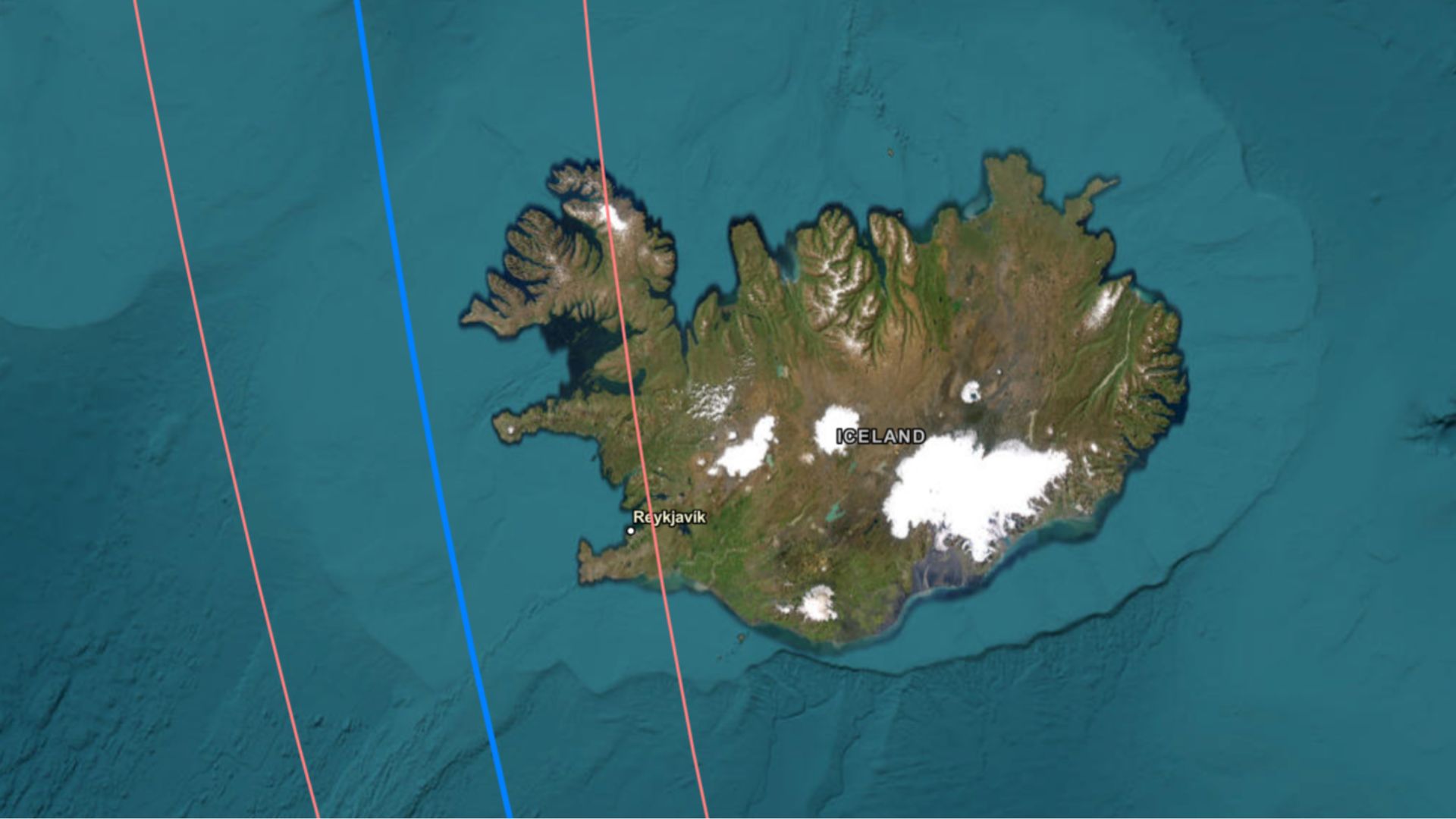
map showing the path of totality across the coast of iceland
Path of totality over Iceland.Created using MapHub.net. Source: Esri, Maxar, GeoEye, Earthstar Geographics, CNES/Airbus DS, USDA, USGS, AeroGRID, IGN, and the GIS User Community
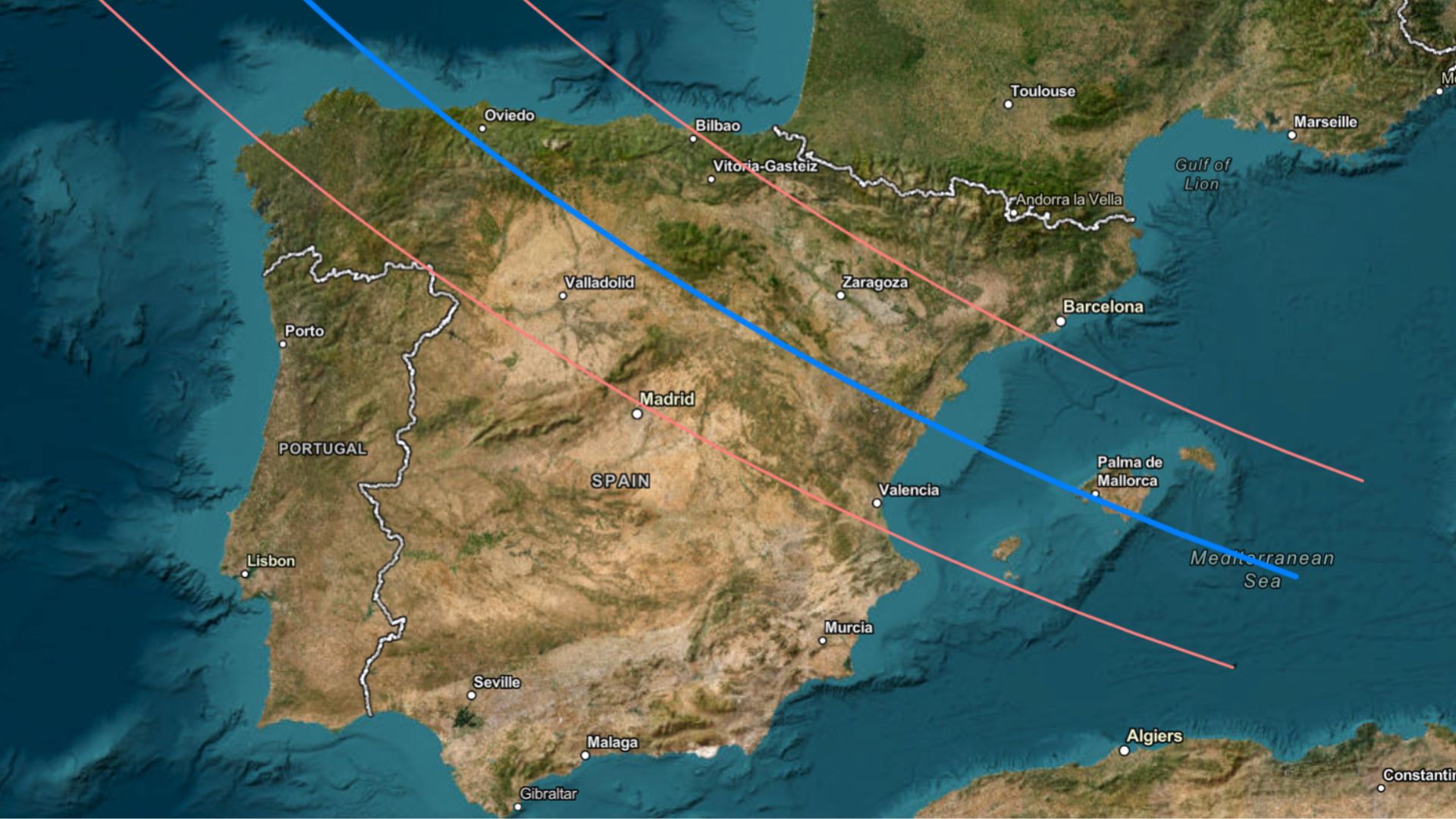
map showing the maps of totality across northern spain.
Path of totality over Spain.Created using MapHub.net. Source: Esri, Maxar, GeoEye, Earthstar Geographics, CNES/Airbus DS, USDA, USGS, AeroGRID, IGN, and the GIS User Community
map showing the entire path of totality - it shows where the total solar eclipse is visible from Greenland, iceland and spain.
Entire path of totality. From Greenland through Iceland and Spain. Created using MapHub.net. Source: Esri, Maxar, GeoEye, Earthstar Geographics, CNES/Airbus DS, USDA, USGS, AeroGRID, IGN, and the GIS User Community

Spain is expected to be one of the most popular destinations thanks to its favorable weather prospects, though it's not without a catch! Viewers will need to secure a clear view of the western horizon because the eclipsed sun will sit very low in the sky during totality.

Notable locations and timings of totality

Location

Totality duration

What time?

Sun height

Scoresby Sund, Greenland

1 minute, 46 seconds

4:35 p.m. CGST

24 degrees above west

Reykjavik, Iceland

1 minute, 1 second

5:48 p.m. GMT

25 degrees above west

Snæfellsjökull National Park, Iceland

2 minutes, 10 seconds

5:45 p.m. GMT

25 degrees above west

Gijón, Spain

1 minute, 46 seconds

8:26 p.m. CEST

10 degrees above west-northwest

A Coruña, Spain

1 minute, 15 seconds

8:27 p.m. CEST

12 degrees above west-northwest

Palencia, Spain

1 minute, 42 seconds

8:29 p.m. CEST

9 degrees above west-northwest

Burgos, Spain

1 minute, 44 seconds

8:28 p.m. CEST

8 degrees above west-northwest

Segovia, Spain

54 seconds

8:31 p.m. CEST

8 degrees above west-northwest

Sigüenza, Spain

1 minute, 38 seconds

8:30 p.m. CEST

7 degrees above west-northwest

Mallorca, Balearic Islands, Spain

1 minute, 36 seconds

8:31 p.m. CEST

2.7 degrees above west-northwest

Will I see the eclipse from where I live?

Not inside the path of totality? Don't worry. A spectacular partial solar eclipse will be visible across much of Europe, with more than 90% of the sun covered from locations including London, Paris and Dublin.

Location

% of sun's disk covered

New York City

9%

St. John's, Newfoundland, Canada

53%

Nuuk, Greenland

79%

Oslo, Norway

83%

Berlin, Germany

84%

London, U.K.

91%

Paris, France

92%

Tangier, Morocco

92%

Dublin, Ireland

94%

Lisbon, Portugal

94%

Nice, France

95%

Madrid, Spain

99.96%

Barcelona, Spain

99.82%

If you're still deciding where to watch, we have several guides on the best viewing locations close to popular Spanish holiday destinations, the best Spanish beaches, and the best places to view the eclipse overall.

How we will be covering the eclipse

Over the coming weeks, Space.com will bring you everything you need to prepare for eclipse day. We'll publish viewing guides, safety advice and information on how to watch the eclipse online.

Closer to the event, we'll launch a dedicated live blog covering the latest eclipse news and insights from our reporters in the field.

Skywatching Editor Daisy Dobrijevic will join an eclipse expedition to Greenland with HX, while Skywatching Writer Anthony Wood will travel to northern Spain with the DEB initiative and citizen scientists to report firsthand from the path of totality.

Sun fires off 10 solar flares in 24 hours as multiple Earth-bound CMEs raise northern lights hopes for July 4 weekend

Heads up aurora chasers! The sun has been very busy.

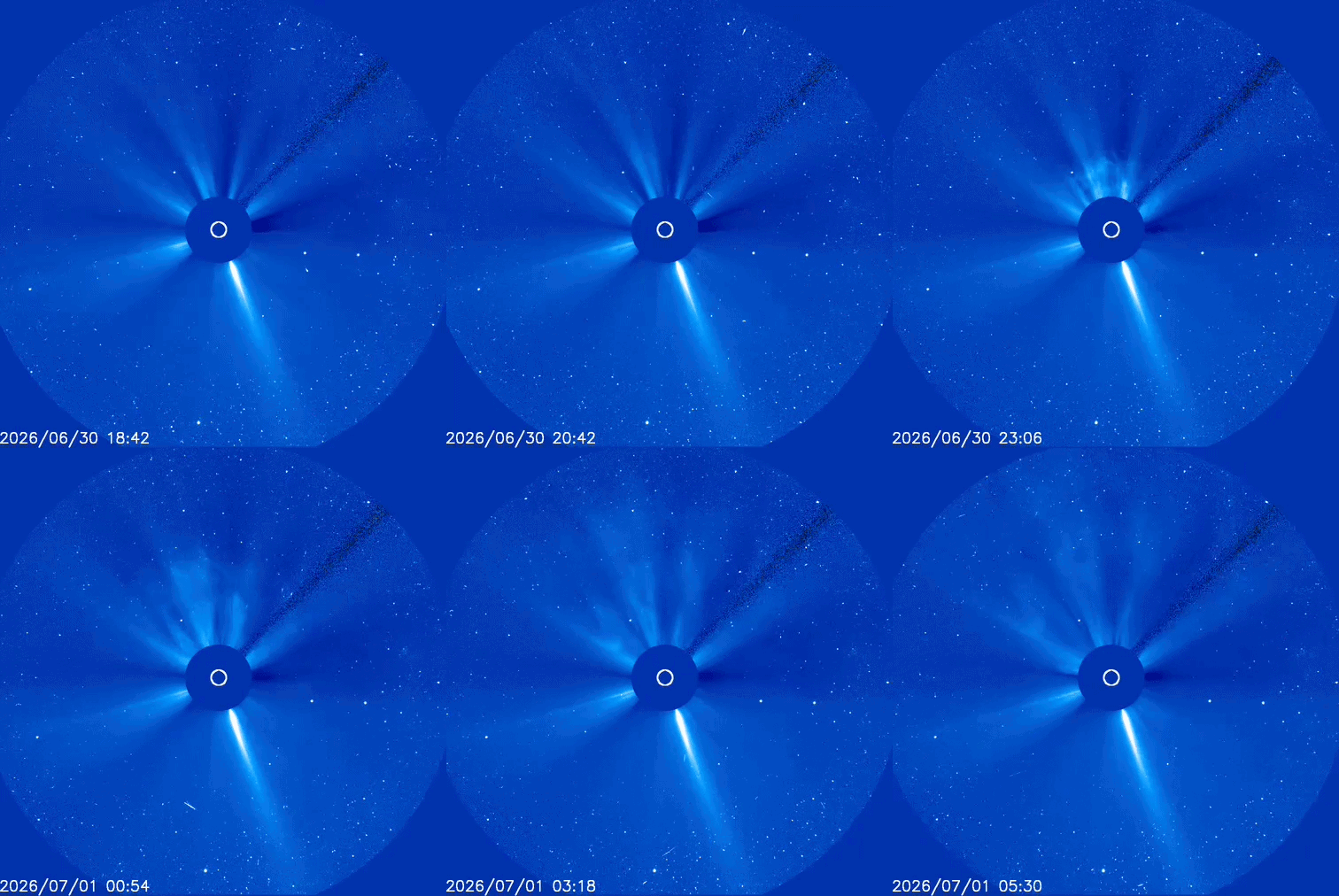
After unleashing an X1.1 solar flare on June 30, the sun continued its outburst by firing off 10 M-class solar flares in 24 hours! Several of these eruptions were accompanied by coronal mass ejections (CMEs) that appear to be at least partially Earth-directed.

Exactly how many of these solar storms will reach Earth (and how effective they will be) is still being calculated, but space weather forecasters say the coming days could bring heightened geomagnetic activity and increased chances of seeing the northern lights.

Solar physicist Tamitha Skov described the recent activity as a "Machine-gun sun" in a recent post on X, writing that more than five solar storms are on their way to Earth, with at least three offering "good chances" for aurora displays.

CME released during the X-flare eruption on June 30. (Image credit: NASA/ESA SOHO LASCO C3)

"NOAA and NASA model predictions do not show all the storms yet," Skov wrote, explaining that the rapid succession of eruptions has made them difficult to model. Skov added that the first storm could arrive before 8 a.m. EDT (1200 GMT) on July 3, with G2 or stronger geomagnetic storm conditions possible if the incoming CMEs carry a favorable magnetic orientation, allowing them to connect more efficiently with Earth's magnetic field.

According to NOAA's Space Weather Prediction Center, at least one CME from July 1 appears to have an Earth-directed component, although further analysis is still underway. The agency continues to forecast moderate (G2) geomagnetic storm conditions beginning tonight, driven primarily by the CME launched during the June 30 X-class flare, while noting that additional CMEs from the barrage of July 1 eruptions are still being analyzed.

Will the northern lights be visible?

The forecasts are looking increasingly promising for aurora chasers.

NOAA's latest forecast calls for moderate (G2) geomagnetic storm conditions around 8-11 p.m. EDT tonight (0000-0300 GMT July 3), with minor (G1) storm conditions for much of July 3. That could push the northern lights farther south than usual, potentially making them visible across parts of the northern U.S., including New York and Idaho, provided skies are dark and clear.

Exactly how impressive any display becomes will depend on how the incoming CMEs interact with one another and, crucially, the orientation of their magnetic fields when they arrive. When a magnetic field within a solar storm aligns the right way, it can more effectively transfer energy into Earth's magnetic field, producing stronger geomagnetic storms and brighter auroras.

However, nights remain short for observers in the northern hemisphere and lingering twilight could make auroras harder to spot.

That being said, it's worth making sure your cameras are charged and your aurora alerts are switched on. With multiple CMEs heading our way, there could be some natural fireworks lighting up the skies this July 4 weekend.

Northern Hemisphere aurora forecast courtesy of the U.K. Met Office

Sun unleashes powerful X-class solar flare and Earth-bound CME that could spark northern lights for July 4 weekend

A restless Earth-facing sunspot unleashed a powerful X-class solar flare on June 30, triggering radio blackouts across parts of North America.

The X1.1 solar flare erupted from sunspot region AR4479, peaking at 4:50 p.m. EDT (2050 GMT) according to NOAA's Space Weather Prediction Center.

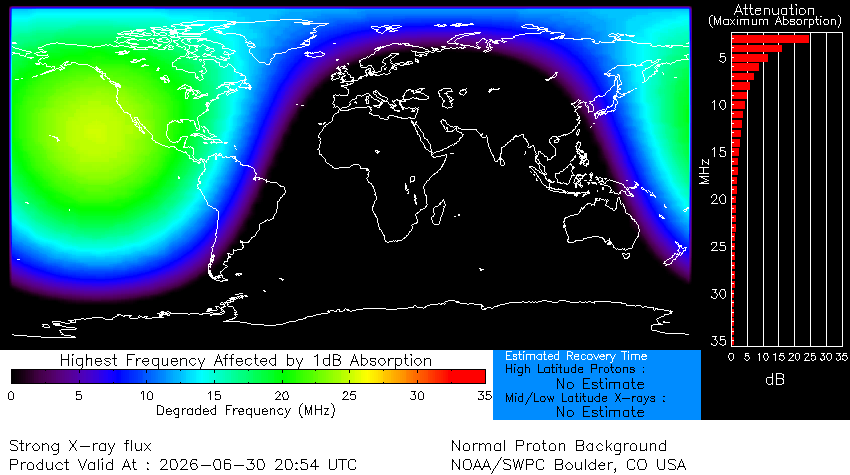
The intense burst of X-rays released during the eruption reached Earth in just over 8 minutes, triggering strong (R3) radio blackouts across the daylight side of Earth. This mainly affected high-frequency radio users across parts of North America who may have experienced temporary signal degradation or brief communication outages while the flare was at its strongest.

The eruption also launched a coronal mass ejection (CME) — a huge cloud of magnetized solar plasma hurled into space. Initial observations suggested most of the material was traveling northward, limiting the chances of a significant Earth impact.

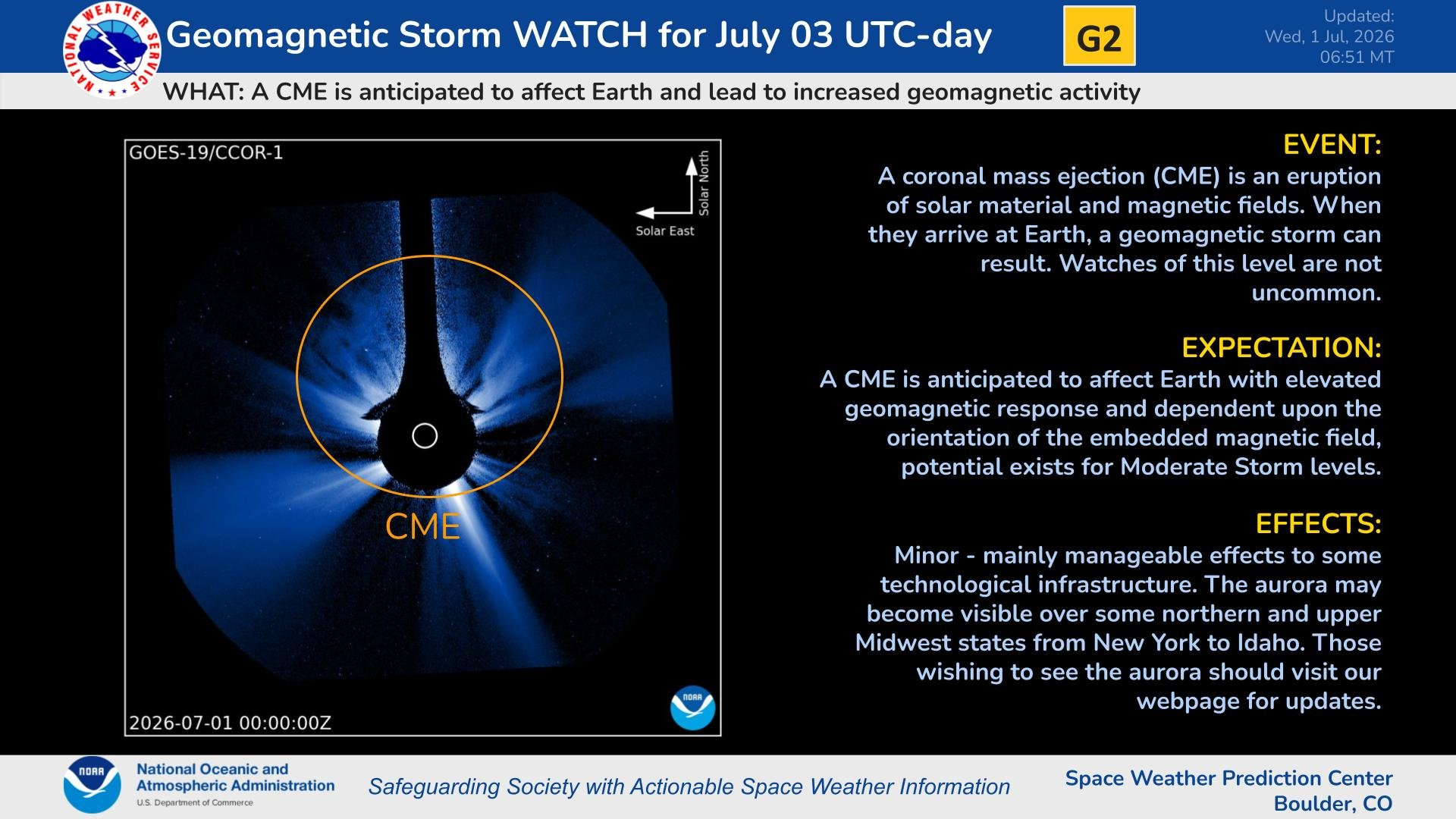
However, after further analysis, NOAA's Space Weather Prediction Center issued a Moderate (G2) geomagnetic storm watch for July 3, indicating that at least part of the CME could land Earth with a significant blow.

Radio blackouts triggered by the X-class solar flare. (Image credit: NOAA Space Weather Prediction Center)

Will we see the northern lights?

When Earth-directed, CMEs can interact with our planet's magnetic field and spark geomagnetic storms, which can produce dazzling northern lights displays.

A G2-level storm is capable of pushing the northern lights farther south than normal. According to NOAA, auroras could become visible across some northern and upper Midwestern U.S. states, from New York to Idaho, provided skies are dark and clear.

Exactly how impressive the display becomes will depend on the strength of the CME and, crucially, the orientation of its embedded magnetic field when it arrives. If conditions are favorable, the natural light show could provide an extra helping of "fireworks" just in time for the July 4 weekend.

Geomagnetic storm watch issued for July 3. (Image credit: NOAA Space Weather Prediction Center)

What are solar flares?

Solar flares are sudden bursts of energy released when magnetic fields around sunspots become twisted and reconnect. They are ranked using five classes — A, B, C, M and X — with X-class flares representing the most powerful eruptions.

What are CMEs?

CME eruption sending a plume of material mostly northward on June 30. (Image credit: NASA/ESA SOHO LASCO C3)

CMEs behave a little differently. Unlike the radiation from a solar flare, which reaches Earth at the speed of light, these clouds of charged particles typically take one to three days to reach us. If they arrive in the right magnetic orientation, they can disturb Earth's magnetic field and trigger geomagnetic storm conditions.

Editor's note: This story was updated at 9:30 a.m. EDT on July 1 to reflect NOAA's latest forecast, including the issuance of a G2 (Moderate) geomagnetic storm watch for July 3 following further analysis of the accompanying coronal mass ejection.

June’s Strawberry Moon serves up a low-hanging treat for skywatchers worldwide. Here are our favorite photos

The first full moon of summer, June's Strawberry Moon, wowed skywatchers worldwide with a spectacular display.

June's full moon was the lowest-hanging full moon of the year for observers in the Northern Hemisphere. That's because a full moon always sits opposite the sun in the sky. During the summer solstice that just passed on June 21, the sun was following its highest path of the year; that means this full moon took the opposite route, skimming low across the southern sky.

It rose in the southeast, remained low above the horizon throughout the night and set in the southwest, delighting photographers around the world. Here are some of the best photos.

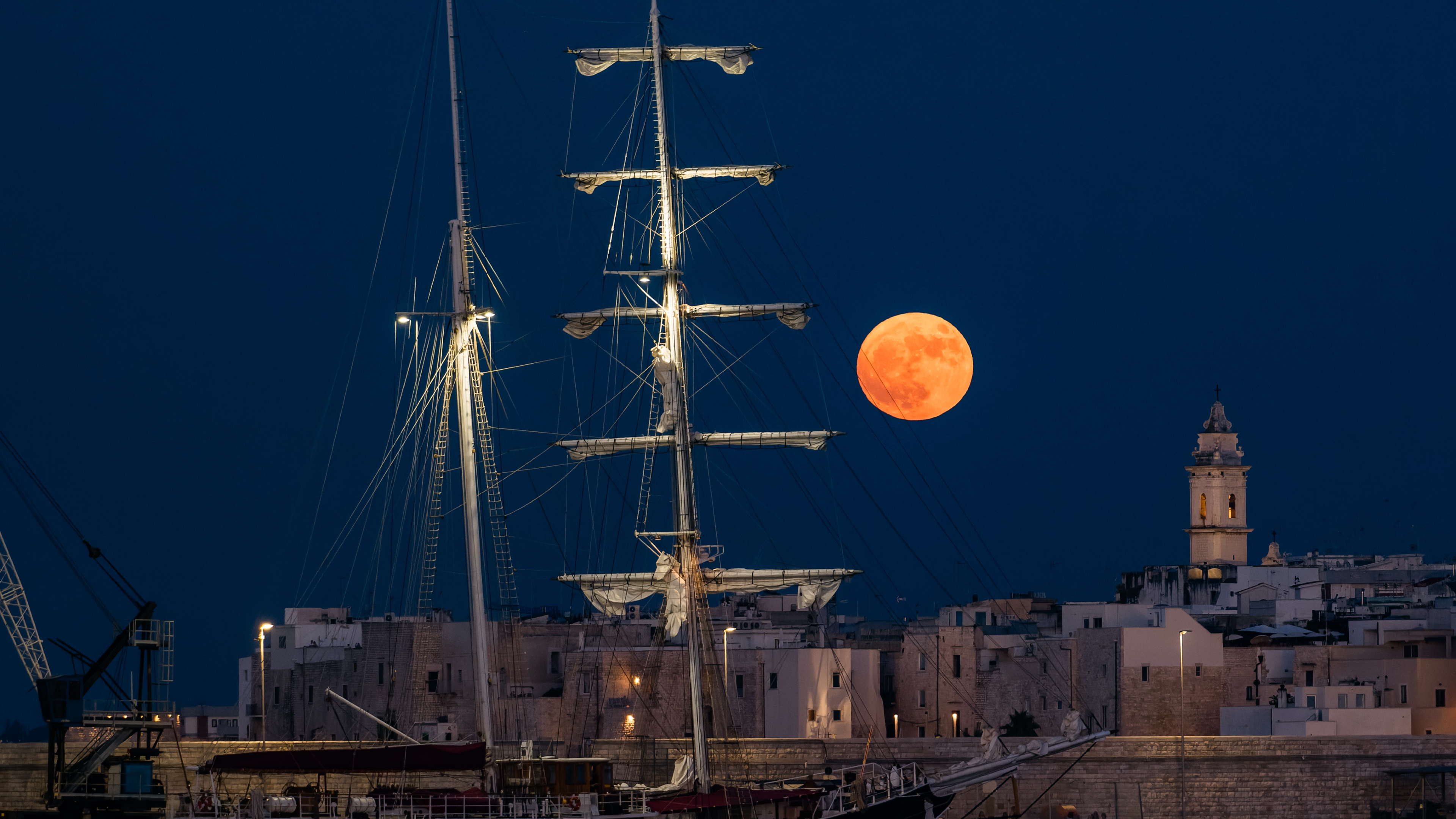
Photographer Davide Pischettola captured the Strawberry Moon behind the sailing ship Nave Italia in the Port of Molfetta, Italy, on June 29, 2026.

Strawberry Moon, Port of Molfetta, Italy, June 29, 2026. (Image credit: Davide Pischettola/NurPhoto via Getty Images)

The June Full moon rises behind the skyline of midtown Manhattan and the Empire State Building in New York City in this vibrant image captured by photographer Gary Hershorn.

June's full moon beside the Empire State Building, June 29, 2026. (Image credit: Gary Hershorn/Getty Images))

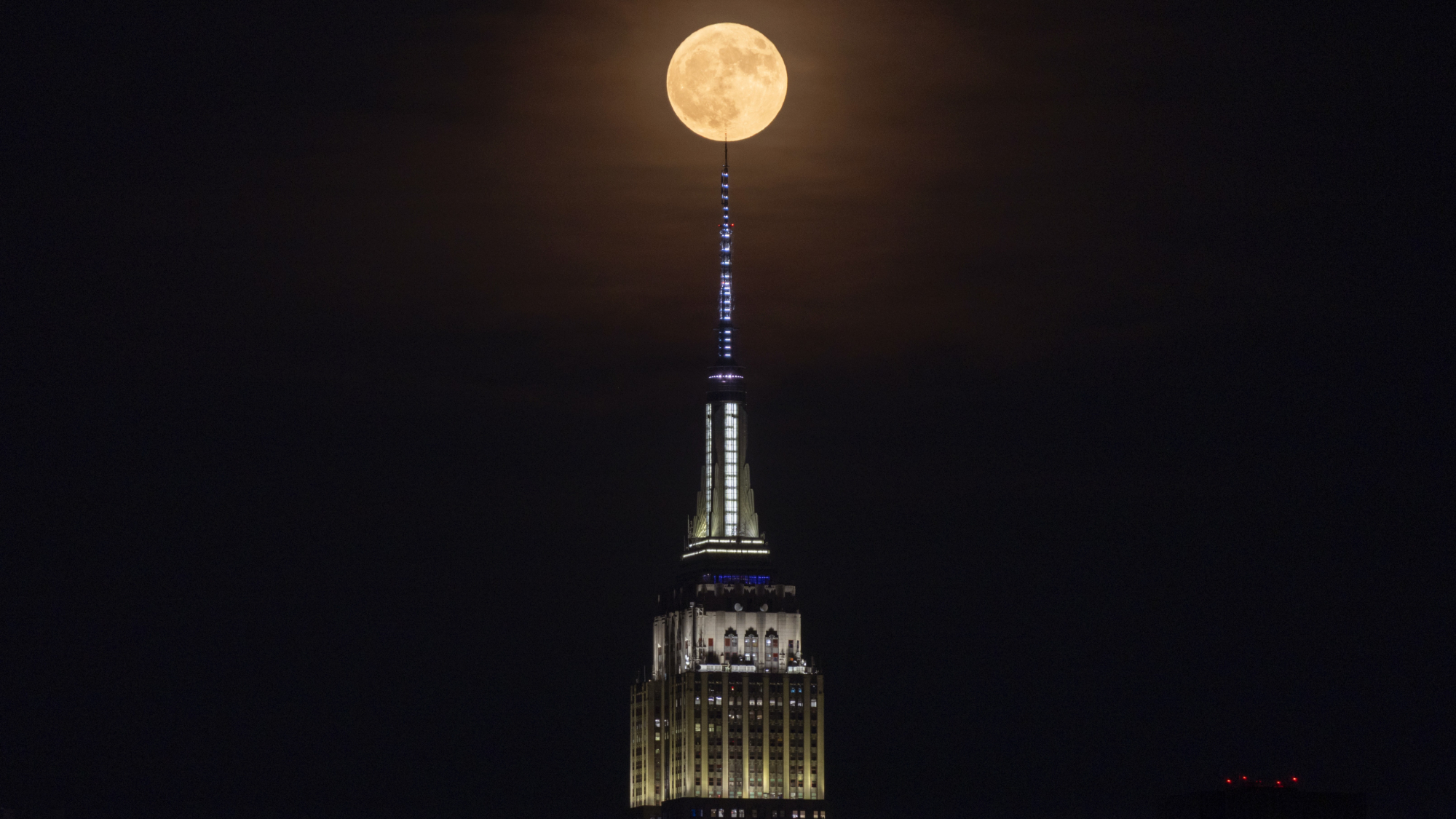
Hershorn was also in the right place at the right time to capture this well-positioned photograph of the Strawberry Moon atop the Empire State Building.

The Strawberry Moon appears to sit atop the Empire State Building on June 29, 2026. (Image credit: Gary Hershorn/Getty Images)

Even Lady Liberty appeared to embrace the Strawberry Moon in another striking image by Hershorn, with the full moon seemingly cradled in the Statue of Liberty's hand.

Strawberry Moon and the Statue of Liberty, June 29, 2026. (Image credit: Gary Hershorn/Getty Images)

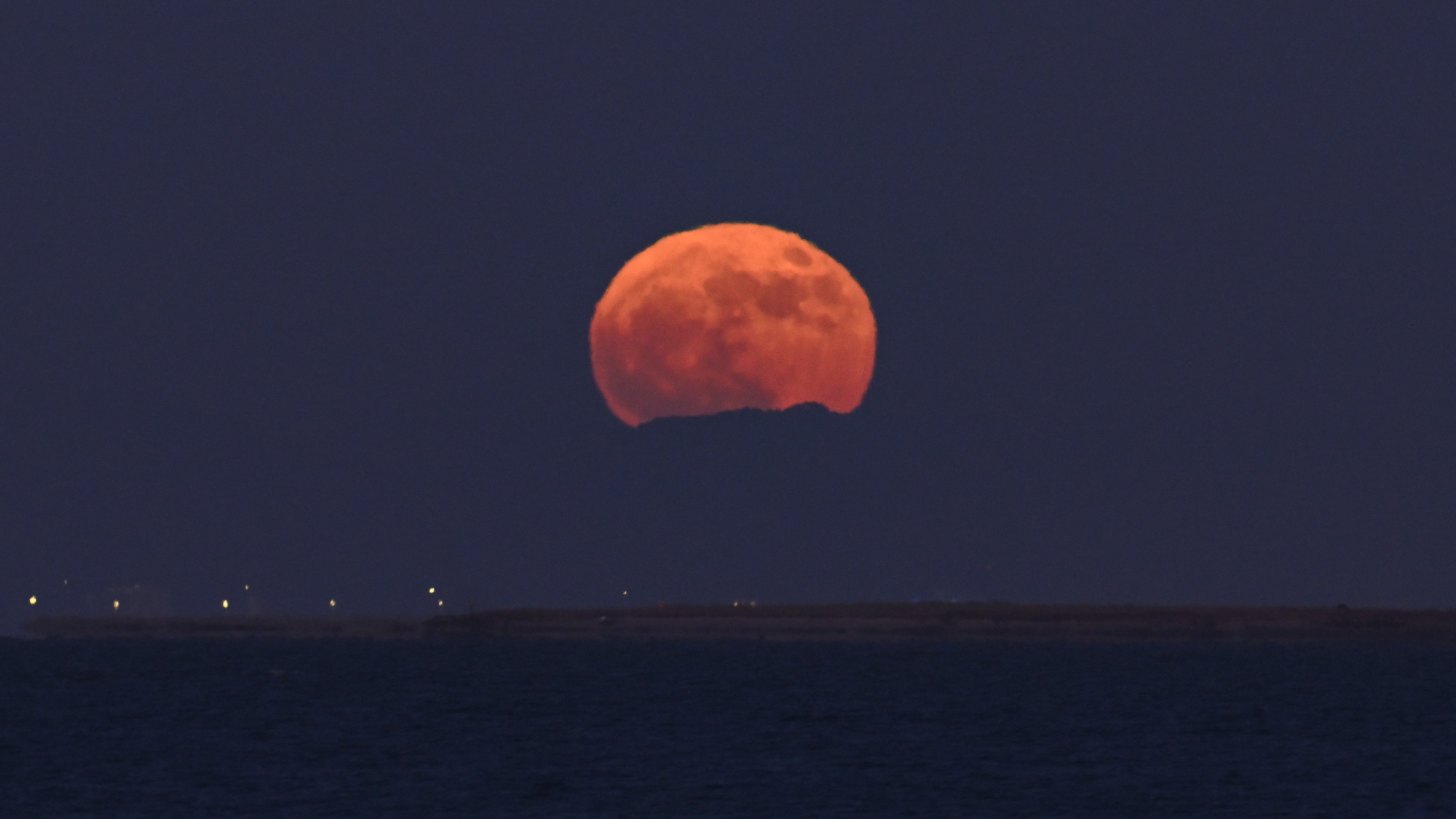
Meanwhile, in California, photographer Tayfun Coskun captured the Strawberry Moon emerging above San Francisco Bay in dramatic fashion.

June's full moon rises over San Francisco Bay in Foster City, California on June 29, 2026. (Image credit: Tayfun Coskun/Anadolu via Getty Images))

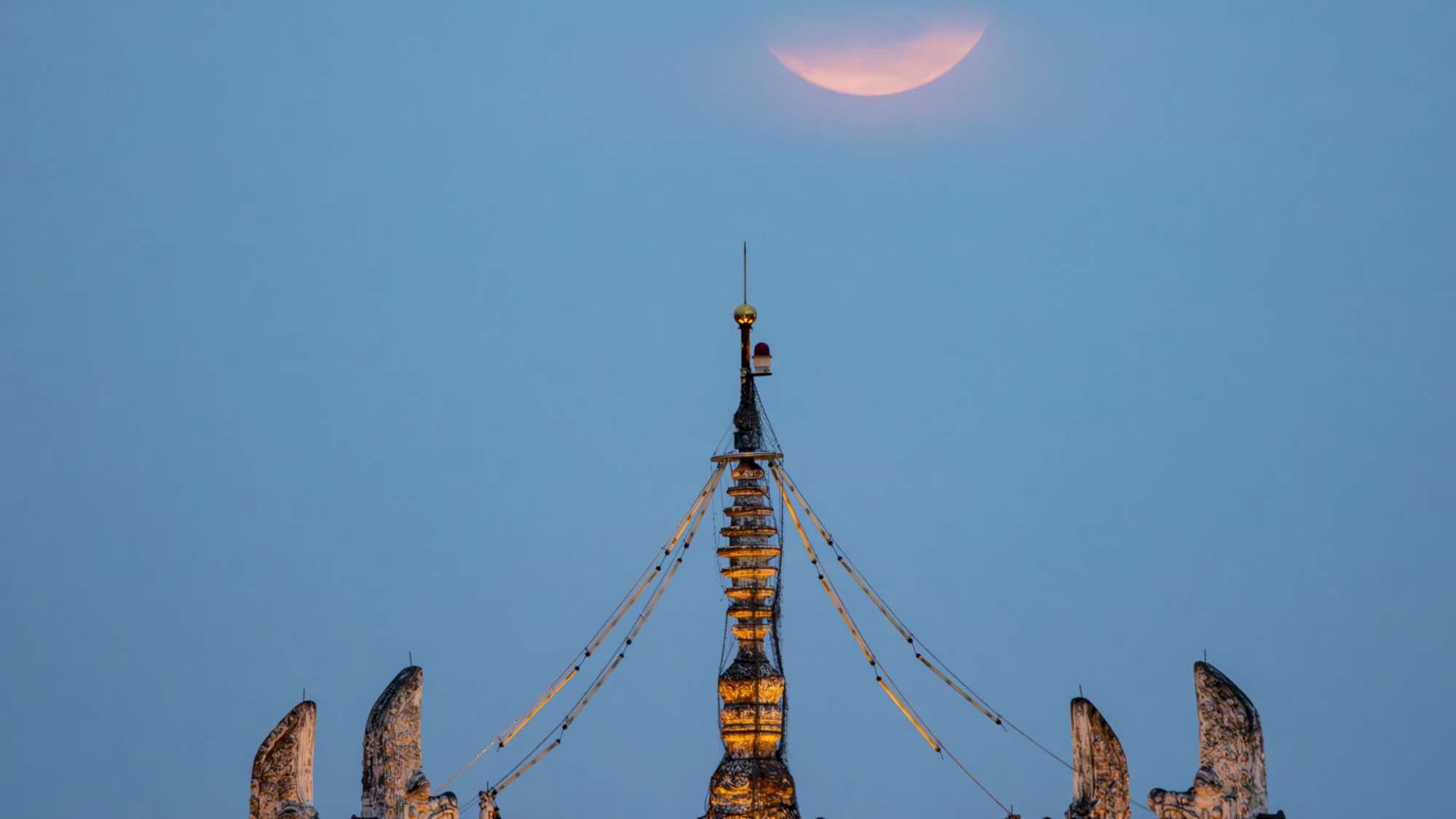
The Strawberry Moon peeked through a thin layer of cloud as it rose above an ornate rooftop in Meishan, China.

June's full moon captured from Meishan, China, on June 29, 2026. (Image credit: VCG/VCG via Getty Images)

The rich orange Strawberry Moon looks particularly striking in this image captured in Qingzhou, China, on June 29, 2026.

Full moon captured from Qingzhou, China, on June 29, 2026. (Image credit: VCG/VCG via Getty Images))

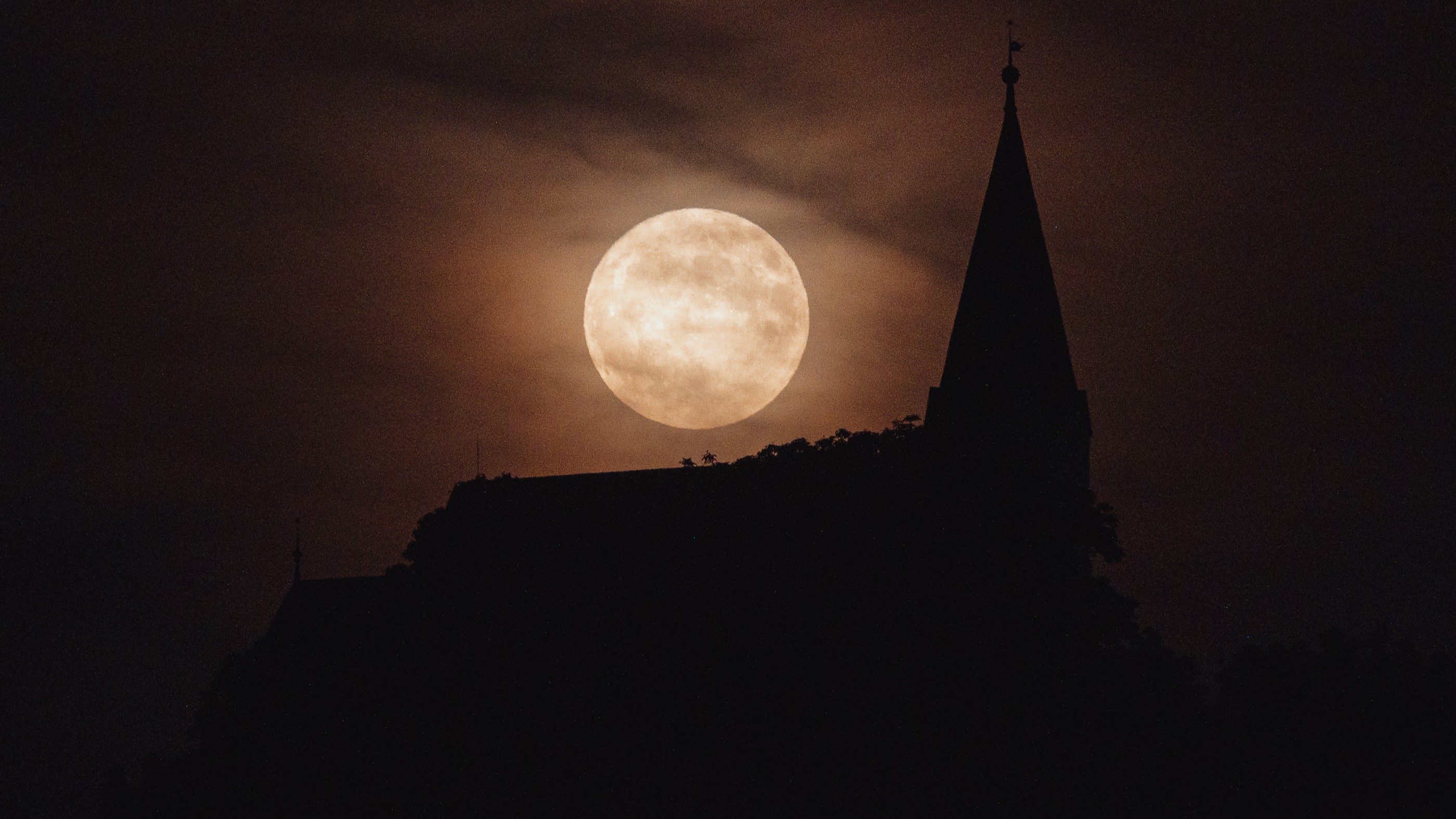
Photographer Robert Nemeti captured this dark and moody image of the Strawberry Moon rising above a Reformed Church in Abaújvár, Hungary, from a vantage point just across the border near Kechnec, Slovakia.

The June full moon over a Reformed Church, Abaújvár, Hungary. Captured from just across the border near Kechnec, Slovakia. (Image credit: Robert Nemeti/Anadolu via Getty Images)

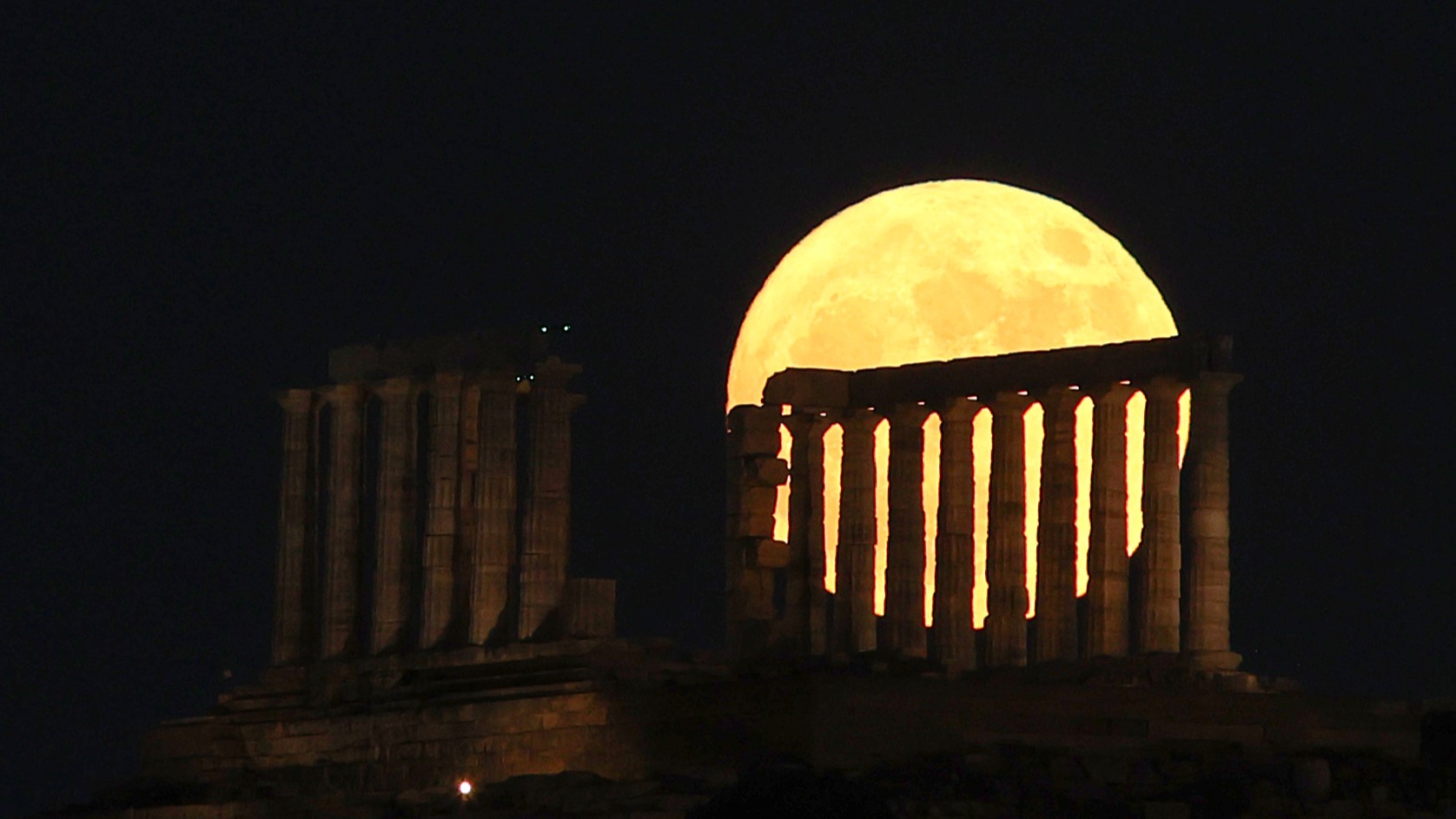
A glowing Strawberry Moon rises behind the ancient Temple of Poseidon at Cape Sounion in this remarkable image captured by photographer Ayhan Mehmet.

The full moon rises behind the ancient Temple of Poseidon, Greece, on June 29, 2026. (Image credit: Ayhan Mehmet/Anadolu via Getty Images))

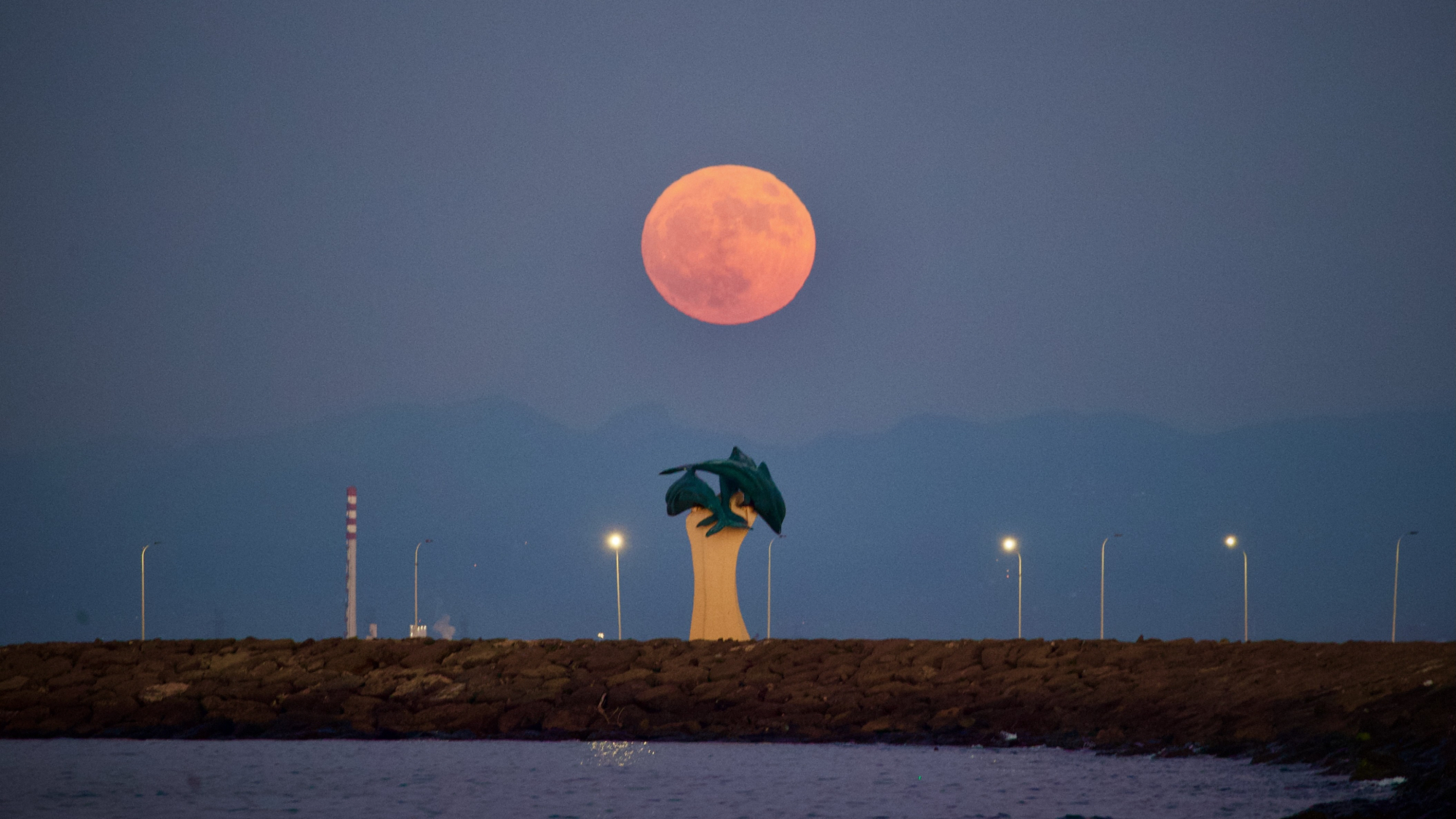
Photographer Veysel Altun captured the June full moon rising above a dolphin sculpture on the waterfront in Samsun, Turkiye.

Strawberry Moon captured from Samsun, Turkiye on June 29, 2026. (Image credit: Veysel Altun/Anadolu via Getty Images)

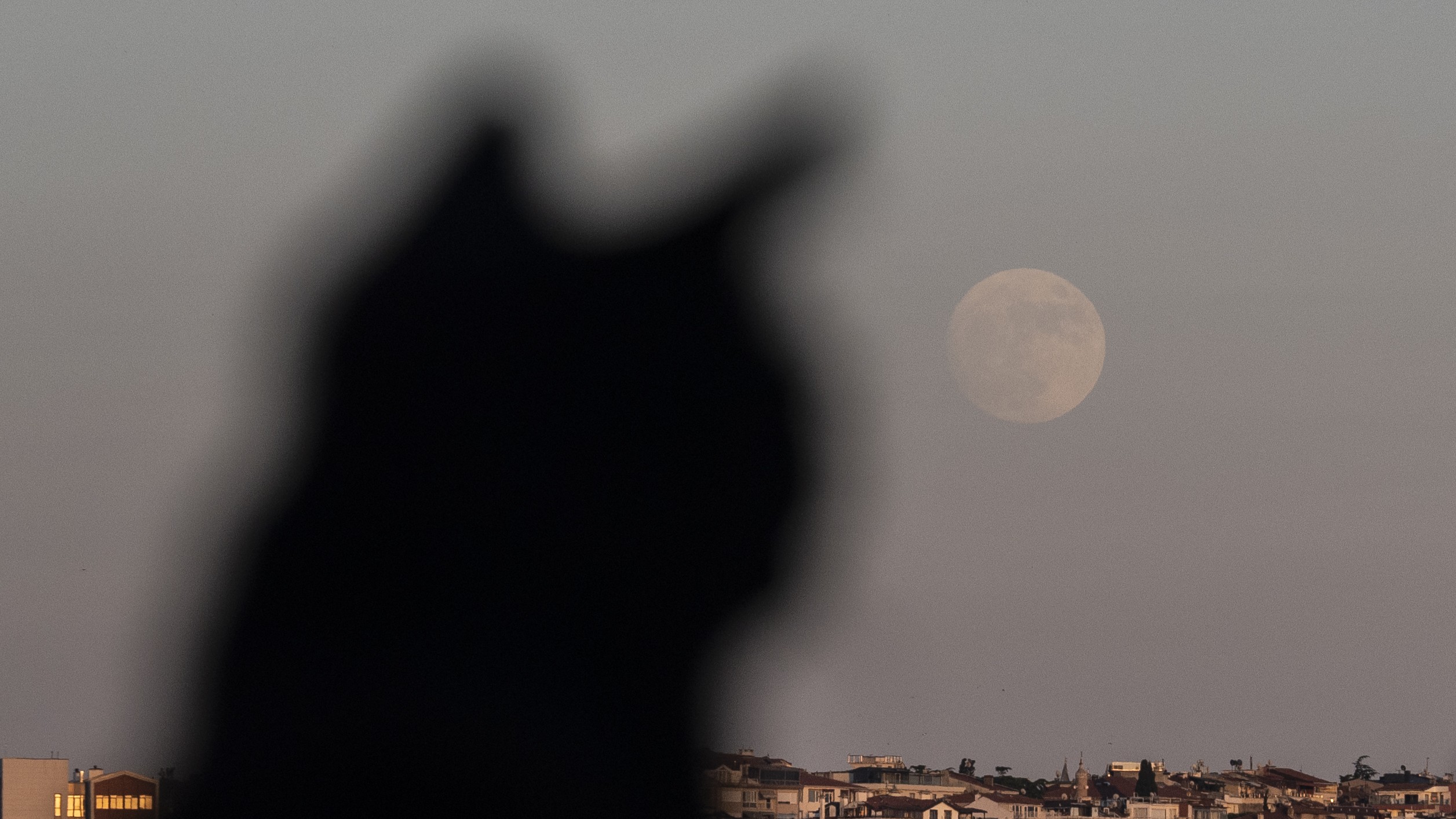
A curious feline stole the spotlight as photographer Osmancan Gurdogan captured the Strawberry Moon rising over the skyline of Istanbul, Turkiye.

The Strawberry Moon and a captivated admirer, Istanbul, Turkiye, June 29, 2026. (Image credit: Osmancan Gurdogan/Anadolu via Getty Images)

When is the next full moon?

The next full moon will occur on July 29 and is known as the Buck Moon.

If you're looking for a telescope or binoculars to observe the moon, our guides for the best binocular deals and the best telescope deals are here to help. Interested in capturing the night sky? Check out our best cameras for astrophotography and best lenses for astrophotography.

Fancy taking a more in-depth moonlit tour of our rocky companion? Our ultimate guide to observing the moon will help you plan your next skywatching venture, whether it be exploring the lunar seas, mountainous terrain, or the many craters that blanket the landscape. You can also see where astronauts, rovers and landers have ventured with our Apollo landing sites observing guide.

The Strawberry Moon rises on June 29. Here’s what to expect from June’s full moon

Editor's note: Wow, the Strawberry Moon 2026 certainly served up quite the treat! We've rounded up some of our favorite photos captured by skywatchers worldwide. If you didn't catch it last night, don't worry; it will still appear full for another night or two.

Get ready to see the first full moon of summer as the stunning Strawberry Moon rises tonight (June 29).

The moon officially reaches its full phase at 7:57 p.m. EDT (2357 GMT) on June 29 when it sits opposite the sun in Earth's sky and appears fully illuminated. While that will mark the exact moment of the full moon, our lunar neighbor will appear bright and round for a night or two before and after.

June's full moon will be the lowest-hanging full moon of the year. That's because it occurs close to the summer solstice, when the sun reaches its highest point in the daytime sky. As a full moon always appears opposite the sun, it follows the opposite path across the sky, tracing the year's lowest arc.

Look east shortly after sunset to watch the Strawberry Moon climb into the evening sky among the stars of the constellation Sagittarius.

June's full moon is known as the Strawberry Moon, a name linked to the short strawberry harvesting season traditionally observed by Native American tribes. Other names for June's full moon include the Rose Moon, Hot Moon and Mead Moon, according to Time and Date.

Despite its name, the Strawberry Moon won't appear pink. However, it may take on a golden or orange hue as it rises. This happens because moonlight must pass through a thicker layer of Earth's atmosphere when the moon is low on the horizon, scattering shorter wavelengths of light and allowing warmer colors to dominate.

You may also notice the moon appearing unusually large near the horizon. This is due to a phenomenon known as the moon illusion, a trick of perception that makes the moon seem bigger when viewed alongside distant landscape features.

If you're looking for a telescope or binoculars to observe the night sky, our guides for the best binocular deals and the best telescope deals can help. Our best cameras for astrophotography and best lenses for astrophotography can help you get ready to capture the next stunning skywatching event.

Editor's Note: If you snap a photo of the full moon and would like to share it with Space.com's readers, send your photo(s), comments, and your name and location to spacephotos@space.com.