The first autonomous soft robot powered only by a chemical reaction

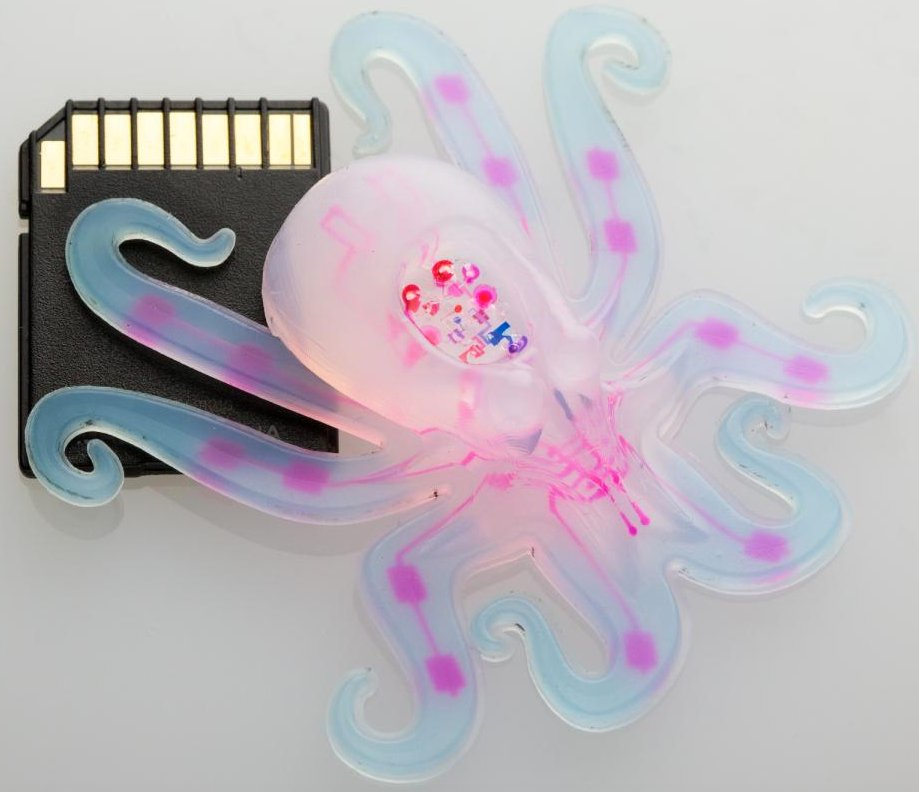
Harvard’s “octobot” is powered by a chemical reaction and controlled with a soft logic board. A reaction inside the bot transforms a small amount of liquid fuel (hydrogen peroxide) into a large amount of oxygen gas, which flows into the octobot’s arms and inflates them like a balloon. The team used a microfluidic logic circuit, a soft analogue of a simple electronic oscillator, to control when hydrogen peroxide decomposes to gas in the octobot. Octopi have long been a source of inspiration in soft robotics. These curious creatures can perform incredible feats of strength and dexterity with no internal skeleton. (SD card shown for scale only.) (credit: Lori Sanders)

The first autonomous, untethered, entirely soft 3-D-printed robot (powered only by a chemical reaction) has been demonstrated by a team of Harvard University researchers and described in the journal Nature.

Nicknamed “octobot,” the bot combines soft lithography, molding, and 3-D printing.

“One longstanding vision for the field of soft robotics has been to create robots that are entirely soft, but the struggle has always been in replacing rigid components like batteries and electronic controls with analogous soft systems and then putting it all together,” said Harvard professor Robert Wood. “This research demonstrates that we can easily manufacture the key components of a simple, entirely soft robot, which lays the foundation for more complex designs.”

Powered by hydrogen peroxide
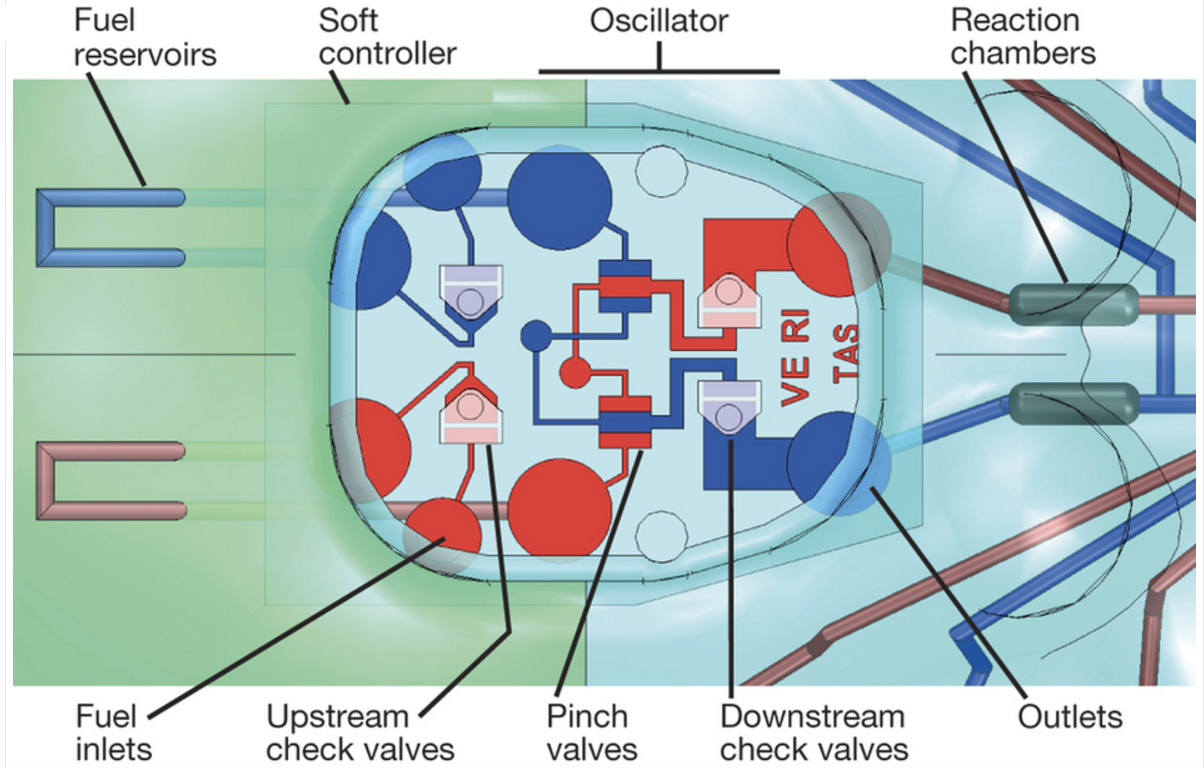
Octobot structure. A system of check valves and switch valves within the soft controller regulates fluid flow into and through the system. The reaction chambers convert the hydrogen peroxide to oxygen, which then inflates the bot arms. The 500-micrometers-high “VERITAS” letters are patterned into the soft controller as an indication of scale. (credit: Michael Wehner et al./Nature)

Harvard’s octobot is pneumatic-based — powered by gas under pressure. A reaction inside the bot transforms a small amount of liquid fuel (hydrogen peroxide) into a large amount of gas, which flows into the octobot’s arms and inflates them like balloons. To control the reaction, the team used a microfluidic logic circuit based on pioneering work by co-author and chemist George Whitesides.
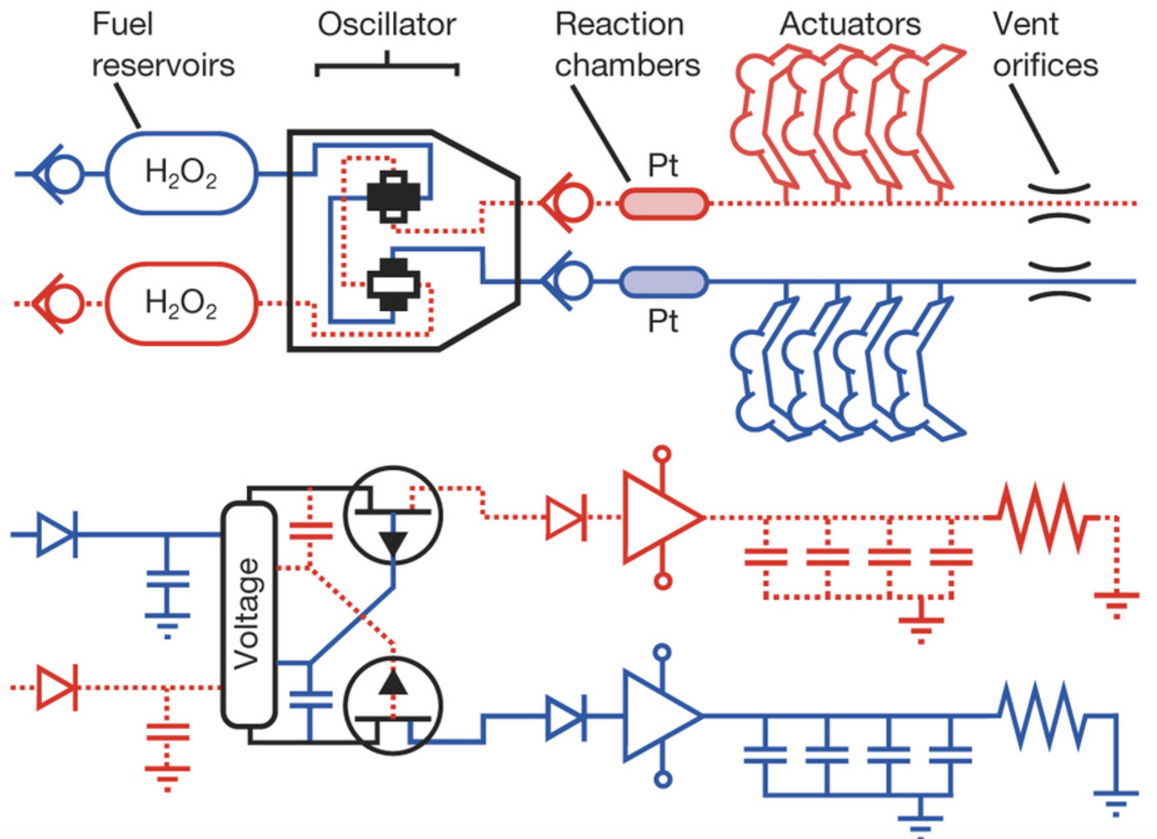
Octobot mechanical schematic (top) and electronic analogue (bottom). Check valves, fuel tanks, oscillator, reaction chambers, actuators and vent orifices are analogous to diodes, supply capacitors, electrical oscillator, amplifiers, capacitors and pull-down resistors, respectively. (credit: Michael Wehner at al./Nature)

The circuit, a soft analogue of a simple electronic oscillator, controls when hydrogen peroxide decomposes to gas in the octobot, triggering actuators.

The proof-of-concept octobot design could pave the way for a new generation of such machines, which could help revolutionize how humans interact with machines, the researchers suggest. They hope their approach for creating autonomous soft robots inspires roboticists, material scientists, and researchers focused on advanced manufacturing.

Next, the Harvard team hopes to design an octobot that can crawl, swim, and interact with its environment.

Robert Wood, the Charles River Professor of Engineering and Applied Sciences, and Jennifer A. Lewis, the Hansjorg Wyss Professor of Biologically Inspired Engineering, at the Harvard John A. Paulson School of Engineering and Applied Sciences (SEAS), led the research. Lewis and Wood are also core faculty members of the Wyss Institute for Biologically Inspired Engineering at Harvard University. George Whitesides is the Woodford L. and Ann A. Flowers University Professor and a core faculty member of the Wyss.

The research was supported by the National Science Foundation through the Materials Research Science and Engineering Center at Harvard and by the Wyss Institute.


Harvard University | Introducing the Octobot


Harvard University | Powering the Octobot: A chemical reaction


Abstract of An integrated design and fabrication strategy for entirely soft, autonomous robots

Soft robots possess many attributes that are difficult, if not impossible, to achieve with conventional robots composed of rigid materials. Yet, despite recent advances, soft robots must still be tethered to hard robotic control systems and power sources. New strategies for creating completely soft robots, including soft analogues of these crucial components, are needed to realize their full potential. Here we report the untethered operation of a robot composed solely of soft materials. The robot is controlled with microfluidic logic that autonomously regulates fluid flow and, hence, catalytic decomposition of an on-board monopropellant fuel supply. Gas generated from the fuel decomposition inflates fluidic networks downstream of the reaction sites, resulting in actuation. The body and microfluidic logic of the robot are fabricated using moulding and soft lithography, respectively, and the pneumatic actuator networks, on-board fuel reservoirs and catalytic reaction chambers needed for movement are patterned within the body via a multi-material, embedded 3D printing technique. The fluidic and elastomeric architectures required for function span several orders of magnitude from the microscale to the macroscale. Our integrated design and rapid fabrication approach enables the programmable assembly of multiple materials within this architecture, laying the foundation for completely soft, autonomous robots.


A possible habitable planet is only four light-years away, astronomers discover

Artist’s impression shows a view of the surface of the planet Proxima b orbiting the red dwarf star Proxima Centauri, the closest star to the Solar System. The double star Alpha Centauri AB also appears in the image to the upper-right of the star Proxima. (credit: ESO/M. Kornmesser)

A rocky planet called Proxima b — the closest exoplanet to us — is in the habitable zone of Proxima Centauri, the closest star to our Solar System, a team of astronomers has found after painstaking observation and data analysis.

The new world orbits its cool red-dwarf parent star every 11.2 days and has a temperature suitable for liquid water to exist on its surface. A paper describing this milestone finding was published online today (Aug. 24) in the journal Nature.

The star Proxima Centauri, which is 4.2 light-years from Earth, in the constellation of Centaurus, is too faint to be seen with the naked eye and is close to the much brighter pair of stars known as Alpha Centauri A and B.

A view of the skies over the European Southern Observatory’s La Silla Observatory in Chile (credit: Y. Beletsky (LCO)/ESO/ESA/NASA/M. Zamani)

During the first half of 2016, the HARPS spectrograph on the European Southern Observatory’s 3.6-meter telescope at La Silla regularly observed the star Proxima Centauri, as did other professional and amateur telescopes around the world in a collaboration known as the Pale Red Dot campaign — looking for a tiny back-and-forth wobble in the star caused by the gravitational pull of an orbiting planet. (Other scientists have also been observing Proxima Centauri for years.)

The two bright stars are (left) Alpha Centauri and (right) Beta Centauri. The faint red star in the center of the red circle is Proxima Centauri. (credit: Skatebiker/CC)

So here’s what the Pale Red Dot data — when combined with earlier observations — shows:

  • At regular intervals, the star Proxima Centauri is approaching Earth at about 5 kilometers per hour — normal human walking pace — and at opposite times in those cycles it is receding at the same speed. This regular pattern repeats with a period of 11.2 days.
  • Analysis of the resulting Doppler shifts (and removing brightness-variation artifacts from the star) indicated the presence of a planet with a mass at least 1.3 times that of the Earth, orbiting about 7 million kilometers from Proxima Centauri (about 5 percent of the distance of Earth for our Sun, and coser than the planet Mercury is to our Sun — but Proxima Centauri is cooler than our Sun).
  • Proxima b is tidally locked to its star (one side is always sunny, the other is dark) and has an estimated temperature that would allow for a liquid state on its surface, thus placing it within the “habitable zone” around the star (assuming water is present). Atmosphere: unknown.
  • Proxima may be strongly affected by ultraviolet and x-ray flares from the star — far more intense than the Earth experiences from the Sun. (Extreme sun glasses recommended if you visit.)

Meanwhile a wild project by Stephen Hawking and philanthropist Yuri Milner — who announced in April a $100 million research and engineering program, Breakthrough Starshot, to study the concept of using laser light beams to propel gram-scale “nanocraft” to 20 percent of light speed to travel to Alpha Centauri — (KurzweilAI: Breakthrough Starshot’ aims to reach Alpha Centauri 20 years after launch) has been vindicated — with a minor detour.


Abstract of A terrestrial planet candidate in a temperate orbit around Proxima Centauri

At a distance of 1.295 parsecs, the red dwarf Proxima Centauri (α Centauri C, GL 551, HIP 70890 or simply Proxima) is the Sun’s closest stellar neighbour and one of the best-studied low-mass stars. It has an effective temperature of only around 3,050 kelvin, a luminosity of 0.15 per cent of that of the Sun, a measured radius of 14 per cent of the radius of the Sun and a mass of about 12 per cent of the mass of the Sun. Although Proxima is considered a moderately active star, its rotation period is about 83 days and its quiescent activity levels and X-ray luminosity are comparable to those of the Sun. Here we report observations that reveal the presence of a small planet with a minimum mass of about 1.3 Earth masses orbiting Proxima with a period of approximately 11.2 days at a semi-major-axis distance of around 0.05 astronomical units. Its equilibrium temperature is within the range where water could be liquid on its surface.

Beyond Wi-Fi

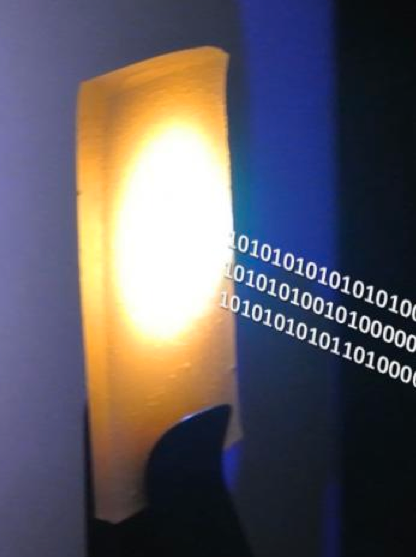
A nanocrystal-based material converts blue laser emission to white light for combined illumination and high-speed data communication. (credit: KAUST 2016)

Researchers at King Abdullah University of Science and Technology (KAUST) have developed a system that uses high-speed visible light communications (VLC) to replace slower Wi-Fi and Bluetooth, allowing ceiling lights, for example, to provide an internet connection to laptops.

“VLC has many advantages compared with lower frequency communications approaches (including Wi-Fi and Bluetooth), such as energy efficiency, an unregulated communication spectrum, environmental friendliness, greater security, and no RF interferences,” according to KAUST researchers.

However, VLC is currently limited to about 100 megabits/sec. (compared to a maximum speed for the current 802.11n Wi-Fi spec of about 600 megabits/sec.) because it requires light-emitting diodes (LEDs) that produce white light, according to KAUST Professor of Electrical Engineering Boon Ooi.

These are usually fabricated by combining a diode that emits blue light with phosphorous that turns some of this radiation into red and green light. However, this conversion process limits the switching speed.

To deal with that limitation, the researchers created nanocrystals based on cesium lead bromide perovskite combined with a conventional nitride red phosphor, which achieved a data rate of 2 gigabits/sec.* That’s comparable to the newest Wi-Fi spec, 802.11ac, which can deliver about 1.7Gbps to 2.5Gbps, as Extreme Tech reports (but limited to the the 5 GHz Wi-Fi band, which has limited penetration).

Importantly, the white light generated using their perovskite nanostructures was of a quality comparable to present LED technology.

The research is presented in an open-access paper in ACS Photonics.

* When illuminated by a blue laser light, the nanocrystals emitted green light while the nitride emitted red light. Together, these combined to create a warm white light. The researchers characterized the optical properties of their material using a technique known as femtosecond transient spectroscopy. They were able to show that the optical processes in cesium lead bromide nanocrystals occur on a time scale of roughly seven nanoseconds. This meant they could modulate the optical emission at a frequency of 491 Megahertz, 40 times faster than is possible using phosphorus, and transmit data at a rate of  2 gigabits/sec.

Interscatter communication

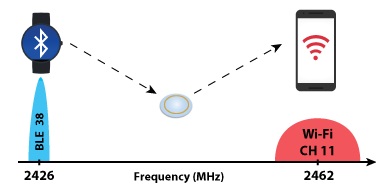
In interscatter communication, a backscattering device such as a smart contact lens converts Bluetooth transmissions from a device such as a smartwatch to generate Wi-Fi signals that can be read by a phone or tablet. (credit: University of Washington)

University of Washington researchers have introduced another variant on Wi-Fi called “interscatter communication” that may allow devices such as brain implants, contact lenses, credit cards and smaller wearable electronics to talk to everyday devices such as smartphones and watches (to report a medical condition, for example).

The interscatter communication method works by converting Bluetooth signals into Wi-Fi transmissions. Using only reflections, an interscatter device such as a smart contact lens converts Bluetooth signals from a smartwatch, for example, into Wi-Fi transmissions that can be picked up by a smartphone.

Due to their size and location within the body, these smart contact lenses are normally too constrained by power demands to send data using conventional wireless transmissions. That means they so far have not been able to send data using Wi-Fi to smartphones and other mobile devices. Those same requirements also limit emerging technologies such as brain implants that treat Parkinson’s disease, stimulate organs and may one day even reanimate limbs.

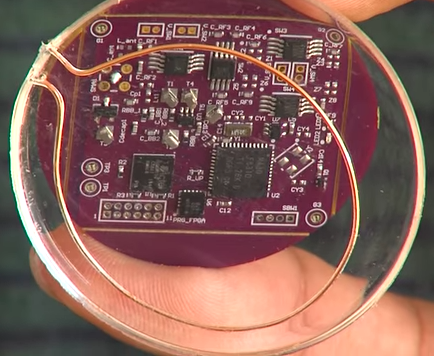
Smart contact lens (credit: University of Washington)

The team of UW electrical engineers and computer scientists has demonstrated for the first time that these types of power-limited devices can “talk” to others using standard Wi-Fi communication. Their system requires no specialized equipment, relying solely on mobile devices commonly found with users to generate Wi-Fi signals using 10,000 times less energy than conventional methods.

“Instead of generating Wi-Fi signals on your own, our technology creates Wi-Fi by using Bluetooth transmissions from nearby mobile devices such as smartwatches,” said co-author Vamsi Talla, a recent UW doctoral graduate in electrical engineering who is now a research associate in the Department of Computer Science & Engineering.


University of Washington Computer Science & Engineering | Interscatter

Backscatter communication: piggybacking on Bluetooth

The team’s process relies on a communication technique called backscatter, which allows devices to exchange information simply by reflecting existing signals. Because the new technique enables inter-technology communication by using Bluetooth signals to create Wi-Fi transmissions, the team calls it “interscattering.”

Interscatter communication uses the Bluetooth, Wi-Fi or ZigBee radios embedded in common mobile devices  like smartphones, watches, laptops, tablets and headsets, to serve as both sources and receivers for these reflected signals.

In one example the team demonstrated, a smartwatch transmits a Bluetooth signal to a smart contact lens outfitted with an antenna. To create a blank slate on which new information can be written, the UW team developed an innovative way to transform the Bluetooth transmission into a “single tone” signal that can be further manipulated and transformed. By backscattering that single tone signal, the contact lens can encode data — such as health information it may be collecting — into a standard Wi-Fi packet that can then be read by a smartphone, tablet or laptop.

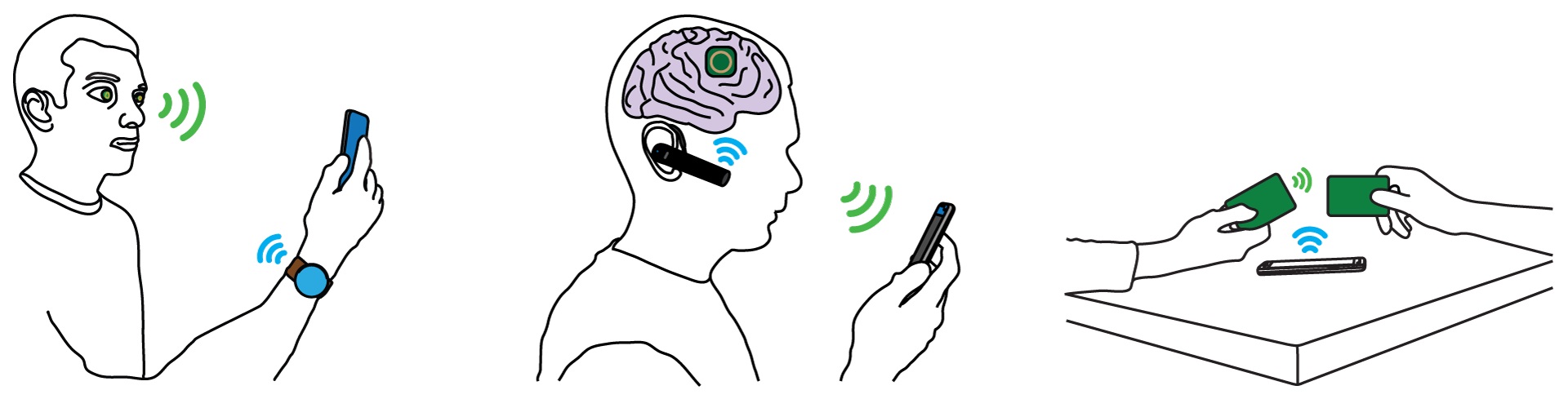
Examples of interscatter communication include a) a smart contact lens using Bluetooth signals from a watch to send data to a phone b) an implantable brain interface communicating via a Bluetooth headset and smartphone and c) credit cards communicating by backscattering Bluetooth transmissions from a phone. (credit: University of Washington)

The researchers built three proof-of-concept demonstrations for previously infeasible applications, including a smart contact lens and an implantable neural recording device that can communicate directly with smartphones and watches.

Consuming only tens of microwatts

“Preserving battery life is very important in implanted medical devices, since replacing the battery in a pacemaker or brain stimulator requires surgery and puts patients at potential risk from those complications,” said co-author Joshua Smith, associate professor of electrical engineering and of computer science and engineering. “Interscatter can enable Wi-Fi for these implanted devices while consuming only tens of microwatts of power.”

Beyond implanted devices, the researchers have also shown that their technology can apply to other applications, such as smart credit cards. The team built credit card prototypes that can communicate directly with each other by reflecting Bluetooth signals coming from a smartphone.

This opens up possibilities for smart credit cards that can communicate directly with other cards and enable applications where users can split the bill by just tapping their credit cards together.

The new technique is described in an open-access paper to be presented today, Aug. 22, at the annual conference of the Association for Computing Machinery’s Special Interest Group on Data Communication (SIGCOMM 2016) in Brazil.

The research was funded by the National Science Foundation and Google Faculty Research Awards.


Abstract of Perovskite Nanocrystals as a Color Converter for Visible Light Communication

Visible light communication (VLC) is an emerging technology that uses light-emitting diodes (LEDs) or laser diodes for simultaneous illumination and data communication. This technology is envisioned to be a major part of the solution to the current bottlenecks in data and wireless communication. However, the conventional lighting phosphors that are typically integrated with LEDs have limited modulation bandwidth and thus cannot provide the bandwidth required to realize the potential of VLC. In this work, we present a promising light converter for VLC by designing solution-processed CsPbBr3 perovskite nanocrystals (NCs) with a conventional red phosphor. The fabricated CsPbBr3 NC phosphor-based white light converter exhibits an unprecedented modulation bandwidth of 491 MHz, which is ∼40 times greater than that of conventional phosphors, and the capability to transmit a high data rate of up to 2 Gbit/s. Moreover, this perovskite-enhanced white light source combines ultrafast response characteristics with a high color rendering index of 89 and a correlated color temperature of 3236 K, thereby enabling dual VLC and solid-state lighting functionalities.


Abstract of Inter-Technology Backscatter: Towards Internet Connectivity for Implanted Devices

We introduce inter-technology backscatter, a novel approach that transforms wireless transmissions from one technology to another, on the air. Specifically, we show for the first time that Bluetooth transmissions can be used to create Wi-Fi and ZigBee-compatible signals using backscatter communication. Since Bluetooth, Wi-Fi and ZigBee radios are widely available, this approach enables a backscatter design that works using only commodity devices. We build prototype backscatter hardware using an FPGA and experiment with various Wi-Fi, Bluetooth and ZigBee devices. Our experiments show we can create 2–11 Mbps Wi-Fi standards-compliant signals by backscattering Bluetooth transmissions. To show the generality of our approach, we also demonstrate generation of standards-complaint ZigBee signals by backscattering Bluetooth transmissions. Finally, we build proof-of-concepts for previously infeasible applications including the first contact lens form-factor antenna prototype and an implantable neural recording interface that communicate directly with commodity devices such as smartphones and watches, thus enabling the vision of Internet connected implanted devices.

Neuroscientists identify cortical links to adrenal medulla (mind-body connection)

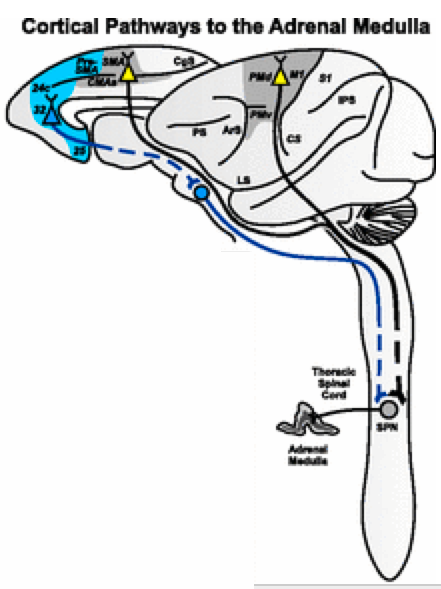
Cortical pathways to the adrenal medulla. Cortical areas on the lateral surface and the medial wall of the hemisphere are the source of neurons that influence the adrenal medulla. Gray shading: cortical motor areas; blue shading: medial prefrontal areas. (credit: Richard P. Dum et al./PNAS)

Neuroscientists at the University of Pittsburgh have identified the neural networks that connect the cerebral cortex to the adrenal medulla — the inner part of the adrenal gland, located above each kidney, which is responsible for the body’s rapid response in stressful situations.

These findings, reported in the online Early Edition of the journal Proceedings of the National Academy of Sciences PNAS), provide evidence for the neural basis of a mind-body connection. They also shed new light on how stress, depression, and other mental states can alter organ function, and show that there is a real anatomical basis for psychosomatic illness.

The research also identifies a concrete neural substrate that may help explain why meditation and certain exercises such as yoga and Pilates can be so helpful in modulating the body’s responses to physical, mental and emotional stress, according to senior author Peter L. Strick, Ph.D., Thomas Detre Chair of the Department of Neurobiology and scientific director of the University of Pittsburgh Brain Institute.

Why it matters which cortical areas influence the adrenal medulla

In their experiments with monkeys, the scientists traced the neural circuitry that links areas of the cerebral cortex to the adrenal medulla, using a unique tracing method that involves rabies virus. This approach is capable of revealing long chains of interconnected neurons.

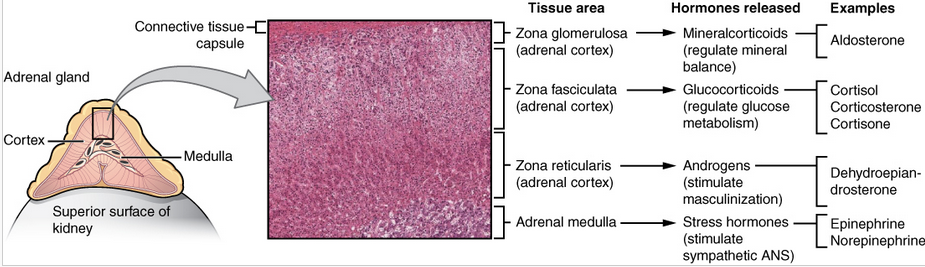
Different hormones produced in different zones of the cortex and medulla of the gland (credit: Regents of University of Michigan Medical School)

Another surprising result of the research was that motor areas in the cerebral cortex, which are involved in the planning and performance of movement, provide a substantial input to the adrenal medulla. One of these areas is a portion of the primary motor cortex that is concerned with the control of axial body movement and posture. This input to the adrenal medulla may explain why core body exercises are so helpful in modulating responses to stress. Calming practices such as Pilates, yoga, tai chi and even dancing in a small space all require proper skeletal alignment, coordination, and flexibility to avoid harm to the body.

The PNAS study also revealed that the areas of the cortex that are active when we sense conflict, or are aware that we have made an error, are a source of influence over the adrenal medulla. “This observation,” said Dr. Strick, “raises the possibility that activity in these cortical areas when you re-imagine an error, or beat yourself up over a mistake, or think about a traumatic event, results in descending signals that influence the adrenal medulla in just the same way as the actual event.”

These anatomical findings have relevance for therapies that deal with post-traumatic stress.

Additional links with the adrenal medulla were discovered in cortical areas that are active during mindful mediation and areas that show changes in bipolar familial depression. “One way of summarizing our results is that we may have uncovered the stress and depression connectome,” says Strick.

Overall, these results indicate that circuits exist to link movement, cognition and affect to the function of the adrenal medulla and the control of stress. This circuitry may mediate the effects of internal states like chronic stress and depression on organ function and thus provide a concrete neural substrate for some psychosomatic illness.

This research was funded by National Institutes of Health and the Pennsylvania Department of Health.


Abstract of Motor, cognitive, and affective areas of the cerebral cortex influence the adrenal medulla

Modern medicine has generally viewed the concept of “psychosomatic” disease with suspicion. This view arose partly because no neural networks were known for the mind, conceptually associated with the cerebral cortex, to influence autonomic and endocrine systems that control internal organs. Here, we used transneuronal transport of rabies virus to identify the areas of the primate cerebral cortex that communicate through multisynaptic connections with a major sympathetic effector, the adrenal medulla. We demonstrate that two broad networks in the cerebral cortex have access to the adrenal medulla. The larger network includes all of the cortical motor areas in the frontal lobe and portions of somatosensory cortex. A major component of this network originates from the supplementary motor area and the cingulate motor areas on the medial wall of the hemisphere. These cortical areas are involved in all aspects of skeletomotor control from response selection to motor preparation and movement execution. The second, smaller network originates in regions of medial prefrontal cortex, including a major contribution from pregenual and subgenual regions of anterior cingulate cortex. These cortical areas are involved in higher-order aspects of cognition and affect. These results indicate that specific multisynaptic circuits exist to link movement, cognition, and affect to the function of the adrenal medulla. This circuitry may mediate the effects of internal states like chronic stress and depression on organ function and, thus, provide a concrete neural substrate for some psychosomatic illness.

Mayo Clinic, collaborators working to advance aging research via clinical trials

(credit: iStock)

Mayo Clinic and other members of the Geroscience Network* have developed strategies for taking new drugs to clinical trials — specifically, drugs that target processes underlying multiple age-related diseases and disabilities. And they’ve written six supporting articles that appeared Wednesday Aug. 17 in The Journals of Gerontology: Series A – Biological Sciences and Medical Sciences.

The Geroscience Network consists of 18 academic aging center, with the participation of more than 100 investigators from across the U.S. and Europe.

Aging may be a modifiable risk factor

“Aging is the largest risk factor for most chronic diseases, including stroke, heart disease, cancer, dementias, osteoporosis, arthritis, diabetes, metabolic syndrome, blindness and frailty,” said James Kirkland, M.D., Ph.D., director of the Mayo Clinic Robert and Arlene Kogod Center on Aging.

However, he said recent research suggests that aging may actually be a modifiable risk factor. “The goal of our network’s collaborative efforts is to accelerate the pace of discovery in developing interventions to delay, prevent, or treat these conditions as a group, instead of one at a time.”

Felipe Sierra, Ph.D., of the National Institute on Aging and a member of the Geroscience Network, describes the potential impact of such discoveries in his article, “Moving Geroscience into Uncharted Waters.” He notes that in addition to the direct health issues, care for the elderly currently accounts for 43 percent of the total health care spending in the U.S,, or approximately 1 trillion dollars a year, and that this number is expected to rise as baby boomers reach retirement age.

“Reducing these costs is critical for the survival of society as we know it,” he said. “A 2013 paper by Dana Goldman and colleagues calculated that a just modest increase (2.2 years) in lifespan and healthspan could reduce those expenses by 7 trillion dollars by 2050.”

This work was supported by the National Institutes of Health, the Paul Glenn Foundation, Nathan Shock Centers of Excellence for the Biology of Aging, the Connor Group, and the Noaber and Ted Nash foundations.

The first two articles cited below are open-access.

* In addition to Mayo Clinic, members of the Geroscience Network are Albert Einstein College of Medicine, Buck Institute for Research on Aging, Harvard University, Johns Hopkins University, National Institute on Aging, the Scripps Research Institute, Stanford University, the University of Alabama at Birmingham, the University of Arkansas, the University of Connecticut, the University of Michigan, the University of Minnesota, the University of Oklahoma, the University of Texas Health Science Center San Antonio, the University of Southern California, the University of Washington, and Wake Forest University as well as members from other institutions across the U.S. and Europe.

How to separate out semiconducting carbon nanotubes

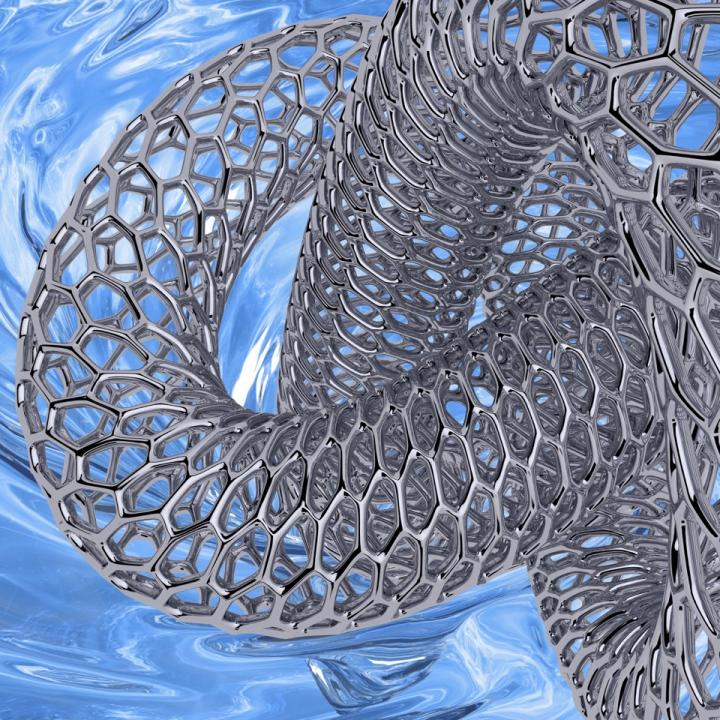
Artistic rendition of a metallic carbon nanotube being pulled into solution, in analogy to the work described by the Adronov group (credit: Alex Adronov, McMaster University)

Researchers at McMaster University in Canada have developed a radically improved way to purify single-wall carbon nanotubes (SWNTs) — flexible structures that are one nanometer in diameter and thousands of times longer, ­and that may revolutionize computers and electronics, replacing silicon.

To do that, we need to separate out semiconducting (sc-SWNTs) and metallic (m-SWNTs) nanotubes. That’s a challenging problem, because both are created simultaneously in the process* of producing carbon nanotubes.

“Once we have a reliable source of pure nanotubes that are not very expensive, a lot can happen very quickly,” says Alex Adronov, a professor of Chemistry at McMaster whose research team has developed a new and potentially cost-efficient way to purify carbon nanotubes.

Separating out semiconducting carbon nanotubes

Previous researchers have created polymers that could allow semiconducting carbon nanotubes to be dissolved and washed away, leaving metallic nanotubes behind, but there has not been such a process for doing the more-useful opposite: dispersing the metallic nanotubes and leaving behind the valuable semiconducting structures.

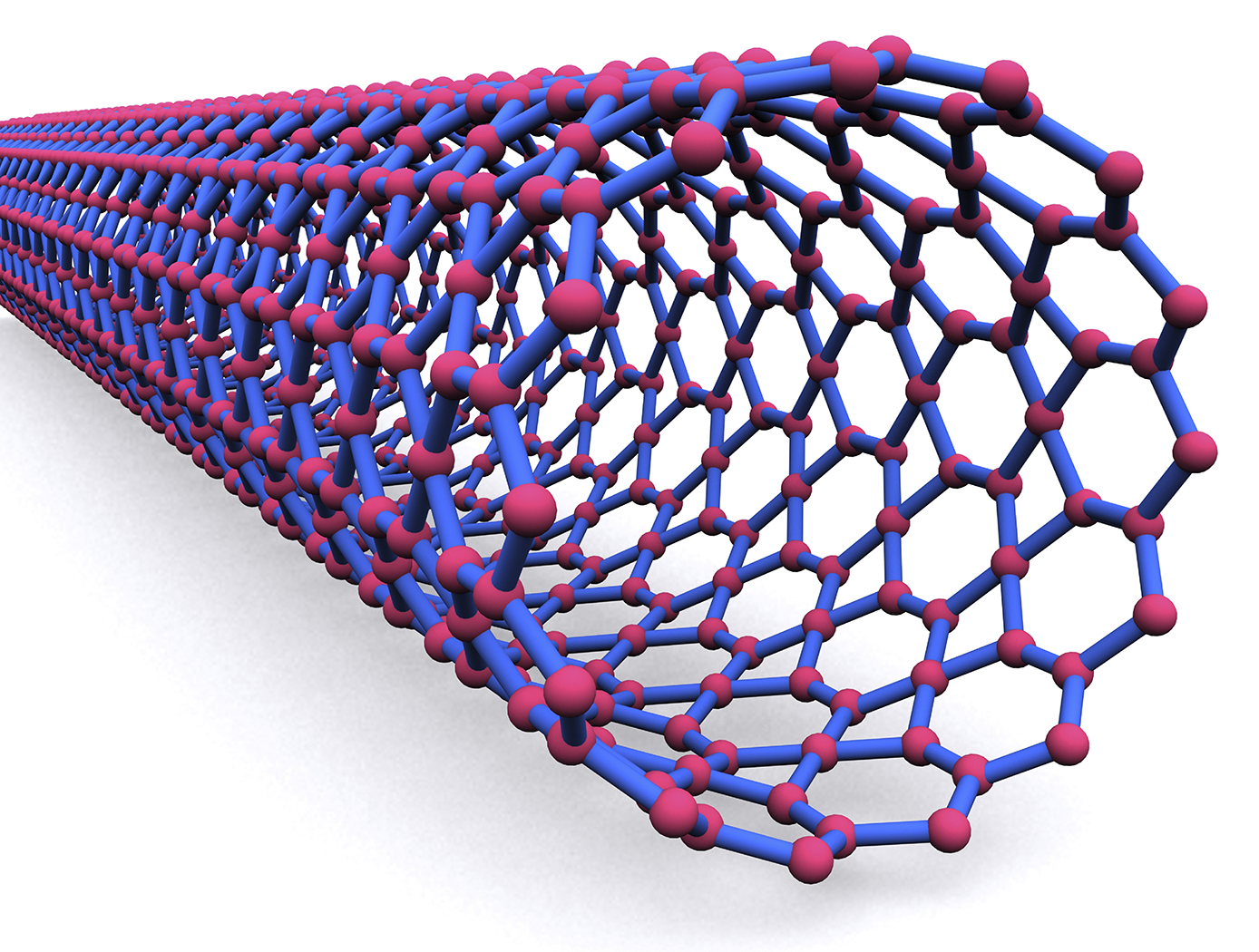
Single-wall carbon nanotube (credit: NASA)

Now, Adronov’s research group has reversed the electronic characteristics (from electron-rich to electron-poor) of a polymer known to disperse semiconducting nanotubes, while leaving the rest of the polymer’s structure intact. That is, they have reversed the purification process — leaving the semiconducting nanotubes behind while making it possible to disperse the metallic nanotubes.**

The next step, he explains, is for his team or other researchers to exploit the discovery by finding a way to develop even more efficient polymers and scale up the process for commercial production.

The unique properties of SWNTs — high ten­sile strength, the high aspect ratio, thermal and electrical conductivity, and extraordinary optical characteristics — could make carbon nanotubes potentially valuable as advanced materials in a variety of applications, including “field-effect transistors, photovoltaics, flexible electronics, sensors, touch screens, high-strength fibers, biotech­nological constructs, and various other devices,” the researchers note in the current cover story of Chemistry – A European Journal.

Financial support for this work was provided by the Discovery and Strategic Grant programs of the Natural Science and Engi­neering Research Council (NSERC) of Canada.

* These processes include high-pressure carbon monoxide disproportionation (HiPCO),carbon vapor deposition (CVD),arc discharge,laser ablation, and plasma torch growth.

** “We expect that relatively electron-poor con­jugated polymers should disperse m-SWNTs to a greater extent when compared to structurally similar electron-rich conjugated polymers. Here, we demonstrate this concept through the comparison of a poly(fluorene-co-pyridine) conjugated polymer before and after post-polymerization functionalization. By par­tially methylating the pyridine units, cationic charges are intro­duced onto the conjugated backbone, which convert the polymer from being electron-rich to electron-poor. This enables the comparison of two polymers that are identical in length and polydispersity, and differ primarily in their electronic character­istics. We show that the electron-poor conjugated polymer re­sults in dispersions that are enriched in m-SWNTs, while the electron-rich counterpart solely selects for sc-SWNTs, thus pro­viding evidence that the electronic structure of a conjugated polymer plays an important role in determining its selectivity for different SWNT types.” — Darryl Fong et al./Chemistry – A European Journal.


Abstract of Influence of Polymer Electronics on Selective Dispersion of Single-Walled Carbon Nanotubes

In the pursuit of next-generation polymers for the selective dispersion and purification of single-walled carbon nanotubes (SWNTs), understanding the key parameters dictating polymer selectivity is imperative. Simple modification of a poly(fluorene-co-pyridine) backbone, such that it is transformed from being electron-rich to -poor, has a significant impact on the electronic nature of the SWNTs dispersed. The unmodified copolymer bearing an electron-rich fluorene co-monomer preferentially forms stable colloids with sc-SWNTs, while the methylated copolymer bearing electron-withdrawing cationic charges produces dispersions that are more enriched with m-SWNTs.

Rejuvenation Biotechnology Conference to be live-streamed Aug. 16–17

The Rejuvenation Biotechnology Conference will be live-streamed Tuesday Aug. 16, starting at 1 PM PDT, and Wednesday Aug. 17.

The 2016 Rejuvenation Biotechnology Conference is focused on taking the Rejuvenation Biotechnology Industry to the next level by addressing the question: what will it take to push emerging breakthroughs in regenerative medicine from proof-of-concept to implementation?

This year’s conference seeks to answer this critical inquiry by covering all the stages from securing funding, to production, to navigating regulation, to clinical evaluation and adoption of new treatments. Industry leading experts will present real-life examples drawn from their own work followed by an open panel discussion and Q&A.

Register here for live-streaming access.  If you want to ask a question during the live stream of the event, contact the conference via Twitter at #RejBioCon

Rejuvenation Biotechnology Conference Tuesday 16th Streaming from 1 p.m. – 6 p.m. PDT (8 p.m. – 1 a.m. GMT)

New cancer-drug delivery system uses magnetically guided bacteria to target cancerous tumors with high precision

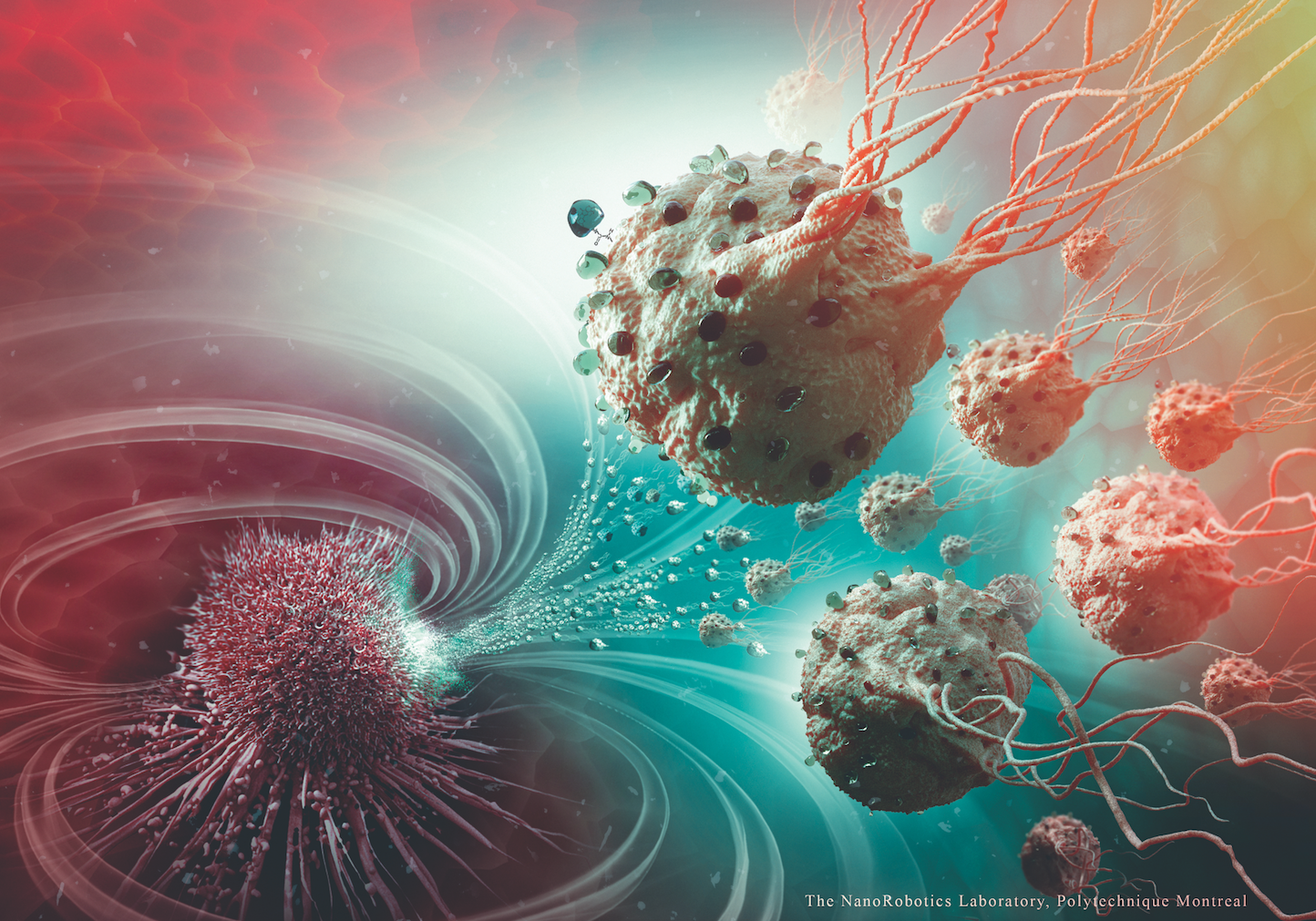
Artist’s impression of new cancer-drug nanotransporters using more than 100 million self-propelled, flagellated bacteria carrying nanoliposomes (green discs) loaded with drugs. The bacteria are guided by magnetic fields to take the most direct path between the drug’s injection point and the area of the body intended to cure. (credit: Montréal Nanorobotics Laboratory)

Researchers from Polytechnique Montréal, Université de Montréal, and McGill University have designed a new cancer-drug-delivery nanotransporter system using more than 100 million flagellated, self-propelled bacteria that are capable of navigating through the bloodstream to administer a drug to tumors with precision.* The goal of the research is to avoid jeopardizing the integrity of organs and surrounding healthy tissues while reducing drug dosage.

In an experiment with mice reported in the journal Nature Nanotechnology, the researchers confirmed that “the drug’s propelling force was enough to travel efficiently and enter deep inside the tumors,” autonomously detecting the oxygen-depleted tumor areas and delivering the drug to them, said Professor Sylvain Martel, holder of the Canada Research Chair in Medical Nanorobotics and Director of the Polytechnique Montréal Nanorobotics Laboratory, who heads the research team’s work.

Bacteria that detect both magnetic field lines and low-oxygen concentrations

In the experiment with mice, the researchers used liposomes as drug nanocarriers, attached to Magnetococcus marinus strain MC-1 bacteria to transport the drug**. In their natural environment, MC-1 bacteria tend to swim along local magnetic field lines, which are detected by a chain of magnetic iron-oxide nanocrystals in the bacteria. The bacteria also swim towards hypoxic (low-oxygen) concentrations. (In a tumor, this hypoxic zone is created by the substantial consumption of oxygen by rapidly proliferative tumor cells. Hypoxic zones are known to be resistant to most therapies, including radiotherapy.)

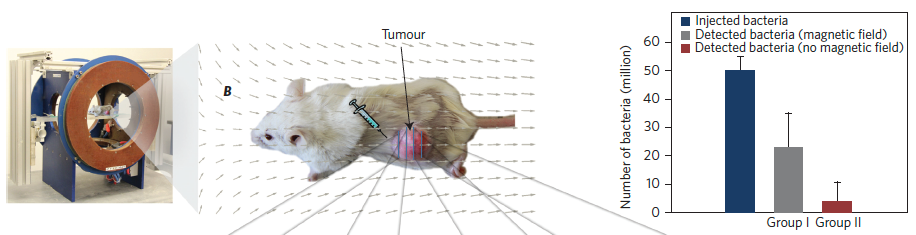
Test of penetration of live MC-1 bacteria cells with and without magnetic field exposure in xenografts following a peritumoral injection. (left) Magnetotaxis directional control system used to generate the magnetic field necessary to guide the MC-1 cells towards the xenograft. The directional magnetic field B was aligned towards the center of the tumoral volume. (center) MC-1 peritumoral injection into tumor xenograft in mice and representation of the applied directional magnetic field used in this study to direct the bacteria towards the xenograft. (right) Summary of the total average numbers of injected and detected MC-1 cells for all tumors in groups I and II. The results show that a significant number of the peritumorally injected MC-1 cells that were magnetically guided — using a relatively simple static directional magnetic field — were able to penetrate the xenograft, unlike the case for bacteria that were not guided into the tumor. (credit: Ouajdi Felfoul et al./Nature Nanotechnology)

The new nanotransporters used both of these natural systems (magnetic and hypoxic-concentration-seeking). The MC-1 bacteria first moved in the direction of a computer-controlled magnetic field to the point where oxygen gradients could be detected by the bacteria, enabling the bacteria to penetrate and remain in the tumor’s active regions. (In future human use, the drug could be released from the liposomes by sensing pH or particular enzymes, or by applying ultrasonics or heat, for example, the researchers explained to KurzweilAI.)

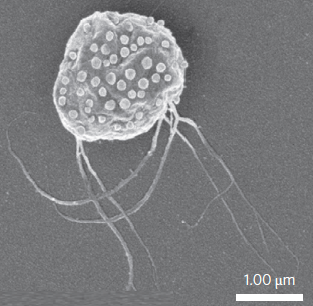
Scanning electron microscopy image of MC-1 bacterium with ~70 drug-bearing liposomes attached to the surface (credit: Ouajdi Felfoul et al./Nature Nanotechnology)

“This innovative use of nanotransporters will have an impact not only on creating more advanced engineering concepts and original intervention methods, but it also throws the door wide open to the synthesis of new vehicles for therapeutic, imaging, and diagnostic agents,” said Martel. Chemotherapy, which is so toxic for the entire human body, could make use of these natural nanotransporters to move drugs directly to the targeted area, “eliminating the harmful side effects while also boosting its therapeutic effectiveness,” he added.

The research was supported by the Consortium québécois sur la découverte du médicament (Québec consortium for drug discovery — CQDM), the Canada Research Chairs, the Natural Sciences and Engineering Research Council of Canada (NSERC), the Research Chair in Nanorobotics of Polytechnique Montréal, Mitacs, the Canada Foundation for Innovation (CFI), and the National Institutes of Health (NIH). Montréal’s Jewish General Hospital, the McGill University Health Centre (MUHC), the Institute for Research in Immunology and Cancer (IRIC), and the Rosalind and Morris Goodman Cancer Research Centre also participated.

* Only ∼2% of the total administered dose is deposited in the tumor with current delivery methods, according to a 2009 study by M. Hong et al. in J. Control. Rel., the researchers note in their Nature Nanotechnology paper.

** “Liposomes were selected as a first proof of concept because they are biocompatible, exhibit low immunogenicity and high flexibility, and protect the body from potential toxic cargo. Liposomes also shield therapeutic agents from premature degradation, control release kinetics, and may encapsulate a multitude of hydrophilic and∕or hydrophobic drug cargos, pharmaceutical ingredients, imaging agents and genetic material by virtue of their aqueous interior and lipid exterior,” the researchers note in their Nature Nanotechnology paper.


POLYTECHNIQUE MONTRÉAL | A Robotic Micro-assembly Process Inspired by the Construction of the Ancient Pyramids and Relying on Several Thousand of Flagellated Bacteria Acting as Workers


Abstract of Magneto-aerotactic bacteria deliver drug-containing nanoliposomes to tumour hypoxic regions

Oxygen-depleted hypoxic regions in the tumour are generally resistant to therapies. Although nanocarriers have been used to deliver drugs, the targeting ratios have been very low. Here, we show that the magneto-aerotactic migration behaviour of magnetotactic bacteria, Magnetococcus marinus strain MC-1, can be used to transport drug-loaded nanoliposomes into hypoxic regions of the tumour. In their natural environment, MC-1 cells, each containing a chain of magnetic iron-oxide nanocrystals, tend to swim along local magnetic field lines and towards low oxygen concentrationsbased on a two-state aerotactic sensing system. We show that when MC-1 cells bearing covalently bound drug-containing nanoliposomes were injected near the tumour in severe combined immunodeficient beige mice and magnetically guided, up to 55% of MC-1 cells penetrated into hypoxic regions of HCT116 colorectal xenografts. Approximately 70 drug-loaded nanoliposomes were attached to each MC-1 cell. Our results suggest that harnessing swarms of microorganisms exhibiting magneto-aerotactic behaviour can significantly improve the therapeutic index of various nanocarriers in tumour hypoxic regions.

Seth Rogen plans FX TV comedy series on the Singularity

Seth Rogan in poster for “The Interview” (credit: Columbia Pictures)

Seth Rogen (Freaks and Geeks, Knocked Up, Superbad) and collaborator Evan Goldberg are writing the script for a pilot for a new “half-hour comedy television series about the Singularity for FX,” Rogen revealed Thursday (August 11) on Nerdist podcast: Seth Rogen Returns (at 55:20 mark), while promoting his latest film, Sausage Party (an animated movie that apparently sets a new world record for f-bombs, based on the trailer).

“Yeah, it’s happening, I just read an article about neural dust,” said host Chris Hardwick.

“Oh, it’s happening, it’s super scary, and we’re trying to make a comedy about it,” said Rogen. “We’ll film that in the next year, basically.”

“Neural dust are, like, small particles, kind of like nano-mites, that work in your systems,” Hardwick said, “and can …” — “wipe out whole civilizations,” Rogen interjected. “But, you know, they always kinda pitch you the good stuff first: it could help your body,” Hardwick added.

(credit: Vanity Fair)

Also mentioned on the podcast: a “prank show [All People Are Famous] next week where the guy we’re pranking thinks he’s responsible for the Singularity … goes nuts, destroying everything. …”