A battery that shuts down at high temperatures and restarts when it cools

Stanford researchers have developed a thin polyethylene film that prevents a lithium-ion battery from overheating, then restarts the battery when it cools. The film is embedded with spiky nanoparticles of graphene-coated nickel. (credit: Zheng Chen)

Stanford researchers have invented a lithium-ion battery that shuts down before overheating to prevent the battery fires that have plagued laptops, hoverboards and other electronic devices. The battery restarts immediately when the temperature cools.

The design is an enhancement of a wearable sensor that monitors human body temperature invented by Zhenan Bao, a professor of chemical engineering at Stanford. The sensor is made of a plastic material embedded with tiny particles of nickel with nanoscale spikes protruding from their surface. For the battery experiment, the researchers coated the spiky nickel particles with graphene, an atom-thick layer of carbon, and embedded the particles in a thin film of elastic polyethylene.
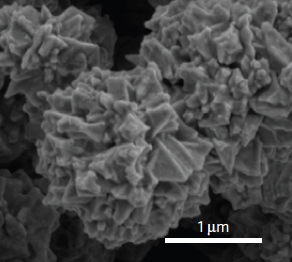
SEM image of conductive spiky graphene-coated nickel nanoparticles (credit: Zheng Chen et al./Nature Energy)

To conduct electricity, the spiky particles have to physically touch one another. But during thermal expansion, polyethylene stretches. That causes the particles to spread apart, making the film non-conductive so that electricity can no longer flow through the battery. When the battery cools, the polyethylene shrinks, bringing the particles in contact again and causing the battery to generate power.

The new battery design has up to 10,000 times higher temperature sensitivity than previous switch devices, and the temperature range can be adjusted by changing the particle density or type of polymer.

“We’ve designed the first battery that can be shut down and revived over repeated heating and cooling cycles without compromising performance,” says Bao. The new battery is described in a study published today (Jan. 11) in the new journal Nature Energy.


Delvon Simmons | My hover board on fire

A typical lithium-ion battery today consists of two electrodes and a liquid or gel electrolyte that carries charged particles between them. Puncturing, shorting or overcharging the battery generates heat. If the temperature reaches about 300 degrees Fahrenheit (150 degrees Celsius), the electrolyte could catch fire and trigger an explosion, as some hoverboard users have recently discovered.

The research was supported by the SLAC National Accelerator Laboratory and the Precourt Institute for Energy at Stanford.

Stanford Precourt Institute for Energy | A lithium-ion battery that shuts down before overheating, then restarts immediately when the temperature cools.


Abstract of  Fast and reversible thermoresponsive polymer switching materials for safer batteries

Safety issues have been a long-standing obstacle impeding large-scale adoption of next-generation high-energy-density batteries. Materials solutions to battery safety management are limited by slow response times and small operating voltage windows. Here we report a fast and reversible thermoresponsive polymer switching material that can be incorporated inside batteries to prevent thermal runaway. This material consists of electrochemically stable graphene-coated spiky nickel nanoparticles mixed in a polymer matrix with a high thermal expansion coefficient. The as-fabricated polymer composite films show high electrical conductivity of up to 50 S per cm at room temperature. Importantly, the conductivity decreases within 1 s by seven to eight orders of magnitude on reaching the transition temperature and spontaneously recovers at room temperature. Batteries with this self-regulating material built in the electrode can rapidly shut down under abnormal conditions such as overheating and shorting, and are able to resume their normal function without performance compromise or detrimental thermal runaway. Our approach offers 1,000–10,000 times higher sensitivity towards temperature changes than previous switching devices.
Do we have free will?

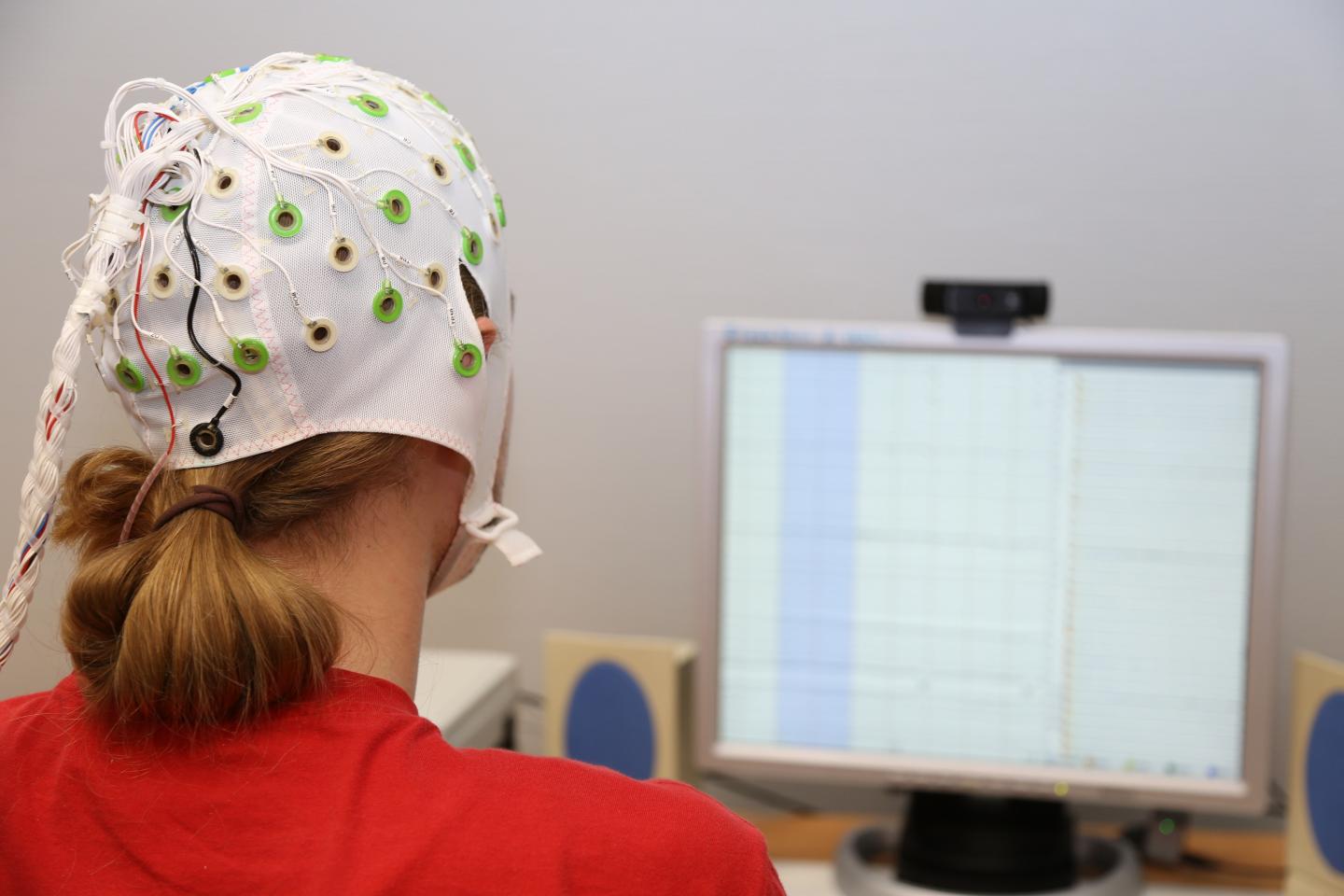
Human “duels” against a brain-computer interface (BCI) in an experiment. (credit: Carsten Bogler/Charité)

It’s a question that’s been debated by philosophers for centuries. Now neuroscientists from Charité –Universitätsmedizin Berlin have run an experiment to find out, using a “duel” game between human and brain-computer interface (BCI).

As KurzweilAI reported last year:

In the early 1980s, University of California, San Francisco neuroscientist Benjamin Libet conducted an experiment to assess the nature of free will. Subjects hooked up to an electroencephalogram (EEG) were asked to push a button whenever they liked. They were also asked to note the precise time that they first became aware of the wish or urge to move.

Libet’s experiments showed that distinctive “readiness potential” brain activity began, on average, several seconds before subjects became aware that they planned to move. Libet concluded that the desire to move arose unconsciously, and “free will” could instead only come in the form of a conscious veto of what he called “free won’t.”

The  Charité’s Bernstein Center for Computational Neuroscience researchers have now created an experiment to test the “free won’t” part. Using state-of-the-art measurement techniques, the researchers tested whether or not after the readiness potential (RP) for a movement has already been triggered, people are able to stop planned movements (under conscious control).

The “point of no return”

The researchers asked study participants to participate in a “duel” game with a computer and monitored their brain waves using electroencephalography (EEG). A specially-trained computer was then tasked with using this EEG data to predict when a subject would move (the aim: out-maneuver the player). The researchers manipulated the outcome of the game in favor of the computer as soon as brain wave measurements indicated that the player was about to move.

The idea was that if subjects were able to evade being predicted, this would be evidence that subjects could control their actions for much longer than previously thought.

The researchers discovered that subject could achieve that, but that there‘s a “point of no return” in the decision-making process [at about 200 milliseconds before movement onset], after which cancellation of movement is no longer possible. “A person’s decisions are not at the mercy of unconscious and early brain waves. They are able to actively intervene in the decision-making process and interrupt a movement,” says Prof. John-Dylan Haynes, PhD., research-team leader.

Further studies are planned to investigate more complex decision-making processes.

Technische Universität Berlin researchers were also involved in the study. The study results have been published in an open-access paper in the journal PNAS.

UPDATE: 200 milliseconds before movement onset, not after RP.


Abstract of The point of no return in vetoing self-initiated movements

In humans, spontaneous movements are often preceded by early brain signals. One such signal is the readiness potential (RP) that gradually arises within the last second preceding a movement. An important question is whether people are able to cancel movements after the elicitation of such RPs, and if so until which point in time. Here, subjects played a game where they tried to press a button to earn points in a challenge with a brain–computer interface (BCI) that had been trained to detect their RPs in real time and to emit stop signals. Our data suggest that subjects can still veto a movement even after the onset of the RP. Cancellation of movements was possible if stop signals occurred earlier than 200 ms before movement onset, thus constituting a point of no return.

Cognitive-stimulation experiment suggests new tools for healthy brain aging

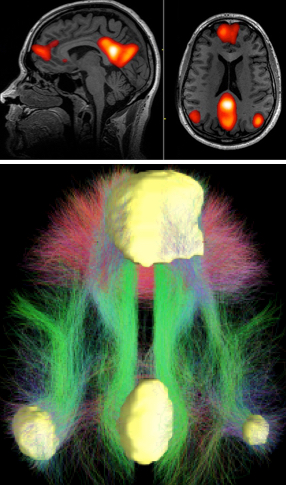
The brain’s default mode network (DMN) was the focus of the cognitive-stimulation experiment. Top: fMRI scans showing DMN regions; bottom: a diagram of typical connectivity between these regions. (credit: John Graner/Walter Reed National Military Medical Center, Andreas Horn et al./NeuroImage, Abigail G. Garrity/Am. J. Psych.)

Neuroscientists in Italy and the U.K. have developed cognitive-stimulation exercises and tested them in a month-long experiment with healthy aging adults. The exercises were based on studies of the brain’s resting state, known as the “default mode network”* (DMN).

In a paper published in Brain Research Bulletin, the researchers explain that in aging (and at a pathological level in AD patients), the posterior (back) region of the DMN in the brain is underactive while the anterior (front) region is overactive. In addition, the two regions are not well connected in aging. So as a proof of concept, working with screened and tested, mentally healthy adults over age 50, the researchers designed an experiment to improve cognitive connectivity in the posterior region and also between the anterior and posterior regions.

Intensive mental exercises

The intensive cognitive exercises were conducted over a period of up to 42 days using E-Prime 2.0 software from Psychology Software Tools. The computer-based exercises were chosen to be in the domains of “semantic processing, memory retrieval, logical reasoning, and executive processing,” the neuroscientists said, with “simultaneous activity in widespread neocortical, and mediotemporal and limbic areas” (the posterior component of the DMN). “Further exercises were then added to foster functional connectivity between anterior and posterior regions.”

Sample trials from the “sequence completion” (left) and “sentence completion” (right) tasks in the exercises. More difficult sequence-completion trials were characterized by abstract or indirect inter-image relations (e.g., “bear” and “bee” on the left, “cat” in the upper central position, “1: milk” and “2: cow” as the alternative answers). (credit: Matteo De Marco et al./Brain Research Bulletin and Psychology Software Tools)

An MRI protocol and a battery of neuropsychological tests were administered at baseline and at the end of the study.

The exercises were followed by fMRI exams. “Significant associations were found between task performance and gray-matter volume of multiple DMN core regions,” the authors note. “Functional regulation of resting-state connectivity within the posterior component of the DMN was found, “but no change in connectivity between the posterior and the anterior components. … These findings suggest that the program devised may have a preventive and therapeutic role in association with early AD-type neurodegeneration.”

The researchers are affiliated with IRCCS Fondazione Ospedale and University of Modena in Italy and University of Sheffield in the U.K.

* “The default mode network is most commonly shown to be active when a person is not focused on the outside world and the brain is at wakeful rest, such as during daydreaming and mind-wandering, but it is also active when the individual is thinking about others, thinking about themselves, remembering the past, and planning for the future. The network activates “by default” when a person is not involved in a task. … The DMN can also be defined by the areas deactivated during external directed tasks compared to rest.” — Wikipedia 1/9/2016 


Abstract of Cognitive stimulation of the default-mode network modulates functional connectivity in healthy aging

A cognitive-stimulation tool was created to regulate functional connectivity within the brain Default-Mode Network (DMN). Computerized exercises were designed based on the hypothesis that repeated task-dependent coactivation of multiple DMN regions would translate into regulation of resting-state network connectivity.

Forty seniors (mean age: 65.90 years; SD: 8.53) were recruited and assigned either to an experimental group (n = 21) who received one month of intensive cognitive stimulation, or to a control group (n = 19) who maintained a regime of daily-life activities explicitly focused on social interactions. An MRI protocol and a battery of neuropsychological tests were administered at baseline and at the end of the study. Changes in the DMN (measured via functional connectivity of posterior-cingulate seeds), in brain volumes, and in cognitive performance were measured with mixed models assessing group-by-timepoint interactions. Moreover, regression models were run to test gray-matter correlates of the various stimulation tasks.

Significant associations were found between task performance and gray-matter volume of multiple DMN core regions. Training-dependent up-regulation of functional connectivity was found in the posterior DMN component. This interaction was driven by a pattern of increased connectivity in the training group, while little or no up-regulation was seen in the control group. Minimal changes in brain volumes were found, but there was no change in cognitive performance.

The training-dependent regulation of functional connectivity within the posterior DMN component suggests that this stimulation program might exert a beneficial impact in the prevention and treatment of early AD neurodegeneration, in which this neurofunctional pathway is progressively affected by the disease.

‘Solar thermal fuel’ polymer film can harvest sunlight by day, release heat on-demand

“Solar thermal fuel” polymer film comprising three distinct layers with tunable thickness (4 to 5 microns for each) (credit: Courtesy of the researchers)

MIT researchers have developed a new transparent polymer film that can store solar energy during the day and release it later as heat, whenever needed. The material could be applied to many different surfaces, such as window glass or clothing.

The new material solves a problem with renewable solar energy: the Sun is not available at night or on stormy days. Most solutions have focused on storing and recovering solar energy as electricity or other forms. The new finding could provide a highly efficient method for storing the sun’s energy through a chemical storage system, which can retain the energy indefinitely in a stable molecular configuration and release it later as heat.

Storing-releasing heat as molecular configurations

The finding, by a research team headed by MIT professor Jeffrey Grossman, is described in a paper in the journal Advanced Energy Materials.

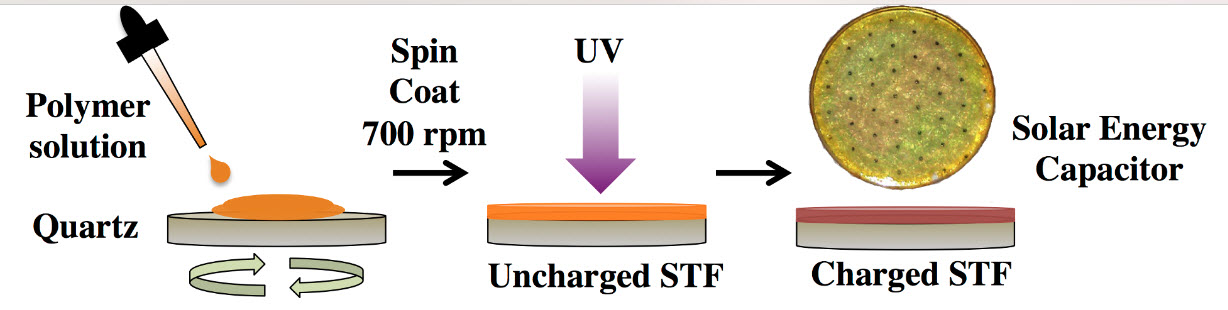
A spin-coating process enables the solar thermal fuel polymer material to deposit from solution. The film can then be readily charged with ultraviolet light. This process can be extended to a variable-thickness layer-by-layer process. (credit: Courtesy of the researchers)

The key is an azobenzene molecule that can remain stable in either of two different configurations: charged and uncharged. When exposed to sunlight, the energy of the light kicks the molecules into their “charged” configuration, and they can stay that way for long periods. Then, when triggered by a very specific temperature or other stimulus, the molecules snap back to their original shape, giving off a burst of heat in the process.

Built-in windshield de-icing

The platform for testing macroscopic heat release. A heating element (bottom) is used to provide sufficient energy to trigger the solar thermal fuel materials, while an infrared camera (yellow circles) monitors the temperature. The charged film (right) releases heat enabling a higher temperature relative to the uncharged film (left). (credit: Courtesy of the researchers)

The “solar thermal fuel” material is highly transparent, which could make it useful for de-icing car windshields, says Grossman, the Morton and Claire Goulder and Family Professor in Environmental Systems and a professor of materials science and engineering.

While many cars already have fine heating wires embedded in rear windows for that purpose, anything that blocks the view through the front window is forbidden by law, even thin wires.

But a transparent film made of the new material, sandwiched between two layers of glass — as is currently done with bonding polymers to prevent pieces of broken glass from flying around in an accident — could provide the same de-icing effect without any blockage. German auto company BMW, a sponsor of this research, is interested in that potential application, Grossman says.

With such a window, energy would be stored in the polymer every time the car sits out in the sunlight. Then, “when you trigger it,” using just a small amount of heat that could be provided by a heating wire or puff of heated air, “you get this blast of heat,” Grossman says.

“We did tests to show you could get enough heat to drop ice off a windshield.” Accomplishing that, he explains, doesn’t require that all the ice actually be melted, just that the ice closest to the glass melts enough to provide a layer of water that releases the rest of the ice to slide off by gravity or be pushed aside by the windshield wipers.

The team is continuing to work on improving the film’s properties, Grossman says, improving its transparency and temperature increase (from 10 degrees Celsius above the surrounding temperature — sufficient for the ice-melting application — to 20 degrees). The new polymer could also significantly reduce electrical drain for heating and de-icing in electric cars, he says.

The work was supported by a NSERC Canada Banting Fellowship and by BMW.


Abstract of Solid-State Solar Thermal Fuels for Heat Release Applications

Closed cycle systems offer an opportunity for solar energy harvesting and storage all within the same material. Photon energy is stored within the chemical conformations of molecules and is retrieved by a triggered release in the form of heat. Until now, such solar thermal fuels (STFs) have been largely unavailable in the solid-state, which would enable them to be utilized for a multitude of applications. A polymer STF storage platform is synthesized employing STFs in the solid-state. This approach enables uniform films capable of appreciable heat storage of up to 30 Wh kg−1 and that can withstand temperature of up to 180 °C. For the first time a macroscopic energy release is demonstrated using spatial infrared heat maps with up to a 10 °C temperature change. These findings pave the way for developing highly efficient and high energy density STFs for applications in the solid-state.

Cell-free protein synthesis device is potential lifesaver

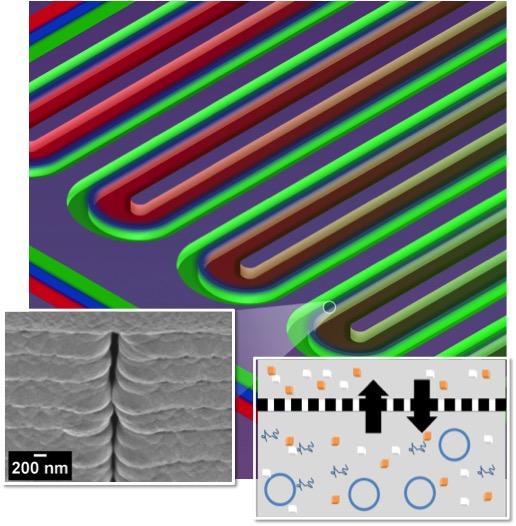
This section of a serpentine channel reactor shows the parallel reactor and feeder channels separated by a nanoporous membrane. Left: a single nanopore viewed from the side; right: a diagram of metabolite exchange across the membrane. (credit: ORNL)

Oak Ridge National Laboratory scientists have developed a device that uses microfabricated bioreactors to produce therapeutic proteins for medicines and biopharmaceuticals. These miniature factories are cell-free, eliminating the need to maintain a living system, which radically simplifies the process and lowers cost, and makes the device easily adaptable for use in isolated locations and at disaster sites.

On-demand, point-of-care therapeutic protein synthesis requires that a dose of protein be produced and purified quickly. “With this approach, we can produce more protein faster, making our technology ideal for point-of-care use,” said team co-leader Scott Retterer of the lab’s Biosciences Division. It can produce proteins “when and where you need them, bypassing the challenge of keeping the proteins cold during shipment and storage.”

The key to the cell-free reactions in the new bioreactor is a permeable nanoporous membrane and serpentine (snake-like) design, made using a combination of electron-beam lithography and advanced material-deposition processes.

The long serpentine channels allow for exchange of materials between parallel reactor and feeder channels. With this approach, the team can control the exchange of metabolites, energy, and species that inhibit production of the desired protein. The design also extends reaction times and improves yields.

“We show that the microscale bioreactor design produces higher protein yields than conventional tube-based batch formats and that product yields can be dramatically improved by facilitating small molecule exchange with the dual-channel bioreactor,” the authors wrote in their paper, published in the journal Small.

The researchers also note that on-demand biologic synthesis would aid production of drugs that are costly to mass-produce, including orphan drugs and personalized medicines.


Abstract of Toward Microfluidic Reactors for Cell-Free Protein Synthesis at the Point-of-Care

Cell-free protein synthesis (CFPS) is a powerful technology that allows for optimization of protein production without maintenance of a living system. Integrated within micro and nanofluidic architectures, CFPS can be optimized for point-of-care use. Here, the development of a microfluidic bioreactor designed to facilitate the production of a single-dose of a therapeutic protein, in a small footprint device at the point-of-care, is described. This new design builds on the use of a long, serpentine channel bioreactor and is enhanced by integrating a nanofabricated membrane to allow exchange of materials between parallel “reactor” and “feeder” channels. This engineered membrane facilitates the exchange of metabolites, energy, and inhibitory species, and can be altered by plasma-enhanced chemical vapor deposition and atomic layer deposition to tune the exchange rate of small molecules. This allows for extended reaction times and improved yields. Further, the reaction product and higher molecular weight components of the transcription/translation machinery in the reactor channel can be retained. It has been shown that the microscale bioreactor design produces higher protein yields than conventional tube-based batch formats, and that product yields can be dramatically improved by facilitating small molecule exchange within the dual-channel bioreactor.

‘Fast radio burst’ signals from space a better test of Einstein’s General Relativity theory

This illustration shows how two photons, one at a high frequency (blue wave) and another at a low frequency (yellow wave), travel in curved space-time from their origin in a distant fast radio burst (FRB) source until reaching the Earth. A lower-limit estimate of the gravitational pull that the photons experience along their way is given by the mass (red) in the center of the Milky Way Galaxy. (credit: Purple Mountain Observatory, Chinese Academy of Sciences)

Physicists have developed a new way to test one of the basic principles underlying Einstein’s theory of General Relativity, which states that the geometry of spacetime is curved by the mass density of individual galaxies, stars, planets, and other objects.

The new method uses brief blasts of rare radio signals from space called fast radio bursts (FRBs) (see “Mysterious cosmic burst of radio waves detected by astronomers” and “Arecibo detects mystery radio burst from beyond our galaxy“). These FRBs have achieved up to 100 times better results than previous testing methods that used gamma-ray bursts, according to a paper published in the journal Physical Review Letters.

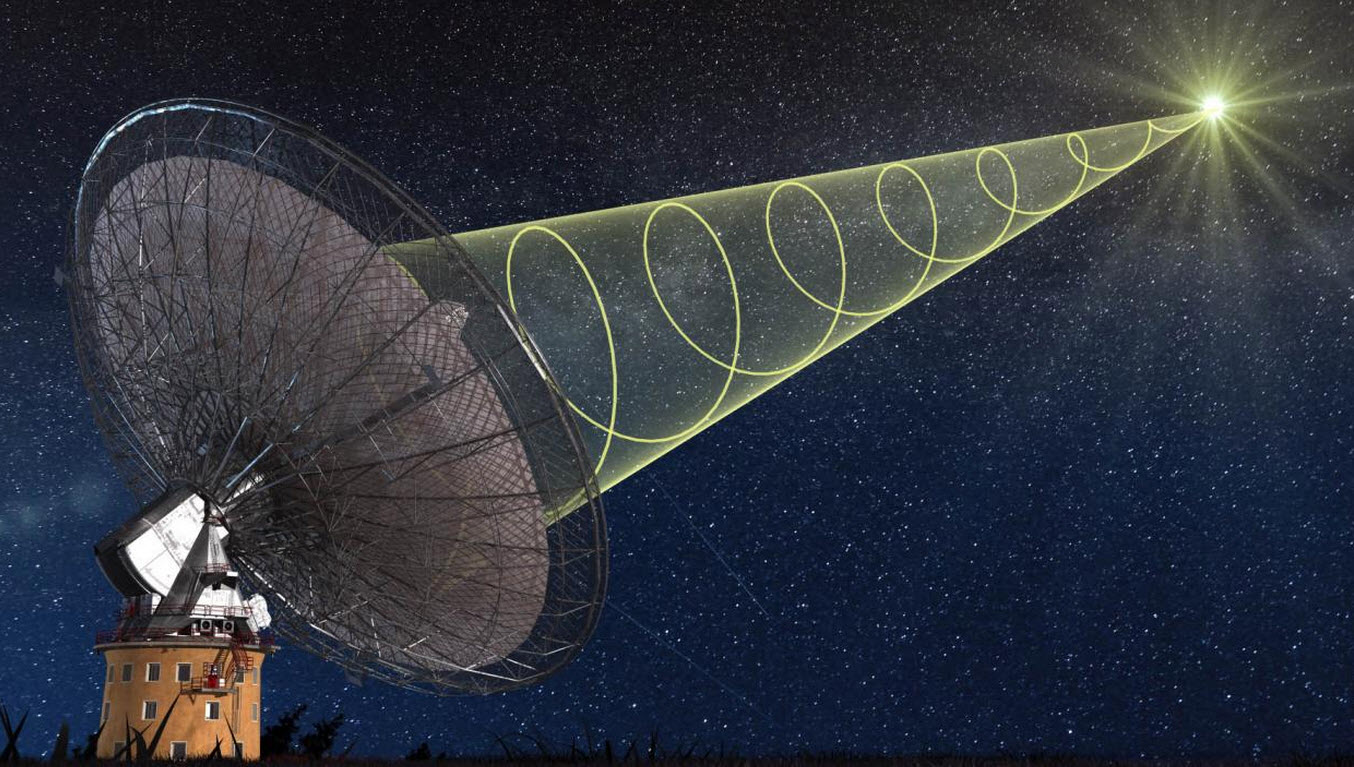
A schematic illustration of CSIRO’s Parkes radio telescope receiving a polarized signal from a “fast radio burst” (credit: Swinburne Astronomy Productions)

Fast radio bursts are super-brief blasts of energy lasting just a few milliseconds. Until now, only about a dozen FRBs have been detected on Earth. They appear to be caused by mysterious events beyond our Milky Way Galaxy, and possibly even beyond the Local Group of galaxies that includes the Milky Way.

“If Fast Radio Bursts are proven to originate outside the Milky Way Galaxy, and if their distances can be measured accurately, they will be a new powerful tool for testing Einstein’s Equivalence Principle and for extending the tested energy range down to radio-band frequencies,” said Peter Mészáros, Holder of the Eberly Family Chair in Astronomy and Astrophysics and Professor of Physics at Penn State, the senior author of the research paper.

Testing Einstein’s Equivalence Principle

Einstein’s Equivalence Principle requires that any two photons of different frequencies, emitted at the same time from the same source and traveling through the same gravitational fields, should arrive at Earth at exactly the same time. “If Einstein’s Equivalence Principle is correct, any time delay that might occur between these two photons should not be due to the gravitational fields they experienced during their travels, but should be due only to other physical effects,” Mészáros said. “By measuring how closely in time the two different-frequency photons arrive, we can test how closely they obey Einstein’s Equivalence Principle.”

Specifically, Mészáros said the test that he and his coauthors developed involves an analysis of how much space curvature the photons experienced due to massive objects along or near their path through space.

Mészáros said his research team’s analysis of the less-than-a-dozen recently detected Fast Radio Bursts “supersedes by one to two orders of magnitude the previous best limits on the accuracy of the Einstein Equivalence Principle,” which were based on gamma rays and other energies from a 1987 supernova explosion. “Our analysis using radio frequencies shows that the Einstein Equivalence Principle is obeyed to one part in a hundred million,” Mészáros said.

This research is supported, in part, by the National Basic Research Program of China, NASA, the National Natural Science Foundation of China, and the Chinese Academy of Sciences.


Abstract of Testing Einstein’s Equivalence Principle With Fast Radio Bursts

The accuracy of Einstein’s equivalence principle (EEP) can be tested with the observed time delays between correlated particles or photons that are emitted from astronomical sources. Assuming as a lower limit that the time delays are caused mainly by the gravitational potential of the Milky Way, we prove that fast radio bursts (FRBs) of cosmological origin can be used to constrain the EEP with high accuracy. Taking FRB 110220 and two possible FRB/gamma-ray burst (GRB) association systems (FRB/GRB 101011A and FRB/GRB 100704A) as examples, we obtain a strict upper limit on the differences of the parametrized post-Newtonian parameter γ values as low as [γ(1.23  GHz)−γ(1.45  GHz)]<4.36×10⁻⁹. This provides the most stringent limit up to date on the EEP through the relative differential variations of the γparameter at radio energies, improving by 1 to 2 orders of magnitude the previous results at other energies based on supernova 1987A and GRBs.

New synthetic molecular prosthetic cell acts as AND gate for disease treatment

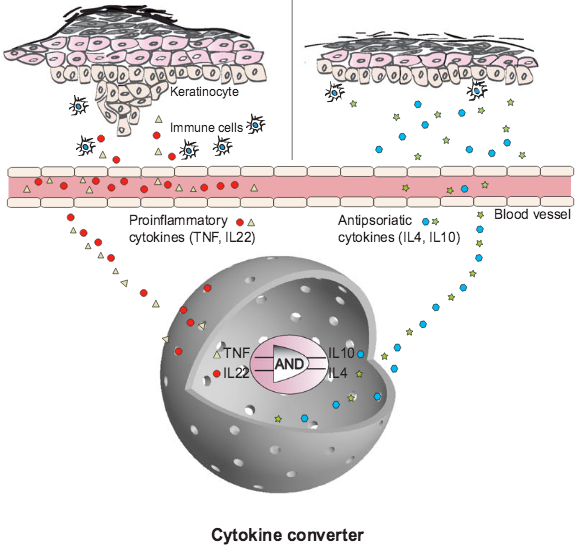
“Cytokine converter” AND-gate synthetic-biology prosthesis used to treat psoriasis in mice. Top left: skin before; right: skin after. (credit: Lina Schukur et al./Science Translational Medicine)

An advanced “molecular prosthetic” — a cell with synthetic gene circuits that can be implanted into an organism to take over metabolic functions that the organism cannot perform itself — has been developed by  ETH Zurich scientists.

Previous gene circuits typically monitored only whether one disease-causing molecule (called a cytokine) was present in their environment and if so, produced a single therapeutic cytokine as a response. The new “cytokine converter” synthetic circuit functions like an AND gate: It can detect two different cytokines simultaneously, and if (and only if) both are present, produces two different cytokines that can treat a disease.

As a feasibility study, Professor Martin Fussenegger and his team at ETH’s Department of Biosystems Science and Engineering in Basel used the new cytokine converter prosthesis to treat psoriasis — a complex, chronic inflammatory disease of the skin with no cure — in mice.*

When the cytokine converter detected both of the inflammatory molecules TNF and IL-22, the synthetic gene circuit produced the anti-inflammatory cytokine molecules IL-4 and IL-10, suppressing the inflammatory response.

Preventive treatment for possible wide range of diseases

The symptoms of psoriasis — inflamed, itchy and sometimes flaky areas of skin — are usually combated with a locally applied ointment. “This means that with the existing therapies, we are practically always lagging behind the symptoms,” says Fussenegger.

The gene circuit implant, on the other hand, allowed for prevention: “The circuit begins producing anti-inflammatory messengers at an early stage — when a phase is looming at the level of inflammatory messengers, instead of waiting until skin rashes appear,” he said. It prevented psoriasis “flare-ups” but also treated acute (established) psoriasis, returning skin to normal in mice.

Fussenegger said such molecular prosthetics may one day be implanted in psoriasis patients. However, since growth in connective tissue could cut the implant off from the bloodstream over time, a doctor would probably have to replace it every few months.

Biological circuits with AND gates may also be suitable for other diseases, he said. “Chronic inflammatory diseases are a good example of the type of disease that cannot be diagnosed by measuring a single molecule. However, generally such diseases could be diagnosed using a designer cell that measures the profile of several messengers in the bloodstream. And if this designer cell were also to produce therapeutic molecules, it would open up promising treatment options for a wide range of diseases in the future.”

* Psoriasis is associated with an increased risk of immune-mediated diseases, such as Crohn’s disease and ulcerative colitis, as well as certain cancers (liver and pancreatic), metabolic disorders (obesity and diabetes), and cardiovascular diseases, the authors note.


Abstract of Implantable synthetic cytokine converter cells with AND-gate logic treat experimental psoriasis

Taking pills may go the way of the horse and buggy, the rotary phone, and the Walkman, at least if synthetic biology has anything to say about it. Schukur et al. designed a circuit that would automatically sense the presence of two disease-causing molecules, called cytokines, in the body and respond by triggering the production of two other cytokines that would treat the disease. This circuit was genetically engineered in a mammalian cell; in turn, the cell was implanted in mice with psoriasis—an inflammatory skin condition that has no cure. When levels of the proinflammatory cytokines TNF and IL22 peaked in the body, the synthetic circuit kicked into gear, converting these cytokine signals into an anti-inflammatory cellular output, consisting of IL4 and IL10, which then attenuated disease. The “cytokine converter” cells not only prevented psoriasis flare-ups, as they’re called, but also treated acute (established) psoriasis, returning skin to normal in mice. In demonstrating that the converter cells were responsive to blood from psoriasis patients, the authors suggest that synthetic biology may be ready to autonomously flip therapeutic switches in people and later take on other diseases with defined disease indicators.

An 18-inch video display you can roll up like a newspaper

(credit: LG)

LG is creating a buzz at CES with its concept demo of the world’s first display that can be rolled up like a newspaper.

LG says they’re aiming for 4K-quality 55-inch screens (the prototype resolution is 1,200 by 810 pixels), BBC reports.

The trick:  switching from LED to thinner, more-flexible OLED technology (organic light-emitting diodes), allowing for a 2.57 millimeter-thin display. One limitation: the screen can’t be flattened.

What this design might be useful for in the future is not clear, but experts suggest the technology could soon be used on smartphones and in-car screens that curve around a vehicle’s interior, Daily Mail notes.

LG is also displaying a 55-inch double-sided display that’s as thin as a piece of paper and shows different video images on each side, and two 65-inch “extreme-curve” TVs that bend inwards and outwards.

CNET CES Videos

Can human-machine superintelligence solve the world’s most dire problems?


Human Computation Institute | Dr. Pietro Michelucci

“Human computation” — combining human and computer intelligence in crowd-powered systems — might be what we need to solve the “wicked” problems of the world, such as climate change and geopolitical conflict, say researchers from the Human Computation Institute (HCI) and Cornell University.

In an article published in the journal Science, the authors present a new vision of human computation that takes on hard problems that until recently have remained out of reach.

Humans surpass machines at many things, ranging from visual pattern recognition to creative abstraction. And with the help of computers, these cognitive abilities can be effectively combined into multidimensional collaborative networks that achieve what traditional problem-solving cannot, the authors say.

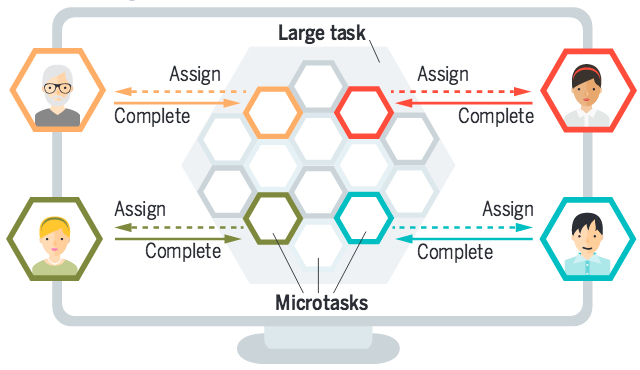
Microtasking

Microtasking: Crowdsourcing breaks large tasks down into microtasks, which can be things at which humans excel, like classifying images. The microtasks are delivered to a large crowd via a user-friendly interface, and the data are aggregated for further processing. (credit: Pietro Michelucci and Janis L. Dickinson/Science)

Most of today’s human-computation systems rely on “microtasking” — sending “micro-tasks” to many individuals and then stitching together the results. For example, 165,000 volunteers in EyeWire have analyzed thousands of images online to help build the world’s most complete map of human retinal neurons.

Another example is reCAPTCHA, a Web widget used by 100 million people a day when they transcribe distorted text into a box to prove they are human.

“Microtasking is well suited to problems that can be addressed by repeatedly applying the same simple process to each part of a larger data set, such as stitching together photographs contributed by residents to decide where to drop water during a forest fire,” the authors note.

But this microtasking approach alone cannot address the tough challenges we face today, say the authors. “A radically new approach is needed to solve ‘wicked problems’ — those that involve many interacting systems that are constantly changing, and whose solutions have unforeseen consequences, such as climate change, disease, and geopolitical conflict, which are dynamic, involve multiple, interacting systems, and have non-obvious secondary effects, such as political exploitation of a pandemic crisis.”

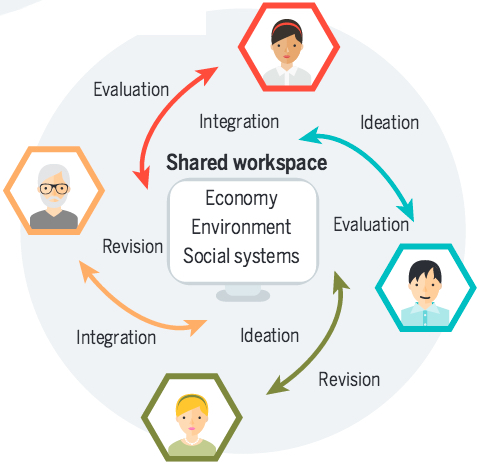
New human-computation technologies

New human-computation technologies: In creating problem-solving ecosystems, researchers are beginning to explore how to combine the cognitive processing of many human contributors with machine-based computing to build faithful models of the complex, interdependent systems that underlie the world’s most challenging problems. (credit: Pietro Michelucci and Janis L. Dickinson/Science)

The authors say new human computation technologies can help build flexible collaborative environments. Recent techniques provide real-time access to crowd-based inputs, where individual contributions can be processed by a computer and sent to the next person for improvement or analysis of a different kind.

This idea is already taking shape in several human-computation projects:

  • YardMap.org, launched by the Cornell in 2012, maps global conservation efforts. It allows participants to interact and build on each other’s work — something that crowdsourcing alone cannot achieve.
  • WeCureAlz.com accelerates Cornell-based Alzheimer’s disease research by combining two successful microtasking systems into an interactive analytic pipeline that builds blood-flow models of mouse brains. The stardust@home system, which was used to search for comet dust in one million images of aerogel, is being adapted to identify stalled blood vessels, which will then be pinpointed in the brain by a modified version of the EyeWire system.

“By enabling members of the general public to play some simple online game, we expect to reduce the time to treatment discovery from decades to just a few years,” says HCI director and lead author, Pietro Michelucci, PhD. “This gives an opportunity for anyone, including the tech-savvy generation of caregivers and early stage AD patients, to take the matter into their own hands.”


Abstract of The power of crowds

Human computation, a term introduced by Luis von Ahn, refers to distributed systems that combine the strengths of humans and computers to accomplish tasks that neither can do alone. The seminal example is reCAPTCHA, a Web widget used by 100 million people a day when they transcribe distorted text into a box to prove they are human. This free cognitive labor provides users with access to Web content and keeps websites safe from spam attacks, while feeding into a massive, crowd-powered transcription engine that has digitized 13 million articles from The New York Times archives. But perhaps the best known example of human computation is Wikipedia. Despite initial concerns about accuracy, it has become the key resource for all kinds of basic information. Information science has begun to build on these early successes, demonstrating the potential to evolve human computation systems that can model and address wicked problems (those that defy traditional problem-solving methods) at the intersection of economic, environmental, and sociopolitical systems.

Real-time 3-D video of nematode brains links neurons with motion and behavior

Princeton University researchers have captured some of the first near-whole-brain recordings of 3-D neural activity of a free-moving animal, and at single-neuron resolution. They studied the nematode Caenorhabditis elegans, a worm species 1 millimeter long with a nervous system containing just 302 neurons.

The three-dimensional recordings could provide scientists with a better understanding of how neurons coordinate action and perception in animals.

As the researchers report in the journal Proceedings of the National Academy of Sciences, their technique allowed them to record the activity of 77 neurons from the animal’s nervous system, focusing on specific behaviors such as backward or forward motion and turning.


Andrew Leifer/Lewis-Sigler Institute for Integrative Genomics | This video — displayed in quarter-time — shows the four simultaneous video feeds the Princeton researchers used to capture the nematodes’ neural activity. Upper left: the position of the nuclei in all the neurons in an animal’s brain. Upper right: recorded neural activity, indicated by a fluorescent calcium indicator. Lower left: the animal’s posture on the microscope plate, which automatically adjusted to keep the animal within the cameras’ view. Bottom right: a low-magnification fluorescent image of a nematode brain, which contains 302 neurons.

Most previous research on brain activity has focused on small subregions of the brain or is based on observations of organisms that are unconscious or somehow limited in mobility, explained corresponding author Andrew Leifer, an associate research scholar in Princeton’s Lewis-Sigler Institute for Integrative Genomics.

“This system is exciting because it provides the most detailed picture yet of brain-wide neural activity with single-neuron resolution in the brain of an animal that is free to move around,” Leifer said. “Neuroscience is at the beginning of a transition towards larger-scale recordings of neural activity and towards studying animals under more natural conditions,” he said. “This work helps push the field forward on both fronts.”

A current focus in neuroscience is understanding how networks of neurons coordinate to produce behavior. “The technology to record from numerous neurons as an animal goes about its normal activities, however, has been slow to develop,” Leifer said.


Andrew Leifer, Lewis-Sigler Institute for Integrative Genomics | Nematode neural nuclei in 3-D, showing the location of brain-cell nuclei in a nematode’s head.

The simpler nervous system of C. elegans provided the researchers with a more manageable testing ground, but could also reveal information about how neurons work together, which applies to more complex organisms, Leifer said. For instance, the researchers were surprised by the number of neurons involved in the seemingly simple act of turning around.

“One reason we were successful was that we chose to work with a very simple organism,” Leifer said. “It would be immensely more difficult to perform whole-brain recordings in humans. The technology needed to perform similar recordings in humans is many years away. By studying how the brain works in a simple animal like the worm, however, we hope to gain insights into how collections of neurons work that are universal for all brains, even humans.”

The researchers designed an instrument that captures calcium levels in brain cells as they communicate with one another. The level of calcium in each brain cell tells the researchers how active that cell is in its communication with other cells in the nervous system. They induced the nemotodes’ brain cells to generate a protein known as a “calcium indicator” that becomes fluorescent when it comes in contact with calcium.

The researchers used a special type of microscope to record the nematodes’ free movements and also neuron-level calcium activity for more than four minutes and in 3-D. Special software the researchers designed monitored the position of an animal’s head in real time as a motorized platform automatically adjusted to keep the animal within the field of view of a series of cameras.


Andrew Leifer, Lewis-Sigler Institute for Integrative Genomics | A visualization of neural activity in the nematode brain. Upper-left: Each colored sphere represents a neuron, and its location in the drawing shows the position of that neuron in the worm’s head. Upper-right: The size and color of a sphere indicates the level of neural activity (purple spheres: the least amount of activity; large yellow spheres: most significant). By watching neurons that grow and shrink, the viewer can get an impression of the range of neural activity in the worm. Lower left and right panels: The worm’s movement in real time and the worm’s location plotted on a graph.

Leifer said these recordings are very large and the researchers have only begun the process of carefully mining all of the data.

“An exciting next step is to use correlations in our recordings to build mathematical and computer models of how the brain functions,” he said. “We can use these models to generate hypotheses about how neural activity generates behavior. We plan to then test these hypotheses, for example, by stimulating specific neurons in an organism and observing the resulting behavior.”


Abstract of Whole-brain calcium imaging with cellular resolution in freely behaving Caenorhabditis elegans

The ability to acquire large-scale recordings of neuronal activity in awake and unrestrained animals is needed to provide new insights into how populations of neurons generate animal behavior. We present an instrument capable of recording intracellular calcium transients from the majority of neurons in the head of a freely behaving Caenorhabditis elegans with cellular resolution while simultaneously recording the animal’s position, posture, and locomotion. This instrument provides whole-brain imaging with cellular resolution in an unrestrained and behaving animal. We use spinning-disk confocal microscopy to capture 3D volumetric fluorescent images of neurons expressing the calcium indicator GCaMP6s at 6 head-volumes/s. A suite of three cameras monitor neuronal fluorescence and the animal’s position and orientation. Custom software tracks the 3D position of the animal’s head in real time and two feedback loops adjust a motorized stage and objective to keep the animal’s head within the field of view as the animal roams freely. We observe calcium transients from up to 77 neurons for over 4 min and correlate this activity with the animal’s behavior. We characterize noise in the system due to animal motion and show that, across worms, multiple neurons show significant correlations with modes of behavior corresponding to forward, backward, and turning locomotion.