What happened to space horror movies?

We all know the cliché: any horror franchise that goes on long enough inevitably goes to space. Critters, Hellraiser, Friday the 13th, Dracula… they've all taken a trip to the stars.

The trope, fair or not, has often overshadowed the fact that science fiction and horror are absolutely perfect bedfellows, with outer space's total isolation, tiny quarters, and oppressive vastness perfectly suited for the horror genre. Horror movies set in space have delivered classics of both genres that have lasted generations and built entire franchises in and of themselves.

Why then, in the middle of a horror film renaissance, has the genre seemingly abandoned outer space? What has become of the space horror movie, and why has Hollywood either stopped producing them entirely or, maybe more accurately, failed to make a good one out of the few they do put out?

Space: The horror frontier
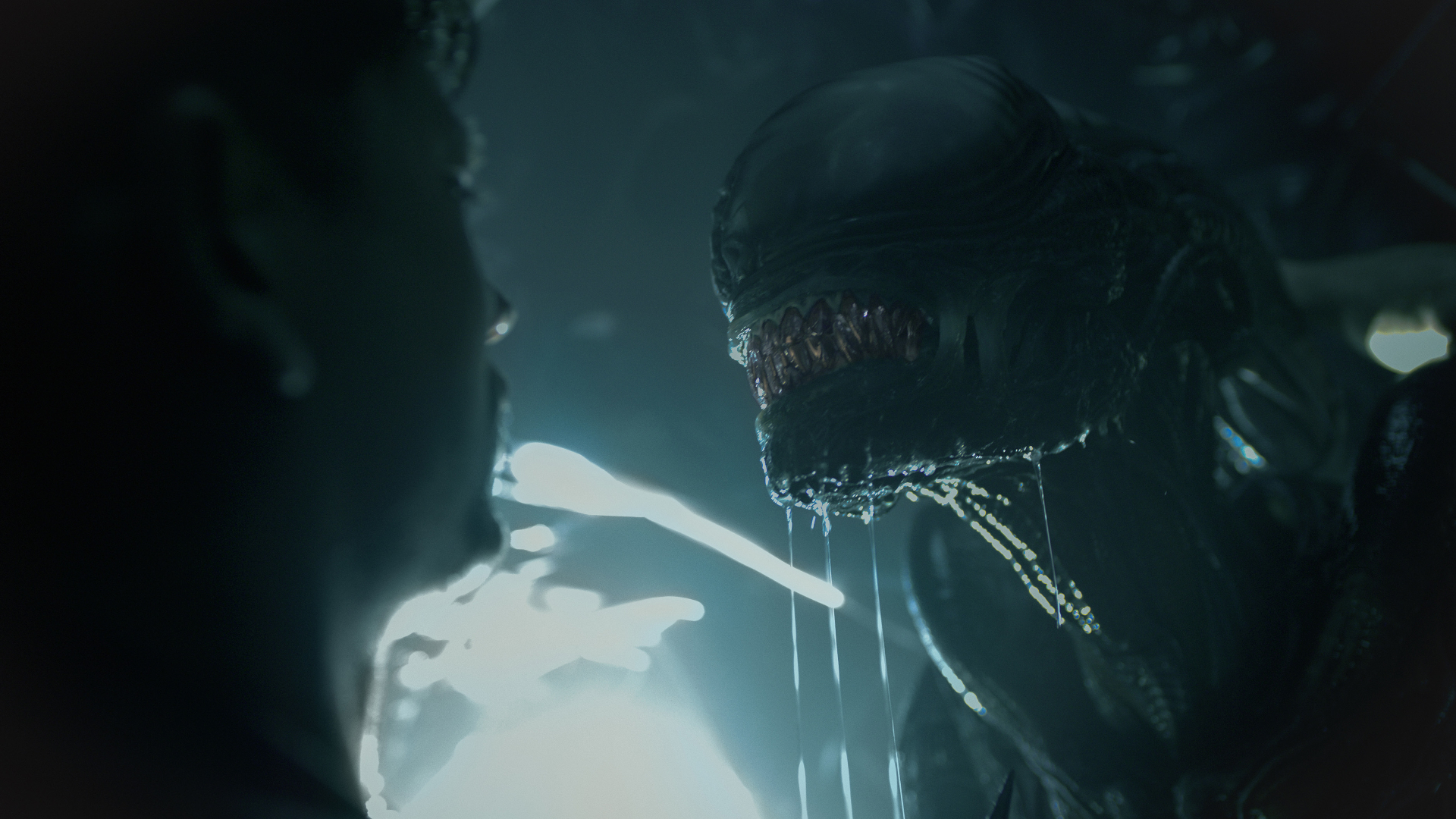
(Image credit: 20th Century Studios)

To be clear, science fiction and horror haven’t been on that much of a break overall; it’s just that when the two genres meet, they no longer seem to have any interest in leaving planet Earth.

Instead, the combination either brings the alien threat planetside, à la "The Quiet Place", "Nope", or "No One Will Save You", or makes the horror come from man’s own hand like "Ex Machina" or "M3GAN". Either way, the result is that horror no longer lives in space, with the only truly major space-horror film release this decade being the admittedly excellent "Alien: Romulus", along with some smaller projects like "Europa Report" and "Life".

I was sure there must be more — some hidden classics that I missed — but researching for this article, I was shocked at just how few space horror movies we've had in the past couple of decades. It’s like everyone agreed "Event Horizon" was peak and gave up making horror films in space.

(Image credit: Paramount)

Horror in space has never been a dominant subgenre, but it was once big enough to be considered an entire trope. So it feels especially strange that in the middle of a horror renaissance, as the genre continues to dominate box offices, it is totally left behind. Horror has crawled out of the B-grade shadows and into Oscar contention with films like "Get Out", "Midsommar", and "It Follows", and the box office returns are staggering.

Respected directors are diving into the genre and creating masterpieces, but none of them seem interested in outer space. We are nearly a decade into a horror renaissance that has seen almost every type of horror unpacked, remade, and turned into arthouse, and yet space horror has sat almost entirely dormant. So what gives?

In space, no one can hear you arthouse
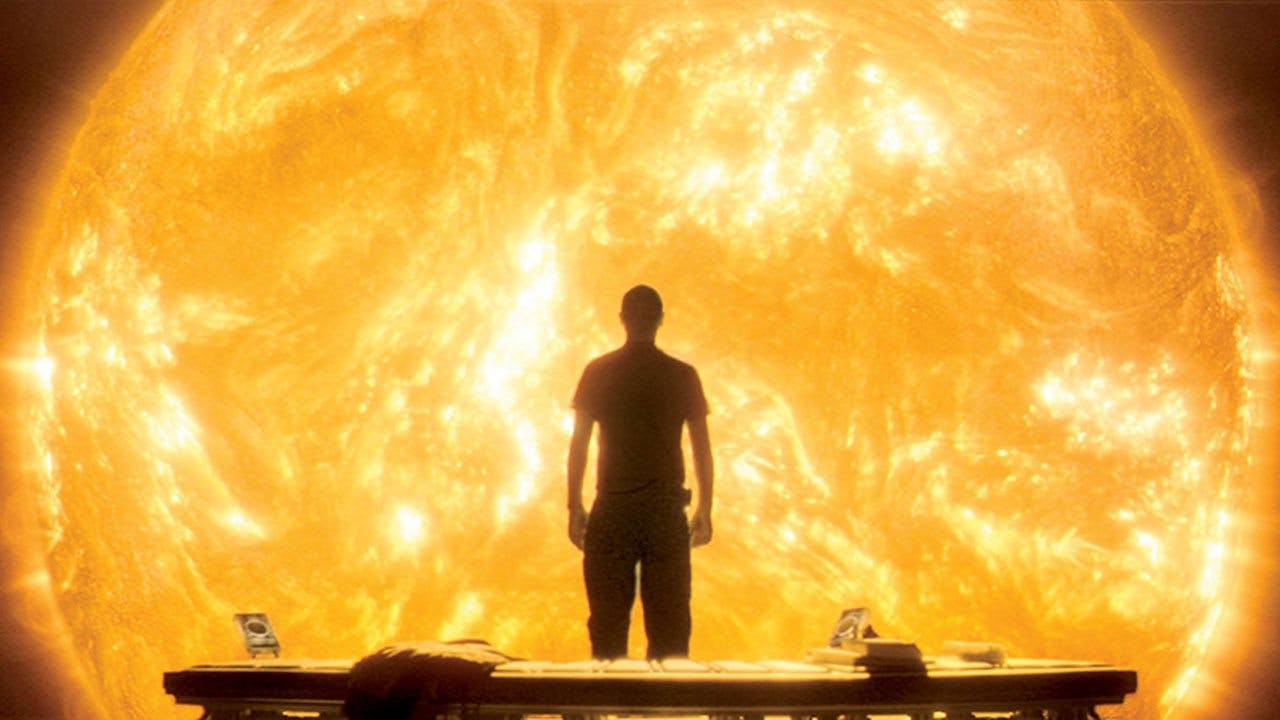
(Image credit: Fox Searchlight Pictures)

Why is this happening then? Where is the arthouse unpacking of "Jason X"? Why didn’t Danny Boyle’s "Sunshine" kick off the horror renaissance a decade earlier? Why did the "Alien" franchise become whatever the hell "Prometheus" was before finally returning to its roots (and then promptly coming down to Earth!)? Where’s our English remake of Aniara from an up-and-coming indie director?

There’s most likely a slew of reasons none of this has happened, but the most likely culprit is that horror has become far more grounded than it used to be. While we still get slashers and jump scares, the renaissance that A24 ushered in has not only brought horror out of the shadows, but also delivered a redefined genre that doesn’t jive as well with spaceships and alien creatures.

That’s not to say it can’t, but this new generation of horror isn’t interested in going off-planet to tell its slow-burning stories of grief and trauma, full of thinly veiled metaphors for real-life issues. “Earth and the present day are scary enough as is” seems to be the argument.
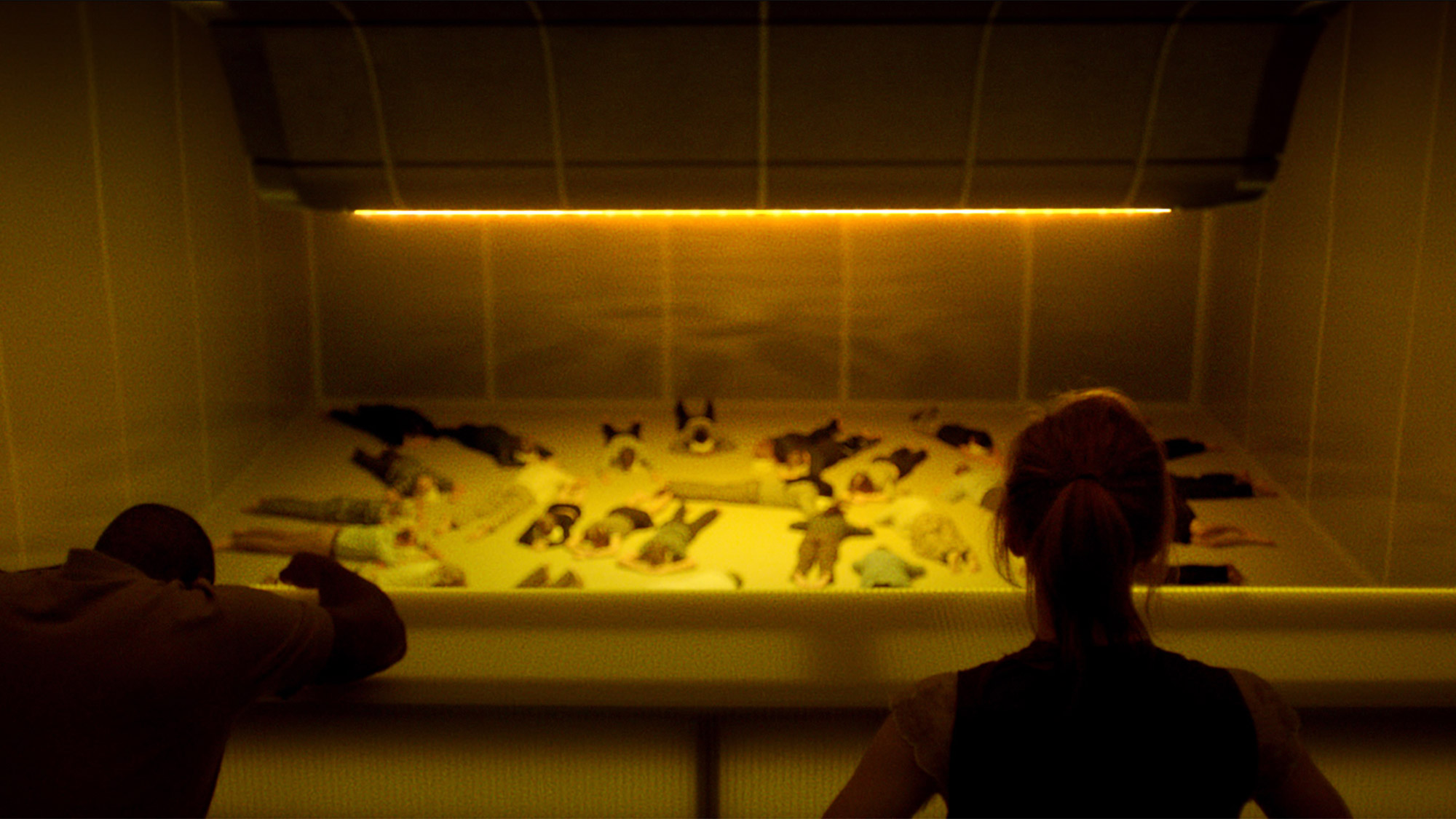
(Image credit: Magnet Releasing)

Of course, there’s the other reason. The reason for everything: money.

The other new branch of horror that has come out of this renaissance comes from studios like Blumhouse, which churn out low-budget horror films and rake in huge profits. And that's no knock on budget horror flicks, some of which are truly amazing.

But while space horror can be made on the cheap, it’s definitely not as easy to do. It requires more investment, design, and often sets and special effects than a traditional horror film does. It’s just cheaper and easier to make sci-fi horror that’s set on Earth, and with so many of them becoming massive hits, why bother going to space?

Drag me to space

(Image credit: Sony Picture Classics)

Given both sci-fi and horror's history of social commentary and cultural unpacking, arthouse horror not going to space — budget restraints aside — seems like a major miss, especially when the very aspects it explores are perfectly built for the isolation, detachment, and fear that space evokes.

Outside of horror, excellent space movies like "Moon" and "The Martian" have explored these themes, but we're missing that spooky, scary edge.

And look, I’m not even saying that space horror has to be arthouse. The trope that horror franchises go to space eventually is actually one I’d like to see more of. Why not jump the shark a bit more with horror franchises? A science fiction version of Saw sounds a hell of a lot more fun than Chris Rock's dreadful spin-off. Sci-fi space "Purge" on a colony ship? Yes, and please. "Evil Dead"’s new anthology style of horror is practically begging to take a trip to space. There’s so much space in space, and these franchises could totally take a trip there.
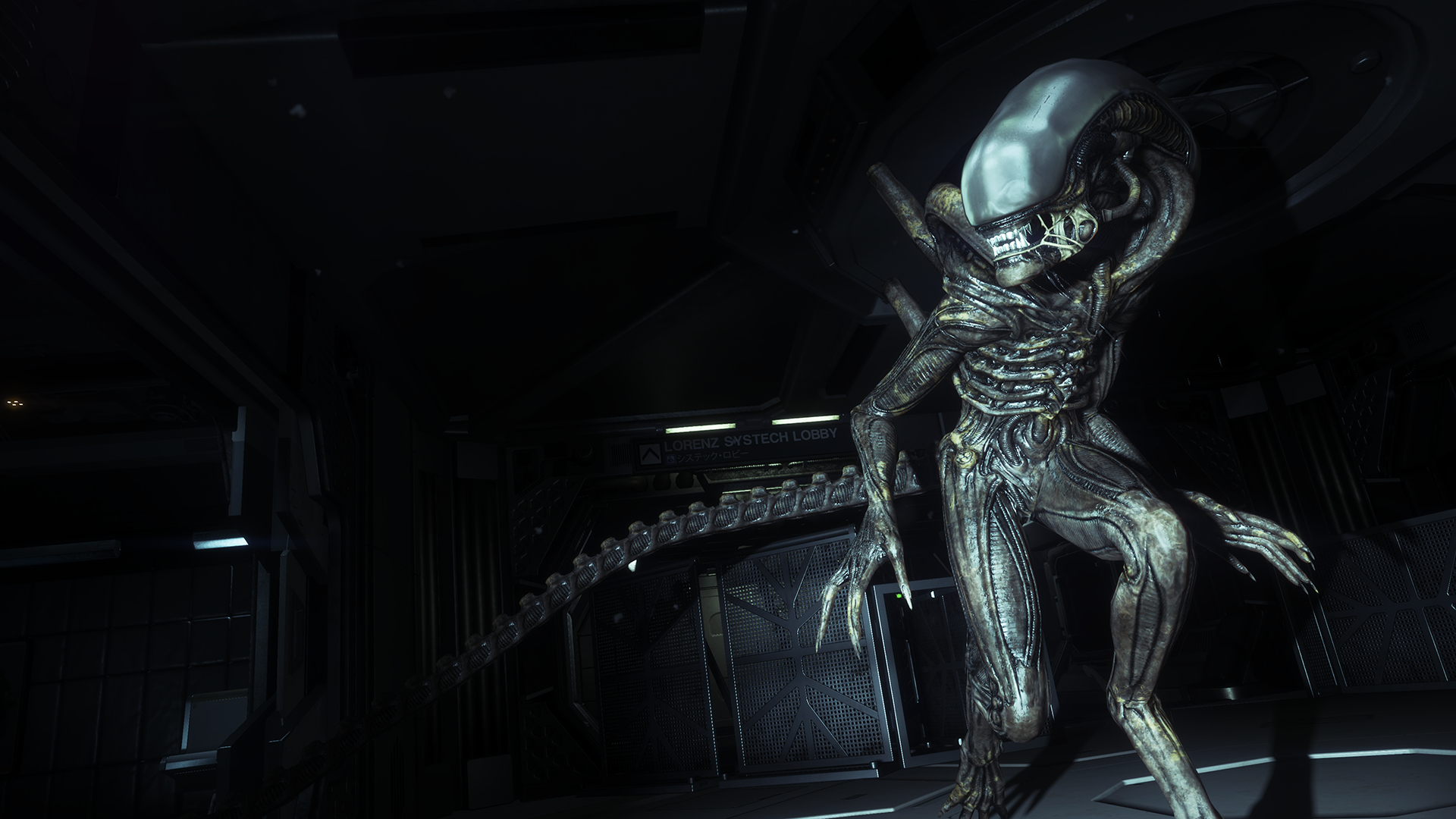
(Image credit: Sega)

There is one bright spot, however, for the space-loving horror enthusiast. Video games seem to have taken up the mantle.

Space horror has always flourished in the medium, from AAA classics like "Dead Space" to indie darlings like "Iron Lung" (which itself was transformed into a space horror film!). The subgenre has been going strong for decades, even if film gave up on it. Hell, for nearly a decade, the best output from the "Alien" franchise was "Alien: Isolation", one of the scariest games ever made.

While movies may no longer be playing in the wider universe, at least our video games are taking us there and then scaring us out of our space boots.

I’m not an astronaut, but I went to the International Space Station (sort of)

NEW YORK — I'm the kind of person who, every so often, falls into accidental daydreams about the concept of space. Usually because I'm listening to some sort of sad girl Spotify playlist, I start feeling infuriated that we may never learn the true meaning of the cosmos and become embarrassingly poetic about our isolation on Earth. I tend to ponder how strange microgravity is and begin Googling things like "what lies beyond the edge of the universe best evidence we have" and "when commercial rocket launch become same price JetBlue flight."

I'm pretty sure I've lived in these clouds ever since I got past the Freddi Fish and Microsoft Paint phase of my internet literacy — but then, a month before my 30th birthday, something huge happened. On a random Tuesday, I woke up, brushed my teeth, made myself an espresso, sauntered over to the Franklin Avenue C, and went to the International Space Station.

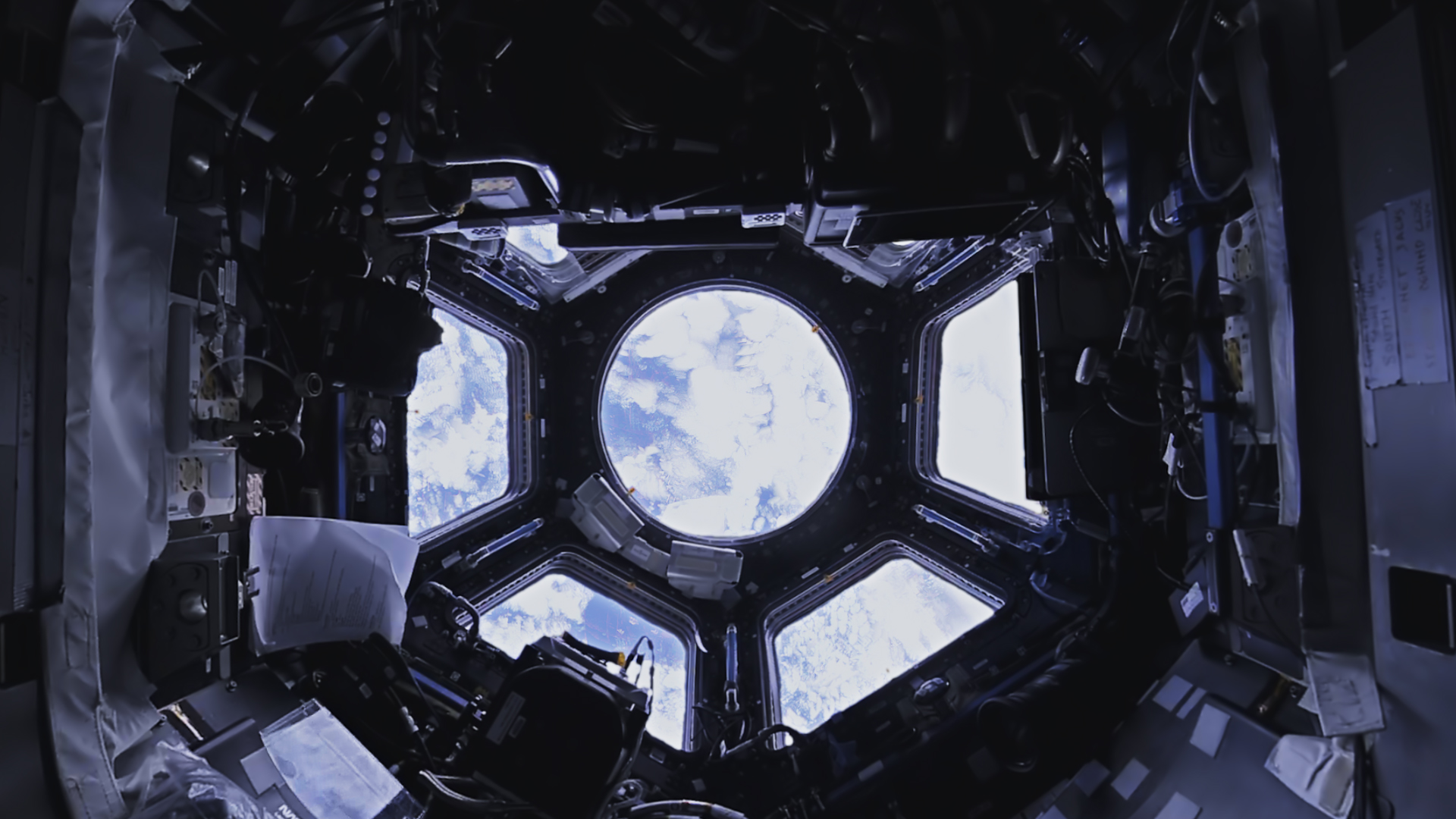
Once I got there, it was bizarre to float through the corridors and living quarters I've written about for so long as a science journalist and thought about for even longer. The walls felt lived in. The station's speed in orbit seemed a little too fast for comfort. The highly esteemed cupola — a protruding corner of the station with seven windows arranged in the shape of a daisy — was far larger than I imagined. In fact, the entire ISS was way more enormous than I can explain. Solar panels tower over you like rust-colored billboards and the station's floors threaten to collapse any second, fooling you as you gaze down at Earth. It's a little scary to be so exposed to the void of space, and that's true even when you're there in virtual reality.

Yes, unfortunately (or fortunately, depending on your caution levels) I launched to the ISS through a virtual reality experience called "Space Explorers: The ISS Experience" shown at Eclipsio in Manhattan. It's probably the closest I'll ever get to the real thing, until of course my dream of a cheap RocketBlue economy seat becomes possible. And most importantly, I'm here to tell you that if you're ever able to do the same, you should do it, too.

Here's what you'd see

The way it works is you put on some VR glasses and follow instructions in your headset to walk a certain direction or move your hands a certain way — your "hands" in the digital world look like floating yellow outlines of hands that correspond to the movements of your actual hands. To be transparent, my glasses were a bit glitchy. My digital hands were quite a bit unstable, for example, which did distract me a little bit but it was easy to get over.

Okay, once you're in the world of space, which is simply darkness, a few things happen (which I won't spoil). Eventually, a life-size structure of the International Space Station (ISS) appears. Suddenly, you're within the station. The interior of this structure isn't totally accurate to reality, to be clear. It's a gray, translucent rendering of the ISS's insides that you can explore. Still, the size is meant to be true to life.

Two people with VR glasses in a white room holding hands.

People walking around the Eclipsio space during the show. (Image credit: Space Explorers: The ISS Experience)

Along the way, you can touch giant floating orbs that bring you a short snippet of video to watch. It is because of these snippets that I think this show is 100% worth it.

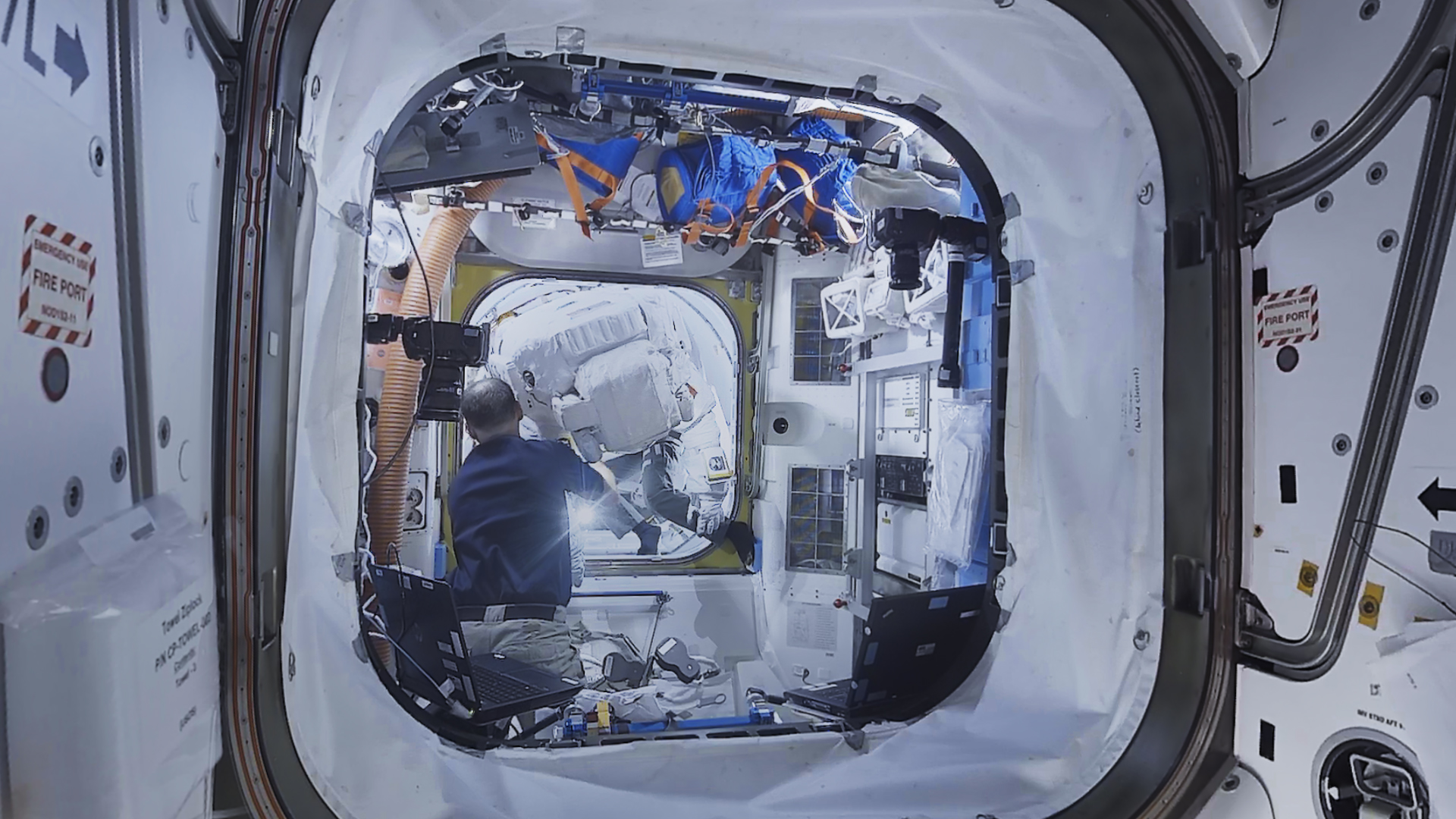
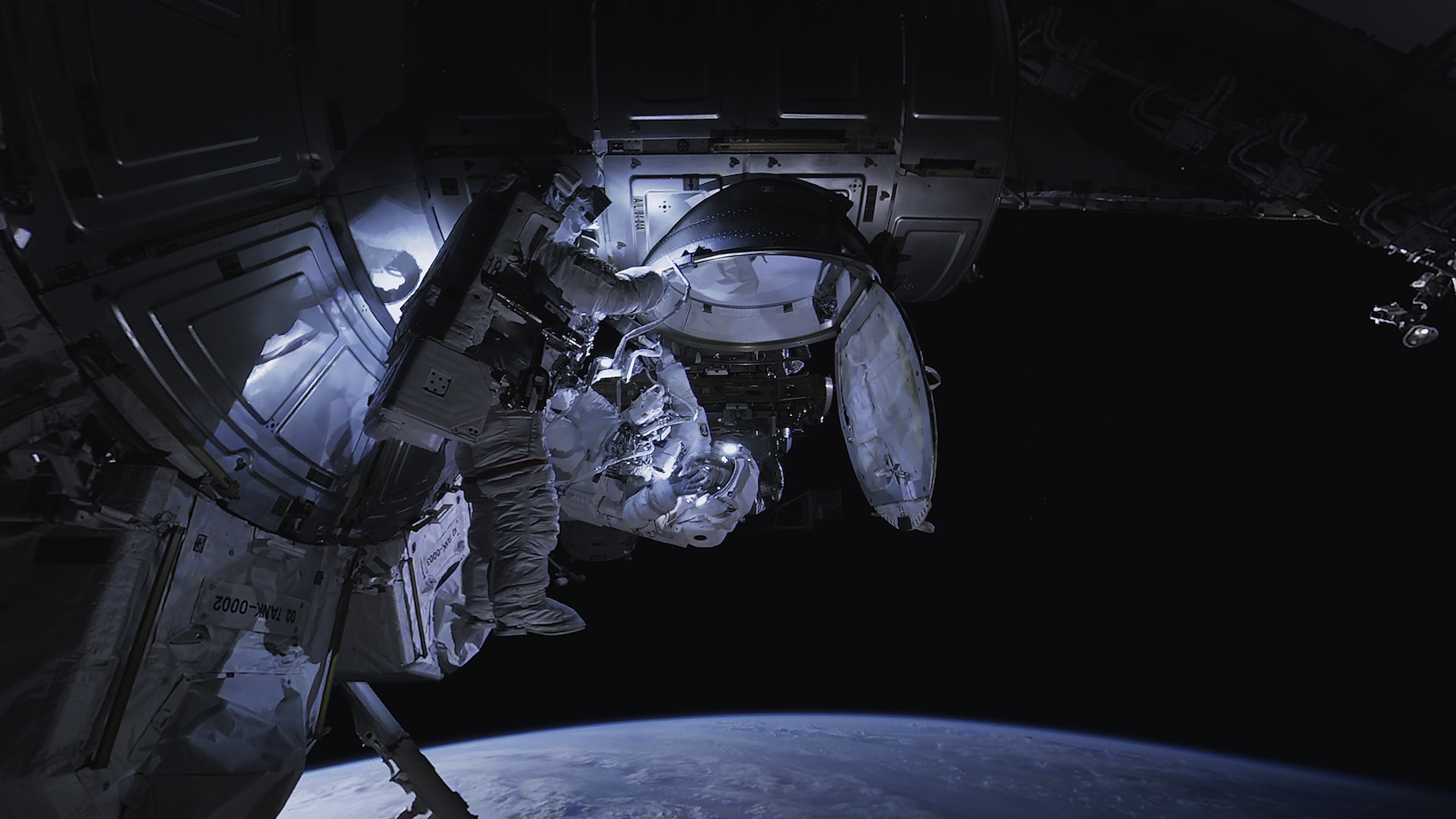
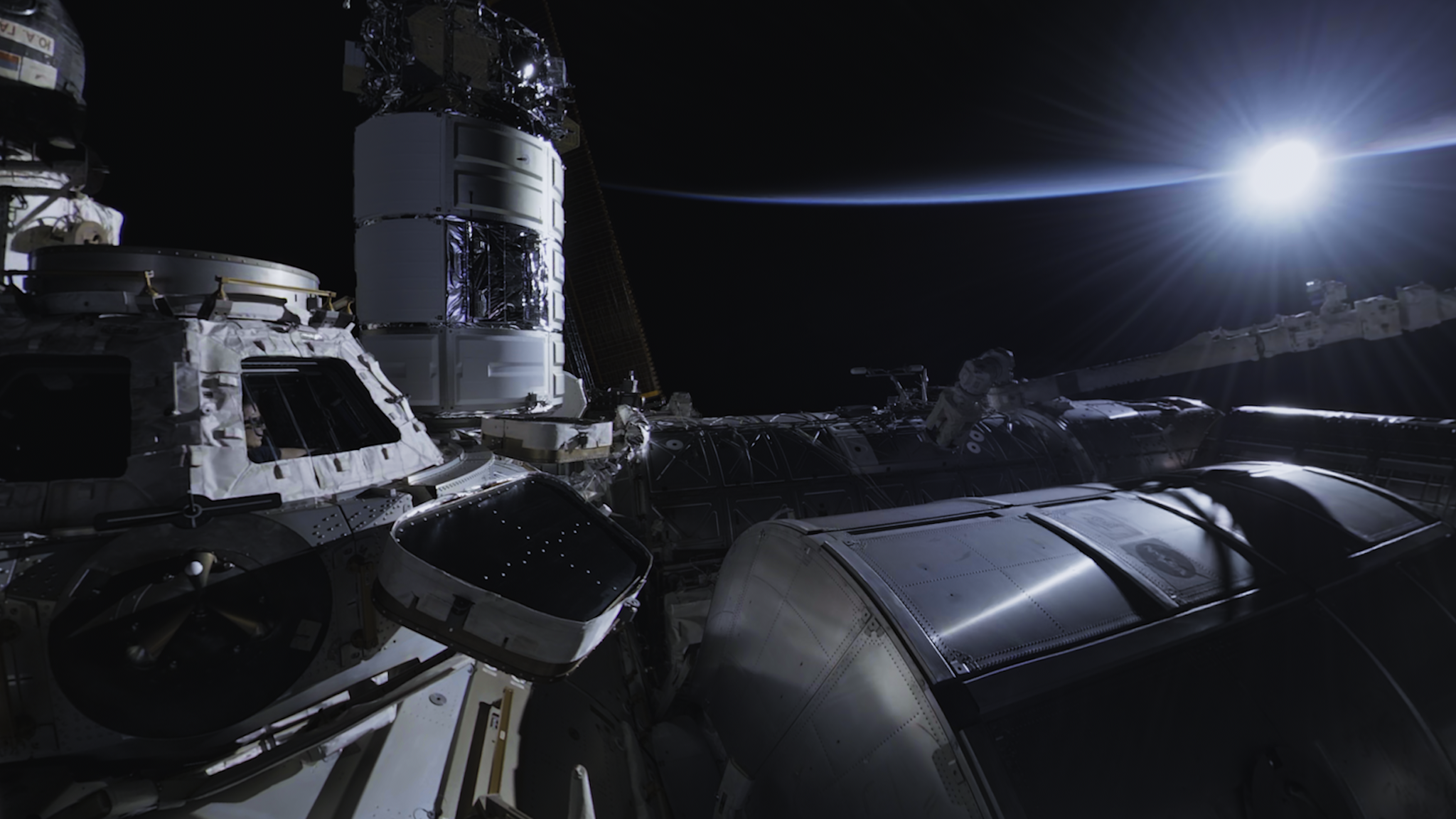
Each one corresponds to the location in which the orb sits — a cupola orb might show you a couple of astronauts floating around and looking out the window, while one near the gym equipment might bring you straight into a training session with Artemis II mission specialist Christina Koch. Perhaps you'd like to venture "outside" and float eye-level with the station's robotic arm. In your periphery to the left, a spacewalker traverses the exterior of the station. To the right, the Earth is majestic. In front of you, sunlight hitting the laboratory's worn white walls causes a realistic glare. You can't help but squint.

And the reason these snippets are outstanding is that they are made with real footage from the ISS.

A photo of the exterior of the ISS with the sun shining in the background.

A still from Space Explorers: The ISS Experience. (Image credit: Space Explorers: The ISS Experience)

A show made by astronauts

I sat down with Félix Lajeunesse, co-founder of Felix & Paul studios — the organization behind the exhibit — to learn how this was possible. What does it take to recreate the ISS with this level of detail, and this level of soul?

"It took about a year and a half to two years to just prepare for this project, and eventually cameras were sent up there in space," he said. "That was the beginning of a three year production."

More specifically, the footage you see in this VR show was filmed across six NASA expeditions and involved shipping three cameras to space — two cameras operating inside the ISS and one camera designed to function in the vacuum of space. That latter camera was attached to the Canadian robotic arm on the exterior of the station and operators on the ground could remotely control it to achieve the cinematic quality they wished. The astronauts first put it on the sliding table of the ISS's Japanese module. Then, the camera was egressed from the station and the robotic arm could pick it up.

When it came to the interior cameras, however, that's where the astronauts themselves stepped in.

"It's not a traditional camera — it's a virtual reality camera," Lajeunesse said. "So, if you're going to be around a table, for example, having coffee together in the morning, well, this camera is not going to be in the middle of the table because no one would ever be there. It will be at the same height as the rest of you around the table because in the end it's going to be replaced by a person being there with you."

"This kind of anthropomorphic idea that the camera is a person really resonated with them," he added.

A photo of the interior of the ISS, showing a person within white walls.

A still from Space Explorers: The ISS Experience. (Image credit: Space Explorers: The ISS Experience)

In order to ensure the camera didn't interfere with the many experiments and procedures on the station Lajeunesse and his team made sure to send the astronauts what he calls a "shooting script" for each day of work. This script explained which different camera positions were desired; if anything wasn't possible, the astronauts would offer suggestions of better locations. "We had this ongoing conversation with them during the production, as if it was on a real set, essentially," Lajeunesse said.

And speaking with Lajeunesse, it became remarkably clear that this show wouldn't have been as heartfelt as it is without the astronauts' own desire to create it. It seems like the astronauts wanted to be able to share their indescribable experience of living beyond our planet with those stuck on it. This is a way for them to show their families the place they used to call home.

The team even made sure to premiere the U.S. version of the show at Houston, Texas, often called "Space City" because that's where NASA astronaut training happens at the agency's Johnson Space Center.

"Our first audience in the United States were the astronauts," Lajeunesse said. "It was quite an extraordinary and emotional turnout — almost all of them referred to experiencing this as going back home."

A photo of spacewalkers outside the ISS. The Earth is below.

A still from Space Explorers: The ISS Experience. (Image credit: Space Explorers: The ISS Experience)

A time capsule for future generations

As upsetting as it is, the International Space Station isn't forever. Unless a potential boosting mission reaches fruition, it'll be de-orbited and mostly lost in the flames of reentry in the year 2030. Its charred remnants will probably be placed in museums. One day, those museums will be visited by people who never lived during a time when you just knew the iconic lab was up there somewhere in the sky.

When that day comes, this ISS show will grow in sentimental value. It may end up offering the only way for ISS astronauts to go "home."

A view of the cupola. Through the windows, you can see the Earth.

A still from Space Explorers: The ISS Experience. (Image credit: Space Explorers: The ISS Experience)

"VR points to the capacity to create simulations that are just as rich and vibrant and open and possibilities than reality itself." Lejeuneusse said, comparing it to console video games or movies. "I think it's probably the most human medium there's ever been."

He hopes that, someday, VR will improve to the point where it becomes possible to generate open worlds that we can all be a part of together. Perhaps, he says, artificial intelligence will be a big part of that.

"This feeling of witnessing the Earth, this sense of the overview experience is something pretty special, pretty emotional for people, and something that could not be communicated through any other media," he said.

As for what's next? The team is working on a show in Las Vegas called Interstellar Arc, a science fiction futuristic VR experience that Lajeuneusse says is even more interactive than this International Space Station one. But still, he emphasizes that while future VR shows may continue to increase in capabilities, there will always be something profound about the ISS project.

"You know, the International Space Station is one of the most extraordinary examples of human collaboration; human cooperation. It's many different countries, some of them which are opponents at the political stage, that kind of all came together to build this enormous structure in space habitat where humans can go and live," he said. "It was all built through cooperation, and it's all maintained through cooperation."

"When they're up there, they're kind of like a microcosm of humanity," he added. "Just the fact that it exists, just the fact that it continues to exist. We should marvel at that."

An off-the-shelf camera could help us find more black holes smashing together

Fixing a problem inside one of the world's most sophisticated scientific observatories might seem like the kind of challenge that demands a multimillion-dollar upgrade or revolutionary new technology.

But for scientists working on the Laser Interferometer Gravitational-Wave Observatory (LIGO), which listens for ripples in spacetime generated by cosmic collisions like merging black holes, the solution to a mild but persistent engineering challenge turns out to be as simple as an off-the-shelf camera.

By pairing commercially available thermal imaging cameras with computer models, a team led by Jonathan Richardson at the University of California, Riverside, has developed a technique that corrects tiny, heat-induced distortions in the observatory's mirrors — an elusive flaw that scientists say currently limits how far into deep space the facility can look.

"It doesn't require any new technology development, which is almost unheard of for solving a LIGO instrumentation problem," Richardson said in a statement.

Once incorporated into LIGO's upcoming upgrade, Richardson and his team estimate the fix would extend the observatory's reach by roughly 33 million light-years.

That gain might sound like a drop in the ocean against the unimaginably vast scale of the universe, but because space expands in three dimensions, pushing a detector's reach even slightly opens up an exponentially larger window of space. Being able to look further into the universe will allow astronomers to "hear" many more cosmic ripples, in turn increasing the potential for discovering the universe’s most violent collisions that lie beyond LIGO's reach today.

LIGO detects these cosmic ripples, known as gravitational waves, using twin L-shaped facilities in the U.S. — in the states of Washington and Louisiana. Inside each detector, a laser beam shoots down two 2.5-mile-long (4-kilometer-long) tunnels, bouncing off pristine mirrors at each end. When a gravitational wave passes through Earth, it subtly stretches one tunnel and squeezes the other. That microscopic shift alters the laser beams ever so slightly, producing a tiny flicker of light that alerts scientists to a distant cosmic event.

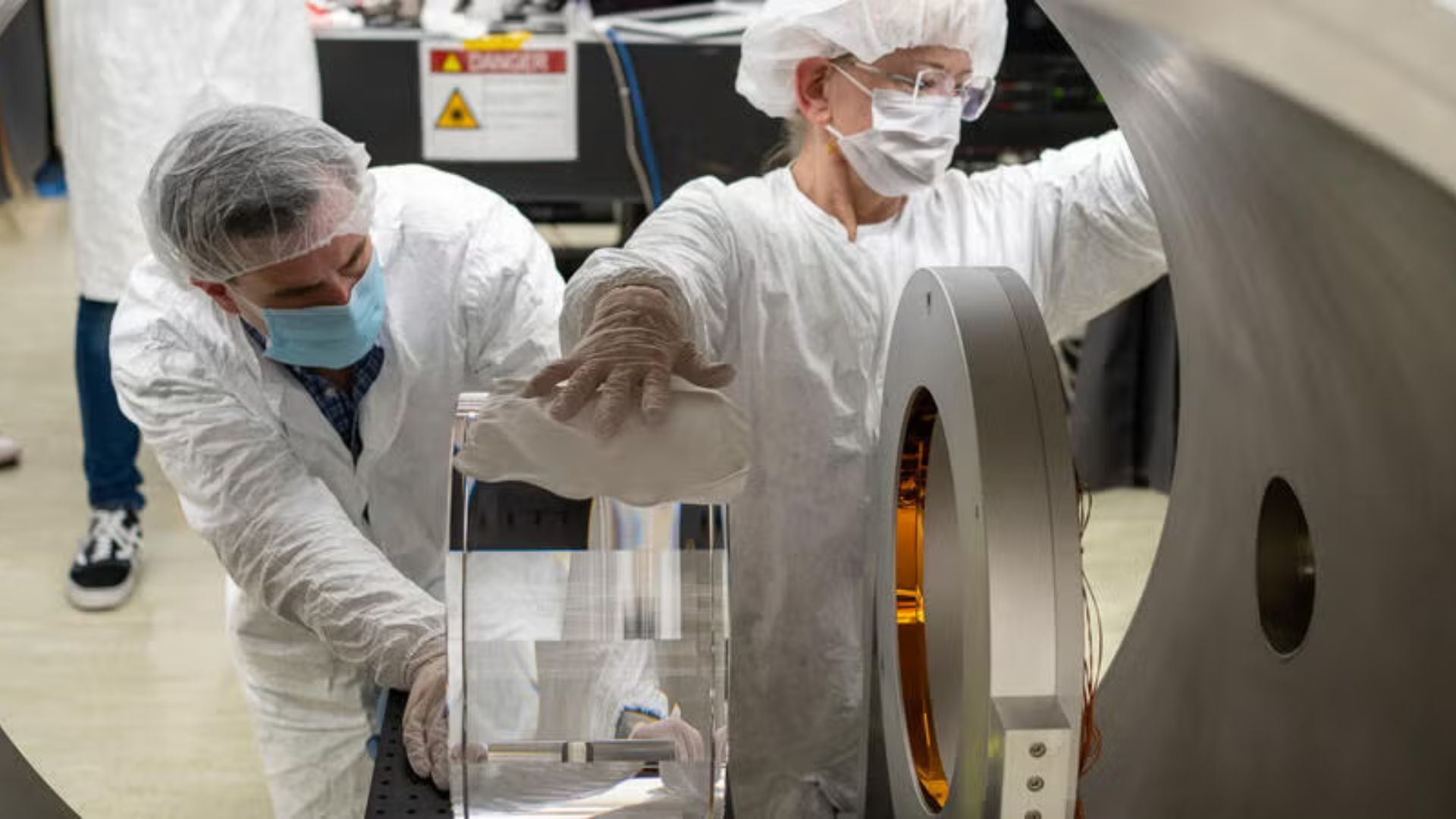
Two people earing white lab coats and other protective lab gear polish a white clear object within a gray cylinder. The view is from within the cylinder.

Researchers in Richardson's group testing a novel adaptive optics device designed to precisely reshape the surfaces of LIGO's main mirrors. (Image credit: LIGO Laboratory/Arnaud Pele)

Because these cosmic signals are inconceivably small, preserving every single photon is crucial. To accomplish this, LIGO relies on mirrors polished to reflect 99.9999%t of the laser light that strikes them, ranking them among the purest optical components ever built.

Yet even these near-perfect mirrors have had one unavoidable flaw. The mirrors still absorb a tiny fraction of that intense laser light. That energy turns into heat, warping the mirror's surface by just a few nanometers, enough to distort the laser beam and reduce the observatory's overall sensitivity.

Physicists already knew they could counteract these distortions by applying targeted heat to the back of the mirrors. The difficult part was measuring the distortions accurately enough such that the correcting heat could be applied with exact precision.

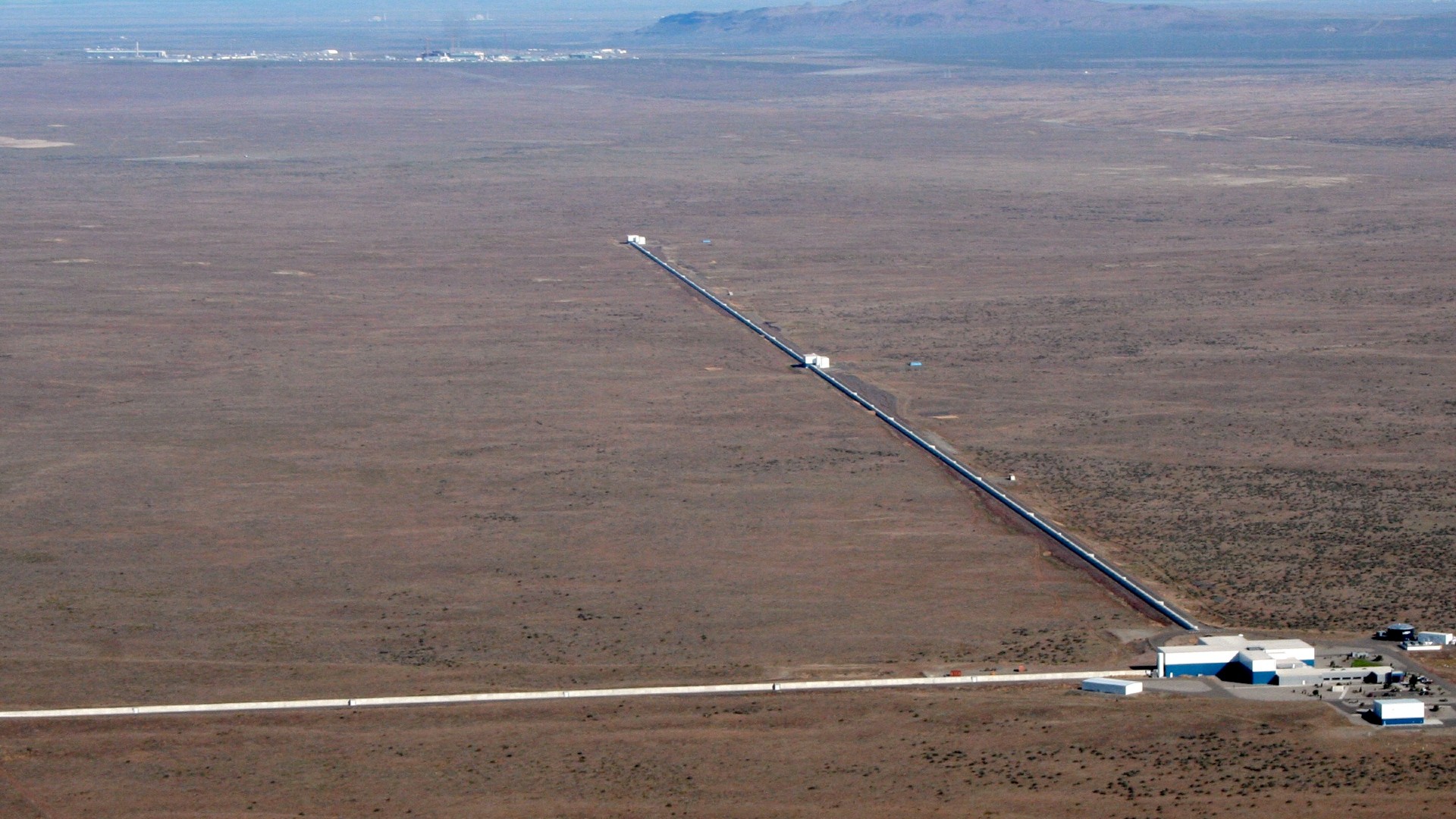
An aerial shot of a brown plain. There is a white building toward the bottom left and two extremely long arms shoot out from the building, forming a 90 degree angle.

An aerial view of LIGO Hanford Observatory in the state of Washington. (Image credit: Public domain/LIGO Hanford Observatory)

The new technique uses infrared thermal images and existing computer models to reconstruct a map of distortions across the mirror's surface.

"You can think of it like taking an infrared picture of a car engine," Richardson said in the statement. "An engineer can look at the temperature pattern on the outside and infer what's happening inside the engine. We're doing the same thing with LIGO's mirrors."

And the technique isn't just a fix for LIGO. It is also expected to become part of the foundational design for Cosmic Explorer, a proposed next-generation U.S. gravitational-wave observatory targeted for the mid-2030s.

With 25-mile-long (40-km-long) arms — 10 times larger than LIGO's — Cosmic Explorer is already designed to detect gravitational wave events far beyond the reach of today's observatories. This new technique will only supercharge its ultimate reach.

"The goal for the next generation of gravitational-wave detectors is to achieve about 10 times the sensitivity of today's instruments," Richardson said in the statement. "One of the key obstacles to achieving that is reducing the fundamental quantum mechanical noise that limits the precision of the measurements."

The technique is described in a paper published July 16 in Classical and Quantum Gravity.

ZWO Seestar S30 Pro smart telescope review

Smart telescopes like the Seestar S30 Pro have changed astrophotography and, arguably, urban astronomy. The Seestar S30 Pro takes that concept further than most. Small enough to fit inside a camera backpack, it combines a refractor telescope, motorized mount, dual cameras and image-processing software into a compact unit controlled entirely from a smartphone. Within minutes of powering on, it can align itself to the night sky, slew to a specified target and begin stacking exposures to reveal galaxies, nebulas and star clusters — even from light-polluted locations.

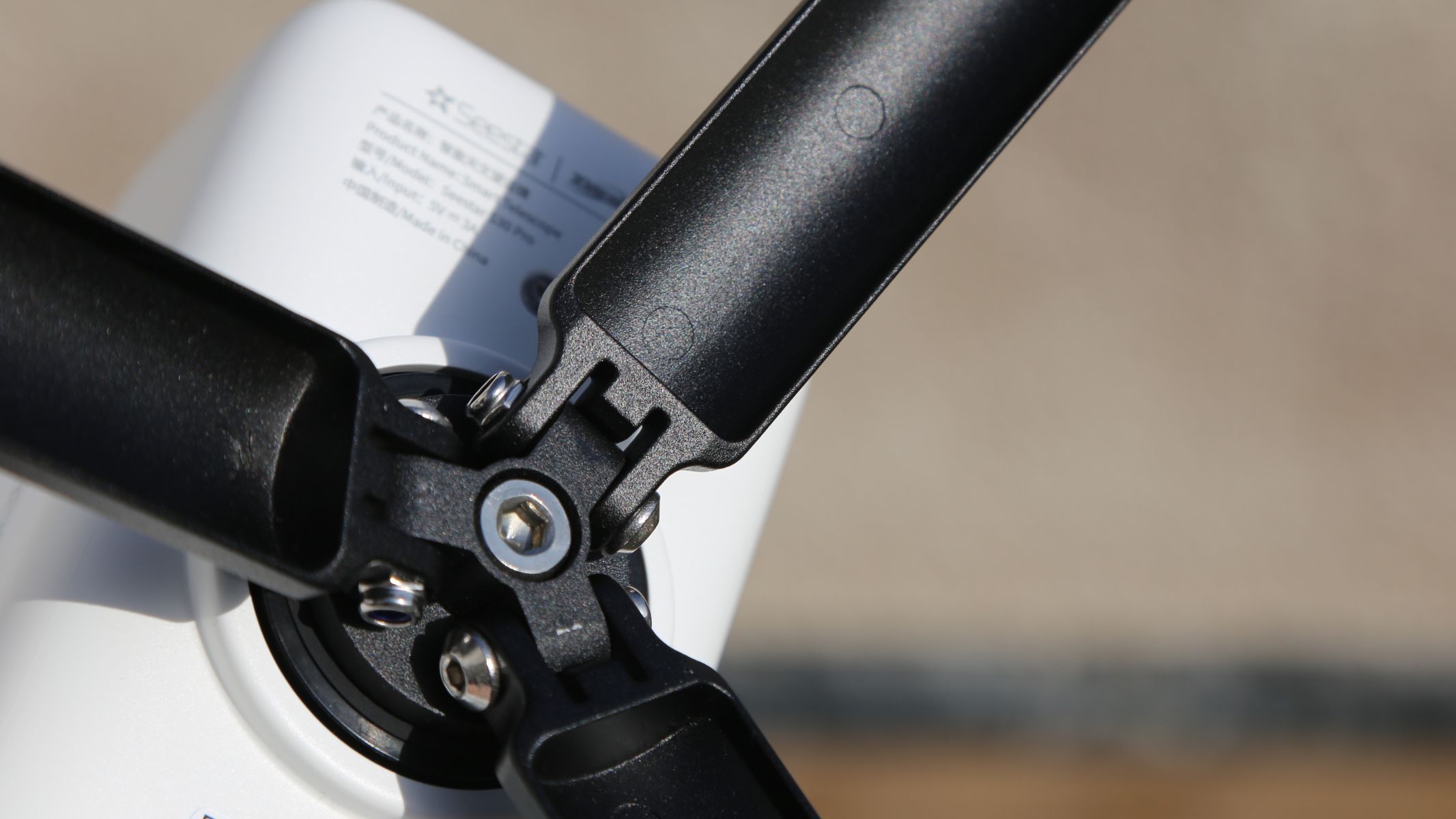
A close-up of the the logo on the ZWO Seestar S30 Pro.

The Pro version of the S30 adds a higher resolution sensor, advanced optics and upgraded software functionality. (Image credit: Jamie Carter)

It makes astrophotography — once a complex and expensive hobby — possible with a single, automated device, though what makes the Seestar S30 Pro particularly interesting is not just its simplicity, but how it changes the experience of observing. Instead of actively operating a telescope, users watch a digital image build in real time. Sure, your eyes don’t see the photons coming from distant galaxies, but that misses the point — urban astronomers can’t see much of those galaxies anyway when using an optical telescope.

The Seestar logo on the ZWO Seestar S30 Pro.

(Image credit: Jamie Carter)

Positioned as an upgrade to the original Seestar S30, it introduces higher-resolution 8.3MP imaging, equatorial tracking support and expanded imaging modes aimed at more advanced users.

Designed for beginners, urban astronomers and astrophotographers of any level who are looking for a portable rig, the Seestar S30 Pro is about convenience, capability and a different way to explore the night sky.

ZWO Seestar S30 Pro smart telescope review

ZWO Seestar S30 Pro: Design

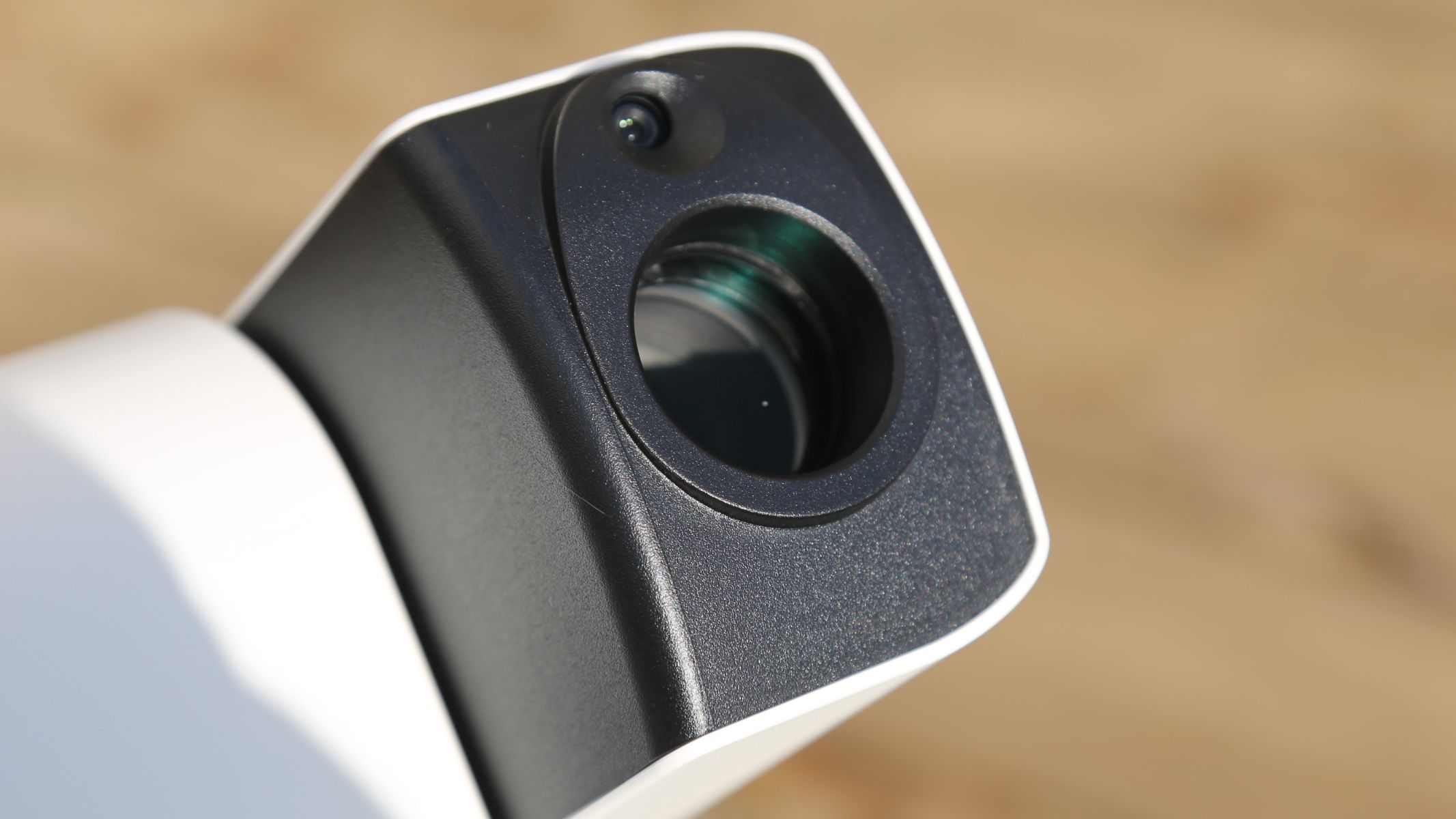
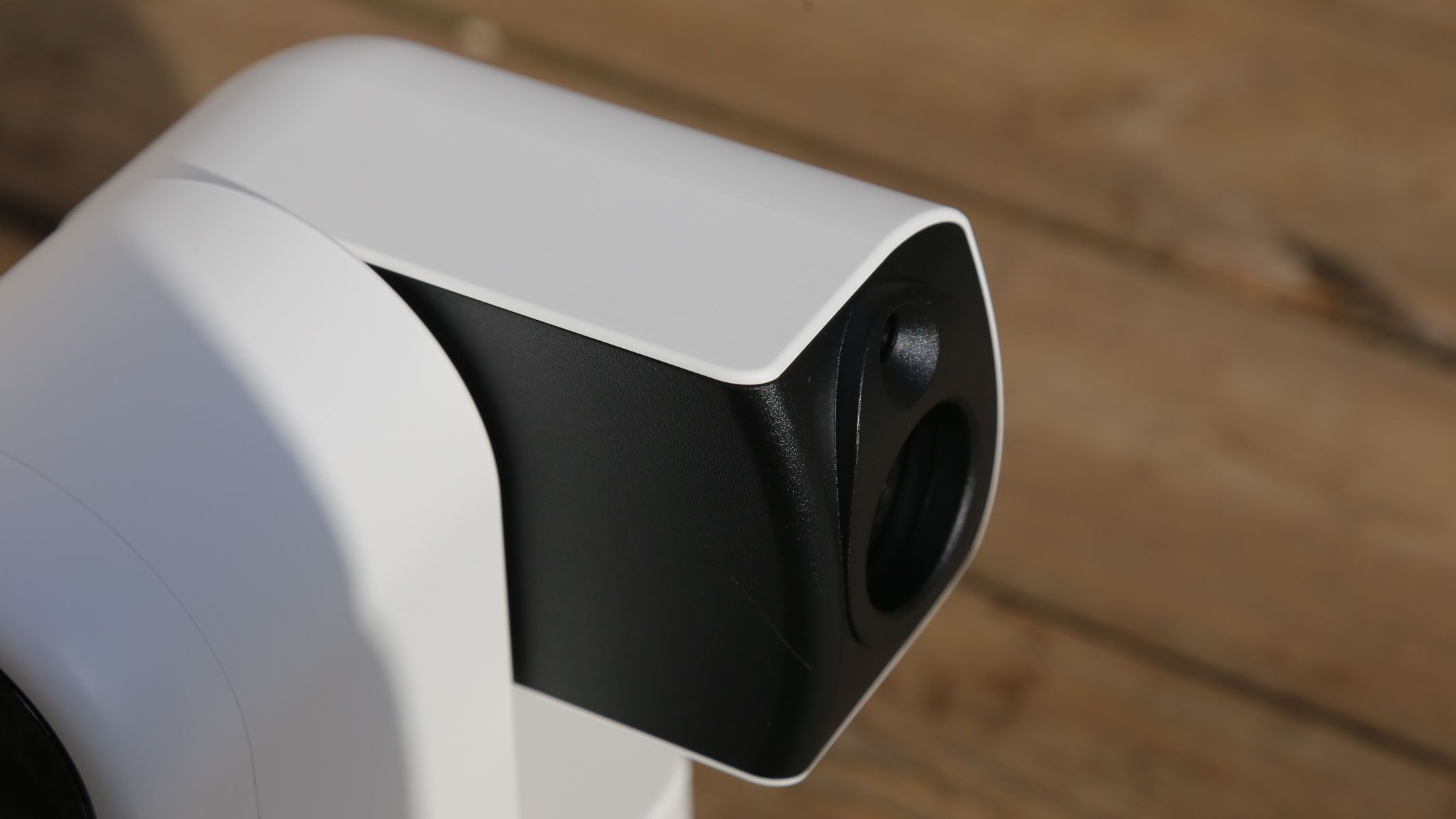
A close-up on the side of the optical tube on the ZWO Seestar S30 Pro pointing upwards.

The Seestar S30 Pro features four lens elements in an optical design called an apochromatic quadruplet refractor. (Image credit: Jamie Carter)
  • Lightweight design
  • Dual-camera system
  • Full smartphone control

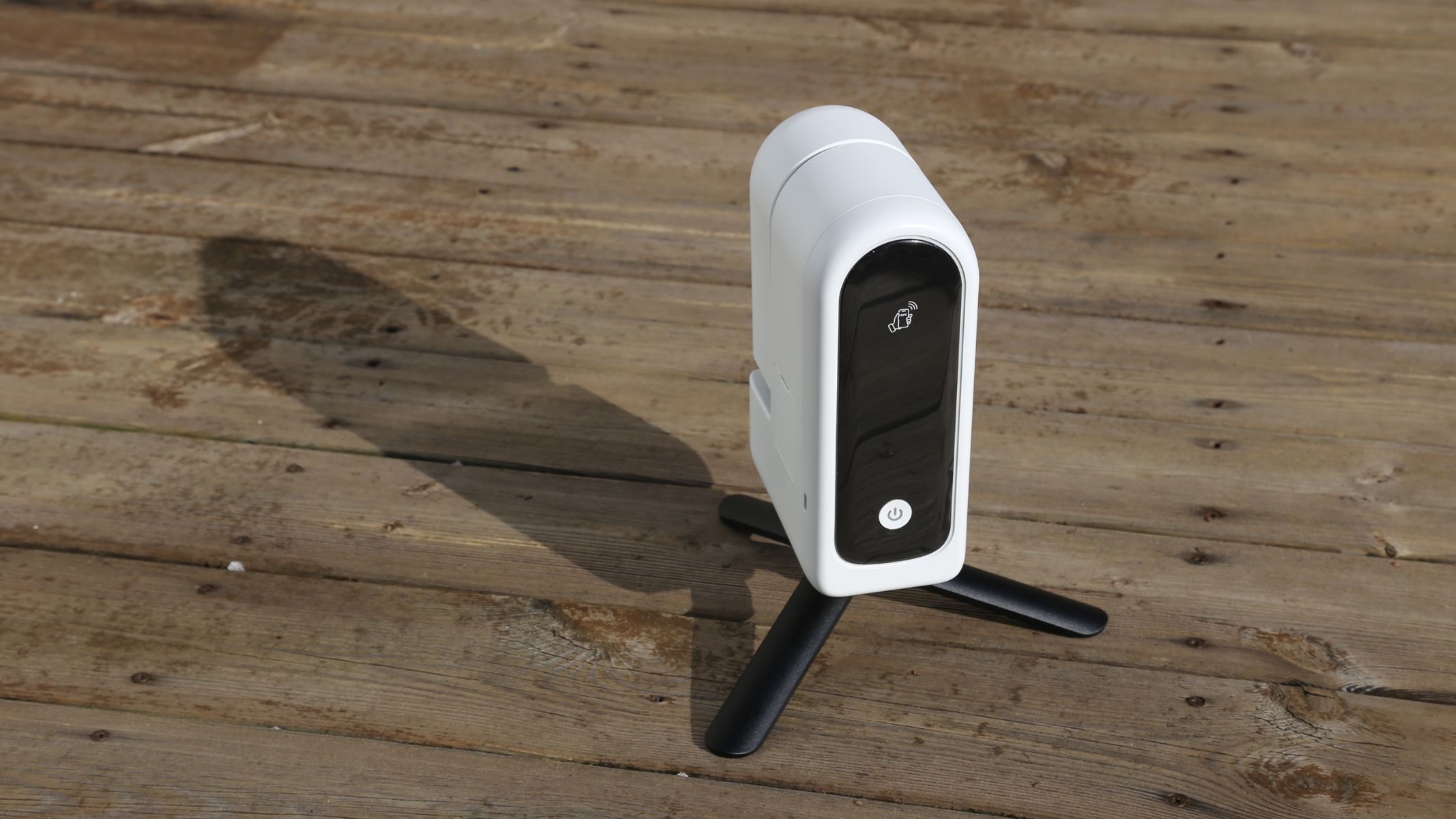
At first glance, the Seestar S30 Pro barely resembles a telescope, being closer in size to a telephoto lens than a traditional optical instrument. That portability is one of its defining strengths — this is a telescope you can realistically take anywhere, whether into a backyard, onto a balcony or on a dark-sky trip. You could even take it as hand luggage on a trip to see a total solar eclipse in a distant land.

The ZWO Seestar S30 Pro mounted on a tripod on a wooden table.
When packed away the Seestar S30 Pro is very compact and highly portable.Jamie Carter
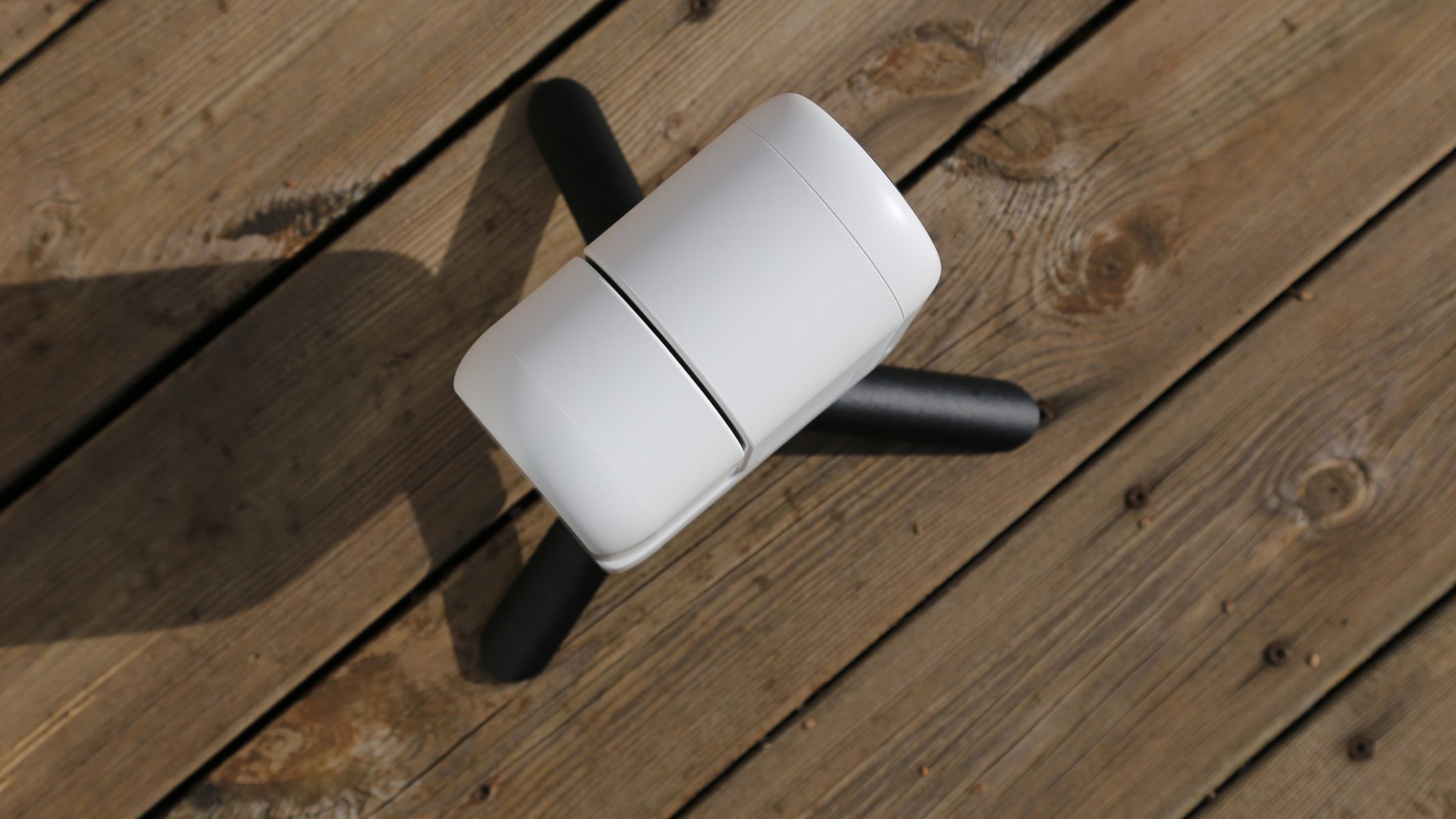
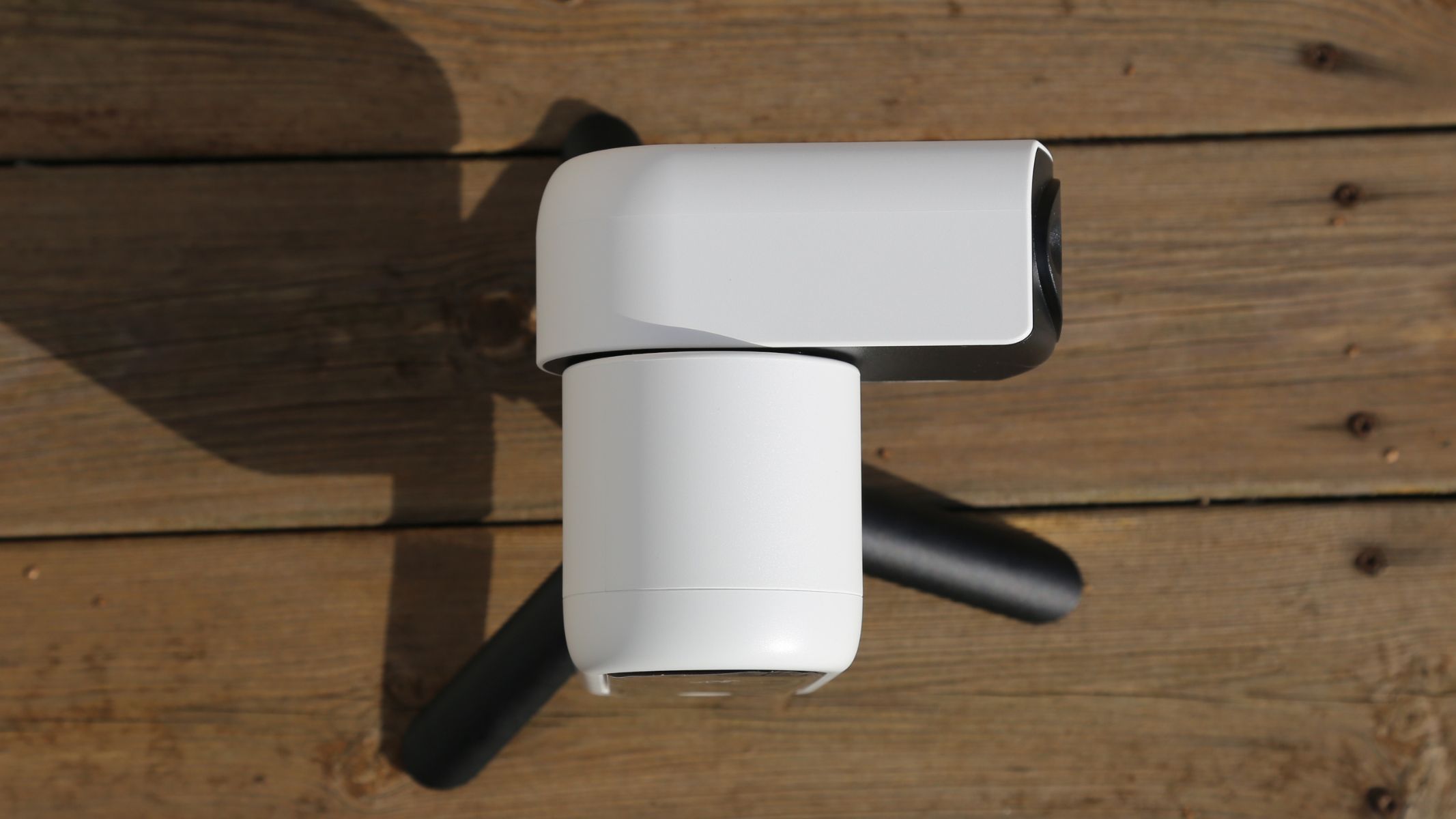
A bird's eye view of the ZWO Seestar S30 Pro on a wooden table.
Weighing just 3.6 lbs (1.65 kg) it is the lightest apochromatic quadruplet smart telescope.Jamie Carter

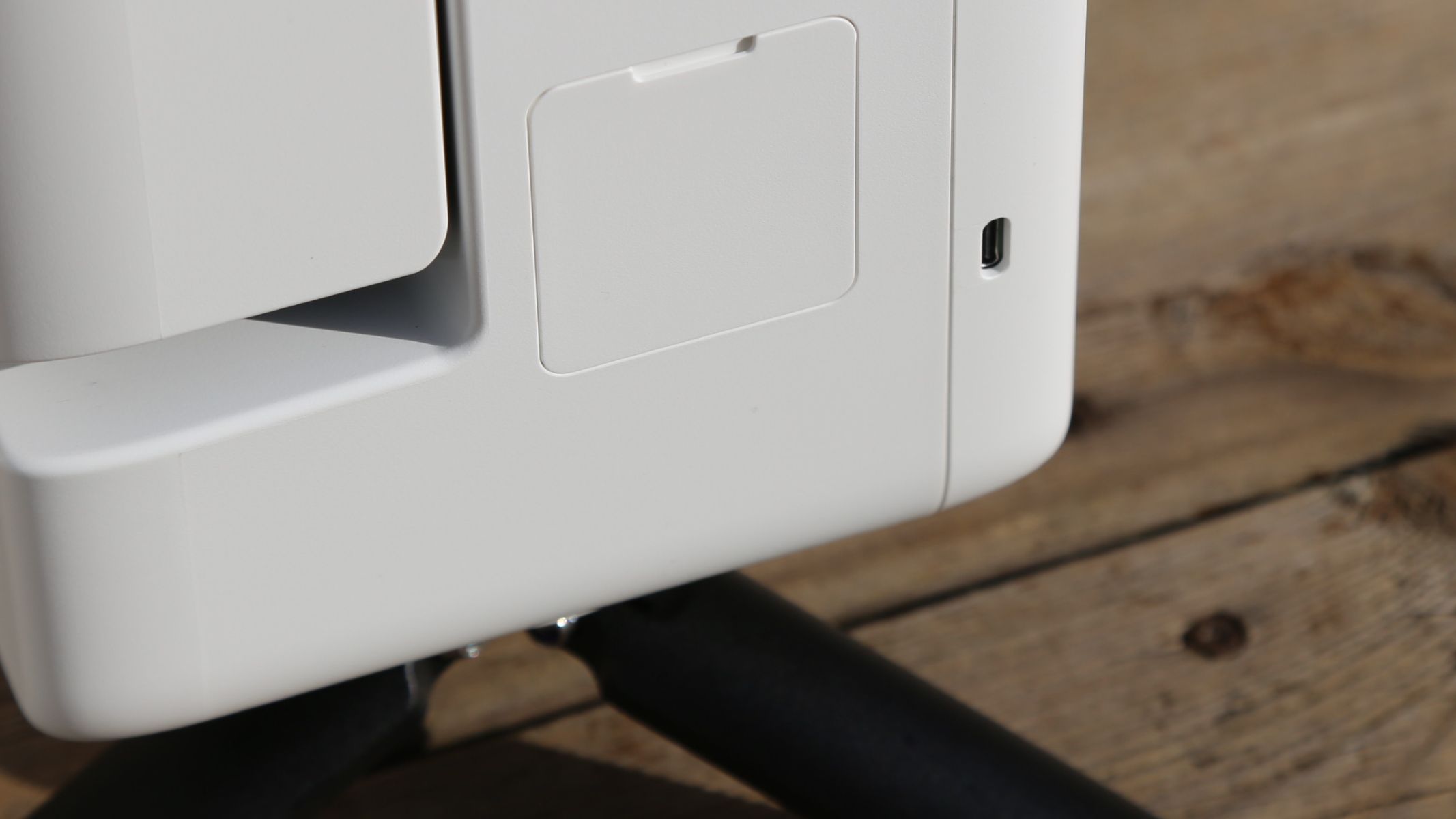
The design is deliberately minimal. Aside from a power button and USB-C slot, there are no physical controls. Everything — from slewing and focusing to image capture and processing — is handled through the Seestar app. Once connected to a phone via its own WiFi network, the system operates entirely offline, connecting directly to your phone without requiring an internet connection in the field.

The USB-C slot on the ZWO Seestar S30 Pro.
Apart from the power button and USB-C slot on the S30 Pro, there are no physical controls as everything is controlled by the app.Jamie Carter
A close-up on the side of the optical tube on the ZWO Seestar S30 Pro.
The Seestar S30 Pro combines a telescope, camera and automated mount in a single unit. Jamie Carter
Specifications

Optical design: Quadruplet apochromatic refractor (ED glass)

Aperture: 30mm / 1.18 inches

Focal length: 160mm / 6.3 inches

Focal ratio: f/5.3

Sensor: Sony IMX585 (tele) / Sony IMX586 (wide)

Resolution: 8.3MP (3,840 x 2,160)

Field of view: 4.6 degrees (tele) / 63 degrees (wide)

Mount type: Alt-azimuth (EQ mode supported)

Storage: 128GB internal

Battery: 6000 mAh (~6 hours)

Weight: 3.6 lbs (1.65 kg)

Dimensions: 8.25 x 5.5 x 3.15-in (210 x 140 x 80 mm)

A key feature of this new, improved model is its dual-camera system. The primary telephoto camera is dedicated to deep-sky imaging, using a Sony IMX585 sensor that’s capable of 8.3MP (4K) images, while the secondary wide-angle uses an equally capable Sony IMX586 sensor for sky alignment and wide-field imaging modes.

The tripod ZWO Seestar S30 Pro splayed open.

Any tripod can be used with the Seestar S30 Pro. (Image credit: Jamie Carter)

The included tabletop tripod is solid, if small, so users with backyards surrounded by buildings or trees will benefit from mounting the device on a full-size photographic tripod. It also comes with a handy, high-quality padded shoulder bag to store the telescope and all its accessories.

ZWO Seestar S30 Pro: Performance

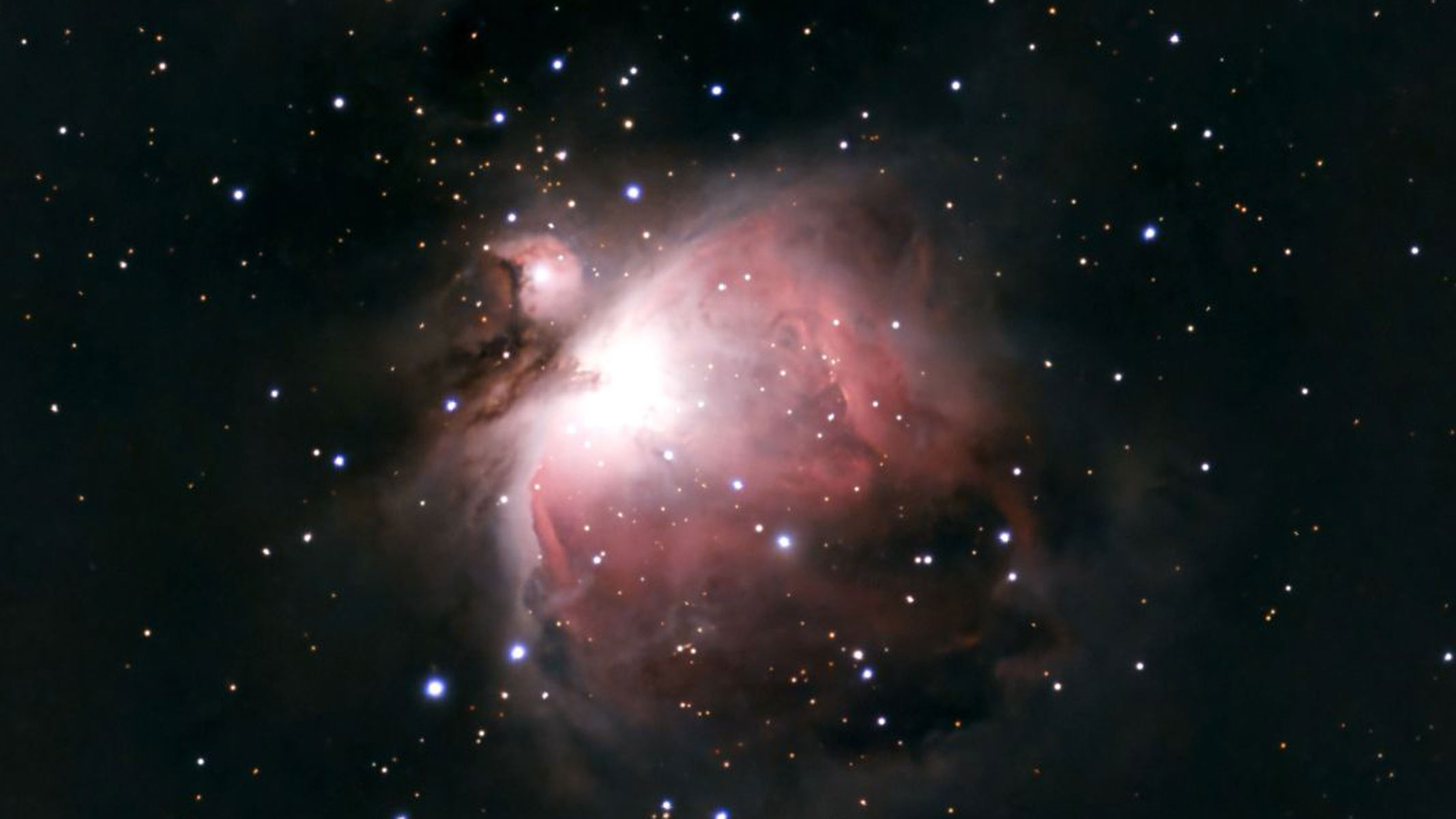
Cropped view of the Orion Nebula (M42), as imaged by the ZWO Seestar S30 Pro in alt-azimuth mode.

The Orion Nebula (M42) shot in alt-azimuth mode. (Image credit: Jamie Carter)
  • Automatic stacking with intelligent frame rejection
  • EQ mode enables longer exposures
  • Strong results under urban/suburban skies

Using the Seestar S30 Pro is less about operating equipment and more about using an app. After powering on and connecting via WiFi, the telescope automatically plate-solves the stars overhead, determines its position and slews to a selected target. Within minutes, it begins capturing short exposures — typically around 10 seconds — which are stacked in real time to reduce noise and improve detail. Crucially, the system automatically discards poor-quality frames caused by tracking errors, wind shake or star trailing.

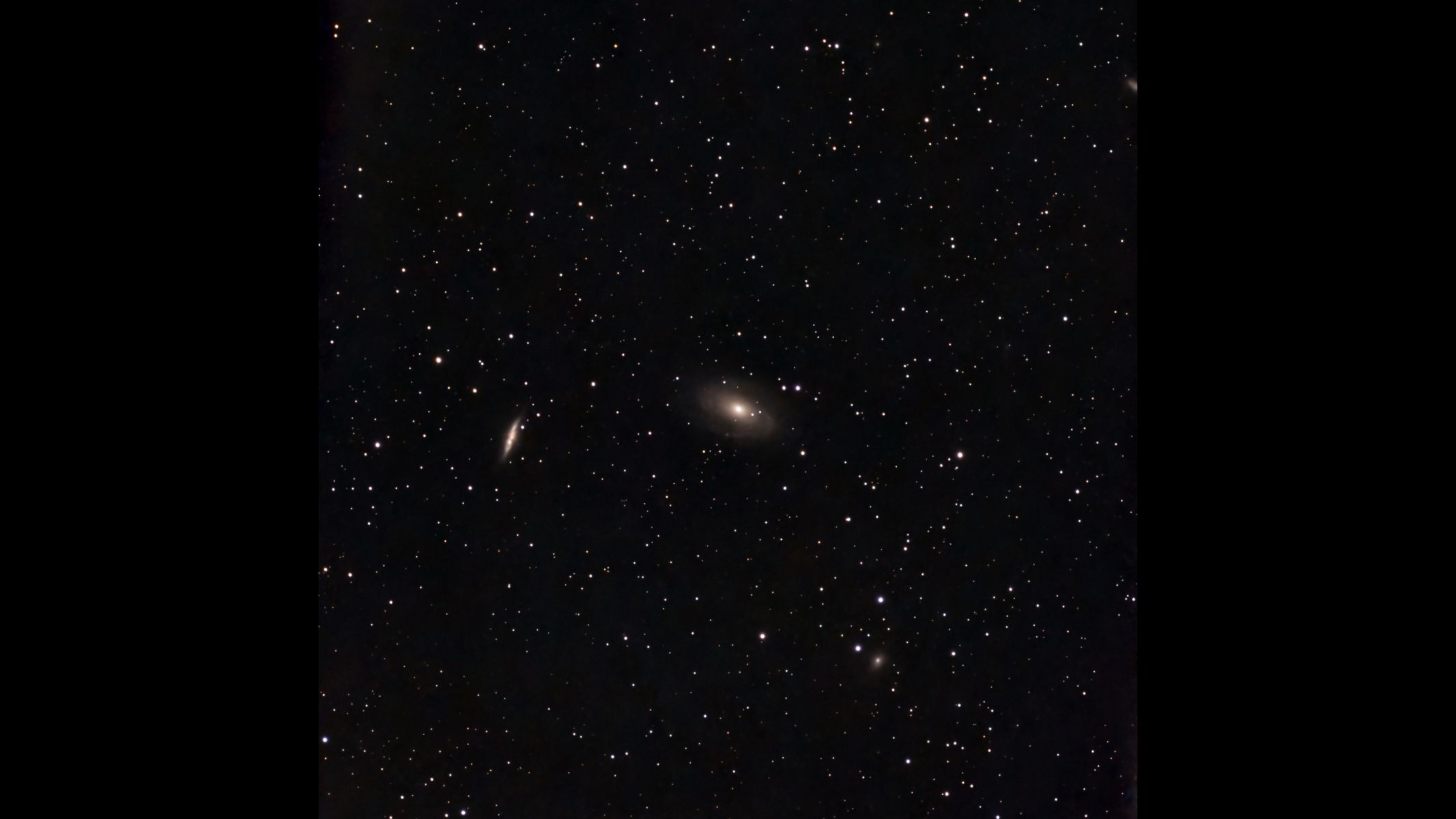
Bode’s Galaxy (M81) and the Cigar Galaxy (M82) as imaged by the ZWO Seestar S30 Pro alt-azimuth mode.

Bode’s Galaxy (M81) and the Cigar Galaxy (M82) shot in alt-azimuth mode. (Image credit: Jamie Carter)

The effect of the image stacking is gradual. As more data is collected, a faint patch of light slowly resolves into a nebula or distant galaxy. The longer the telescope runs, the clearer and more detailed the final image becomes, with nebulosity and spiral arms becoming visible. Stars remain sharp across the field of view — the Seestar S30 Pro’s optics may be small, but they are excellent quality. During our test, we produced some superb images of the Orion Nebula (M42), as well as Bode’s Galaxy (M81) and the Cigar Galaxy (M82), the Whirlpool Galaxy (M51) and the Great Globular Cluster in Hercules (M13).

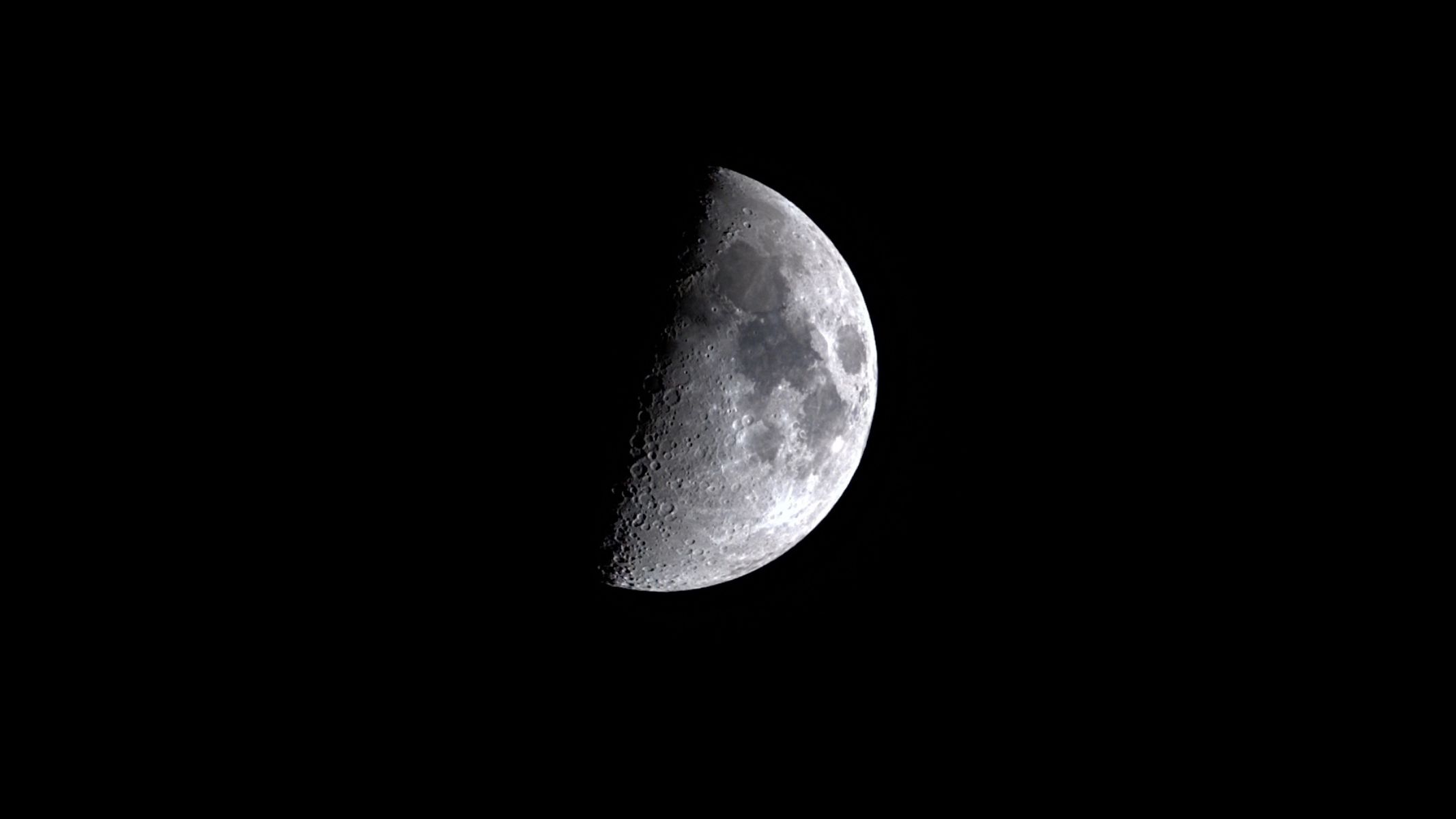
The first-quarter moon as imaged by the ZWO Seestar S30 Pro.

The first-quarter moon imaged by the Seestar S30 Pro. (Image credit: Jamie Carter)

Stacking images is a hugely effective way to do observational astronomy under light-polluted urban skies. By stacking multiple exposures and applying built-in filters (there are three), the Seestar S30 Pro can reveal objects that would otherwise be invisible through the eyepiece of a traditional optical telescope.

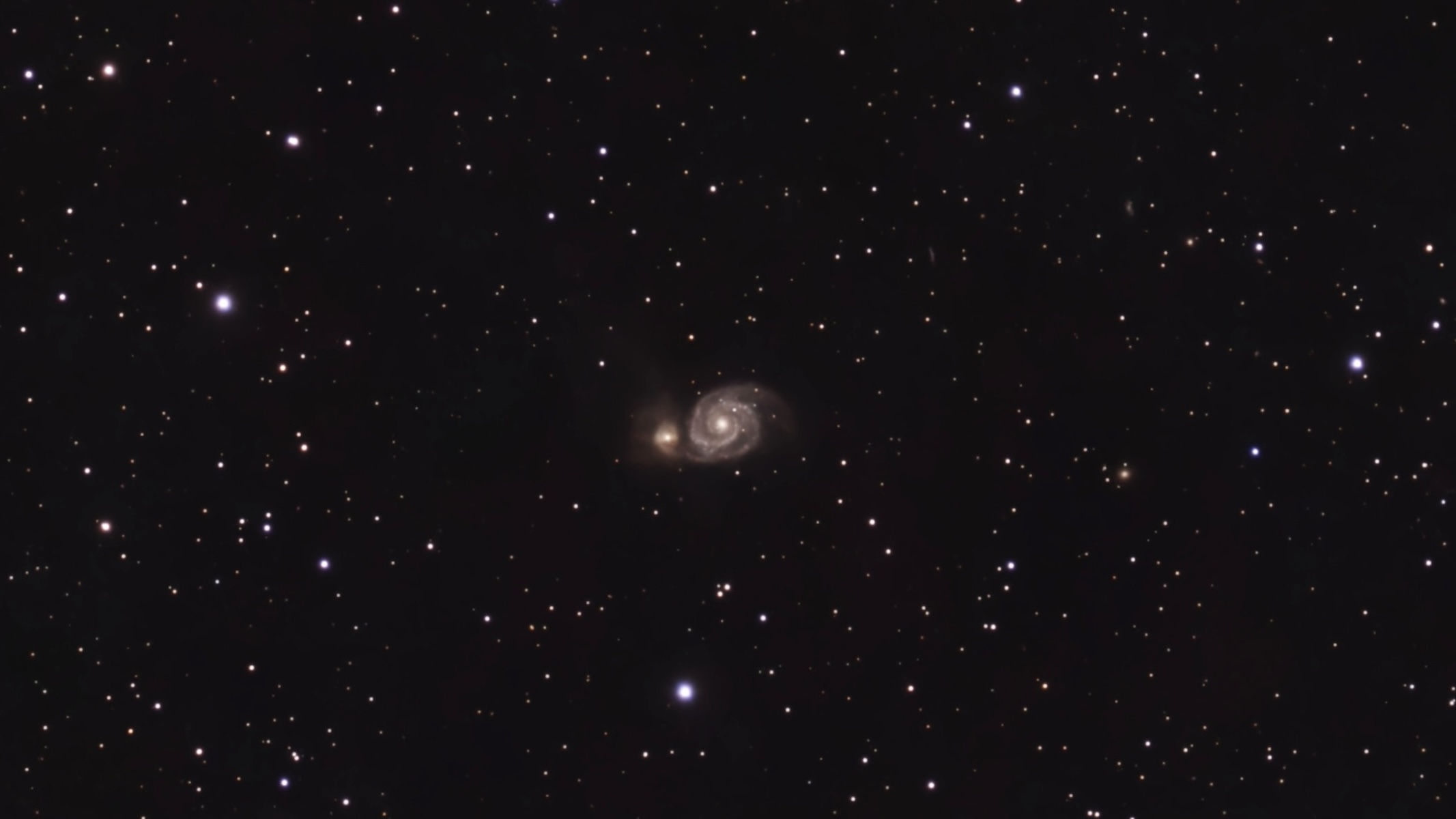
The Whirlpool Galaxy (M51), as imaged with the ZWO Seestar S30 Pro in EQ mode and edited with Deep Sky Stack and AI Denoise.
The Whirlpool Galaxy (M51) shot in EQ mode, edited using Deep Sky Stack and with AI Denoise applied.Jamie Carter
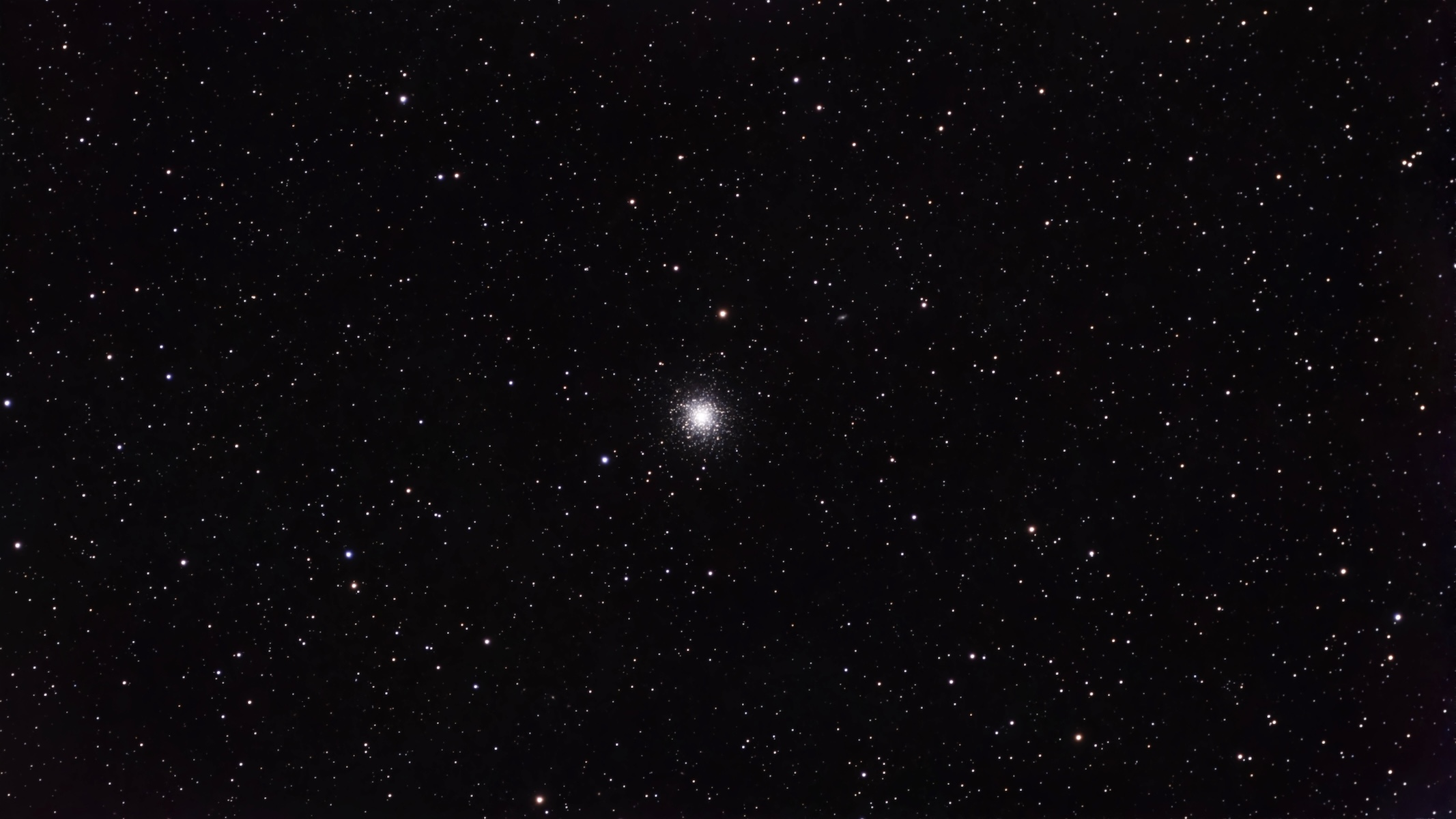
The Great Globular Cluster in Hercules (M13) as imaged by the ZWO Seestar S30 Pro in EQ mode.
The Great Globular Cluster in Hercules (M13) shot in EQ mode, edited using Deep Sky Stack and with AI Denoise applied.Jamie Carter

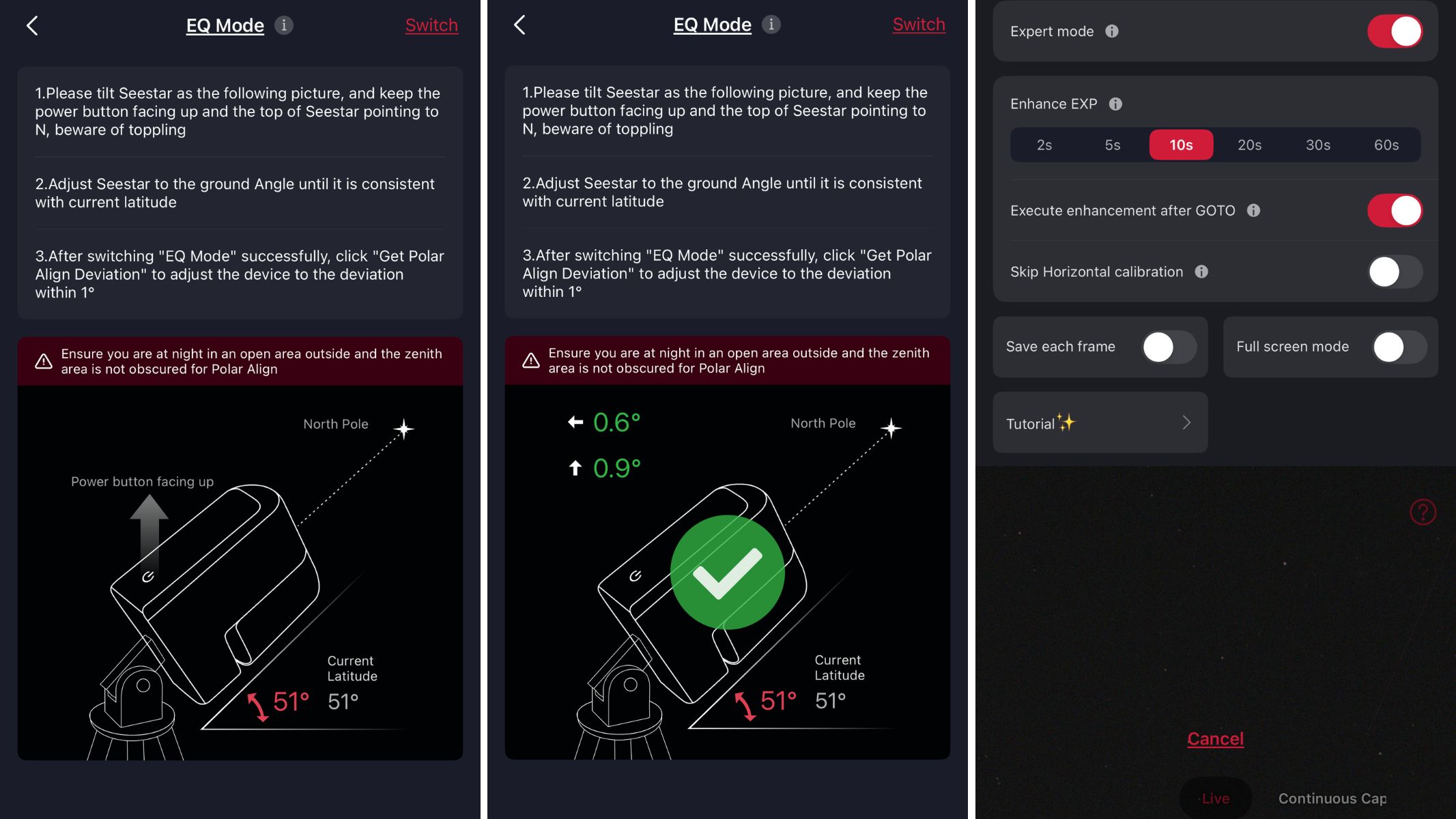
The all-new equatorial (EQ) mode extends performance further, though aligning the telescope with Earth’s rotation requires purchasing the add-on Seestar TH10 Fluid Tripod Head. This is easy to set up, thanks to an in-app setup process that perfectly positions the tripod and ball head. With Expert Mode engaged, exposures of up to 60 seconds are possible. We tried it on two faint targets — the Whirlpool Galaxy (M51) and the Great Globular Cluster in Hercules (M13) — and got much greater detail.

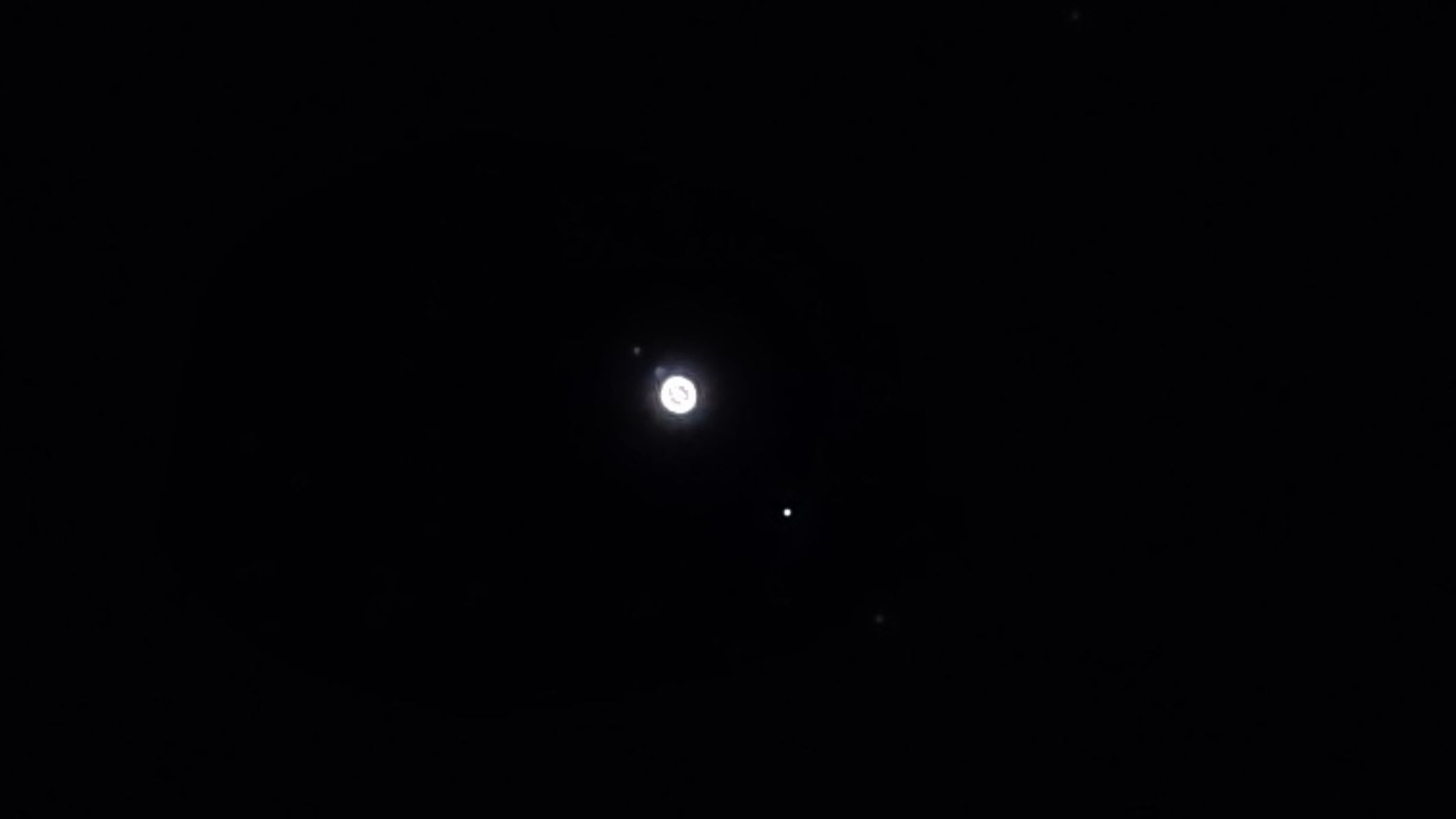
Jupiter and its mons as image by the ZWO Seestar S30 Pro

Jupiter and its moons, as imaged by the Seestar S30 Pro. (Image credit: Jamie Carter)

Planetary imaging is less impressive, with planets appearing small and lacking fine detail. That said, we did manage to image Jupiter and its moons. The telescope is clearly optimized for deep-sky imaging rather than solar system work — the exception being the moon, which looked fabulous through the Seestar S30 Pro.

ZWO Seestar S30 Pro: Functionality

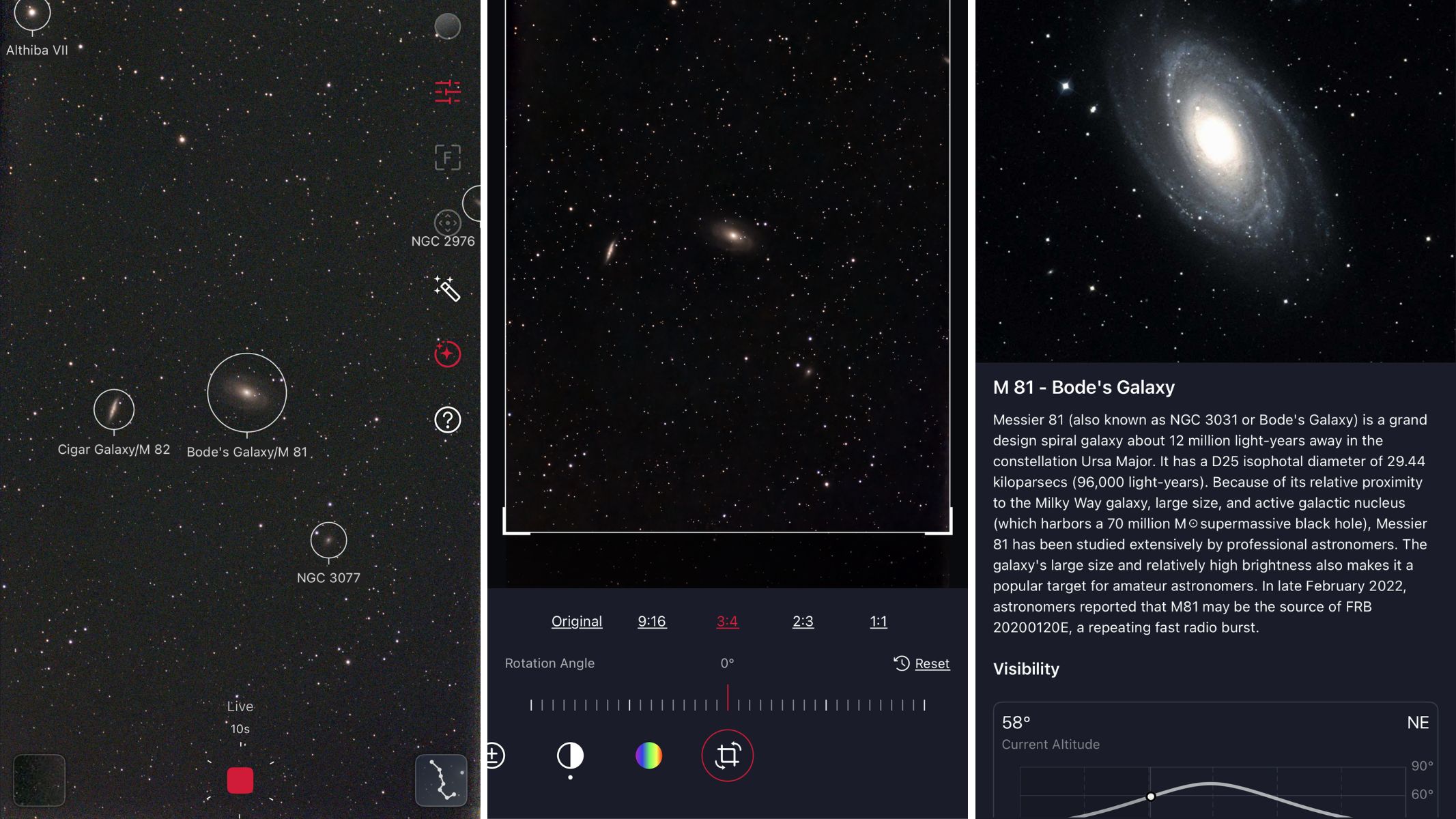
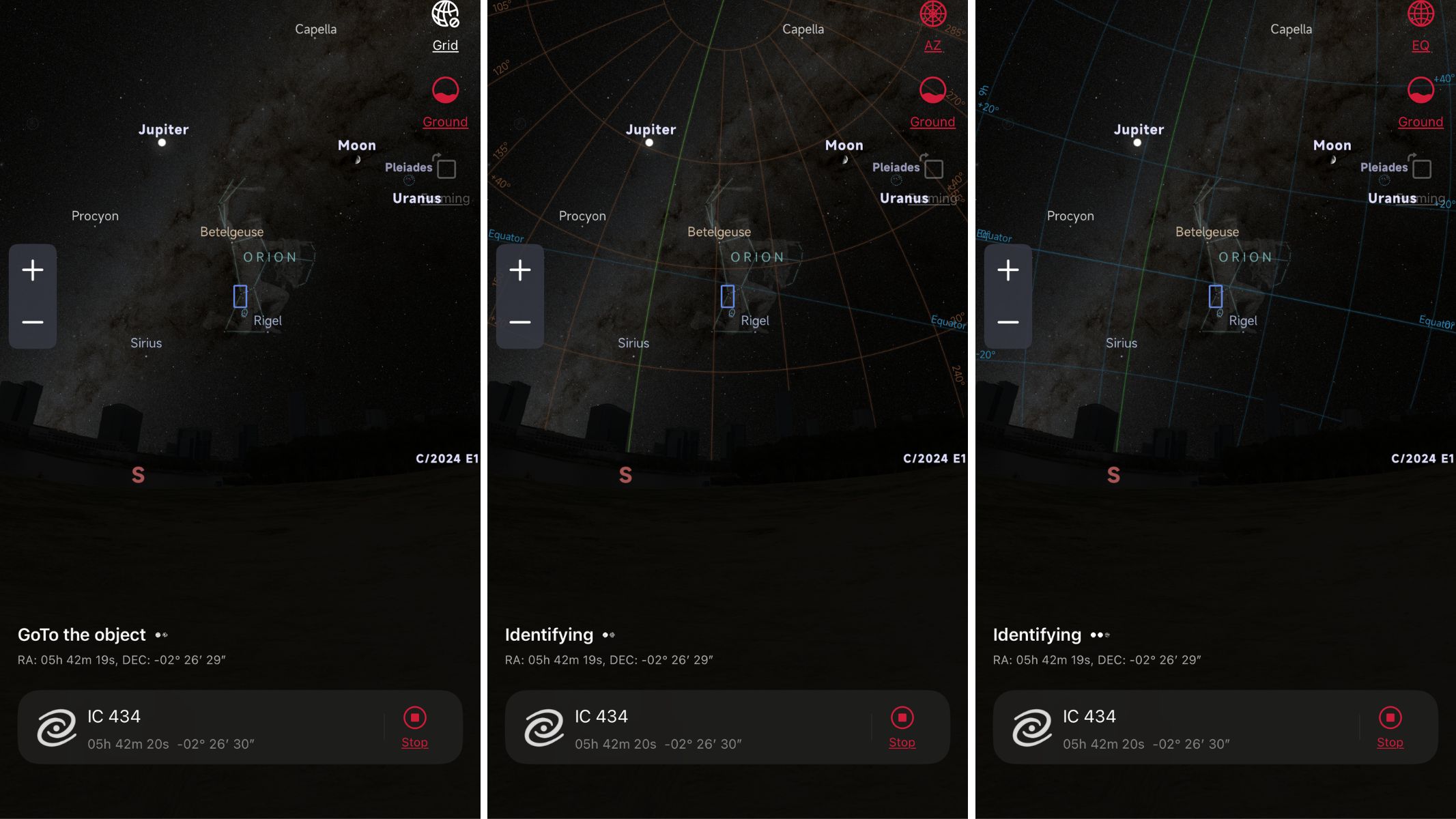
Screenshots from the Seestar app showing object identification, editing capability and astronomical information.

The Seestar app identifies objects, and offers editing and astronomical information. (Image credit: Jamie Carter)
  • Intuitive smartphone app
  • Automated imaging and Plan mode
  • Built-in processing and FITS export

The Seestar app is central to the entire experience. It acts as both controller and processing platform, offering a planetarium-style sky atlas that displays objects visible from the user’s location. Selecting a target triggers automatic alignment, slewing and image capture. Once imaging begins, the app displays real-time progress, including exposure count and total integration time. Users can stop a session at any time or continue it for deeper results. The telescope can operate largely unattended, making it easy to leave running and check later.
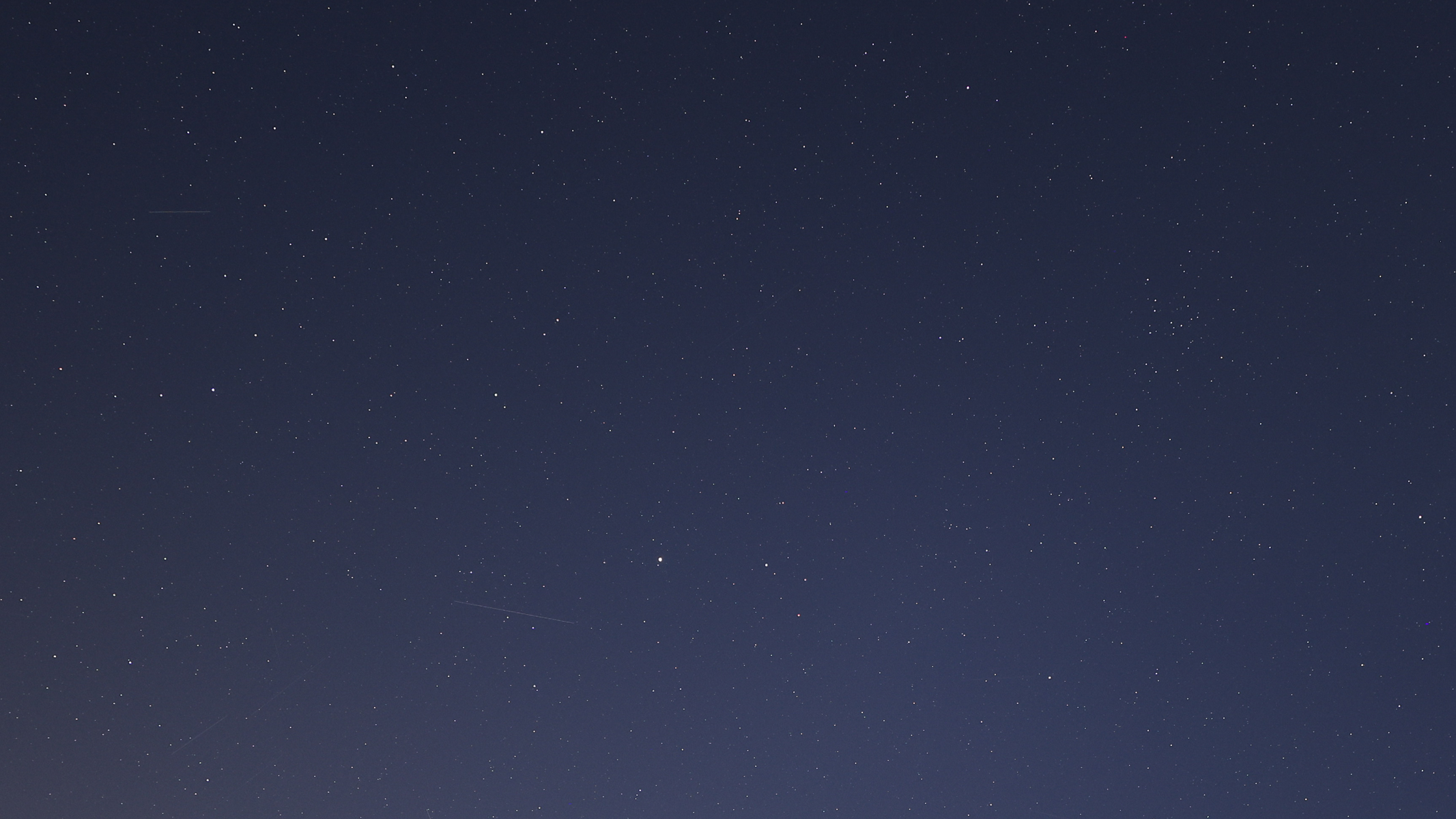
Screeshots from the Seestar app showing how to set up EQ mode on the ZWO Seestar S30 Pro.

Equatorial (EQ) mode set-up on the Seestar S30 Pro app for longer exposure times. (Image credit: Jamie Carter)
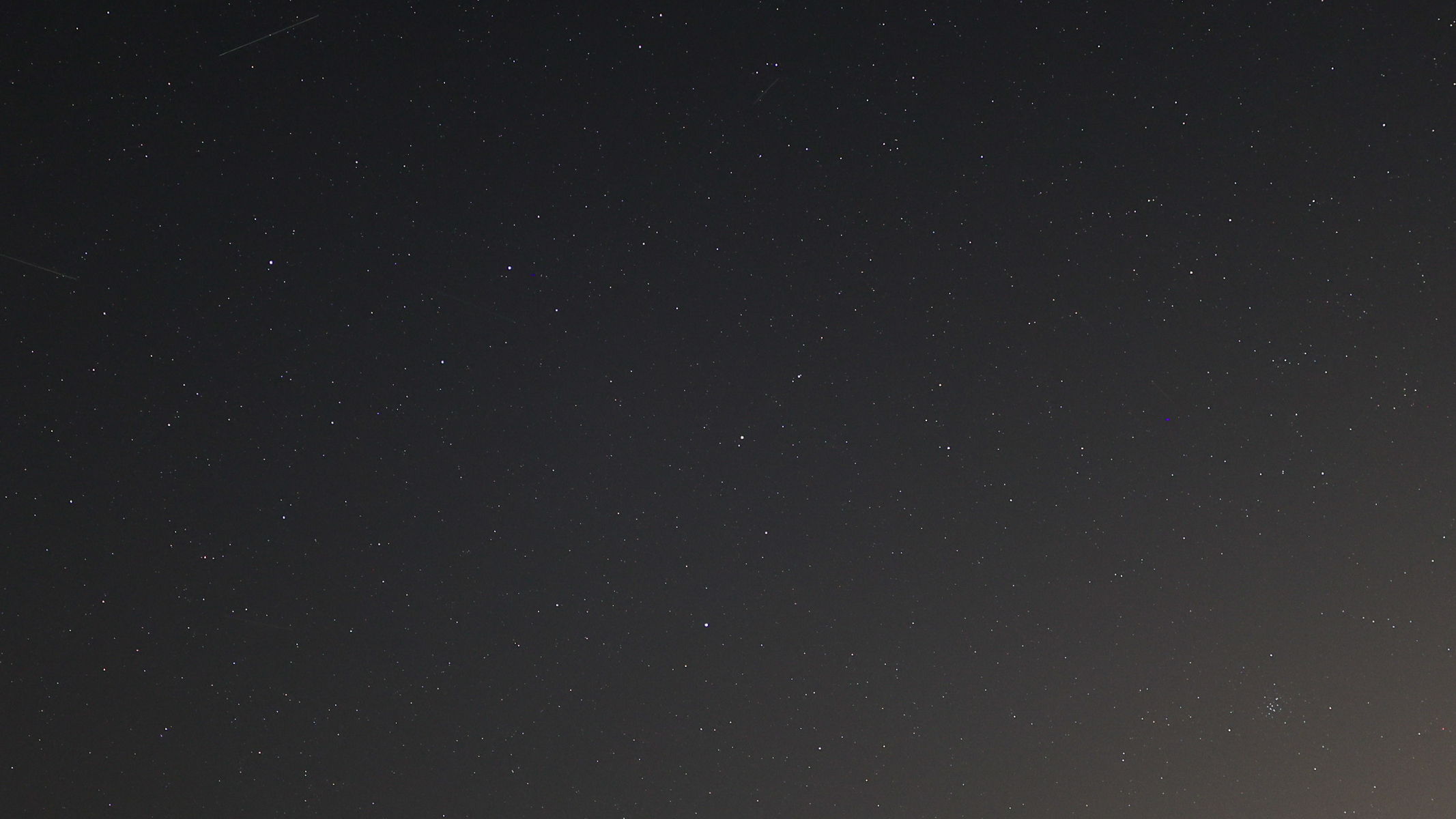
If all of this is beginning to sound like the Seestar S30 Pro is ideal for lazy astronomers, it doesn’t end there. Cue the app’s Plan mode, which allows users to schedule multiple targets for imaging overnight. Orion Nebula not rising until 3 a.m.? No problem. Pre-sunrise comet? Stay in bed. Assuming you’ve checked for clear skies beforehand, the Seestar S30 Pro can observe while you sleep. However, Plan mode does come with limits: exposure time and gain cannot be fine-tuned per target, so users must rely on default settings. For most, that won’t deter.
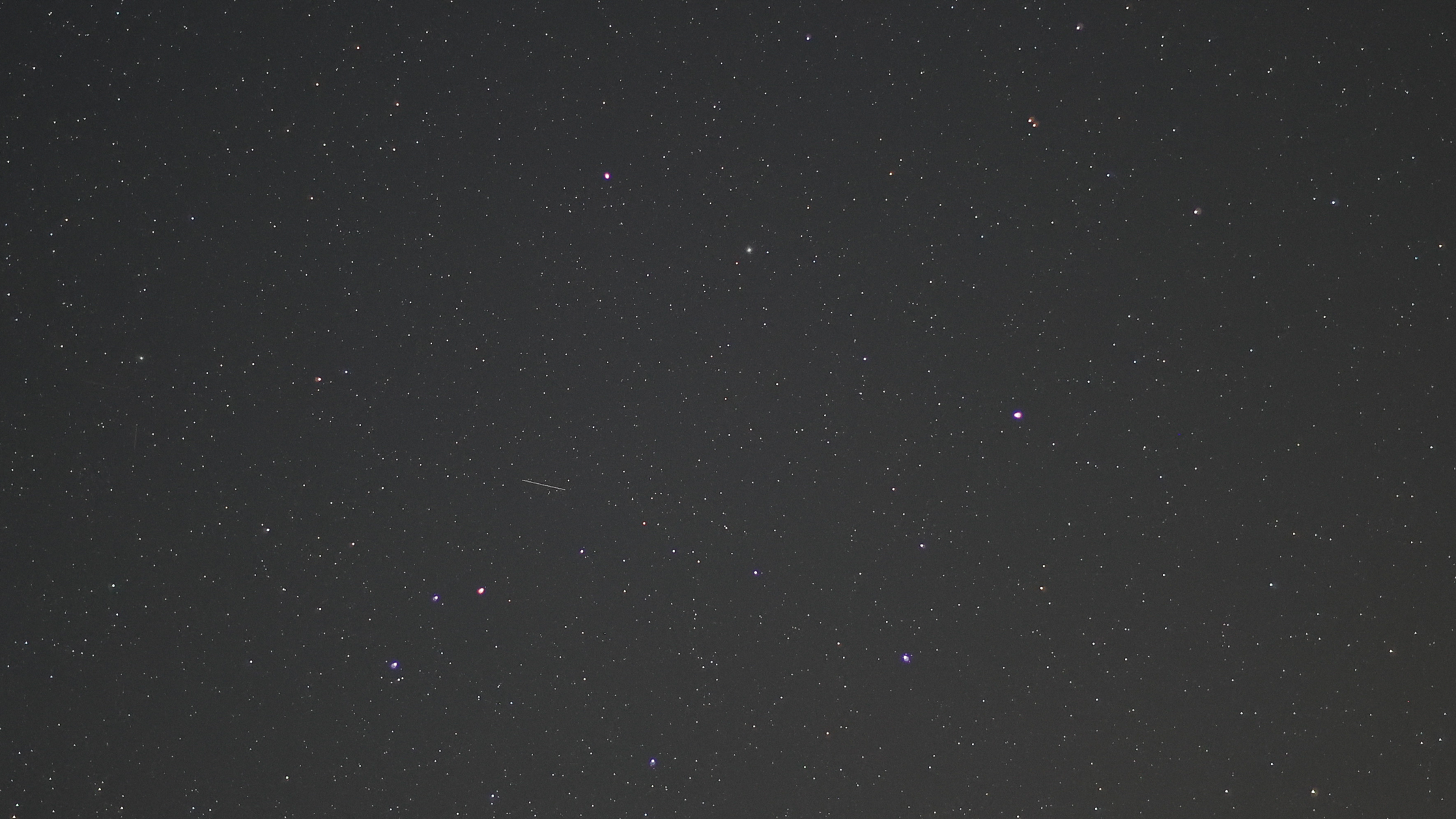
Screenshots from the Seestar app's Sky Atlas, showing the location of night sky targets.

The Seestar app’s Sky Atlas makes it easy to find objects. (Image credit: Jamie Carter)

For those interested in post-processing, the Seestar S30 Pro supports FITS file export, enabling images to be refined in external software such as Siril, PixInsight, DeepSkyStacker or Photoshop (though advanced users dealing in FITS files may find that the system’s 128GB internal storage needs frequent attention). Alternatively, the built-in Deep Sky Stack provides quick results with minimal effort, allowing frames to be discarded and the effective AI Denoise pipeline to be engaged — something that takes a little patience, but delivers excellent results.

How we tested the ZWO Seestar S30 Pro

A bird's eye view the ZWO Seestar S30 Pro pointing upwards.

The Seestar S30 Pro has a tiny footprint. (Image credit: Jamie Carter)

Testing took place over multiple nights during late winter and early spring, under suburban Bortle 6 skies in cold but not freezing temperatures. It was also used in Bortle 2 skies in sub-zero temperatures, with no ill effects on the 6-hour battery life. The telescope was used to image a variety of deep-sky objects, with sessions ranging from short captures to integrations lasting several hours. Both standard alt-az mode and EQ mode were tested.

Should you buy the ZWO Seestar S30 Pro?

Buy it if:

✅ You want an easy, automated entry into astrophotography: The S30 Pro is incredibly easy to use and highly portable without skimping on optical quality.

✅ You observe from light-polluted locations: Built-in image processing and stacking allows fine details to be resolved on deep sky objects even when observing from light-polluted locations.

Don't buy it if:

❌ You want full manual control over imaging: Whilst having equatorial (EQ) imaging mode and certain modes for the Milky Way and 8K wide-field stitching, it actually lacks custom exposure times and gain control for precision tweaking.

❌ You’re primarily interested in planetary observation: The S30 Pro is capable of imaging planets but they just aren't as impressive as its deep-sky images.

The Seestar S30 Pro is best understood not as a traditional telescope, but as an automated imaging system designed to make astrophotography accessible. It’s also an upgrade on the Seestar S30 that may or may not be worth the money, depending on your needs.

For beginners, it provides a clear pathway into astrophotography without the usual financial or technical barriers. For more advanced users, it’s an efficient grab-and-go system for casual or supplementary imaging.

If the ZWO Seestar S30 Pro isn't for you

If you’re looking for a more affordable entry point, the ZWO Seestar S30 offers similar ease of use, but with lower (2MP) resolution and fewer advanced features. For those who simply want basic, shareable images, it remains a strong alternative.

The DwarfLab Dwarf Mini is even smaller and more portable but it is limited to 2MP imaging. At the other end of the market, the Unistellar Odyssey is a premium smart telescope offering much larger apertures and access to citizen science campaigns, albeit at significantly higher prices.

For an overview of the top telescopes in this category, read our guide to the best smart telescopes.

What lurks beneath the volcanoes of Jupiter’s moon Io? NASA’s Juno probe just took a peek

Scientists have measured temperatures beneath the surface of Jupiter's volcanic moon Io, offering the first-ever glimpse of the hidden heat driving the most volcanically active world in the solar system.

During close flybys of Io in late 2023 and early 2024, NASA's Juno spacecraft turned its Microwave Radiometer (MWR) instrument toward the moon, probing roughly six to 20 feet (two to six meters) beneath its surface. Originally designed to peer through Jupiter's thick clouds, the instrument instead revealed a powerful new way to study how heat moves through planetary crusts, according to a statement from the space agency.

"The surprising discovery that we could see below a rocky moon's surface has important implications for studying Earth's volcanoes," Scott Bolton, coauthor of the study and Juno's principal investigator, said in the statement. "Juno has taught us that if we look with an MWR-type instrument near a volcano on Earth, we might see a similar signature in the subsurface temperature gradient, providing new information on how terrestrial volcanoes work."

Until now, researchers had relied almost entirely on infrared observations, which detect only the temperature of Io's surface. By probing several feet underground, Juno has revealed how heat moves through the moon's crust for the first time.

The measurements showed temperatures rising by more than 40 degrees Fahrenheit (22 degrees Celsius) just a few feet below the surface — far more than sunlight alone could explain. Juno's subsurface heat map also revealed localized regions of elevated heat, with temperatures measuring between 18 and 36 degrees F (10 to 20 degrees C) warmer than the surrounding terrain, according to the statement.

Juno's observations uncovered another surprise, too. Despite being known for its towering mountains and active volcanoes, much of Io's surface appears remarkably smooth and composed of unusually low-density material. Researchers think the moon is blanketed by porous layers of volcanic ash, sulfur frost and other eruptive debris that continually resurface Io, burying older terrain beneath fresh deposits.

Scientists think the heat detected beneath Io's surface could be rising steadily from the moon's molten interior through a conductive crust or coming from pockets of cooling lava flows trapped just below the surface. Either way, the data provide the clearest picture yet of how Io transports heat from its interior.

Unlike Earth, where volcanism is driven largely by heat from radioactive decay, Io is continuously stretched and squeezed by Jupiter's immense gravity as it orbits the giant planet. This constant tidal flexing generates enormous amounts of internal heat, fueling hundreds of active volcanoes and making Io the most volcanically active object in the solar system. By improving scientists' understanding of how heat and magma move beneath a planet's surface before eruptions, the same microwave techniques used by Juno could one day help researchers better monitor Earth's volcanoes and improve eruption forecasting.

"Io provides a unique window into learning how tidal heating works throughout the cosmos, a fundamental process that provides energy and heat to worlds that are far from their parent star," Bolton said in the statement. "This process can not only create the most volcanic body in the solar system, in the case of Io, but also fuels the subsurface oceans on the moons of giant planets, such as Europa and Ganymede. Up until this point we could only observe the heat escaping at the surface or through eruptions. Now we can characterize how the heat is moving from the interior toward the surface."

Because Io is an extreme example of volcanic activity, it serves as a natural laboratory for studying how heat moves through planetary crusts. Those insights could help scientists better understand ancient volcanism on Mars, Venus, and Earth's moon, whose landscapes were shaped by massive eruptions billions of years ago.

The technique could also aid the search for life elsewhere. While Io itself is far too hostile to support life, microwave instruments can also probe beneath icy surfaces. Juno has already used the same instrument to study Jupiter's moons Europa and Ganymede, where scientists believe vast oceans lie hidden beneath thick shells of ice. Understanding how heat moves through those crusts is key to determining whether they could harbor environments suitable for life as we know it.

Their findings were published July 22 in the Journal of Geophysical Research: Planets.

The easiest way to learn the summer night sky starts with these 3 stars

There is a particular moment every July when the night sky makes perfect sense to me. Every time I step outside at night, I instinctively look overhead for the Summer Triangle. Not because it's the most spectacular sight in the sky. In fact, the vast asterism is almost suspiciously simple: three bright stars, large enough to cut through twilight and light pollution without much effort.

Experienced stargazers quietly depend on the Summer Triangle more than we admit. People imagine astronomy involves memorizing the entire sky at once, knowing exactly where each star is and what it's called. Everyone navigates differently, but we all rely on familiar anchor points because the night sky changes quickly with the seasons.

The Summer Triangle is one of the best anchors because it appears exactly when the northern sky can otherwise feel vague and washed out during late twilight. Once those three stars appear, I immediately know where everything else is. The Milky Way becomes easier to trace. The darker regions of the sky reveal themselves. Constellations stop looking random. Suddenly, I know where the Perseids will emerge from later in the night and where to point binoculars to find summer's dense star fields without even thinking about it.

The Summer Triangle also teaches you how to see the night sky. To the untrained eye, the night sky appears as a flat backdrop of stars — hence the "blanket of stars" saying. Every time I hear that cliche, I wince. There is no blanket! The night sky has incredible depth, and there's nowhere better to learn how to appreciate that than when gazing at the Summer Triangle.

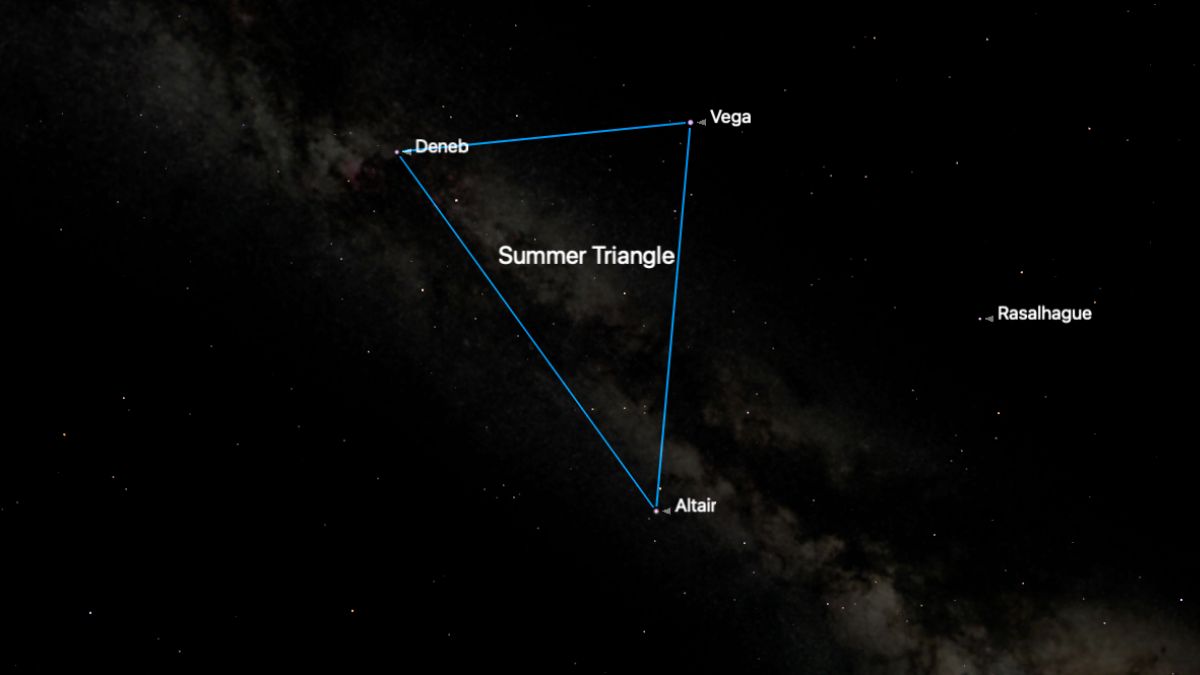
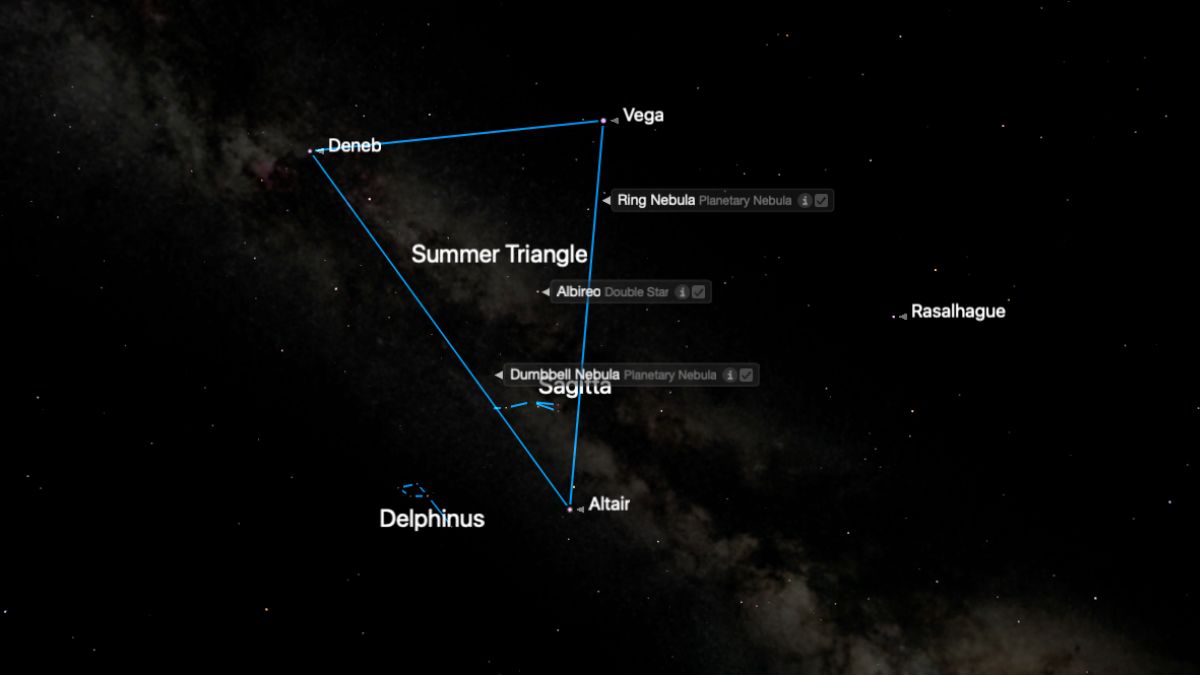
Take Altair, the lowest star. It's relatively nearby at about 17 light-years away. It shines brightly largely because it is close to us. Vega lies slightly farther away at roughly 25 light-years, but it is intrinsically far more luminous. It once served as Earth's North Star thousands of years ago and, thanks to our planet's slow axial wobble, will become the North Star again many millennia from now. So far, so local — we're in the sun's backyard with these two stars. The light from both of them began its journey to us this century.

Then there's Deneb. Deneb is so distant — roughly 2,600 light-years away — that the fact it appears this bright at all becomes genuinely difficult to process. Its light began traveling toward Earth while the Roman Empire was still in existence. The only reason it remains prominent in our sky is that Deneb is an enormously luminous supergiant radiating tens of thousands of times more energy than the sun.

Knowing this about Deneb transforms the Summer Triangle into a three-dimensional shape. Here are three stars that appear neatly connected overhead, but in reality, one is separated by an incomprehensible distance. So next time you look at the Summer Triangle, keep Altair and Vega at the front and push Deneb way, way back. It's not a triangle anymore — it's an arrow pointing far into the distance, thousands of light-years away into the starfields of the distant Milky Way.

What's happening and when to look

Deneb is vastly farther from the sun than Altair and Vega. (Image credit: Starry Night)

This week is the perfect time to reacquaint yourself with the Summer Triangle using just your naked eyes. Around 11 p.m. local time at mid-latitudes of the Northern Hemisphere, look high in the southeast. Vega is usually the first to appear, high and brilliant with a slightly blue-white color. To its lower left sits Deneb. Farther south is Altair. By midnight, the entire Summer Triangle stands high overhead and remains one of the defining features of the northern summer sky through October.

Stretching directly through it is our view into the Orion Arm of the Milky Way — the spiral arm of the galaxy containing the solar system itself — while farther south, the glowing river of starlight continues toward the galactic core near the constellations Sagittarius and Scorpius, low on the horizon. Under dark skies, the Milky Way visibly streams behind Deneb and through Altair like a river of stars.

How and when I'm watching it

There are many wonders within the Summer Triangle. (Image credit: Starry Night)

Once I start slowly sweeping binoculars through the Summer Triangle, I usually lose all sense of structure and planning. Dense star clouds spill into view everywhere. Dark lanes slice through the Milky Way. Tiny clusters appear almost accidentally. The region between Deneb and Altair may be my favorite casual binocular territory in the entire sky.

Inside the Summer Triangle itself lies the Cygnus Star Cloud, one of the richest naked-eye sections of the Milky Way visible from northern latitudes. Nearby are the Ring Nebula and the Dumbbell Nebula. The beautiful double star Albireo — one bright yellow and the other a fainter blue — sits at the beak of Cygnus, the Swan.

I'll also look for a couple of smaller constellations within and around the Summer Triangle — Delphinus, the Dolphin, hovers to the left of Altair, while tiny Sagitta, the Arrow, hangs above Altair, looking improbably compact.

That's another thing the Summer Triangle taught me — astronomy improves dramatically once you stop hunting objects individually and start exploring regions instead. It's armchair travel of the grandest kind.

If you're looking for a telescope or binoculars to observe the night sky, our guides for the best binocular deals and the best telescope deals can help. Our best cameras for astrophotography and best lenses for astrophotography can help you get ready to capture the next stunning skywatching event.

Stargazer's corner: July 24-31, 2026

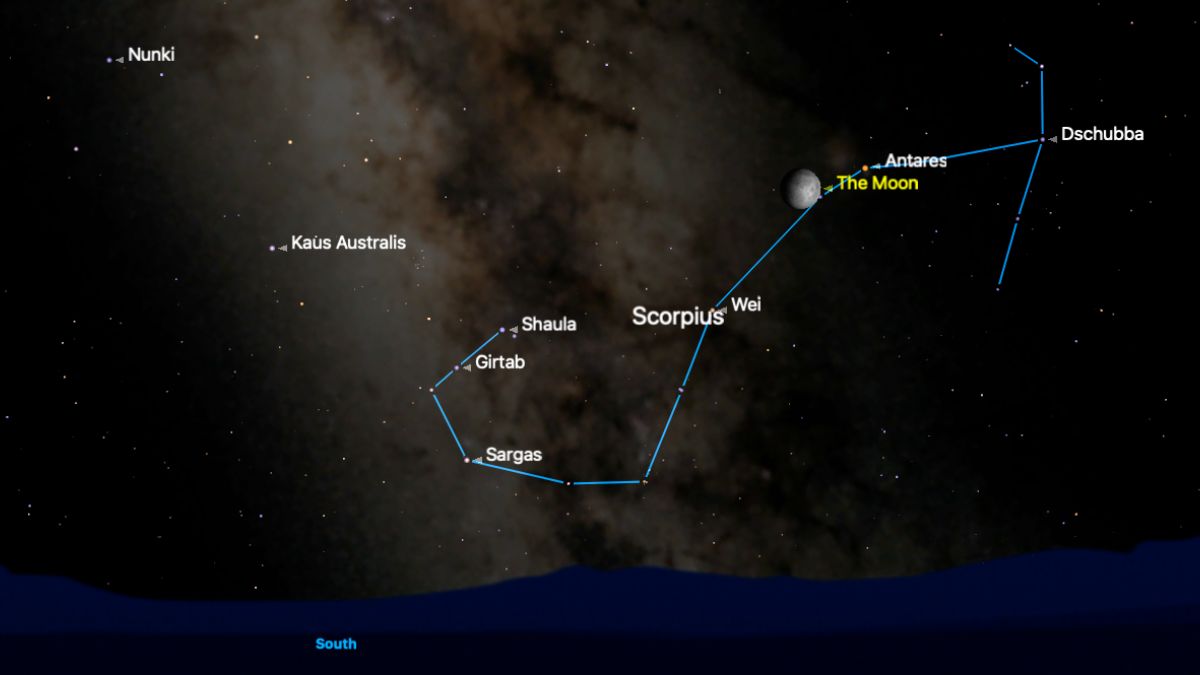
See the moon and Antares on July 24. (Image credit: Starry Night)

The moon will move beneath the Summer Triangle this week, appearing as an 81%-illuminated waxing gibbous moon as it shines close to supergiant star Antares in the constellation Scorpius, on Friday, July 24. By now, the moon is dominating the night sky, albeit low on the horizon, and on Wednesday, July 29 — the night before the full Buck Moon — the Summer Triangle will appear to point straight at it. Late July also marks the gradual strengthening of the Perseid meteor shower, with occasional early meteors now appearing after midnight. The Southern Delta Aquariids and Alpha Capricornids peak around Thursday-Friday, July 30-31, though the full moon will reduce visibility of fainter meteors considerably.

Constellation of the week: Sagitta

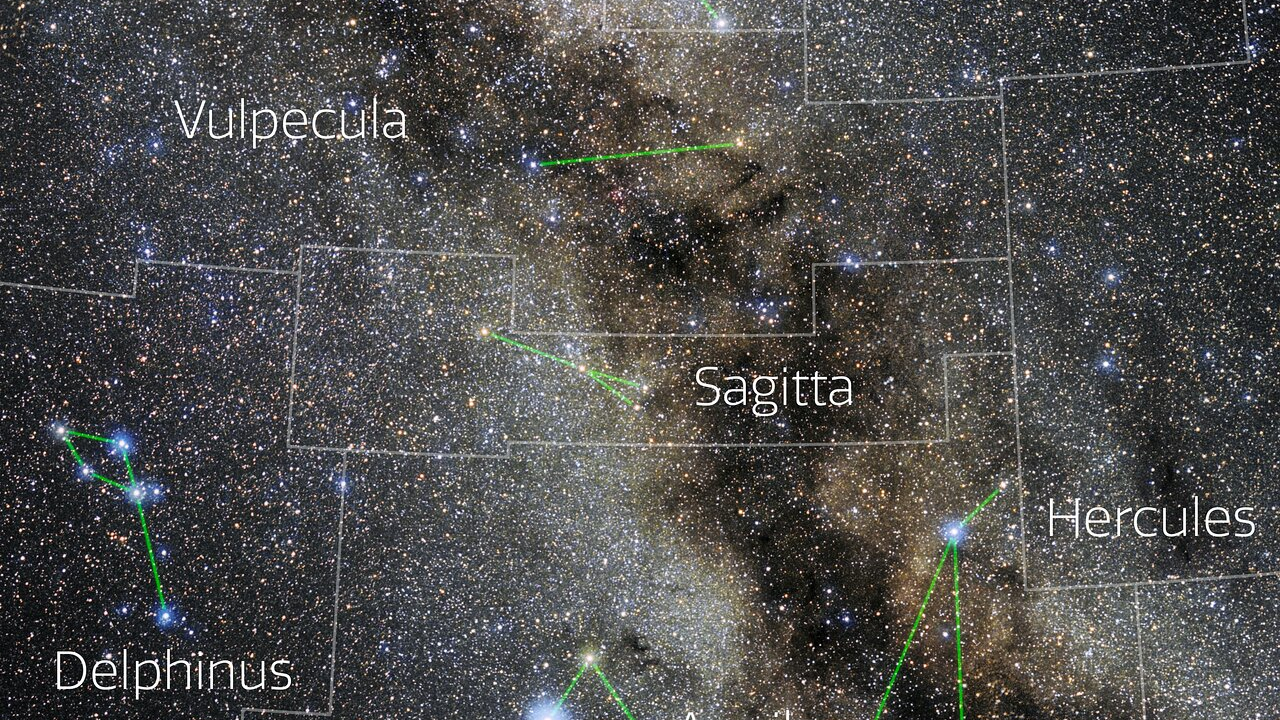
The tiny constellation Sagitta. (Image credit: E. Slawik/NOIRLab/NSF/AURA/M. Zamani)

Sagitta, the Arrow, is one of the smallest constellations, but also one of the easiest to recognize once you've found it. It appears as a short line of five stars — all between 450-650 light-years distant — with an arrowhead, shaft and two stars as the fletchings. It's between Cygnus and Aquila.

It's not bright, but it's well-defined, and once you spot it, it becomes a reliable reference point. Learning these smaller constellations helps fill in the gaps between the more obvious patterns.

Hubble telescope watches unique nova explosion fire cosmic ‘bullets’ through the Milky Way at 20 million mph

Using NASA's long-serving Hubble Space Telescope, astronomers have discovered that a stellar explosion in the Milky Way is blasting out cosmic bullets travelling at 20 million miles per hour.

The cosmic explosion in question is V445 Puppis, which erupted in 2000 and is the only known "helium nova" in our galaxy. Though astronomers have been studying V445 Puppis for two decades, much of the phenomena associated with it were shrouded in mystery due to a vast cloud of dusty debris that surrounded this nova.

When this debris finally cleared, a team of researchers was able to peer into V445 Puppis using Hubble, NASA's exoplanet-hunting spacecraft TESS (Transiting Exoplanet Survey Satellite), and the Earth-based Very Large Telescope (VLT), along with an array of other instruments. This allowed them to discover not only the "bullets", clumps of potentially oxygen-rich gas it is firing, but also the true nature of this system. This revealed that V445 Puppis consists of a dead star hungrily feeding on a companion star that is, by itself, a rare find. Thus, this system offers scientists a rare chance to study one of the rarest types of binary systems and one of the rarest cosmic explosions.

"The origin of these 'bullets' is a mystery. We suspect that these originated post-outburst, but 'bullets' of this kind have not been observed in any other nova," team member John Mills, a researcher at the University of Warwick in the UK, said in a statement.

What is a helium nova?

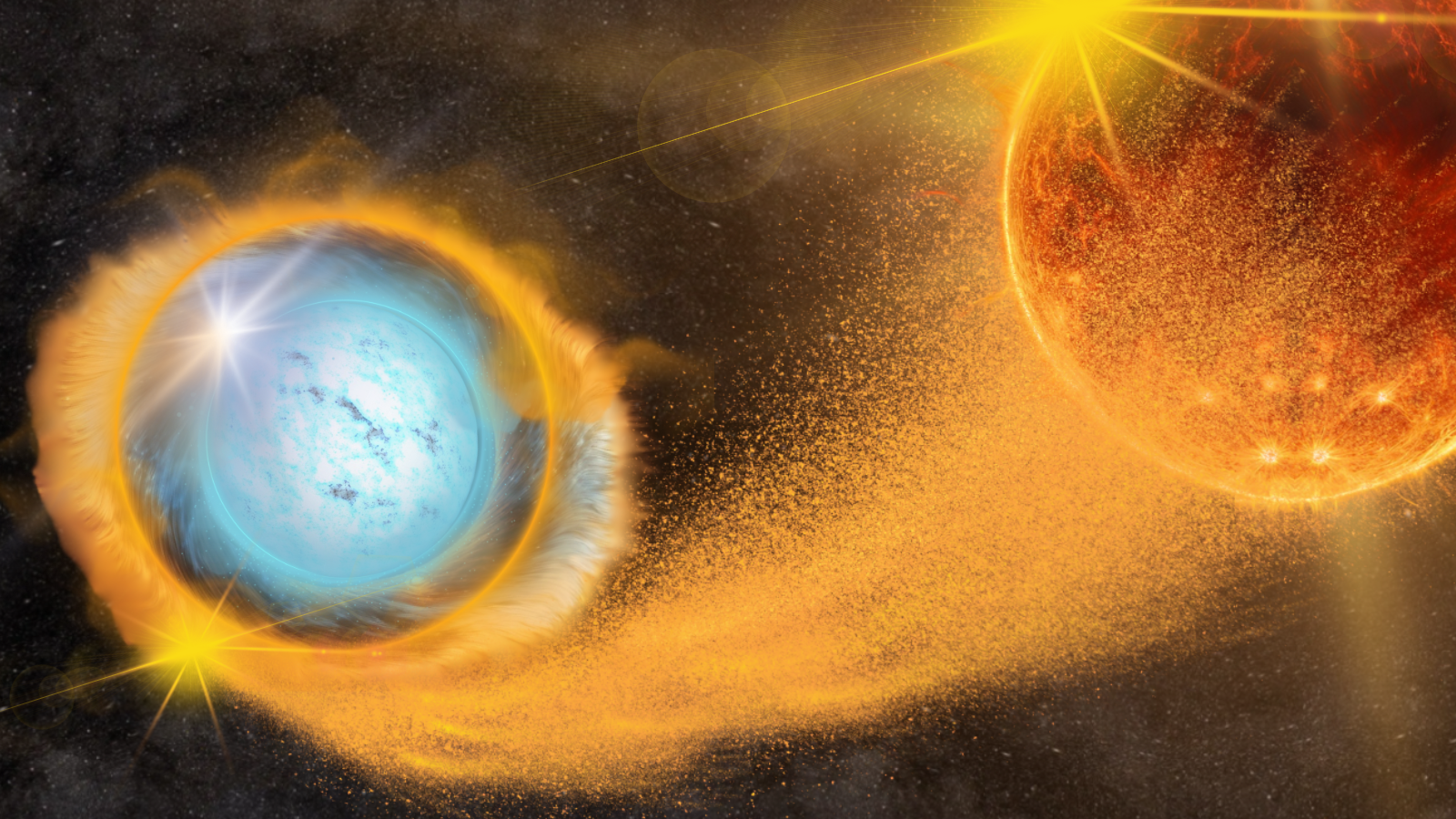
Helium novas like V445 Puppis occur when a white dwarf dead star cannibalistically strips helium-rich but hydrogen-poor matter from a star that has already lost its outer layer of hydrogen, exposing inner layers of helium; forming a rare "helium star." By contrast, "ordinary" novas are explosions triggered by the buildup of stolen stellar matter rich in hydrogen, not helium.

As the material accumulates on the surface of the white dwarf (a type of stellar remnant left behind when stars around the mass of the sun die) it creates runaway pressures and temperatures that eventually trigger a thermonuclear explosion.

When V445 Puppis went nova back in late 2000, it launched vast, twin plumes of debris that resemble butterfly wings. Stretching out for more than a trillion miles, astronomers initially spotted this bipolar outflow in infrared. The nova also spawned a thick disc of dust that completely obscured the binary star system. That cloud persisted for over two decades, preventing astronomers who were investigating the expanding debris from determining what kind of stars the blast originated from.

Once the debris cleared, this team determined that the system contained a helium star, one of only a few thousand of these stripped stellar bodies to be discovered among the billions of stars that populate the Milky Way.

"The culprits behind this galactic eruption have been an enduring mystery over the past 25 years, which is why it is very exciting to confirm that this helium nova was the result of a helium star accreting onto a white dwarf," Mills said.

The findings also revealed cosmic "bullets" that are even more remarkable, as they have never been seen around any other novas. Intriguingly, the team also found that V445 Puppis may be about to go nova again, and this could lead to an entirely different type of cosmic explosion.

Is V445 Puppis about to blow its top again?

Mills found that the white dwarf in V445 Puppis has overcome its stellar indigestion and is once again feeding on its companion helium star.

This is the process that led to the initial helium nova, and could mean that another episode of this rare type of cosmic explosion is soon to occur.

That has implications for our understanding of another type of cosmic eruption, this time a type of supernova called a Type Ia supernova. These occur when white dwarfs overfeed on companions and are completely destroyed by the resultant explosion.

Scientists have long suspected that repeated helium nova eruptions could lead to final Type Ia supernovas.

An illustration  of a white dwarf star feeding on a stellar companion prior to a type Ia supernova

An illustration of a white dwarf star feeding on a stellar companion prior to the eruption of a type Ia supernova (Image credit: Robert Lea (created with Canva))

A new Type Ia supernova would be exciting because these events are so regular in terms of their light emission that they can be used as so-called "standard candles" to measure cosmic distances and gauge the age of the universe.

This means that they can also be employed in the quest to understand how fast the universe's expansion is proceeding, and the influence of the mysterious force called dark energy on this process.

"I look forward to seeing how this result may help us uncover what powers other similar hydrogen-poor astronomical explosions, such as the famous Type Ia supernovas," Mills said.

The team's research was presented this week at the Royal Astronomical Society's National Astronomy Meeting in Birmingham, UK.

Scientists may have finally solved the mystery of the sun’s missing silver

For several years now, astronomers who study the sun have faced a little mystery — our star seemed to hold too little silver. Whenever scientists examined the sun's outer layers, they've seen significantly less silver than they've expected to find.

Where, then, did the missing silver go?

As it turns out, this mystery may finally be solved. Newly published research suggests that the sun's missing silver may have been hiding in plain sight all along.

At first, the real mystery might seem to be why you'd seek silver in the sun at all. After all, 98.5% of the sun's mass is made from lightweight hydrogen and helium. Silver is just a tiny fraction of the remaining 1.5%, which also includes traces of other heavy elements like iron and copper.

These trace elements can illuminate the history of the cosmos. Silver is thought to form when dying stars violently explode in supernovas. When astronomers find silver in the sun and other stars, they can retrace the silver's origins and how stars have evolved over the eons.

"By studying the light of stars of different types and ages, we hope to understand where silver is formed in the universe, and how it has been distributed throughout the Milky Way over time," says Sema Caliskan, the lead author of the research and now a postdoc at the University of Liège in Belgium, in a statement.

Silver is particularly interesting because it's also found in utterly ancient meteorites called CI chondrites. These meteorites formed from the same primordial matter that created the sun, 4.6 billion years ago. As a result, when scientists break into CI chondrites that have fallen to Earth, they expect to find silver levels that match those they see in the sun.

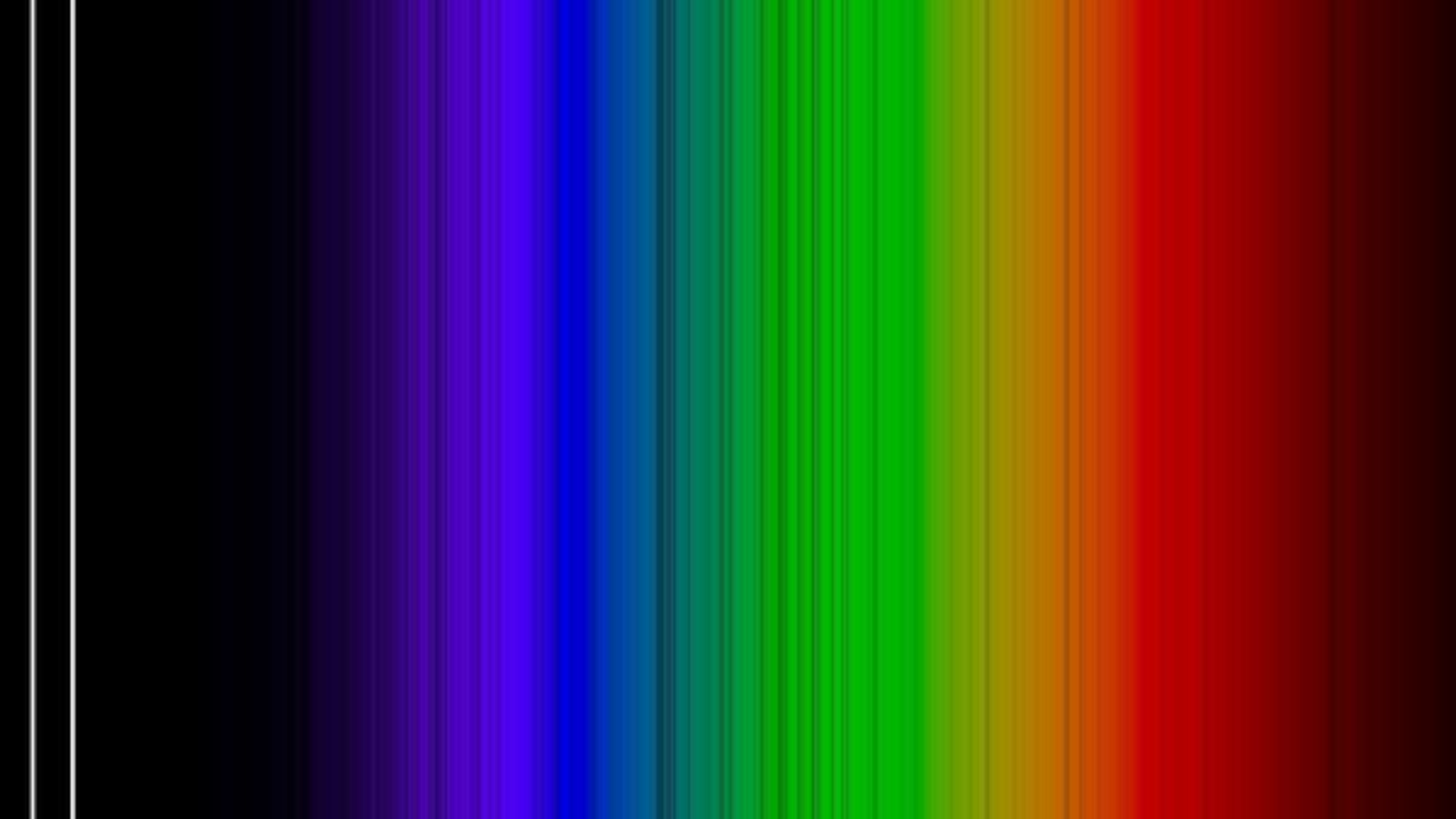
A rainbow assortment of spectral lines. On the left, where it's dark, there are two vertical white lines.

(Image credit: Anish Amarsi/Uppsala University)

Astronomers can measure the latter from afar by looking at sunlight's spectral lines. As light streams out from the sun's heart, it crashes into the atoms of our star's outer layers, which absorb the light at certain wavelengths. Look at a spectrum of sunlight, and you'll see dark lines where light has been absorbed. Atoms of different elements absorb different wavelengths, so each element leaves a distinct fingerprint.

Scientists can pore over these spectral fingerprints to reconstruct what elements created them and in what quantities. Therein lies the mystery: The sun seemed to contain much less silver than CI chondrites would indicate. This missing silver is a source for confusion in the sun's history.

Caliskan and her colleagues wondered if astronomers were missing something. They could not visit the sun in person, but they could still find where the silver might be hidden by simulating the sun's atoms on a computer. If they could create a high-silver model that still spawned the low-silver spectral lines, that model could be a good guess for the silver's whereabouts.

Other scientists had tried this before to limited success, but their simulations had been relatively simple. As light strikes an atom, the light has all sorts of intricate effects on the atom's innards. These effects can alter how the atom absorbs the light and, therefore, change how astronomers see that light.

Past models hadn't accounted for many of these tricky "non-equilibrium effects", because simulating them is far easier said than done. They're messy and complex and they vary a great deal from atom to atom.

In fact, no known scientists had ever tried to simulate a silver atom with non-equilibrium effects before Caliskan and her fellow investigators took on the challenge. They tried with their best guesses and the power of the Tetralith supercomputer in Linköping, Sweden.

Indeed, these non-equilibrium effects seem to explain the silver mystery. Based on their model, Caliskan and colleagues calculated that the sun holds 55% more silver than astronomers have measured.

This isn't a perfect match for the CI chondrites, but it's close enough that investigators can rule out any extraordinary cause. Instead, the missing silver may have been right there, in the sun all along, simply occluded from astronomers' view by tricks of physics. Next, Caliskan and colleagues plan to use this method to simulate other types of stars.

They published their work in the journal Astronomy & Astrophysics in July 2026.

How much better is the Canon EOS R6 III than previous models for astrophotography?

In a rare first for me, I actually used autofocus for this entire astrophotography shoot. If I'm being honest? I prefer it when shooting astro with a mirrorless camera. Why? Because it is quicker and that means more time capturing the stars and less time setting up. I can get a star in sharp focus using autofocus in half the time that it would take me to do it manually and it's way easier to focus with the shutter or back button than play about with the focus ring, especially with cold fingers.

The back panel and screen of the Canon EOS R6 III.

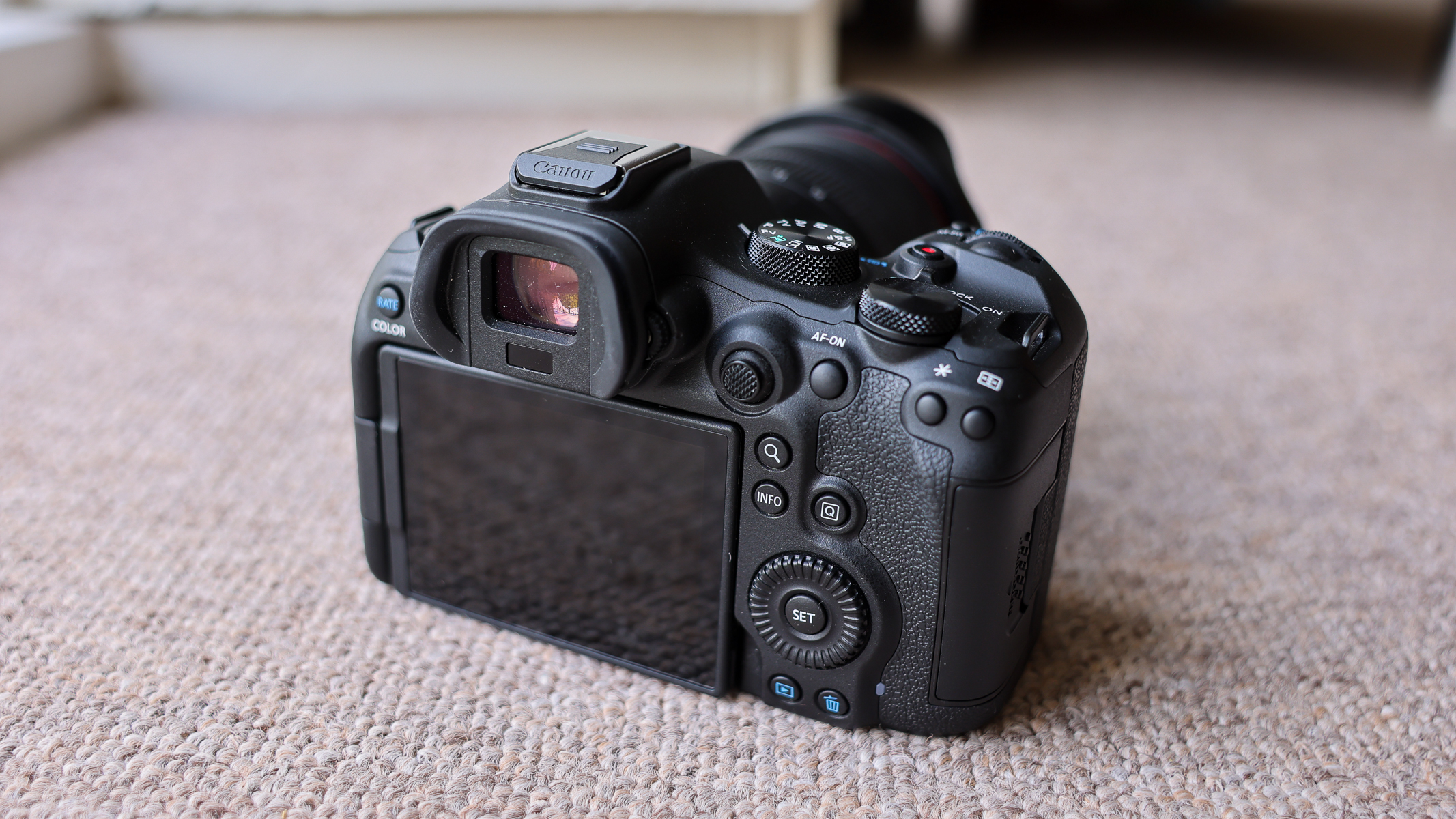
The Canon EOS R6 III makes shooting astro much quicker with its rapid low-light autofocus. (Image credit: Harry Bennett / Future)

I only managed to get out under one clear sky to test the new R6 III but it was a wonderful session at my usual dark hill spot surrounded by a sea of stars and celestial shapes. After setting up my tripod, I was ready to start shooting, armed with the Canon 14mm f/1.4 and 45mm f/1.2 lenses.

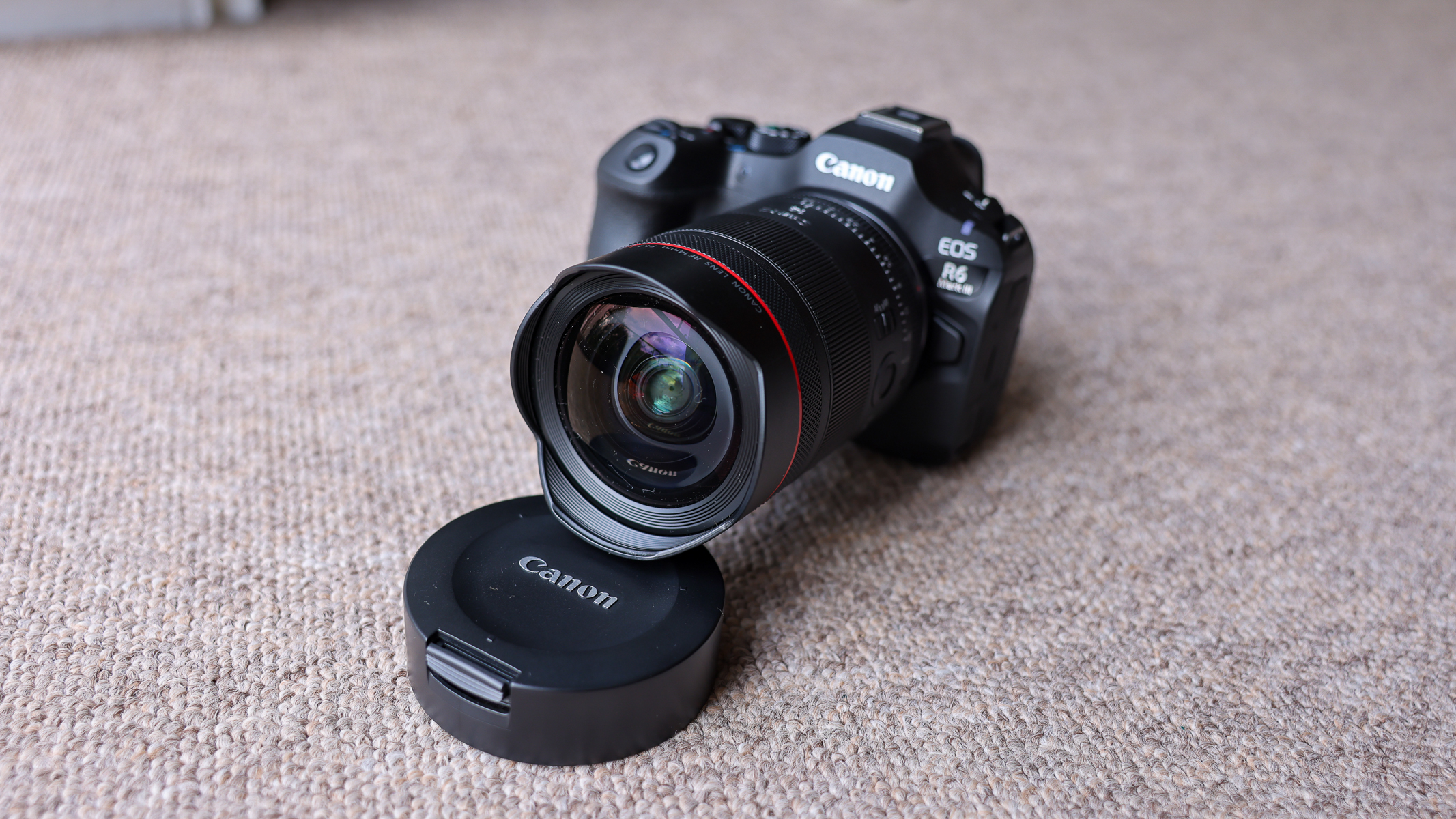
The Canon EOS R6 III with the Canon RF 14mm f/1.4 lens attached and propped up by the lens cover, on a brown carpet.
Pairing the R6 III with the RF 14mm f/1.4 lens is a perfect set up for astrophotography.Harry Bennett / Future
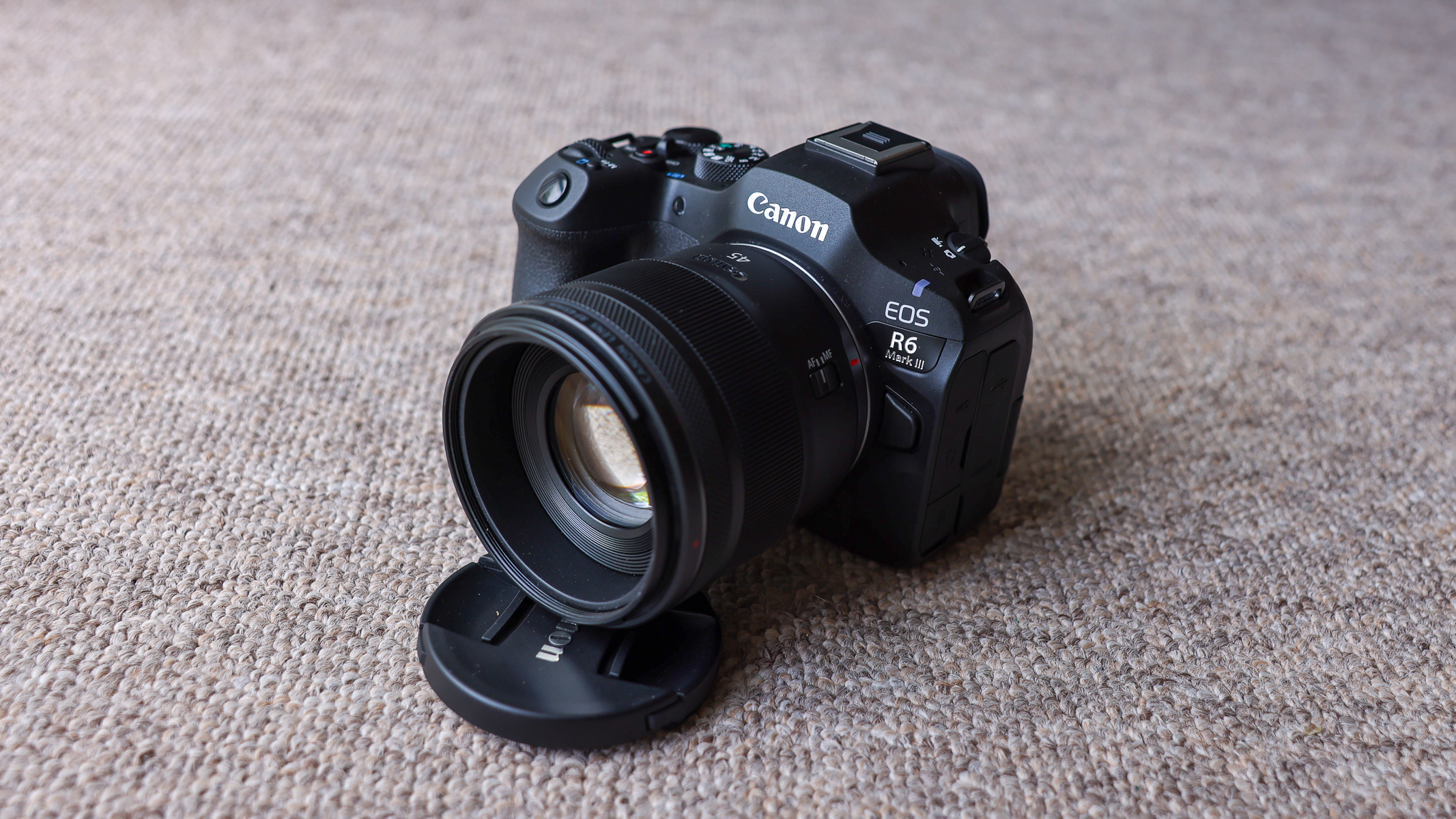
The Canon EOS R6 III with the Canon RF 45mm f/1.2 lens attached and propped up by the lens cover, on a brown carpet.
I also tried it with the Canon RF 45mm f/1.2 lens, which delivered exceptional aperture performance, albeit with a few spots of chromatic aberration.Harry Bennett / Future

If you are a seasoned astrophotographer, you will undoubtedly have started your craft by learning how to manually focus on stars to get them crisp and sharp in the frame. Everyone does. Whilst the manual focus (MF) versus autofocus (AF) debate continues within the community, the technology for low-light autofocusing capability has come a long way since mirrorless cameras were first introduced and the R6 III is physical proof of that.

The astrophotography

The stars Mizar and Alcor with the handle of the Big Dipper, as imaged by the Canon EOS R6 III.

Mizar and Alcor in the panhandle of the Big Dipper. Shot with Canon EOS R6 III and RF 45mm f/1.2 lens, Aperture: f/1.2, Shutter speed: 2 sec, ISO 500 | Bortle class 4. (Image credit: Harry Bennett / Future)

You only get the luxury of being able to do this if your camera is actually good at autofocusing in low light and for starry nightscapes. All three versions of the Canon EOS R6 feature a low-light autofocus range of -6.5 exposure value (EV), so they already have a strong baseline for shooting under dark skies. The Canon EOS R6 III features a higher resolution and advanced autofocus algorithms, so the AF system actually has more data to use and is better at using it.

I was able to capture bright objects easily and start shooting without having to spend ages using manual focus for each new shot. The autofocus was powerful enough to capture at least one star in each of my frames. I simply used autofocus on the brighter points of light in my composition, waited for the green box and then switched to manual to avoid any refocusing if I decided to recompose the shot.

A closeup of Jupiter, Pollux and Castor as imaged by the Canon EOS R6 III.

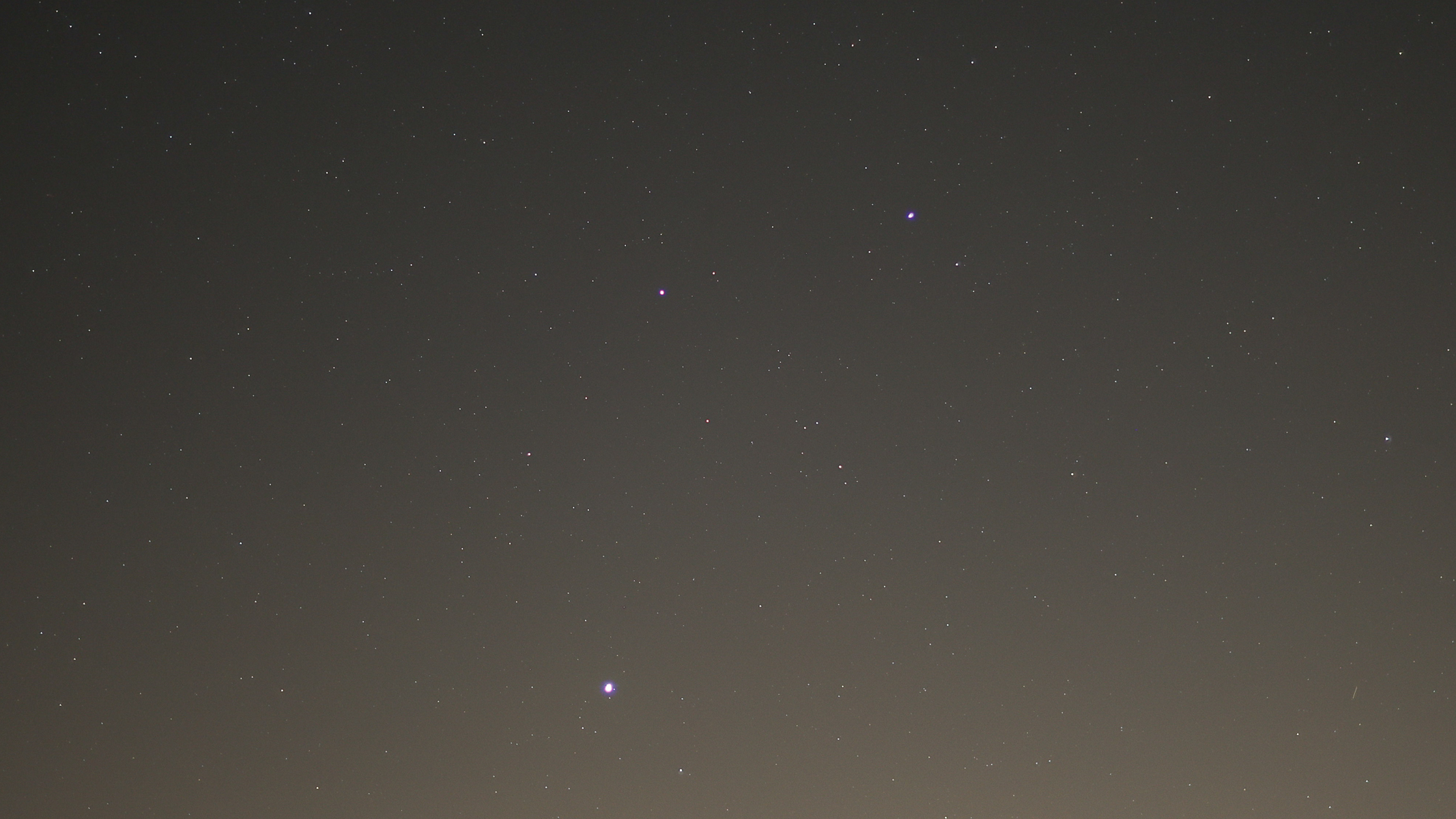
Pollux and Castor above Jupiter. Shot with Canon EOS R6 III and RF 45mm f/1.2 lens, Aperture: f/1.2, Shutter speed: 2 sec, ISO 500 | Bortle class 4. (Image credit: Harry Bennett / Future)

Bright objects were the easiest to capture, with Jupiter, Pollux and Castor easily captured in the western sky. Light pollution washed out the contrast in this shot but it was the quickest autofocus because of the brightness of the objects.

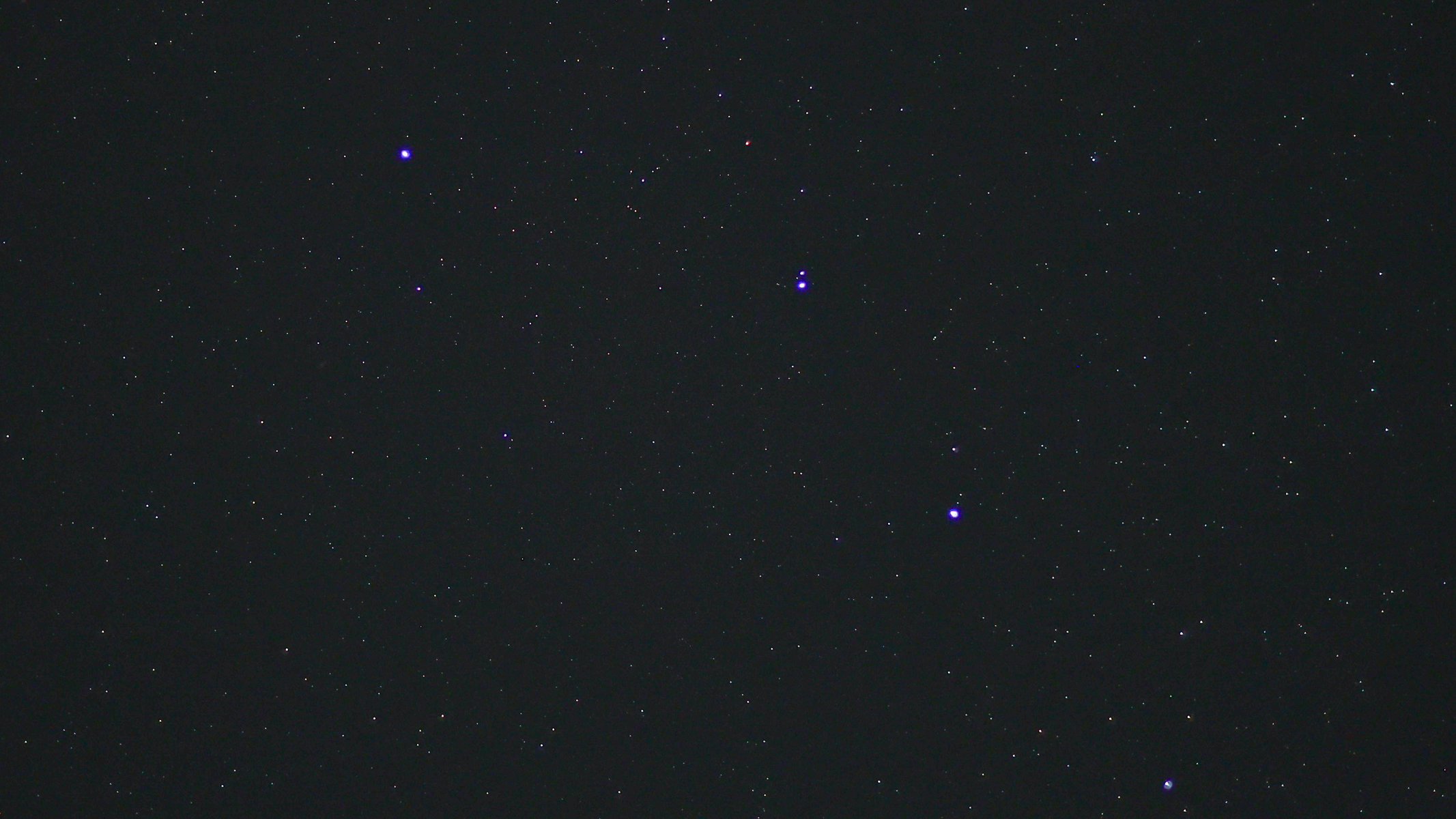
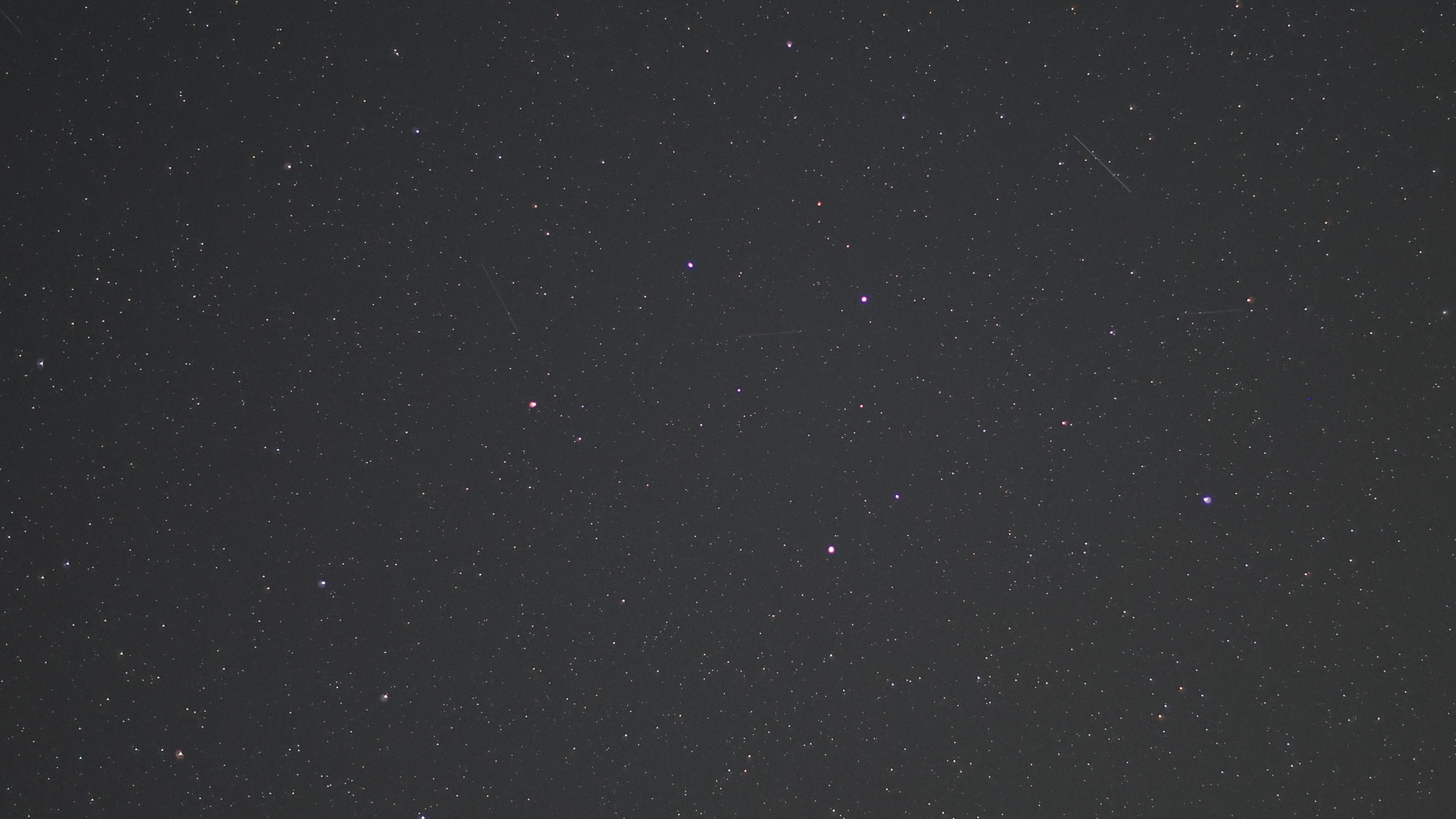
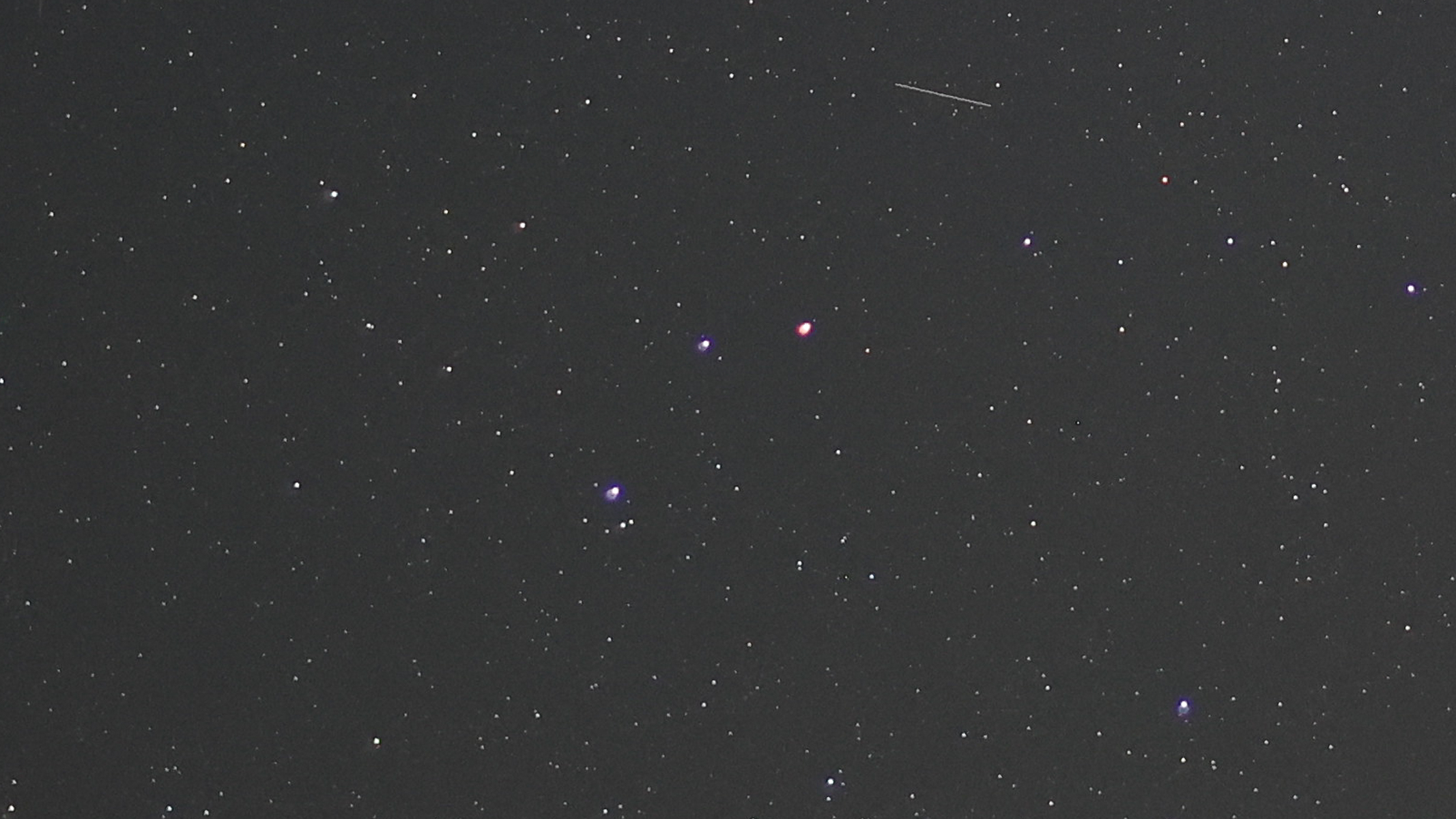
The autofocus helped me capture a range of other constellations too. With the R6 III focusing on the bright star Arcturus, along with the rest of Boötes and Coma Berenices next to the Coma Star Cluster (Melotte 111).

Arcturus, Boötes, Coma Berenices and the Coma Star cluster as imaged by the Canon EOS R6 III.

Arcturus, Boötes, Coma Berenices and the Coma Star cluster (Melotte 111). Shot with Canon EOS R6 III and RF 14mm f/1.4 lens, Aperture: f/1.4, Shutter speed: 8 sec, ISO 800 | Bortle class 4. (Image credit: Harry Bennett / Future)

The shape of Leo is recognisable and the autofocus captured the brightest star, Regulus, to bring the rest of the stars in the constellation into focus. You can even spot the Beehive Cluster (M44) in Cancer, to the right of the frame and it is fairly sharp in focus. Barring some minor star trailing from my lack of a star tracker, the stars are nicely in focus, including on minor objects like star clusters.

Regulus, Leo and the Beehive cluster as imaged by the Canon EOS R6 III.

Regulus in Leo, with the Beehive Cluster (M44) in the bottom right. Shot with Canon EOS R6 III and RF 14mm f/1.4 lens, Aperture: f/1.4, Shutter speed: 6 sec, ISO 640 | Bortle class 4. (Image credit: Harry Bennett / Future)

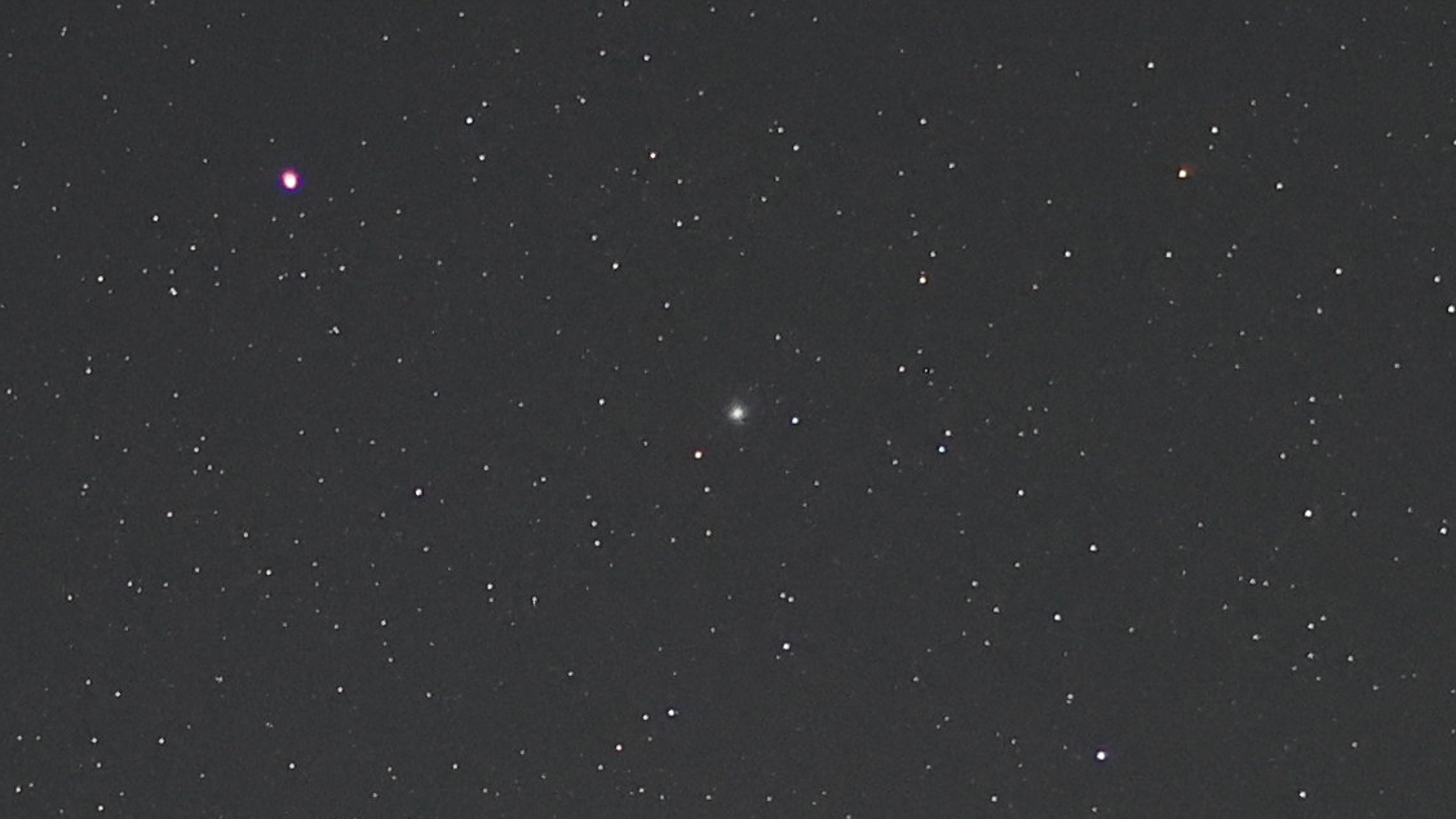
Using the 45mm lens, I got some close-ups of some quadrilateral shapes in the sky. Hercules' prominent trapezoidal keystone is visible and one of the corners, Zeta Herculis, was picked up by the autofocus. It is not exactly a bright star, with a magnitude of 2.88, but the R6 III picked it up easily and brought the rest of the corners into focus. Whilst barely a smudge along one of the sides of Hercules, I even managed to capture the Hercules globular cluster (M13) with the R6 III and the Canon RF 45mm wide open at f/1.2.

The keystone of the constellation Hercules, as imaged by the Canon EOS R6 III.
The keystone of Hercules. Shot with Canon EOS R6 III and RF 45mm f/1.2 lens, Aperture: f/1.2, Shutter speed: 2 sec, ISO 2500 | Bortle class 4.Harry Bennett / Future
The Hercules Globular cluster (M13) as imaged by the Canon EOS R6 III.
A cropped view of the Hercules Globular cluster (M13). Shot with Canon EOS R6 III and RF 45mm f/1.2 lens, Aperture: f/1.2, Shutter speed: 2 sec, ISO 2500 | Bortle class 4.Harry Bennett / Future
The head of the constellation Draco and the star Iota Herculis, as imaged by the Canon EOS R6 III.
The 'head of the dragon' in Draco, with Iota Herculis to the right. Shot with Canon EOS R6 III and RF 45mm f/1.2 lens, Aperture: f/1.2, Shutter speed: 2 sec, ISO 2500 | Bortle class 4.Harry Bennett / Future

The polygonal head of the dragon in Draco was easily captured in the centre of the frame, with bright stars Eltanin (2.23), Rastaban (2.79) and even Iota Herculis (3.8) showing prominently. The autofocus capabilities of the EOS R6 III are maximised when used alongside a lens with a very fast aperture like f/1.4 and f/1.2. Without these types of lenses, you would be much less likely to be able to autofocus on such dim stars.

The upgrades

The big question when looking at the third iteration of a camera model is to figure out if the upgrades are actually worth it. First, you have to think about your budget and also what you are using the camera for. For astrophotography, there are a few upgrades in the EOS R6 III that can be considered to see whether they are worth it.

The most noticeable upgrade on the R6 III is the resolution, which has been upgraded from the R6 II's 24.2MP sensor to a 32.5 MP sensor. On top of improved resolution for general and astrophotography, the boosted number of pixels allows the Dual Pixel CMOS AF II to collect even more data points because there are more pixels. Dual Pixel architecture splits each pixel into two separate photodiodes and allows each photodiode to read the light from the star at two different positions and allows the lens motor to bring those points together into perfect focus.

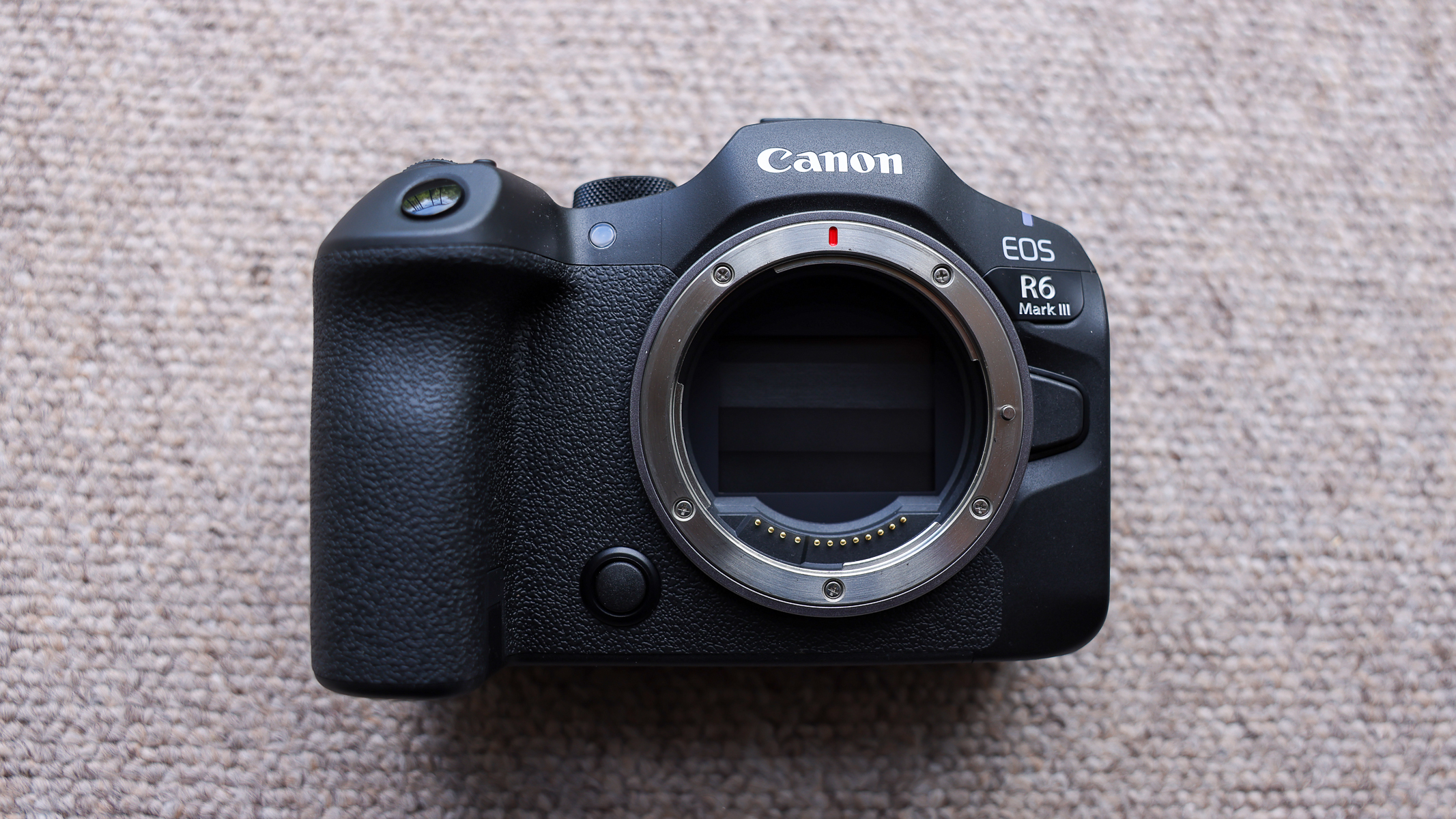
The front of the Canon EOS R6 III without a lens on a brown carpet.

(Image credit: Harry Bennett / Future)

The upgraded sensor resolution combined with upgraded tracking algorithms from the flagship Canon EOS R5 II make the R6 III better at locking onto low-light points and make autofocus for astrophotography much more reliable than in previous models.

I initially expected the higher resolution to translate into more image noise on photographs but this was not the case. The R6 III utilizes dual-gate gain architecture, which means that every pixel has a switchable path at the hardware level depending on the ISO level used and allows images with higher ISOs to have a heavily reduced base amount of noise and thus makes them less grainy.

Orange star Pi Herculis next to Rho Herculis, as imaged by the Canon EOS R6 III.
A cropped view of the orange star Pi Herculis in the keystone of Hercules. Shot with Canon EOS R6 III and RF 45mm f/1.2 lens. Aperture: f/1.2, Shutter speed: 2 sec, ISO 2500 | Bortle class 4.Harry Bennett / Future
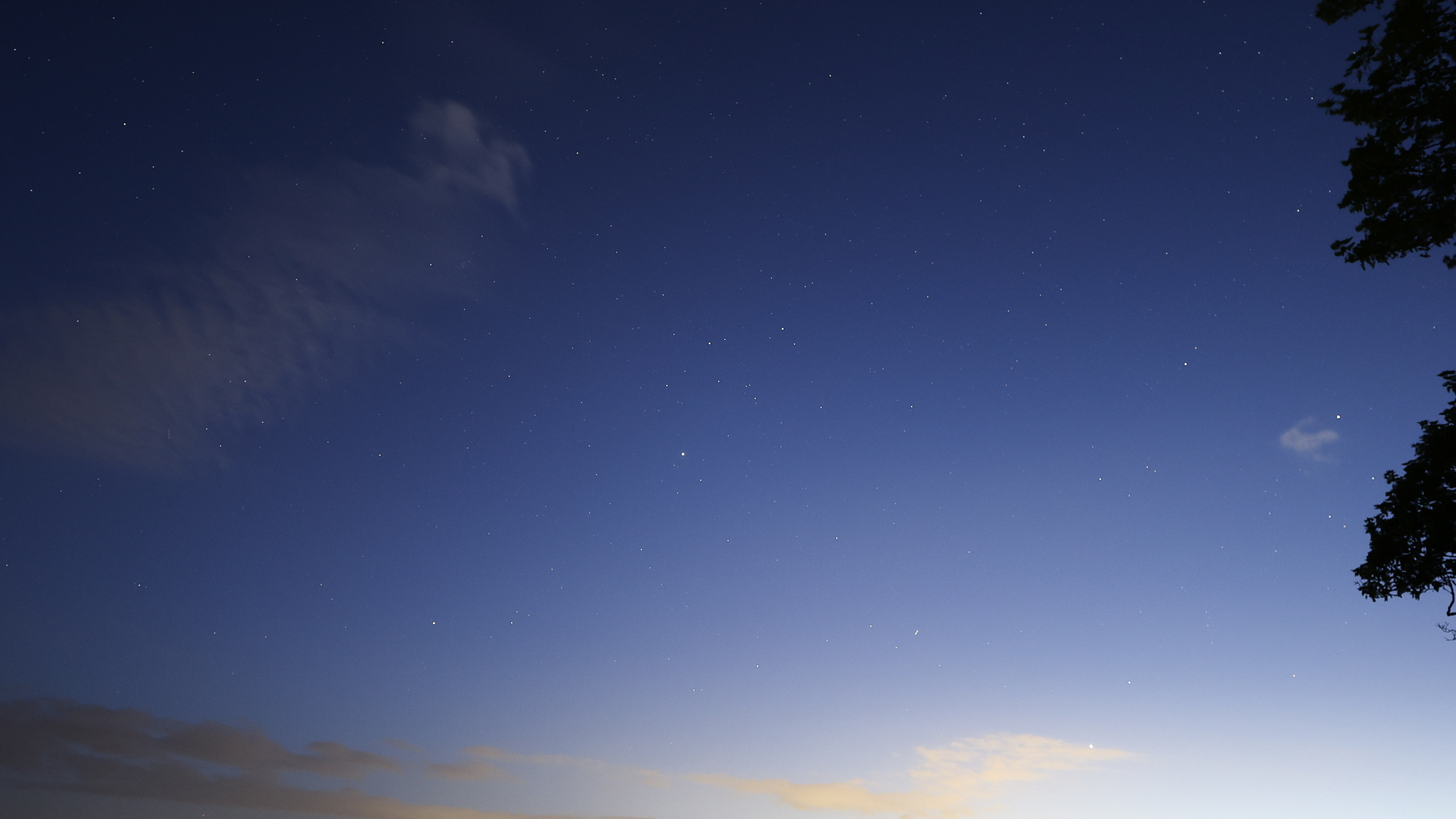
Jupiter, Pollux and Castor as imaged by the Canon EOS R6 III.
Jupiter beneath Pollux and Castor, with Venus and Auriga to the right. Shot with Canon EOS R6 III and RF 14mm f/1.4 lens, Aperture: f/1.4, Shutter speed: 2 sec, ISO 800 | Bortle class 4.Harry Bennett / Future

Photos at lower ISOs on the R6 III have an incredibly high dynamic range (HDR) thanks to the low conversion gate (LCG) circuit. This allows the natural color of the stars to be preserved instead of coming across as indeterminate white blobs, as well as the subtle hues of the dark surrounding sky in the photograph.

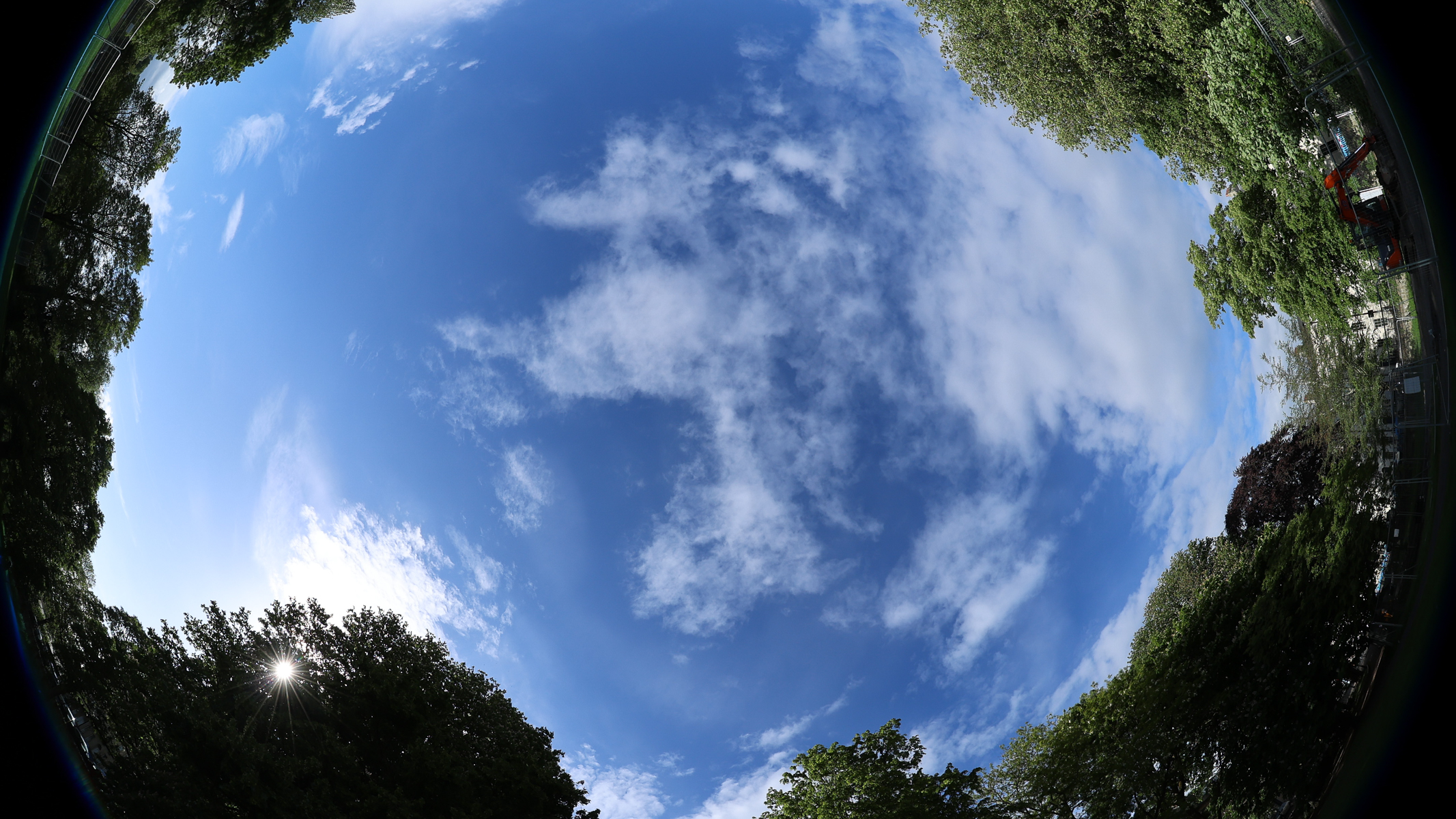
A blue sky with clouds surrounded by trees with a fisheye distortion as imaged by the Canon EOS R6 III and Canon RF 7-14mm f/2.8-3.5 fisheye lens.

A cloudy blue sky. Shot with Canon EOS R6 III and RF 7-14mm f/2.8-3.5 fisheye lens, Aperture: f/8, Shutter speed: 1/125 second, ISO 125. (Image credit: Harry Bennett / Future)

Aside from the technical aspects of how the resolution improves the autofocus, the detail in images from the R6 III is noticeable and is great for picking up finer stellar structures such as star clusters and smaller stars. When paired with a distorted lens like the Canon RF 7-14mm f/2.8-3.5 fisheye lens, extra resolution really helps details pop. I didn't get to use the fisheye lens for astro but general daytime shooting delivered some high-quality photographs.

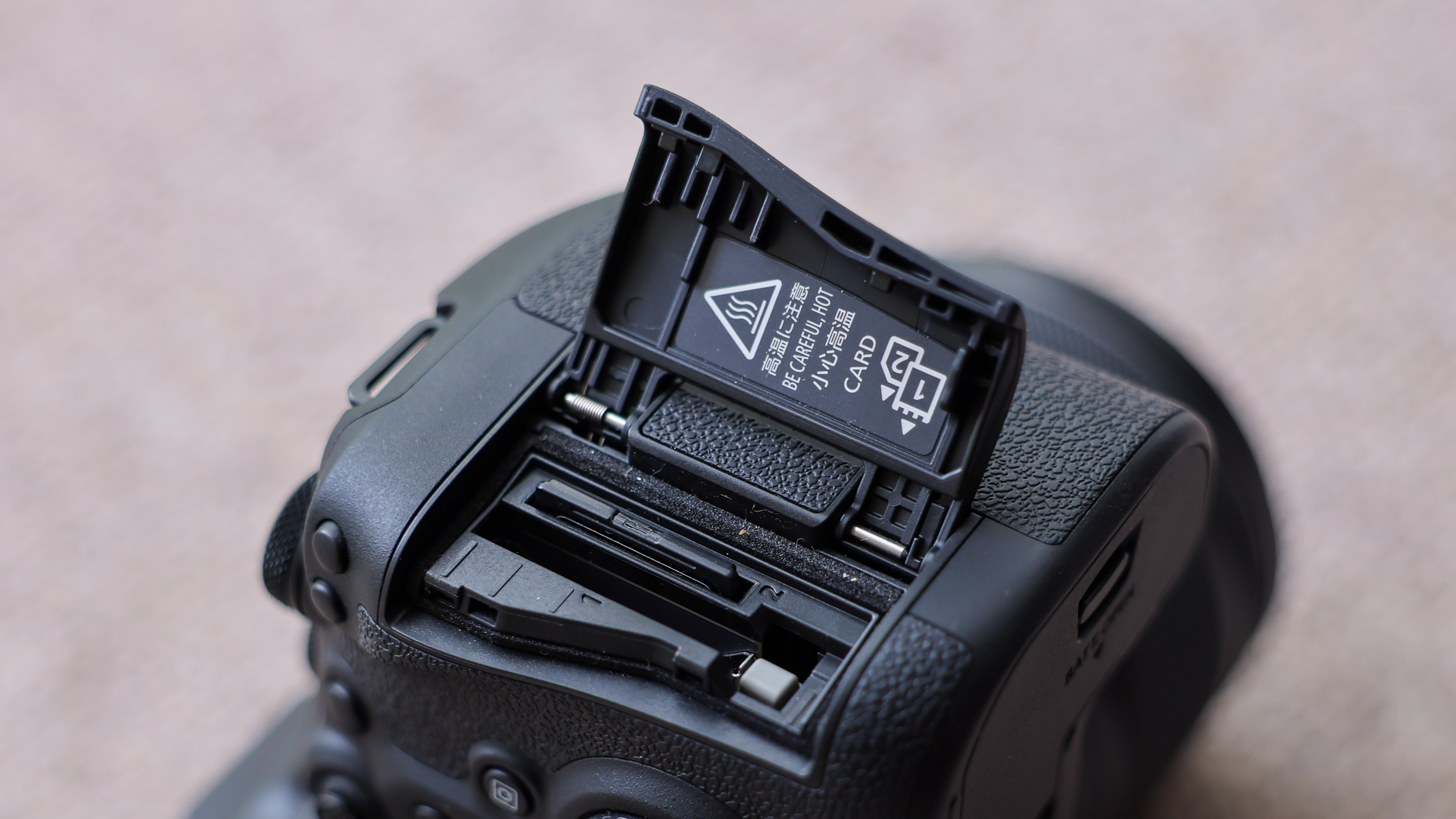
The CFexpress card and SD card slot on the Canon EOS R6 III.

The addition of CFexpress card slot will please professional photographers who need the fastest read and write speeds for their workflow. (Image credit: Harry Bennett / Future)

The final important upgrade on the R6 III is the inclusion of a CFexpress card slot, which allows faster writing and reading speeds both in camera and during media downloads. A UHS-II SD card has an average read speed of 300MB/s and an average write speed of 260MB/s.

This may seem fast but the most advanced CFexpress cards have a read and write speed of over 3000MB/s, which makes huge workloads so much easier to process. This may only be of benefit to professional photographers who shoot a lot of video or need to do a huge amount of burst photography in RAW format, but it does vastly improve the performance of this camera. Bear in mind that CFexpress cards are much more expensive than SD cards and require an additional CFexpress reader to transfer data to a computer.

Is it worth it?

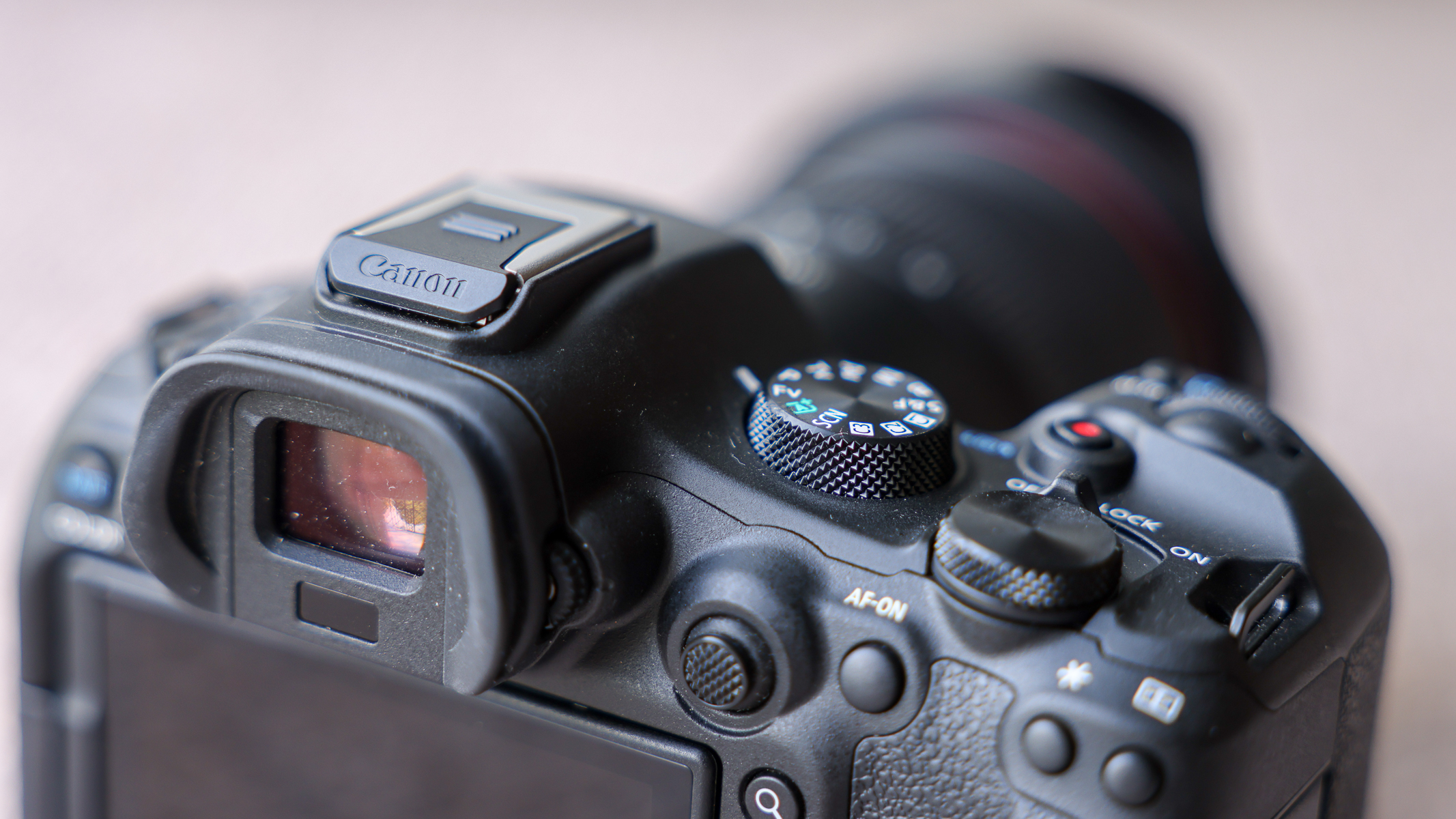
The viewfinder and top controls of the Canon EOS R6 III.

The controls on the EOS R6 III are essentially the same as the EOS R6 II. (Image credit: Harry Bennett / Future)

The price difference between the R6 Mark II and the Mark III is just under $1000 and for that amount of money, justifying the move up to the latest model comes down to a few factors that you will have to consider. The power of the low-light autofocus is tempting but you should think about the camera as a whole to see whether it is worth making the investment.

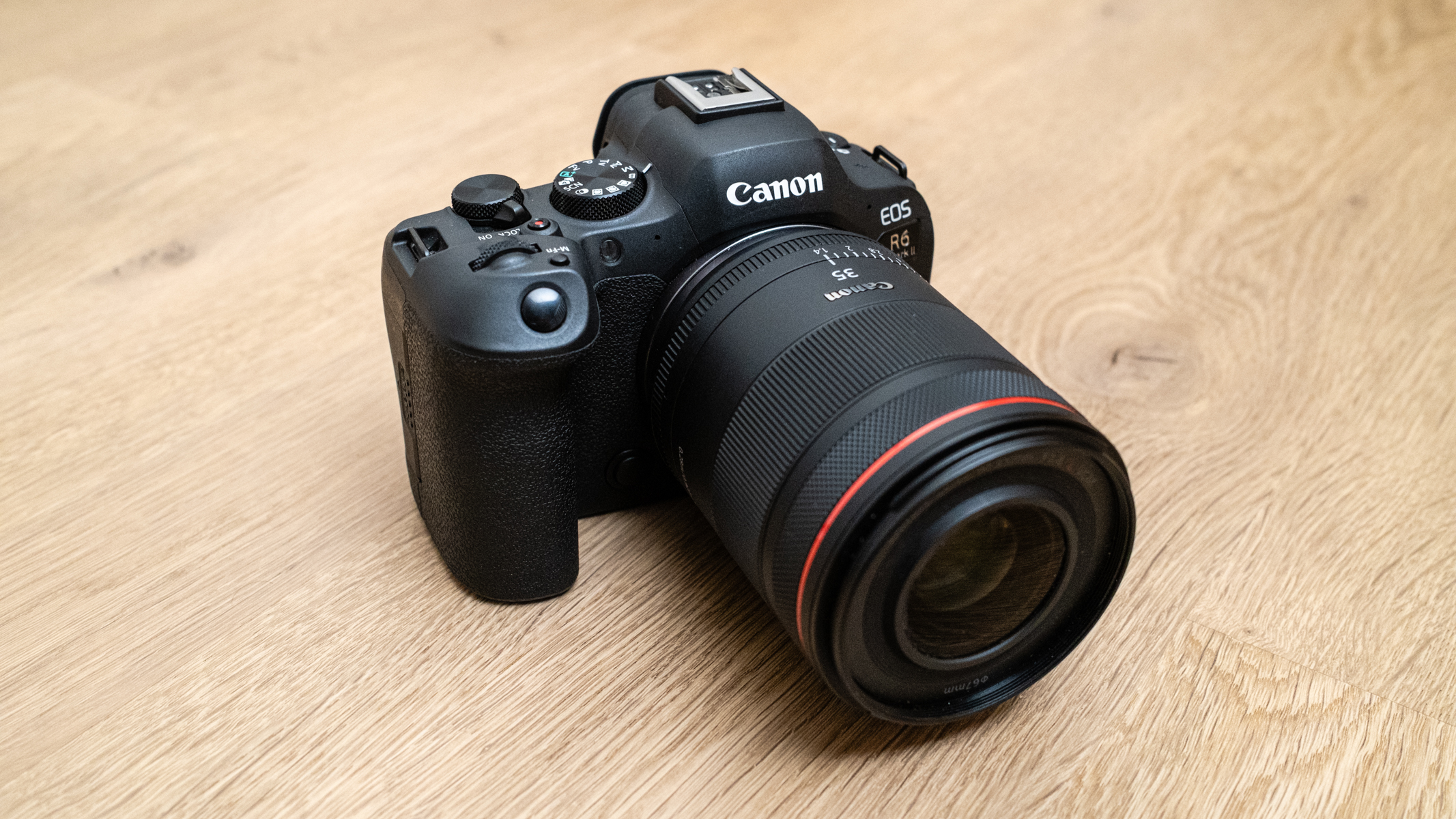
Canon EOS R6 Mark II and RF 35mm f/1.4L on a wooden floor

We gave the Canon EOS R6 II a huge five stars. (Image credit: James Abbott)

If you are looking to boost resolution in your night-time scenes and have been shooting astrophotography for a long time, the R6 III could be worth the extra investment thanks to the 32.5MP sensor, which retains the powerful dual-gain architecture for getting high dynamic range images at lower ISOs and delivering high ISO images with significantly less grain.

If you have a heavy workflow, you are likely to be frustrated with the lack of a CFexpress card slot on the earlier R6 models and would benefit from the advanced functionality the new slot will give you, especially if you shoot a lot of RAW imagery and video.

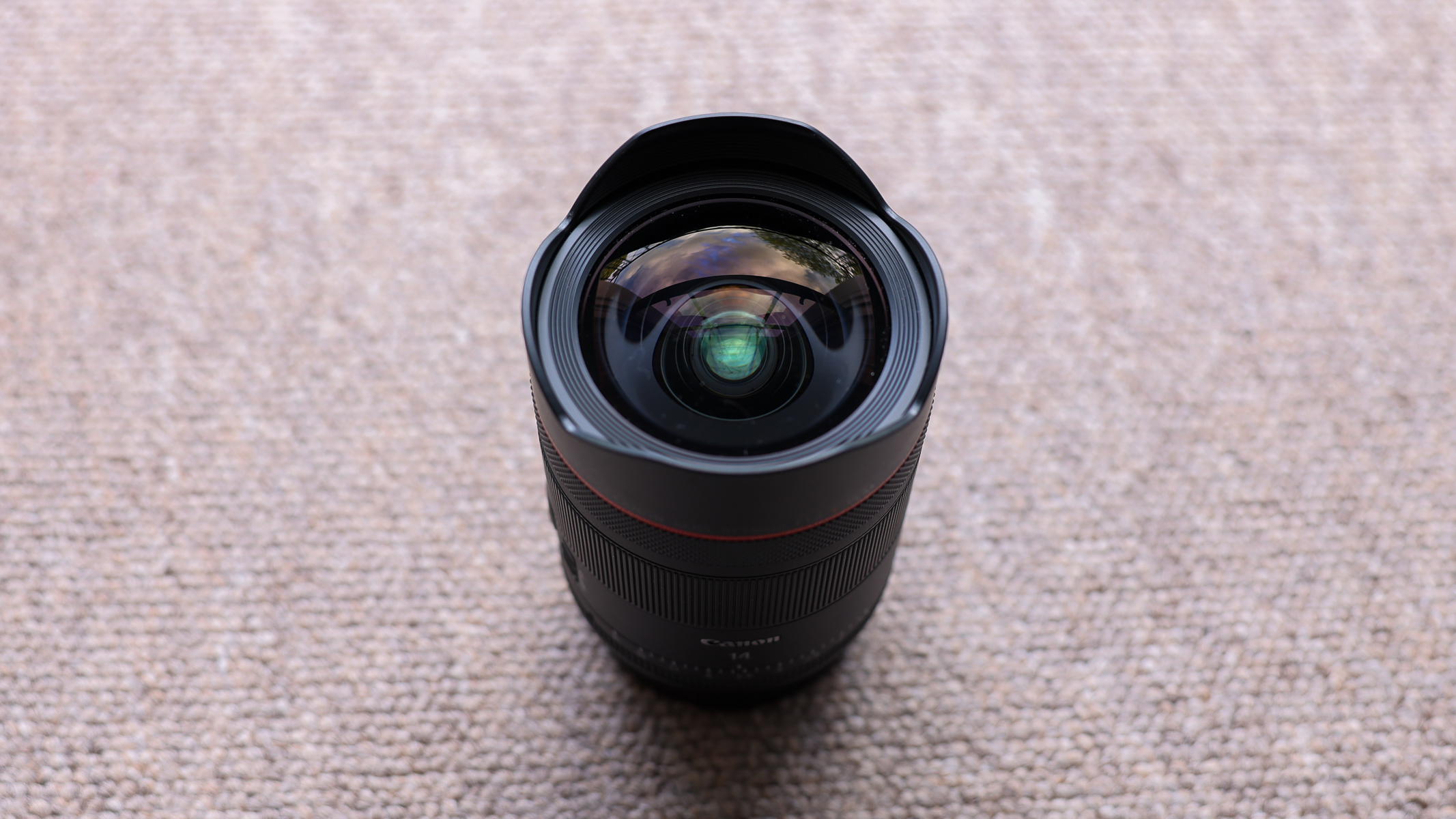
The Canon RF 14mm f/1.4 lens stood up on a brown carpet.

Wide aperture lenses, like an f/1.4 lens, can deliver exceptional low-light performance but they are also extremely expensive, so buyers should consider how they want to invest in their camera gear. (Image credit: Harry Bennett / Future)

Stick with an earlier model or a different mirrorless camera if you are a very casual astrophotographer who does most of your shooting in the daytime. I just can't justify the massive jump in price for basic shooting, where a beginner or intermediate photographer's money might be better spent on getting a fast f/1.4 lens for superior astro. I used the Canon RF 14mm f/1.4 lens for astrophotography testing and I don't think the images would have looked half as good if I had used a lens with a smaller aperture. If you already own the R6 II, the only reason you might upgrade is if you need to do more heavy cropping into your images or need better hybrid video functionality from a camera.

‘Star Trek: Strange New Worlds” season 4 opener is a pulpy sci-fi joy packed with dinosaurs, martians, and a 5th planet where the asteroid belt should be

If you're of a Martian persuasion, "Strange New Worlds"' season 4 opener couldn't have timed itself much better.

Not only does this week mark the 50th anniversary of Viking 1 touching down on the surface of the red planet, new research from University of Oxford scientists recently suggested that Mars once had an active, interconnected system of magma beneath its surface. If accurate, this discovery might have made our Solar System next-door neighbor more habitable in its distant past.

While life on Mars has long been an obsession of sci-fi creators — from HG Wells' "War of the Worlds" to "Doom" via John Carter and John Carpenter — "Star Trek"'s Martians have tended to be human expats. Indeed, by the 24th century of "The Next Generation", "Deep Space Nine" and "Voyager", it's home to the Utopia Planitia Fleet Yards that would later be destroyed by rogue synths ahead of "Star Trek: Picard"'s debut season.

SPOILERS AHEAD! ANYONE YET TO WATCH "VALLES MARINERIS" SHOULD PROCEED WITH CAUTION TO AVOID VIOLATING TEMPORAL PRIME DIRECTIVES.

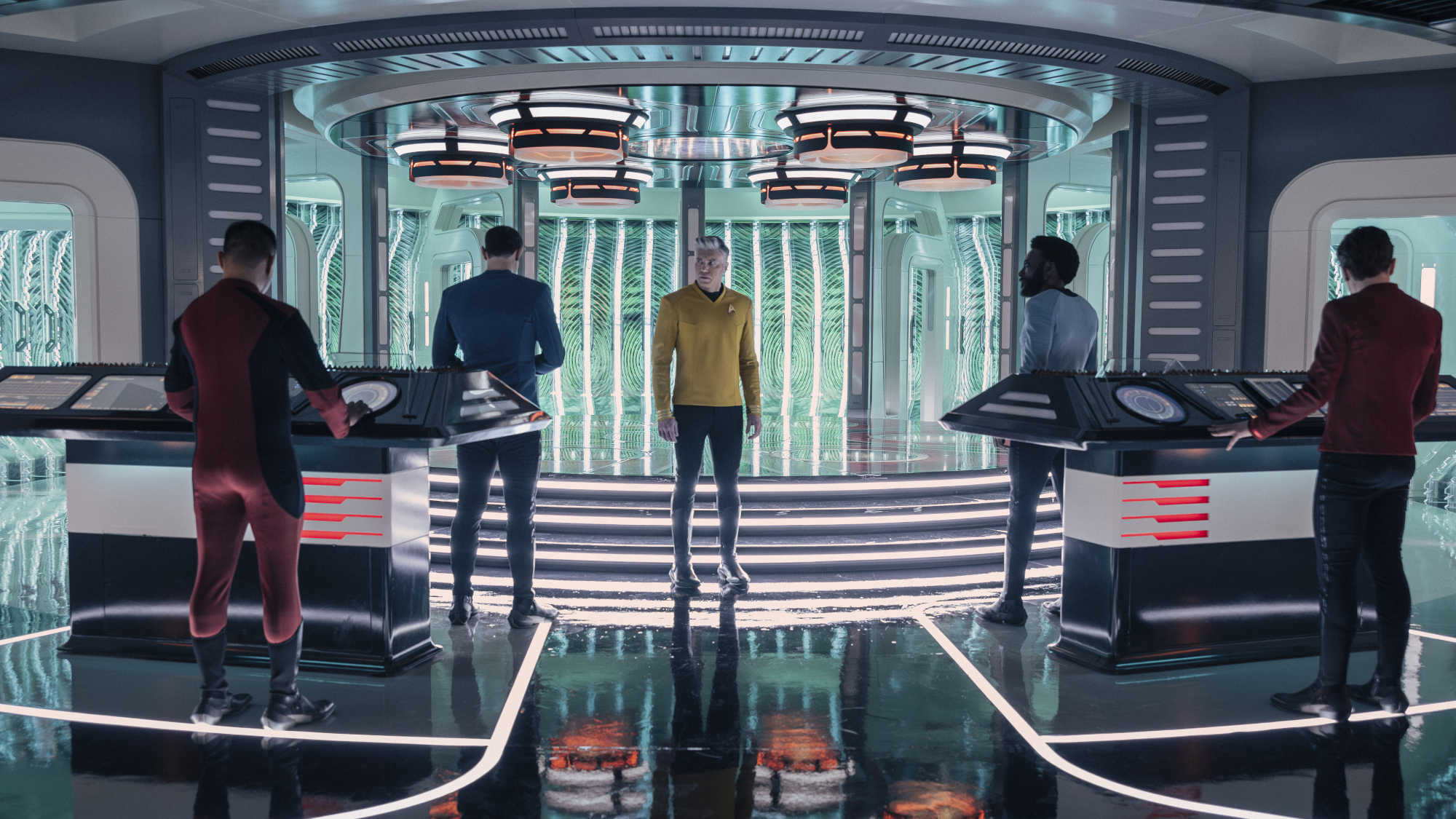
Homegrown Martians had traditionally been in shorter supply, however, until "Valles Marineris" paid them a visit. The only catch? Captain Pike and his USS Enterprise crew have to travel a mere 65 million years back in time to say hi.

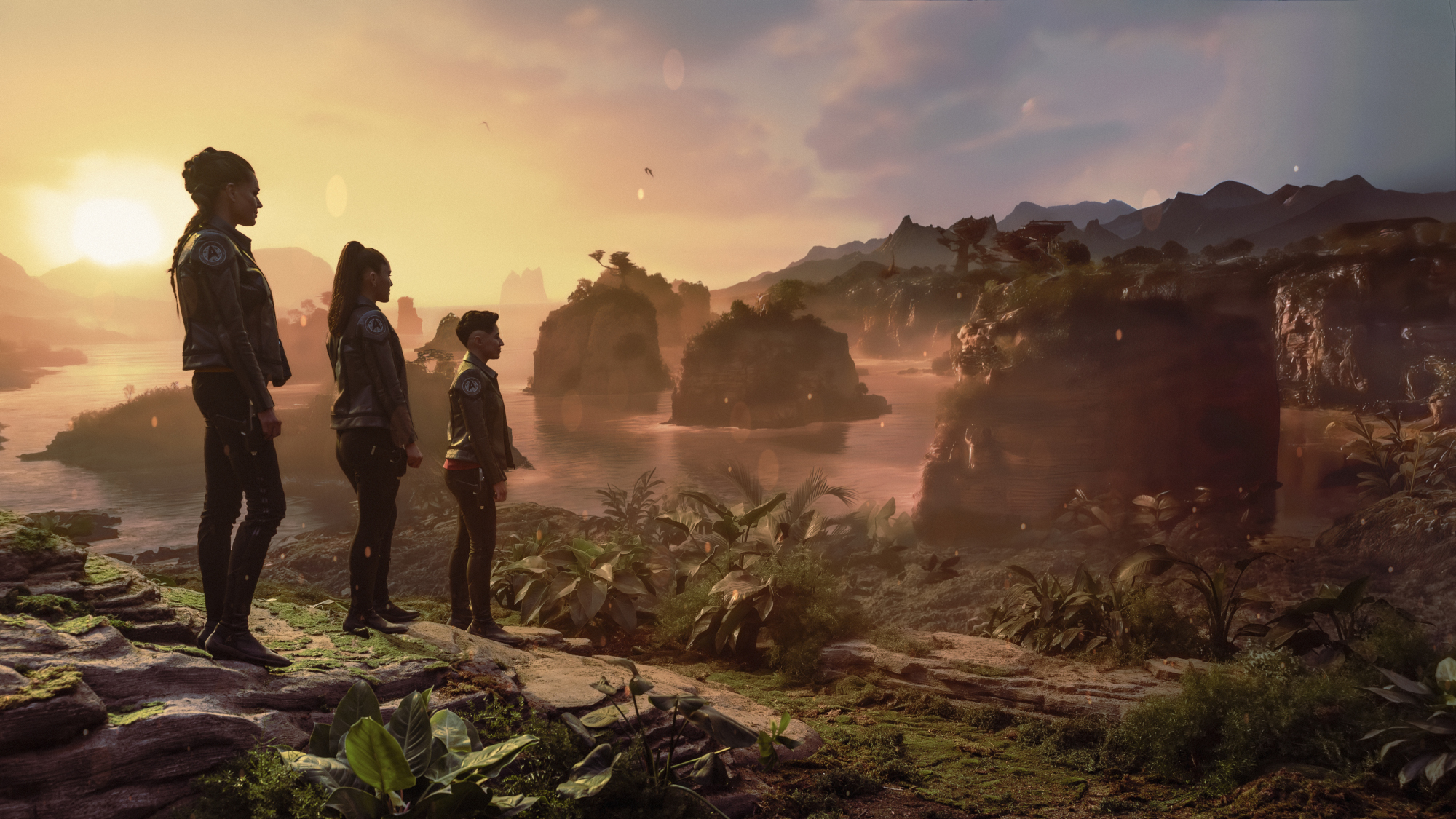
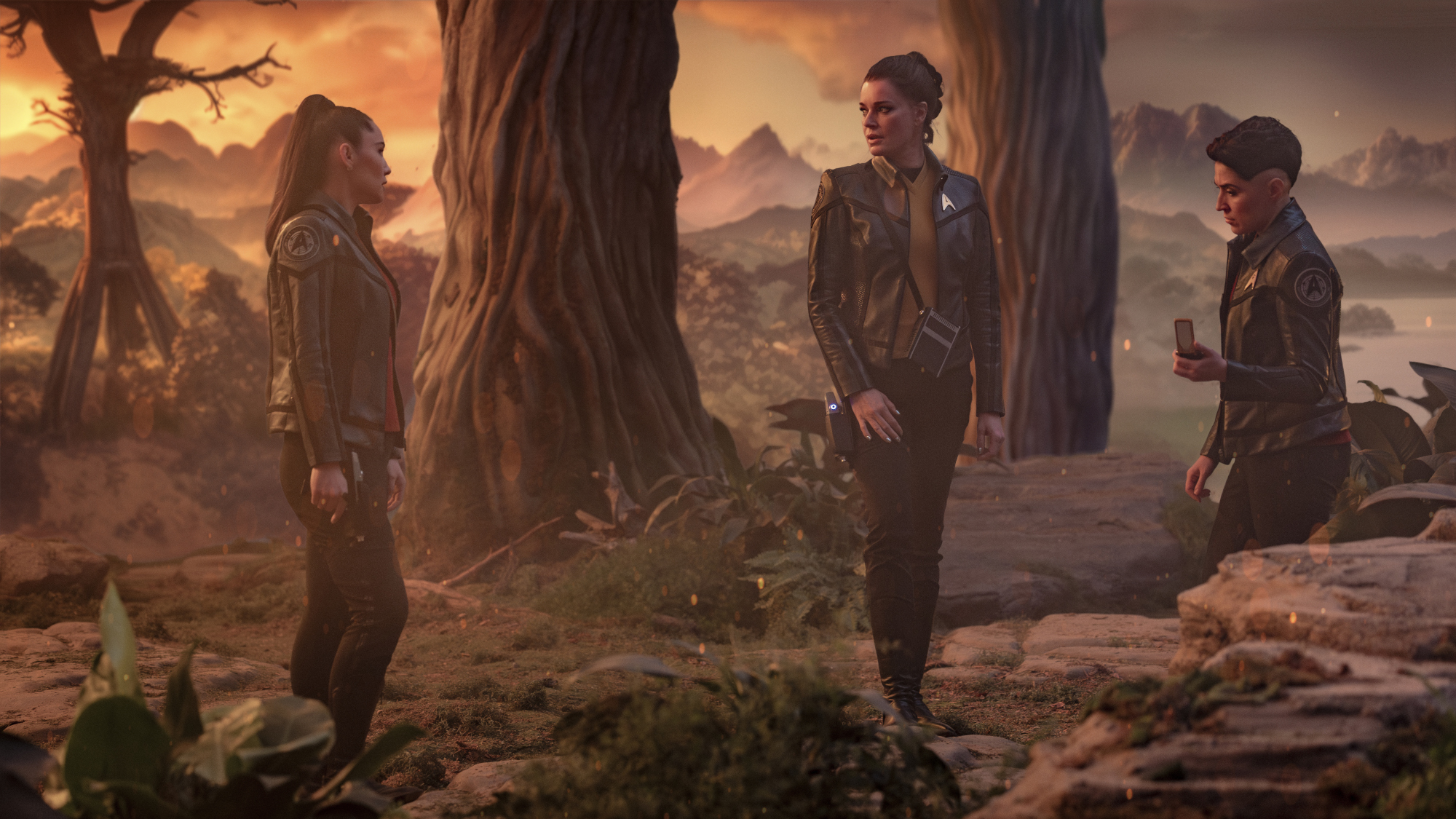
There's something undeniably delicious (though not, luckily, the crew) about Una Chin-Riley (Rebecca Romijn), La'an Noonien-Singh (Christina Chong) and Erica Ortegas (Melissa Navia) getting to visit the real Jurassic Park (technically Cretaceous Park) on an away mission to recover the iridium they need to repair an Enterprise stricken by its accidental trip through a quantum entangled spatial anomaly.

(Image credit: Paramount)

In the tradition of "Planet of the Apes", it turns out that this particular third rock from the sun was Earth all along. It also, according to star Rebecca Romijn, features an actual puppet from the original "Jurassic Park", and gives La'an that rare opportunity to punch a dinosaur in the face. That's definitely one to tell the grandkids — assuming, of course, you can avoid stepping on a bug, unleashing a butterfly effect, and preventing them (and the entire human race, for that matter) from ever being born.

But it's no coincidence that Pike has a copy of Edgar Rice Burroughs' "A Princess of Mars" on his bookshelf, because it's what happens in orbit that makes this episode such a pulpy sci-fi joy.

Although Battle Commander Cassell (Saffron Burrows) and her crew have the familiar, human-esque appearance of most "Star Trek" aliens, Martian evolution has got them there millions of years before Vulcans, Klingons, and the rest become top dogs in the galaxy. (Spock notes that Martian DNA is present in many modern-day species, though it's unclear how their family tree aligns with the "Progenitor" origin story of "TNG"'s "The Chase".)

(Image credit: Paramount)

These technologically advanced Martians are embroiled in a bloody ongoing war with a "Starship Troopers"-adjacent arachnid species known as the Dol'Drm, who call the fifth planet of the Sol System home. Science purists will note that this strange new world is not the famously gaseous Jupiter, but an extra, science textbook-rewriting ball of rock located roughly where the Asteroid Belt is now.

Unfortunately, once Cassell has sneaked a peek at a future where her "homeworld is a barren red wasteland", she's in no mood to listen to Federation lectures about finding diplomatic solutions. She subsequently steals some of the Enterprise's antimatter and fashions a makeshift weapon of mass destruction to eliminate the Dol'Drm once and for all. But the shockwaves of this cataclysmic blast will stretch far beyond the fifth planet.

Spock confirms that many of the fragments left behind by the obliteration of the Dol'Drm homeworld will form the Asteroid Belt, essentially a riff on the so-called "Disruption Hypothesis" of the belt's origins.

(Image credit: Paramount)

Originally postulated by German astronomer Heinrich Wilhelm Matthias Olbers in the early 19th century, the theory suggested that a rocky planet, roughly the size of our Moon, existed between the orbits of Mars and Jupiter.

It was the destruction of this world (by means unknown, though we doubt anyone suggested an antimatter explosion) that led to the formation of the belt. The hypothesis is now largely discredited — current scientific thinking suggests that the belt is the result of dust and rock coalescing due to gravity — but it's a fun revisionist spin on old scientific ideas.

And the Enterprise's involvement in the Solar System's origin story stretches even further. The gravimetric shift caused by the absence of the Dol'Drm planet shifts Mars' orbit, making it too cold to support life. It also launches arguably the most famous asteroid in history, the Chicxulub meteorite, on a collision course with Earth, wiping out the dinosaurs, kickstarting the Cenozoic Era, and sending the planet on an evolutionary journey that will eventually lead to, well, us.

(Image credit: Paramount)

When it comes to interfering with past events, the implications are rather larger than Scotty passing on the formula for yet-to-be-invented transparent aluminum in "Star Trek IV: The Voyage Home". Even the Borg meddling with a few centuries of history in "First Contact" is small fry next to killing off the dinosaurs.

The intriguing twist here, of course, is that humanity's existence is briefly on a knife-edge, as Pike makes the biggest decision of his (or, indeed, anyone's) life. Standard Starfleet protocol would usually dictate that the Enterprise intervene to prevent the Dol'Drm being destroyed by stolen Federation technology, but its commanding officer sees the bigger picture.

(Image credit: Paramount)

What if the Enterprise was always meant to be there? What if the human race only exists because the ship has gone back in time to answer its own 65-million-year-old Mayday? "In our future there is no fifth planet," he reasons, before allowing the Martians to deliver their deadly payload.

It's a wonderful "what if" that puts 65 million years of history in one man's hands. Indeed, you could tie yourself in knots with all that timey-wimey stuff, but the episode is so much pulpy fun that you barely notice the unbearable weight of those existential dilemmas. Dinosaurs, Martians and an origin story for the human race? What more could you want from a season opener?

New episodes of "Star Trek: Strange New Worlds" debut on Paramount+ on Thursdays.