The James Webb Space Telescope’s disappearing ‘Little Red Dots’ may lead to another cosmic puzzle

Paleontologists now know that many of the dinosaurs didn't disappear but instead evolved into modern birds, and new research suggests that "cosmic dinosaurs" observed by the James Webb Space Telescope (JWST) didn't go extinct either. Rather, they may have evolved into familiar sights in the modern universe: vast conglomerations of densely packed stars called "globular clusters."

Little Red Dots became quite the puzzle for astronomers in 2022, when the JWST began to routinely spot them in abundance around 600 million years after the Big Bang. That is because these objects seemingly disappear before the cosmos gets to around 2 billion years old.

Astronomers have proposed many different explanations for Little Red Dots, including the suggestion that they could be "black hole stars," or black holes wrapped in vast shrouds of dense gas and dust. This team theorizes that a forming globular cluster with a supermassive star, a hypothetical short-lived stellar body with between 1,000 and 10,000 times the mass of the sun, would also look a lot like a Little Red Dot at its heart.

"These may not be just a strange new JWST population with no connection to the universe around us today," team leader John Chisholm of the University of Texas Austin said in a statement. "Instead, Little Red Dots may persist past the early universe, evolving into something relatively familiar.

"Little Red Dots could be galaxies, they could involve black holes, or they could be something even more unexpected. Our work shows that forming globular clusters with supermassive stars should be part of that conversation."

An unfamiliar side to a familar sight

Globular clusters are generally seen in large galaxies and are densely packed with up to many millions of ancient stars. Our galaxy, the Milky Way, is host to at least 150 globular clusters, and though familiar, astronomers still aren't quite sure how they form.

"We usually see them [globular clusters] after billions of years of evolution, at a time when their massive stars are gone, their gas has been cleared out, and dynamical processes have changed their masses and structures," team member Danielle Berg of UT Austin said in the statement. "That makes it very hard to reconstruct the original conditions they formed in."

It is thought that the stars in globular clusters all formed at the same time in the early universe. However, at this time the cosmos should only have had hydrogen, helium and a smattering of heavier elements (which astronomers call "metals") available for star construction. Yet, many stars in globular clusters are strangely abundant in helium and metals like nitrogen, sodium and aluminum, while lacking the expected levels of carbon, oxygen and magnesium.

"This specific pattern indicates nuclear fusion at very high temperatures, much higher than in the cores of even massive normal stars," team member Mike Boylan-Kolchin of UT Austin said in the statement. "A supermassive star is precisely the kind of environment that could produce this combination."

Globular cluster NGC 6638 looks like a sparkling conglomerate of blueish stars.

Globular cluster NGC 6638, as seen by the Hubble Space Telescope. (Image credit: ESA/Hubble & NASA, R. Cohen)

Supermassive stars capable of generating this kind of heat would form in the dense environments of early globular clusters in which stellar collisions and mergers would be expected to occur over and over again. The resultant supermassive stars would be short-lived, lasting just around 1 million years (remember the sun is middle-aged at 4.6 billion years old) — but this would be sufficient time to forge the elements needed to explain the peculiar chemistry of globular clusters.

When these supermassive stars die in supernova explosions, the elements they forged would be blasted out to become the building blocks of the next generation of stars. This would provide the stars of modern globular clusters with their unusual chemical fingerprints.

"In our model, the supermassive star that helps make the object look like a Little Red Dot would live for only a short time," Chisholm continued. "Once that star dies, the object may no longer look like a Little Red Dot, even if the cluster itself survives billions of years."
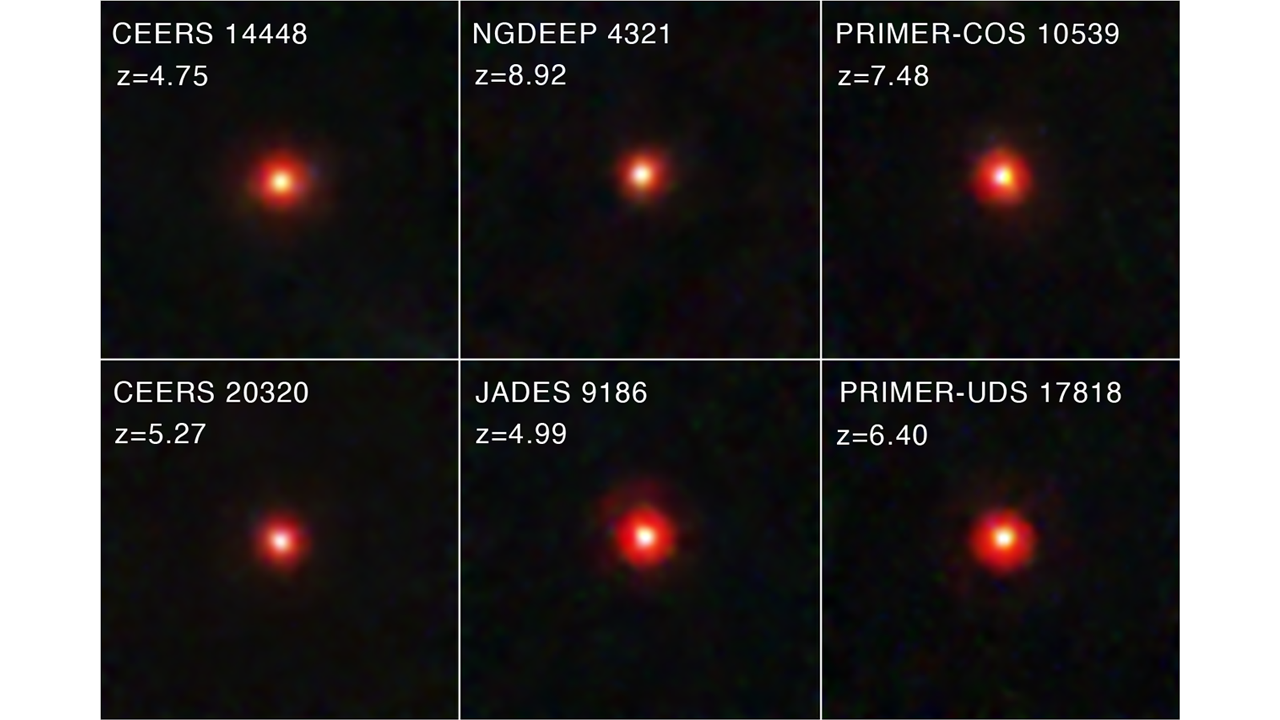
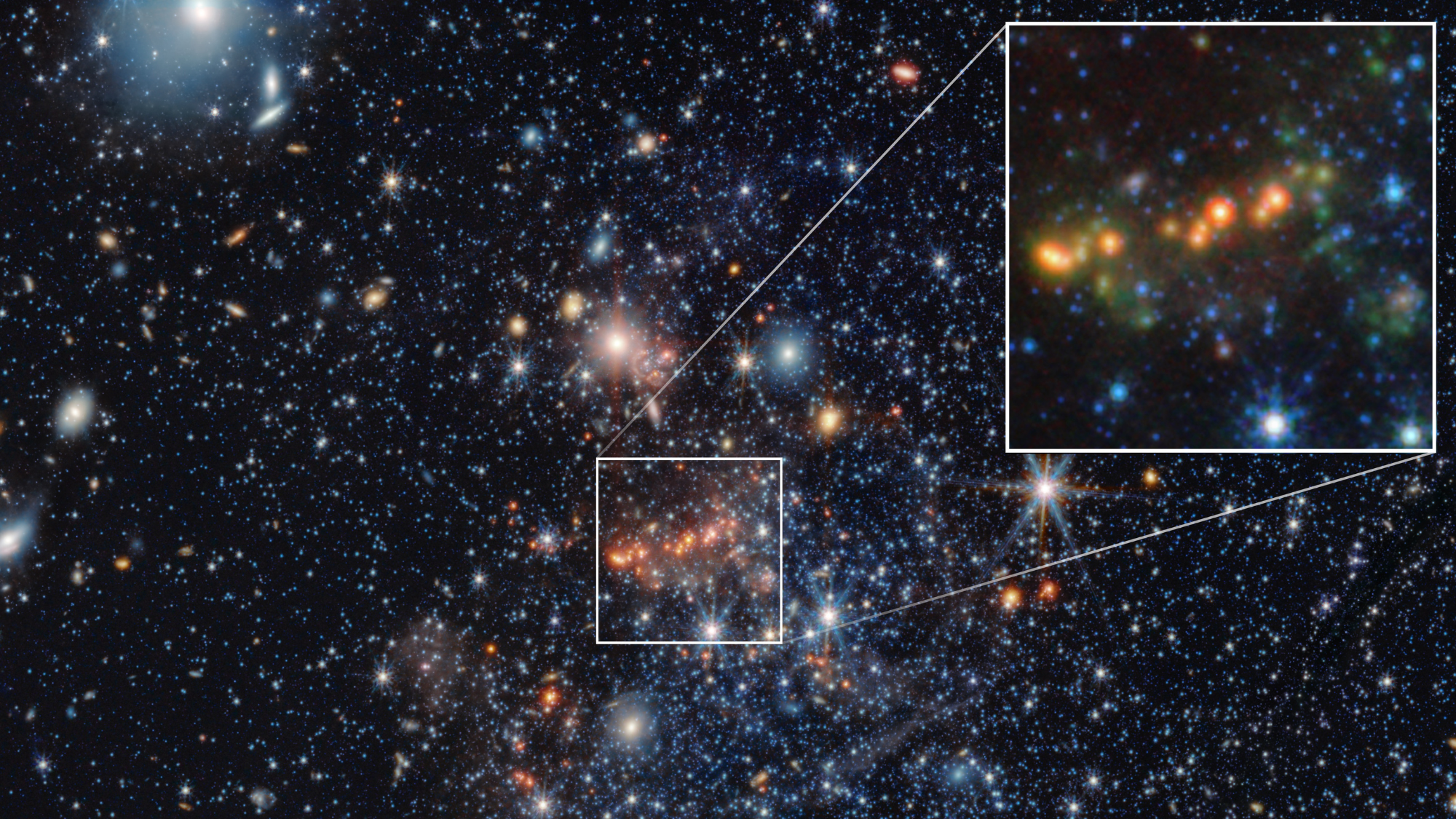
Six of the

Just some of the "little red dot" galaxies discovered by the JWST. (Image credit: NASA, ESA, CSA, STScI, Dale Kocevski (Colby College))

Strange chemistry isn't the only thing linking early globular clusters with Little Red Dots, however. Not only does the team propose that the distribution of Little Red Dots in the early universe matches the distribution of modern globular clusters, but they also say models of Little Red Dot evolution show that their estimated masses could easily lead to the masses of globular clusters seen in the recent universe.

There is also the issue of timing. Little Red Dots appear around 600 million years after the Big Bang, and that is also the time that scientists estimate that globular clusters would have begun to form.

"There's no single smoking gun at this point that says Little Red Dots are globular clusters, but it would explain a lot of diverse and surprising observations," said Boylan-Kolchin.

This study is currently available to view as a pre-print on the paper repository arXiv.
After nearly 30 years, NASA realized this near-Earth asteroid is actually a comet. The discovery may help us defend the planet some day

A near-Earth object that astronomers believed was an asteroid for nearly three decades has been unmasked as a faint, active comet, revealing a case of cosmic mistaken identity that could help improve planetary defense.

The object, known since its discovery in 1998 as 1998 SH2, appeared to be an ordinary asteroid. It follows a 4.5-year orbit around the sun and showed no obvious signs of cometary activity, such as the glowing coma or tail produced when sunlight vaporizes surface ice.

However, during a close pass about 2 million miles (3 million kilometers) from Earth in August 2025, researchers using NASA's Deep Space Network planetary radar system noticed something unexpected: The object wasn't where orbital predictions said it should be, according to a statement from the space agency. That discrepancy prompted scientists to take a closer look, and what they found surprised them.

Using decades of precision optical astrometry — measurements of the object's position against background stars — researchers found that gravity alone couldn't explain its irregular motion. Instead, they detected tiny nongravitational forces consistent with jets of gas escaping from the object's surface as hidden ice warmed in sunlight.

"After we measured the nongravitational perturbations affecting the motion of 1998 SH2 and recognized they weren't compatible with the object being an asteroid, we suspected the object could be an active comet," Davide Farnocchia, lead author of the study and navigation engineer with NASA's Center for Near-Earth Object Studies at the Jet Propulsion Laboratory, said in the statement.

To test the idea, the team observed the object with the European Southern Observatory's Very Large Telescope in Chile and the Canada-France-Hawaii Telescope atop Mauna Kea. The observations revealed a faint but unmistakable comet tail, confirming the object's true identity.

The discovery earned 1998 SH2 a second designation: P/1998 SH2, officially recognizing it as a comet. Beyond solving the mystery, the finding has important implications for planetary defense.

Unlike rocky asteroids, comets can subtly change course as gas escaping from their surfaces acts like tiny thrusters. Identifying those nongravitational forces allows scientists to more accurately predict an object's future orbit and assess any potential impact risk.

"This work shows the importance of continuously tracking near-Earth objects," Farnocchia said in the statement. "Because of outgassing, the motion of comets is more significantly perturbed than that of asteroids.

"Detecting these perturbations can be an important diagnostic tool for planetary defense that will help understand which objects may be comets rather than asteroids, how their orbits evolve, and how that influences their Earth impact risks."

The study also suggests that 1998 SH2 may not be unique. The researchers noted that analyzing the motions of near-Earth objects with increasingly precise astrometry could reveal more hidden comets that have long been classified as asteroids because they lack obvious tails or glowing comas.

As astronomers continue to monitor the growing population of near-Earth objects, subtle orbital changes may prove just as revealing as spectacular comet tails, uncovering more examples of cosmic mistaken identity while helping scientists better understand which objects pose potential threats to Earth.

Their findings were published July 10 in the journal Nature Astronomy.

NASA’s Roman Space Telescope could reveal black holes ripping up stars. It’s set to launch Aug. 30

The launch of NASA's next super telescope, the Nancy Grace Roman Space Telescope (Roman), may mean there is nowhere left for violent black holes to hide.

In fact, these cosmic cannibals may not even be able to hide from Roman at "cosmic noon," a period of the universe's history that occurred around 11 billion to 12 billion years ago. The study of these gory stellar events so early in the history of the universe could help reveal how supermassive black holes grew so big, so rapidly.

Occurrences of black holes ripping apart stars are called tidal disruption events (TDEs), and they happen when an unfortunate star's orbit brings it too close to the immense gravitational influence of a supermassive black hole. This simultaneously squashes and squeezes the star in a process called "spaghettification," with plasma pasta wrapping around the black hole and being fed gradually to it.

Because supermassive black holes are wrapped in a one-way, light-trapping boundary called an event horizon, the only way to study them is when they are actively consuming surrounding matter. Such matter swirls around them in what are known as accretion disks.

However, lighter supermassive black holes aren't ravenous feeders, making them harder to investigate. That is, until a star gets too close and is shredded in an incredibly bright TDE that can outshine the combined light of every star in the supermassive black hole's host galaxy. TDEs are more common to supermassive black holes with masses of about 100,000 to 100 million suns, because supermassive black holes with masses over 1 billion solar masses tend to immediately swallow their stellar snacks.

Previous research has suggested TDEs wouldn't be common in the early universe, because the first supermassive black holes wouldn't even have a mass of 100,000 times that of the sun and thus wouldn't shred stars. However, a new study has reassessed the frequency of TDEs around 1 billion to 2 billion years after the Big Bang, finding they could be more common than previously estimated. Especially during the crowded conditions found during cosmic noon.

Set to launch on Aug. 30, 2026, scientists are hoping Roman's High-Latitude Time-Domain Survey, which will repeatedly revisit a region of the sky equivalent to 90 full moons, will be a powerful tool in the hunt for TDEs in the early universe and their subsequent study. This team estimated that Rubin will detect thousands to tens of thousands of TDEs each year, with 100s dating back to cosmic noon.

"The Roman Space Telescope is going to be transformative for transient science [transients are astronomical events that light up the sky then fade away]," research team leader Mitchell Karmen of the Johns Hopkins University said in a statement. "Thanks to Roman's high sensitivity, we can find multiple tidal disruption events out to greater distances and earlier cosmic times than ever before."

This means Roman is ideally poised to solve a puzzle that has developed since its predecessor, the James Webb Space Telescope (JWST), began beaming data back to Earth in July 2022.

How could early TDEs solve the puzzle of black hole growth

Supermassive black holes with masses equivalent to millions or even billions of suns are found at the hearts of all large galaxies. When they are seen in the relatively local universe, that isn't so problematic; they have had plenty of time to grow via mergers and feeding.

However, the JWST has been routinely spotting supermassive black holes prior to the universe being even 1 billion years old. That is troubling because these early black holes should have had to undergo at least 1 billion years of mergers and gluttonous feeding to reach supermassive status. Scientists have two prevailing theories as to how this growth may have happened.

The first suggests supermassive black holes grow from "light seeds," beginning with black holes with masses just a few hundred times that of the sun that are born from the death and collapse of massive stars.

Such black holes might weigh up to a few hundred times the mass of the sun. These black holes would then merge over time, as well as consume surrounding gas at an incredible rate that facilitates rapid growth. For this theory to be the right one, every young galaxy would have to harbor a massive black hole at its center.

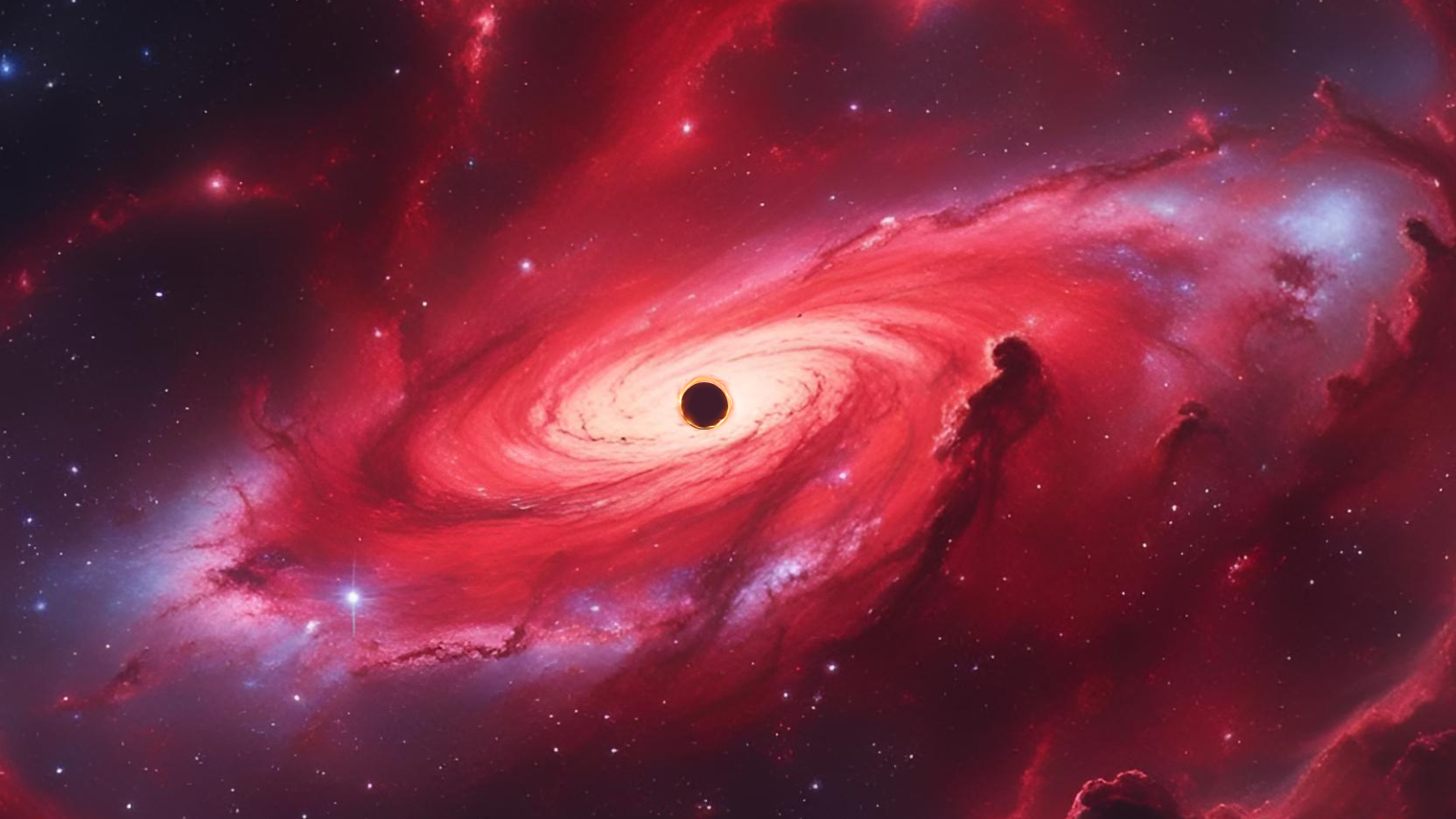
An illustration shows a black hole surrounded by red matter.

An illustration shows a direct collapse black hole forming at the heart of an ancient galaxy. (Image credit: Robert Lea (created with Canva))

The second theory suggests early supermassive black holes grew from "heavy seeds" created directly from the collapse of vast clouds of primordial gas and dust. This would allow rapid growth because black holes could begin the whole merger and feeding process before the first stars lived and died.

Should this be the correct pathway, however, the fact that collapse events would be rare would make massive black holes at the heart of cosmic noon galaxies less common.

Because TDEs are common to less massive supermassive black holes, counting their occurrence at cosmic noon could give an indication of the masses of black holes during that epoch — the key to determining between heavy seeds and light seeds.

"Tidal disruption events help us probe the population of light supermassive black holes, which can help us discriminate between these models," Karmen said.

"Just by counting the number of TDEs as a function of redshift [a measure of cosmic distance], you can put meaningful constraints on the population of million-solar-mass black holes. Roman will be transformative in that it can probe tidal disruption events out to greater distances, so you can look at how the rate of TDEs evolves over time," team member Suvi Gezari, an associate professor of astronomy at the University of Maryland, said. “Just like the JWST has transformed our understanding of distant, high-redshift [very distant] galaxies, Roman is poised to transform our understanding of high-redshift transients."

The team's research was published on July 14 in The Astrophysical Journal.

Astronomers may have discovered the 1st moon outside of our solar system — or is it something weirder?

Since the discovery of the first world beyond the solar system in the 1990s, astronomers have become adept at spotting extrasolar planets, or exoplanets. But while NASA's exoplanet catalog has burgeoned to over 6,000 confirmed entries, moons around these worlds, known as exomoons, have proved elusive.

In fact, we have failed to make a single confirmed discovery of an exomoon despite being certain that just as the planets of the solar system have their own natural satellites, worlds in other star systems must have them too.

Now, this controversial drought of exomoons may have become even more confusing and, frankly, weird. That is because while studying a strange star system called CD-35 2722 with the Very Large Telescope (VLT), astronomers have discovered an object that could be an exomoon, or it could be something that forces us to rethink our very definition of what a "moon" is and what a "planet" is.

The star CD-35 2722 is located around 73 light-years away and has around half the mass of the sun. It is orbited by a "failed star" or brown dwarf. These stellar bodies get their unfortunate nickname because they form like other stars but fail to gather enough mass to trigger the fusion of hydrogen to helium in their cores. In terms of mass, brown dwarfs are more massive than the largest gas giant planets, but smaller than the smallest stars, usually with around 13 to 80 times the mass of Jupiter, or around 0.013 to 0.08 times the mass of the sun.

The newly discovered object in CD-35 2722 is certainly moon-like, but rather than orbiting a planet as the moons in the solar system do, it orbits the system's brown dwarf.

"This system is somewhat hard to define using solar-system-based words like 'planet' and 'moon.' The exosatellite is clearly massive enough to be a planet, but it does not orbit a star, though it orbits an object that orbits a star," team leader Kevin Hoy of the Universidad Diego Portales and the Millennium Nucleus of Young Exoplanets and their Moons (YEMS) in Chile, said in a statement.

"Being the third wheel in this system makes us want to call it a moon, even if it is nothing like the small, rocky moons we have in our system."

The team's research was published on Wednesday (July 22) in the journal Nature.

Erm... It's definitely an exosatellite

The team currently isn't able to definitively claim this object in CD-35 2722 is an exomoon, because that would require really nailing down a new definition of what a moon is.

"The satellite we report is a giant gaseous body orbiting a highly massive companion, itself several times the mass of Jupiter. We have a clear delineation between the planets and the sun in the solar system, so defining things like moons is simple," team member Alice Zurlo of the Universidad Diego Portales said. "In the CD-35 2722 system, where we are blurring the lines between stars, planets, and moons, the whole thing becomes more complicated to describe."

Zurlo and colleagues can, however, confidently claim this is an exosatellite, meaning it is a first-of-its-kind detection no matter what the future holds for its classification.

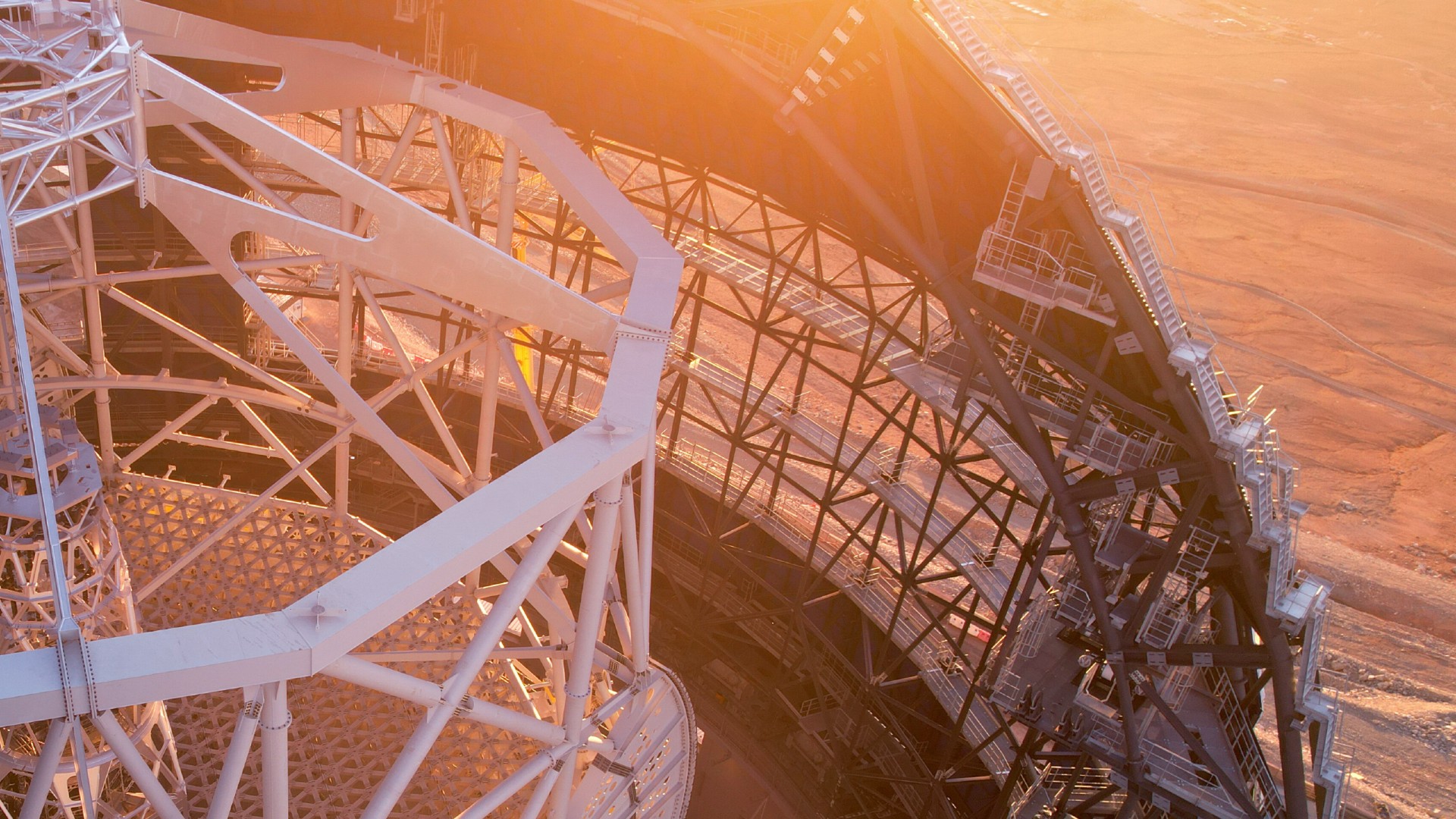
a long, steep stretch of white metal stairs lines the edge of a half-finished dome structure

The Extremely Large Telescope (ELT), currently under construction in Chile, could be integral in the hunt for exomoons and exosatellites. (Image credit: ESO/G. Vecchia)

It is hoped that the Extremely Large Telescope (ELT) currently under construction in Chile, will make a massive impact in the hunt for exomoons, and now, other exosatellites.

Until these objects begin to be uncovered, one thing this discovery re-emphasizes is something that astronomers have been gleefully discovering ever since the first exoplanet was spotted: planetary systems come in a variety of diverse, weird and wonderful forms.

New timelapse video shows NASA’s Psyche spacecraft zooming by Mars

Swelling from a razor-thin crescent into a cratered world before fading back into the darkness, Mars gave NASA's Psyche spacecraft both a spectacular view — and a 1,000-mph boost toward its namesake asteroid.

A new time-lapse video released by NASA, stitched from images taken throughout May, captures the probe's month-long encounter with Mars. On May 15, Psyche swooped within 2,864 miles (4,609 kilometers) of the surface, using the planet's gravity to boost its speed and adjust its trajectory toward asteroid Psyche, a metal-rich world in the main asteroid belt between Mars and Jupiter that the spacecraft is scheduled to reach in 2029.

"This gravity assist was years in the making, and the navigation team nailed it — Psyche flew by Mars on exactly the trajectory we needed to set us on a path to rendezvous with the asteroid in the summer of 2029," Bob Mase, Psyche's project manager at NASA's Jet Propulsion Laboratory in California, said in a statement.

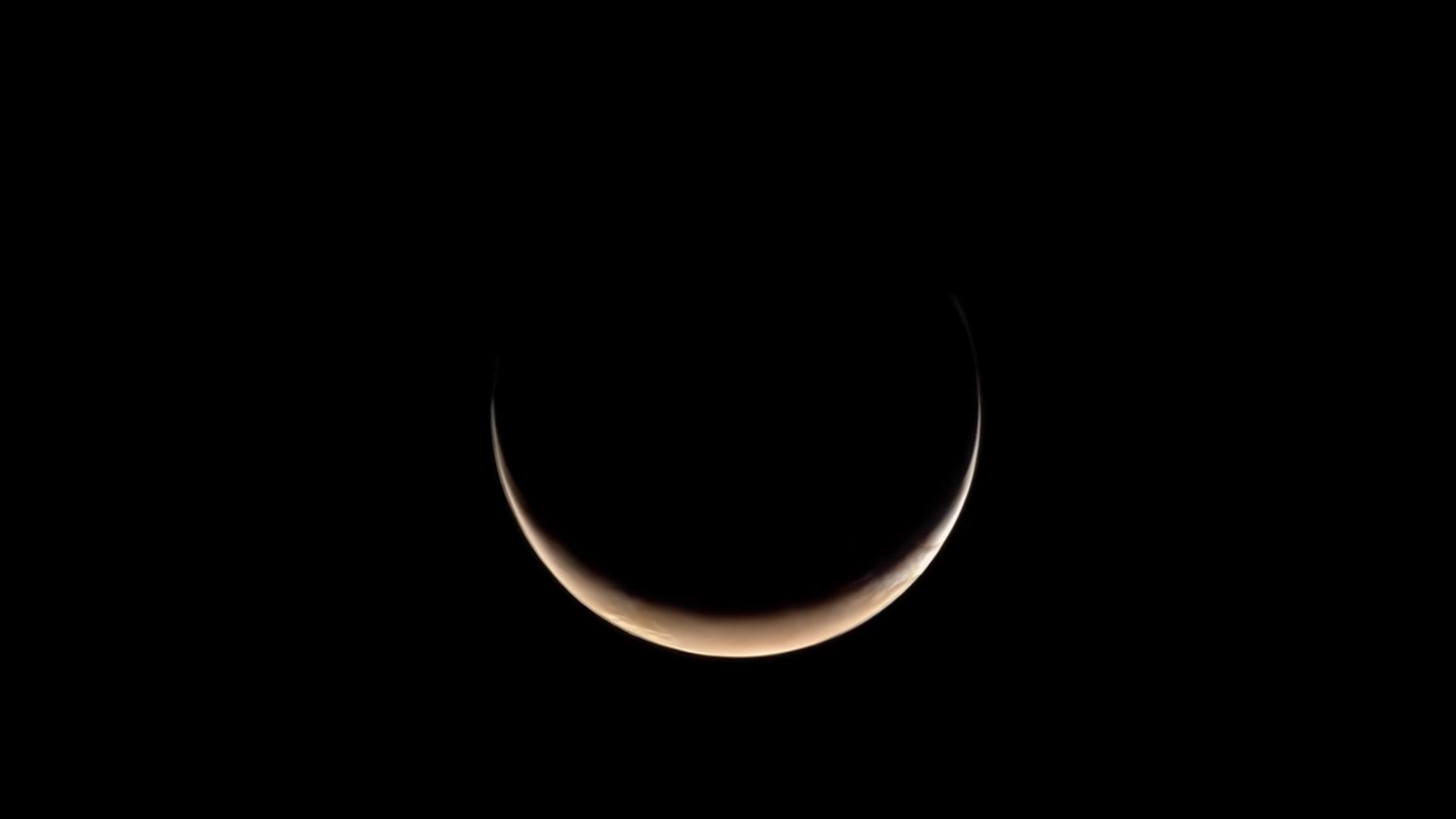
A crescent that's slightly reddish over a pitch black background.

A screenshot from the timelapse, showing Psyche approaching a crescent Mars. (Image credit: NASA/JPL-Caltech/ASU/True Story Films)

Approaching from a steep or what scientists call a "high phase" angle relative to the sun, Psyche initially caught Mars as a slender crescent with just 4 percent of its disk illuminated and its thin atmosphere glowing in scattered sunlight, Hannah Zigo, a Psyche team member at the Arizona State University, said in a NASA video accompanying the statement.

As the spacecraft closed in, the video follows Mars steadily expanding to reveal numerous craters puncturing its surface, the ancient double-ringed Huygens crater and the south polar ice cap before receding in the spacecraft's rearview.

The flyby served a dual purpose. By aiming Psyche's suite of instruments at a well-studied world, engineers say they calibrated and validated the spacecraft's scientific payload ahead of its 2029 destination.

"We didn't anticipate big discoveries, given how extensively the planet has been studied," Lindy Elkins-Tanton, principal investigator for the Psyche mission at the University of California, Berkeley, said in the statement, "but we did complement Mars science with the data we collected through Psyche's unique perspective."

All three of the spacecraft's science instruments performed as expected, according to NASA. Its gamma-ray and neutron spectrometer, designed to determine the asteroid's elemental makeup, detected the predicted surge of escaping neutrons during closest approach, confirming its operational readiness.

The mission's magnetometer, which will search for evidence that asteroid Psyche is the metallic core of an early planetesimal, recorded its first magnetic signature from a planetary body since its launch in 2023, detecting the bow shock where the solar wind meets Mars' magnetic environment.

Psyche's twin multispectral cameras also passed their calibration tests, capturing the frames for the time-lapse while spotting Mars' tiny moons, Phobos and Deimos, from a distance, the NASA statement read.

Spotting the moons served as "a practice for the satellite search that we'll use at the asteroid Psyche to look for any moonlets there," Jim Bell, a planetary scientist at Arizona State University who leads the multispectral imager instrument team, said in the statement.

With Mars in its rearview and its instruments fully vetted, Psyche remains locked on course for its summer 2029 rendezvous with the metal asteroid.

"The spacecraft is in great shape, and we're on schedule to resume sustained thrusting with the solar-electric propulsion system later this fall," Mase said.

Metal spheres found in Australia show how little we still know about falling space debris, experts say

Once again, the "Land Down Under" is on the apparent uptick for falling space debris.

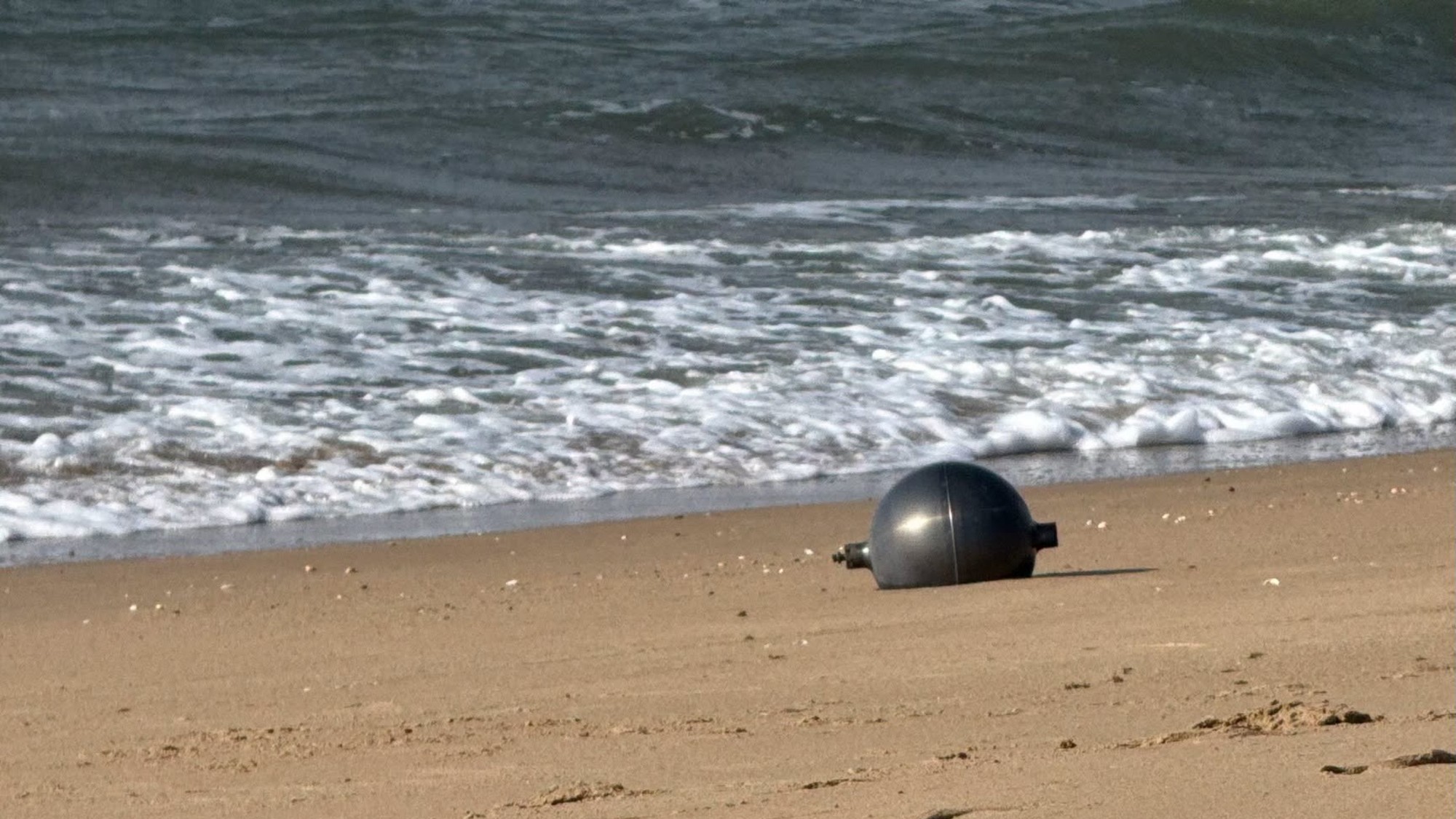
In early July, the Australian Space Agency reported that objects recovered, dubbed "space balls," are likely pressure vessels from a space launch vehicle. Six spherical pieces of space junk were found in the small seaside community of Forrest Beach, near Ingham. Australian Queensland Fire Department crews swung into action to assist partner agencies following the discovery of the potentially hazardous objects. Scientific teams safely secured a number of the items, establishing a 165 feet (50-meter) "exclusion zone" around them to assure public safety. The nature and origin of the debris are still being investigated.

This latest incident is part of an unwanted legacy of being the "fall guy" for space remains, from the U.S. Skylab space station debris that fell into Western Australia in 1979; a chunk of a SpaceX Dragon trunk found in New South Wales in 2022; a pressure vessel that washed up in Perth from an Indian booster in 2023; along with a section of Chinese Jielong-3 rocket in October 2025.

In fact, these incidents are becoming so common that the Australian Space Agency has put together a trio of steps to take if suspected space debris is discovered:

  • Step 1: Do not handle the debris. Space objects are built from a range of materials that may be hazardous. They should only be handled by appropriately trained and equipped professionals.
  • Step 2: Contact the local authorities if (a) the situation is potentially urgent (e.g. there is a life-threatening situation) or (b) otherwise contact the 24/7 Police Assistance Line for further advice.
  • Step 3: Notify the Australian Space Agency, who may support authorities with technical expertise, liaise with foreign counterparts and operators, and advise on the country's treaty obligations. The ASA can advise local authorities on the appropriate response to a confirmed space debris event.

Indeed, if an item is definitely found to be space debris, the Australian Government has worldwide obligations to notify the launching authority of its discovery, and upon request, may be required to return the space junk.

a metallic sphere on a sandy beach

A metallic sphere found in Australia in July 2026 is believed to be space debris. (Image credit: Queensland Fire Department)

"Even if they heat up, they don't care."

For Marlon Sorge, executive director of the Aerospace Corporation's Center for Orbital and Reentry Debris Studies (CORDS), it's no surprise that the recent so-called space balls endured their plunge from space.

"Very often they will be made of something like titanium which is really good at surviving," Sorge told Space.com. "In spite of them being metal, they tend to decelerate more than, say, a solid hunk of metal. They can 'float down' a little bit more gently than some other things," he said.

Sorge said that this class of space debris decelerates quicker, and also once on the surface the pieces are also more recognizable than broken up chunks of metal. Furthermore, if made of titanium, "even if they heat up, they don't care." In other words, they tend to survive reentry intact.

There's more awareness in the space debris study community that materials like titanium are potentially an issue, said Sorge. If you go to something like Composite Overwrapped Pressure Vessels (COPV), also commonly used in manufactured space hardware, that too is an issue you have to deal with, he said.

Bigger picture

But ultimately, many of these debris concerns could be mitigated with more responsible behaviors from space agencies and launch providers, Sorge said.

"In the bigger picture with [rocket] upper stages," Sorge added, "just don't let them randomly reenter. Bring them down via controlled reentry and then if they are survivable it doesn't matter because you dump them somewhere where there aren't any people."

As for the Australian-found space leftovers, these tanks are clearly coming from non-controlled reentry events, said Sorge, dropping out of the sky and washing up onshore.

Over the years, the Aerospace Corporation has studied recovered pressure vessels like those from the Australian affair. The welcome mat is open for contributions from countries that are on the receiving end of space objects, Sorge advised.

Some information can be gleaned from such appraisals, like what shape the recovered debris is in, what degree of temperatures they were exposed to. Also, such a hands and eyes-on look can point out what they didn't experience, which is also useful data, Sorge said.

If observers could track and observe incoming debris on its way down, it could be extremely helpful in identifying points of origin. That's currently a challenge, Sorge said. "If we get an impact location and a time of reentry that really helps us figure out what's going on," he said.

On the whole, there's a lot more attention being paid to the implications stemming from reentering, human-made, space leftovers.

"The real challenge is that this is still an area that we don't completely understand. We get surprises now and again," Sorge concluded, "because we know only so much. There's certainly a lot more awareness now than earlier years to be proactive in thinking about this."

a metallic sphere on a sandy beach

A metallic sphere found in Australia in July 2026 believed to be space debris. (Image credit: Queensland Fire Department)

Atmospheric drag wins

"It may seem surprising that pieces of the same rocket can show up in Australia, Canada or on a farm in Africa, but that's actually what we'd expect," said Michelle Hanlon, executive director of the Center for Air and Space Law at the University of Mississippi School of Law.

"Objects in low Earth orbit pass over much of the planet as the Earth rotates underneath them. If a reentry isn't controlled, the exact point where it finally comes down can shift by thousands of kilometers depending on when atmospheric drag finally wins," Hanlon told Space.com.

Since most of the Earth is ocean, that's where most debris ends up, Hanlon said. "Every now and then, though, a tough piece survives and lands somewhere people can find it  — or lands in the ocean and gets swept swiftly to shore."

Country of origin?

Hanlon said that the pressure vessels like those found in Australia are a good example.

"They're built to withstand enormous pressures, so they are also among the pieces most likely to survive reentry. That's why they seem to turn up so often," said Hanlon.

Why are recovered space debris so hard to identify, their country-of-origin?

"I'm not sure stamping everything with a country-of-origin is the answer," said Hanlon. "Many of these objects can already be identified by their design, serial numbers or by matching them to launch and registration records. And there's no guarantee a label would even survive reentry."

For Hanlon, the bigger issue is traceability. "Can authorities quickly figure out what the object is, whether it poses any danger and which state should be contacted? Better information-sharing and better tracking would be far more useful than a 'Made in' stamp," Hanlon said.

"One thing I'd also point out is that we're seeing more of these simply because we're launching a lot more things into space. That's actually a sign of how active the space sector has become, not necessarily that it's becoming less safe," said Hanlon.

Even if reentries go exactly as planned 99.9 percent of the time, more launches mean more reentries, which means more chances that a particularly durable piece survives and lands somewhere unexpected.

All-in-all, the Australian incident of space balls is another sobering reminder that space activities don't end when a mission does, Hanlon concluded. "End-of-life disposal is now just as much a part of responsible space operations as launch."

This recent debris incident has a bit of a cosmic coincidence to it, too, Hanon added. "It's funny that we're having this conversation just as 'Spaceballs: The New One' is gearing up."

The sequel is being filmed in Australia.

James Webb Space Telescope discovers the secrets of cosmic ‘factories’ that filled the early universe with stardust

Using the James Webb Space Telescope (JWST), astronomers have discovered the secrets of early galaxies that pumped the infant cosmos full of dust, which would become vital for the birth of new stars and the growth of galaxies.

However, while the JWST is powerful enough to see many of these early galaxies, it is still limited when it comes to delving into them in great detail. So, the team at the heart of this research worked around this by studying a much closer and more modern galaxy with many characteristics that resemble the universe's first galaxies.

In lieu of being able to study the processes that occurred in the early universe that allowed galaxies to be seeded with "metals, (the term astronomers use to describe elements heavier than hydrogen and helium), the researchers turned their attention to a dwarf galaxy just 4.6 million light-years away.

"Directly studying the galaxies that populated the early universe is still very difficult, which is why observing a nearby galaxy like Sextans A, which presents similar chemical conditions, offers us a precious opportunity to understand how the first generations of stars evolved and what role they played in transforming the interstellar medium," team leader Claudio Gavetti of the National Institute for Astrophysics (INAF) said in a statement.

How does Sextans A impersonate ancient galaxies?

The early universe was a pretty dull place in terms of chemistry. That is because it was dominated by the lightest element, hydrogen, with some helium and a tiny smattering of heavy elements, or metals. That means that the first generation of stars, so-called POP III stars, were correspondingly metal-poor.

During their lives, however, POP III stars fused hydrogen and helium in their cores to forge heavier elements. When these original stars reached the ends of their lives, they exploded in supernova explosions that dispersed these metals into the interstellar medium, the vast clouds of dust and gas between stars.

Eventually, dense and cool patches in these vast clouds collapsed under their own gravity, birthing the next generation of stars, POP II stars, which, thanks to the supernova deaths of their predecessors, were richer in metals.

The dwarf galaxy Sextans A observed by the James Webb Space Telescope.

The dwarf galaxy Sextans A observed by the James Webb Space Telescope. (Image credit: NASA, ESA, CSA, STScI, Janice Lee (NOIRLab). Image processing: Alyssa Pagan (STScI).)

Our own star, the sun, is classed as a POP I star, meaning it is even richer in metals than these second-generation stars. However, not all modern galaxies are so metal-rich; this is especially true for dwarf galaxies like Sextans A, even though it lies at the outer edge of our cosmic backyard, known as the "local group."

Sextans A is so metal-poor that it is estimated to contain only between 1% and 7% of the heavy elements found in the sun. That makes it a great proxy for the study of metal-poor early galaxies.

Using the JWST's NIRCam (Near-InfraRed Camera) and MIRI (Mid-Infrared Instrument) instruments, Gavetti and colleagues obtained high-resolution observations of Sextans A that allowed them to map the dwarf galaxy's entire population of stars during an evolutionary phase known as the "asymptotic red giant branch."

This phase occurs when stars larger than the sun exhaust helium in their cores, creating an inert carbon heart, but nuclear fusion continues in outer alternating helium- and hydrogen-burning layers. These stars "puff out" as a result of this and can undergo thousandfold increases in brightness.

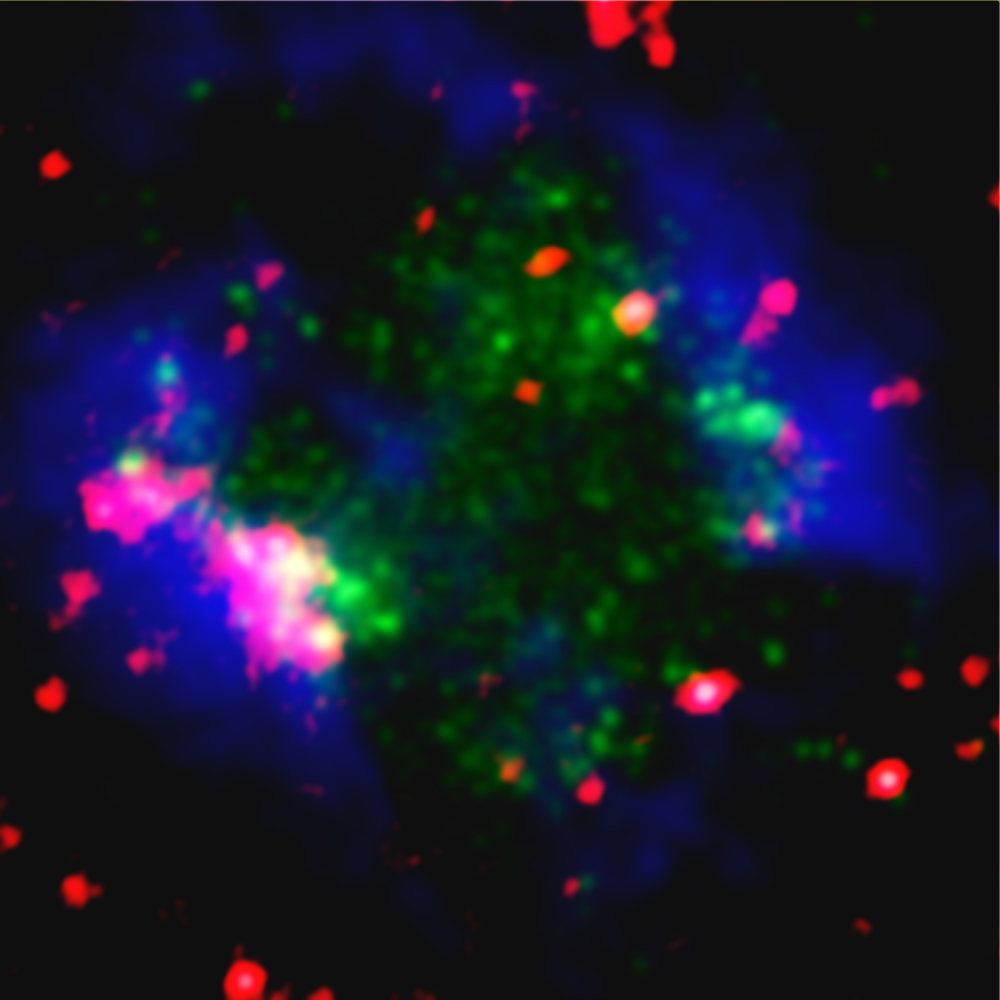
An image of the galaxy Sextans A where Red indicates the infrared emission of dust, blue the emission of atomic hydrogen gas, and green the far-ultraviolet emission created by newly formed stars.

An image of the galaxy Sextans A where Red indicates the infrared emission of dust, blue the emission of atomic hydrogen gas, and green the far-ultraviolet emission created by newly formed stars. (Image credit: Yong Shi)

The team's findings revealed that around 90% of the asymptotic red giant branch stars they studied were not surrounded by envelopes of dust. However, around 20 or so of these stars were embedded in thick dust shells. They also found that these "dust factories" formed between 2 billion and 3 billion years ago from stars with an initial mass about 1.5 times the mass of the sun.

This research is a leap forward in understanding which stars in the early universe were most likely to create the metal dust that would have enriched the next generations of stars. That means it helps paint a complete picture of how the universe as we see it today took shape.

The scientists behind this study say that this type of research would have been impossible before the launch of Webb.

"The JWST allows us to observe in unprecedented detail environments that until a few years ago were beyond our reach," team member Flavia Dell'Agli of the INAF. "The value of these data lies not only in the images, but in the ability to compare them with theoretical models and verify how correctly they describe the evolution of stars."

The team's research was published on Monday (July 20) in The Astrophysical Journal.

Alien life likely can’t survive on exoplanets smaller than Mars, scientists say

A rocky planet orbiting in the habitable zone of a sun-like star may look like a perfect place for life to thrive — but not if it's too small to hold onto its atmosphere.

So, we may wonder: How much smaller Earth could be and still have its delightfully breathable atmosphere? How small could an exoplanet be to sustain life as we know it?

With these questions in mind, University of California Riverside planetary scientist Michelle Hill and her colleagues recently simulated what happens to the atmospheres of different sizes of rocky worlds. The worlds tested were similar to Earth and orbited in the habitable zones around sun-like stars. It turns out for a world to maintain an atmosphere long enough for life to gain a foothold (a few billion years at minimum), it needs to be at least as big as Mars.

Narrowing down the search for life

The habitable zone — the area around a star where temperatures are right for liquid water to exist on a planet's surface — is prime real estate in the hunt for alien life. It's also a tough neighborhood for exoplanet atmospheres, because the closer a planet is to a star, the more ways in which radiation and stellar wind will try to strip away an atmosphere.

This is why Hill and her colleagues recently simulated how long it would take rocky, Earth-like planets of various sizes, in the habitable zone of a star like our sun, to lose their atmospheres. In other words, how much smaller could Earth, or a similar planet, be and still keep an atmosphere?

The answer turns out to be that an atmosphere-sustaining planet needs to be about 80% as wide as Earth, but could technically be as small as 60%. This offers astrobiologists a clue about which planets to focus on in the search for habitable worlds and signs of alien life.

"The plethora of exoplanets creates an interesting challenge in the search for potentially habitable planets," wrote Hill and her colleagues. "Of the many targets in the habitable zones of their star, which are the best candidates for follow-up observations with the aim of detecting biosignatures?" In other words, astrobiologists now have almost too many planets to choose from and not enough telescope time to search them all. So, it's time to narrow the search.

One way to do that is to figure out which planets are most likely to be habitable — and for life as we know it, that habitability means having an atmosphere.

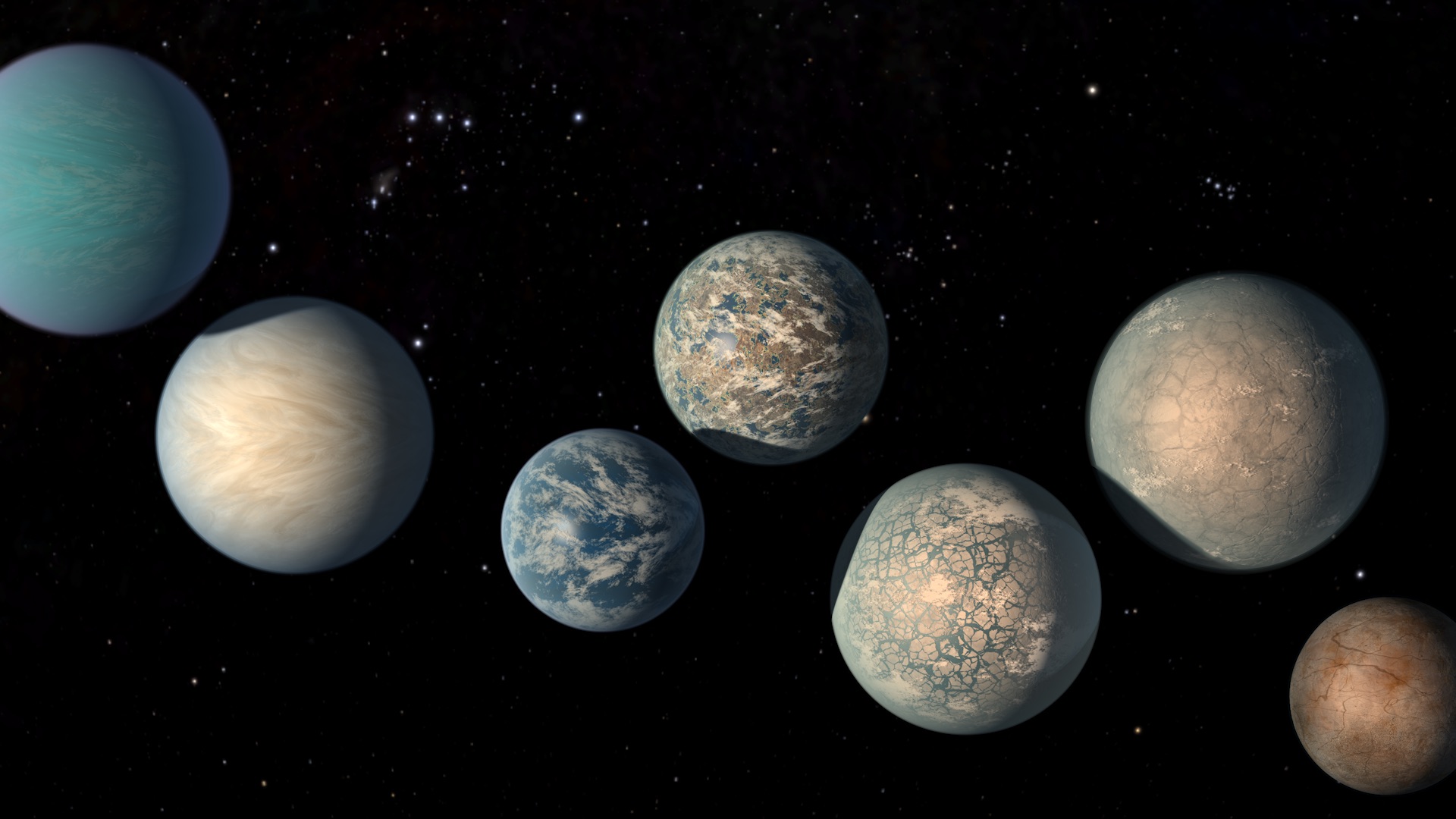
Seven planets of different sizes and with different patterns and colors illustrated against the darkness of space.

New exoplanets, like those orbiting TRAPPIST-1, are being discovered with staggering frequency. (Image credit: NASA's Goddard Space Flight Center)

Modeling atmospheres — and volcanoes

Hill and her colleagues' "Smaller Than Earth Habitability Model" simulates the fate of atmospheres around digital versions of Earth. Some of the simulated worlds are exactly like ours but smaller, with the same chemical makeup and the same proportions of core, mantle and crust. Others have slightly different amounts of carbon, larger or smaller cores, or different starting temperatures. The model traces what happens to these worlds over a few billion years, based on two things: how quickly stellar wind and radiation strip away gas from the planet's atmosphere and how quickly volcanoes pump out gas (mostly carbon dioxide) to replace it.

The model is how the team realized a scaled-down version of Earth needs to be at least 80% as wide as true Earth (0.8 Earth radii) to maintain an atmosphere in the long run. Smaller planets tend to lose gas faster than volcanic eruptions can replace it.

That's because smaller planets have less gravity and weaker magnetic fields with which to hold onto their thin envelopes of gas. They also don't usually release enough gas from within to make up for the loss. Their mantles — the churning layer of magma beneath the crust — tend to release less volcanic gas over time, and their upper layers cool and harden much faster. The latter process cuts off volcanic eruptions much earlier in a planet's lifespan.

Smaller planets clinging onto atmospheres

By changing some of Earth's parameters, the team managed to get planets as small as 0.6 Earth radii to maintain a stable atmosphere. Carbon was the key: planets with more carbon in their mantles tend to release more carbon dioxide gas in eruptions, and that turns out to be the biggest factor (other than size) in whether a planet keeps its atmosphere.

"Carbon dioxide is a heavy molecule," Hill and her colleagues wrote, "which can make it a difficult molecule to lose. We focus on a pure carbon dioxide atmosphere as a best-case scenario for atmospheric retention." Of course, that's only a best-case scenario for some relatively simple forms of life, so your astrobiological mileage may vary.

It took tons more carbon than Earth contains to make a significant difference to the fate of a planet's atmosphere — but because it's theoretically possible for a planet to form with that much carbon in its makeup, that's useful knowledge. Planets with relatively smaller cores, and therefore relatively thicker mantles, also had better luck on the atmospheric retention front. Starting with a larger supply of radioactive elements, which decay and release heat into the surrounding rock, helped keep the mantle molten and the volcanic gases churning skyward.

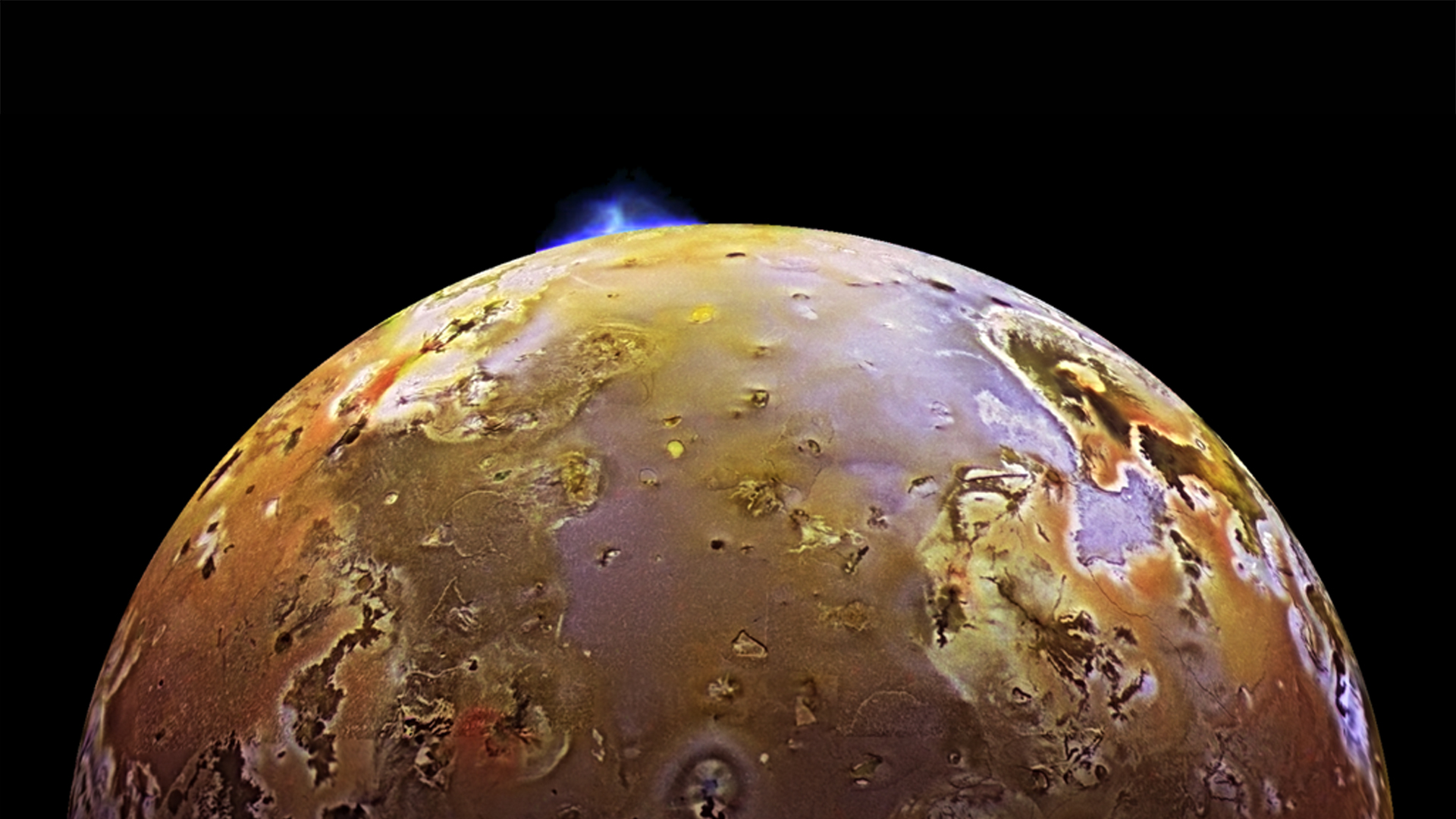
An image showing volcanoes across a yellow world.

Space volcanoes are widespread. For instance, Jupiter's moon Io has a pizza-like surface covered in volcanoes. (Image credit: NASA)

Starting with a cooler mantle also helps — which sounds surprising. You'd think a hotter mantle would be more likely to spew volcanic gases into the atmosphere. Yet, a cooler mantle takes longer to start erupting in earnest, which means the planet gets to hold onto its reservoir of gases until its star is older and more settled.

Newborn stars are prone to violent bursts of radiation and plasma, which would sweep away the volcanic gas as fast as it erupted. With a cooler mantle and later eruptions, the planet gets to keep more of the erupted gas.

A second chance for airless worlds

There's still hope of life for smaller worlds.

Even planets that lose their initial atmospheres entirely — instead of gradually replacing them with things like carbon dioxide and methane — might have a second chance to build a new atmosphere.

Hill and her colleagues suggest that one way for a planet to regain its lost atmosphere could be comet and asteroid impacts, which might deliver volatile elements like hydrogen, oxygen and carbon. These elements can combine to form all sorts of atmospheric gases.

Such impacts could be especially helpful if they happen later in the star system's life, like after the star is past its youthful phase of intense flares.

"While smaller planets face greater challenges in retaining atmospheres, our model suggests that they can develop atmospheres under the right conditions," wrote Hill and her colleagues, so, "even those that initially lose their atmospheres should not be immediately discounted as potentially habitable worlds."

What's next?

Future simulations using the Smaller Than Earth Habitability Model could study worlds around smaller, cooler stars called red dwarfs — stars like TRAPPIST-1, which is home to at least seven rocky planets, with three of them in the habitable zone. These stars make up about 75% of the stars in our galaxy, and their relatively dim light makes it easier for telescopes like the James Webb Space Telescope (JWST) to capture images of starlight filtering through the atmospheres of planets that pass between Earth and their host stars.

Hill and her colleagues also hope to explore what happens to atmospheres around tidally-locked planets, or planets where tidal forces keep the interior hot and seismically active, similar to Jupiter's moon Io.

The researchers published their work in June in The Planetary Science Journal.

Billions of miles and thousands of years in the making: This is the life of a Perseid shooting star

Picture it: A slash of vivid green light splits the starry sky. There for a moment and then gone, leaving nothing but a short-lived glowing trail and a moment of pure joy. You've finally caught it, your first Perseid shooting star of the season.

What you saw was the final moment of a story billions of miles and thousands of years in the making. A story that began with that same shooting star locked inside the icy body of the wandering comet 109P/Swift-Tuttle.

The 16-mile-wide (26 kilometer) giant of a comet spends its life journeying back and forth between the outer and inner solar system, where its frigid body is heated by the sun, triggering dramatic outbursts of activity. While in close proximity to our star, ice near to the surface of the comet is transformed into gas, skipping the water stage entirely as it escapes out into the vastness of interplanetary space.

Embedded within that ice was once a micrometeoroid no larger than a grain of sand, destined to become the Perseid shooting star you saw.

The violence of the newborn micrometeoroid's exile was followed by an epoch of utter silence, as its orbit was subtly influenced by the unseen forces of the solar system. It would be easy to think of this as a lonely existence, but we'd be wrong.

Our cosmic pebble was joined by millions of others, all shed in the wake of Swift-Tuttle. A great stream of primordial material that threads through the inner solar system, crossing the path of Earth before extending in a great swarm that messily traces the elliptical orbit of their comet progenitor, below the plane of the solar system. Beyond the orbit of Pluto.

Each follows its own unique path. Trajectories are shaped by the force of a micrometeoroid's expulsion from the comet's nucleus, along with the gentle push of radiation from the sun and the gravitational tug of the planets.

A perseid blazes earthward over Hubei province in China. (Image credit: Photo credit should read CFOTO/Future Publishing via Getty Images))

It's impossible to know how long our shooting star drifted through the cold expanse of interplanetary space. Was it hundreds or many thousands of years? How many times might it have journeyed around the sun before its fateful rendezvous with our Blue Marble?

We can never know. What we do know is how its journey ended.

Civilizations could have risen to their zenith and crumbled in the time our micrometeoroid spent traversing the unfeeling expanse of interplanetary space, but its demise lasted but a fraction of a second. It collided with our planet's gaseous shell at 132,000 miles per hour (212,433 kmph), cutting a brilliant green trail through the summer sky as atmospheric friction vaporized the cometary shard.

It's that fiery demise that you spotted tonight — an experience that will repeat hundreds of times each and every hour at the height of the Perseid meteor shower, as Earth passes through the densest part of the debris stream cast off by comet Swift-Tuttle.

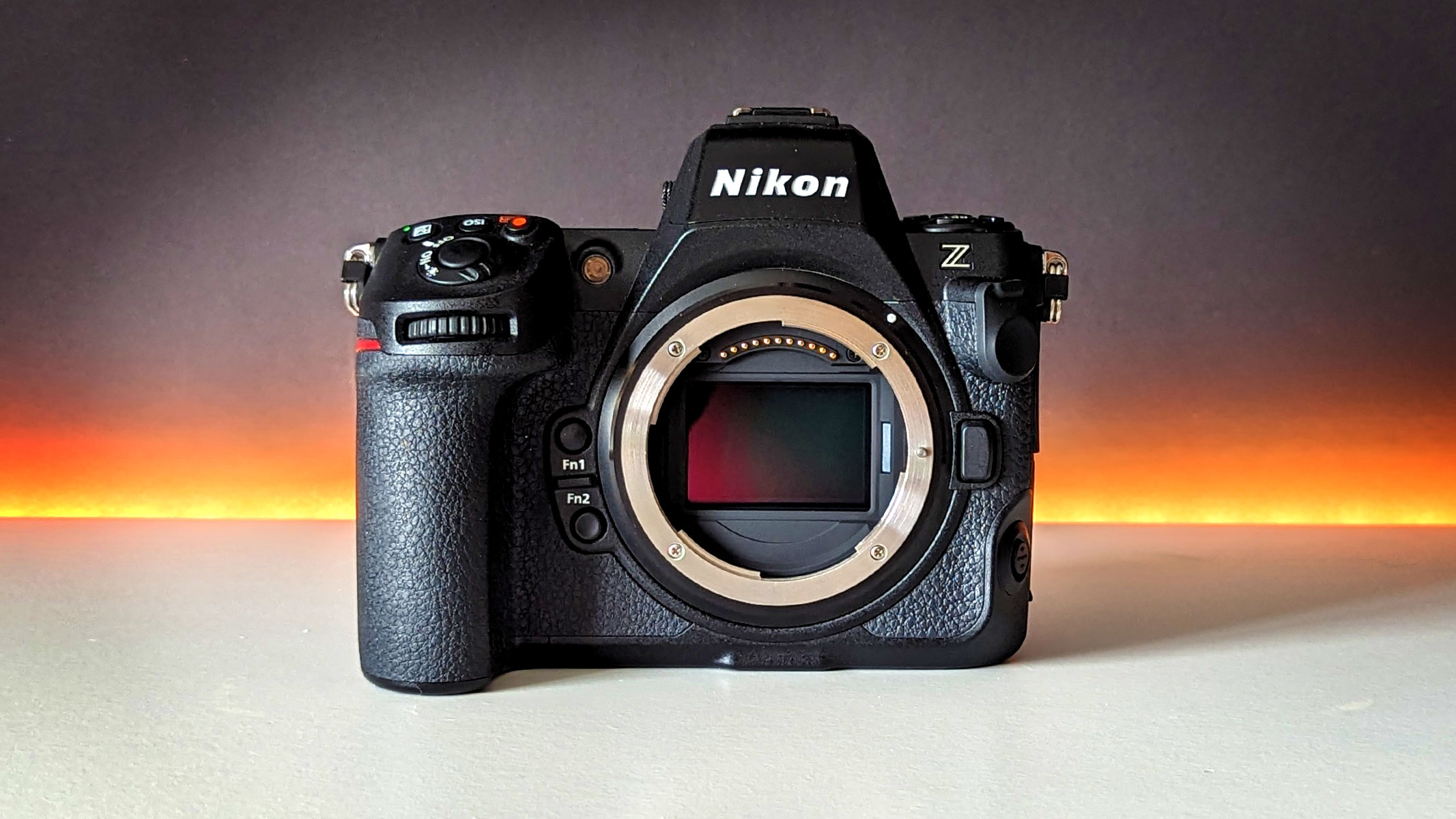
Nikon Z8

Nikon Z8 on a white table

(Image credit: Jase Parnell-Brookes)

The Nikon Z8 excels in just about every department and we rate it as the best overall camera out there. It features a full-frame 45.7MP sensor, 8K video capabilities and excellent low-light performance. Check out our Nikon Z8 review for more!

The Perseid meteor shower is active from now until Aug. 24, with the best viewing window occurring in the early hours of Aug. 13, as the shower's radiant rises to its highest point on the night of the shower's peak.

This year's peak will be particularly spectacular, unfolding as it does in the pristinely dark skies surrounding the Aug. 12 new moon, which will also cause a spectacular total solar eclipse to be visible across parts of Spain, Iceland and Greenland. If you find yourself in the path of totality and have luck on your side, then you might just spot a Perseid fireball brightening the false twilight that falls as the moon hides the face of the sun at the crescendo of the eclipse!

Want to capture a shooting star that will stay with you forever? Then be sure to read our guide to photographing fast-moving meteors, along with our roundups of the best cameras and lenses for astrophotography if you're looking to upgrade your gear.

Editor's Note: Did you catch a photo of a Perseid shooting star and want to share it with Space.com's readers? Then please go ahead and send your photos along with your comments, name and location to spacephotos@space.com.

The ‘Avengers Doomsday’ trailer is cool, but it’s missing something… where’s all the space stuff?

The first trailer for "Avengers: Doomsday" dropped yesterday, and while it’s jammed full of superheroes, surprises, and our first extended look at Dr. Doom, it is missing one big thing that has been a constant in the MCU ever since "Avengers" was released and the Infinity Stone saga kicked off: outer space.

Believe it or not, the MCU has been very sci-fi heavy for the past decade as the universe expanded into space with "Guardians of the Galaxy", "Captain Marvel", and the entire throughline of Thanos’ quest to bring balance to the universe.

Entire films took place in space, and extended exposition was delivered inside the hulls of spaceships. Alien heroes and villains swung around made-up planets and lived in the skulls of dead space giants. That whole "Eternals" thing. It's safe to say that the Marvel movies were into outer space in a big way. The MCU leaned heavily into science fiction and space for much of its life, but judging from this trailer, that may be coming to an end.

This is a very Earth-based trailer, and while the remnants of years of science fiction still permeate throughout the MCU (superhero comics are almost always dabbling in the genre), the focus on it is clearly gone. This trailer is all about the Earth and superheroes, pulling back hard on the bigger universe. Sure, it opens with the Fantastic Four exiting their spaceship — probably an unintentional visual metaphor for the MCU’s abandonment of the cosmos — but we’re kept mainly on Earth otherwise.

We have absolutely no alien heroes appearing on screen in this trailer outside of Thor and, of course, our main villain is decidedly earthbound even if he may be from a different multiverse (for those not in the know, that’s Robert Downey Jr. behind Dr. Doom’s mask).

The Avengers, Fantastic Four, and Thunderbolts in Avengers Doomsday

(Image credit: Marvel Studios)

There are plenty of reasons that the MCU may be pulling out of space. Introducing all of the X-Men means you’ve got plenty of Earth stuff to mess around with anyway, and there’s very little reason to need space travel when you’ve got time travel, quantum realms, and multiverses expanding your universe in other ways.

To be fair, all of those are sci-fi as well, but it’s not the same as outer space. We do know from casting that some of our favorite space-based heroes will be returning, but what is clear is that space is no longer the focus here. The MCU has been pulling back on space ever since Thanos fell, and this new trailer for "Avengers: Doomsday" just hammers another nail into the coffin of that universe.

Of course, Marvel is a master of misdirection and fake-outs, so anything could change as we get more details and the film finally releases, but for now it seems that the Marvel Cinematic Universe isn’t so interested in the universe part.

"Avengers: Doomsday" will hit theaters on December 18.

Watch the MCU on Disney+:
Disney+ (With Ads): $11.99/month
Disney+ Premium (No Ads): $18.99/month or $189.99/year