Astronomers have discovered the youngest exoplanet on record, and they spotted the "newborn" world hiding in old data archives.
About as massive as Jupiter, the newly-discovered exoplanet Elias 2-24 b is one big baby — despite its hefty size, Elias 2-24 b is by far the youngest planet ever found, thought to be less than a million years old. In fact, the exoplanet (or, planet outside of our solar system) was located 450 light-years away from Earth, still resting in the swirling gas and dust where it was born.
The previous record-holder for "youngest exoplanet" is a four-way tie between four worlds that are all over 5 million years old, according to Lucas Cieza, co-author of a study on Elias 2-24 b and a professor at the Instituto de Estudios Astrofísicos in Chile. "Our planet-formation models already struggled to explain the previous record holders for the youngest known planet," Cieza said in a statement. "Elias 2-24 b shows us that even our best planet-formation models are still missing some important processes."
To spot this massive baby, a team led by Andrea Bernardi, a doctoral candidate at the Universidad Diego Portales in Chile, dug through archival data captured by the W.M. Keck Observatory in Hawaii. The study focused on the star Elias 2-24 which is surrounded by a disk of material. Their findings confirmed earlier observations collected with the Atacama Large Millimeter/submillimeter Array (ALMA) and the European Southern Observatory's Very Large Telescope which suggested something may lie in a gap within the debris disk around Elias 2-24.
The archival data that confirmed these suspicions and this planet came from observations using Keck's coronagraph. Coronagraphs work by blocking out the glare from far-off starlight, allowing light bouncing off the planets orbiting those stars to be captured for direct observations. The team looked through such coronagraph data for seven distant stars, each surrounded by debris disks where planet formation may be happening. The team thought that perhaps it'd be possible to find a planet hiding in a gap in one of these disks. And they were right.
"The planets should be found within the gaps, since they are carving them," Bernardi said. "And that’s exactly where we found Elias 2-24 b."
By finding a planet in one of these disks, and by finding a planet so early in its lifetime, this finding gives researchers an opportunity to study the earlier development stages of planet formation.
"The galaxy churns out new stars and planets continuously, so there are many in every stage of evolution," Cieza said. "That means we can see the entire process in theory, but there is a large gap in what most telescopes can detect. We are mostly blind to these baby planets right now."
In looking at the future of planet detection and study, researchers hope to be able to conduct more direct observations with the Coronagraph Instrument that just launched (Aug. 30) aboard NASA's Nancy Grace Roman Space Telescope. This is the most advanced coronagraph ever launched to space, and scientists hope it will allow for more in-depth study of exoplanets and their atmospheres.
"We usually hear about telescopes working separately, but this confirmation was possible only by using multiple telescopes together," Bernardi said. "Elias 2-24 b is at the limit of what current telescopes can detect, but with new instruments like NASA’s Nancy Grace Roman Space Telescope, such detections should become easier."
This work was described in a new study published Sept. 16 in the journal The Astrophysical Journal Letters.
Detective work by a team of space-weather experts has discovered the truth about a historical event that had been thought to be the first-ever case of technological disruption by geomagnetic activity from the sun, but has now been shown to have taken place seven years later.
From it being too hot or too wet to leaves on the track or cows on the line, there's a fine tradition of what the British public consider to be flimsy excuses for delays on the trains. Yet an 1871 edition of the journal Nature describes a very different event that caused a train departing Exeter, in Devon on the south-west coast of the U.K., to be delayed by 16 minutes: a solar storm that flooded the railway signals' electrical telegraph network with current.
"The Exeter train delay is a fascinating story because it sits right at the point where emerging technologies first began to encounter the realities of the space environment," said Jim Wild, who is a professor of space physics at Lancaster University and also the President of the Royal Astronomical Society, in a statement.
The event has frequently been cited as the first example of a solar storm disrupting technology on Earth, but when a team led by Wild went back through historical records to investigate further, they found that things didn't add up.
The original report in Nature stated that the electrical disturbance occurred at 10:05pm local time on Oct. 18, 1841. However, Wild's team found that particular train line didn't open until 1846.
So, they delved deeper into the history books to figure out the truth.
"Our research has a hint of a detective story — piecing together a wide range of archived records to better understand a historically severe space-weather event," said team-member Mike Hapgood, a space weather expert at RAL Space, which is the UK's National Space Laboratory, in Oxfordshire.
Combining data from railway timetables, old newspapers, plus historic reports of solar observations and the northern lights and digitized geomagnetic data, Wild and Hapgood's team were able to conclude that the most likely date for the train delay was Oct. 18, 1848, which coincided with a strong solar storm that hit Earth.
This revised date knocks it off top spot in the chronological list of such events. The first recorded disruption to electrical technologies is now a disturbance on the Midland railway network, which had lines covering much of the U.K., in March 1847.
"Although this means it is not the earliest recorded space weather impact, it remains one of the first clear examples of solar activity disrupting critical infrastructure," Wild said. "It also demonstrates the value of combining scientific records with contemporary newspaper reports and archival documents when reconstructing historic space weather events."
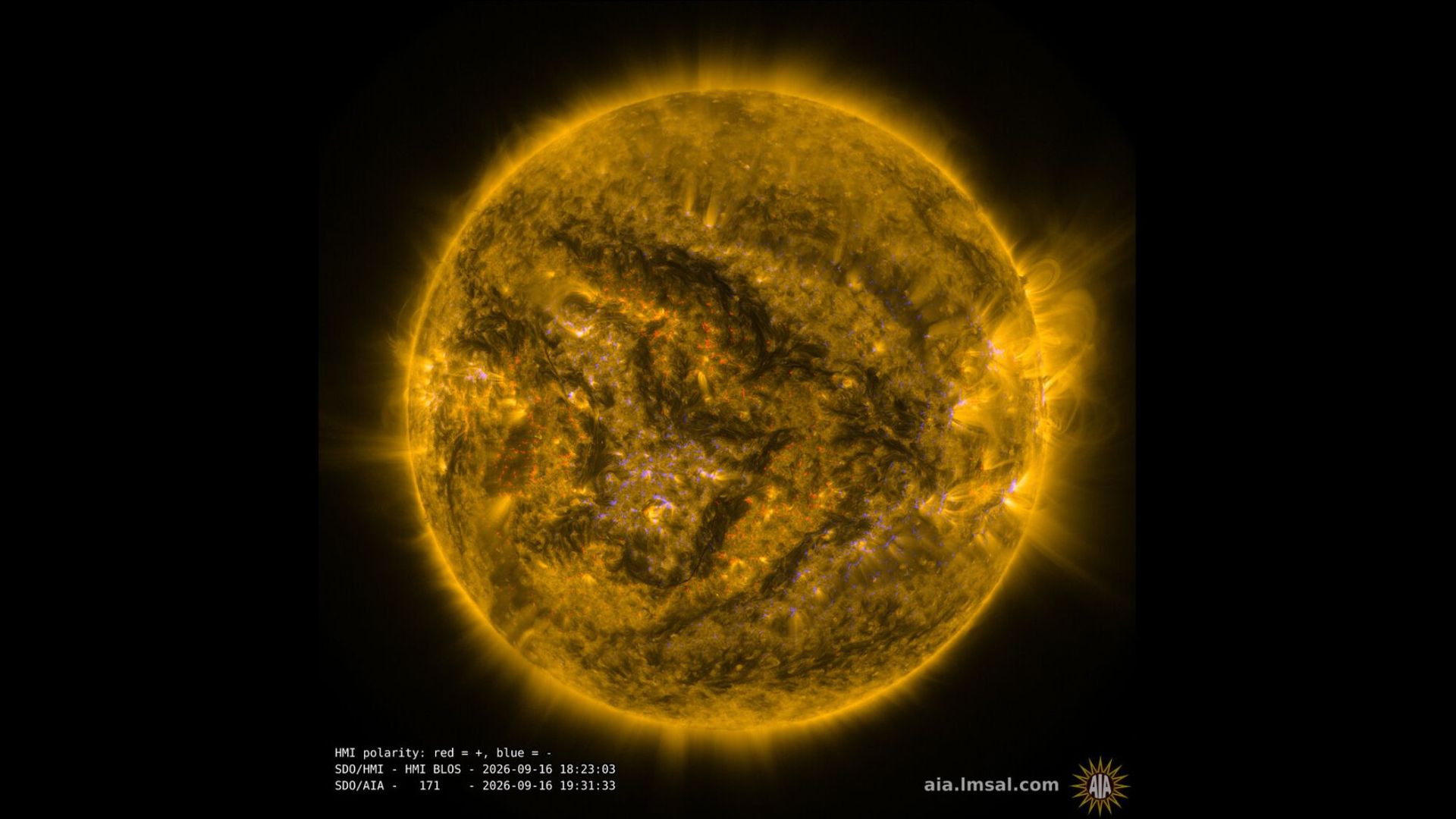
Solar storms have been playing havoc with electrical technology on Earth since the 1840s. (Image credit: NASA/SDO)
The case reminds us that space weather has been a hazard to technology and modern systems for a long time, and isn't just a recent problem.
"Society has been experiencing the effects of space weather on technology for almost as long as electrical technologies have existed," said Wild.
The most dramatic example is the aforementioned Carrington event of 1859, representing the most significant solar storm on record as it caused telegraph poles to spark and battery power supplies to be disrupted. By this point, telegraph operators had grown used to electrical disturbances associated with auroral activity, but even the Carrington storm shocked them — quite literally in some cases, as extra current ran down the telegraph lines — with its ferocity. Should a similar event occur today, it would cause huge black outs, knock out power grids, disrupt communications and fry satellites.
"While today's space weather [monitoring] capabilities are far more advanced than anything available in the 1800s, the modern technologies we depend on are also much more vulnerable to solar storms," said Hapgood.
The current solar cycle 25 peaked in Oct. 2024 and we are just beginning to come out of an extended period of maximum activity. However, it remains to be seen how the rest of this cycle will play out before reaching solar minimum in about 2030. We've already seen severe geomagnetic storms caused by space weather in May 2024 — will we experience another powerful storm before the decade is out?
As the newest heavy hitter in orbital observatories continues the journey to its final destination, NASA has begun the process of switching the spacecraft on.
The Nancy Grace Roman Space Telescopelaunched on Aug. 30, and is on a three-month long trek to Lagrange point two (L2). L2 is a relatively idle orbital sweet spot almost a million miles from Earth that will allow Roman to remain on the planet's night side and keep the bright sun to its back. It's an optimal location for the telescope to operate its two primary instruments, the Wide Field Instrument (WFI) and its Coronagraph Instrument.
Neither are ready to begin collecting science, and will undergo another month or so of calibrations and tests before Roman can begin its mission, but initial downlinks from the telescope indicate nominal readings on its components as NASA teams continue its commissioning. "This is a huge milestone for the team at Goddard, our industry teams at BAE Systems, Inc. and Teledyne, and our science centers," said Josh Schlieder, the Wide Field Instrument scientist at NASA's Goddard Space Flight Center, in a statement.
The WFI is a 300-megapixel infrared camera designed to survey enormous swaths of the sky. Scientists plan to use the imager to take fast snapshots of the cosmos, study dark energy, and map the distribution of matter throughout the universe. It uses 18 infrared detectors that NASA says combine for a sensing area about the size of a laptop; by comparison, a typical digital camera imaging sensor covers about the size of a postage stamp.
Before engineers could switch on the WFI, they spent about 10 days allowing the instrument to dry out and shed contaminants that may have accumulated prior to launch. The WFI was kept at a relatively warm (for space) -85 degrees Fahrenheit (-65 Celsius). On Friday (Sept. 11), Roman teams turned off the instrument's heater to allow it to cool to around -225 Fahrenheit (-143 Celsius), at which point it was cold enough to activate its infrared detectors. The detectors continued cooling afterward toward their eventual operating temperature of about -300 F (-183 C).
Following the successful activation of its infrared sensors, engineers moved on to calibrate the WFI's element wheel, which filters individual wavelengths for detection using a system of prisms and other optic mechanisms. And, on the morning of Sept. 13, Roman teams confirmed the focus components were functioning nominally.
Roman's coronagraph also completed its first major steps toward operation. The instrument is controlled by the Coronagraph Commanding Center at Caltech/IPAC in Pasadena, California, where operators were able to verify that they could remotely operate the instrument’s electronic and mechanical systems. The coronagraph functions using a series of mirrors, masks and sensors to block the light of a distant star in order to detect the much fainter light of planets in that star’s orbit.
Tests on the coronagraph also included warming the device to 72 degrees Fahrenheit (22 Celsius) — nominal for operating conditions in controlled environments on Earth, but quite warm compared to the WFI’s -300 F (-183 C) operating temperature. The extra heat allows the Coronagraph to maintain conditions similar to those inside NASA test chambers so engineers can more easily simulate tests on Roman's deformable mirrors.
"Now that this test is complete, we've been decontaminating: sitting idle with our detectors warm so anything that’s stuck to the surface, such as water or trace chemicals, will tend to leave it,” said Eric Cady, an optical engineer leading commissioning efforts for the Roman Coronagraph at NASA's Jet Propulsion Laboratory.
Decontamination procedures on Roman's coronagraph will continue for 30 days, along with periodic checks and other minor calibrations. That will occupy a portion of the observatory's remaining journey to L2, which is expected to last about 12 more weeks. NASA says Roman remains on track to release its first science images in early 2027. And, thanks to the precision of Roman's SpaceXFalcon Heavy launch vehicle and fuel savings during Roman's early trajectory corrections, the telescope is expected to have enough propellant to operate for the next 22 years.
When stars the size of our sun die, they leave behind powerful stellar remnants called white dwarfs — and these white dwarfs can transform into even more extreme objects called neutron stars, composed of the densest material in the universe. However, scientists have found that conditions must be "just right" for the major makeover to occur. You can think of it like a cosmic "Goldilocks" situation.
As it turns out, the white dwarf has to be feeding on a companion star like some kind of cosmic vampire.
Neutron stars and white dwarfs are both born when stars run out of the fuel supplies needed for nuclear fusion happening in their cores, but the difference between the two lies with their masses.
Stars with masses similar to that of the sun end their lives when they run out of hydrogen in their cores. This halts the nuclear fusion process — which involves converting that hydrogen to helium — leading to the stars collapsing and shedding their outer layers to become a white dwarf with around the mass of the sun crammed into the width of Earth.
When stars with masses around eight times that of the sun collapse after running out of hydrogen in their cores, they generate enough pressure and heat in these cores to fuse the produced helium into even heavier elements. This process only ends when the star attains a core of iron. The final collapse results in a supernova explosion and creates a neutron star with a mass between one and two times that of the sun. That's the usual way neutron stars form.
However, what if there's a bridge between the white dwarf scenario and neutron star scenario? Scientists have long suspected there is indeed a pathway for a white dwarf to become a neutron star. This new work maps out that pathway, calling it accretion-induced collapse (AIC).
"In AIC, the progenitor is already a stellar remnant, and the trigger is not its own evolution but material handed to it by a companion," team leader Laurenz Thümmler of ETH Zurich told Space.com.
The researcher added that an AIC begins with a stellar remnant in the form of a white dwarf, while the traditional route to birthing a neutron star begins with a massive "living" star. Yet, in the AIC, the collapse of an overfeeding white dwarf continues in a broadly similar way to the collapse of a massive star that creates a neutron star.
As Thümmler explains, in both cases, the neutron star creation process involves the massive star's core imploding and zippy particles called "neutrinos" carrying away energy from the event. However, an important difference is in the "standard" massive star collapse scenario, the subsequent core-collapse supernova and neutron star birth happens inside a thick envelope of material that has been ejected during the massive star's death throes. In AICs, however, this thick envelope of matter is absent.
"AIC is expected to be faint and fast, and why so little matter is ejected compared with an ordinary supernova. Not all white dwarfs could undergo an AIC, and that is the essential point."
Though AICs have been theorized about for years, Thümmler and team wanted to know what characteristics a white dwarf would need in order to undergo this transformation. They set about investigating this using 3-dimesional simulations.
It's what is inside that counts
Most white dwarfs consist of carbon and oxygen. However, some stars collapse to form a white dwarf composed of oxygen, neon and magnesium. That only happens for a narrow range of stellar masses, meaning this composition represents a minority population of white dwarfs.
When carbon and oxygen white dwarfs overfeed on stellar material from a companion or donor star, they eventually reach the so-called Chandrasekhar limit, usually around 1.4 stellar masses. Above this limit, they can go supernova. They don't become neutron stars as a result of these "Type 1a" supernovas, however, but are rather completely destroyed. Oxygen, neon and magnesium white dwarfs can avoid that destruction thanks to their high densities.
"They are typically born more massive and denser than carbon-oxygen white dwarfs and therefore require less additional mass to approach the Chandrasekhar limit," Thümmler said.
However, Thümmler and colleagues discovered this isn't the only condition needed to provoke an AIC. The white dwarf can't be too greedy either.
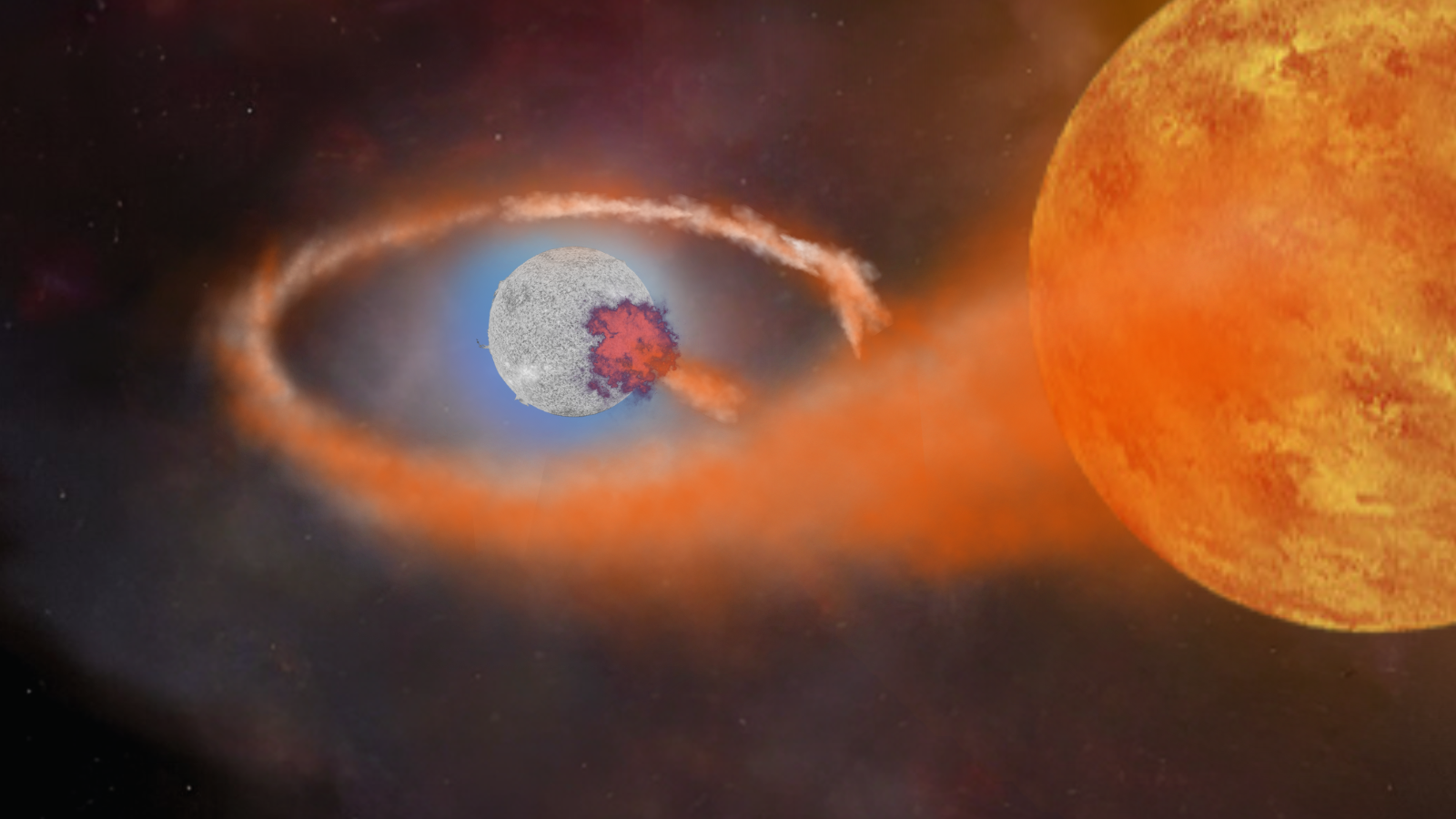
An illustration shows a "vampire" neutron star feeding on a close companion star. (Image credit: Robert Lea (created with Canva))
The team found that the accretion rate, or rate at which material from the donor star falls onto the white dwarf, has to fall within a fairly narrow window to allow an AIC to occur.
"If it is too low, nova eruptions can expel much of the accumulated material again; if it is too high, winds, envelope expansion, or binary interaction can prevent the white dwarf from reaching the conditions required for collapse," Thümmler said. "The accretion has to be fast enough, and steady enough, to get it there without triggering explosive burning along the way.
"When those conditions hold, electrons are captured onto neon and magnesium nuclei. This removes the pressure supporting the star, and the collapse follows."
All this means that AICs are expected to be rare events, although the rate at which they occur remains highly uncertain.
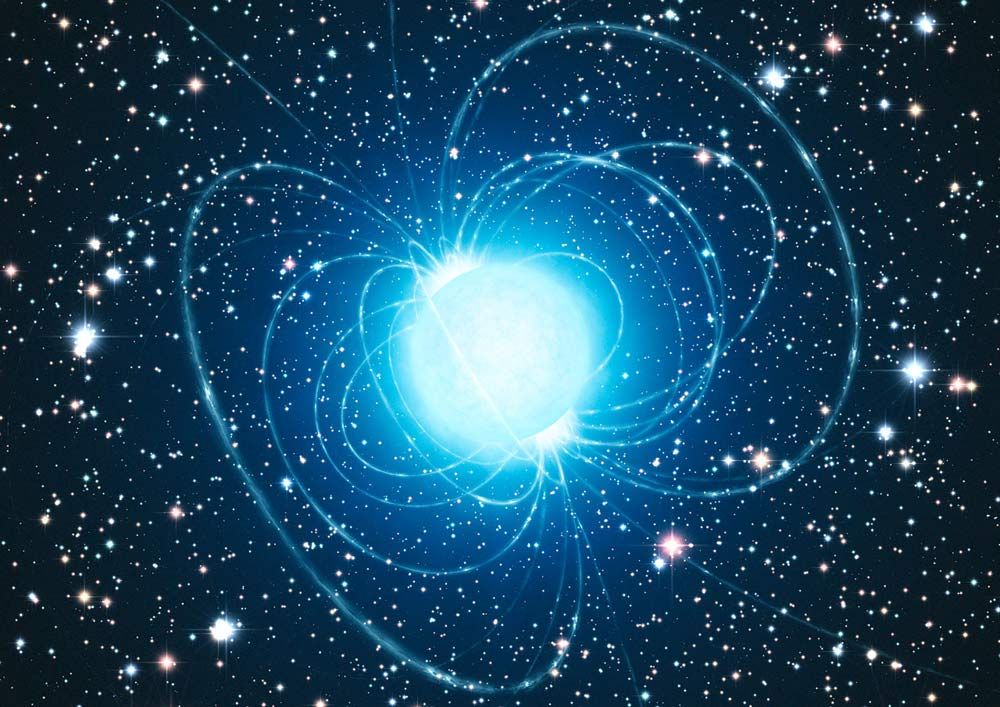
An illustration of a highly magnetic neutron star. (Image credit: ESO/L. Calçada)
The team also found the environment around AICs is somewhat surprising.
"We expected the most neutron-rich material, which produces the heaviest elements, to emerge along the rotation axis, since that is where the magnetically driven outflow is strongest," Thümmler said. "It does not."
Instead, the team's models revealed neutron-rich material emerging at the mid-latitudes of white dwarfs as they transform into neutron stars. This is region where the outflows of matter driven by intense magnetic fields collide with winds heated by energy-carrying neutrinos.
Thümmler explained that this is significant because it means that these events would appear different based upon the angle at which they are observed.
How to spot white dwarf transformations
Laurenz said these AICs could be identified by Vera C. Rubin Observatory and other telescopes as a bright ultraviolet and optical event lasting two to three days, potentially accompanied by X-ray emissions and longer-lasting radio emissions.
However, the neutron stars created by such events may be difficult to distinguish from stellar remnants birthed in the traditional way.
"They are expected to populate the lower end of the neutron-star mass distribution because the collapsing white dwarf has a mass close to the Chandrasekhar limit and ejects relatively little material," Thümmler said. "However, ordinary stellar-collapse channels, particularly those involving low-mass progenitors, can also produce neutron stars with masses of approximately 1.1 to 1.4 solar masses, so a low mass alone would not uniquely indicate an AIC origin."
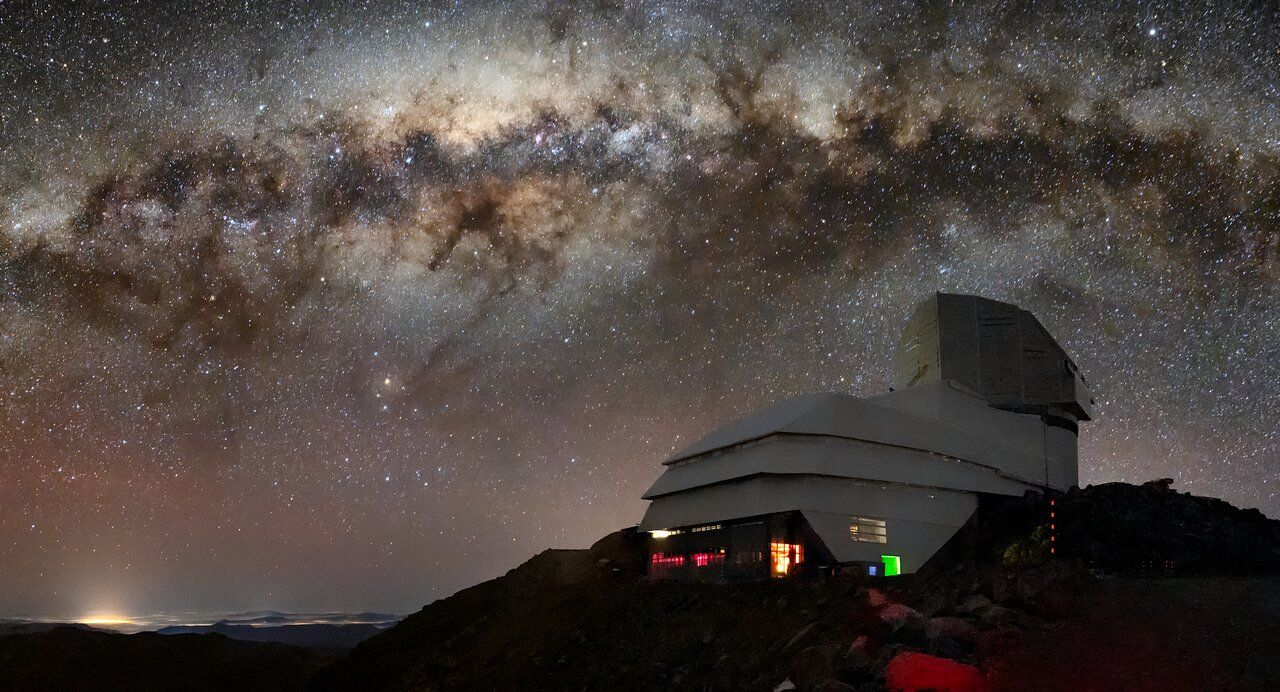
The Vera C. Rubin observatory gazes out at the Milky Way (Image credit: RubinObs/NOIRLab/SLAC/NSF/DOE/AURA/B. Quint)
The team isn't done investigating AICs, with Thümmler explaining there are two main approaches to take next.
"The first is to make the predicted light curves more reliable by following both the radioactive heating and energy injection in substantially greater detail," Thümmler said. "This requires distinguishing energy carried bygamma rays, which can escape relatively early from the low-mass ejecta, from that deposited more efficiently by charged particles, while also modelling how the neutron star wind heats and accelerates the heavy-element-rich material."
The team's simulations can then be used to follow the expansion of the ejecta from the AIC and calculate how the observed light curve and spectra depend on viewing angle.
"This work is currently underway," Thümmler said. "The second direction is to test the robustness of the explosion geometry, since our present models begin with a relatively simple magnetic-field configuration and more complex or tilted fields may produce different angular ejecta patterns."
The team's research is available to view as a pre-print on the paper repository site arXiv.
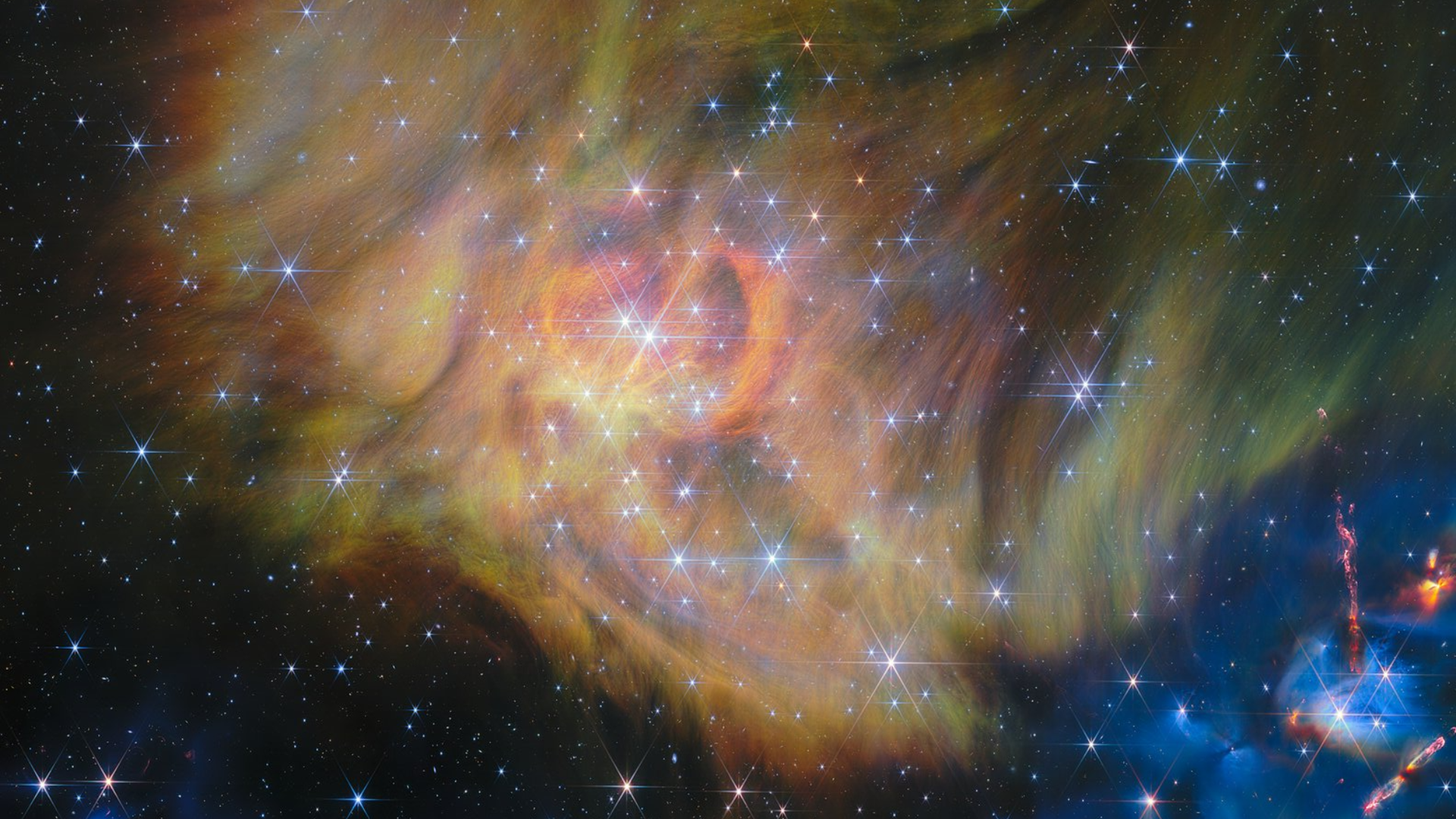
The star-forming region IC 348, as imaged by the James Webb Space Telescope. (Image credit: ESA/Webb, NASA, CSA, K. Luhman, C. Alves De Oliveira, M. Zamani (ESA/Webb))
An ethereal and magnificent display of gas and dust stretches across the cosmos in a spectacular new image captured by NASA's James Webb Space Telescope.
What is it?
Glowing wisps of translucent gas and dust paint a striking image of the star-forming region IC 348 in this new JWST snapshot. In the image, you can see IC 348, a region found about 1,000 light-years away.
In this vast expanse of gas and dust, cold molecular hydrogen gas collapses to create new stars. And this image has no shortage of suns, with twinkling stars speckling the entire cosmic landscape, diffraction spikes and all.
But while this is a star-forming region, objects are found here as well. This image was captured as part of a scientific search for brown dwarfs, which are objects that form like stars but aren't massive enough to kickstart hydrogen fusion in their cores.
Why is it incredible?
Brown dwarfs are one of the great mysteries of our universe. Not as massive as the least massive stars, but more massive than the biggest planets, brown dwarfs are strange objects stuck in the middle.
Brown dwarfs do emit some light and heat, which helps scientists to find them, though doing so can be tricky, as they're much cooler than stars and not that bright (at least in visible light). However, despite being dim, they give off infrared radiation, allowing them to be spotted by infrared instruments aboard space telescopes like JWST.
This incredible new image is part of an observing program that aims to use JWST to find and study the smallest brown dwarfs. In 2022, researchers looking at IC 348 found brown dwarfs just a few times more massive than Jupiter, so they were on the very small end. Researchers hope to find even smaller brown dwarfs to help them better understand how these strange objects form and vary across space.
NASA's newly launched Nancy Grace Roman Space Telescope is set to extend its lifespan and double its exciting potential for discovery thanks to an efficient use of fuel on its way to its final orbit.
"As a result of exquisite planning by our orbital dynamics team, brilliant execution by the operations team, and a precise launch from SpaceX, Roman has fuel for at least 22 years of potential science operations," said Jamie Dunn, the center director at NASA's Goddard Space Flight Center, in a statement.
The space telescope, which launched from Cape Canaveral on Aug. 30 on a mission to measure dark energy and search for exoplanets, is headed to the L2 Lagrange point. There, it will join the likes of the James Webb Space Telescope on the opposite side of Earth to the sun. Its primary mission will last five years, and scientists were hoping for an additional five years if funding allowed.. Now, however, that potential extended mission could go on for a lot longer — and it's all thanks to the spacecraft coming in less massive than the original design had projected.
The Lagrange points depicted in a diagram. (Image credit: NASA Goddard Space Flight Center Scientific Visualization Studio)
At the beginning of Roman's design process, the fuel capacity was chosen to permit a maximum mass of 21,605 pounds (9,800 kilograms), yet the finished spacecraft came in lighter at 17,760 pounds (8,065 kilograms). And because it was lighter, there was a surplus of available mass that could be used for more fuel.
"A spacecraft's mass changes throughout the design and build process, so we base the propellant on a set maximum value so we won't come up short," Alison Rao, who leads Roman's propulsion systems at NASA Goddard, said in the statement. "We track the propellant needed based on actual mass throughout integration and testing as well, to make sure we have wiggle room. Since Roman's [mass] was lower than we budgeted for, we were able to fill the propellant tanks to their capacity rather than only filling them as much as we needed to for the 10-year requirement."
The extra fuel loaded onto the telescope before launch meant it had enough for at least a 14-year mission. Then, within a day of launching, the space telescope had to fire its engine for three minutes to push it onto a trajectory to take it to L2. This engine burn was more precise and hence more efficient than anyone could have hoped for, sending Roman on its way to L2 with 99% accuracy. In doing so, it used only 40 pounds (18 kilograms) of fuel, which is less than 10% of the 441 pounds (200 kilograms) of fuel that had been budgeted for the maneuver. This is thought to have bought Roman an additional four years of life, bringing the tally to 18 years.
Then there's the added bonus. The precision with which the Aug. 31 engine burn was conducted means that the second course correction, required to take Roman into its orbit at L2 in early December, will also now require much less fuel. This will add yet another four years to Roman's operational lifetime, so long as nothing goes wrong with the telescope. Once in orbit at L2, only minor burns once every 28 days are needed for station keeping — a negligible amount of fuel.
In total, this observatory could be probing the final frontier and making incredible discoveries for at least the next 22 years, taking it up to 2048 at minimum. For the next two or three decades, we're going to be hearing a lot about the Nancy Grace Roman Space Telescope.
Astronauts could travel back to Earth from Mars using rocket fuel converted directly from the carbon dioxide in the Red Planet's atmosphere, using a technique known as electrochemical reduction, a recent study reports.
It's an old method involving electrolysis, which is the application of an electrical current to drive a chemical reaction, but the new trick produces methane pure enough to be used as liquid propellant. (A number of rocket engines these days burn liquid oxygen and liquid methane — including the Raptors that power Starship, the rocket SpaceX is developing to help humanity get to Mars.)
"The work we're doing is basically taking CO2 and using electricity to convert it into carbon-containing fuels and chemicals," said Carter Racine in a statement. Racine is a Ph.D. student in mechanical engineering at Texas A&M University and a member of the study team, which was led by University of Mississippi chemical engineer Ahmed Badreldin.
"You can't bring up everything you need [on Mars] from Earth, because every additional kilogram adds enormous cost and complexity to launch and escape Earth's gravity," added Badreldin. "So the question becomes, How do we make the fuels and chemicals needed for space exploration from the resources already available at the destination?"
One answer is electrochemical reduction, which takes place in an electrolyzer, with electrons flowing from the negatively charged anode to the positively charged cathode. Water at the anode is oxidized, meaning it loses an electron, which is transferred to the carbon dioxide at the cathode, where one of its atoms gains an electron and becomes what chemists refer to as "reduced" (meaning its oxidation state is lowered). It can then react with the hydrogen and oxygen atoms that have split from the oxidized water molecules.
The anode contains a catalyst, and the choice of material for the catalyst dictates what carbon-based compounds are produced when the reduced carbon reacts with the hydrogen and oxygen. For example, a gold catalyst leads to the production of carbon monoxide (CO), while copper produces more complex compounds including alcohols, ethanol and methane (CH4).
What makes the work of Badreldin's team stand apart from previous experiments is that they have developed a nanometer-scale copper catalyst doped in nitrogen that is able to produce nearly pure methane.
Electrochemical reduction of carbon dioxide has been used to produce methane before, in applications on Earth. The problem is, those methods have produced a lot of byproducts alongside methane. On Earth we have complex equipment that separates the methane from the other unwanted compounds, but astronauts are not going to be able to take such unwieldy devices to Mars when every kilogram counts. That's a problem, because for methane to be used as a liquid propellant in rocket fuel it needs to be pure.
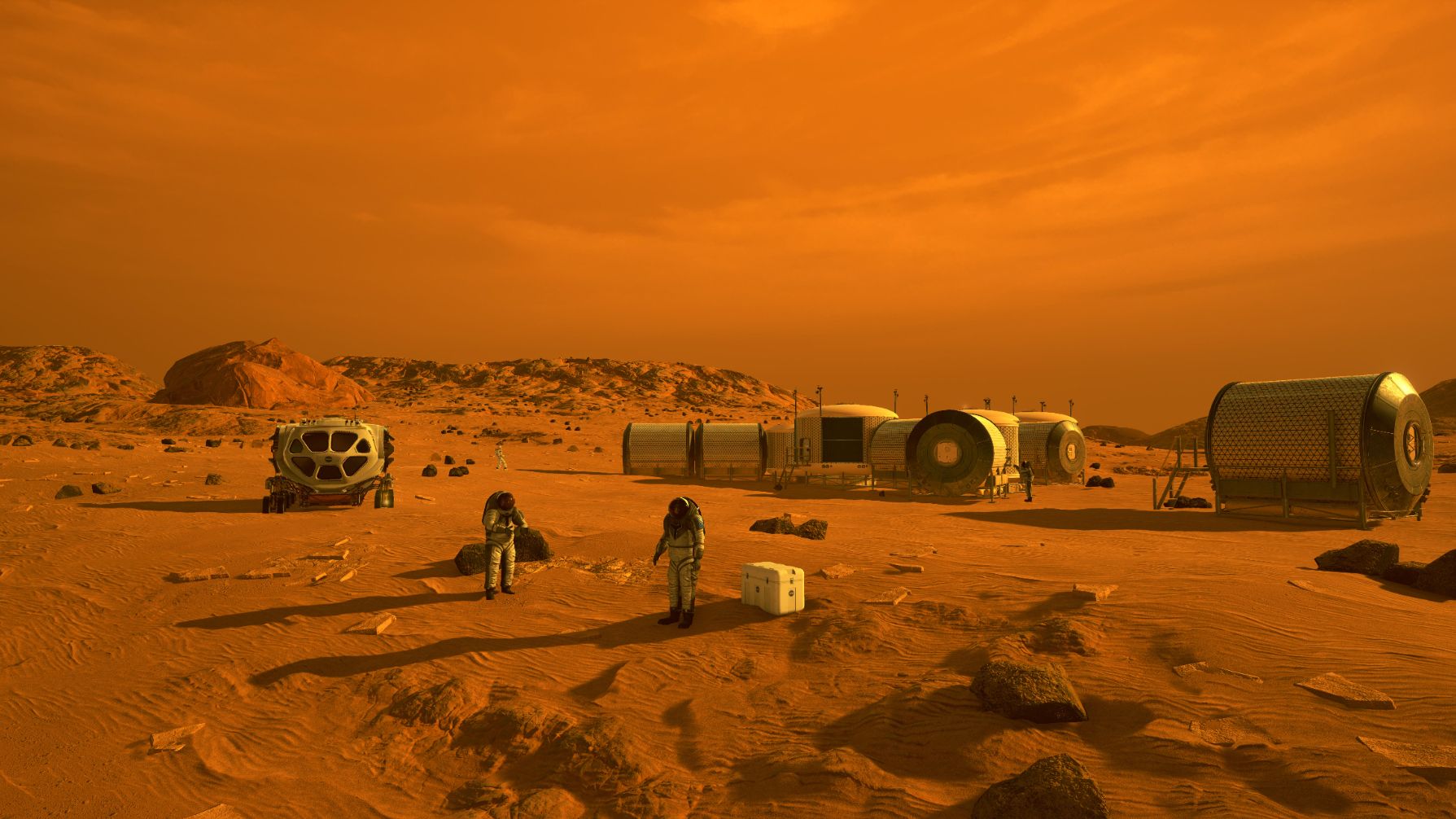
NASA wants to send astronauts to Mars in the late 2030s or early 2040s. (Image credit: NASA)
However, the specific copper catalyst used by Badreldin's team is able to preferentially produce methane over other compounds, thereby creating it pure without having to refine it. And there's plenty of carbon dioxide available on Mars to use: While Mars' atmosphere is thin, it is nonetheless composed of 96% carbon dioxide.
Even if astronauts never go to Mars, the usefulness of this technique on Earth is clear. Rather than drilling for this natural gas, we can create methane from the carbon dioxide already in our atmosphere.
"We want to do that because right now many of these carbon-based products ultimately come from virgin fossil resources," said Racine. "If we can make them using captured CO2 and renewable electricity, it could reduce reliance on virgin fossil carbon and help close the carbon cycle."
Consequently, electrochemical reduction has also been suggested for use on Earth as a carbon sequestration technique, drawing carbon dioxide out of our atmosphere where it acts as an unwanted greenhouse gas.
The problem with that is, converting carbon dioxide into methane to be burned as a fuel simply releases that carbon dioxide straight back into the atmosphere in a net-zero cycle. Ideally, we want to lock that carbon dioxide away from the atmosphere for a long period of time, but Badreldin doesn't think the technology is ready yet.
"What we are ultimately interested in is seeing whether we can move beyond simply recycling CO2 and toward pathways that are net-negative," he said. "That means using CO2 as a carbon source while converting it into products where the carbon is stored or used long enough that it is not immediately released back into the atmosphere."
It should be noted that the best way to alleviate climate change is to cease burning all fossil fuels, including methane. However, using methane created from electrochemical carbon dioxide reduction in a net-zero process rather than drilling for it could help during the transition from fossil fuels to renewable resources.
The study reporting this research was published in April in the journal ACS Catalysis.
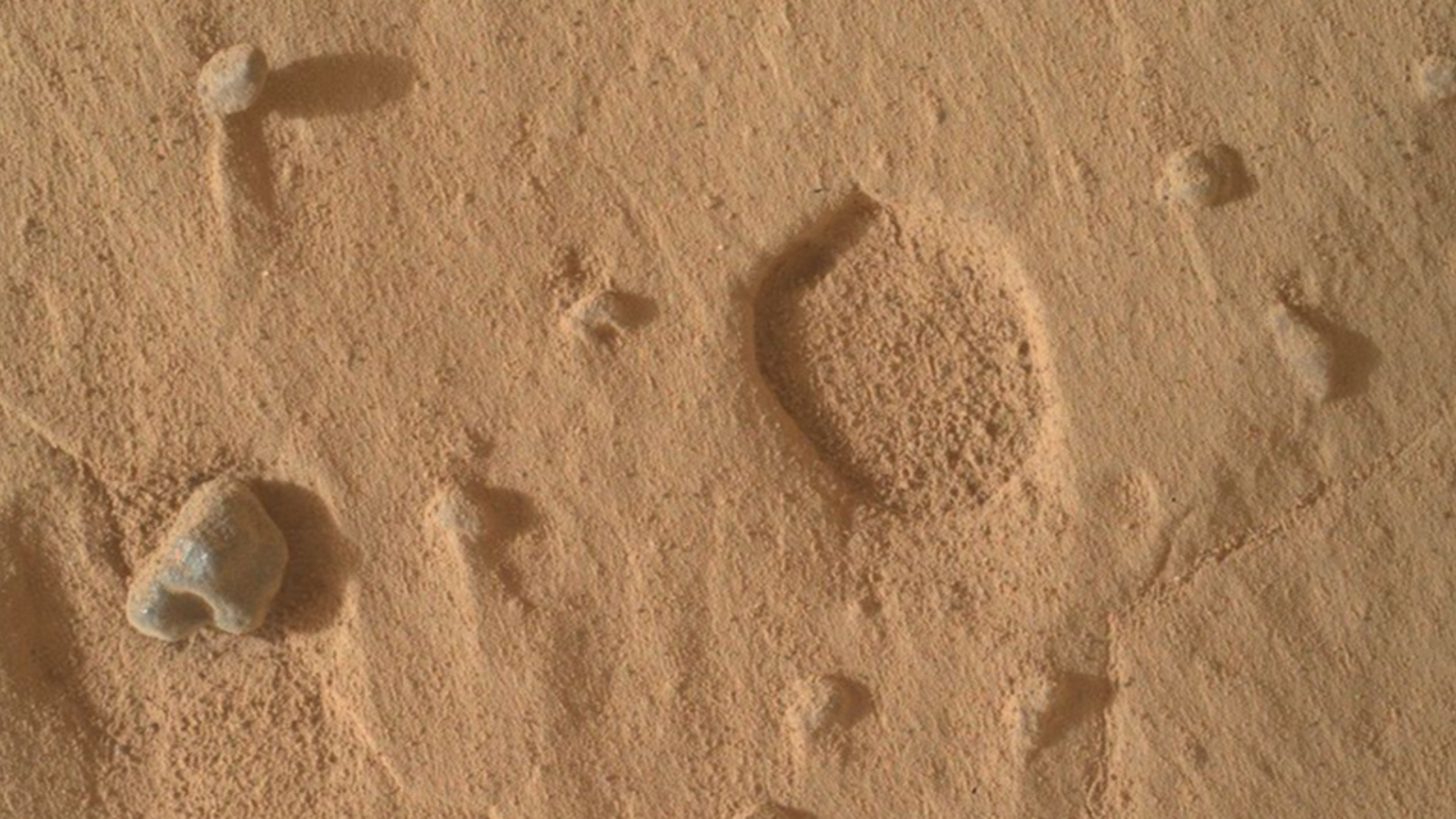
A broad pit that looks almost like a "footprint" on Mars is unlike anything researchers have ever seen on the Red Planet. (Image credit: NASA/JPL-Caltech/MSSS)
Is that a footprint on Mars? Sorry to burst your bubble, but no. However, scientists have found a strange feature unlike anything they've seen before on the Red Planet's surface.
What is it?
While NASA's Perseverance rover is the newest addition to the agency's robotic Red Planet fleet, its cousin Curiosity is still going strong and finding strange and unusual things on Mars 14 years after landing.
In new observations captured on Mars' Mount Sharp, the Curiosity team has identified "features unlike quite anything we have seen in the past," Michelle Minitti, deputy principal investigator for Curiosity's Mars Hand Lens Imager (MAHLI), said in a statement.
These mysterious features are a bunch of broad, shallow pits scattered across the Martian bedrock.
Why is it incredible?
While little pits and divots are common to find on the Martian surface, these wide, shallow pits that researchers saw with Curiosity are quite different from surface features that have been seen before.
"The pits of this week were much broader and shallower than past features and were not accompanied by obvious objects that were once in the pits," Minitti said.
The team collected as much data as they could on the strange pits using Curiosity's various instruments, including MAHLI, the Mastcam camera, ChemCam (the Chemistry and Camera complex) and APX (Alpha Particle X-Ray Spectrometer).
They have so far found interesting layers in the pit material that seems chemically different from the main bedrock.
But we will have to wait and see what else researchers might be able to learn about these odd pits. How did they form? How long have they existed? What can they tell us about the history of Mars?
It has now been just over a year since the comet 3I/ATLAS first captured the world's attention as the third known object to fly through our solar system from beyond. Astronomers are still learning new things about where exactly it came from.
For the first time ever, they've been able to study charged particles in the tail of the interstellar comet. This has told them that 3I/ATLAS contains more nitrogen than the typical comet from our own solar system — revealing a tantalizing clue about how the strange comet formed.
"Finding that it's so rich in nitrogen tells us it likely formed in extremely cold conditions, far from its home star," Lea Ferellec, a research fellow at Northumbria University,said in a statement.
Ferellec's group used theWilliam Herschel Telescope in Spain's Canary Islands. One of this telescope's instruments is a fiber-optic weave named, well,WEAVE. WEAVE lets astronomers dospectroscopy — which splits incoming light into its spectrum. Different chemical elements absorb and emit different wavelengths of light, marking that spectrum with different characteristic fingerprints. With spectroscopy, astronomers can look at a celestial object's light, pick out the fingerprints, and reconstruct the stuff inside.
Other astronomers have measured 3I/ATLAS with spectroscopy, but they've mostly examined the comet'scoma, a shell of gas that forms when the sun’s heat sublimates the comet’s ice into vapor.
Of course, a coma is not the only feature that forms as a comet approaches the sun. Close in, a comet is battered by the torrent of the sun's solar wind, which pushes the comet's material away into a distinctive tail. In the process, the solar wind's high-energy particles strike the comet's molecules and electrify them into charged ions.
If astronomers can identify a tail's ions, they can find chemicals and learn information they can't from the coma alone. This is a tricky task. When fellow interstellar comet2I/Borisov visited our solar system in 2019, astronomers identified traces of its ions, but they couldn't make out what those ions actually were.
WEAVE, which switched on in 2023, is powerful and sensitive enough to change that. When Ferellec and colleagues turned WEAVE on 3I/ATLAS in late 2025, they could count ions like nitrogen, carbon dioxide and carbon monoxide in the strange comet's tail.
Another view of comet 3I/ATLAS. (Image credit: International Gemini Observatory/NOIRLab/NSF/AURA/Shadow the Scientist. Image Processing: J. Miller & M. Rodriguez (International Gemini Observatory/NSF NOIRLab)/T.A. Rector (University of Alaska Anchorage/NSF NOIRLab)/M. Zamani (NSF NOIRLab).)
Comparing these figures can hint at where a comet formed. For example, a comet with a higher ratio of nitrogen to carbon monoxide tends to have formed in a colder birthplace. Ferellic's group found that 3I/ATLAS has a much higher ratio than most of the comets that we observe in our solar system.
In particular, Ferellec and colleagues estimate that 3I/ATLAS formed somewhere colder than -240°C. If this comet was born in a distant star system, then, it formed in that system's outer reaches. In other words, 3I/ATLAS likely formed in a place where little of its star's light could touch it.
"This object gives us a rare chance to study material that formed somewhere completely different to our own solar system," Ferellec said in the statement. "Every one of these objects we study helps us understand a little more about how planets form around other stars."
The discovery of water at the poles of the moon has inspired speculation about whether we can build there – cities, industrial neighborhoods, places where people work and live. But is there enough water, and can we use it efficiently enough? In their new article in Frontiers in Space Technologies, Dr. Martin Elvis and Dr. Jonathan McDowell do the math. Even at the most generous estimates of the available water and recycling efficiency, a city of one million people would only last 100 years before all the water runs out. In this guest editorial, which Frontiers in Space Technologies provided, Elvis breaks down what we can and can't do with the technology available.
The discovery of water in dark craters at the moon's poles has sparked a "moon rush" to establish bases there, and then villages, cities and heavy industry. How sustainable is this rush?
Soon after the moon was formed, asteroids bombarded it, creating its pockmarked topography. Near the moon's poles, there are dozens of crater floors that have not seen direct sunlight in about four billion years. Many of these cryogenically cold "pits of eternal darkness" are below a temperature of 110 Kelvin (minus 262 degrees Fahrenheit), forming "cold traps" in which water ice won't sublimate away by more than a millimeter in a billion years, even in the vacuum at the moon's surface. And there is water to freeze: some of those asteroids brought it along with them. Since 2013 we have known that that water is still there, possibly as much as a billion tons of it, thanks to a succession of moon-orbiting missions that have mapped out likely locations in increasing detail.
The presence of water at the lunar poles changes everything about human visits to the moon. Suddenly it is practical to envisage a "moon village" where people could survive without importing every last bit from Earth. They could grow their own food and have showers and functional toilets, unlike the astronauts on the International Space Station (ISS). This possibility has sparked ambitions from the likes of Jeff Bezos to move heavy industry to the moon and Elon Musk's aims to have "self-growing cities" there. These are enticing visions, but are they attainable?
The good news
We realized that we could make a first feasibility estimate simply by looking at how much power and water a large population would use on the moon, and how long a city of 100,000 or one million people could survive there. How sustainable is a city on the moon?
The good news is that power, even without nuclear reactors, is not a problem. That's because the rims of the craters containing the pits of eternal darkness are in almost permanent sunlight. (That's why they are sometimes, slightly incorrectly, referred to as the "peaks of eternal light.") Up on those highly illuminated rims it would be possible to generate three gigawatts of electricity using kilometer-tall towers covered with photovoltaic arrays. It should be possible to manufacture solar panels on the moon. There's certainly plenty of silicon. This could even make AI data centers on the moon possible, by placing them near these sunny peaks. That would be the start of a true lunar economy.
Shackleton Crater, near the moon's south pole, is thought to harbor large amounts of water ice on its permanently shadowed floor. (Image credit: NASA/GSFC/Arizona State University)
The bad news
The bad news is that, even assuming a generous one billion tons of water to start with, without recycling the answer to our question of sustainability is that the city would last only a few years. Even in the best-case scenario, with 98% efficient recycling of water — the same as achieved on the ISS — a one-million-person city will run out of water in just over a century. That is a problem for sustainable moon settlement. And today's best estimates of the amount of water on the moon are about 30 times less than a billion tons, shortening the time to water exhaustion by the same factor. This means that even a small city would run dry after just a decade or so. A moon village with a thousand people, or even a town with 10,000 people, would instead be sustainable for several centuries or more.
There are potential solutions. We could improve the efficiency of water recycling by a factor of five or more; lower water usage from new techniques such as vertical farming; import water, probably from accessible asteroids; or, simply, find more water. Of these it may be this last hope that is most promising. Current water surveying techniques do not reach below the surface more than a few meters, while the rubble-like rocks of the surface regolith typically extend tens of meters down and may contain water in the cold traps. If the ambitious plans of the space billionaires are to be realized, then finding more water will be the first step.