Is there a hidden ‘Planet 9’ in our solar system?

For more than a century, astronomers have been captivated by the idea that an undiscovered planet could be lurking in the furthest reaches of our solar system.

The search for this elusive, hypothetical planet has taken many forms over the decades. The discovery of Neptune in 1846 demonstrated that an unseen planet might be inferred from its gravitational effects on other worlds. Based on this, the search for a ninth planet began in earnest, seemingly culminating with the discovery of Pluto by astronomer Clyde W. Tombaugh in 1930.

However, decades later in August 2006, Pluto's long-held planetary status was withdrawn after its formal reclassification as a dwarf planet, launching a debate over the Kuiper Belt object's identity that continues today. Yet beyond the controversy over how Pluto should be classified, the quest to determine whether a hidden ninth planet may exist in our solar system continues — and some astronomers are more confident than ever that its discovery could be imminent.

What do we know?

The story of our solar system's unconfirmed ninth planet takes us back to the early decades of the last century. At that time, astronomers began to suspect that, much like Neptune's discovery based on irregularities in the motion of Uranus, evidence of even more distant planets might begin to surface through similar observations. This prompted American astronomer Percival Lowell to advance the idea that orbital irregularities displayed by both Uranus and Neptune could point to the existence of a distant, unknown planet — one he dubbed "Planet X."

Today, although Lowell's name for this hypothetical planet is sometimes used interchangeably with the idea of a "Planet Nine," the concepts are slightly different. While the early search for Planet X relied on observations of the motion of Uranus and Neptune, new data that included Voyager 2's encounters with those planets in the 1980s helped reveal that their orbital behavior could be explained without the introduction of an unknown ninth planet.

By contrast, modern proponents of the existence of a ninth planet focus their searches further out, looking instead to orbital peculiarities in smaller objects that occupy the distant reaches of the solar system. This approach to solving the Planet Nine mystery was put forward in 2016 by Caltech astronomers Konstantin Batygin and Michael Brown, who argued that an undiscovered planet could account for the odd orbital patterns displayed by several extreme trans-Neptunian objects in the distant solar system.
a blue orb on a black, starry background

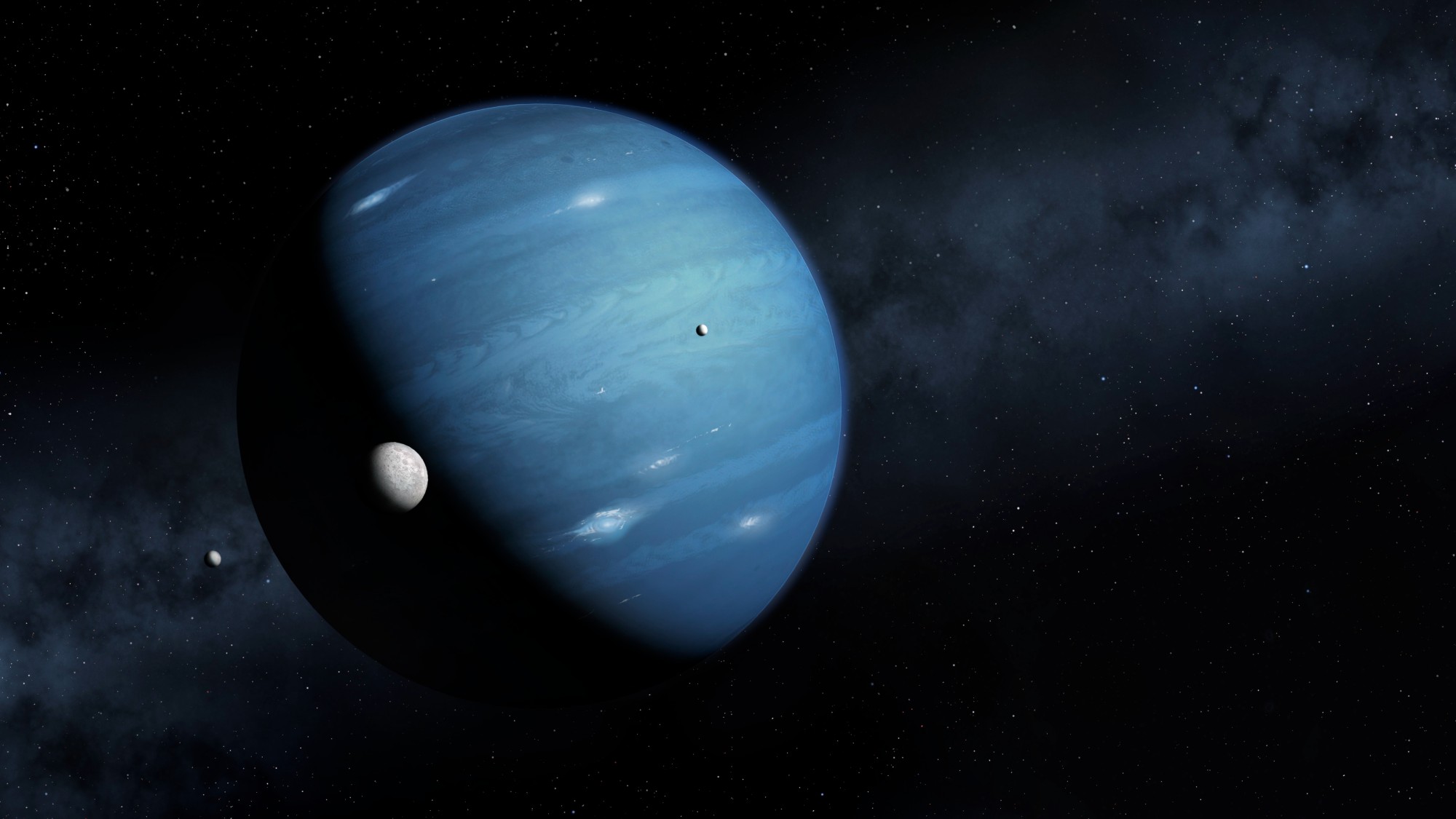
An illustration of the hypothesized Planet Nine. (Image credit: Mark Garlick/Science Photo Library/Getty Images)

What remains unknown?

In 2024, the Caltech team presented additional findings, which specifically focused on long-period, low-inclination objects that are known to traverse Neptune's orbit.

"These objects are dynamically unstable, so the population has to be continuously replenished," Batygin recently told Space in an email. "In our 2024 work, we found that Planet Nine naturally produces the observed population, whereas the model without Planet Nine is strongly inconsistent with the data once observational biases are accounted for."

According to Batygin, the Planet Nine theory can potentially explain several unusual attributes about the distant solar system, which include the phenomena of orbital clustering, large perihelion distances some objects exhibit, the presence of retrograde bodies, and objects with highly inclined orbits (meaning their orbital paths are tilted at large angles).

Right now, Batygin says the only thing still lacking from the growing body of evidence is a direct detection of Planet Nine itself. Still, while he concedes that such direct detections remain elusive, he also maintains that something must account for the current data he, Brown, and others have collected.

"If the observed dynamical structure is real," Batygin told Space, "there is presently no comparably compelling alternative theoretical explanation."
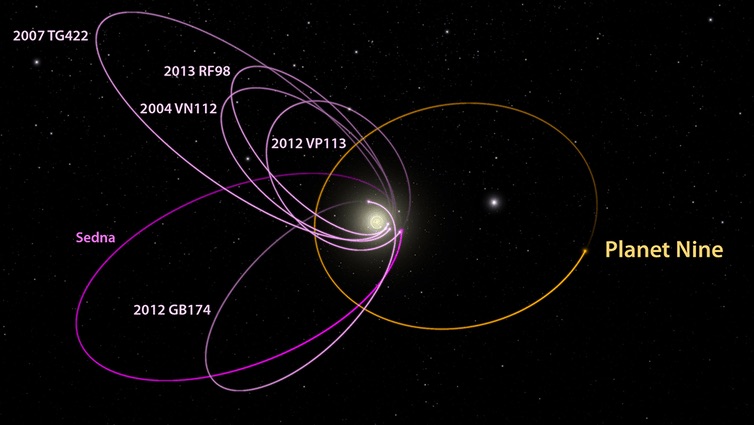
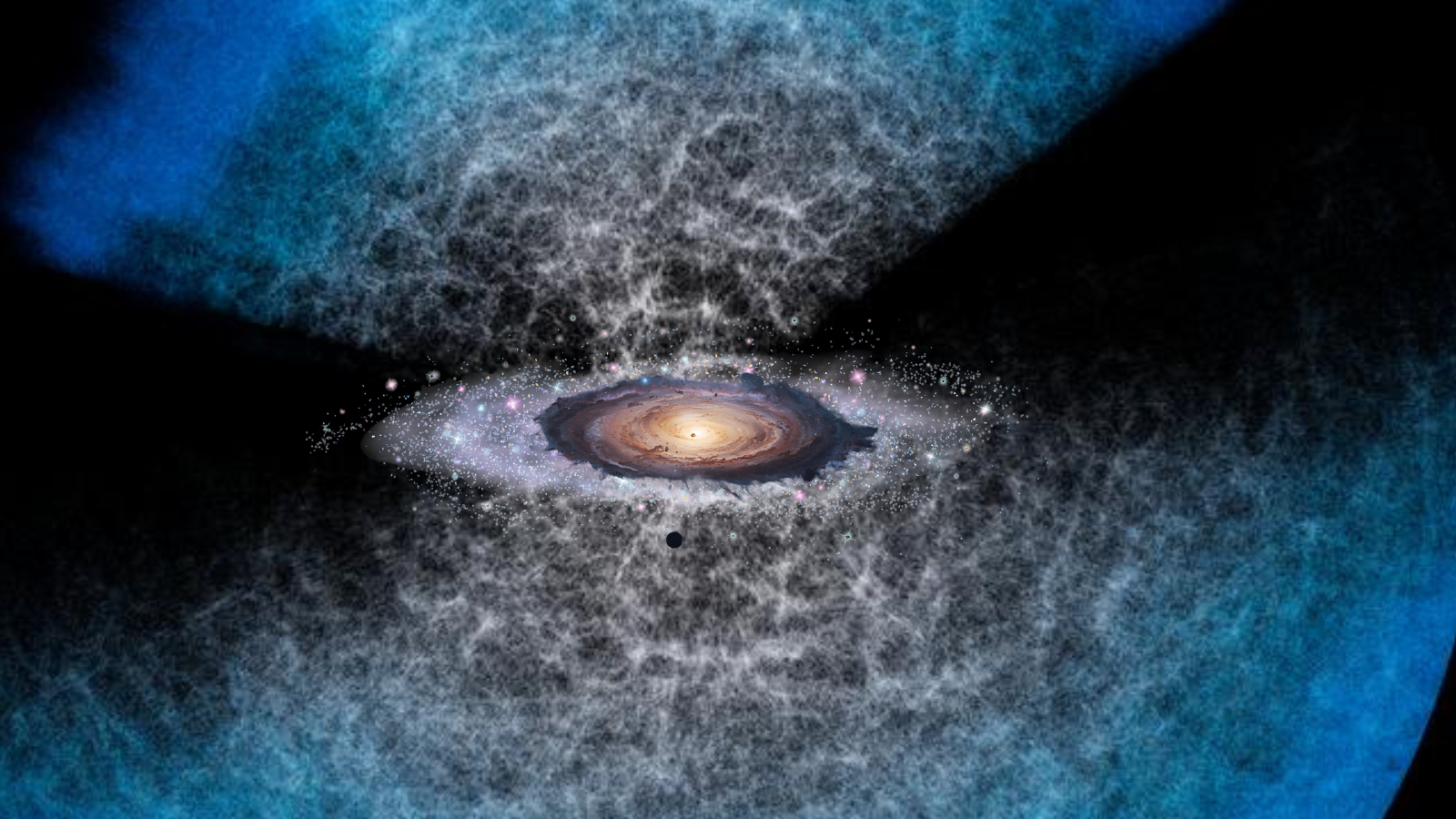
The existence of a roughly Neptune-mass Planet Nine could explain why the few known extreme trans-Neptunian objects seem to be clustered together in space. The diagram was created using WorldWide Telescope. (Image credit: Caltech/R. Hurt (IPAC))

The mystery continues

Fortunately, powerful facilities like the Vera C. Rubin Observatory in Chile could soon provide the observations currently missing from the body of data needed to support the existence of a ninth planet.

In the meantime, some promising additional discoveries have been made in recent years, which could help to strengthen the statistical case for things like orbital clustering being related to an undiscovered object at the edge of the solar system.

However, Batygin advises that astronomers should be cautious in interpreting such findings.

"I would say the picture has become more complicated, rather than simply stronger or weaker," Batygin told Space. "One has to be careful about quoting a single significance for 'clustering,' because the theory does not predict that every distant object should be clustered."

As far as what would offer the clearest support for Planet Nine's existence — short of obtaining direct visual confirmation — Batygin says ongoing discoveries of distant objects in the solar system, and the patterns that emerge in their behavior, could provide the most promising new data.

"For me, the clearest non-imaging evidence would be for the dynamical patterns in the outer solar system to sharpen dramatically as the sample grows," Batygin told Space, noting that this would particularly be the case "if several independent observables converge on the same Planet Nine parameters."

"If a much larger, well-characterized sample simultaneously exhibited the predicted apsidal structure, orbital-plane structure, perihelion distribution, inclination distribution, and Neptune-crossing population, it would become very difficult to explain the observations without a common gravitational perturber," Batygin says.

With an ever-growing number of powerful ground and space-based observatories going into service, it could be just a matter of time before we receive the final confirmation that a ninth planet has been lurking out there—or that another explanation can be proven to account for its apparent gravitational fingerprints.

Until then, the search for Planet Nine remains much like what "Planet X" was more than a century ago: a captivating idea awaiting a breakthrough observation — one that could lead to a major discovery that significantly expands our knowledge of the solar system.
James Webb Space Telescope and Hubble discover 27 puzzling new objects orbiting the sun far beyond Neptune

The Hubble and James Webb space telescopes have teamed up to target some of the smallest, most distant objects in the solar system, discovering that the history of these tiny objects is more puzzling than we'd realized.

The two orbiting observatories collectively discovered 27 new Trans-Neptunian Objects, or TNOs, all less than 25 miles (40 kilometers) across, with the smallest being only 6 miles (10 kilometers) in diameter. As their name suggests, TNOs orbit the sun from far beyond Neptune. Some of them were born out there, at the dawn of the solar system, as small planetesimals unable to take the extra step to form planets.

Models of how these TNOs formed predicted that they should have been peppered with impacts that mixed up their surface material so that their composition, and therefore color, would be different than larger TNOs. Yet new observations, led by two PhD candidates, Anastasia Morgan of Northern Arizona University and Marielle Eduardo of the University of Victoria found the opposite – the little TNOs still look as pristine as the day they formed.

"You could imagine a scenario where getting knocked around and fragmented would change the surface composition, and then you would see a different surface color for tiny TNOs compared to their larger siblings," said Morgan, who led the color and composition analysis, in a statement. "So it's really fascinating to see that the smallest objects are somehow 'remembering' and preserving the history of how they were made."

TNOs native to the Kuiper Belt move in near-circular orbits around the sun and are level with the ecliptic plane, the imaginary flat 'disc' on which the planets and other objects orbit our star. They are said to be dynamically 'cold' because they haven't really budged since they formed.

Other TNOs, however, formed between the seventh and eighth planets, Uranus and Neptune, but before they could be assimilated into those worlds while those planets were growing, they were ejected by gravitational resonances into the region far beyond Neptune, collectively forming a 'Scattered Disk' of objects on highly elongated orbits significantly inclined to the plane of the solar system. Such TNOs are referred to as being dynamically 'hot'.

Yet even the 'hot' TNOs seem to have resisted any changes to their surface composition.

"These dynamically hot TNOs retain a signature of where they were born, even though they've been orbitally scrambled since then," said David Trilling of Northern Arizona University.

an irregularly-shaped rock on a starry background

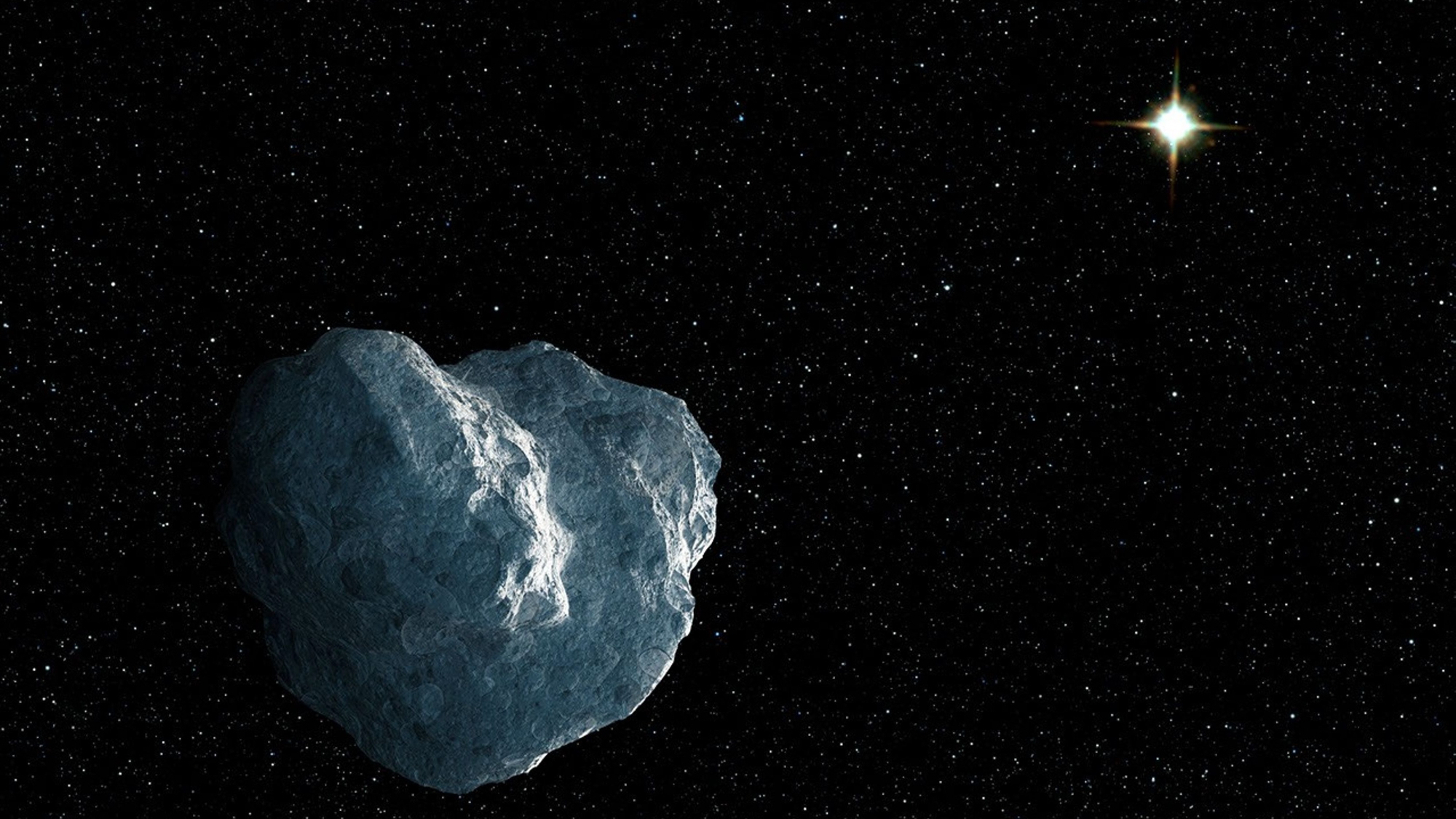
An artist's interpretation of a trans-Neptunian object. (Image credit: Artwork: NASA, ESA, and G. Bacon (STScI); Science: NASA, ESA, and C. Fuentes (Harvard-Smithsonian Center for Astrophysics))

This leads to one of two surprising possibilities. Either there are far fewer impacts taking place far from the sun than astronomers thought, which doesn't match with what we think we know about the population density of objects out there, or the impacts and collisions do take place but for some reason do not tear up the surface of the small TNOs as much as we might expect.

Thanks to the James Webb Space Telescope's (JWST's) infrared vision, Marielle Eduardo was able to figure out the size distribution of the TNOs. When we look in visible light, how bright a TNO appears depends in part on how reflective its surface is, a property referred to as albedo. A larger body with a composition that isn't very reflective might appear fainter at the same distance as a smaller object covered in shiny ice.

However, at infrared wavelengths the brightness of an object is dependent mostly on its size, allowing accurate determinations of the diameters of the 27 TNOs. Surprisingly, there seem to be fewer of the very small TNOs than what models of their formation predict.

"It's very interesting that the process of planetesimal formation ends up producing the same distribution of sizes for both cold and hot populations, despite forming in different regions of the early solar system," said Eduardo. "The process seems to be insensitive to [planet-forming] disk conditions, producing similar planetesimal sizes whether the disk is hot or cold, and dense or fluffy."

These observations push Hubble's and JWST's abilities to the limit. The TNOs are incredibly faint, shining between magnitudes 24.1 and 29.3, described as being equivalent to seeing a swarm of fireflies on the moon from Earth. As such, it is the deepest survey yet into the relatively unknown realm beyond Neptune, just as you'd expect from these two powerful space telescopes getting together.

The research was published in The Astronomical Journal as two separate papers on Sept. 8, one on color and composition, the other on the size distribution of the TNOs.

James Webb Space Telescope discovers the rings of tiny solar system body Chariklo are changing

Using the James Webb Space Telescope (JWST), astronomers have discovered that the ring system of a tiny solar system body is even more interesting than they knew.

The object in question is Chariklo, which orbits the sun between Saturn and Uranus, at around 17 times the distance between Earth and the sun. Despite only being around 155 miles (250 kilometers) wide, Chariklo, part of the Centaur family of asteroids, possesses two thick rings.

Though Saturn is the solar system body most famous for its rings, other planets also have ring systems, albeit less prominent. That includes Uranus, Neptune, and Jupiter. However, Chariklo and the even smaller body Chiron, show that even the most diminutive bodies can develop rings. Now, thanks to the incredible sensitivity of the JWST, scientists know that the rings of Chariklo are even stranger than their initial discovery in 2013 suggested.

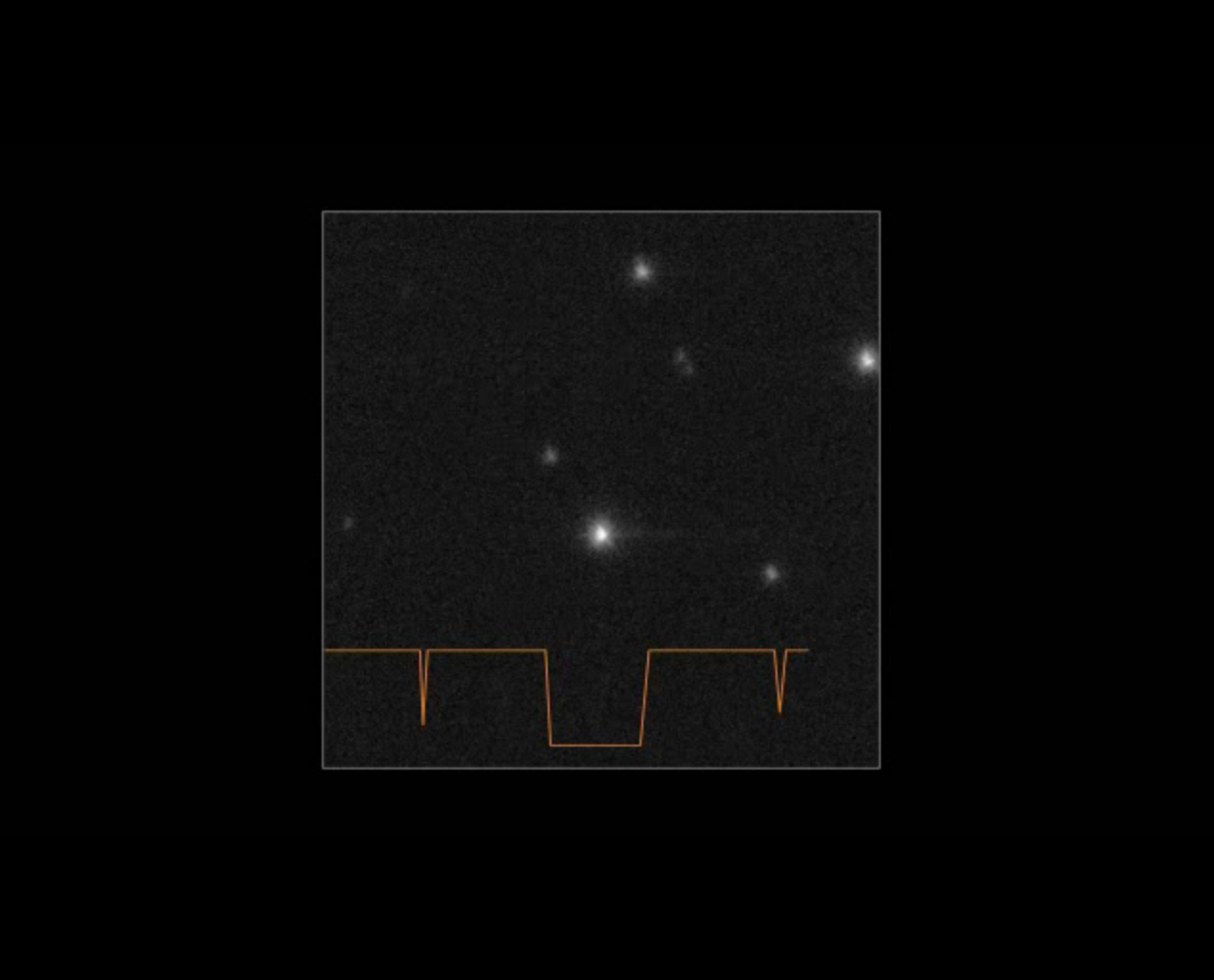
The team, led by researchers from the Institute of Astrophysics of Andalusia (IAA-CSIC), began observing Chariklo with the JWST in Oct. 2022. They used a technique called stellar occultation, which measures the decrease in light from a star when an object passes in front of it.

"By comparing JWST observations with those obtained during other stellar occultations over the last decade, we discovered opposite changes in the two rings: while the inner ring shows significantly higher opacity, the outer ring shows lower opacity," team leader Pablo Santos-Sanz of the IAA-CSIC said in a statement.

The changing rings of the asteroid suggest that it experiences more complex physics than previously thought. This is important because scientists had previously believed that small bodies had relatively stable rings.

"Our results force us to rethink how they form, how they evolve, and what mechanisms maintain their stability," Santos-Sanz said. "The ability to detect these changes opens a new window for understanding the evolution of these systems and, possibly, that of other ring systems in the solar system."

The cause of these changes remains a mystery.

Another milestone for the JWST and Gaia

The research doesn't just represent an important step in our understanding of asteroids and solar system rings, but it is also an important milestone for the JWST.

"Achieving this required knowing with extraordinary precision the orbit of Chariklo, the position of the star, thanks to the European Space Agency’s Gaia mission, and the trajectory of JWST itself around the L2 Lagrange point, a region of space located about 1 million miles (1.5 million kilometers) beyond Earth, away from the sun," team member Yücel Kilic of the IAA-CSIC said. "The JWST follows an orbit around this region that requires periodic corrections through station-keeping maneuvers."

A black square with a lighter grey square inside it with a jagged orange line running across its base

Dips in light from a distant star caused as it is occulted by Chariklo and its rings (Image credit: ESO/Felipe Braga Ribas/M. Kornmesser)

During the occultation the team used in their research, Chariklo was traveling at around 5,600 miles per hour (2.5 kilometers per second) relative to the JWST.

This is incredibly fast by Earth standards, but relatively slow for objects racing through the solar system. This low speed allowed the rings of Chariklo to be resolved in unprecedented detail. Astronomers currently rely on occultation to study Chariklo and its rings, as even the JWST isn't powerful enough to directly image this small and distant asteroid.

The team's research was published on Tuesday (Sept. 9) in the journal Science Advances.

NASA, IBM launch new AI model for studying the moon

We've been studying the moon for a long time. NASA has gathered mountains of data over decades of lunar missions and studies. The data collected by the Lunar Reconnaissance Orbiter (LRO) alone, for example, exceeds that of all NASA's other planetary missions combined.

Analyzing all this information takes lots of time and effort from researchers. So, NASA and IBM have developed an AI model to help sift through the moon data — an advance the agency announced on Thursday (Sept. 10). The open-source model, called the NASA-IBM Lunar Foundation Model, is currently available for free at Hugging Face.

"NASA has spent decades building an extraordinary scientific record of the moon, but collecting data is only part of the job," NASA's Kevin Murphy, chief science data officer and acting chief data and AI officer, said in the announcement.

The new AI model can help researchers with tasks like mapping craters, finding young volcanic features, and modeling possible locations of water ice near the lunar poles, according to NASA.

In the announcement, Murphy said that NASA needs to make scientific data easier to explore and use. To this end, NASA has been developing and releasing science-focused AI models with IBM. Previous models include one focused on Earth observation and another for heliophysics.

This is part of a larger trend of AI use in planetary science. Space agencies and private space companies around the world have been looking into how AI models can help with analysis to increase scientific productivity, reduce costs and streamline workflows.

"The NASA-IBM Lunar Foundation Model shows what's possible when we bring AI to NASA's petabytes of scientific data," Murphy said in the announcement. "That's a real opportunity we see with AI: turning large-scale data into new discoveries."

The AI model was mostly trained on data from the LRO mission. Over 17 years, NASA's lunar orbiter has compiled a nearly complete mosaic of images that detail the moon's surface in high definition.

The sun may once have swallowed a super-Earth planet and could still be hiding the evidence

Our star and primary energy source that makes life on this planet possible may also be a cosmic cannibal. That's according to new research that suggests the sun may have swallowed a super-Earth planet billions of years ago in its early history. And our star may still be hiding the evidence.

The scientists behind this research think that the fingerprints of this violent consumption of a planet may still exist within the solar interior. Super-Earths are common occupants of other planetary systems, and these findings can explain why the solar system lacks such a world.

"Our new study suggests that a planet several times more massive than Earth may have fallen into the young sun and left a lasting chemical imprint deep inside it," Mutlu Yildiz, of Ege University, Turkey, said in a statement.

Yildiz and colleagues theorize that the sun's act of planetary infanticide may help to explain differences between observations of the sun and what is predicted by models of stellar evolution. This includes the depth of the sun's convection zone and the so-called sound-speed structure just below the convection zone.

It could also explain why the surface of the sun is depleted of the element lithium.

"By modelling the sun's evolution and comparing the results with precise observations of its interior, we find that the ingestion of a super-Earth could help explain long-standing differences between standard solar models and observations, including subtle changes in the sun's internal structure and its depleted lithium abundance," Yildiz said. "We were interested in whether these problems might have a common origin in the early chemical history of the sun."

The researcher explained that young stars like the sun during its infancy are surrounded by vast flattened clouds of gas and dust called protoplanetary discs, where substantial amounts of material can move between the disc and the star.

"Since planets are made of material that is chemically different from the gas in the disc, we wondered whether the early engulfment of a planet could have left a chemical signature inside the young sun," Yildiz said.

What happened to the sun's planetary meal?

Using advanced stellar evolution software, Yildiz and colleagues tested their idea by investigating different ways the sun could have swallowed a planet.

Their results found the best fit for the sun's current characteristics was the cannibalism of a planet between five and ten times the mass of the Earth, a type of planet called a super-Earth. This could explain the strange, unpredicted characteristics of the sun.

We thought planetary engulfment might affect the solar structure but did not expect the calculations to converge on such a specific super-Earth mass range," said Professor Yildiz. "That was one of the most interesting outcomes of the study."

An irregular orange sphere surrounded by a swirling blue line

An artist’s impression of a star engulfing a planet. The blue line traces the path of the planet as it spirals toward the star and ultimately collides with it. (Image credit: NASA, ESA, CSA, Ralf Crawford (STScI))

The team's research is supported by previous studies that suggests one or more super-Earth planets could have formed with the orbit of Mercury, the closest planet to the sun.

These worlds would have then migrated through the protoplanetary disk surrounding the infant sun before crashing into the star.

But this new study leaves open the possibility that something else, other than this violent collision with the sun, may explain the discrepancies in measurements of the sun's interior and its lithium content. The team's model doesn't need a planet to have been totally engulfed by the sun.

A cracked grey sphere next to a growing orange sphere

An illustration of a former super-Earth survivor escaping after an encounter with the sun (Image credit: Robert Lea (created with Canva))

Currently, this idea is based on computer modelling and unexplained solar features, but the researchers think that the predicted structural and chemical signature of a planetary engulfment could still exist within our star and could be detected.

"The earlier work proposed that a super-Earth could have formed and migrated into the young sun. Our paper asks whether the sun itself could still carry observable evidence that such an engulfment actually happened, and we believe it could," Yildiz concluded. "The next step is to see if these fingerprints can be independently detected."

The research was published on Thurs (Sept. 10) in the journal Monthly Notices of the Royal Astronomical Society.

Wavy alien dune fields stretch across Mars | Space photo of the day for Sept. 11, 2026

Purple colored dune fields on Mars.

A dune field on Mars, as seen by the Mars Reconnaissance Orbiter. (Image credit: NASA/JPL-Caltech/University of Arizona)

Are those purple, wavy, alien thumbprints? Or perhaps an otherworldly ocean? Nope! It's actually a dune field on Mars, colored purple.

What is it?

Across the Martian surface are all sorts of unique features in the rocky, dusty surface material. In this false-color image, snapped by the HiRISE (High Resolution Imaging Science Experiment) camera on NASA's Mars Reconnaissance Orbiter, you can see the incredible and strange ripples of a dune field on Mars.

"Our science goal for this observation is to observe any changes from a previous image we acquired in 2011," a statement sharing the image reads. "For this footprint, the target enlarged and centered more over the dune field, which is located on the floor in the northern half of an unnamed impact crater."

Why is it incredible?

Spacecraft like MRO, with its HiRISE camera, have opened our eyes to the incredible features across the Martian surface.

From dune fields like we see here to craters and ancient riverbeds, these views have helped scientists piece together the planet's incredible, dynamic history. For decades, observations from orbit around Mars and by rovers on the planet's surface have helped to solve at least part of the mystery of what Mars was once like.

Researchers are still looking for signs that unequivocally point to life once existing on the planet. But so far, observations have showed that, billions of years in the past, Mars had abundant surface water — lakes, rivers perhaps even a huge ocean. In analyzing the material in and near ancient waterways on the planet with NASA's Perseverance rover, researchers have already found evidence that could possibly link to biosignatures.

While this image might look like a strange but beautiful purple-colored desktop background, photos like it this can be essential clues for scientists hunting for answers.

Wavy alien dune fields stretch across Mars | Space photo of the day for Sept. 11, 2026

Purple colored dune fields on Mars.

A dune field on Mars, as seen by the Mars Reconnaissance Orbiter. (Image credit: NASA/JPL-Caltech/University of Arizona)

Are those purple, wavy, alien thumbprints? Or perhaps an otherworldly ocean? Nope! It's actually a dune field on Mars, colored purple.

What is it?

Across the Martian surface are all sorts of unique features in the rocky, dusty surface material. In this false-color image, snapped by the HiRISE (High Resolution Imaging Science Experiment) camera on NASA's Mars Reconnaissance Orbiter, you can see the incredible and strange ripples of a dune field on Mars.

"Our science goal for this observation is to observe any changes from a previous image we acquired in 2011," a statement sharing the image reads. "For this footprint, the target enlarged and centered more over the dune field, which is located on the floor in the northern half of an unnamed impact crater."

Why is it incredible?

Spacecraft like MRO, with its HiRISE camera, have opened our eyes to the incredible features across the Martian surface.

From dune fields like we see here to craters and ancient riverbeds, these views have helped scientists piece together the planet's incredible, dynamic history. For decades, observations from orbit around Mars and by rovers on the planet's surface have helped to solve at least part of the mystery of what Mars was once like.

Researchers are still looking for signs that unequivocally point to life once existing on the planet. But so far, observations have showed that, billions of years in the past, Mars had abundant surface water — lakes, rivers perhaps even a huge ocean. In analyzing the material in and near ancient waterways on the planet with NASA's Perseverance rover, researchers have already found evidence that could possibly link to biosignatures.

While this image might look like a strange but beautiful purple-colored desktop background, photos like it this can be essential clues for scientists hunting for answers.

Scientists discover mysterious new X-ray objects ‘unlike any they have seen before’

NASA's Chandra X-ray Observatory has found a brand new type of an otherwise familiar object – compact binary systems that steal gas from other stars, but which do so while emitting very low-energy X-rays but copious amounts of ultraviolet.

Chandra spotted 84 suspicious object emitting very low-energy X-rays in six galaxies – four evolved ellipticals and two spirals, namely our near-neighbor the Andromeda Galaxy (M31) and the Pinwheel Galaxy (M101).

"We've never encountered a group of objects that act like this," said Mustafa Muhibullah of the University of Alabama in a statement.

Compact objects, in the form of black holes, neutron stars and white dwarfs, are the remains of stars that have died. Their small size and powerful gravity means that they're adept at getting close to orbiting companion stars and ripping the stars' outer layers of gas away. The gas swirls around the compact object, falling onto its surface, and this accretionary process usually produces torrents of high-energy X-rays because the stolen gas becomes superheated by the compact object's gravitational vice-like grip.

Because of their weak X-rays, Muhibullah's team refer to them as 'hypersoft X-ray sources'. Since low-energy X-rays and ultraviolet light are next to each other on the electromagnetic spectrum, Muhibullah and his team suspect that the low-energy X-rays are spillover from objects emitting prodigious amounts of ultraviolet. Moreover, they think that these objects are lower-level compact binaries.

They're hard to find though, because the interstellar medium of hydrogen and helium gas between the stars absorbs ultraviolet light. This could be why we have yet to find any hypersoft X-ray sources in our own galaxy, because we have to look through the interstellar medium through the plane of the Milky Way.

Consequently, there could be a large population of hypersoft X-ray sources that remain undiscovered and they could have an important effect on the universe around them.

"These clandestine X-ray sources are actually among the most energetic objects in galaxies, and they could be solving two cosmic mysteries at once," said Muhibullah.

The interstellar medium is filled with ionized gas where atoms have been shorn of electrons. Hot, massive stars do output a lot of high-energy ultraviolet light, but there are not enough of these stars to account for all the ionization. If hypersoft X-ray sources are dumping torrents of ultraviolet into space, they could explain the ionization instead. For stars to form, gas has to be cold and not ionized, so hypersoft X-ray sources could be gently regulating star formation within galaxies.

The second mystery is the puzzle over how exactly type Ia supernova explosions detonate. We know that they are fueled by white dwarfs accreting matter from a close companion star and, once the accumulated matter raises the white dwarf's mass beyond 1.44 times the mass of our sun – known as the Chandrasekhar limit – it explodes, but the details of what on the white dwarf actually ignites and how are fuzzy.

Studying a new breed of compact binary might finally reveal the answers and offer more clues about when white dwarfs become ready to explode.

"If we could find a way to spot these type Ia supernova explosions before they go off, that would be really important," said Jimmy Irwin of the University of Alabama, who is a member of Muhibullah's team. "Right now, we study them after they've exploded and astronomers have struggled to understand what is actually ignited."

Since type Ia supernova explosions are used as markers on the cosmic distance ladder, used for measuring the strength of dark energy and the expansion of the Universe, the benefits from understanding them better are clear to see in our efforts to understand how the Universe is evolving.

The findings were published on Sept. 9 in Nature Astronomy.

Scientists study 3,000 supernovas and discover that dark energy may be evolving

A catalog of almost 3,000 white dwarfs that exploded as type Ia supernovas after overfeeding on companion stars indicates that dark energy, the mysterious force accelerating the expansion of the universe, is changing over time.

The discovery, in conjunction with data from the Dark Energy Survey (DES), backs results revealed from the Dark Energy Spectroscopic Instrument (DESI) published in 2024 that suggested dark energy's influence is weakening.

That means that the team's research doesn't just involve the most comprehensive catalog of type Ia supernovas; it presents the clearest picture yet of the evolution of the universe and the influence of dark energy.

"We've rebuilt 3 decades of astronomical observations into a single, consistent framework," team member Ryan Camilleri of the University of Queensland said in a statement."We combined our data with other cosmic measurements, including relic light from the Big Bang and maps of how galaxies are distributed through space.

"Instead of confirming the standard model of cosmology, which assumes dark energy is fixed and unchanging, we have more evidence that dark energy may change over time."

How do exploding white dwarfs tell us about dark energy?

White dwarfs are the smoldering stellar remnants that are left over when stars with around the mass of the sun exhaust the fuel for nuclear fusion in their cores. This ends the outward pressure that supports a star against its own gravity, meaning the star's core collapses as the outer layers are shed. The core becomes a white dwarf, and for single stars, that is the end. But around 50% of sun-sized stars have a binary companion, and this can lead to renewed activity and a change in the star's fate.

If the white dwarf and its companion are close enough together, the dead star begins stripping away the outer layers of its companion. As this material builds on the white dwarf, it pushes the stellar remnant's mass over the so-called Chandrasekhar limit, allowing it to go supernova.

These cosmic explosions are called type Ia supernovas, and their light output is so uniform that these events are referred to as standard candles. They are of vital importance because measuring how their light has been redshifted as it travels means type Ia supernovas can be used to measure cosmic distances.

"Over the years we've learned a lot more about how supernovae behave so we've been able to go back and apply that improved understanding to older data," Camilleri said. "Extensive work has been done to link observations from different telescopes with different capacities and take into account issues such as cosmic dust and galaxy mass which can affect the light coming from a supernova.

"We also incorporated more subtle effects such as gravitational lensing, which is the bending and magnification of light around large objects as it travels from a supernova to Earth."

Two blue

Two "fans" representing DESI observations above and below the plane of the Milky Way (Image credit: DESI Collaboration/DOE/KPNO/NOIRLab/NSF/AURA/R. Proctor/ Robert Lea (created with Canva))

Combined with the 2024 results from DESI, this research could change our idea of what dark energy actually is.

"Our supernova data from DES in 2024 first showed hints that dark energy may be time-varying, and this new compilation also sees a deviation from the standard model, although in a slightly different direction," Davis said. "Similarly, results from DESI found hints of variations in dark energy in its surveys of relic sound waves from the early universe.

"So, two completely independent measurements have found hints of time variation in dark energy, challenging the standard model that dark energy doesn't change."

Davis added that, as well as revealing what dark energy actually is, this research may also hold the clue to explaining how gravity and quantum physics fit together. While quantum physics (the best theory we have of how the universe operates at subatomic scales) and Einstein's theory of general relativity (our best picture of gravity) have been highly successful in their own rights, scientists have so far been unable to unite them. In other words, there is no theory of quantum gravity.

“We know these two theories are each immensely successful in their own realms, so if we can figure out how to put them together, that would be a huge step in theoretical physics," Davis continued.

This effort will receive a boost when data is added to the team's already comprehensive type Ia supernova catalog. This will include observations from the Dark Energy Bedrock All-Sky Supernova program (DEBASS), which is detecting hundreds more local supernovas than even the DES survey.

The team's results are available on the repository site arXiv.

Mercury is shrinking faster than we thought. What’s going on inside of it?

Wrinkles on the surface of Mercury have revealed that the closest planet to the sun is shrinking faster than scientists thought.

New research suggests that Mercury is shrinking between 10% and 30% faster than had been previously estimated. The team behind this research calculated that the planet has lost nearly 12 miles (19 kilometers) of its total diameter since it formed.

The researchers think that the extremity of this shrinking has gone unnoticed previously because bombardment from space rocks over time has created craters that obscured the evidence of this process.

Scientists say determining the extent of the shrinking of Mercury is key to investigating the composition of the planet's interior.

"More shrinking means Mercury could have a larger metal core, less light elements like silicon mixed into the metal core, or a higher starting temperature," team leader Gaku Nishiyama, of the German Aerospace Center (DLR) Institute of Space Research said in a statement.

Mercury's rocky past

Like all rocky planets in the solar system, Mercury was formed 4.5 billion years ago during a violent and turbulent time in the solar system's history, as rocks and asteroids collided with each other and were bound together.

These impacts generated heat, which Mercury has been losing ever since. As the interior of Mercury cooled, it also shrank. This caused geological wrinkles in the form of scarps and ridges to develop in the rocky outer layers of Mercury.

This cooling should result in Mercury shrinking in a roughly uniform way, and that would make these shortening structures common across the planet. However, asteroid impacts throughout its history have not only created craters that obscure signs of its geological history, but have also spread debris across the surface of Mercury. This makes wrinkles tougher to spot among the accumulation of billions of years' worth of geological features.

A rough grey surface with circular indentations

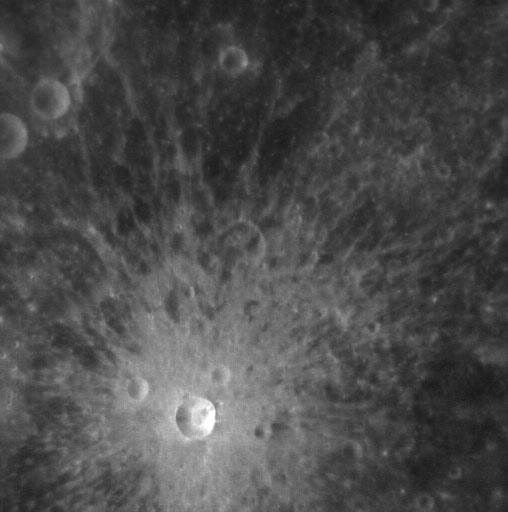
NASA's Messenger spacecraft spots an apparently fresh crater on Mercury during its early orbits on March 29, 2011. (Image credit: NASA/JHUAPL/CIW)

The team combined previous maps of Mercury's geology with new observations of the entire planet's surface roughness. They found the roughest terrain of Mercury featured the fewest wrinkles.

"It made us think that there's a process obscuring shortening structures," said Nishiyama, who thinks that impact debris in the roughest regions of Mercury is covering shrinking wrinkles.

The team then used the ridges and scarps in regions less affected by the dispersal of debris to estimate the amount of contraction. This indicated that missing features in rough areas could amount to 10% to 30% extra shrinkage over the 4.5 billion-year lifetime of Mercury. That amounts to a total change in diameter of up to 14.5 miles (23 kilometers) rather than the currently estimated 2.5 to 10 miles (4 to 16 kilometers).

"30% is a little bit surprising, but the corrected amount of contraction actually makes sense to me," Nishiyama said.

A grey sphere with a silver and gold spacecraft over it

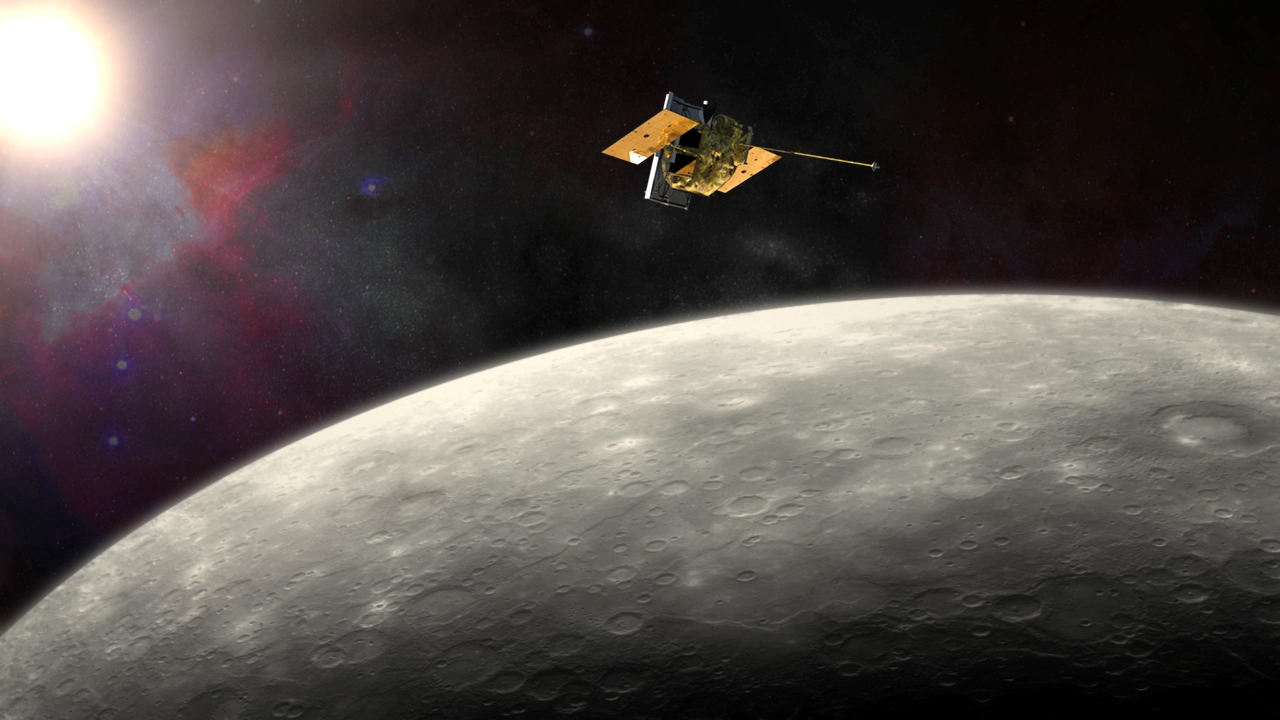
An illustration of NASA's MESSENGER probe over the surface of Mercury (Image credit: NASA/JHU-APL)

There may be more surprises in store. Nishiyama believes that the updated figures could still be an underestimate. This estimate is based on data collected by NASA's MESSENGER probe, which ended in 2015. MESSENGER could only distinguish features larger than around 3 miles (5 kilometers) across.

In November 2026, the BepiColombo mission will start conducting scans of Mercury's surface in much higher resolution than this, and that could reveal even more shrinkage features.

The team's research was published on Thursday (Sept. 10) in the journal Geophysical Research Letters.