Scientists turn skin cells into heart and brain cells using only drugs — no stem cells required

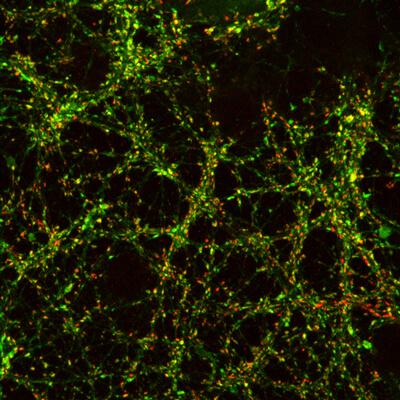
Neurons created from chemically induced neural stem cells. The cells were created from skin cells that were reprogrammed into neural stem cells using a cocktail of only nine chemicals. This is the first time cellular reprogramming has been accomplished without adding external genes to the cells. (credit: Mingliang Zhang, PhD, Gladstone Institutes)

Scientists at the Gladstone Institutes have used chemicals to transform skin cells into heart cells and brain cells, instead of adding external genes — making this accomplishment a breakthrough, according to the scientists.

The research lays the groundwork for one day being able to regenerate lost or damaged cells directly with pharmaceutical drugs — a more efficient and reliable method to reprogram cells and one that avoids medical concerns surrounding genetic engineering.

Instead, in two studies published in an open-access paper in Science and in Cell Stem Cell, the team of scientists at the Roddenberry Center for Stem Cell Biology and Medicine at Gladstone used chemical cocktails to gradually coax skin cells to change into organ-specific stem-cell-like cells and ultimately into heart or brain cells.

“This method brings us closer to being able to generate new cells at the site of injury in patients,” said Gladstone senior investigator Sheng Ding, PhD, the senior author on both studies. “Our hope is to one day treat diseases like heart failure or Parkinson’s disease with drugs that help the heart and brain regenerate damaged areas from their own existing tissue cells. This process is much closer to the natural regeneration that happens in animals like newts and salamanders, which has long fascinated us.”

Chemically Repaired Hearts
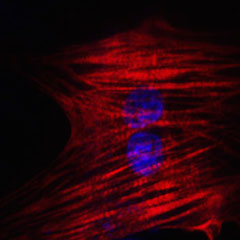
A human heart cell that was chemically reprogrammed from a human skin cell (credit: Nan Cao/Gladstone Institutes)

Transplanted adult heart cells do not survive or integrate properly into the heart and few stem cells can be coaxed into becoming heart cells.

Instead, in the Science study, the researchers used a cocktail of nine chemicals to change human skin cells into beating heart cells. By trial and error, they found the best combination of chemicals to begin the process by changing the cells into a state resembling multipotent stem cells (cells that can turn into many different types of cells in a particular organ). A second cocktail of chemicals and growth factors then helped transition the cells to become heart muscle cells.

With this method, more than 97% of the cells began beating, a characteristic of fully developed, healthy heart cells. The cells also responded appropriately to hormones, and molecularly, they resembled heart muscle cells, not skin cells. What’s more, when the cells were transplanted into a mouse heart early in the process, they developed into healthy-looking heart muscle cells within the organ.

“The ultimate goal in treating heart failure is a robust, reliable way for the heart to create new muscle cells,” said Srivastava, co-senior author on the Science paper. “Reprogramming a patient’s own cells could provide the safest and most efficient way to regenerate dying or diseased heart muscle.”

Rejuvenating the brain with neural stem cell-like cells

In the second study, authored by Gladstone postdoctoral scholar Mingliang Zhang, PhD, and published in Cell Stem Cell, the scientists created neural stem-cell-like cells from mouse skin cells using a similar approach.

The chemical cocktail again consisted of nine molecules, some of which overlapped with those used in the first study. Over ten days, the cocktail changed the identity of the cells, until all of the skin-cell genes were turned off and the genes of the neural stem-cell-like cells were gradually turned on.

When transplanted into mice, the neural stem-cell-like cells spontaneously developed into the three basic types of brain cells: neurons, oligodendrocytes, and astrocytes. The neural stem-cell-like cells were also able to self-replicate, making them ideal for treating neurodegenerative diseases or brain injury.

With their improved safety, these neural stem-cell-like cells could one day be used for cell replacement therapy in neurodegenerative diseases like Parkinson’s disease and Alzheimer’s disease, according to co-senior author Yadong Huang, MD, PhD, a senior investigator at Gladstone. “In the future, we could even imagine treating patients with a drug cocktail that acts on the brain or spinal cord, rejuvenating cells in the brain in real time.”


Gladstone Institutes | Chemically Reprogrammed Beating Heart Cell


Abstract of Conversion of human fibroblasts into functional cardiomyocytes by small molecules

Reprogramming somatic fibroblasts into alternative lineages would provide a promising source of cells for regenerative therapy. However, transdifferentiating human cells to specific homogeneous, functional cell types is challenging. Here we show that cardiomyocyte-like cells can be generated by treating human fibroblasts with a combination of nine compounds (9C). The chemically induced cardiomyocyte-like cells (ciCMs) uniformly contracted and resembled human cardiomyocytes in their transcriptome, epigenetic, and electrophysiological properties. 9C treatment of human fibroblasts resulted in a more open-chromatin conformation at key heart developmental genes, enabling their promoters/enhancers to bind effectors of major cardiogenic signals. When transplanted into infarcted mouse hearts, 9C-treated fibroblasts were efficiently converted to ciCMs. This pharmacological approach for lineage-specific reprogramming may have many important therapeutic implications after further optimization to generate mature cardiac cells.


Abstract of Pharmacological Reprogramming of Fibroblasts into Neural Stem Cells by Signaling-Directed Transcriptional Activation

Cellular reprogramming using chemically defined conditions, without genetic manipulation, is a promising approach for generating clinically relevant cell types for regenerative medicine and drug discovery. However, small-molecule approaches for inducing lineage-specific stem cells from somatic cells across lineage boundaries have been challenging. Here, we report highly efficient reprogramming of mouse fibroblasts into induced neural stem cell-like cells (ciNSLCs) using a cocktail of nine components (M9). The resulting ciNSLCs closely resemble primary neural stem cells molecularly and functionally. Transcriptome analysis revealed that M9 induces a gradual and specific conversion of fibroblasts toward a neural fate. During reprogramming specific transcription factors such as Elk1 and Gli2 that are downstream of M9-induced signaling pathways bind and activate endogenous master neural genes to specify neural identity. Our study provides an effective chemical approach for generating neural stem cells from mouse fibroblasts and reveals mechanistic insights into underlying reprogramming processes.
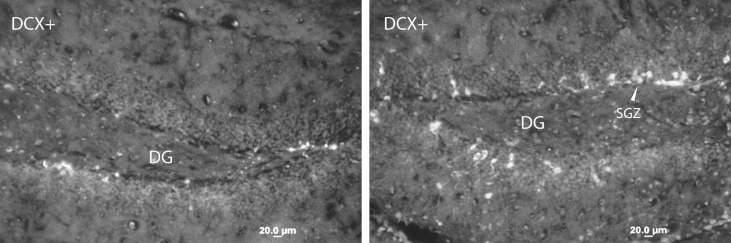
Micro-needle insertion into hippocampus stimulates brain regeneration in animal model of AD

Micro-needle insertion results. Left panel is the control side (no lesion placement) and the right panel (the lesioned side) showed increased expression of DCX+ cells (neuronal precursors) in the SGZ (a brain region in the hippocampus where adult neurogenesis occurs) (scale bar= 20 μm). (credit: Shijie Song et al./Cell Transplantation)

Sticking a needle into the hippocampus of mice modeled with Alzheimer’s disease (AD) improved performance on memory tasks, stimulated regenerative activity, and reduced β-amyloid plaques (a hallmark of AD). This area was chosen because the early and primary damage by AD appears to take place in the hippocampus.

Until recently, many diseases of the central nervous system could not be treated by this method because of inaccessibility of the brain to micro-needles, said the researchers.

“Because Alzheimer’s disease is increasing in prevalence, new intervention strategies are becoming invaluable,” said Dr. Shinn-Zong Lin, professor of Neurosurgery at China Medical University Hospital in TaiChung, Taiwan and Co-Editor-in-Chief for Cell Transplantation. “Since the host’s microenvironment can be inhospitable to transplanted cells and pharmacological interventions in diseased conditions, strategies to increase the regenerative capacity of the patient’s own body may be another viable option. Future studies should strive to include a larger sample size in order to validate this approach.”

The study will be published in a future issue of Cell Transplantation and is currently available open-access as an unedited, early epub.


Abstract of Transient Micro-needle Insertion into Hippocampus Triggers Neurogenesis and Decreases Amyloid Burden in a Mouse Model of Alzheimer’s Disease

Targeted micro-lesions of the hippocampus have been reported to enhance neurogenesis in the sub-granular zone (SGZ). The potential therapeutic impact of transient insertion of a micro-needle was investigated in a mouse model of Alzheimer’s disease (AD). Here we tested the hypothesis that transient micro-injury to the brain elicits cellular responses that mediate beneficial regenerative processes. Brief stereotaxic insertion and removal of a micro-needle into the right hippocampus of 14 month old APP/PS1 mice brain resulted in a) stimulation of hippocampal neurogenesis and b) reduction of beta-amyloid plaque number in the CA-1 region. This treatment also resulted in a trend towards improved performance in the radial arm water maze (RAWM). Further studies of fundamental cellular mechanisms of the brain’s response to micro-injury will be useful for investigation of potential neuro-protective and deleterious effects of targeted micro-lesions and deep brain stimulation in Alzheimer Disease (AD).

Blocking pain by turning off specific neurons with light

Optogenetic inhibition of neurons (credit: McGovern Institute for Brain Research/MIT)

McGill University researchers have discovered an effective alternative to pain medication (such as the opiate percocet that Prince was reportedly taking): optogenetics — using light to control cells (such as neurons) in living tissue.

The scientists bred mice that were genetically engineered, causing specific peripheral neurons responsible for pain transmission to express an opsin (light-sensitive protein). (See Optogenetics switch turns neurons on and off and Controlling pain by optogenetic stimulation of the brain’s pain center.)

Shining yellow light on skin above those modified Nav 1.8+ nociceptor neurons (in the hind paw) caused them to shut off, decreasing the mouse’s sensitivity to pain (from touch and heat).* The duration of the effect could be controlled by the amount of time the light was applied.

Hope for pain relief in humans

Further advances in neuroscience are necessary to apply this method of pain relief to humans, according to professor Philippe Séguéla, a researcher at the Montreal Neurological Institute and Hospital and the article’s senior author. Séguéla says one possible way to make human neurons photosensitive would be through the use of a harmless virus that could be injected, as needed, to temporarily deliver opsins to specific neurons, without causing side effects.

Opiates are the most commonly used treatment for chronic pain today, but they are often used systemically and not directed to the specific region of the body affected by the pain. The duration of the opiate effects can also not be accurate estimated, compared to the precision with a beam of light.

It is estimated that between 26.4 million and 36 million people abuse opioids worldwide, with an estimated 2.1 million people in the U.S. suffering from substance-use disorders related to prescription opioid pain relievers in 2012 and an estimated 467,000 addicted to heroin, according to the NIH National Institute on Drug Abuse.

The research, published in an open-access paper in the journal eNeuro, was funded by the Canadian Institutes of Health Research, the Natural Sciences and Engineering Research Council, the Quebec Pain Research Network, and the Louise and Alan Edwards Foundation.

* Q: What is the maximum transdermal penetration depth for yellow light, and based on that, which types of peripheral neurons could potentially be treated effectively without light-induced trauma?

A: We don’t have an accurate measurement of the depth of light penetration in the skin, however, we can say that yellow light reaches the different layers of the epidermis and likely the superficial part of the dermis. Light intensity decreases exponentially as it enter the skin, but at the light intensities we used, it should be sufficient to reach the terminals of various sensory neurons. Sensory neurons (except proprioceptors) innervate the skin, and their endings terminate in the dermis/epidermis of the skin. Therefore, transdermal illumination can be efficient to modulate the activity of most of these sensory fibers. The parameters of our optical stimulations (light intensity, duration of light application) are innocuous and non-invasive, hence they don’t cause any trauma. — Ihab Daou, lead author, Department of Neurology and Neurosurgery, Montreal Neurological Institute

UPDATE 4/25/2016 Added Q&A on yellow-light penetration


Abstract of Optogenetic silencing of Nav1.8-positive afferents alleviates inflammatory and neuropathic pain

We report a novel transgenic mouse model in which the terminals of peripheral nociceptors can be silenced optogenetically with high spatio-temporal precision, leading to the alleviation of inflammatory and neuropathic pain. Inhibitory archaerhodopsin-3 (Arch) proton pumps were delivered to Nav1.8+ primary afferents using the Nav1.8-Cre driver line. Arch expression covered both peptidergic and non-peptidergic nociceptors and yellow light stimulation reliably blocked electrically-induced action potentials in DRG neurons. Acute transdermal illumination of the hind paw of Nav1.8-Arch+ mice significantly reduced mechanical allodynia under inflammatory conditions, while basal mechanical sensitivity was not affected by the optical stimulation. Arch-driven hyperpolarization of nociceptive terminals was sufficient to prevent ChR2-mediated mechanical and thermal hypersensitivity in double transgenic Nav1.8-ChR2+-Arch+ mice. Furthermore, prolonged optical silencing of peripheral afferents in anesthetized Nav1.8-Arch+ mice led to post-stimulation analgesia with a significant decrease in mechanical and thermal hypersensitivity under inflammatory and neuropathic conditions. These findings highlight the role of peripheral neuronal inputs in the onset and maintenance of pain hypersensitivity, demonstrate the plasticity of pain pathways even after sensitization has occurred, and support the involvement of Nav1.8+ afferents in both inflammatory and neuropathic pain. Taken together, we present a selective analgesic approach in which genetically-identified subsets of peripheral sensory fibers can be remotely and optically inhibited with high temporal resolution, overcoming the compensatory limitations of genetic ablations.

Significance Statement: Selective activation and/or inhibition of peripheral nociceptors allow us to control pain transmission and modulate pain perception. Here, we generated a novel transgenic mouse line in which optical activation of archaerhodopsin-3 (Arch) proton pumps efficiently silenced the activity of Nav1.8+ nociceptive afferents. Acute and prolonged transdermal illumination of the hind paws of Nav1.8-Arch+ mice reduced mechanical and thermal hypersensitivity under inflammatory and neuropathic conditions, underlining the contribution of the peripheral neuronal component, particularly Nav1.8+ fibers, in the transmission of evoked pain as well as the development and maintenance of chronic pain. This optogenetic approach can be applied to functionally investigate other subsets of sensory neurons with high temporal precision, and safe genetic delivery of inhibitory opsins may prove useful for clinical applications.

You can now be identified by your ‘brainprint’ with 100% accuracy

(credit: Jonathan Cohen/Binghamton University)

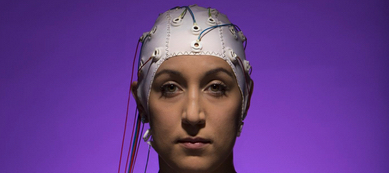
Binghamton University researchers have developed a biometric identification method called Cognitive Event-RElated Biometric REcognition (CEREBRE) for identifying an individual’s unique “brainprint.” They recorded the brain activity of 50 subjects wearing an electroencephalograph (EEG) headset while looking at selected images from a set of 500 images.

The researchers found that participants’ brains reacted uniquely to each image — enough so that a computer system that analyzed the different reactions was able to identify each volunteer’s “brainprint” with 100 percent accuracy.

In their original brainprint study in 2015, published in Neurocomputing (see ‘Brainprints’ could replace passwords), the research team was able to identify one person out of a group of 32 by that person’s responses, with 97 percent accuracy. That study only used words. Switching to images made a huge difference.

High-security sites

It’s only a three-point difference, but going from 97 to 100 percent makes possible a reliable system for high-security situations, such as “ensuring the person going into the Pentagon or the nuclear launch bay is the right person,” said Assistant Professor of Psychology Sarah Laszlo. “You don’t want to be 97 percent accurate for that, you want to be 100 percent accurate.”

Laszlo says brain biometrics are appealing because they can be cancelled (meaning the person can simple do another EEG session) and cannot be imitated or stolen by malicious means, the way a finger or retina can (as in the movie Minority Report).

“If someone’s fingerprint is stolen, that person can’t just grow a new finger to replace the compromised fingerprint — the fingerprint for that person is compromised forever. Fingerprints are ‘non-cancellable.’ Brainprints, on the other hand, are potentially cancellable. So, in the unlikely event that attackers were actually able to steal a brainprint from an authorized user, the authorized user could then ‘reset’ their brainprint,” Laszlo explained.

Analyzing “event-related potential” brain signals 

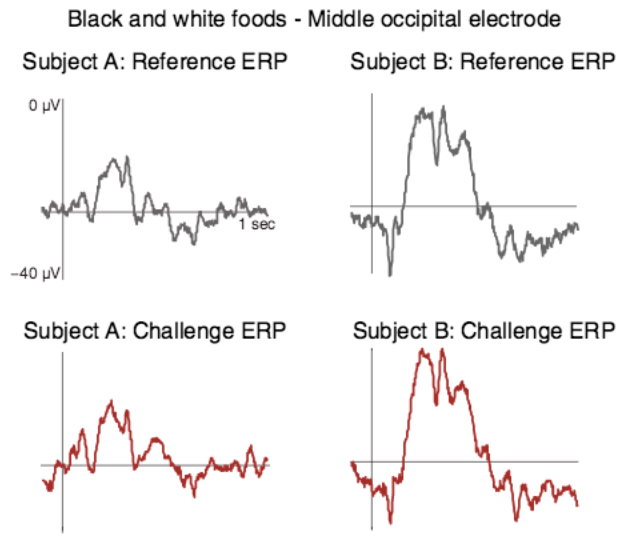
Reference ERPs (originally recorded from the subject) and challenge ERPs (the ERP response detected from the subject being tested, which must match the reference ERP to verify it’s the same person) from two representative participants in the experiment, in response to viewing a “black and white foods” image, measured over the middle occipital (Oz) channel in the brain. Notice that even by eye, it is possible to determine which challenge ERP corresponds to which reference ERP. (credit: Maria V. Ruiz-Blondet et al./IEEE Trans. Inf. Forensics Security)

The researchers found in their original study that the key to detecting differences in brain signals was to look at and analyze “event-related potential (ERP) brain signals recorded from each subject. ERPs are brain signals that are triggered by specific events (such as seeing a photo). Unlike EEG signals, ERPs are unique and happen over a period of a few milliseconds.


How ERPs are identified

The researchers used six types of stimuli in the CEREBRE protocol: sine gratings, low frequency words, color versions of black and white images, black and white foods, black and white celebrity faces, and color foods. For the foods and celebrity faces, they used ten tokens of each stimulus type (e.g., 10 different foods).

As the authors note in a new paper in The IEEE Transactions on Information Forensics and Security, “We … predict that, while ERPs elicited in response to single categories of stimulation (e.g., foods) will be somewhat identifiable, combinations of ERPs elicited in response to multiple categories of stimulation will be even more identifiable.

“This prediction is supported by the likelihood that each category of stimulation will draw upon differing (though overlapping) brain systems. For example, if the sine gratings call primarily upon the primary visual cortex, and the foods call primarily on the ventral midbrain, then considering both responses together for biometric identification provides multiple, independent, pieces of information about the user’s functional brain organization — each of which can contribute unique variability to the overall biometric solution.”


Andrew Hatling/Binghamton University | The New Biometric — Brainprint


Abstract of CEREBRE: A Novel Method for Very High Accuracy Event-Related Potential Biometric Identification

The vast majority of existing work on brain biometrics has been conducted on the ongoing electroencephalogram. Here, we argue that the averaged event-related potential (ERP) may provide the potential for more accurate biometric identification, as its elicitation allows for some control over the cognitive state of the user to be obtained through the design of the challenge protocol. We describe the Cognitive Event-RElated Biometric REcognition (CEREBRE) protocol, an ERP biometric protocol designed to elicit individually unique responses from multiple functional brain systems (e.g., the primary visual, facial recognition, and gustatory/appetitive systems). Results indicate that there are multiple configurations of data collected with the CEREBRE protocol that all allow 100% identification accuracy in a pool of 50 users. We take this result as the evidence that ERP biometrics are a feasible method of user identification and worthy of further research.

Quadriplegic man is first to regain use of hand and fingers

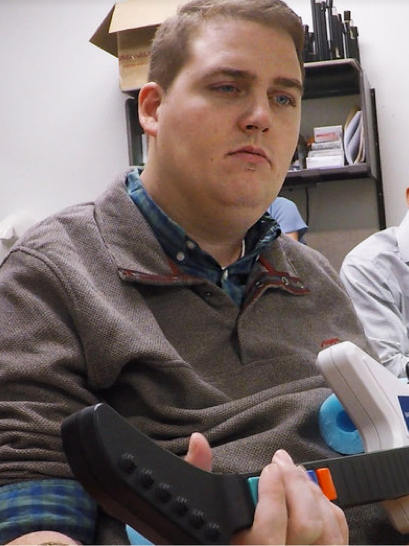
Ian Burkhart, who is paralyzed, playing a guitar video game, made possible by a new neural bypass system. (credit: The Ohio State Wexner Medical Center and Battelle)

Battelle and The Ohio State University Wexner Medical Center have developed and surgically implanted the first neural bypass for spinal cord injuries that reconnects the brain to muscles, allowing voluntary and functional control of a paralyzed limb by using a patient’s thoughts — no robotic prosthetic arm required.

Ian Burkhart, a 24-year-old quadriplegic injured in a diving accident, is the first person to experience “limb reanimation,” thanks to this neural bypass system, called “NeuroLife.”

The Battelle team has been developing this technology for more than a decade. Battelle scientists first recorded neural impulses from an electrode array* implanted in a paralyzed person’s brain. They used that recorded data to illustrate and test the device’s effect on the patient and prove the concept.

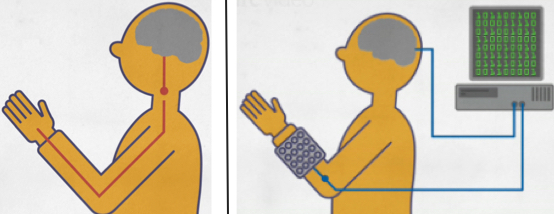
How the neural bypass system works. Left: Injury to spinal cord at C7 blocks signals from the motor cortex from reaching the arm. Right: 96 implanted microelectrodes pick up motor-cortex signals and send to a computer, whose algorithms learn and decode hand and finger movement thoughts, converting them to electrical signals that then activate an electrical stimulation sleeve, which stimulates matching neurons in the patient’s wrist to trigger hand and finger movements. (credit: The Ohio State Wexner Medical Center and Battelle)

The Ohio State and Battelle teams worked together to figure out the correct sequence of electrodes to stimulate to allow Burkhart to move his fingers and hand functionally. Burkhart can now perform sophisticated movements with his hands and fingers, such as picking up a spoon, swiping a credit card, or picking up and holding a phone to his ear. For example, he uses different brain signals and muscles to rotate his hand, make a fist, or pinch his fingers together to grasp an object. (He retained some functionality in his right shoulder and bicep.)

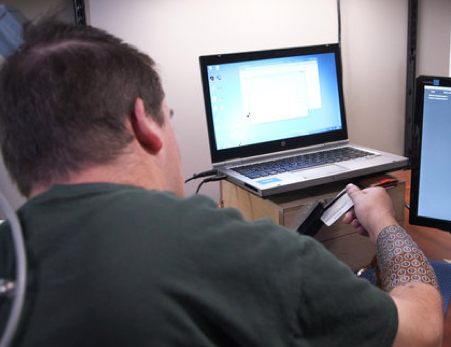
Burkhart swiping a credit card (credit: The Ohio State Wexner Medical Center and Battelle)

“It’s amazing to see what he’s accomplished,” said Nick Annetta, electrical engineering lead for Battelle’s team on the project. “Ian can grasp a bottle, pour the contents of the bottle into a jar and put the bottle back down. Then he takes a stir bar, grips that and then stirs the contents of the jar that he just poured and puts it back down. He’s controlling it every step of the way.”

The neural bypass technology combines computer algorithms that learn and decode the user’s brain activity and a high-definition muscle stimulation sleeve that triggers neurons in the hand and finger.

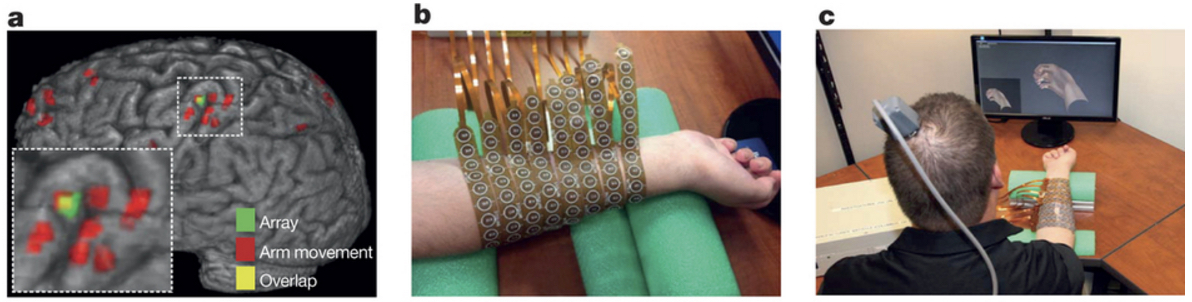
Neural bypass system experimental setup and neural modulation. (a) Red regions are brain areas most active during attempts to mimic hand movements, as indicated by fMRI (functional magnetic imaging resonance) contrast. The implanted microelectrode array location from post-operation computed tomography is shown in green; The overlap of the red and green regions is shown in yellow. (b) Neuromuscular electrical stimulation sleeve. (c) Neural bypass system learning to match patient’s thoughts (about hand activity shown on computer monitor) to specific activation patterns in the electrical stimulation sleeve. (credit: Chad E. Bouton et al./Nature)

“In the 30 years I’ve been in this field, this is the first time we’ve been able to offer realistic hope to people who have very challenging lives,” said Jerry Mysiw, M.D., chair of the Department of Physical Medicine and Rehabilitation at Ohio State. “What we’re looking to do is help these people regain more control over their bodies.”

Burkhart is the first of a potential five participants in a clinical study. The researchers say this technology promises to help patients affected by various brain and spinal cord injuries such as strokes and traumatic brain injury to be more independent and functional.

Regrettably, Burkhart will not be able to take the system home when funding runs out this year, but the researchers hope to evolve the technology into a wireless system and make it readily available to be used by patients at home.

The research was published online in the journal Nature on April 13.


OSU Wexner Medical Center | Man Uses His Own Brainwaves To Retrain His Paralyzed Hand


Nature Video | The nerve bypass: how to move a paralysed hand

* Widely reported as a “computer chip” (based on an inaccurate statement in the Ohio State press release).


Abstract of Restoring cortical control of functional movement in a human with quadriplegia

Millions of people worldwide suffer from diseases that lead to paralysis through disruption of signal pathways between the brain and the muscles. Neuroprosthetic devices are designed to restore lost function and could be used to form an electronic ‘neural bypass’ to circumvent disconnected pathways in the nervous system. It has previously been shown that intracortically recorded signals can be decoded to extract information related to motion, allowing non-human primates and paralysed humans to control computers and robotic arms through imagined movements. In non-human primates, these types of signal have also been used to drive activation of chemically paralysed arm muscles. Here we show that intracortically recorded signals can be linked in real-time to muscle activation to restore movement in a paralysed human. We used a chronically implanted intracortical microelectrode array to record multiunit activity from the motor cortex in a study participant with quadriplegia from cervical spinal cord injury. We applied machine-learning algorithms to decode the neuronal activity and control activation of the participant’s forearm muscles through a custom-built high-resolution neuromuscular electrical stimulation system. The system provided isolated finger movements and the participant achieved continuous cortical control of six different wrist and hand motions. Furthermore, he was able to use the system to complete functional tasks relevant to daily living. Clinical assessment showed that, when using the system, his motor impairment improved from the fifth to the sixth cervical (C5–C6) to the seventh cervical to first thoracic (C7–T1) level unilaterally, conferring on him the critical abilities to grasp, manipulate, and release objects. This is the first demonstration to our knowledge of successful control of muscle activation using intracortically recorded signals in a paralysed human. These results have significant implications in advancing neuroprosthetic technology for people worldwide living with the effects of paralysis.

Electrical stimulation of brain pleasure center reduces chronic pain

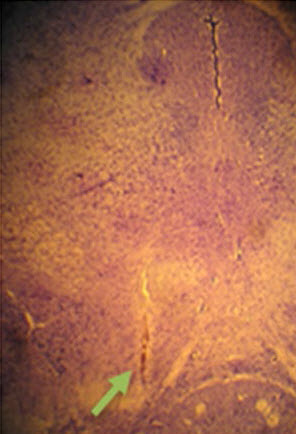
A brain slice showing electrode tip location (credit: Ai‑Ling Li et al./ Experimental Brain Research)

Are you in pain, but your doc won’t increase your hydrocodone dosage (or you don’t want to overdose)?

University of Texas at Arlington researchers may have a (future) drug-free fix: electrical stimulation of a deep middle-brain structure that blocks pain signals at the spinal cord level while triggering release of pleasure-associated dopamine to reduce the associated emotional distress.

“This is the first study to use a wireless electrical device to alleviate pain by directly stimulating the ventral tegmental area of the brain,” said Yuan Bo Peng, UTA psychology professor and co-author of a paper in the journal Experimental Brain Research.

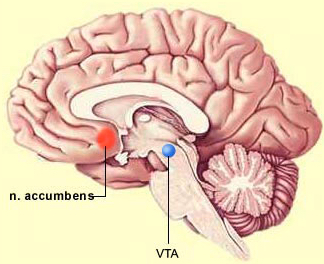
Ventral tegmental area (VTA) of the brain, a pleasure center that generates dopamine (credit: Bruno Dubuc)

“While still under laboratory testing [in rats], this new method does provide hope that in the future we will be able to alleviate chronic pain without the side effects of medications,” said Peng.

Nearly two million Americans were dependent on or abused opioid medicines in 2014, and 165,000 died between 1999 and 2014 from overdoses related to opioid prescriptions, according to the Centers for Disease Control.

The project was supported partly by grants from the Texas Norman Hackerman Advanced Research Program, Intel Corporation, and the Texas Medical Research Collaborative.


Abstract of Stimulation of the ventral tegmental area increased nociceptive thresholds and decreased spinal dorsal horn neuronal activity in rat

Deep brain stimulation has been found to be effective in relieving intractable pain. The ventral tegmental area (VTA) plays a role not only in the reward process, but also in the modulation of nociception. Lesions of VTA result in increased pain thresholds and exacerbate pain in several pain models. It is hypothesized that direct activation of VTA will reduce pain experience. In this study, we investigated the effect of direct electrical stimulation of the VTA on mechanical, thermal and carrageenan-induced chemical nociceptive thresholds in Sprague–Dawley rats using our custom-designed wireless stimulator. We found that: (1) VTA stimulation itself did not show any change in mechanical or thermal threshold; and (2) the decreased mechanical and thermal thresholds induced by carrageenan injection in the hind paw contralateral to the stimulation site were significantly reversed by VTA stimulation. To further explore the underlying mechanism of VTA stimulation-induced analgesia, spinal cord dorsal horn neuronal responses to graded mechanical stimuli were recorded. VTA stimulation significantly inhibited dorsal horn neuronal activity in response to pressure and pinch from the paw, but not brush. This indicated that VTA stimulation may have exerted its analgesic effect via descending modulatory pain pathways, possibly through its connections with brain stem structures and cerebral cortex areas.

Largest network of cortical neurons mapped from ~100 terabytes data set

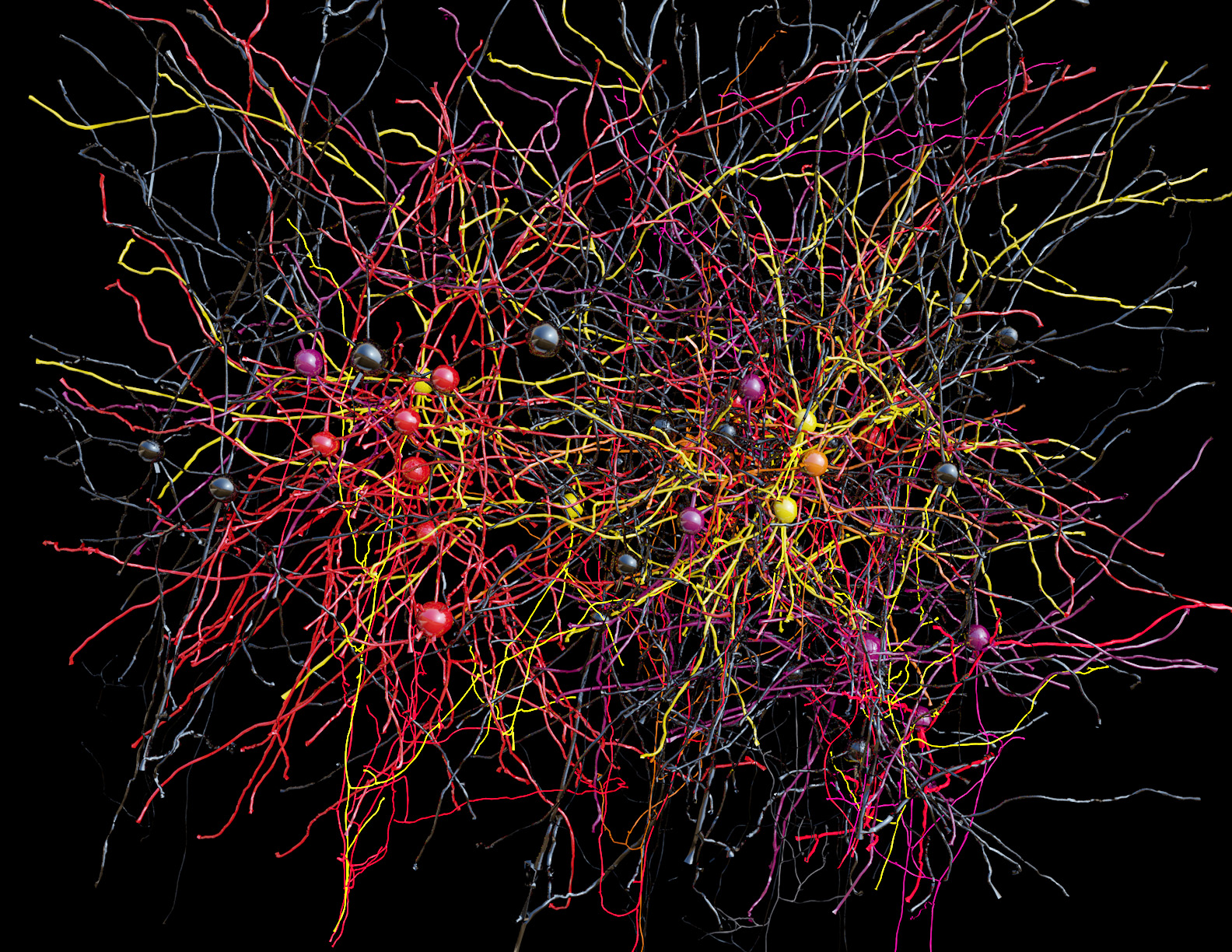
Neuroscientists have constructed a network map of connections between cortical neurons, traced from a ~100 terabytes 3D data set. The data were created by an electron microscope in nanoscopic detail, allowing every one of the “wires” to be seen, along with their connections. Some of the neurons are color-coded according to their activity patterns in the living brain. (credit: Clay Reid, Allen Institute; Wei-Chung Lee, Harvard Medical School; Sam Ingersoll, graphic artist)

The largest network of the connections between neurons in the cortex to date has been published by an international team of researchers from the Allen Institute for Brain Science, Harvard Medical School, and Neuro-Electronics Research Flanders (NERF).

In the process of their study*, the researchers developed new tools that will be useful for “reverse engineering the brain by discovering relationships between circuit wiring and neuronal and network computations,” says Wei-Chung Lee, Ph.D., Instructor in Neurobiology at Harvard Medicine School and lead author of a paper published this week in the journal Nature.

The study is part of a “functional connectomics” research program started almost ten years ago that aims at bridging a longstanding gap between two areas of neuroscience study: brain activity (using fMRI imaging) and brain wiring (using detailed electron microscopy).

The research began by identifying neurons in the mouse visual cortex that responded to particular visual stimuli (pyramidal cells in V1, the rodent primary visual cortex), such as vertical or horizontal bars on a screen. The scientists then made ultra-thin slices of brain and captured millions of detailed images of those targeted cells and synapses, which were then reconstructed in three dimensions. Teams of annotators simultaneously traced individual neurons through the 3D stacks of images and located connections between individual neurons.

Analyzing this wealth of data yielded several results, including the first direct structural evidence to support the hypothesis that neurons that do similar tasks are more likely to be connected to each other than to nearby neurons that carry out different tasks.

New tools for reverse engineering the brain

The researchers said these new research tools will also be employed in an $18.7 million IARPA project announced March 12 with the Allen Institute for Brain Science, Baylor College of Medicine, and Princeton University, which seeks to scale these methods to a larger segment of brain tissue. That project is part of the Machine Intelligence from Cortical Networks (MICrONS) program (see CMU announces research project to reverse-engineer brain algorithms, funded by IARPA), which seeks to revolutionize machine learning by reverse-engineering the algorithms of the brain.

The 3D image data from the Allen Institute-Baylor study will be sent to Princeton University, under Sebastian Seung, Ph.D., Professor of Computer Science and the Princeton Neuroscience Institute, where it will be painstakingly reconstructed in three dimensions by human annotators aided by powerful machine vision and machine learning algorithms, and each individual neuron with all its myriad processes will be traced and analyzed.

The end goal of that functional connectomics project is to create a reconstruction of a cubic millimeter of brain tissue, the size of a grain of sand, yet containing the largest section of brain ever to be studied in this way to date.

Improving artificial neural networks algorithms

Beyond that, the ultimate goal of MICrONS is to implement the algorithms and learning rules that scientists decipher from the brain to advance the field of artificial intelligence by improving artificial neural networks algorithms — for speech recognition, recognizing faces, and helping analyze big data for biomedical research, for example.

“In many ways, these artificial neural networks are still primitive compared to biological networks of neurons and do not learn the way real brains do,” says Andreas Tolias, Ph.D., Associate Professor in the Department of Neuroscience at Baylor College of Medicine. “Our goal is to fill this gap and apply the algorithms of the brain to engineer novel artificial network architectures.”

* This work was supported by the Harvard Medical School Vision Core Grant, the Bertarelli Foundation, the Edward R. and Anne G. Lefler Center,the Stanley and Theodora Feldberg Fund, Neuro-Electronics Research Flanders (NERF), the Allen Institute for Brain Science, and the National Institutes of Health, through resources provided by the National Resource for Biomedical Supercomputing at the Pittsburgh Supercomputing Center and the National Center for Multiscale Modeling of Biological Systems.


Abstract of Anatomy and function of an excitatory network in the visual cortex

Circuits in the cerebral cortex consist of thousands of neurons connected by millions of synapses. A precise understanding of these local networks requires relating circuit activity with the underlying network structure. For pyramidal cells in superficial mouse visual cortex (V1), a consensus is emerging that neurons with similar visual response properties excite each other, but the anatomical basis of this recurrent synaptic network is unknown. Here we combined physiological imaging and large-scale electron microscopy to study an excitatory network in V1. We found that layer 2/3 neurons organized into subnetworks defined by anatomical connectivity, with more connections within than between groups. More specifically, we found that pyramidal neurons with similar orientation selectivity preferentially formed synapses with each other, despite the fact that axons and dendrites of all orientation selectivities pass near (<5 μm) each other with roughly equal probability. Therefore, we predict that mechanisms of functionally specific connectivity take place at the length scale of spines. Neurons with similar orientation tuning formed larger synapses, potentially enhancing the net effect of synaptic specificity. With the ability to study thousands of connections in a single circuit, functional connectomics is proving a powerful method to uncover the organizational logic of cortical networks.

Lawrence Livermore National Laboratory and IBM build brain-inspired supercomputer

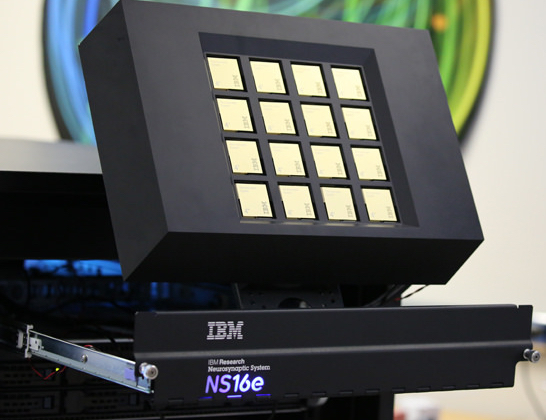
Lawrence Livermore’s new supercomputer system uses 16 IBM TrueNorth chips developed by IBM Research (credit: IBM Research)

Lawrence Livermore National Laboratory (LLNL) has purchased IBM Research’s supercomputing platform for deep-learning inference, based on 16 IBM TrueNorth neurosynaptic computer chips, to explore deep learning algorithms.

IBM says the scalable platform processing power is the equivalent of 16 million artificial “neurons” and 4 billion “synapses.” The brain-like neural-network design of the IBM Neuromorphic System can process complex cognitive tasks such as pattern recognition and integrated sensory processing far more efficiently than conventional chips, says IBM.

The technology represents a fundamental departure from computer design that has been prevalent for the past 70 years and could be incorporated in next-generation supercomputers able to perform at exascale speeds — 50 times faster than today’s most advanced petaflop (quadrillion floating point operations per second) systems.

Ultra-low-energy TrueNorth processor

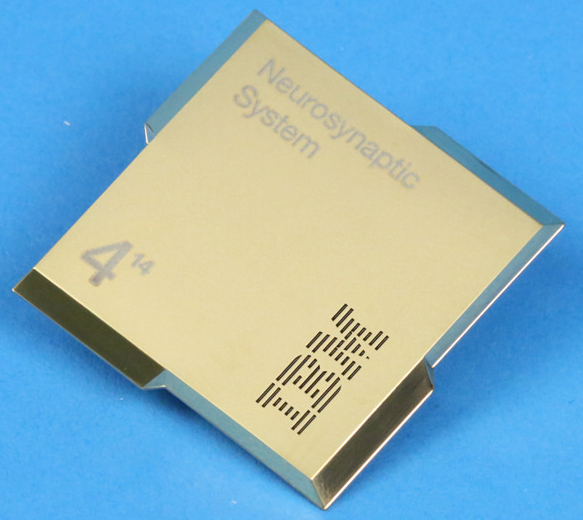
IBM TrueNorth neuromorphic supercomputing processor chip (credit: IBM Research)

The TrueNorth processor chip was introduced in 2014 (see IBM launches functioning brain-inspired chip). It consists of 5.4 billion transistors wired together to create an array of 1 million digital “neurons” that communicate with one another via 256 million electrical “synapses.”

Like the human brain, neurosynaptic systems require significantly less electrical power and volume. The 16 TrueNorth chips consume the energy equivalent of only a tablet computer — 2.5 watts of power. At 0.8 volts, each chip consumes 70 milliwatts of power running in real time and delivers 46 giga synaptic operations per second.

TrueNorth was originally developed under the auspices of DARPA’s Systems of Neuromorphic Adaptive Plastic Scalable Electronics (SyNAPSE) program in collaboration with Cornell University (see IBM simulates 530 billion neurons, 100 trillion synapses on supercomputer).

“The delivery of this advanced computing platform represents a major milestone as we enter the next era of cognitive computing,” said Dharmendra S. Modha, IBM Fellow, chief scientist, brain-inspired computing, IBM Research – Almaden. “Prior to design and fabrication, we simulated the IBM TrueNorth processor using LLNL’s Sequoia supercomputer. This collaboration will push the boundaries of brain-inspired computing to enable future systems that deliver unprecedented capability and throughput, while helping to minimize the capital, operating, and programming costs.”

Protecting the US nuclear stockpile

The new system will be used to explore new computing capabilities important to the National Nuclear Security Administration’s (NNSA) missions in cyber security — stewardship of the nation’s nuclear deterrent and non-proliferation.

NNSA’s Advanced Simulation and Computing (ASC) program — a cornerstone of NNSA’s Stockpile Stewardship Program — will evaluate machine learning applications, deep learning algorithms, and architectures, and conduct general computing feasibility studies.

DARPA’s ‘Targeted Neuroplasticity Training’ program aims to accelerate learning ‘beyond normal levels’

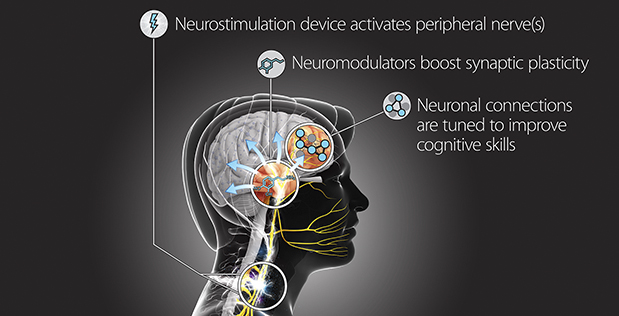
New DARPA “TNT” technology will be designed to safely and precisely modulate peripheral nerves to control synaptic plasticity during cognitive skill training. (No mention of NZT.) (credit: DARPA)

DARPA has announced a new program called Targeted Neuroplasticity Training (TNT) aimed at exploring how to use peripheral nerve stimulation and other methods to enhance learning.

DARPA already has research programs underway to use targeted stimulation of the peripheral nervous system as a substitute for drugs to treat diseases and accelerate healing*, to control advanced prosthetic limbs**, and to restore tactile sensation.

But now DARPA plans to to take an even more ambitious step: It aims to enlist the body’s peripheral nerves to achieve something that has long been considered the brain’s domain alone: facilitating learning — specifically, training in a wide range of cognitive skills.

The goal is to reduce the cost and duration of the Defense Department’s extensive training regimen, while improving outcomes. If successful, TNT could accelerate learning and reduce the time needed to train foreign language specialists, intelligence analysts, cryptographers, and others.

“Many of these skills, such as understanding and speaking a new foreign language, can be challenging to learn,” says the DARPA statement. “Current training programs are time consuming, require intensive study, and usually require evidence of a more-than-minimal aptitude for eligibility. Thus, improving cognitive skill learning in healthy adults is of great interest to our national security.”

Going beyond normal levels of learning

The program is also notable because it will not just train; it will advance capabilities beyond normal levels — a transhumanist approach.

“Recent research has shown that stimulation of certain peripheral nerves, easily and painlessly achieved through the skin, can activate regions of the brain involved with learning,” by releasing neurochemicals in the brain that reorganize neural connections in response to specific experiences, explained TNT Program Manager Doug Weber,

“This natural process of synaptic plasticity is pivotal for learning, but much is unknown about the physiological mechanisms that link peripheral nerve stimulation to improved plasticity and learning,” Weber said. “You can think of peripheral nerve stimulation as a way to reopen the so-called ‘Critical Period’ when the brain is more facile and adaptive. TNT technology will be designed to safely and precisely modulate peripheral nerves to control plasticity at optimal points in the learning process.”

The goal is to optimize training protocols that expedite the pace of learning and maximize long-term retention of even the most complicated cognitive skills. DARPA intends to take a layered approach to exploring this new terrain:

  • Fundamental research will focus on gaining a clearer and more complete understanding of how nerve stimulation influences synaptic plasticity, how cognitive skill learning processes are regulated in the brain, and how to boost these processes to safely accelerate skill acquisition while avoiding potential side effects.
  • The engineering side of the program will target development of a non-invasive device that delivers peripheral nerve stimulation to enhance plasticity in brain regions responsible for cognitive functions.

Proposers Day

TNT expects to attract multidisciplinary teams spanning backgrounds such as cognitive neuroscience, neural plasticity, electrophysiology, systems neurophysiology, biomedical engineering, human performance, and computational modeling.

To familiarize potential participants with the technical objectives of TNT, DARPA will host a Proposers Day on Friday, April 8, 2016, at the Westin Arlington Gateway in Arlington, Va. (registration closes on Thursday, March 31, 2016). A DARPA Special Notice announces the Proposers Day and describes the specific capabilities sought. A Broad Agency Announcement with full technical details on TNT will be forthcoming. For more information, please email DARPA-SN-16-20@darpa.mil.

* DARPA’s ElectRx program is looking for “demonstrations of feedback-controlled neuromodulation strategies to establish healthy physiological states,” along with “disruptive biological-interface technologies required to monitor biomarkers and peripheral nerve activity … [and] deliver therapeutic signals to peripheral nerve targets, using in vivo, real-time biosensors and novel neural interfaces using optical, acoustic, electromagnetic, or engineered biology strategies to achieve precise targeting with potentially single-axon resolution.”

** DARPA’s HAPTIX (Hand Proprioception and Touch Interfaces) program “seeks to create a prosthetic hand system that moves and provides sensation like a natural hand. … HAPTIX technologies aim to tap in to the motor and sensory signals of the arm, allowing users to control and sense the prosthesis via the same neural signaling pathways used for intact hands and arms. … The system will include electrodes for measuring prosthesis control signals from muscles and motor nerves, and sensory feedback will be delivered through electrodes placed in sensory nerves.”


Exploring long-range communications in the brain

Red and green dots reveal a region in the brain that that is very dense with synapses. A optically activated fluorescent protein allows Ofer Yizhar, PhD, and his group to record the activity of the synapses. (credit: Weizmann Institute of Science)

Weizmann Institute of Science researchers have devised a new way to track long-distance communications between nerve cells in different areas of the brain. They used optogenetic techniques (using genetic engineering of neurons and laser light in thin optical fibers to temporarily silence long-range axons, effectively leading to a sustained “disconnect” between two distant brain nodes.

By observing what happens when crucial connections are disabled, the researchers could begin to determine the axons’ role in the brain. Mental and neurological diseases are often thought to result from changes in long-range brain connectivity, so these studies could contribute to a better understanding of the mechanisms behind health and disease in the brain.

The study, published in Nature Neuroscience, “led us to a deeper understanding of the unique properties of the axons and synapses that form the connections between neurons,” said Ofer Yizhar, PhD, in the Weizmann Institute of Science’s Neurobiology Department. “We were able to uncover the responses of axons to various optogenetic manipulations. Understanding these differences will be crucial to unraveling the mechanisms for long-distance communication in the brain.”


Abstract of Biophysical constraints of optogenetic inhibition at presynaptic terminals

We investigated the efficacy of optogenetic inhibition at presynaptic terminals using halorhodopsin, archaerhodopsin and chloride-conducting channelrhodopsins. Precisely timed activation of both archaerhodopsin and halorhodpsin at presynaptic terminals attenuated evoked release. However, sustained archaerhodopsin activation was paradoxically associated with increased spontaneous release. Activation of chloride-conducting channelrhodopsins triggered neurotransmitter release upon light onset. Thus, the biophysical properties of presynaptic terminals dictate unique boundary conditions for optogenetic manipulation.