The summer is slowly waning as we soon turn the calendar page to August and back to school supplies are already cluttering store shelves, but Hollywood still has a pocketful of of possible surprises hitting the silver screen. My prediction for "Masters of the Universe" as a summertime sleeper hit did not come to pass, though it was a totally enjoyable nostalgic romp, if not about 20 minutes or so too long.
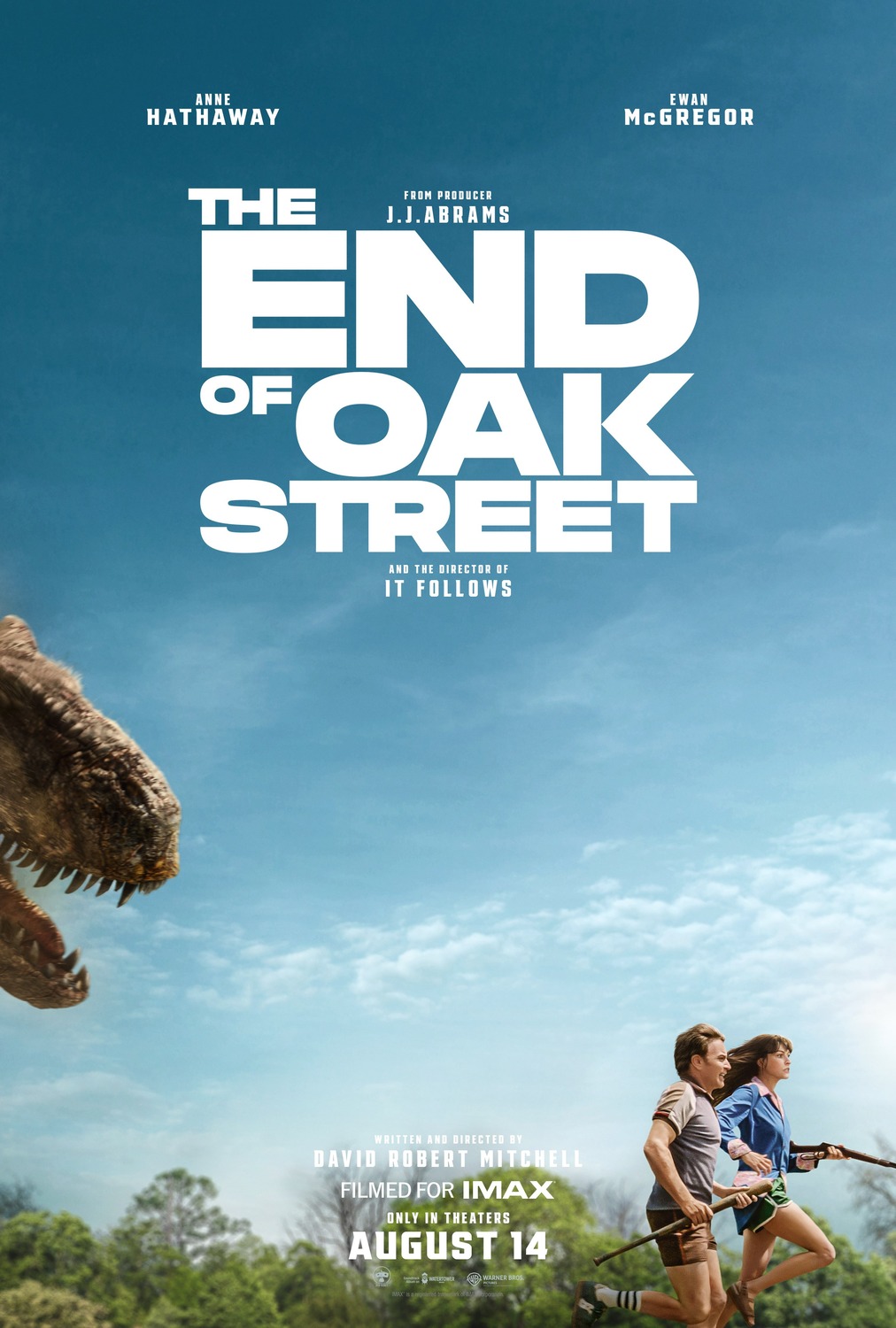
Recent teasers and trailers starring Ewan McGregor and Anne Hathaway and their suburban family have them sprinting for their lives after a strange cosmic event whisks their placid American neighborhood seemingly back to prehistoric times when dinosaurs roamed the Earth. Think "The Twilight Zone" meets "Jurassic Park" with a dash of "A Quiet Place" and you’ll be pretty close to the wild narrative that will unfold when the "running and screaming" begins.
This all seems like the perfect recipe for a fun cocktail of primeval creatures rampaging across driveways and lawns while residents fight back with guns and garden tools. "I think our house, our neighborhood, our whole street, has moved," Hathaway's Denise Platt explains to her children in the first teaser that dropped in March and racked up a hefty 30 million views.
While "Spider-Man: Brand New Day" is surely destined to become a global sensation, we’d like you to redirect your cinematic radar to "The End of Oak Street," a cool little sci-fi fantasy film brought to life by executive producer J.J. Abrams and Bad Robot ("Lost," "Cloverfield," "Star Trek," "Star Wars: The Force Awakens").
Stomping into theaters on Aug. 14, 2026, it's written, produced, and directed by David Robert Mitchell ("It Follows") who brings his twisted sensibilities to the surreal survival material.
Could "The End of Oak Street" become a certified summer sleeper hit? (Image credit: Warner Bros.)
Fans of "The Outer Limits" might recall a similar theme, minus the feathered dinos of course, playing out in the 1964 episode, "A Feasibility Study," where aliens abduct a 6-block suburban neighborhood to their planet Luminos to study them as candidates for enslavement. Whether or not aliens are involved in this plot is unclear and Warner Bros. is now keeping that tightly under wraps.
Also starring Maisy Stella and Christian Convery and produced by Hannah Minghella, Jon Cohen, Matt Jackson and Tommy Harper, "The End of Oak Street" thunders into multiplexes on Aug. 14, 2026 and is our best bet for a late summer smash before the kiddies return to school!
The script is flipped in Prime Video's upcoming "Blade Runner 2099" series where replicants have rebelled and seized power from human beings in a massive uprising. An arresting new trailer was unleashed during the annual San Diego Comic-Con pop culture pageant and it's an atmospheric return to the futuristic realm of Ridley Scott's "Blade Runner" universe 80 years later.
"The old world forever fights to come back," Olwen tells Cora in this interesting first peek at the limited series that arrives Nov. 25, 2026. "Humans want what was taken from them. But it's our time now."
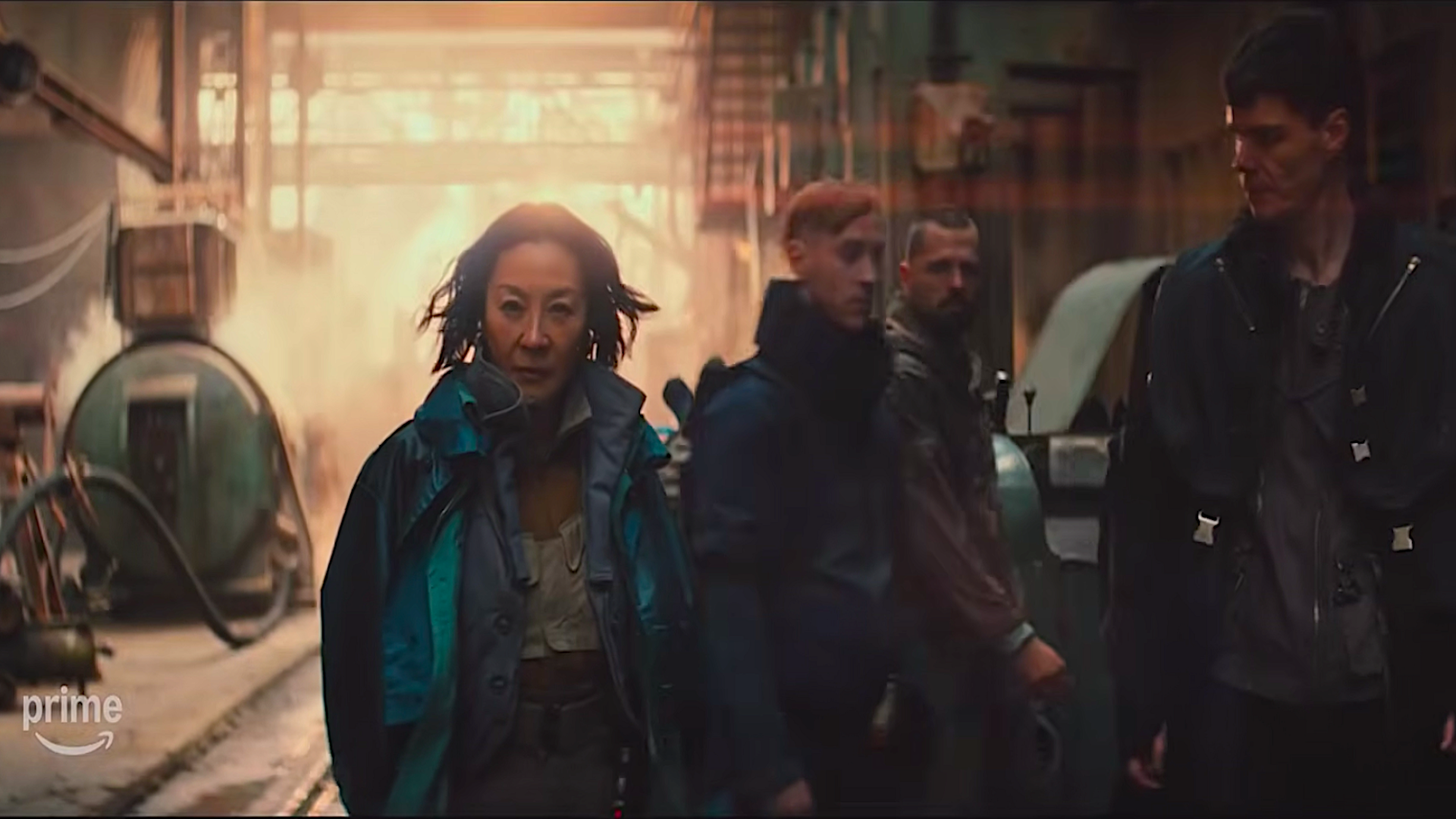
Michelle Yeoh as Olwen in "Prime Video's" Blade Runner 2099" (Image credit: Prime Video)
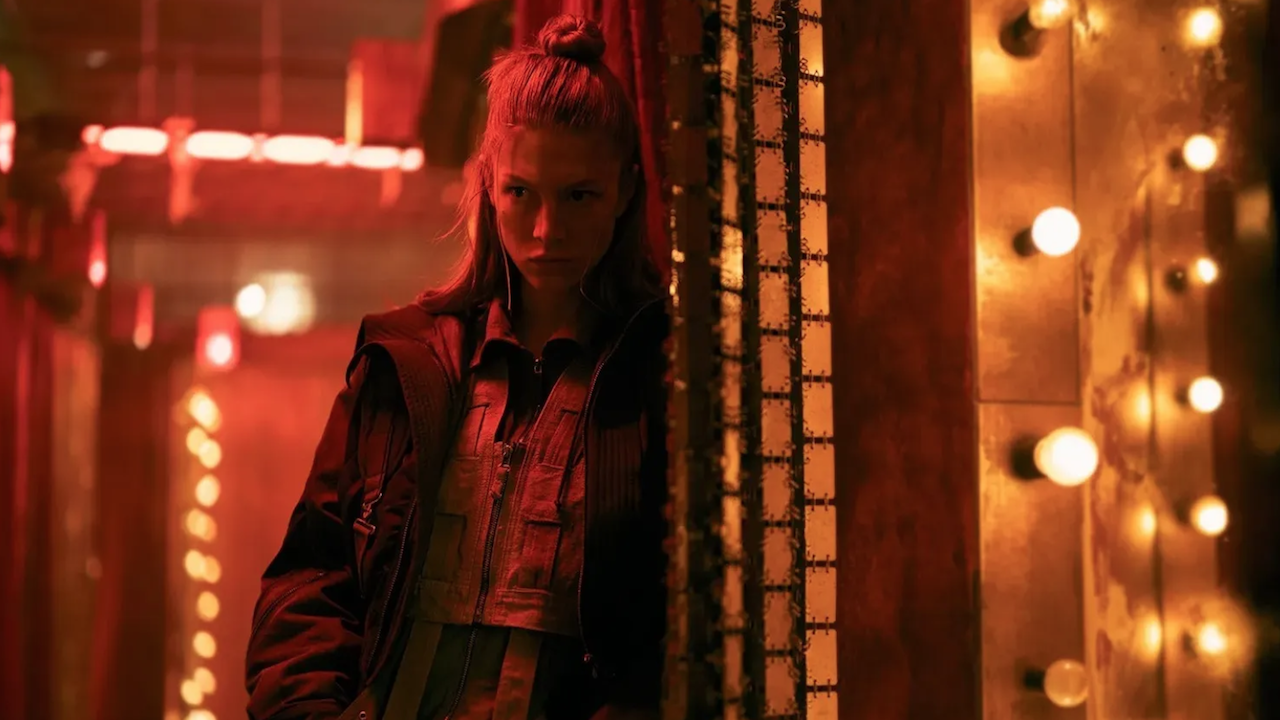
"Blade Runner 2099" stars Academy Award winner Michelle Yeoh ("Everything Everywhere All At Once") as an aging replicant Blade Runner named Olwen and Hunter Schafer ("Euphoria") playing Cora, a fugitive human trying to escape pursuing Blade Runners. It's more or less a tangential sequel to director Denis Villeneuve’s "Blade Runner 2049" set in the same neon-drenched dystopian world with a team-up element between natural and artificial beings, we're also going into outer space!
We first heard word of series executive producer Ridley Scott developing a "Blade Runner" TV showback in early 2022and we're finally on the threshold of its 8-episode release this fall, which is helmed by showrunner and executive producer Silka Louisa ("Shining Girls").
"Fifty years after the events of 'Blade Runner 2049,' Los Angeles has been reborn, just not by humanity," states the official synopsis. "Cora, a fugitive in a final bid to stop running, takes on one last identity: a Blade Runner. Forced to partner with Olwen, a Replicant days from dying, she hunts down a runaway hiding a truth that could collapse their fragile city."
Yeoh and Schafer share cyberpunk cityscapes with Dimitri Abold ("The Hunger Games: The Ballad of Songbirds & Snakes") and Lewis Gribben ("Somewhere Boy"). Guest stars include Katelyn Rose Downey ("The Nun II"), Daniel Rigby ('Renegade Nell"), Johnny Harris ("A Gentleman In Moscow"), Amy Lennox ("Only Child"), Sheila Atim ("The Woman King") and Matthew Needham ("House of the Dragon").
Hunter Schafer as Cora in Prime Video's "Blade Runner 2099" (Image credit: Prime Video)
"I am so excited for people to see it," Louisa told EW last week. "There is so much legacy with 'Blade Runner.' Every person who touched the show in any way is a huge fan. Everyone was very well aware of the weight of what we were doing, and we did it with great care. And when you're taking on something like this, you're very thoughtful and deliberate about each step. That is why it has taken so long, because we wanted to make sure we got it right.
"We stayed very true to the noir principles of 'Blade Runner.' And there's a mystery at the heart of the show that looks both forwards and backwards in terms of mythology that fans are gonna be very excited about."
Also executive produced in collaboration with David W. Zucker and Clayton Krueger of Scott Free Productions. "Blade Runner 2099" will appear on Prime Video Nov. 25, 2026.
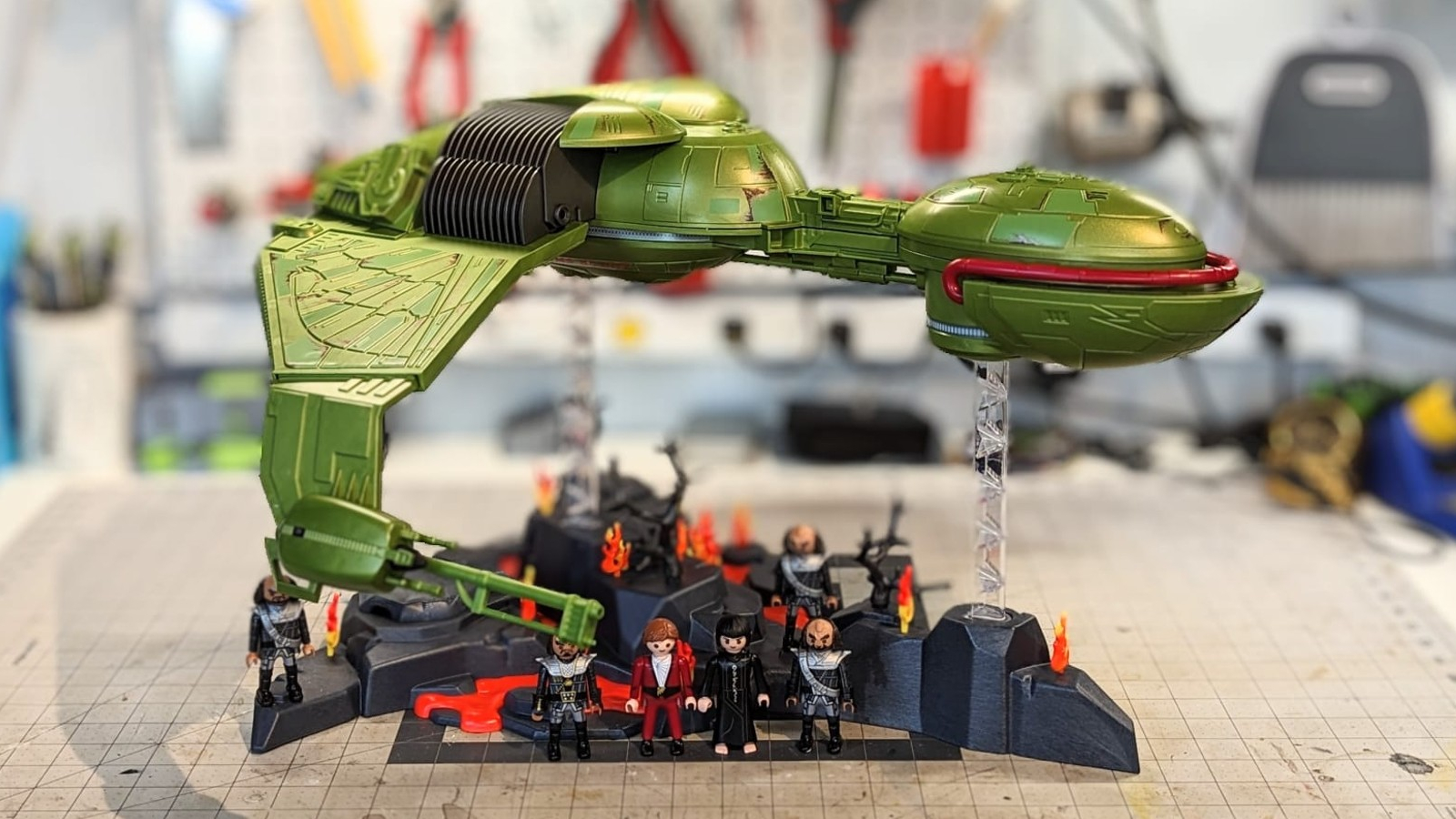
Playmobil is known for crafting imaginative playsets, taking kids (and adults) on big adventures from the comfort of their homes. When it comes to the exploration of space, they've got a lot to offer. Not only has Playmobil created two mega Star Trek sets, releasing the Playmobil USS Enterprise long before LEGO released its own version and the Playmobil Klingon Bird of Prey back in 2023 (both of which we've reviewed and loved), but they've even collaborated with the real-life European Space Agency (ESA).
As Nadia Lüders, ESA's partnership and brand licensing officer, said ina statement: “This partnership ensures that the curiosity and wonder of space continue to spark young imaginations — nurturing a new generation ready to explore, innovate and shape the Europe of tomorrow.”
Playmobil's dedication to weaving space exploration and learning into imaginative play is demonstrated in the sheer amount of space and sci-fi sets they have to offer, of which we'll jump into all 13 of them below. Ranging in price from the Playmobil Space Ranger for $15 to the Star Trek USS Enterprise for $354, there are playsets for a range of ages, interests, and budgets.
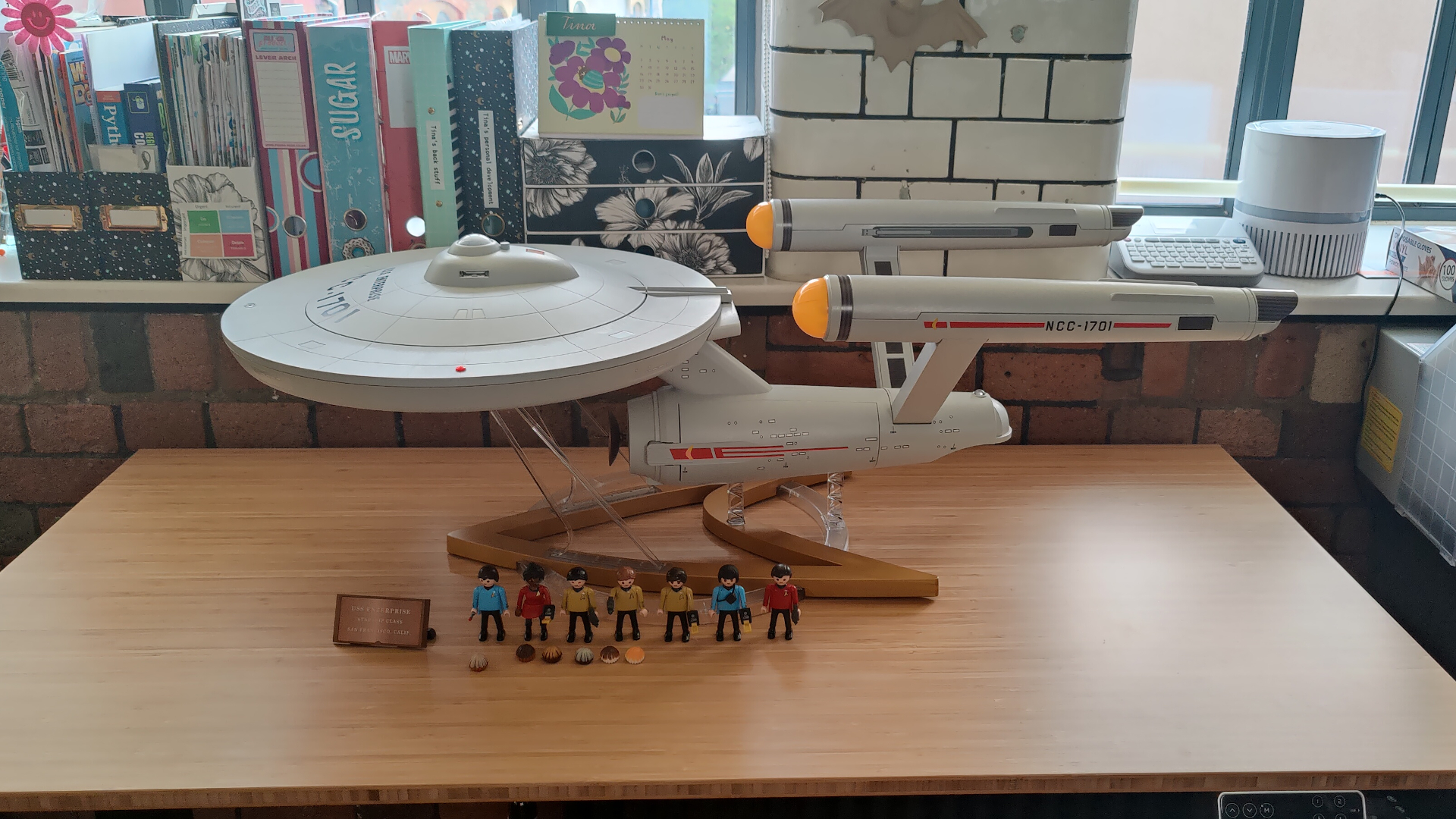
A sizeable Playmobil model of the original Enterprise, a treat for TOS fans.
Age rating: 10+ | Pieces: 150 | Figures: 6 | Dimensions: 39.4 x 18.9 x 13.4 in (100 x 48 x 34 cm) | Weight: 4.72 kg (10.4 lbs)
Gorgeous replica
Authentic lights and sounds
Easy to build
Expensive
Lots of stickers
Playmobil launched the Star Trek USS Enterprise years ahead of LEGO’s November 2025 release date, and it made us ask the question: Playmobil versus Lego, which is the best USS Enterprise set? For starters, the Playmobil set comes in cheaper. And while it’s got 150 pieces in comparison to Lego’s 3,600, it’s still a lot bigger, measuring over 3 feet (1 meter) in length.
When our expert testers gave the Playmobil Star Trek USS Enterprise a full review, it earned a whopping 4 ½ stars, delighting with its authentic light and sounds, and an ease of build that results in a gorgeous replica. Yes, it’s expensive and it has a lot of stickers, but if you’re a fan of both Star Trek and Playmobil, it’s an excellent model you can keep in your home forever. Recommended for ages 10 years and up.
This set is considered a collectable but it's worth tracking down
Age rating: 10+ | Pieces: 94 | Figures: 6 | Dimensions: 19.5 x 23 x 7.25 in (49.5 x 58 x 18 cm) | Weight: 4.4 lbs (2 kg)
Impressively detailed
Great lights and sounds
Figurines are loads of fun
Expensive
Some stickers are tiny
Playmobil followed up its Star Trek USS Enterprise with another impressive model, the Klingon Bird of Prey. Now considered a collectible, it’s a little harder to get your hands on, though we found it at an online toy store for $350.
If you’re wondering whether it’s worth the investment, in our expert Playmobil Klingon Bird of Prey review, we called this set “among the most impressive toys and models Space.com has had the pleasure of reviewing.” Impressive detail, great lights and sounds, and figurines that are a lot of fun are just some of the reasons we gave it 4.5/5 stars. And after the build is done, it looks fantastic on its included display.
It’s on the larger side, though (19.5 x 23 x 7.25 inches / 50 x 58 x 18 cm), so make sure you have room to display it before you buy. Recommended for ages 10 years and up.
Playmobil Star Trek figures
(Image credit: Playmobil)
Playmobil Star Trek figures
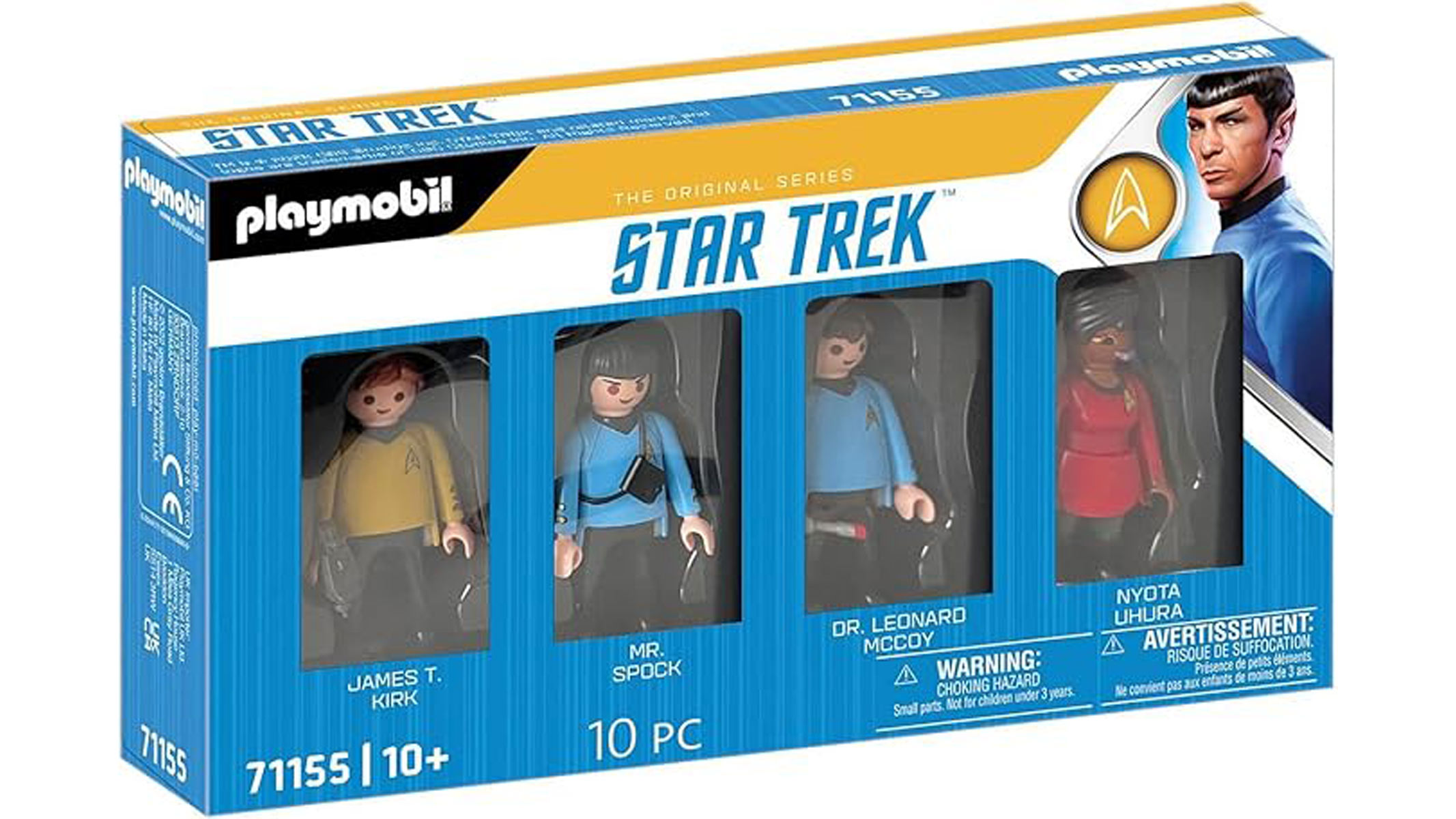
This set is handy if you just want your own Playmobil away team.
Age rating: 10+ | Pieces: 10 | Figures: 4 | Dimensions: 9.76 x 5.59 x 1.81 in (24.79 x 14.20 x 4.60 cm) | Weight: 0.26 lbs (120 g)
To accompany your Star Trek investments, or just to have as part of a wider Playmobil space collection, you can also secure the four Playmobil Star Trek figurines. James T. Kirk, Mr. Spock, Dr. Leonard McCoy and Nyota Uhura all come in this pack alongside individual accessories.
Kirk comes with his phaser, Spock a tricorder disguised as a bag, McCoy with a so-called hypospray and Uhura with a skirt to change outfits. For any Trekkies, it's an affordable addition for any ultimate fan's collection. This one's recommended for ages 10 and up.
The best space ESA-collaborated Playmobil sets we recommend 2026
Playmobil ESA Starter Pack Space Mission
(Image credit: Playmobil)
ESA Space Mission
Roam the lunar surface with this Playmobil rover
Age rating: 4+ | Pieces: 57 | Figures: 1 | Dimensions: 9.76 x 7.36 x 2.84 in (24.79 x 18.69 x 7.21 cm) | Weight: 0.48 lbs (216 g)
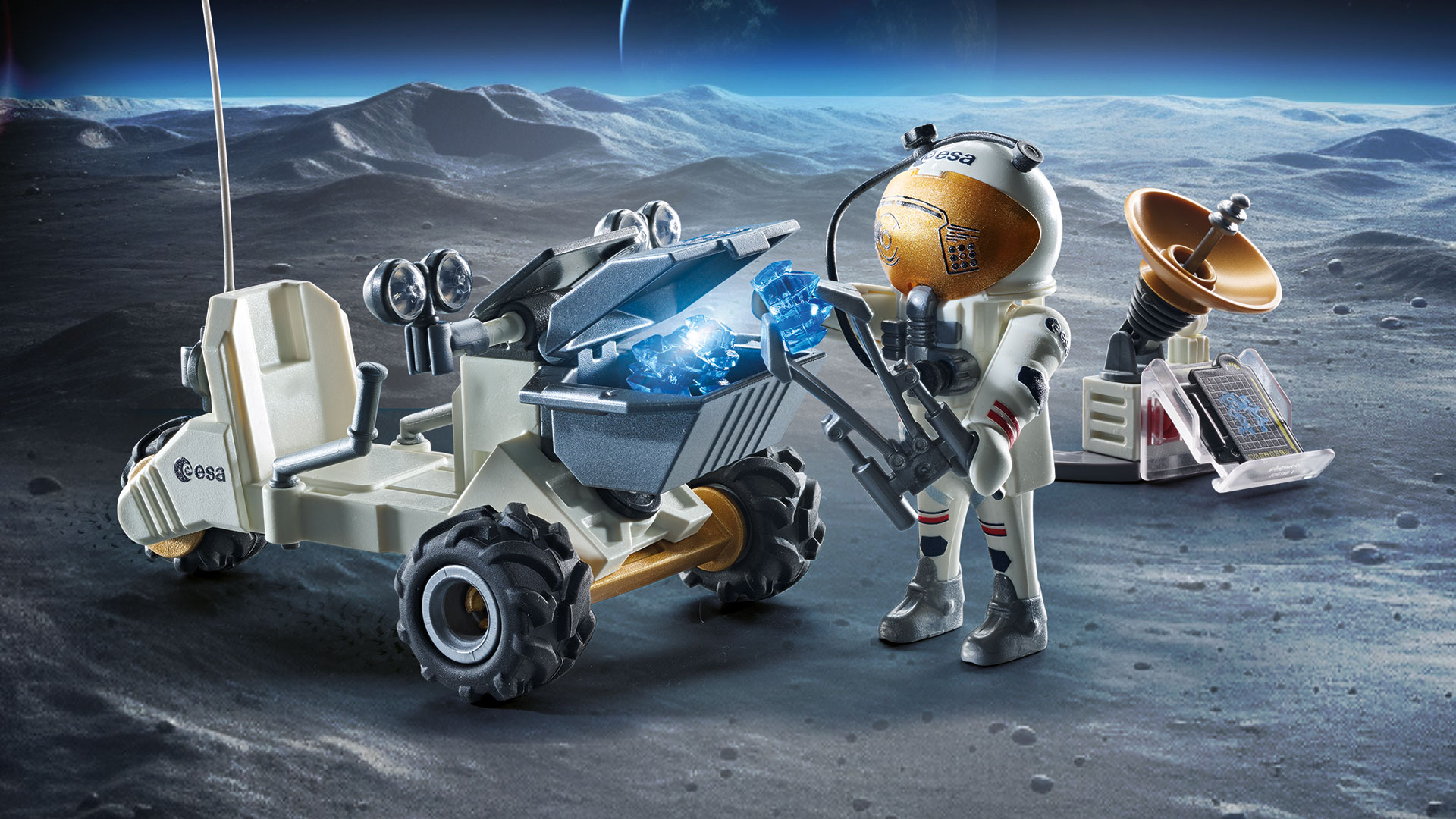
Playmobil and ESA have built a partnership, and an accompanying six different play sets, to inspire a love of intergalactic exploration. And the Starter Pack Space Mission is a great introduction to building out a Playmobil collection dedicated to all things space, especially as the sets can be mixed, matched and expanded.
In the pack, you get an astronaut figure, lunar rover with two lights, antenna, solar panel, satellite dish, rock samples and other accessories. Recommended for ages 4 years old and up, it's a gift for any space lover, whether they're a kid or adult.
There's also a nod to the ESA with the organization's logo emblazoned on both the rover and astronaut's spacesuit. As the production description states: "The astronaut discovered unusual soil samples during a tour with the lunar vehicle. The samples now have to be analyzed very quickly in the mobile station and the results transmitted via satellite. What will the results be?"
Playmobil ESA Astronaut with Robot
(Image credit: Playmobil)
ESA Astronaut with Robot
A small, pocket-friendly Mars set with plenty of play value
Age rating: 4+ | Pieces: 42 | Figures: 1 | Dimensions: 3.66 x 5.59 x 1.77 in (9.30 x 14.20 x 4.50 cm) | Weight: 0.20 lbs (90 g)
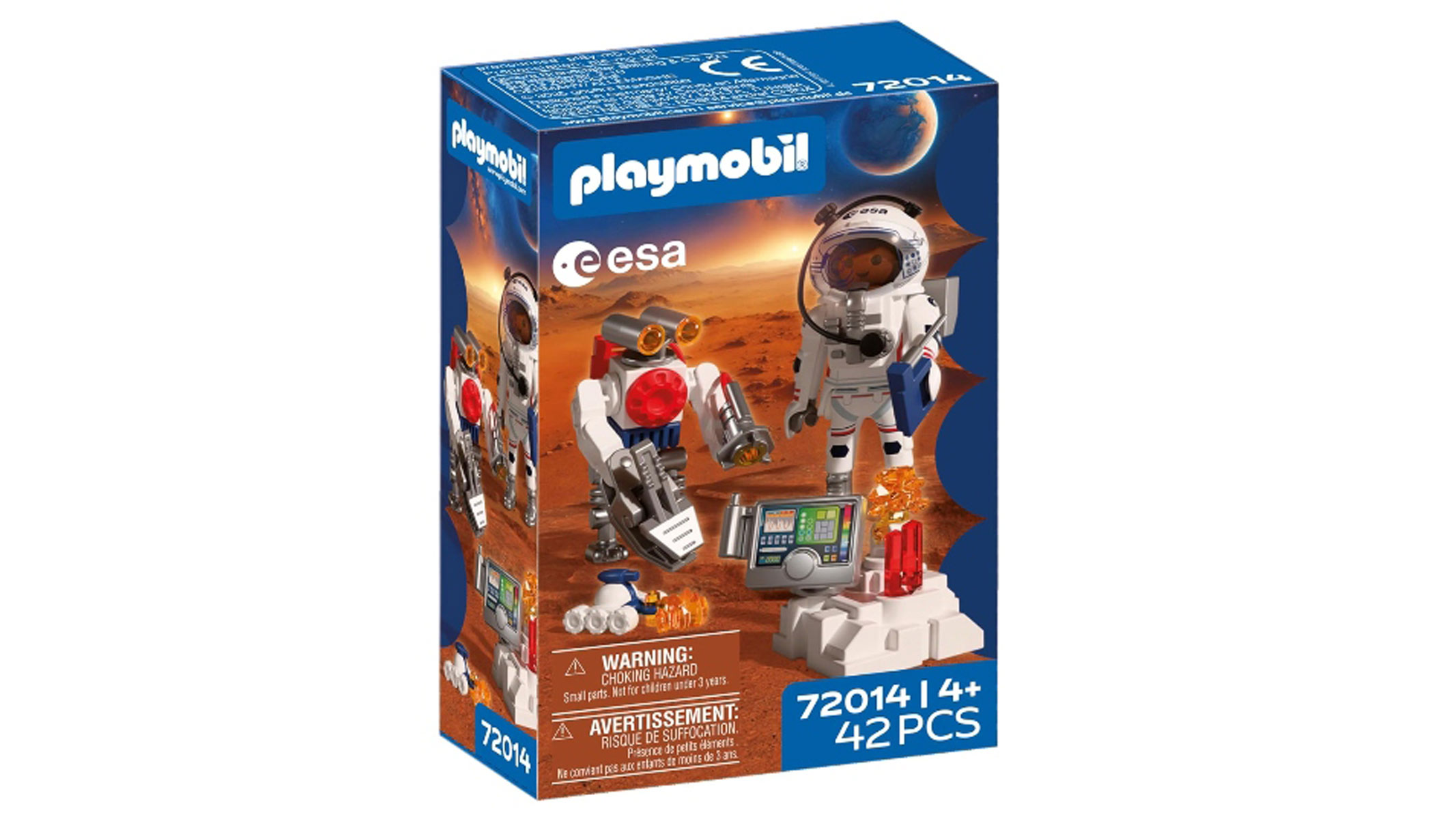
A smaller set that works alongside the others in the Playmobil/ESA range, the Astronaut with Robot is a two-figure build consisting of 42 pieces. As the pack explains: “Together with his reliable companion robot and a nimble Mars crawler, the astronaut collects fascinating soil samples on the Red Planet.”
And you don’t only get a robot and astronaut (able to sit and stand) with the set, but a backpack, ground scanner analysis station, rock samples, base plate, gripper arm and more, too. Suitable for young explorers from age 4 years and up, it's an excellent addition to the larger Mars mission, working alongside the rest of the themed Playmobil sets.
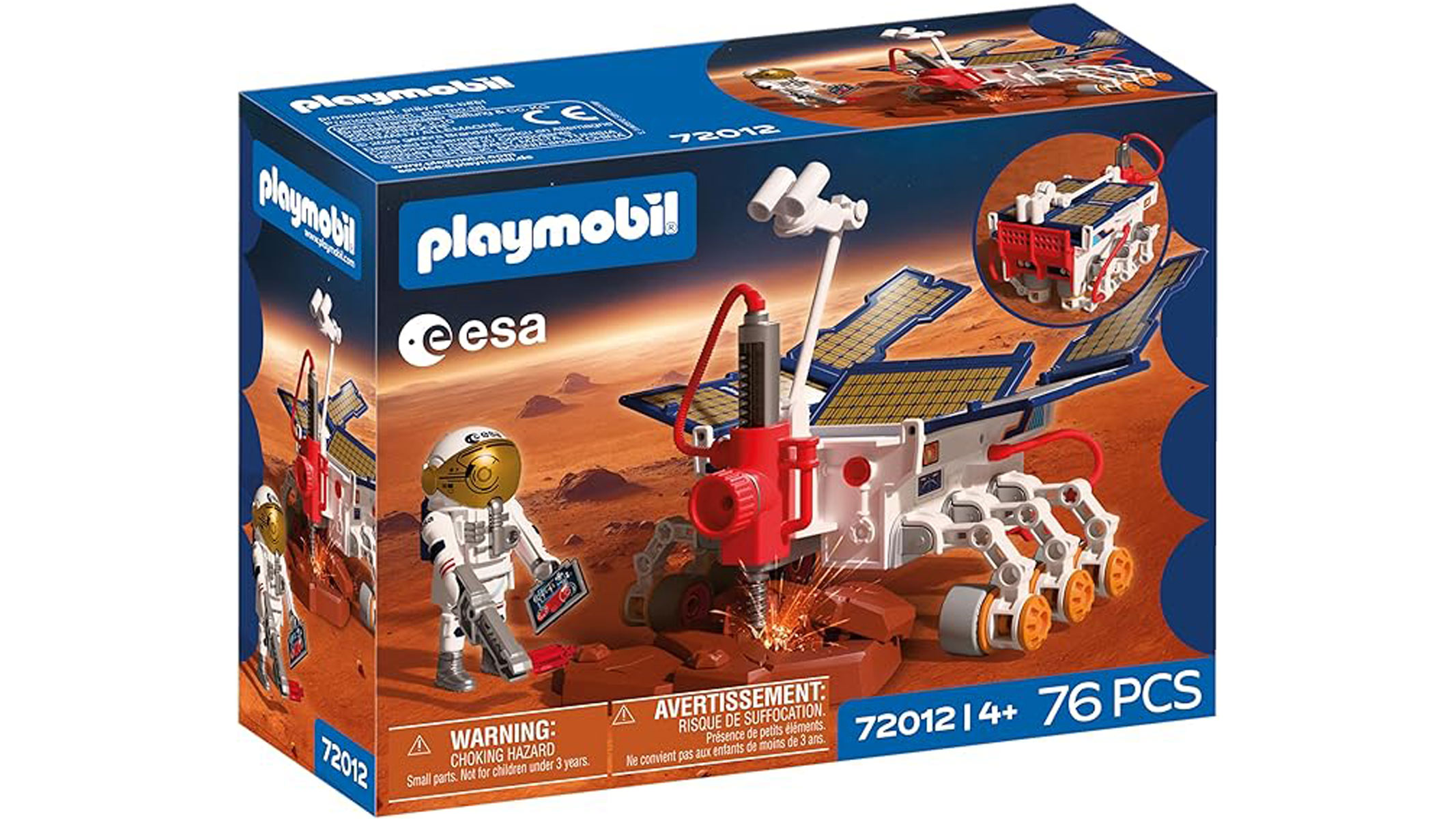
Playmobil ESA Mars Exploration Rover
(Image credit: Playmobil)
ESA Mars Exploration Rover
Playmobil's own version of the Mars Pathfinder, with astronaut friend
Age rating: 4+ | Pieces: 76 | Figures: 1 | Dimensions: 7.36 x 5.59 x 2.84 in (18.69 x 14.20 x 7.21 cm) | Weight: 0.64 lbs (290 g)
With the Playmobil ESA Mars Rover, you can launch your own mission to Mars in this 76-piece set. It comes with drill, cameras and high-tech sensors, as well as rock samples and other accessories to build your great space exploration adventure. And it's also focused on the types of powerful scientific instruments you'd find on the actual Mars Rover, as well as reenacting the way you'd store and analyze the samples.
As with any of these sets, imagination is key, but that's helped along with the inclusion of everything you need to bring authentic space exploration to life. The Playmobil ESA set is perfect for fans and includes rotating drills, movable cameras and a sturdy six-wheel drive to make discovery possible.
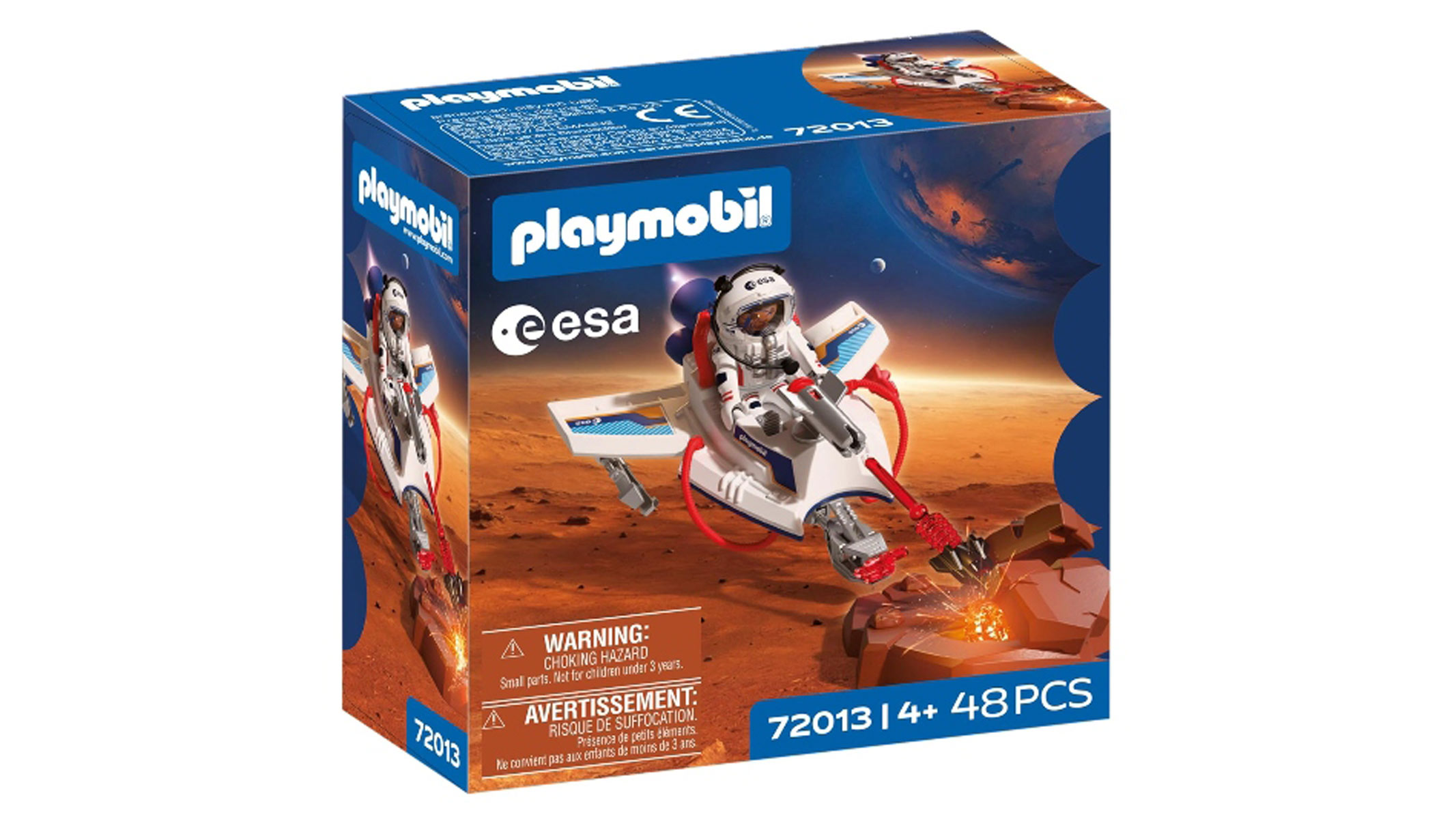
Playmobil ESA Space Glider
(Image credit: Playmobil)
ESA Space Glider
A cool little space vehicle that offers a lot of fun for its pricetag
Age rating: 4+ | Pieces: 48 | Figures: 1 | Dimensions: 5.59 x 5.59 x 2.6 in (14.20 x 14.20 x 6.60 cm) | Weight: 0.40 lbs (180 g)
This speedy space glider is the perfect way to zip around on the surface of Mars, using its in-built claw to retrieve rock samples and even crystals. With a rotating turret and powerful blasters, there's a lot of fun to be had at only $25.
The set comes with a female astronaut, accessories, tools, projectiles, a gripper arm and glowing rock samples to dream up your own adventure. One of the smaller Playmobil ESA collaboration playsets, it has 48 pieces and is recommended for ages 4 years and up.
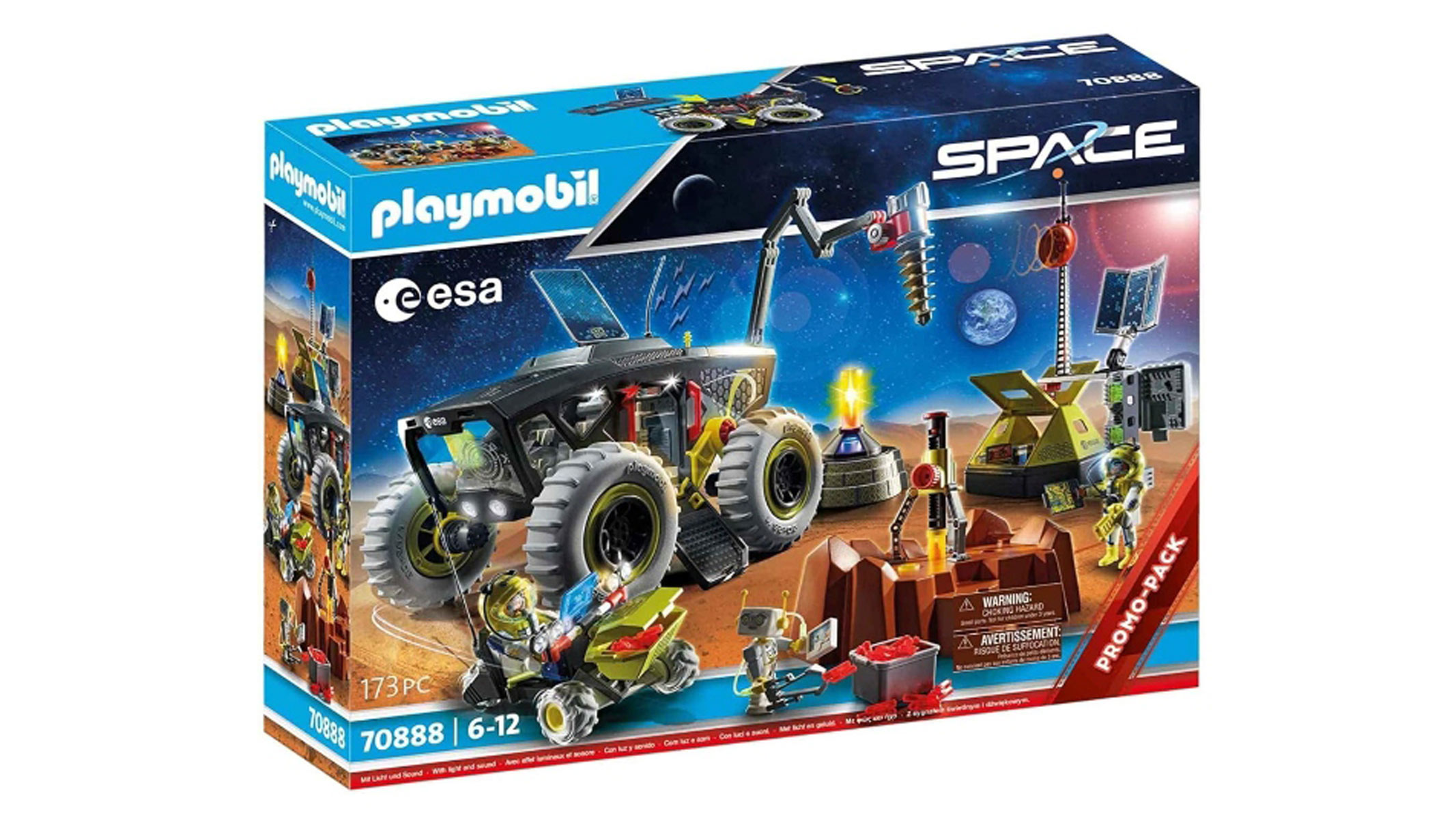
Playmobil ESA Mars Expedition
(Image credit: Playmobil)
ESA Mars Expedition
An older playset but loaded with things to do
Age rating: 6+ | Pieces: 173 | Figures: 2 | Dimensions: 20.28 x 15.16 x 4.92 in (51.51 x 38.51 x 12.50 cm) | Weight: 3.50 lbs (1.59 kgs)
Less widely available is the Playmobil Mars Expedition playset. Recommended for ages 6 and up, it's an older playset with plenty to do, with 173 pieces and a whole lot of accessories.
Inside the playset, you get a full Mars Rover with drill attachment and various other tool attachments, including an extendable, moveable arm, gripper and blaster. The rover also includes functioning light and sound effects, as well as gripper arm action, driving sounds and an alarm.
The best space Playmobil sets we recommend 2026
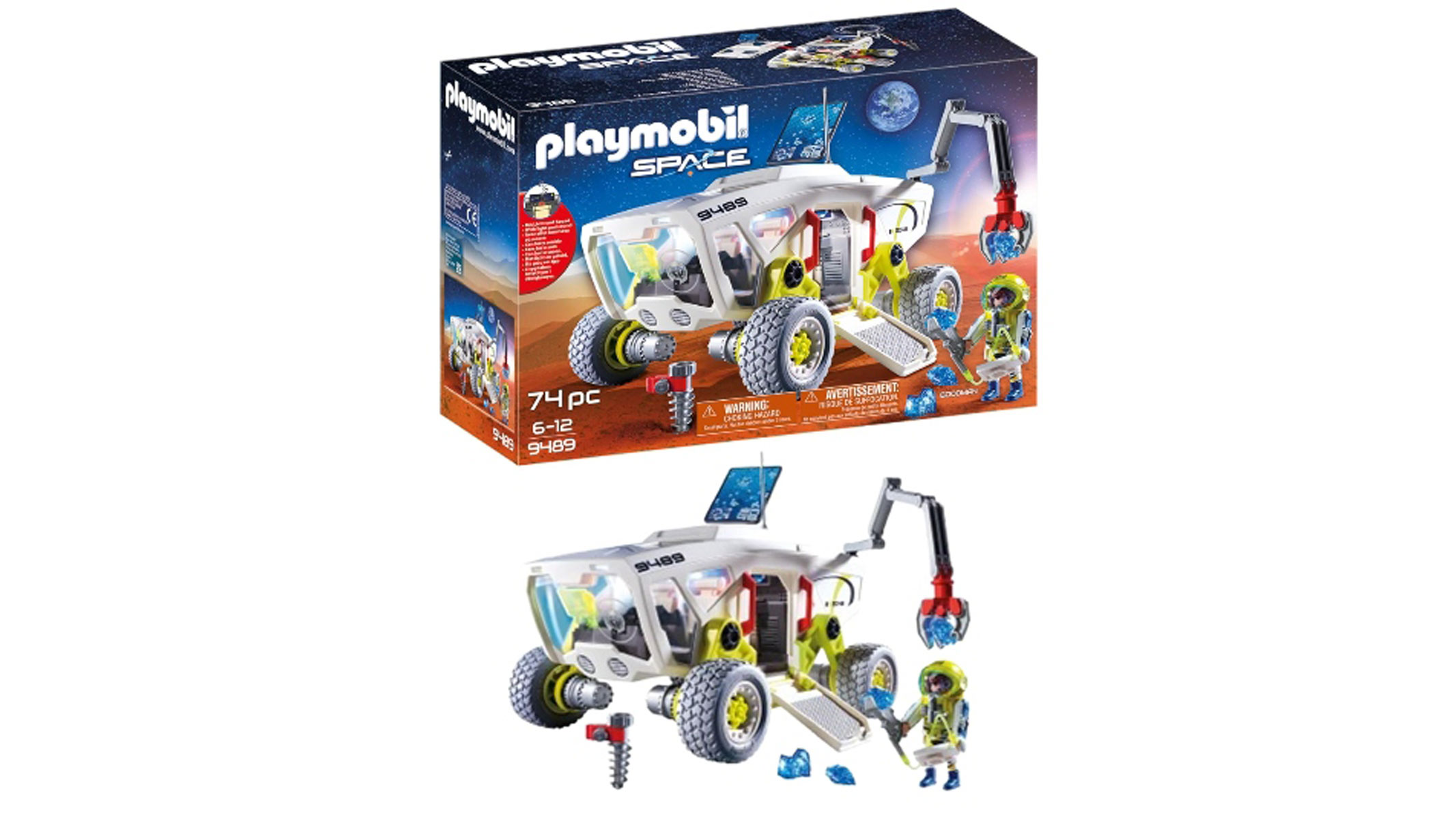
Playmobil Mars Research Vehicle
(Image credit: Playmobil)
Mars Research Vehicle
A play-friendly vehicle with space for up to four Playmobil figures
Age rating: 6+ | Pieces: 74 | Figures: 1 | Dimensions: 13.7 x 9.76 x 4.92 in (34.80 x 24.79 x 12.50 cm) | Weight: 1.85 lbs (840 g)
Alongside Playmobil's ESA collaboration and the Star Trek playsets, Playmobil also has its own themed collection dedicated to space, including their own Mars Research Vehicle. Thanks to a removable roof, you can get inside the vehicle with space for four adult figures. You can also enter and exit the side via the ramp, and the movable arm can hold three different attachments, including a claw gripper, drill and laser gun.
Recommended for ages six and up, there are 74 pieces to build, as well as the opportunity to enjoy the functioning lights and sound effects (though you'll need to buy 2 x AAA batteries separately).
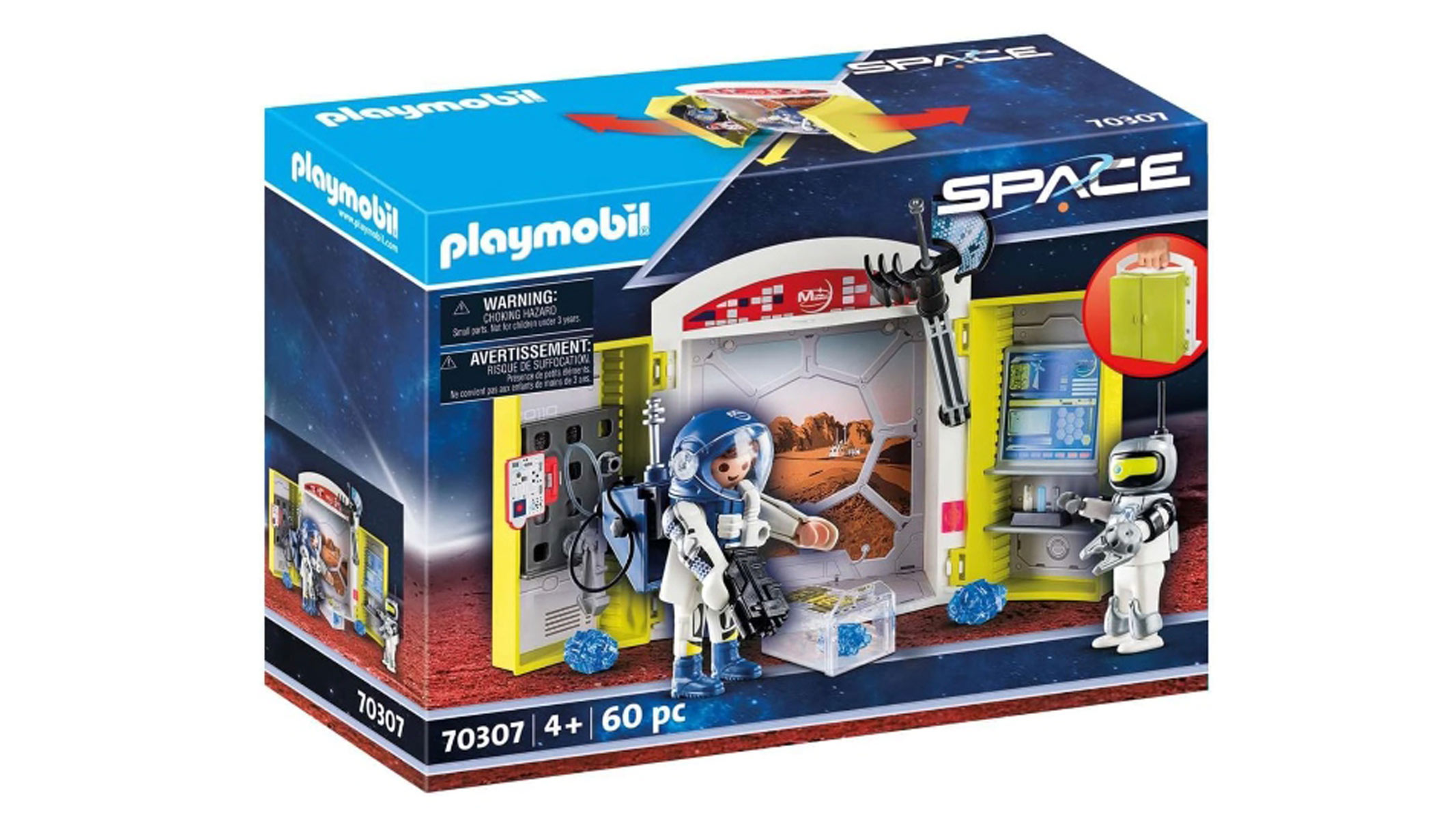
Playmobil Mars Mission Play Box
(Image credit: Playmobil)
Mars Mission Play Box
A fun, accessory-packed set for fans of the red planet
Age rating: 4+ | Pieces: 60 | Figures: 1 | Dimensions: 9.8 x 2.6 x 6.3 in (24.89 x 6.60 x 16 cm) | Weight: 0.89 lbs (404 g)
Not to be confused with the ESA Space Mission set, the Mars Mission Play Box comes with a large research station that can be opened via two front panels, with an accompanying astronaut and robot who work together to study the water crystals found on Mars.
The beauty of this playset is that it’s ready for on-the-go play as all the pieces can be stored inside the research station, while the top can be used as a handle. As well as the figures, it also comes with a satellite, walkie-talkie and other accessories. Recommended for ages 4 years and up.
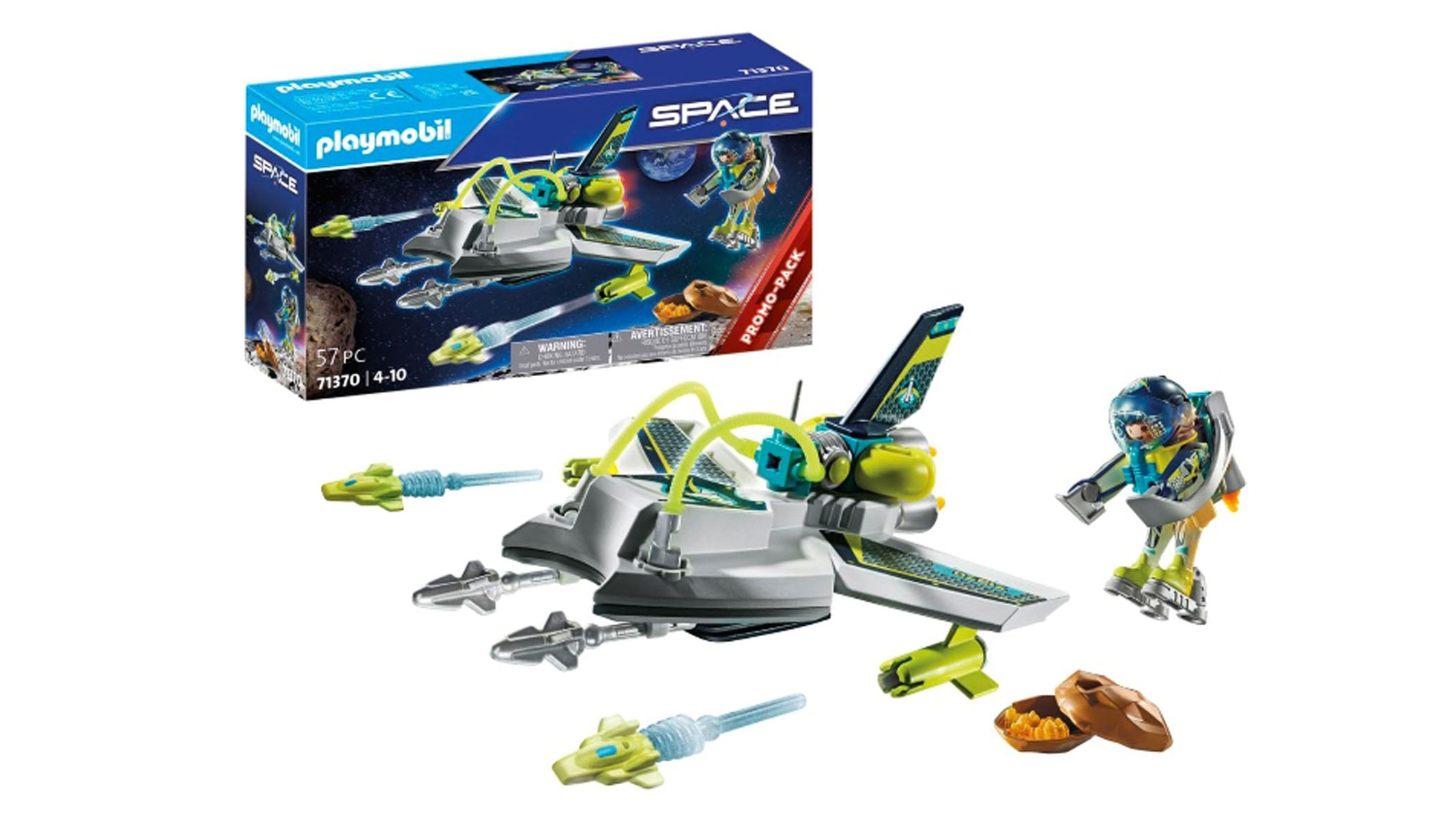
Playmobil Mission Space Drone
(Image credit: Playmobil)
Mission Space Drone
Head off into the cosmos with this mini set
Age rating: 4+ | Pieces: 57 | Figures: 1 | Dimensions: 9.76 x 5.59 x 2.76 in (24.79 x 14.20 x 7.01 cm) | Weight: 0.47 lbs (213 g)
The Mission Space Drone set comes with a space drone, astronaut figure with spacesuit and space shoes, space rock and other accessories for a full space flight adventure. Even better, under the drone are two fully-functioning cannons which shoot out launch missiles.
Create your own space mission by exploring alien planets with your astronaut and space drone at the ready. With 57 pieces, it's recommended for ages 4 years and up, meaning space exploration can start early. Right now, it's on offer at Amazon, but at time of writing, there were only 4 left in stock.
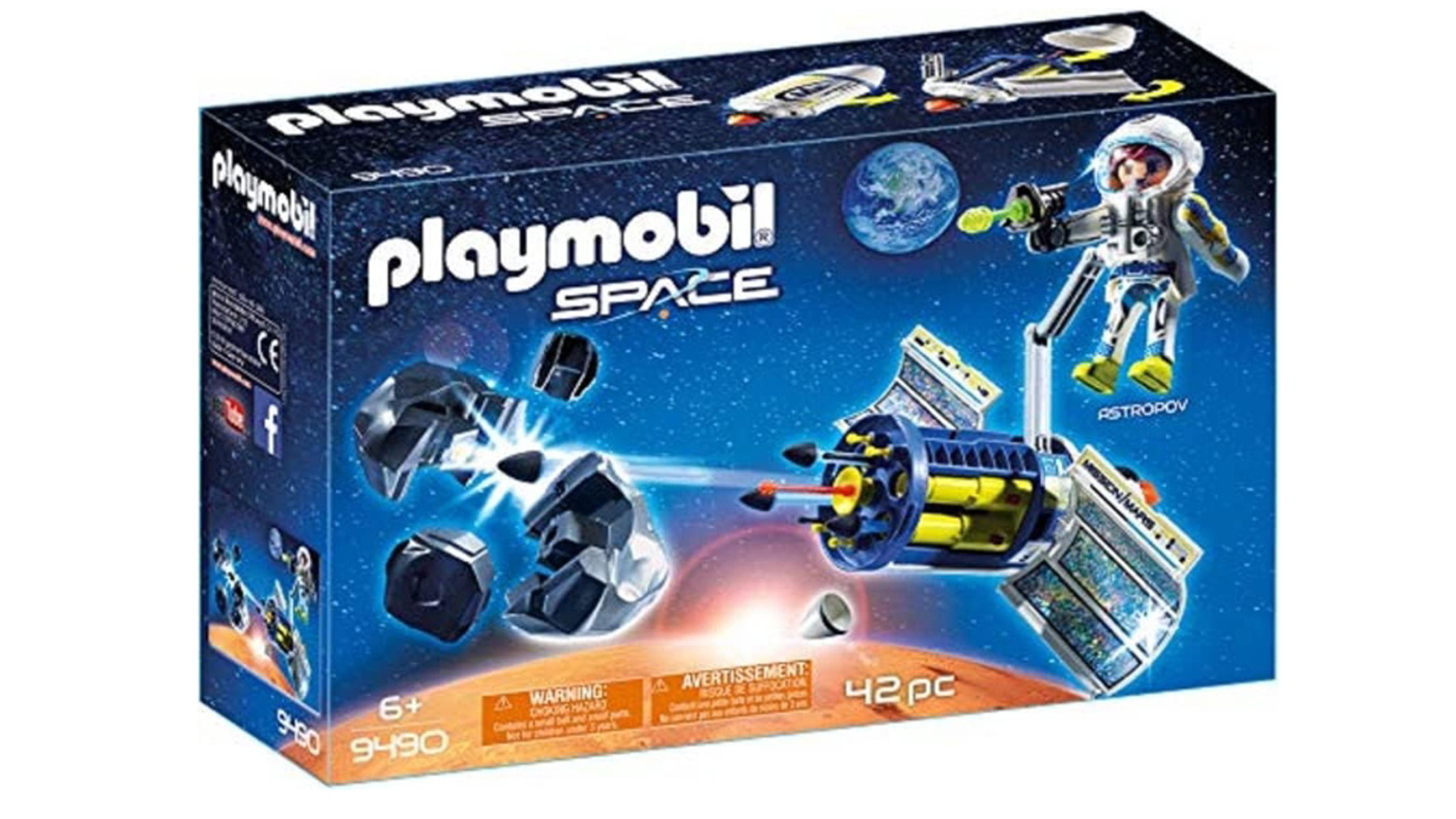
Playmobil Satellite Meteoroid Laser
(Image credit: Playmobil)
Satellite Meteoroid Laser
Worried about Playmobil asteroids? This set has the answer
Age rating: 6+ | Pieces: 42 | Figures: 1 | Dimensions: 11.18 x 7.36 x 3.66 in (28.40 x 18.69 x 9.30 cm) | Weight: 0.90 lbs (410 g)
With an astronaut quite similar to the Mission Space Drone set, instead of a drone, you're equipped with a functioning meteoroid laser. As the pack says: “Keep the mission on track and destroy any space debris that blocks your way with the satellite meteoroid laser!”
To use, you lay the meteoroid in front of the laser, simultaneously pressing in the center on both sides to shatter it into pieces. You can even connect your astronaut straight to the vessel with a connected arm attachment. The set includes an astronaut, satellite, break-apart meteoroid, laser darts and other accessories. Recommended for ages 4 years and up.
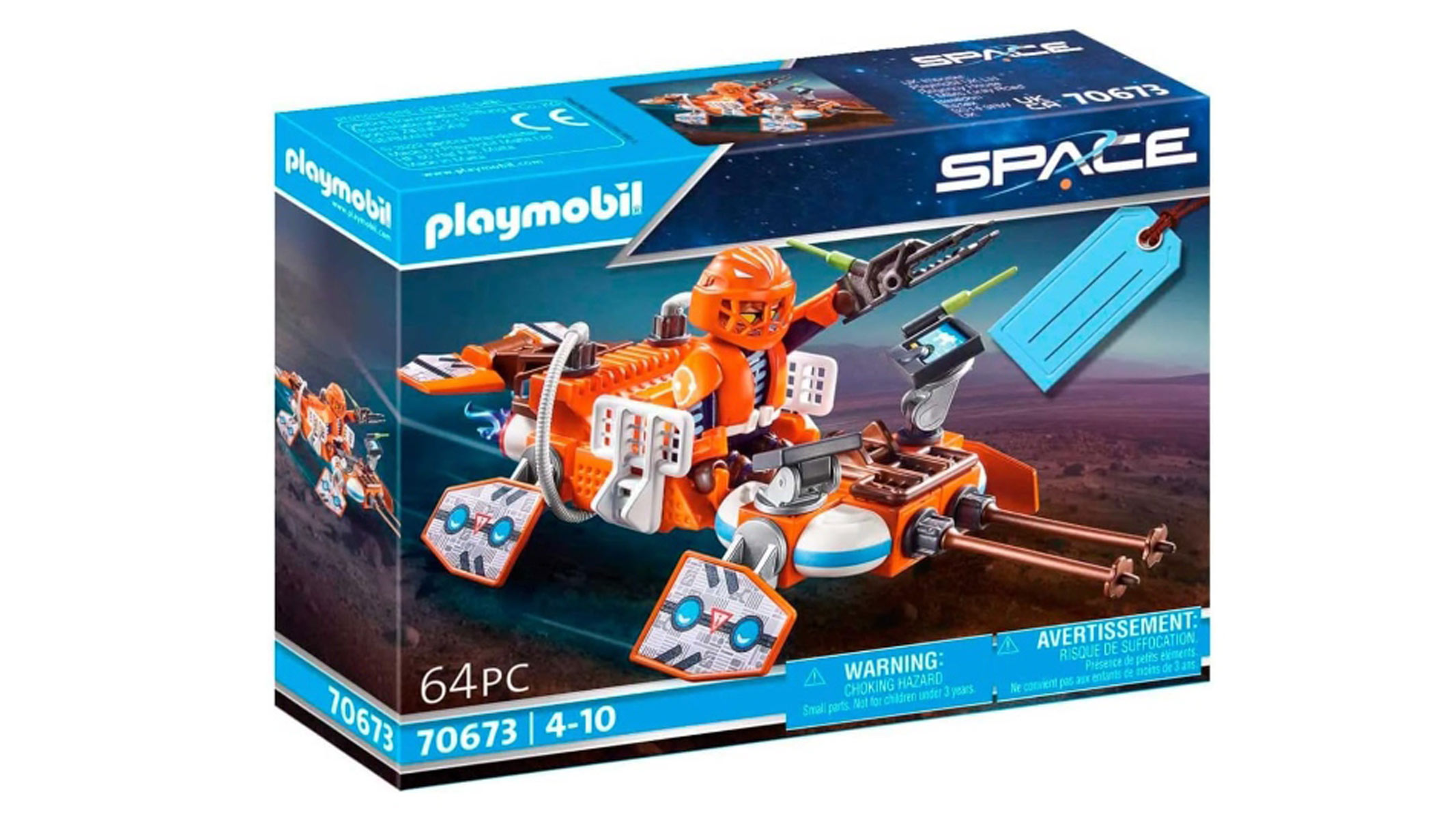
Playmobil Space Ranger
(Image credit: Playmobil)
Satellite Meteoroid Laser
A streamlined space vehicle you can even personalize
Age rating: 4+ | Pieces: 64 | Figures: 2 | Distance: 7.36 x 5.59 x 1.85 in (18.69 x 14.20 x 4.70 cm) | Weight: 0.33 lbs (150 g)
Expand your Playmobil space sets with this affordable Space Ranger kit, consisting of 64 pieces and recommended for ages 4 years and up. The set includes one figure, speedster, helmet, vest and lots of other space gear for your other figures to wear and play with.
When you're ready to fly the speedster, Playmobil has even designed it so the landing feet fold up, ready to make it as streamlined as possible for flight. As a gift set, it has a label that can even be personalized to the space fan in your life.
Trailers and teasers for HBO’s upcoming "Lanterns" series have beensuspiciously devoidof much outer space footage for the intergalactic cops known as the Green Lanterns, but that's all history now with this exhilarating new preview.
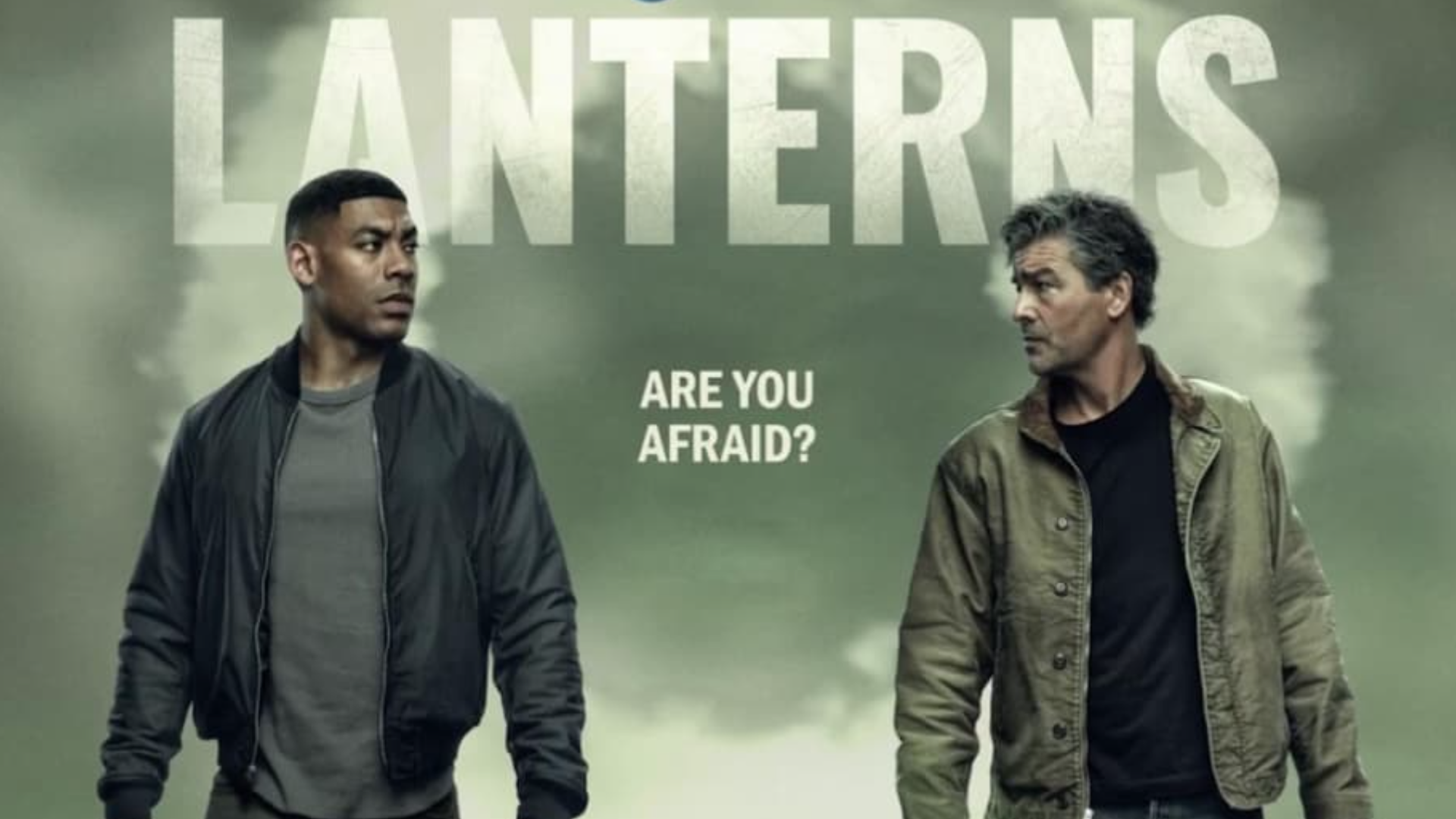
Beware the power of this illuminating peek that not only delivers generous doses of Hal Jordan (Kyle Chandler) mentoring his young apprentice, John Stewart (Aaron Pierre), but also tosses in cool shots above an alien planet, a prison world, and what could be barren Mars.
And there's green galore via electrifying emerald constructs (including a beer opener) emanating from the cosmic peacekeepers' trusty power rings. Plus we're treated to a severe warning by the normally-wisecracking Guy Gardner (Nathan Fillion) as a serious but satisfying bonus.
DC Studios' "Lanterns" soars onto HBO and HBO Max on Aug. 16, 2026. (Image credit: HBO)
"Lanterns" is an 8-episode limited series arriving Aug. 16, 2026 courtesy of DC Studios and heralding from executive producers Chris Mundy, Damon Lindelof, and Tom King.
From this latest trailer it's apparent that weird shape-shifting Manhunters will be primary antagonists alongside the crimson-skinned criminal Sinestro (Ulrich Thomsen) and that has piqued our interest. It delivers a well-rounded depiction of the series' story arc and motivational beats that follow an older generation of Lanterns giving way to a younger law enforcement recruit.
"Manhunters are the most dangerous beings to ever exist in the galaxy," Paul Ben-Victor's extraterrestrial truth-seeker, Antaan, explains. "And it can take the form of any species."
Aaron Pierre (L) and Kyle Chandler (R) star as space cops in "Lanterns." (Image credit: HBO)
This grounded, mystery-driven miniseries showcases one of DC Comics' most honored creations, the Green Lantern Corps, and their oath-reciting, ring-bearing brethren across the cosmos, here investigating odd murders in rural Nebraska.
Landing from DC Studios, Warner Bros. Television, and HBO, "Lanterns" debuts Sunday, Aug. 16 at 9:00 p.m. ET/PT on HBO and later streaming on HBO Max.
Disney+, Hulu, and HBO Max are also available as a bundle that offers a significant discount over the cost of buying all three services individually.
"Doctor Who" may have a reputation for making kids hide behind the sofa, and the "Alien" franchise famously sold itself on the futility of screaming in outer space, but "Star Trek"'s traditional "story of the week" format has also provided numerous opportunities to bring sci-fi scares to starship corridors.
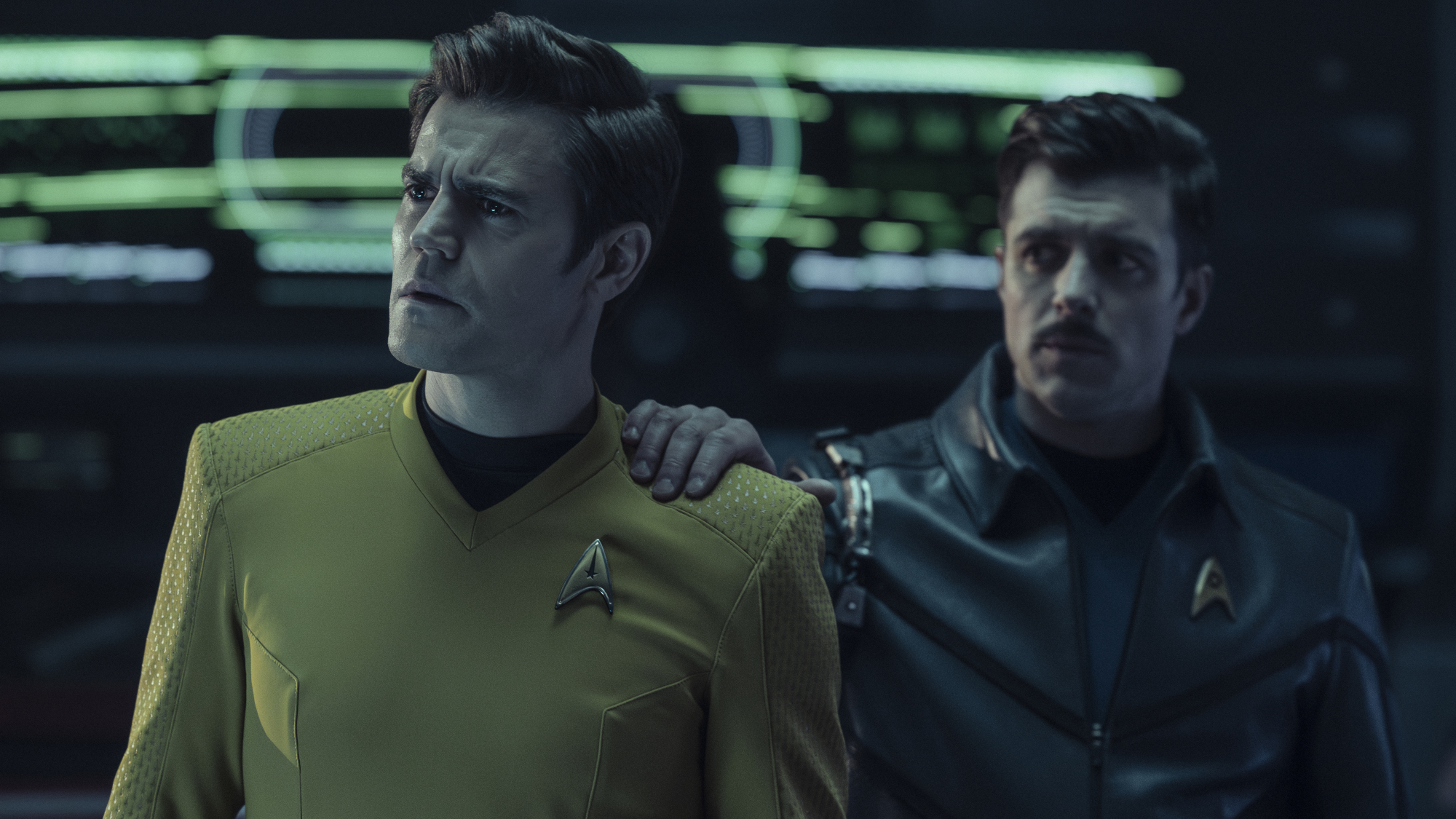
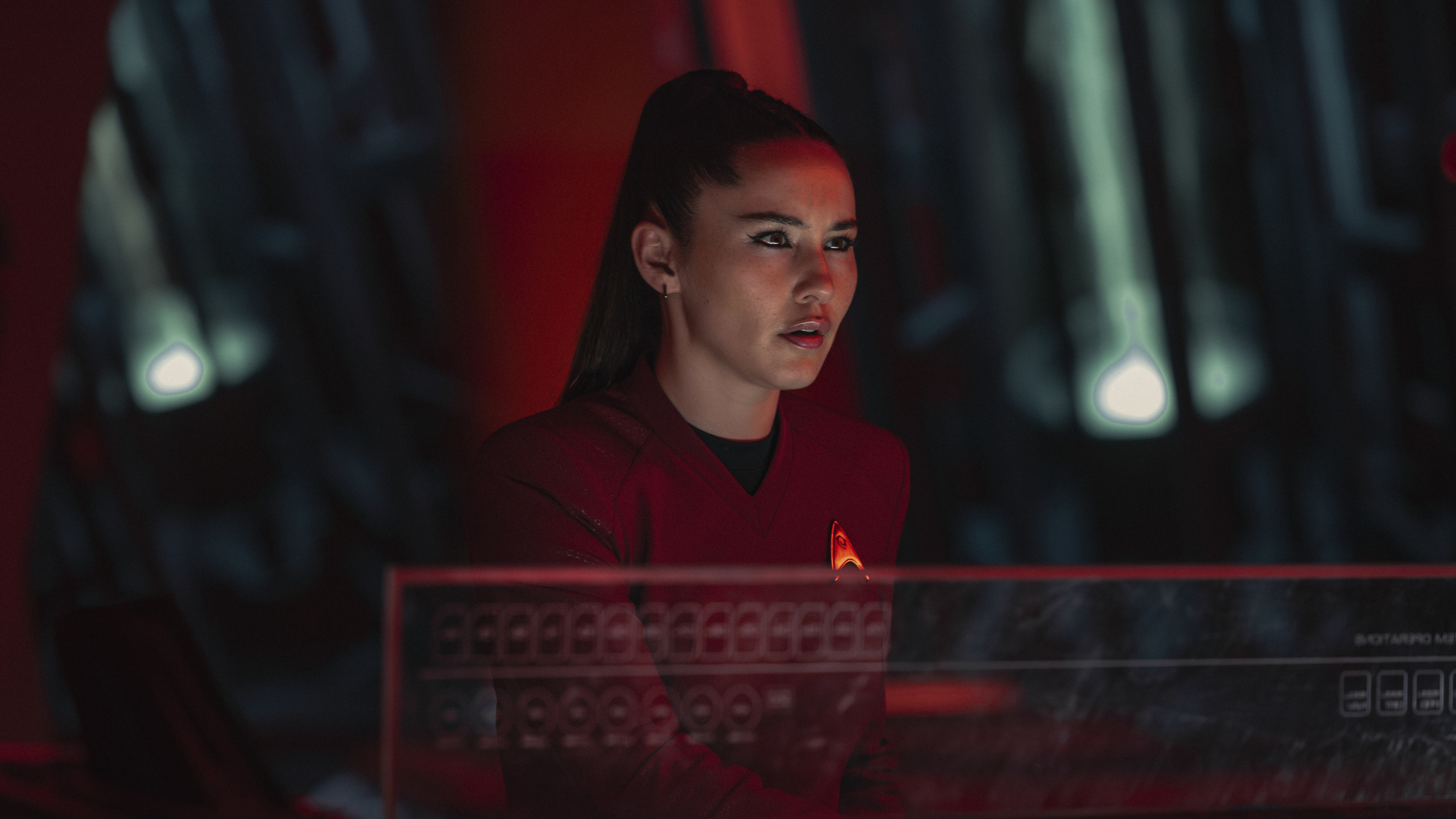
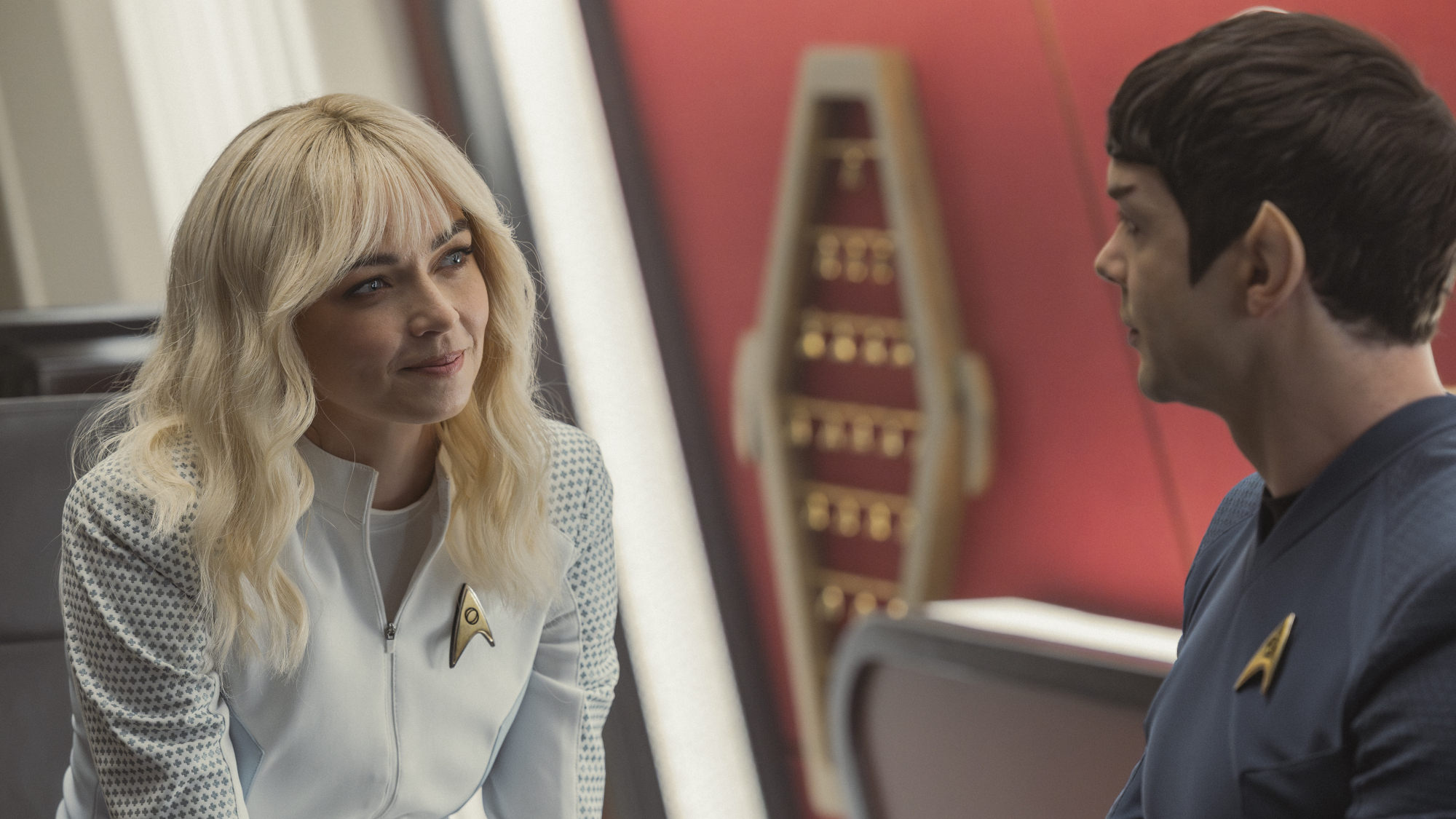
But few of the franchise's horror outings have been quite as overt as "The Griffin Incident", the latest episode of "Strange New Worlds". In it, Spock (Ethan Peck), La'an Noonien-Singh (Christina Chong) and James T Kirk (Paul Wesley) are making their way back from the Future Federation Leaders Retreat (sounds like a blast) when they receive a mysterious signal in uncharted space.
SPOILERS AHEAD! ANYONE YET TO WATCH "THE GRIFFIN INCIDENT" SHOULD PROCEED WITH CAUTION TO AVOID VIOLATING TEMPORAL PRIME DIRECTIVES.
It turns out the communication originated from the USS Griffin, a starship that went missing with 300 souls on board nine years earlier, so — being the conscientious Starfleet officers they are — the trio beam aboard to investigate. It's a decision they quickly come to regret, as they realize they've stumbled on a haunted house floating through the darkness…
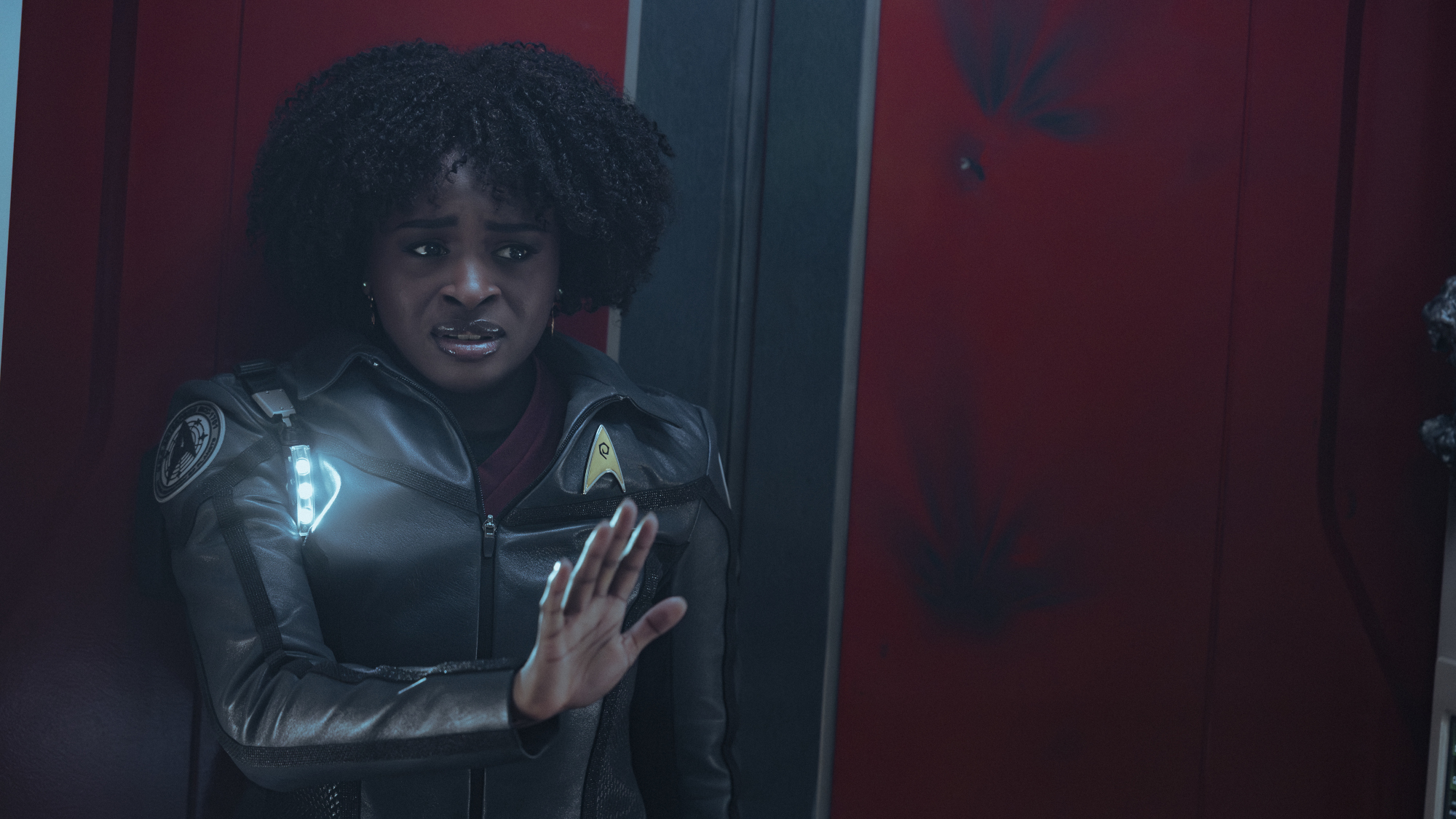
This unashamed ghost story soon becomes a chilling mix of psychological terror and body horror, as Kirk hears the cries of his young son David, Spock unexpectedly comes face-to-face with his spurned fiancée, T'Pring, and La'an becomes closely acquainted with the Griffin's ghostly chief security officer, Rose Harper (Sorika Wolf).
(Image credit: Paramount)
As in "Event Horizon" (originally pitched as "'The Shining' in space"), the ship is a malevolent force preying on its victims' insecurities: for Kirk, it's the fear of being an absent father; for Spock, it's the conflict between his human and Vulcan heritage; and for La'an it's the growing fear that her previously latent Noonien-Singh DNA might be stirring something dark within her.
In the tradition of many of "Star Trek"'s scariest missions, "The Griffin Incident" puts a sci-fi spin on classic tropes. Indeed, as far back as "The Man Trap" (the very first Original Series episode aired), the franchise has been transporting recognizable genre conventions light years beyond the confines of planet Earth.
"The Man Trap" is essentially a vampire story, albeit with a "monster" that feasts on salt rather than blood. Meanwhile, "The Enemy Within" (which materialized a few weeks later) is a 23rd-century take on "The Strange Case of Dr Jekyll and Mr Hyde", in which a transporter malfunction splits Captain Kirk into a good and bad version of himself — two William Shatners for the price of one.
(Image credit: Paramount)
There have also been several captain's log entries concerning close encounters of the zombie kind, from the re-animated corpses of "Strange New Worlds"' "Shuttle to Kenfori", to the Borg in "Star Trek: First Contact" — despite their quest for technologically enhanced perfection, the movie's cyborg hordes wouldn't look out of place in "The Walking Dead".
And the horror callbacks don't end there. The parasites who infiltrate the upper echelons of Starfleet in "The Next Generation"'s "Conspiracy" are "The Wrath of Khan"'s Ceti Eels given "Invasion of the Body Snatchers" delusions of grandeur. And "Deep Space Nine"'s own enemy-within episode, "The Adversary", features a shapeshifting Founder hiding in plain sight — think "The Thing", but with less of the ick.
But the franchise's move to streaming has undoubtedly allowed "Trek" to become more extreme than it was in the syndication/network days of the '80s, '90s and '00s. That's not to say "Trek" didn't push the censors' limits back then — the aforementioned "Conspiracy" was heavily edited by the BBC in the UK, who decided a "Scanners"-like exploding head wasn't suitable for teatime viewing.
(Image credit: Paramount)
In the main, however, the horror was more likely to be built on psychological scares than full-on gore — REM sleep deprivation driving everybody mad in "TNG"'s "Night Terrors", for example, or crews becoming alien test subjects in "TNG"'s "Schisms" and "Voyager"'s "The Scientific Method" — the latter storylines could almost have been lifted from "The Twilight Zone". Even the Vidiians, a race of aliens who borrow heavily from the David Cronenberg playbook with their frequent body modifications, are portrayed in a resolutely PG way.
Fast forward to the present, and "Strange New Worlds" has given the Gorn — who famously looked like a guy in a crocodile suit in the Original Series — a new lifecycle, including an "Alien"-style penchant for impregnating humans with their parasitic offspring. An unwanted Gorn infestation subsequently paves the way for Captain Marie Batel to become the Beholder, protecting the galaxy from the horror movie-worthyVezda.
"The Griffin Incident" is a continuation of this push towards R-rated horror territory, in which T'Pring cuts off the tips of Spock's ears with scissors, and La'an stabs Kirk so enthusiastically you'd think she was auditioning for the next "Scream" movie.
(Image credit: Paramount)
Crucially, however, "Trek"'s latest mission makes a significant departure from most of its horror predecessors in not attempting to provide a quasi-scientific explanation for the Griffin's transformation into the scariest destination in the entire Alpha Quadrant. Instead, Captain Pike delegates the investigation to Division 12, a mysterious branch of Starfleet that specializes in unexplained phenomena.
Expect the descendants of Agents Mulder and Scully to have a field day with this one — assuming, of course, that the truth really is out there.
New episodes of "Star Trek: Strange New Worlds" debut on Paramount+ on Thursdays.
Nostalgia is a powerful elixir as demonstrated by Paramount's moving "Star Trek" tribute video created for the franchise's big 60th anniversary this year and revealed last weekend at San Diego Comic-Con during a Star Trek Universe presentation at Hall H.
It's a sentimental journey into the final frontier that chronicles the popular space opera property from its infancy as "Star Trek: The Original Series" in 1966, through 14 Hollywood feature films and numerous small screen iterations like "The Next Generation," "Deep Space Nine," "Voyager," "Enterprise," "Discovery," "Picard," "Strange New Worlds," "Below Decks," "Prodigy," and even "Starfleet Academy."
"We are all explorers, driven to know what's over the horizon," declares Scott Bakula's Captain Archer from Enterprise in this misty celebratory mission down memory lane.
"Star Trek" first appeared on the NBC Network on September 8, 1966. (Image credit: Paramount)
San Diego Comic-Con fans attending the annual pop culture extravaganza were also treated to a packed panel featuring "Star Trek: Strange New Worlds" Season 4 stars Anson Mount, Rebecca Romijn, Ethan Peck, Christina Chong, Celia Rose Gooding, Melissa Navia, and Paul Wesley, in addition to executive producers Akiva Goldsman, Henry Alonso Myers, and Alex Kurtzman. The cast and creators offered up an extended peek at the new season and teased the fifth and final season being released in 2027.
An impressive roster of "Star Trek" luminaries made appearances to discuss Gene Roddenberry's hopeful vision of the future and the franchise's enduring legacy, including Eugene "Rod" Roddenberry, Michael Dorn, Robert Picardo, Connor Trinneer, Cirroc Lofton, Doug Jones, Michelle Hurd, Jerry O'Connell, Christina Chong, Karim Diané, and George Takei.
"For 60 years, 'Star Trek' has carried us beyond galaxies out of reach, to the very core of what it means to be human," "Discovery's" Sonequa Martin-Green states in the tribute's narration. "It began with a bold idea that the future could be united."
Stay tuned for more "Star Trek" 60th anniversary news and events this September!
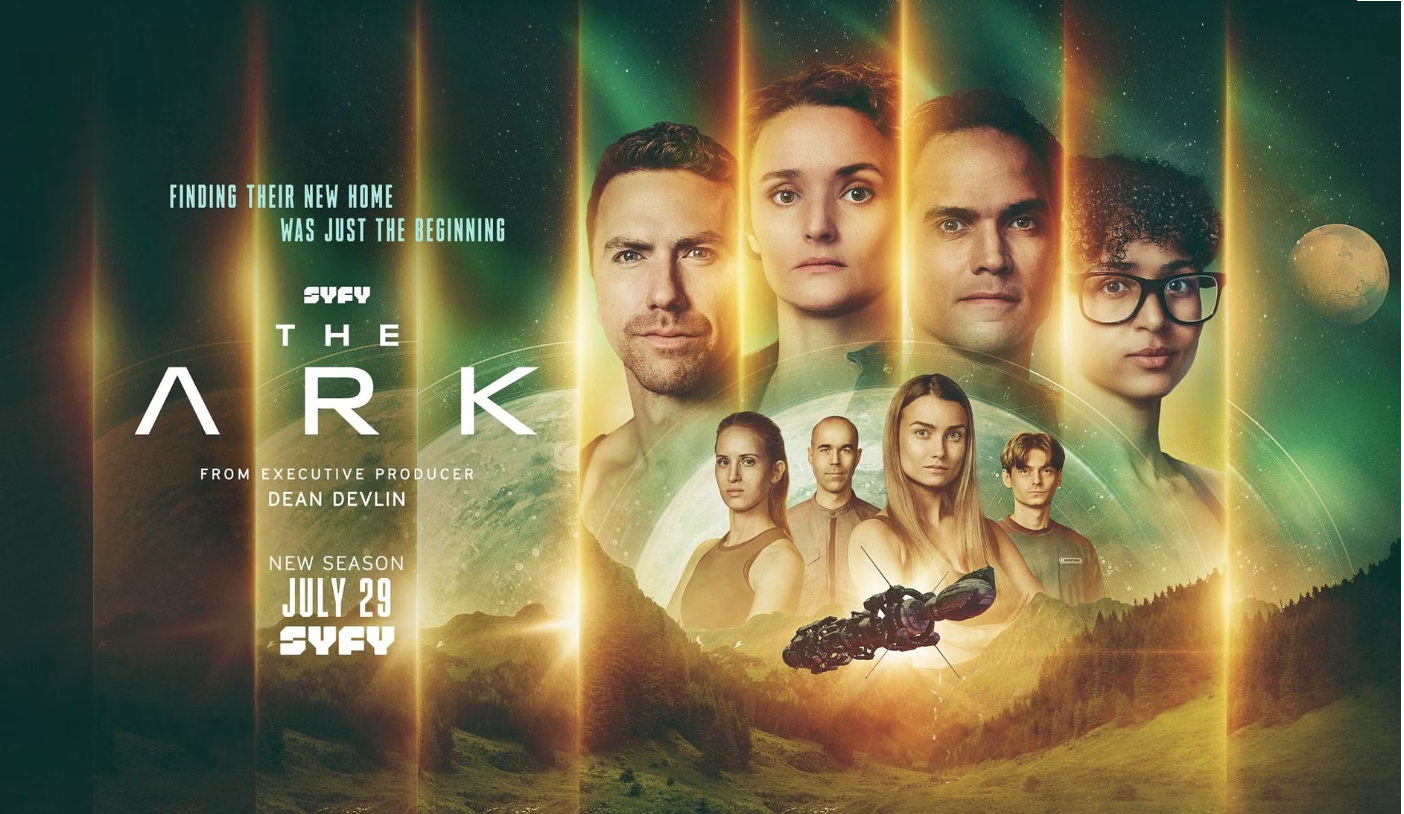
SYFY’s optimistic space opera series, "The Ark," embarks upon its third thrilling season today, occupying a unique entertainment spot as the only weekly scripted sci-fi series currently on regular broadcast television.
With an impressive creative resume featuring executive producers Dean Devlin ("Stargate," "Independence Day") and Jonathan Glassner ("Stargate SG-1") and a hopeful premise about humanity’s search for a new home amid the stars, it’s a refreshing show perfect for a laidback, summertime watch.
Season 3 delivers more dangerous exoplanets inhabited by ravenous toothy monsters, the mystery of an alien stone tablet, and Captain Sharon Garnet’s Ark One searching for long-lost colonists. We caught up with Devlin to find out more about this third outing.
"We got so lucky with this cast," Devlin tells Space. "Some were cast from Canada, some from Spain, from England, and a lot of them were from Serbia. You never know if they’re going to gel, if they’re going to get along, if there's going to be any egos. It's truly an amazing group of individuals."
Talking more on the unique shooting location, Devlin notes, "I do also believe that because we shoot this show in Serbia, it kind of forces them to live together in a way. They work together, they go out to dinners together. They really spend all their time together, and I think it's created a bond off-screen that you can really see on screen."
"The Ark" Season 3 launches exclusively on SYFY on July 29, 2026 (Image credit: SYFY)
Season 3 accelerates all the careful plot mechanisms set up in the previous outings, and the result is a colorful blend of space fantasy action and interpersonal melodrama that makes for good old-fashioned fun.
"Season one had been this crazy hit, and it did so much better than anyone thought," he explains. "While we were making season two, we had discussions about maybe splitting the show into two shows. And that one show takes place on the new colony, and the other show takes place rescuing people. When the season was over, we thought maybe we’d just stick with one show. Then suddenly I had two shows I had to cram into one show. It became twice as big with more locations, more cast, and more adventures.
"We went nuts. We went wildly over budget and just made the biggest, craziest season we could possibly imagine. Our industry has moved so far into streaming, which is great in so many ways. But the weekly viewing on cable is still something that I really treasure and really am grateful that I have a chance to do that. We have two shows doing that this summer [with TNT's "The Librarians: The Next Chapter"] and in both situations we're the only scripted show on each network."
Devlin hints that viewers are going to be shocked at some of the unexpected surprises this season and where it goes on a character level.
"That's always been the strength of this show," he adds. "These characters and bringing out new information about them and seeing how that causes conflicts amongst our group and how they overcome those conflicts. 'The Ark' always has had a mystery element, but this year the mystery box is enormous.”
One thing that’s immediately noticeable is the impressive range of visual effects on 'The Ark' this year, and Devlin admits that this is where a good chunk of the budget-busting occurred.
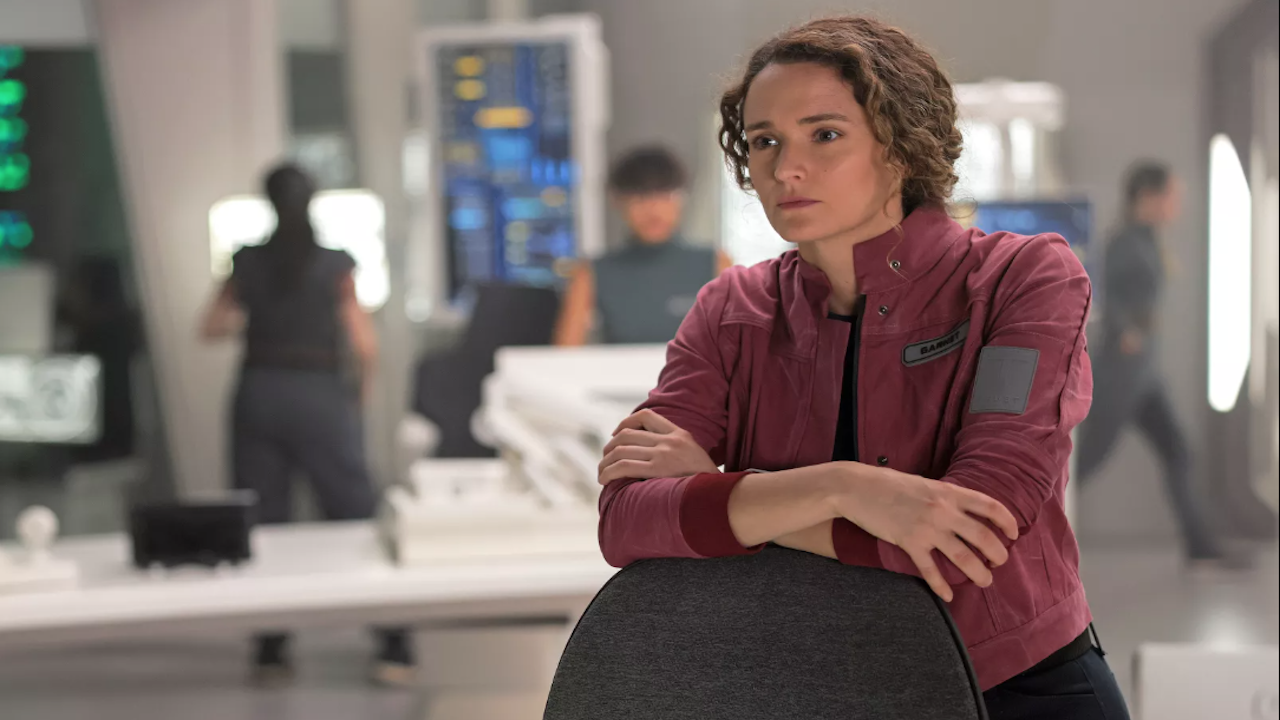
Christie Burke stars as Captain Sharon Garnet on "The Ark' Season 3 (Image credit: SYFY)
"The main VFX team is in Serbia, a company called Fried, and they’ve been with us this whole time. I put another team together in Los Angeles that used to be part of our Electric Entertainment effects company. So we basically had two houses because we wanted to step it up; we had a lot more shots to do, and we split the work between us. I’m really proud of the collaboration. In season one, I promised everybody that there were no aliens on 'The Ark,' but maybe down the line. Well, I guess we’re down the line.
"This is a season where if you've never seen the show before, you can jump right in. But if you have been with us for the whole journey, you're going to get some extra love by the time we get to the end of the season. This may be the most emotional ending of a season we've ever done, and I'm anxious to watch people go on that ride with us.”
Starring Christie Burke, Reece Ritchie, Richard Fleeshman, Pavle Jerinic, Stacey Read, Samantha Glassner and Ryan Adams, SYFY's "The Ark" Season 3 launches weekly starting Wednesday, July 29, 2026.
In Apple TV’s "Silo" season 3, we lunge back 352 years to the Before Times to see how the greatest engineering project in the history of the world began… and would end.
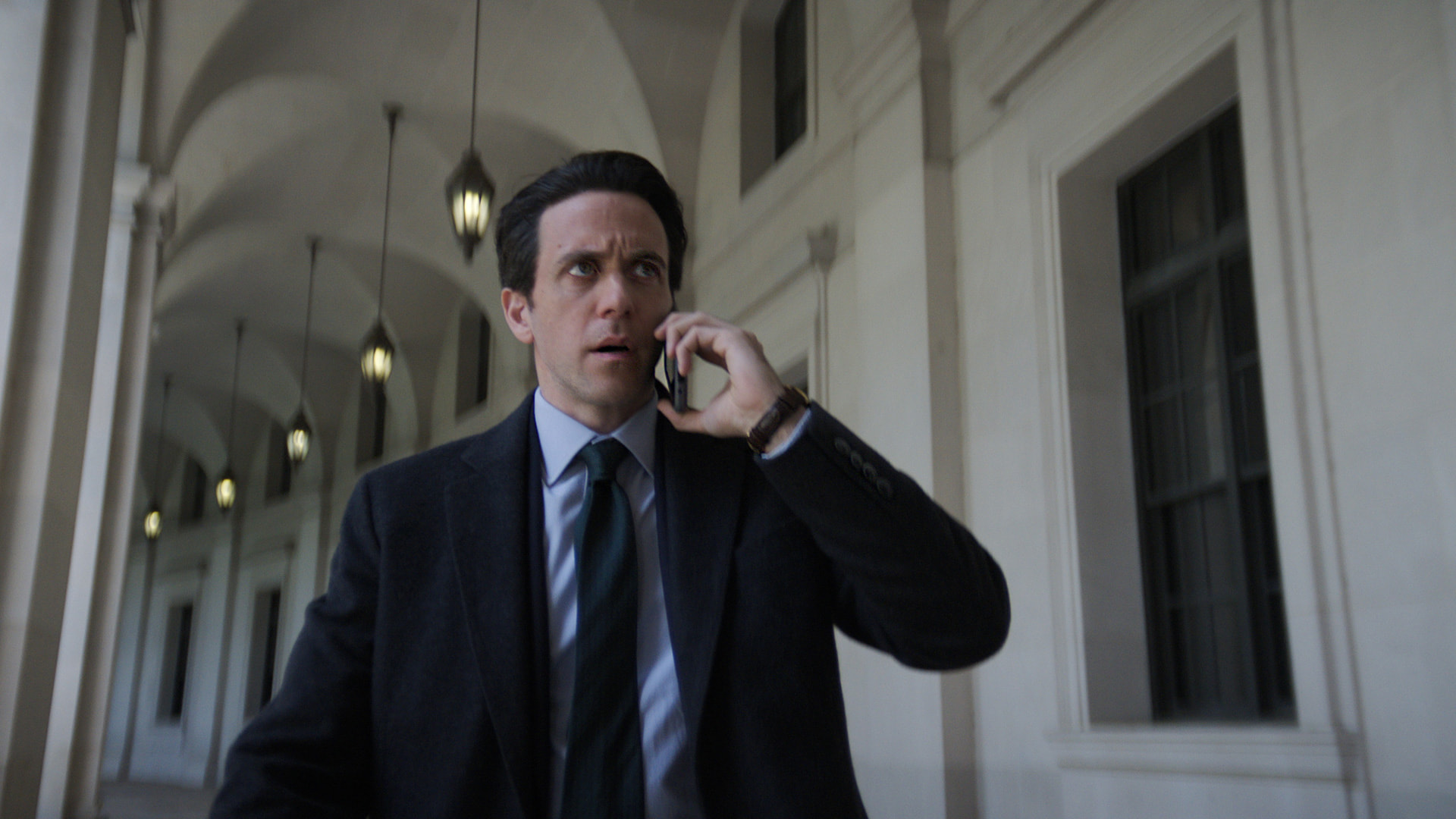
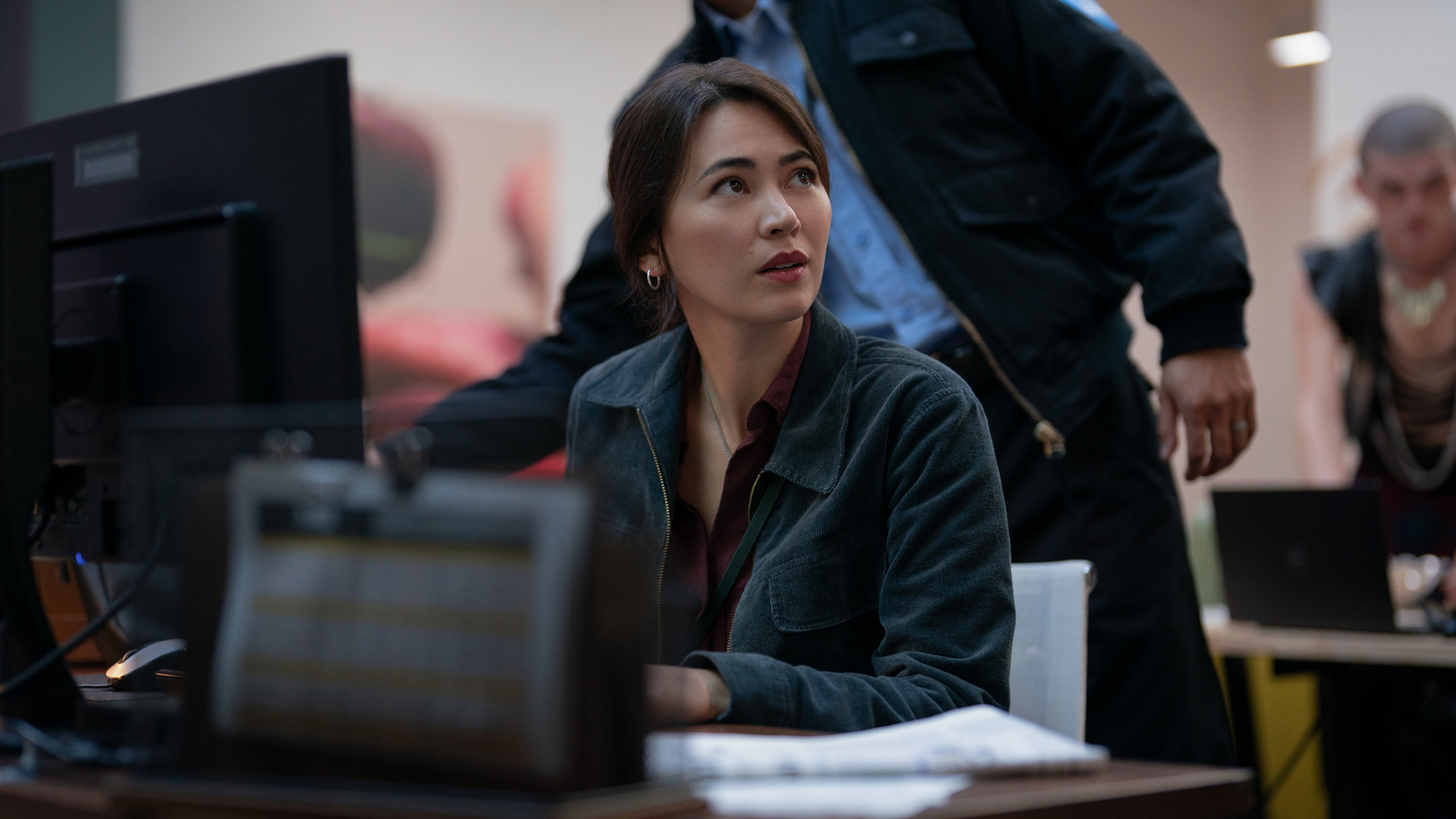
Center stage in this dark sci-fi drama are ambitious Congressman Daniel Keene (Ashley Zukerman) and journalist Helen Drew (Jessica Henwick), the pre-apocalypse duo we were first introduced to in Season 2's final episode.
In that scene, the handsome couple met on a first date in a Washington, D.C. restaurant in the aftermath of a dirty bomb that had irradiated the city.
Daniel and Helen play pivotal roles in "Silo's" elaborate conspiracy to save humanity, helping to orchestrate a colossal project in Georgia to build a controlled network of survival bunkers that will last centuries until the Earth somehow becomes habitable again after a mysterious calamity. Wait, that sounds familiar...
Zukerman and Henwick create a completely believable relationship as they’re reluctantly drawn into this mind-boggling plot to save the human race. We connected with them to learn details about cultivating their chemistry and intimacy on the show.
Ashley Zukerman as Daniel Keane in "Silo" Season 3 (Image credit: Apple TV)
"It's nothing we worked to generate; it was really just there from the beginning," Zukerman tells Space. "We hung out, and we certainly didn’t hang out for the purpose of building that chemistry. I think we got very lucky to find a teammate to be able to do that with."
"We share the same taste and work ethic," elaborates Zuckerman. "When you go on a journey that’s this big with someone, and we shot every day for four months together, we just always had each other’s backs, and there was an immense amount of unconditional respect and excitement. I’m not the kind of actor that could fake it."
Henwick discussed the complexities of her resourceful character and her expanded role in season 3 by exploring what she drew from to compose a layered Helen.
"It was my memory of working on the school newspaper when I was 14," she explains. "And also my natural inclination to ‘Spanish Inquisition’ everyone. I do feel quite an affinity to journalists. I always love to ask questions, and I want to know why and want to understand things. I’m really curious about the world. I didn’t feel like I had to generate much for Helen. I actually felt like she was very close to me."
Jessica Henwick as Helen Drew in in "Silo" Season 3 (Image credit: Apple TV)
"Silo"'s impressive set design certainly helped the cast immerse themselves in the doomsday world of author Hugh Howey's dystopian novels and in this lavish Apple TV adaptation.
"I'm sort of a terrible guest to sets, especially if I'm a part of the production," Zukerman adds. "I have to remember to sit in wonder for a second at the scale of the operation. Usually I just try to live as the characters live. Then I'm so thankful that you actually get to live in a real space, especially in a sci-fi, which is not our real world.
"Where the drawers open and when you're looking at something, you're not looking at a blue screen or a green screen, you're actually able to experience life as close as you can within this alternate reality."
Likewise, Henwick absorbed "Silo's" immense scope and scale right from the start.
"I've done a lot of fantasy and sci-fi where I’m stuck in front of a green screen, or there's a tennis ball on a stick, and you have to follow it, and that's the spaceship," she shares. "It was nice to be on a show where so much of it was done practically. I remember the first day going to visit the stairs, and that blew my mind. It is a massive set, one of the biggest sets I've been on."
Executive produced by Graham Yost, “Silo” Season 3 is now streaming on Apple TV.
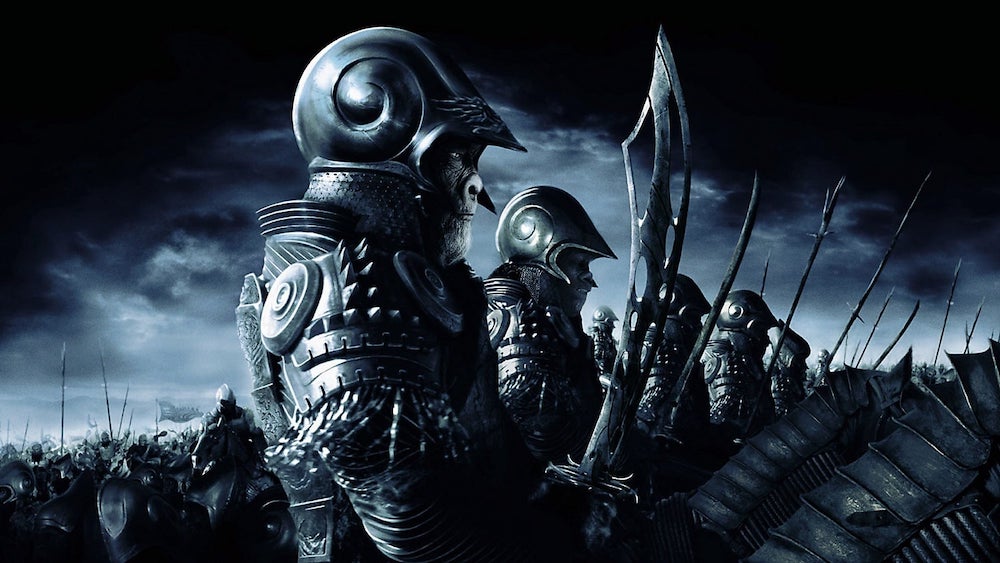
We didn't exactly go bananas for Tim Burton's odd take on "Planet of the Apes" back in 2001, but now, on the occasion of the sci-fi film’s 25th anniversary, we've had time to reflect on not only the summertime spectacle's notable missteps, but also its unsung merits.
Invading the hallowed grounds of director Franklin Schaffner’s 1968 original "Planet of the Apes" was risky business at best, but 20th Century Fox rolled the dice with their long-gestating $100 million remake and a competent cast that included Mark “Markie Mark” Wahlberg, Tim Roth, Helena Bonham Carter, Michael Clarke Duncan, Paul Giamatti, David Warner, and the lovely Lisa Marie.
The studio no doubt hoped a modern makeover of one of the most respected science fiction films ever would reignite interest in the franchise and spawn a bunch of sequels similar to what Schaffner’s Charlton Heston-starring classic did.
Tim Burton's "Planet of the Apes" swung into theaters on July 27, 2001. (Image credit: 20th Century Fox)
Instead, "Planet of the Apes" swiftly killed that notion with its poor critical response despite a respectable box office haul of $362 million after it was released to awful reviews on July 27, 2001. That ended any lofty dreams of triumphantly resurrecting Ape mania for another decade, until director Matt Reeves rebooted everything once more in 2011 with "Rise of the Planet of the Apes."
Treading upon sacred cinematic territory was a brash move, one even considered by filmmakers like Peter Jackson, Oliver Stone, Chris Columbus, and James Cameron at one point.
But Tim Burton was anything but timid, and he prematurely plunged into his "Planet of the Apes" project with unbridled enthusiasm. The aftermath was a strange mix of superficial camp and chaotic action that doesn’t really add up to anything of interest, and it remains a curious addition to Burton’s incredible 40-year filmography.
So, let’s peel back the polarizing "Planet of the Apes" to find some of the sweet and sour!
Rick Baker's Fantastic Makeup
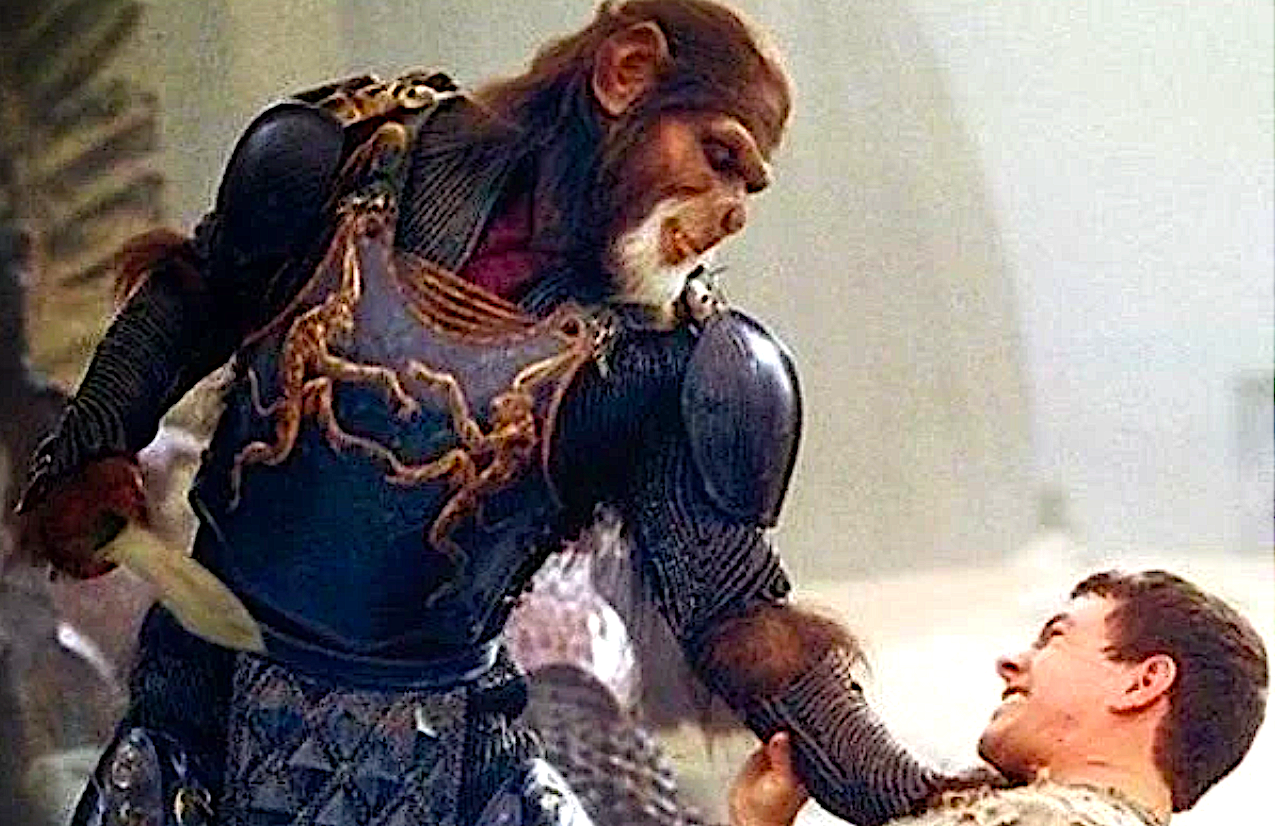
Tim Roth as General Thade battles Mark Wahlberg's lost astronaut Leo Davidson. (Image credit: 20th Century Fox)
Oscar-winning makeup master Rick Baker provided the astonishingly realistic prosthetics for "Planet of the Apes", and the effects are quite convincing. Well, except for Helena Bonham Carter’s Ari chimp character, which often looks like something out of Dr. Seuss's Whoville with her pronounced muzzle and rodent-like appearance (An apt comparison since Baker also did the special makeup effects for "How the Grinch Stole Christmas" the previous year).
That aside, Baker’s practical magic on the movie is fantastic and one of the production’s finest achievements. The man who created the makeup for "King Kong," "An American Werewolf in London," "Michael Jackson’s Thriller," "Harry and the Hendersons," "Men in Black," and "The Wolfman" designed some of the best simian masks ever seen on screen.
Baker’s earlier work on films like "Gorillas in the Mist" and "Mighty Joe Young" made him a natural for the job, and he truly shined here. Charlton Heston even made a cameo appearance as Zaius, a character from the 1968 original.
The Baffling Time-Tripping Plot
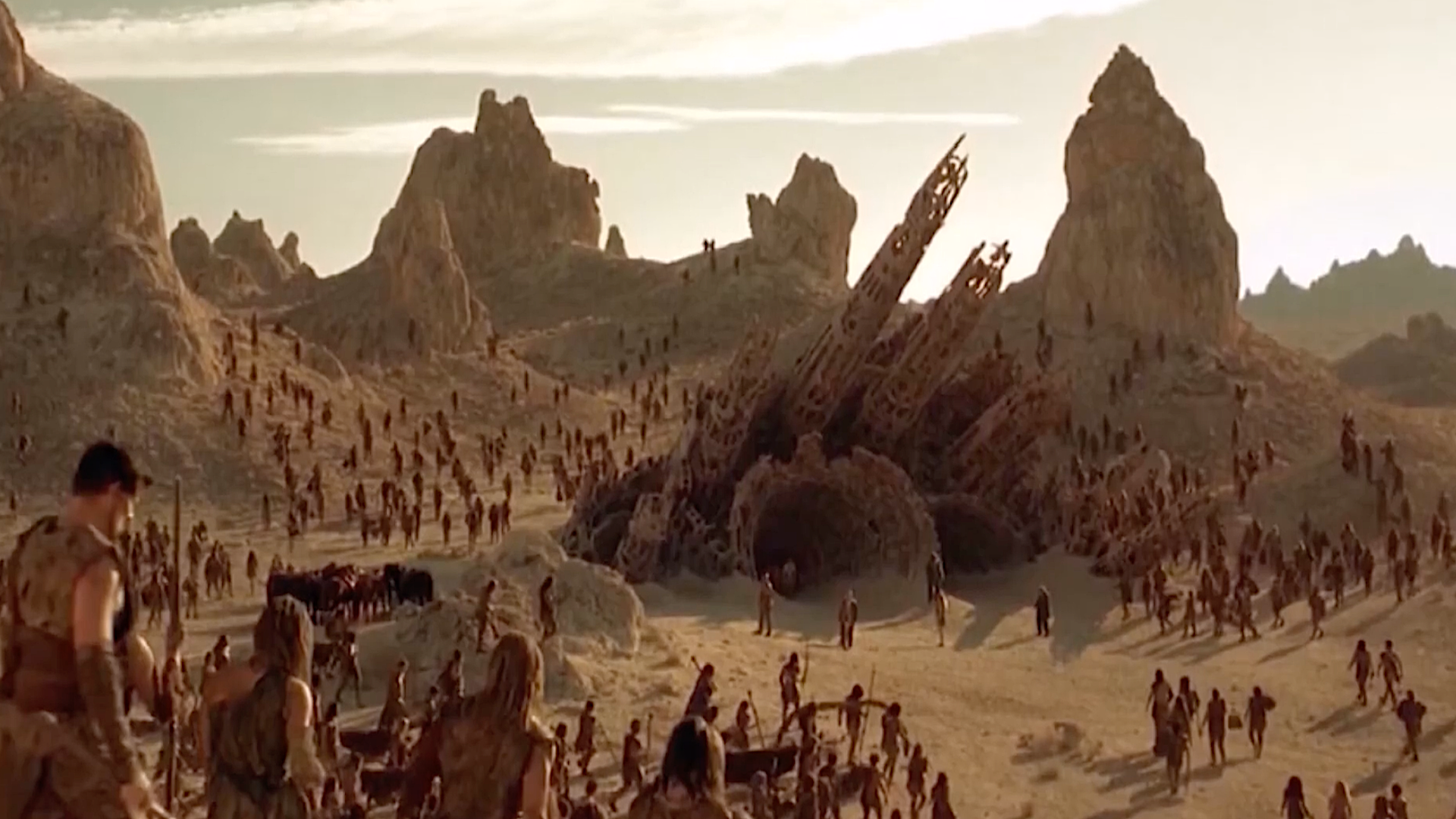
The crumbling remains of an ancient derelict spacecraft in "Planet of the Apes" (Image credit: 20th Century Fox)
The confusing screenplay by Mark Rosenthal, William Broyles Jr and Lawrence Konner was cobbled together at the last minute and was still being rewritten as cameras began rolling.
It’s a soulless retelling of the 1968 version that relies on a few bad one-liners and uninspired performances by a cadre of fine performers, relegated to delivering flat dialogue and clunky exposition amid some cheap-looking soundstage sets.
A miscast Wahlberg plays Captain Leo Davidson, an astronaut scientist marooned on the planet Ashlar where apes are the masters and humans their inferior slaves.
He follows a genetically modified chimpanzee pilot named Pericles into a cosmic storm that engulfed their research station, Oberon, only to be transported to the year 5021, where humans and apes exist in a reversed society caused by the Oberon’s crash thousands of years before his arrival. Those super-smart chimps, gorillas, and orangutans eventually evolved and rebelled against their human masters.
Leo Davidson's time-traveling odyssey goes from 2029 all the way to the 51st century and then back again to his own era, where things have gone totally haywire. The twist ending is infamous. Davidson returns home to Washington, D.C. to find a marble monument of the human-hating warlord General Thade has replaced the iconic Abraham Lincoln statue.
This alternate timeline is a head-scratching "Ape Lincoln" finale that attempts to imitate that famous Statue of Liberty shocker seen in the original Planet of the Apes. It’s a controversial end to Burton’s rushed reimagining and feels forced.
It seems possible that Burton was attempting to be respectful of Pierre Boulle’s 1963 novel by revealing a modern ape-dominated world in the end, yet at the same time recalling the sensation of that nostalgic beach scene with Lady Liberty in the sand. Whatever he was aiming for, he missed.
Danny Elfman's Magnificent Music
Ah, the sonic magic of Danny Elfman ends our tribute to "Planet of the Apes" as a salute to Burton’s ambitious folly. Elfman and Burton are a melodic combo whose collaboration goes back to 1985’s "Pee-Wee’s Big Adventure" and here Elfman goes for a bombastic sound that utilizes a full range of instrumentals.
His robust, under-appreciated score is composed with droning synthesizer undercurrents, old-fashioned action adventure fanfares, and intense rapid-fire tracks punctuated by brass exclamations and roaring percussion.
It's a more serious piece of musical work that safely avoids the sentimentality and whimsy of earlier scores for Tim Burton projects. This reflects an important evolutionary step for Elfman's maturity as an artist, mirroring some of the movie’s main themes.
"I had been more concerned that the score was going to be more of a traditional, very aggressive Jerry Goldsmith score, which he does so brilliantly, and the fact that it was such an ethereal, otherworldly score, immediately eased all problems I may have had, because I saw that there was not going to be any overlap," Elfman toldSoundtrack Magazine.
"I would have been more concerned, if his score was more traditional and aggressive, of what to avoid, so as to not cross over or step on his toes. So it really became very easy once I watched the movie again after 30-something years. The score was such a beautiful, odd, dissonant piece of work. I felt clearly, this is a completely different animal – no pun intended. Having just seen a rough cut of the film, I knew it was going to be a very big, aggressive, muscular, kind of a tribal, driving score."
The polarizing "Ape Lincoln" monument from the finale of "Planet of the Apes" (Image credit: 20th Century Fox)
In summation, anyone attempting to remake the original "Planet of the Apes" was bound to butt up against intense scrutiny and comparison.
Even if Burton’s vision came up far short of what was intended, we still respect the maverick filmmaker for taking on a tough undertaking on the film’s milestone 25th anniversary.
'Planet of the Apes' is available to watch on Hulu in the US, and on Disney+ in the UK.
We all know the cliché: any horror franchise that goes on long enough inevitably goes to space. Critters, Hellraiser, Friday the 13th, Dracula… they've all taken a trip to the stars.
The trope, fair or not, has often overshadowed the fact that science fiction and horror are absolutely perfect bedfellows, with outer space's total isolation, tiny quarters, and oppressive vastness perfectly suited for the horror genre. Horror movies set in space have delivered classics of both genres that have lasted generations and built entire franchises in and of themselves.
Why then, in the middle of a horror film renaissance, has the genre seemingly abandoned outer space? What has become of the space horror movie, and why has Hollywood either stopped producing them entirely or, maybe more accurately, failed to make a good one out of the few they do put out?
Space: The horror frontier
(Image credit: 20th Century Studios)
To be clear, science fiction and horror haven’t been on that much of a break overall; it’s just that when the two genres meet, they no longer seem to have any interest in leaving planet Earth.
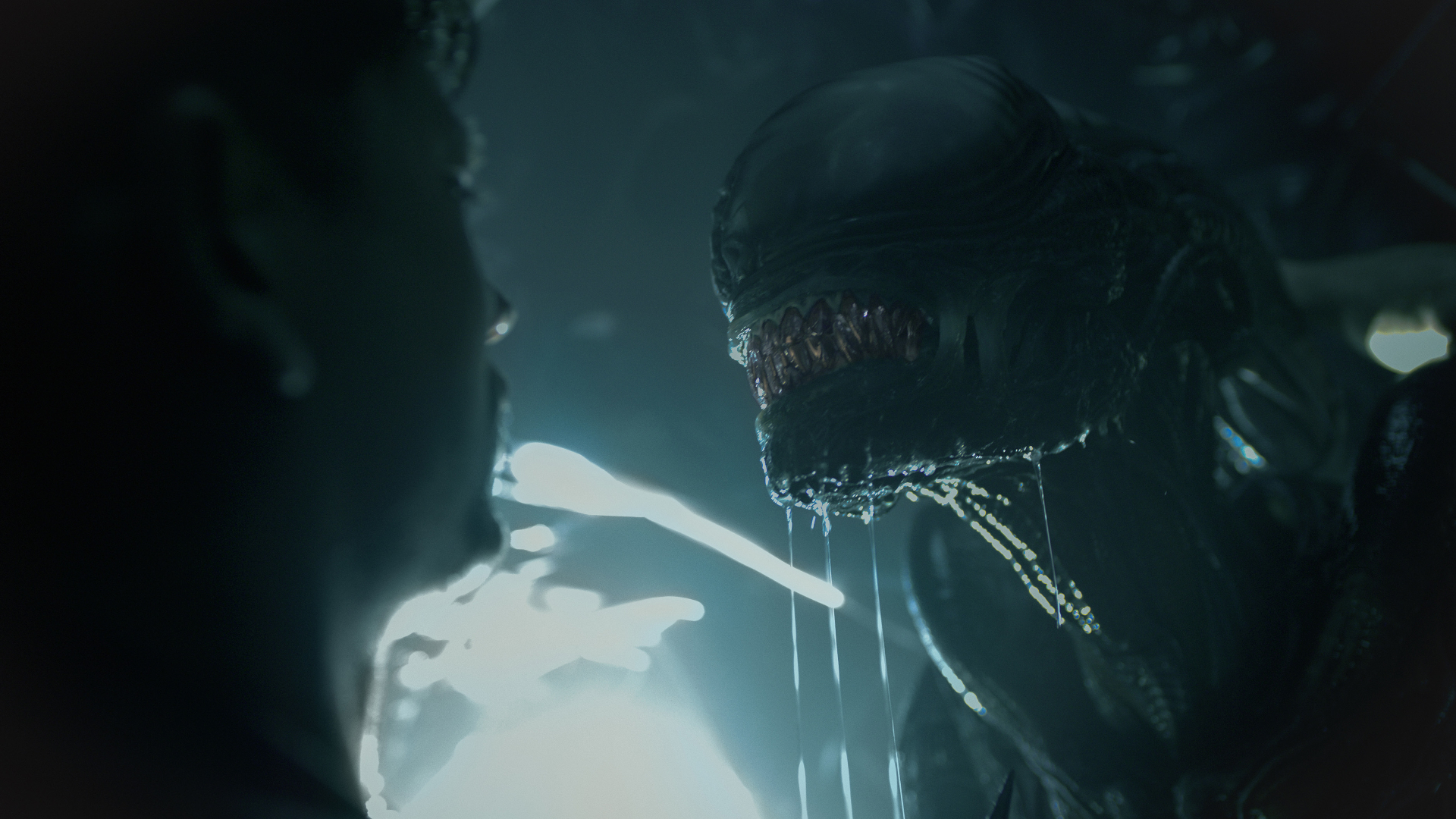
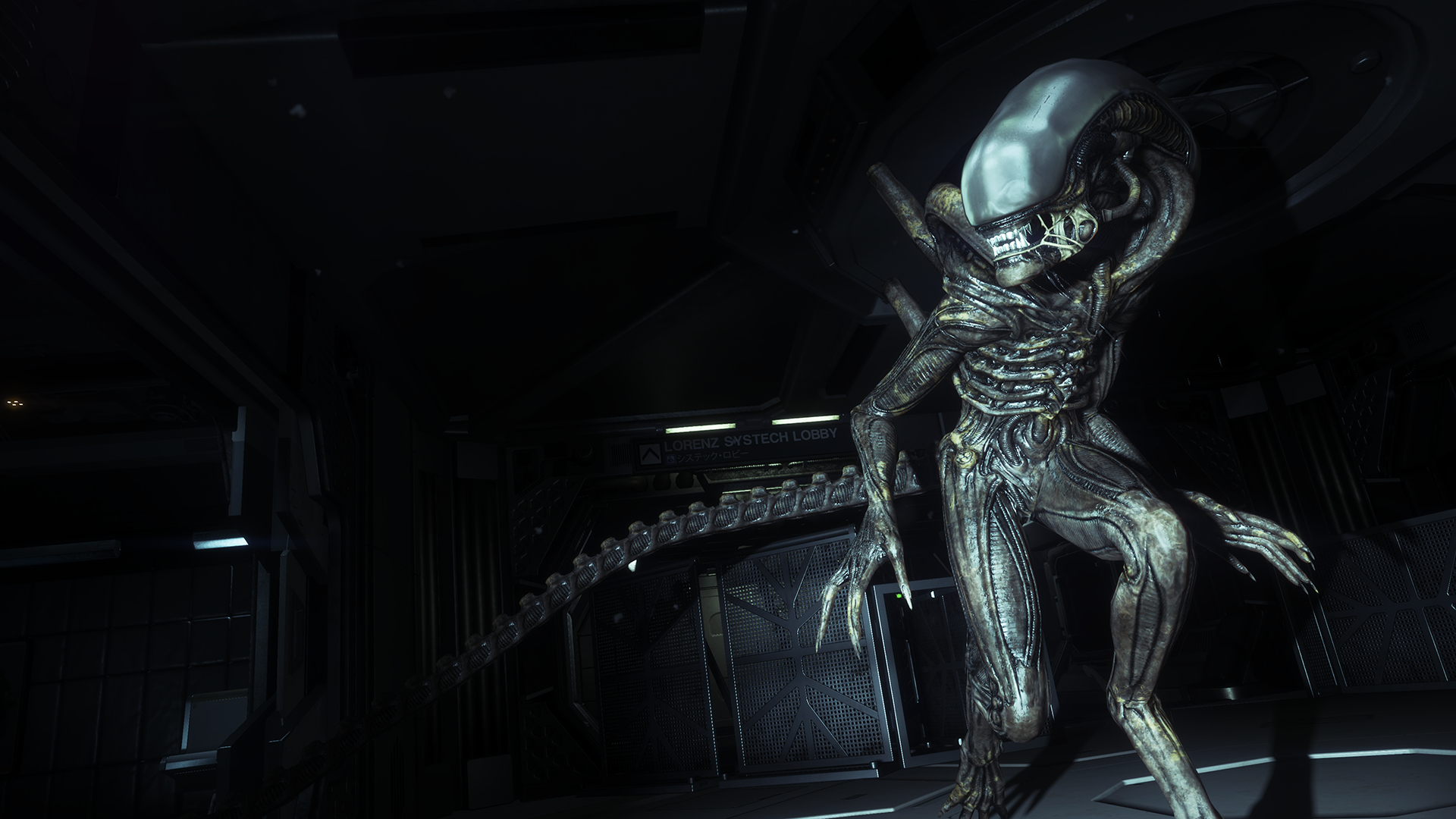
Instead, the combination either brings the alien threat planetside, à la "The Quiet Place", "Nope", or "No One Will Save You", or makes the horror come from man’s own hand like "Ex Machina" or "M3GAN". Either way, the result is that horror no longer lives in space, with the only truly major space-horror film release this decade being the admittedly excellent "Alien: Romulus", along with some smaller projects like "Europa Report" and "Life".
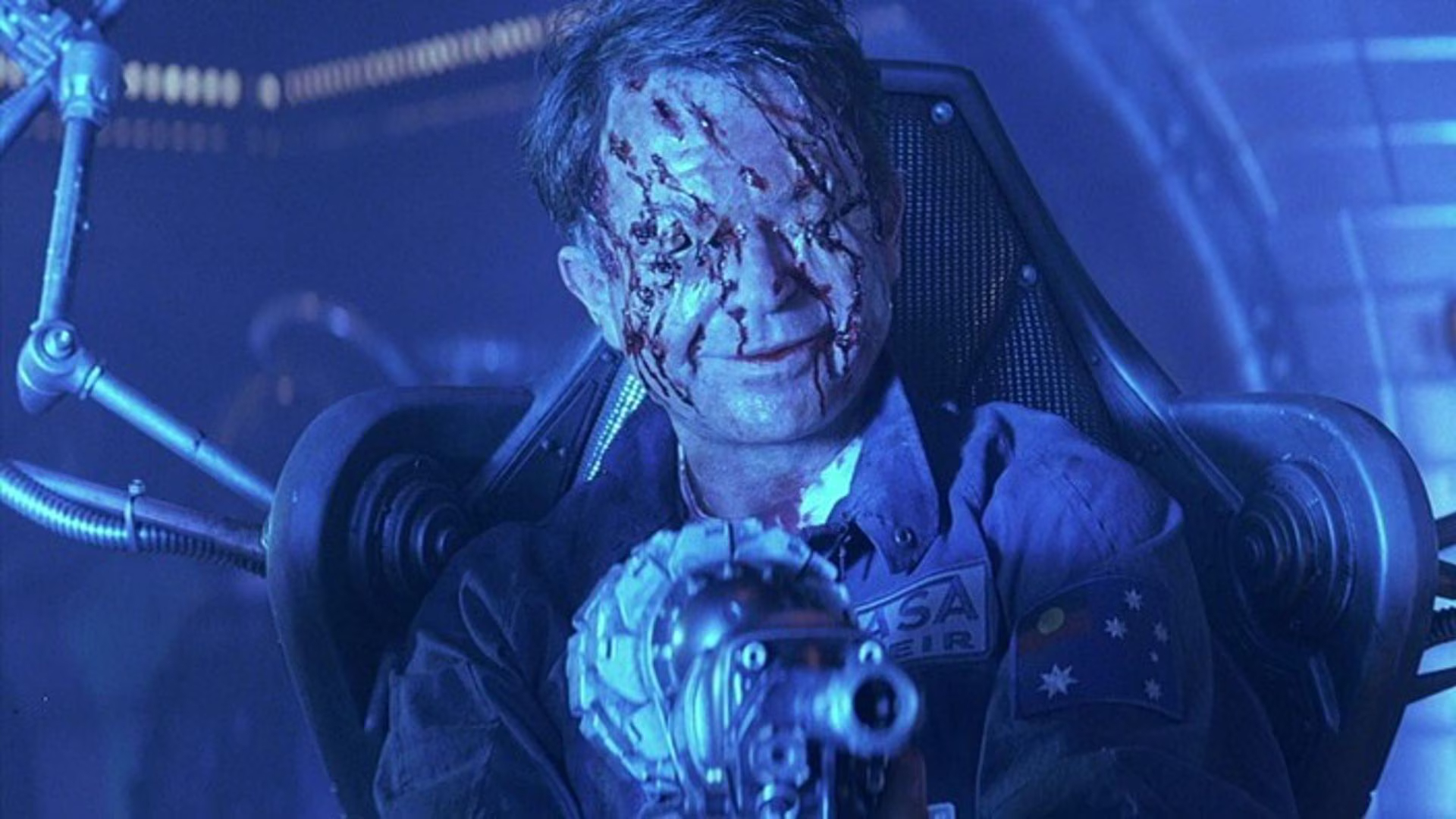
I was sure there must be more — some hidden classics that I missed — but researching for this article, I was shocked at just how few space horror movies we've had in the past couple of decades. It’s like everyone agreed "Event Horizon" was peak and gave up making horror films in space.
(Image credit: Paramount)
Horror in space has never been a dominant subgenre, but it was once big enough to be considered an entire trope. So it feels especially strange that in the middle of a horror renaissance, as the genre continues to dominate box offices, it is totally left behind. Horror has crawled out of the B-grade shadows and into Oscar contention with films like "Get Out", "Midsommar", and "It Follows", and the box office returns are staggering.
Respected directors are diving into the genre and creating masterpieces, but none of them seem interested in outer space. We are nearly a decade into a horror renaissance that has seen almost every type of horror unpacked, remade, and turned into arthouse, and yet space horror has sat almost entirely dormant. So what gives?
In space, no one can hear you arthouse
(Image credit: Fox Searchlight Pictures)
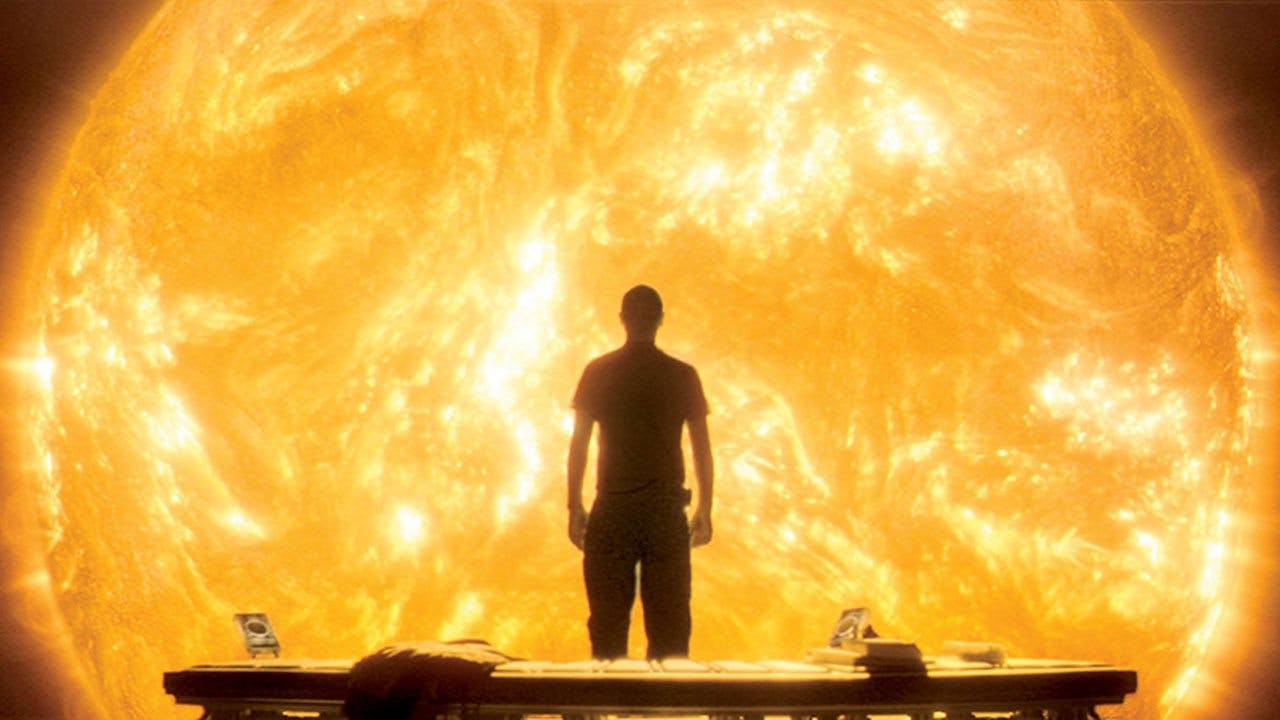
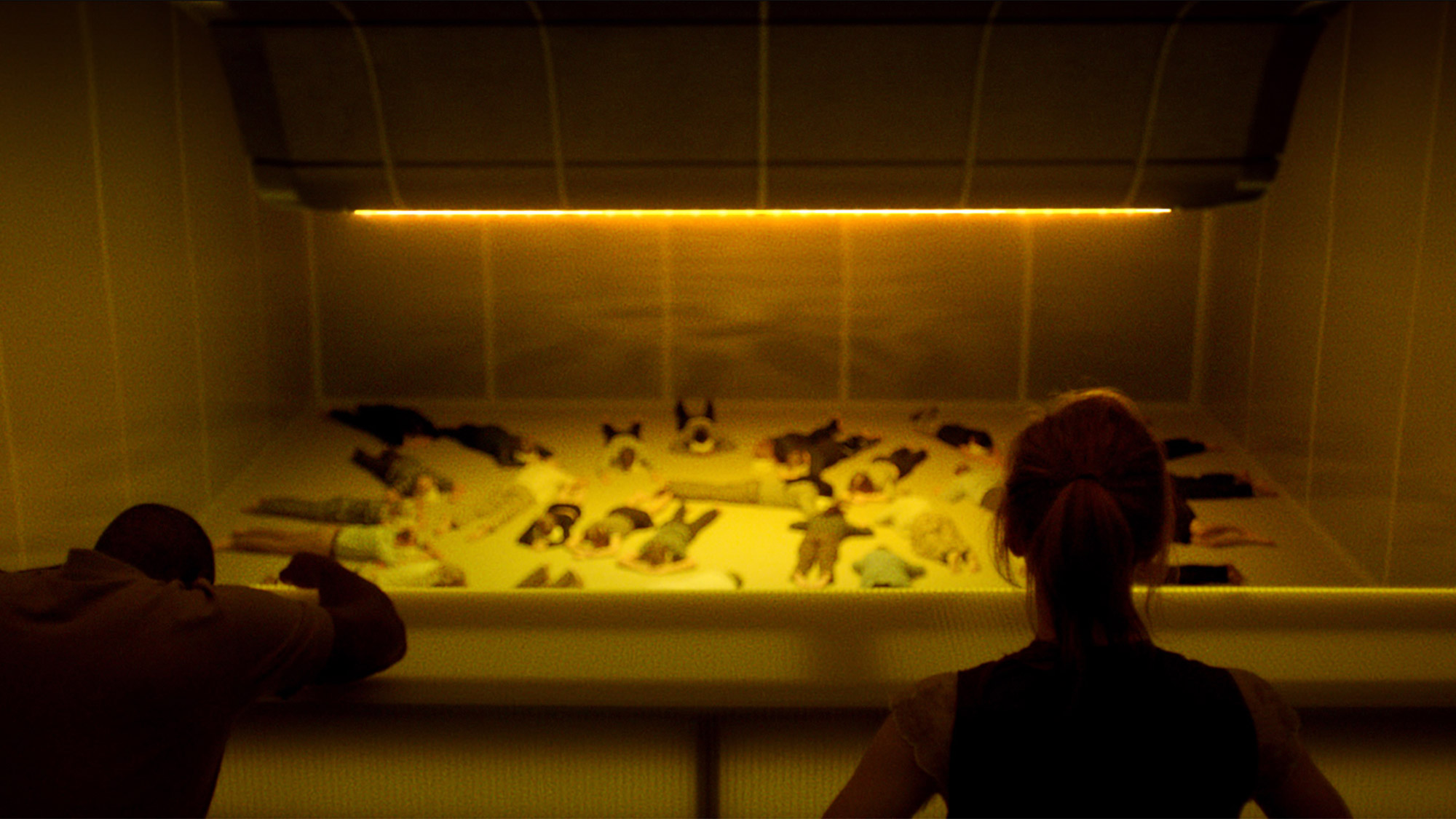
Why is this happening then? Where is the arthouse unpacking of "Jason X"? Why didn’t Danny Boyle’s "Sunshine" kick off the horror renaissance a decade earlier? Why did the "Alien" franchise become whatever the hell "Prometheus" was before finally returning to its roots (and then promptly coming down to Earth!)? Where’s our English remake of Aniara from an up-and-coming indie director?
There’s most likely a slew of reasons none of this has happened, but the most likely culprit is that horror has become far more grounded than it used to be. While we still get slashers and jump scares, the renaissance that A24 ushered in has not only brought horror out of the shadows, but also delivered a redefined genre that doesn’t jive as well with spaceships and alien creatures.
That’s not to say it can’t, but this new generation of horror isn’t interested in going off-planet to tell its slow-burning stories of grief and trauma, full of thinly veiled metaphors for real-life issues. “Earth and the present day are scary enough as is” seems to be the argument.
(Image credit: Magnet Releasing)
Of course, there’s the other reason. The reason for everything: money.
The other new branch of horror that has come out of this renaissance comes from studios like Blumhouse, which churn out low-budget horror films and rake in huge profits. And that's no knock on budget horror flicks, some of which are truly amazing.
But while space horror can be made on the cheap, it’s definitely not as easy to do. It requires more investment, design, and often sets and special effects than a traditional horror film does. It’s just cheaper and easier to make sci-fi horror that’s set on Earth, and with so many of them becoming massive hits, why bother going to space?
Drag me to space
(Image credit: Sony Picture Classics)
Given both sci-fi and horror's history of social commentary and cultural unpacking, arthouse horror not going to space — budget restraints aside — seems like a major miss, especially when the very aspects it explores are perfectly built for the isolation, detachment, and fear that space evokes.
Outside of horror, excellent space movies like "Moon" and "The Martian" have explored these themes, but we're missing that spooky, scary edge.
And look, I’m not even saying that space horror has to be arthouse. The trope that horror franchises go to space eventually is actually one I’d like to see more of. Why not jump the shark a bit more with horror franchises? A science fiction version of Saw sounds a hell of a lot more fun than Chris Rock's dreadful spin-off. Sci-fi space "Purge" on a colony ship? Yes, and please. "Evil Dead"’s new anthology style of horror is practically begging to take a trip to space. There’s so much space in space, and these franchises could totally take a trip there.
(Image credit: Sega)
There is one bright spot, however, for the space-loving horror enthusiast. Video games seem to have taken up the mantle.
Space horror has always flourished in the medium, from AAA classics like "Dead Space" to indie darlings like "Iron Lung" (which itself was transformed into a space horror film!). The subgenre has been going strong for decades, even if film gave up on it. Hell, for nearly a decade, the best output from the "Alien" franchise was "Alien: Isolation", one of the scariest games ever made.
While movies may no longer be playing in the wider universe, at least our video games are taking us there and then scaring us out of our space boots.