As we all begin to absorb the bitter news of Patrick Stewart's death at the age of 86, a flood of personal tributes are pouring in, reflecting this global treasure's wonderful life lived with a dignity and bravado that few mortals possess.
We’re getting just a hint of what Patrick Stewartmeant to those who worked with him or knew him throughout his stellar career. Whether on stage with the Royal Shakespeare Company, on TV as the dashing Captain Jean-Luc Picard in "Star Trek: The Next Generation," and in Hollywood spectacles like 1984's "Dune," four "Star Trek" feature films, and the many "X-Men" movies in which he portrayed Professor Charles Xavier, Stewart was always the consummate professional. His final screen performance arrives on Dec. 18 with "Avengers: Doomsday" where he’ll present his Charles Xavier character once more.
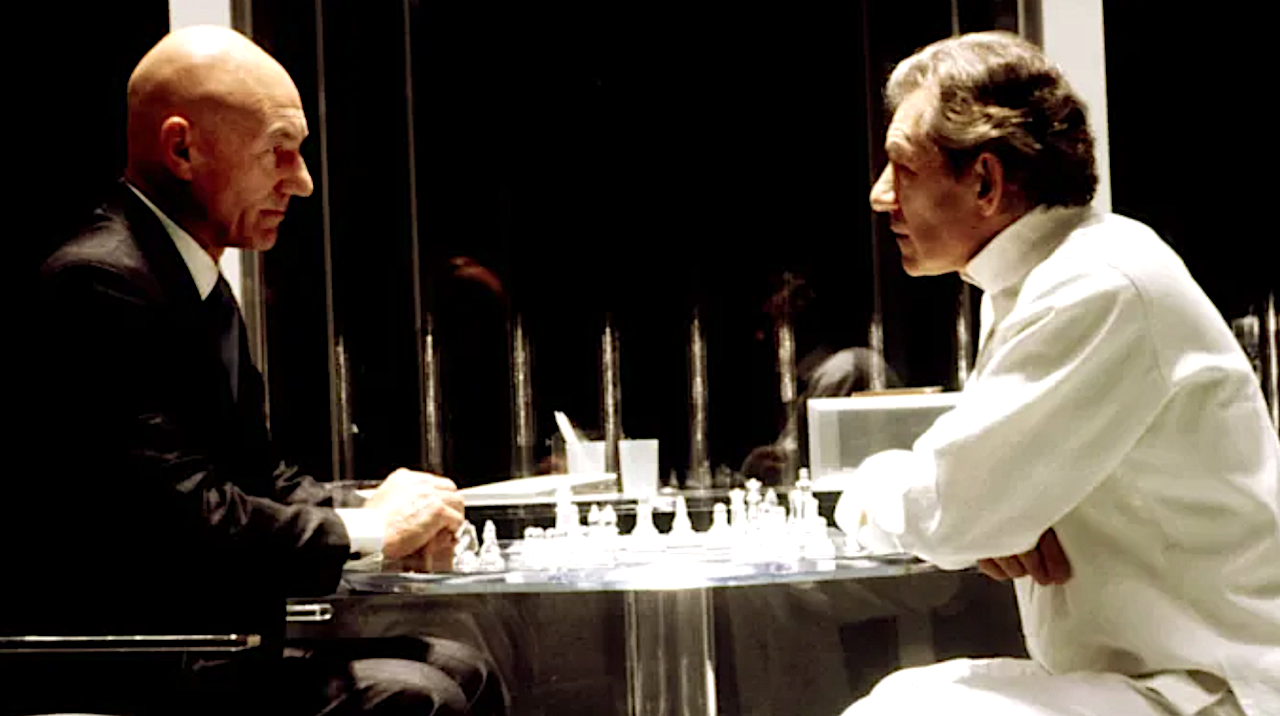
"Before everything else, Patrick was defined by being born and bred in Yorkshire, the proud county in the north of England which he loved to the end," Ian McKellen wrote on Instagram of his "X-Men" co-star and friend. "You could hear it in his accented voice and in the stern honesty with which he told you what he thought and felt. Yorkshiremen have no truck with half-truths or avoidance of big issues. He wore his heart on his sleeve, which made him a man to rely on, to admire and, in my case, love."
Patrick Stewart and Ian McKellan in 2000's "X-Men." (Image credit: 20th Century Studios)
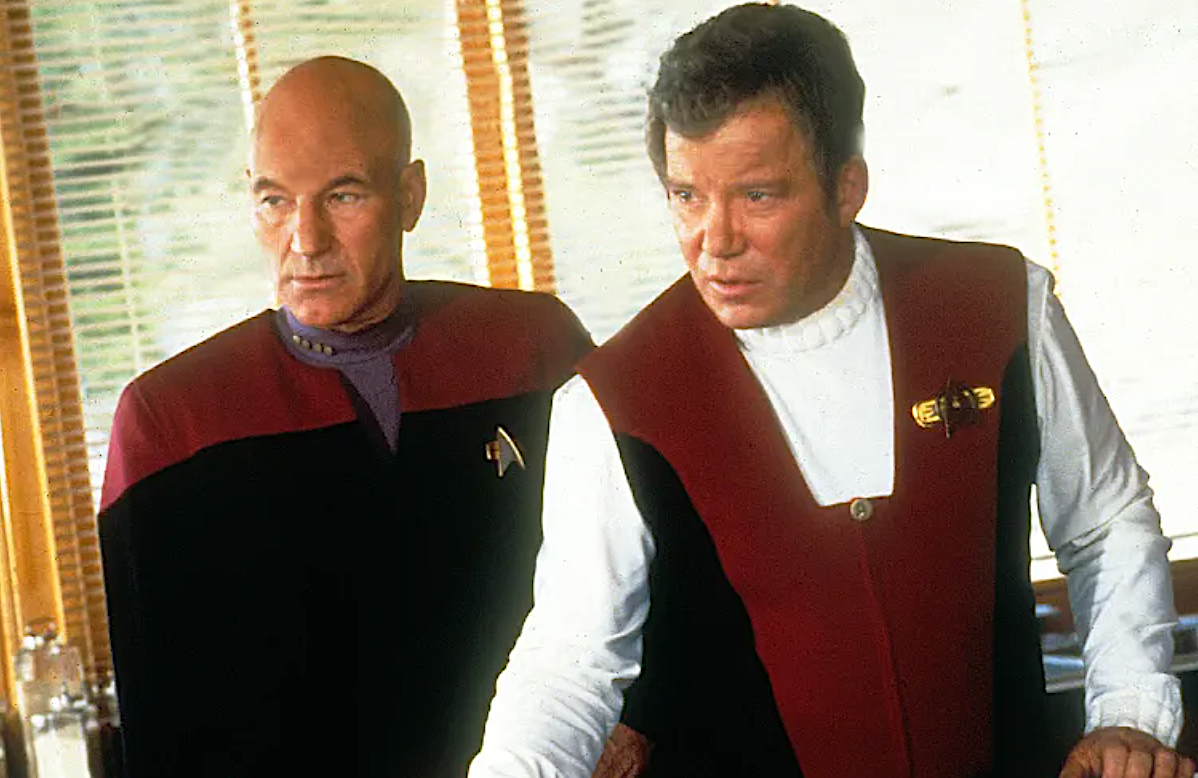
William Shatner, a fellow Enterprise captain, offered his profound sense of loss on Stewart's passing. The legends shared the screen in 1994's "Star Trek: Generations."
"What a heartbreaking week it has been. Sir Patrick Stewart was a friend, a colleague, and a magnificent actor," Shatner posted on Facebook. "From the stage to the bridge of the Enterprise, he brought intelligence, grace, and a deep sense of humanity to everything he did. Captain Picard stood for the best of us, and so did the man who played him. I was filled with affection and admiration for him and his work. My heart goes out to Sunny and his family. He will be deeply missed."
Patrick Stewart and William Shatner star in 1994's "Star Trek: Generations." (Image credit: Paramount)
Akiva Goldsman, co-creator of Paramount+'s "Star Trek: Picard" and "Star Trek: Strange New Worlds," delivered a sorrowful message in the aftermath of Stewart's death
"Patrick was not only a true lion of the profession, he was the rarest of alchemists, one who could literally turn the written word into flesh and blood," Goldsman wrote. "Patrick was kind, strong, fiercely intelligent, collaborative, vulnerable and wise. His Captain Jean-Luc Picard permanently expanded the universe of 'Star Trek' without measure. He will be deeply missed by this one fan and by so many more."
Stewart's "Star Trek: The Next Generation" family shared their grief and offered up poignant words to try to describe what effect he had on their lives and profession.
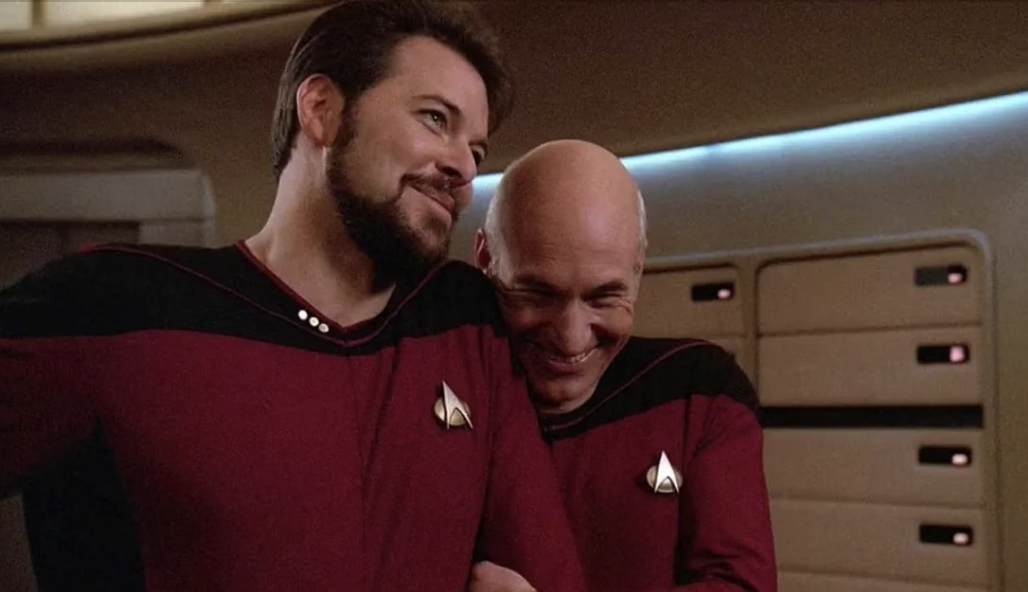
"There's no one on this planet that I have acted with or directed more often than my late great friend Patrick Stewart," revealed actor and director Jonathan Frakes, who co-starred for over 35 years with Stewart as Commander Will Riker, in a touching statement. "He will be with me forever. May he rest in Peace."
Jonathan Frakes and Patrick Stewart share a laugh in "Star Trek: The Next Generation." (Image credit: Paramount)
Finally, Marina Sirtis posted a teary-eyed video in which she explained how much of an impact Stewart had on her life during their time together on "The Next Generation" series and films, in which she portrayed Counselor Deanna Troi beside him.
"Patrick, I loved you with all my heart," she said on Instagram. "I know you're up there now, reunited with all those that you've loved. But to say that you'll be missed down here is probably the understatement of the century. It was an honor to work with Patrick. It was more than an honor; it was the privilege of my life to work with him."
In space, no one can hear you scream... not unlike in the empty theater screens that aging horror franchises play to when the lustre has gone and their final installments limp to the public. It is perhaps little wonder that some horror franchises go to space to die... or take long breaks, at least.
In celebration of Halloween, we're running down some horror franchises that made the journey to the final frontier, resulting in films that range from the sublime and outrageously campy fun to just pure awful.
Absent from the list are space horror movies that have space baked into their natural fabric. So no Event Horizon, no Alien, and no Critters 4 (they were aliens, so they just went back to space; that doesn't count).
1. Jason X (2001)
(Image credit: New Line Cinema / Crystal Lake Entertainment)
2001 was a really weird time for the Friday the 13th franchise. New Line had acquired the series in the wake of the terrible box office returns and critical panning of Friday the 13th Part VIII: Jason Takes Manhattan. Known as "the house that Freddy built," New Line's plan was clear: pit Voorhees vs. Kruger in a battle of horror icons for the ages.
However, the studio had to keep Jason in the public eye to ensure the eventual crossover lived up to expectations. The first move in that effort, 1993's Jason Goes to Hell: The Final Friday, was an odd start. The movie apparently kills Voorhees, with his iconic hockey mask seized by the equally iconic bladed glove of Freddy Krueger at the end of the film and dragged into the dirt.
Fun bit of trivia: the hand wearing the glove isn't that of Freddy actor Robert Englund but belongs to Kane Hodder, arguably the best Jason Voorhees, meaning Hodder played both Jason and Freddy!
Still, the crossover has stalled in the preproduction process by 2001, as a script couldn't be agreed upon. New Line wanted a new Friday film but in a different environment than the typical Crystal Lake setting. After rejecting a winter-themed movie that would see Voorhees killing cross-country skiers in a snow-covered Camp Crystal Lake, New Line decided to put Jason on ice in a different way, cryogenically freezing Pamela Voorhees' baby boy and sending him to space in Jason X, the tenth movie in the series.
Jason X would see the Crystal Lake Killer slaughter David Croenberg, get his ass kicked by a feisty robot, and double up on his iconic sleeping bag kill from Friday the 13th Part VII: The New Blood (one of my favorites, massively underrated), all on the way to getting a major upgrade from some very unhelpful nanobots to become Uber Jason.
Jason X has a mixed reputation and isn't regarded as one of the better entries in the series, but the movie has a load of positives going for it.
The kills are super inventive, the nitrogen head smash being arguably one of the best in a series known for over-the-top brutality; Kane Hodder is great during his final shift as Jason, and there are a load of laughs. Jason X isn't as tongue-in-cheek as one of the following movies on this list, but it is definitely self-aware and so much better for it.
In honor of arguably the best of these space-relocated horror movies, we'll rate this and the following movies in Uber Jasons out of five. For campy space-based horror featuring a character that is a fish out of water, Jason X is near perfect.
4.8 Uber Jasons out of 5. Hail to the king, baby.
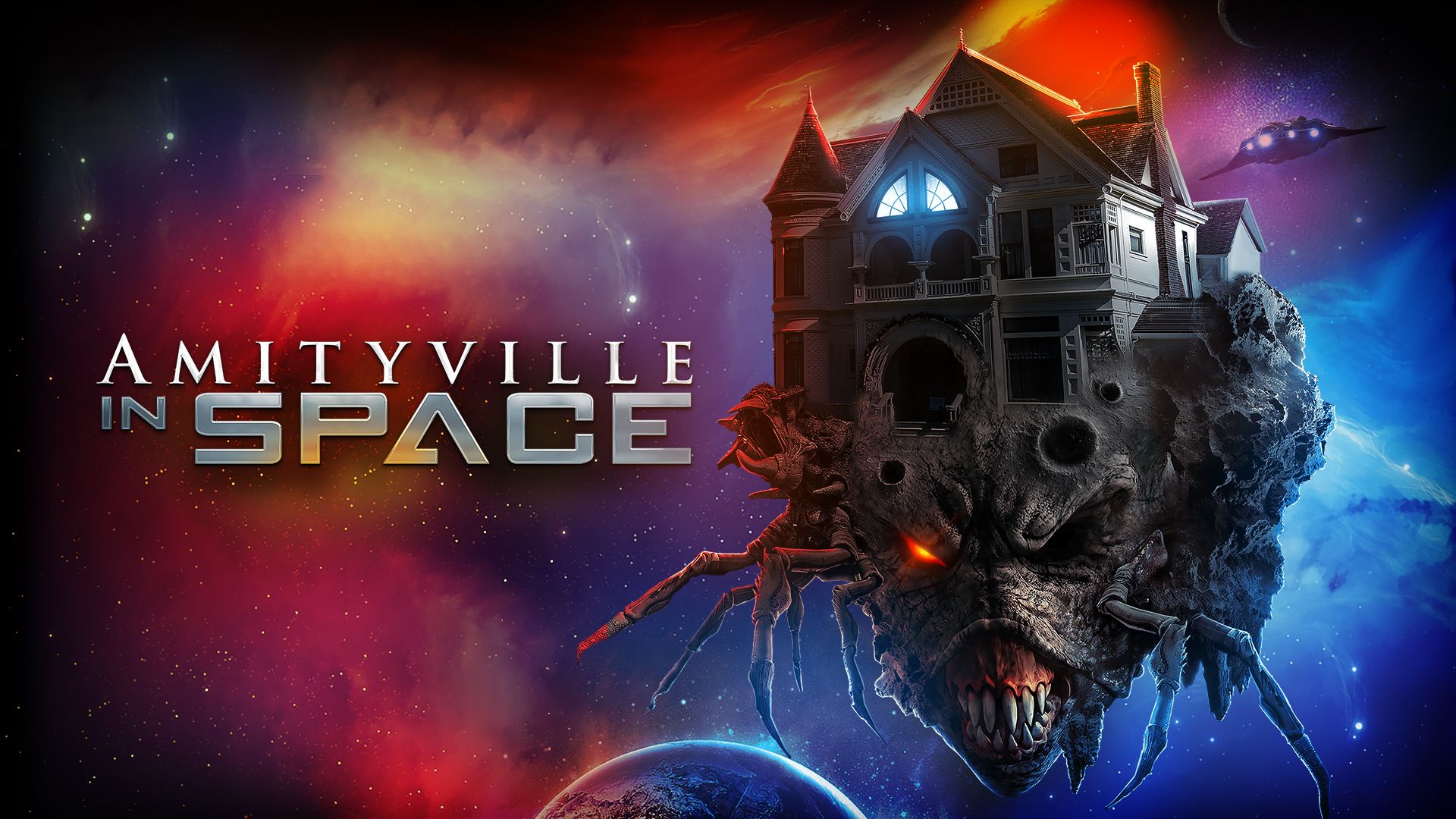
2. Amityville in Space (2022)
(Image credit: Polonia Brothers Entertainment)
Alien is often referred to as "a haunted house movie in space." The elements are all there: isolation, a hidden, poorly understood danger lurking in the shadows, victims picked off one by one. Of course, that is figurative, but Amityville in Space shows why filmmakers should never make things too literal.
Amityville in Space is bad. Not so bad that it is good. So bad, it is bad.
Your opinion on Amityville as a franchise likely depends on your tolerance for utter hogwash. The first movie, The Amityville Horror, released in 1979, is an effective, often quite creepy horror. Since then, the loose Amityville Horror franchise spans nine core Amityville movies and between 50 and 90 low-budget independent additions to the franchise.
Amityville in Space is definitely at the cheapest end of the low-budget spectrum, and as the name suggests, it takes 112 Ocean Avenue further than ever before, to the year 3015 and the edge of a distant black hole.
Literally, the only thing worth watching in Amityville in Space is the hilarious opening that sees a failed exorcism attempt cause the Amityville house to literally blast off the surface of Earth like a rocket.d
Unfortunately, Amityville in Space isn't a corny "so-bad it's good" movie. It's just frustratingly bad. Perhaps disappearing into a black hole is the fate Amityville deserved all along, though with the name being in the public domain, Amityville movies will just keep coming. At least I didn't have to watch Amityville Death Toilet (yes, that really exists).
0 Uber Jasons out of 5. Avoid like a demonic pig called Jodie
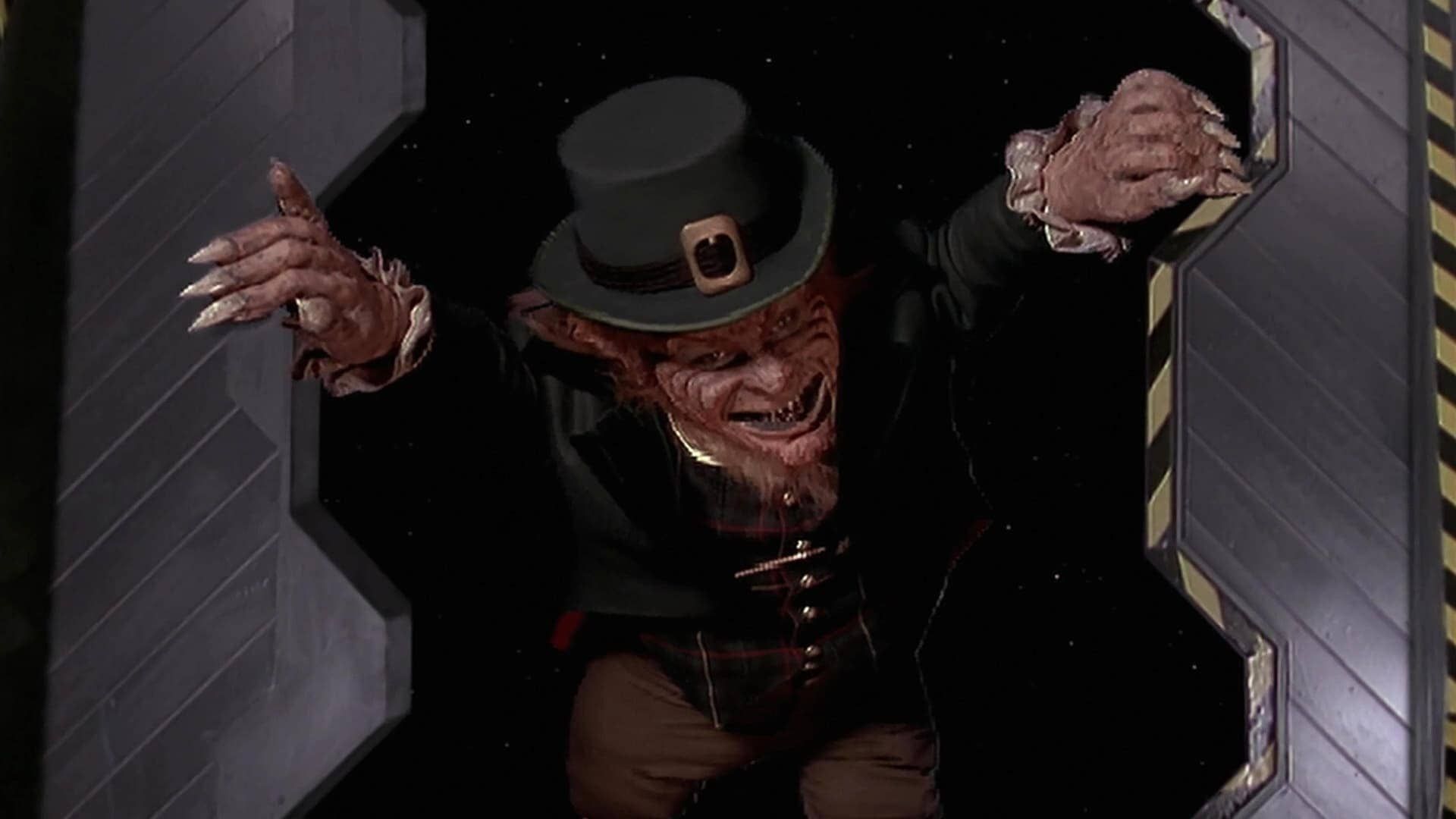
3. Leprechaun 4: In Space (1996)
(Image credit: Trimark Pictures)
Leprechaun 4 sees the franchise that launched the career of Jennifer Aniston blast its titular antagonist into space. The Leprechaun, played by the unparalleled Warwick Davis, makes the voyage to the final frontier with tongue planted firmly in cheek, and the results are bloody glorious.
The film sees the Leprechaun's attempts to woo a space princess rudely interrupted by space marines and the minor inconvenience of being blown apart by a grenade.
The Leprechaun then exacts his revenge on the spacecraft of the marines, an impressively realized set for a straight-to-video horror movie in the mid-90s.
If you want some camp horror fun on Halloween, the sight of the Leprechaun emerging fully formed from the pants of a space marine is probably going to be unbeatable.
Fans of British sitcoms will be equally delighted by the appearance of Guy Siner ('Allo 'Allo's Lt. Hubert Gruber) as Dr. Mittenhand. While the rest of the cast play the ludicrousness of a leprechaun rampaging through a spaceship offing space marines relatively straight, Davis and Siner don't just chew the scenery; they suck it in like thespian black holes.
As Mittenhand says: "Thank you, Harold, I do the jokes!"
Of course, there is plenty of ropey CGI, as is standard for a 90s genre movie, but there is a wonderful practical creature at the movie's conclusion that pays tribute to David Cronemburg's The Fly. Less Brundle-Fly, more Mitten-Spider. Plus a death that is pure Looney Tunes and a Kaiju-sized leprechaun. Take that, Uber Jason.
4.5 Uber Jasons out of 5. Thank your Lucky Charms
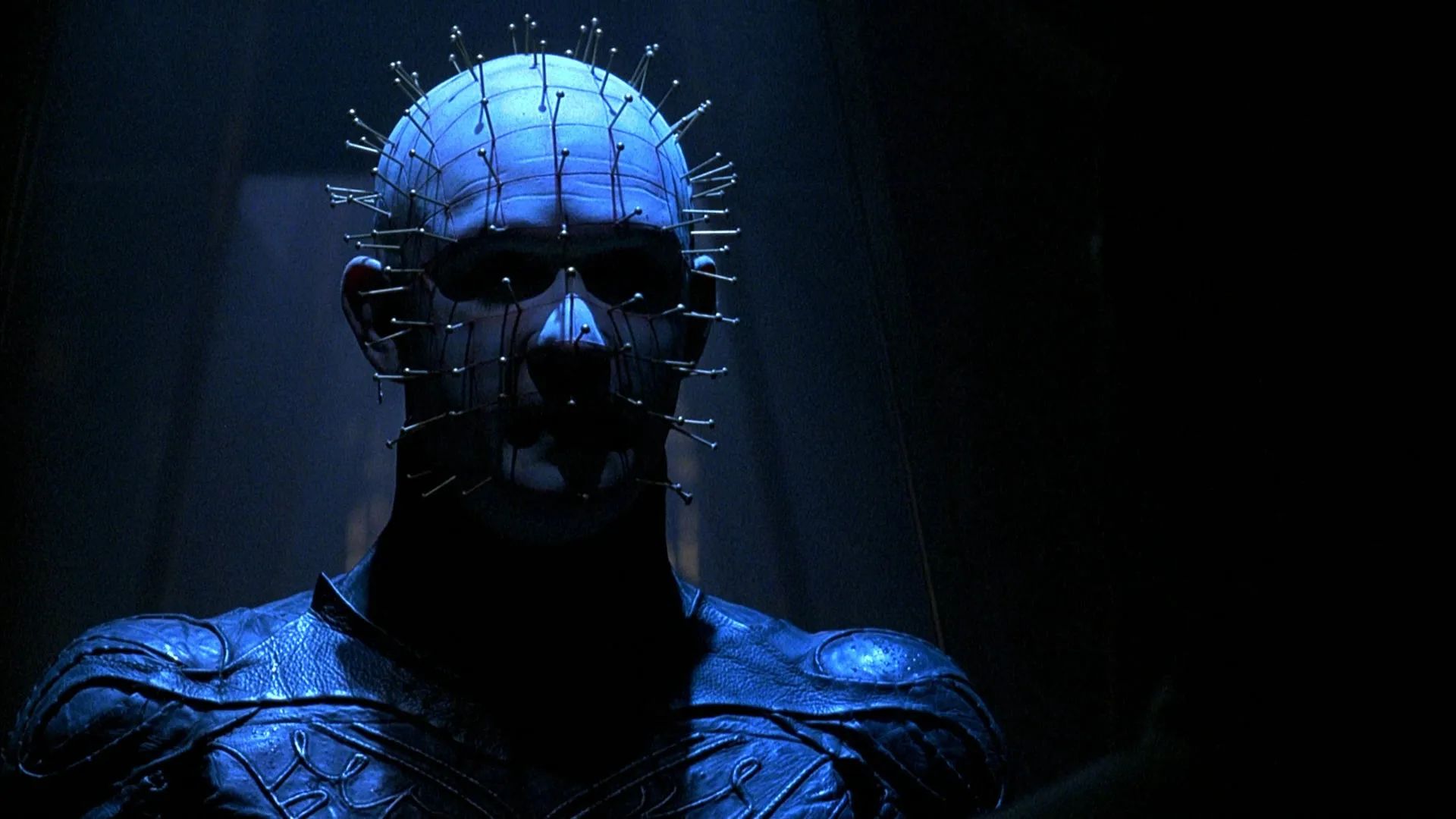
4. Hellraiser 4: Bloodline (1996)
(Image credit: Miramax Films)
Another horror franchise heading to space for its fourth installment, and this one also came out in 1996. Hellraiser 4: Bloodline marks a real downturn in the fortunes of Hellraiser, being the last in the series to receive a theatrical release and the last to benefit from input from creator and horror maestro Clive Barker.
The film has a portmanteau style beginning in 2127, as Dr. Paul Merchant attempts to solve the mystery of the Lament Configuration, then flashing back to its creation by Merchant's ancestor Phillip LeMarchand in France in 1796. The movie then jumps to 1996, when the Lament Configuration has inspired a skyscraper built by another of Merchant's ancestors.
This second section also sees the franchise's figurehead Pinhead, played by Doug Bradley, come into conflict with the demonic Angelique. A conflict that is carried into 2127.
Arguably, the CGI in Hellraiser: Bloodline is no better or worse than that of Leprechaun 4; the problem is the latter isn't taking itself seriously, but the former really is.
You can't really expect a "fun" Hellraiser movie; that has never been their vibe, and they are better for the serious tone. But it means a poorly realized move to space really doesn't work.
Arguably, the biggest crime of Hellraiser 4: Bloodline is that it's a bit dull. The in-depth investigation of the Lament Configuration is only going to appeal to hardcore Hellraiser fans who will probably just end up wishing they'd watched Barker's original 1987 magnum opus movie instead.
And it was all downhill for Hellraiser after this. The franchise became the poster boy for straight-to-video horror, with some later installments developed from scripts that initially had nothing to do with Hellraiser at all. A real insult to a franchise that felt fresh, daring, and even dangerous at its outset.
Pinhead probably wished he'd stayed in space.
2 Uber Jasons out of 5. You'll need your eyes pinned back to finish it
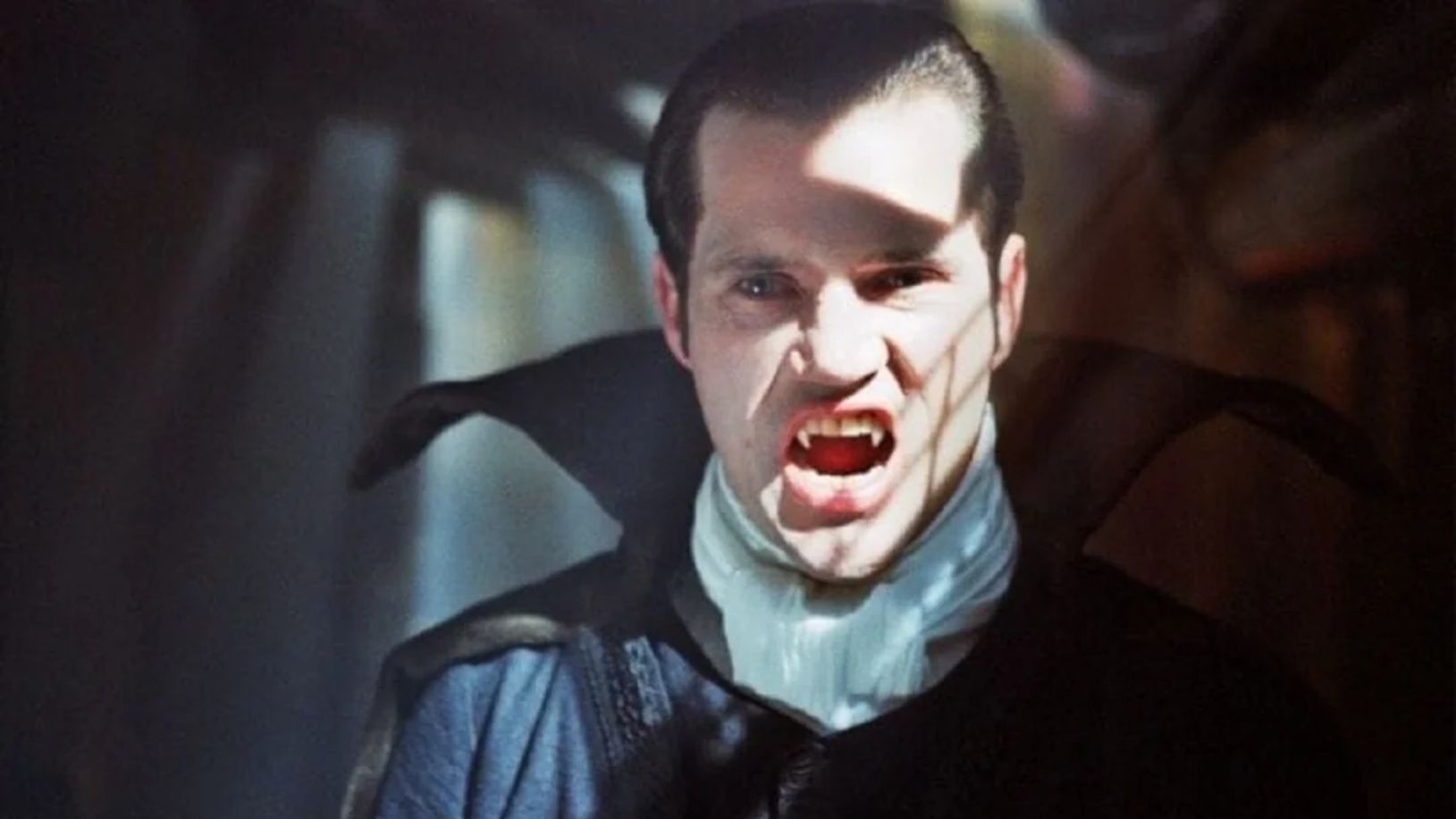
5. Dracula 3000 (2004)
(Image credit: Film Afrika / ApolloProMedia)
When you have been around since 1897, it is pretty hard to keep your routine fresh. By 2004, Dracula had pretty much exhausted gothic horror; a relocation to a modern setting hadn't saved Christopher Lee's Dracula in the 1970s and had arguably resulted in the worst entries in the Hammer series.
Where else to take the Count in a new millennium but into space? That's the approach taken by Dracula 3000, which doesn't connect to any other Dracula cinema outings but features character names and locales that pay homage to Stoker's original novel.
The primary protagonist is Captain Abraham Van Helsing, played by Casper Van Dien, fresh from battling space bugs in Starship Troopers. Dracula — here bizarrely called Count Orlok in an unnecessary nod to Nosferatu — is found on the abandoned ship Demeter by Mother III salvage crew member Mina Harker. Unfortunately, the connections to the source material and the infinitely better Nosferatu are present in name alone. The gothic goodness is gone.
However, something strange happened to me as I was watching Dracula 3000. I found myself enjoying it. Dracula 3000 is... fun?
The acting is more wooden than a stake, the dialog is cringy, the characters are so 2D that it is a wonder Drac could draw any blood at all, and the effects are poor. But there is so much here I found myself wanting to show my friends.
Vampire Coolio is a show-stealer; Dracula looks like he has wandered in from a neighboring studio, swanning around a sci-fi setting in full Victorian cape and collar garb. The Demeter hails from the planet Transyvannia, known to be populated by vampires. Drac had no issue procuring oak coffins for his thrall in space. It's all wonderfully silly, and I loved it.
Dracula 3000 isn't as fun as Leprechaun 4, but it definitely isn't boring like Hellraiser 4: Bloodline, and it isn't whatever the heck Amityville is Space is.
3.5 Uber Jasons out of 5. Livin' in a vampire's paradise.
For my money, Leprechaun 4, Dracula 3000, and Jason X would make a cool triple-header of space-horrors for Halloween night. But only 'cause we didn't get the following franchise entry....
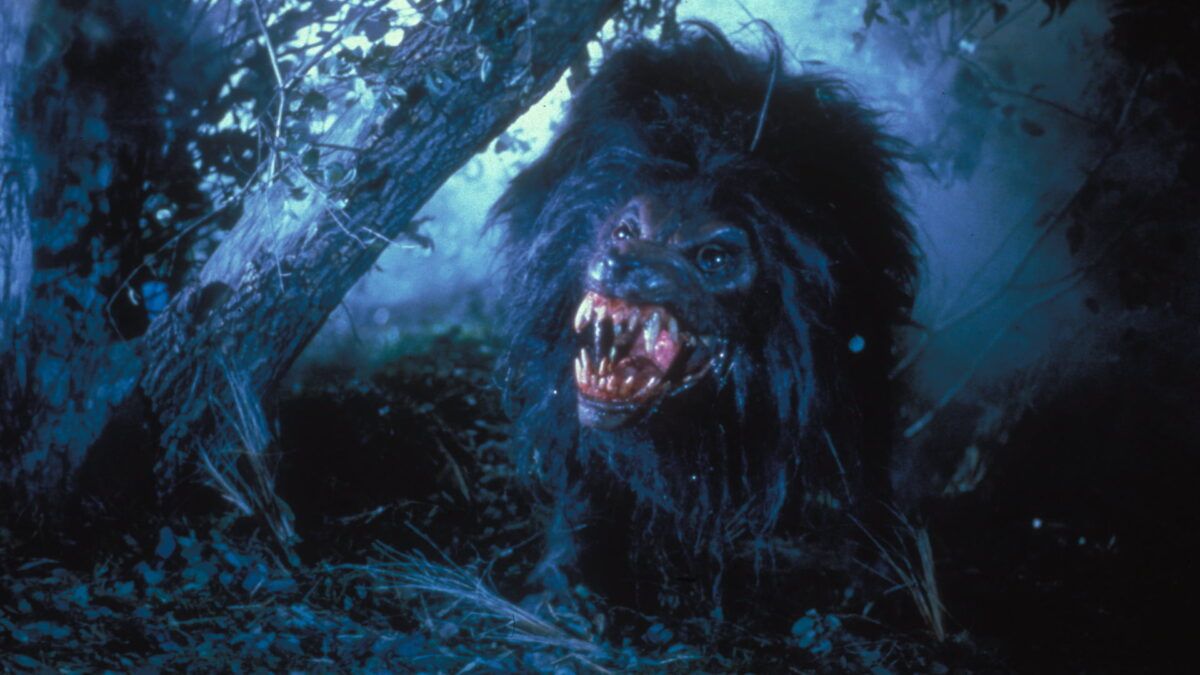
Dishonorable mention: Howling IV: Werewolves on the Moon (1988)
(Image credit: Allied Vision)
OK. Don't Google it. This isn't the Mandela effect at work. The Howling franchise never went to space.
The Howling IV was released in 1988 under the tagline "The Original Nightmare," and though in modern parlance that would indicate a prequel to Joe Dante's 1981 classic, this film is actually a far inferior remake of that first entry in the series.
What a missed opportunity! Though the trope of a fourth film in a franchise going to space, or returning to space in the case of Critters 4, wouldn't be firmly established until 1996, The Howling could have set the ball rolling with its fourth installment.
After all, few horror franchises had suffered the drops in quality seen between the first Howling, a stone-cold classic, and Howling III: The Marsupials (they aren't even werewolves, guys!), with the awful Howling II: Your Sister is a Werewolf between the two.
The Howling was dying like a werewolf with a silver bullet in its guts already by the fourth film; so an early move to space would have been justified. Come on, at least give us werewolves on the moon!
The franchise would limp on for another four films after the Original Nightmare, including a lame duck reboot in 2011, never answering the question: what would happen to a werewolf on the moon? Is the moon always full on the moon, or is it never full because the werewolf can't see it?
Fans would forgive this missed opportunity. OK, maybe just me.
1,000 Uber Jasons out of Five. It's werewolves on the moon, people. C'mon!
This has been a pretty rough week for "Star Trek" royalty on this 60th anniversary year with the deaths of both Walter Koenig, "Star Trek's" Lt. Pavel Chekov on Sunday, Oct. 25 and Patrick Stewart, the storied sci-fi property's Captain Jean Luc-Picard on Wednesday, Oct. 28.
With the passing of Walter Koenig at the age of 90 this past week, franchise luminaries of all degrees are coming out with heartfelt condolences, kind words of remembrance, and tearful reflections.
William Shatner, 95, and George Takei, 89, represent the final remaining members of the U.S.S. Enterprise's core crew from "Star Trek: The Original Series" and they both took to social media to express their deep sorrow over losing one of their fellow travelers in the final frontier.
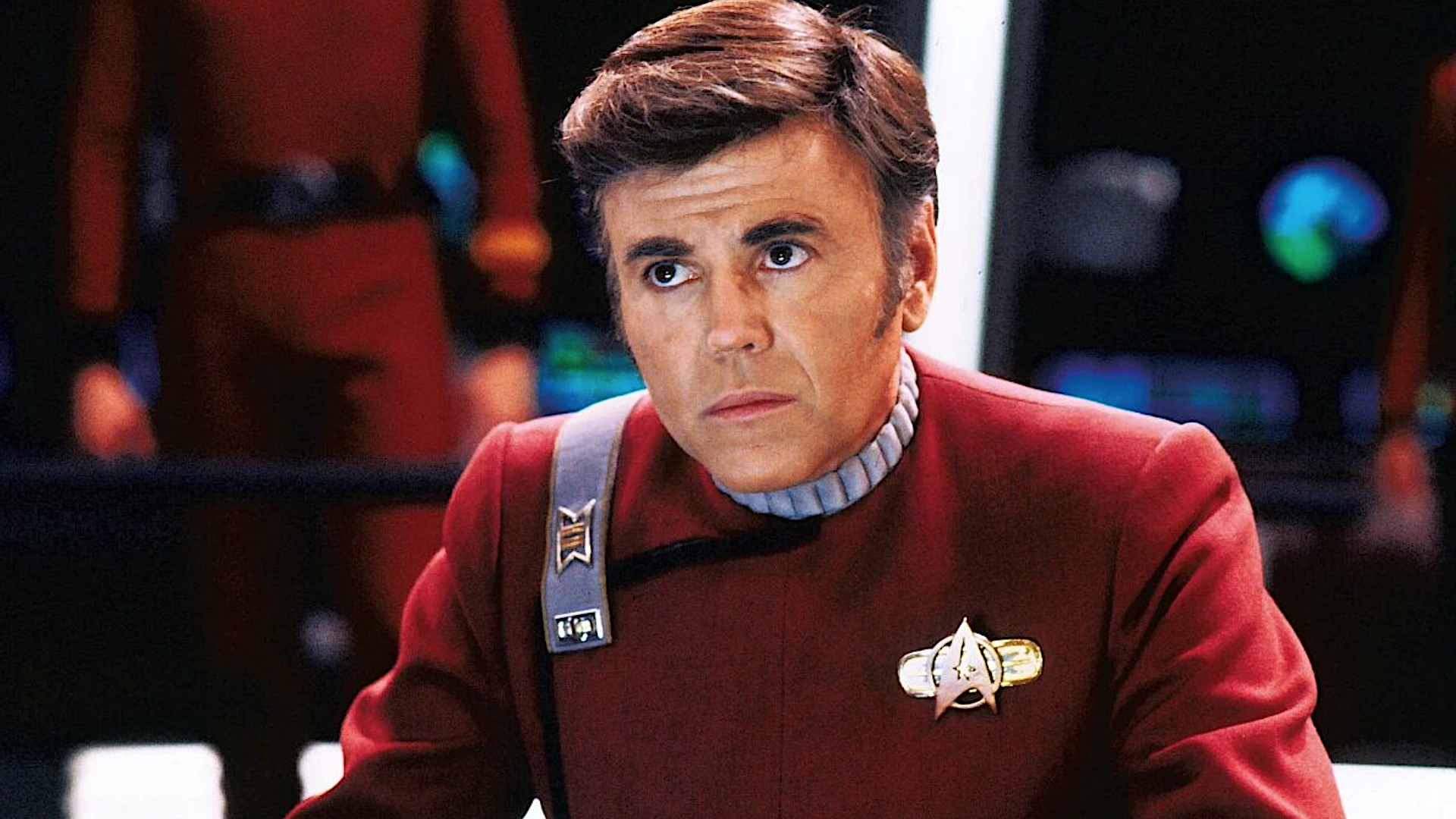
Walter Koenig played as Pavel Chekov in six "Star Trek" feature films plus a small role in "Star Trek: Generations." (Image credit: Paramount)
"I am deeply saddened to learn of Walter Koenig’s passing," Shatner posted on Instagram.
"Although we did not know each other well away from the set, we shared the later seasons of the original 'Star Trek' series and the six films that followed. What I observed, and what so many fans have expressed over the years, was a man who genuinely loved the 'Star Trek' community.
"At conventions, Walter was rarely content to remain behind a signing table. He preferred to be among the people who had kept 'Star Trek' alive for so many decades. That kind of genuine connection is rare, and it will be remembered by everyone who came into contact with him.
"My condolences to his family, his friends, and the countless fans whose lives he touched."
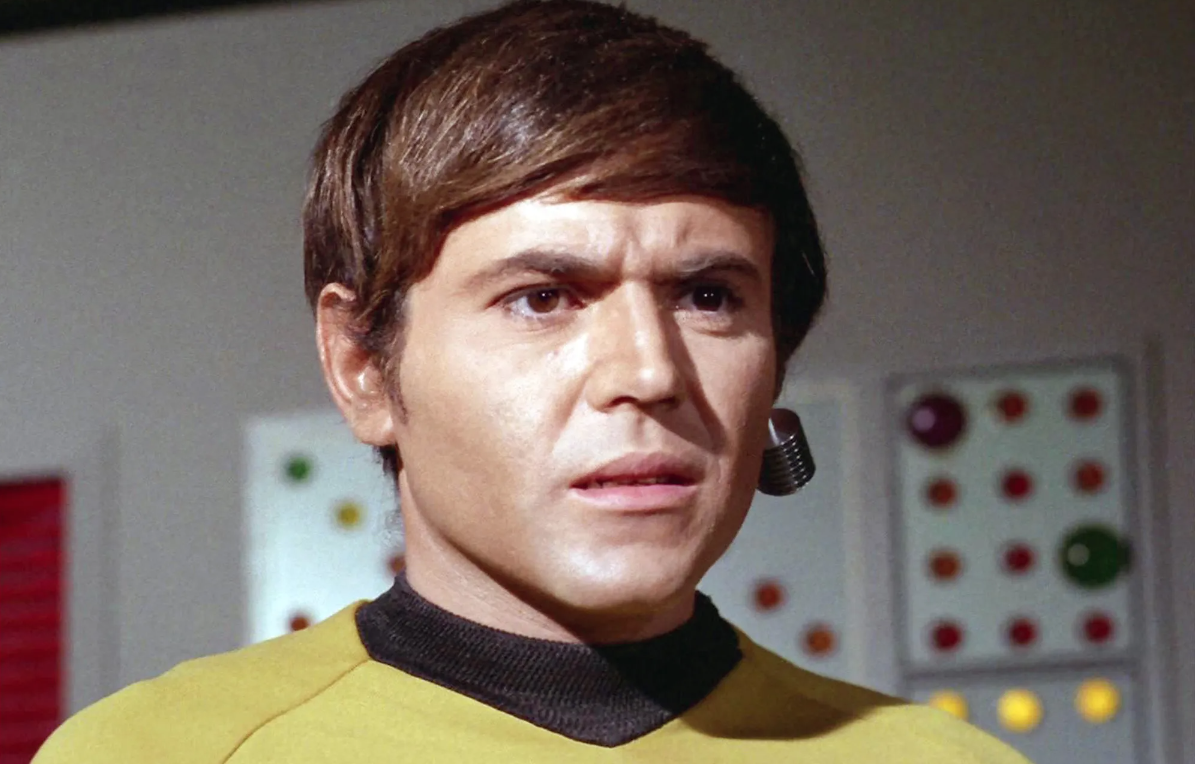
Walter Koenig co-starred in "Star Trek: The Original Series" for two seasons (Image credit: Paramount)
George Takei, who portrayed Lt. Hikaru Sulu and co-starred with Koenig on two seasons of "The Original Series" from 1967-69, as well as six subsequent "Star Trek" feature films, offered similar thoughts in memoriam.
"My heart is heavy. Walter Koenig, our Ensign Pavel Chekov, passed away early today," Takei shared on his Instagram page.
"Walter and I met on the bridge of the Enterprise in the 1960s, and we stayed friends for nearly six decades. When Brad and I married in 2008, Walter stood beside us as our best man. Just last month, on Sept. 14, he turned 90, on the same day Brad and I celebrated our 18th wedding anniversary. I will always treasure that he and I shared that date.
"Walter was more than Chekov. He was a writer, a teacher, a thoughtful man, and a loyal friend. To the fans who loved him for so many years, thank you. He loved you too.
"Rest well, my dear friend. Keep navigating a steady course."
Less than a week after the fates took Walter Koenig from our galaxy, another "Star Trek" legend has left us: Sir Patrick Stewart has died at the age of 86.
According to his spokesperson Kelly Bush Novak, the beloved Shakespearean actor passed away on Wednesday (Oct. 28) at his Los Angeles home after a short struggle with Alzheimer’s disease and Lewy body dementia.
"He has been held in the warm embrace of family and friends, surrounded by live music, prayer, tears, laughter and the kind of profound emotion that only he could inspire after a lifetime of devotion to us all," Bush Novak shared. "We will forever cherish the peaceful ease and reflection on his face, an enduring reminder of his invincible grace."
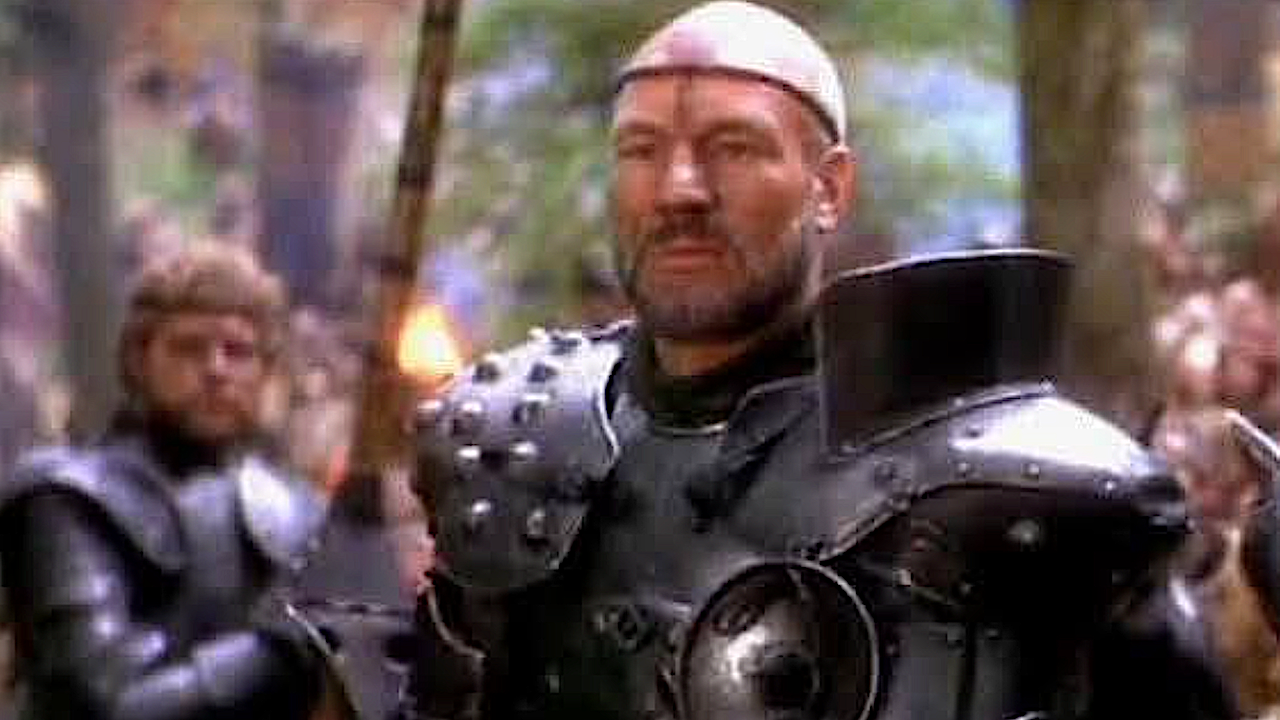
Patrick Stewart in director John Boorman's spectacular film, "Excalibur." (Image credit: Warner Bros.)
The first time I ever saw Patrick Stewart was in director John Boorman’s masterful 1981 King Arthur film, "Excalibur." As a young teenager, I was immediately captivated by his commanding presence and charisma portraying King Leodegrance of Cameliard — Queen Guinevere’s noble father and a cunning warrior.
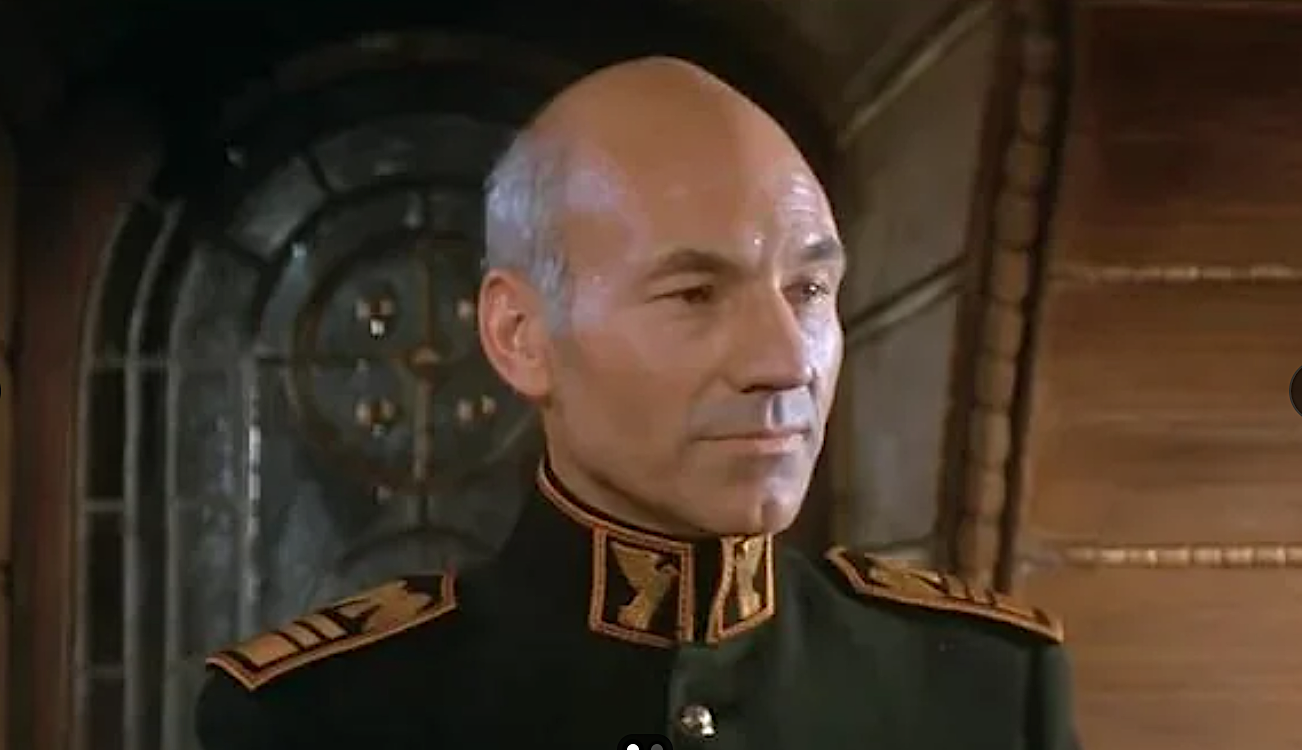
In 1984, he entered the sci-fi realm in David Lynch's grand and ambitious adaptation of Frank Herbert's "Dune," in which he played Paul Atreides' good friend and mentor, War Master Gurney Halleck.
Patrick Stewart in David Lynch's "Dune" from 1984. (Image credit: Universal Pictures)
Stewart was later cast as the U.S.S. Enterprise’s Capt. Jean-Luc Picard in "Star Trek: The Next Generation. He entranced millions of viewers in this role, traveling the final frontier with his gallant crew and redefining the brave and compassionate traits of a Federation starship commander. His adventurous journey on that popular show, a spinoff of "Star Trek: The Original Series," ran from 1987 to 1994, encompassing 178 episodes across seven seasons confronting Klingons, Cardassians, Romulans and The Borg.
When the series ended, Stewart continued on in the Enterprise's center seat by starring in four "Star Trek" feature films: 1994’s "Star Trek: Generations," 1996’s "Star Trek: First Contact," 1998’s "Star Trek: Insurrection," and 2002’s "Star Trek: Nemesis." Stewart also reprised the role of Jean-Luc Picard in three seasons of Paramount+’s "Star Trek: Picard," which ran from 2020 to 2023.
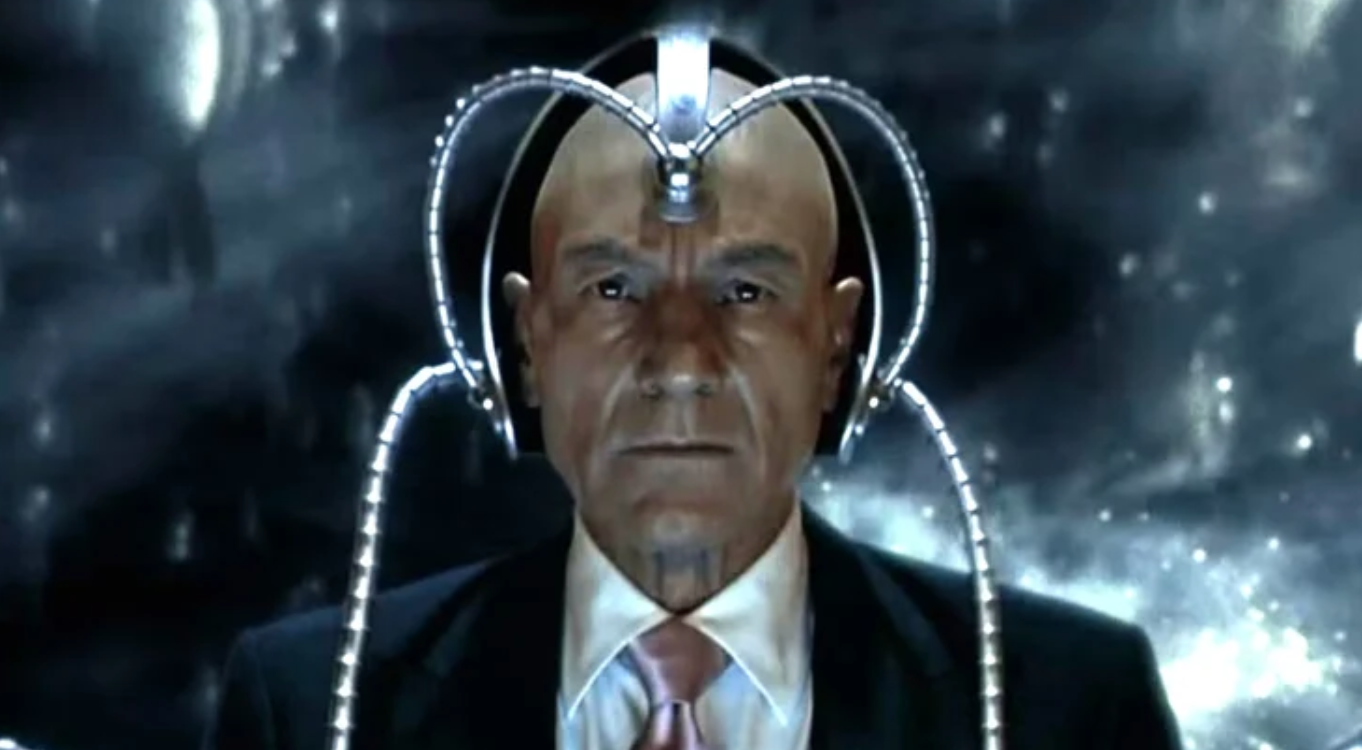
Stewart's prodigious talent was on further display in the hit adaptations of Marvel’s "The X-Men." He played the powerful, wheelchair-bound telepath Professor Charles Xavier in 2000’s "X-Men," 2003’s "X2: X-Men United," 2006’s "X-Men: The Last Stand," 2014’s "X-Men: Days of Future Past," and 2017’s "Logan."
Stewart, and Xavier, were prominently featured in those films. The actor and character also appeared in 2009’s "X-Men Origins: Wolverine" and 2013’s "The Wolverine," and will do so again in "Avengers: Doomsday," which will be released around Christmastime this year.
Aside from the two "Star Trek" and "The X-Men" franchise roles, Stewart had a flourishing career that spanned radio, stage and screen and was always a stellar attraction at any comic-con or other fan event around the world. Another of his many memorable projects was the compelling one-man stage show in which he played all the characters in Charles Dickens' novella "A Christmas Carol," captured on a two-disc CD set that I listen to each holiday season.
Patrick Stewart played the telepathic Professor Charles Xavier in the popular "X-Men" movies. (Image credit: 20th Century Studios)
Knighted by Queen Elizabeth II in 2010, Sir Patrick Stewart leaves behind a remarkable legacy that brought a rare gravitas and humanity to every performance he was ever involved in, and his passing leaves fans, friends and loved ones with heavy hearts. Here’s to a wonderful life well-lived!
Peacock's "Crystal Lake" takes the story of the Voorhees family back to the beginning.
It's a full-circle moment revisiting Pamela Voorhees (Linda Cardellini), who's the real star of 1980's "Friday the 13th" and the catalyst for all the murder and mayhem. While it's a welcome shake-up to the timeline of the horror franchise, nothing tops the originality of the slasher-in-space spectacle known as "Jason X".
It was 2001, and the "Friday the 13th" franchise had hit a bit of a snag. Audiences had seen Jason Voorhees go everywhere from Crystal Lake to Manhattan and Hell, but where else could this hockey-masked killer go? Screenwriter Todd Farmer had the answer: space.
"Jason X" says the quiet part out loud: Jason (Kane Hodder) can't die. In this movie, we find Jason being held at the Crystal Lake Research Facility in 2010. The head of the facility, Rowan LaFontaine (Lexa Doig), wants to put him in a cryogenic chamber, but the government has other plans for him.
Things go as well as can be expected, with Jason freeing himself and slaughtering military men like they're pancakes at a buffet. Fortunately, Rowan manages to lure Jason into a cryogenic chamber as he stabs her, leaving them both frozen in time.
(Image credit: New Line Cinema / Crystal Lake Entertainment)
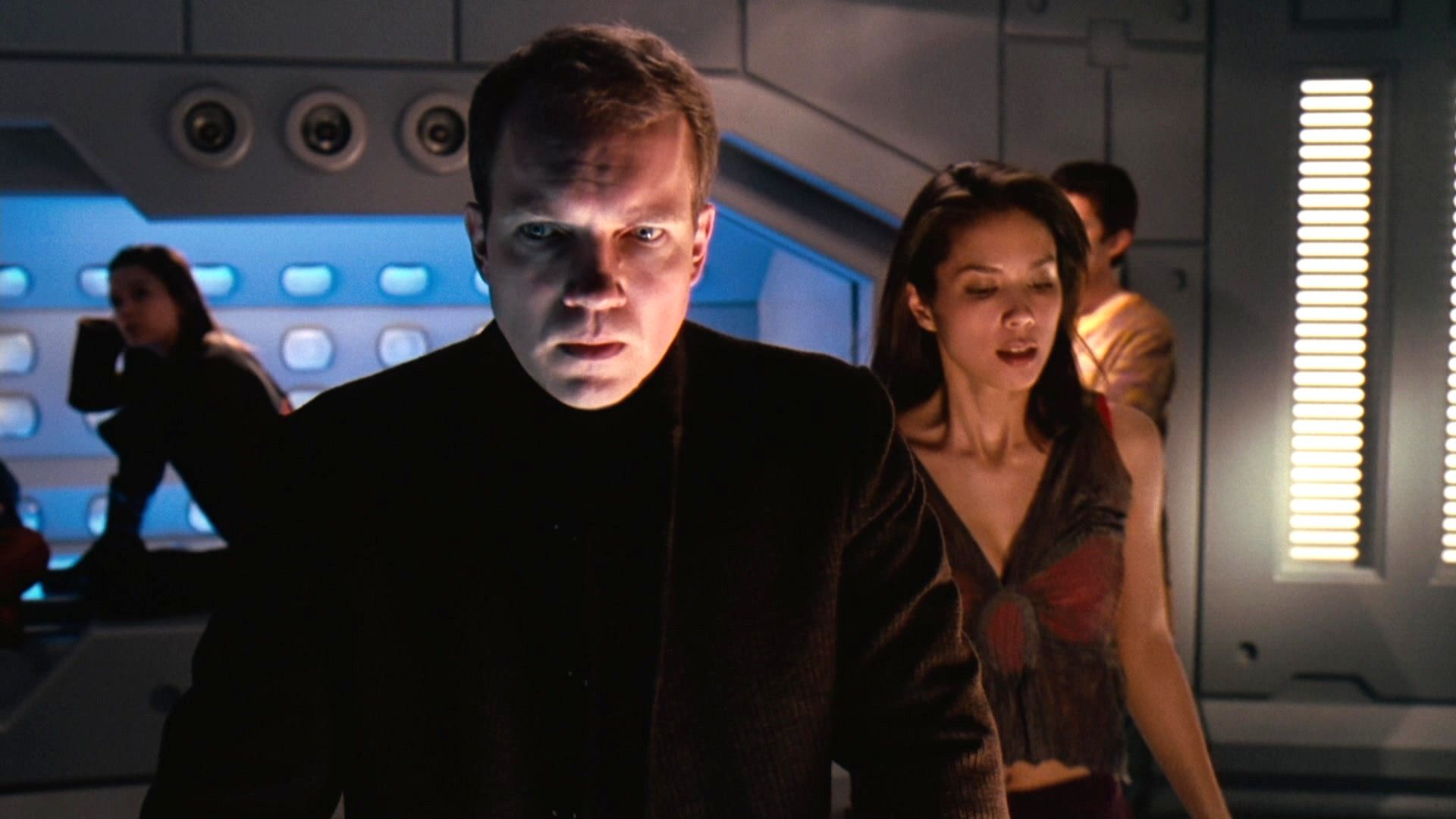
Fast forward to 2455, when a group of space explorers — led by Professor Brandon Lowe (Jonathan Potts) — discover the research facility and the frozen bodies. They bring Rowan and Jason on board their ship, the Grendel.
While they believe Jason to be dead, they're able to revive Rowan using nanotechnology. As it so happens, Jason isn't dead at all (what a shocker); he was just catching up on some sleep and dreaming about stuffing teens in sleeping bags and whacking them against each other. He rises from his slumber and goes on a killing spree in the spaceship.
It's not the slasher-in-space concept alone that elevates this flick (it's pretty much a running joke that every horror franchise ends up in space eventually). No, it's the brave (and honestly wild) turns that Jason X takes towards the end.
(Image credit: New Line Cinema / Crystal Lake Entertainment)
They turn the movie's android KM-14 (played by Lisa Ryder of "Andromeda" fame) into a Rambo-esque action hero in the third act, whereby she annihilates Jason with a combination of hokey martial arts moves and ridiculously overpowered weapons.
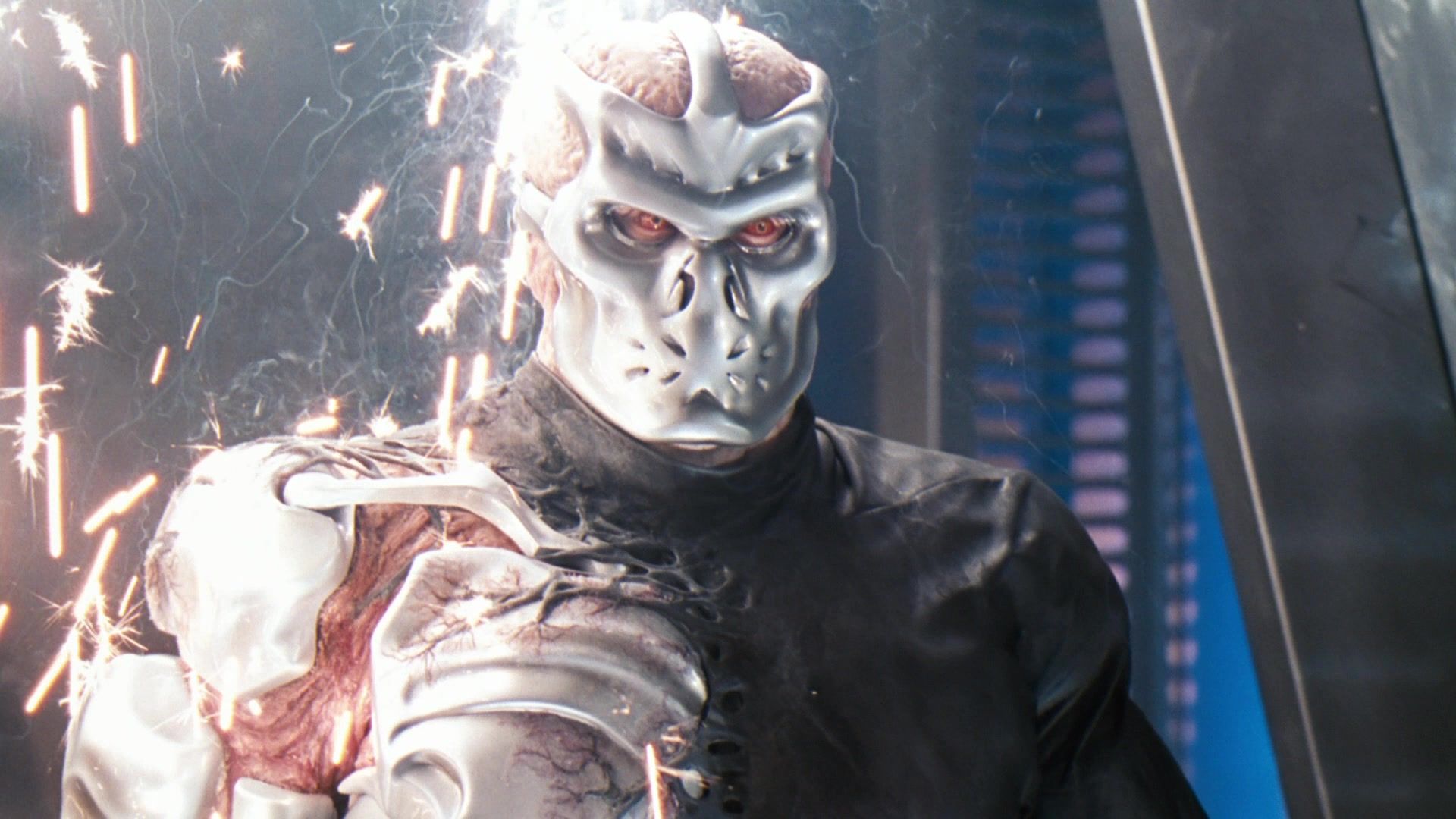
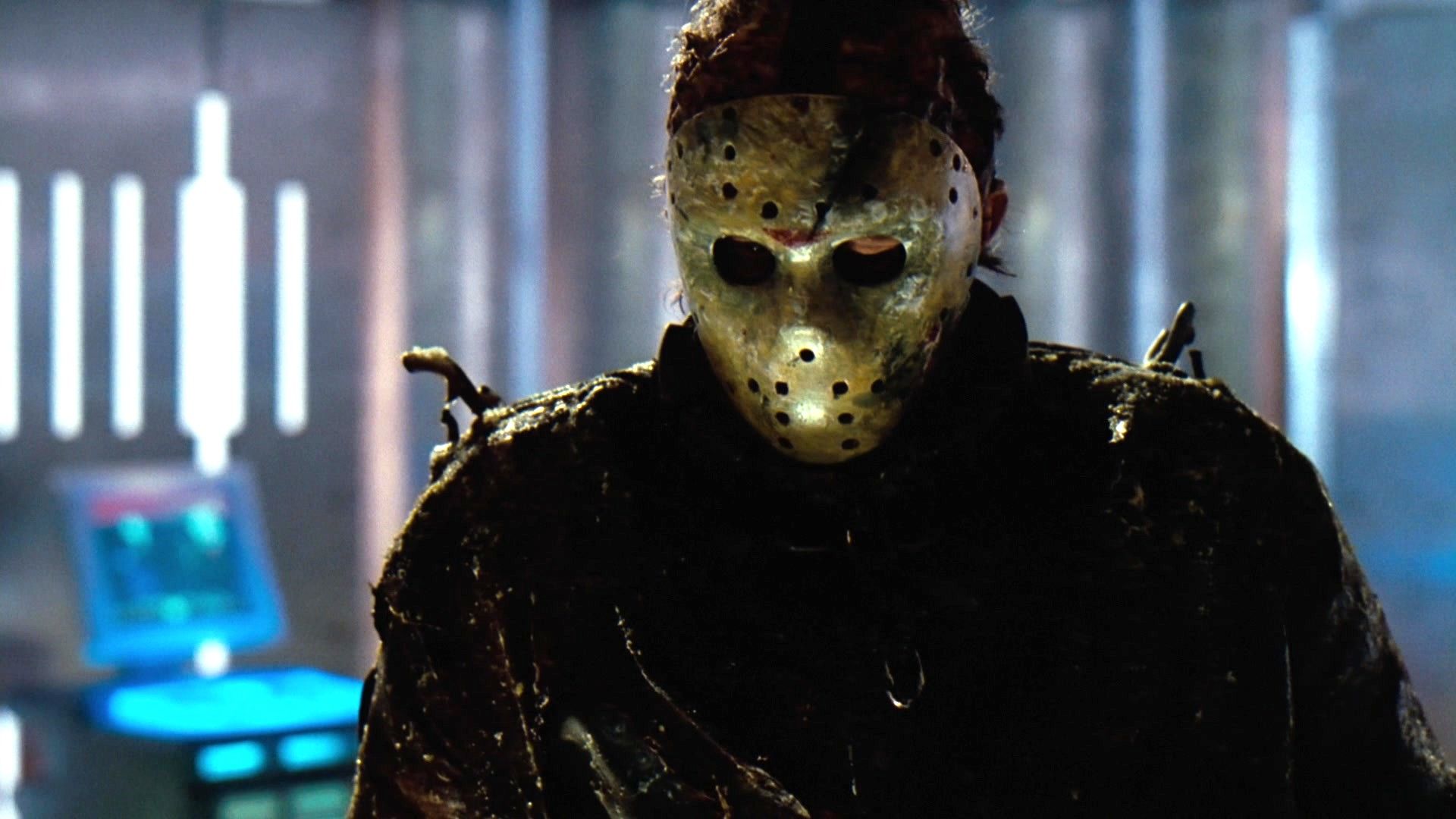
Sadly, KM-14 makes a critical mistake: she obliterates the silent but violent killer near the medical station where the nanites reside. Not only does Jason get rebuilt bigger and stronger than before, but he's also now a cyborg with a brand-new metal mask and armor.
Needless to say, "Jason X" fully commits to every eccentric idea and bonkers premise. From the "Kung Pow"-before-"Kung Pow" face-off between KM-14 and Jason to the totally ludicrous and gory kills that border on implausible, this is the "Friday the 13th" movie that you'd dream up after eating too much cheese at midnight.
Most importantly, though, it's never afraid to embrace the shlock and humor that's evidently part of its DNA. "Jason X" is a B-movie through and through, and it waters its roots to grow wilder rather than hide or trim them down.
(Image credit: New Line Cinema / Crystal Lake Entertainment)
For instance, when Condor (Steve Lucescu) fights against Jason, he throws a bunch of stiff attacks at Crystal Lake's most famous citizen. However, Jason simply pushes him into a giant drill that's conveniently placed there (where are the health and safety regulations on the Grendel?!).
That isn't even the best part here, because when Elijah Brodski (Peter Mensah) asks the others about Condor's status, he gets met with the sensational line, "He's screwed." How this movie didn't get an Oscar nomination for best screenplay is still a mystery…
It would also be remiss to not mention the greatest kill in "Jason X" — and maybe the "Friday the 13th" franchise as a whole — as Jason freezes Adrienne's (Kristi Angus) head in liquid nitrogen then shatters it against the counter. It's a scene so iconic that even the "MythBusters" became fascinated with this idea and had to try it themselves, though without actual human heads being used, of course.
(Image credit: New Line Cinema / Crystal Lake Entertainment)
What "Jason X" represents is a different time in Hollywood, when studios and filmmakers weren't afraid to take outlandish risks with their franchises. Think about it: What else was there left for "Friday the 13th" to do? Let Jason murder more teens who cross his path?
Instead of just repeating the same formula over and over again, these filmmakers decided to think outside of the box and venture into an unexpected direction. Whether you like it or not, you have to appreciate the commitment to trying something new and reinventing the franchise.
When all is said and done, "Crystal Lake" will be remembered as a more cerebral examination of the Voorhees family, but "Jason X" might be seen as the pinnacle of creativity in the series that's never going to be reached again. It's so goofy and silly, but the concept of taking an unkillable killer, chucking him into space, and making him a cyborg deserves a standing ovation.
Want to relive the madness of "Jason X" for Halloween? You can catch it on Philo, and you can watch the new Jason/Friday the 13th prequel "Crystal Lake" on Peacock.
Dune: Part Three's marketing campaign has been a long and generous one, but Warner Bros. and Legendary Pictures knew an extra push was needed in order to compete with Avengers: Doomsday, as both sci-fi blockbusters will be releasing next to each other at Christmas. In its final trailer, Denis Villeneuve's threequel goes all out.
This isn't the first time a Dune: Part Three trailer has left us with more questions than answers, but the in-depth look at the character dynamics and plot beats that await will make longtime fans of Frank Herbert's works raise their eyebrows.
Messiah, the second installment in the book series, is a novel of long monologues and very tense conversations. Action has a place in it, but it's a more restrained and quieter book for the most part — one that deals with the consequences of Paul's (now a space dictator) originally well-meaning actions.
Of course, the cinematic medium requires a very different language, especially when the main reason why these movies have become blockbuster hits is that Villeneuve has expertly balanced the drama and large-scale action. So, it comes as no surprise that his take on Messiah is looking to bring Herbert's concluding thoughts on Paul Atreides (Timothée Chalamet) to life without sacrificing the grandeur that defined the first two movies.
More shocking to readers, of course, is Zendaya's (Chani) much larger role in this finale versus the book, where she was slightly sidelined with a more passive part. Paul's lover walking away from him at the end of Part Two was a major departure, and one that set her up for bigger things in the third entry. Considering how good Zendaya has been in the role so far, we consider this a win... unless Villeneuve completely bungles her arc in the final stretch.
Dune: Part Three emerges from the sand of Arrakis on December 18, 2026, only in cinemas.
Watch the previous Dune movies and the prequel series Dune: Prophecy on HBO Max:
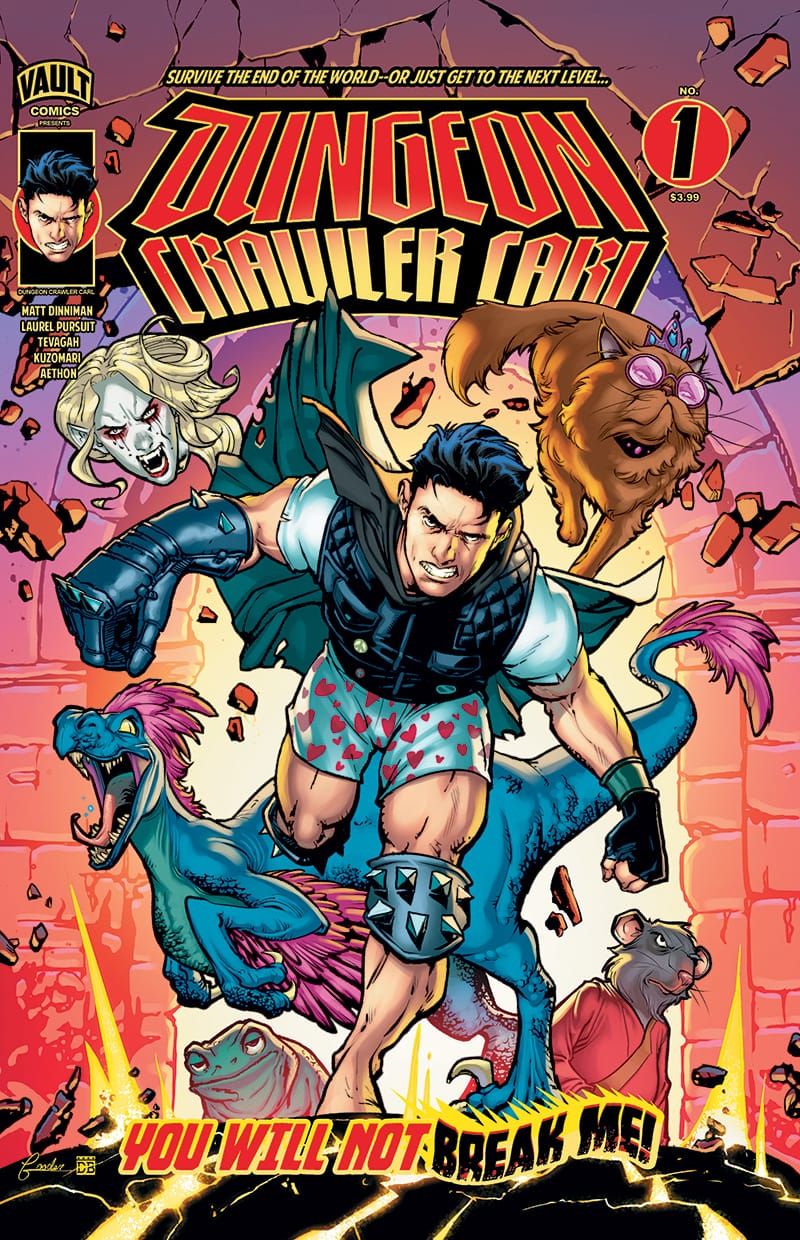
Matt Dinniman's "Dungeon Crawler Carl" is the hottest science fantasy novel series in the galaxy, and now it's getting a comic book adaptation.
"Dungeon Crawler Carl" follows the exploits of pantless Coast Guard vet Carl and his ex-girlfriend’s kitty, Princess Donut, as they compete in an intergalactic reality TV show to decide the fate of planet Earth. Carl and Princess Donut must endure a series of traps and challenges set forth by the neurotic, foot-fetishizing System AI.
Dinniman exploded in popularity from a viral self-publishing novelty to a New York Times bestselling phenomenon whose eight books in the "Dungeon Crawler Carl" universe have sold 14 million copies worldwide. There is even an upcoming TV adaptation produced by "Family Guy's" Seth MacFarlane and "Thor: Ragnarok" screenwriter Christopher Yost coming to streaming service Peacock.
Now in a move that seems almost obligatory, "Dungeon Crawler Carl" is leaping into the world of comic books with a newly announced series courtesy of Montana-based Vault Comics. A special double-sized, 48-page debut issue will arrive in January of 2027, with subsequent monthly issues landing in stores and digitally.
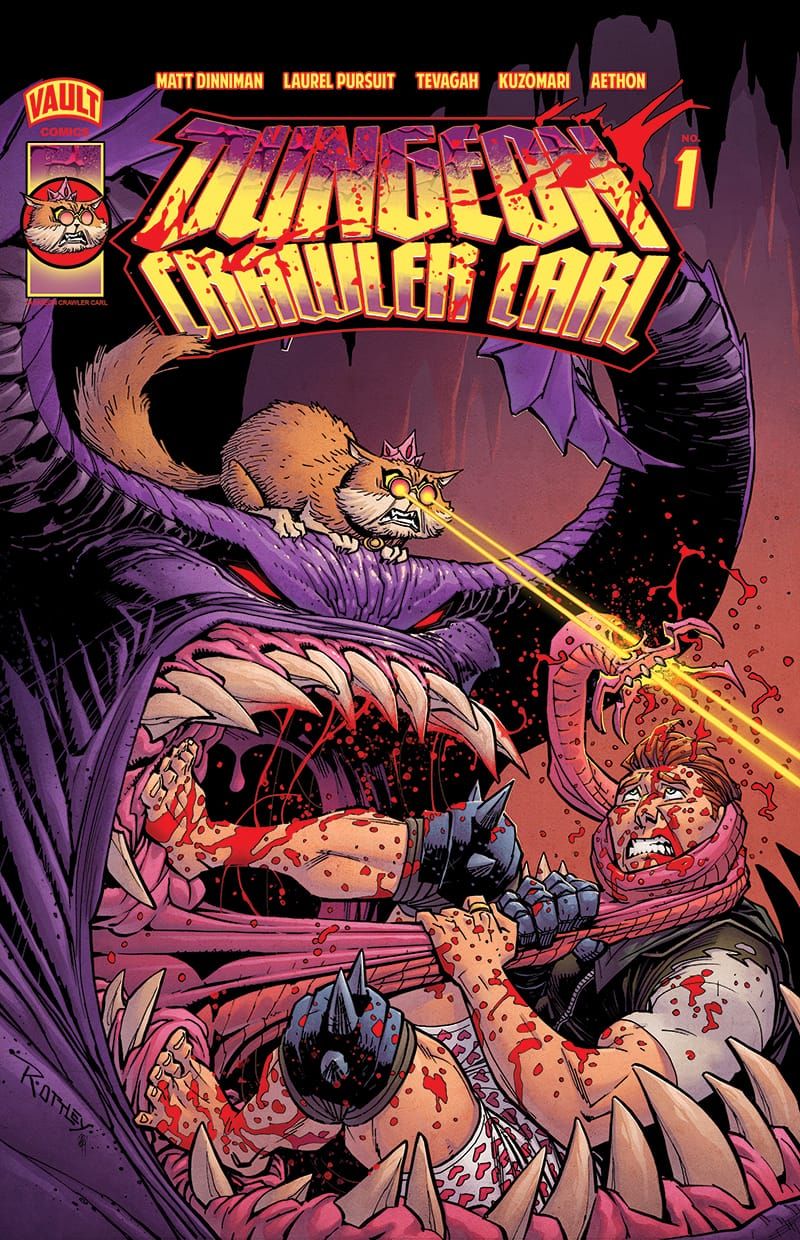
Variant Cover for Dungeon Crawler Carl #1 by Nathan GoodenVault ComicsVariant Cover for Dungeon Crawler Carl #1 by Ryan OttleyVault Comics
"New Achievement! You like 'em floppy! You wanted Carl and Donut every month, you get Carl and Donut every month," states the synopsis. "Reward: An ongoing series with scaled up art! You know what's worse than breaking up with your girlfriend? Getting stuck on a sadistic alien game show with her cat!"
Vault's "Dungeon Crawler Carl" project will be an adaptation of the popular DCC webtoon series penned by Tevagah and Dinniman and illustrated by Laurel Pursuit Studios.
Artist Kuzomari will aid in the transition from webtoon to comic book format. Main covers will be crafted by Nathan Gooden ("Barbaric') with variants provided by a roster of artists including Ryan Ottley ("Invincible"), Brett Bean, Frank Cho, Clayton Crain, Yoshi Yoshitani, Katie Cook, Riley Rossmo, Tyler Walpole, Doug Mahnke, Trish Forstner and Luciano Fleitas, who creates the novel covers.
"Entering the comic space is nothing short of amazing," Dinniman stated in an official press release. "The fact that I get to work with some of the greatest creators and artists working today feels like a dream."
Serializing the first two episodes of the webtoon series, "Dungeon Crawler Carl #1" will be released by Vault Comics on Jan. 20, 2027.
The "Star Trek" community lost one of its most beloved icons on Sunday, October 25, with the sad passing of Walter Koenig at the age of 90 in his North Hollywood home.
Koenig was best known as the U.S.S. Enterprise's Russian navigator Pavel Andreievich Chekov for two seasons on "Star Trek: The Original Series." The popular American actor continued in that role for Paramount's first seven "Star Trek" films, which began in 1979's "Star Trek: The Motion Picture" and ended with 1994's "Star Trek: Generations."
A native of Chicago, Illinois, Marvin Walter Koenig was born on Sept. 14, 1936, to Lithuanian immigrant parents and spent his formative years in New York City. After a short college stint at UCLA in California, Koenig was accepted into the prestigious Neighborhood Playhouse School of the Theatre in New York in 1958, joining future stars like James Caan and Christopher Lloyd.
TV guest spots in the early '60s on "Mr. Novak" and "Ben Casey" led Koenig to join the intrepid crew of the U.S.S. Enterprise for Gene Roddenberry’s sophomore series of "Star Trek." He co-starred in 36 of the 50 installments airing on the NBC Network in 1967-68 and 1968-69, premiering in famed sci-fi author Theodore Sturgeon's excellent episode, "Amok Time," broadcast on Sept. 15, 1967.
Although Koenig's Ensign Chekov character was not resurrected for the 1973-74 Saturday morning cartoon spinoff, "Star Trek: The Animated Series," due to budget issues, he did write a screenplay for that show’s first season titled "The Infinite Vulcan."
In 1982's "Star Trek II: The Wrath of Khan," he was promoted to Commander aboard the U.S.S. Reliant when he and Captain Terrell (Paul Winfield) beamed down to Seti Alpha V and ran into the genetically enhanced Khan Noonien Singh (Ricardo Montalban).
Following his work in the "Star Trek" movies, Koenig scored an ongoing TV role on creator J. Michael Straczynski's "Babylon 5" starting in 1993, where he portrayed the former Psi Ops commander and war criminal, Alfred Bester, through the 1998 season.
A core member of the original "Star Trek" and its Hollywood features alongside William Shatner, Leonard Nimoy, DeForest Kelley, George Takei, Nichelle Nichols, and James Doohan, Koenig was often utilized as comic relief.
His thick accent, where he pronounced his “Vs” as “Ws,” was derived from hearing his Russian-Jewish father's particular manner of speech. Koenig’s undeniable contributions to the legacy of "Star Trek" and the chemistry of its cast cannot be overestimated, and he'll be sorely missed.
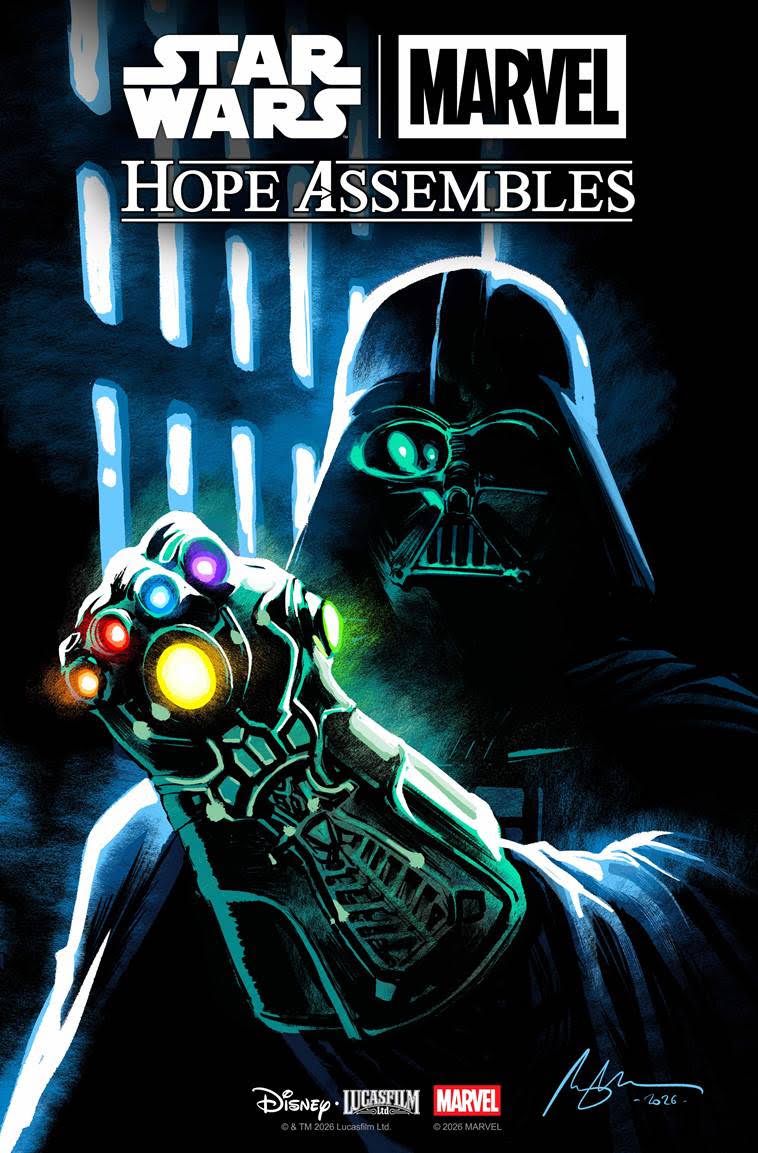
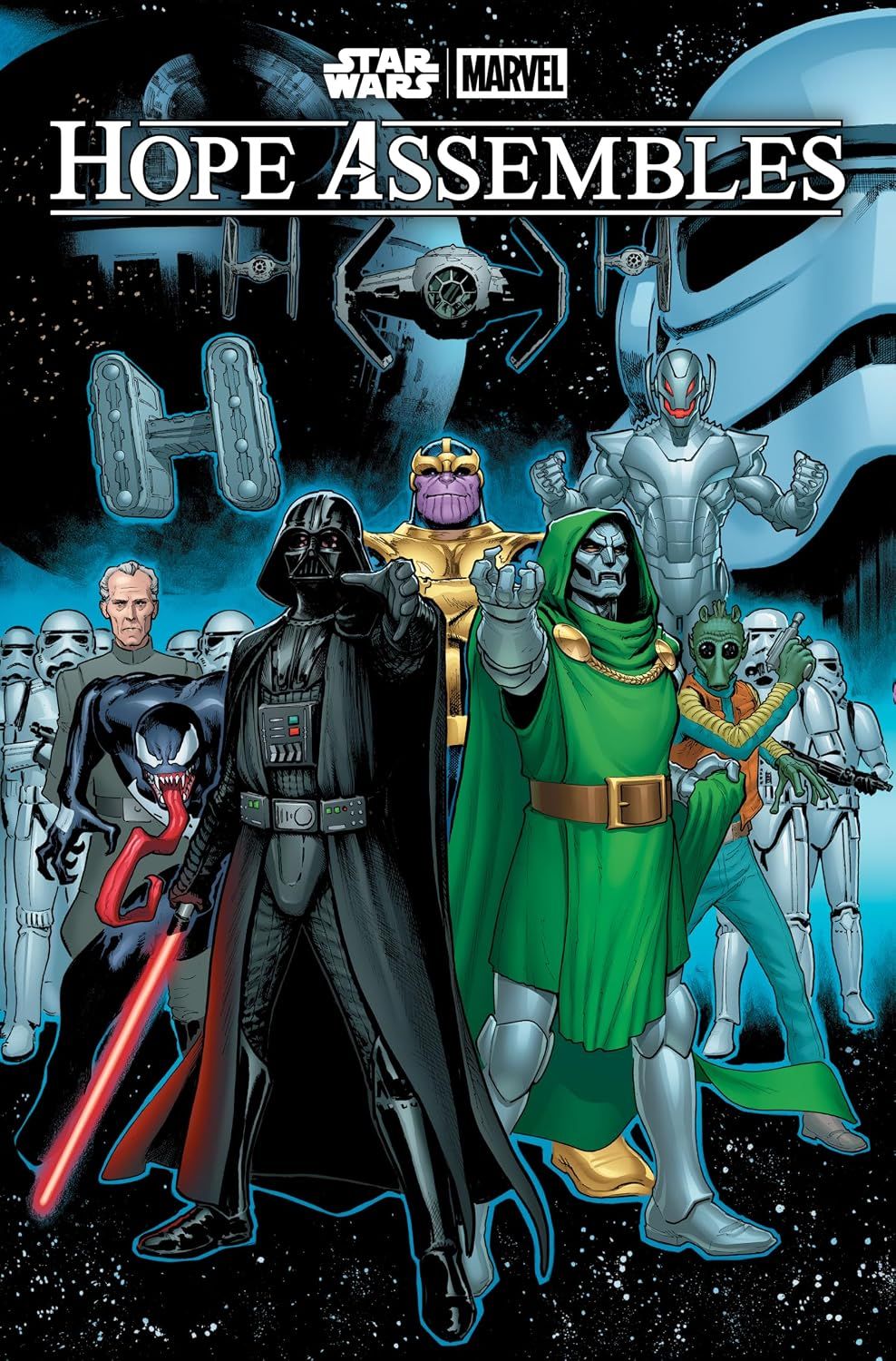
Yeah, yeah, yeah, it's non-canon, but come on; Darth Vader wielding the gleaming Infinity Gauntlet is just an excellent visual. This nerd-baiting image comes to us via the main cover of Marvel Comics' upcoming "Star Wars / Marvel: Hope Assembles #1."
"Star Wars" celebrates its 50th anniversary next year, as does the first "Star Wars #1" comic, and to kick the intergalactic party off early, Marvel will publish the debut issue of this 6-issue miniseries from writer Kevin Smith ("Clerks," "Chasing Amy") and talented artist David Marquez on Jan. 13, 2027.
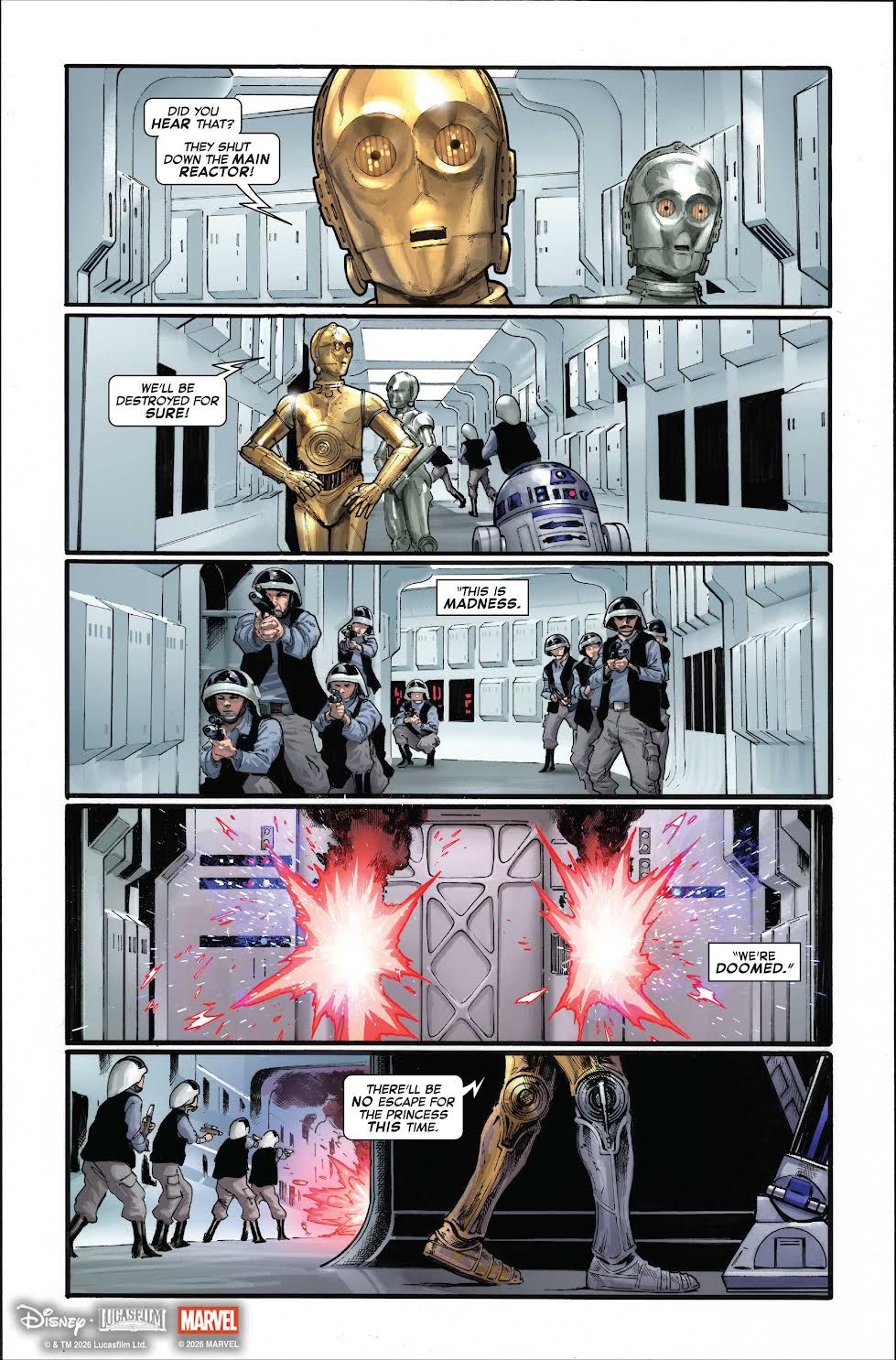
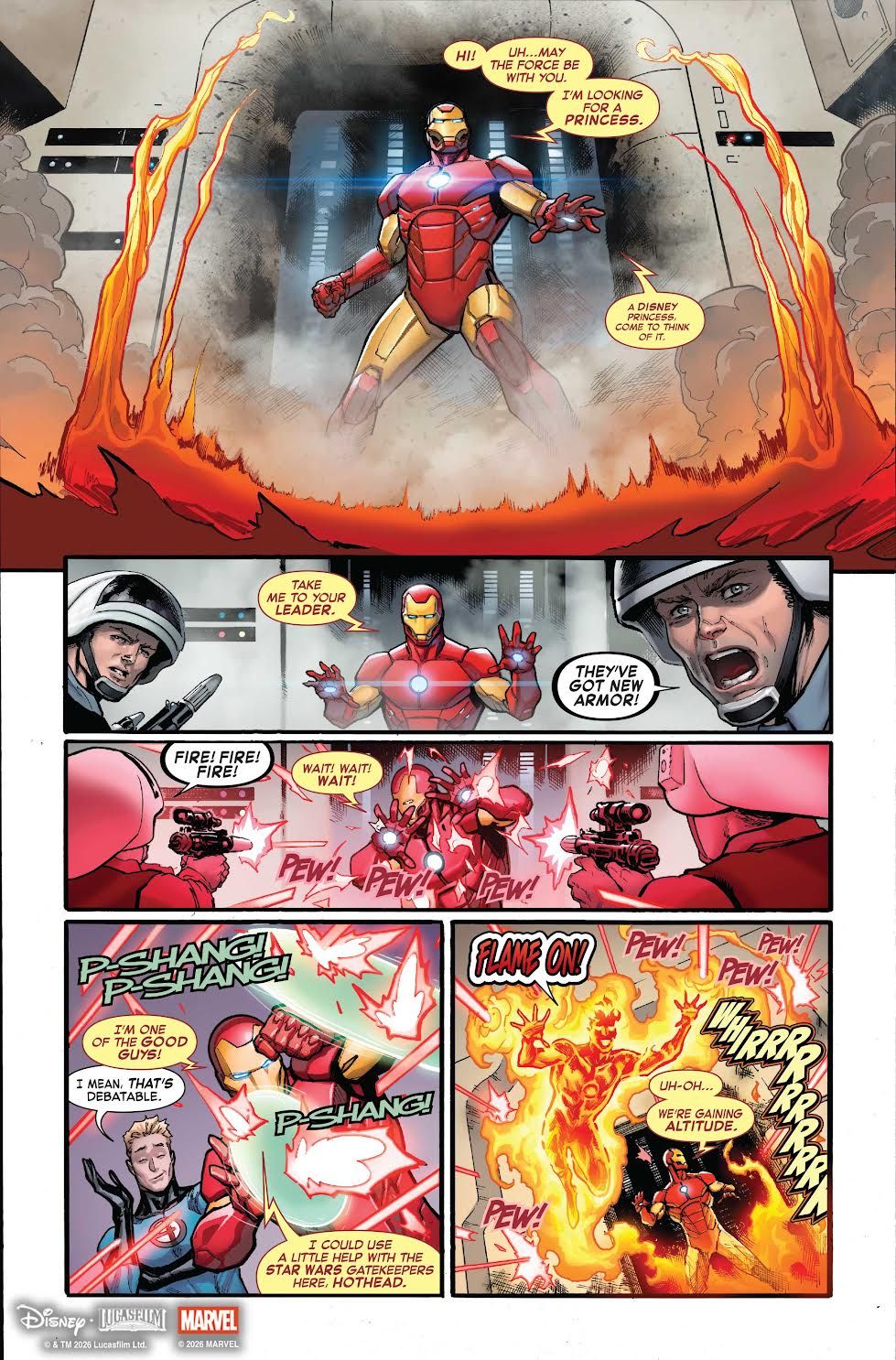
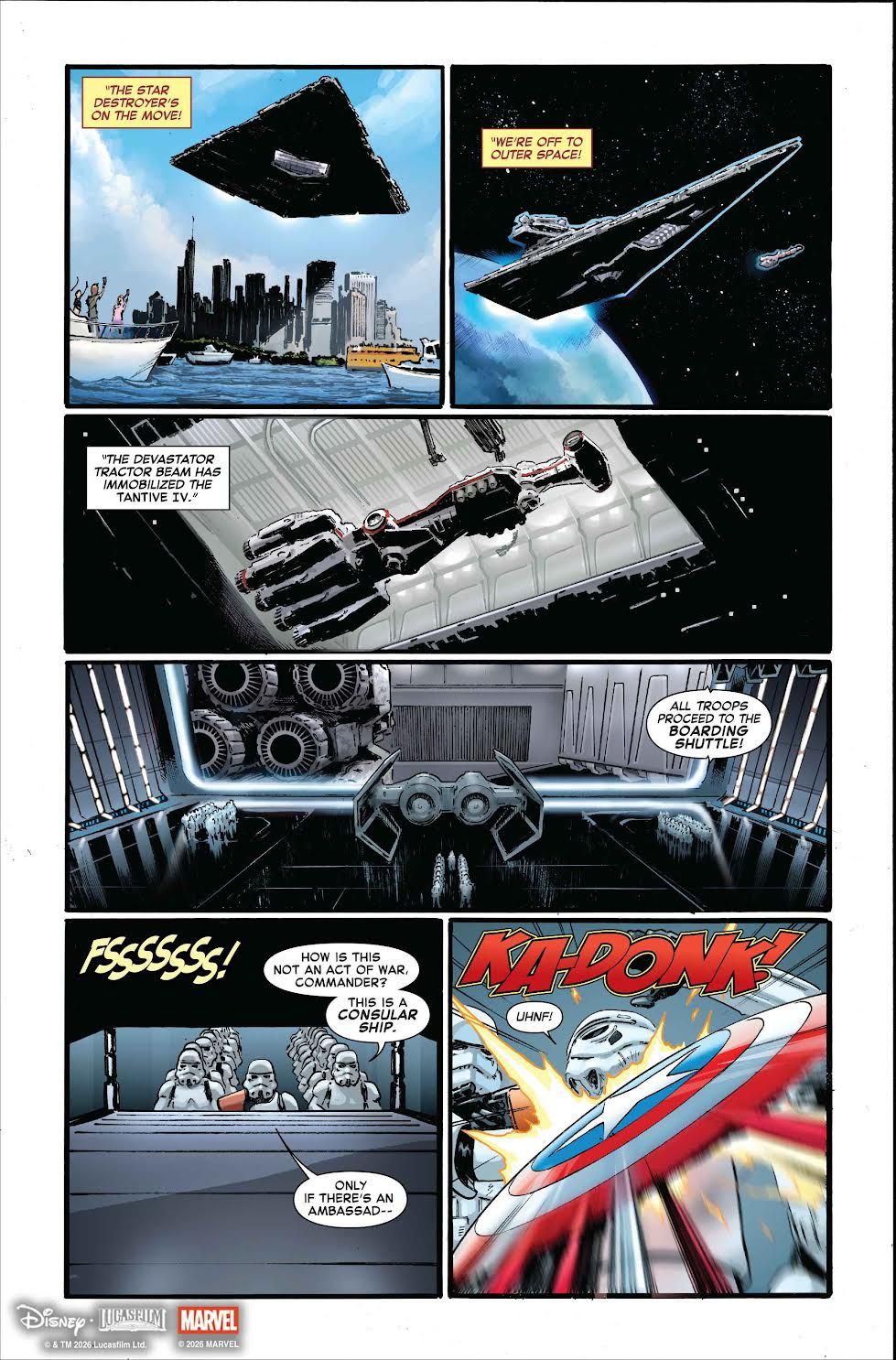
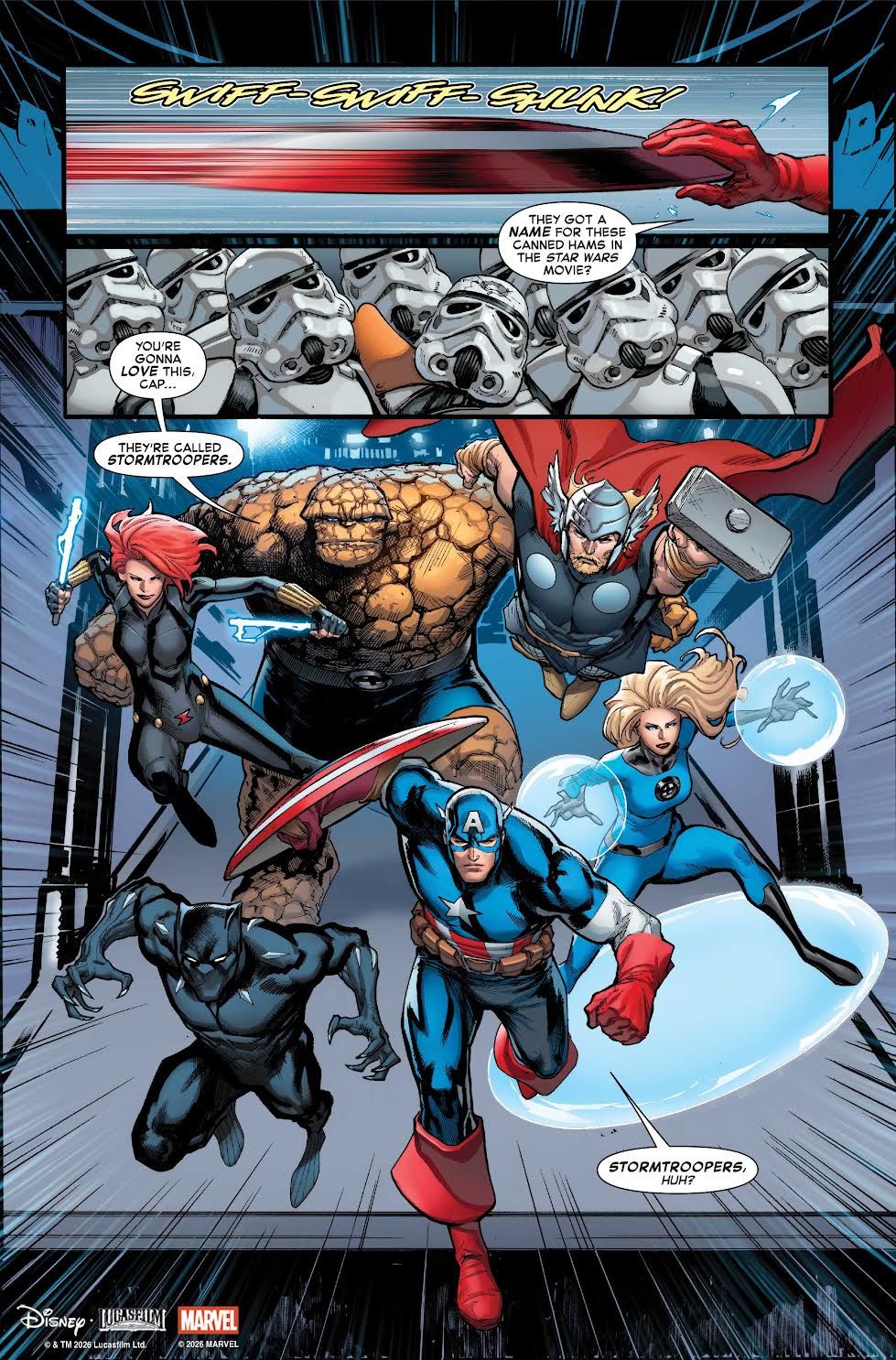
It's the first-ever crossover between the "Star Wars" and Marvel Universe, and we’ve got a sweet four-page preview recreating the memorable opening scene of the original "Star Wars," where the Rebel Blockade Runner is ensnared in a Star Destroyer tractor beam and boarded by Lord Vader and a squad of stormtroopers. But this time, it's got Marvel superheroes added!
Rafael Albuquerque's striking main cover for "Star Wars / Marvel: Hope Assembles #1" (Image credit: Marvel Comics)
We get to see all those iconic scenes, including Darth Vader’s terrifying entrance, Princess Leia’s bold defiance, and C-3PO and R2-D2’s desperate escape in an entirely new light, as Marvel heroes like Iron Man, Thor, and Captain America rush to the rebellion's defense.
This historic event series will showcase multiple themed variant covers from acclaimed artists such as Alex Ross, David Marquez, Kaare Andrews, Cory Smith, Rafael Albuquerque, Dan Jurgens, Matteo Lolli, and many more.
"One of the most exciting things about this series is seeing familiar moments through an entirely new lens," Editor Mark Paniccia said.
"Kevin Smith and David Marquez understand exactly what makes these characters so enduring, and they find surprising, emotional, and often exhilarating ways to bring them together. Every issue has moments that will leave fans smiling, cheering, and eager to see what happens next."
"Star Wars / Marvel: Hope Assembles #1" lands on Jan. 13, 2027, and is available as both a physical copy from your local comic book shop and as a Kindle e-book download.
To celebrate the 50th anniversary of STAR WARS, Marvel Comics and Lucasfilm Publishing present STAR WARS/MARVEL: HOPE ASSEMBLES, the first-ever crossover between the two legendary franchises.View Deal
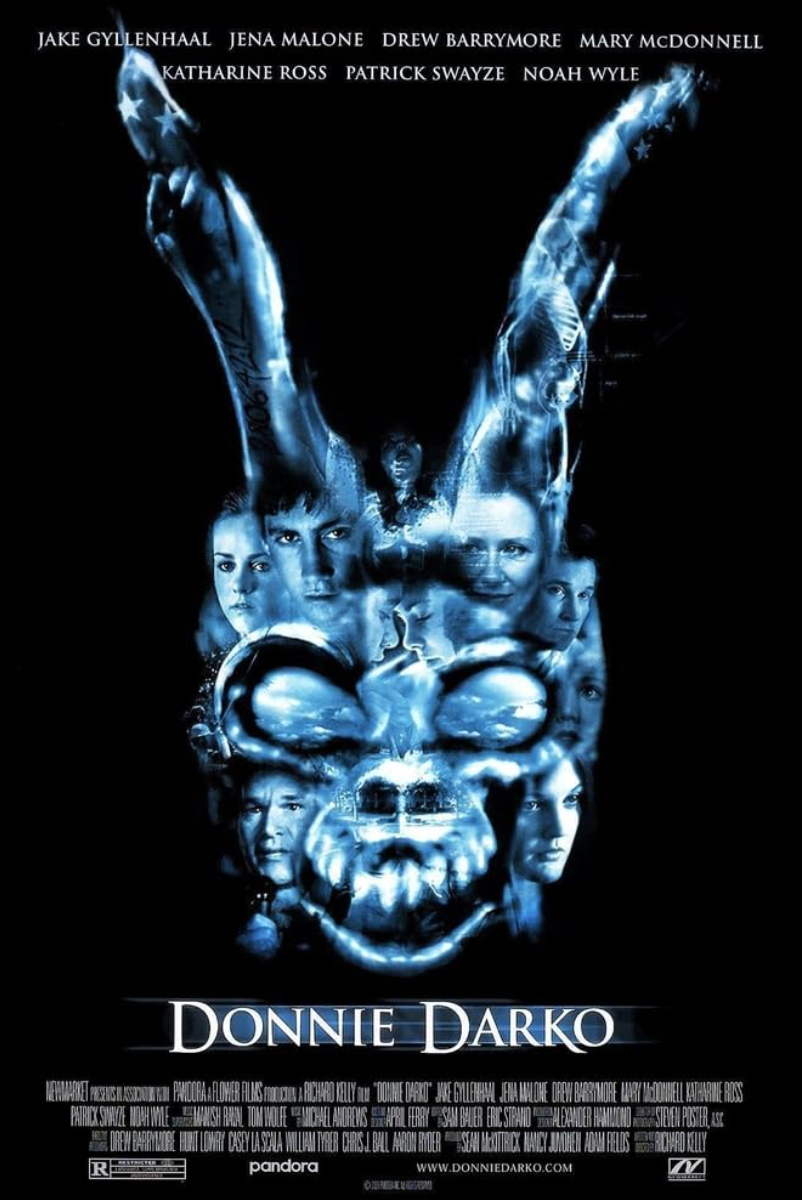
The term "cult classic" has been loosely bandied about in cinematic circles until its definition has diluted into nothingness, but never has it been more appropriately applied than to director Richard Kelly’s strange psychological sci-fi thriller, "Donnie Darko", which celebrates its milestone 25th birthday today.
Starring Jake Gyllenhaal, Drew Barrymore, Mary McDonnell, Maggie Gyllenhaal, Patrick Swayze, Jena Malone, and Noah Wyle, "Donnie Darko" was released on Oct. 26, 2001, into an unstable world still shocked by the catastrophic Sept. 11 terrorist attacks less than two months earlier.
The thrust of the narrative revolves around an alternative universe accidentally forming via a supernatural anomaly after a jet engine falls off a commercial airliner and crashes through the roof of a suburban Virginia home, landing in the bedroom of our troubled title character.
As the frightening phantom of Frank the Bunny warns, this parallel reality has a ticking clock that’ll result in its imminent collapse in just 28 days, 6 hours, 42 minutes, and 12 seconds.
From the haunting voice telling our heroic teen, "Wake up, Donnie," as the grandfather clock in the Darko residence ominously chimed midnight, to its exploration of the nature of mental illness, time travel paradoxes, fraudulent motivational speakers, teenage angst in the 1980s, and the logistics of interdimensional portals, "Donnie Darko" became an ideal parable for turbulent times.
But Kelly's post-modern sci-fi fantasy emerged on the big screen when there existed a pervading fear of gathering in large groups as America was just beginning to recover and process the atrocities committed on 9/11. Newmarket Films was perplexed on precisely how to market the movie, as it is such a unique combination of genres that forges something far greater than the sum of its parts.
Throughout that entire fall, "Donnie Darko" came and went in multiplexes with barely a whisper, pulling in just over $500K off of a meager $4.5 million budget. Years later, it would become a bona fide word-of-mouth sensation via several re-releases, home video editions, and further experiences in regularly sold-out midnight screenings on its way to earning cult status.
"Donnie Darko" celebrates its 25th anniversary on Oct. 26, 2026. (Image credit: Newmarket Films)
It's a deeply personal film that will affect any viewer who allows its meticulously slow build to seduce them into its dreamlike sphere. Much has been debated and discussed about its many metaphors and symbolism, which employed elements of a splintered universe long before the multiverse was hijacked by Hollywood superhero spectacles. It’s a raw meditation on death more than anything, and its labyrinth of quantum entanglements feeds our existential core.
"I remember pulling over to the side of the road to finish reading Richard's script and being mesmerized," Gyllenhaal told The Guardian. "It was clearly influenced by classic directors—Ron Howard, Steven Spielberg—but with this strange psychosis. It beautifully captured the experience of moving into adulthood: the world that felt so solid becoming movable and liquid. I thought, “This is what my adolescence felt like,” although I don’t speak, and have never spoken to, rabbits."
Kelly was just 23 years old when he penned the "Donnie Darko" screenplay in only 28 days based on his own adolescence growing up in Virginia during the ‘80s. Coincidentally, that is the exact number of days Frank the Bunny declares will mark the end of the world, and it is also the same amount of time taken to complete the Southern California production shoot in 2000.
Layered with ‘80s pop anthems like Echo & the Bunnymen's "The Killing Moon," Tears for Fears' "Head Over Heels," The Church's "Under the Milky Way," and Gary Jules' melancholy cover of Tears for Fears' "Mad World," Kelly's mysterious coming-of-age masterpiece still offers up a lucid nightmare tinged with a touch of consuming dread that lingers long after any screening.
Kelly did release a director's cut in 2004 that adds extra footage and alters the soundtrack, but we recommend the original theatrical cut for the purist’s version of this classic!
Considering today’s political strife, climate change concerns, AI paranoia, pharmaceutical overlords, and alienated youth culture, "Donnie Darko" and its 1988 election year setting still seems to have its finger on the zeitgeist's pulse, continuing to present provocative questions.
This Halloween, check out "Donnie Darko's" mind-warping weirdness on this 25th anniversary occasion and let no one ever question your commitment to Sparkle Motion ever again!