‘Strange New Worlds’ latest ‘Hangover’-inspired episode is a reminder that ‘Star Trek’ vacations are never a good idea

There are some things you can always rely on in "Star Trek". Vulcans are rarely great company at parties, for example, and you can be approximately 93% certain that the alien you're about to meet will be more-or-less human in form — give or take a few adornments around the forehead area.

And, just as most holodeck adventures turn out to be bad for the blood pressure, going on vacation is never as restful or relaxing as it's supposed to be. In fact, most starship crews would be better off saving the "out of office" for another day.

SPOILERS AHEAD! ANYONE YET TO WATCH "HUMAN BEST FRIEND" SHOULD PROCEED WITH CAUTION TO AVOID VIOLATING TEMPORAL PRIME DIRECTIVES.

That said, it's entirely understandable that the members of the Enterprise's Alpha Shift (aka the usual bridge crew) would want to take a break. They've been working non-stop for months, are on their way to mediate some potentially stressful peace negotiations, and — in the meantime — the mostly unseen members of Beta and Gamma Shifts have managed to sneak in some R&R of their own. But a quick trip through Starfleet history would tell them Pike and co's communal jolly in "Human Best Friend" (the latest episode of "Strange New Worlds" season 4) was doomed from the moment their shuttlecraft touched down.

Even James T Kirk and the Original Series gang take a brief sojourn away from their famous five-year mission. In aptly named season 1 episode "Shore Leave", the crew beam down to a theme park planet that was channelling "Westworld" several years before the 1973 movie unleashed a gunslinging android named Yul Brynner.

Screenshot from Star Trek: Strange New Worlds S4 Ep 3, Human Best Friend.

(Image credit: Paramount)

This seemingly idyllic vacation world is home to sophisticated tech that can read visitors' minds, and manufactures robots to manifest their thoughts in live-action. Some of these recreations are relatively harmless — Wonderland alumni Alice and the White Rabbit were, of course, no strangers to the '60s counter-culture — but Kirk somehow ends up face-to-face with a former school bully, while Dr McCoy winds up dead, Jim, on the end of a knight's lance. The ship's physician is subsequently resurrected by the park's in-house Caretaker, but it's not the sort of experience that earns five-star ratings on TripAdvisor.

Even so, the Enterprise gives the Omicron Delta region's hottest tourist destination another shot in Animated Series episode "Once Upon a Planet". But, following the kindly Caretaker's demise, the park is now under new management, in the form of a master computer that's become so resentful of its fleshy overlords that it's decided to rebel, kidnapping crew members, unleashing monsters from the darkest corners of their minds, and hatching a scheme to hijack the Enterprise — hardly a recipe for repeat business.

By the time the "Next Generation" era rolls around, Risa (a purpose-built "pleasure planet" with an artificially idyllic climate) has become the only place for vacationing Starfleet types to be seen.

Screenshot from Star Trek: Strange New Worlds S4 Ep 3, Human Best Friend.

(Image credit: Paramount)

When the famously workaholic Jean-Luc Picard bows to crew pressure in "Captain's Holiday" and agrees to spend a few days buried in a book by the pool, he instead finds himself embroiled in an Indiana Jones-esque quest to recover a powerful artefact from the future. It's not a bad experience, per se — numerous romantic sparks sizzle between Picard and professional relic hunter Vash — but it doesn't deliver on the R&R brief.

In "Deep Space Nine" episode "Let He Who is Without Sin…", meanwhile, the popular view of paradise proves too much for taciturn security guy Worf when girlfriend (and future wife) Jadzia Dax drags him to Risa.

Famously "not a merry man", he refuses to wear his civvies and sabotages the planet's weather systems, proving he's the kind of grump who'll think nothing about ruining the fun for everyone else. Some people really are only happy when it rains…
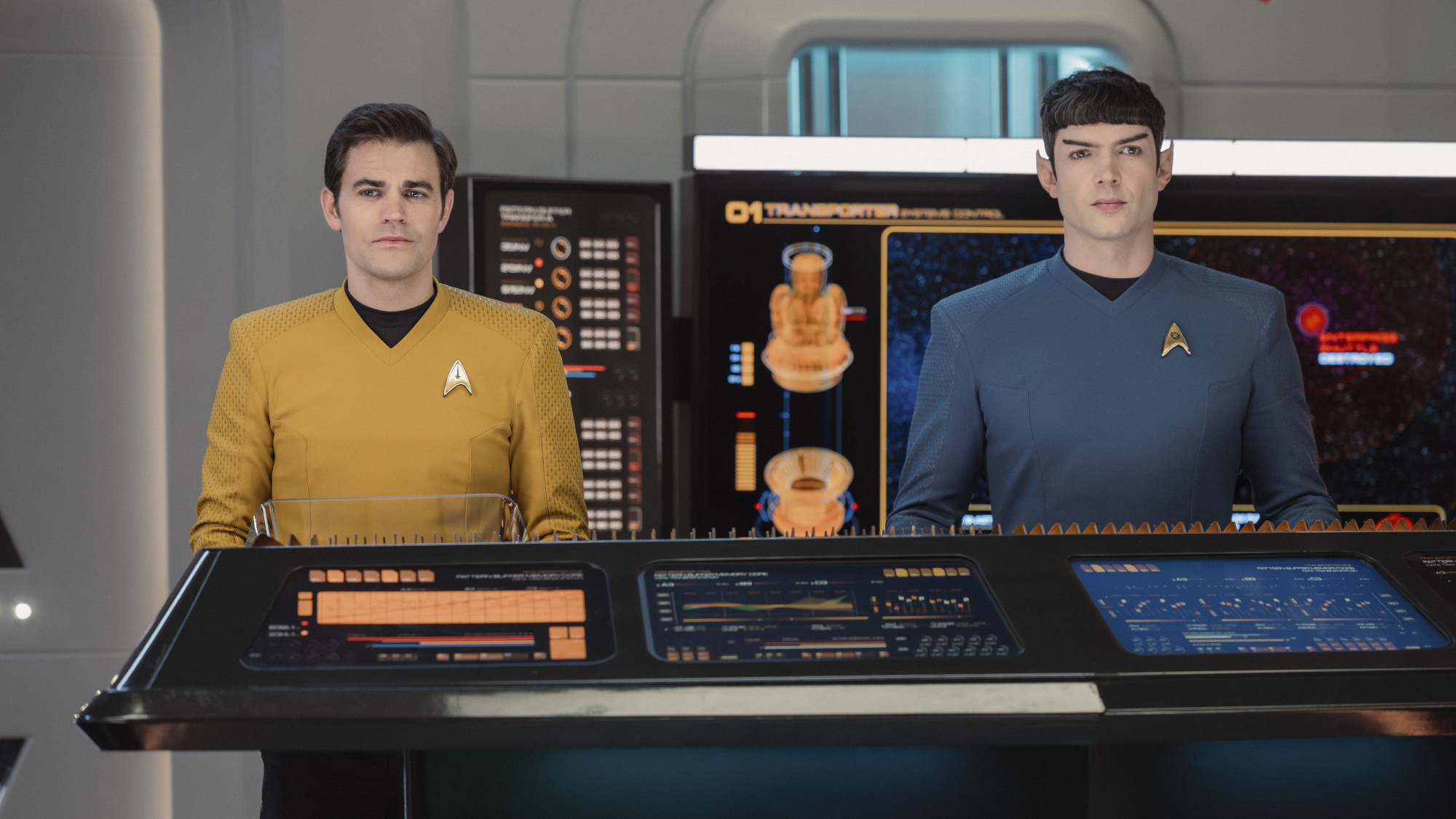
Screenshot from Star Trek: Strange New Worlds S4 Ep 3, Human Best Friend.

(Image credit: Paramount)

(The crew of the USS Voyager are presumably relieved that, being trapped in the Delta Quadrant, they have an excuse for giving the vastly overrated Risa a miss.)

That said, steering clear of pleasure planets is no guarantee of a happy vacation experience. When Picard decides to go back to the family vineyard to recover from his Borg assimilation ordeal in "Family", he spends most of the time butting heads with his stubborn brother, Robert — sometimes you just yearn for the simplicity of life in an emotionless cyborg collective. And Benjamin Sisko's own attempt at a family excursion with son Jake in "DS9"'s "Explorers" also proves to be far from peaceful, when the vintage lightship he's built from ancient Bajoran instructions warps them into uncharted waters and a run-in with the Cardassians.

So Pike and his crew should have known better when they embarked on shore leave of their own. Indeed, if anyone had bothered to read the microprint within the fine print — as highlighted by the Ceznar Grand's maître d' (played by "The Kids in the Hall" and "A Bug's Life" star Dave Foley) — they'd have been more prepared for the thumping headaches and memory gaps that come as standard when you're hanging out on a planet with a naturally intoxicating atmosphere.

Screenshot from Star Trek: Strange New Worlds S4 Ep 3, Human Best Friend.

(Image credit: Paramount)

Cue "The Hangover"-style hijinks as Ortegas and Scotty try to recall the night before via an extended game of "hunt the shuttlecraft", Nurse Chapel reveals a secret passion for bingo, and Number One karaokes her way through a succession of Klingon power ballads (aka the best kind).

They'll all be relieved to know that, in "Star Trek", whatever happens on shore leave tends to stay on shore leave — even questionable facial tattoos that, without futuristic Federation medical tech, Pike might otherwise have come to regret.

But crucially, we will always know what went down when Alpha Shift let their hair down. And at least Kirk and Spock had an excuse to enjoy the hugs and deep-and-meaningfuls we know they've always wanted.

New episodes of "Star Trek: Strange New Worlds" debut on Paramount+ on Thursdays.
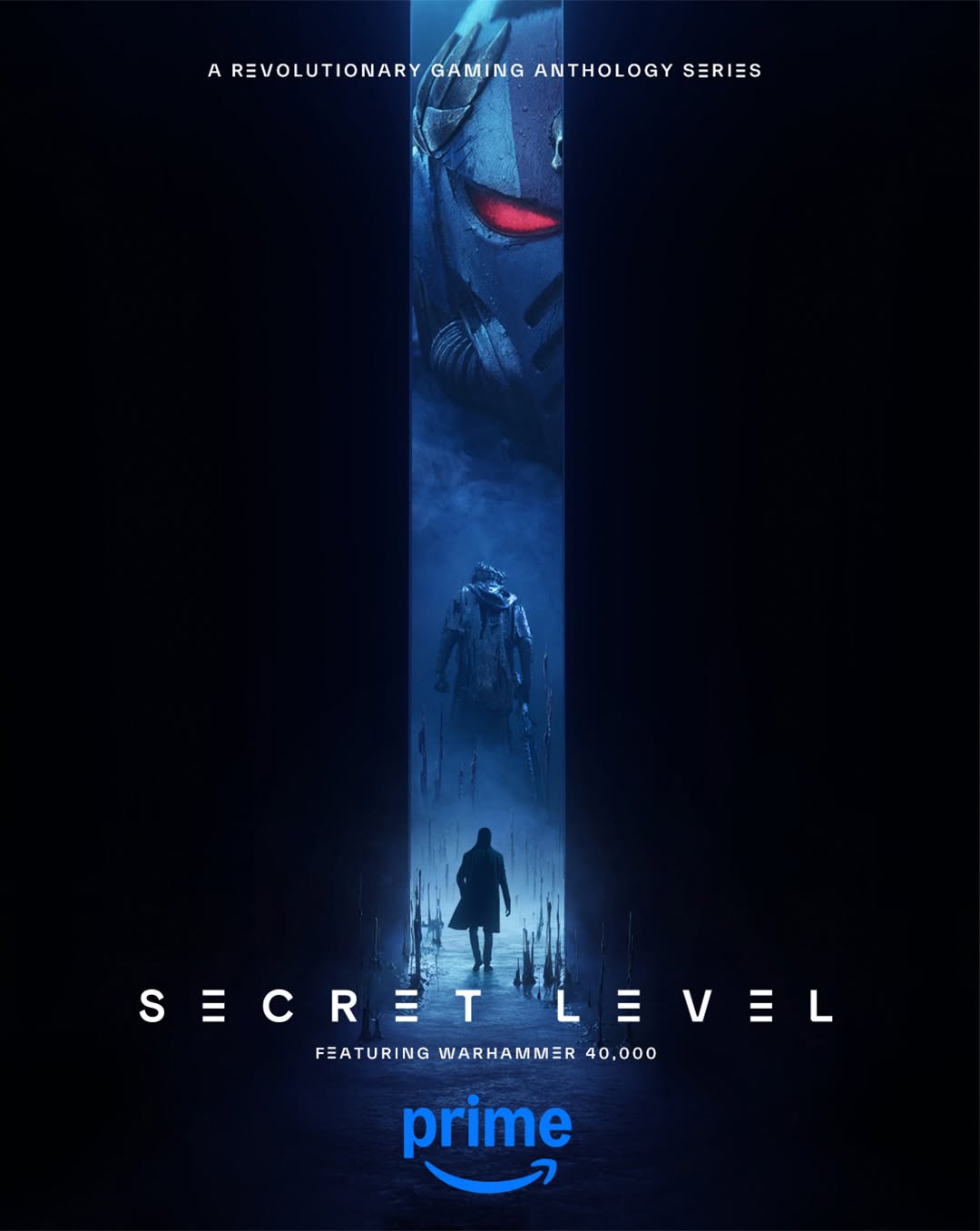
‘Warhammer 40,000’ animated series coming to Prime Video, with Henry Cavill onboard as executive producer

It's always the way, you wait 40,000 years for a Warhammer series from Amazon Prime Video, and then two come along at once.

Spinning off of Prime Video's animated video game-based anthology, "Secret Level," a new "Warhammer 40,000" animated series is marching down the creative pipeline. This spin-off series is spawned from "Secret Level's" "Warhammer 40,000" episode titled "And They Shall Know No Fear," which debuted in December of 2024.

The show doesn't have a name yet, but we know it's coming courtesy of Amazon MGM Studios, Blur Studios, and the miniature wargame's British parent company, Games Workshop.

Hollywood megastar and king of the nerds, Henry Cavill ("The Witcher"), has signed on to executive produce, alongside his role on the previously announced live-action "Warhammer 40,000" series in development at Amazon MGM Studios, which is coming from prolific writer/producer Mike Flanagan ("Midnight Mass," "Carrie").

We don't know much about the plot at this time, other than that it will focus on the Deathwatch, who are a group of intimidating cybernetically enhanced Space Marines who are particularly adept at slaying nasty extraterrestrial xenos.

a promo poster for a sci-fi animation series

Prime Video's upcoming "Warhammer 40,000" animated series originated from 2024's "Secret Level" gaming anthology series. (Image credit: Amazon MGM Studios)

Dave Wilson directed the original short, and he's signed on again here as co-creator and director, with John Orloff ("Masters of the Air," "Band of Brothers") aiding in the development process.

"Secret Level" creator Tim Miller ("Love, Death + Robots") serves as executive producer with Dave Wilson for Blur Studios, alongside Cavill and Natalie Viscuso. Joining them are Roy Lee of Vertigo Entertainment and Games Workshop's Andy Smillie.

"'Secret Level' wasn’t conceived simply as an anthology. It was designed as a launchpad for larger stories," said Wilson in a statement. "The response to the 'Warhammer' episode was extraordinary, particularly from fans who understood how much care went into getting the world right. This series gives us the opportunity to build on that foundation and tell a much larger story. I've wanted to tell a long-form story set in 'Warhammer 40,000' for more than twenty years, and I'm incredibly grateful to Games Workshop and Amazon MGM Studios for the opportunity to do it."

Prime Video is knee-deep in gaming adaptations with its acclaimed "Fallout" series and a "Tomb Raider" show starring "Game of Thrones"' Sophie Turner on the roster. Amazon MGM Studios is also hard at work on an epic "God of War" project, with "Guardians of the Galaxy's" Dave Bautista currently topping the list to portray Kratos after Ryan Hurst left the production due to an injury.

No specific release date was unveiled for "Warhammer 40,000's" animated event series, but we’ll keep you briefed on any major details in the coming months!

The ‘Dark Matter’ season 2 trailer is here, and it looks like Apple TV has another sci-fi hit on its hands

You might think you're done with the multiverse, but the multiverse is not done with you, as Apple TV preps the next season of its mind-bending sci-fi series, "Dark Matter."

Adapted from New York Times bestselling novelist Blake Crouch's 2016 novel of the same name, "Dark Matter" is another stellar series from the streaming platform that's become the go-to destination for premium science fiction content with hit shows "Foundation," "Silo," "For All Mankind," "Star City," "Invasion," "Pluribus," "Severance," and "Murderbot."

The debut season in 2024 took audiences into a reality-warping nightmare, and season 2 kicks things into a darker dimension when it rolls out on Aug. 28, 2026.

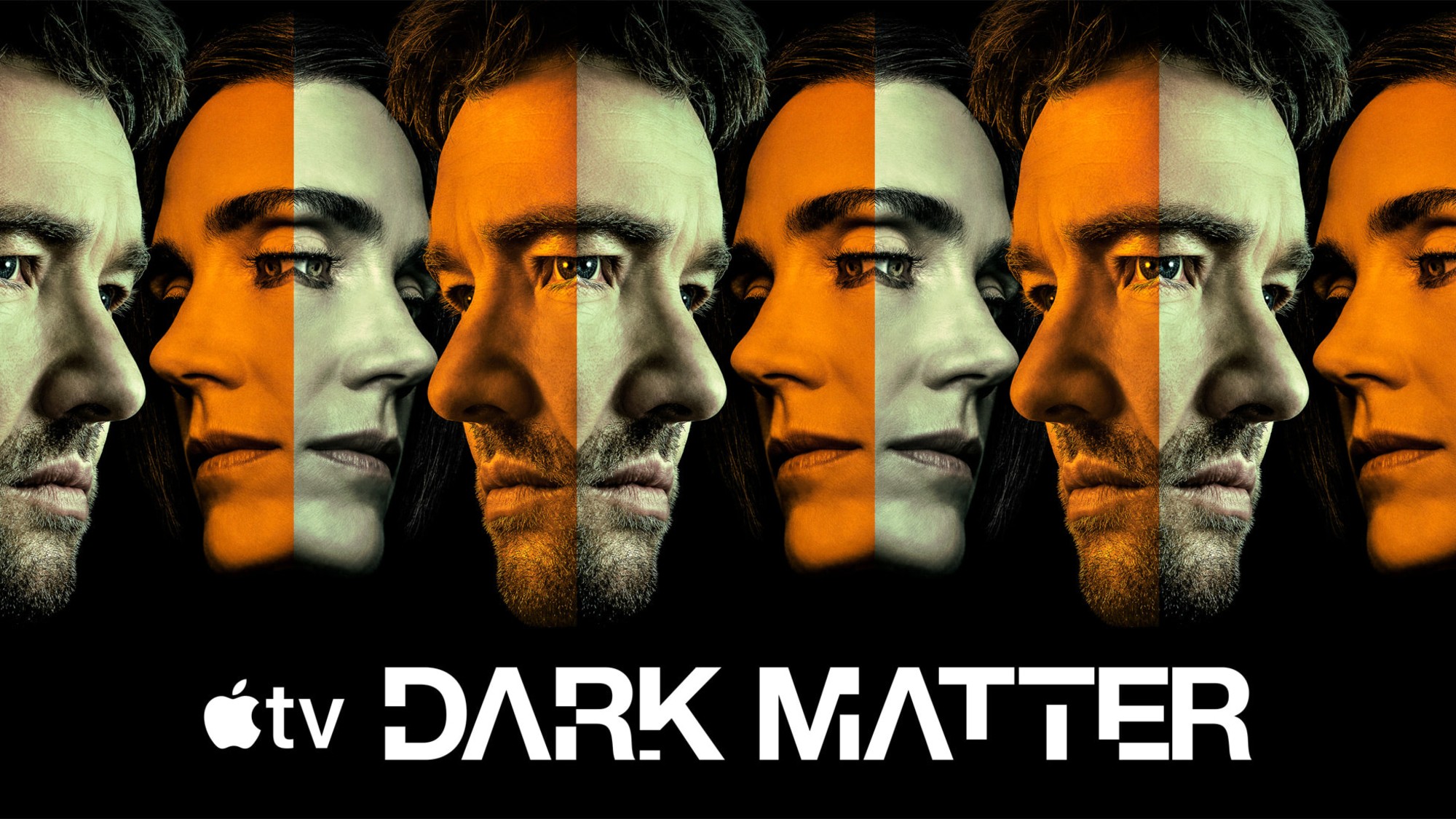
a man and a woman's faces are tessellated in a repeating pattern from left to right above the words 'dark matter'

"Dark Matter" season 2 manifests more multiverse action on Aug. 28, 2026 (Image credit: Apple TV+)

Season 1 found Joel Edgerton ("Star Wars: Revenge of the Sith," "Zero Dark 30," "Train Dreams") portraying Jason Dessen, a quantum physicist who gets sucked into an alternate reality and must struggle to prevent his second self from hijacking his life and family. Season 2 sees the Dessen family jolted out of their safe, quiet life once again when an unimaginable threat forces them to run once again.

"As Jason's obsession with the Box deepens, Daniela's growing paranoia pushes her to the brink, threatening to tear their fragile stability apart," reveals the synopsis. "Elsewhere, Amanda and Ryan join forces in a desperate attempt to find their way home. With Blair determined to stop him, while Leighton relentlessly chases his grand vision of creating a perfect world."

Oscar-winner Jennifer Connelly ("The Rocketeer," "A Beautiful Mind") plays his prime world wife, Daniela, and Alice Braga takes on the role of Amanda Lucas, Dessen’s girlfriend in the shifted universe. Crouch ("Wayward Pines," "Recursion," "Upgrade") again serves as "Dark Matter's" showrunner and executive producer, where he steers the first-class production with a steady, capable hand beyond the book's storyline for its sophomore season. He'll share executive producing duties alongside Joel Edgerton, Jakob Verbruggen, Don Kurt, David Manpearl, and Matt Tolmach.

"Dark Matter's first season was an engaging and underappreciated sci-fi series that should satiate fans of sci-fi shows like "Fringe," "The Man in the High Castle," "Black Mirror," and even "Rick and Morty." We can't wait for season 2.

Speaking of which, starring Jimmi Simpson, Dayo Okeniyi, Oakes Fegley and Amanda Brugel, "Dark Matter" season 2 appears on Apple TV for a fresh 10-episode outing on Aug. 28, 2026.

Watch Dark Matter on Apple TV+:
Apple TV+: $12.99/month (7-day free trial)
Apple TV & Peacock Premium: $14.99/month

‘The Ninth Jedi’ review: This anime spin-off abandons ‘Star Wars’ canon, and it’s all the stronger for it

Star Wars: Visions Presents – The Ninth Jedi may not be the Star Wars TV show you were looking for, but after having watched its entire first season, I can confidently say it's something the franchise desperately needed.

With several new Star Wars movies on the horizon without a cohesive plan in sight and a surprising lack of new live-action Disney+ series beyond Ahsoka Season 2, it seems like the galaxy far, far away's future looks brighter in animation.

Shows like The Bad Batch and Maul – Shadow Lord have proven there's room for more tonal experiments and expansions of the canon canvas, yet it's the Legends-like Star Wars: Visions formula that's produced the most striking tales starring Jedi, Sith, Rebels, and whatnot in years.

After a second short released as part of last year's Star Wars: Visions Vol. 3, Production I.G's The Ninth Jedi has evolved into an eight-episode anime series that's far outside what we've come to expect from the canon Star Wars timeline.

And yet, the traditional nature of its story and setting showcases what an icon Star Wars could be for younger generations if it looked forward more often than backward.

A well-calculated evolution

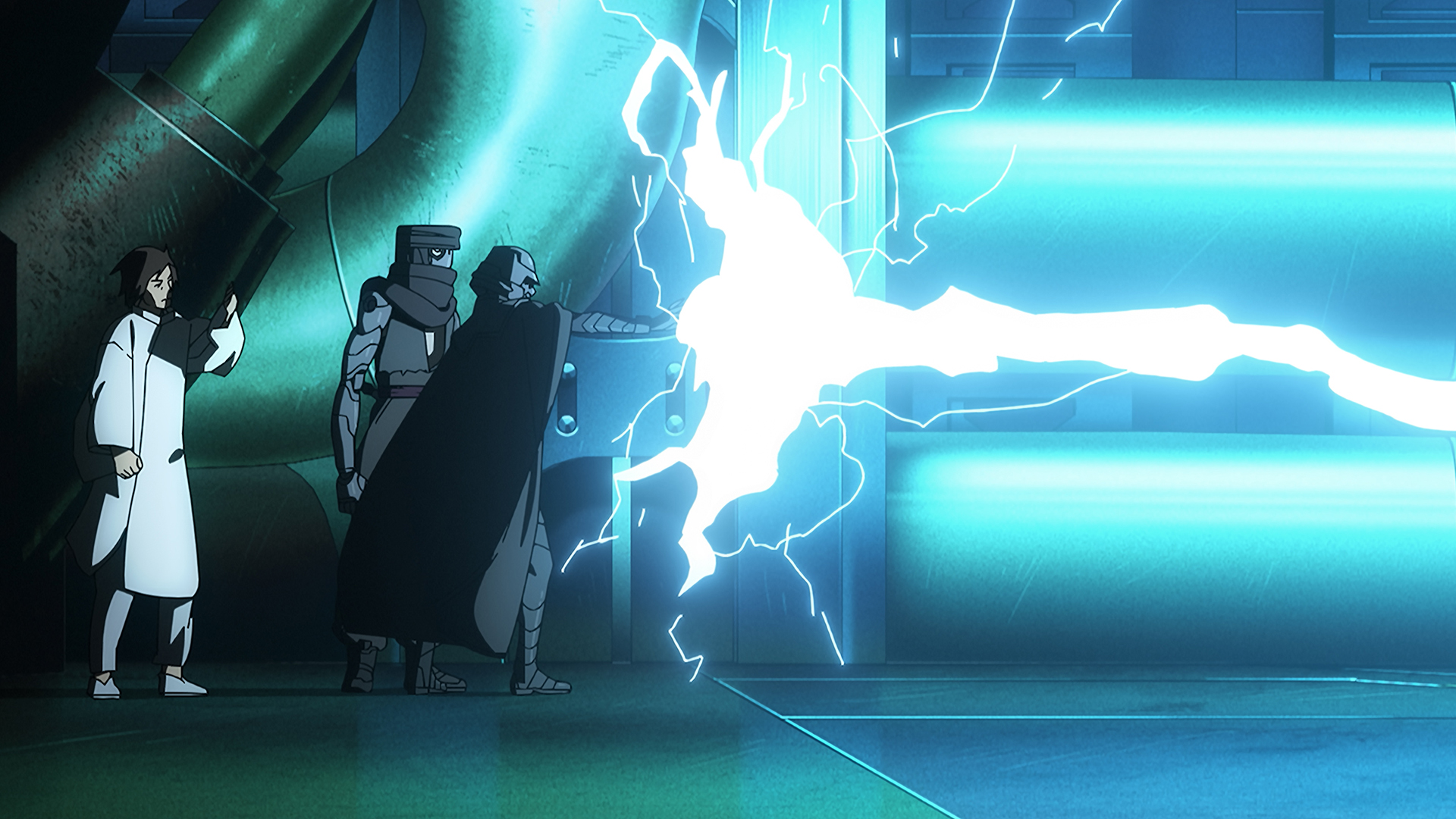
cartoon characters in robes fight with colorful laser swords

Still from "Star Wars: The Ninth Jedi." (Image credit: Lucasfilm)

Back in 2021, The Ninth Jedi became a fan-favorite what-if Star Wars scenario with a first short (which you can watch for free on YouTube right now) set generations after the disappearance of the Jedi Order. It's a familiar setup, but crucially, one that doesn't invoke the Skywalker family name, the Republic, or the Empire.

At the same time, the show's approach to the Force, the Jedi, and the Sith doesn't collide with what we've already seen. It almost feels like a canon Star Wars story that's just set centuries into the galaxy's future. Even the visuals, which evoke an old-fashioned style as possible — despite some jarring bits of CG imagery — use the same language Lucasfilm veterans like Doug Chiang have developed over the decades.

The Ninth Jedi sticks to the few rules established by the two previous shorts, but also dreams slightly bigger to paint a richer canvas that doesn't always feel like a genuine part of George Lucas' original universe, which is almost necessary at this point to avoid stagnation.

There will no doubt be back-and-forth conversation about its place within the franchise, but such chatter is less interesting than dissecting what it means for how Disney and Lucasfilm approach the property moving forward.

Honoring the recent past

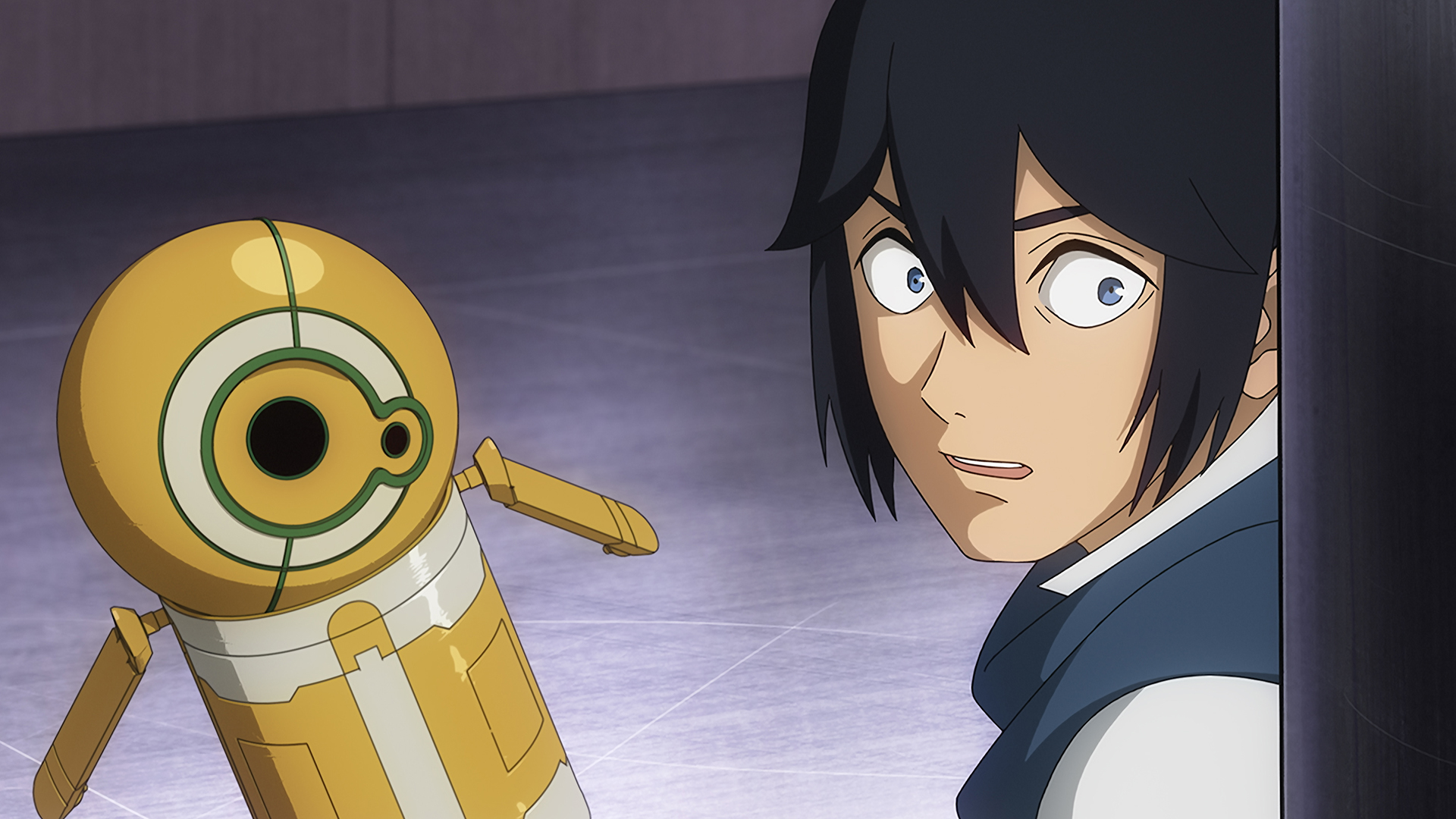
cartoon characters in robes fight with colorful laser swords

Still from "Star Wars: The Ninth Jedi." (Image credit: Lucasfilm)

Interestingly, The Ninth Jedi borrows quite a lot from modern Star Wars entries the loud online types called unmitigated disasters: namely The Last Jedi and The Acolyte.

Lah Kara feels like the direct result of Rey's impact on a new generation of creatives and fans, and Lah Zhima – Kara's father – quickly goes from a missing sabersmith to a far more complex Jedi figure that lands close to Luke Skywalker's divisive role in Episode VIII. General Nawaam — the main villain — also makes for a memorable character that has more Kylo Ren (or The Stranger) than Darth Vader in them.

The nature of lightsaber-wielding warriors like the Jedi and Sith — both ancient concepts to the galaxy's common people — is also questioned. These are religions that, at least in their original shape, have gone extinct for a good reason.

While Kara and Jedi Knights like Margrave Juro — essentially the Obi-Wan Kenobi of this story — and Ethan fight to bring back the Order from the brink of extinction (again), it becomes evident there's no path forward for the guardians of peace and justice without some introspection. These shades of grey only deepen when lightsabers start to change colors, and unlikely heroes rise.

Over the course of this eight-episode season (with more teased but not confirmed), the Production I.G anime veterans Shunsuke Tada (director), Mitsuyasu Sakai (writer), and Kenji Kamiyama (supervising director) make a strong effort to bridge Star Wars' past and present, even if there was no real need to respect what had come before. The Ninth Jedi is its own thing, but not really.

It may be limiting for the Visions experiment — as many fans favor bolder swings as stylish and disruptive as The Duel — but ironically, that makes it a valuable endeavor for Lucasfilm as they navigate an uncertain future trying to conquer the big screen once again. How much classical Star Wars do we need in future projects? This show gives a very reasonable answer.

Star Wars for a new generation, even if the bones are old

cartoon characters in robes fight with colorful laser swords

Still from "Star Wars: The Ninth Jedi." (Image credit: Lucasfilm)

Veteran Star Wars fans need to remember newcomers don't care about canon outside of stories meant to be connected. Instead, they're looking for captivating tales starring new characters who are fun to spend time with, and on that front, the first of the Star Wars: Visions shows (more are rumored to be in the works) is a resounding success.

On a surface level, there are enough new planets, spaceships, alien species, and factions in The Ninth Jedi to fuel an entire trilogy of movies, yet it's all put to good use over the course of eight breezy episodes which tell a complete story, just in case Season 2 isn't a possibility.

Thematically, it's also among the richest explorations of the Force, the Jedi, and a cycle of conflicts sparked by the need for more Star Wars forever and ever. Even if corporate needs are the main reason why creatives are still getting to tell stories set in a galaxy far, far away, the meta conversation found in these tales might help refresh and save Star Wars. Beyond that, it shows that Rian Johnson and Leslye Headland had the right idea, even if they didn't nail the execution.

Those who have been around for decades will spot and appreciate the tradition holding this all together, but even with a Death Star-like threat and reheated plot beats peppered throughout the journey, The Ninth Jedi has the pulse and patience to build new legends that deserve a moment in the spotlight.

The galaxy Kara is fighting for might look a little different from the one we know, but this is the most Star Wars-feeling Star Wars entry in quite some time.

Star Wars: Visions Presents – The Ninth Jedi (full season) is now available to stream on Disney+ following its premiere on Aug. 5, 2026.

Watch The Ninth Jedi on Disney+:
Disney+ (With Ads): $11.99/month
Disney+ Premium (No Ads): $18.99/month or $189.99/year

CNN dives into how Elon Musk and Jeff Bezos are backing NASA’s race to the moon against China (exclusive clip)

The great technological leaps in American history have often featured influential industrialists who step forward as vanguards, leading the way to a better tomorrow while emerging as major players in extreme endeavors.

Spaceflight is no exception.

A new CNN documentary titled "Eclipsing Power: Musk, Bezos, and the New Space Race" shines a light on how a pair of visionary billionaires, Elon Musk and Jeff Bezos, have been shaping and steering our country's space program and the bright future of private space enterprise.

Premiering on Sunday (Aug. 9) at 8 p.m. EDT/PDT on CNN, the documentary examines the contributions of the two men and how their considerable wealth have affected America's spaceflight efforts. It also features exclusive interviews with Chief Ambassador of The Planetary Society Bill Nye, NASA Administrator Jared Isaacman, journalist and CNN contributor Kara Swisher, Elon Musk biographer Walter Isaacson and many others.

"'Eclipsing Power' traces how Elon Musk and Jeff Bezos have transformed the future of space exploration, shifting what was once an endeavor primarily led by government into a race driven by private ambition," states the show's official synopsis.

"It follows the rise of SpaceX and Blue Origin, detailing how two of the world's most influential entrepreneurs have come to play an outsized role in America's space program. The hour looks at both the opportunities and the risks of NASA's growing reliance on private industry, the race to return humans to the moon, and what this new era of commercial spaceflight could mean for the future of humanity."

"What am I most excited about in space exploration?," Nye shares in our exclusive clip. "Well, for me, discovering evidence of life elsewhere. Maybe the rocks on Mars. Maybe under the ice on Europa, the moon of Jupiter with twice as much ocean water as Earth. Maybe Enceladus or Titan. It would change the course of human history. We’ll see you up there!"

CNN’s FlashDocs division offers provocative storytelling on topical issues shaping society and culture. Former FlashDocs programs have included "Bad Bunny and the Halftime Show: Rhythms of Resistance" and "Behind the Bob: Vogue's Anna Wintour."

Executive produced by Eric Johnson alongside CNN Studios' Amy Entelis and Katie Hinman, "Eclipsing Power: Musk, Bezos, and the New Space Race" will first stream exclusively at CNN.com/Watch and on the CNN app beginning on Friday (Aug. 7) and has its broadcast debut on Sunday at 8 p.m. EDT on CNN.

Jack in for a cyberpunk jolt with this energized first trailer for Apple TV’s ‘Neuromancer’

Cyberpunk is back in a big way, baby!

This summer, we've gotten two big doses of dystopian sci-fi: first with the recent San Diego Comic-Con trailer launch for Prime Video's upcoming "Blade Runner 2099" and now Apple TV's prestige series based on sci-fi guru William Gibson's 1984 cult novel, "Neuromancer."

The futuristic plotline centers around a burned-out computer hacker living in the overcrowded dystopian underworld of Japan's Chiba City who takes on a dangerous cyberspace gig that just might leave him dead. Its 10-episode debut season will be delivered beginning with a double chapter premiere, with subsequent installments airing each Friday through March 19, 2027.

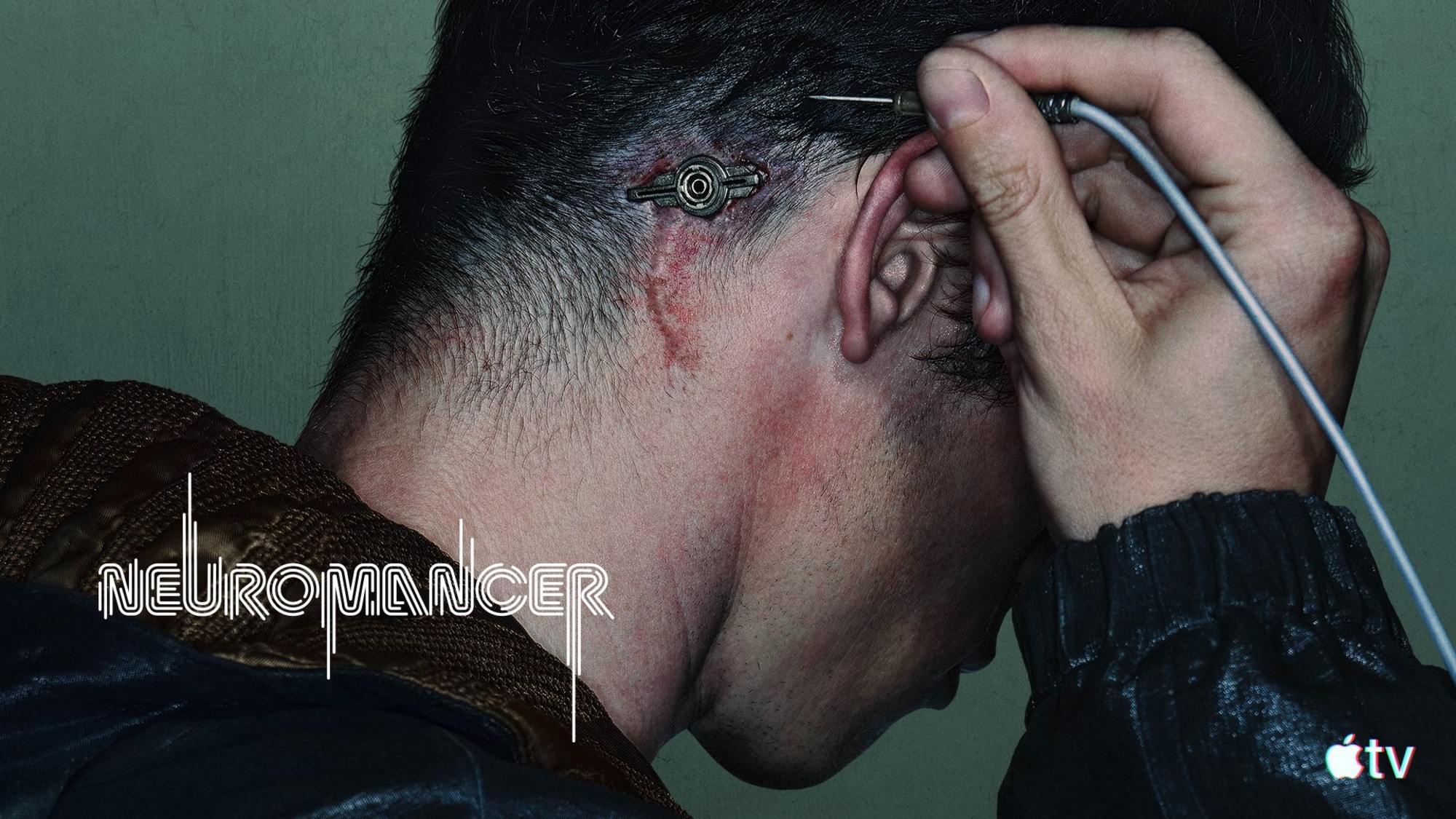
a person holds a wire with a male jack on the end of it up to their head, where a female plug can be seen surgically embedded into their skull behind their ear

Cyberpunk fans can plug into Apple TV's "Neuromancer" starting Jan. 22, 2027. (Image credit: Apple TV+)

Created by executive producer and showrunner Graham Roland, the mastermind behind "Dark Winds," "Neuromancer" powers up on Apple TV on Jan. 22, 2027 as also revealed during last week’s Southern California pop culture fiesta.

"Neuromancer's" four-decade road from page to screen has been long and arduous, with many A-list names in Hollywood attached to an adaptation of the acclaimed book at one time or another.

The ensemble cast stars "One Night Only's" Callum Turner as Case, Briana Middleton as Molly Millions, "Beef's" Joseph Lee as the ninja bodyguard Hideo, and Mark Strong in yet another in a seemingly infinite line of cold imposing villains, this time playing the shadowy figure called Armitage.

Additional cast members for this edgy sci-fi production include Clémence Poésy (Marie-France Tessier), Peter Sarsgaard (John Ashpool), Emma Laird (Linda Lee), Dane DeHaan (Peter Riviera), Max Irons (Jean Tessier-Ashpool), André De Shields (Julius Deane), Marc Menchaca (Dixie Flatline), Isabella Pappas (Mitchell), and Prasanna Puwanarajah (Darvin Mitnik).

"Neuromancer" kicks off exclusively on Apple TV on Jan. 22, 2027.

Watch Neuromancer on Apple TV+:
Apple TV+: $12.99/month (7-day free trial)
Apple TV & Peacock Premium: $14.99/month

Gears of War: E-Day: Release date, platforms & everything else we know about Marcus Fenix’s return

Microsoft and Xbox are currently facing all sorts of troubles (many of their own doing) in the shape of sweeping layoffs, studio cuts, and calls to boycott their products, to name a few. Extremely talented developers (who deserve much better) still put out exciting video games regardless, and with the remake of Halo: Combat Evolved out now, we look to Gears of War: E-Day, the series' first mainline entry since 2019.

While there are plenty of upcoming space games worth keeping tabs on, Gears of War's return feels special for a number of reasons. Although Gears 5 was not a flop – quite the opposite – there was a growing sentiment among the fanbase that Gears of War needed to reevaluate its future by revisiting its past. After a solid remaster of the original game last year, this next chapter is taking us back to where it all started: Emergence Day.

With gameplay systems, mechanics, controls, and visuals fully rebuilt on Unreal Engine 5, The Coalition aims to deliver the ultimate Gears of War experience with E-Day, and at least the atmosphere and tone seem pitch-perfect. But with nostalgia taking so many beloved franchises a few steps back in recent times, we must wonder if there's more to E-Day than reliving the series' glory days? Here's everything you should know about Gears of War: E-Day ahead of its launch.

When is Gears of War: E-Day coming out?

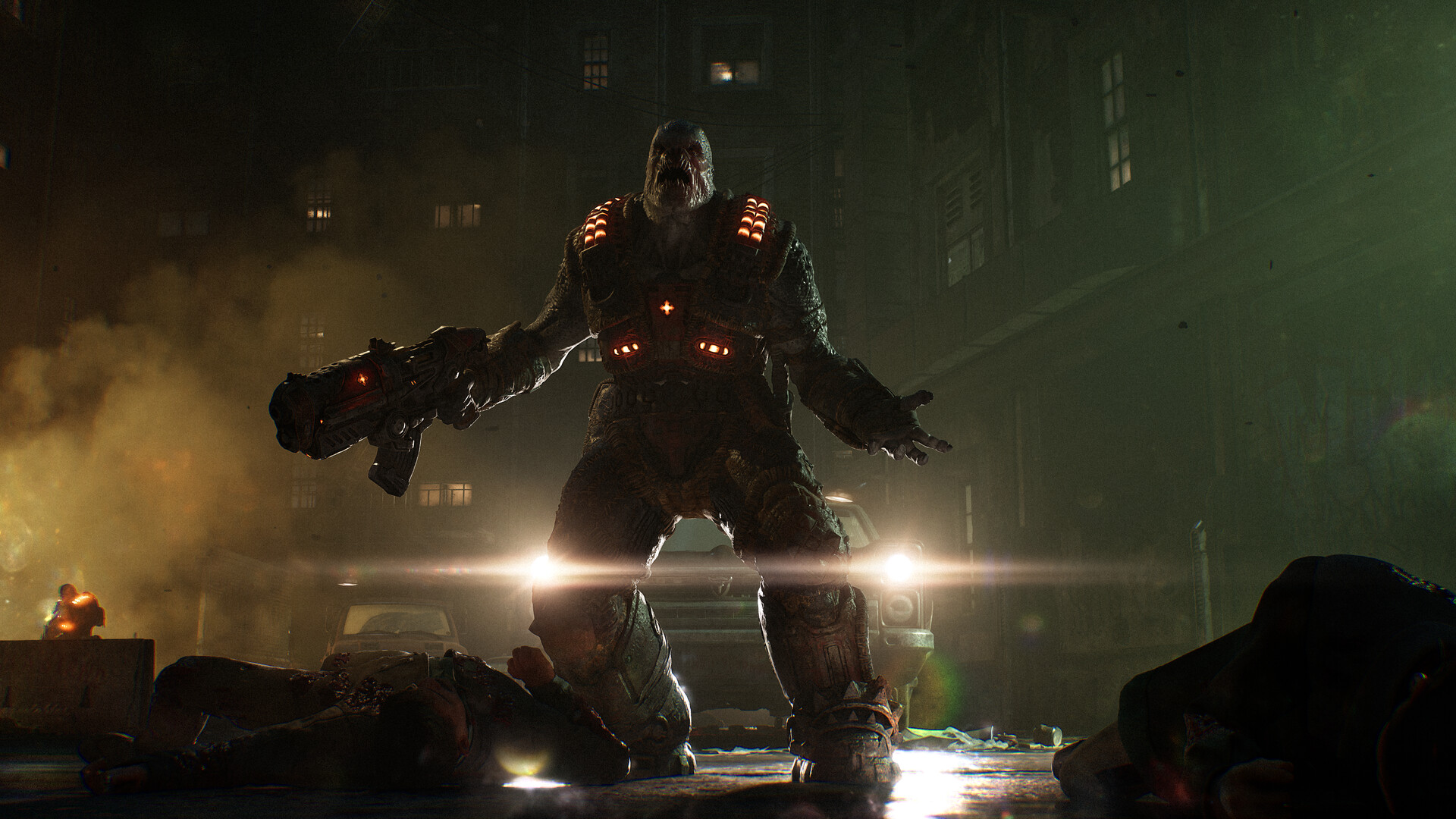
Screenshot from Gears of War: E-Day

(Image credit: Xbox Game Studios)

Gears of War: E-Day launches on October 6, 2026.

After a gameplay-less reveal in summer 2024, The Coalition went silent to continue work on the prequel. It was finally during the Xbox Games Showcase 2026 that we received confirmation Gears of War: E-Day would arrive before the year's end.

Is Gears of War: E-Day coming to PlayStation 5?

Contents of Gears of War: E-Day Collector's Edition.

(Image credit: Xbox Game Studios)

No, Gears of War: E-Day won't be releasing on PS5 despite last year's remaster of the first game marking the series' debut on Sony consoles.

Though rumors and leaked materials pointed to Gears of War: E-Day launching on Sony's console alongside Xbox, the full reveal in summer 2026 underlined it was an Xbox Series X/S console exclusive. It will, however, also launch on Windows via the Xbox app and Steam. As usual, Game Pass Ultimate subscribers will also get access to it day one.

Three editions will be available at launch, and you can pre-order them already:

  • Standard ($69.99 / £59.99 / €69.99) – Base game.
  • Premium ($99.99 / £89.99 / €99.99) – Base game with up to five days of early access, Bravo Squad Signature Weapon Pack, Emergence Customization Pack, Four Seasonal Customization Packs (released post-launch), and 1,000 iron (the game's premium in-game currency). A separate upgrade for Standard will also be sold.
  • Collector's ($299.99 / variable regional pricing) – Everything in the Premium Edition plus physical items, including a collector's display box, a 15" statue, replica COG tags, an exclusive steelbook case, an art piece, and an art print & thank-you note from the studio.

All editions also benefit from pre-order bonuses that include open beta early access (on August 6), the Exfil weapon set, and Exfil Dom legendary character skin.

Gears of War: E-Day trailers

Xbox and The Coalition are sharing all sorts of short videos in the lead-up to launch, but if you want to only watch the trailers and gameplay demos, we have them right here:

Is Gears of War: E-Day the first game in the timeline?

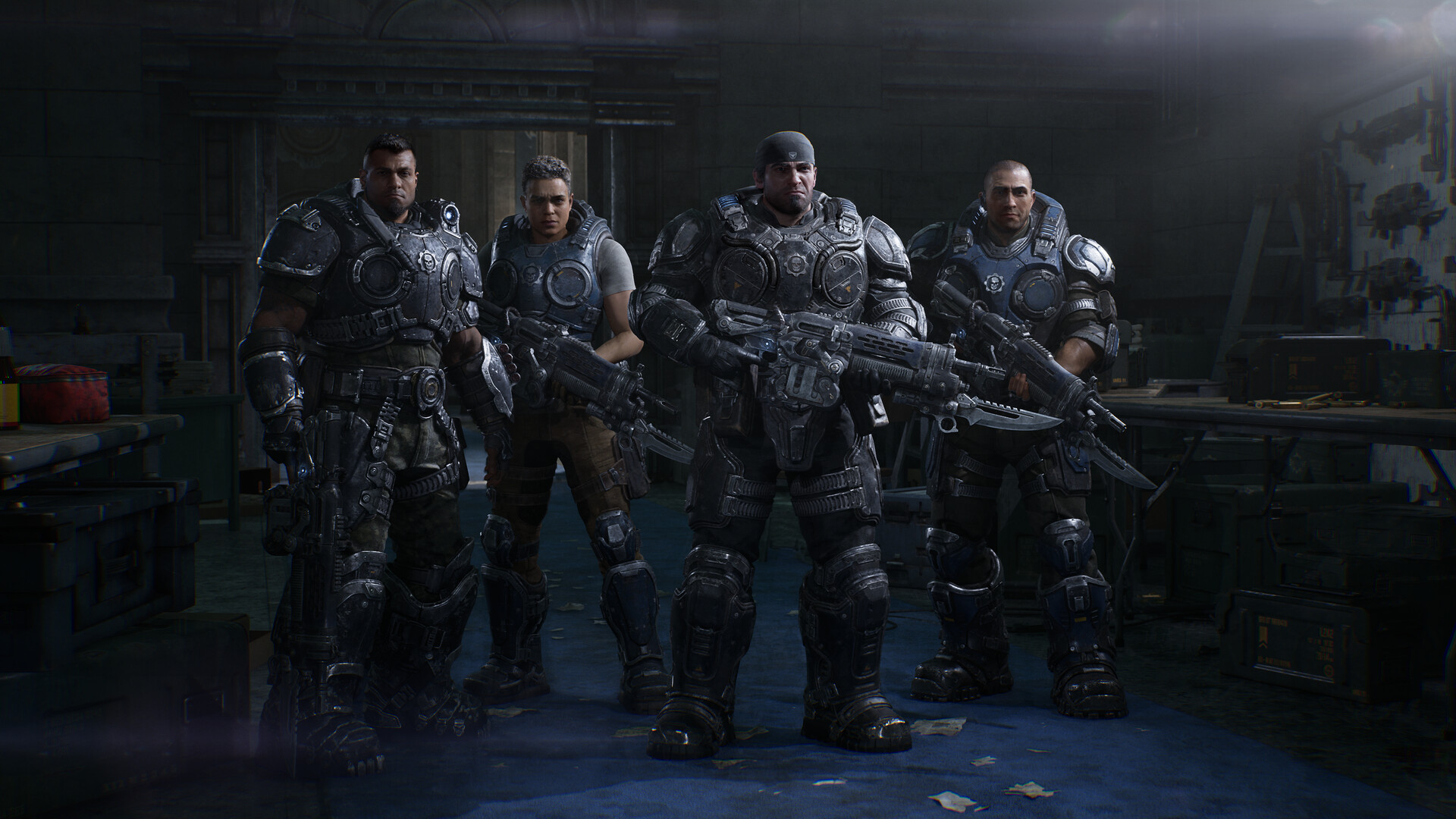
Screenshot from Gears of War: E-Day.

(Image credit: Xbox Game Studios)

Gears of War: E-Day is the first chapter in the Gears timeline. It tells the story of how the humans on the Earth-like planet of Sera came in contact with the bloodthirsty and relentless Locust Horde on what would later be called Emergence Day.

If you're planning to play the Gears of War games in order, this would be the perfect place to start moving forward. Though the original game and Judgment (a spinoff that was released for Xbox 360) gave us information on what happened during E-Day, we never really had a Rogue One-like prequel similar to Halo: Reach. Now, both veterans and newcomers will be able to experience the struggle humanity faced as a new conflict erupted.

Alongside a supporting cast of new and familiar faces, the story follows original trilogy protagonists Marcus Fenix and Dominic 'Dom' Santiago as they battle through the chaos of E-Day and push back against the subterranean invaders. For additional context, the war against the Locust kicks off only a few weeks after the 79-year conflict between human factions known as the Pendulum Wars, which explains why the COG wasn't in the best of conditions when the monsters attacked.

Will Gears of War: E-Day have co-op and competitive multiplayer?

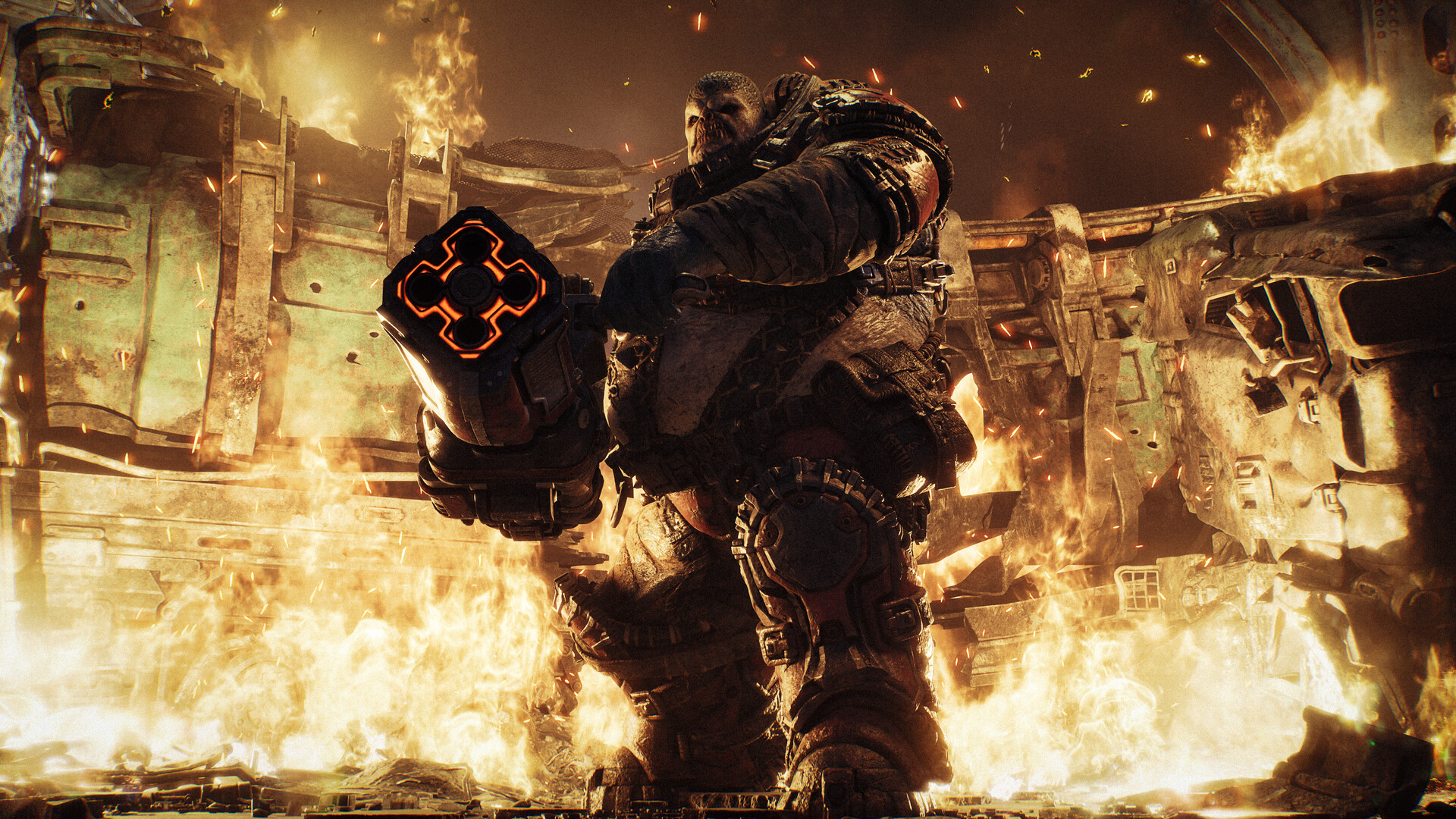
Screenshot from Gears of War: E-Day.

(Image credit: Xbox Game Studios)

Gears of War: E-Day is a third-person, cover-based shooter in the style of the previous games and, as such, both co-op and competitive multiplayer are back alongside the single-player experience.

The main story campaign can be played in single-player, or with up to four players online or two players locally via split screen. It must be noted the PC version of the game won't feature local co-op. These player counts also apply to the series' famous Horde Siege PvE survival mode, which pits players against waves of enemies as they select different classes and loadouts.

Versus PvP multiplayer for online competition also returns with all-new maps and both Social and Ranked matches. While the post-launch support hasn't been fully detailed, it feels likely more maps will be added in the future at no extra cost.

Is there a Gears of War: E-Day demo?

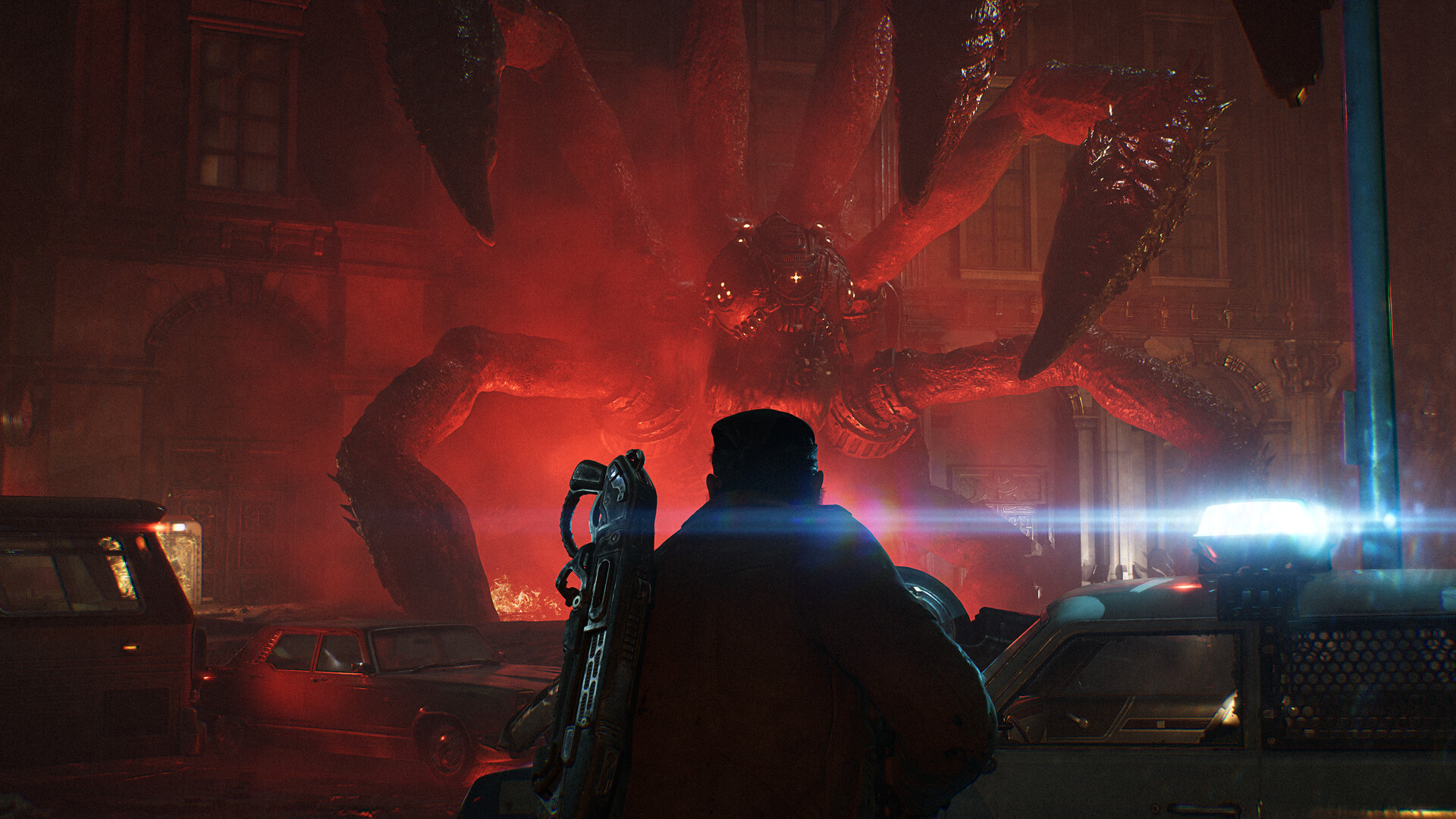
Screenshot from Gears of War: E-Day.

(Image credit: Xbox Game Studios)

There's no Gears of War: E-Day demo announced at the time of writing. However, players can look forward to a multiplayer open beta happening in the coming weeks. More specifically, those who pre-order or have active Game Pass Ultimate subs can access the test early, from August 6 to 10. The second – and fully open – weekend will happen at a later date, probably the following week.

From Hardspace to Clearspace: How space salvage games compare to real debris removal

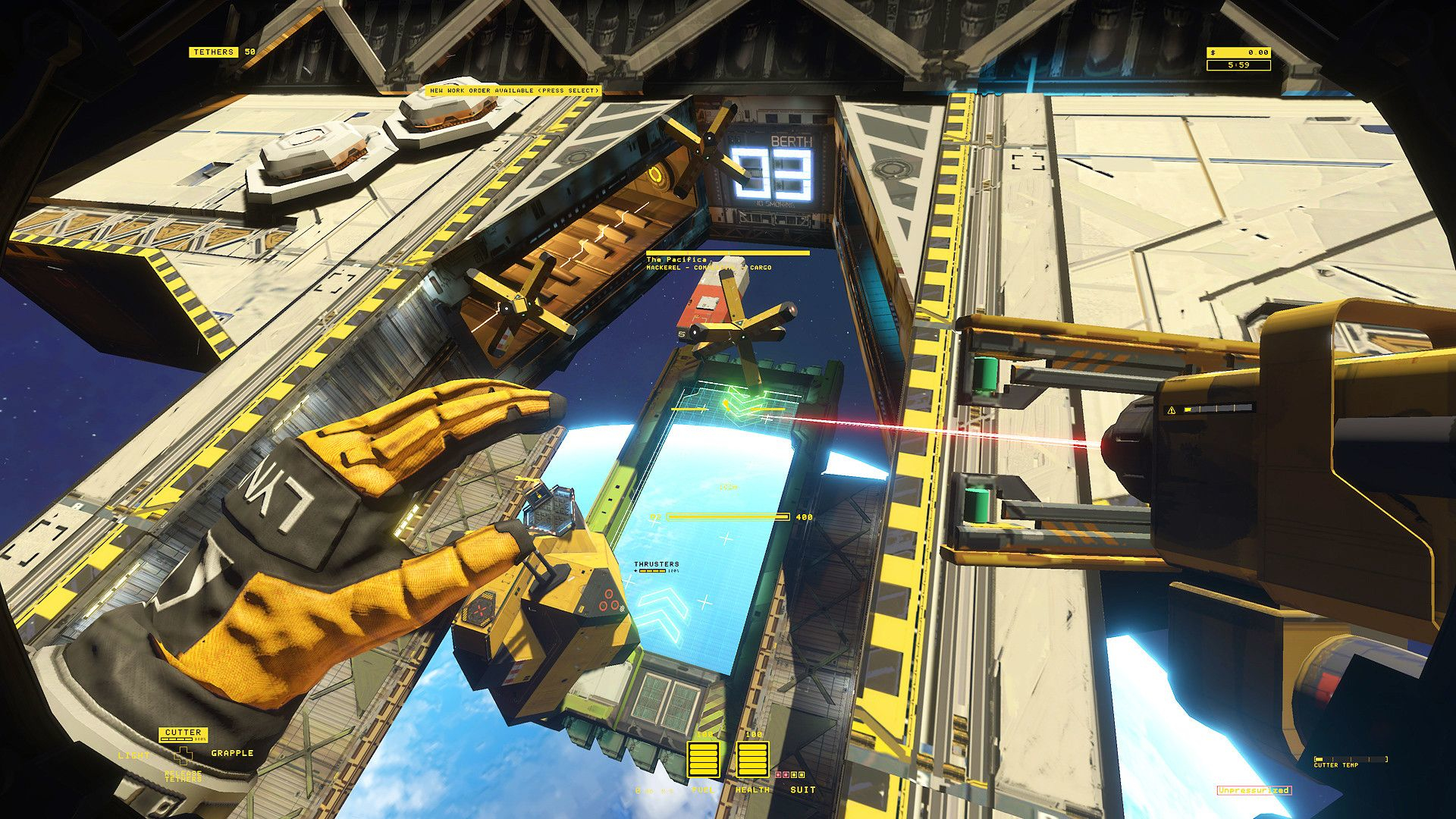
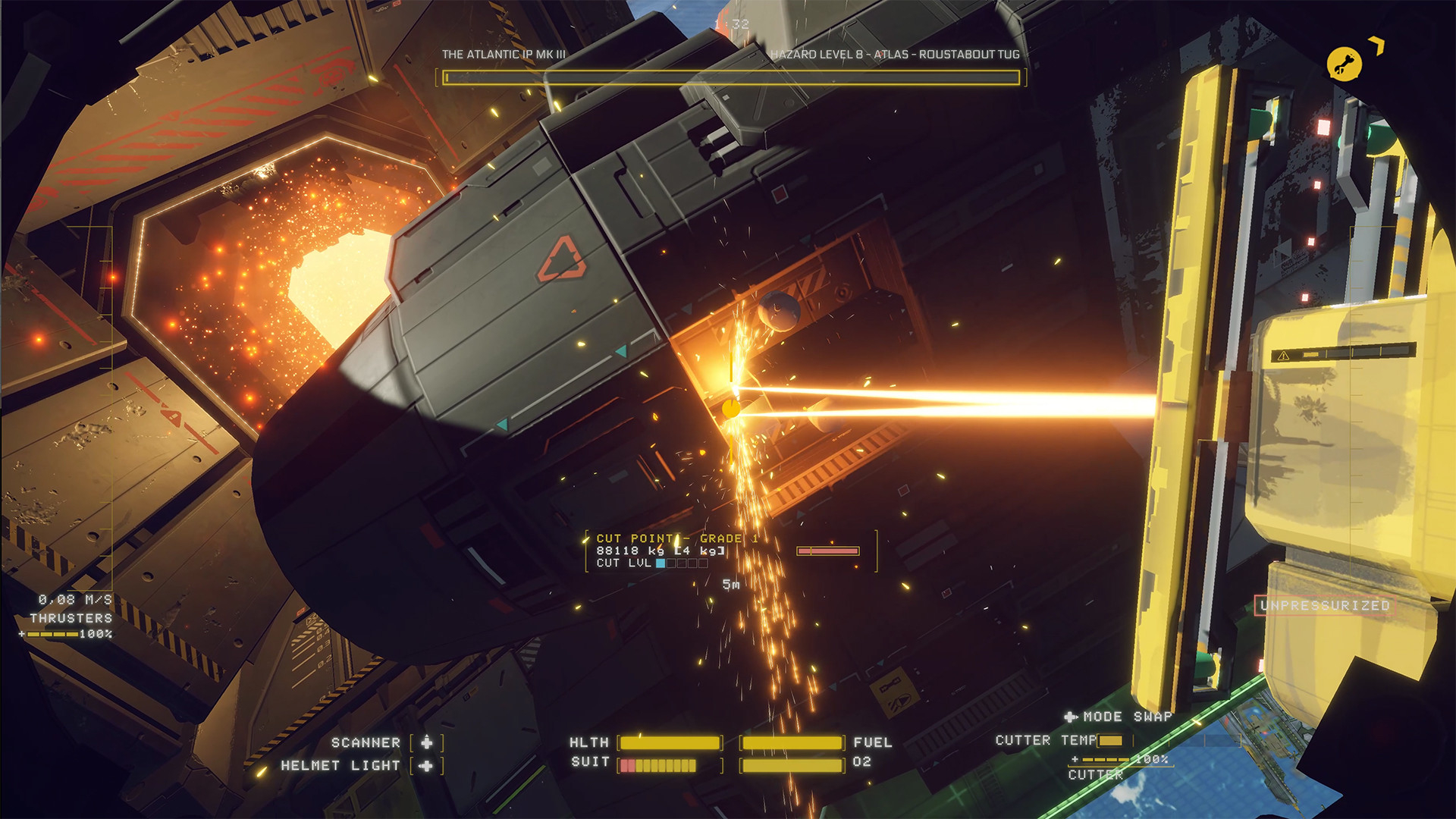
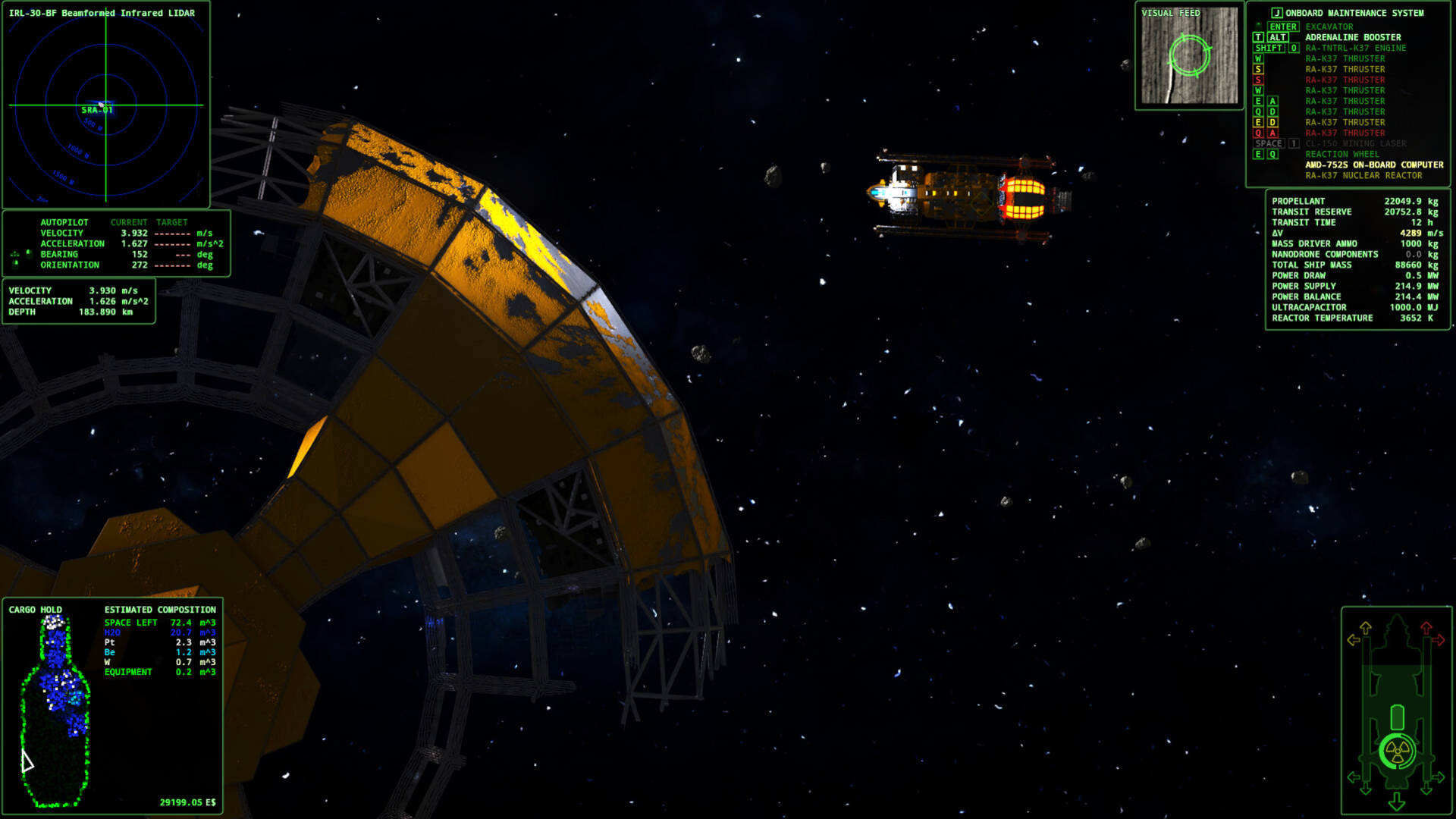
While Hardspace: Shipbreaker does an excellent job of capturing the dystopian perils of unchecked hypercapitalism, the real fun in this space game comes from carving up massive capital ships with space lasers and explosives.

Floating in zero gravity, players slice derelict spacecraft into salvageable chunks, while also contending with unruly physics, pressure, and profit margins. It's a compelling fantasy: orbital blue-collar labor, where yesterday's spacecraft become tomorrow's raw materials.

As satisfying as the simulation is, the real-world challenge of space debris removal is both more constrained and more urgent.

(Image credit: Blackbird Interactive)

Christian Steimle is the Project Manager of the European Space Agency's (ESA) ClearSpace-1 mission, the first ever aimed at removing a piece of debris (in this case, a satellite called PROBA-1) from low-Earth orbit.

We spoke to him to get a sense of how actual space junk removal will happen in the future, and how it stacks up to the representations we see in sci-fi games like Shipbreaker.

The fantasy of orbital demolition

(Image credit: Blackbird Interactive)

Games like Hardspace: Shipbreaker, ΔV: Rings of Saturn, and other space cleanup simulators tend to emphasize three core ideas: that debris can be dismantled piece by piece, that tools can safely cut or break apart structures in orbit, and that salvage is economically driven and scalable.

While they may be necessary assumptions to make for engaging gameplay, they diverge pretty significantly from current realities.

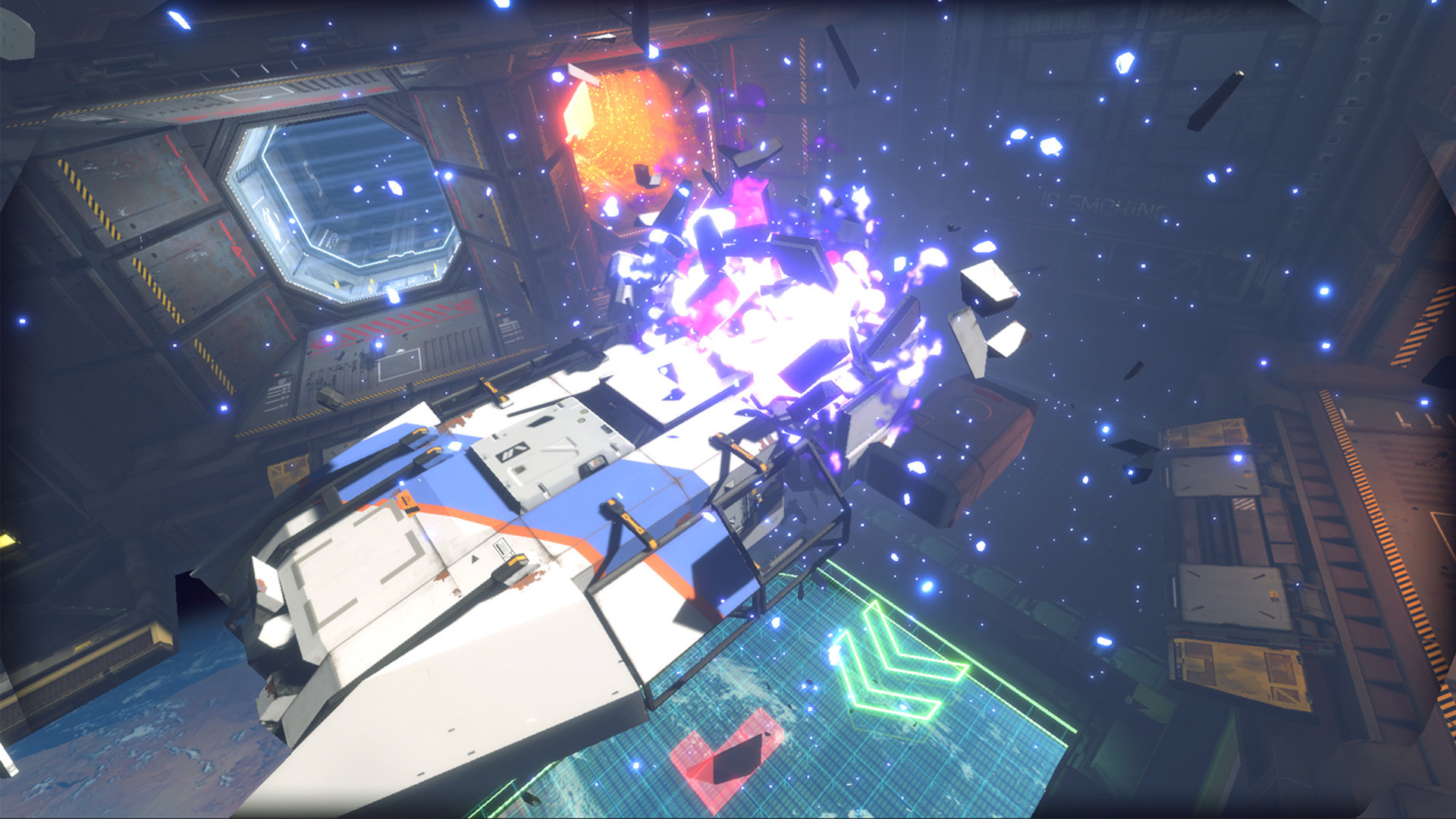
The main issue is fragmentation. Breaking apart a defunct satellite, even under the most carefully controlled and monitored conditions, risks generating thousands of high-velocity fragments. Some of those generated would be too small to feasibly track, yet large enough to destroy operational spacecraft, satellites, or stations. This is the nightmare scenario behind the Kessler syndrome, a cascading chain of collisions that could render entire orbital pathways unusable.

(Image credit: Blackbird Interactive)

As Christian Steimle, Project Manager for the European Space Agency's ClearSpace-1 mission, explains, "The common agreement between all of these missions is that objects to be removed shall not be broken up or damaged… especially to avoid creating smaller debris which is more difficult to track."

That means that the core mechanic of many space salvage games (cutting or exploding things into smaller bits) is precisely what real missions are designed to avoid.

How real debris removal works

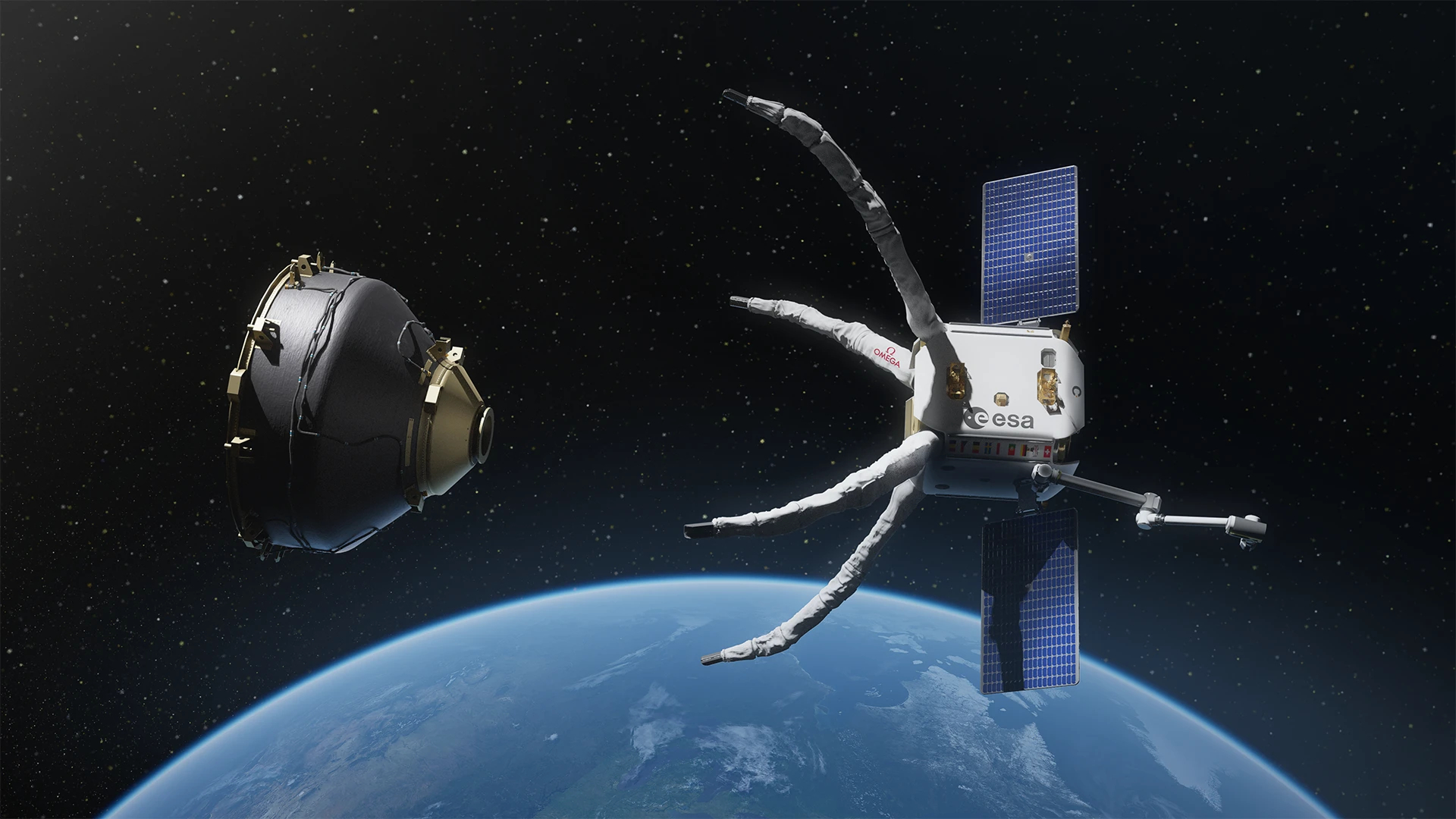
(Image credit: Clearspace)

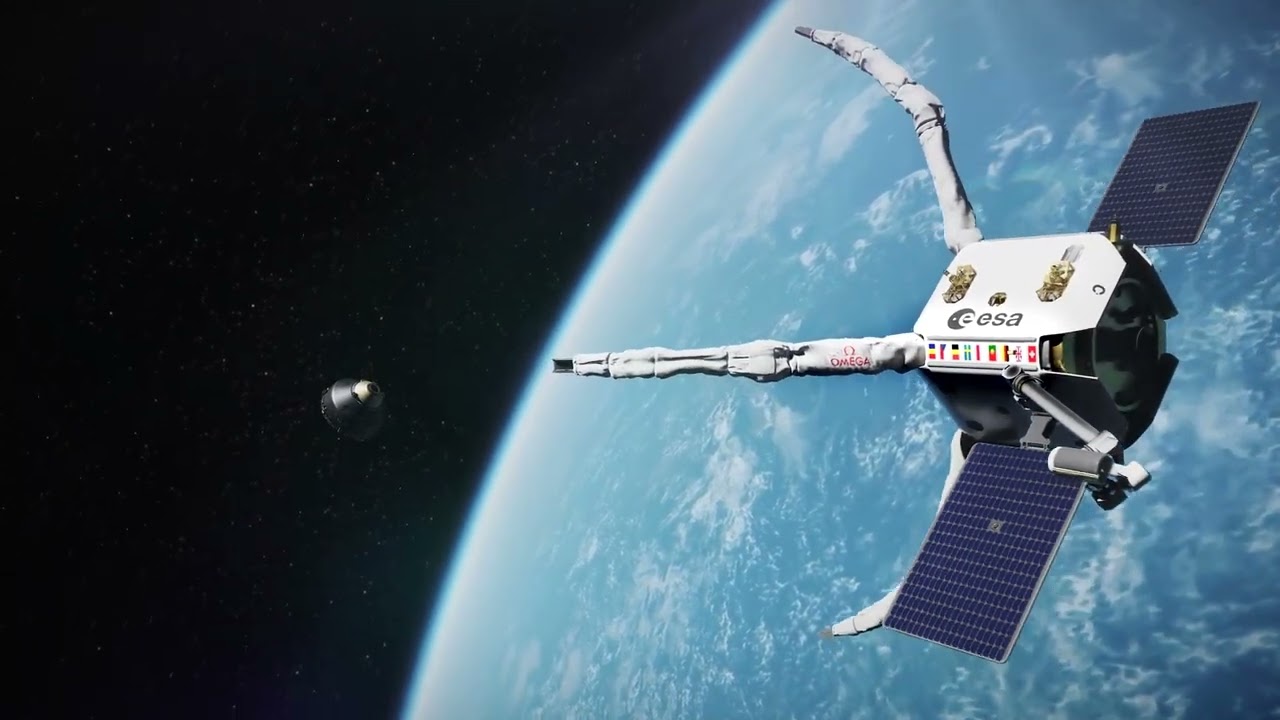
ClearSpace-1 takes a more holistic approach. Instead of dismantling debris, the mission aims to capture PROBA-1 with as little initial damage as possible, then guide it to destruction in Earth's atmosphere.

"ClearSpace-1 will be launched into a position slightly below PROBA-1 by a dedicated launch," Steimle says. "After successful commissioning, the ClearSpace-1 servicer will inspect PROBA-1 in a number of fly-around manoeuvres."

These inspection passes are not just reconnaissance. They validate visual navigation systems and analyze how the target object is tumbling so the capture vehicle can respond appropriately.

The capture itself is a delicate operation. "The ClearSpace-developed capture system will encompass the client satellite, first forming a cage around PROBA-1, then closing the cage carefully to avoid damaging the client," Steimle explains.

Once secured, the combined spacecraft must be stabilized before any orbital change. Only then can the system lower its orbit, ensuring both objects burn up safely during re-entry. "ClearSpace-1 is designed to demise during re-entry, ensuring on-ground safety and disposal at the same time."

The process more closely resembles a surgical extraction of potentially hazardous material than scrapyard demolition.

What games get right

(Image credit: Kodera Software)

Despite their liberties, space cleanup games do hit the mark in a number of areas. One is the importance of orbital mechanics. Many games emphasize inertia, momentum, and the difficulty of stopping or redirecting large masses. Real active debris removal (ADR) missions face similar constraints, where even small velocity mismatches can lead to mission failure or damage to the capture vehicle or target.

The danger of uncontrolled motion is also well represented. Tumbling objects are among the hardest targets in space operations. Synchronizing with them requires precise, multi-axis propulsion and control systems. As Steimle notes, future vehicles must "synchronise [their] motion with a potentially tumbling space object and apply the proper control to detumble." One of the main challenges in games like Shipbreaker is avoiding being clobbered by moving debris, especially after you've detonated some explosives, or matching the speed of a rotating component long enough to cut it apart.

Third, specialization is key. Your toolkit and how you use it in games like Shipbreaker is key, and real missions rely on highly tailored capture systems. Each target may require a different approach, from robotic arms to nets, harpoons, or enclosure systems like ClearSpace's.

Where the simulations fall short

(Image credit: Clearspace)

The biggest gap between games and reality isn't the tech, it's risk tolerance.

In games, mistakes are recoverable. In orbit, a single error can generate long-lived debris fields traveling at roughly 7–8 kilometers per second, turning tiny fragments into deadly kinetic weapons.

Games also tend to assume an eventual salvage economy, where materials are recovered and reused in space. While in-orbit manufacturing and recycling are active areas of research, current debris removal efforts aren't about profit. They're about mitigation.

"The overarching requirement is to preserve the space environment around the Earth for use by future generations," Steimle says. "Removing large objects before first collisions occur is key."

There are also orbital regime differences that games rarely address. In geostationary orbit (GEO), for instance, debris is not deorbited but moved to a higher "graveyard orbit" due to the prohibitive energy cost of re-entry. This kind of orbital zoning has no real analogue in most gameplay systems.

The future of orbital cleanup

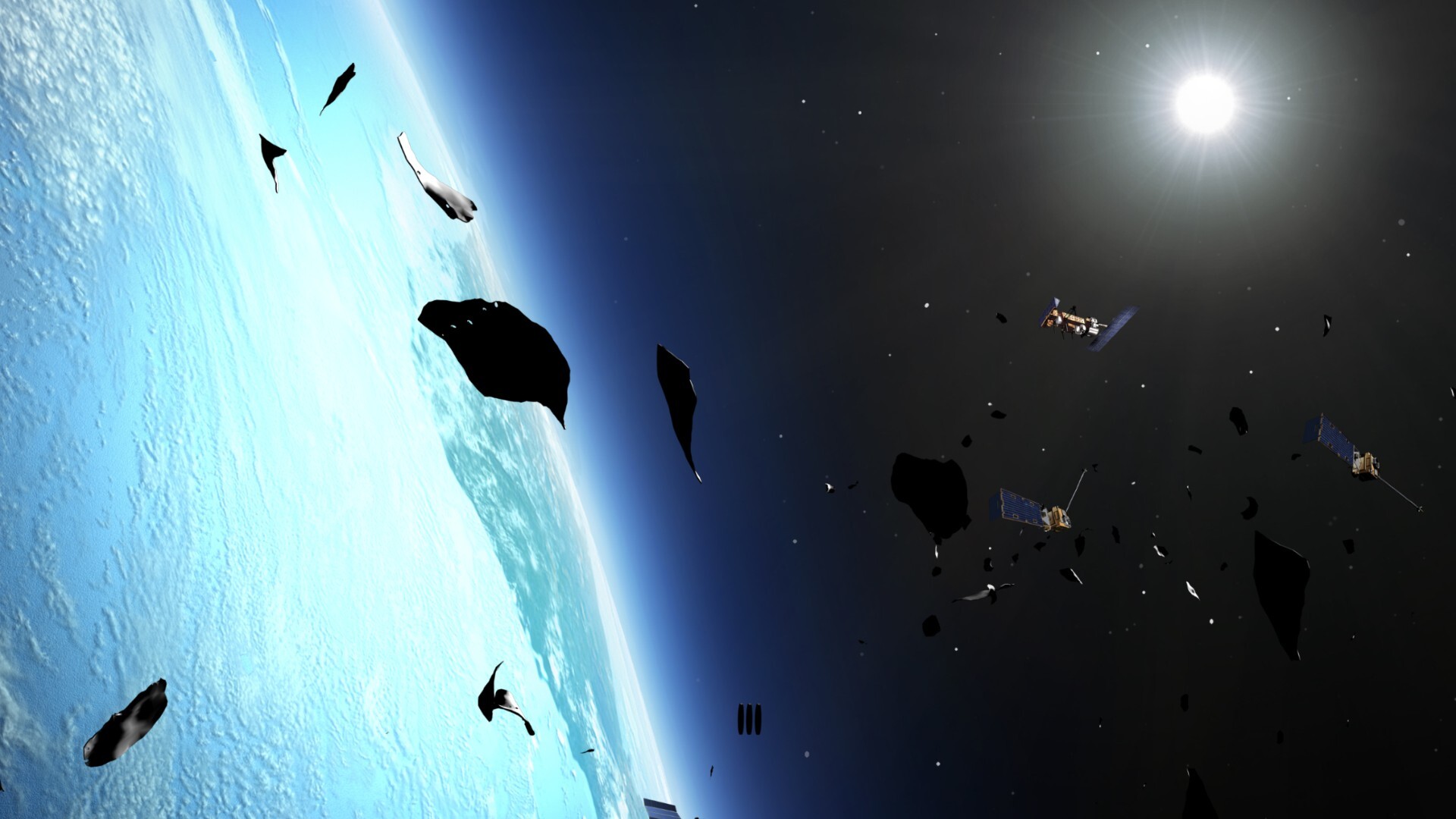
Illustration of space junk around Earth. Space junk consist of debris left in orbit from space missions: abandoned or broken satellites, satellite pieces, tools dropped by astronauts, or even space rocks captured into Earth orbit. (Image credit: Mark Garlick/Science Photo Library/Getty Images)

Looking ahead, the field of in-orbit servicing and debris removal is diversifying rapidly. Steimle says agencies and private companies across Europe, the United States and Japan are developing competing capture technologies and mission architectures.

Low-Earth orbit operations will likely favor agile, highly maneuverable vehicles capable of complex rendezvous and stabilization tasks. GEO missions, by contrast, will involve larger, less dynamic spacecraft performing long-duration servicing and relocation.

What remains consistent is the guiding principle: do no harm to the orbital environment. There's little room for the improvisational cutting and explosive decompression you see in most space salvage games. Instead, the future of orbital cleanup will depend on autonomy, precision guidance, and tightly controlled interactions with fragile, often unpredictable objects.

Fiction vs. necessity

An artist's illustration of space junk orbiting Earth. (Image credit: NASA)

Perhaps tellingly, most space cleanup games focus on the economy of salvage. You're tasked with generating profit, or feeding it into a progression system to purchase new tools or more efficient methods of destruction. In reality, the immediate challenge is more conservative and more urgent: preventing a runaway cascade of collisions that could close off access to space altogether.

If anything, the contrast highlights just how precarious Earth's orbital environment has become. The fantasy is not that we can break things apart in space; it's that we can continue to use space safely without cleaning up the vast constellations of trash we've already left behind.

Move over He-Man, Mattel’s Major Matt Mason space toys could still be blasting off for Hollywood

As evidenced by Paramount's live-action "Transformers" movies and the recent "Masters of the Universe" film released by Amazon MGM Studios, nostalgic toy lines can serve as fertile grounds for a variety of engaging Hollywood projects leaning into vintage intellectual properties.

With Mattel ramping up their own film production efforts and toy-to-screen endeavors after enormous success with "The Barbie Movie" and hi-octane plans for Hot Wheels movies rolling into theaters, the toys-to-silver screen craze shows no sign of slowing down. What could be next? We think there's a perfect choice hiding in the Mattel goldmine that might just become the next big thing.

We're of course talking about Major Matt Mason, that Plastisol astronaut action figure and kids' playset product line from the 1960s, which is celebrating its 60th anniversary this year.

Born during the heat of America's space race with NASA's Apollo program aiming for the lunar landing by the end of the decade, Mattel's design masterminds found inspiration in visionary space concept artists' wild dreams of futuristic moon bases, lunar buggies, and space vehicles.

Major Matt Mason was one of the first serious space toys to exist in the marketplace, first hitting the shelves of toy shops and department stores across the country in 1966.

Capitalizing on the daily news stories of Gemini missions and Apollo moon-walking dreams, this spacefaring fellow and his astronaut pals let kids everywhere imagine their own colorful cosmic adventures.

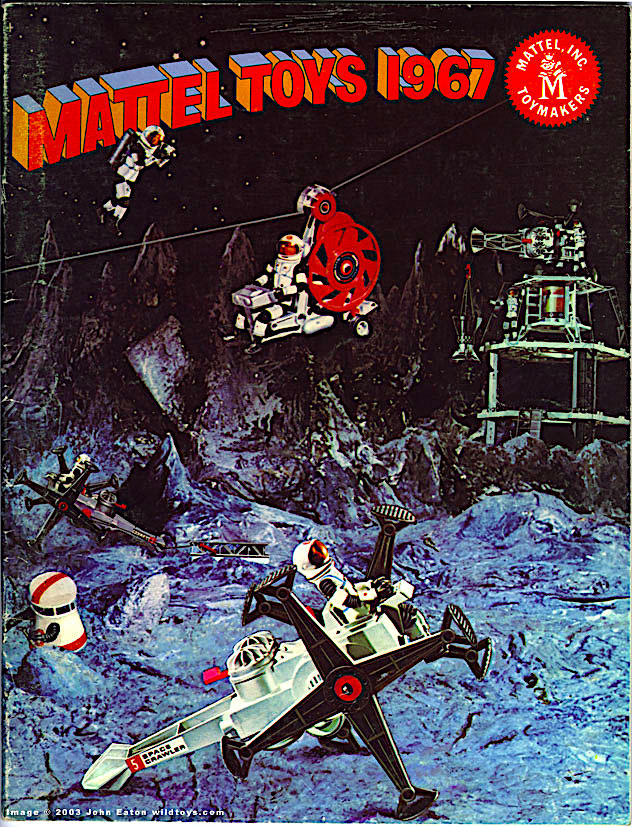
The expanded line of Major Matt Mason's vehicles and playsets shown in a 1967 catalog. (Image credit: Mattel)

Back in 2019, Variety reported that Tom Hanks was attached to star in a Major Matt Mason live-action film being set up at Paramount Pictures with Akiva Goldsman ("A Beautiful Mind," "The Da Vinci Code") hired to write the screenplay.

Hanks is an enthusiastic advocate of NASA history after starring in "Apollo 13" and co-executive producing the Emmy Award-winning HBO docuseries "From The Earth To The Moon" alongside "Band of Brothers" super producer Graham Yost. Despite the heavy hitters attached, momentum has since stalled on the sci-fi project and it's sadly been shelved for the immediate future.

A catalog page for a line of space toys.

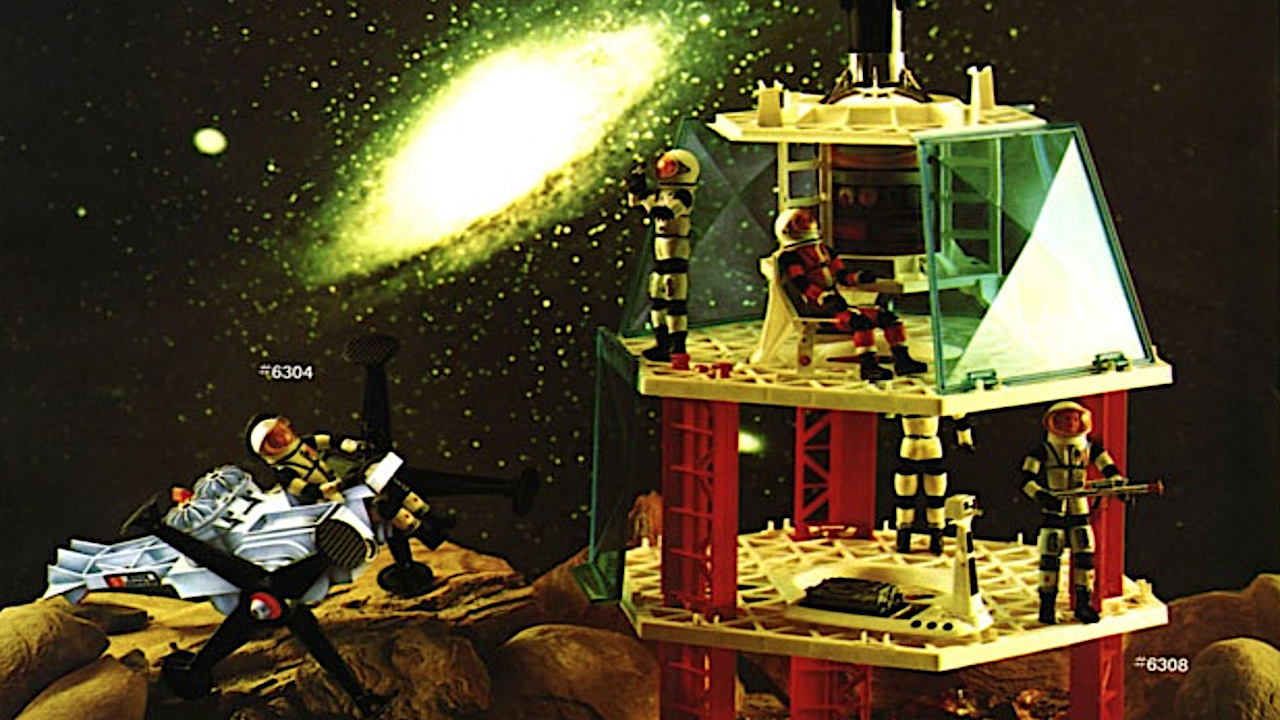
Matt Mason and his astronaut buddies score their own space station. (Image credit: Mattel)

Matt Mason's line-up of bendy 6-inch astronaut action figures was developed as a competitor to Hasbro's 12-inch G.I. Joe toys that ruled the marketplace in the mid-60s.

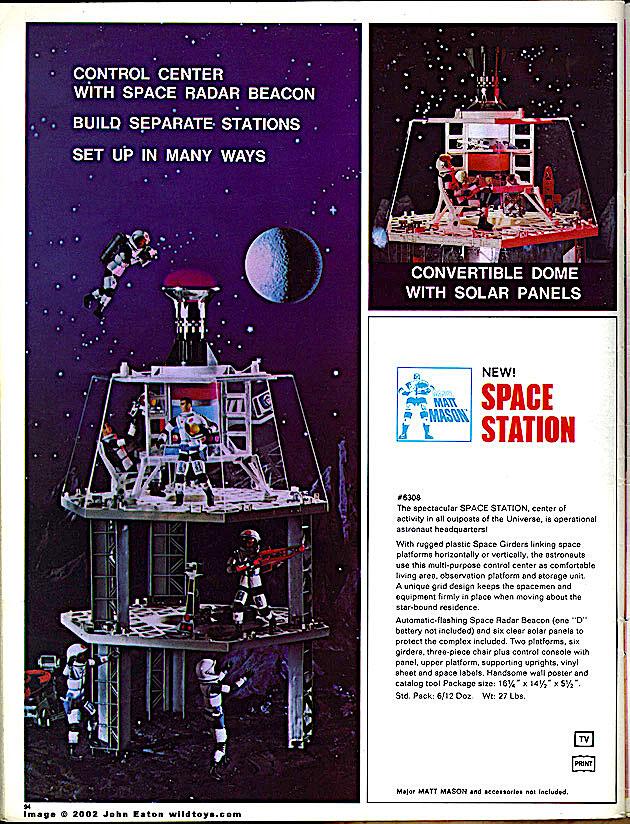
Along with Matt's fellow rubberized space buddies — available in a variety of color-accented spacesuits — Mattel also offered a complete universe to create your own space outpost and ramped lunar headquarters, alongside accessory vehicles, moon gear, expansive playsets, and Matt's "allies from the stars": A purple-and-pink creature called Scorpio, and a green-skinned friendly Jovian alien called Callisto.

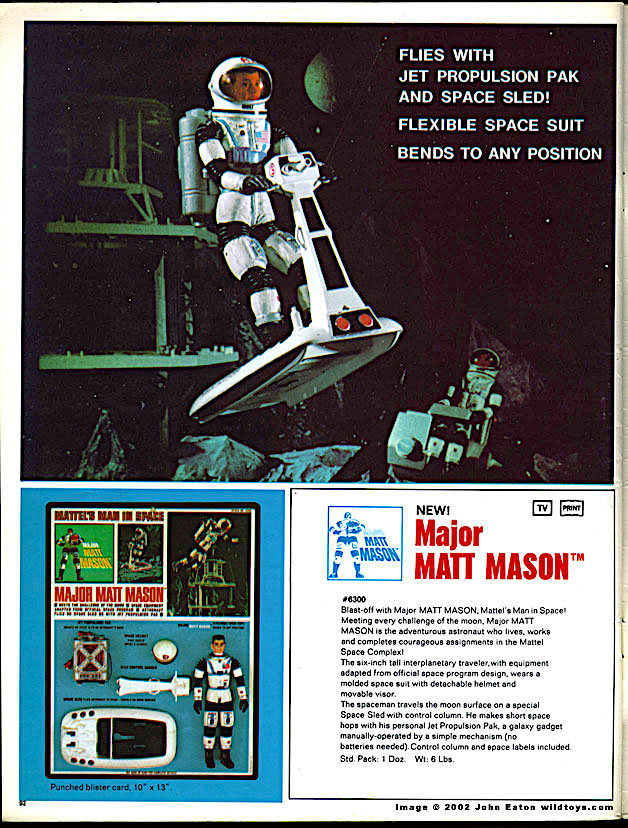
Some of Major Matt Mason's retro-cool lunar accessories included a jet propulsion pak and space sled. (Image credit: Mattel)

With the Vietnam War raging in Southeast Asia and televised on the nightly news, Major Matt Mason blasted into Sears and JCPenney catalogs when soldier action figures were losing their appeal.

He wasn't a gun-toting commando but a heroic explorer "ready and able to cope with any space task or fierce danger." In addition to the action figures and peripheral playsets, Matt Mason became a pop culture phenomenon with his own board game, coloring books, lunch boxes, and puzzles.

Named after Mattel's co-founder Harold "Matt" Matson, the Matt Mason line carried a certain air of authenticity as many of its designers happened to be former aerospace engineers. Some of the toys' far-out designs were taken straight out of NASA conceptual art and prototypes seen by millions in the pages of Popular Mechanics, Life, and National Geographic magazines.

Matt Mason's space station could be built in many different ways. (Image credit: Mattel)

But, the general public is difficult to please for any extended period of time and following the triumphant Apollo 11 moon landing in July of 1969, space toys faded in interest. Just one year later, Major Matt Mason was no more, destined only to be coveted decades down the line as valuable collectors items .

As NASA ramps up their Artemis program with 2027's Artemis 3 mission, before an Artemis 4 moon landing set for 2028, and the space agency doubling down on plans for a recently announced permanent lunar base, can there be any better time for Hollywood moguls to resurrect this cool project for a fantastic, retro-styled Major Matt Mason movie or TV series?

It's certainly a better idea than a Matchbox movie.

This Week In Space podcast: Episode 221 — Starship Can Float?

On Episode 221 of This Week In Space, Tariq Malik and guest host Rick Jenet of the National Space Society talk about SpaceX's Starship Flight 13, which deployed new Starlink V3 satellites and stunned viewers when the ship survived reentry intact enough to float in the ocean for days afterward.

They also discuss NASA's Roman Space Telescope, now just a month from launch, and an in-progress emergency effort to save the ailing Swift Space Observatory using a servicing spacecraft that is itself now experiencing technical trouble. Finally, they look into Boeing's continued Starliner delays and India's first successful private orbital launch via Skyroot Aerospace's Vikram-1 rocket. Tune in!

Download or subscribe to this show at: https://twit.tv/shows/this-week-in-space.

Get episodes ad-free with Club TWiT at https://twit.tv/clubtwit

Space news of the week

Model Falcon 9!

TOP TELESCOPE PICK:

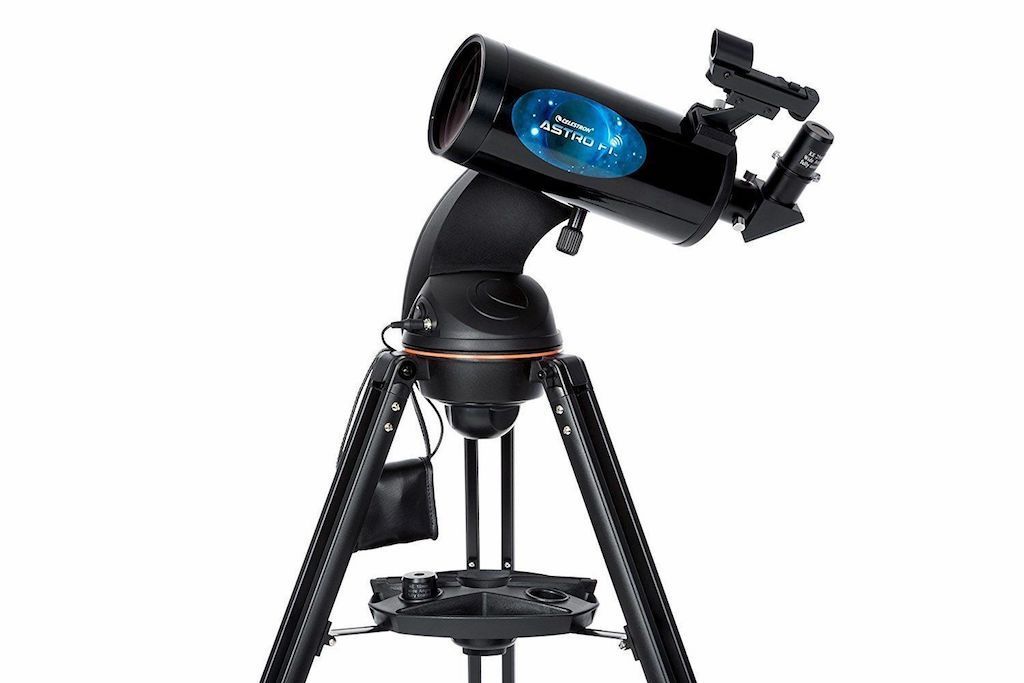
A Celestron telescope on a white background

(Image credit: Celestron)

Looking for a telescope to see planets and comets? We recommend the Celestron Astro Fi 102 as the top pick in our best beginner's telescope guide.

Finally, did you know you can launch your own SpaceX rocket? Model rocket maker Estes' stunning scale model of a Falcon 9 rocket that you can pick up now. The launchable model is a detailed recreation of the Falcon 9 and retails for $149.99. You can save 10% by using the code IN-COLLECTSPACE at checkout, courtesy of our partners collectSPACE.com.

About This Week In Space

This Week in Space covers the new space age. Every Friday we take a deep dive into a fascinating topic. What's happening with the new race to the moon and other planets? When will SpaceX really send people to Mars?

Join Rod Pyle and Tariq Malik from Space.com as they tackle those questions and more each week on Friday afternoons. You can subscribe today on your favorite podcatcher.