Scientists discover mysterious new X-ray objects ‘unlike any they have seen before’

NASA's Chandra X-ray Observatory has found a brand new type of an otherwise familiar object – compact binary systems that steal gas from other stars, but which do so while emitting very low-energy X-rays but copious amounts of ultraviolet.

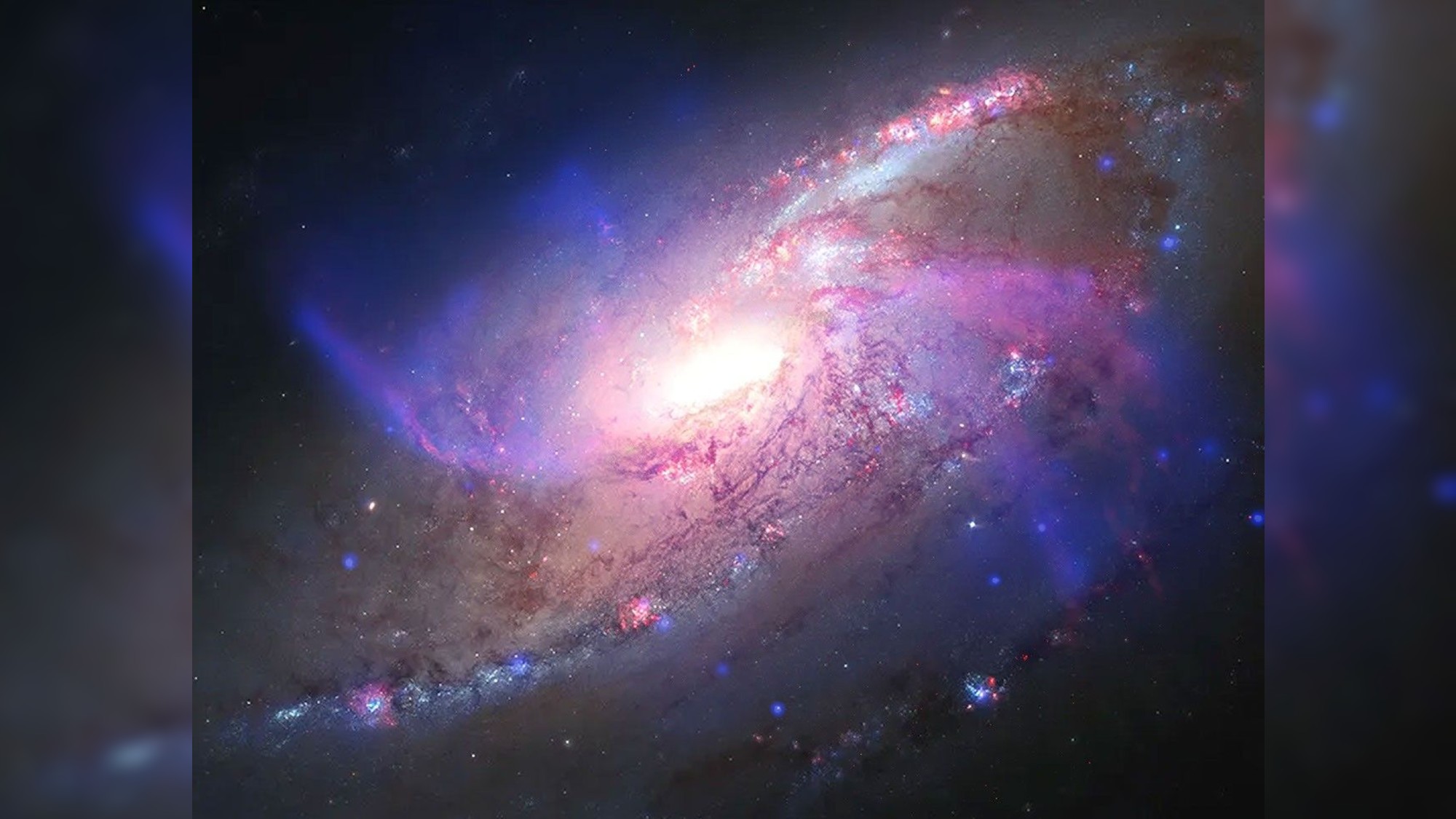
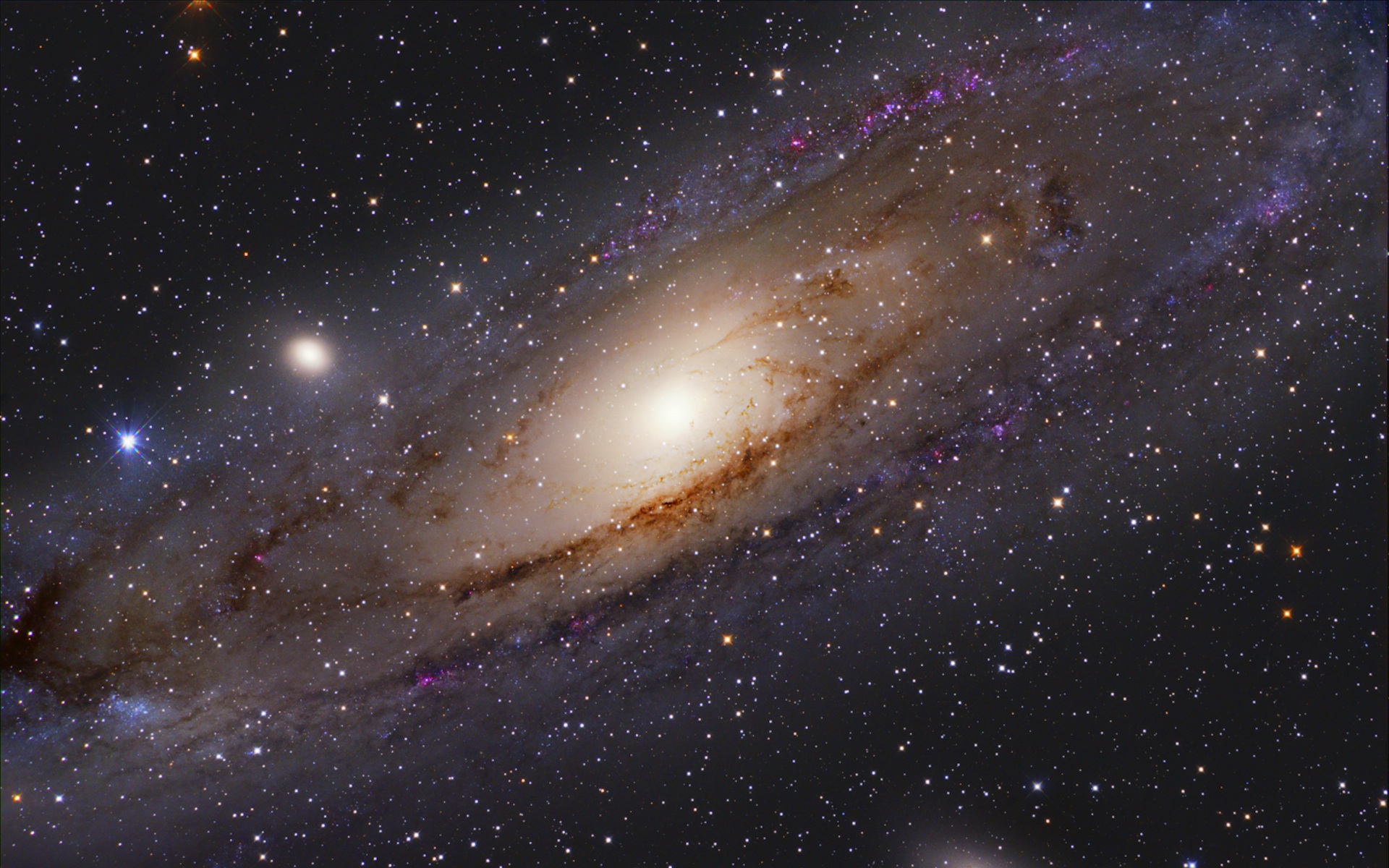
Chandra spotted 84 suspicious object emitting very low-energy X-rays in six galaxies – four evolved ellipticals and two spirals, namely our near-neighbor the Andromeda Galaxy (M31) and the Pinwheel Galaxy (M101).

"We've never encountered a group of objects that act like this," said Mustafa Muhibullah of the University of Alabama in a statement.

Compact objects, in the form of black holes, neutron stars and white dwarfs, are the remains of stars that have died. Their small size and powerful gravity means that they're adept at getting close to orbiting companion stars and ripping the stars' outer layers of gas away. The gas swirls around the compact object, falling onto its surface, and this accretionary process usually produces torrents of high-energy X-rays because the stolen gas becomes superheated by the compact object's gravitational vice-like grip.

Because of their weak X-rays, Muhibullah's team refer to them as 'hypersoft X-ray sources'. Since low-energy X-rays and ultraviolet light are next to each other on the electromagnetic spectrum, Muhibullah and his team suspect that the low-energy X-rays are spillover from objects emitting prodigious amounts of ultraviolet. Moreover, they think that these objects are lower-level compact binaries.

They're hard to find though, because the interstellar medium of hydrogen and helium gas between the stars absorbs ultraviolet light. This could be why we have yet to find any hypersoft X-ray sources in our own galaxy, because we have to look through the interstellar medium through the plane of the Milky Way.

Consequently, there could be a large population of hypersoft X-ray sources that remain undiscovered and they could have an important effect on the universe around them.

"These clandestine X-ray sources are actually among the most energetic objects in galaxies, and they could be solving two cosmic mysteries at once," said Muhibullah.

The interstellar medium is filled with ionized gas where atoms have been shorn of electrons. Hot, massive stars do output a lot of high-energy ultraviolet light, but there are not enough of these stars to account for all the ionization. If hypersoft X-ray sources are dumping torrents of ultraviolet into space, they could explain the ionization instead. For stars to form, gas has to be cold and not ionized, so hypersoft X-ray sources could be gently regulating star formation within galaxies.

The second mystery is the puzzle over how exactly type Ia supernova explosions detonate. We know that they are fueled by white dwarfs accreting matter from a close companion star and, once the accumulated matter raises the white dwarf's mass beyond 1.44 times the mass of our sun – known as the Chandrasekhar limit – it explodes, but the details of what on the white dwarf actually ignites and how are fuzzy.

Studying a new breed of compact binary might finally reveal the answers and offer more clues about when white dwarfs become ready to explode.

"If we could find a way to spot these type Ia supernova explosions before they go off, that would be really important," said Jimmy Irwin of the University of Alabama, who is a member of Muhibullah's team. "Right now, we study them after they've exploded and astronomers have struggled to understand what is actually ignited."

Since type Ia supernova explosions are used as markers on the cosmic distance ladder, used for measuring the strength of dark energy and the expansion of the Universe, the benefits from understanding them better are clear to see in our efforts to understand how the Universe is evolving.

The findings were published on Sept. 9 in Nature Astronomy.
Galaxies tangled in science and spirit | Space photo of the day for Sept. 7, 2026

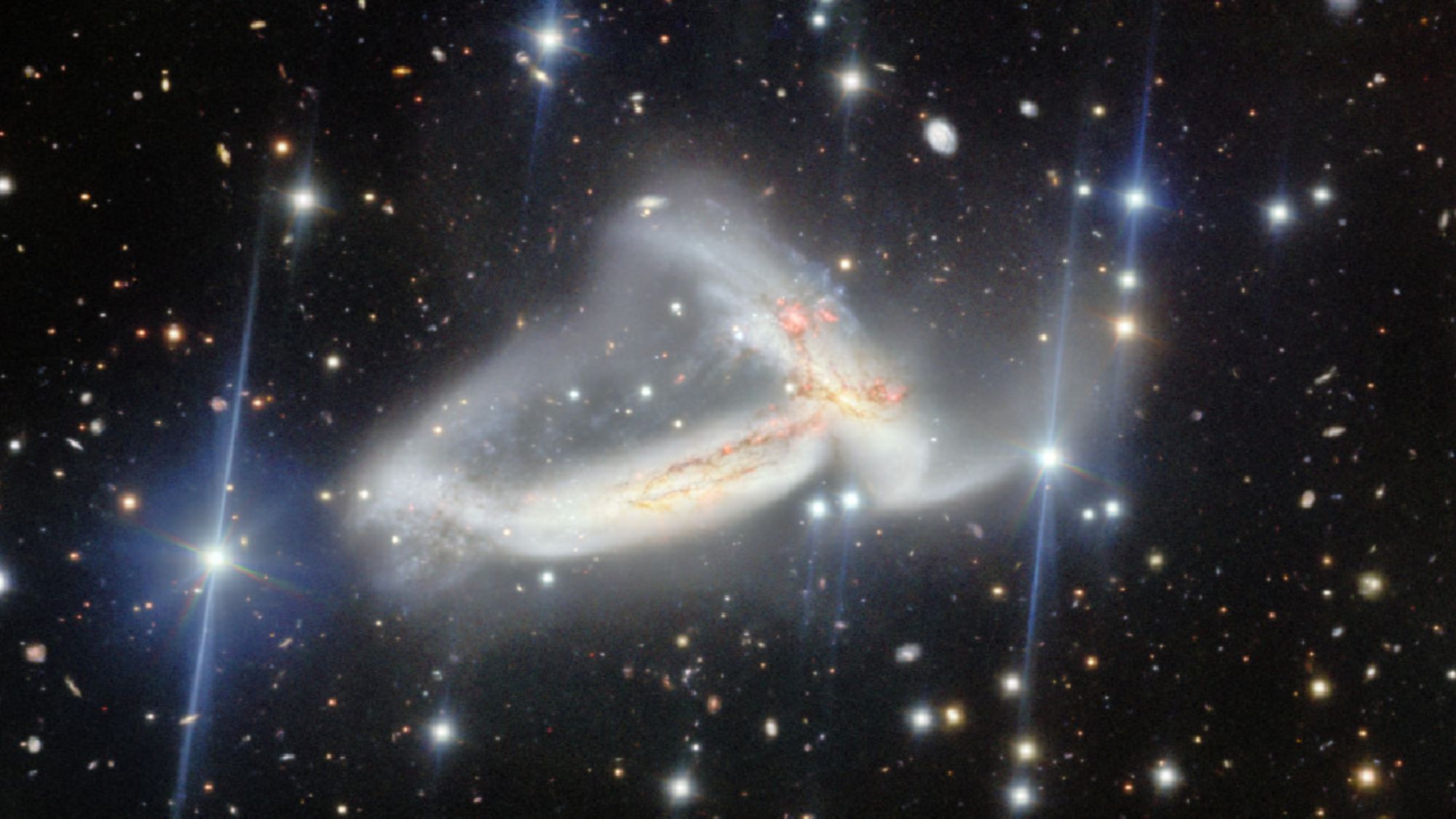
A dark scene with glowing dots on top of it. In the center, there are two wispy galaxies that look tangled in one another.

Nā 'Uhane Māhoe Huki Pū i ke Ola is the Hawaiian name given to this image of NGC 7253 — a pair of spiral galaxies caught in each other's gravity. This image was captured by the Gemini North telescope on Maunakea. (Image credit: International Gemini Observatory/NOIRLab/NSF/AURA)

It is nearly impossible to fathom the entirety of a single galaxy — these realms can span hundreds of thousands of light-years, and sometimes are even millions of light-years across. So imagine the grandeur of now one but two galaxies tangled together, in the process of merging into one. That's what you're seeing in today's featured image.

What is it?

The merging galaxies shown above were discovered by a group of students using the Gemini North Telescope, located on the Maunakea volcano in Hawaii — a very popular and often controversial location for ground-based telescopes. The students hailed from two local institutions, Waiākea High School and the Volcano School of Arts and Sciences, and had access to the telescope with the Project Hōkūlani internship.

They named their discovery Nā 'Uhane Māhoe Huki Pū i ke Ola, which translates to "The Twin Spirits Pulling Together Creating Life."

"'Uhane (spirit) was an important theme for our group. Our experiences throughout the week — 'oli (stargazing), visiting the summit and learning about the awesome scientific discoveries made possible by Maunakea — ignited our own spirits as we prepare for life after high school," Samantha Silva-Sampaio, one of the students, said in a statement.

The students also explain how the rest of the name fits in with their time at Gemini North. "Huki Pū," they say, has to do with the physical aspect of the two galaxies being pulled together, just like communities coming together to enable the discovery as a whole. And "i ke Ola" is meant to show that life can be created from interacting galaxies because this process gives rise to star birth, and hopefully we'll find a star besides the sun one day that hosts life on a world around it.

Why is it incredible?

The galaxy merger depicted in the image is formally known as NGC 7253 and is located around 200 million light-years from Earth in the constellation Pegasus. This region is also known as the Hawaiian constellation Ka Lupe o Kawelo.

What's especially spectacular about the image we see above is how sharply defined both galaxies appear during their gravitational interaction. It is also a treat to be able to live in a time when we can view an event happening so utterly far away with this much detail.

Galaxy mergers aren't a new thing, though. They occur all across the universe, and indeed even the Milky Way and our neighboring galaxy Andromeda are expected to collide (or maybe not?) at some point in the future. But not to fear — though it may not seem it from this image, within every galaxy is, well, a lot of space. So much so that it'd be surprising for anything in the colliding galaxies to actually smash together.

What does happen, however, is enchanting. All the interstellar gas and dust from both galaxies join together and lead to a spike in star formation. This means a ton of beautiful sparkles should decorate the final product of NGC 7253.

"'Uhane in this image reminds us that astronomy is not just science or spirit; it's both at the same time," Manu Silva-Sampaio, another one of the student discoverers, said in the statement.

Scientists detect signals of hydrogen from billions of years ago. Could this help us map out the universe?

Astronomers have used the MeerKAT radio telescope to detect hydrogen gas billions of light-years away from us — from a period when the cosmos was billions of years younger than its current age of 13.8 billion years.

The research may provide astronomers with a new way of mapping the large-scale structure of the universe. The technique would rely on charting out where hydrogen, the universe's lightest and most abundant element, is located across the cosmos. It's known as hydrogen intensity mapping.

Neutral hydrogen emits a faint radio signal that astronomers call the 21-centimeter line. As the cosmos expands under the influence of dark energy, the wavelength of this radio signal is stretched, or "redshifted." The extremity of the redshift allows astronomers to determine how long a particular signal has been travelling to us and thus what period of the universe the hydrogen that emitted it existed in.

Using the 21-centimeter line, hydrogen intensity mapping allows astronomers to trace radio emissions from hitherto unseen galaxies and build a 3D picture of the largest structures in the universe. Up until this point, however, this technique has relied on combining radio wave detection with observations from galactic surveys operating with visible light, or electromagnetic radiation our eyes have evolved to see.

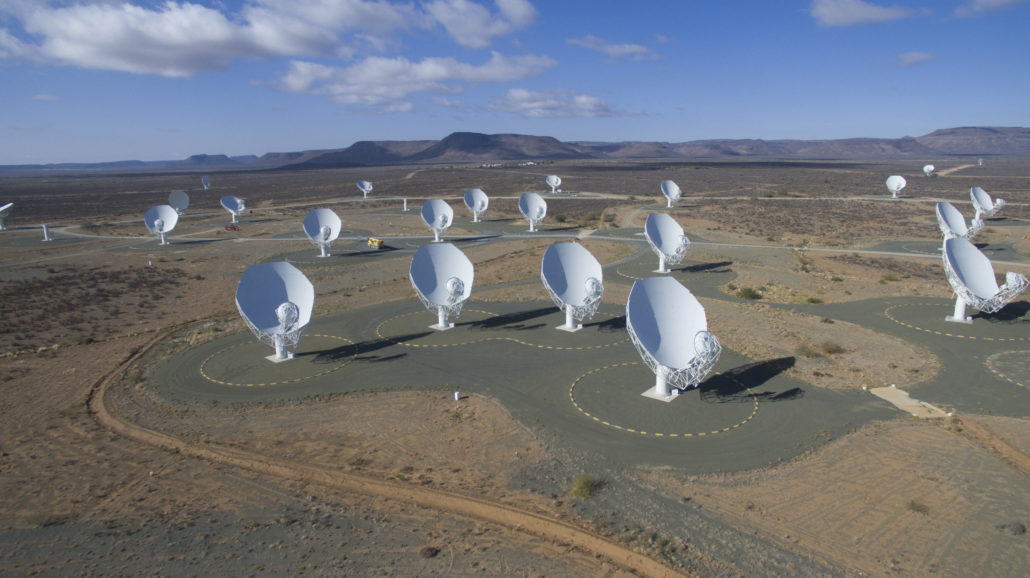
This new research defies that trend, building a hydrogen intensity map using radio waves detected by the MeerKAT radio telescope, made up of 64 antennas in the Meerkat National Park in the Northern Cape of South Africa.

"This is a very exciting milestone," team leader Sourabh Paul said in a statement. "Hydrogen intensity mapping has long been seen as a promising way to map the universe efficiently, but the signal is extremely faint and difficult to isolate from foreground emission, human-made radio-frequency interference, and instrumental effects.

"Detecting it directly with MeerKAT shows that this technique is becoming a practical tool for cosmology."

Mapping with MeerKAT

The team behind this research analyzed around 96 hours of MeerKAT observations, finding signals from hydrogen dating back 4 billion to 5 billion years. This hydrogen spans distances of many million light-years, similar to the distance between the Milky Way and our neighbor galaxy, Andromeda.

The achievement represents a step forward in the usefulness of hydrogen mapping.

"Neutral hydrogen is one of the key ingredients for understanding how galaxies form and evolve," team member Zhaoting Chen of the University of Edinburgh said in the statement. "With intensity mapping, we do not need to detect every individual galaxy. Instead, we can measure the collective signal from hydrogen across large cosmic volumes, giving us a new way to study both galaxy evolution and the underlying matter distribution of the universe."

Future cosmological surveys could greatly benefit from the advancement of hydrogen mapping. This will be a major factor when the Square Kilometre Array Observatory (SKAO), currently under construction in the Murchison region of Western Australia and the Karoo region of South Africa.

An overhead view of South Africa's MeerKAT radio-telescope array while it was under construction. The 64-dish network was inaugurated in July 2018.

An overhead view of South Africa's MeerKAT radio-telescope array. (Image credit: SKA South Africa)

"MeerKAT continues to open new windows for cosmology," team member Laura Wolz of the University of Manchester in the U.K. said in the statement. "The fact that this signal can be extracted from observations that were not originally designed for hydrogen intensity mapping is very encouraging. It shows the enormous scientific value of MeerKAT data and points the way to future observations with SKAO."

The team will now focus on collecting further observations with MeerKAT that cover larger areas of the sky over longer periods of time. This should provide astronomers with even more detailed hydrogen maps that could, in time, help understand how the largest structures in the cosmos took shape over the course of billions of years.

"This was a challenging data analysis process, requiring a detailed understanding of the many sources of contamination that can affect such a faint measurement," team member Mario G. Santos of the University of the Western Cape, Australia, said in the statement. "It is particularly remarkable that the data used in this study were taken in 2018, when MeerKAT had only just started science operations.

"There is now a rich trove of MeerKAT data waiting to be explored with this method."

The team's research was published in the July edition of The Astrophysical Journal Letters.

On Cloud 9: Have astronomers discovered the first starless galaxy?

Scientists are closer than ever before to confirming that a galaxy known as "Cloud 9" is the first "starless" or "failed" galaxy ever discovered by humanity.

A starless galaxy is one with virtually no stars despite possessing a wealth of gas and dust that would normally serve as the building blocks of stars. The dominant element of a starless galaxy would be dark matter, the mysterious "stuff" that remains effectively invisible because it doesn't interact with light.

Located 14 million light-years away near the spiral galaxy Messier 94 (M94), Cloud 9 is currently the best candidate for a starless galaxy humanity has discovered to date. It contains a vast cloud of hydrogen gas with an estimated mass of 1 million times that of the sun, and dark matter with around 5 million solar masses. Yet, the Hubble Space Telescope discovered in January this year that Cloud 9 emits virtually no starlight.

"But the most striking aspect of our research was the absolute emptiness of the image at the location of Cloud 9. When you look at an image reaching those depths and see nothing where a structure containing a million solar masses of gas should be, it is genuinely remarkable," team leader Ignacio Trujillo of the Instituto de Astrofísica de Canarias, Spain, told Space.com.

"Most objects in the universe leave some trace of light. Cloud 9 does not. That silence is, in its own way, the most compelling result we could have obtained."

On the hunt for a failed galaxy

Trujillo explained that despite having enough raw material to build a small galaxy, Cloud 9 seems to have never formed any significant stellar population.

"That combination — gas but no stars, sitting in a relatively normal environment — makes it one of the most compelling candidates for what theorists call a 'dark' or starless galaxy," Trujillo added. "The concept has been theoretically predicted for decades, but observationally confirmed cases remain elusive.

"The difficulty is obvious: if there are no stars, there is no visible light to detect, and the only way to find such objects is through their gas emission — typically neutral hydrogen observed at radio wavelengths — combined with extremely deep optical imaging to rule out the presence of even a faint stellar component."

wisps of colored light on a black background

A close up of the starless galaxy Cloud 9 (Image credit: Trujillo et al)

Trujillo and colleagues set about investigating Cloud 9 using the HiPERCAM camera on the Gran Telescopio Canarias, the world's largest optical telescope. This led to them obtaining the deepest images ever taken of the Cloud 9 region, approximately ten times deeper than any previous optical imaging of this object. "Honestly, the depth we achieved with HiPERCAM in just 2.36 hours of integration was striking," Trujillo said. What they saw left no questions about the nature of this galaxy.

"The result was clear: we detected absolutely no stellar emission within the region corresponding to the location of Cloud 9," Trujillo said. "Assuming an old, metal-poor stellar population — which would be the hardest kind to detect — we can set an upper limit on the total stellar mass of just 16,000 solar masses.

"Cloud-9 appears to be, within the limits of our observations, genuinely starless."

Why do some galaxies 'fail?'

Though starless galaxies are on the verge of escaping the realms of the purely theoretical thanks to this investigation of Cloud 9, how they form is still something of a puzzle.

However, scientists do have a pretty solid idea of how a galaxy could take shape without birthing stars.

"The leading theoretical explanation involves the ultraviolet background radiation that permeates the universe," Trujillo said. "After the epoch of reionization, this radiation field heats the gas in low-mass dark matter halos to temperatures high enough that the gas cannot cool efficiently and collapse to form stars."

The researcher added that simulations of this period of the cosmos predict that dark matter halos below a certain mass threshold, around 5 billion solar masses, should remain essentially starless.

"Cloud 9 has a halo mass consistent with this regime. In this picture, starless galaxies are not exotic anomalies but a natural and abundant prediction of standard cosmological models," Trujillo explained. "The challenge has simply been finding them."

a cloud of multi-colored light on a dark starry background

An illustration of a dark starless galaxy dominated by dark matter and gas. (Image credit: Robert Lea (created with Canva))

As impressive as these results are, the jury is still out on Cloud 9 as a starless galaxy. Further investigation will be needed before scientists can firmly declare they have discovered the first starless galaxy.

"On the stellar side, deeper space-based imaging would be particularly valuable because resolving individual stars avoids many of the problems associated with diffuse-light measurements," Trujillo concluded.

"Hubble has already provided extremely strong evidence, and future facilities such as the James Webb Space Telescope (JWST) could potentially push the search further, although the optimal filters and stellar tracers would need to be carefully chosen."

The team's research is available on the paper repository site arXiv.

Glowing galaxy with anomalous extra arms | Space photo of the day for Aug. 27, 2026

a colorful swirl of light on a black background

An image of this spiral galaxy NGC 4258 that combines X-ray observations from NASA's Chandra X-ray observatory (seen here in royal blue), optical light gathered by the Hubble Space Telescope (red, yellow and pale blue), and infrared light seen by the James Webb Space Telescope (bright orange). (Image credit: X-ray: NASA/CXC/SAO; Optical: NASA/ESA/STScI; Infrared: NASA/ESA/CSA/STScI; Image Processing: NASA/CXC/SAO/L. Frattare)

A trio of NASA space telescopes teamed up to capture a gorgeous new look at the glowing spiral galaxy NGC 4258 and its two anomalous extra arms.

What is it?

This image shows NGC 4258, also known as Messier 106, a spiral galaxy located some 24 million light-years away in the constellation Canes Venatici, the "Hunting Dogs." It is a fairly bright galaxy and can be viewed in the spring sky in the Northern Hemisphere with most telescopes.

Messier 106 is noteworthy for having two "anomalous" extra arms, the long curved regions of bright gases, dust and young stars that are characteristic of all spiral galaxies. But while most spiral galaxies have only a pair of arms, Messier 106 has two pairs. According to NASA, the extra set is composed of hot gases that are churned away from the galactic center by the supermassive black hole at the heart of NGC 4258.

Why is it incredible?

This image shows off the incredible teamwork that NASA's flagship orbital observatories can pull off. It combines X-ray observations from NASA's Chandra X-ray observatory (seen here in royal blue), optical light gathered by the Hubble Space Telescope (red, yellow and pale blue), and infrared light seen by the James Webb Space Telescope (bright orange).

By combining multiple types of light into one image, NASA is able to reveal the complete picture of what this energetic galaxy is made of.

The image also shows the incredible power of the black holes found at the centers of galaxies. "M106 helps show how supermassive black holes can create structural features that mimic star-bearing spiral arms, influencing a galaxy's evolution," NASA wrote in a statement accompanying the image.

This image was part of a NASA release of 16 new "galactic gems" captured by Chandra and other observatories.

The earliest galaxy ‘swallowed’ by the cannibal Milky Way left a scar at its heart

The Milky Way has something of a torrid and violent history, given that our galaxy has fueled its own growth by cannibalistically devouring smaller galaxies. Now, astronomers have discovered evidence of our galaxy's earliest bout of cannibalism in the form of "scarring" at the heart of the Milky Way left behind by a galactic morsel it devoured around 12 billion years ago.

Working as part of the ARMA (Cluster Ages to Reconstruct the Milky Way Assembly) project, the team behind this discovery used dense conglomerations of ancient stars called globular clusters to find traces of a merger that occurred around 1.8 billion years earlier than the previously earliest known event of this type.

Prior to this, the history of the Milky Way colliding and merging with both smaller and larger galaxies had only been reconstructed up to around 10 billion years ago, around 3.8 billion years after the Big Bang. The earliest bout of cosmic cannibalism involved the collision with and consumption of the dwarf galaxy Gaia-Enceladus about 10 billion years ago. That means the earliest history of the Milky Way was, until now, shrouded in mystery.

"This work tells us what happened to the Milky Way in its infancy," team member Chiara Zerbinati of the Department of Physics and Astronomy at the University of Bologna, Italy, said in a statement. "It sheds light on a particularly significant event that influenced the entire subsequent evolution of the galaxy. If one of humanity's great questions is 'where do we come from?', we offer at least a piece of the answer."

A helping hand from Hubble

The key development in the quest to delve further back into the history of the Milky Way was delivered by the Hubble Space Telescope.

"We started with the ambition of reconstructing the assembly history of the Milky Way, that is, all the galactic merger events that led to its current appearance," team leader Davide Massari of the Italian Institute for Astrophysics (INAF) said. "We used globular clusters as tracers: especially in the inner regions of the galaxy, where extinction is highest, they are the only objects for which we can obtain excellent measurements of both orbital motion and age."

Astronomers developed a technique using Hubble data that allowed them to discover the ages of globular clusters with a far greater precision than had ever been possible before. This revealed that the globular clusters at the heart of our galaxy can be categorized in three distinct ways based upon their age and their metallicity, a measure of elements heavier than hydrogen and helium, which astronomers refer to as metals.

One group of globular clusters could be linked directly to the Gaia-Enceladus merger; one belonged to the original Milky Way; but there also existed a third group distinct enough from the other two groups that it must have come from some hitherto undiscovered merger event.


NGC 6397 as seen by Euclid. This is the second closest globular cluster to Earth, located about 7,800 light-years away.

NGC 6397 as seen by Euclid. This is the second closest globular cluster to Earth, located about 7,800 light-years away. (Image credit: ESA/Euclid/Euclid Consortium/NASA, image processing by J.-C. Cuillandre (CEA Paris-Saclay), G. Anselmi)

The team was able to deduce some things about this doomed galaxy from this third group of globular clusters. They found the unfortunate galaxy had around the same mass as Gaia-Enceladus, about 500 million times the mass of the sun. For comparison, the Milky Way today has a mass of around 1.5 trillion solar masses.

The researchers also found that most of the matter from this devoured dwarf galaxy was dumped into the Milky Way within 20,000 light-years of our galaxy's heart. They also gave a name to this violent, yet formative cosmic event.

"The final name, Low-energy-Kraken-Heracles (LKH), is an acronym that pays homage to the three papers that first hypothesized the existence of this ancient galactic encounter," Massari concluded.

The team's research was published on Monday, August 17, in the journal Nature Astronomy.

James Webb Space Telescope finds ‘hidden stars’ making the universe’s 1st galaxies much bigger than we knew

Imagine looking at a vast city on Earth from a great distance, knowing nothing about that city; you may assume that its only buildings are the largest, most visible skyscrapers. But, get closer or look with a far more powerful tool, and you would begin to discover smaller buildings between mountainous skyscrapers.

Now, the James Webb Space Telescope has discovered that this looks like that is a fitting analogy for early galaxies.

Astronomers are finding that in between the brightest stars, the 'tallest skyscrapers' in the above analogy, there are much fainter stars analogous to smaller buildings. That means early galaxies may actually have a lot more mass packed into them than we believed.

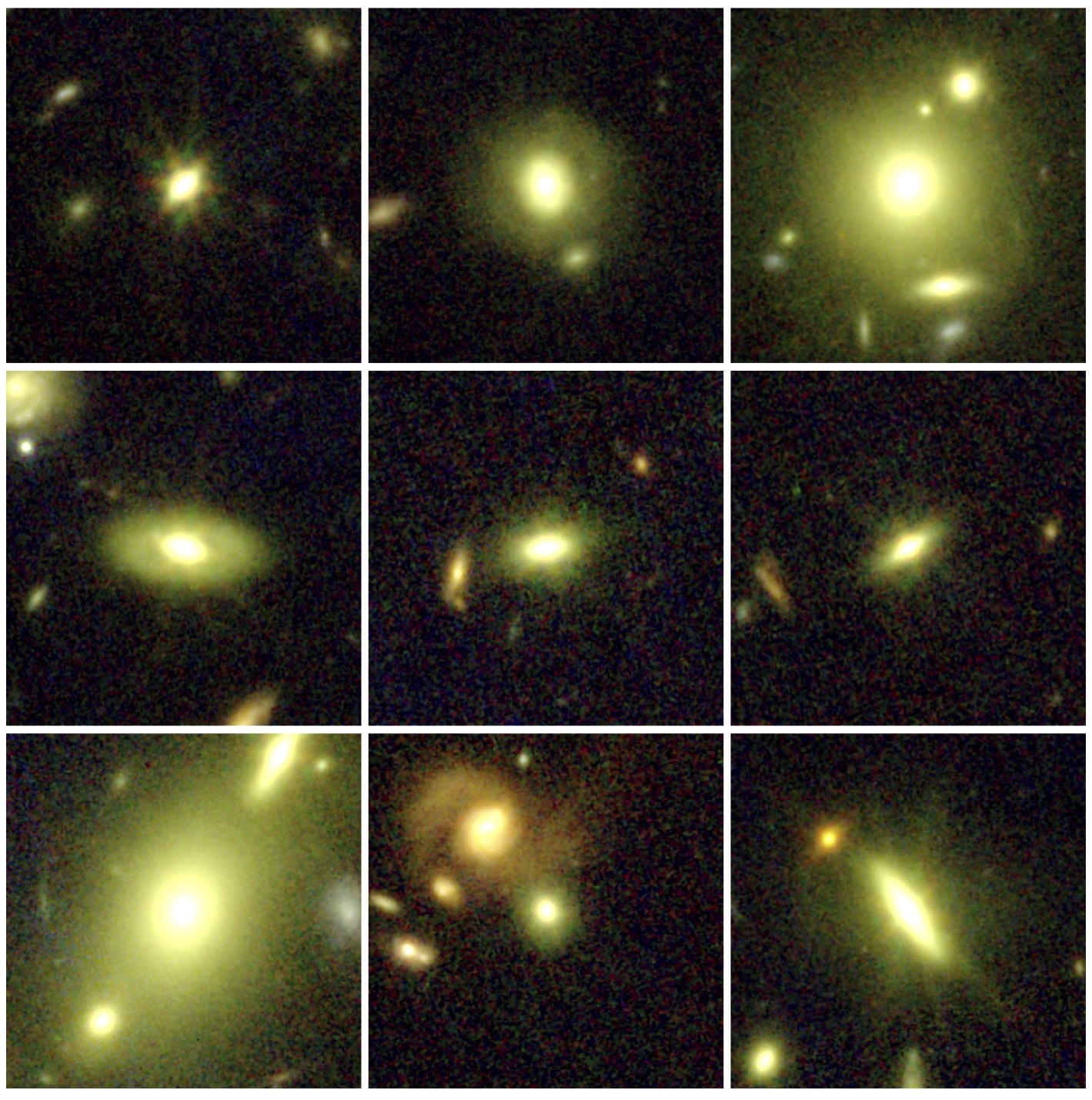
The team behind this research reached this conclusion by using the James Webb Space Telescope (JWST) to study nine early galaxies that have passed through their period of intense star formation. They combined this data with observations from the Very Large Telescope (VLT) here on Earth to measure the population of small and faint stars in these galaxies for the first time. What they found was that the proportion of small stars in these galaxies is much greater than is found in modern galaxies like the Milky Way. This comes as something of a surprise to scientists who have assumed these populations would be similar.

"This means that the galaxy as a whole is much more massive than previous estimates suggested," team member Chloe Cheng of Leiden University, Netherlands, said in a statement.

The first 'cosmic cities' weren't dominated by skyscrapers, it just looks that way

Astronomers study galaxies and calculate their stellar population rates using the total light, or spectrum, coming from these cosmic metropolises. The problem is, the more massive a star is, the brighter it is. Thus, the overall spectrum of a galaxy is dominated by the most massive stars, while smaller stars are drowned out.

The sensitivity of the JWST has allowed astronomers to finally give these smaller stars a chance to shine and stand out, like spotting an incredible piece of architecture in a vast metropolis of glass and steel.

"Until recently, this type of measurement was simply not possible," team member Martje Slob of Leiden University said. "We needed not only a telescope that collects sufficient light, but also spectra of exceptional quality and new analysis techniques to reliably distinguish the subtle features of small stars."

a nine-panel illustration of bright glowing lights on a black background

Nine galaxies studied by the James Webb Space Telescope. Their spectrum reveals that there are many more relatively small stars in these galaxies (Image credit: Cheng et al/ Nature Astronomy 2026)

The team's discovery has implications for our understanding of young galaxies in the early universe. This is because scientists had always assumed the stars of different masses were born in the same proportion across cosmic history. Now that seemingly isn't the case.

That is especially true if more early galaxies are like one particularly striking example examined in this study. This galaxy, which formed less than 1.5 billion years after the Big Bang, contains up to four times the mass previously estimated thanks to its huge population of smaller stars.

Thus, our models of galaxy formation may need some serious revision in the near future.

"This result shows that much more mass than previously thought is hidden in small stars," team leader Mariska Kriek of Leiden University said. "That has implications for all kinds of fields within astronomy. Because many planets orbit small stars, it could even mean that more planets formed in the early universe than we previously assumed."

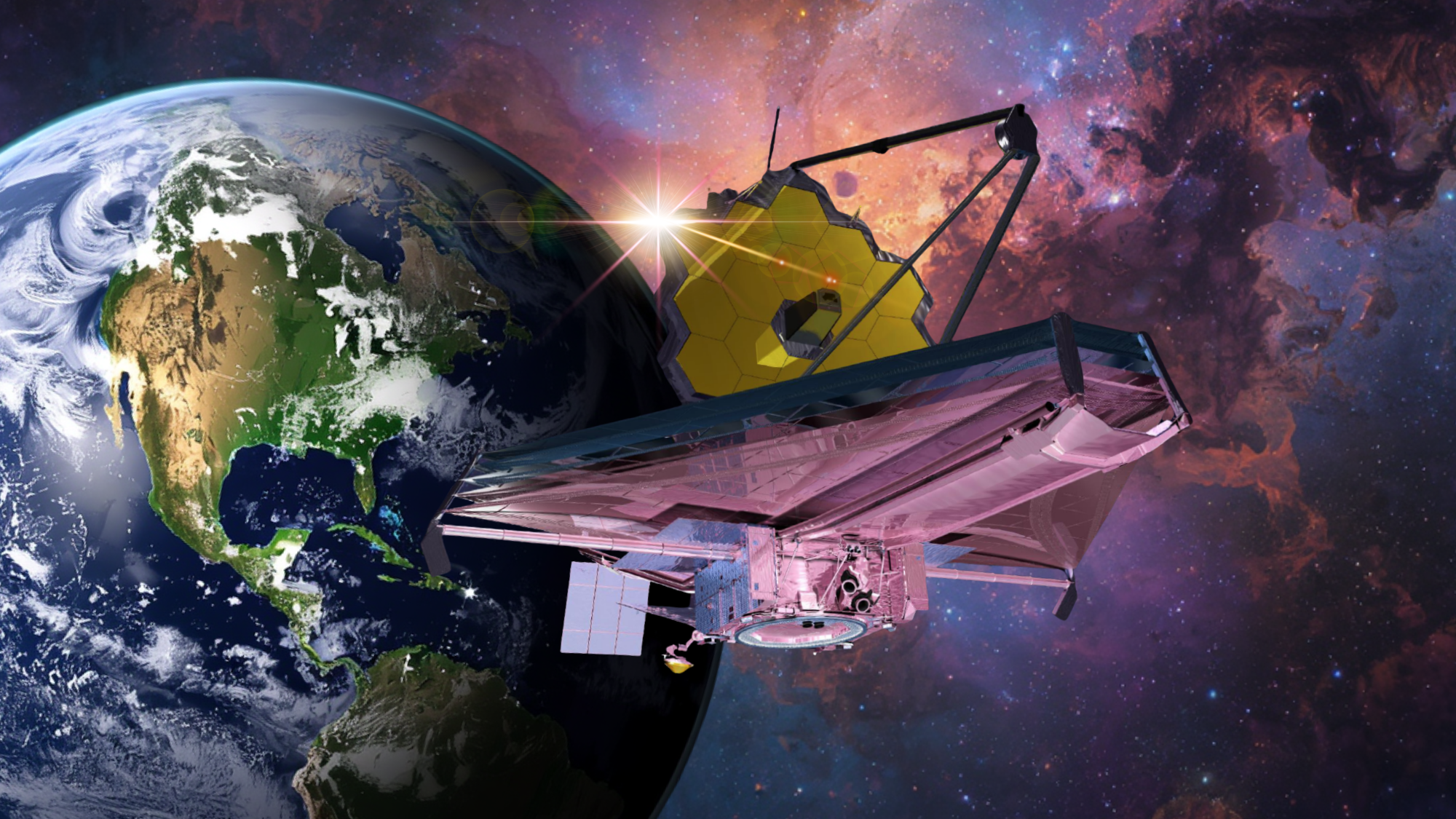
a telescope with a mirror made of gold hexagons floating on a starry background

An illustration of the JWST which continues to break new ground in astronomy. (Image credit: Robert Lea (created with Canva))

The team now intends to apply this method to more of the universe's earliest galaxies, hoping to stretch their investigation back to the universe's first stars.

The team's research was published on Wednesday (August 18) in the journal Nature Astronomy.

Hubble, James Webb Space Telescope team up to capture the ‘Black Eye Galaxy’ | Space photo of the day for Aug. 18, 2026

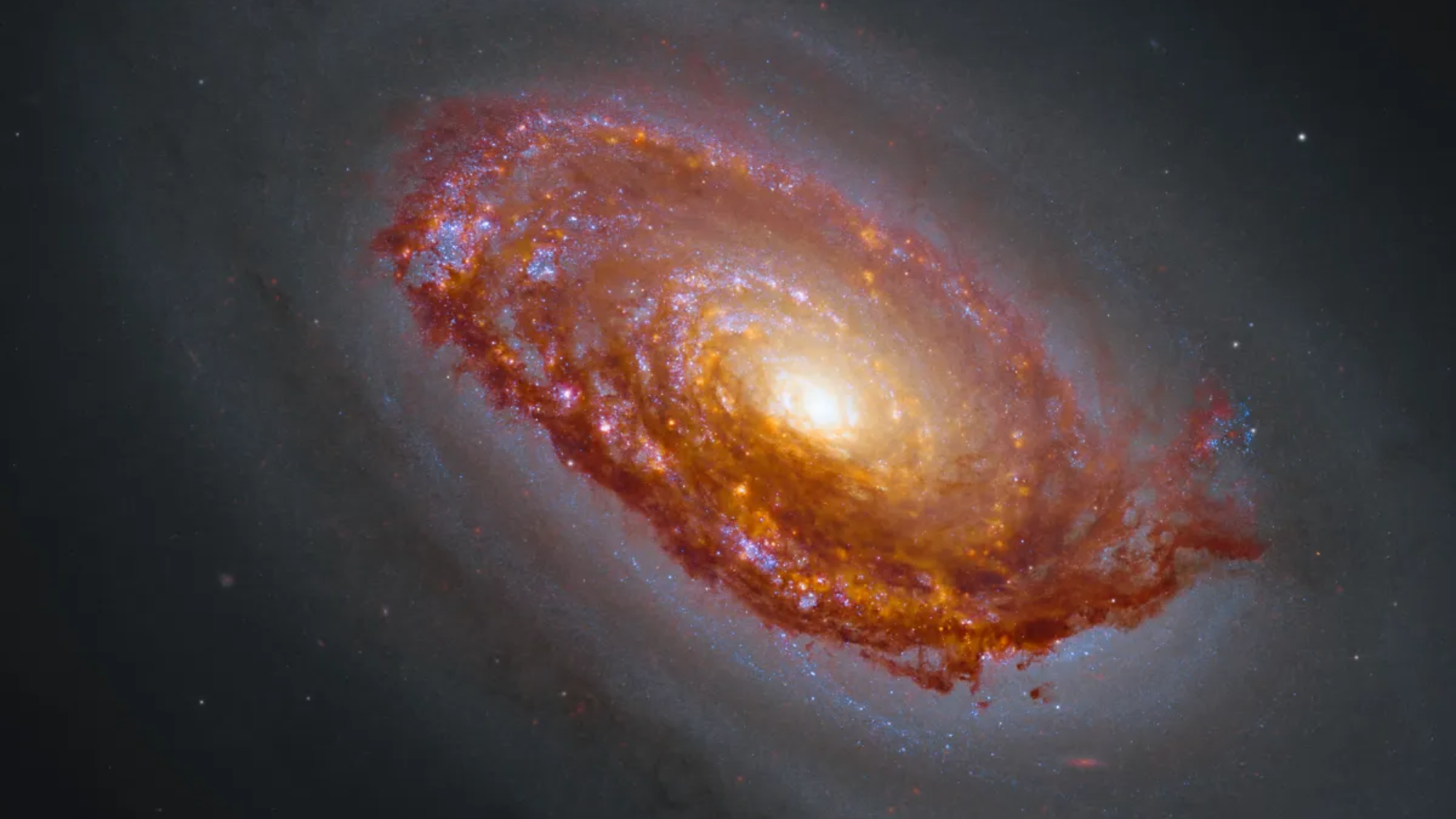
A swirling galaxy has dark orange swirls of gas and dust with bright orange and purple spots and a bright yellow/white center.

The "Black Eye Galaxy" is captured in this new composite image from the Hubble Space Telescope and JWST. (Image credit: NASA, CSA, ESA, F. Belfiore (European Southern Observatory – Germany), J. Lee (Space Telescope Science Institute), A. Leroy (The Ohio State University), and D. Thilker (The Johns Hopkins University); Processing: Gladys Kober (NASA/Catholic University of America))

Sometimes, incredibly powerful space telescopes work together to accomplish amazing things. Recently, observations made by both the James Webb Space Telescope and Hubble were combined in a composite image that shows the incredible nature of the "Black Eye Galaxy," more formally known as Messier 64.

What is it?

The Black Eye Galaxy is a strange spiral galaxy located 17 million light-years from Earth, in the constellation Coma Berenices, a name that means "Berenice's Hair" in Latin.

Discovered in 1779, the Black Eye Galaxy is fairly isolated from other galaxies and is known for its hypnotizing "stare." This look is created by the galaxy's internal, swirling motion. However, unlike many other spiral galaxies, the gas in the outer reaches of this one rotates in the opposite direction to the gas and stars closer to its center, creating an especially unusual motion.

To capture this incredible composite view of the galaxy, astronomers combined near and mid-infrared wavelength observations made by JWST and ultraviolet, visible and near-infrared observations made by Hubble.

Why is it incredible?

As we look forward to observations from NASA's upcoming flagship space observer, the Nancy Grace Roman Space Telescope, this collaborative effort shows how such powerful instruments don't replace one another; rather, they bring different capabilities to the table and can complement each other.

And, while this new image is the result of a team effort of cutting edge-technology, the Black Eye Galaxy is also a favorite target for backyard astronomers because it can often be spotted in small telescopes.

How an ancient collision with another galaxy transformed the Milky Way

The Hubble Space Telescope has discovered evidence that our galaxy experienced a significant collision and merger with a dwarf galaxy 11.8 billion years ago.

Mergers between galaxies are one of the main ways in which galaxies can grow. However, while we can witness mergers taking place in other galaxies, figuring out our Milky Way galaxy's history requires painstaking detective work. Even now, the story is only partly known.

"Our home is the Milky Way galaxy, but we do not know how our house was built," Davide Massari of the Astrophysics and Space Science Observatory of Bologna in Italy said in a statement. Massari is lead author of a paper describing the discovery of an ancient galactic merger. "In this paper we discover where the first significant batch of bricks came from: a dwarf galaxy that we call LKH."

LKH stands for Low-energy–Kraken–Heracles, which is an obtuse reference to three earlier research papers that tangled with the idea of mergers early in our galaxy's history.

In recent years, one other significant merger has come to light, which is a collision with a galaxy referred to as the Gaia–Sausage–Enceladus (GSE) galaxy about 10 billion years ago. The GSE had its own family of globular star clusters that became integrated with the Milky Way's own globular clusters during the collision.

Now, Massari's team have discovered a third population of globular clusters that do not seem to be native to the Milky Way, nor to have belonged to the GSE galaxy. Instead, they seem to have arrived 11.8 billion years ago, which is before the GSE merger.

"Thanks to the high resolution and depth of Hubble imaging, we could measure the age and the metal content of these clusters with unprecedented precision," said astronomer Chiara Zerbinati of the University of Bologna, who is a co-author on the paper. Metals are astronomer-speak for elements heavier than the hydrogen and helium that formed in the Big Bang, so they include the likes of oxygen and carbon as well as iron and aluminum.

"Coupled with measurements from [the European Space Agency mission] Gaia, this made it possible to distinguish a population of globular clusters that are different from the others," said Zerbinati. "These are the clusters that were born in LKH and they tell us when that galaxy was devoured by ours, and how massive it was."

Based on the number and mass of imported globular clusters, the team calculated that LKH had a total mass of 500 million times the mass of our sun. This is only slightly more massive than the Sagittarius Dwarf galaxy (approximately 400 million solar masses), which the Milky Way is currently cannibalizing and an order of magnitude less massive than the Small Magellanic Cloud. However, 11.8 billion years ago, which is just two billion years after the Big Bang, our Milky Way galaxy was much smaller and LKH would have contributed a sizable chunk of mass, in terms of stars, gas and dark matter, to the Milky Way.

The discovery of the merger adds an important new event to the Milky Way's history, one that would have undoubtedly influenced the evolution of our galaxy. For example, the collision could have spurred a fresh burst of star formation, helping the Milky Way to grow, while the chemistry of the stars from LKH will have impacted the Milky Way's overall chemical evolution as those stars died and passed their remains into the interstellar medium to be reborn in new stars.

"Some past studies have argued that the earliest phases of our galaxy's evolution were defined by stars born only in our galaxy," said Massari. "Here, we have shown that stars born in external galaxies also need to be considered."

The discovery of the merger with LKH was reported on Aug. 17 in the journal Nature Astronomy.

The Andromeda galaxy may be getting bullied by a smaller galactic neighbor, scientists find

Thanks to the Hubble Space Telescope, astronomers have shed light on a recent chapter in the history of our Milky Way's neighboring galaxy, Andromeda.

Using Hubble Space Telescope observations of Andromeda's stars, a research team showed that the spiral galaxy's rate of making new stars has dramatically slowed down in the last 40 million years. And they've found more evidence that one of Andromeda's own neighbors — a smaller galaxy called M32 — may be to blame.

"We can't explicitly say that we are seeing a decrease in star formation because of M32. But it's right there, and it's definitely the most likely suspect," said Tobin Wainer, a graduate student at the University of Washington and one of the astronomers, in a statement.

Astronomers like Wainer knew from prior research that Andromeda saw a burst of star formation about 2 billion years ago (possibly as a result of a collision with an unknown galaxy). They also knew that star formation had slowed down since then. What they did not know was how quickly that deceleration had been. If they could find out, they could fill in some of the gaps in Andromeda's history.

At 2.5 million light-years' distance, Andromeda is near enough to Earth that Hubble can measure its stars. In the past several years, Hubble has conducted two surveys of Andromeda. While Hubble can only make out stars in Andromeda that are brighter than our sun, these two surveys still gave Wainer and colleagues a compendium of 200 million stars, covering two-thirds of Andromeda's disk.

Wainer and colleagues parceled out this vast space into a grid of squares, 300 light-years to a side. They reconstructed the history of each square by examining the colors of its stars.

A square with many bright blue stars, for example, probably saw a lot of star formation recently, since blue stars tend to be younger. On the other hand, if a square only contains smaller, redder stars, we know those stars are longer-lived and older, and that square probably hasn't seen a lot of newborn stars.

The astronomers mapped out a story of slowing star formation. Around 500 million years ago, on average, Andromeda turned the equivalent of our sun's mass in gas and dust into newborn stars each year. As millions of years passed, that rate declined. About 40 million years ago, it was about one-half the sun's mass each year. Then, it tilted into a dramatic deceleration. Today, it stands at about one-fifth the sun's mass each year.

A spiral galaxy with lots of stars in the background. A bright haze is seen coming from the center of the galaxy. Toward the center left there is a glowing dot. And on the center right another glowing dot mostly offscreen.

The Andromeda galaxy, M31, with satellite galaxies M32 (center left) and M110 (lower right). (Image credit: S. Ozime)

Curiously, they found that Andromeda's starmaking slowdown is especially pronounced on one particular side of the galaxy, starting about 60 million years ago. Astronomers know this side of Andromeda is closest to another galaxy: M32.

Astronomers have eyed M32 with suspicion for some time now. M32 is only located about 16,000 light-years from Andromeda (Andromeda is formally called M31) and it looks like the rump core of a spiral galaxy that lost its arms. It's possible that this is actually the aftermath of a collision between M32 and its larger neighbor. It's possible, though not confirmed, that Andromeda's slowing bears the fingerprints of this collision.

We may not need to wait long for more answers. Just as Hubble can see Andromeda's stars, so too will the Nancy Grace Roman Space Telescope, set to launch in late August. In the coming years, Roman will be able to measure even more of Andromeda than Hubble has.